Segments - by Component (Software, Services), by Deployment Mode (Public Cloud, Private Cloud, Hybrid Cloud), by Enterprise Size (Small and Medium Enterprises, Large Enterprises), by Application (Finance and Accounting, Human Resources, Supply Chain Management, Customer Relationship Management, Others), by End-User (BFSI, IT and Telecommunications, Healthcare, Retail, Manufacturing, Government, Others)
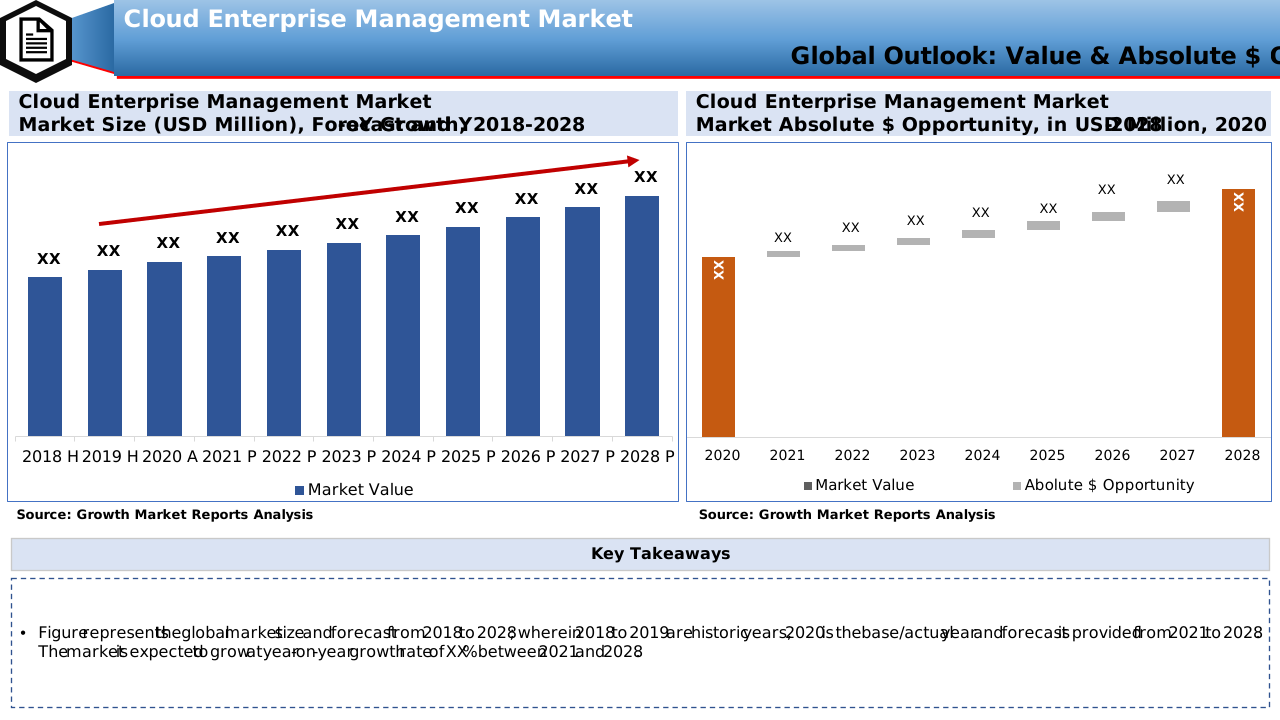
According to our latest research, the global cloud enterprise management market size reached USD 13.8 billion in 2024, driven by rapid enterprise digitization and increasing cloud adoption across various industries. The market is set to expand at a robust CAGR of 14.2% from 2025 to 2033, projecting a value of USD 43.5 billion by the end of the forecast period. This growth is primarily attributed to the rising need for scalable IT infrastructure, enhanced data accessibility, and the shift toward cost-effective business operations enabled by cloud technologies.
One of the most significant growth factors for the cloud enterprise management market is the increasing demand for digital transformation across organizations of all sizes. As businesses strive to remain competitive in a rapidly evolving digital landscape, they are increasingly migrating their core operations to the cloud to leverage benefits such as flexibility, scalability, and real-time data insights. Cloud-based enterprise management solutions empower organizations to optimize workflows, enhance collaboration, and improve decision-making processes, which are critical for maintaining agility in today’s market. Furthermore, the proliferation of remote and hybrid work models has accelerated the adoption of cloud enterprise management platforms, as these solutions enable seamless access to business-critical applications and data from anywhere, at any time.
Another key driver fueling market growth is the continuous innovation in cloud technologies, including advancements in artificial intelligence, machine learning, and automation. These innovations are being integrated into cloud enterprise management solutions, allowing enterprises to streamline complex business processes, reduce manual intervention, and minimize operational costs. Cloud vendors are increasingly offering industry-specific solutions tailored to unique business requirements, further broadening the market’s appeal. Additionally, the growing focus on regulatory compliance and data security is pushing organizations to adopt cloud-based management solutions that offer robust security features, audit trails, and compliance management tools, thereby ensuring adherence to global standards.
The emergence of hybrid and multi-cloud strategies is also contributing to the expansion of the cloud enterprise management market. Organizations are seeking to balance their workloads across public and private cloud environments to optimize performance, cost, and security. This trend has prompted solution providers to develop platforms that offer seamless integration, interoperability, and unified management across disparate cloud environments. The increasing complexity of IT ecosystems, coupled with the need for centralized governance and monitoring, is propelling the demand for comprehensive cloud enterprise management solutions that can orchestrate resources efficiently while supporting business growth and innovation.
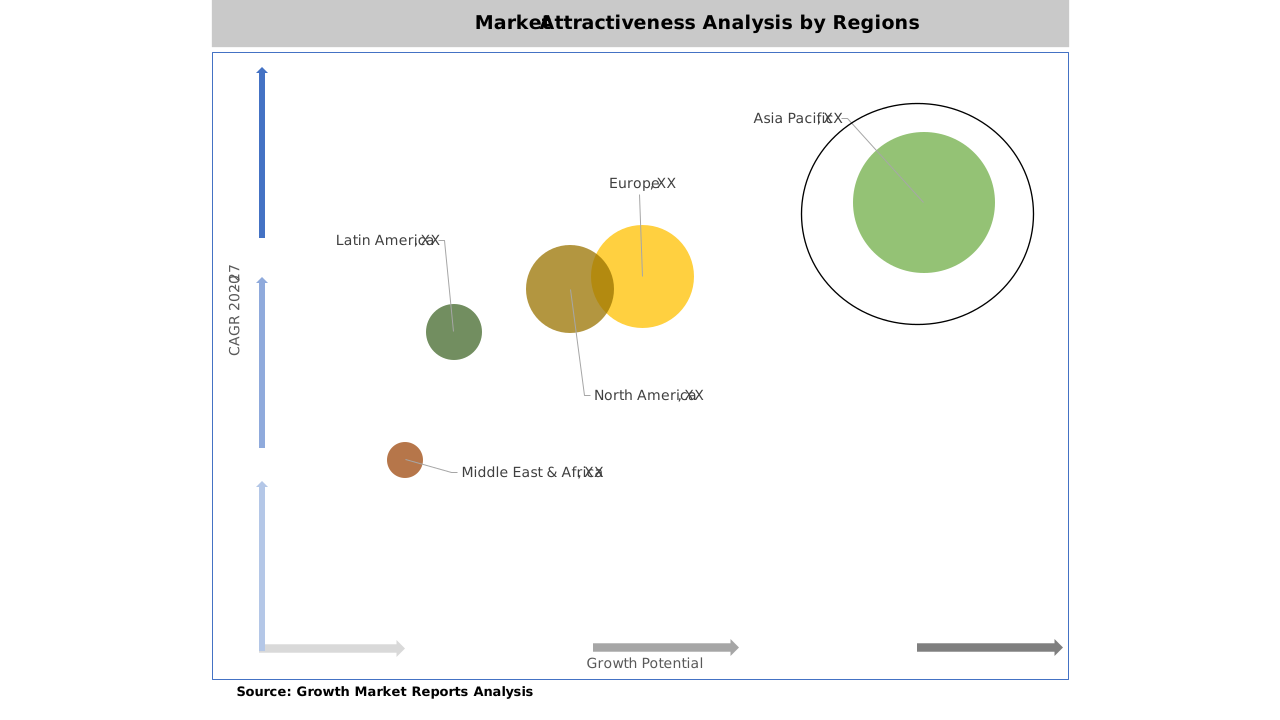
From a regional perspective, North America continues to dominate the global cloud enterprise management market, owing to its mature technology infrastructure, high cloud adoption rates, and strong presence of leading cloud service providers. However, Asia Pacific is emerging as the fastest-growing region, driven by rapid economic development, expanding digital infrastructure, and increasing investments in cloud technologies by enterprises and governments alike. Europe and the Middle East & Africa are also witnessing steady growth, supported by regulatory initiatives promoting digital transformation and increasing awareness of the benefits of cloud-based enterprise management solutions.
The component segment of the cloud enterprise management market is primarily divided into software and services, both of which play pivotal roles in driving market growth. Cloud enterprise management software solutions encompass a wide range of functionalities, including enterprise resource planning (ERP), customer relationship management (CRM), human resources management, and supply chain optimization, among others. These software platforms are designed to streamline and automate complex business processes, enabling organizations to achieve higher operational efficiency and agility. The increasing demand for integrated and scalable software solutions is a key factor driving the growth of this segment, as businesses seek to consolidate their IT ecosystems and reduce reliance on disparate legacy systems.
Services, on the other hand, are becoming increasingly critical as organizations transition their operations to the cloud. These services include consulting, implementation, integration, training, and support, all of which are essential for ensuring the successful deployment and ongoing management of cloud enterprise management solutions. The complexity of cloud migration and the need for customized solutions have led to a surge in demand for professional services, with service providers offering expertise in cloud architecture, security, compliance, and change management. Managed services are also gaining traction, as enterprises look to outsource the day-to-day management of their cloud environments to specialized vendors, allowing them to focus on core business activities.
The software segment is expected to maintain a significant share of the market, driven by continuous innovation and the introduction of advanced features such as artificial intelligence, machine learning, and predictive analytics. These capabilities enable organizations to derive actionable insights from their data, automate routine tasks, and enhance decision-making processes. Cloud enterprise management software is increasingly being offered as modular, subscription-based solutions, providing organizations with the flexibility to scale their operations and pay only for the features they need. This shift toward a service-oriented architecture is further fueling the adoption of cloud-based software platforms.
Meanwhile, the services segment is projected to witness robust growth throughout the forecast period, supported by the increasing complexity of cloud deployments and the need for specialized expertise. As organizations embark on their digital transformation journeys, they are seeking partners who can provide end-to-end support, from initial strategy development to ongoing optimization and support. The rise of hybrid and multi-cloud environments has further increased the demand for integration and management services, as businesses strive to achieve seamless interoperability and centralized control across diverse cloud platforms. Service providers are responding by expanding their portfolios to include a broader range of offerings, including cloud security, compliance management, and business continuity planning.
In summary, both the software and services segments are integral to the growth of the cloud enterprise management market, with each offering unique value propositions that address the evolving needs of modern enterprises. The interplay between innovative software solutions and comprehensive service offerings will continue to shape the competitive landscape, as organizations seek to maximize the benefits of their cloud investments and drive sustainable business growth.
| Attributes | Details |
| Report Title | Cloud Enterprise Management Market Research Report 2033 |
| By Component | Software, Services |
| By Deployment Mode | Public Cloud, Private Cloud, Hybrid Cloud |
| By Enterprise Size | Small and Medium Enterprises, Large Enterprises |
| By Application | Finance and Accounting, Human Resources, Supply Chain Management, Customer Relationship Management, Others |
| By End-User | BFSI, IT and Telecommunications, Healthcare, Retail, Manufacturing, Government, Others |
| Regions Covered | North America, Europe, APAC, Latin America, MEA |
| Base Year | 2024 |
| Historic Data | 2018-2023 |
| Forecast Period | 2025-2033 |
| Number of Pages | 279 |
| Number of Tables & Figures | 333 |
| Customization Available | Yes, the report can be customized as per your need. |
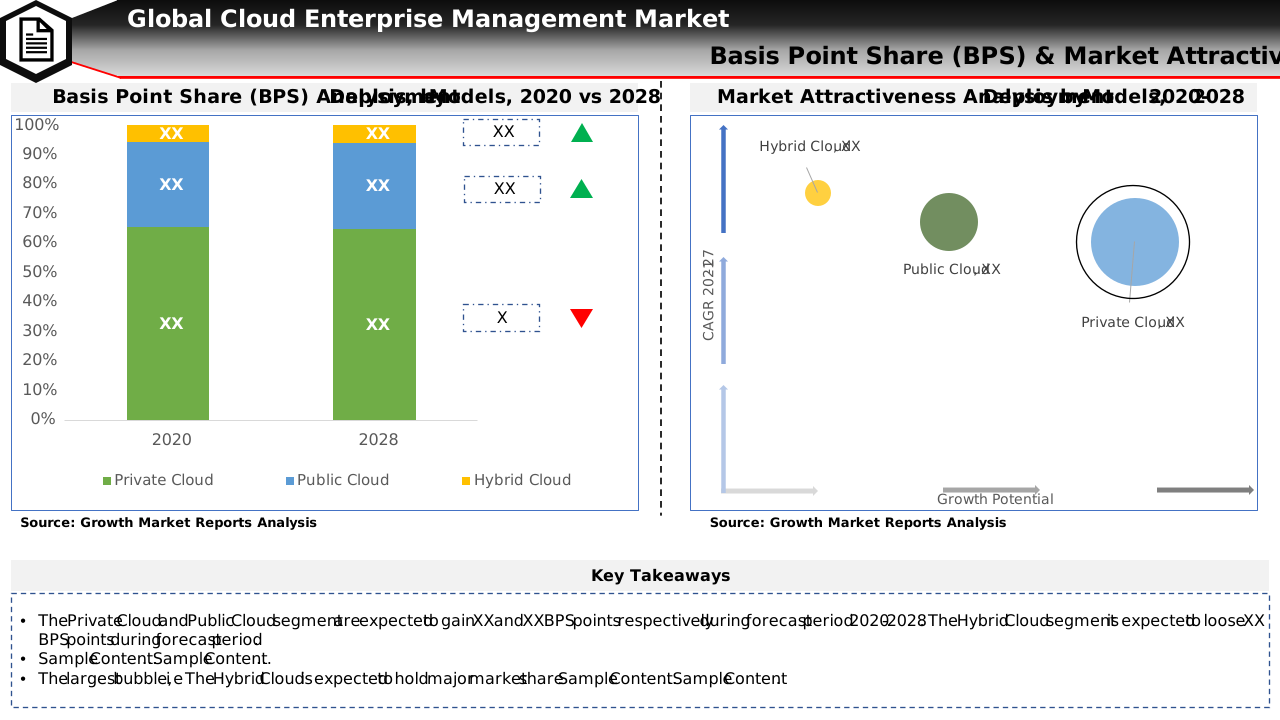
The deployment mode segment in the cloud enterprise management market is categorized into public cloud, private cloud, and hybrid cloud, each offering distinct advantages and addressing specific business requirements. Public cloud deployment remains the most widely adopted model, particularly among small and medium enterprises (SMEs) and organizations seeking cost-effective, scalable solutions with minimal upfront investment. Public cloud platforms offer a pay-as-you-go pricing model, enabling businesses to scale resources up or down based on demand, while benefiting from the latest technological advancements and security updates provided by leading cloud service providers. The widespread availability and accessibility of public cloud services have made them a popular choice for organizations looking to accelerate their digital transformation initiatives.
Private cloud deployment, on the other hand, is favored by large enterprises and organizations operating in highly regulated industries, such as banking, healthcare, and government. Private cloud environments offer greater control, customization, and security, as they are dedicated to a single organization and can be tailored to meet specific compliance and data privacy requirements. The ability to maintain full ownership of data and infrastructure is a key driver for the adoption of private cloud solutions, particularly among organizations with stringent regulatory obligations or those handling sensitive information. Despite higher initial costs and complexity, private cloud deployments are increasingly being adopted by enterprises seeking to balance performance, security, and compliance.
Hybrid cloud deployment is rapidly gaining traction as organizations seek to leverage the best of both public and private cloud environments. Hybrid cloud models enable businesses to distribute workloads across on-premises infrastructure, private clouds, and public clouds, optimizing resource allocation, cost, and performance. This approach provides the flexibility to run sensitive or mission-critical applications in a secure private cloud, while leveraging the scalability and cost-efficiency of the public cloud for less sensitive workloads. The growing complexity of IT environments, coupled with the need for seamless integration and centralized management, is driving the adoption of hybrid cloud solutions in the cloud enterprise management market.
One of the key trends in deployment mode is the increasing adoption of multi-cloud strategies, where organizations utilize multiple cloud providers to avoid vendor lock-in, enhance resilience, and optimize performance. This trend is leading to the development of advanced cloud management platforms that offer unified visibility, control, and automation across diverse cloud environments. Solution providers are investing in interoperability and integration capabilities to address the challenges associated with managing complex, heterogeneous cloud infrastructures. As organizations continue to embrace hybrid and multi-cloud models, the demand for comprehensive cloud enterprise management solutions that support seamless orchestration and governance is expected to rise significantly.
In conclusion, the choice of deployment mode is a critical factor influencing the adoption and success of cloud enterprise management solutions. While public cloud remains the preferred option for many organizations due to its cost-effectiveness and scalability, private and hybrid cloud models are gaining momentum among enterprises with specific security, compliance, and performance requirements. The evolving landscape of cloud deployment is creating new opportunities for solution providers to innovate and deliver value-added services that address the diverse needs of modern businesses.
The enterprise size segment of the cloud enterprise management market is divided into small and medium enterprises (SMEs) and large enterprises, each exhibiting unique adoption patterns and requirements. SMEs are increasingly turning to cloud enterprise management solutions as a means to level the playing field with larger competitors, leveraging the scalability, flexibility, and cost-efficiency of cloud technologies to drive business growth. Cloud-based platforms enable SMEs to access advanced enterprise management capabilities without the need for significant upfront investment in IT infrastructure, allowing them to focus resources on core business activities. The subscription-based pricing model offered by most cloud vendors is particularly attractive to SMEs, as it provides predictable costs and the ability to scale operations in line with business growth.
Large enterprises, on the other hand, typically have more complex IT environments and require robust, customizable cloud enterprise management solutions capable of supporting diverse business units, geographies, and regulatory requirements. These organizations often operate in highly regulated industries and manage vast amounts of data, necessitating advanced security, compliance, and governance features. Large enterprises are increasingly adopting hybrid and multi-cloud strategies to optimize performance, cost, and risk, driving demand for comprehensive cloud management platforms that offer centralized visibility, control, and automation across all cloud environments. The need for seamless integration with existing legacy systems and the ability to support large-scale, mission-critical applications are key considerations for large enterprises when selecting cloud enterprise management solutions.
The adoption of cloud enterprise management solutions among SMEs is being further accelerated by the growing availability of industry-specific solutions tailored to the unique needs of different sectors. Cloud vendors are increasingly offering modular, customizable platforms that enable SMEs to select and pay for only the features they require, reducing complexity and total cost of ownership. The proliferation of digital marketplaces and self-service portals has made it easier for SMEs to discover, evaluate, and deploy cloud enterprise management solutions, further lowering barriers to adoption. As SMEs continue to embrace digital transformation, the demand for cloud-based enterprise management platforms is expected to grow at a rapid pace.
For large enterprises, the focus is shifting toward leveraging cloud enterprise management solutions to drive innovation, enhance business agility, and improve operational efficiency. These organizations are investing in advanced analytics, artificial intelligence, and machine learning capabilities to gain deeper insights into their operations, optimize resource allocation, and automate routine tasks. The ability to integrate cloud enterprise management platforms with existing ERP, CRM, and supply chain systems is a critical requirement, as large enterprises seek to create unified, data-driven ecosystems that support strategic decision-making and business growth. The increasing complexity of global operations and the need for real-time visibility and control are driving large enterprises to invest in next-generation cloud management solutions.
Overall, the enterprise size segment of the cloud enterprise management market is characterized by distinct adoption drivers and challenges for SMEs and large enterprises. While SMEs are attracted by the affordability, scalability, and ease of deployment offered by cloud solutions, large enterprises are seeking advanced features, customization, and integration capabilities to support their complex, global operations. Solution providers must continue to innovate and tailor their offerings to address the evolving needs of organizations of all sizes, ensuring that they can realize the full benefits of cloud enterprise management.
The application segment of the cloud enterprise management market encompasses a wide range of business functions, including finance and accounting, human resources, supply chain management, customer relationship management (CRM), and others. Cloud-based finance and accounting solutions are gaining traction as organizations seek to automate financial processes, improve accuracy, and ensure compliance with regulatory requirements. These solutions enable real-time financial reporting, streamlined budgeting and forecasting, and enhanced visibility into organizational performance. The integration of advanced analytics and artificial intelligence is further enhancing the value proposition of cloud-based finance and accounting platforms, enabling organizations to derive actionable insights and make data-driven decisions.
In the realm of human resources, cloud enterprise management solutions are transforming the way organizations manage their workforce, from recruitment and onboarding to performance management and employee engagement. Cloud-based HR platforms offer a centralized, scalable solution for managing employee data, automating HR processes, and ensuring compliance with labor laws and regulations. The rise of remote and hybrid work models has increased the demand for cloud-based HR solutions that enable seamless collaboration, communication, and access to HR services from anywhere. Advanced features such as talent analytics, workforce planning, and employee self-service portals are further driving the adoption of cloud enterprise management solutions in the HR domain.
Supply chain management is another critical application area for cloud enterprise management solutions, as organizations seek to optimize their supply chains, reduce costs, and improve responsiveness to market changes. Cloud-based supply chain management platforms provide real-time visibility into inventory levels, supplier performance, and logistics operations, enabling organizations to make informed decisions and respond quickly to disruptions. The integration of IoT, blockchain, and advanced analytics is further enhancing the capabilities of cloud-based supply chain management solutions, enabling organizations to achieve greater transparency, traceability, and efficiency across their supply networks.
Customer relationship management (CRM) is a key focus area for cloud enterprise management, as organizations strive to enhance customer engagement, improve service delivery, and drive revenue growth. Cloud-based CRM solutions offer a unified platform for managing customer interactions, tracking sales opportunities, and analyzing customer data to identify trends and opportunities. The scalability and flexibility of cloud-based CRM platforms make them an ideal choice for organizations of all sizes, enabling them to adapt quickly to changing market conditions and customer preferences. The integration of artificial intelligence and machine learning is further enhancing the capabilities of cloud-based CRM solutions, enabling organizations to deliver personalized experiences and drive customer loyalty.
Other application areas for cloud enterprise management solutions include project management, procurement, compliance management, and business intelligence. The versatility and scalability of cloud platforms make them well-suited to support a wide range of business functions, enabling organizations to drive digital transformation and achieve operational excellence. As organizations continue to embrace cloud technologies, the demand for integrated, end-to-end cloud enterprise management solutions that support multiple business functions is expected to grow, creating new opportunities for solution providers and driving market expansion.
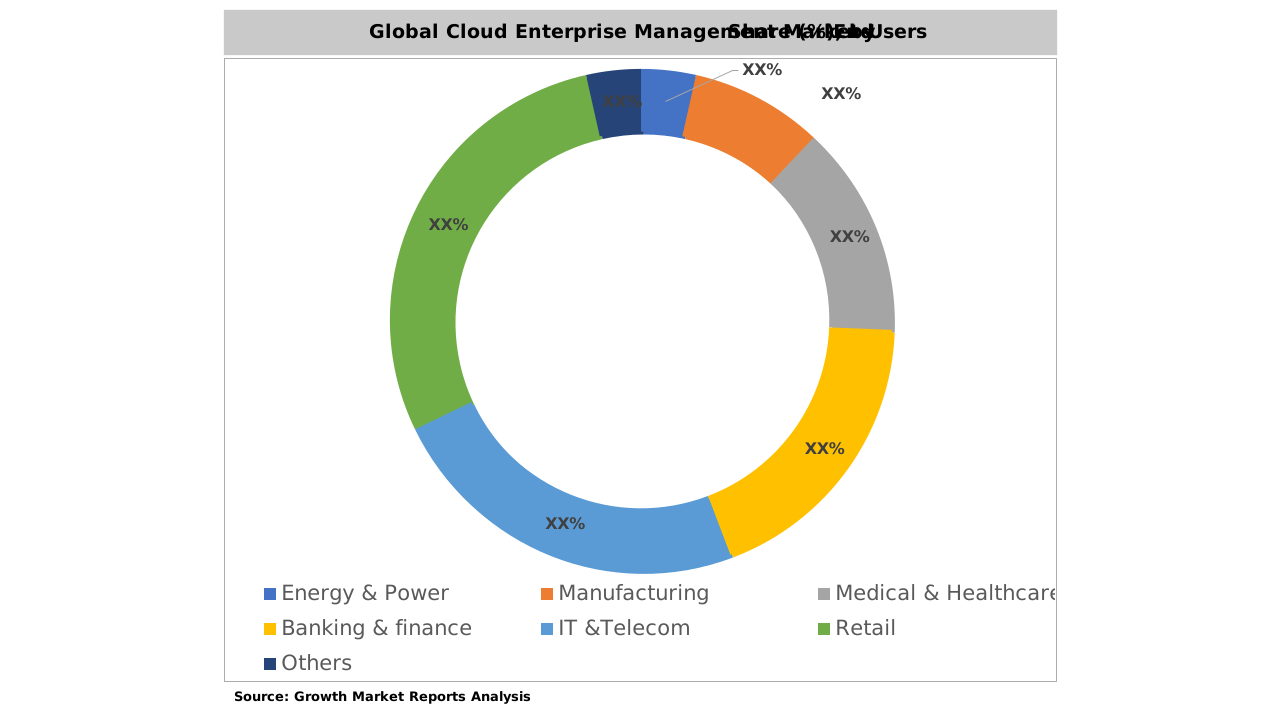
The end-user segment of the cloud enterprise management market is highly diverse, encompassing industries such as BFSI (banking, financial services, and insurance), IT and telecommunications, healthcare, retail, manufacturing, government, and others. The BFSI sector is a leading adopter of cloud enterprise management solutions, driven by the need for enhanced agility, regulatory compliance, and risk management. Cloud-based platforms enable financial institutions to streamline operations, improve customer service, and respond quickly to changing market conditions. The integration of advanced analytics, artificial intelligence, and blockchain is further enhancing the value proposition of cloud enterprise management solutions in the BFSI sector, enabling organizations to detect fraud, optimize processes, and deliver personalized services to customers.
The IT and telecommunications sector is also a major contributor to the growth of the cloud enterprise management market, as organizations in this industry seek to manage complex, distributed IT environments and deliver innovative services to customers. Cloud enterprise management solutions enable IT and telecom companies to automate service delivery, optimize resource allocation, and ensure compliance with regulatory requirements. The rapid pace of technological innovation and the increasing adoption of 5G, IoT, and edge computing are driving demand for advanced cloud management platforms that can support the evolving needs of the IT and telecommunications sector.
Healthcare organizations are increasingly adopting cloud enterprise management solutions to improve patient care, enhance operational efficiency, and ensure compliance with data privacy regulations such as HIPAA and GDPR. Cloud-based platforms enable healthcare providers to centralize patient data, automate administrative processes, and support telemedicine and remote patient monitoring initiatives. The integration of advanced analytics and artificial intelligence is enabling healthcare organizations to derive actionable insights from patient data, improve clinical outcomes, and drive innovation in care delivery. The growing focus on value-based care and population health management is further driving the adoption of cloud enterprise management solutions in the healthcare sector.
Retail and manufacturing organizations are leveraging cloud enterprise management solutions to optimize supply chain operations, improve inventory management, and enhance customer experience. Cloud-based platforms provide real-time visibility into inventory levels, supplier performance, and customer preferences, enabling organizations to make informed decisions and respond quickly to market changes. The integration of IoT, advanced analytics, and artificial intelligence is enabling retailers and manufacturers to achieve greater efficiency, agility, and innovation across their operations. Government agencies are also adopting cloud enterprise management solutions to improve service delivery, enhance transparency, and ensure compliance with regulatory requirements.
Other end-user segments, including education, energy, and logistics, are increasingly recognizing the benefits of cloud enterprise management solutions in driving digital transformation, improving operational efficiency, and supporting sustainable growth. The versatility and scalability of cloud platforms make them well-suited to address the unique needs of diverse industries, enabling organizations to achieve their strategic objectives and drive business success. As adoption continues to expand across industries, the cloud enterprise management market is poised for sustained growth and innovation.
The cloud enterprise management market presents significant opportunities for growth and innovation, driven by the ongoing digital transformation of businesses across industries. One of the most promising opportunities lies in the integration of advanced technologies such as artificial intelligence, machine learning, and automation into cloud enterprise management solutions. These technologies enable organizations to automate routine tasks, derive actionable insights from large volumes of data, and improve decision-making processes. The growing demand for industry-specific solutions tailored to the unique needs of different sectors is creating new opportunities for solution providers to differentiate themselves and capture market share. Additionally, the increasing adoption of hybrid and multi-cloud strategies is driving demand for advanced cloud management platforms that offer seamless integration, interoperability, and centralized governance across diverse cloud environments.
Another key opportunity in the cloud enterprise management market is the expansion into emerging markets, particularly in Asia Pacific, Latin America, and the Middle East & Africa. Rapid economic development, expanding digital infrastructure, and increasing investments in cloud technologies by enterprises and governments are creating favorable conditions for market growth in these regions. Solution providers that can offer scalable, cost-effective, and easy-to-deploy cloud enterprise management solutions tailored to the needs of small and medium enterprises stand to gain a competitive advantage. The proliferation of digital marketplaces and self-service portals is also making it easier for organizations to discover, evaluate, and deploy cloud enterprise management solutions, further lowering barriers to adoption and accelerating market expansion.
Despite the numerous opportunities, the cloud enterprise management market faces several restraining factors that could hinder its growth. One of the primary challenges is the growing complexity of managing hybrid and multi-cloud environments, which can create integration, interoperability, and security issues for organizations. Ensuring data privacy, regulatory compliance, and robust security across diverse cloud platforms is a significant concern, particularly for organizations operating in highly regulated industries. The shortage of skilled IT professionals with expertise in cloud technologies and enterprise management is another limiting factor, as organizations may struggle to implement and manage complex cloud solutions effectively. Addressing these challenges will require ongoing investment in innovation, education, and collaboration between solution providers, enterprises, and regulatory bodies.
North America remains the largest regional market for cloud enterprise management, accounting for approximately 41% of the global market size in 2024, which translates to around USD 5.7 billion. The region’s dominance can be attributed to its mature technology infrastructure, high cloud adoption rates, and strong presence of leading cloud service providers such as Microsoft, Amazon Web Services, and Google Cloud. North American enterprises are at the forefront of digital transformation, leveraging cloud enterprise management solutions to drive operational efficiency, enhance customer experience, and maintain a competitive edge. The region is also characterized by a high level of investment in research and development, fostering innovation and the adoption of advanced technologies such as artificial intelligence and machine learning in cloud enterprise management platforms.
Asia Pacific is emerging as the fastest-growing region in the cloud enterprise management market, with a projected CAGR of 17.8% from 2025 to 2033. The region accounted for approximately 26% of the global market in 2024, valued at around USD 3.6 billion. Rapid economic development, expanding digital infrastructure, and increasing investments in cloud technologies by enterprises and governments are driving market growth in Asia Pacific. Countries such as China, India, Japan, and South Korea are leading the adoption of cloud enterprise management solutions, supported by government initiatives promoting digital transformation and innovation. The growing presence of global and regional cloud service providers, coupled with the rising demand for scalable, cost-effective solutions among small and medium enterprises, is expected to drive continued market expansion in the region.
Europe and the Middle East & Africa (EMEA) regions are also witnessing steady growth in the cloud enterprise management market, collectively accounting for approximately 25% of the global market size in 2024, valued at around USD 3.5 billion. European enterprises are increasingly adopting cloud enterprise management solutions to comply with stringent data privacy regulations such as GDPR, enhance operational efficiency, and support digital transformation initiatives. The Middle East & Africa region is experiencing growing demand for cloud-based solutions, driven by government investments in digital infrastructure and the increasing adoption of cloud technologies by enterprises across various industries. The regional outlook for the cloud enterprise management market remains positive, with all regions expected to contribute to sustained growth and innovation over the forecast period.
The cloud enterprise management market is characterized by intense competition, with a diverse mix of global technology giants, specialized cloud solution providers, and emerging startups vying for market share. Leading players are continuously investing in research and development to enhance their product offerings, integrate advanced technologies, and expand their global footprint. The competitive landscape is shaped by the rapid pace of technological innovation, evolving customer requirements, and the increasing demand for industry-specific solutions. Companies are focusing on strategic partnerships, mergers and acquisitions, and collaborations to strengthen their market position, accelerate innovation, and deliver comprehensive, end-to-end cloud enterprise management solutions to customers.
Product differentiation and innovation are key strategies employed by market leaders to maintain a competitive edge. Leading vendors are integrating artificial intelligence, machine learning, automation, and advanced analytics into their cloud enterprise management platforms, enabling organizations to automate routine tasks, derive actionable insights, and improve decision-making processes. The ability to offer scalable, customizable, and modular solutions tailored to the unique needs of different industries and enterprise sizes is a critical success factor. Cloud service providers are also expanding their service portfolios to include consulting, implementation, integration, and managed services, providing customers with end-to-end support throughout their cloud transformation journey.
Customer-centricity is another important focus area for competitors in the cloud enterprise management market. Leading vendors are investing in customer success programs, user training, and support services to ensure the successful adoption and ongoing optimization of their solutions. The growing complexity of hybrid and multi-cloud environments is driving demand for advanced cloud management platforms that offer unified visibility, control, and automation across diverse cloud environments. Solution providers are responding by developing interoperable, open-architecture platforms that support seamless integration with existing IT systems and third-party applications, enabling organizations to create unified, data-driven ecosystems.
Some of the major companies operating in the global cloud enterprise management market include Microsoft Corporation, Oracle Corporation, SAP SE, IBM Corporation, Salesforce.com Inc., Amazon Web Services Inc., Google LLC, Workday Inc., ServiceNow Inc., and Infor. Microsoft Corporation is a leading player, offering a comprehensive suite of cloud enterprise management solutions through its Azure platform, including ERP, CRM, and HR management tools. Oracle Corporation is known for its robust cloud-based ERP and enterprise management solutions, catering to organizations of all sizes across various industries. SAP SE offers a wide range of cloud enterprise management applications, including finance, HR, supply chain, and analytics, with a strong focus on integration and scalability.
IBM Corporation is a key player in the cloud enterprise management market, leveraging its expertise in hybrid cloud, artificial intelligence, and managed services to deliver innovative solutions to customers. Salesforce.com Inc. is a market leader in cloud-based CRM and enterprise management solutions, with a strong focus on customer engagement, analytics, and automation. Amazon Web Services Inc. and Google LLC are also prominent players, offering a broad portfolio of cloud enterprise management tools and services that support digital transformation and business agility. Workday Inc., ServiceNow Inc., and Infor are notable for their specialized cloud enterprise management solutions, catering to specific business functions such as HR, finance, and IT service management.
In summary, the competitive landscape of the cloud enterprise management market is dynamic and evolving, driven by continuous innovation, strategic partnerships, and a relentless focus on customer success. Leading companies are well-positioned to capitalize on the growing demand for cloud enterprise management solutions, leveraging their technological expertise, global reach, and comprehensive service offerings to drive sustained growth and market leadership.
The Cloud Enterprise Management market has been segmented on the basis of
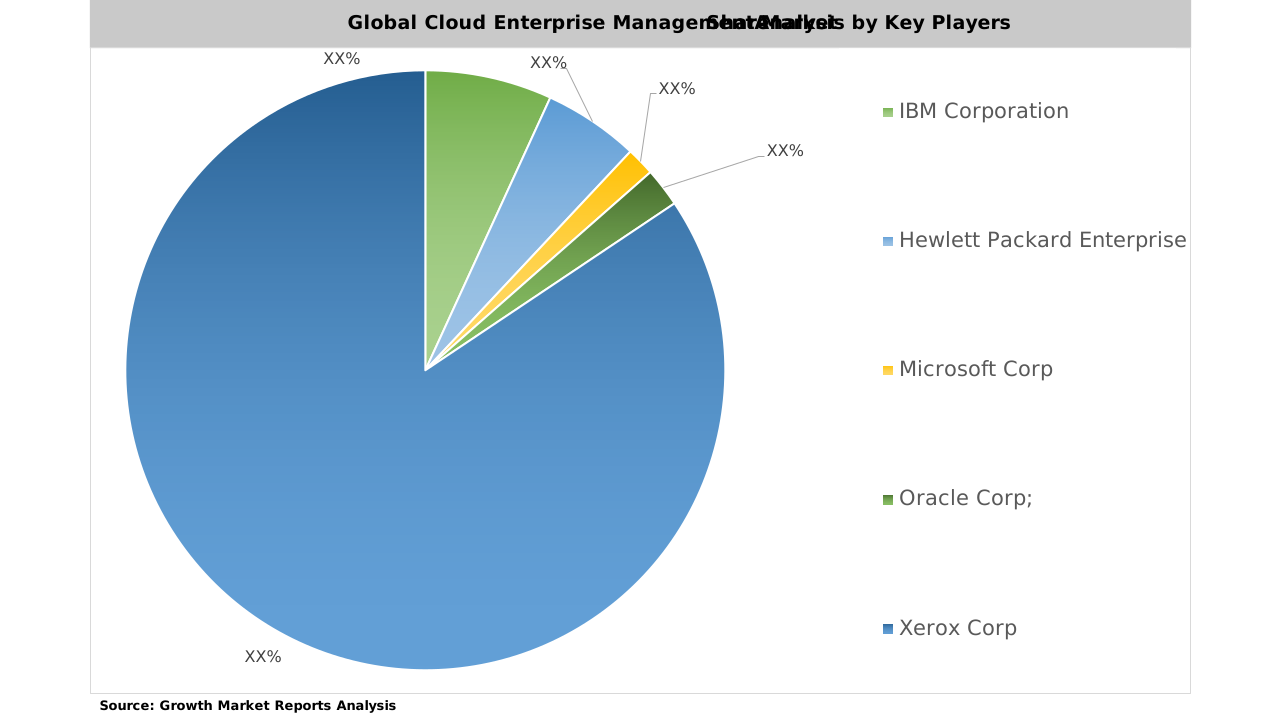
Key players competing in the cloud enterprise management market include IBM Corporation; Hewlett Packard Enterprise; Microsoft Corp; Oracle Corp; Xerox Corp.
Some of these players are focusing on business strategies including partnerships, collaborations, capacity expansion, and product launches to increase their market shares. For instance.
In June 2019 Microsoft and Oracle collaborate and launched cloud interoperability where enterprises can now link Azure services, such as Analytics and AI, to Oracle Cloud services, such as Autonomous Database, in a seamless manner.
In January 2019 Alfresco and Tech Mahindra, announced their global partnership and the development of new solution frameworks built on the Alfresco digital business platform to meet the needs of today's digital customer by simplifying access, sharing, content creation, and review.
Solutions are increasingly integrating artificial intelligence, machine learning, automation, and advanced analytics to automate tasks, provide actionable insights, enhance decision-making, and support digital transformation.
Key players include Microsoft Corporation, Amazon Web Services (AWS), Google LLC, IBM Corporation, Oracle Corporation, SAP SE, Salesforce, VMware, ServiceNow, Cisco, Workday, HPE, Alibaba Cloud, Rackspace, BMC Software, Broadcom, Infor, Zoho, Epicor, and Sage Group.
North America leads the market with a 41% share, followed by Asia Pacific as the fastest-growing region, and Europe and the Middle East & Africa also showing steady growth.
Opportunities include integration of AI and automation, expansion into emerging markets, and demand for industry-specific solutions. Challenges include managing hybrid/multi-cloud complexity, ensuring security and compliance, and a shortage of skilled IT professionals.
Major adopters include BFSI (banking, financial services, and insurance), IT and telecommunications, healthcare, retail, manufacturing, government, and sectors such as education, energy, and logistics.
Key applications include finance and accounting, human resources, supply chain management, customer relationship management (CRM), project management, procurement, compliance management, and business intelligence.
SMEs benefit from cloud enterprise management by accessing advanced capabilities without large upfront investments, leveraging subscription-based pricing, and scaling operations easily to support business growth.
Cloud enterprise management solutions can be deployed via public cloud, private cloud, or hybrid cloud models, each offering distinct advantages in terms of scalability, security, and customization.
Key growth drivers include rapid enterprise digitization, increasing cloud adoption, demand for scalable IT infrastructure, enhanced data accessibility, cost-effective operations, and the proliferation of remote and hybrid work models.
The global cloud enterprise management market reached USD 13.8 billion in 2024 and is projected to grow at a CAGR of 14.2% from 2025 to 2033, reaching USD 43.5 billion by the end of the forecast period.