Segments - by Component (Software, Services), by Deployment Mode (Public Cloud, Private Cloud, Hybrid Cloud), by Organization Size (Small and Medium Enterprises, Large Enterprises), by Application (Disk Encryption, File/Folder Encryption, Database Encryption, Communication Encryption), by End-User (BFSI, Healthcare, Government, Retail, IT & Telecom, Manufacturing, Others)
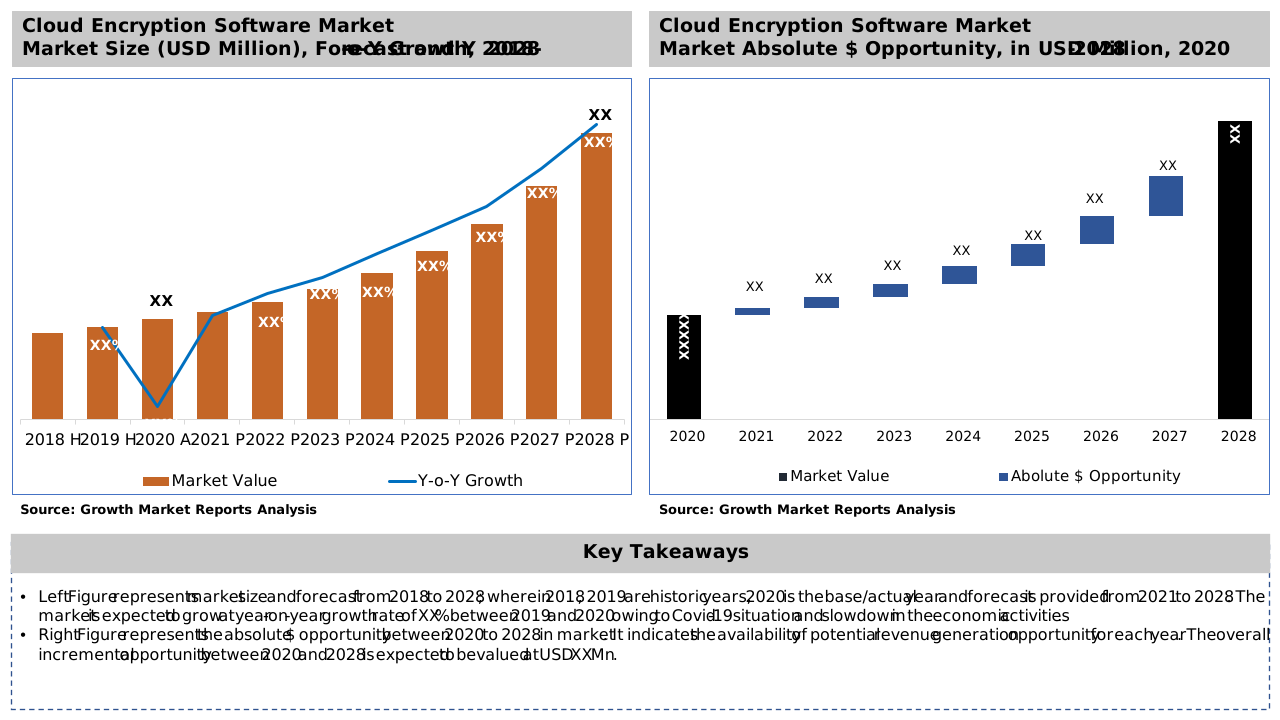
According to our latest research, the global cloud encryption software market size in 2024 stands at USD 3.8 billion, with a robust CAGR of 19.7% projected between 2025 and 2033. By the end of 2033, the market is anticipated to reach approximately USD 13.7 billion, driven by the escalating need for secure cloud environments across industries. The surge in cyber threats, stringent data protection regulations, and the widespread adoption of cloud computing are major factors propelling the growth of the cloud encryption software market worldwide.
One of the primary growth factors for the cloud encryption software market is the rapid digital transformation witnessed across various sectors, including BFSI, healthcare, and government. As organizations increasingly migrate their workloads and sensitive data to cloud infrastructures, the necessity for robust encryption solutions becomes paramount. Cloud encryption software not only safeguards data at rest and in transit but also ensures compliance with regulatory frameworks such as GDPR, HIPAA, and PCI DSS. This compliance imperative is particularly significant for organizations operating in highly regulated industries, where data breaches can result in severe financial and reputational repercussions. Furthermore, the proliferation of remote work and BYOD (Bring Your Own Device) practices has expanded the attack surface, making encryption a critical component of enterprise security strategies.
Another significant driver is the evolution of sophisticated cyber threats and the rising frequency of data breaches. Cybercriminals are employing advanced techniques to infiltrate cloud environments, making traditional security measures insufficient. As a result, organizations are increasingly turning to cloud encryption software to mitigate risks and ensure end-to-end data protection. The integration of artificial intelligence and machine learning into encryption solutions is further enhancing their capability to detect anomalies and respond to threats in real time. Additionally, the growing awareness among enterprises regarding the potential financial losses associated with data breaches is accelerating investments in advanced encryption technologies. This heightened focus on proactive security measures is expected to sustain market growth throughout the forecast period.
The market is also benefiting from the continuous innovation and development of user-friendly encryption solutions that cater to diverse deployment modes and organizational sizes. Vendors are offering scalable and flexible cloud encryption software that can be seamlessly integrated with existing cloud infrastructures, whether public, private, or hybrid. This adaptability is particularly attractive to small and medium enterprises (SMEs), which often lack the resources to implement complex security architectures. The emergence of encryption-as-a-service (EaaS) models is further democratizing access to advanced encryption capabilities, enabling organizations of all sizes to protect their data without incurring significant upfront costs. As cloud adoption continues to accelerate globally, the demand for comprehensive and scalable encryption solutions is expected to rise correspondingly.
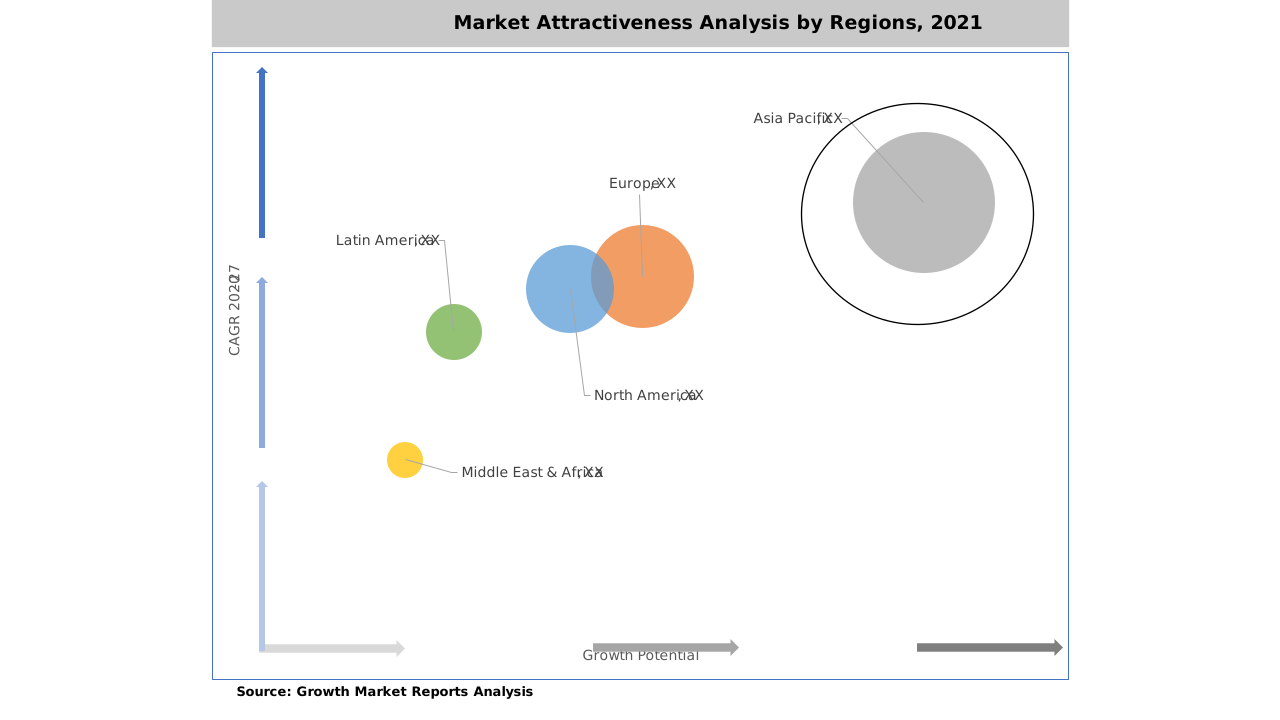
From a regional perspective, North America currently dominates the cloud encryption software market, accounting for the largest share in 2024, followed closely by Europe and the Asia Pacific. The high concentration of cloud service providers, stringent regulatory landscape, and early adoption of advanced technologies in North America are key contributors to its market leadership. Europe’s growth is primarily driven by strict data privacy regulations such as GDPR, while the Asia Pacific region is witnessing rapid expansion due to increasing cloud adoption among SMEs and large enterprises. Latin America and the Middle East & Africa are also emerging as promising markets, albeit at a relatively nascent stage, with growing awareness and investments in cloud security solutions. The global outlook remains optimistic, with each region presenting unique opportunities and challenges for market participants.
The cloud encryption software market is segmented by component into software and services, with software currently holding the dominant share. The software segment encompasses a wide range of encryption solutions designed to protect data across various cloud environments, including disk, file/folder, database, and communication encryption. These solutions are continuously evolving to address emerging security challenges and regulatory requirements, offering advanced features such as key management, access controls, and integration with cloud service providers. The increasing complexity of cloud infrastructures and the need for comprehensive data protection are driving organizations to invest in robust encryption software that can be customized to meet specific security needs. Furthermore, the rise of multi-cloud strategies is prompting vendors to develop interoperable solutions that ensure consistent protection across diverse platforms.
On the other hand, the services segment is gaining traction as organizations seek expert guidance and support to implement, manage, and optimize their encryption strategies. Services include consulting, training, integration, and managed services, which are particularly valuable for enterprises lacking in-house security expertise. The growing demand for managed security services is a testament to the increasing complexity of cloud environments and the need for continuous monitoring and threat management. Service providers are leveraging their domain expertise to help organizations navigate regulatory requirements, design tailored encryption architectures, and respond swiftly to security incidents. As the threat landscape evolves, the services segment is expected to witness significant growth, complementing the adoption of encryption software.
The interplay between software and services is crucial for the overall effectiveness of cloud encryption strategies. While software provides the foundational tools for data protection, services ensure that these tools are deployed and managed in alignment with organizational objectives and compliance mandates. Vendors are increasingly offering bundled solutions that combine software and services, providing end-to-end security coverage for cloud environments. This integrated approach not only simplifies procurement and deployment processes but also enhances the overall security posture of organizations. As the market matures, the distinction between software and services is expected to blur, with holistic solutions becoming the norm.
Innovation in the component segment is also being fueled by strategic partnerships and collaborations between software vendors, service providers, and cloud service providers. These alliances are enabling the development of interoperable solutions that can be seamlessly integrated with leading cloud platforms such as AWS, Microsoft Azure, and Google Cloud. By leveraging the strengths of each partner, vendors are able to deliver comprehensive encryption solutions that address the unique security challenges of modern cloud environments. As organizations continue to prioritize data protection, the component segment will remain a focal point for market growth and innovation.
| Attributes | Details |
| Report Title | Cloud Encryption Software Market Research Report 2033 |
| By Component | Software, Services |
| By Deployment Mode | Public Cloud, Private Cloud, Hybrid Cloud |
| By Organization Size | Small and Medium Enterprises, Large Enterprises |
| By Application | Disk Encryption, File/Folder Encryption, Database Encryption, Communication Encryption |
| By End-User | BFSI, Healthcare, Government, Retail, IT & Telecom, Manufacturing, Others |
| Regions Covered | North America, Europe, APAC, Latin America, MEA |
| Base Year | 2024 |
| Historic Data | 2018-2023 |
| Forecast Period | 2025-2033 |
| Number of Pages | 254 |
| Number of Tables & Figures | 292 |
| Customization Available | Yes, the report can be customized as per your need. |
The deployment mode segment of the cloud encryption software market is categorized into public cloud, private cloud, and hybrid cloud, each offering distinct advantages and challenges. The public cloud deployment mode currently accounts for the largest market share, driven by the widespread adoption of public cloud services among enterprises seeking scalability, flexibility, and cost efficiency. Public cloud environments, offered by leading providers such as AWS, Microsoft Azure, and Google Cloud, present unique security challenges due to the multi-tenant nature of the infrastructure. As a result, organizations are increasingly deploying encryption software to safeguard sensitive data and ensure compliance with regulatory standards. The public cloud segment is expected to maintain its dominance, supported by the growing trend of digital transformation and cloud-first strategies among enterprises.
Private cloud deployment, while representing a smaller share, is gaining momentum among organizations with stringent security and compliance requirements. Private clouds offer greater control over data and infrastructure, making them an attractive option for industries such as BFSI, healthcare, and government. The adoption of encryption software in private cloud environments is driven by the need to protect sensitive data from internal and external threats, as well as to comply with industry-specific regulations. Organizations are leveraging private clouds to host mission-critical applications and data, necessitating the implementation of robust encryption solutions. The private cloud segment is expected to witness steady growth as organizations prioritize data sovereignty and regulatory compliance.
Hybrid cloud deployment is emerging as a preferred model for organizations seeking to balance the benefits of public and private clouds. Hybrid clouds enable organizations to distribute workloads across multiple environments, optimizing performance, cost, and security. The complexity of hybrid cloud architectures necessitates the use of advanced encryption software that can provide consistent data protection across disparate platforms. Vendors are responding to this demand by offering interoperable solutions that support seamless integration with both public and private cloud infrastructures. The hybrid cloud segment is poised for significant growth, driven by the increasing adoption of multi-cloud strategies and the need for flexible, scalable security solutions.
The choice of deployment mode is influenced by a variety of factors, including organizational size, industry vertical, regulatory landscape, and risk appetite. Enterprises are evaluating the trade-offs between cost, control, and security when selecting the appropriate deployment model for their cloud encryption initiatives. As cloud adoption continues to evolve, the demand for deployment-agnostic encryption solutions is expected to rise, enabling organizations to protect their data regardless of where it resides. The deployment mode segment will remain a key area of focus for vendors seeking to address the diverse needs of the market.
The cloud encryption software market is segmented by organization size into small and medium enterprises (SMEs) and large enterprises, each with distinct security requirements and adoption patterns. Large enterprises currently account for the majority of the market share, driven by their substantial investments in cloud infrastructure and the complexity of their IT environments. These organizations typically handle vast volumes of sensitive data, making them prime targets for cyberattacks. As a result, large enterprises are prioritizing the deployment of advanced encryption software to safeguard their data assets and ensure regulatory compliance. The adoption of cloud encryption solutions among large enterprises is further supported by the availability of dedicated IT security teams and budgets.
Small and medium enterprises (SMEs) are increasingly recognizing the importance of cloud encryption software, particularly as they embrace digital transformation and cloud adoption. While SMEs often face resource constraints, the availability of scalable and cost-effective encryption solutions is enabling them to enhance their security posture without incurring significant upfront costs. Cloud-based encryption services and subscription models are particularly attractive to SMEs, offering flexibility and ease of deployment. The growing awareness of cyber threats and the potential financial impact of data breaches is prompting SMEs to invest in robust encryption solutions. As a result, the SME segment is expected to witness accelerated growth, contributing significantly to the overall expansion of the cloud encryption software market.
The security needs and challenges faced by organizations vary significantly based on their size. Large enterprises often require customized encryption solutions that can be integrated with complex, multi-cloud environments and legacy systems. They also demand advanced features such as centralized key management, granular access controls, and real-time threat detection. In contrast, SMEs typically seek user-friendly solutions that offer essential encryption capabilities without overwhelming their limited IT resources. Vendors are responding to these diverse needs by offering a range of products and services tailored to different organizational sizes.
The increasing availability of encryption-as-a-service (EaaS) models is bridging the gap between large enterprises and SMEs, democratizing access to advanced encryption technologies. These models allow organizations of all sizes to leverage enterprise-grade security without the need for significant capital investment or specialized expertise. As the threat landscape continues to evolve, the demand for scalable and flexible encryption solutions is expected to grow across both segments, driving innovation and competition in the market.
The application segment of the cloud encryption software market is divided into disk encryption, file/folder encryption, database encryption, and communication encryption, each addressing specific security needs. Disk encryption solutions are designed to protect entire storage volumes, ensuring that data remains secure even if physical devices are compromised. This application is particularly relevant for organizations with stringent data protection requirements, such as those in the BFSI and healthcare sectors. The adoption of disk encryption is driven by the need to safeguard sensitive information and comply with industry regulations. Vendors are continuously enhancing their offerings to support a wide range of storage environments, including virtualized and cloud-based storage.
File/folder encryption solutions provide granular control over data protection, allowing organizations to encrypt specific files or folders based on sensitivity and regulatory requirements. This application is widely adopted across industries, enabling organizations to implement targeted security measures without impacting overall system performance. File/folder encryption is particularly valuable for organizations that handle large volumes of unstructured data, such as documents, images, and multimedia files. The growing emphasis on data privacy and the need to prevent unauthorized access are driving the adoption of file/folder encryption solutions.
Database encryption is gaining traction as organizations seek to protect structured data stored in cloud-based databases. This application is critical for industries that manage sensitive customer information, financial records, and intellectual property. Database encryption solutions are designed to secure data at rest, in transit, and during processing, ensuring comprehensive protection against internal and external threats. The increasing adoption of cloud-based database services is fueling demand for advanced encryption solutions that can be seamlessly integrated with leading database platforms. Vendors are focusing on developing solutions that offer robust key management, performance optimization, and compliance support.
Communication encryption is essential for securing data transmitted over networks, including emails, messaging, and VoIP communications. This application is particularly relevant in the context of remote work and distributed teams, where sensitive information is frequently exchanged over public networks. Communication encryption solutions are designed to prevent eavesdropping, data interception, and unauthorized access, ensuring the confidentiality and integrity of information. The rise of cloud-based collaboration tools and the increasing use of mobile devices are driving demand for communication encryption solutions that offer seamless integration and user-friendly interfaces.
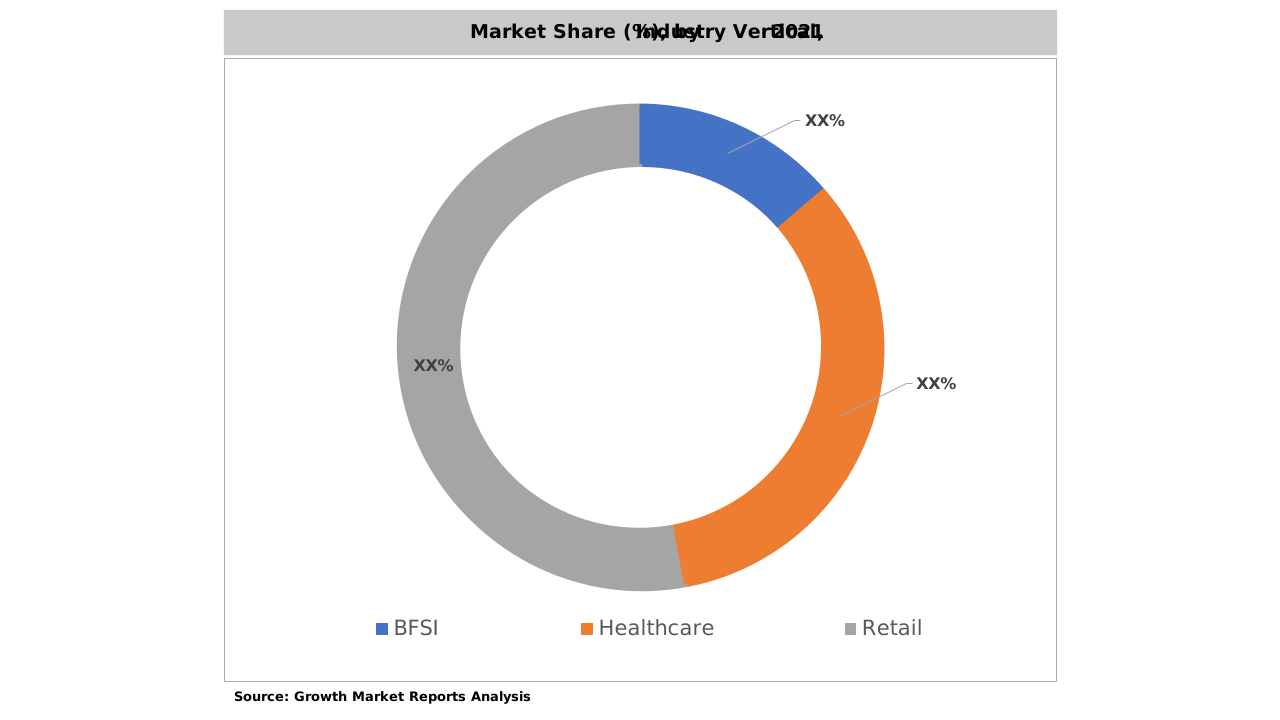
The end-user segment of the cloud encryption software market is highly diverse, encompassing BFSI, healthcare, government, retail, IT & telecom, manufacturing, and other sectors. The BFSI sector is the largest adopter of cloud encryption software, driven by the need to protect sensitive financial data and comply with stringent regulatory requirements. Financial institutions are increasingly leveraging cloud encryption solutions to secure customer information, transaction data, and payment systems. The growing threat of cyberattacks, including ransomware and phishing, is further accelerating the adoption of advanced encryption technologies in the BFSI sector.
The healthcare sector is another major end-user, with organizations seeking to safeguard patient records, medical research, and other sensitive data. Compliance with regulations such as HIPAA and the increasing digitization of healthcare services are key drivers for the adoption of cloud encryption software. Healthcare providers are leveraging encryption solutions to secure electronic health records (EHRs), telemedicine platforms, and medical devices, ensuring data privacy and integrity. The growing use of cloud-based healthcare applications is expected to fuel demand for encryption solutions tailored to the unique needs of the sector.
Government agencies are also significant adopters of cloud encryption software, driven by the need to protect classified information and ensure national security. Governments are increasingly migrating their operations to the cloud, necessitating the implementation of robust encryption solutions to prevent data breaches and unauthorized access. The adoption of cloud encryption software in the government sector is further supported by regulatory mandates and the need for secure collaboration among agencies. Vendors are developing solutions that meet the specific security and compliance requirements of government organizations, including support for national cryptographic standards.
Other notable end-users include the retail, IT & telecom, and manufacturing sectors, each with unique security challenges and regulatory landscapes. Retailers are leveraging cloud encryption software to protect customer data and payment information, while IT & telecom companies are securing their infrastructure and communication networks. The manufacturing sector is adopting encryption solutions to protect intellectual property and sensitive operational data. As organizations across all sectors continue to embrace cloud technologies, the demand for tailored encryption solutions is expected to grow, driving innovation and competition in the market.
The cloud encryption software market presents numerous opportunities for growth, primarily driven by the increasing adoption of cloud computing across industries. As organizations migrate more workloads and sensitive data to the cloud, the need for robust encryption solutions becomes paramount. This trend is creating significant opportunities for vendors to develop innovative encryption technologies that address emerging security challenges. The integration of artificial intelligence and machine learning into encryption solutions is a key area of opportunity, enabling organizations to detect and respond to threats in real time. Additionally, the growing demand for encryption-as-a-service (EaaS) models is democratizing access to advanced security capabilities, allowing organizations of all sizes to protect their data without incurring significant upfront costs. Vendors that can offer scalable, user-friendly, and cost-effective solutions are well-positioned to capitalize on the expanding market.
Another major opportunity lies in the development of industry-specific encryption solutions that address the unique regulatory and security requirements of sectors such as BFSI, healthcare, and government. Organizations in these sectors face stringent compliance mandates and are increasingly seeking tailored encryption solutions that can be seamlessly integrated with their existing IT infrastructures. Vendors that can offer customizable solutions with robust compliance support are likely to gain a competitive edge. Furthermore, the rise of hybrid and multi-cloud environments is creating opportunities for vendors to develop interoperable encryption solutions that provide consistent data protection across diverse platforms. As organizations continue to embrace digital transformation, the demand for advanced encryption technologies is expected to remain strong, driving sustained market growth.
Despite the numerous opportunities, the cloud encryption software market faces several restraining factors. One of the primary challenges is the complexity of managing encryption keys across distributed cloud environments. Improper key management can undermine the effectiveness of encryption solutions and increase the risk of data breaches. Organizations often struggle with the lack of standardized key management practices and the need to balance security with operational efficiency. Additionally, the integration of encryption software with existing cloud infrastructures can be complex and resource-intensive, particularly for organizations with limited IT expertise. These challenges are further compounded by the evolving threat landscape and the need for continuous updates and maintenance. Vendors must address these restrainers by offering user-friendly solutions with integrated key management and robust support services.
North America remains the largest regional market for cloud encryption software, accounting for approximately USD 1.5 billion in 2024. The region’s dominance is attributed to the high concentration of cloud service providers, advanced IT infrastructure, and stringent regulatory landscape. The United States, in particular, is a major contributor, driven by the early adoption of cloud technologies and the growing emphasis on data privacy and security. The presence of leading technology companies and a proactive approach to cybersecurity are further supporting the growth of the cloud encryption software market in North America. The region is expected to maintain its leadership position throughout the forecast period, with a strong CAGR of 18.9%.
Europe is the second-largest market, with a market size of approximately USD 1.1 billion in 2024. The region’s growth is primarily driven by strict data privacy regulations such as the General Data Protection Regulation (GDPR) and the increasing adoption of cloud services among enterprises. Countries such as the United Kingdom, Germany, and France are leading the adoption of cloud encryption software, supported by government initiatives and investments in cybersecurity. The focus on compliance and the need to protect sensitive data are key factors driving market growth in Europe. The region is expected to witness steady growth, with a projected market size of USD 4.2 billion by 2033.
The Asia Pacific region is witnessing rapid growth, with a market size of USD 0.8 billion in 2024 and a projected CAGR of 22.3% through 2033. The increasing adoption of cloud technologies among SMEs and large enterprises, coupled with rising awareness of cybersecurity threats, is fueling demand for cloud encryption software in the region. Countries such as China, India, Japan, and Australia are at the forefront of this growth, driven by government initiatives, digital transformation, and investments in IT infrastructure. The region’s diverse regulatory landscape presents both opportunities and challenges for market participants, requiring vendors to develop flexible and compliant solutions. Latin America and the Middle East & Africa are also emerging as promising markets, albeit at a relatively nascent stage, with growing investments in cloud security solutions and increasing awareness of data protection.
The cloud encryption software market is characterized by intense competition, with a mix of established players and innovative startups vying for market share. Leading vendors are focusing on expanding their product portfolios, enhancing integration capabilities, and investing in research and development to stay ahead of emerging threats. Strategic partnerships and collaborations with cloud service providers, system integrators, and managed security service providers are common strategies employed to strengthen market presence and offer comprehensive security solutions. The competitive landscape is further shaped by mergers and acquisitions, as companies seek to acquire new technologies and expand their customer base.
Innovation remains a key differentiator in the cloud encryption software market, with vendors continuously developing advanced features such as AI-powered threat detection, automated key management, and seamless integration with multi-cloud environments. The ability to offer scalable and user-friendly solutions that cater to diverse deployment modes and organizational sizes is critical for success. Vendors are also focusing on industry-specific solutions that address the unique security and compliance requirements of sectors such as BFSI, healthcare, and government. As the market matures, the emphasis is shifting towards holistic security solutions that combine encryption with other cybersecurity measures, such as identity and access management, threat intelligence, and security analytics.
The competitive landscape is also influenced by the growing demand for encryption-as-a-service (EaaS) models, which are democratizing access to advanced encryption technologies. Vendors that can offer flexible pricing models, robust support services, and seamless integration with leading cloud platforms are well-positioned to capture market share. Customer trust and reputation are critical factors, particularly in the context of data privacy and regulatory compliance. As organizations increasingly prioritize data protection, vendors must demonstrate a strong track record of security, reliability, and compliance to win and retain customers.
Major companies operating in the cloud encryption software market include Microsoft Corporation, IBM Corporation, Amazon Web Services (AWS), Google LLC, Thales Group, Broadcom Inc. (Symantec), McAfee, Trend Micro, Sophos Group, and CipherCloud. Microsoft Corporation offers a comprehensive suite of cloud security solutions, including Azure Information Protection and Azure Key Vault, which provide advanced encryption and key management capabilities. IBM Corporation is known for its robust encryption solutions, such as IBM Cloud Data Shield and IBM Key Protect, which cater to a wide range of industries. Amazon Web Services (AWS) offers a range of encryption services, including AWS Key Management Service (KMS) and AWS CloudHSM, designed to secure data across AWS cloud environments.
Google LLC provides advanced encryption capabilities through its Google Cloud Platform (GCP), including Cloud Key Management and client-side encryption solutions. Thales Group is a leading provider of data protection and encryption solutions, offering products such as CipherTrust Cloud Key Manager and SafeNet Data Encryption. Broadcom Inc. (Symantec) delivers a range of cloud security solutions, including encryption and data loss prevention (DLP) technologies. McAfee, Trend Micro, and Sophos Group are also prominent players, offering comprehensive cloud security platforms with integrated encryption capabilities. CipherCloud specializes in cloud access security broker (CASB) solutions with advanced encryption and data protection features.
These companies are continuously investing in research and development to enhance their product offerings and address emerging security challenges. Strategic acquisitions and partnerships are common strategies to expand market reach and strengthen technology capabilities. The competitive landscape is expected to remain dynamic, with ongoing innovation and consolidation shaping the future of the cloud encryption software market.
The Cloud Encryption Software market has been segmented on the basis of
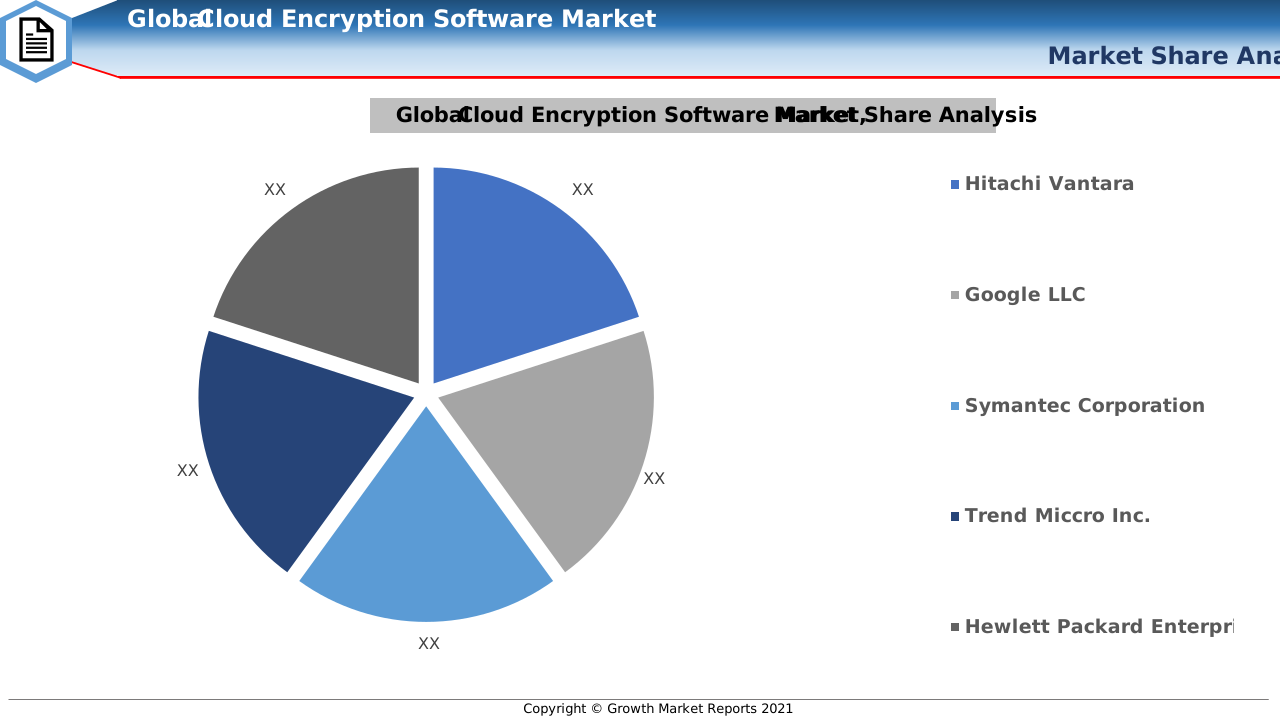
Key players competing in the cloud encryption software market include Hitachi Vantara, Google LLC, Symantec Corporation, Trend Miccro Inc., and Hewlett Packard Enterprise.
Some of these players are using several market strategies such as mergers, acquisitions, partnerships, collaborations, capacity expansion, and product launches to increase their market shares.
Trends include the integration of AI and machine learning for threat detection, the rise of encryption-as-a-service (EaaS) models, demand for industry-specific solutions, and the need for interoperable encryption across multi-cloud environments.
Leading companies include Microsoft Corporation, IBM Corporation, Amazon Web Services (AWS), Google LLC, Oracle Corporation, Thales Group, Symantec (Broadcom Inc.), Trend Micro, McAfee, Sophos Group, and CipherCloud.
Key applications include disk encryption, file/folder encryption, database encryption, and communication encryption, each designed to protect different types of data and use cases within cloud environments.
Major challenges include the complexity of encryption key management, integration with existing cloud infrastructures, lack of standardized practices, and the need for continuous updates to address evolving threats.
North America dominates the market, followed by Europe and the Asia Pacific. North America's leadership is due to advanced IT infrastructure and strict regulations, while Asia Pacific is experiencing rapid growth due to increased cloud adoption.
The market is segmented into software and services. Software includes various encryption solutions, while services encompass consulting, integration, managed services, and support for implementing encryption strategies.
Cloud encryption software can be deployed in public cloud, private cloud, and hybrid cloud environments. Public cloud currently holds the largest market share, while hybrid cloud is gaining popularity for its flexibility.
The largest adopters are BFSI (Banking, Financial Services, and Insurance), healthcare, government, retail, IT & telecom, and manufacturing sectors, each with unique security and compliance requirements.
Key drivers include the increasing need for secure cloud environments, rising cyber threats, stringent data protection regulations, digital transformation across industries, and the widespread adoption of cloud computing.
The global cloud encryption software market size in 2024 is valued at USD 3.8 billion and is expected to reach approximately USD 13.7 billion by 2033, growing at a CAGR of 19.7% from 2025 to 2033.