Segments - by Component (Software, Services), by Deployment Mode (On-Premises, Cloud-Based, Web-Based), by End-User (Pharmaceutical & Biotechnology Companies, Contract Research Organizations, Medical Device Companies, Hospitals & Clinics, Others), by Delivery Mode (Licensed Enterprise, SaaS, Others)
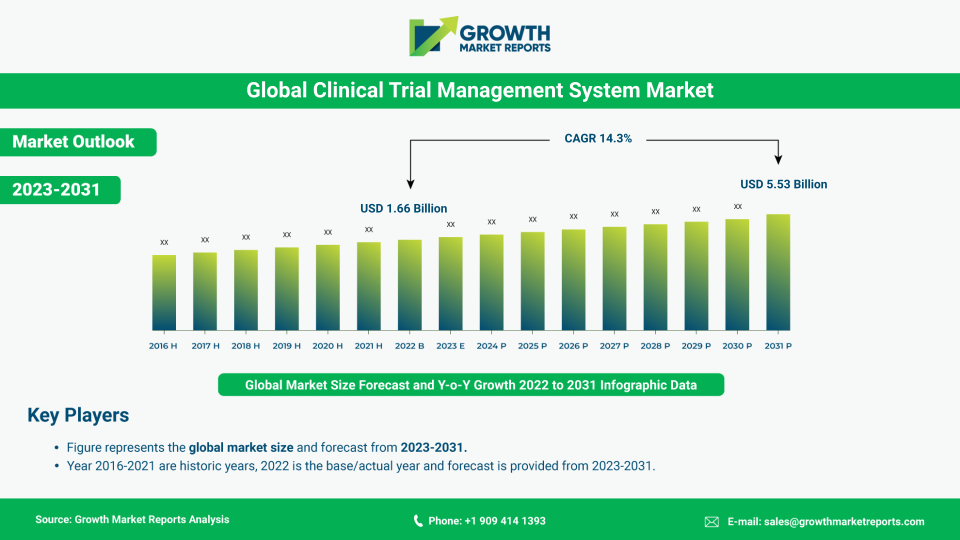
As per our latest research, the global Clinical Trial Management System (CTMS) market size stood at USD 1.56 billion in 2024, reflecting robust adoption across the life sciences sector. The market is projected to expand at a CAGR of 13.2% from 2025 to 2033, reaching an estimated value of USD 4.21 billion by 2033. This significant growth is primarily driven by the increasing complexity of clinical trials, the surge in R&D investment by pharmaceutical and biotechnology companies, and the growing need for streamlined, regulatory-compliant trial management solutions worldwide.
A key driver propelling the Clinical Trial Management System market is the exponential increase in clinical research activities, particularly in the wake of the COVID-19 pandemic, which underscored the necessity for rapid and efficient trial management. The rising prevalence of chronic diseases and the urgent demand for new therapeutics have led to a surge in the number and complexity of clinical trials globally. As a result, organizations are turning to advanced CTMS solutions to manage large volumes of data, ensure regulatory compliance, and optimize resource allocation. Furthermore, the integration of artificial intelligence and machine learning capabilities into CTMS platforms is enabling predictive analytics, real-time monitoring, and enhanced decision-making, thereby further accelerating market growth.
Another significant growth factor for the Clinical Trial Management System market is the increasing adoption of cloud-based and web-based solutions. These deployment modes offer scalability, flexibility, and remote access, which are critical for multinational trials and geographically dispersed teams. Cloud-based CTMS platforms facilitate seamless collaboration among stakeholders, improve data security, and reduce IT overhead costs. Additionally, the shift towards decentralized and hybrid clinical trials, supported by digital technologies, is creating new opportunities for CTMS vendors to offer innovative features such as electronic data capture, remote monitoring, and patient engagement tools. These advancements are making clinical trials more efficient and cost-effective, further boosting market expansion.
The evolving regulatory landscape also plays a pivotal role in shaping the Clinical Trial Management System market. Stringent guidelines from regulatory bodies such as the FDA, EMA, and ICH necessitate rigorous documentation, audit trails, and real-time reporting, making CTMS solutions indispensable for compliance. Organizations are increasingly seeking systems that can automate regulatory submissions, track protocol deviations, and generate comprehensive reports to meet global standards. Moreover, the growing emphasis on data integrity, patient safety, and transparency is compelling sponsors and CROs to invest in robust CTMS platforms that ensure end-to-end visibility and control over the trial lifecycle. This regulatory push, combined with technological innovation, is expected to sustain high demand for CTMS solutions through the forecast period.
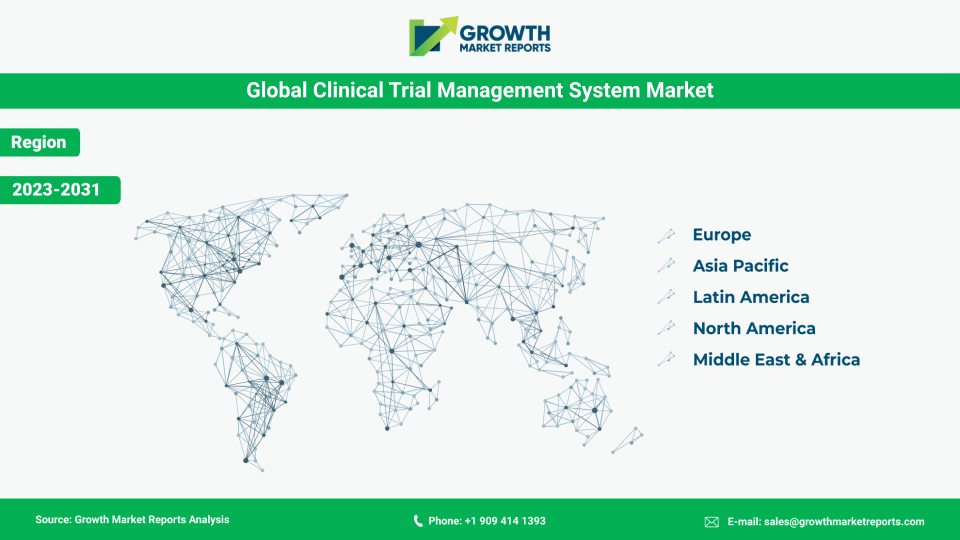
From a regional perspective, North America dominates the Clinical Trial Management System market, accounting for the largest share in 2024, followed by Europe and Asia Pacific. The region's leadership is attributed to the presence of major pharmaceutical companies, advanced healthcare infrastructure, and supportive government initiatives for clinical research. Europe is also experiencing steady growth, driven by increasing R&D expenditure and the adoption of advanced digital health technologies. Meanwhile, Asia Pacific is emerging as a lucrative market, fueled by expanding clinical trial activity, growing investments in healthcare IT, and the rising number of contract research organizations. Latin America and the Middle East & Africa are witnessing gradual adoption, supported by improving regulatory frameworks and increased focus on healthcare innovation.
The Clinical Trial Management System market is segmented by component into software and services, each playing a critical role in the overall ecosystem. The software segment holds the lion’s share of the market, driven by the growing need for automation, data integration, and real-time analytics in clinical trial operations. Modern CTMS software solutions are designed to streamline workflow management, track study milestones, and facilitate seamless collaboration among stakeholders. The integration of advanced features such as electronic trial master file (eTMF), risk-based monitoring, and patient recruitment modules is further enhancing the value proposition of CTMS platforms. As clinical trials become more complex and geographically dispersed, the demand for robust, scalable, and user-friendly software solutions continues to rise, positioning the software segment for sustained growth.
The services segment, while smaller in comparison to software, is witnessing rapid growth as organizations increasingly seek specialized support for CTMS implementation, customization, training, and maintenance. Service providers offer a range of solutions, including system integration, data migration, regulatory compliance consulting, and ongoing technical support. The complexity of modern clinical trials necessitates expert guidance to ensure seamless deployment and optimal utilization of CTMS platforms. Additionally, the growing trend towards outsourcing non-core functions to third-party vendors is fueling demand for managed services, particularly among small and medium-sized enterprises (SMEs) and contract research organizations (CROs) with limited in-house IT resources.
Customization and integration services are gaining prominence as organizations look to tailor CTMS solutions to their unique workflows and integrate them with existing enterprise systems such as electronic data capture (EDC), laboratory information management systems (LIMS), and enterprise resource planning (ERP) platforms. This need for interoperability is driving vendors to offer modular, API-driven architectures that facilitate seamless data exchange and process automation. As a result, the services segment is evolving beyond traditional support functions to encompass strategic advisory, change management, and digital transformation services, creating new revenue streams for market players.
The increasing focus on user experience and system usability is also shaping the component landscape of the Clinical Trial Management System market. Vendors are investing in intuitive user interfaces, mobile compatibility, and advanced analytics dashboards to enhance user adoption and satisfaction. Training and support services are being tailored to address the specific needs of diverse user groups, including clinical research coordinators, data managers, and regulatory affairs professionals. This holistic approach to component offering is enabling organizations to maximize the value of their CTMS investments, improve trial efficiency, and ensure regulatory compliance.
| Attributes | Details |
| Report Title | Clinical Trial Management System Market Research Report 2033 |
| By Component | Software, Services |
| By Deployment Mode | On-Premises, Cloud-Based, Web-Based |
| By End-User | Pharmaceutical & Biotechnology Companies, Contract Research Organizations, Medical Device Companies, Hospitals & Clinics, Others |
| By Delivery Mode | Licensed Enterprise, SaaS, Others |
| Regions Covered | North America, Europe, APAC, Latin America, MEA |
| Base Year | 2024 |
| Historic Data | 2018-2023 |
| Forecast Period | 2025-2033 |
| Number of Pages | 255 |
| Number of Tables & Figures | 337 |
| Customization Available | Yes, the report can be customized as per your need. |
The deployment mode segment of the Clinical Trial Management System market encompasses on-premises, cloud-based, and web-based solutions, each offering distinct advantages and challenges. On-premises deployment, while once the standard, is gradually losing ground to more flexible and cost-effective alternatives. However, it remains relevant for organizations with stringent data security requirements, legacy IT infrastructure, or regulatory constraints that mandate local data storage. On-premises CTMS solutions offer greater control over data and system customization but require significant upfront investment in hardware, software, and ongoing maintenance. Despite the shift towards cloud-based models, certain large pharmaceutical companies and government research institutions continue to favor on-premises deployment for mission-critical trials and sensitive data.
Cloud-based deployment is rapidly gaining traction in the Clinical Trial Management System market, driven by its scalability, accessibility, and cost-efficiency. Cloud-based CTMS platforms enable organizations to manage trials across multiple sites and regions without the need for extensive IT infrastructure. These solutions offer automatic updates, data backup, and disaster recovery, reducing the burden on internal IT teams. The ability to access real-time data from any location is particularly valuable for decentralized and hybrid trials, which are becoming increasingly common in the post-pandemic landscape. Furthermore, cloud-based deployment facilitates seamless collaboration among sponsors, CROs, investigators, and regulatory authorities, enhancing trial transparency and efficiency.
Web-based deployment represents a hybrid approach, combining the benefits of cloud computing with the security and customization of on-premises solutions. Web-based CTMS platforms are typically hosted on secure servers and accessed via web browsers, eliminating the need for local installations. This model is particularly popular among small and medium-sized organizations that require flexible, user-friendly solutions without the complexity or cost of traditional on-premises systems. Web-based deployment supports rapid implementation, easy scalability, and integration with other digital health tools, making it an attractive option for organizations seeking to modernize their clinical trial operations.
The choice of deployment mode is influenced by several factors, including organizational size, trial complexity, regulatory requirements, and budget constraints. As the Clinical Trial Management System market continues to evolve, vendors are offering a range of deployment options to cater to diverse customer needs. The growing emphasis on data security, privacy, and compliance is prompting vendors to invest in robust encryption, access controls, and audit trails across all deployment models. This focus on security and flexibility is expected to drive continued innovation and adoption in the deployment mode segment, supporting the overall growth of the CTMS market.
The end-user segment of the Clinical Trial Management System market includes pharmaceutical and biotechnology companies, contract research organizations (CROs), medical device companies, hospitals and clinics, and others. Pharmaceutical and biotechnology companies represent the largest end-user group, accounting for a significant share of CTMS adoption. These organizations conduct a high volume of complex, multi-center trials and require advanced solutions to manage protocol development, patient recruitment, data collection, and regulatory submissions. The increasing focus on personalized medicine, rare diseases, and biologics is driving demand for sophisticated CTMS platforms that can support adaptive trial designs and real-time data analytics.
Contract research organizations (CROs) are another major end-user segment, leveraging CTMS solutions to manage trials on behalf of sponsors. CROs play a critical role in the global clinical research ecosystem, providing expertise, infrastructure, and operational support for a wide range of studies. The growing trend towards outsourcing clinical trial management to CROs is fueling demand for scalable, interoperable CTMS platforms that can handle multiple projects, clients, and regulatory environments. CROs require systems that offer robust project management, resource allocation, and financial tracking capabilities to ensure timely and cost-effective trial execution.
Medical device companies are increasingly adopting Clinical Trial Management System solutions to streamline the development and approval of innovative medical technologies. The regulatory landscape for medical devices is becoming more stringent, with agencies such as the FDA and EMA requiring comprehensive documentation, post-market surveillance, and real-world evidence. CTMS platforms enable medical device companies to manage complex trial protocols, monitor device performance, and generate regulatory-compliant reports. The growing focus on digital health, wearable devices, and remote monitoring is further driving CTMS adoption in this segment.
Hospitals and clinics, while traditionally less involved in large-scale clinical research, are emerging as important end-users of CTMS solutions. The shift towards investigator-initiated trials, academic research, and collaborative studies is prompting healthcare providers to invest in digital tools that enhance trial management, patient safety, and data integrity. CTMS platforms support hospitals and clinics in managing study workflows, tracking patient enrollment, and ensuring compliance with ethical and regulatory standards. Other end-users, such as academic research institutions and government agencies, are also contributing to market growth by adopting CTMS solutions to support public health initiatives and translational research.
The delivery mode segment of the Clinical Trial Management System market comprises licensed enterprise, Software-as-a-Service (SaaS), and other models. Licensed enterprise solutions are traditional, on-premises systems that organizations purchase and install on their own servers. These solutions offer extensive customization, integration, and control, making them suitable for large organizations with complex requirements and dedicated IT teams. However, the high upfront costs, lengthy implementation timelines, and ongoing maintenance needs are prompting many organizations to explore more flexible alternatives.
SaaS-based delivery is rapidly emerging as the preferred model for Clinical Trial Management System adoption, driven by its cost-effectiveness, scalability, and ease of use. SaaS CTMS platforms are hosted in the cloud and accessed via subscription, eliminating the need for local installations or infrastructure. This model offers automatic updates, robust security, and real-time access to trial data from any location. SaaS delivery is particularly attractive to small and medium-sized organizations, CROs, and research networks that require rapid deployment and minimal IT overhead. The growing trend towards decentralized and virtual trials is further accelerating the shift towards SaaS-based CTMS solutions.
Other delivery modes, including hybrid and managed service models, are gaining traction as organizations seek to balance customization, security, and operational efficiency. Hybrid delivery combines elements of licensed enterprise and SaaS models, allowing organizations to maintain critical data on-premises while leveraging cloud-based features for collaboration and scalability. Managed service models, in which vendors provide end-to-end support for CTMS implementation, maintenance, and optimization, are also becoming popular among organizations with limited internal resources. These flexible delivery options enable organizations to tailor CTMS adoption to their unique needs and strategic objectives.
The choice of delivery mode is influenced by factors such as organizational size, trial complexity, regulatory requirements, and budget constraints. Vendors are responding by offering modular, configurable CTMS platforms that support multiple delivery models and can be easily integrated with other digital health solutions. The increasing focus on data security, privacy, and compliance is driving investment in advanced encryption, access controls, and audit trails across all delivery modes. This emphasis on flexibility, security, and user experience is expected to drive continued innovation and adoption in the delivery mode segment, supporting the overall growth of the Clinical Trial Management System market.
The Clinical Trial Management System market is poised for significant growth, offering numerous opportunities for innovation and expansion. One of the most promising opportunities lies in the integration of artificial intelligence and machine learning technologies into CTMS platforms. These advanced capabilities enable predictive analytics, automated risk assessment, and real-time monitoring of trial progress, enhancing decision-making and operational efficiency. The growing adoption of decentralized and hybrid clinical trial models presents another major opportunity, as organizations seek digital solutions that support remote patient engagement, electronic data capture, and virtual site visits. CTMS vendors that can offer comprehensive, interoperable platforms with advanced analytics and patient-centric features are well-positioned to capture a larger share of the market.
Another key opportunity for market players is the expansion into emerging markets, particularly in Asia Pacific, Latin America, and the Middle East & Africa. These regions are experiencing rapid growth in clinical research activity, driven by expanding healthcare infrastructure, increasing R&D investment, and favorable regulatory reforms. Localizing CTMS solutions to meet the specific needs of these markets, such as language support, regulatory compliance, and integration with regional health systems, can unlock new revenue streams and drive global market penetration. Strategic partnerships with local CROs, academic institutions, and government agencies can further enhance market presence and foster long-term growth.
Despite the numerous opportunities, the Clinical Trial Management System market faces several restraining factors that could hinder growth. One of the primary challenges is the high cost and complexity of CTMS implementation, particularly for small and medium-sized organizations with limited resources. The need for system customization, integration with existing IT infrastructure, and ongoing maintenance can create significant financial and operational barriers. Additionally, concerns about data security, privacy, and regulatory compliance remain top priorities for organizations, especially in light of evolving data protection laws such as GDPR and HIPAA. Addressing these challenges requires continuous investment in technology, user training, and regulatory expertise to ensure successful CTMS adoption and long-term value realization.
North America continues to lead the global Clinical Trial Management System market, accounting for the largest share of USD 720 million in 2024. The region’s dominance is underpinned by the presence of leading pharmaceutical and biotechnology companies, advanced healthcare infrastructure, and a strong regulatory framework that supports clinical research innovation. The United States, in particular, is a major hub for clinical trials, with significant investment in R&D and widespread adoption of digital health technologies. The market in North America is expected to grow at a steady pace, supported by ongoing advancements in artificial intelligence, cloud computing, and patient-centric trial models.
Europe holds the second-largest share of the Clinical Trial Management System market, reaching USD 410 million in 2024. The region’s growth is driven by increasing R&D expenditure, supportive government policies, and the growing adoption of advanced CTMS solutions by pharmaceutical companies, CROs, and academic research institutions. Countries such as Germany, the United Kingdom, and France are leading contributors to market growth, benefiting from strong healthcare systems and a collaborative research environment. Europe is expected to witness a CAGR of 12.8% through 2033, as organizations continue to invest in digital transformation and regulatory compliance initiatives.
Asia Pacific is emerging as a high-growth region for the Clinical Trial Management System market, with a market size of USD 320 million in 2024. The region’s rapid expansion is fueled by increasing clinical trial activity, growing investments in healthcare IT, and the rising number of contract research organizations. Countries such as China, India, and Japan are at the forefront of this growth, driven by large patient populations, cost advantages, and improving regulatory frameworks. The Asia Pacific market is expected to outpace other regions in terms of CAGR, reflecting the untapped potential and increasing digitalization of clinical research operations. Latin America and the Middle East & Africa, while smaller in market size, are also experiencing gradual adoption of CTMS solutions, supported by healthcare modernization initiatives and enhanced regulatory oversight.
The competitive landscape of the Clinical Trial Management System market is characterized by the presence of several global and regional players, each striving to enhance their market position through innovation, strategic partnerships, and geographic expansion. Leading vendors are focusing on the development of comprehensive, interoperable CTMS platforms that offer advanced analytics, real-time monitoring, and seamless integration with other digital health solutions. The market is witnessing increasing consolidation, with larger players acquiring niche technology providers to strengthen their product portfolios and expand their customer base. Intense competition is driving continuous investment in research and development, resulting in the introduction of new features, improved user interfaces, and enhanced data security measures.
Strategic collaborations and partnerships are playing a pivotal role in shaping the competitive dynamics of the Clinical Trial Management System market. Vendors are partnering with pharmaceutical companies, CROs, academic institutions, and regulatory agencies to co-develop tailored solutions that address specific industry challenges. These alliances enable vendors to leverage complementary strengths, access new markets, and accelerate product innovation. In addition, the growing trend towards open-source and modular CTMS platforms is fostering greater collaboration and interoperability across the clinical research ecosystem, creating new opportunities for value creation and differentiation.
The market is also witnessing the emergence of new entrants, particularly in the cloud-based and SaaS segments, who are leveraging agile development methodologies and customer-centric approaches to gain market share. These players are focusing on delivering flexible, scalable, and cost-effective solutions that cater to the needs of small and medium-sized organizations, as well as emerging markets. The increasing emphasis on user experience, mobile compatibility, and advanced analytics is driving vendors to invest in intuitive interfaces, personalized dashboards, and real-time reporting capabilities. As competition intensifies, customer support, training, and value-added services are becoming key differentiators for market leaders.
Some of the major companies operating in the Clinical Trial Management System market include Oracle Corporation, Medidata Solutions (a Dassault Systèmes company), Veeva Systems, Parexel International, IBM Watson Health, Bioclinica, Inc. (now part of Clario), and MasterControl, Inc. Oracle Corporation is renowned for its comprehensive cloud-based CTMS solutions that offer robust data management, regulatory compliance, and advanced analytics capabilities. Medidata Solutions, a pioneer in the field, provides an integrated platform that supports end-to-end clinical trial operations, including electronic data capture, risk-based monitoring, and patient engagement. Veeva Systems specializes in cloud-based CTMS platforms tailored for the life sciences industry, emphasizing scalability, interoperability, and real-time collaboration.
Parexel International offers a suite of CTMS solutions designed to streamline clinical trial planning, execution, and oversight for sponsors and CROs. IBM Watson Health leverages artificial intelligence and machine learning to deliver predictive analytics and operational insights for clinical research organizations. Bioclinica, now part of Clario, is recognized for its expertise in imaging, eClinical solutions, and patient-centric technologies that enhance trial efficiency and data quality. MasterControl, Inc. focuses on providing quality management and compliance solutions that integrate seamlessly with CTMS platforms, supporting regulatory submissions and audit readiness. These companies, along with a host of emerging players, are shaping the future of the Clinical Trial Management System market through continuous innovation, strategic investment, and a relentless focus on customer value.
The Clinical Trial Management System market has been segmented on the basis of
Key players competing in global clinical trial management system market include IBM; Calyx; Oracle Corporation; MedNet Solutions Inc.; Bio-Optronics Inc.
Some of these players are targeting on business strategies such as mergers, acquisitions, partnerships, collaborations, capacity expansion, and product launches to increase their market shares. For instance
In December 2020, ERT launched Data Insights, for its trial Oversight Solution to discover variability during mange and collection end point data.
In January 2020, Veeva System launched its vault payment, a new application for vault CTMS that helps in managing and reimbursement process to clinical research sites.
Key players include Oracle Corporation, Medidata Solutions (Dassault Systèmes), Parexel International, Veeva Systems, IBM Watson Health, BioClinica (Clario), MasterControl, and several others.
Major challenges include the high cost and complexity of implementation, data security and privacy concerns, and the need for ongoing regulatory compliance.
AI and machine learning are enabling predictive analytics, real-time monitoring, and enhanced decision-making in CTMS platforms, making clinical trials more efficient and improving operational outcomes.
The CTMS market is segmented into software and services. Software solutions dominate due to the need for automation and data integration, while services such as implementation, customization, and support are rapidly growing.
Primary end-users include pharmaceutical and biotechnology companies, contract research organizations (CROs), medical device companies, hospitals and clinics, and academic research institutions.
CTMS solutions can be deployed on-premises, cloud-based, or web-based. Cloud-based and web-based deployments are gaining popularity due to their scalability, flexibility, and cost-effectiveness.
North America leads the CTMS market, followed by Europe and Asia Pacific. North America's dominance is due to advanced healthcare infrastructure, major pharmaceutical companies, and supportive government initiatives.
Key growth drivers include increasing complexity of clinical trials, higher R&D investments by pharmaceutical and biotechnology companies, the adoption of cloud-based solutions, integration of AI and machine learning, and the need for regulatory compliance.
The global Clinical Trial Management System market is expected to reach approximately USD 4.21 billion by 2033, growing at a CAGR of 13.2% from 2025 to 2033.
A Clinical Trial Management System (CTMS) is a software platform designed to streamline and manage the planning, tracking, and execution of clinical trials. It helps organizations ensure regulatory compliance, optimize resource allocation, and manage large volumes of trial data efficiently.