North America Ceramic Coatings Market Research Report 2033

North America Ceramic Coatings Market Research Report 2033

Segments - by Product Type (Oxide Coatings, Carbide Coatings, Nitride Coatings, Others), by Technology (Thermal Spray, Physical Vapor Deposition, Chemical Vapor Deposition, Others), by Application (Aerospace & Defense, Automotive, Energy, Industrial Goods, Healthcare, Others), by And Country (U.S., Canada, Mexico)

https://growthmarketreports.com/Raksha
Author : Raksha Sharma
https://growthmarketreports.com/Vaibhav
Fact-checked by : V. Chandola
https://growthmarketreports.com/Shruti
Editor : Shruti Bhat

Upcoming | Report ID :MC-2206 | 4.2 Rating | 49 Reviews | 286 Pages | Format : Docx PDF

Report Description


North America Ceramic Coatings Market Outlook

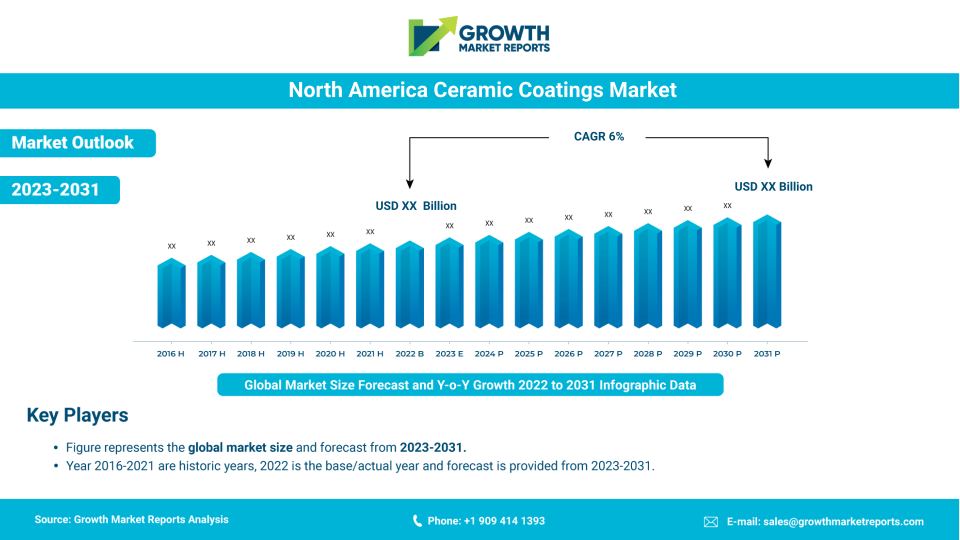
According to our latest research, the North America Ceramic Coatings market size reached USD 3.2 billion in 2024, reflecting robust demand across industrial sectors. The market is expected to expand at a CAGR of 7.1% from 2025 to 2033, which would result in a projected market value of USD 6.0 billion by the end of the forecast period. This growth is primarily driven by the rising adoption of advanced surface protection technologies in aerospace, automotive, and energy applications, as well as ongoing innovations in coating materials and deposition methods. As per our comprehensive analysis, strong investments in R&D and the region’s increasing focus on sustainability are further fueling the expansion of the North America Ceramic Coatings market.

One of the key growth factors for the North America Ceramic Coatings market is the surging demand from the aerospace and defense sector. Ceramic coatings are highly valued in this industry due to their exceptional thermal barrier properties, resistance to oxidation, and ability to withstand extreme environments. As aircraft manufacturers and defense contractors strive to improve fuel efficiency, extend component life, and meet stringent regulatory standards, the adoption of advanced oxide and carbide coatings has accelerated. The expansion of commercial aviation fleets and modernization of military aircraft are also driving the need for innovative coating solutions that can handle higher operating temperatures and reduce maintenance costs, thus contributing significantly to market growth.

Another major driver is the automotive industry’s increasing utilization of ceramic coatings for both performance and aesthetic enhancements. Automakers in North America are leveraging these coatings to improve engine efficiency, reduce emissions, and protect exterior surfaces from environmental damage. The rise of electric vehicles (EVs) has further intensified the need for high-performance coatings that can manage heat dissipation and protect sensitive electronic components. Additionally, the growing consumer preference for premium vehicles with scratch-resistant, glossy finishes is boosting the demand for advanced ceramic coating products in the aftermarket segment, further propelling the overall market expansion.

Technological advancements in deposition methods, such as thermal spray, physical vapor deposition (PVD), and chemical vapor deposition (CVD), are also playing a pivotal role in shaping the North America Ceramic Coatings market. Manufacturers are investing heavily in R&D to develop coatings with superior adhesion, uniformity, and durability, which are critical for high-value applications in energy, industrial goods, and healthcare sectors. The integration of nanotechnology and the development of eco-friendly coatings with lower volatile organic compound (VOC) emissions are opening new avenues for growth. As industries increasingly prioritize sustainability and regulatory compliance, the adoption of innovative ceramic coating technologies is expected to accelerate across the region.

From a regional perspective, the United States dominates the North America Ceramic Coatings market, accounting for the largest share in both production and consumption. The country’s advanced manufacturing base, strong presence of aerospace and automotive giants, and proactive government initiatives supporting innovation have established it as a hub for ceramic coating technologies. Canada is witnessing steady growth, driven by investments in energy infrastructure and industrial modernization, while Mexico is emerging as a key market due to the expansion of automotive and aerospace manufacturing clusters. The interplay of these markets, coupled with cross-border collaborations and supply chain integration, is shaping a dynamic and competitive landscape for ceramic coatings in North America.

Global North America Ceramic Coatings Industry Outlook

Product Type Analysis

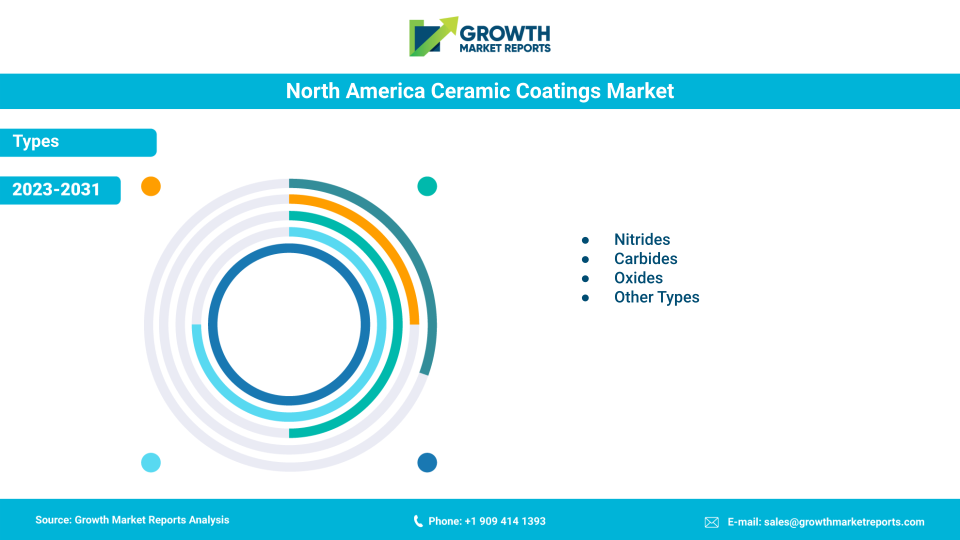
The North America Ceramic Coatings market is segmented by product type into Oxide Coatings, Carbide Coatings, Nitride Coatings, and Others, each serving distinct industrial requirements. Oxide coatings represent the largest segment, primarily due to their widespread use in aerospace, automotive, and energy applications. These coatings, typically composed of materials such as alumina, zirconia, and titania, offer excellent thermal insulation, corrosion resistance, and electrical insulation properties. Their ability to withstand high temperatures and harsh environments makes them indispensable for gas turbine engines, exhaust components, and heat exchangers. As industries increasingly demand higher performance and longer service life from their equipment, the adoption of oxide ceramic coatings continues to rise.

Carbide coatings, which include materials like tungsten carbide and silicon carbide, are gaining traction for their exceptional hardness and wear resistance. These coatings are extensively used in cutting tools, industrial machinery, and automotive components that are subjected to abrasive conditions. The growing emphasis on productivity and operational efficiency in manufacturing sectors is driving the need for durable carbide coatings that can extend tool life and reduce downtime. Additionally, advances in deposition technologies have enabled the application of uniform, defect-free carbide coatings on complex geometries, further enhancing their appeal across a range of industries in North America.

Nitride coatings, such as titanium nitride and aluminum nitride, are valued for their superior hardness, chemical stability, and electrical conductivity. These coatings are particularly important in electronics, medical devices, and precision engineering applications where both mechanical and functional properties are critical. The ongoing miniaturization of electronic components and the rise of high-performance medical implants have spurred demand for nitride coatings that offer biocompatibility and enhanced surface characteristics. As North American manufacturers continue to innovate in the fields of electronics and healthcare, the nitride coatings segment is expected to witness robust growth over the forecast period.

The Others category encompasses a variety of specialized ceramic coatings, including boride and silicide coatings, which cater to niche applications with unique performance requirements. These coatings are often used in environments that demand extreme hardness, oxidation resistance, or specialized electrical properties. While their market share is smaller compared to oxide, carbide, and nitride coatings, ongoing research into new ceramic materials and custom formulations is expanding the potential applications for these advanced coatings. As industries seek tailored solutions to address specific challenges, the demand for innovative and high-performance ceramic coatings in this segment is anticipated to grow steadily.

Report Scope

Attributes Details
Report Title North America Ceramic Coatings Market Research Report 2033
By Product Type Oxide Coatings, Carbide Coatings, Nitride Coatings, Others
By Technology Thermal Spray, Physical Vapor Deposition, Chemical Vapor Deposition, Others
By Application Aerospace & Defense, Automotive, Energy, Industrial Goods, Healthcare, Others
By And Country U.S., Canada, Mexico
Regions Covered North America, Europe, APAC, Latin America, MEA
Base Year 2024
Historic Data 2018-2023
Forecast Period 2025-2033
Number of Pages 286
Number of Tables & Figures 254
Customization Available Yes, the report can be customized as per your need.

Technology Analysis

The technology landscape of the North America Ceramic Coatings market is diverse, with Thermal Spray, Physical Vapor Deposition (PVD), Chemical Vapor Deposition (CVD), and Others being the primary methods employed for coating application. Thermal spray technology holds the largest market share due to its versatility, cost-effectiveness, and ability to deposit thick coatings on a wide range of substrates. This method is extensively used in aerospace, energy, and industrial goods sectors, where components are exposed to high temperatures, corrosion, and mechanical wear. The continuous development of advanced thermal spray techniques, such as high-velocity oxy-fuel (HVOF) and plasma spray, has further enhanced coating performance, driving adoption across critical applications in North America.

Physical Vapor Deposition (PVD) is gaining prominence for its ability to produce thin, uniform coatings with excellent adhesion and hardness. PVD is particularly favored in the automotive, electronics, and medical device industries, where precision and surface quality are paramount. The ongoing push for miniaturization and high-performance materials has made PVD a preferred choice for coating intricate components and providing decorative as well as functional finishes. As manufacturers strive to improve product reliability and aesthetics, the demand for PVD technology is expected to witness significant growth in the coming years.

Chemical Vapor Deposition (CVD) technology is renowned for its ability to produce coatings with superior chemical purity, density, and uniformity. CVD is widely used in semiconductor manufacturing, aerospace, and healthcare sectors, where high-performance coatings are essential for critical components. The method’s versatility in depositing a wide range of ceramic materials, including carbides, nitrides, and oxides, has made it indispensable for applications requiring advanced protective and functional surfaces. As North America continues to lead in technological innovation, the adoption of CVD is projected to increase, especially in industries with stringent quality and performance requirements.

The Others technology segment includes emerging and specialized deposition methods such as sol-gel, electrophoretic deposition, and laser-assisted techniques. These technologies are often used for niche applications that demand unique coating properties or require deposition on complex geometries. While their current market share is relatively small, ongoing research and development efforts are expanding their applicability and performance capabilities. As industries seek to address evolving challenges related to sustainability, efficiency, and material compatibility, the adoption of alternative ceramic coating technologies is expected to grow, contributing to the overall diversification of the North America Ceramic Coatings market.

Application Analysis

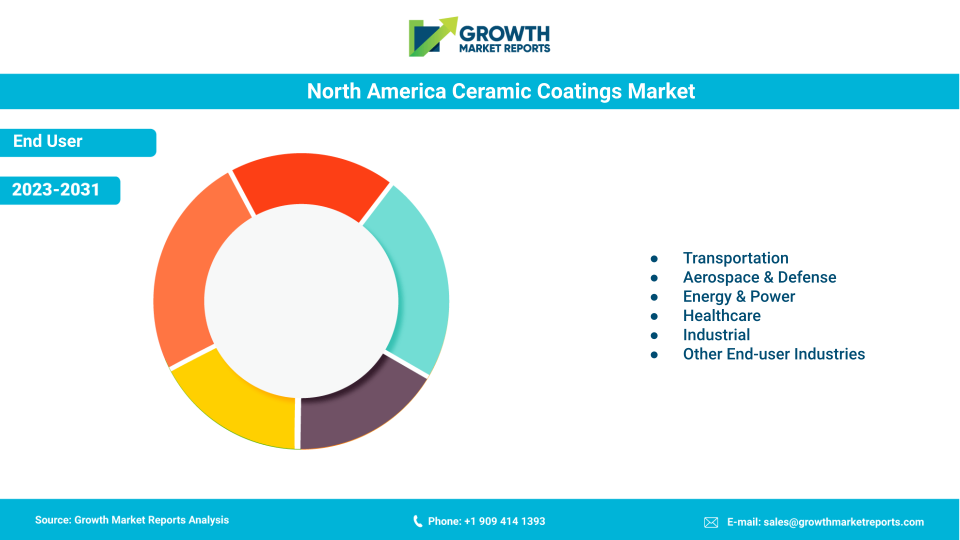
The application landscape of the North America Ceramic Coatings market is broad, encompassing Aerospace & Defense, Automotive, Energy, Industrial Goods, Healthcare, and Others. The aerospace & defense sector remains the dominant end user, driven by the need for advanced thermal barrier coatings, corrosion resistance, and improved component longevity. Ceramic coatings are critical for turbine blades, engine components, and structural parts that operate in extreme conditions. As the region’s aerospace industry continues to invest in next-generation aircraft and defense systems, the demand for high-performance ceramic coatings is expected to remain strong, supported by stringent regulatory standards and the pursuit of operational excellence.

The automotive industry is another major application area, leveraging ceramic coatings for engine parts, exhaust systems, and exterior surfaces. These coatings contribute to enhanced fuel efficiency, reduced emissions, and improved durability, aligning with the industry’s shift toward sustainability and electric mobility. The growing popularity of ceramic paint protection coatings in the aftermarket segment is also driving market growth, as consumers seek to preserve vehicle aesthetics and resale value. As automakers in North America accelerate their transition to electric and hybrid vehicles, the need for advanced ceramic coatings that can manage heat and protect sensitive components is expected to rise.

In the energy sector, ceramic coatings play a crucial role in enhancing the performance and reliability of equipment used in power generation, oil and gas, and renewable energy applications. These coatings provide superior resistance to wear, corrosion, and thermal cycling, which is essential for turbines, heat exchangers, and drilling tools operating in demanding environments. As North America invests in modernizing its energy infrastructure and expanding renewable energy capacity, the adoption of ceramic coatings is anticipated to increase, driven by the need to maximize operational efficiency and minimize maintenance costs.

The industrial goods segment relies on ceramic coatings for a wide range of applications, including cutting tools, machinery parts, and manufacturing equipment. These coatings enhance wear resistance, reduce friction, and extend the service life of components, contributing to improved productivity and cost savings. The ongoing trend toward automation and smart manufacturing in North America is fueling demand for high-performance coatings that can withstand aggressive operating conditions. Additionally, the healthcare sector is adopting ceramic coatings for medical implants, surgical instruments, and diagnostic devices, benefiting from their biocompatibility, antimicrobial properties, and resistance to wear and corrosion.

The Others application segment encompasses emerging and specialized uses of ceramic coatings in sectors such as electronics, marine, and construction. The rapid advancement of electronic devices and the increasing demand for durable, high-performance materials in these industries are opening new growth avenues for ceramic coatings. As manufacturers continue to innovate and explore new applications, the versatility and unique properties of ceramic coatings are expected to drive further expansion of the market across diverse end-use sectors in North America.

Opportunities & Threats

The North America Ceramic Coatings market presents significant opportunities for growth, particularly through advancements in material science and coating technologies. The integration of nanotechnology into ceramic coatings is enabling the development of products with enhanced mechanical, thermal, and chemical properties. These next-generation coatings offer superior performance in terms of hardness, abrasion resistance, and longevity, making them highly attractive for demanding applications in aerospace, automotive, and energy sectors. Furthermore, the increasing focus on sustainability and regulatory compliance is creating opportunities for manufacturers to develop eco-friendly coatings with reduced environmental impact. As industries seek to minimize their carbon footprint and improve resource efficiency, the adoption of green ceramic coating solutions is expected to accelerate, driving market expansion.

Another major opportunity lies in the growing demand for customized and application-specific ceramic coatings. As industries face evolving challenges related to performance, durability, and cost-effectiveness, there is a rising need for tailored coating solutions that address specific operational requirements. Manufacturers are investing in research and development to create coatings with unique properties, such as self-healing, anti-microbial, or anti-fouling characteristics, which can open new markets and applications. The expansion of end-use industries, including electronics, healthcare, and renewable energy, is further fueling the demand for innovative ceramic coatings that can deliver superior performance and value.

Despite the positive outlook, the North America Ceramic Coatings market faces certain restraints, primarily related to the high cost and complexity of advanced coating technologies. The initial investment required for state-of-the-art deposition equipment, raw materials, and skilled labor can be substantial, particularly for small and medium-sized enterprises. Additionally, the stringent regulatory environment governing the use of certain chemicals and materials in coating formulations poses compliance challenges for manufacturers. The need for continuous innovation and quality assurance to meet evolving customer expectations and industry standards can also increase operational costs. These factors may limit the adoption of ceramic coatings in price-sensitive markets and slow the pace of market growth.

Regional Outlook

The United States stands as the dominant force in the North America Ceramic Coatings market, accounting for approximately 70% of the regional market share, which translates to a market size of around USD 2.24 billion in 2024. The country’s leadership is attributed to its advanced manufacturing sector, strong presence of aerospace and automotive giants, and substantial investments in research and development. Major aerospace hubs such as Seattle and Wichita, along with automotive manufacturing clusters in the Midwest and South, are driving demand for high-performance ceramic coatings. The United States is also at the forefront of technological innovation, with leading universities and research institutions collaborating with industry players to develop next-generation coating materials and application methods.

Canada holds a significant position in the regional market, contributing around 18% of the total market value, or approximately USD 576 million in 2024. The country’s growth is fueled by investments in energy infrastructure, industrial modernization, and the expansion of aerospace manufacturing in provinces such as Quebec and Ontario. Canada’s focus on sustainable development and regulatory compliance has led to the adoption of advanced ceramic coatings in power generation, oil and gas, and transportation sectors. The country’s strong emphasis on quality and innovation, coupled with government support for clean technology initiatives, is expected to drive further growth in the ceramic coatings market over the forecast period.

Mexico is emerging as a key growth market within North America, accounting for approximately 12% of the regional market share, or about USD 384 million in 2024. The country’s expanding automotive and aerospace manufacturing sectors, particularly in states such as Nuevo León and Querétaro, are creating new opportunities for ceramic coating suppliers. Mexico’s integration into regional supply chains and its competitive manufacturing environment make it an attractive destination for investment in advanced surface protection technologies. With a projected CAGR of 8.2% from 2025 to 2033, Mexico is poised to outpace its regional counterparts in terms of market growth, driven by rising exports and the adoption of innovative coating solutions.

North America Ceramic Coatings Market Statistics

Competitor Outlook

The competitive landscape of the North America Ceramic Coatings market is characterized by the presence of both global giants and regional specialists, each vying for market share through innovation, product quality, and strategic partnerships. Leading companies are investing heavily in research and development to introduce advanced coating materials, improve deposition technologies, and enhance the performance characteristics of their products. The market is witnessing a trend toward consolidation, with major players acquiring smaller firms to expand their product portfolios, strengthen their distribution networks, and gain access to new customer segments. Collaborations with research institutions and end-use industries are also common, enabling companies to stay at the forefront of technological advancements and address evolving market needs.

Product differentiation and customization are key strategies employed by market leaders to maintain a competitive edge. Companies are offering a wide range of ceramic coatings tailored to specific applications, industries, and performance requirements. The ability to provide turnkey solutions, from coating material development to application and post-treatment services, is highly valued by customers seeking reliability and operational efficiency. Additionally, the integration of digital technologies such as process monitoring, quality control, and predictive maintenance is enhancing the value proposition of leading ceramic coating providers, enabling them to deliver superior service and support to their clients.

Sustainability and regulatory compliance are becoming increasingly important differentiators in the North America Ceramic Coatings market. Companies are focusing on developing eco-friendly coatings with reduced VOC emissions, recyclable materials, and energy-efficient deposition processes. Adherence to industry standards and certifications, such as ISO and AS9100, is critical for maintaining customer trust and accessing new markets. As environmental regulations become more stringent and customers prioritize sustainable solutions, companies that can demonstrate a commitment to corporate social responsibility and environmental stewardship are likely to gain a competitive advantage.

Some of the major companies operating in the North America Ceramic Coatings market include PPG Industries, Inc., Praxair Surface Technologies, Inc. (a Linde plc company), Saint-Gobain S.A., Aremco Products, Inc., Bodycote plc, APS Materials, Inc., and Oerlikon Group. PPG Industries is renowned for its comprehensive portfolio of ceramic coatings for aerospace, automotive, and industrial applications, with a strong focus on innovation and sustainability. Praxair Surface Technologies, now part of Linde plc, is a global leader in thermal spray and advanced surface technologies, serving a wide range of industries with high-performance coating solutions. Saint-Gobain S.A. leverages its expertise in materials science to develop cutting-edge ceramic coatings for energy, healthcare, and manufacturing sectors.

Aremco Products, Inc. specializes in high-temperature ceramic coatings and adhesives, catering to niche applications in aerospace, electronics, and industrial processing. Bodycote plc is a leading provider of thermal processing and surface engineering services, offering a diverse range of ceramic coating solutions for critical components. APS Materials, Inc. is known for its advanced plasma spray coatings, serving customers in aerospace, medical, and industrial markets. Oerlikon Group is a global technology leader in surface solutions, with a strong presence in North America and a focus on innovation, sustainability, and customer-centric solutions. These companies, along with several emerging players and regional specialists, are shaping the competitive dynamics of the North America Ceramic Coatings market through continuous innovation, strategic investments, and a commitment to quality and customer satisfaction.

Key Players

  • PPG Industries, Inc.
  • Akzo Nobel N.V.
  • The Sherwin-Williams Company
  • Saint-Gobain S.A.
  • Aremco Products, Inc.
  • 3M Company
  • Morgan Advanced Materials plc
  • Ceramic Pro (Nanoshine Ltd.)
  • Kansai Paint Co., Ltd.
  • Bodycote plc
  • DuPont de Nemours, Inc.
  • Zircotec Ltd.
  • ArmorPoxy
  • NanoShine Ltd.
  • Tnemec Company, Inc.
  • Oerlikon Group
  • BASF SE
  • APV Engineered Coatings
  • ITC Coatings
  • Praxair Surface Technologies, Inc.
North America Ceramic Coatings Market Overview

Segments

The North America Ceramic Coatings market has been segmented on the basis of

Product Type

  • Oxide Coatings
  • Carbide Coatings
  • Nitride Coatings
  • Others

Technology

  • Thermal Spray
  • Physical Vapor Deposition
  • Chemical Vapor Deposition
  • Others

Application

  • Aerospace & Defense
  • Automotive
  • Energy
  • Industrial Goods
  • Healthcare
  • Others

And Country

  • U.S.
  • Canada
  • Mexico

Competitive Landscape

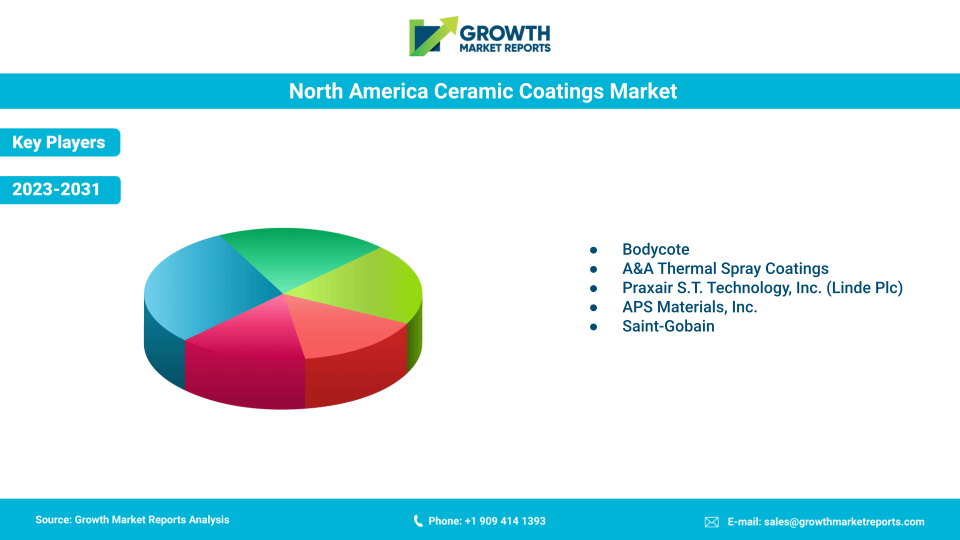
Key players competing in the North America ceramic coatings market are Bodycote; A&A Thermal Spray Coatings; Praxair S.T. Technology, Inc. (Linde Plc); APS Materials, Inc.; Saint-Gobain.

North America Ceramic Coatings Market Key Players

Frequently Asked Questions

Challenges include high costs and complexity of advanced coating technologies, stringent regulatory requirements, and the need for continuous innovation and quality assurance.

Major companies include PPG Industries, Inc., Praxair Surface Technologies (Linde plc), Saint-Gobain S.A., Aremco Products, Inc., Bodycote plc, APS Materials, Inc., Oerlikon Group, and others.

Opportunities include advancements in nanotechnology, development of eco-friendly coatings, and increasing demand for customized, application-specific solutions across industries.

The United States dominates the regional market, accounting for about 70% of the market share, followed by Canada and Mexico.

The primary technologies are Thermal Spray, Physical Vapor Deposition (PVD), Chemical Vapor Deposition (CVD), and emerging methods like sol-gel and laser-assisted techniques.

The aerospace & defense sector is the dominant application segment, utilizing ceramic coatings for thermal barriers, corrosion resistance, and component longevity.

The main types are Oxide Coatings, Carbide Coatings, Nitride Coatings, and Others (such as boride and silicide coatings), each serving specific industrial needs.

Key industries driving demand include aerospace & defense, automotive, energy, industrial goods, and healthcare, with significant adoption for surface protection and performance enhancement.

The market is expected to grow at a CAGR of 7.1% from 2025 to 2033, reaching an estimated value of USD 6.0 billion by the end of the forecast period.

As of 2024, the North America Ceramic Coatings market size reached USD 3.2 billion, with strong demand across various industrial sectors.

Table Of Content

Chapter 1 Executive Summary
Chapter 2 Assumptions and Acronyms Used
Chapter 3 Research Methodology
Chapter 4 North America Ceramic Coatings Market Overview
   4.1 Introduction
      4.1.1 Market Taxonomy
      4.1.2 Market Definition
      4.1.3 Macro-Economic Factors Impacting the Market Growth
   4.2 North America Ceramic Coatings Market Dynamics
      4.2.1 Market Drivers
      4.2.2 Market Restraints
      4.2.3 Market Opportunity
   4.3 North America Ceramic Coatings Market - Supply Chain Analysis
      4.3.1 List of Key Suppliers
      4.3.2 List of Key Distributors
      4.3.3 List of Key Consumers
   4.4 Key Forces Shaping the North America Ceramic Coatings Market
      4.4.1 Bargaining Power of Suppliers
      4.4.2 Bargaining Power of Buyers
      4.4.3 Threat of Substitution
      4.4.4 Threat of New Entrants
      4.4.5 Competitive Rivalry
   4.5 Global North America Ceramic Coatings Market Size & Forecast, 2023-2032
      4.5.1 North America Ceramic Coatings Market Size and Y-o-Y Growth
      4.5.2 North America Ceramic Coatings Market Absolute $ Opportunity

Chapter 5 Global North America Ceramic Coatings Market Analysis and Forecast By Product Type
   5.1 Introduction
      5.1.1 Key Market Trends & Growth Opportunities By Product Type
      5.1.2 Basis Point Share (BPS) Analysis By Product Type
      5.1.3 Absolute $ Opportunity Assessment By Product Type
   5.2 North America Ceramic Coatings Market Size Forecast By Product Type
      5.2.1 Oxide Coatings
      5.2.2 Carbide Coatings
      5.2.3 Nitride Coatings
      5.2.4 Others
   5.3 Market Attractiveness Analysis By Product Type

Chapter 6 Global North America Ceramic Coatings Market Analysis and Forecast By Technology
   6.1 Introduction
      6.1.1 Key Market Trends & Growth Opportunities By Technology
      6.1.2 Basis Point Share (BPS) Analysis By Technology
      6.1.3 Absolute $ Opportunity Assessment By Technology
   6.2 North America Ceramic Coatings Market Size Forecast By Technology
      6.2.1 Thermal Spray
      6.2.2 Physical Vapor Deposition
      6.2.3 Chemical Vapor Deposition
      6.2.4 Others
   6.3 Market Attractiveness Analysis By Technology

Chapter 7 Global North America Ceramic Coatings Market Analysis and Forecast By Application
   7.1 Introduction
      7.1.1 Key Market Trends & Growth Opportunities By Application
      7.1.2 Basis Point Share (BPS) Analysis By Application
      7.1.3 Absolute $ Opportunity Assessment By Application
   7.2 North America Ceramic Coatings Market Size Forecast By Application
      7.2.1 Aerospace & Defense
      7.2.2 Automotive
      7.2.3 Energy
      7.2.4 Industrial Goods
      7.2.5 Healthcare
      7.2.6 Others
   7.3 Market Attractiveness Analysis By Application

Chapter 8 Global North America Ceramic Coatings Market Analysis and Forecast By And Country
   8.1 Introduction
      8.1.1 Key Market Trends & Growth Opportunities By And Country
      8.1.2 Basis Point Share (BPS) Analysis By And Country
      8.1.3 Absolute $ Opportunity Assessment By And Country
   8.2 North America Ceramic Coatings Market Size Forecast By And Country
      8.2.1 U.S.
      8.2.2 Canada
      8.2.3 Mexico
   8.3 Market Attractiveness Analysis By And Country

Chapter 9 Global North America Ceramic Coatings Market Analysis and Forecast by Region
   9.1 Introduction
      9.1.1 Key Market Trends & Growth Opportunities By Region
      9.1.2 Basis Point Share (BPS) Analysis By Region
      9.1.3 Absolute $ Opportunity Assessment By Region
   9.2 North America Ceramic Coatings Market Size Forecast By Region
      9.2.1 North America
      9.2.2 Europe
      9.2.3 Asia Pacific
      9.2.4 Latin America
      9.2.5 Middle East & Africa (MEA)
   9.3 Market Attractiveness Analysis By Region

Chapter 10 Coronavirus Disease (COVID-19) Impact 
   10.1 Introduction 
   10.2 Current & Future Impact Analysis 
   10.3 Economic Impact Analysis 
   10.4 Government Policies 
   10.5 Investment Scenario

Chapter 11 North America North America Ceramic Coatings Analysis and Forecast
   11.1 Introduction
   11.2 North America North America Ceramic Coatings Market Size Forecast by Country
      11.2.1 U.S.
      11.2.2 Canada
   11.3 Basis Point Share (BPS) Analysis by Country
   11.4 Absolute $ Opportunity Assessment by Country
   11.5 Market Attractiveness Analysis by Country
   11.6 North America North America Ceramic Coatings Market Size Forecast By Product Type
      11.6.1 Oxide Coatings
      11.6.2 Carbide Coatings
      11.6.3 Nitride Coatings
      11.6.4 Others
   11.7 Basis Point Share (BPS) Analysis By Product Type 
   11.8 Absolute $ Opportunity Assessment By Product Type 
   11.9 Market Attractiveness Analysis By Product Type
   11.10 North America North America Ceramic Coatings Market Size Forecast By Technology
      11.10.1 Thermal Spray
      11.10.2 Physical Vapor Deposition
      11.10.3 Chemical Vapor Deposition
      11.10.4 Others
   11.11 Basis Point Share (BPS) Analysis By Technology 
   11.12 Absolute $ Opportunity Assessment By Technology 
   11.13 Market Attractiveness Analysis By Technology
   11.14 North America North America Ceramic Coatings Market Size Forecast By Application
      11.14.1 Aerospace & Defense
      11.14.2 Automotive
      11.14.3 Energy
      11.14.4 Industrial Goods
      11.14.5 Healthcare
      11.14.6 Others
   11.15 Basis Point Share (BPS) Analysis By Application 
   11.16 Absolute $ Opportunity Assessment By Application 
   11.17 Market Attractiveness Analysis By Application
   11.18 North America North America Ceramic Coatings Market Size Forecast By And Country
      11.18.1 U.S.
      11.18.2 Canada
      11.18.3 Mexico
   11.19 Basis Point Share (BPS) Analysis By And Country 
   11.20 Absolute $ Opportunity Assessment By And Country 
   11.21 Market Attractiveness Analysis By And Country

Chapter 12 Europe North America Ceramic Coatings Analysis and Forecast
   12.1 Introduction
   12.2 Europe North America Ceramic Coatings Market Size Forecast by Country
      12.2.1 Germany
      12.2.2 France
      12.2.3 Italy
      12.2.4 U.K.
      12.2.5 Spain
      12.2.6 Russia
      12.2.7 Rest of Europe
   12.3 Basis Point Share (BPS) Analysis by Country
   12.4 Absolute $ Opportunity Assessment by Country
   12.5 Market Attractiveness Analysis by Country
   12.6 Europe North America Ceramic Coatings Market Size Forecast By Product Type
      12.6.1 Oxide Coatings
      12.6.2 Carbide Coatings
      12.6.3 Nitride Coatings
      12.6.4 Others
   12.7 Basis Point Share (BPS) Analysis By Product Type 
   12.8 Absolute $ Opportunity Assessment By Product Type 
   12.9 Market Attractiveness Analysis By Product Type
   12.10 Europe North America Ceramic Coatings Market Size Forecast By Technology
      12.10.1 Thermal Spray
      12.10.2 Physical Vapor Deposition
      12.10.3 Chemical Vapor Deposition
      12.10.4 Others
   12.11 Basis Point Share (BPS) Analysis By Technology 
   12.12 Absolute $ Opportunity Assessment By Technology 
   12.13 Market Attractiveness Analysis By Technology
   12.14 Europe North America Ceramic Coatings Market Size Forecast By Application
      12.14.1 Aerospace & Defense
      12.14.2 Automotive
      12.14.3 Energy
      12.14.4 Industrial Goods
      12.14.5 Healthcare
      12.14.6 Others
   12.15 Basis Point Share (BPS) Analysis By Application 
   12.16 Absolute $ Opportunity Assessment By Application 
   12.17 Market Attractiveness Analysis By Application
   12.18 Europe North America Ceramic Coatings Market Size Forecast By And Country
      12.18.1 U.S.
      12.18.2 Canada
      12.18.3 Mexico
   12.19 Basis Point Share (BPS) Analysis By And Country 
   12.20 Absolute $ Opportunity Assessment By And Country 
   12.21 Market Attractiveness Analysis By And Country

Chapter 13 Asia Pacific North America Ceramic Coatings Analysis and Forecast
   13.1 Introduction
   13.2 Asia Pacific North America Ceramic Coatings Market Size Forecast by Country
      13.2.1 China
      13.2.2 Japan
      13.2.3 South Korea
      13.2.4 India
      13.2.5 Australia
      13.2.6 South East Asia (SEA)
      13.2.7 Rest of Asia Pacific (APAC)
   13.3 Basis Point Share (BPS) Analysis by Country
   13.4 Absolute $ Opportunity Assessment by Country
   13.5 Market Attractiveness Analysis by Country
   13.6 Asia Pacific North America Ceramic Coatings Market Size Forecast By Product Type
      13.6.1 Oxide Coatings
      13.6.2 Carbide Coatings
      13.6.3 Nitride Coatings
      13.6.4 Others
   13.7 Basis Point Share (BPS) Analysis By Product Type 
   13.8 Absolute $ Opportunity Assessment By Product Type 
   13.9 Market Attractiveness Analysis By Product Type
   13.10 Asia Pacific North America Ceramic Coatings Market Size Forecast By Technology
      13.10.1 Thermal Spray
      13.10.2 Physical Vapor Deposition
      13.10.3 Chemical Vapor Deposition
      13.10.4 Others
   13.11 Basis Point Share (BPS) Analysis By Technology 
   13.12 Absolute $ Opportunity Assessment By Technology 
   13.13 Market Attractiveness Analysis By Technology
   13.14 Asia Pacific North America Ceramic Coatings Market Size Forecast By Application
      13.14.1 Aerospace & Defense
      13.14.2 Automotive
      13.14.3 Energy
      13.14.4 Industrial Goods
      13.14.5 Healthcare
      13.14.6 Others
   13.15 Basis Point Share (BPS) Analysis By Application 
   13.16 Absolute $ Opportunity Assessment By Application 
   13.17 Market Attractiveness Analysis By Application
   13.18 Asia Pacific North America Ceramic Coatings Market Size Forecast By And Country
      13.18.1 U.S.
      13.18.2 Canada
      13.18.3 Mexico
   13.19 Basis Point Share (BPS) Analysis By And Country 
   13.20 Absolute $ Opportunity Assessment By And Country 
   13.21 Market Attractiveness Analysis By And Country

Chapter 14 Latin America North America Ceramic Coatings Analysis and Forecast
   14.1 Introduction
   14.2 Latin America North America Ceramic Coatings Market Size Forecast by Country
      14.2.1 Brazil
      14.2.2 Mexico
      14.2.3 Rest of Latin America (LATAM)
   14.3 Basis Point Share (BPS) Analysis by Country
   14.4 Absolute $ Opportunity Assessment by Country
   14.5 Market Attractiveness Analysis by Country
   14.6 Latin America North America Ceramic Coatings Market Size Forecast By Product Type
      14.6.1 Oxide Coatings
      14.6.2 Carbide Coatings
      14.6.3 Nitride Coatings
      14.6.4 Others
   14.7 Basis Point Share (BPS) Analysis By Product Type 
   14.8 Absolute $ Opportunity Assessment By Product Type 
   14.9 Market Attractiveness Analysis By Product Type
   14.10 Latin America North America Ceramic Coatings Market Size Forecast By Technology
      14.10.1 Thermal Spray
      14.10.2 Physical Vapor Deposition
      14.10.3 Chemical Vapor Deposition
      14.10.4 Others
   14.11 Basis Point Share (BPS) Analysis By Technology 
   14.12 Absolute $ Opportunity Assessment By Technology 
   14.13 Market Attractiveness Analysis By Technology
   14.14 Latin America North America Ceramic Coatings Market Size Forecast By Application
      14.14.1 Aerospace & Defense
      14.14.2 Automotive
      14.14.3 Energy
      14.14.4 Industrial Goods
      14.14.5 Healthcare
      14.14.6 Others
   14.15 Basis Point Share (BPS) Analysis By Application 
   14.16 Absolute $ Opportunity Assessment By Application 
   14.17 Market Attractiveness Analysis By Application
   14.18 Latin America North America Ceramic Coatings Market Size Forecast By And Country
      14.18.1 U.S.
      14.18.2 Canada
      14.18.3 Mexico
   14.19 Basis Point Share (BPS) Analysis By And Country 
   14.20 Absolute $ Opportunity Assessment By And Country 
   14.21 Market Attractiveness Analysis By And Country

Chapter 15 Middle East & Africa (MEA) North America Ceramic Coatings Analysis and Forecast
   15.1 Introduction
   15.2 Middle East & Africa (MEA) North America Ceramic Coatings Market Size Forecast by Country
      15.2.1 Saudi Arabia
      15.2.2 South Africa
      15.2.3 UAE
      15.2.4 Rest of Middle East & Africa (MEA)
   15.3 Basis Point Share (BPS) Analysis by Country
   15.4 Absolute $ Opportunity Assessment by Country
   15.5 Market Attractiveness Analysis by Country
   15.6 Middle East & Africa (MEA) North America Ceramic Coatings Market Size Forecast By Product Type
      15.6.1 Oxide Coatings
      15.6.2 Carbide Coatings
      15.6.3 Nitride Coatings
      15.6.4 Others
   15.7 Basis Point Share (BPS) Analysis By Product Type 
   15.8 Absolute $ Opportunity Assessment By Product Type 
   15.9 Market Attractiveness Analysis By Product Type
   15.10 Middle East & Africa (MEA) North America Ceramic Coatings Market Size Forecast By Technology
      15.10.1 Thermal Spray
      15.10.2 Physical Vapor Deposition
      15.10.3 Chemical Vapor Deposition
      15.10.4 Others
   15.11 Basis Point Share (BPS) Analysis By Technology 
   15.12 Absolute $ Opportunity Assessment By Technology 
   15.13 Market Attractiveness Analysis By Technology
   15.14 Middle East & Africa (MEA) North America Ceramic Coatings Market Size Forecast By Application
      15.14.1 Aerospace & Defense
      15.14.2 Automotive
      15.14.3 Energy
      15.14.4 Industrial Goods
      15.14.5 Healthcare
      15.14.6 Others
   15.15 Basis Point Share (BPS) Analysis By Application 
   15.16 Absolute $ Opportunity Assessment By Application 
   15.17 Market Attractiveness Analysis By Application
   15.18 Middle East & Africa (MEA) North America Ceramic Coatings Market Size Forecast By And Country
      15.18.1 U.S.
      15.18.2 Canada
      15.18.3 Mexico
   15.19 Basis Point Share (BPS) Analysis By And Country 
   15.20 Absolute $ Opportunity Assessment By And Country 
   15.21 Market Attractiveness Analysis By And Country

Chapter 16 Competition Landscape 
   16.1 North America Ceramic Coatings Market: Competitive Dashboard
   16.2 Global North America Ceramic Coatings Market: Market Share Analysis, 2023
   16.3 Company Profiles (Details – Overview, Financials, Developments, Strategy) 
      16.3.1 PPG Industries, Inc.
Akzo Nobel N.V.
The Sherwin-Williams Company
Saint-Gobain S.A.
Aremco Products, Inc.
3M Company
Morgan Advanced Materials plc
Ceramic Pro (Nanoshine Ltd.)
Kansai Paint Co., Ltd.
Bodycote plc
DuPont de Nemours, Inc.
Zircotec Ltd.
ArmorPoxy
NanoShine Ltd.
Tnemec Company, Inc.
Oerlikon Group
BASF SE
APV Engineered Coatings
ITC Coatings
Praxair Surface Technologies, Inc.

Methodology

Our Clients

Pfizer
The John Holland Group
FedEx Logistics
Nestle SA
Siemens Healthcare
Deloitte
Microsoft
Honda Motor Co. Ltd.