Segments - by Source (Wood-Based, Cotton-Based, Others), by Application (Food & Beverages, Pharmaceuticals, Cosmetics & Personal Care, Industrial, Others), by Purity (Technical Grade, Food Grade, Pharmaceutical Grade), by Distribution Channel (Direct, Indirect)
This report is updated with the latest market data and insights as of June 2026. Base year: 2025 | Forecast period: 2026-2034
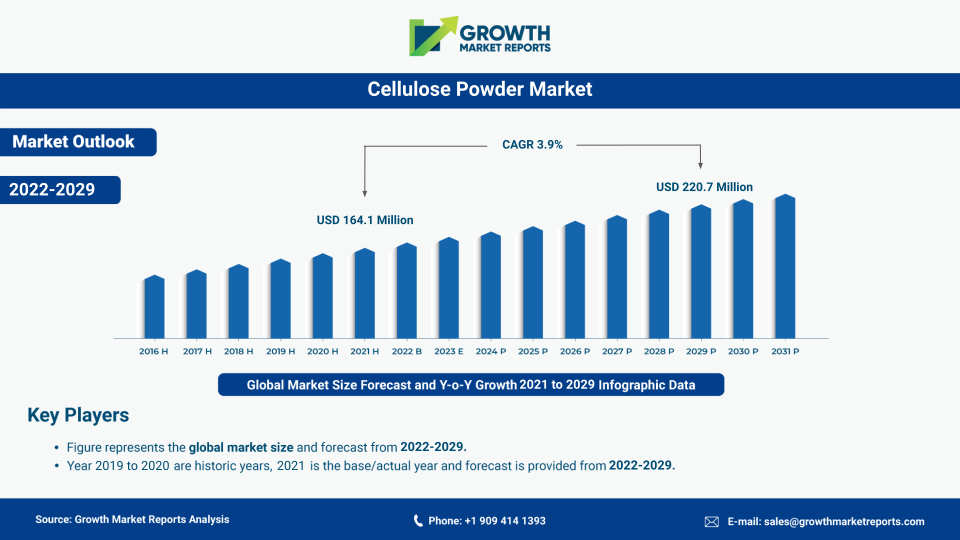
According to our latest research, the global cellulose powder market size reached USD 3.3 billion in 2025, with robust demand across multiple industries fueling a steady expansion. The market is projected to grow at a CAGR of 5.4% from 2026 to 2034, reaching a forecasted value of USD 5.3 billion by 2034. This growth is primarily driven by the increased utilization of cellulose powder as a functional ingredient in food, pharmaceuticals, and cosmetics, alongside rising demand for eco-friendly and sustainable raw materials across global supply chains.
One of the primary growth factors for the cellulose powder market is the surging demand in the food and beverage sector, where cellulose powder is widely used as an anti-caking agent, stabilizer, and texturizer. The shift toward healthier food options and the rising consumption of processed foods have led to a notable increase in the use of cellulose powder for its dietary fiber content and its ability to enhance product texture. Moreover, the growing consumer awareness regarding clean-label and plant-based ingredients has further accelerated the adoption of cellulose powder, as it is derived from natural sources and is free from synthetic additives. The food industry's continuous innovation and product development, especially in bakery, dairy, and convenience foods, are expected to sustain this upward trend well into the 2030s.
Another significant driver is the expanding application of cellulose powder in the pharmaceutical industry, where it serves as a binder, disintegrant, and filler in tablet formulations. The pharmaceutical sector's stringent regulatory requirements for excipients have favored the use of cellulose powder due to its high purity, safety profile, and compatibility with a wide range of active pharmaceutical ingredients. Additionally, the increasing prevalence of chronic diseases and the resulting surge in pharmaceutical production have directly contributed to the rising consumption of cellulose powder. The trend toward oral solid dosage forms and the growing focus on patient-centric drug formulations are anticipated to further boost demand in this segment through 2034.
The cosmetics and personal care industry is also playing a pivotal role in the growth of the cellulose powder market. Cellulose powder is extensively used in skincare, haircare, and makeup products for its absorbent, bulking, and texturizing properties. As consumers become more conscious of the ingredients in their personal care products, there is a marked preference for natural and biodegradable alternatives to synthetic polymers. This shift aligns perfectly with the attributes of cellulose powder, which offers excellent sensory benefits and environmental sustainability. The rising demand for organic and vegan cosmetics, coupled with regulatory pressures to eliminate microplastics, is expected to drive further adoption of cellulose powder in this sector throughout the forecast period.
Regionally, Asia Pacific stands out as the fastest-growing market, supported by rapid industrialization, expanding food and pharmaceutical industries, and increasing awareness about sustainable ingredients. North America and Europe continue to hold significant market shares, driven by established end-use industries and stringent regulatory standards that favor high-purity cellulose powder. Meanwhile, emerging markets in Latin America and the Middle East and Africa are witnessing increasing investments in food processing and pharmaceutical manufacturing, which are likely to create new growth opportunities for cellulose powder suppliers through 2034.
The cellulose powder market is segmented by source into wood-based, cotton-based, and other sources, each offering distinct characteristics and advantages. Wood-based cellulose powder dominates the market with approximately 62.5% share in 2025, driven by the widespread availability of wood pulp as a raw material and the cost-effectiveness of large-scale wood processing. The wood-based segment benefits from well-established supply chains, advanced pulping technologies, and the ability to meet varying purity requirements for different end-use applications. Moreover, the sustainability of wood as a renewable resource is increasingly being emphasized, with certifications such as FSC (Forest Stewardship Council) and PEFC (Programme for the Endorsement of Forest Certification) bolstering consumer confidence in wood-derived products. The broader market context for this segment is well documented in recent studies covering the global cellulose industry, which highlight wood pulp as the dominant feedstock worldwide.
Cotton-based cellulose powder occupies approximately 27.5% of the market in 2025, particularly in applications where ultra-high purity is required, such as pharmaceuticals and cosmetics. Cotton linters, a byproduct of cotton processing, are valued for their high cellulose content and minimal impurities, making them ideal for producing pharmaceutical-grade and food-grade cellulose powder. The demand for cotton-based cellulose powder is driven by its superior whiteness, low ash content, and hypoallergenic properties. However, the higher cost of raw cotton and the limited availability of cotton linters compared to wood pulp can constrain the growth of this segment, especially in price-sensitive markets.
Other sources of cellulose powder, accounting for roughly 10% of the 2025 market, include agricultural residues such as straw and bagasse, as well as specialty fibers derived from bamboo and other plants. These alternative sources are gaining traction as part of the broader movement toward circular economy and waste valorization. Manufacturers are exploring these options to diversify their raw material base, reduce environmental impact, and tap into niche markets that value unique functional properties. Ongoing research and technological advancements are expected to enhance the competitiveness and scalability of these alternative feedstocks through 2034.
Overall, the source segmentation of the cellulose powder market reflects a balance between cost, purity, and sustainability considerations. As end-user industries continue to prioritize eco-friendly and traceable supply chains, the demand for certified sustainable and specialty-sourced cellulose powder is likely to increase. This trend is prompting manufacturers to invest in raw material traceability, sustainable sourcing practices, and innovative processing technologies to differentiate their offerings and capture emerging market opportunities.
| Attributes | Details |
| Report Title | Cellulose Powder Market Research Report 2034 |
| By Source | Wood-Based, Cotton-Based, Others |
| By Application | Food & Beverages, Pharmaceuticals, Cosmetics & Personal Care, Industrial, Others |
| By Purity | Technical Grade, Food Grade, Pharmaceutical Grade |
| By Distribution Channel | Direct, Indirect |
| Regions Covered | North America, Europe, APAC, Latin America, MEA |
| Base Year | 2025 |
| Historic Data | 2019-2024 |
| Forecast Period | 2026-2034 |
| Number of Pages | 261 |
| Number of Tables & Figures | 286 |
| Customization Available | Yes, the report can be customized as per your need. |
The application landscape of the cellulose powder market is highly diverse, encompassing food and beverages, pharmaceuticals, cosmetics and personal care, industrial uses, and other specialized segments. The food and beverage industry represents the largest application segment in 2025, leveraging cellulose powder for its multifunctional properties as a stabilizer, thickener, emulsifier, and source of dietary fiber. In bakery products, dairy items, sauces, and ready-to-eat meals, cellulose powder improves texture, prevents caking, and extends shelf life. The growing demand for low-calorie, high-fiber foods and the trend toward clean-label formulations have led to increased adoption of cellulose powder as a natural alternative to synthetic additives, a trend that is forecast to persist well through 2034.
Pharmaceutical applications constitute a significant and rapidly growing segment, as cellulose powder is a critical excipient in tablet and capsule manufacturing. Its role as a binder, disintegrant, and filler ensures consistent drug release, stability, and patient compliance. The pharmaceutical industry's stringent quality standards and regulatory requirements have driven demand for high-purity cellulose powder, particularly in the production of oral solid dosage forms. The rise in global healthcare spending, increasing prevalence of chronic diseases, and ongoing innovations in drug delivery systems are expected to sustain robust growth in this segment through the forecast period.
In the cosmetics and personal care sector, cellulose powder is valued for its absorbency, texturizing, and bulking capabilities. It is used in a wide range of products, including facial powders, creams, lotions, shampoos, and deodorants. The shift toward natural and biodegradable ingredients has accelerated the use of cellulose powder as a replacement for microplastics and synthetic polymers. Consumers' growing preference for eco-friendly and skin-friendly products, coupled with regulatory bans on microbeads in key markets, has created new opportunities for cellulose powder suppliers in the beauty and personal care market as of 2025.
Industrial applications of cellulose powder span a variety of sectors, including paints and coatings, adhesives, plastics, and filtration. In these contexts, cellulose powder imparts rheological control, improves dispersion, and enhances product performance. The construction and automotive industries, in particular, utilize cellulose powder for its lightweight, insulating, and reinforcing properties. As manufacturers seek to reduce the environmental footprint of their products, the use of cellulose powder as a renewable and biodegradable additive is gaining traction in these industrial applications.
Other emerging applications, such as bioplastics, textiles, and specialty chemicals, are also contributing to the expansion of the cellulose powder market. Ongoing research into novel functional properties and new processing technologies is expected to unlock additional value-added uses for cellulose powder, further diversifying its application portfolio and driving long-term market growth toward 2034.
The cellulose powder market is segmented by purity into technical grade, food grade, and pharmaceutical grade, each tailored to specific end-user requirements. Technical grade cellulose powder is primarily used in industrial applications, where functional performance takes precedence over purity. This grade is widely utilized in paints, coatings, adhesives, and construction materials, offering cost-effective solutions for rheology modification, bulking, and reinforcement. The demand for technical grade cellulose powder is closely linked to trends in industrial production, infrastructure development, and the adoption of sustainable materials in manufacturing processes across Asia Pacific and emerging markets.
Food grade cellulose powder is meticulously processed to meet stringent safety and quality standards set by regulatory authorities such as the FDA and EFSA. It is used extensively in the food and beverage industry as an anti-caking agent, stabilizer, and fiber supplement. The rising consumer demand for natural, clean-label, and high-fiber food products has driven the adoption of food grade cellulose powder, particularly in bakery, dairy, and convenience foods. Manufacturers are increasingly investing in advanced purification and quality control processes to ensure compliance with food safety regulations and to cater to the evolving preferences of health-conscious consumers in 2025 and beyond.
Pharmaceutical grade cellulose powder represents the highest purity segment, designed to meet the exacting standards of the pharmaceutical industry. It is used as a critical excipient in the formulation of tablets, capsules, and other dosage forms, where purity, consistency, and safety are paramount. The stringent regulatory environment, coupled with the growing complexity of pharmaceutical formulations, has led to increased demand for pharmaceutical grade cellulose powder. Manufacturers are focusing on developing high-purity, low-residue products with superior functional properties to meet the specific needs of drug manufacturers and to comply with international pharmacopeial standards.
As regulatory scrutiny intensifies and consumer expectations for product safety and quality rise, the demand for higher purity grades is expected to grow through 2034. This trend is prompting manufacturers to invest in state-of-the-art purification technologies, rigorous quality assurance protocols, and robust traceability systems to maintain their competitive edge and to capture opportunities in high-value application segments.
The cellulose powder market distribution landscape is divided into direct and indirect channels, each with distinct advantages and challenges. Direct distribution involves manufacturers selling cellulose powder directly to end-users or large-scale processors, enabling greater control over pricing, quality, and customer relationships. This channel is favored by large industrial and pharmaceutical clients who require customized solutions, consistent supply, and technical support. Direct distribution allows manufacturers to build long-term partnerships, respond quickly to customer needs, and offer value-added services such as product formulation assistance and regulatory compliance support.
Indirect distribution involves intermediaries such as distributors, wholesalers, and retailers who bridge the gap between manufacturers and end-users. This channel is particularly important for reaching small and medium-sized enterprises, niche markets, and geographically dispersed customers. Indirect distribution networks provide manufacturers with access to a broader customer base, local market knowledge, and logistical capabilities. Distributors often offer bundled products, technical support, and after-sales services, enhancing the value proposition for end-users and facilitating market penetration in emerging regions.
The choice of distribution channel in the cellulose powder market is influenced by factors such as product grade, volume requirements, regulatory considerations, and customer preferences. For high-purity grades used in pharmaceuticals and food applications, direct distribution is often preferred to ensure strict quality control and compliance with regulatory standards. In contrast, technical grade cellulose powder for industrial uses is commonly distributed through indirect channels, leveraging the reach and expertise of specialized distributors.
As the market evolves through the 2026-2034 forecast period, manufacturers are increasingly adopting omnichannel strategies that combine the strengths of both direct and indirect distribution. Digitalization and e-commerce platforms are playing a growing role in streamlining order processing, improving supply chain transparency, and enhancing customer engagement. The ongoing shift toward integrated, customer-centric distribution models is expected to drive efficiency, foster innovation, and support the long-term growth of the cellulose powder market.
The cellulose powder market presents a wealth of opportunities, particularly in the context of sustainability and the circular economy. As global industries seek to reduce their environmental footprint and transition to renewable raw materials, cellulose powder stands out as a biodegradable, non-toxic, and versatile ingredient. The increasing regulatory pressure to phase out synthetic additives and microplastics in food, cosmetics, and industrial products is creating new avenues for adoption. Innovations in processing technologies, such as enzymatic hydrolysis and nanocellulose production, are further expanding the functional properties and application scope of cellulose powder, enabling manufacturers to develop high-performance, value-added products for emerging markets such as bioplastics, advanced composites, and smart packaging. The growing global interest in plant-derived materials, as reflected in broader market coverage of the cellulose materials sector, underscores the strategic importance of this expansion.
Another significant opportunity lies in the growing demand for clean-label, plant-based, and health-oriented products in the food, beverage, and personal care sectors. Consumers are increasingly scrutinizing ingredient lists, favoring products that contain natural, recognizable, and minimally processed components. Cellulose powder, derived from renewable sources and free from allergens and synthetic chemicals, aligns perfectly with these consumer preferences. The expansion of the global middle class, urbanization, and rising disposable incomes are also driving demand for processed foods, pharmaceuticals, and personal care products, underpinning the long-term growth prospects of the cellulose powder market through 2034.
Despite these opportunities, the market faces certain threats and restraining factors. One of the primary challenges is the volatility of raw material prices, particularly for wood pulp and cotton linters, which can impact production costs and profit margins. Supply chain disruptions, environmental regulations related to deforestation and land use, and competition from alternative ingredients such as starches, gums, and synthetic polymers also pose risks to market growth. Additionally, the need for continuous investment in quality assurance, regulatory compliance, and technological innovation can strain resources, especially for small and medium-sized manufacturers operating in price-competitive segments.
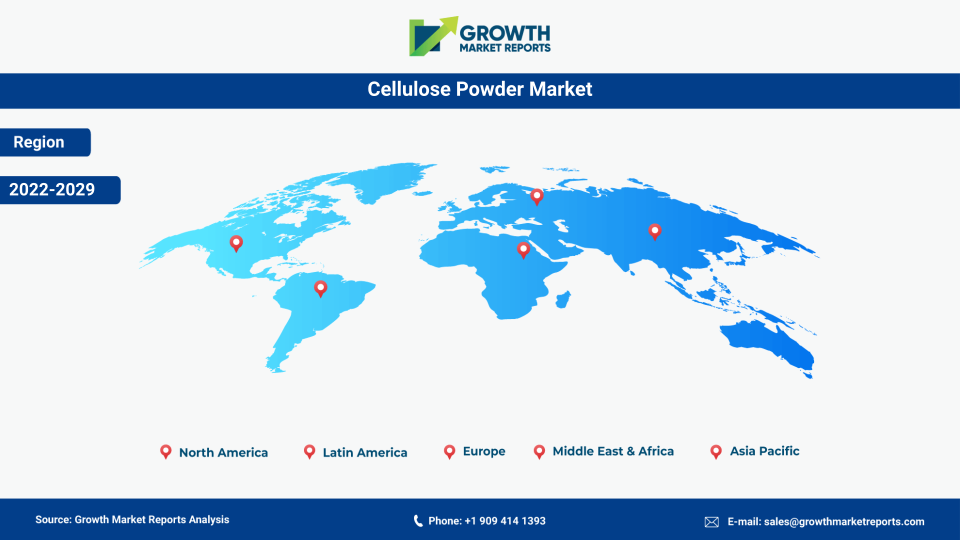
The regional dynamics of the cellulose powder market are shaped by varying levels of industrialization, regulatory frameworks, and consumer preferences. Asia Pacific leads the global market, with a 2025 market size of approximately USD 1.24 billion, driven by robust demand from the food processing, pharmaceutical, and personal care industries in countries such as China, India, and Japan. The region is projected to maintain the highest CAGR of 6.3% through 2034, supported by rapid urbanization, expanding middle-class populations, and increasing investments in manufacturing infrastructure. Government initiatives to promote sustainable materials and reduce reliance on synthetic additives further bolster the market outlook in Asia Pacific.
North America and Europe are mature markets, with 2025 market sizes of approximately USD 0.83 billion and USD 0.74 billion respectively. These regions benefit from well-established end-user industries, high consumer awareness, and stringent regulatory standards that favor high-purity and sustainably sourced cellulose powder. The ongoing shift toward clean-label foods, plant-based diets, and eco-friendly personal care products is driving incremental growth in these markets. The presence of leading cellulose powder manufacturers and advanced R&D capabilities ensures a steady pipeline of innovative products and applications across the 2026-2034 forecast period.
Emerging markets in Latin America and the Middle East and Africa are witnessing steady growth, with 2025 market sizes of approximately USD 0.28 billion and USD 0.21 billion respectively. These regions are characterized by increasing investments in food processing, pharmaceuticals, and industrial manufacturing, as well as rising consumer demand for affordable and sustainable products. While challenges such as limited infrastructure and regulatory complexity persist, the long-term outlook remains positive, particularly as multinational companies expand their presence and local industries adopt international quality standards through the forecast horizon.
The cellulose powder market is characterized by intense competition, with a mix of global leaders and regional players vying for market share in 2025. The competitive landscape is shaped by factors such as product quality, purity levels, pricing strategies, distribution networks, and the ability to offer customized solutions to diverse end-user industries. Leading companies are investing heavily in research and development to enhance the functional properties of cellulose powder, develop new application areas, and improve the sustainability of their supply chains. Strategic partnerships, mergers and acquisitions, and capacity expansions are common strategies employed to strengthen market positions and expand geographic reach through 2034.
Innovation is a key differentiator in the cellulose powder market, with top players focusing on developing high-performance products tailored to specific industry requirements. Advancements in nanocellulose technology are opening new frontiers in bioplastics, composites, and specialty chemicals, while improvements in purification processes are enabling the production of ultra-high purity grades for pharmaceutical and food applications. Sustainability initiatives, such as sourcing raw materials from certified forests and investing in circular economy solutions, are increasingly important for meeting regulatory requirements and addressing the growing demand for eco-friendly products from customers worldwide.
The market also features a dynamic ecosystem of regional and niche players who cater to specialized applications and local market needs. These companies often differentiate themselves through agility, customer-centric service, and deep knowledge of local regulatory environments. As the market continues to evolve through the forecast period, collaboration between manufacturers, distributors, and end-users is expected to drive innovation, improve supply chain efficiency, and accelerate the adoption of cellulose powder in emerging applications.
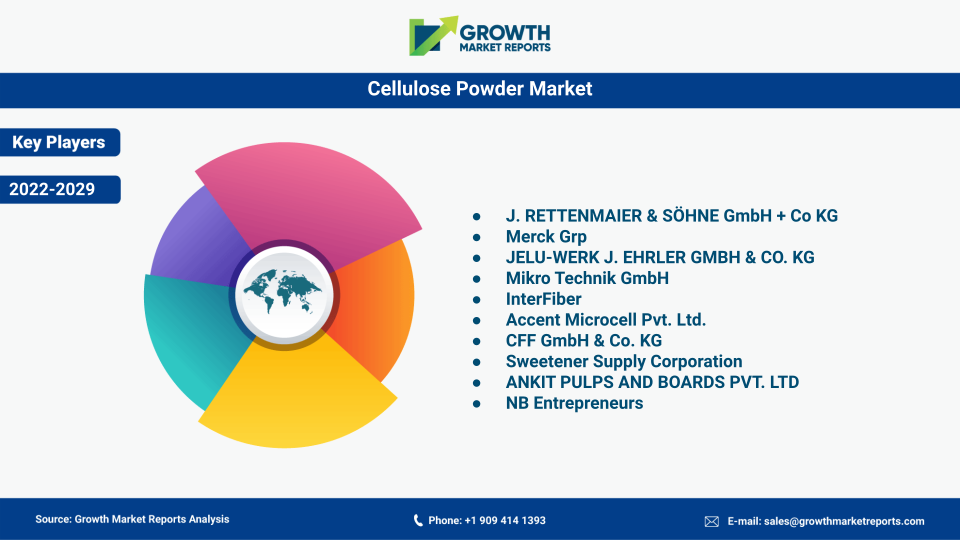
Major companies operating in the cellulose powder market include J. RETTENMAIER & SÖHNE GmbH + Co KG (JRS), Roquette Frères, CFF GmbH & Co. KG, Asahi Kasei Corporation, Accent Microcell Pvt. Ltd., DFE Pharma GmbH & Co. KG, Sigachi Industries Limited, and Omya AG. JRS is recognized as a global leader, offering a comprehensive portfolio of cellulose powder products for food, pharmaceuticals, and industrial applications, with a strong emphasis on sustainable sourcing and innovation. Accent Microcell Pvt. Ltd. and Sigachi Industries Limited are prominent players in Asia, known for their high-quality pharmaceutical-grade products and expanding distribution networks. DFE Pharma and Roquette Frères are major multinational players with diversified product portfolios and extensive global operations, supplying leading drug and food manufacturers worldwide. These companies are continuously investing in capacity expansions, technology upgrades, and sustainability initiatives to maintain their competitive edge and to capture emerging opportunities in the fast-evolving cellulose powder market through 2034.
The Cellulose Powder market has been segmented on the basis of
The major players operating in the global cellulose powder market as of 2025 include J. RETTENMAIER & SÖHNE GmbH + Co KG, Roquette Frères, CFF GmbH & Co. KG, Asahi Kasei Corporation, Accent Microcell Pvt. Ltd., DFE Pharma GmbH & Co. KG, Mingtai Chemical Co. Ltd., Jelu-Werk J. Ehrler GmbH & Co. KG, Sigachi Industries Limited, Huzhou City Linghu Xinwang Chemical Co. Ltd., Ankit Pulps & Boards Pvt. Ltd., Shandong Yulong Cellulose Technology Co. Ltd., Omya AG, FMC Corporation, and Qingdao Sinocmc Chemical Co. Ltd. These companies compete on product quality, purity levels, pricing, sustainability credentials, and geographic distribution capabilities.
Key macroeconomic factors influencing the cellulose powder market include global GDP growth rates, which directly affect industrial output and consumer spending on processed foods and personal care products. Commodity price fluctuations for wood pulp and cotton linters impact production costs and profit margins. Currency exchange rate volatility affects the competitiveness of exporters, particularly from Asia Pacific. Rising healthcare expenditures and expanding pharmaceutical manufacturing capacity in emerging economies support demand growth. Additionally, sustainability-oriented government policies, trade tariffs, and evolving food safety and pharmaceutical regulatory frameworks in major markets shape procurement decisions and competitive dynamics.
The base year for this report is 2025, with a market size of USD 3.3 billion. Historical data covers the period from 2019 to 2024, enabling trend identification across pre- and post-pandemic market conditions. The forecast period spans from 2026 to 2034, providing a nine-year forward-looking outlook based on current market dynamics, regulatory trends, and macroeconomic factors.
The COVID-19 pandemic created mixed impacts on the cellulose powder market during 2019-2020. Pharmaceutical demand surged as drug manufacturers accelerated production of essential medicines, driving robust consumption of pharmaceutical-grade cellulose powder. Conversely, disruptions in food service channels, supply chain bottlenecks, and factory shutdowns temporarily suppressed demand in food processing and cosmetics applications. Raw material procurement, particularly cotton linters and wood pulp, was affected by logistics restrictions. However, the market demonstrated resilience, with essential-industry exemptions allowing most cellulose powder producers to maintain operations, and pent-up demand in subsequent quarters helping to offset the short-term slowdown.
Companies are selected for profiling based on criteria including annual revenue from cellulose powder products, geographic reach and market presence, product portfolio breadth across purity grades and applications, recent strategic activities such as mergers, acquisitions, capacity expansions, and R&D investments, and their overall influence on market dynamics. Both global leaders and notable regional players are included to provide a comprehensive view of the competitive landscape.
Food and beverages represent the largest application segment, where cellulose powder functions as a stabilizer, anti-caking agent, fiber supplement, and texturizer in bakery, dairy, sauces, and convenience foods. Pharmaceuticals constitute the fastest-growing application, with cellulose powder serving as a binder, disintegrant, and filler in tablet and capsule manufacturing. Cosmetics and personal care is another significant application, with cellulose powder used in facial powders, creams, shampoos, and deodorants as a natural substitute for synthetic additives. Industrial applications, including paints, coatings, adhesives, and filtration, are also contributing meaningfully to overall market expansion.
The cellulose powder market in 2025 is driven by several converging factors. Rising demand for natural, clean-label, and plant-based ingredients in food and beverage products is a primary growth engine. The rapid expansion of the global pharmaceutical industry, particularly in oral solid dosage forms, is fueling demand for high-purity cellulose excipients. Regulatory bans on microplastics in cosmetics are accelerating the substitution of synthetic polymers with cellulose powder. Additionally, growing awareness of sustainability and circular economy principles, increasing investments in food processing infrastructure in emerging markets, and ongoing innovation in nanocellulose and biocomposite technologies are collectively propelling market growth through the forecast period.
The report offers extensive additional data analysis, including historical market data from 2019 to 2024, base year figures for 2025, and granular forecasts through 2034. Additional analyses include competitive benchmarking, value chain assessment, pricing trend analysis, raw material cost dynamics, patent landscape review, regulatory environment mapping by region, and trade flow analysis. Customized data tables and cross-tabulations by source, application, purity, distribution channel, and region are also available on request.
Based on the 2025 base market size of USD 3.3 billion and a projected CAGR of 5.4% through 2034, the global cellulose powder market is estimated to reach approximately USD 4.1 billion by 2029. Growth will be underpinned by expanding pharmaceutical, food, and personal care applications, particularly across Asia Pacific and emerging markets in Latin America and the Middle East and Africa.
Yes, absolutely. The report can be customized to include company profiles beyond the default list. If you require profiles for specific regional players, niche manufacturers, or emerging entrants in the cellulose powder market, our research team can accommodate those requests. Please contact us with your preferred list of companies and we will tailor the report to your needs.