Segments - by Product Type (Mineral Wool, Metal, Gypsum, PVC, Wood, Others), by Application (Commercial, Residential, Industrial, Institutional), by Installation Type (Drop/Suspended, Surface Mounted), by Distribution Channel (Offline, Online), by End-User (Offices, Hospitals, Educational Institutions, Retail Stores, Airports, Others)
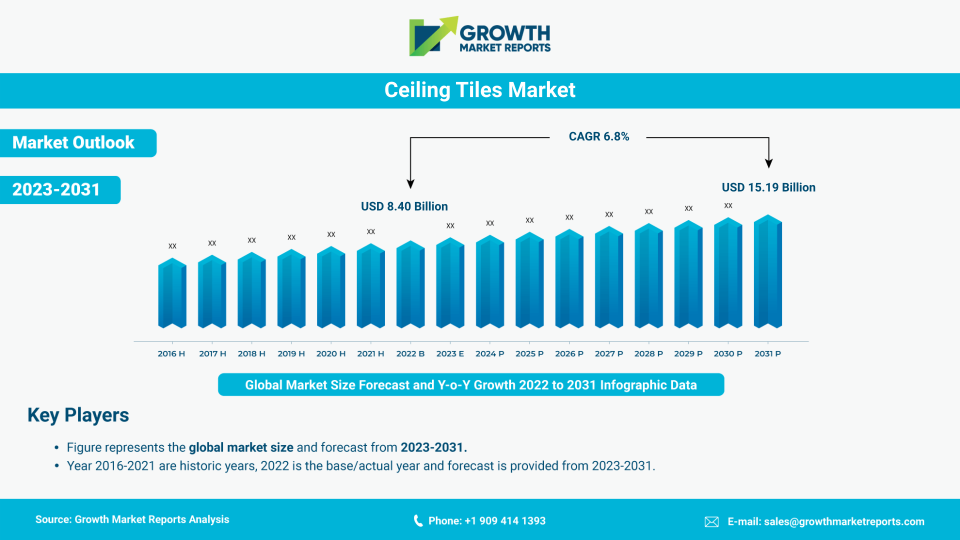
According to our latest research, the global ceiling tiles market size reached USD 8.1 billion in 2024, demonstrating robust expansion driven by increasing construction and renovation activities worldwide. The market is projected to grow at a CAGR of 7.4% from 2025 to 2033, reaching an estimated value of USD 15.4 billion by 2033. The growth of the market is primarily attributed to the rising demand for aesthetic and acoustic solutions in commercial and residential buildings, as well as the ongoing trend towards sustainable building materials and energy-efficient construction practices.
One of the primary growth drivers for the ceiling tiles market is the rapid urbanization and infrastructural development occurring across both developed and emerging economies. As urban populations swell, there is a corresponding surge in demand for new commercial spaces such as offices, retail outlets, educational institutions, and healthcare facilities. Ceiling tiles are increasingly favored for their ability to provide enhanced acoustics, fire resistance, and thermal insulation, making them an essential component in modern construction. Additionally, the trend toward green building certifications and energy-efficient structures has spurred the adoption of innovative ceiling tile materials that contribute to overall building performance, further accelerating market growth.
Technological advancements in manufacturing processes and materials have also significantly contributed to the expansion of the ceiling tiles market. Manufacturers are investing in research and development to create ceiling tiles that not only meet regulatory requirements but also offer superior performance characteristics such as improved sound absorption, moisture resistance, and ease of installation. The integration of recycled materials and eco-friendly production techniques has resonated with environmentally conscious consumers and businesses, driving the adoption of sustainable ceiling tile options. Moreover, the proliferation of design options, colors, and finishes has enabled end-users to customize spaces according to specific aesthetic and functional requirements, thereby broadening the marketÂ’s appeal across various sectors.
Another important factor propelling market growth is the increasing focus on renovation and retrofitting of existing buildings. Aging infrastructure in developed regions, coupled with government initiatives to upgrade public spaces like schools, hospitals, and transportation hubs, has led to a surge in demand for ceiling tile replacements and upgrades. Ceiling tiles offer a cost-effective and efficient solution for enhancing the visual appeal and functionality of interiors without extensive structural modifications. This trend is especially pronounced in the commercial and institutional segments, where maintaining modern, attractive, and acoustically optimized environments is crucial for occupant satisfaction and operational efficiency.
Gypsum Ceiling Tile has emerged as a popular choice in both residential and commercial settings due to its smooth finish and versatility. Known for its fire-resistant properties, gypsum ceiling tiles are particularly favored in regions with stringent fire safety regulations. These tiles offer excellent workability, which allows for the creation of customized designs and integrated lighting solutions. The segment is also benefiting from innovations in lightweight gypsum formulations and moisture-resistant variants, which have expanded the range of possible applications, including use in humid environments such as kitchens and bathrooms. As the demand for aesthetically pleasing and functional ceiling solutions grows, gypsum ceiling tiles continue to gain traction among architects and builders looking to enhance interior spaces.
Regionally, the Asia Pacific market is poised to dominate the global ceiling tiles industry, accounting for a significant share of both production and consumption. This is largely due to rapid economic growth, increasing construction spending, and government initiatives aimed at urban development in countries such as China, India, and Southeast Asian nations. North America and Europe also represent substantial markets, driven by high renovation rates, stringent building codes, and a strong focus on sustainability. The Middle East & Africa and Latin America are emerging as promising markets, fueled by infrastructure investments and the expansion of the commercial real estate sector. Each region presents unique opportunities and challenges, shaping the competitive landscape and strategic priorities of market participants.
The ceiling tiles market is segmented by product type into mineral wool, metal, gypsum, PVC, wood, and others, each offering distinct performance characteristics and applications. Mineral wool ceiling tiles are the most widely used, owing to their excellent acoustic properties, fire resistance, and affordability. These attributes make mineral wool tiles particularly popular in commercial and institutional settings where noise reduction and safety are paramount. The segment benefits from ongoing advancements in manufacturing technologies, enabling the production of lighter, more durable, and aesthetically versatile tiles that cater to a broad spectrum of architectural requirements.
Metal ceiling tiles have witnessed significant growth, driven by their durability, modern appearance, and ease of maintenance. These tiles are commonly used in high-traffic commercial spaces, airports, and transportation hubs where both aesthetics and longevity are critical. The ability to incorporate intricate patterns, perforations, and custom finishes has further expanded the appeal of metal tiles among architects and designers. Additionally, metal tiles are fully recyclable, aligning with the growing emphasis on sustainable building practices and circular economy principles, thus attracting environmentally conscious stakeholders.
Gypsum ceiling tiles are favored for their smooth finish, versatility, and fire-resistant properties. They are widely used in residential and commercial applications, particularly in regions with stringent fire safety regulations. Gypsum tiles offer excellent workability, allowing for the creation of customized designs and integrated lighting solutions. The segment is also benefiting from innovations in lightweight gypsum formulations and moisture-resistant variants, which have expanded the range of possible applications, including use in humid environments such as kitchens and bathrooms.
PVC and wood ceiling tiles, while representing smaller segments, are gaining traction due to their unique aesthetic qualities and functional benefits. PVC tiles are valued for their moisture resistance, ease of installation, and cost-effectiveness, making them suitable for areas prone to humidity and water exposure. Wood tiles, on the other hand, are sought after for their natural appearance and acoustic performance, particularly in high-end commercial and residential projects. The development of engineered wood products and advanced finishing techniques has enhanced the durability and design flexibility of wood ceiling tiles, further driving their adoption in niche markets.
Other ceiling tile materials, including fiberglass and composite tiles, cater to specialized requirements such as high-performance acoustics, impact resistance, or unique design aesthetics. These products are often used in applications where standard materials may not suffice, such as recording studios, laboratories, or luxury interiors. The diversity of product types in the ceiling tiles market ensures that end-users have access to solutions tailored to specific functional and aesthetic needs, contributing to the overall growth and dynamism of the industry.
| Attributes | Details |
| Report Title | Ceiling Tiles Market Research Report 2033 |
| By Product Type | Mineral Wool, Metal, Gypsum, PVC, Wood, Others |
| By Application | Commercial, Residential, Industrial, Institutional |
| By Installation Type | Drop/Suspended, Surface Mounted |
| By Distribution Channel | Offline, Online |
| By End-User | Offices, Hospitals, Educational Institutions, Retail Stores, Airports, Others |
| Regions Covered | North America, Europe, APAC, Latin America, MEA |
| Base Year | 2024 |
| Historic Data | 2018-2023 |
| Forecast Period | 2025-2033 |
| Number of Pages | 253 |
| Number of Tables & Figures | 271 |
| Customization Available | Yes, the report can be customized as per your need. |
The ceiling tiles market serves a wide range of applications, including commercial, residential, industrial, and institutional sectors. The commercial segment dominates the market, accounting for the largest share due to extensive use in offices, retail stores, hospitality venues, and healthcare facilities. Ceiling tiles are integral to creating comfortable, visually appealing, and acoustically optimized environments in commercial spaces, where employee productivity, customer experience, and brand image are closely linked to interior design. The segmentÂ’s growth is further supported by the proliferation of coworking spaces, shopping malls, and hospitality projects worldwide.
In the residential sector, ceiling tiles are increasingly being adopted for their ability to enhance interior aesthetics, improve acoustics, and offer practical benefits such as moisture resistance and easy maintenance. Homeowners are seeking customizable solutions that reflect personal style while addressing functional requirements, driving demand for a diverse range of ceiling tile designs, colors, and finishes. The growing trend of home renovation and remodeling, particularly in urban areas, has further propelled the adoption of ceiling tiles in living rooms, kitchens, bathrooms, and home offices.
Industrial applications of ceiling tiles are characterized by a focus on durability, safety, and compliance with stringent regulatory standards. In manufacturing facilities, warehouses, and cleanrooms, ceiling tiles play a crucial role in controlling acoustics, maintaining cleanliness, and ensuring fire safety. The demand for high-performance ceiling tiles that can withstand harsh operating conditions and facilitate efficient maintenance is on the rise, prompting manufacturers to develop specialized products tailored to industrial environments.
The institutional segment, encompassing educational institutions, hospitals, government buildings, and public spaces, represents a significant market for ceiling tiles. These environments require solutions that balance aesthetics, durability, hygiene, and acoustic performance. For example, in schools and universities, ceiling tiles help create conducive learning environments by reducing noise levels and improving indoor air quality. In healthcare settings, antimicrobial and easy-to-clean ceiling tiles are essential for infection control and patient safety. The segmentÂ’s growth is underpinned by government investments in public infrastructure and a heightened focus on occupant well-being.
The diverse application landscape of the ceiling tiles market highlights the versatility and adaptability of ceiling tile solutions. Each application segment presents unique requirements and challenges, driving continuous innovation and product development within the industry. As end-users increasingly prioritize performance, sustainability, and design flexibility, the market is poised to witness sustained growth across all major application areas.
The ceiling tiles market is segmented by installation type into drop/suspended and surface-mounted systems, each offering distinct advantages and catering to different building requirements. Drop or suspended ceiling systems are the most prevalent, particularly in commercial and institutional settings. These systems consist of a grid framework suspended from the structural ceiling, into which ceiling tiles are fitted. Drop ceilings are favored for their ability to conceal ductwork, wiring, and plumbing, while providing easy access for maintenance and repairs. The flexibility and modularity of suspended systems make them ideal for large-scale projects and environments requiring frequent modifications or upgrades.
Surface-mounted ceiling tiles, on the other hand, are attached directly to the ceiling substrate using adhesives or mechanical fasteners. This installation type is commonly used in residential and small-scale commercial applications where ceiling height is a consideration or where a more streamlined appearance is desired. Surface-mounted systems offer the advantage of quick and straightforward installation, making them suitable for renovation projects and spaces with limited ceiling clearance. The growing popularity of DIY home improvement has also contributed to the adoption of surface-mounted ceiling tiles, as homeowners seek easy-to-install solutions that deliver immediate aesthetic enhancements.
The choice between drop/suspended and surface-mounted installation types is influenced by several factors, including building design, intended use, budget constraints, and maintenance requirements. In environments where access to overhead utilities is essential, such as offices, hospitals, and educational institutions, drop ceilings are preferred for their practicality and adaptability. Conversely, surface-mounted systems are often selected for their simplicity and cost-effectiveness in residential and low-traffic commercial spaces. The availability of a wide range of compatible ceiling tiles for both installation types ensures that end-users can achieve desired performance and design outcomes regardless of the chosen system.
Manufacturers are continually innovating to enhance the installation experience, introducing features such as lightweight materials, interlocking edges, and pre-finished surfaces that reduce installation time and labor costs. Advances in installation technology have also enabled the development of hybrid systems that combine the benefits of both drop and surface-mounted approaches, offering greater flexibility and customization options. As the construction industry increasingly prioritizes efficiency and productivity, demand for user-friendly and time-saving installation solutions is expected to remain strong, further supporting market growth.
Overall, the installation type segment plays a critical role in shaping the ceiling tiles market, influencing product selection, project timelines, and total cost of ownership. As end-users and contractors seek solutions that balance performance, aesthetics, and ease of installation, the market will continue to evolve in response to changing preferences and technological advancements.
The ceiling tiles market is distributed through two primary channels: offline and online. The offline channel, which includes specialty stores, building material suppliers, wholesalers, and direct sales, remains the dominant distribution method, accounting for the majority of market revenue. This is largely due to the nature of the product, which often requires physical inspection, expert consultation, and logistical coordination for bulk purchases. Contractors, architects, and facility managers typically rely on established relationships with suppliers to source ceiling tiles for large-scale projects, ensuring timely delivery and after-sales support.
However, the online distribution channel is rapidly gaining traction, driven by the digital transformation of the construction and building materials industry. E-commerce platforms, company websites, and third-party marketplaces offer a convenient and efficient means for customers to browse product catalogs, compare prices, and place orders from anywhere. The online channel is particularly popular among small and medium-sized enterprises (SMEs), DIY enthusiasts, and residential customers seeking a wide selection of designs and competitive pricing. The ability to access detailed product information, customer reviews, and installation guides online has empowered buyers to make informed purchasing decisions and explore new brands and solutions.
The increasing adoption of digital tools and technologies by manufacturers and distributors has further accelerated the growth of the online channel. Virtual showrooms, augmented reality (AR) applications, and interactive design tools enable customers to visualize ceiling tile installations and experiment with different styles and configurations before making a purchase. These innovations have enhanced the customer experience and reduced the barriers to online buying, contributing to the channelÂ’s expanding market share. Additionally, the integration of supply chain management systems and real-time inventory tracking has improved order fulfillment and delivery efficiency, addressing some of the logistical challenges associated with online sales of bulky building materials.
While the offline channel continues to play a crucial role, especially for large and complex projects, the ongoing shift toward omnichannel distribution strategies is reshaping the competitive landscape. Leading manufacturers and distributors are investing in seamless integration between online and offline channels, offering value-added services such as personalized consultations, on-site measurements, and installation support. This approach not only enhances customer satisfaction but also enables companies to capture a broader customer base and respond more effectively to changing market dynamics.
The evolving distribution landscape underscores the importance of flexibility, convenience, and customer-centricity in the ceiling tiles market. As digital adoption accelerates and consumer preferences evolve, companies that successfully leverage both offline and online channels will be well-positioned to capitalize on emerging opportunities and drive sustained growth.
The ceiling tiles market serves a diverse array of end-users, including offices, hospitals, educational institutions, retail stores, airports, and others. Offices represent a major end-user segment, driven by the need for acoustically optimized, aesthetically pleasing, and flexible workspaces. Ceiling tiles play a vital role in creating productive and comfortable environments that support employee well-being and organizational performance. The ongoing evolution of workplace design, with a focus on open-plan layouts, collaborative spaces, and integrated technology, has spurred demand for ceiling tile solutions that offer superior sound absorption, modularity, and design versatility.
Hospitals and healthcare facilities constitute another significant end-user segment, where ceiling tiles are essential for maintaining strict hygiene standards, controlling acoustics, and supporting infection prevention measures. Specialized tiles with antimicrobial properties, easy-to-clean surfaces, and resistance to moisture and chemicals are increasingly specified in healthcare projects. The growing emphasis on patient-centered care and healing environments has also driven the adoption of ceiling tiles that contribute to visual comfort and indoor air quality, enhancing the overall patient experience.
Educational institutions, including schools, colleges, and universities, rely on ceiling tiles to create conducive learning environments that minimize noise distractions and promote concentration. Acoustic performance, durability, and ease of maintenance are key considerations in the selection of ceiling tiles for classrooms, lecture halls, libraries, and administrative areas. Government investments in educational infrastructure, coupled with the modernization of existing facilities, have fueled demand for innovative ceiling tile solutions tailored to the unique needs of the education sector.
Retail stores and airports are also prominent end-users, where ceiling tiles are used to enhance brand image, improve wayfinding, and create inviting spaces for shoppers and travelers. In retail environments, ceiling design plays a crucial role in shaping customer perceptions and influencing purchasing behavior, prompting retailers to invest in high-quality, customizable ceiling tile systems. Airports, with their high foot traffic and complex operational requirements, demand durable, low-maintenance, and visually appealing ceiling solutions that can withstand constant use while supporting efficient facility management.
Other end-users, such as hospitality venues, government buildings, and cultural institutions, further contribute to the diversity and resilience of the ceiling tiles market. Each end-user segment presents unique challenges and opportunities, driving continuous innovation and customization within the industry. As building owners and operators increasingly prioritize occupant comfort, sustainability, and operational efficiency, the demand for advanced ceiling tile solutions is expected to remain strong across all major end-user categories.
The ceiling tiles market is poised to benefit from several significant opportunities in the coming years. One of the most promising areas is the growing emphasis on sustainable construction and green building certifications. As governments and industry bodies introduce stricter environmental regulations and incentives, demand for ceiling tiles made from recycled, renewable, or low-emission materials is expected to surge. Manufacturers that invest in eco-friendly production processes and innovative product formulations are likely to gain a competitive edge, particularly as end-users increasingly seek solutions that contribute to energy efficiency, indoor air quality, and overall building sustainability. Furthermore, the integration of smart technologies, such as sensor-enabled tiles for lighting and climate control, presents new avenues for differentiation and value creation in the market.
Another key opportunity lies in the ongoing digital transformation of the construction and building materials industry. The adoption of Building Information Modeling (BIM), augmented reality, and other digital tools is enabling architects, contractors, and end-users to design, specify, and install ceiling tile systems with greater precision and efficiency. These technologies facilitate collaboration, reduce errors, and optimize resource utilization, ultimately enhancing project outcomes and customer satisfaction. The rise of e-commerce and omnichannel distribution strategies further expands market reach and accessibility, allowing manufacturers and distributors to tap into new customer segments and geographic markets. As digital adoption accelerates, companies that embrace innovation and invest in digital capabilities are well-positioned to capture emerging growth opportunities.
Despite these opportunities, the ceiling tiles market faces several challenges that could restrain growth. One of the primary threats is the volatility of raw material prices, particularly for key inputs such as mineral wool, gypsum, metal, and PVC. Fluctuations in commodity prices can impact production costs, profit margins, and pricing strategies, creating uncertainty for manufacturers and end-users alike. Additionally, the market is subject to intense competition, with numerous players vying for market share through price differentiation, product innovation, and aggressive marketing tactics. This competitive pressure can lead to margin compression and reduced profitability, especially for smaller and mid-sized companies. Regulatory compliance and evolving building codes also pose challenges, requiring ongoing investment in research, testing, and certification to ensure product safety and performance.
The Asia Pacific region continues to lead the global ceiling tiles market, accounting for approximately 37% of total market revenue in 2024, or about USD 3.0 billion. This dominance is driven by rapid urbanization, robust economic growth, and large-scale investments in commercial and residential infrastructure across countries such as China, India, Japan, and Southeast Asian nations. The regionÂ’s construction boom, coupled with government initiatives to promote sustainable building practices, has fueled demand for high-quality, cost-effective ceiling tile solutions. As the region continues to urbanize and modernize, the Asia Pacific ceiling tiles market is expected to register a strong CAGR of 8.2% through 2033, outpacing other regions in terms of both volume and value growth.
North America represents the second-largest market, with a market size of approximately USD 2.4 billion in 2024, driven by high renovation rates, stringent building codes, and a strong focus on sustainability and energy efficiency. The United States and Canada are leading adopters of advanced ceiling tile technologies, particularly in the commercial and institutional sectors. The region benefits from a mature construction industry, widespread adoption of green building standards, and a well-established distribution network. The North American market is projected to maintain steady growth, supported by ongoing investments in public infrastructure, healthcare, and education.
Europe, with a market size of around USD 1.9 billion in 2024, is characterized by a strong emphasis on design innovation, sustainability, and regulatory compliance. The regionÂ’s diverse architectural landscape, coupled with increasing demand for energy-efficient and acoustically optimized buildings, has driven the adoption of premium ceiling tile solutions. Key markets include Germany, the United Kingdom, France, and the Nordic countries, where renovation and retrofitting activities are particularly prominent. The European ceiling tiles market is expected to achieve moderate growth, with a focus on high-value applications and sustainable product offerings.
The global ceiling tiles market is highly competitive, with a diverse mix of multinational corporations, regional players, and niche manufacturers vying for market share. The competitive landscape is characterized by continuous innovation, product differentiation, and strategic partnerships aimed at expanding product portfolios and geographic reach. Leading companies invest heavily in research and development to introduce new materials, designs, and performance features that address evolving customer needs and regulatory requirements. The ability to offer customized solutions, value-added services, and integrated systems is increasingly seen as a key differentiator in the market.
Market leaders are also focusing on sustainability and digital transformation as strategic priorities, responding to growing demand for eco-friendly products and seamless customer experiences. Investments in green manufacturing processes, recycled materials, and low-emission product formulations are helping companies align with global trends in sustainable construction. At the same time, the adoption of digital tools for design, specification, and project management is enhancing operational efficiency and customer engagement. Mergers, acquisitions, and collaborations are common strategies among major players seeking to strengthen their market positions, enter new markets, or acquire complementary technologies and expertise.
Despite the dominance of a few large players, the ceiling tiles market remains fragmented, with numerous regional and local manufacturers catering to specific geographic and application niches. These companies often compete on the basis of price, local market knowledge, and the ability to offer tailored solutions. The presence of a vibrant ecosystem of suppliers, distributors, and service providers contributes to the overall resilience and dynamism of the market, ensuring that end-users have access to a wide range of products and services.
Some of the major companies operating in the global ceiling tiles market include Armstrong World Industries, Inc., Saint-Gobain S.A., USG Corporation, Knauf Gips KG, Rockwool International A/S, Odenwald Faserplattenwerk GmbH (OWA), SAS International, Hunter Douglas N.V., and CertainTeed Corporation. Armstrong World Industries is recognized for its innovative acoustic ceiling solutions and commitment to sustainability, while Saint-Gobain leverages its extensive global network and expertise in building materials to offer a comprehensive range of ceiling tile products. USG Corporation and Knauf Gips KG are known for their strong presence in gypsum-based ceiling tiles, with a focus on performance and design versatility.
Rockwool International A/S specializes in mineral wool ceiling tiles, emphasizing superior acoustic and fire-resistant properties. OWA and SAS International are prominent players in the European market, offering high-quality metal and mineral fiber ceiling systems for commercial and institutional applications. Hunter Douglas and CertainTeed Corporation are also notable for their innovative product offerings and strong distribution networks. These companies continue to shape the evolution of the ceiling tiles market through ongoing investment in technology, sustainability, and customer-centric solutions, ensuring their leadership positions in a competitive and rapidly evolving industry.
The Ceiling Tiles market has been segmented on the basis of
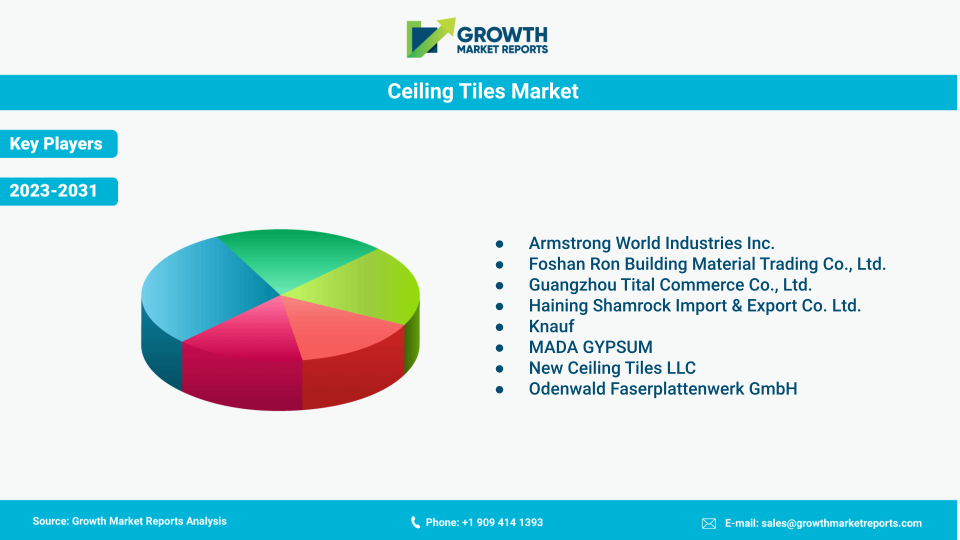
Key players competing in the global ceiling tiles market are Armstrong World Industries Inc.; Foshan Ron Building Material Trading Co., Ltd.; Guangzhou Tital Commerce Co., Ltd; Haining Shamrock Import & Export Co. Ltd.; Knauf; MADA GYPSUM; New Ceiling Tiles LLC; Odenwald Faserplattenwerk GmbH; Rockfon; Saint Gobain SA; SAS International; Shandong Huamei Building Materials Co. Ltd; Techno Ceiling Products; and IMREYS. Some of these players are adopting several business strategies including acquisitions, mergers, collaborations, partnerships, capacity expansion, and product launches to enhance their market shares.
Key players include Armstrong World Industries, Saint-Gobain S.A., Knauf Gips KG, USG Corporation, Rockwool International A/S, Odenwald Faserplattenwerk GmbH (OWA), SAS International, Hunter Douglas N.V., and CertainTeed Corporation.
Major trends include the adoption of sustainable and eco-friendly materials, digital transformation with BIM and AR tools, and the integration of smart technologies. Opportunities exist in green building certifications and digital sales channels.
Major end-users include offices, hospitals, educational institutions, retail stores, airports, and hospitality venues. Each segment has unique requirements for acoustics, aesthetics, durability, and hygiene.
Ceiling tiles are distributed through offline channels (specialty stores, wholesalers, direct sales) and online channels (e-commerce platforms, company websites). Offline remains dominant, but online sales are rapidly growing.
Ceiling tiles can be installed using drop/suspended systems or surface-mounted systems. Drop ceilings are common in commercial and institutional settings, while surface-mounted systems are popular in residential and small-scale commercial spaces.
Ceiling tiles are used in commercial, residential, industrial, and institutional sectors. The commercial segment dominates, with applications in offices, retail stores, hospitality venues, and healthcare facilities.
The market is segmented into mineral wool, metal, gypsum, PVC, wood, and others. Mineral wool ceiling tiles are the most widely used due to their acoustic properties, fire resistance, and affordability.
Asia Pacific leads the global ceiling tiles market, followed by North America and Europe. The Middle East & Africa and Latin America are emerging as promising markets due to infrastructure investments and commercial real estate expansion.
Key growth drivers include increasing construction and renovation activities, demand for aesthetic and acoustic solutions, the trend toward sustainable building materials, rapid urbanization, and technological advancements in manufacturing.
The global ceiling tiles market reached USD 8.1 billion in 2024 and is projected to grow at a CAGR of 7.4% from 2025 to 2033, reaching approximately USD 15.4 billion by 2033.