CCTV Market Research Report 2033

Segments - by Product Type (Analog CCTV, IP-Based CCTV, Wireless CCTV, Hybrid CCTV), by Component (Camera, DVR/NVR, Monitor, Storage, Accessories), by Application (Residential, Commercial, Industrial, Government, Others), by Technology (HD CCTV, Non-HD CCTV), by Distribution Channel (Online, Offline)

https://growthmarketreports.com/Raksha
Author : Raksha Sharma
https://growthmarketreports.com/Vaibhav
Fact-checked by : V. Chandola
https://growthmarketreports.com/Shruti
Editor : Shruti Bhat

Upcoming | Report ID :ICT-SE-3850 | 4.0 Rating | 45 Reviews | 291 Pages | Format : Docx PDF

Report Description


CCTV Market Outlook

According to our latest research, the global CCTV market size reached USD 27.6 billion in 2024, reflecting robust demand across security and surveillance applications. The market is poised for continued expansion, with a projected CAGR of 8.1% from 2025 to 2033. By 2033, the CCTV market is expected to be valued at USD 53.4 billion. This growth is primarily driven by increasing security concerns, technological advancements, and the proliferation of smart city initiatives worldwide.

A significant growth factor for the CCTV market is the escalating need for enhanced security in both public and private sectors. Rising crime rates, increasing incidents of theft and vandalism, and a general surge in safety awareness have compelled businesses, governments, and homeowners to invest in advanced surveillance systems. The integration of artificial intelligence and analytics into CCTV systems has further enhanced their capabilities, enabling real-time threat detection, facial recognition, and behavioral analysis. These technological enhancements not only deter criminal activity but also provide actionable insights, making CCTV systems indispensable for modern security infrastructure. As a result, organizations are allocating larger budgets to surveillance solutions, directly contributing to the upward trajectory of the global CCTV market.

Another key driver shaping the CCTV market landscape is the rapid urbanization and the development of smart cities, especially in emerging economies. Governments across the globe are investing heavily in urban security infrastructure to ensure the safety of citizens and the smooth functioning of urban environments. Smart city projects often prioritize the deployment of high-definition CCTV cameras integrated with IoT and cloud-based platforms, enabling centralized monitoring and data analytics. This trend is especially pronounced in Asia Pacific and the Middle East, where large-scale infrastructure developments are underway. The adoption of IP-based and wireless CCTV systems is gaining momentum in these regions due to their scalability, flexibility, and ease of integration with other smart city technologies.

The evolution of distribution channels and the growing preference for online procurement are also fueling the expansion of the CCTV market. E-commerce platforms and specialized online vendors have made it easier for end-users to access a wide range of CCTV products, compare features, and benefit from competitive pricing. Additionally, the COVID-19 pandemic accelerated the shift towards digital channels as physical retail outlets faced restrictions and supply chain disruptions. This transformation has enabled manufacturers and distributors to reach a broader customer base, streamline their sales processes, and offer value-added services such as remote installation support and cloud-based management. As digitalization continues to permeate the security industry, the online distribution of CCTV systems is expected to witness sustained growth, further propelling the market.

From a regional perspective, the Asia Pacific region dominates the global CCTV market, accounting for the largest share in 2024. This dominance is attributed to the rapid urbanization, government mandates for public safety, and significant investments in smart infrastructure projects across countries like China, India, and Japan. North America and Europe also represent substantial markets, driven by stringent regulatory frameworks and the widespread adoption of advanced surveillance technologies. Meanwhile, the Middle East & Africa and Latin America are emerging as promising markets, fueled by increasing security concerns and ongoing infrastructure development. The regional dynamics of the CCTV market underscore the importance of localized strategies and tailored product offerings to address diverse security needs and regulatory environments.

Global CCTV Industry Outlook

Product Type Analysis

The CCTV market is segmented by product type into Analog CCTV, IP-Based CCTV, Wireless CCTV, and Hybrid CCTV, each catering to distinct user preferences and technological advancements. Analog CCTV systems, while traditional, continue to hold a significant share due to their cost-effectiveness and ease of installation, particularly in regions with budget constraints or legacy infrastructure. However, the shift towards digitalization and the growing demand for high-resolution video surveillance are gradually phasing out analog systems in favor of more advanced alternatives. Despite this, analog CCTV remains relevant in specific applications such as small businesses and residential complexes where affordability and simplicity are paramount.

IP-Based CCTV systems have emerged as a game-changer in the surveillance industry, offering superior image quality, remote accessibility, and scalability. These systems leverage internet protocols to transmit video and data, enabling seamless integration with networked devices and cloud platforms. The adoption of IP-based cameras is particularly strong in commercial and government sectors, where large-scale deployments require centralized monitoring and advanced analytics. The ability to support high-definition and even ultra-high-definition video feeds makes IP-based CCTV the preferred choice for critical infrastructure, airports, and smart city projects. As network infrastructure improves globally, the market share of IP-based CCTV is expected to increase significantly over the forecast period.

Wireless CCTV systems are gaining traction due to their flexibility, ease of installation, and reduced reliance on physical cabling. These systems are ideal for temporary surveillance needs or locations where wiring is impractical, such as historical sites or remote areas. The proliferation of wireless technologies, coupled with advancements in battery life and connectivity, has expanded the application of wireless CCTV in both residential and commercial settings. Moreover, the integration of wireless systems with mobile apps and cloud storage solutions enhances user convenience and real-time monitoring capabilities. As the demand for portable and scalable surveillance solutions grows, the wireless CCTV segment is poised for robust growth.

Hybrid CCTV systems combine the strengths of analog and IP-based technologies, offering a cost-effective upgrade path for organizations with existing analog infrastructure. These systems enable users to retain their analog cameras while gradually integrating IP-based components, thereby optimizing investment and minimizing disruption. Hybrid solutions are particularly appealing to large enterprises and government agencies seeking to modernize their surveillance networks without incurring the high costs of a complete overhaul. The flexibility and backward compatibility of hybrid CCTV systems make them a strategic choice for phased upgrades and long-term scalability, ensuring their continued relevance in the evolving CCTV landscape.

Report Scope

Attributes Details
Report Title CCTV Market Research Report 2033
By Product Type Analog CCTV, IP-Based CCTV, Wireless CCTV, Hybrid CCTV
By Component Camera, DVR/NVR, Monitor, Storage, Accessories
By Application Residential, Commercial, Industrial, Government, Others
By Technology HD CCTV, Non-HD CCTV
By Distribution Channel Online, Offline
Regions Covered North America, Europe, APAC, Latin America, MEA
Base Year 2024
Historic Data 2018-2023
Forecast Period 2025-2033
Number of Pages 291
Number of Tables & Figures 313
Customization Available Yes, the report can be customized as per your need.

Component Analysis

The CCTV market is further segmented by component, encompassing Camera, DVR/NVR, Monitor, Storage, and Accessories. Cameras represent the most critical component, as advancements in sensor technology, resolution, and imaging capabilities directly influence the effectiveness of surveillance systems. The transition from standard definition to high-definition and ultra-high-definition cameras has significantly enhanced image clarity and detail, enabling more accurate identification and analysis. Innovations such as night vision, thermal imaging, and 360-degree coverage have expanded the application of CCTV cameras across diverse environments, from retail stores to industrial facilities and public spaces.

Digital Video Recorders (DVRs) and Network Video Recorders (NVRs) play a pivotal role in the storage and management of surveillance footage. DVRs are typically used in analog systems, while NVRs cater to IP-based CCTV setups. The evolution of recording technology has led to the development of hybrid recorders capable of supporting both analog and digital inputs, providing greater flexibility for end-users. Features such as remote access, real-time playback, and intelligent video analytics have transformed DVRs and NVRs from simple storage devices to powerful management tools. As data retention requirements and regulatory compliance standards become more stringent, the demand for advanced recording solutions is expected to rise.

Monitors are essential for real-time viewing and analysis of CCTV footage, with demand driven by the need for high-resolution displays and multi-channel monitoring capabilities. The integration of touchscreens, video walls, and ergonomic designs has improved the user experience in control rooms and security operation centers. Monitors equipped with advanced display technologies enhance situational awareness and facilitate rapid response to incidents. As surveillance networks become more complex and data-intensive, the importance of high-quality monitors in ensuring effective monitoring and decision-making cannot be overstated.

Storage solutions are increasingly critical as the volume and resolution of surveillance footage grow. The shift towards high-definition and continuous recording necessitates robust storage infrastructure capable of managing large data volumes securely and efficiently. Network-attached storage (NAS), cloud storage, and scalable on-premises solutions are gaining popularity, offering redundancy, data protection, and remote accessibility. The integration of artificial intelligence and video analytics further drives the need for intelligent storage systems that can index, search, and retrieve footage quickly. Accessories such as mounts, housings, cables, and power supplies complement the core components, ensuring seamless installation, operation, and maintenance of CCTV systems.

Application Analysis

The application landscape of the CCTV market is diverse, spanning Residential, Commercial, Industrial, Government, and Other sectors. In the residential segment, the adoption of CCTV systems is fueled by growing concerns over home security, burglary, and unauthorized access. Homeowners are increasingly investing in user-friendly, wireless, and smart CCTV solutions that offer remote monitoring via smartphones and integration with home automation platforms. The availability of affordable, plug-and-play systems has democratized access to advanced surveillance, making it accessible to a broader consumer base and driving growth in the residential segment.

Commercial applications account for a significant share of the CCTV market, encompassing retail stores, shopping malls, office buildings, hotels, and healthcare facilities. Businesses prioritize surveillance to deter theft, monitor employee behavior, and ensure customer safety. The integration of video analytics enables retailers to gain insights into customer footfall, dwell time, and store layout optimization, transforming CCTV systems into valuable business intelligence tools. Commercial establishments often require scalable, networked solutions with centralized management, making IP-based and hybrid CCTV systems the preferred choice in this segment.

The industrial sector leverages CCTV systems for process monitoring, safety compliance, and asset protection. Manufacturing plants, warehouses, logistics hubs, and critical infrastructure facilities deploy ruggedized cameras capable of withstanding harsh environments and extreme temperatures. CCTV systems in industrial settings are often integrated with access control, fire detection, and alarm systems to provide comprehensive security coverage. The ability to monitor remote or hazardous areas in real-time enhances operational efficiency and reduces the risk of accidents or unauthorized activities.

Government applications represent a vital segment of the CCTV market, driven by the need for public safety, law enforcement, and urban surveillance. City surveillance projects, traffic management, and border security initiatives rely on extensive CCTV networks to monitor public spaces, detect suspicious activities, and respond to emergencies swiftly. The deployment of high-definition, AI-enabled cameras in public areas has become a cornerstone of smart city strategies, enabling authorities to enhance situational awareness and improve incident response. The government segment is characterized by large-scale, mission-critical deployments with stringent reliability and data protection requirements.

Technology Analysis

Technology is a key differentiator in the CCTV market, with systems classified as HD CCTV and Non-HD CCTV. HD CCTV systems have gained widespread adoption due to their ability to deliver superior image quality, clarity, and detail. High-definition surveillance is essential for applications requiring accurate identification, such as facial recognition, license plate reading, and forensic analysis. The proliferation of HD cameras, coupled with declining costs, has made high-resolution surveillance accessible to a broader range of end-users. HD CCTV systems are particularly prevalent in commercial, government, and critical infrastructure projects where image quality is paramount.

Non-HD CCTV systems, while gradually being phased out, continue to serve specific market segments where budget constraints or basic surveillance needs prevail. These systems are typically deployed in small businesses, rural areas, or legacy installations where upgrading to HD is not immediately feasible. Non-HD CCTV offers the advantage of lower bandwidth and storage requirements, making it suitable for environments with limited network or infrastructure capabilities. However, as the cost gap between HD and Non-HD systems narrows, the transition towards high-definition surveillance is expected to accelerate, reducing the market share of Non-HD CCTV over the forecast period.

The technological evolution of CCTV systems extends beyond resolution, encompassing advancements in analytics, connectivity, and integration. The incorporation of artificial intelligence, machine learning, and video analytics has transformed CCTV from passive recording devices to proactive security solutions. Features such as motion detection, object tracking, and behavioral analysis enable real-time threat identification and automated alerts, enhancing the effectiveness of surveillance operations. The integration of CCTV systems with IoT platforms, cloud storage, and mobile applications further expands their functionality, enabling remote monitoring, centralized management, and data-driven decision-making.

Emerging technologies such as 4K and 8K resolution, panoramic cameras, and thermal imaging are pushing the boundaries of surveillance capabilities. These innovations enable comprehensive coverage of large areas, improved low-light performance, and the ability to detect hidden or obscured threats. As technological advancements continue to drive the evolution of CCTV systems, end-users are increasingly prioritizing future-proof solutions that offer scalability, interoperability, and seamless integration with existing security infrastructure.

Distribution Channel Analysis

The distribution landscape of the CCTV market is segmented into Online and Offline channels, each playing a critical role in reaching diverse customer segments. Offline channels, including brick-and-mortar stores, specialized security retailers, and system integrators, have traditionally dominated the market. These channels offer personalized consultation, on-site demonstrations, and professional installation services, catering to customers seeking comprehensive solutions and technical support. The offline segment is particularly strong in regions with established security infrastructure and a preference for face-to-face interactions, such as Europe and North America.

The rise of online distribution channels has transformed the way CCTV products are marketed, sold, and delivered. E-commerce platforms, direct-to-consumer websites, and online marketplaces provide customers with convenient access to a wide range of CCTV systems, competitive pricing, and detailed product information. The ability to compare features, read reviews, and benefit from promotional offers has accelerated the adoption of online channels, especially among tech-savvy consumers and small businesses. The COVID-19 pandemic further catalyzed the shift towards digital procurement, as lockdowns and supply chain disruptions limited access to physical retail outlets.

Online channels offer significant advantages in terms of scalability, reach, and cost efficiency. Manufacturers and distributors can leverage digital platforms to expand their market presence, target new customer segments, and streamline their sales processes. Value-added services such as remote installation support, cloud-based management, and subscription-based models enhance the appeal of online distribution. As digitalization continues to reshape the security industry, the online segment is expected to witness sustained growth, particularly in emerging markets where internet penetration and e-commerce adoption are on the rise.

Despite the growing popularity of online channels, offline distribution remains essential for large-scale, complex, or customized CCTV projects that require site assessments, system integration, and ongoing maintenance. System integrators and value-added resellers play a crucial role in designing tailored solutions, ensuring compatibility with existing infrastructure, and providing after-sales support. The coexistence of online and offline channels reflects the diverse needs of end-users and underscores the importance of an omnichannel approach in the evolving CCTV market.

Opportunities & Threats

The CCTV market presents a wealth of opportunities driven by technological innovation, regulatory mandates, and evolving security needs. The integration of artificial intelligence and machine learning into CCTV systems is unlocking new possibilities for proactive threat detection, automated incident response, and data-driven decision-making. AI-powered analytics can identify suspicious behavior, recognize faces, and detect objects in real-time, transforming surveillance operations from reactive to preventive. The convergence of CCTV with IoT, cloud computing, and mobile applications enables centralized monitoring, remote access, and seamless integration with broader security ecosystems. These advancements are creating new revenue streams for manufacturers, service providers, and system integrators, positioning the CCTV market for sustained growth.

Emerging markets offer significant growth potential as urbanization, infrastructure development, and rising security awareness drive demand for advanced surveillance solutions. Governments in Asia Pacific, Middle East, and Latin America are investing in smart city projects, public safety initiatives, and critical infrastructure protection, creating opportunities for large-scale CCTV deployments. The proliferation of affordable, user-friendly systems is expanding market access to small businesses and residential users, democratizing security and driving volume growth. Additionally, the shift towards subscription-based models, cloud storage, and managed security services is opening new avenues for recurring revenue and long-term customer engagement.

However, the CCTV market also faces notable challenges and restrainers. Privacy concerns and regulatory scrutiny over the use of surveillance technologies have intensified, particularly in regions with stringent data protection laws. The widespread deployment of high-definition cameras and facial recognition systems has raised ethical questions regarding individual privacy, data security, and potential misuse. Compliance with evolving regulations such as the General Data Protection Regulation (GDPR) in Europe and similar frameworks in other regions requires ongoing investment in data protection, encryption, and transparency measures. Failure to address these concerns can result in legal liabilities, reputational damage, and restrictions on market expansion, posing a significant threat to industry growth.

Regional Outlook

The Asia Pacific region leads the global CCTV market, accounting for approximately 39% of the total market value in 2024, or about USD 10.8 billion. This dominance is driven by rapid urbanization, government mandates for public safety, and significant investments in smart infrastructure across countries such as China, India, and Japan. China, in particular, is a global leader in surveillance camera deployment, with extensive city-wide networks and advanced AI-driven analytics. India’s push for smart cities and urban security, along with Japan’s focus on disaster management and public safety, further fuel market growth in the region. The Asia Pacific market is expected to maintain a strong CAGR of 9.2% through 2033, outpacing other regions due to ongoing infrastructure development and rising security awareness.

North America holds the second-largest share, valued at approximately USD 7.4 billion in 2024. The region’s growth is underpinned by stringent regulatory frameworks, widespread adoption of advanced surveillance technologies, and a strong focus on critical infrastructure protection. The United States leads the market, driven by investments in public safety, transportation security, and commercial surveillance. The integration of AI, cloud computing, and IoT into CCTV systems is particularly prominent in North America, enabling sophisticated analytics and centralized monitoring. Canada follows closely, with a focus on urban security and compliance with privacy regulations. The North American market is projected to grow at a steady CAGR of 7.6% through 2033.

Europe represents a mature market with a value of around USD 5.6 billion in 2024. Growth in the region is driven by regulatory compliance, urban security initiatives, and the modernization of legacy surveillance infrastructure. The United Kingdom, Germany, and France are key contributors, with extensive deployments in public spaces, transportation hubs, and commercial establishments. The implementation of GDPR and other data protection laws has heightened the focus on privacy, data security, and ethical use of surveillance technologies. The Middle East & Africa and Latin America are emerging markets, with a combined value of approximately USD 3.8 billion in 2024. These regions are witnessing increased investments in urban security, critical infrastructure, and event management, creating opportunities for market expansion and technology adoption.

CCTV Market Statistics

Competitor Outlook

The global CCTV market is characterized by intense competition, rapid technological innovation, and a diverse ecosystem of manufacturers, system integrators, and service providers. The competitive landscape is shaped by the presence of established multinational corporations, regional players, and emerging startups, each vying for market share through product differentiation, pricing strategies, and value-added services. Leading companies invest heavily in research and development to introduce cutting-edge technologies, enhance product performance, and address evolving customer needs. Strategic partnerships, mergers and acquisitions, and geographic expansion are common tactics employed to strengthen market position and access new customer segments.

Product innovation and technological leadership are key differentiators in the CCTV market. Companies that offer advanced features such as AI-powered analytics, cloud integration, and seamless interoperability with other security systems are well-positioned to capture demand from large enterprises, government agencies, and smart city projects. The ability to deliver scalable, customizable solutions tailored to specific industry requirements is a critical success factor, particularly in complex or mission-critical environments. Customer support, after-sales service, and training programs further enhance brand loyalty and long-term customer relationships.

Pricing pressures and commoditization are challenges faced by market participants, especially in the analog and entry-level segments. The influx of low-cost manufacturers from Asia, particularly China, has intensified competition and driven down prices, benefiting end-users but compressing margins for suppliers. To counteract this, leading companies focus on value-added offerings, such as integrated security platforms, managed services, and subscription-based models. The shift towards digital and online distribution channels has also altered the competitive dynamics, enabling new entrants to reach global markets and disrupt traditional sales models.

Some of the major players in the global CCTV market include Hikvision Digital Technology Co., Ltd., Dahua Technology Co., Ltd., Axis Communications AB, Bosch Security Systems, Hanwha Techwin, Honeywell International Inc., Panasonic Corporation, Avigilon Corporation, Pelco, and FLIR Systems. Hikvision and Dahua, both based in China, are global leaders renowned for their extensive product portfolios, technological innovation, and strong distribution networks. Axis Communications, headquartered in Sweden, is a pioneer in IP-based surveillance and is recognized for its high-quality, reliable solutions. Bosch Security Systems and Hanwha Techwin are prominent players with a strong presence in Europe and Asia, offering comprehensive security and surveillance solutions.

Honeywell International and Panasonic Corporation leverage their diversified technology portfolios to deliver integrated security solutions for commercial, industrial, and government applications. Avigilon, a Motorola Solutions company, is known for its advanced analytics and end-to-end surveillance systems, while Pelco and FLIR Systems specialize in specialized cameras, thermal imaging, and critical infrastructure protection. These companies compete on the basis of innovation, quality, customer service, and global reach, continually raising the bar for performance and reliability in the CCTV market.

Key Players

  • Hikvision
  • Dahua Technology
  • Axis Communications
  • Bosch Security Systems
  • Hanwha Vision (formerly Hanwha Techwin)
  • Avigilon (a Motorola Solutions company)
  • Honeywell Security
  • Pelco (a Motorola Solutions company)
  • CP Plus
  • Uniview (Uniview Technologies)
  • FLIR Systems
  • Sony Corporation
  • Panasonic i-PRO Sensing Solutions
  • Vivotek
  • Tyco Security Products (Johnson Controls)
  • IDIS
  • Mobotix
  • GeoVision
  • Infinova
  • D-Link
CCTV Market Overview

Segments

The CCTV market has been segmented on the basis of

Product Type

  • Analog CCTV
  • IP-Based CCTV
  • Wireless CCTV
  • Hybrid CCTV

Component

  • Camera
  • DVR/NVR
  • Monitor
  • Storage
  • Accessories

Application

  • Residential
  • Commercial
  • Industrial
  • Government
  • Others

Technology

  • HD CCTV
  • Non-HD CCTV

Distribution Channel

  • Online
  • Offline

Competitive Landscape

Key players in the global CCTV market are Axis Communications AB; Hanwha Techwin America; Eagle Eye Networks; Hangzhou Hikvision Digital Technology Co., Ltd.; Panasonic Corporation; Swann; D-Link Corporation; FLIR Systems, Inc.; Bosch Security Systems; and VIVOTEK Inc. These players have actively engaged in several market development strategies including collaborations, agreements, mergers & acquisitions, production capacity expansion, new product launches, and partnerships to increase their market share.
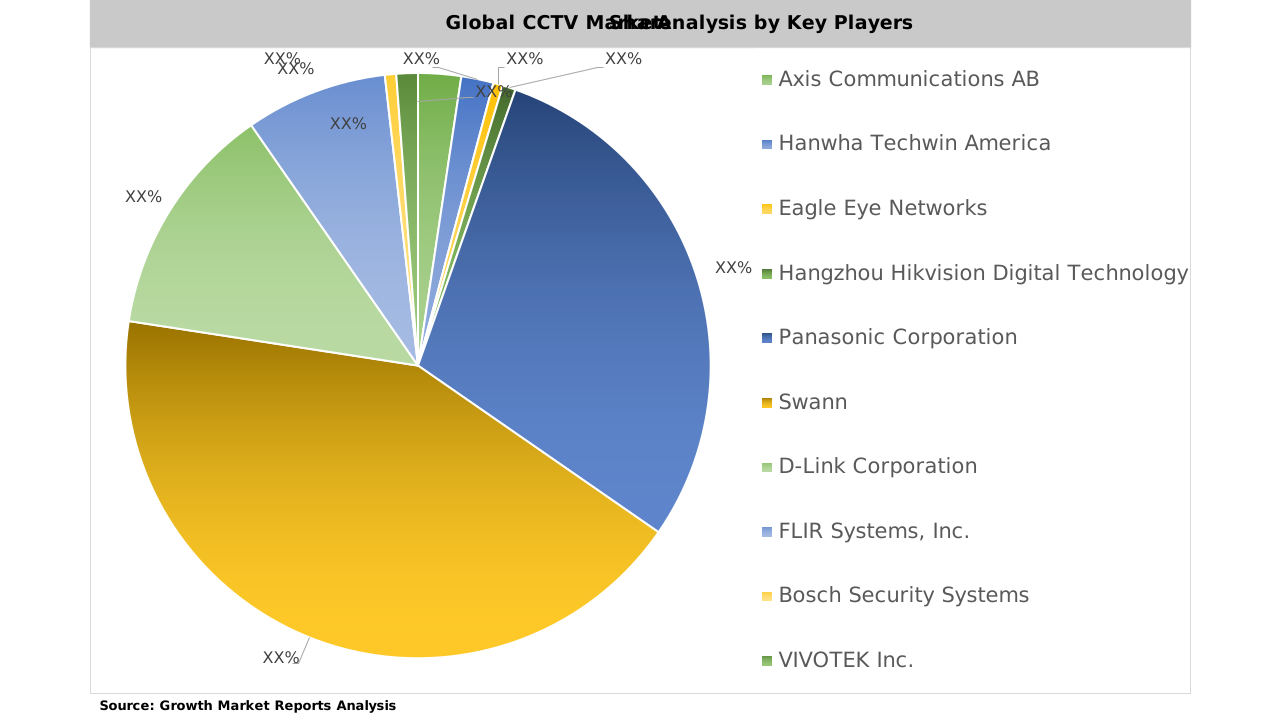

Global CCTV Market Key Players

Frequently Asked Questions

Opportunities include AI-driven analytics, smart city integration, and emerging markets. Challenges involve privacy concerns, regulatory compliance (like GDPR), and pricing pressures due to intense competition and commoditization.

Leading companies include Hikvision, Dahua Technology, Axis Communications, Bosch Security Systems, Hanwha Vision, Avigilon, Honeywell Security, Pelco, CP Plus, Uniview, FLIR Systems, Sony, Panasonic i-PRO, Vivotek, Tyco Security Products, IDIS, Mobotix, GeoVision, Infinova, and D-Link.

CCTV products are distributed through both online and offline channels. Online sales are growing rapidly due to convenience and digitalization, while offline channels remain important for large-scale or customized projects requiring professional support.

Core components include cameras, DVR/NVR (recorders), monitors, storage solutions, and accessories like mounts and cables. Each component plays a vital role in the effectiveness and scalability of the surveillance system.

CCTV systems are used across residential, commercial, industrial, and government sectors for purposes such as home security, retail surveillance, process monitoring, public safety, and urban management.

Technological evolution includes the shift to high-definition (HD) and ultra-HD cameras, integration of artificial intelligence and video analytics, IoT and cloud connectivity, and the emergence of 4K/8K and thermal imaging cameras for advanced surveillance.

The market offers Analog CCTV, IP-Based CCTV, Wireless CCTV, and Hybrid CCTV systems. Analog systems are valued for cost-effectiveness, IP-based for high-quality and scalability, wireless for flexibility, and hybrid for combining analog and digital benefits.

Asia Pacific leads the CCTV market, accounting for about 39% of the global value in 2024, driven by rapid urbanization, government mandates, and investments in smart infrastructure. North America and Europe also hold significant shares due to regulatory frameworks and advanced technology adoption.

Key growth drivers include rising security concerns, technological advancements such as AI and analytics integration, the proliferation of smart city projects, and increased adoption in both public and private sectors.

The global CCTV market reached USD 27.6 billion in 2024 and is projected to grow at a CAGR of 8.1% from 2025 to 2033, reaching an estimated value of USD 53.4 billion by 2033.

Table Of Content

Chapter 1 Executive Summary
Chapter 2 Assumptions and Acronyms Used
Chapter 3 Research Methodology
Chapter 4 CCTV Market Overview
   4.1 Introduction
      4.1.1 Market Taxonomy
      4.1.2 Market Definition
      4.1.3 Macro-Economic Factors Impacting the Market Growth
   4.2 CCTV Market Dynamics
      4.2.1 Market Drivers
      4.2.2 Market Restraints
      4.2.3 Market Opportunity
   4.3 CCTV Market - Supply Chain Analysis
      4.3.1 List of Key Suppliers
      4.3.2 List of Key Distributors
      4.3.3 List of Key Consumers
   4.4 Key Forces Shaping the CCTV Market
      4.4.1 Bargaining Power of Suppliers
      4.4.2 Bargaining Power of Buyers
      4.4.3 Threat of Substitution
      4.4.4 Threat of New Entrants
      4.4.5 Competitive Rivalry
   4.5 Global CCTV Market Size & Forecast, 2023-2032
      4.5.1 CCTV Market Size and Y-o-Y Growth
      4.5.2 CCTV Market Absolute $ Opportunity

Chapter 5 Global CCTV Market Analysis and Forecast By Product Type
   5.1 Introduction
      5.1.1 Key Market Trends & Growth Opportunities By Product Type
      5.1.2 Basis Point Share (BPS) Analysis By Product Type
      5.1.3 Absolute $ Opportunity Assessment By Product Type
   5.2 CCTV Market Size Forecast By Product Type
      5.2.1 Analog CCTV
      5.2.2 IP-Based CCTV
      5.2.3 Wireless CCTV
      5.2.4 Hybrid CCTV
   5.3 Market Attractiveness Analysis By Product Type

Chapter 6 Global CCTV Market Analysis and Forecast By Component
   6.1 Introduction
      6.1.1 Key Market Trends & Growth Opportunities By Component
      6.1.2 Basis Point Share (BPS) Analysis By Component
      6.1.3 Absolute $ Opportunity Assessment By Component
   6.2 CCTV Market Size Forecast By Component
      6.2.1 Camera
      6.2.2 DVR/NVR
      6.2.3 Monitor
      6.2.4 Storage
      6.2.5 Accessories
   6.3 Market Attractiveness Analysis By Component

Chapter 7 Global CCTV Market Analysis and Forecast By Application
   7.1 Introduction
      7.1.1 Key Market Trends & Growth Opportunities By Application
      7.1.2 Basis Point Share (BPS) Analysis By Application
      7.1.3 Absolute $ Opportunity Assessment By Application
   7.2 CCTV Market Size Forecast By Application
      7.2.1 Residential
      7.2.2 Commercial
      7.2.3 Industrial
      7.2.4 Government
      7.2.5 Others
   7.3 Market Attractiveness Analysis By Application

Chapter 8 Global CCTV Market Analysis and Forecast By Technology
   8.1 Introduction
      8.1.1 Key Market Trends & Growth Opportunities By Technology
      8.1.2 Basis Point Share (BPS) Analysis By Technology
      8.1.3 Absolute $ Opportunity Assessment By Technology
   8.2 CCTV Market Size Forecast By Technology
      8.2.1 HD CCTV
      8.2.2 Non-HD CCTV
   8.3 Market Attractiveness Analysis By Technology

Chapter 9 Global CCTV Market Analysis and Forecast By Distribution Channel
   9.1 Introduction
      9.1.1 Key Market Trends & Growth Opportunities By Distribution Channel
      9.1.2 Basis Point Share (BPS) Analysis By Distribution Channel
      9.1.3 Absolute $ Opportunity Assessment By Distribution Channel
   9.2 CCTV Market Size Forecast By Distribution Channel
      9.2.1 Online
      9.2.2 Offline
   9.3 Market Attractiveness Analysis By Distribution Channel

Chapter 10 Global CCTV Market Analysis and Forecast by Region
   10.1 Introduction
      10.1.1 Key Market Trends & Growth Opportunities By Region
      10.1.2 Basis Point Share (BPS) Analysis By Region
      10.1.3 Absolute $ Opportunity Assessment By Region
   10.2 CCTV Market Size Forecast By Region
      10.2.1 North America
      10.2.2 Europe
      10.2.3 Asia Pacific
      10.2.4 Latin America
      10.2.5 Middle East & Africa (MEA)
   10.3 Market Attractiveness Analysis By Region

Chapter 11 Coronavirus Disease (COVID-19) Impact 
   11.1 Introduction 
   11.2 Current & Future Impact Analysis 
   11.3 Economic Impact Analysis 
   11.4 Government Policies 
   11.5 Investment Scenario

Chapter 12 North America CCTV Analysis and Forecast
   12.1 Introduction
   12.2 North America CCTV Market Size Forecast by Country
      12.2.1 U.S.
      12.2.2 Canada
   12.3 Basis Point Share (BPS) Analysis by Country
   12.4 Absolute $ Opportunity Assessment by Country
   12.5 Market Attractiveness Analysis by Country
   12.6 North America CCTV Market Size Forecast By Product Type
      12.6.1 Analog CCTV
      12.6.2 IP-Based CCTV
      12.6.3 Wireless CCTV
      12.6.4 Hybrid CCTV
   12.7 Basis Point Share (BPS) Analysis By Product Type 
   12.8 Absolute $ Opportunity Assessment By Product Type 
   12.9 Market Attractiveness Analysis By Product Type
   12.10 North America CCTV Market Size Forecast By Component
      12.10.1 Camera
      12.10.2 DVR/NVR
      12.10.3 Monitor
      12.10.4 Storage
      12.10.5 Accessories
   12.11 Basis Point Share (BPS) Analysis By Component 
   12.12 Absolute $ Opportunity Assessment By Component 
   12.13 Market Attractiveness Analysis By Component
   12.14 North America CCTV Market Size Forecast By Application
      12.14.1 Residential
      12.14.2 Commercial
      12.14.3 Industrial
      12.14.4 Government
      12.14.5 Others
   12.15 Basis Point Share (BPS) Analysis By Application 
   12.16 Absolute $ Opportunity Assessment By Application 
   12.17 Market Attractiveness Analysis By Application
   12.18 North America CCTV Market Size Forecast By Technology
      12.18.1 HD CCTV
      12.18.2 Non-HD CCTV
   12.19 Basis Point Share (BPS) Analysis By Technology 
   12.20 Absolute $ Opportunity Assessment By Technology 
   12.21 Market Attractiveness Analysis By Technology
   12.22 North America CCTV Market Size Forecast By Distribution Channel
      12.22.1 Online
      12.22.2 Offline
   12.23 Basis Point Share (BPS) Analysis By Distribution Channel 
   12.24 Absolute $ Opportunity Assessment By Distribution Channel 
   12.25 Market Attractiveness Analysis By Distribution Channel

Chapter 13 Europe CCTV Analysis and Forecast
   13.1 Introduction
   13.2 Europe CCTV Market Size Forecast by Country
      13.2.1 Germany
      13.2.2 France
      13.2.3 Italy
      13.2.4 U.K.
      13.2.5 Spain
      13.2.6 Russia
      13.2.7 Rest of Europe
   13.3 Basis Point Share (BPS) Analysis by Country
   13.4 Absolute $ Opportunity Assessment by Country
   13.5 Market Attractiveness Analysis by Country
   13.6 Europe CCTV Market Size Forecast By Product Type
      13.6.1 Analog CCTV
      13.6.2 IP-Based CCTV
      13.6.3 Wireless CCTV
      13.6.4 Hybrid CCTV
   13.7 Basis Point Share (BPS) Analysis By Product Type 
   13.8 Absolute $ Opportunity Assessment By Product Type 
   13.9 Market Attractiveness Analysis By Product Type
   13.10 Europe CCTV Market Size Forecast By Component
      13.10.1 Camera
      13.10.2 DVR/NVR
      13.10.3 Monitor
      13.10.4 Storage
      13.10.5 Accessories
   13.11 Basis Point Share (BPS) Analysis By Component 
   13.12 Absolute $ Opportunity Assessment By Component 
   13.13 Market Attractiveness Analysis By Component
   13.14 Europe CCTV Market Size Forecast By Application
      13.14.1 Residential
      13.14.2 Commercial
      13.14.3 Industrial
      13.14.4 Government
      13.14.5 Others
   13.15 Basis Point Share (BPS) Analysis By Application 
   13.16 Absolute $ Opportunity Assessment By Application 
   13.17 Market Attractiveness Analysis By Application
   13.18 Europe CCTV Market Size Forecast By Technology
      13.18.1 HD CCTV
      13.18.2 Non-HD CCTV
   13.19 Basis Point Share (BPS) Analysis By Technology 
   13.20 Absolute $ Opportunity Assessment By Technology 
   13.21 Market Attractiveness Analysis By Technology
   13.22 Europe CCTV Market Size Forecast By Distribution Channel
      13.22.1 Online
      13.22.2 Offline
   13.23 Basis Point Share (BPS) Analysis By Distribution Channel 
   13.24 Absolute $ Opportunity Assessment By Distribution Channel 
   13.25 Market Attractiveness Analysis By Distribution Channel

Chapter 14 Asia Pacific CCTV Analysis and Forecast
   14.1 Introduction
   14.2 Asia Pacific CCTV Market Size Forecast by Country
      14.2.1 China
      14.2.2 Japan
      14.2.3 South Korea
      14.2.4 India
      14.2.5 Australia
      14.2.6 South East Asia (SEA)
      14.2.7 Rest of Asia Pacific (APAC)
   14.3 Basis Point Share (BPS) Analysis by Country
   14.4 Absolute $ Opportunity Assessment by Country
   14.5 Market Attractiveness Analysis by Country
   14.6 Asia Pacific CCTV Market Size Forecast By Product Type
      14.6.1 Analog CCTV
      14.6.2 IP-Based CCTV
      14.6.3 Wireless CCTV
      14.6.4 Hybrid CCTV
   14.7 Basis Point Share (BPS) Analysis By Product Type 
   14.8 Absolute $ Opportunity Assessment By Product Type 
   14.9 Market Attractiveness Analysis By Product Type
   14.10 Asia Pacific CCTV Market Size Forecast By Component
      14.10.1 Camera
      14.10.2 DVR/NVR
      14.10.3 Monitor
      14.10.4 Storage
      14.10.5 Accessories
   14.11 Basis Point Share (BPS) Analysis By Component 
   14.12 Absolute $ Opportunity Assessment By Component 
   14.13 Market Attractiveness Analysis By Component
   14.14 Asia Pacific CCTV Market Size Forecast By Application
      14.14.1 Residential
      14.14.2 Commercial
      14.14.3 Industrial
      14.14.4 Government
      14.14.5 Others
   14.15 Basis Point Share (BPS) Analysis By Application 
   14.16 Absolute $ Opportunity Assessment By Application 
   14.17 Market Attractiveness Analysis By Application
   14.18 Asia Pacific CCTV Market Size Forecast By Technology
      14.18.1 HD CCTV
      14.18.2 Non-HD CCTV
   14.19 Basis Point Share (BPS) Analysis By Technology 
   14.20 Absolute $ Opportunity Assessment By Technology 
   14.21 Market Attractiveness Analysis By Technology
   14.22 Asia Pacific CCTV Market Size Forecast By Distribution Channel
      14.22.1 Online
      14.22.2 Offline
   14.23 Basis Point Share (BPS) Analysis By Distribution Channel 
   14.24 Absolute $ Opportunity Assessment By Distribution Channel 
   14.25 Market Attractiveness Analysis By Distribution Channel

Chapter 15 Latin America CCTV Analysis and Forecast
   15.1 Introduction
   15.2 Latin America CCTV Market Size Forecast by Country
      15.2.1 Brazil
      15.2.2 Mexico
      15.2.3 Rest of Latin America (LATAM)
   15.3 Basis Point Share (BPS) Analysis by Country
   15.4 Absolute $ Opportunity Assessment by Country
   15.5 Market Attractiveness Analysis by Country
   15.6 Latin America CCTV Market Size Forecast By Product Type
      15.6.1 Analog CCTV
      15.6.2 IP-Based CCTV
      15.6.3 Wireless CCTV
      15.6.4 Hybrid CCTV
   15.7 Basis Point Share (BPS) Analysis By Product Type 
   15.8 Absolute $ Opportunity Assessment By Product Type 
   15.9 Market Attractiveness Analysis By Product Type
   15.10 Latin America CCTV Market Size Forecast By Component
      15.10.1 Camera
      15.10.2 DVR/NVR
      15.10.3 Monitor
      15.10.4 Storage
      15.10.5 Accessories
   15.11 Basis Point Share (BPS) Analysis By Component 
   15.12 Absolute $ Opportunity Assessment By Component 
   15.13 Market Attractiveness Analysis By Component
   15.14 Latin America CCTV Market Size Forecast By Application
      15.14.1 Residential
      15.14.2 Commercial
      15.14.3 Industrial
      15.14.4 Government
      15.14.5 Others
   15.15 Basis Point Share (BPS) Analysis By Application 
   15.16 Absolute $ Opportunity Assessment By Application 
   15.17 Market Attractiveness Analysis By Application
   15.18 Latin America CCTV Market Size Forecast By Technology
      15.18.1 HD CCTV
      15.18.2 Non-HD CCTV
   15.19 Basis Point Share (BPS) Analysis By Technology 
   15.20 Absolute $ Opportunity Assessment By Technology 
   15.21 Market Attractiveness Analysis By Technology
   15.22 Latin America CCTV Market Size Forecast By Distribution Channel
      15.22.1 Online
      15.22.2 Offline
   15.23 Basis Point Share (BPS) Analysis By Distribution Channel 
   15.24 Absolute $ Opportunity Assessment By Distribution Channel 
   15.25 Market Attractiveness Analysis By Distribution Channel

Chapter 16 Middle East & Africa (MEA) CCTV Analysis and Forecast
   16.1 Introduction
   16.2 Middle East & Africa (MEA) CCTV Market Size Forecast by Country
      16.2.1 Saudi Arabia
      16.2.2 South Africa
      16.2.3 UAE
      16.2.4 Rest of Middle East & Africa (MEA)
   16.3 Basis Point Share (BPS) Analysis by Country
   16.4 Absolute $ Opportunity Assessment by Country
   16.5 Market Attractiveness Analysis by Country
   16.6 Middle East & Africa (MEA) CCTV Market Size Forecast By Product Type
      16.6.1 Analog CCTV
      16.6.2 IP-Based CCTV
      16.6.3 Wireless CCTV
      16.6.4 Hybrid CCTV
   16.7 Basis Point Share (BPS) Analysis By Product Type 
   16.8 Absolute $ Opportunity Assessment By Product Type 
   16.9 Market Attractiveness Analysis By Product Type
   16.10 Middle East & Africa (MEA) CCTV Market Size Forecast By Component
      16.10.1 Camera
      16.10.2 DVR/NVR
      16.10.3 Monitor
      16.10.4 Storage
      16.10.5 Accessories
   16.11 Basis Point Share (BPS) Analysis By Component 
   16.12 Absolute $ Opportunity Assessment By Component 
   16.13 Market Attractiveness Analysis By Component
   16.14 Middle East & Africa (MEA) CCTV Market Size Forecast By Application
      16.14.1 Residential
      16.14.2 Commercial
      16.14.3 Industrial
      16.14.4 Government
      16.14.5 Others
   16.15 Basis Point Share (BPS) Analysis By Application 
   16.16 Absolute $ Opportunity Assessment By Application 
   16.17 Market Attractiveness Analysis By Application
   16.18 Middle East & Africa (MEA) CCTV Market Size Forecast By Technology
      16.18.1 HD CCTV
      16.18.2 Non-HD CCTV
   16.19 Basis Point Share (BPS) Analysis By Technology 
   16.20 Absolute $ Opportunity Assessment By Technology 
   16.21 Market Attractiveness Analysis By Technology
   16.22 Middle East & Africa (MEA) CCTV Market Size Forecast By Distribution Channel
      16.22.1 Online
      16.22.2 Offline
   16.23 Basis Point Share (BPS) Analysis By Distribution Channel 
   16.24 Absolute $ Opportunity Assessment By Distribution Channel 
   16.25 Market Attractiveness Analysis By Distribution Channel

Chapter 17 Competition Landscape 
   17.1 CCTV Market: Competitive Dashboard
   17.2 Global CCTV Market: Market Share Analysis, 2023
   17.3 Company Profiles (Details – Overview, Financials, Developments, Strategy) 
      17.3.1 Hikvision
Dahua Technology
Axis Communications
Bosch Security Systems
Hanwha Vision (formerly Hanwha Techwin)
Avigilon (a Motorola Solutions company)
Honeywell Security
Pelco (a Motorola Solutions company)
CP Plus
Uniview (Uniview Technologies)
FLIR Systems
Sony Corporation
Panasonic i-PRO Sensing Solutions
Vivotek
Tyco Security Products (Johnson Controls)
IDIS
Mobotix
GeoVision
Infinova
D-Link

Methodology

Our Clients

Honda Motor Co. Ltd.
Deloitte
Microsoft
General Electric
sinopec
Siemens Healthcare
Nestle SA
Pfizer