Segments - by Product Type (Area Image Sensors, Linear Image Sensors), by Application (Consumer Electronics, Industrial, Healthcare, Automotive, Security & Surveillance, Aerospace & Defense, Others), by End-User (OEMs, Aftermarket)
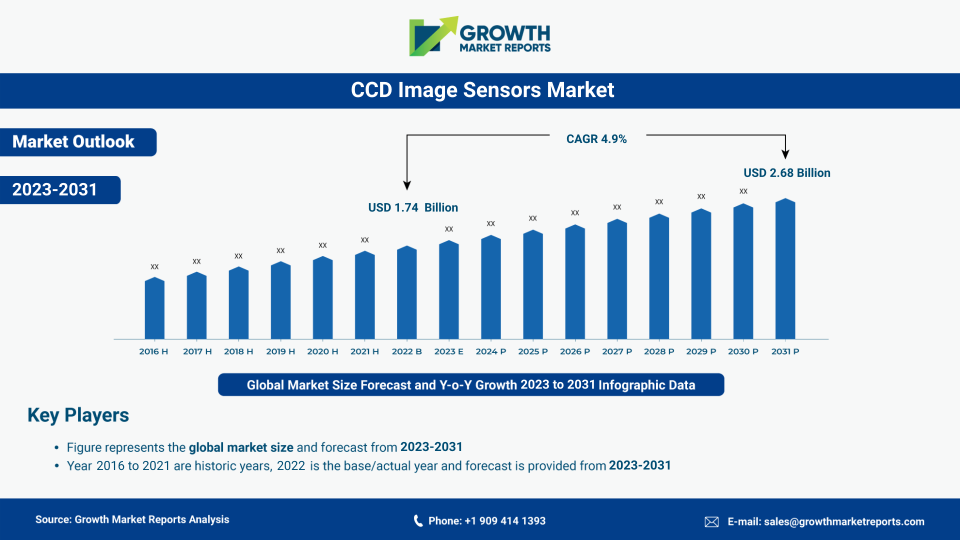
According to our latest research, the global CCD Image Sensors market size in 2024 stands at USD 2.45 billion, with a steady growth trajectory expected over the coming years. The market is forecasted to reach USD 3.62 billion by 2033, progressing at a compound annual growth rate (CAGR) of 4.3% from 2025 to 2033. The sustained demand for high-resolution imaging in diverse sectors such as consumer electronics, healthcare, and automotive, coupled with technological advancements in sensor design, are primary growth drivers for the CCD Image Sensors market. As per our latest research, the adoption of CCD technology remains robust, particularly in applications where image quality and accuracy are paramount.
One of the key growth factors propelling the CCD Image Sensors market is the increasing demand for superior image quality in applications where precision is critical. CCD (Charge-Coupled Device) sensors are renowned for their low noise, high dynamic range, and excellent color reproduction, making them the preferred choice for scientific imaging, medical diagnostics, and high-end industrial inspection systems. The ongoing advancements in sensor miniaturization and integration have enabled manufacturers to deliver compact yet powerful imaging solutions, further broadening the application scope of CCD sensors. Additionally, the proliferation of imaging devices in consumer electronics, such as digital cameras and smartphones, continues to support the marketÂ’s expansion, especially in segments where image fidelity cannot be compromised.
Another significant growth driver for the CCD Image Sensors market is the increasing utilization of advanced imaging systems in the healthcare and automotive sectors. In healthcare, CCD sensors are integral to medical imaging equipment, including digital radiography, endoscopy, and ophthalmology devices, where clarity and detail are essential for accurate diagnosis and treatment. The automotive industry is also witnessing a surge in the adoption of image sensors for applications such as advanced driver-assistance systems (ADAS), night vision, and in-cabin monitoring. These critical functions demand high-performance imaging capabilities, which CCD technology delivers reliably. Furthermore, the rise of Industry 4.0 and automation in manufacturing processes has spurred the deployment of machine vision systems, further boosting the demand for CCD image sensors.
The security and surveillance sector is another area where CCD Image Sensors are witnessing robust demand. The increasing need for high-definition video surveillance in both public and private sectors has driven the adoption of advanced imaging technologies capable of delivering clear images under varying lighting conditions. CCD sensors, with their superior sensitivity and low noise characteristics, are well-suited for security cameras used in critical infrastructure, transportation hubs, and urban monitoring systems. Moreover, the growing concerns regarding public safety and the rise in smart city initiatives are expected to further propel the market, as governments and private organizations continue to invest in state-of-the-art surveillance solutions.
In recent years, the introduction of CMOS Image Sensor technology has significantly impacted the imaging landscape, offering a compelling alternative to traditional CCD sensors. CMOS Image Sensors are known for their lower power consumption, faster processing speeds, and cost-effectiveness, making them a popular choice in consumer electronics and mobile devices. These sensors have made significant advancements in image quality, narrowing the gap with CCD technology, and are increasingly being adopted in applications where compactness and efficiency are crucial. The versatility of CMOS Image Sensors extends beyond consumer electronics, finding applications in automotive, security, and industrial sectors, where their ability to deliver high-speed imaging and integration capabilities are highly valued. As the demand for smart and connected devices grows, CMOS Image Sensors are poised to play a pivotal role in the evolution of imaging technologies across various industries.
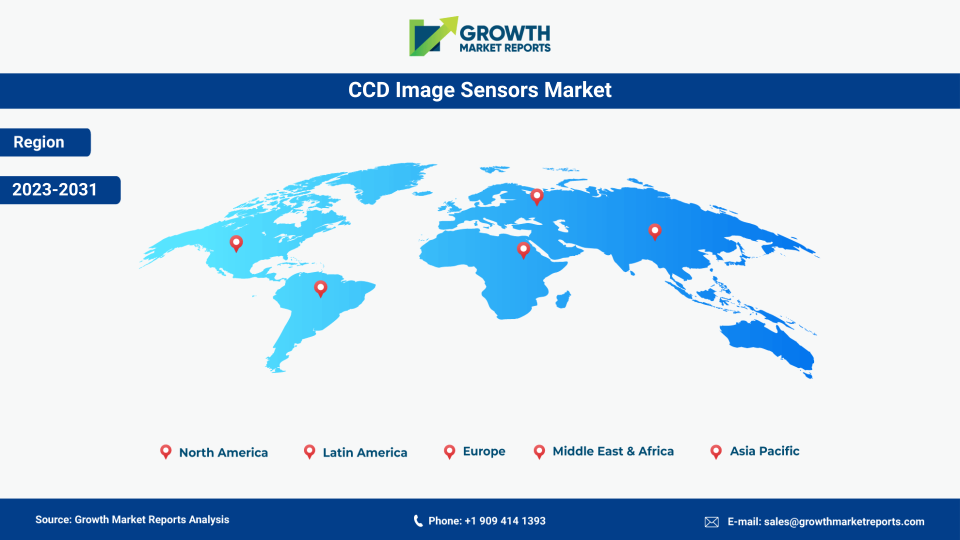
From a regional perspective, Asia Pacific holds a dominant share in the global CCD Image Sensors market, driven by the presence of leading electronics manufacturers and a robust consumer electronics industry. North America and Europe also contribute significantly, fueled by advancements in healthcare technology, automotive innovation, and industrial automation. Latin America and the Middle East & Africa, while currently smaller markets, are anticipated to exhibit steady growth owing to increasing investments in infrastructure and technology adoption. The regional distribution of demand reflects both the maturity of end-use industries and the pace of technological adoption, positioning Asia Pacific as the fastest-growing market for CCD image sensors.
The CCD Image Sensors market is segmented by product type into Area Image Sensors and Linear Image Sensors, each catering to distinct application requirements. Area Image Sensors are widely used for capturing two-dimensional images, making them ideal for digital cameras, medical imaging devices, and scientific instruments. Their ability to deliver high-resolution images with excellent color fidelity has made them the preferred choice in applications where image quality is paramount. The ongoing advancements in pixel density and sensor architecture have further enhanced the performance of area image sensors, enabling their integration into compact devices without compromising on image quality. The demand for area image sensors is expected to remain strong, particularly in sectors such as healthcare, security, and consumer electronics.
Linear Image Sensors, on the other hand, are primarily used in applications that require the capture of images in a single line, such as document scanners, barcode readers, and certain types of industrial inspection systems. These sensors are valued for their high speed and accuracy in capturing linear images, making them indispensable in environments where rapid and precise image acquisition is required. The industrial sector, in particular, has witnessed significant adoption of linear image sensors for quality control and automation processes. As manufacturing processes become increasingly automated and reliant on machine vision, the demand for linear image sensors is anticipated to grow, especially in regions with a strong industrial base.
Imaging Sensors, a critical component in capturing and processing visual information, continue to evolve with technological advancements. These sensors are integral to a wide array of applications, from consumer electronics to sophisticated industrial systems. The ongoing innovation in Imaging Sensors focuses on enhancing image quality, sensitivity, and dynamic range, catering to the diverse needs of sectors such as healthcare, automotive, and security. With the rise of artificial intelligence and machine learning, Imaging Sensors are increasingly being integrated into smart systems, enabling real-time data analysis and decision-making. This integration is transforming industries by providing enhanced capabilities such as object recognition, motion detection, and environmental monitoring. As the demand for high-performance imaging solutions grows, the development of next-generation Imaging Sensors is set to drive significant advancements in both consumer and industrial applications.
The technological evolution within both product segments has been marked by efforts to improve sensitivity, reduce noise, and enhance dynamic range. Manufacturers are investing in research and development to introduce sensors that can operate effectively in challenging lighting conditions, thereby expanding their applicability across different industries. The integration of advanced signal processing capabilities and the development of hybrid sensors that combine the strengths of both area and linear sensors are also notable trends shaping the market. These innovations are aimed at meeting the evolving demands of end-users for higher performance and versatility in imaging applications.
Competition between area and linear image sensors is influenced by the specific requirements of target applications. While area sensors dominate in applications requiring full-frame imaging, linear sensors continue to hold their ground in specialized industrial and commercial applications. The choice between these sensor types is often dictated by factors such as speed, resolution, form factor, and cost, with manufacturers offering tailored solutions to meet the diverse needs of their clients. As new applications emerge and existing ones evolve, the market for both area and linear image sensors is expected to witness sustained growth, supported by continuous innovation and expanding end-use sectors.
| Attributes | Details |
| Report Title | CCD Image Sensors Market Research Report 2033 |
| By Product Type | Area Image Sensors, Linear Image Sensors |
| By Application | Consumer Electronics, Industrial, Healthcare, Automotive, Security & Surveillance, Aerospace & Defense, Others |
| By End-User | OEMs, Aftermarket |
| Regions Covered | North America, Europe, APAC, Latin America, MEA |
| Base Year | 2024 |
| Historic Data | 2018-2023 |
| Forecast Period | 2025-2033 |
| Number of Pages | 254 |
| Number of Tables & Figures | 345 |
| Customization Available | Yes, the report can be customized as per your need. |
The application landscape of the CCD Image Sensors market is broad and diverse, encompassing sectors such as consumer electronics, industrial, healthcare, automotive, security & surveillance, aerospace & defense, and others. In consumer electronics, CCD sensors are integral to devices such as digital cameras, camcorders, and smartphones, where image quality is a key differentiator. The relentless demand for high-resolution imaging and superior color reproduction in these devices has driven continuous innovation in CCD sensor technology. Despite the growing competition from CMOS sensors, CCD sensors continue to be favored in segments where image fidelity is non-negotiable, ensuring their sustained relevance in the consumer electronics market.
The advent of Compressive Sensing Camera Chip technology marks a significant breakthrough in the field of imaging, offering a novel approach to capturing high-quality images with reduced data requirements. This innovative technology leverages mathematical algorithms to reconstruct images from fewer measurements, thereby minimizing the need for extensive data storage and processing power. Compressive Sensing Camera Chips are particularly advantageous in applications where bandwidth and storage are limited, such as in remote sensing and surveillance. By enabling efficient data acquisition and processing, this technology is paving the way for more compact and energy-efficient imaging systems. As industries continue to seek advanced imaging solutions, the adoption of Compressive Sensing Camera Chips is expected to accelerate, providing new opportunities for innovation and application across various sectors.
The industrial sector represents another significant application area for CCD image sensors. Here, these sensors are deployed in machine vision systems, quality control, and automation processes, where precision and reliability are critical. The adoption of CCD sensors in industrial inspection systems has enabled manufacturers to achieve higher levels of efficiency and accuracy, reducing defects and improving product quality. The trend towards smart manufacturing and the integration of artificial intelligence in industrial processes are expected to further drive the demand for advanced imaging solutions, positioning CCD sensors as a key enabler of next-generation industrial automation.
Healthcare is a rapidly growing application segment for CCD image sensors, driven by the increasing adoption of digital imaging technologies in medical diagnostics and treatment. CCD sensors are widely used in medical imaging devices such as digital X-ray machines, endoscopes, and ophthalmic instruments, where their ability to deliver high-resolution, low-noise images is crucial for accurate diagnosis. The ongoing advancements in medical technology, coupled with the rising prevalence of chronic diseases and the aging global population, are expected to sustain the demand for CCD image sensors in healthcare applications. Moreover, the integration of imaging technologies in telemedicine and remote diagnostics is opening new avenues for market growth.
The automotive, security & surveillance, and aerospace & defense sectors also present significant opportunities for CCD image sensors. In automotive applications, CCD sensors are used in advanced driver-assistance systems (ADAS), night vision, and in-cabin monitoring, where high-performance imaging is essential for safety and functionality. The security & surveillance sector relies on CCD sensors for high-definition video monitoring in critical infrastructure and public spaces, while the aerospace & defense industry utilizes these sensors in applications ranging from reconnaissance to navigation. The expanding scope of imaging applications in these sectors, driven by technological advancements and increasing safety requirements, is expected to fuel the growth of the CCD Image Sensors market across multiple end-use domains.
The CCD Image Sensors market is segmented by end-user into OEMs (Original Equipment Manufacturers) and the aftermarket, each playing a distinct role in the value chain. OEMs are the primary consumers of CCD image sensors, integrating them into a wide range of devices and systems across various industries. The demand from OEMs is driven by the need for reliable, high-performance imaging solutions that can be seamlessly incorporated into products such as cameras, medical devices, industrial equipment, and automotive systems. OEMs often collaborate closely with sensor manufacturers to develop customized solutions that meet specific application requirements, ensuring optimal performance and differentiation in the marketplace.
The aftermarket segment, while smaller in comparison to OEMs, represents an important channel for the replacement and upgrade of image sensors in existing devices and systems. As imaging technologies continue to evolve, end-users in sectors such as healthcare, industrial automation, and security are increasingly seeking to upgrade their equipment with the latest sensor technologies to enhance performance and extend the lifespan of their assets. The aftermarket provides opportunities for sensor manufacturers to offer retrofit solutions, technical support, and value-added services, thereby fostering long-term relationships with end-users and generating recurring revenue streams.
The dynamics of demand between OEMs and the aftermarket are influenced by factors such as product lifecycle, technological obsolescence, and the pace of innovation in target industries. OEMs typically drive the initial adoption of new sensor technologies, while the aftermarket serves as a channel for upgrading and maintaining installed systems. The balance between these segments is expected to evolve as industries increasingly prioritize sustainability, cost-effectiveness, and the optimization of existing assets, creating new opportunities for sensor manufacturers to address the diverse needs of their customer base.
Collaboration between sensor manufacturers and end-users is becoming increasingly important in the development of tailored imaging solutions. OEMs are seeking partners who can provide not only high-quality sensors but also expertise in system integration, software development, and application-specific customization. This trend is driving sensor manufacturers to expand their capabilities and offer comprehensive solutions that address the unique challenges of each end-user segment. As the market continues to evolve, the ability to deliver value-added services and build long-term partnerships with OEMs and aftermarket customers will be a key differentiator for leading players in the CCD Image Sensors market.
The CCD Image Sensors market is ripe with opportunities, particularly as industries continue to demand higher image quality and reliability in critical applications. The increasing adoption of imaging technologies in emerging sectors such as autonomous vehicles, smart manufacturing, and telemedicine presents new avenues for market expansion. The development of advanced CCD sensors with enhanced sensitivity, lower power consumption, and improved integration capabilities is expected to unlock further growth opportunities, enabling manufacturers to address the evolving needs of end-users. Additionally, the rise of artificial intelligence and machine learning in imaging applications is creating demand for sensors that can deliver high-quality data for advanced analytics and decision-making, positioning CCD technology as a key enabler of next-generation imaging solutions.
Another significant opportunity lies in the expanding adoption of imaging technologies in developing regions, where investments in infrastructure, healthcare, and industrial automation are on the rise. Governments and private organizations in these regions are increasingly recognizing the value of advanced imaging solutions for improving safety, efficiency, and quality of life. The growing focus on public safety, smart city initiatives, and digital transformation is expected to drive the demand for high-performance image sensors, creating new growth prospects for market participants. Furthermore, the increasing emphasis on sustainability and energy efficiency is prompting manufacturers to develop environmentally friendly sensor solutions, opening up additional opportunities for innovation and market differentiation.
Despite the positive outlook, the CCD Image Sensors market faces several restraining factors that could impact its growth trajectory. One of the primary challenges is the intensifying competition from CMOS (Complementary Metal-Oxide-Semiconductor) sensors, which have gained significant traction in recent years due to their lower cost, higher speed, and lower power consumption. CMOS sensors have made substantial technological advancements, narrowing the performance gap with CCD sensors in many applications. As a result, some segments of the market, particularly those driven by cost sensitivity and power efficiency, are witnessing a shift towards CMOS technology. This competitive pressure is compelling CCD sensor manufacturers to innovate continuously and focus on niche applications where their technology offers distinct advantages, in order to maintain their market position.
The regional analysis of the CCD Image Sensors market reveals a diverse landscape, with Asia Pacific leading the way in terms of market size and growth potential. In 2024, Asia Pacific accounted for approximately USD 1.12 billion of the global market, driven by the presence of major electronics manufacturers, a thriving consumer electronics industry, and increasing investments in healthcare and industrial automation. China, Japan, and South Korea are key contributors to regional growth, owing to their strong manufacturing capabilities and rapid technological adoption. The region is expected to maintain its dominance over the forecast period, with a projected CAGR of 5.1% through 2033, supported by ongoing advancements in imaging technology and expanding application areas.
North America is another significant market for CCD image sensors, with a market size of around USD 610 million in 2024. The region benefits from a robust healthcare sector, strong presence of leading technology companies, and a well-established automotive industry. The adoption of advanced imaging solutions in medical diagnostics, industrial automation, and security applications is driving demand for high-performance CCD sensors. The United States, in particular, is a major hub for innovation and research in imaging technologies, contributing to the regionÂ’s leadership in the market. While growth in North America is expected to be moderate compared to Asia Pacific, the region will continue to play a critical role in driving technological advancements and setting industry standards.
Europe holds a market share of approximately USD 500 million in 2024, with demand driven by the regionÂ’s strong focus on industrial automation, automotive innovation, and healthcare technology. Countries such as Germany, the United Kingdom, and France are at the forefront of adopting advanced imaging solutions for a wide range of applications. The regionÂ’s commitment to quality and precision, coupled with a strong regulatory framework, supports the adoption of CCD image sensors in critical sectors. Latin America and the Middle East & Africa, while currently smaller markets with a combined market size of around USD 220 million in 2024, are expected to witness steady growth as investments in infrastructure, healthcare, and security increase. The regional split underscores the global nature of demand for CCD image sensors, with opportunities for growth present across both mature and emerging markets.
The competitive landscape of the CCD Image Sensors market is characterized by the presence of several established players, as well as a number of emerging companies focused on innovation and niche applications. Leading manufacturers are investing heavily in research and development to introduce next-generation CCD sensors with enhanced performance characteristics, such as higher resolution, improved sensitivity, and lower power consumption. The market is also witnessing increased collaboration between sensor manufacturers, system integrators, and end-users to develop customized solutions that address specific application requirements. This trend is driving the development of value-added services, including system integration, software development, and technical support, enabling companies to differentiate themselves in a competitive market.
Strategic partnerships, mergers and acquisitions, and geographic expansion are common strategies adopted by key players to strengthen their market position and expand their customer base. Companies are increasingly focusing on building long-term relationships with OEMs and end-users by offering comprehensive solutions that go beyond hardware, encompassing software, analytics, and support services. The ability to deliver end-to-end solutions and provide expertise in system integration is becoming a critical differentiator in the market, as end-users seek partners who can help them navigate the complexities of modern imaging applications.
Innovation remains at the core of the competitive strategy for leading players in the CCD Image Sensors market. The development of hybrid sensors that combine the strengths of CCD and CMOS technologies, as well as the integration of advanced signal processing and artificial intelligence capabilities, are key areas of focus. Companies are also exploring new materials and manufacturing processes to enhance sensor performance and reduce costs. The competitive landscape is further shaped by the entry of new players, particularly in emerging markets, who are leveraging local expertise and cost advantages to capture market share.
Some of the major companies operating in the global CCD Image Sensors market include Sony Corporation, Canon Inc., ON Semiconductor, Teledyne DALSA, Hamamatsu Photonics, Fairchild Imaging, and Toshiba Corporation. Sony Corporation is a market leader, renowned for its high-performance CCD sensors used in digital cameras, medical devices, and industrial equipment. Canon Inc. is another prominent player, offering a wide range of imaging solutions for consumer, industrial, and healthcare applications. ON Semiconductor and Teledyne DALSA are recognized for their innovation in industrial and scientific imaging, while Hamamatsu Photonics specializes in high-sensitivity sensors for medical and scientific research. Fairchild Imaging and Toshiba Corporation are also notable players, with a strong focus on specialized imaging applications. These companies are at the forefront of technological innovation, driving the evolution of the CCD Image Sensors market and setting industry benchmarks for performance and quality.
The CCD Image Sensors market has been segmented on the basis of
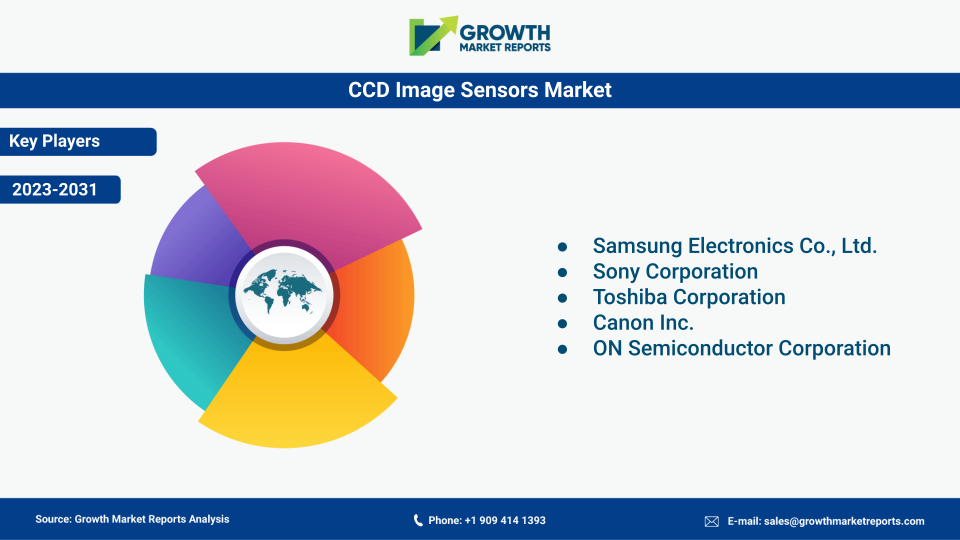
Some of the major players in the market are Samsung Electronics Co., Ltd., Sony Corporation, Canon Inc., Toshiba Corporation, ON Semiconductor Corporation.
The competitive rivalry among existing competitors is high as the market demand is in limited applications. The product innovation strategy of companies is expected to keep the market growing during the forecast period. Sensitivity to the price of raw material and use of patented technology are among some of the factors that impact the market.
Yes, the CCD Image Sensors Market Research Report 2033 offers customization options to meet specific client needs.
The market is segmented into OEMs (Original Equipment Manufacturers), who integrate sensors into new devices, and the aftermarket, which focuses on sensor replacement and upgrades in existing systems.
Opportunities include the adoption of advanced imaging in autonomous vehicles, smart manufacturing, telemedicine, and emerging markets. Innovations in sensor sensitivity, integration, and AI-driven imaging also present growth prospects.
The market faces competition from CMOS sensors, which offer lower cost, higher speed, and lower power consumption. This has led to a shift towards CMOS in some cost-sensitive applications.
Major companies include Sony Corporation, Canon Inc., ON Semiconductor, Teledyne DALSA, Hamamatsu Photonics, Fairchild Imaging, Toshiba Corporation, Samsung Electronics, and others.
Asia Pacific dominates the market due to its strong electronics manufacturing base, followed by North America and Europe. Latin America and the Middle East & Africa are emerging markets with steady growth potential.
Area image sensors capture two-dimensional images and are ideal for cameras and medical devices, while linear image sensors capture images in a single line, making them suitable for document scanners, barcode readers, and industrial inspection.
CCD image sensors are widely used in consumer electronics (digital cameras, smartphones), industrial machine vision, medical imaging (digital radiography, endoscopy), automotive systems (ADAS, night vision), and security & surveillance.
Key growth drivers include increasing demand for high-resolution imaging in sectors like consumer electronics, healthcare, and automotive, as well as ongoing technological advancements in sensor design and miniaturization.
As of 2024, the global CCD Image Sensors market is valued at USD 2.45 billion and is projected to reach USD 3.62 billion by 2033, growing at a CAGR of 4.3% from 2025 to 2033.