Segments - by Service Type (Cash-in-Transit, Cash Management, ATM Services, Others), by End-User (Financial Institutions, Retail, Government Agencies, Hospitality, Others), by Mode Of Transport (Roadways, Railways, Airways, Others)
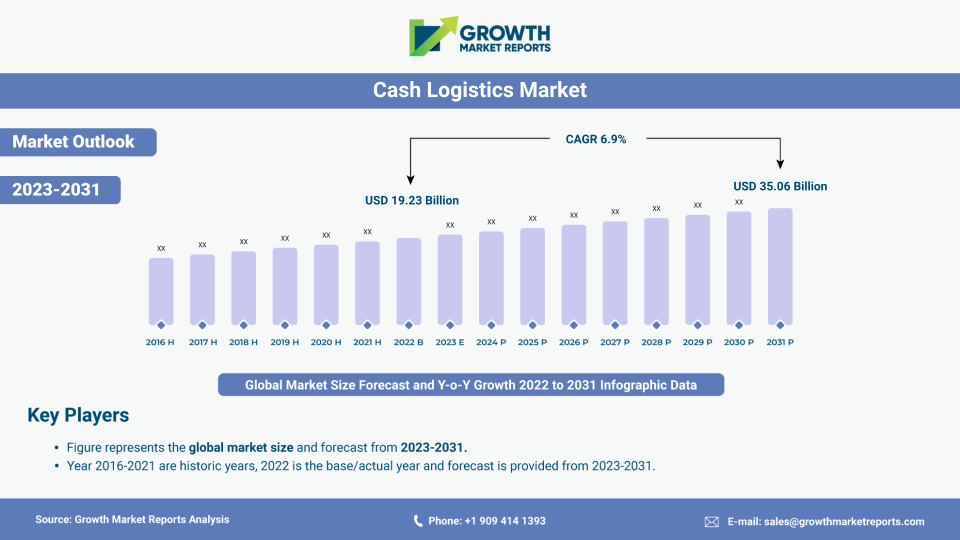
According to our latest research, the global cash logistics market size reached USD 22.6 billion in 2024, reflecting a robust demand for secure cash handling and transportation services worldwide. The market is poised to grow at a CAGR of 8.1% from 2025 to 2033, with the market size forecasted to hit USD 44.5 billion by 2033. This impressive growth trajectory is primarily driven by rising cash circulation in emerging economies, increasing ATM installations, and the ongoing need for secure, efficient cash management solutions across various industries.
One of the most significant growth factors in the cash logistics market is the persistent reliance on physical cash, particularly in developing regions. Despite the global push towards digital payments, cash remains a dominant transaction medium in many parts of Asia, Africa, and Latin America. This continued dependence on cash is attributed to limited financial infrastructure, cultural preferences, and the unbanked population's needs. As a result, financial institutions, retail chains, and government agencies are investing heavily in advanced cash management and transportation services to ensure the secure, efficient movement of currency. Furthermore, the increasing frequency of large-scale events, festivals, and retail promotions fuels the demand for cash logistics, as businesses need to manage surges in cash flow while minimizing associated risks.
Technological advancements are also playing a crucial role in shaping the future of the cash logistics market. The integration of smart safes, real-time tracking, automated cash management systems, and advanced security protocols has revolutionized traditional cash handling processes. These innovations not only enhance operational efficiency but also significantly reduce the risk of theft, fraud, and human error. Service providers are leveraging IoT-enabled devices and cloud-based platforms to offer end-to-end visibility and control over cash movement, which is especially important for high-volume retailers and banking institutions. Moreover, the adoption of data analytics and AI-driven solutions is enabling predictive cash management, optimizing cash inventories, and improving route planning for cash-in-transit operations.
The expansion of ATM networks worldwide is another pivotal driver for the cash logistics market. As banks and independent deployers continue to install ATMs in both urban and rural areas, the need for timely replenishment, maintenance, and secure cash transport has increased exponentially. This trend is particularly evident in emerging markets, where financial inclusion initiatives are leading to the rapid proliferation of ATMs. Additionally, the hospitality sector, government agencies, and retail outlets are increasingly outsourcing their cash management needs to specialized service providers to streamline operations and focus on core business activities. The combination of regulatory requirements, rising security concerns, and the growing complexity of cash handling processes further accentuates the demand for professional cash logistics services.
Cash-in-Transit Insurance plays a critical role in the cash logistics industry by providing financial protection against potential losses during the transportation of cash and valuables. As cash continues to be a primary medium of transaction in many regions, the risk of theft and robbery remains a significant concern for businesses and financial institutions. Cash-in-Transit Insurance helps mitigate these risks by covering losses that may occur due to unforeseen events, ensuring that service providers can operate with confidence and security. This type of insurance is particularly vital for companies dealing with high-value cash movements, as it safeguards their assets and reputation. By offering comprehensive coverage, Cash-in-Transit Insurance supports the industry's growth by enabling service providers to expand their operations and invest in advanced security measures.
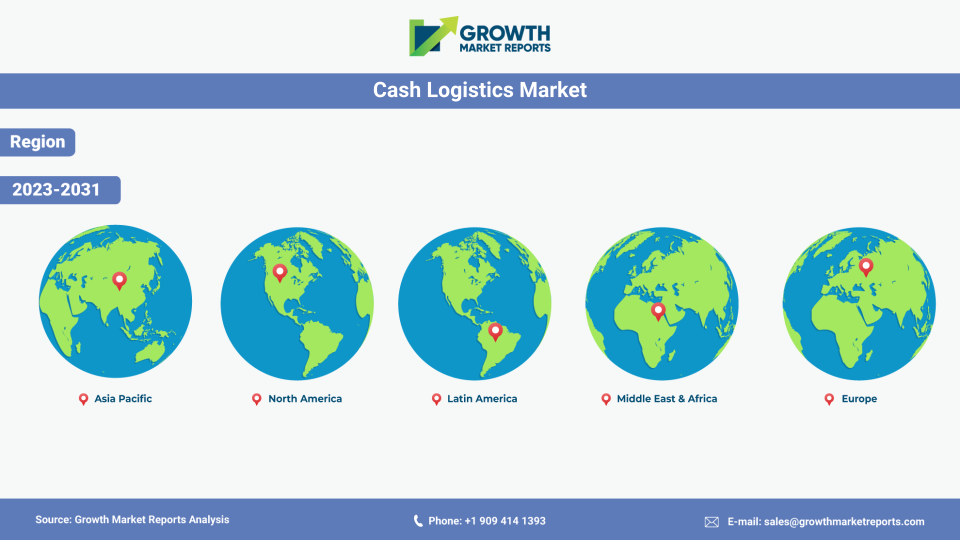
Regionally, Asia Pacific stands out as the fastest-growing market, fueled by a large unbanked population, rapid urbanization, and a surge in retail activities. North America and Europe, while more mature, continue to demonstrate steady growth due to ongoing investments in security upgrades and the integration of advanced cash management technologies. Latin America and the Middle East & Africa are also witnessing increased demand, driven by expanding financial infrastructure and a heightened focus on crime prevention. Each region presents unique challenges and opportunities, requiring tailored solutions to address specific regulatory, economic, and cultural dynamics.
The service type segment in the cash logistics market is broadly categorized into Cash-in-Transit, Cash Management, ATM Services, and Others. Cash-in-Transit (CIT) remains the cornerstone of the industry, accounting for a significant share of the market. CIT services involve the secure transportation of cash and valuables between bank branches, ATMs, retail stores, and central vaults. The demand for CIT services is driven by the necessity to ensure uninterrupted cash availability and to mitigate risks associated with theft and armed robbery. Service providers are increasingly investing in armored vehicles, GPS tracking, and real-time communication systems to enhance the safety and efficiency of CIT operations. The complexity of logistics planning, combined with stringent regulatory requirements, necessitates continuous innovation and investment in this segment.
Cash-in-Transit Security is an essential aspect of the cash logistics market, ensuring the safe and secure transportation of cash and valuables. The increasing complexity of cash handling operations, coupled with rising security threats, necessitates robust security measures to protect assets during transit. Cash-in-Transit Security involves a combination of advanced technologies, such as GPS tracking, real-time communication systems, and armored vehicles, to provide a secure environment for cash movement. Service providers are continually enhancing their security protocols to address evolving threats, investing in training for personnel and upgrading equipment to maintain the highest standards of safety. The focus on Cash-in-Transit Security not only protects financial assets but also instills confidence among clients, contributing to the overall stability and reliability of the cash logistics industry.
Cash Management services have gained substantial traction in recent years, reflecting the growing need for end-to-end solutions that encompass cash counting, sorting, reconciliation, and storage. These services are particularly vital for large retailers, entertainment venues, and government agencies that handle high volumes of cash daily. The integration of smart safes, automated deposit machines, and software platforms has transformed cash management from a labor-intensive process to a streamlined, data-driven operation. Service providers offer customized solutions that cater to the unique requirements of each client, including real-time reporting, predictive analytics, and compliance management. This segment is expected to witness robust growth, fueled by the increasing complexity of cash operations and the rising demand for transparency and accountability.
The ATM Services segment is another critical component of the cash logistics market, encompassing ATM replenishment, maintenance, and cash forecasting. The proliferation of ATMs, especially in emerging economies, has created a substantial demand for reliable, timely cash supply and technical support. As financial institutions strive to enhance customer experience and maximize ATM uptime, they are outsourcing these functions to specialized cash logistics providers. The adoption of advanced forecasting tools and route optimization technologies has improved the efficiency of ATM services, reducing operational costs and minimizing the risk of cash shortages or overstocking. Furthermore, the trend towards multi-bank ATM networks and white-label ATMs is expanding the scope of this segment, presenting new opportunities for market players.
Other services in the cash logistics market include bullion and valuables transportation, coin processing, and vaulting solutions. While these services represent a smaller share of the overall market, they are essential for specific industries such as jewelry, precious metals trading, and central banks. The stringent security protocols and specialized handling requirements associated with these services demand a high level of expertise and operational excellence. Providers in this segment are leveraging advanced surveillance, biometric access controls, and tamper-evident packaging to ensure the utmost security and integrity of valuable cargo. As the market evolves, the demand for niche cash logistics services is expected to grow, driven by increasing regulatory scrutiny and the need for specialized solutions.
| Attributes | Details |
| Report Title | Cash Logistics Market Research Report 2033 |
| By Service Type | Cash-in-Transit, Cash Management, ATM Services, Others |
| By End-User | Financial Institutions, Retail, Government Agencies, Hospitality, Others |
| By Mode Of Transport | Roadways, Railways, Airways, Others |
| Regions Covered | North America, Europe, APAC, Latin America, MEA |
| Base Year | 2024 |
| Historic Data | 2018-2023 |
| Forecast Period | 2025-2033 |
| Number of Pages | 280 |
| Number of Tables & Figures | 292 |
| Customization Available | Yes, the report can be customized as per your need. |
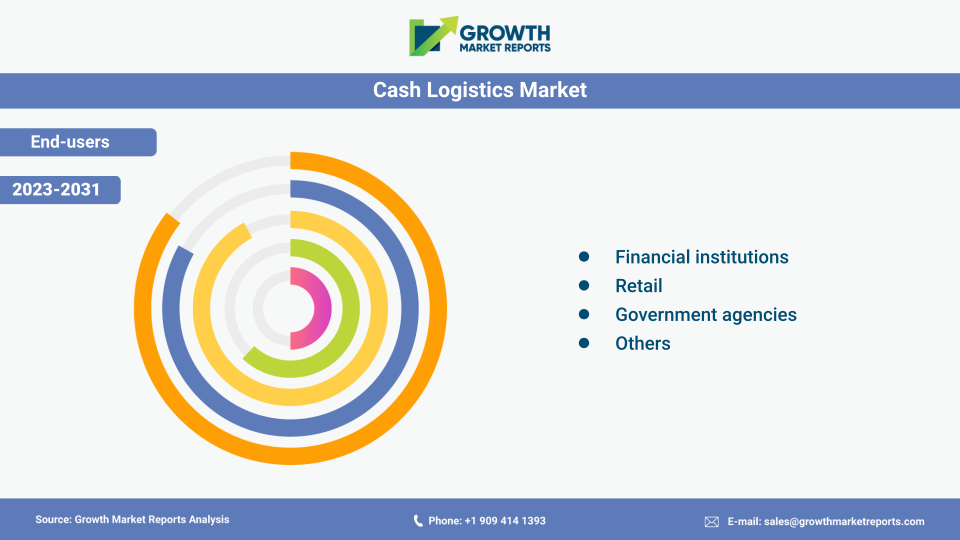
The end-user segment of the cash logistics market is diverse, reflecting the wide range of industries that rely on secure cash handling and transportation services. Financial Institutions represent the largest end-user group, accounting for a substantial portion of market demand. Banks, credit unions, and other financial entities require robust cash logistics solutions to manage branch operations, ATM networks, and central vaults. The growing complexity of financial transactions, coupled with stringent regulatory requirements, has led to increased outsourcing of cash management and transportation functions. Financial institutions are prioritizing security, efficiency, and compliance, driving investments in advanced cash logistics technologies and services.
The retail sector is another major end-user, encompassing supermarkets, department stores, convenience stores, and specialty retailers. Retailers handle large volumes of cash daily, particularly during peak shopping seasons, sales events, and holidays. Efficient cash logistics solutions are essential for managing cash flow, minimizing losses, and ensuring timely deposits. Retailers are increasingly adopting smart safes, automated cash counting machines, and integrated cash management platforms to streamline operations and enhance security. The trend towards omnichannel retailing and the expansion of store networks in emerging markets are further fueling demand for professional cash logistics services in this segment.
Government agencies also constitute a significant end-user group, relying on cash logistics providers for the secure transport and management of tax collections, fines, social welfare disbursements, and other cash-based transactions. The complexity and sensitivity of government cash operations necessitate high levels of security, transparency, and accountability. Service providers are required to comply with strict regulatory standards and often collaborate closely with law enforcement agencies to mitigate risks. The increasing digitization of government services is gradually reducing the volume of cash transactions; however, in many regions, cash remains a critical component of public sector financial operations.
The hospitality industry, including hotels, casinos, restaurants, and entertainment venues, is another key end-user of cash logistics services. These businesses handle significant cash volumes, particularly in regions with high tourism activity or limited card payment infrastructure. Efficient cash management is crucial for ensuring smooth operations, preventing theft, and maintaining accurate financial records. Service providers offer tailored solutions that address the unique needs of the hospitality sector, including secure cash pickups, change fund delivery, and real-time reporting. As the industry recovers from the impacts of the pandemic and tourism rebounds, the demand for cash logistics services in this segment is expected to rise.
Other end-users in the cash logistics market include transportation companies, educational institutions, religious organizations, and healthcare providers. While these sectors may represent a smaller share of the overall market, they have specific cash management needs that require customized solutions. Service providers are increasingly offering flexible, scalable services to cater to the diverse requirements of these end-users, ensuring secure, efficient cash handling across a wide range of industries.
The mode of transport segment in the cash logistics market encompasses Roadways, Railways, Airways, and Others. Roadways dominate the market, accounting for the majority of cash movement globally. The extensive road network infrastructure, coupled with the flexibility and accessibility of road transport, makes it the preferred mode for cash-in-transit operations. Armored vehicles equipped with advanced security features, GPS tracking, and real-time communication systems are widely used to ensure the safe and efficient transport of cash and valuables. The roadways segment is characterized by frequent service intervals, high route density, and the need for rapid response to client requirements. Service providers continually invest in vehicle upgrades, driver training, and route optimization technologies to enhance operational efficiency and security.
Railways represent a niche but important mode of transport in the cash logistics market, particularly in regions with well-developed rail infrastructure. Rail transport is often used for long-distance movement of large cash volumes between major cities or financial hubs. The advantages of railways include higher capacity, lower per-unit transportation costs, and reduced risk of road-related incidents. However, the use of railways for cash logistics is limited by factors such as scheduling constraints, limited network coverage, and the need for additional security measures during loading and unloading. Service providers offering rail-based cash logistics solutions must coordinate closely with railway authorities and implement stringent security protocols to mitigate risks.
Airways are utilized for high-value, time-sensitive cash and valuables transportation, especially over long distances or across international borders. The airways segment is characterized by stringent security requirements, specialized packaging, and coordination with customs and aviation authorities. While air transport offers speed and reliability, it is also associated with higher costs and complex regulatory compliance. Financial institutions, central banks, and multinational corporations often rely on airways for cross-border cash movement, bullion transport, and emergency cash replenishment. Service providers in this segment invest in specialized containers, secure handling facilities, and advanced tracking systems to ensure the integrity and security of shipments.
Other modes of transport in the cash logistics market include maritime and courier services, which are used for specific applications such as international valuables transport or remote area servicing. While these modes represent a smaller share of the market, they are essential for addressing unique logistical challenges and expanding service coverage. Service providers are increasingly adopting multimodal transport solutions, combining road, rail, and air services to optimize efficiency, reduce costs, and enhance security. The integration of advanced logistics management platforms and real-time tracking technologies is enabling seamless coordination across different transport modes, further strengthening the value proposition of cash logistics services.
The cash logistics market presents significant opportunities for growth and innovation, driven by the evolving needs of financial institutions, retailers, and other cash-intensive industries. One of the most promising opportunities lies in the integration of advanced technologies such as IoT, AI, and blockchain into cash logistics operations. These technologies enable real-time tracking, predictive analytics, and enhanced security, allowing service providers to offer value-added services such as dynamic route optimization, automated cash forecasting, and fraud detection. The increasing adoption of smart safes, automated deposit machines, and cloud-based cash management platforms is creating new revenue streams and improving operational efficiency. Furthermore, the expansion of ATM networks and financial inclusion initiatives in emerging markets presents lucrative opportunities for cash logistics providers to expand their service offerings and customer base.
Another key opportunity in the cash logistics market is the growing demand for integrated, end-to-end solutions that address the entire cash handling value chain. Clients are increasingly seeking comprehensive services that encompass cash-in-transit, cash management, ATM services, and valuables transport, delivered through a single, trusted partner. This trend is driving consolidation and strategic partnerships within the industry, enabling service providers to offer bundled solutions and achieve economies of scale. Additionally, the rise of e-commerce, omnichannel retailing, and cross-border trade is creating new demand for secure, efficient cash logistics services that support diverse business models and transaction types. By leveraging their expertise, infrastructure, and technology capabilities, cash logistics providers can capitalize on these emerging opportunities and drive sustainable growth.
Despite the positive outlook, the cash logistics market faces several challenges and restraining factors that could impact its growth trajectory. One of the primary threats is the ongoing shift towards digital payments and cashless transactions, particularly in developed markets. The proliferation of mobile wallets, contactless payments, and online banking is gradually reducing the volume of cash in circulation, leading to lower demand for traditional cash logistics services. Additionally, the high costs associated with security, regulatory compliance, and infrastructure maintenance pose significant barriers to entry and profitability. Service providers must continually invest in technology, personnel, and risk management to maintain competitiveness and address evolving client needs. Furthermore, the threat of armed robbery, cyberattacks, and insider fraud remains a persistent concern, necessitating ongoing vigilance and innovation in security protocols.
The regional analysis of the cash logistics market reveals distinct trends and growth patterns across key geographies. In Asia Pacific, the market is experiencing the fastest growth, with a CAGR of 10.2% from 2025 to 2033. The region accounted for approximately USD 8.7 billion of the global market in 2024 and is projected to reach USD 19.5 billion by 2033. This rapid expansion is driven by increasing cash circulation, financial inclusion initiatives, and the proliferation of ATMs in countries such as India, China, and Indonesia. The large unbanked population, combined with ongoing investments in retail and banking infrastructure, is fueling demand for secure, efficient cash logistics services. Service providers are expanding their presence in tier 2 and tier 3 cities, offering tailored solutions to address the unique challenges of these markets.
In North America, the cash logistics market remains robust, with a market size of USD 5.3 billion in 2024 and a projected value of USD 8.8 billion by 2033. The region is characterized by a well-developed financial infrastructure, high penetration of ATMs, and a strong focus on security and regulatory compliance. While the adoption of digital payments is gradually reducing cash volumes, the need for secure cash handling remains critical in sectors such as retail, hospitality, and entertainment. Service providers in North America are investing in advanced technologies, such as AI-driven cash management platforms and IoT-enabled tracking systems, to enhance operational efficiency and deliver value-added services. The trend towards outsourcing cash logistics functions is expected to continue, driven by cost pressures and the need for specialized expertise.
Europe and Latin America also present significant opportunities for growth in the cash logistics market. Europe accounted for USD 4.1 billion of the market in 2024, with steady growth expected through 2033, driven by ongoing investments in security upgrades and the integration of advanced cash management technologies. In Latin America, the market reached USD 2.6 billion in 2024, with demand fueled by expanding financial infrastructure, rising crime rates, and the need for secure cash handling solutions in retail and government sectors. The Middle East & Africa market, valued at USD 1.9 billion in 2024, is witnessing increased adoption of cash logistics services, particularly in countries with high cash usage and limited banking infrastructure. Each region presents unique challenges and opportunities, requiring tailored strategies and solutions to address local market dynamics and regulatory requirements.
The cash logistics market is characterized by intense competition, with a mix of global giants and regional players vying for market share. The competitive landscape is shaped by factors such as service quality, security standards, technology adoption, and geographic coverage. Leading companies are investing heavily in innovation, infrastructure, and talent development to differentiate themselves and capture new growth opportunities. The trend towards consolidation is evident, as larger players acquire smaller firms to expand their service portfolios, enhance operational efficiency, and achieve economies of scale. Strategic partnerships and alliances are also common, enabling companies to leverage complementary strengths and address the diverse needs of clients across different industries and geographies.
Technology is a key differentiator in the cash logistics market, with leading players leveraging advanced solutions to enhance service delivery and operational efficiency. The adoption of IoT-enabled tracking systems, AI-driven cash management platforms, and cloud-based reporting tools is enabling real-time visibility, predictive analytics, and seamless integration with client systems. Companies are also investing in advanced security protocols, including biometric authentication, tamper-evident packaging, and remote monitoring, to mitigate risks and ensure compliance with regulatory requirements. The ability to offer integrated, end-to-end solutions that encompass cash-in-transit, cash management, ATM services, and valuables transport is increasingly important for winning and retaining clients.
The competitive landscape is further shaped by the entry of new players, particularly in emerging markets where demand for cash logistics services is growing rapidly. Local and regional providers are leveraging their knowledge of market dynamics, regulatory requirements, and customer preferences to compete effectively against global giants. However, the high capital requirements, complex regulatory environment, and need for continuous investment in security and technology pose significant barriers to entry and expansion. As the market evolves, successful companies will be those that can balance operational excellence, innovation, and customer-centricity while navigating the challenges of a rapidly changing landscape.
Some of the major companies operating in the cash logistics market include BrinkÂ’s Incorporated, G4S plc (Allied Universal), Loomis AB, Prosegur Cash S.A., GardaWorld, CMS Info Systems, SIS Prosegur, and SecureCash. BrinkÂ’s Incorporated is renowned for its global footprint and comprehensive suite of cash management and transportation services, serving clients in over 100 countries. G4S plc, now part of Allied Universal, is a leading provider of security and cash logistics solutions, with a strong presence in Europe, Africa, and the Americas. Loomis AB is recognized for its focus on innovation, operational excellence, and customer service, offering integrated cash handling solutions across Europe and the Americas. Prosegur Cash S.A. is a leading player in Latin America and Europe, known for its advanced security protocols and technology-driven approach. GardaWorld is a major player in North America, offering a wide range of cash logistics and security services to financial institutions, retailers, and government agencies.
Other notable players include CMS Info Systems and SIS Prosegur, which have a strong presence in the Asia Pacific region, particularly in India and Southeast Asia. These companies are leveraging their local market knowledge, extensive service networks, and technology capabilities to capture growth opportunities and address the unique needs of clients in emerging markets. SecureCash is another key player, specializing in secure cash transport and management solutions for retailers, hospitality businesses, and government agencies. As the market continues to evolve, these companies are expected to play a pivotal role in shaping the future of the cash logistics industry through innovation, strategic partnerships, and a relentless focus on customer satisfaction.
The Cash Logistics market has been segmented on the basis of
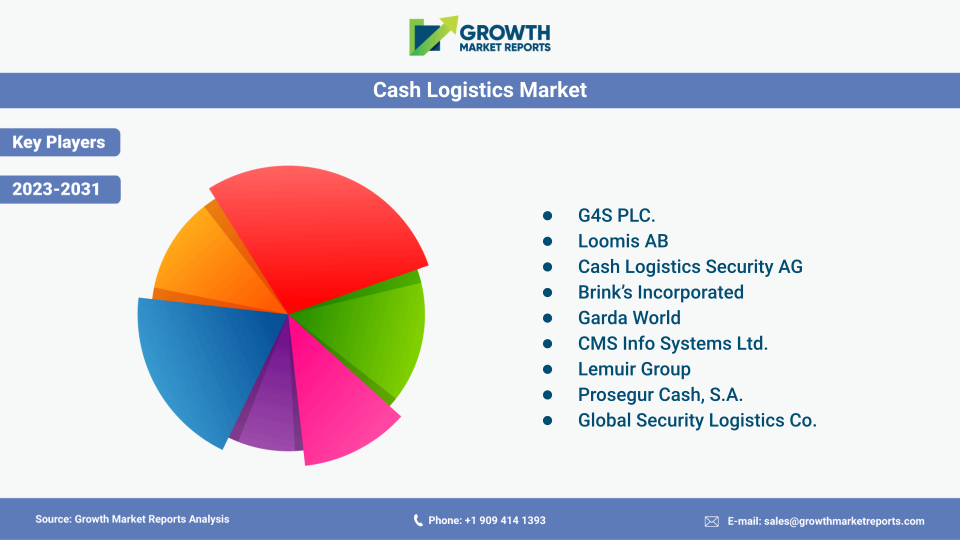
Key players competing in the global cash logistics market are G4S PLC.; Loomis AB; Cash Logistics Security AG; Brink’s Incorporated; Garda World; CMS Info Systems Ltd.; Lemuir Group; Prosegur Cash, S.A.; and Global Security Logistics Co.
Companies are working on improving the security solutions to leverage their market position.
Opportunities include integrating advanced technologies like IoT, AI, and blockchain, expanding ATM networks, offering end-to-end cash handling solutions, and serving the growing needs of emerging markets.
Major players include Brink’s Incorporated, G4S plc (Allied Universal), Loomis AB, Prosegur Cash S.A., GardaWorld, CMS Info Systems, SIS Prosegur, and SecureCash.
Major challenges include the shift towards digital payments, high security and compliance costs, risk of theft and cyberattacks, and the need for continuous investment in technology and infrastructure.
Cash logistics primarily uses roadways, but also utilizes railways, airways, and maritime/courier services for specific needs and regions.
Technology is revolutionizing the industry through the integration of smart safes, real-time tracking, automated cash management, IoT devices, AI-driven analytics, and advanced security protocols.
Primary end-users include financial institutions, retail businesses, government agencies, the hospitality sector, and other sectors such as transportation, education, and healthcare.
The main service types include Cash-in-Transit (CIT), Cash Management, ATM Services, and other specialized services such as bullion and valuables transportation.
Asia Pacific is the fastest-growing region, driven by a large unbanked population, rapid urbanization, and expanding retail and banking infrastructure.
Key growth drivers include rising cash circulation in emerging economies, increasing ATM installations, ongoing demand for secure cash management, and technological advancements in cash handling.
The global cash logistics market reached USD 22.6 billion in 2024 and is projected to grow to USD 44.5 billion by 2033.