Segments - by Product Type (Diagnostic and Monitoring Devices, Therapeutic and Surgical Devices), by Application (Coronary Artery Disease, Cardiac Arrhythmia, Heart Failure, Peripheral Vascular Disease, Others), by End User (Hospitals, Ambulatory Surgical Centers, Clinics, Others)
This report is updated with the latest market data and insights as of June 2026. Base year: 2025 | Forecast period: 2026-2034
According to our latest research, the global cardiovascular devices market size reached USD 67.3 billion in 2025, reflecting robust demand and accelerating technological advancements across the sector. The market is projected to grow at a compelling CAGR of 7.4% from 2026 to 2034, with the total market value forecasted to reach USD 127.5 billion by 2034. The primary growth driver for the cardiovascular devices market is the rising prevalence of cardiovascular diseases worldwide, coupled with ongoing innovations in minimally invasive procedures, AI-enhanced diagnostics, and connected patient monitoring technologies. As part of the broader medical devices industry, cardiovascular devices represent one of the largest and fastest-evolving product categories globally.
The foremost growth factor in the cardiovascular devices market is the increasing global burden of cardiovascular diseases (CVDs), which remain the leading cause of death worldwide. Sedentary lifestyles, unhealthy dietary habits, rising rates of obesity and type 2 diabetes, and a rapidly aging global population have collectively contributed to a surge in heart-related ailments. This has created urgent demand for advanced diagnostic and therapeutic interventions, driving significant capital investment in the research and development of next-generation devices. Furthermore, awareness campaigns led by the World Heart Federation, national health agencies, and non-governmental organizations have accelerated earlier diagnosis and timelier intervention, amplifying device utilization in both developed and developing markets.
Rapid technological progress in device design, biomaterials, and digital health integration represents another pivotal growth catalyst. The emergence of minimally invasive surgical techniques, including transcatheter aortic valve replacement and advanced coronary stenting, has transformed patient outcomes by reducing procedural risk, shortening recovery times, and extending eligibility to previously high-risk patient populations. The integration of artificial intelligence and machine learning into diagnostic platforms is enhancing the accuracy and speed of cardiac assessment, enabling earlier detection and more personalized treatment pathways. These advances are expanding the addressable market by making sophisticated cardiac care accessible to a broader demographic, including elderly patients and those with multiple comorbidities. Related innovations in transcatheter therapy continue to set new standards for structural heart intervention.
Favorable reimbursement policies and rising healthcare expenditure in both public and private sectors are also significant contributors to market growth in 2025 and beyond. Payers and governments increasingly recognize the long-term economic benefits of early and effective cardiovascular intervention, resulting in expanded coverage for advanced procedures and implantable devices. This is encouraging healthcare providers to adopt cutting-edge technologies at a faster pace. Moreover, the rapid expansion of healthcare infrastructure in emerging markets is creating fresh avenues for device manufacturers, as larger patient populations gain access to sophisticated diagnostic and therapeutic solutions. Collectively, these dynamics are sustaining a highly favorable environment for market expansion through 2034.
From a regional perspective, North America continues to dominate the cardiovascular devices market, accounting for approximately 37.2% of global revenue in 2025, underpinned by its advanced healthcare infrastructure, high device adoption rates, and substantial R&D investment. The Asia Pacific region is the fastest-growing market, projected to expand at a CAGR exceeding 9.2% through 2034, driven by a rapidly aging population, increasing per-capita healthcare spending, and government-led initiatives to modernize cardiac care infrastructure. Europe holds a significant second-place position, supported by strong regulatory frameworks and comprehensive cardiac screening programs. Latin America and the Middle East & Africa are expected to witness steady incremental growth, propelled by improving healthcare access and rising cardiovascular disease incidence.
The cardiovascular devices market is broadly segmented by product type into diagnostic and monitoring devices, and therapeutic and surgical devices. Diagnostic and monitoring devices, including electrocardiographs (ECGs), Holter monitors, event monitors, implantable cardiac monitors, and advanced cardiac imaging systems, play a pivotal role in early detection and ongoing management of cardiovascular diseases. The rapid adoption of wearable cardiac monitors and remote patient monitoring solutions is reshaping the landscape of cardiac care in 2025, enabling continuous real-time data collection and timely clinical intervention. This segment is experiencing strong growth in outpatient and home care settings as healthcare systems worldwide strive to reduce hospital readmissions and shift toward proactive, preventive disease management models. Innovations in electrophysiology diagnostic tools are further enhancing this segment's clinical value.
Therapeutic and surgical devices represent the larger of the two product segments, accounting for approximately 57.5% of the 2025 market. This category encompasses pacemakers, implantable cardioverter defibrillators (ICDs), coronary stents, transcatheter heart valves, ventricular assist devices, and electrophysiology catheters. Demand is driven by the increasing complexity of cardiac conditions requiring intervention, as well as the expanding pool of eligible patients enabled by minimally invasive device innovation. The development of bioresorbable stents, next-generation transcatheter aortic and mitral valve systems, and fully implantable miniaturized ventricular assist devices is raising clinical benchmarks and expanding indications. Advances in structural heart intervention in particular are reshaping clinical practice guidelines globally.
The integration of digital technologies and connectivity features into cardiovascular devices is creating new commercial and clinical opportunities across both product type segments. Smart devices equipped with wireless and Bluetooth communication capabilities are enabling seamless, real-time transmission of patient cardiac data to healthcare professionals, facilitating timely remote interventions and highly personalized care plans. This trend is particularly prominent in the diagnostic and monitoring segment, where wearable devices and mobile cardiac health applications are gaining rapid traction among tech-savvy consumers and health systems seeking scalable population management tools.
The competitive landscape within the product type segment is characterized by continuous innovation and growing strategic collaboration between medical device manufacturers, AI technology firms, and cloud health platforms. Leading companies are investing heavily in R&D to introduce differentiated products that address unmet clinical needs, enhance patient safety, and generate compelling real-world evidence for payers. Regulatory agencies in the US, EU, and Asia are progressively streamlining breakthrough device designation and expedited review pathways, accelerating the market entry of transformative products. As a result, the product type segment is expected to remain highly dynamic, with ongoing advances continuing to redefine the standard of cardiovascular disease management through 2034. The convergence of cardiovascular and neurovascular care is also creating new hybrid device categories, as seen in emerging neurovascular intervention platforms.
| Attributes | Details |
| Report Title | Cardiovascular Devices Market Research Report 2034 |
| By Product Type | Diagnostic and Monitoring Devices, Therapeutic and Surgical Devices |
| By Application | Coronary Artery Disease, Cardiac Arrhythmia, Heart Failure, Peripheral Vascular Disease, Others |
| By End User | Hospitals, Ambulatory Surgical Centers, Clinics, Others |
| Regions Covered | North America, Europe, APAC, Latin America, MEA |
| Base Year | 2025 |
| Historic Data | 2019-2024 |
| Forecast Period | 2026-2034 |
| Number of Pages | 291 |
| Number of Tables & Figures | 305 |
| Customization Available | Yes, the report can be customized as per your need. |
The application segment of the cardiovascular devices market is classified into coronary artery disease, cardiac arrhythmia, heart failure, peripheral vascular disease, and others. Coronary artery disease (CAD) represents the largest application area in 2025, given its high global prevalence and significant morbidity and mortality burden. Rising incidence is tied to persistent risk factors including hypertension, hyperlipidemia, tobacco use, and sedentary lifestyles. There is consequently sustained demand for coronary stents, angioplasty balloons, fractional flow reserve measurement systems, and advanced cardiac imaging platforms used to diagnose and manage CAD. Drug-eluting stents continue to evolve with new polymer coatings and delivery platforms, while the bioresorbable vascular scaffold category is attracting renewed clinical interest with improved design iterations. The breadth of technologies addressing this application is extensively documented in coverage of interventional cardiology.
Cardiac arrhythmia is the second-largest application area, encompassing atrial fibrillation, ventricular tachycardia, bradycardia, and related electrophysiological conditions. The growing geriatric population, which is disproportionately susceptible to arrhythmias, is driving steady demand for implantable pacemakers, ICDs, leadless pacing systems, and electrophysiology mapping and ablation catheters. By 2025, advances in high-density cardiac mapping and pulsed-field ablation technology have significantly improved first-procedure success rates for atrial fibrillation ablation, reducing the need for repeat interventions. Remote monitoring of implantable rhythm management devices is enabling continuous patient surveillance and early detection of adverse rhythm events, directly reducing emergency hospitalizations.
Heart failure remains a critical and rapidly evolving application area, reflecting the high global prevalence of the condition and its disproportionate strain on healthcare systems. Ventricular assist devices (VADs), cardiac resynchronization therapy (CRT) systems, and implantable hemodynamic sensors are playing increasingly central roles in the management of advanced and decompensated heart failure. The 2025 generation of miniaturized fully implantable VADs is expanding destination therapy eligibility and improving quality-of-life outcomes for patients who are not transplant candidates. Telemonitoring integration into CRT and VAD platforms is enabling early identification of fluid overload and hemodynamic deterioration, facilitating timely therapeutic adjustments and reducing costly readmissions.
The peripheral vascular disease segment is recording steady growth, driven by the rising global prevalence of atherosclerosis and diabetes-related vascular complications. Peripheral stents, angioplasty balloons, atherectomy systems, and covered stent grafts are being widely adopted for the endovascular treatment of peripheral artery disease (PAD) and critical limb ischemia. The intensifying clinical and regulatory focus on limb salvage and amputation prevention is stimulating innovation in drug-coated balloon platforms and bioresorbable peripheral scaffolds. The "others" category includes devices for congenital heart defects and complex structural heart conditions, an area benefiting from dedicated innovation highlighted in research covering congenital cardiac interventions. Together, these application segments underscore the diverse and rapidly evolving clinical needs that cardiovascular devices must address through 2034.
The end user segment of the cardiovascular devices market encompasses hospitals, ambulatory surgical centers (ASCs), clinics, and others. Hospitals remain the dominant end user in 2025, accounting for the largest share of market revenue. Their comprehensive infrastructure, multidisciplinary cardiac teams, intensive care capabilities, and ability to manage complex, high-acuity procedures make them the preferred setting for advanced cardiovascular interventions. Catheterization laboratories, hybrid operating rooms, and advanced cardiac imaging suites housed within hospitals serve as the primary environments for therapeutic device utilization. The ongoing expansion and modernization of tertiary cardiac centers in emerging markets is further reinforcing the hospital segment's leadership position.
Ambulatory surgical centers (ASCs) are the fastest-growing end user segment, driven by healthcare system pressures to reduce costs, shorten patient wait times, and improve procedural throughput. The progressive expansion of minimally invasive cardiovascular procedures, including diagnostic catheterization, peripheral vascular interventions, and certain electrophysiology ablations, into ASC settings is fueling this growth. Regulatory shifts in the United States and several European markets have enabled reimbursement for an expanding list of cardiovascular procedures performed outside the traditional hospital inpatient setting, providing a direct commercial stimulus to the ASC segment. Continued technology miniaturization and improved post-procedural monitoring are expected to further broaden the ASC procedural menu through 2034.
Clinics serve an essential role in the early diagnosis and continuous outpatient management of cardiovascular diseases. Cardiology-specific clinics perform routine ECGs, exercise stress tests, echocardiograms, and Holter monitoring, and are the primary gateway for patients entering the cardiovascular care pathway. The growing emphasis on preventive cardiology and chronic disease management is driving sustained adoption of diagnostic cardiovascular devices in the clinic setting. Rapid growth in specialized cardiac rehabilitation clinics and heart failure disease management programs is also expanding the installed base of monitoring devices outside acute hospital settings.
The "others" category includes home care environments, independent diagnostic imaging centers, and remote patient monitoring programs. The adoption of wearable and portable cardiovascular monitors in home settings is accelerating in 2025, enabling continuous surveillance of high-risk patients with atrial fibrillation, heart failure, or post-procedural monitoring requirements. This shift reduces the frequency of in-person visits while maintaining clinical oversight, aligning with broader healthcare system goals of decentralizing care delivery and reducing per-patient costs. Diagnostic centers are leveraging AI-enhanced cardiac CT, MRI, and nuclear imaging platforms to provide high-accuracy assessments with faster turnaround times than traditional hospital-based imaging departments.
The cardiovascular devices market presents substantial opportunities in 2025 and across the 2026-2034 forecast period, primarily driven by technological innovation and the expanding integration of digital health into clinical practice. The deployment of artificial intelligence, machine learning, and advanced data analytics within cardiovascular devices is enabling predictive risk stratification, personalized therapeutic protocols, and scalable remote patient management programs. These capabilities are improving patient outcomes while simultaneously reducing total cost of care, a compelling value proposition for payers and integrated health systems. The convergence of wearables, implantables, and cloud-connected health platforms is creating a new paradigm for continuous cardiovascular care that extends well beyond traditional clinical encounters.
Emerging markets represent another major growth opportunity, as rising disposable incomes, growing cardiovascular risk factor prevalence, and accelerating government investment in healthcare infrastructure create favorable conditions for device adoption in China, India, Brazil, the ASEAN region, and the Gulf Cooperation Council countries. International public-private partnerships, localized manufacturing initiatives, and tiered pricing strategies are helping global device manufacturers penetrate these high-potential markets more effectively. The aging of the global population, particularly in Japan, South Korea, Western Europe, and increasingly in China, is also expanding the addressable patient pool for therapeutic devices such as pacemakers, transcatheter valves, and ventricular assist devices.
Despite these considerable opportunities, the cardiovascular devices market faces meaningful challenges that require careful management. Increasingly stringent regulatory requirements in major markets, including the EU Medical Device Regulation (MDR) and evolving FDA premarket pathways, are raising compliance costs and extending development timelines, particularly for novel device categories. The high acquisition cost of advanced cardiovascular systems remains a significant barrier in budget-constrained healthcare settings globally. Cybersecurity vulnerabilities in connected implantable and monitoring devices are attracting heightened scrutiny from regulators and clinicians alike, requiring ongoing investment in device security architecture. Additionally, the shortage of trained cardiovascular specialists and catheterization laboratory infrastructure in many lower-income regions continues to limit the pace at which advanced devices can be deployed, even where procurement budgets are available.
In 2025, North America maintains its leadership position in the global cardiovascular devices market, accounting for approximately USD 25.0 billion of total market revenue, representing a 37.2% share. The region's dominance reflects its advanced healthcare infrastructure, the high prevalence of cardiovascular risk factors, a large and aging population, and a robust pipeline of device innovation from leading manufacturers headquartered in the United States. Favorable reimbursement structures for advanced cardiac procedures, combined with a well-capitalized private healthcare sector, ensure rapid clinical adoption of next-generation devices. Canada is contributing steady incremental growth supported by publicly funded cardiac care programs and increasing investment in hospital infrastructure modernization.
Europe is the second-largest regional market, estimated at approximately USD 19.3 billion in 2025 and projected to grow at a CAGR of 6.9% from 2026 to 2034. The region benefits from comprehensive national cardiac screening programs, robust hospital networks, and a strong tradition of clinical research and device trial activity. Germany, the United Kingdom, France, and the Netherlands are the leading national markets. The full implementation of the EU MDR framework, while increasing compliance requirements for manufacturers, is simultaneously reinforcing patient safety standards and sustaining long-term market confidence. Cross-border clinical collaboration and European research funding programs continue to stimulate device innovation and adoption across the region.
The Asia Pacific region is the fastest-growing market globally, with a 2025 market size of approximately USD 14.4 billion and a projected CAGR of 9.2% through 2034. Rapid urbanization, rising per-capita healthcare spending, an accelerating epidemiological transition toward non-communicable diseases, and strong government investment in tertiary cardiac care infrastructure are the primary growth drivers across China, India, Japan, South Korea, and Australia. China alone is investing heavily in domestic device manufacturing capabilities and hospital cardiac center construction, creating substantial demand. Latin America and the Middle East & Africa collectively accounted for approximately USD 8.6 billion in 2025. Brazil and Mexico anchor the Latin American market, while Saudi Arabia and the UAE are the primary growth engines in the Middle East. Both regions face shared structural challenges including affordability constraints and healthcare workforce gaps, but improving public health insurance coverage and rising private sector investment are expected to sustain positive growth trajectories through 2034.
The competitive landscape of the cardiovascular devices market in 2025 is defined by intense rivalry among a group of globally established medical technology leaders, complemented by a growing cohort of innovative mid-size and regional players. Competition is multidimensional, spanning product performance, digital ecosystem strength, real-world clinical evidence, pricing strategy, and geographic reach. The market is highly dynamic, with frequent product launches, targeted acquisitions of disruptive innovators, and cross-sector partnerships with technology and data analytics firms. Companies are competing not only on the clinical merits of individual devices but on their ability to offer integrated cardiovascular care platforms that combine diagnostics, therapy, remote monitoring, and outcomes analytics in a cohesive solution.
Innovation remains the foremost competitive differentiator. Leading manufacturers are directing substantial R&D investment toward breakthrough platforms including AI-guided electrophysiology mapping systems, leadless and conduction system pacing, next-generation transcatheter mitral and tricuspid valve replacement, and fully implantable wireless hemodynamic monitoring. The deployment of large-scale real-world evidence programs is becoming a standard competitive tool, enabling companies to substantiate health economic value claims to payers and integrated delivery networks. Simultaneously, digital therapeutics and remote patient monitoring platforms are emerging as important extensions of the traditional device portfolio, blurring the boundary between hardware-centric and software-centric cardiovascular care.
Strategic alliances and acquisitions are reshaping the competitive map at an accelerating pace. Major players are acquiring companies with proprietary sensor technologies, AI algorithms, and catheter platform innovations to accelerate portfolio expansion and reduce time-to-market. Distribution partnerships and localized manufacturing arrangements in high-growth Asian and Middle Eastern markets are extending the geographic reach of global leaders while improving competitiveness on pricing. Emerging regional champions, particularly in China and India, are increasingly challenging incumbent multinationals in the mid-tier device segment, leveraging lower cost structures and government procurement preferences to gain market share.
Among the leading companies, Medtronic plc maintains one of the broadest and deepest cardiovascular portfolios globally, spanning cardiac rhythm management, structural heart, coronary and peripheral vascular intervention, and heart failure management. Abbott Laboratories is a formidable competitor across electrophysiology, coronary intervention, and cardiac diagnostics, with its high-density mapping and cardiac monitoring platforms recognized as clinical benchmarks. Boston Scientific Corporation is a major force in interventional cardiology and complex arrhythmia management. Edwards Lifesciences Corporation retains global leadership in transcatheter heart valve technology and critical care hemodynamic monitoring.
Siemens Healthineers AG, GE HealthCare Technologies, and Philips Healthcare dominate cardiac imaging and diagnostic monitoring, offering integrated AI-powered platforms that are becoming central to cardiovascular care pathways in leading hospital systems. Terumo Corporation and B. Braun Melsungen AG maintain strong positions in vascular access, peripheral intervention, and cardiac surgery consumables. Biotronik SE & Co. KG and LivaNova PLC hold recognized positions in cardiac rhythm management and neuromodulation respectively. Zoll Medical Corporation and Getinge AB are prominent in resuscitation, cardiac surgery support, and critical care perfusion. Regional innovators including MicroPort Scientific Corporation and Meril Life Sciences Pvt. Ltd. are gaining increasing traction in Asia and emerging markets, gradually expanding their global footprint. Overall, the cardiovascular devices market is poised for sustained competitive intensity and structural innovation through 2034, driven by shared commitment to improving cardiovascular health outcomes at scale.
The Cardiovascular Devices market has been segmented on the basis of
The cardiovascular devices competitive landscape in 2025 is defined by accelerating innovation cycles, strategic mergers and acquisitions, and the growing convergence of medical devices with digital health platforms. Leading companies are competing not only on device performance but on the strength of their connected health ecosystems, real-world evidence generation, and service models. There is a pronounced trend toward portfolio expansion through acquisition of smaller innovators working on disruptive technologies such as AI-guided ablation, leadless pacemakers, and fully implantable hemodynamic sensors. Simultaneously, new entrants from the technology sector are intensifying competition in the diagnostic and monitoring space. In emerging markets, competition is increasingly based on affordability and localization, prompting global leaders to establish regional manufacturing and partnerships with local distributors.
The cardiovascular devices market is led by a group of global medical technology companies with broad product portfolios and significant R&D capabilities. Medtronic plc and Abbott Laboratories are the overall market leaders, offering comprehensive platforms spanning rhythm management, vascular intervention, structural heart, and monitoring. Boston Scientific Corporation is a major force in interventional cardiology and electrophysiology. Edwards Lifesciences Corporation dominates transcatheter heart valve technology. Siemens Healthineers AG, GE HealthCare Technologies, and Philips Healthcare are preeminent in cardiac imaging and diagnostics. Terumo Corporation and B. Braun Melsungen AG are prominent in vascular access and intervention. Biotronik, LivaNova, Zoll Medical, and Getinge maintain strong positions in specific therapeutic niches, while regional players such as MicroPort Scientific and Meril Life Sciences are gaining ground in Asia and emerging markets.
The most compelling opportunities include the integration of AI and digital health into next-generation devices, the untapped patient populations in emerging markets across Asia, Africa, and Latin America, and the shift toward value-based care models that reward demonstrable clinical outcomes. Remote patient monitoring and telehealth convergence are creating scalable new delivery models. On the challenge side, stringent and evolving regulatory requirements in the US, EU, and other major markets can extend time-to-approval for breakthrough devices. High device costs and affordability barriers remain significant hurdles in lower-income markets. Cybersecurity risks inherent in connected implantable and monitoring devices require ongoing investment. The shortage of trained cardiac specialists in many regions also constrains device utilization, particularly for complex therapeutic procedures.
Hospitals are the dominant end user of cardiovascular devices in 2025, accounting for the majority of revenue due to their capacity for complex interventions, multidisciplinary cardiac teams, and intensive care capabilities. Ambulatory surgical centers are the fastest-growing end user segment, benefiting from cost efficiencies, shorter patient wait times, and the increasing viability of minimally invasive procedures in non-hospital settings. Clinics serve a critical role in routine diagnostics, outpatient monitoring, and chronic disease management, with cardiac-specialty clinics expanding rapidly in urban markets. Home care settings and diagnostic centers represent a growing share of device utilization, driven by the proliferation of wearable monitors and portable imaging solutions that allow high-risk patients to be managed remotely.
Cardiovascular devices serve five principal application areas. Coronary artery disease remains the dominant application, commanding the largest share of device utilization due to its high global prevalence and diverse device requirements spanning imaging, stenting, and balloon angioplasty. Cardiac arrhythmia management, including atrial fibrillation and ventricular tachycardia, relies heavily on implantable pacemakers, ICDs, and advanced electrophysiology tools. Heart failure management is a high-growth application, supported by ventricular assist devices and cardiac resynchronization therapy systems. Peripheral vascular disease represents a steadily expanding segment driven by rising atherosclerosis incidence. The "others" category covers congenital heart defects and structural heart conditions, addressed through a range of specialized interventional devices.
Technology is fundamentally transforming every dimension of the cardiovascular devices market. Artificial intelligence and machine learning are enhancing the diagnostic precision of cardiac imaging platforms and enabling predictive risk models that support earlier intervention. Transcatheter procedures, such as transcatheter aortic valve replacement and mitral valve repair, are expanding treatment eligibility to previously high-risk patients. Bioresorbable stent materials, fully implantable miniaturized ventricular assist devices, and wireless cardiac monitors with continuous cloud connectivity are raising clinical benchmarks. Integration with electrophysiology mapping systems is improving ablation success rates, while digital health platforms are enabling population-level cardiac surveillance and remote patient management at scale.
The market is primarily divided into two product type segments. Therapeutic and surgical devices represent the larger segment, accounting for approximately 57.5% of the 2025 market, encompassing pacemakers, implantable cardioverter defibrillators, transcatheter heart valves, coronary stents, ventricular assist devices, and electrophysiology catheters. Diagnostic and monitoring devices account for the remaining 42.5%, including electrocardiographs, Holter monitors, cardiac imaging systems, and the rapidly expanding category of wearable and remote cardiac monitors. Both segments are experiencing strong growth, with digital integration reshaping the monitoring sub-segment in particular.
North America holds the largest share of the cardiovascular devices market in 2025, contributing approximately 37.2% of global revenue, underpinned by advanced infrastructure, high device adoption rates, and strong R&D investment. Europe is the second-largest region with a 28.6% share, supported by comprehensive screening programs and a well-regulated healthcare environment. Asia Pacific is the fastest-growing region, projected to expand at a CAGR exceeding 9.2% from 2026 to 2034, driven by rapid urbanization, rising incomes, and government-led healthcare modernization in China, India, and Japan. Latin America and the Middle East & Africa together account for roughly 12.8% of the market, with steady growth expected as healthcare access improves.
Several interconnected factors are powering market growth through 2034. The foremost driver is the escalating global burden of cardiovascular diseases, which remain the leading cause of mortality worldwide. Unhealthy diets, sedentary lifestyles, rising obesity rates, and an aging global population are increasing the patient pool requiring diagnostic and therapeutic intervention. Equally important are technological breakthroughs such as AI-assisted cardiac imaging, next-generation transcatheter valve systems, and miniaturized implantable monitors. Favorable reimbursement reforms in major markets, expanding healthcare infrastructure in Asia Pacific and Latin America, and the ongoing shift toward minimally invasive procedures collectively reinforce demand.
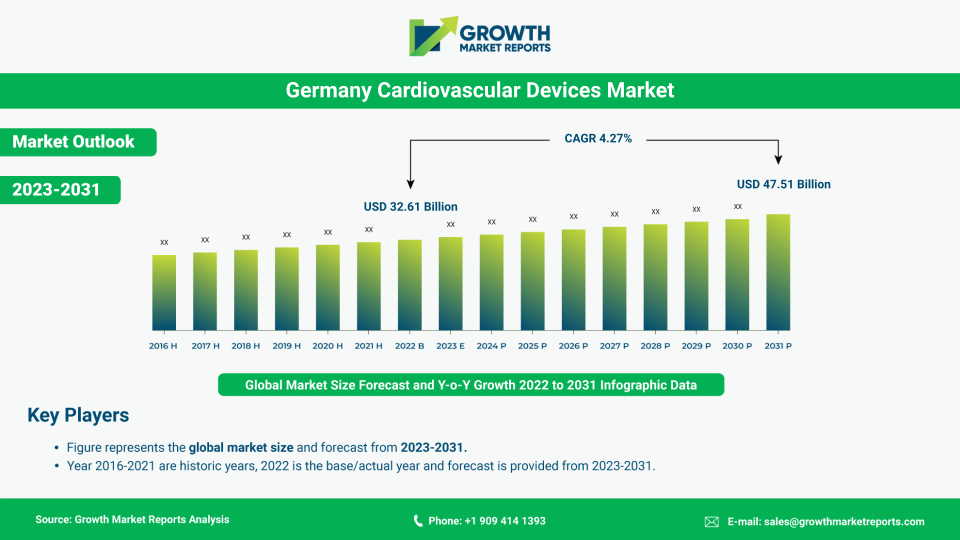
The global cardiovascular devices market reached USD 67.3 billion in 2025, the base year for this report. Growing at a CAGR of 7.4% across the 2026-2034 forecast period, the market is projected to surpass USD 127.5 billion by 2034. This robust expansion reflects the compounding impact of rising cardiovascular disease prevalence, accelerating device innovation, and broadening healthcare access across both developed and emerging economies.