Cardiac Ablation Devices Market Research Report 2033

Cardiac Ablation Devices Market Research Report 2033

Segments - by Product Type (Radiofrequency Ablation Devices, Cryoablation Devices, Laser Ablation Devices, Microwave Ablation Devices, Others), by Application (Atrial Fibrillation, Ventricular Tachycardia, Supraventricular Tachycardia, Others), by End User (Hospitals, Ambulatory Surgical Centers, Specialty Clinics, Others)

https://growthmarketreports.com/raksha
Author : Raksha Sharma
https://growthmarketreports.com/Vaibhav
Fact-checked by : V. Chandola
https://growthmarketreports.com/Shruti
Editor : Shruti Bhat

Upcoming | Report ID :HC-546 | 4.9 Rating | 86 Reviews | 263 Pages | Format : Docx PDF

Report Description


Cardiac Ablation Devices Market Outlook

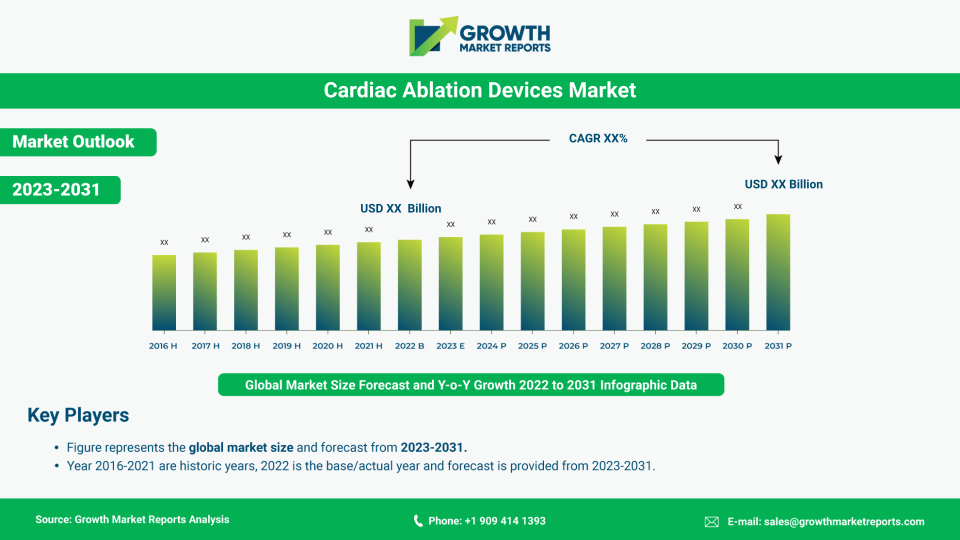
According to our latest research, the global cardiac ablation devices market size reached USD 4.5 billion in 2024, and is expected to expand at a robust CAGR of 11.2% during the forecast period. By 2033, the market is projected to attain a value of USD 12.6 billion. The primary growth driver for this market is the rising global prevalence of cardiac arrhythmias, particularly atrial fibrillation, coupled with increasing adoption of minimally invasive procedures. As per our latest research, technological advancements and ongoing product innovations are further accelerating market growth, positioning cardiac ablation devices as a cornerstone of modern electrophysiology treatment strategies worldwide.

The surge in the prevalence of cardiovascular diseases, especially arrhythmias, remains a pivotal growth factor for the cardiac ablation devices market. With an aging population and the increasing incidence of lifestyle-related risk factors such as hypertension, diabetes, and obesity, the demand for effective and minimally invasive cardiac interventions is rising rapidly. Cardiac ablation procedures are gaining traction due to their efficacy in restoring normal heart rhythms and reducing the risk of stroke and heart failure. Moreover, the growing awareness among both healthcare providers and patients about the benefits of early diagnosis and treatment of arrhythmias has led to a higher adoption of ablation devices. This trend is further supported by government initiatives and reimbursement policies in various countries, which are making these advanced treatments more accessible.

Technological innovation is another significant catalyst propelling the cardiac ablation devices market forward. Manufacturers are consistently investing in research and development to introduce next-generation ablation devices that offer improved safety, precision, and procedural outcomes. The advent of advanced mapping systems, contact force-sensing catheters, and integration with imaging technologies has revolutionized the field of electrophysiology. These innovations have not only enhanced the efficacy and safety profile of ablation procedures but have also reduced procedural times and complication rates. Furthermore, the increasing trend towards outpatient procedures and the adoption of robot-assisted ablation systems are expected to open new avenues for market expansion over the next decade.

The global cardiac ablation devices market is also buoyed by the expanding healthcare infrastructure and rising investments in emerging economies. In regions such as Asia Pacific and Latin America, rapid urbanization, improving healthcare access, and a growing middle-class population are contributing to heightened demand for advanced cardiac care solutions. As healthcare systems in these regions continue to modernize, there is a notable increase in the installation of electrophysiology labs and the adoption of state-of-the-art ablation technologies. This regional diversification is expected to play a crucial role in sustaining long-term market growth and mitigating the impact of market saturation in more mature markets.

Ablation Technologies are at the forefront of this transformation, offering a range of innovative solutions that enhance the precision and efficacy of cardiac procedures. These technologies encompass a variety of energy sources and delivery methods, each tailored to specific clinical needs and arrhythmia types. The development of ablation technologies has been driven by a deep understanding of cardiac electrophysiology and a commitment to improving patient outcomes. As a result, these technologies are becoming increasingly sophisticated, with features such as real-time feedback, advanced imaging integration, and enhanced safety profiles. The continuous evolution of ablation technologies is expected to further solidify their role as essential tools in the management of cardiac arrhythmias, offering hope to millions of patients worldwide.

Regionally, North America continues to dominate the global cardiac ablation devices market, accounting for the largest share in 2024, driven by a high prevalence of atrial fibrillation, well-established healthcare infrastructure, and strong presence of leading device manufacturers. Europe follows closely, with significant investments in cardiac care and widespread adoption of innovative ablation technologies. The Asia Pacific region, however, is anticipated to witness the fastest growth rate, propelled by increasing healthcare expenditures, expanding patient pool, and rising awareness about arrhythmia management. Latin America and the Middle East & Africa are also emerging as lucrative markets, supported by improving healthcare access and government initiatives aimed at reducing the burden of cardiovascular diseases.

Global Cardiac Ablation Devices Industry Outlook

Product Type Analysis

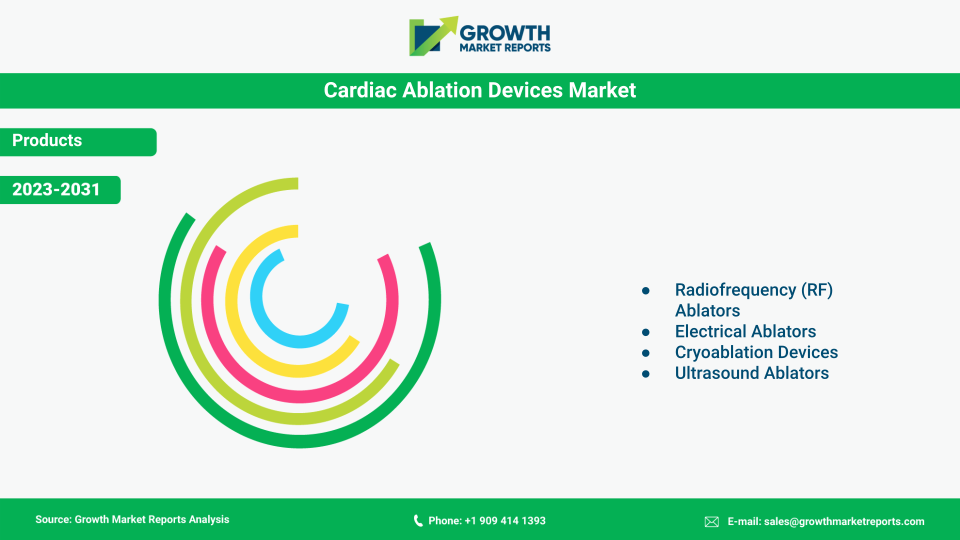
The cardiac ablation devices market is segmented by product type into radiofrequency ablation devices, cryoablation devices, laser ablation devices, microwave ablation devices, and others. Among these, radiofrequency ablation devices hold the dominant share, accounting for over 45% of the market in 2024. Their widespread adoption is attributed to their proven safety profile, high efficacy in treating various arrhythmias, and extensive clinical evidence supporting their use. Technological advancements, such as the development of irrigated-tip catheters and contact force-sensing technology, have further enhanced the performance and safety of radiofrequency ablation procedures, making them the preferred choice among electrophysiologists worldwide.

The integration of Atrial Fibrillation Detection AI into clinical practice is revolutionizing how arrhythmias are diagnosed and managed. This cutting-edge technology leverages machine learning algorithms to analyze electrocardiogram (ECG) data with unprecedented accuracy, enabling early detection of atrial fibrillation even in asymptomatic patients. By providing real-time insights and predictive analytics, AI-driven detection tools are empowering clinicians to make informed decisions, tailor treatment plans, and improve patient outcomes. The adoption of AI in atrial fibrillation detection is not only enhancing diagnostic precision but also streamlining workflows and reducing the burden on healthcare systems. As AI technology continues to advance, its role in arrhythmia management is expected to expand, offering new opportunities for personalized medicine and proactive patient care.

Cryoablation devices represent the second-largest segment, gaining momentum due to their unique mechanism of action and favorable safety outcomes, particularly in the treatment of atrial fibrillation. The ability of cryoablation to create durable lesions with minimal collateral tissue damage has made it a popular option for pulmonary vein isolation procedures. Recent product launches featuring improved catheter designs and simplified workflow have contributed to the growing adoption of cryoablation technology. Additionally, the increasing number of clinical trials demonstrating the efficacy of cryoablation for various arrhythmia subtypes is expected to drive further growth in this segment.

Laser ablation devices and microwave ablation devices, while accounting for a smaller share of the market, are witnessing increased interest due to their potential advantages in specific clinical scenarios. Laser ablation offers precise energy delivery and may be suitable for complex arrhythmia substrates, whereas microwave ablation is being explored for its ability to create deeper lesions in challenging anatomical locations. Ongoing research and development efforts aimed at improving the efficacy, safety, and ease of use of these modalities are likely to expand their clinical applications and market penetration in the coming years.

The "others" category includes emerging ablation technologies such as high-intensity focused ultrasound (HIFU) and pulsed field ablation (PFA), which are at various stages of clinical development and commercialization. These novel approaches hold promise for overcoming some of the limitations associated with traditional ablation techniques, such as collateral tissue injury and procedural complexity. As clinical evidence supporting their use continues to accumulate, these innovative technologies are expected to add new dimensions to the cardiac ablation devices market, offering electrophysiologists a broader array of tools for personalized arrhythmia management.

Report Scope

Attributes Details
Report Title Cardiac Ablation Devices Market Research Report 2033
By Product Type Radiofrequency Ablation Devices, Cryoablation Devices, Laser Ablation Devices, Microwave Ablation Devices, Others
By Application Atrial Fibrillation, Ventricular Tachycardia, Supraventricular Tachycardia, Others
By End User Hospitals, Ambulatory Surgical Centers, Specialty Clinics, Others
Regions Covered North America, Europe, APAC, Latin America, MEA
Base Year 2024
Historic Data 2018-2023
Forecast Period 2025-2033
Number of Pages 263
Number of Tables & Figures 318
Customization Available Yes, the report can be customized as per your need.

Application Analysis

The cardiac ablation devices market is categorized by application into atrial fibrillation, ventricular tachycardia, supraventricular tachycardia, and others. Atrial fibrillation remains the largest application segment, accounting for approximately 60% of total procedures performed globally in 2024. The high prevalence of atrial fibrillation, coupled with its association with increased morbidity and mortality, has made it a focal point for ablation therapies. Clinical guidelines now recommend catheter ablation as a first-line treatment for select patients with symptomatic atrial fibrillation, further fueling demand for advanced ablation devices.

The introduction of AV Cart systems is transforming the operational efficiency of electrophysiology labs and surgical suites. These mobile workstations are designed to consolidate essential equipment and supplies, facilitating seamless access during complex ablation procedures. By integrating advanced audiovisual capabilities, AV Carts enhance communication and collaboration among the surgical team, ensuring that critical information is readily available at every stage of the procedure. The ergonomic design and customizable configurations of AV Carts contribute to a more organized and efficient workflow, reducing procedural times and minimizing the risk of errors. As healthcare facilities continue to prioritize operational excellence, the demand for versatile and innovative solutions like AV Carts is expected to rise, supporting the delivery of high-quality cardiac care.

Ventricular tachycardia represents a significant and growing application area, particularly in patients with structural heart disease and heart failure. The complexity of ventricular arrhythmias necessitates the use of sophisticated mapping and ablation technologies to achieve successful outcomes. Innovations such as real-time 3D mapping systems and high-power, short-duration ablation protocols have improved the safety and efficacy of ventricular tachycardia ablation, leading to increased adoption in specialized centers. As the burden of heart failure continues to rise globally, the demand for ventricular tachycardia ablation is expected to grow substantially.

Supraventricular tachycardia (SVT), which includes conditions such as atrioventricular nodal reentrant tachycardia and Wolff-Parkinson-White syndrome, is another important application segment. Ablation procedures for SVT are characterized by high success rates and low complication risks, making them an attractive option for both patients and clinicians. The increasing availability of dedicated SVT ablation catheters and streamlined procedural workflows has contributed to the steady growth of this segment. As awareness of arrhythmia symptoms increases and diagnostic capabilities improve, the number of SVT ablation procedures is projected to rise.

The "others" category encompasses ablation procedures for less common arrhythmias, such as atrial flutter and premature ventricular contractions. Although these indications represent a smaller proportion of total ablation procedures, their clinical significance should not be underestimated. Advances in mapping and ablation technologies are enabling more precise and effective treatment of these complex arrhythmias, broadening the scope of ablation therapy and contributing to overall market growth. As research into the electrophysiological mechanisms of arrhythmias progresses, new indications for ablation are likely to emerge, further expanding the application landscape.

End User Analysis

The end-user segment of the cardiac ablation devices market comprises hospitals, ambulatory surgical centers, specialty clinics, and others. Hospitals dominate this segment, accounting for over 65% of total device utilization in 2024. The concentration of advanced electrophysiology labs, availability of skilled healthcare professionals, and access to comprehensive diagnostic and therapeutic resources make hospitals the primary setting for complex ablation procedures. Moreover, hospitals are often the first adopters of cutting-edge ablation technologies, driven by their commitment to delivering high-quality, evidence-based care.

Ambulatory surgical centers (ASCs) are emerging as a significant growth segment, driven by the increasing trend towards minimally invasive and outpatient procedures. The cost-effectiveness, shorter hospital stays, and reduced risk of hospital-acquired infections associated with ASCs are attracting both patients and payers. As ablation technologies become more user-friendly and procedural times decrease, the feasibility of performing ablation procedures in ambulatory settings is improving. This shift is expected to alleviate the burden on hospital resources and enhance patient access to timely arrhythmia care.

Specialty clinics, including dedicated electrophysiology centers, play a crucial role in the cardiac ablation devices market by offering specialized expertise and personalized treatment plans. These clinics often serve as referral centers for complex arrhythmia cases and are at the forefront of clinical research and innovation. The focus on patient-centric care, rapid adoption of new technologies, and participation in multicenter clinical trials position specialty clinics as key drivers of market growth and technological advancement.

The "others" category includes academic medical centers, research institutions, and government healthcare facilities. These entities contribute to the market through their involvement in clinical trials, training programs, and the development of evidence-based guidelines. Their role in advancing the science of cardiac ablation and disseminating best practices cannot be overstated. As the demand for skilled electrophysiologists and specialized training continues to grow, these institutions will remain integral to the evolution of the cardiac ablation devices market.

Opportunities & Threats

The cardiac ablation devices market is poised for significant opportunities driven by the ongoing evolution of ablation technologies and the expanding pool of treatable patients. The integration of artificial intelligence and machine learning into mapping and navigation systems has the potential to enhance procedural accuracy, reduce operator variability, and improve patient outcomes. Additionally, the growing trend towards personalized medicine is opening new avenues for tailored ablation strategies based on individual patient characteristics and arrhythmia substrates. The increasing adoption of remote monitoring and telehealth solutions is also expected to facilitate post-procedural care and long-term arrhythmia management, further expanding the market's reach.

Another major opportunity lies in the untapped potential of emerging markets, particularly in Asia Pacific, Latin America, and the Middle East & Africa. As healthcare infrastructure improves and awareness of arrhythmia management increases, these regions are witnessing a surge in demand for advanced cardiac care solutions. Strategic collaborations between global device manufacturers and local healthcare providers are expected to accelerate market penetration and foster innovation tailored to regional needs. Furthermore, the ongoing expansion of reimbursement coverage for ablation procedures in various countries is reducing financial barriers and enabling broader patient access to life-saving therapies.

Despite its promising outlook, the cardiac ablation devices market faces certain restraints, the most notable being the high cost of advanced ablation systems and procedures. The capital investment required for state-of-the-art electrophysiology labs, coupled with the cost of disposable catheters and mapping systems, can be prohibitive for smaller healthcare facilities and those in resource-limited settings. Reimbursement challenges and variability in coverage policies across different regions further exacerbate this issue. Additionally, the complexity of ablation procedures and the need for specialized training present barriers to widespread adoption, particularly in developing markets. Addressing these challenges will be critical to unlocking the full potential of the cardiac ablation devices market.

Regional Outlook

North America remains the largest regional market for cardiac ablation devices, with a market size of USD 1.8 billion in 2024. The region's leadership is attributed to a high prevalence of atrial fibrillation, robust healthcare infrastructure, and a strong focus on research and innovation. The United States, in particular, accounts for the majority of the regional market, driven by favorable reimbursement policies, widespread adoption of advanced ablation technologies, and the presence of leading device manufacturers. The region is expected to maintain steady growth, supported by ongoing investments in healthcare modernization and the rising burden of cardiovascular diseases.

Europe follows as the second-largest market, with a market size of USD 1.2 billion in 2024. The region benefits from well-established electrophysiology networks, active participation in clinical research, and strong regulatory support for innovative medical devices. Countries such as Germany, the United Kingdom, and France are leading adopters of ablation technologies, supported by comprehensive healthcare coverage and a high standard of cardiac care. The region is projected to grow at a CAGR of 10.5% over the forecast period, driven by increasing awareness of arrhythmia management and ongoing investments in healthcare infrastructure.

The Asia Pacific region is emerging as the fastest-growing market, with a market size of USD 900 million in 2024 and a projected CAGR of 13.8% through 2033. Rapid urbanization, rising disposable incomes, and increasing prevalence of cardiovascular diseases are fueling demand for advanced ablation therapies. Countries such as China, India, and Japan are at the forefront of regional growth, supported by government initiatives to improve healthcare access and promote early diagnosis of arrhythmias. The region's large and underserved patient population presents significant growth opportunities for device manufacturers and healthcare providers alike.

Cardiac Ablation Devices Market Statistics

Competitor Outlook

The competitive landscape of the cardiac ablation devices market is characterized by intense rivalry among leading global and regional players, all striving to expand their market share through innovation, strategic partnerships, and geographic expansion. The market is marked by continuous product development, with companies investing heavily in research and development to introduce next-generation ablation devices that offer enhanced safety, efficacy, and ease of use. Mergers and acquisitions, collaborations with academic institutions, and partnerships with healthcare providers are common strategies employed by key players to strengthen their market position and accelerate the adoption of their technologies.

Innovation remains a primary differentiator in the cardiac ablation devices market, with companies focusing on the development of advanced mapping systems, contact force-sensing catheters, and integration with imaging modalities. The introduction of novel energy sources, such as pulsed field ablation and high-intensity focused ultrasound, is reshaping the competitive landscape and expanding the range of available treatment options. Companies are also exploring the integration of artificial intelligence and machine learning to enhance procedural planning, real-time guidance, and post-procedural analysis, further improving patient outcomes and operational efficiency.

Market leaders are actively expanding their presence in emerging markets through strategic investments, local partnerships, and tailored product offerings. This approach not only helps to capture new growth opportunities but also addresses region-specific challenges such as regulatory requirements, reimbursement policies, and healthcare infrastructure limitations. The ability to provide comprehensive training and support to healthcare professionals is increasingly recognized as a key success factor, particularly in regions with a shortage of skilled electrophysiologists.

Some of the major companies operating in the global cardiac ablation devices market include Medtronic plc, Abbott Laboratories, Boston Scientific Corporation, Johnson & Johnson (Biosense Webster), AtriCure Inc., and MicroPort Scientific Corporation. Medtronic and Abbott are renowned for their extensive product portfolios and global reach, consistently introducing innovative ablation technologies to address evolving clinical needs. Boston Scientific is a leader in the development of advanced mapping and navigation systems, while Johnson & JohnsonÂ’s Biosense Webster division is recognized for its pioneering work in contact force-sensing and 3D mapping technologies. AtriCure specializes in surgical ablation solutions for atrial fibrillation, and MicroPort Scientific is expanding its presence in the Asia Pacific market with a focus on affordability and accessibility.

These companies are committed to advancing the science of cardiac ablation through ongoing clinical research, participation in multicenter trials, and collaboration with leading academic institutions. Their efforts are instrumental in shaping clinical guidelines, improving procedural outcomes, and driving the adoption of ablation therapies worldwide. As the market continues to evolve, the ability to deliver innovative, cost-effective, and patient-centric solutions will be critical to sustaining competitive advantage and meeting the growing global demand for effective arrhythmia management.

Key Players

  • Abbott Laboratories
  • Medtronic plc
  • Boston Scientific Corporation
  • Johnson & Johnson (Biosense Webster, Inc.)
  • AtriCure, Inc.
  • MicroPort Scientific Corporation
  • Biotronik SE & Co. KG
  • Stryker Corporation
  • AngioDynamics, Inc.
  • Osypka AG
  • CardioFocus, Inc.
  • Lepu Medical Technology (Beijing) Co., Ltd.
  • Imricor Medical Systems, Inc.
  • CathRx Ltd.
  • Japan Lifeline Co., Ltd.
  • Acutus Medical, Inc.
  • Baylis Medical Company Inc.
  • Hansen Medical, Inc.
  • Advanced Cardiac Therapeutics, Inc.
  • Aurigen Medical, Inc.
Cardiac Ablation Devices Market Overview

Segments

The Cardiac Ablation Devices market has been segmented on the basis of

Product Type

  • Radiofrequency Ablation Devices
  • Cryoablation Devices
  • Laser Ablation Devices
  • Microwave Ablation Devices
  • Others

Application

  • Atrial Fibrillation
  • Ventricular Tachycardia
  • Supraventricular Tachycardia
  • Others

End User

  • Hospitals
  • Ambulatory Surgical Centers
  • Specialty Clinics
  • Others

Competitive Landscape

Some of the leading manufacturers in the global cardiac ablation devices market are Epix Therapeutics, Acutus Medical, Medtronic, AtriCure, Inc., Biosense Webster, Inc., St Jude Medical, Abbott.

Companies are focusing on providing advanced technology devices to hospitals and clinics for the treatment of patients suffering from arrhythmia.
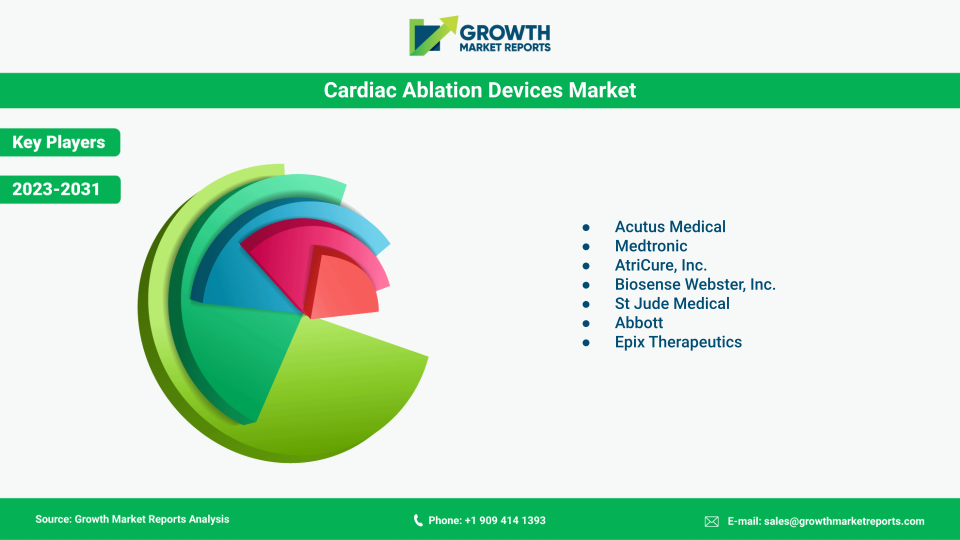

Cardiac Ablation Devices Market Key Players

Frequently Asked Questions

The Cardiac Ablation Devices Market is studied from 2023 - 2031.

In 2020, electric ablators segment to account for a large market share during the forecast period.

North America held a large market share owing to the rising healthcare expenditure, increasing disposable income, and the availability of latest technology are contributing to the regional market growth.

Some of the leading manufacturers in the global cardiac ablation devices market are Epix Therapeutics, Acutus Medical, Medtronic, AtriCure, Inc., Biosense Webster, Inc., St Jude Medical, Abbott.

Table Of Content

Chapter 1 Executive Summary
Chapter 2 Assumptions and Acronyms Used
Chapter 3 Research Methodology
Chapter 4 Cardiac Ablation Devices Market Overview
   4.1 Introduction
      4.1.1 Market Taxonomy
      4.1.2 Market Definition
      4.1.3 Macro-Economic Factors Impacting the Market Growth
   4.2 Cardiac Ablation Devices Market Dynamics
      4.2.1 Market Drivers
      4.2.2 Market Restraints
      4.2.3 Market Opportunity
   4.3 Cardiac Ablation Devices Market - Supply Chain Analysis
      4.3.1 List of Key Suppliers
      4.3.2 List of Key Distributors
      4.3.3 List of Key Consumers
   4.4 Key Forces Shaping the Cardiac Ablation Devices Market
      4.4.1 Bargaining Power of Suppliers
      4.4.2 Bargaining Power of Buyers
      4.4.3 Threat of Substitution
      4.4.4 Threat of New Entrants
      4.4.5 Competitive Rivalry
   4.5 Global Cardiac Ablation Devices Market Size & Forecast, 2023-2032
      4.5.1 Cardiac Ablation Devices Market Size and Y-o-Y Growth
      4.5.2 Cardiac Ablation Devices Market Absolute $ Opportunity

Chapter 5 Global Cardiac Ablation Devices Market Analysis and Forecast By Product Type
   5.1 Introduction
      5.1.1 Key Market Trends & Growth Opportunities By Product Type
      5.1.2 Basis Point Share (BPS) Analysis By Product Type
      5.1.3 Absolute $ Opportunity Assessment By Product Type
   5.2 Cardiac Ablation Devices Market Size Forecast By Product Type
      5.2.1 Radiofrequency Ablation Devices
      5.2.2 Cryoablation Devices
      5.2.3 Laser Ablation Devices
      5.2.4 Microwave Ablation Devices
      5.2.5 Others
   5.3 Market Attractiveness Analysis By Product Type

Chapter 6 Global Cardiac Ablation Devices Market Analysis and Forecast By Application
   6.1 Introduction
      6.1.1 Key Market Trends & Growth Opportunities By Application
      6.1.2 Basis Point Share (BPS) Analysis By Application
      6.1.3 Absolute $ Opportunity Assessment By Application
   6.2 Cardiac Ablation Devices Market Size Forecast By Application
      6.2.1 Atrial Fibrillation
      6.2.2 Ventricular Tachycardia
      6.2.3 Supraventricular Tachycardia
      6.2.4 Others
   6.3 Market Attractiveness Analysis By Application

Chapter 7 Global Cardiac Ablation Devices Market Analysis and Forecast By End User
   7.1 Introduction
      7.1.1 Key Market Trends & Growth Opportunities By End User
      7.1.2 Basis Point Share (BPS) Analysis By End User
      7.1.3 Absolute $ Opportunity Assessment By End User
   7.2 Cardiac Ablation Devices Market Size Forecast By End User
      7.2.1 Hospitals
      7.2.2 Ambulatory Surgical Centers
      7.2.3 Specialty Clinics
      7.2.4 Others
   7.3 Market Attractiveness Analysis By End User

Chapter 8 Global Cardiac Ablation Devices Market Analysis and Forecast by Region
   8.1 Introduction
      8.1.1 Key Market Trends & Growth Opportunities By Region
      8.1.2 Basis Point Share (BPS) Analysis By Region
      8.1.3 Absolute $ Opportunity Assessment By Region
   8.2 Cardiac Ablation Devices Market Size Forecast By Region
      8.2.1 North America
      8.2.2 Europe
      8.2.3 Asia Pacific
      8.2.4 Latin America
      8.2.5 Middle East & Africa (MEA)
   8.3 Market Attractiveness Analysis By Region

Chapter 9 Coronavirus Disease (COVID-19) Impact 
   9.1 Introduction 
   9.2 Current & Future Impact Analysis 
   9.3 Economic Impact Analysis 
   9.4 Government Policies 
   9.5 Investment Scenario

Chapter 10 North America Cardiac Ablation Devices Analysis and Forecast
   10.1 Introduction
   10.2 North America Cardiac Ablation Devices Market Size Forecast by Country
      10.2.1 U.S.
      10.2.2 Canada
   10.3 Basis Point Share (BPS) Analysis by Country
   10.4 Absolute $ Opportunity Assessment by Country
   10.5 Market Attractiveness Analysis by Country
   10.6 North America Cardiac Ablation Devices Market Size Forecast By Product Type
      10.6.1 Radiofrequency Ablation Devices
      10.6.2 Cryoablation Devices
      10.6.3 Laser Ablation Devices
      10.6.4 Microwave Ablation Devices
      10.6.5 Others
   10.7 Basis Point Share (BPS) Analysis By Product Type 
   10.8 Absolute $ Opportunity Assessment By Product Type 
   10.9 Market Attractiveness Analysis By Product Type
   10.10 North America Cardiac Ablation Devices Market Size Forecast By Application
      10.10.1 Atrial Fibrillation
      10.10.2 Ventricular Tachycardia
      10.10.3 Supraventricular Tachycardia
      10.10.4 Others
   10.11 Basis Point Share (BPS) Analysis By Application 
   10.12 Absolute $ Opportunity Assessment By Application 
   10.13 Market Attractiveness Analysis By Application
   10.14 North America Cardiac Ablation Devices Market Size Forecast By End User
      10.14.1 Hospitals
      10.14.2 Ambulatory Surgical Centers
      10.14.3 Specialty Clinics
      10.14.4 Others
   10.15 Basis Point Share (BPS) Analysis By End User 
   10.16 Absolute $ Opportunity Assessment By End User 
   10.17 Market Attractiveness Analysis By End User

Chapter 11 Europe Cardiac Ablation Devices Analysis and Forecast
   11.1 Introduction
   11.2 Europe Cardiac Ablation Devices Market Size Forecast by Country
      11.2.1 Germany
      11.2.2 France
      11.2.3 Italy
      11.2.4 U.K.
      11.2.5 Spain
      11.2.6 Russia
      11.2.7 Rest of Europe
   11.3 Basis Point Share (BPS) Analysis by Country
   11.4 Absolute $ Opportunity Assessment by Country
   11.5 Market Attractiveness Analysis by Country
   11.6 Europe Cardiac Ablation Devices Market Size Forecast By Product Type
      11.6.1 Radiofrequency Ablation Devices
      11.6.2 Cryoablation Devices
      11.6.3 Laser Ablation Devices
      11.6.4 Microwave Ablation Devices
      11.6.5 Others
   11.7 Basis Point Share (BPS) Analysis By Product Type 
   11.8 Absolute $ Opportunity Assessment By Product Type 
   11.9 Market Attractiveness Analysis By Product Type
   11.10 Europe Cardiac Ablation Devices Market Size Forecast By Application
      11.10.1 Atrial Fibrillation
      11.10.2 Ventricular Tachycardia
      11.10.3 Supraventricular Tachycardia
      11.10.4 Others
   11.11 Basis Point Share (BPS) Analysis By Application 
   11.12 Absolute $ Opportunity Assessment By Application 
   11.13 Market Attractiveness Analysis By Application
   11.14 Europe Cardiac Ablation Devices Market Size Forecast By End User
      11.14.1 Hospitals
      11.14.2 Ambulatory Surgical Centers
      11.14.3 Specialty Clinics
      11.14.4 Others
   11.15 Basis Point Share (BPS) Analysis By End User 
   11.16 Absolute $ Opportunity Assessment By End User 
   11.17 Market Attractiveness Analysis By End User

Chapter 12 Asia Pacific Cardiac Ablation Devices Analysis and Forecast
   12.1 Introduction
   12.2 Asia Pacific Cardiac Ablation Devices Market Size Forecast by Country
      12.2.1 China
      12.2.2 Japan
      12.2.3 South Korea
      12.2.4 India
      12.2.5 Australia
      12.2.6 South East Asia (SEA)
      12.2.7 Rest of Asia Pacific (APAC)
   12.3 Basis Point Share (BPS) Analysis by Country
   12.4 Absolute $ Opportunity Assessment by Country
   12.5 Market Attractiveness Analysis by Country
   12.6 Asia Pacific Cardiac Ablation Devices Market Size Forecast By Product Type
      12.6.1 Radiofrequency Ablation Devices
      12.6.2 Cryoablation Devices
      12.6.3 Laser Ablation Devices
      12.6.4 Microwave Ablation Devices
      12.6.5 Others
   12.7 Basis Point Share (BPS) Analysis By Product Type 
   12.8 Absolute $ Opportunity Assessment By Product Type 
   12.9 Market Attractiveness Analysis By Product Type
   12.10 Asia Pacific Cardiac Ablation Devices Market Size Forecast By Application
      12.10.1 Atrial Fibrillation
      12.10.2 Ventricular Tachycardia
      12.10.3 Supraventricular Tachycardia
      12.10.4 Others
   12.11 Basis Point Share (BPS) Analysis By Application 
   12.12 Absolute $ Opportunity Assessment By Application 
   12.13 Market Attractiveness Analysis By Application
   12.14 Asia Pacific Cardiac Ablation Devices Market Size Forecast By End User
      12.14.1 Hospitals
      12.14.2 Ambulatory Surgical Centers
      12.14.3 Specialty Clinics
      12.14.4 Others
   12.15 Basis Point Share (BPS) Analysis By End User 
   12.16 Absolute $ Opportunity Assessment By End User 
   12.17 Market Attractiveness Analysis By End User

Chapter 13 Latin America Cardiac Ablation Devices Analysis and Forecast
   13.1 Introduction
   13.2 Latin America Cardiac Ablation Devices Market Size Forecast by Country
      13.2.1 Brazil
      13.2.2 Mexico
      13.2.3 Rest of Latin America (LATAM)
   13.3 Basis Point Share (BPS) Analysis by Country
   13.4 Absolute $ Opportunity Assessment by Country
   13.5 Market Attractiveness Analysis by Country
   13.6 Latin America Cardiac Ablation Devices Market Size Forecast By Product Type
      13.6.1 Radiofrequency Ablation Devices
      13.6.2 Cryoablation Devices
      13.6.3 Laser Ablation Devices
      13.6.4 Microwave Ablation Devices
      13.6.5 Others
   13.7 Basis Point Share (BPS) Analysis By Product Type 
   13.8 Absolute $ Opportunity Assessment By Product Type 
   13.9 Market Attractiveness Analysis By Product Type
   13.10 Latin America Cardiac Ablation Devices Market Size Forecast By Application
      13.10.1 Atrial Fibrillation
      13.10.2 Ventricular Tachycardia
      13.10.3 Supraventricular Tachycardia
      13.10.4 Others
   13.11 Basis Point Share (BPS) Analysis By Application 
   13.12 Absolute $ Opportunity Assessment By Application 
   13.13 Market Attractiveness Analysis By Application
   13.14 Latin America Cardiac Ablation Devices Market Size Forecast By End User
      13.14.1 Hospitals
      13.14.2 Ambulatory Surgical Centers
      13.14.3 Specialty Clinics
      13.14.4 Others
   13.15 Basis Point Share (BPS) Analysis By End User 
   13.16 Absolute $ Opportunity Assessment By End User 
   13.17 Market Attractiveness Analysis By End User

Chapter 14 Middle East & Africa (MEA) Cardiac Ablation Devices Analysis and Forecast
   14.1 Introduction
   14.2 Middle East & Africa (MEA) Cardiac Ablation Devices Market Size Forecast by Country
      14.2.1 Saudi Arabia
      14.2.2 South Africa
      14.2.3 UAE
      14.2.4 Rest of Middle East & Africa (MEA)
   14.3 Basis Point Share (BPS) Analysis by Country
   14.4 Absolute $ Opportunity Assessment by Country
   14.5 Market Attractiveness Analysis by Country
   14.6 Middle East & Africa (MEA) Cardiac Ablation Devices Market Size Forecast By Product Type
      14.6.1 Radiofrequency Ablation Devices
      14.6.2 Cryoablation Devices
      14.6.3 Laser Ablation Devices
      14.6.4 Microwave Ablation Devices
      14.6.5 Others
   14.7 Basis Point Share (BPS) Analysis By Product Type 
   14.8 Absolute $ Opportunity Assessment By Product Type 
   14.9 Market Attractiveness Analysis By Product Type
   14.10 Middle East & Africa (MEA) Cardiac Ablation Devices Market Size Forecast By Application
      14.10.1 Atrial Fibrillation
      14.10.2 Ventricular Tachycardia
      14.10.3 Supraventricular Tachycardia
      14.10.4 Others
   14.11 Basis Point Share (BPS) Analysis By Application 
   14.12 Absolute $ Opportunity Assessment By Application 
   14.13 Market Attractiveness Analysis By Application
   14.14 Middle East & Africa (MEA) Cardiac Ablation Devices Market Size Forecast By End User
      14.14.1 Hospitals
      14.14.2 Ambulatory Surgical Centers
      14.14.3 Specialty Clinics
      14.14.4 Others
   14.15 Basis Point Share (BPS) Analysis By End User 
   14.16 Absolute $ Opportunity Assessment By End User 
   14.17 Market Attractiveness Analysis By End User

Chapter 15 Competition Landscape 
   15.1 Cardiac Ablation Devices Market: Competitive Dashboard
   15.2 Global Cardiac Ablation Devices Market: Market Share Analysis, 2023
   15.3 Company Profiles (Details – Overview, Financials, Developments, Strategy) 
      15.3.1 Abbott Laboratories
Medtronic plc
Boston Scientific Corporation
Johnson & Johnson (Biosense Webster, Inc.)
AtriCure, Inc.
MicroPort Scientific Corporation
Biotronik SE & Co. KG
Stryker Corporation
AngioDynamics, Inc.
Osypka AG
CardioFocus, Inc.
Lepu Medical Technology (Beijing) Co., Ltd.
Imricor Medical Systems, Inc.
CathRx Ltd.
Japan Lifeline Co., Ltd.
Acutus Medical, Inc.
Baylis Medical Company Inc.
Hansen Medical, Inc.
Advanced Cardiac Therapeutics, Inc.
Aurigen Medical, Inc.

Methodology

Our Clients

Siemens Healthcare
Microsoft
Deloitte
sinopec
The John Holland Group
FedEx Logistics
Nestle SA
Dassault Aviation