Capsule Coffee Machine Market Research Report 2033

Capsule Coffee Machine Market Research Report 2033

Segments - by Product Type (Automatic Capsule Coffee Machines, Semi-Automatic Capsule Coffee Machines, Manual Capsule Coffee Machines), by Application (Household, Commercial, Offices, Hotels, Others), by Distribution Channel (Online Stores, Supermarkets/Hypermarkets, Specialty Stores, Others), by End-User (Residential, Commercial)

https://growthmarketreports.com/Debadatta
Author : Debadatta Patel
https://growthmarketreports.com/Vaibhav
Fact-checked by : V. Chandola
https://growthmarketreports.com/Shruti
Editor : Shruti Bhat

Upcoming | Report ID :CG-343 | 4.6 Rating | 75 Reviews | 250 Pages | Format : Docx PDF

Report Description


Capsule Coffee Machine Market Outlook

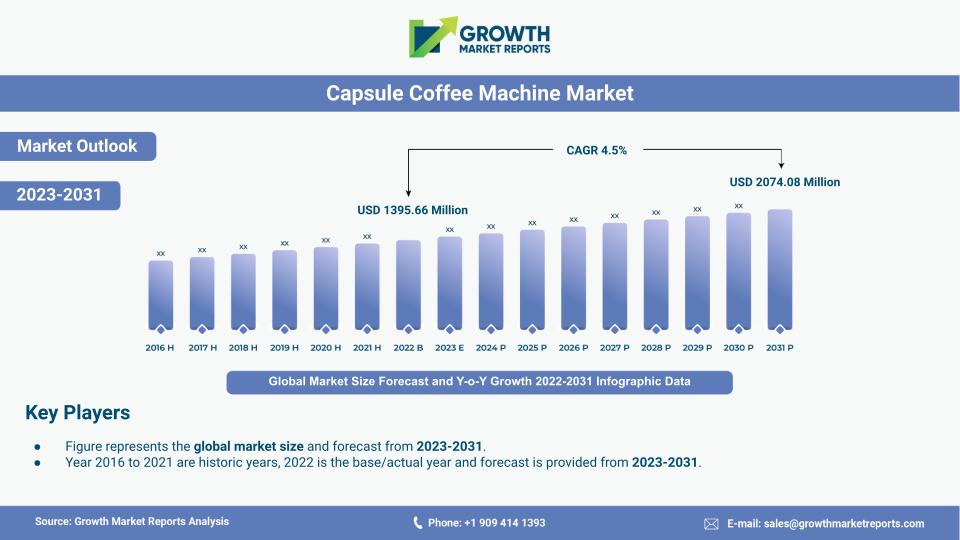
According to our latest research, the global capsule coffee machine market size reached USD 8.1 billion in 2024, demonstrating robust demand across both residential and commercial sectors. The market is anticipated to register a CAGR of 7.2% during the forecast period from 2025 to 2033, projecting the market value to escalate to USD 15.3 billion by 2033. This steady growth is primarily driven by increasing consumer preference for convenience, the premiumization of home coffee experiences, and the growing adoption of capsule systems in commercial environments.

One of the primary growth factors propelling the capsule coffee machine market is the evolving lifestyle and rising disposable incomes, particularly in urban areas. Consumers are increasingly seeking convenient solutions that deliver high-quality beverages with minimal effort, and capsule coffee machines perfectly address this demand. The ability to brew a variety of coffee styles quickly, without the need for grinding beans or managing complex brewing processes, has made these machines a staple in modern kitchens and offices. Additionally, the proliferation of coffee culture, coupled with the influence of global coffee chains, has heightened consumer expectations for café-quality coffee at home, further fueling market expansion.

Another significant driver is the continuous innovation in capsule technology and machine design. Manufacturers are investing in research and development to introduce machines with enhanced features such as programmable settings, temperature control, and energy efficiency. The introduction of eco-friendly and recyclable capsules is also resonating with environmentally conscious consumers, addressing concerns about plastic waste and sustainability. This focus on innovation not only enhances user experience but also expands the potential customer base by appealing to tech-savvy and green-minded individuals, thereby accelerating the adoption of capsule coffee machines in both established and emerging markets.

The commercial sector's growing embrace of capsule coffee machines is also contributing substantially to market growth. Offices, hotels, and restaurants are increasingly opting for capsule systems due to their ease of use, consistency in coffee quality, and minimal maintenance requirements. These machines help businesses cater to a diverse range of coffee preferences among employees and guests, improving overall satisfaction and productivity. The ability to offer premium coffee experiences without the need for skilled baristas or extensive training has made capsule systems particularly attractive for commercial establishments, driving significant demand in this segment.

From a regional perspective, Europe continues to dominate the capsule coffee machine market, accounting for the largest share in 2024, followed closely by North America and the Asia Pacific. The mature coffee culture in Europe, along with a high rate of product adoption in both residential and commercial settings, has solidified its leadership position. However, the Asia Pacific region is poised for the fastest growth, driven by increasing urbanization, rising middle-class incomes, and a burgeoning café culture in countries such as China, Japan, and South Korea. The market outlook remains highly favorable, with ample opportunities for expansion across emerging markets.

Global Capsule Coffee Machine Industry Outlook

Product Type Analysis

The capsule coffee machine market is segmented by product type into automatic, semi-automatic, and manual machines, each catering to distinct consumer preferences and usage scenarios. Automatic capsule coffee machines lead the segment, owing to their superior convenience, advanced features, and consistent brewing results. These machines typically come with programmable options, touch-screen interfaces, and integrated milk frothers, making them highly attractive for both home and office environments. Their ability to deliver a barista-quality experience at the touch of a button has driven their widespread adoption, especially among consumers seeking a hassle-free coffee-making process.

Semi-automatic capsule coffee machines offer a balanced blend of automation and user control, appealing to coffee enthusiasts who enjoy a degree of customization in their brewing process. While these machines require some manual input, such as controlling the brewing time or adjusting the water volume, they still provide the convenience of capsule-based brewing. Semi-automatic models are particularly popular among users who appreciate experimenting with different coffee strengths and flavors, without the complexity of traditional espresso machines. This segment is witnessing steady growth as manufacturers introduce models with enhanced flexibility and user-friendly interfaces.

Manual capsule coffee machines represent a niche but significant segment, catering to purists and those who prefer a hands-on approach to coffee preparation. These machines are typically more affordable and compact, making them suitable for small kitchens, travel, or outdoor use. While they require the user to manually operate the brewing mechanism, they offer greater control over the extraction process, which can result in a more personalized cup of coffee. The manual segment is also favored by environmentally conscious consumers, as many models are designed to operate without electricity, reducing energy consumption.

The competitive landscape within the product type segment is characterized by continuous innovation and differentiation. Leading brands are focusing on integrating smart technology, such as app connectivity and voice control, into their automatic and semi-automatic models to enhance user experience. Meanwhile, manual machine manufacturers are emphasizing portability, durability, and eco-friendly designs to attract niche markets. The diversity in product offerings ensures that the capsule coffee machine market can cater to a wide range of consumer needs and preferences, driving sustained growth across all segments.

Looking ahead, the product type segment is expected to witness further evolution as consumer expectations continue to rise. The integration of advanced features, coupled with a focus on sustainability and design aesthetics, will likely shape the future trajectory of this market. As manufacturers respond to changing trends and preferences, the product type segment will remain a key driver of innovation and market expansion in the capsule coffee machine industry.

Report Scope

Attributes Details
Report Title Capsule Coffee Machine Market Research Report 2033
By Product Type Automatic Capsule Coffee Machines, Semi-Automatic Capsule Coffee Machines, Manual Capsule Coffee Machines
By Application Household, Commercial, Offices, Hotels, Others
By Distribution Channel Online Stores, Supermarkets/Hypermarkets, Specialty Stores, Others
By End-User Residential, Commercial
Regions Covered North America, Europe, APAC, Latin America, MEA
Countries Covered North America (United States, Canada), Europe (Germany, France, Italy, United Kingdom, Spain, Russia, Rest of Europe), Asia Pacific (China, Japan, South Korea, India, Australia, South East Asia (SEA), Rest of Asia Pacific), Latin America (Mexico, Brazil, Rest of Latin America), Middle East & Africa (Saudi Arabia, South Africa, United Arab Emirates, Rest of Middle East & Africa)
Base Year 2024
Historic Data 2018-2023
Forecast Period 2025-2033
Number of Pages 250
Number of Tables & Figures 260
Customization Available Yes, the report can be customized as per your need.

Application Analysis

The application segment of the capsule coffee machine market is broadly categorized into household, commercial, offices, hotels, and others, each representing unique growth dynamics and adoption patterns. The household application segment dominates the market, accounting for the largest share in 2024. This dominance is attributed to the rising trend of home coffee brewing, where consumers seek café-quality experiences without leaving their homes. The convenience, speed, and variety offered by capsule coffee machines have made them an indispensable appliance in modern households, especially among urban dwellers and young professionals.

In the commercial application segment, capsule coffee machines are gaining significant traction in offices, hotels, and restaurants. Businesses are increasingly recognizing the value of providing high-quality coffee to employees and guests, which can enhance workplace satisfaction and customer experience. Offices, in particular, are major adopters, as capsule machines offer a convenient and cost-effective solution for catering to diverse coffee preferences without the need for specialized staff. Hotels and restaurants also benefit from the consistency and efficiency of capsule systems, enabling them to serve premium coffee quickly to large numbers of guests.

The offices sub-segment within commercial applications is witnessing rapid growth, driven by the increasing focus on employee well-being and productivity. Companies are investing in modern amenities, including premium coffee solutions, to attract and retain talent. Capsule coffee machines are preferred for their ease of use, minimal maintenance, and ability to deliver a wide range of coffee options, making them ideal for busy office environments. The trend towards flexible workspaces and co-working hubs is further boosting demand for capsule systems in office settings.

The hotels sub-segment is also emerging as a significant growth area, as hospitality providers strive to differentiate their offerings and enhance guest satisfaction. Capsule coffee machines are being installed in guest rooms, executive lounges, and conference facilities, providing guests with a convenient and premium coffee experience. This not only adds value to the overall guest experience but also aligns with the growing trend of personalized hospitality services. The integration of capsule systems into hotel operations is expected to continue driving growth in this application segment.

Other applications, such as healthcare facilities, educational institutions, and public spaces, are gradually adopting capsule coffee machines to cater to the needs of staff, students, and visitors. The versatility and adaptability of capsule systems make them suitable for a wide range of environments, ensuring sustained demand across diverse application segments. As the market continues to evolve, the application segment will play a crucial role in shaping the overall growth trajectory of the capsule coffee machine industry.

Distribution Channel Analysis

The distribution channel segment of the capsule coffee machine market encompasses online stores, supermarkets/hypermarkets, specialty stores, and others, each playing a pivotal role in product accessibility and consumer reach. Online stores have emerged as the fastest-growing distribution channel, driven by the surge in e-commerce adoption and the convenience of home delivery. Consumers are increasingly turning to online platforms to research, compare, and purchase capsule coffee machines, attracted by a wider selection, competitive pricing, and detailed product reviews. The COVID-19 pandemic further accelerated this shift, with many consumers preferring contactless shopping experiences.

Supermarkets and hypermarkets continue to hold a significant share of the distribution channel segment, particularly in developed markets. These retail outlets offer the advantage of immediate product availability and the opportunity for consumers to physically inspect machines before purchase. The presence of dedicated coffee machine sections, in-store demonstrations, and promotional offers enhances the shopping experience and drives impulse purchases. Supermarkets and hypermarkets are especially popular among consumers who prefer to make high-value purchases in person, contributing to sustained demand through this channel.

Specialty stores play a crucial role in catering to discerning coffee enthusiasts who seek expert advice and personalized service. These stores often carry a curated selection of premium capsule coffee machines and accessories, along with knowledgeable staff who can guide customers through the selection process. Specialty stores also serve as important venues for product launches, demonstrations, and brand-building activities. While their market share may be smaller compared to online and mass retail channels, specialty stores are instrumental in driving brand loyalty and educating consumers about advanced features and brewing techniques.

Other distribution channels, such as direct sales, electronics stores, and department stores, also contribute to the overall market landscape. Manufacturers are increasingly adopting an omnichannel approach, integrating online and offline sales strategies to maximize reach and enhance customer engagement. The ability to offer seamless shopping experiences across multiple touchpoints is becoming a key differentiator in the highly competitive capsule coffee machine market.

Looking forward, the distribution channel segment is expected to witness further transformation as digitalization and consumer preferences continue to evolve. The integration of augmented reality (AR) and virtual reality (VR) technologies in online shopping, along with personalized marketing and subscription models, will likely shape the future of product distribution. As brands invest in enhancing the customer journey, the distribution channel segment will remain a critical driver of growth and market penetration.

End-User Analysis

The end-user segment of the capsule coffee machine market is bifurcated into residential and commercial users, each exhibiting distinct purchasing behaviors and usage patterns. The residential end-user segment accounts for the largest share of the market, driven by the growing trend of home-based coffee consumption. Consumers are increasingly investing in capsule coffee machines to replicate the café experience at home, motivated by convenience, variety, and the desire for premium beverages. The rise of remote work and flexible lifestyles has further accelerated this trend, as individuals seek to enhance their home environments with high-quality coffee solutions.

In the commercial end-user segment, demand is being driven by offices, hotels, restaurants, and other business establishments seeking efficient and cost-effective coffee solutions. Capsule coffee machines offer commercial users the ability to serve consistent, high-quality coffee to a diverse clientele without the need for extensive training or specialized staff. The scalability and versatility of capsule systems make them ideal for high-traffic environments, where speed and reliability are paramount. As businesses increasingly prioritize employee well-being and customer satisfaction, the adoption of capsule coffee machines in commercial settings is expected to continue rising.

The residential segment is characterized by a strong focus on design, aesthetics, and user-friendly features. Consumers in this segment are highly influenced by product reviews, brand reputation, and after-sales service. Manufacturers are responding by offering a wide range of models in various colors, sizes, and price points to cater to diverse household needs. The availability of subscription services for coffee capsules and machine maintenance is also enhancing the value proposition for residential users, driving repeat purchases and brand loyalty.

In the commercial segment, the emphasis is on durability, performance, and cost-effectiveness. Businesses seek machines that can withstand heavy usage, deliver consistent results, and minimize downtime. Manufacturers are developing commercial-grade models with larger water tanks, faster brewing cycles, and advanced maintenance features to meet these requirements. The ability to customize coffee offerings, integrate payment systems, and provide remote monitoring capabilities is also becoming increasingly important in the commercial end-user segment.

As the line between residential and commercial usage continues to blur, particularly with the rise of home offices and small businesses, manufacturers are introducing versatile models that cater to both segments. The end-user segment is expected to remain a key driver of innovation and market growth, as brands strive to meet the evolving needs of a diverse and discerning customer base.

Opportunities & Threats

The capsule coffee machine market is brimming with opportunities, particularly in the realm of product innovation and sustainability. The growing demand for eco-friendly and biodegradable capsules presents a significant opportunity for manufacturers to differentiate themselves and capture market share among environmentally conscious consumers. The integration of smart technology, such as app-based controls, voice assistants, and IoT connectivity, offers further avenues for product enhancement and value creation. Emerging markets, especially in the Asia Pacific and Latin America, present untapped potential as rising incomes and urbanization drive demand for premium coffee experiences. Partnerships with coffee brands, cafes, and hospitality providers can also open new distribution channels and customer segments, fueling market expansion.

Another major opportunity lies in the development of personalized and customizable coffee solutions. As consumers become more discerning and seek unique flavor profiles, manufacturers can leverage data analytics and AI to offer tailored recommendations, subscription services, and limited-edition capsule varieties. The rise of experiential marketing, including in-store demonstrations, coffee-tasting events, and interactive online platforms, can enhance brand engagement and customer loyalty. Expanding the product portfolio to include complementary accessories, such as milk frothers, grinders, and capsule storage solutions, can further increase average transaction values and deepen customer relationships. By capitalizing on these opportunities, brands can position themselves for long-term success in the dynamic capsule coffee machine market.

Despite the numerous growth opportunities, the market faces certain restraining factors, the most notable being concerns over environmental sustainability and waste management. The widespread use of single-use plastic and aluminum capsules has raised significant environmental concerns, prompting regulatory scrutiny and consumer backlash. While efforts are underway to develop recyclable and compostable alternatives, the transition remains challenging due to cost, scalability, and compatibility issues. Additionally, intense competition and price sensitivity among consumers can pressure profit margins and hinder market entry for new players. Addressing these challenges will require continued innovation, investment in sustainable practices, and effective communication of environmental initiatives to build trust and loyalty among consumers.

Regional Outlook

The regional landscape of the capsule coffee machine market is marked by significant variation in adoption rates, consumer preferences, and growth potential. Europe remains the largest market, accounting for approximately USD 3.1 billion in 2024, driven by a well-established coffee culture and high penetration of capsule systems in both residential and commercial settings. Countries such as France, Germany, Italy, and the United Kingdom are leading contributors, with consumers displaying a strong preference for premium coffee experiences and innovative brewing solutions. The presence of major brands and a robust distribution network further support market growth in the region.

North America follows as the second-largest market, with a value of around USD 2.4 billion in 2024. The United States and Canada are key markets, characterized by a high degree of product innovation, aggressive marketing, and a growing trend of home-based coffee consumption. The region is witnessing increased adoption of capsule coffee machines in offices, hotels, and public spaces, supported by a strong focus on convenience and quality. The North American market is expected to grow at a steady pace, with a projected CAGR of 6.8% through 2033, as consumers continue to seek premium and personalized coffee experiences.

The Asia Pacific region is poised for the fastest growth, with the market estimated at USD 1.5 billion in 2024 and a projected CAGR of 9.1% during the forecast period. Rapid urbanization, rising disposable incomes, and the influence of Western coffee culture are driving demand for capsule coffee machines in countries such as China, Japan, South Korea, and Australia. The region's expanding middle class and increasing number of dual-income households are fueling the shift towards convenient and high-quality home appliances. Local and international brands are investing in targeted marketing campaigns and product localization to capture the growing consumer base. As a result, the Asia Pacific region is expected to play a pivotal role in shaping the future trajectory of the global capsule coffee machine market.

Capsule Coffee Machine Market Statistics

Competitor Outlook

The competitive landscape of the capsule coffee machine market is characterized by intense rivalry among established global players and emerging regional brands. Major companies are focusing on product innovation, strategic partnerships, and aggressive marketing to strengthen their market positions and capture new customer segments. The market is highly dynamic, with frequent product launches, technological advancements, and shifting consumer preferences driving continuous evolution. Brand loyalty, distribution reach, and after-sales service are key differentiators in this competitive environment, influencing consumer purchasing decisions and long-term retention.

Leading players are investing heavily in research and development to introduce machines with advanced features, such as smart connectivity, energy efficiency, and customizable brewing options. The integration of IoT and AI technologies is enabling brands to offer personalized experiences, remote diagnostics, and predictive maintenance, enhancing customer satisfaction and engagement. Sustainability is also emerging as a critical focus area, with companies developing recyclable and compostable capsules, energy-efficient machines, and eco-friendly packaging to address environmental concerns and regulatory requirements.

The market is witnessing a growing trend of collaborations and partnerships between coffee machine manufacturers and coffee brands, cafes, and hospitality providers. These alliances are enabling companies to expand their product portfolios, enhance brand visibility, and tap into new distribution channels. Private label and co-branded capsule offerings are gaining popularity, allowing brands to differentiate their products and cater to specific consumer preferences. The emergence of subscription services and direct-to-consumer sales models is further reshaping the competitive landscape, providing brands with valuable data insights and opportunities for personalized marketing.

Some of the major companies operating in the global capsule coffee machine market include Nestlé Nespresso S.A., Keurig Dr Pepper Inc., De’Longhi Group, Krups (Groupe SEB), Philips (Saeco), Bosch, Lavazza, Illycaffè S.p.A., and Dualit Limited. Nestlé Nespresso remains a dominant player, renowned for its premium machines, wide capsule variety, and strong brand loyalty. Keurig Dr Pepper leads the North American market with its extensive product range and innovative brewing systems. De’Longhi and Krups are recognized for their high-quality machines and strong presence in the European market, while Philips and Bosch are known for their technological prowess and user-friendly designs. Lavazza and Illycaffè are leveraging their expertise in coffee blends to offer unique capsule experiences, while Dualit focuses on durability and design aesthetics.

These companies are continuously expanding their product lines, investing in sustainable practices, and enhancing their global distribution networks to maintain a competitive edge. The market is also witnessing the entry of new players, particularly in emerging markets, driving further competition and innovation. As the capsule coffee machine market continues to evolve, companies that prioritize customer-centric innovation, sustainability, and strategic partnerships will be best positioned to capitalize on the growing demand and secure long-term success.

Key Players

  • Nestlé S.A.
  • Keurig Dr Pepper Inc.
  • JURA Elektroapparate AG
  • De'Longhi Appliances S.r.l.
  • Krups GmbH
  • illycaffè S.p.A.
  • Dualit Limited
  • Tchibo GmbH
  • Bosch Home Appliances
  • Philips (Royal Philips Electronics)
  • Groupe SEB
  • Caffitaly System S.p.A.
  • Bunn-O-Matic Corporation
  • Hamilton Beach Brands Holding Company
  • Melitta Group
  • Lavazza Group
  • Morphy Richards
  • Breville Group Limited
  • Panasonic Corporation
  • Tassimo (Jacobs Douwe Egberts)
Capsule Coffee Machine Market Overview

Segments

The Capsule Coffee Machine market has been segmented on the basis of

Product Type

  • Automatic Capsule Coffee Machines
  • Semi-Automatic Capsule Coffee Machines
  • Manual Capsule Coffee Machines

Application

  • Household
  • Commercial
  • Offices
  • Hotels
  • Others

Distribution Channel

  • Online Stores
  • Supermarkets/Hypermarkets
  • Specialty Stores
  • Others

End-User

  • Residential
  • Commercial

Competitive Landscape

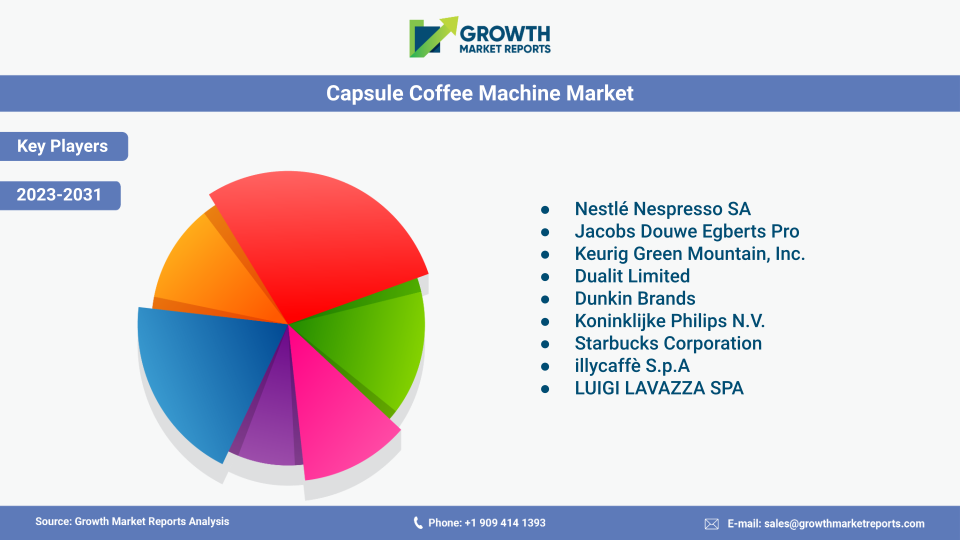
Key players in the global capsule coffee machine market include Nestlé Nespresso SA, Jacobs Douwe Egberts Pro, Keurig Green Mountain, Inc., Dualit Limited, Dunkin Brands, Koninklijke Philips N.V., Starbucks Corporation, illycaffè S.p.A, and LUIGI LAVAZZA SPA. Key players are using strategies such as mergers and acquisitions and new product launches to gain maximum market share. Additionally, companies are concentrating on increasing their production capacity and are implementing innovative technologies to fulfill the consumer demand for coffee capsule machines.

Capsule Coffee Machine Market Key Players

Frequently Asked Questions

Key trends include the adoption of smart and connected machines, a focus on sustainability and recyclable capsules, personalized coffee experiences, and the growth of subscription and direct-to-consumer sales models.

Major companies include Nestlé Nespresso S.A., Keurig Dr Pepper Inc., De’Longhi Group, Krups (Groupe SEB), Philips (Saeco), Bosch, Lavazza, Illycaffè S.p.A., and Dualit Limited.

Opportunities include innovation in eco-friendly capsules, smart technology integration, and expansion in emerging markets. Challenges include environmental concerns over single-use capsules and intense market competition.

The two main end-user segments are residential (households) and commercial (offices, hotels, restaurants). Residential users account for the largest share, but commercial adoption is rapidly increasing.

Distribution channels include online stores, supermarkets/hypermarkets, specialty stores, and others. Online stores are the fastest-growing channel due to the rise of e-commerce.

Capsule coffee machines are widely used in households, offices, hotels, restaurants, and other commercial settings. The household segment currently dominates the market.

The market is segmented into automatic, semi-automatic, and manual capsule coffee machines. Automatic machines are the most popular due to their convenience and advanced features.

Europe holds the largest market share, followed by North America and the Asia Pacific. The Asia Pacific region is expected to experience the fastest growth due to urbanization and rising middle-class incomes.

Key growth drivers include increasing consumer demand for convenience, premium home coffee experiences, rising disposable incomes, urbanization, and continuous innovation in capsule technology and machine design.

As of 2024, the global capsule coffee machine market is valued at USD 8.1 billion and is expected to reach USD 15.3 billion by 2033, growing at a CAGR of 7.2%.

Table Of Content

Chapter 1 Executive Summary
Chapter 2 Assumptions and Acronyms Used
Chapter 3 Research Methodology
Chapter 4 Capsule Coffee Machine Market Overview
   4.1 Introduction
      4.1.1 Market Taxonomy
      4.1.2 Market Definition
      4.1.3 Macro-Economic Factors Impacting the Market Growth
   4.2 Capsule Coffee Machine Market Dynamics
      4.2.1 Market Drivers
      4.2.2 Market Restraints
      4.2.3 Market Opportunity
   4.3 Capsule Coffee Machine Market - Supply Chain Analysis
      4.3.1 List of Key Suppliers
      4.3.2 List of Key Distributors
      4.3.3 List of Key Consumers
   4.4 Key Forces Shaping the Capsule Coffee Machine Market
      4.4.1 Bargaining Power of Suppliers
      4.4.2 Bargaining Power of Buyers
      4.4.3 Threat of Substitution
      4.4.4 Threat of New Entrants
      4.4.5 Competitive Rivalry
   4.5 Global Capsule Coffee Machine Market Size & Forecast, 2023-2032
      4.5.1 Capsule Coffee Machine Market Size and Y-o-Y Growth
      4.5.2 Capsule Coffee Machine Market Absolute $ Opportunity

Chapter 5 Global Capsule Coffee Machine Market Analysis and Forecast By Product Type
   5.1 Introduction
      5.1.1 Key Market Trends & Growth Opportunities By Product Type
      5.1.2 Basis Point Share (BPS) Analysis By Product Type
      5.1.3 Absolute $ Opportunity Assessment By Product Type
   5.2 Capsule Coffee Machine Market Size Forecast By Product Type
      5.2.1 Automatic Capsule Coffee Machines
      5.2.2 Semi-Automatic Capsule Coffee Machines
      5.2.3 Manual Capsule Coffee Machines
   5.3 Market Attractiveness Analysis By Product Type

Chapter 6 Global Capsule Coffee Machine Market Analysis and Forecast By Application
   6.1 Introduction
      6.1.1 Key Market Trends & Growth Opportunities By Application
      6.1.2 Basis Point Share (BPS) Analysis By Application
      6.1.3 Absolute $ Opportunity Assessment By Application
   6.2 Capsule Coffee Machine Market Size Forecast By Application
      6.2.1 Household
      6.2.2 Commercial
      6.2.3 Offices
      6.2.4 Hotels
      6.2.5 Others
   6.3 Market Attractiveness Analysis By Application

Chapter 7 Global Capsule Coffee Machine Market Analysis and Forecast By Distribution Channel
   7.1 Introduction
      7.1.1 Key Market Trends & Growth Opportunities By Distribution Channel
      7.1.2 Basis Point Share (BPS) Analysis By Distribution Channel
      7.1.3 Absolute $ Opportunity Assessment By Distribution Channel
   7.2 Capsule Coffee Machine Market Size Forecast By Distribution Channel
      7.2.1 Online Stores
      7.2.2 Supermarkets/Hypermarkets
      7.2.3 Specialty Stores
      7.2.4 Others
   7.3 Market Attractiveness Analysis By Distribution Channel

Chapter 8 Global Capsule Coffee Machine Market Analysis and Forecast By End-User
   8.1 Introduction
      8.1.1 Key Market Trends & Growth Opportunities By End-User
      8.1.2 Basis Point Share (BPS) Analysis By End-User
      8.1.3 Absolute $ Opportunity Assessment By End-User
   8.2 Capsule Coffee Machine Market Size Forecast By End-User
      8.2.1 Residential
      8.2.2 Commercial
   8.3 Market Attractiveness Analysis By End-User

Chapter 9 Global Capsule Coffee Machine Market Analysis and Forecast by Region
   9.1 Introduction
      9.1.1 Key Market Trends & Growth Opportunities By Region
      9.1.2 Basis Point Share (BPS) Analysis By Region
      9.1.3 Absolute $ Opportunity Assessment By Region
   9.2 Capsule Coffee Machine Market Size Forecast By Region
      9.2.1 North America
      9.2.2 Europe
      9.2.3 Asia Pacific
      9.2.4 Latin America
      9.2.5 Middle East & Africa (MEA)
   9.3 Market Attractiveness Analysis By Region

Chapter 10 Coronavirus Disease (COVID-19) Impact 
   10.1 Introduction 
   10.2 Current & Future Impact Analysis 
   10.3 Economic Impact Analysis 
   10.4 Government Policies 
   10.5 Investment Scenario

Chapter 11 North America Capsule Coffee Machine Analysis and Forecast
   11.1 Introduction
   11.2 North America Capsule Coffee Machine Market Size Forecast by Country
      11.2.1 U.S.
      11.2.2 Canada
   11.3 Basis Point Share (BPS) Analysis by Country
   11.4 Absolute $ Opportunity Assessment by Country
   11.5 Market Attractiveness Analysis by Country
   11.6 North America Capsule Coffee Machine Market Size Forecast By Product Type
      11.6.1 Automatic Capsule Coffee Machines
      11.6.2 Semi-Automatic Capsule Coffee Machines
      11.6.3 Manual Capsule Coffee Machines
   11.7 Basis Point Share (BPS) Analysis By Product Type 
   11.8 Absolute $ Opportunity Assessment By Product Type 
   11.9 Market Attractiveness Analysis By Product Type
   11.10 North America Capsule Coffee Machine Market Size Forecast By Application
      11.10.1 Household
      11.10.2 Commercial
      11.10.3 Offices
      11.10.4 Hotels
      11.10.5 Others
   11.11 Basis Point Share (BPS) Analysis By Application 
   11.12 Absolute $ Opportunity Assessment By Application 
   11.13 Market Attractiveness Analysis By Application
   11.14 North America Capsule Coffee Machine Market Size Forecast By Distribution Channel
      11.14.1 Online Stores
      11.14.2 Supermarkets/Hypermarkets
      11.14.3 Specialty Stores
      11.14.4 Others
   11.15 Basis Point Share (BPS) Analysis By Distribution Channel 
   11.16 Absolute $ Opportunity Assessment By Distribution Channel 
   11.17 Market Attractiveness Analysis By Distribution Channel
   11.18 North America Capsule Coffee Machine Market Size Forecast By End-User
      11.18.1 Residential
      11.18.2 Commercial
   11.19 Basis Point Share (BPS) Analysis By End-User 
   11.20 Absolute $ Opportunity Assessment By End-User 
   11.21 Market Attractiveness Analysis By End-User

Chapter 12 Europe Capsule Coffee Machine Analysis and Forecast
   12.1 Introduction
   12.2 Europe Capsule Coffee Machine Market Size Forecast by Country
      12.2.1 Germany
      12.2.2 France
      12.2.3 Italy
      12.2.4 U.K.
      12.2.5 Spain
      12.2.6 Russia
      12.2.7 Rest of Europe
   12.3 Basis Point Share (BPS) Analysis by Country
   12.4 Absolute $ Opportunity Assessment by Country
   12.5 Market Attractiveness Analysis by Country
   12.6 Europe Capsule Coffee Machine Market Size Forecast By Product Type
      12.6.1 Automatic Capsule Coffee Machines
      12.6.2 Semi-Automatic Capsule Coffee Machines
      12.6.3 Manual Capsule Coffee Machines
   12.7 Basis Point Share (BPS) Analysis By Product Type 
   12.8 Absolute $ Opportunity Assessment By Product Type 
   12.9 Market Attractiveness Analysis By Product Type
   12.10 Europe Capsule Coffee Machine Market Size Forecast By Application
      12.10.1 Household
      12.10.2 Commercial
      12.10.3 Offices
      12.10.4 Hotels
      12.10.5 Others
   12.11 Basis Point Share (BPS) Analysis By Application 
   12.12 Absolute $ Opportunity Assessment By Application 
   12.13 Market Attractiveness Analysis By Application
   12.14 Europe Capsule Coffee Machine Market Size Forecast By Distribution Channel
      12.14.1 Online Stores
      12.14.2 Supermarkets/Hypermarkets
      12.14.3 Specialty Stores
      12.14.4 Others
   12.15 Basis Point Share (BPS) Analysis By Distribution Channel 
   12.16 Absolute $ Opportunity Assessment By Distribution Channel 
   12.17 Market Attractiveness Analysis By Distribution Channel
   12.18 Europe Capsule Coffee Machine Market Size Forecast By End-User
      12.18.1 Residential
      12.18.2 Commercial
   12.19 Basis Point Share (BPS) Analysis By End-User 
   12.20 Absolute $ Opportunity Assessment By End-User 
   12.21 Market Attractiveness Analysis By End-User

Chapter 13 Asia Pacific Capsule Coffee Machine Analysis and Forecast
   13.1 Introduction
   13.2 Asia Pacific Capsule Coffee Machine Market Size Forecast by Country
      13.2.1 China
      13.2.2 Japan
      13.2.3 South Korea
      13.2.4 India
      13.2.5 Australia
      13.2.6 South East Asia (SEA)
      13.2.7 Rest of Asia Pacific (APAC)
   13.3 Basis Point Share (BPS) Analysis by Country
   13.4 Absolute $ Opportunity Assessment by Country
   13.5 Market Attractiveness Analysis by Country
   13.6 Asia Pacific Capsule Coffee Machine Market Size Forecast By Product Type
      13.6.1 Automatic Capsule Coffee Machines
      13.6.2 Semi-Automatic Capsule Coffee Machines
      13.6.3 Manual Capsule Coffee Machines
   13.7 Basis Point Share (BPS) Analysis By Product Type 
   13.8 Absolute $ Opportunity Assessment By Product Type 
   13.9 Market Attractiveness Analysis By Product Type
   13.10 Asia Pacific Capsule Coffee Machine Market Size Forecast By Application
      13.10.1 Household
      13.10.2 Commercial
      13.10.3 Offices
      13.10.4 Hotels
      13.10.5 Others
   13.11 Basis Point Share (BPS) Analysis By Application 
   13.12 Absolute $ Opportunity Assessment By Application 
   13.13 Market Attractiveness Analysis By Application
   13.14 Asia Pacific Capsule Coffee Machine Market Size Forecast By Distribution Channel
      13.14.1 Online Stores
      13.14.2 Supermarkets/Hypermarkets
      13.14.3 Specialty Stores
      13.14.4 Others
   13.15 Basis Point Share (BPS) Analysis By Distribution Channel 
   13.16 Absolute $ Opportunity Assessment By Distribution Channel 
   13.17 Market Attractiveness Analysis By Distribution Channel
   13.18 Asia Pacific Capsule Coffee Machine Market Size Forecast By End-User
      13.18.1 Residential
      13.18.2 Commercial
   13.19 Basis Point Share (BPS) Analysis By End-User 
   13.20 Absolute $ Opportunity Assessment By End-User 
   13.21 Market Attractiveness Analysis By End-User

Chapter 14 Latin America Capsule Coffee Machine Analysis and Forecast
   14.1 Introduction
   14.2 Latin America Capsule Coffee Machine Market Size Forecast by Country
      14.2.1 Brazil
      14.2.2 Mexico
      14.2.3 Rest of Latin America (LATAM)
   14.3 Basis Point Share (BPS) Analysis by Country
   14.4 Absolute $ Opportunity Assessment by Country
   14.5 Market Attractiveness Analysis by Country
   14.6 Latin America Capsule Coffee Machine Market Size Forecast By Product Type
      14.6.1 Automatic Capsule Coffee Machines
      14.6.2 Semi-Automatic Capsule Coffee Machines
      14.6.3 Manual Capsule Coffee Machines
   14.7 Basis Point Share (BPS) Analysis By Product Type 
   14.8 Absolute $ Opportunity Assessment By Product Type 
   14.9 Market Attractiveness Analysis By Product Type
   14.10 Latin America Capsule Coffee Machine Market Size Forecast By Application
      14.10.1 Household
      14.10.2 Commercial
      14.10.3 Offices
      14.10.4 Hotels
      14.10.5 Others
   14.11 Basis Point Share (BPS) Analysis By Application 
   14.12 Absolute $ Opportunity Assessment By Application 
   14.13 Market Attractiveness Analysis By Application
   14.14 Latin America Capsule Coffee Machine Market Size Forecast By Distribution Channel
      14.14.1 Online Stores
      14.14.2 Supermarkets/Hypermarkets
      14.14.3 Specialty Stores
      14.14.4 Others
   14.15 Basis Point Share (BPS) Analysis By Distribution Channel 
   14.16 Absolute $ Opportunity Assessment By Distribution Channel 
   14.17 Market Attractiveness Analysis By Distribution Channel
   14.18 Latin America Capsule Coffee Machine Market Size Forecast By End-User
      14.18.1 Residential
      14.18.2 Commercial
   14.19 Basis Point Share (BPS) Analysis By End-User 
   14.20 Absolute $ Opportunity Assessment By End-User 
   14.21 Market Attractiveness Analysis By End-User

Chapter 15 Middle East & Africa (MEA) Capsule Coffee Machine Analysis and Forecast
   15.1 Introduction
   15.2 Middle East & Africa (MEA) Capsule Coffee Machine Market Size Forecast by Country
      15.2.1 Saudi Arabia
      15.2.2 South Africa
      15.2.3 UAE
      15.2.4 Rest of Middle East & Africa (MEA)
   15.3 Basis Point Share (BPS) Analysis by Country
   15.4 Absolute $ Opportunity Assessment by Country
   15.5 Market Attractiveness Analysis by Country
   15.6 Middle East & Africa (MEA) Capsule Coffee Machine Market Size Forecast By Product Type
      15.6.1 Automatic Capsule Coffee Machines
      15.6.2 Semi-Automatic Capsule Coffee Machines
      15.6.3 Manual Capsule Coffee Machines
   15.7 Basis Point Share (BPS) Analysis By Product Type 
   15.8 Absolute $ Opportunity Assessment By Product Type 
   15.9 Market Attractiveness Analysis By Product Type
   15.10 Middle East & Africa (MEA) Capsule Coffee Machine Market Size Forecast By Application
      15.10.1 Household
      15.10.2 Commercial
      15.10.3 Offices
      15.10.4 Hotels
      15.10.5 Others
   15.11 Basis Point Share (BPS) Analysis By Application 
   15.12 Absolute $ Opportunity Assessment By Application 
   15.13 Market Attractiveness Analysis By Application
   15.14 Middle East & Africa (MEA) Capsule Coffee Machine Market Size Forecast By Distribution Channel
      15.14.1 Online Stores
      15.14.2 Supermarkets/Hypermarkets
      15.14.3 Specialty Stores
      15.14.4 Others
   15.15 Basis Point Share (BPS) Analysis By Distribution Channel 
   15.16 Absolute $ Opportunity Assessment By Distribution Channel 
   15.17 Market Attractiveness Analysis By Distribution Channel
   15.18 Middle East & Africa (MEA) Capsule Coffee Machine Market Size Forecast By End-User
      15.18.1 Residential
      15.18.2 Commercial
   15.19 Basis Point Share (BPS) Analysis By End-User 
   15.20 Absolute $ Opportunity Assessment By End-User 
   15.21 Market Attractiveness Analysis By End-User

Chapter 16 Competition Landscape 
   16.1 Capsule Coffee Machine Market: Competitive Dashboard
   16.2 Global Capsule Coffee Machine Market: Market Share Analysis, 2023
   16.3 Company Profiles (Details – Overview, Financials, Developments, Strategy) 
      16.3.1 Nestlé S.A.
Keurig Dr Pepper Inc.
JURA Elektroapparate AG
De'Longhi Appliances S.r.l.
Krups GmbH
illycaffè S.p.A.
Dualit Limited
Tchibo GmbH
Bosch Home Appliances
Philips (Royal Philips Electronics)
Groupe SEB
Caffitaly System S.p.A.
Bunn-O-Matic Corporation
Hamilton Beach Brands Holding Company
Melitta Group
Lavazza Group
Morphy Richards
Breville Group Limited
Panasonic Corporation
Tassimo (Jacobs Douwe Egberts)

Methodology

Our Clients

Deloitte
General Mills
Honda Motor Co. Ltd.
sinopec
Microsoft
General Electric
Nestle SA
The John Holland Group