Calcium Peroxide Market Research Report 2033

Calcium Peroxide Market Research Report 2033

Segments - by Product Type (Powder, Granular, Tablet), by Application (Agriculture, Environmental Restoration, Food Processing, Oral Care, Textile, Others), by End-Use Industry (Agriculture, Water Treatment, Food & Beverage, Pharmaceuticals, Others), by Distribution Channel (Direct, Indirect)

https://growthmarketreports.com/Raksha
Author : Raksha Sharma
https://growthmarketreports.com/Vaibhav
Fact-checked by : V. Chandola
https://growthmarketreports.com/Shruti
Editor : Shruti Bhat

Upcoming | Report ID :MC-843 | 4.6 Rating | 37 Reviews | 258 Pages | Format : Docx PDF

Report Description


Calcium Peroxide Market Outlook

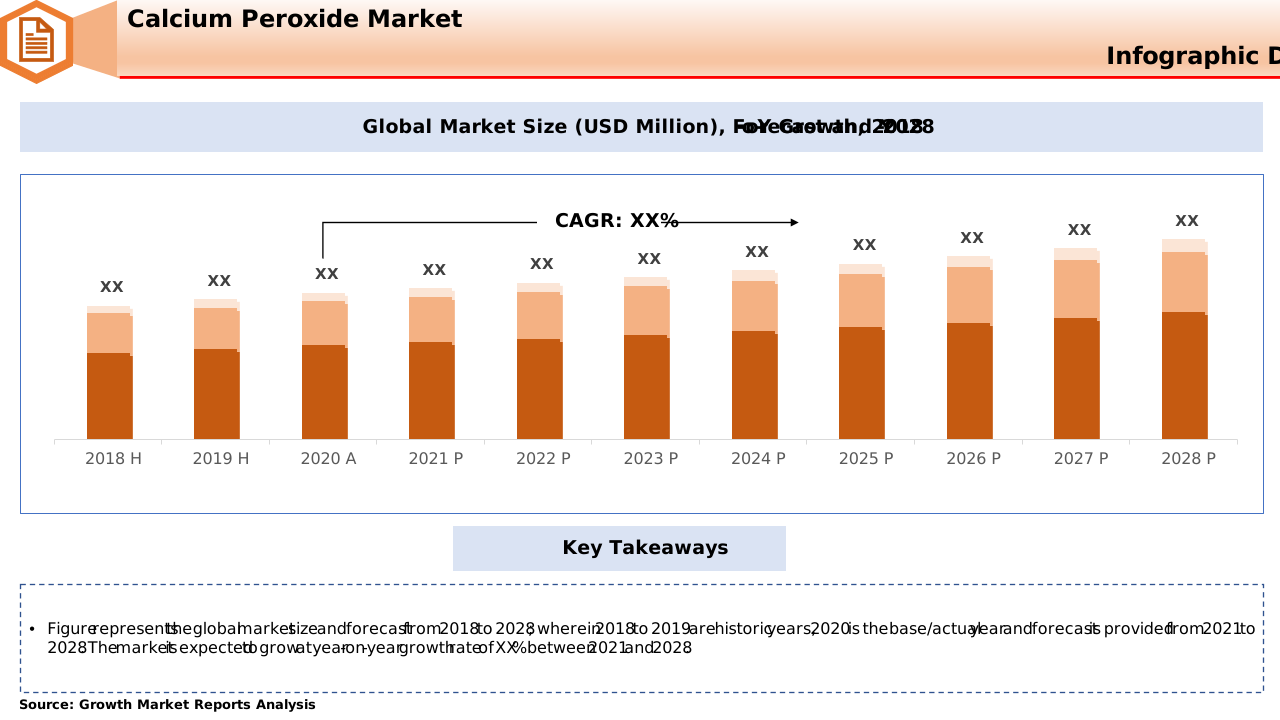
According to our latest research, the global calcium peroxide market size in 2024 stands at USD 2.13 billion, reflecting robust demand across various applications. The market is projected to expand at a CAGR of 4.7% from 2025 to 2033, reaching approximately USD 3.23 billion by the end of the forecast period. This growth is primarily fueled by the rising adoption of calcium peroxide in environmental remediation, agriculture, and water treatment, along with technological advancements in product formulations and growing regulatory emphasis on sustainable solutions.

The calcium peroxide market is experiencing significant momentum due to increasing awareness regarding environmental sustainability and the urgent need for eco-friendly soil and water remediation techniques. Calcium peroxide is widely recognized for its ability to release oxygen slowly, making it an effective agent for the bioremediation of contaminated soil and groundwater. With the global push towards reducing pollution and meeting stringent environmental regulations, industries and governments are investing heavily in remediation projects, thus driving the demand for calcium peroxide. Additionally, the agricultural sector is increasingly adopting calcium peroxide to enhance soil aeration and promote healthy crop growth, further boosting market expansion.

Another critical growth driver for the calcium peroxide market is its expanding application in food processing and oral care. In the food industry, calcium peroxide serves as a dough conditioner and preservative, ensuring product longevity and improved texture. As consumer preferences shift toward clean-label and additive-free products, manufacturers are leveraging calcium peroxideÂ’s non-toxic and safe profile to maintain product quality without compromising safety. Similarly, in oral care, calcium peroxide is used in toothpaste formulations for its gentle whitening and antibacterial properties, responding to the growing demand for oral hygiene products with natural ingredients. These trends are expected to sustain market growth over the coming years.

Technological advancements and product innovations are also shaping the trajectory of the calcium peroxide market. Manufacturers are focusing on developing high-purity and customized grades of calcium peroxide to cater to specific industrial needs, such as precision agriculture, advanced water treatment, and pharmaceutical formulations. The integration of calcium peroxide into novel delivery systems, such as controlled-release tablets and granules, is enhancing its efficacy and broadening its application scope. Furthermore, collaborations between industry players, research institutions, and regulatory bodies are fostering innovation and facilitating the adoption of calcium peroxide in emerging markets, thereby contributing to the overall market growth.

From a regional perspective, Asia Pacific remains the dominant market for calcium peroxide, driven by rapid industrialization, agricultural modernization, and increasing investments in environmental restoration projects. China and India, in particular, are witnessing heightened demand due to their large-scale agricultural activities and growing focus on sustainable practices. North America and Europe are also significant contributors, benefiting from stringent environmental regulations and advanced technological infrastructure. Meanwhile, Latin America and the Middle East & Africa are emerging as promising markets, supported by government initiatives aimed at improving water quality and food security. The regional diversity in demand and application underscores the global relevance and growth potential of the calcium peroxide market.

In the realm of chemical compounds, Peroxocarbonates are gaining attention for their potential applications in various industrial processes. These compounds, characterized by the presence of a peroxide group bonded to a carbonate, exhibit unique properties that make them suitable for use in environmental and industrial applications. The ability of peroxocarbonates to release oxygen in a controlled manner is particularly beneficial in processes that require oxidation or bleaching. As industries continue to seek sustainable and efficient chemical solutions, the exploration of peroxocarbonates could offer promising avenues for innovation and development, complementing the existing uses of calcium peroxide in similar domains.

Global Calcium Peroxide Industry Outlook

Product Type Analysis

The product type segment of the calcium peroxide market is categorized into powder, granular, and tablet forms, each offering unique advantages and catering to distinct end-user requirements. Powdered calcium peroxide is the most widely used form due to its high reactivity and ease of dispersion in various applications. It is particularly favored in agriculture and environmental remediation, where rapid oxygen release is essential for soil aeration and contaminant degradation. The fine particle size of powder enables uniform application and efficient interaction with target substrates, making it a preferred choice for large-scale projects. Manufacturers are continually refining production processes to enhance the purity and performance of powdered calcium peroxide, thereby meeting the stringent quality standards of diverse industries.

Granular calcium peroxide is gaining traction for its controlled-release properties and ease of handling. Unlike powder, granular forms are less prone to dust formation and offer a more gradual release of oxygen, which is advantageous in applications requiring sustained action, such as groundwater remediation and slow-release fertilizers. The granular format is particularly popular in water treatment facilities, where it can be easily dosed and managed without the risk of over-application. As industries seek solutions that combine efficacy with operational convenience, the demand for granular calcium peroxide is expected to rise steadily, supported by ongoing innovations in granulation technology and product formulation.

The tablet form of calcium peroxide represents a niche but rapidly growing segment, especially in specialized applications such as pharmaceuticals, oral care, and precision agriculture. Tablets offer precise dosing, minimal wastage, and enhanced safety during handling and transportation. In oral care, for example, calcium peroxide tablets are incorporated into whitening products and mouthwashes, providing controlled oxygen release for effective cleaning and stain removal. Similarly, in agriculture, tablet formulations are used for targeted soil treatment, ensuring consistent oxygenation over extended periods. As end-users increasingly prioritize product performance and user safety, the tablet segment is poised for robust growth, supported by advancements in tablet manufacturing and packaging technologies.

The competitive landscape within the product type segment is characterized by continuous innovation and differentiation strategies. Leading manufacturers are investing in research and development to create value-added products that address specific industry challenges, such as enhanced stability, improved solubility, and reduced environmental impact. Customization and flexibility in product offerings are becoming key differentiators, enabling companies to capture a broader customer base and respond swiftly to changing market demands. As regulatory standards evolve and end-user expectations rise, the ability to deliver high-quality, application-specific calcium peroxide products will be crucial for sustained market leadership.

Report Scope

Attributes Details
Report Title Calcium Peroxide Market Research Report 2033
By Product Type Powder, Granular, Tablet
By Application Agriculture, Environmental Restoration, Food Processing, Oral Care, Textile, Others
By End-Use Industry Agriculture, Water Treatment, Food & Beverage, Pharmaceuticals, Others
By Distribution Channel Direct, Indirect
Regions Covered North America, Europe, APAC, Latin America, MEA
Base Year 2024
Historic Data 2018-2023
Forecast Period 2025-2033
Number of Pages 258
Number of Tables & Figures 314
Customization Available Yes, the report can be customized as per your need.

Application Analysis

The application segment of the calcium peroxide market encompasses agriculture, environmental restoration, food processing, oral care, textile, and other niche uses. In agriculture, calcium peroxide is primarily used to enhance soil oxygenation, promote root development, and mitigate the effects of soil-borne pathogens. Its slow-release oxygen properties make it ideal for improving soil health and supporting sustainable farming practices. As global food demand rises and agricultural productivity becomes increasingly critical, the adoption of calcium peroxide as a soil amendment is expected to grow, particularly in regions with intensive farming and challenging soil conditions.

Environmental restoration represents a major growth area for calcium peroxide, driven by the escalating need for effective soil and groundwater remediation solutions. Calcium peroxide is widely utilized in in-situ chemical oxidation (ISCO) processes, where it serves as an oxygen source for the biodegradation of organic contaminants. Its ability to deliver oxygen gradually ensures prolonged activity and enhanced remediation outcomes, making it a preferred choice for treating petroleum hydrocarbons, chlorinated solvents, and other persistent pollutants. As governments and industries intensify their efforts to address environmental contamination, the demand for calcium peroxide in restoration projects is expected to surge, supported by favorable regulatory frameworks and public awareness initiatives.

In the food processing sector, calcium peroxide plays a crucial role as a dough conditioner, flour bleaching agent, and preservative. Its use helps improve dough strength, texture, and shelf life, aligning with the food industryÂ’s focus on quality, safety, and clean-label ingredients. As consumers become more health-conscious and regulatory agencies emphasize food safety, manufacturers are increasingly incorporating calcium peroxide into their formulations to meet evolving market demands. The versatility and non-toxic nature of calcium peroxide make it an attractive option for a wide range of food applications, from bakery products to processed foods.

The oral care and textile industries also contribute to the expanding application base of calcium peroxide. In oral care, it is used in toothpaste, mouthwash, and whitening products for its gentle bleaching and antibacterial properties. The growing demand for natural and effective oral hygiene solutions is driving innovation in product development, with calcium peroxide emerging as a key ingredient. In textiles, calcium peroxide is employed as a bleaching agent, offering an eco-friendly alternative to conventional chemicals. Its ability to provide consistent and high-quality bleaching results while minimizing environmental impact is attracting the attention of textile manufacturers seeking sustainable solutions.

End-Use Industry Analysis

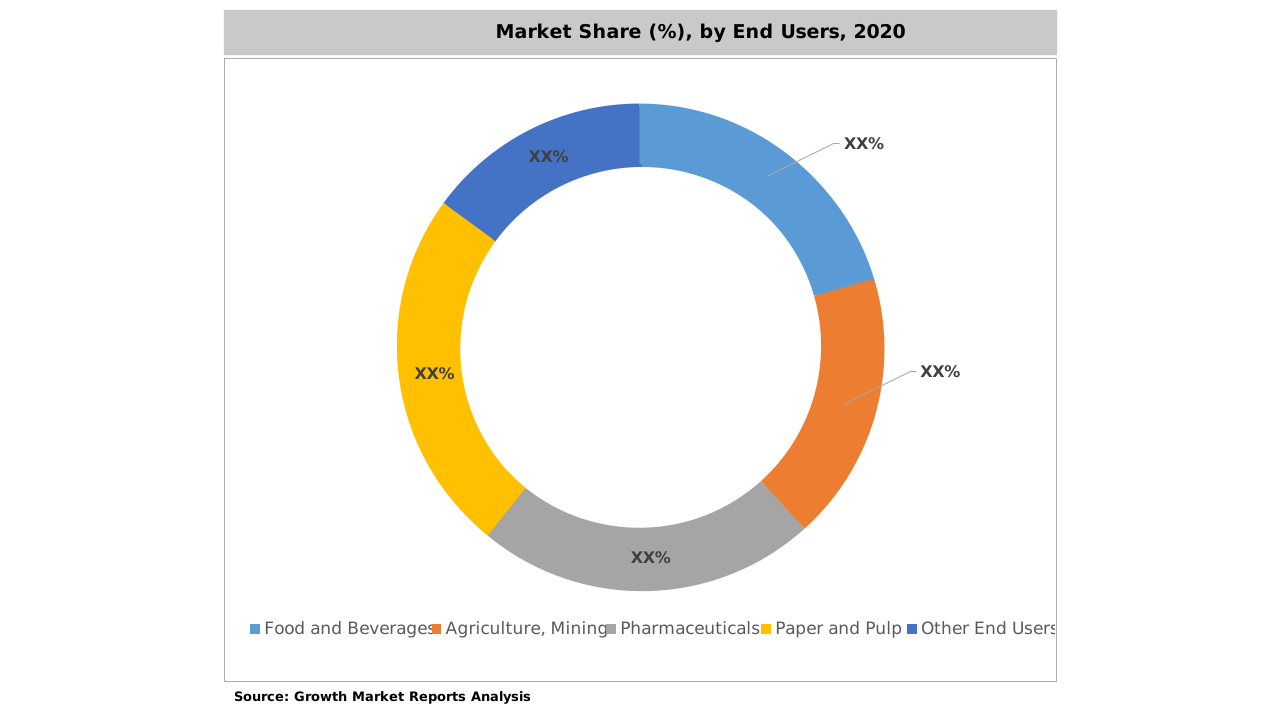
The end-use industry segment of the calcium peroxide market includes agriculture, water treatment, food and beverage, pharmaceuticals, and other industries. Agriculture remains the largest end-user, leveraging calcium peroxide for soil improvement, disease control, and crop yield enhancement. The increasing adoption of sustainable farming practices and the need to address soil degradation are key factors driving demand in this sector. Calcium peroxideÂ’s ability to release oxygen slowly and improve soil health aligns with the objectives of modern agriculture, making it an indispensable input for farmers and agribusinesses worldwide.

Water treatment is another prominent end-use industry, with calcium peroxide being used to remediate contaminated groundwater, treat industrial effluents, and improve water quality in municipal systems. Its oxidative properties enable the breakdown of organic pollutants and the removal of heavy metals, supporting compliance with environmental regulations and public health standards. As concerns over water scarcity and pollution intensify, the role of calcium peroxide in water treatment is expected to expand, driven by investments in infrastructure and the adoption of advanced treatment technologies.

In the food and beverage sector, calcium peroxide is valued for its multifunctional benefits, including dough conditioning, bleaching, and preservation. The trend toward clean-label and minimally processed foods is boosting the use of calcium peroxide as a safe and effective additive. Manufacturers are focusing on product innovation to meet consumer preferences for natural and healthy ingredients, positioning calcium peroxide as a key enabler of quality and safety in food production. The sectorÂ’s steady growth, coupled with evolving regulatory standards, will continue to drive demand for calcium peroxide in food and beverage applications.

The pharmaceutical industry is an emerging end-user of calcium peroxide, utilizing it in formulations for controlled oxygen release, wound care, and oral hygiene products. The compoundÂ’s biocompatibility and non-toxicity make it suitable for medical and dental applications, where safety and efficacy are paramount. As research advances and new therapeutic uses are discovered, the pharmaceutical segment is expected to offer significant growth opportunities for calcium peroxide manufacturers. Other industries, such as textiles and environmental services, also contribute to the marketÂ’s diversity, reflecting the broad applicability and versatility of calcium peroxide across multiple domains.

Distribution Channel Analysis

The distribution channel segment of the calcium peroxide market is divided into direct and indirect channels, each playing a distinct role in product accessibility and customer engagement. Direct distribution involves manufacturers selling calcium peroxide directly to end-users, such as large agricultural enterprises, water treatment facilities, and food processing companies. This channel enables greater control over pricing, quality assurance, and customer relationships, making it ideal for high-volume transactions and customized solutions. Direct distribution is particularly prevalent in regions with established industrial infrastructure and strong manufacturer-end user linkages.

Indirect distribution encompasses sales through intermediaries such as distributors, wholesalers, and retailers. This channel is essential for reaching small and medium-sized enterprises (SMEs), remote markets, and customers with diverse product requirements. Indirect distribution offers manufacturers the advantage of expanded market reach and reduced logistical complexities, while intermediaries provide value-added services such as technical support, product customization, and after-sales service. The growing importance of e-commerce and digital platforms is also transforming the indirect distribution landscape, enabling real-time product availability and streamlined order processing.

The choice of distribution channel is influenced by factors such as product type, end-user preferences, market maturity, and regulatory requirements. In mature markets with sophisticated supply chains, direct distribution is often favored for its efficiency and reliability. In contrast, emerging markets with fragmented demand and limited infrastructure tend to rely more on indirect channels to ensure product availability and customer support. Manufacturers are increasingly adopting hybrid distribution strategies, combining the strengths of both channels to optimize market coverage and operational efficiency.

As competition intensifies and customer expectations evolve, the role of distribution channels in shaping the calcium peroxide market is becoming more strategic. Manufacturers are investing in supply chain optimization, digitalization, and partnership development to enhance their distribution capabilities and deliver superior value to customers. The ability to provide timely, cost-effective, and customized solutions through efficient distribution networks will be a key determinant of success in the dynamic and competitive calcium peroxide market.

Opportunities & Threats

The calcium peroxide market presents numerous opportunities for growth and innovation, particularly in the context of environmental sustainability and regulatory compliance. The increasing emphasis on green chemistry and the adoption of eco-friendly remediation technologies are creating new avenues for calcium peroxide in soil and groundwater treatment. As governments and industries intensify their efforts to address pollution and restore contaminated sites, the demand for advanced, non-toxic, and effective remediation agents is expected to rise. Calcium peroxideÂ’s unique oxygen-releasing properties position it as an ideal solution for a wide range of environmental challenges, offering significant growth potential for manufacturers and service providers.

Another major opportunity lies in the expanding application of calcium peroxide in the food, pharmaceutical, and oral care industries. The shift toward clean-label products and natural ingredients is driving demand for safe, multifunctional additives like calcium peroxide. Manufacturers are investing in research and development to create high-purity, application-specific grades of calcium peroxide that meet the stringent quality and safety standards of these industries. The growing popularity of health and wellness products, coupled with regulatory support for innovative food and pharmaceutical formulations, is expected to create lucrative opportunities for market players over the forecast period.

Despite the favorable outlook, the calcium peroxide market faces certain restraining factors, primarily related to raw material availability, production costs, and regulatory challenges. The price volatility of key raw materials, such as calcium carbonate and hydrogen peroxide, can impact the cost structure and profitability of manufacturers. Additionally, stringent regulations governing the use of chemical additives in food, agriculture, and environmental applications may pose compliance challenges and limit market penetration in certain regions. Addressing these challenges will require continuous innovation, supply chain optimization, and proactive engagement with regulatory authorities to ensure sustainable and responsible market growth.

Regional Outlook

The Asia Pacific region dominates the global calcium peroxide market, accounting for approximately 38% of the total market share in 2024, with a market size of around USD 0.81 billion. The regionÂ’s leadership is attributed to rapid industrialization, agricultural modernization, and increasing investments in environmental restoration projects, particularly in China and India. The growing demand for sustainable agricultural inputs, coupled with government initiatives to improve soil and water quality, is driving the adoption of calcium peroxide across various end-use industries. The Asia Pacific market is expected to maintain a strong growth trajectory, supported by a CAGR of 5.2% over the forecast period, as infrastructure development and environmental awareness continue to rise.

North America and Europe are also significant contributors to the global calcium peroxide market, with market sizes of USD 0.54 billion and USD 0.47 billion respectively in 2024. These regions benefit from advanced technological infrastructure, stringent environmental regulations, and a high level of awareness regarding sustainable practices. In North America, the focus on groundwater remediation, food safety, and clean-label products is driving demand for calcium peroxide in environmental, food, and pharmaceutical applications. Europe, on the other hand, is witnessing increased adoption in agriculture and water treatment, supported by robust regulatory frameworks and a strong commitment to sustainability. Both regions are expected to exhibit steady growth, driven by ongoing innovation and regulatory support.

The Latin America and Middle East & Africa regions, with market sizes of USD 0.18 billion and USD 0.13 billion respectively in 2024, are emerging as promising markets for calcium peroxide. In Latin America, the emphasis on improving agricultural productivity and addressing water scarcity is fueling demand, while in the Middle East & Africa, government initiatives aimed at environmental restoration and food security are creating new growth opportunities. Although these regions currently represent a smaller share of the global market, their growth potential is significant, supported by favorable demographic trends, economic development, and increasing awareness of sustainable solutions.

Calcium Peroxide Market Statistics

Competitor Outlook

The calcium peroxide market is characterized by a competitive landscape featuring both global and regional players striving to enhance their market position through product innovation, strategic partnerships, and capacity expansions. Leading companies are investing in research and development to create high-purity, application-specific calcium peroxide products that cater to the evolving needs of end-users across various industries. The focus on sustainability, quality assurance, and regulatory compliance is driving manufacturers to adopt advanced production technologies and implement stringent quality control measures. As competition intensifies, companies are differentiating themselves by offering customized solutions, superior technical support, and value-added services to build long-term customer relationships and secure a competitive edge.

Mergers, acquisitions, and collaborations are becoming increasingly common in the calcium peroxide market, as companies seek to expand their product portfolios, enhance their technological capabilities, and enter new geographic markets. Strategic alliances with research institutions, government agencies, and industry associations are facilitating knowledge sharing, innovation, and market access, enabling companies to stay ahead of emerging trends and regulatory developments. The ability to adapt to changing market dynamics, anticipate customer needs, and respond swiftly to regulatory changes will be critical for sustained success in the highly competitive calcium peroxide market.

The market is also witnessing the entry of new players, particularly in emerging regions, attracted by the growing demand for sustainable solutions and the relatively low entry barriers compared to other specialty chemicals. These new entrants are focusing on niche applications, cost-effective production methods, and innovative distribution strategies to carve out a share of the market. However, established players continue to dominate the landscape, leveraging their extensive experience, technical expertise, and global reach to maintain their leadership positions.

Major companies operating in the global calcium peroxide market include Solvay S.A., American Elements, Shandong Tianyuan Chemical Co., Ltd., Carus Group Inc., Shreeji Aqua Treatment Pvt. Ltd., Zibo Honghe Chemical Co., Ltd., Jiangxi Boholy Chemical Co., Ltd., and Haoyuan Chemexpress. Solvay S.A. is renowned for its extensive product portfolio and commitment to sustainability, while American Elements is recognized for its high-purity calcium peroxide products tailored to research and industrial applications. Shandong Tianyuan Chemical and Zibo Honghe Chemical are leading suppliers in the Asia Pacific region, focusing on large-scale production and cost competitiveness. Carus Group Inc. and Shreeji Aqua Treatment are notable for their expertise in water treatment and environmental solutions, offering innovative products and technical support to a global customer base.

These companies are continuously investing in capacity expansions, technological upgrades, and market development initiatives to strengthen their competitive positions and capture emerging opportunities. Their ability to deliver high-quality, customized calcium peroxide solutions, backed by robust supply chains and technical expertise, will be instrumental in shaping the future of the global calcium peroxide market. As the market evolves, collaboration, innovation, and a strong focus on sustainability will remain the key drivers of success for both established players and new entrants.

Key Players

  • Solvay S.A.
  • American Elements
  • Shandong Huatai Interox Chemical Co., Ltd.
  • Evonik Industries AG
  • Carus Group Inc.
  • Shreeji Chemical Industries
  • Zhonglan Industry Co., Ltd.
  • Jiangxi Boholy Chemical Co., Ltd.
  • Muby Chemicals
  • Hunan Lijie Environmental Protection Material Co., Ltd.
  • Weifang Yuanye Chemical Co., Ltd.
  • Jinan Yuxing Chemical Co., Ltd.
  • Shandong Lianmeng Chemical Group Co., Ltd.
  • Hefei TNJ Chemical Industry Co., Ltd.
  • Shanghai Honghao Chemicals Co., Ltd.
  • Shandong Xinhong Chemical Co., Ltd.
  • Shandong Sunshine Chemical Co., Ltd.
  • Shijiazhuang Xinlongwei Chemical Co., Ltd.
  • Henan Hongye Chemical Company Ltd.
  • Shandong Jinke Chemical Co., Ltd.
Calcium Peroxide Market Overview

Segments

The Calcium Peroxide market has been segmented on the basis of

Product Type

  • Powder
  • Granular
  • Tablet

Application

  • Agriculture
  • Environmental Restoration
  • Food Processing
  • Oral Care
  • Textile
  • Others

End-Use Industry

  • Agriculture
  • Water Treatment
  • Food & Beverage
  • Pharmaceuticals
  • Others

Distribution Channel

  • Direct
  • Indirect

Competitive Landscape

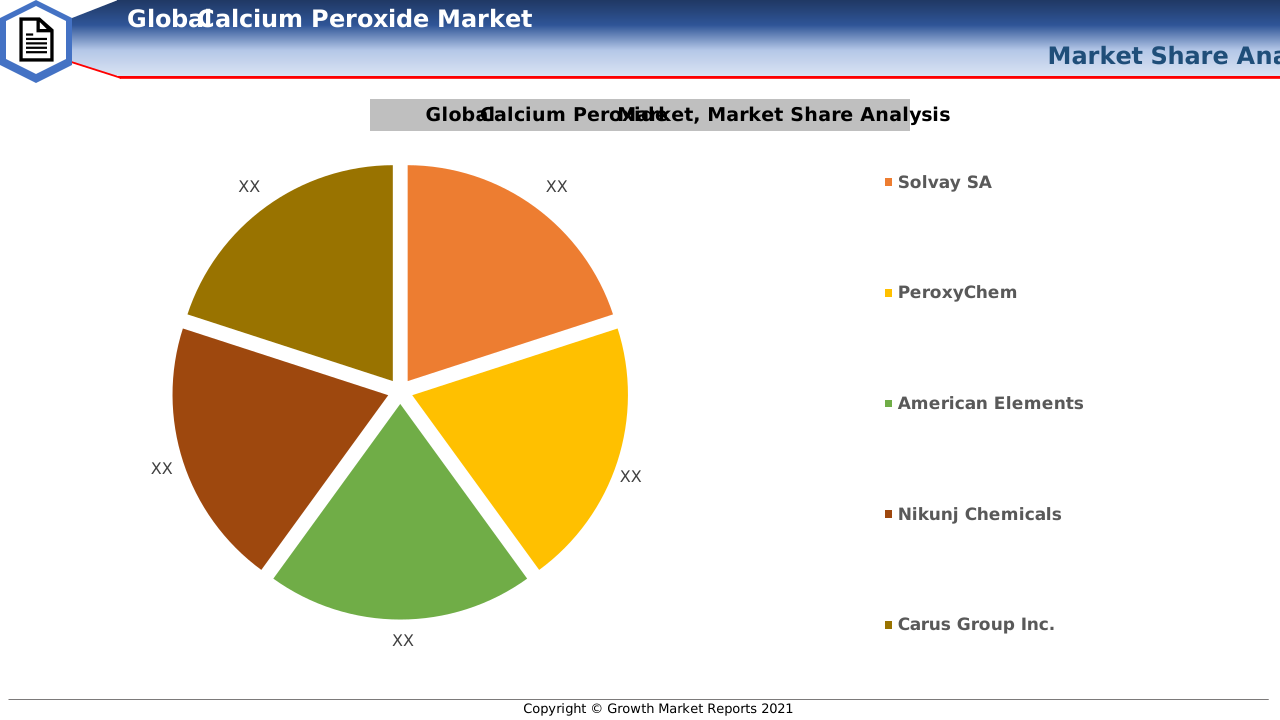
Key players competing in the calcium peroxide market include Solvay SA, PeroxyChem, American Elements, Nikunj Chemicals, and Carus Group Inc.

The calcium peroxide market is partially integrated, and only a few companies share most of the market. Companies are engaging in mergers, acquisitions, and partnerships to extend their market share. Moreover they are focusing on expanding their product portfolio to leverage their market position.

 Calcium Peroxide Market By Key Players

Frequently Asked Questions

The calcium peroxide market is projected to grow at a CAGR of 4.7% from 2025 to 2033.

Major companies include Solvay S.A., American Elements, Shandong Tianyuan Chemical Co., Ltd., Carus Group Inc., Shreeji Aqua Treatment Pvt. Ltd., Zibo Honghe Chemical Co., Ltd., and Jiangxi Boholy Chemical Co., Ltd.

Challenges include raw material price volatility, production costs, and stringent regulations regarding chemical additives in food, agriculture, and environmental applications.

Major end-use industries include agriculture, water treatment, food & beverage, pharmaceuticals, and textiles.

In environmental remediation, calcium peroxide is used for in-situ chemical oxidation (ISCO) to release oxygen slowly, aiding the biodegradation of organic contaminants in soil and groundwater.

Calcium peroxide is available in powder, granular, and tablet forms. Powder is widely used for its high reactivity, granular for controlled-release applications, and tablets for precise dosing in specialized uses.

Asia Pacific leads the market, especially China and India, due to rapid industrialization and agricultural modernization. North America and Europe are also significant markets, while Latin America and the Middle East & Africa are emerging regions.

Calcium peroxide is used in agriculture (soil oxygenation and crop growth), environmental restoration (soil and groundwater remediation), food processing (dough conditioner and preservative), oral care (toothpaste and whitening), and textiles (bleaching agent).

Key growth drivers include rising adoption in environmental remediation, agriculture, and water treatment, technological advancements, and increased regulatory emphasis on sustainable solutions.

As of 2024, the global calcium peroxide market size stands at USD 2.13 billion, with projections to reach approximately USD 3.23 billion by 2033.

Table Of Content

Chapter 1 Executive Summary
Chapter 2 Assumptions and Acronyms Used
Chapter 3 Research Methodology
Chapter 4 Calcium Peroxide Market Overview
   4.1 Introduction
      4.1.1 Market Taxonomy
      4.1.2 Market Definition
      4.1.3 Macro-Economic Factors Impacting the Market Growth
   4.2 Calcium Peroxide Market Dynamics
      4.2.1 Market Drivers
      4.2.2 Market Restraints
      4.2.3 Market Opportunity
   4.3 Calcium Peroxide Market - Supply Chain Analysis
      4.3.1 List of Key Suppliers
      4.3.2 List of Key Distributors
      4.3.3 List of Key Consumers
   4.4 Key Forces Shaping the Calcium Peroxide Market
      4.4.1 Bargaining Power of Suppliers
      4.4.2 Bargaining Power of Buyers
      4.4.3 Threat of Substitution
      4.4.4 Threat of New Entrants
      4.4.5 Competitive Rivalry
   4.5 Global Calcium Peroxide Market Size & Forecast, 2023-2032
      4.5.1 Calcium Peroxide Market Size and Y-o-Y Growth
      4.5.2 Calcium Peroxide Market Absolute $ Opportunity

Chapter 5 Global Calcium Peroxide Market Analysis and Forecast By Product Type
   5.1 Introduction
      5.1.1 Key Market Trends & Growth Opportunities By Product Type
      5.1.2 Basis Point Share (BPS) Analysis By Product Type
      5.1.3 Absolute $ Opportunity Assessment By Product Type
   5.2 Calcium Peroxide Market Size Forecast By Product Type
      5.2.1 Powder
      5.2.2 Granular
      5.2.3 Tablet
   5.3 Market Attractiveness Analysis By Product Type

Chapter 6 Global Calcium Peroxide Market Analysis and Forecast By Application
   6.1 Introduction
      6.1.1 Key Market Trends & Growth Opportunities By Application
      6.1.2 Basis Point Share (BPS) Analysis By Application
      6.1.3 Absolute $ Opportunity Assessment By Application
   6.2 Calcium Peroxide Market Size Forecast By Application
      6.2.1 Agriculture
      6.2.2 Environmental Restoration
      6.2.3 Food Processing
      6.2.4 Oral Care
      6.2.5 Textile
      6.2.6 Others
   6.3 Market Attractiveness Analysis By Application

Chapter 7 Global Calcium Peroxide Market Analysis and Forecast By End-Use Industry
   7.1 Introduction
      7.1.1 Key Market Trends & Growth Opportunities By End-Use Industry
      7.1.2 Basis Point Share (BPS) Analysis By End-Use Industry
      7.1.3 Absolute $ Opportunity Assessment By End-Use Industry
   7.2 Calcium Peroxide Market Size Forecast By End-Use Industry
      7.2.1 Agriculture
      7.2.2 Water Treatment
      7.2.3 Food & Beverage
      7.2.4 Pharmaceuticals
      7.2.5 Others
   7.3 Market Attractiveness Analysis By End-Use Industry

Chapter 8 Global Calcium Peroxide Market Analysis and Forecast By Distribution Channel
   8.1 Introduction
      8.1.1 Key Market Trends & Growth Opportunities By Distribution Channel
      8.1.2 Basis Point Share (BPS) Analysis By Distribution Channel
      8.1.3 Absolute $ Opportunity Assessment By Distribution Channel
   8.2 Calcium Peroxide Market Size Forecast By Distribution Channel
      8.2.1 Direct
      8.2.2 Indirect
   8.3 Market Attractiveness Analysis By Distribution Channel

Chapter 9 Global Calcium Peroxide Market Analysis and Forecast by Region
   9.1 Introduction
      9.1.1 Key Market Trends & Growth Opportunities By Region
      9.1.2 Basis Point Share (BPS) Analysis By Region
      9.1.3 Absolute $ Opportunity Assessment By Region
   9.2 Calcium Peroxide Market Size Forecast By Region
      9.2.1 North America
      9.2.2 Europe
      9.2.3 Asia Pacific
      9.2.4 Latin America
      9.2.5 Middle East & Africa (MEA)
   9.3 Market Attractiveness Analysis By Region

Chapter 10 Coronavirus Disease (COVID-19) Impact 
   10.1 Introduction 
   10.2 Current & Future Impact Analysis 
   10.3 Economic Impact Analysis 
   10.4 Government Policies 
   10.5 Investment Scenario

Chapter 11 North America Calcium Peroxide Analysis and Forecast
   11.1 Introduction
   11.2 North America Calcium Peroxide Market Size Forecast by Country
      11.2.1 U.S.
      11.2.2 Canada
   11.3 Basis Point Share (BPS) Analysis by Country
   11.4 Absolute $ Opportunity Assessment by Country
   11.5 Market Attractiveness Analysis by Country
   11.6 North America Calcium Peroxide Market Size Forecast By Product Type
      11.6.1 Powder
      11.6.2 Granular
      11.6.3 Tablet
   11.7 Basis Point Share (BPS) Analysis By Product Type 
   11.8 Absolute $ Opportunity Assessment By Product Type 
   11.9 Market Attractiveness Analysis By Product Type
   11.10 North America Calcium Peroxide Market Size Forecast By Application
      11.10.1 Agriculture
      11.10.2 Environmental Restoration
      11.10.3 Food Processing
      11.10.4 Oral Care
      11.10.5 Textile
      11.10.6 Others
   11.11 Basis Point Share (BPS) Analysis By Application 
   11.12 Absolute $ Opportunity Assessment By Application 
   11.13 Market Attractiveness Analysis By Application
   11.14 North America Calcium Peroxide Market Size Forecast By End-Use Industry
      11.14.1 Agriculture
      11.14.2 Water Treatment
      11.14.3 Food & Beverage
      11.14.4 Pharmaceuticals
      11.14.5 Others
   11.15 Basis Point Share (BPS) Analysis By End-Use Industry 
   11.16 Absolute $ Opportunity Assessment By End-Use Industry 
   11.17 Market Attractiveness Analysis By End-Use Industry
   11.18 North America Calcium Peroxide Market Size Forecast By Distribution Channel
      11.18.1 Direct
      11.18.2 Indirect
   11.19 Basis Point Share (BPS) Analysis By Distribution Channel 
   11.20 Absolute $ Opportunity Assessment By Distribution Channel 
   11.21 Market Attractiveness Analysis By Distribution Channel

Chapter 12 Europe Calcium Peroxide Analysis and Forecast
   12.1 Introduction
   12.2 Europe Calcium Peroxide Market Size Forecast by Country
      12.2.1 Germany
      12.2.2 France
      12.2.3 Italy
      12.2.4 U.K.
      12.2.5 Spain
      12.2.6 Russia
      12.2.7 Rest of Europe
   12.3 Basis Point Share (BPS) Analysis by Country
   12.4 Absolute $ Opportunity Assessment by Country
   12.5 Market Attractiveness Analysis by Country
   12.6 Europe Calcium Peroxide Market Size Forecast By Product Type
      12.6.1 Powder
      12.6.2 Granular
      12.6.3 Tablet
   12.7 Basis Point Share (BPS) Analysis By Product Type 
   12.8 Absolute $ Opportunity Assessment By Product Type 
   12.9 Market Attractiveness Analysis By Product Type
   12.10 Europe Calcium Peroxide Market Size Forecast By Application
      12.10.1 Agriculture
      12.10.2 Environmental Restoration
      12.10.3 Food Processing
      12.10.4 Oral Care
      12.10.5 Textile
      12.10.6 Others
   12.11 Basis Point Share (BPS) Analysis By Application 
   12.12 Absolute $ Opportunity Assessment By Application 
   12.13 Market Attractiveness Analysis By Application
   12.14 Europe Calcium Peroxide Market Size Forecast By End-Use Industry
      12.14.1 Agriculture
      12.14.2 Water Treatment
      12.14.3 Food & Beverage
      12.14.4 Pharmaceuticals
      12.14.5 Others
   12.15 Basis Point Share (BPS) Analysis By End-Use Industry 
   12.16 Absolute $ Opportunity Assessment By End-Use Industry 
   12.17 Market Attractiveness Analysis By End-Use Industry
   12.18 Europe Calcium Peroxide Market Size Forecast By Distribution Channel
      12.18.1 Direct
      12.18.2 Indirect
   12.19 Basis Point Share (BPS) Analysis By Distribution Channel 
   12.20 Absolute $ Opportunity Assessment By Distribution Channel 
   12.21 Market Attractiveness Analysis By Distribution Channel

Chapter 13 Asia Pacific Calcium Peroxide Analysis and Forecast
   13.1 Introduction
   13.2 Asia Pacific Calcium Peroxide Market Size Forecast by Country
      13.2.1 China
      13.2.2 Japan
      13.2.3 South Korea
      13.2.4 India
      13.2.5 Australia
      13.2.6 South East Asia (SEA)
      13.2.7 Rest of Asia Pacific (APAC)
   13.3 Basis Point Share (BPS) Analysis by Country
   13.4 Absolute $ Opportunity Assessment by Country
   13.5 Market Attractiveness Analysis by Country
   13.6 Asia Pacific Calcium Peroxide Market Size Forecast By Product Type
      13.6.1 Powder
      13.6.2 Granular
      13.6.3 Tablet
   13.7 Basis Point Share (BPS) Analysis By Product Type 
   13.8 Absolute $ Opportunity Assessment By Product Type 
   13.9 Market Attractiveness Analysis By Product Type
   13.10 Asia Pacific Calcium Peroxide Market Size Forecast By Application
      13.10.1 Agriculture
      13.10.2 Environmental Restoration
      13.10.3 Food Processing
      13.10.4 Oral Care
      13.10.5 Textile
      13.10.6 Others
   13.11 Basis Point Share (BPS) Analysis By Application 
   13.12 Absolute $ Opportunity Assessment By Application 
   13.13 Market Attractiveness Analysis By Application
   13.14 Asia Pacific Calcium Peroxide Market Size Forecast By End-Use Industry
      13.14.1 Agriculture
      13.14.2 Water Treatment
      13.14.3 Food & Beverage
      13.14.4 Pharmaceuticals
      13.14.5 Others
   13.15 Basis Point Share (BPS) Analysis By End-Use Industry 
   13.16 Absolute $ Opportunity Assessment By End-Use Industry 
   13.17 Market Attractiveness Analysis By End-Use Industry
   13.18 Asia Pacific Calcium Peroxide Market Size Forecast By Distribution Channel
      13.18.1 Direct
      13.18.2 Indirect
   13.19 Basis Point Share (BPS) Analysis By Distribution Channel 
   13.20 Absolute $ Opportunity Assessment By Distribution Channel 
   13.21 Market Attractiveness Analysis By Distribution Channel

Chapter 14 Latin America Calcium Peroxide Analysis and Forecast
   14.1 Introduction
   14.2 Latin America Calcium Peroxide Market Size Forecast by Country
      14.2.1 Brazil
      14.2.2 Mexico
      14.2.3 Rest of Latin America (LATAM)
   14.3 Basis Point Share (BPS) Analysis by Country
   14.4 Absolute $ Opportunity Assessment by Country
   14.5 Market Attractiveness Analysis by Country
   14.6 Latin America Calcium Peroxide Market Size Forecast By Product Type
      14.6.1 Powder
      14.6.2 Granular
      14.6.3 Tablet
   14.7 Basis Point Share (BPS) Analysis By Product Type 
   14.8 Absolute $ Opportunity Assessment By Product Type 
   14.9 Market Attractiveness Analysis By Product Type
   14.10 Latin America Calcium Peroxide Market Size Forecast By Application
      14.10.1 Agriculture
      14.10.2 Environmental Restoration
      14.10.3 Food Processing
      14.10.4 Oral Care
      14.10.5 Textile
      14.10.6 Others
   14.11 Basis Point Share (BPS) Analysis By Application 
   14.12 Absolute $ Opportunity Assessment By Application 
   14.13 Market Attractiveness Analysis By Application
   14.14 Latin America Calcium Peroxide Market Size Forecast By End-Use Industry
      14.14.1 Agriculture
      14.14.2 Water Treatment
      14.14.3 Food & Beverage
      14.14.4 Pharmaceuticals
      14.14.5 Others
   14.15 Basis Point Share (BPS) Analysis By End-Use Industry 
   14.16 Absolute $ Opportunity Assessment By End-Use Industry 
   14.17 Market Attractiveness Analysis By End-Use Industry
   14.18 Latin America Calcium Peroxide Market Size Forecast By Distribution Channel
      14.18.1 Direct
      14.18.2 Indirect
   14.19 Basis Point Share (BPS) Analysis By Distribution Channel 
   14.20 Absolute $ Opportunity Assessment By Distribution Channel 
   14.21 Market Attractiveness Analysis By Distribution Channel

Chapter 15 Middle East & Africa (MEA) Calcium Peroxide Analysis and Forecast
   15.1 Introduction
   15.2 Middle East & Africa (MEA) Calcium Peroxide Market Size Forecast by Country
      15.2.1 Saudi Arabia
      15.2.2 South Africa
      15.2.3 UAE
      15.2.4 Rest of Middle East & Africa (MEA)
   15.3 Basis Point Share (BPS) Analysis by Country
   15.4 Absolute $ Opportunity Assessment by Country
   15.5 Market Attractiveness Analysis by Country
   15.6 Middle East & Africa (MEA) Calcium Peroxide Market Size Forecast By Product Type
      15.6.1 Powder
      15.6.2 Granular
      15.6.3 Tablet
   15.7 Basis Point Share (BPS) Analysis By Product Type 
   15.8 Absolute $ Opportunity Assessment By Product Type 
   15.9 Market Attractiveness Analysis By Product Type
   15.10 Middle East & Africa (MEA) Calcium Peroxide Market Size Forecast By Application
      15.10.1 Agriculture
      15.10.2 Environmental Restoration
      15.10.3 Food Processing
      15.10.4 Oral Care
      15.10.5 Textile
      15.10.6 Others
   15.11 Basis Point Share (BPS) Analysis By Application 
   15.12 Absolute $ Opportunity Assessment By Application 
   15.13 Market Attractiveness Analysis By Application
   15.14 Middle East & Africa (MEA) Calcium Peroxide Market Size Forecast By End-Use Industry
      15.14.1 Agriculture
      15.14.2 Water Treatment
      15.14.3 Food & Beverage
      15.14.4 Pharmaceuticals
      15.14.5 Others
   15.15 Basis Point Share (BPS) Analysis By End-Use Industry 
   15.16 Absolute $ Opportunity Assessment By End-Use Industry 
   15.17 Market Attractiveness Analysis By End-Use Industry
   15.18 Middle East & Africa (MEA) Calcium Peroxide Market Size Forecast By Distribution Channel
      15.18.1 Direct
      15.18.2 Indirect
   15.19 Basis Point Share (BPS) Analysis By Distribution Channel 
   15.20 Absolute $ Opportunity Assessment By Distribution Channel 
   15.21 Market Attractiveness Analysis By Distribution Channel

Chapter 16 Competition Landscape 
   16.1 Calcium Peroxide Market: Competitive Dashboard
   16.2 Global Calcium Peroxide Market: Market Share Analysis, 2023
   16.3 Company Profiles (Details – Overview, Financials, Developments, Strategy) 
      16.3.1 Solvay S.A.
American Elements
Shandong Huatai Interox Chemical Co., Ltd.
Evonik Industries AG
Carus Group Inc.
Shreeji Chemical Industries
Zhonglan Industry Co., Ltd.
Jiangxi Boholy Chemical Co., Ltd.
Muby Chemicals
Hunan Lijie Environmental Protection Material Co., Ltd.
Weifang Yuanye Chemical Co., Ltd.
Jinan Yuxing Chemical Co., Ltd.
Shandong Lianmeng Chemical Group Co., Ltd.
Hefei TNJ Chemical Industry Co., Ltd.
Shanghai Honghao Chemicals Co., Ltd.
Shandong Xinhong Chemical Co., Ltd.
Shandong Sunshine Chemical Co., Ltd.
Shijiazhuang Xinlongwei Chemical Co., Ltd.
Henan Hongye Chemical Company Ltd.
Shandong Jinke Chemical Co., Ltd.

Methodology

Our Clients

Deloitte
FedEx Logistics
Dassault Aviation
Honda Motor Co. Ltd.
Microsoft
Pfizer
The John Holland Group
Siemens Healthcare