Butadiene Market Research Report 2033

Butadiene Market Research Report 2033

Segments - by Product Type (Synthetic Butadiene, Bio-based Butadiene), by Application (Styrene-Butadiene Rubber, Polybutadiene Rubber, Acrylonitrile Butadiene Styrene, Nitrile Butadiene Rubber, Adiponitrile, Others), by End-Use Industry (Automotive, Construction, Chemical, Consumer Goods, Others)

https://growthmarketreports.com/Raksha
Author : Raksha Sharma
https://growthmarketreports.com/Vaibhav
Fact-checked by : V. Chandola
https://growthmarketreports.com/Shruti
Editor : Shruti Bhat

Upcoming | Report ID :MC-1066 | 4.1 Rating | 46 Reviews | 291 Pages | Format : Docx PDF

Report Description


Butadiene Market Outlook

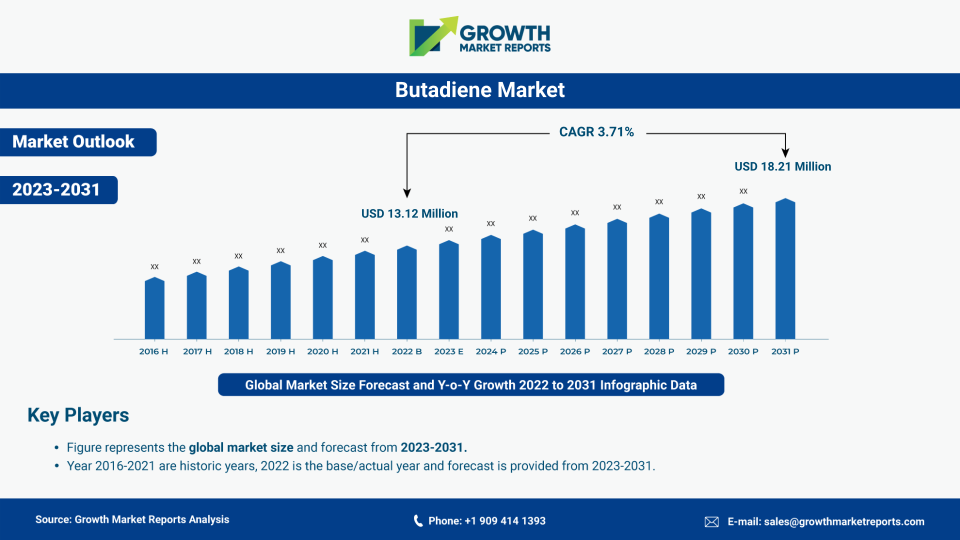
According to our latest research, the global butadiene market size stood at USD 15.2 billion in 2024, reflecting robust demand across key end-use sectors. The market is expected to expand at a CAGR of 5.1% from 2025 to 2033, reaching a forecasted value of USD 23.7 billion by 2033. The primary growth driver for the butadiene market is the escalating consumption in the automotive and tire manufacturing industries, where butadiene-based rubbers such as styrene-butadiene rubber (SBR) and polybutadiene rubber (PBR) are integral to tire and component production.

A significant growth factor for the butadiene market is the increasing demand for synthetic rubber, particularly in the automotive sector. The automotive industry remains the largest consumer of butadiene-derived products, especially SBR and PBR, which are essential for producing high-performance tires and other vehicle components. As global vehicle production rebounds post-pandemic and the push for fuel-efficient, durable tires intensifies, the demand for butadiene is projected to rise steadily. Additionally, the trend toward electric vehicles, which require specialized rubber compounds for tires and sealing systems, further bolsters the market outlook. The expansion of automotive manufacturing hubs in Asia Pacific, especially China and India, is a pivotal factor driving butadiene consumption globally.

Another crucial factor contributing to the growth of the butadiene market is the rising application in the plastics and chemical industries. Acrylonitrile butadiene styrene (ABS) is a key thermoplastic produced using butadiene, widely utilized in consumer electronics, appliances, and automotive interiors. The growing demand for lightweight, durable, and impact-resistant materials in these sectors is fueling butadiene consumption. Moreover, the chemical industry leverages butadiene as a precursor for manufacturing adiponitrile, which is essential for producing nylon. As the construction and consumer goods sectors expand, particularly in emerging economies, the downstream demand for butadiene-based products is expected to witness significant growth, further strengthening the market’s trajectory.

Sustainability and innovation are shaping the future of the butadiene market. With heightened regulatory scrutiny and consumer preference shifting toward eco-friendly products, there is a growing focus on bio-based butadiene production. Technological advancements in catalytic processes and feedstock flexibility are enabling the development of renewable butadiene, reducing reliance on conventional fossil-based sources. This transition is being supported by strategic partnerships and investments in research and development by major industry players. The integration of sustainable practices not only addresses environmental concerns but also opens new avenues for market expansion, particularly in regions with stringent emission norms and sustainability mandates.

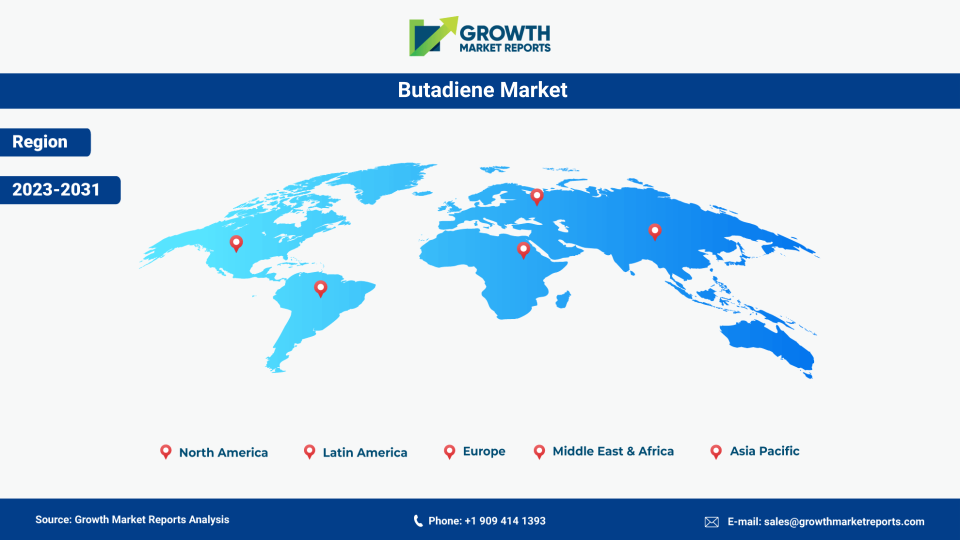
Regionally, the Asia Pacific dominates the butadiene market, accounting for over 45% of the global demand in 2024. The region’s leadership is attributed to its large-scale automotive manufacturing base, rapid industrialization, and expanding construction sector. North America and Europe follow, with significant market shares driven by technological advancements and a strong presence of chemical and automotive industries. Latin America and the Middle East & Africa are emerging as promising markets, supported by increasing industrial investments and infrastructure development. The regional dynamics are influenced by factors such as feedstock availability, regulatory frameworks, and evolving consumer preferences, shaping the competitive landscape and growth prospects of the butadiene market.

Global Butadiene Industry Outlook

Product Type Analysis

The product type segment of the butadiene market is primarily divided into synthetic butadiene and bio-based butadiene. Synthetic butadiene, derived mainly from petrochemical feedstocks such as naphtha and gas oil, currently dominates the market, accounting for more than 95% of the global share in 2024. The well-established production infrastructure, cost-effectiveness, and high yield associated with synthetic butadiene make it the preferred choice for large-scale industrial applications. The widespread use of synthetic butadiene in tire manufacturing, plastics, and chemicals underscores its critical role in supporting downstream industries. However, the reliance on fossil-based raw materials has raised concerns regarding sustainability and environmental impact, prompting market participants to explore alternative solutions.

Bio-based butadiene represents a nascent but rapidly growing segment within the butadiene market. Derived from renewable resources such as bioethanol, bio-based butadiene offers a sustainable alternative to traditional petrochemical processes. Although its market share remains limited, ongoing research and technological advancements are enhancing the commercial viability of bio-based production methods. Leading chemical companies are investing in pilot projects and collaborations to scale up bio-based butadiene production, driven by regulatory pressures and the increasing emphasis on circular economy principles. As production costs decline and process efficiencies improve, bio-based butadiene is expected to capture a larger market share, particularly in regions with stringent environmental regulations.

The synthetic butadiene segment is witnessing innovation in catalyst technologies and process optimization. Companies are focusing on improving yield, reducing energy consumption, and minimizing byproduct formation to enhance overall profitability and environmental performance. The adoption of advanced extraction and purification techniques is further supporting the growth of this segment. Moreover, fluctuations in crude oil prices and feedstock availability are influencing the competitive dynamics, compelling manufacturers to diversify their sourcing strategies and invest in alternative feedstocks such as ethane and propane to ensure supply chain resilience.

On the other hand, the market for bio-based butadiene is being shaped by collaborative initiatives between industry players, research institutions, and government agencies. The development of efficient biocatalysts and fermentation processes is enabling the conversion of biomass into high-purity butadiene, aligning with global sustainability goals. Market players are also exploring hybrid production models that integrate both synthetic and bio-based pathways to maximize flexibility and cost-effectiveness. The growing consumer preference for green products and the proliferation of eco-labeling schemes are expected to accelerate the adoption of bio-based butadiene, creating new growth opportunities and competitive advantages for early movers in this segment.

Report Scope

Attributes Details
Report Title Butadiene Market Research Report 2033
By Product Type Synthetic Butadiene, Bio-based Butadiene
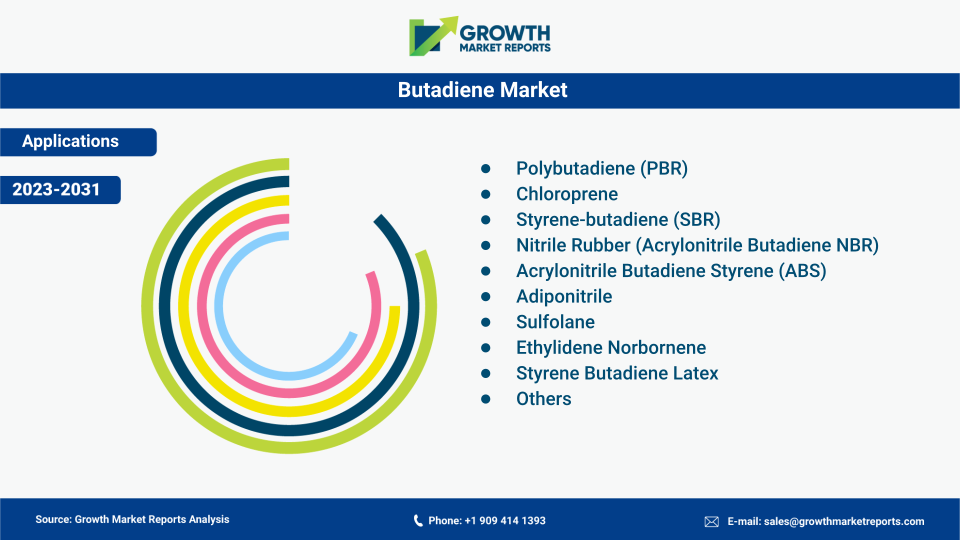
By Application Styrene-Butadiene Rubber, Polybutadiene Rubber, Acrylonitrile Butadiene Styrene, Nitrile Butadiene Rubber, Adiponitrile, Others
By End-Use Industry Automotive, Construction, Chemical, Consumer Goods, Others
Regions Covered North America, Europe, APAC, Latin America, MEA
Base Year 2024
Historic Data 2018-2023
Forecast Period 2025-2033
Number of Pages 291
Number of Tables & Figures 267
Customization Available Yes, the report can be customized as per your need.

Application Analysis

The application segment of the butadiene market is highly diversified, with styrene-butadiene rubber (SBR) leading the way as the largest consumer of butadiene. SBR is extensively used in tire manufacturing, accounting for a significant portion of global butadiene consumption. The demand for high-performance, durable, and fuel-efficient tires is driving the growth of SBR, particularly in the automotive sector. Polybutadiene rubber (PBR) follows closely, valued for its high resilience, abrasion resistance, and low rolling resistance, making it ideal for tire treads, golf balls, and industrial components. The strong demand for SBR and PBR is underpinned by the expansion of automotive production, infrastructure development, and increasing consumer preference for premium tires.

Acrylonitrile butadiene styrene (ABS) is another major application area, leveraging butadiene’s properties to enhance impact resistance and toughness in plastics. ABS is widely used in automotive interiors, consumer electronics, and household appliances, benefiting from the growing demand for lightweight and durable materials. The proliferation of electronic devices, coupled with rising disposable incomes and urbanization, is fueling ABS consumption globally. Nitrile butadiene rubber (NBR), known for its oil and chemical resistance, is predominantly used in the production of hoses, seals, gaskets, and gloves. The growth in industrial manufacturing, healthcare, and oil & gas sectors is contributing to the steady demand for NBR.

Adiponitrile, a key intermediate for nylon production, represents a vital application segment for butadiene. The increasing demand for nylon in automotive, textiles, and engineering plastics is driving the consumption of butadiene for adiponitrile synthesis. The chemical industry’s focus on developing high-performance materials and expanding production capacities is further supporting the growth of this segment. Other applications of butadiene include specialty chemicals, adhesives, and resins, catering to niche markets and customized solutions for diverse industrial needs.

The application landscape of the butadiene market is characterized by continuous innovation and product development. Manufacturers are investing in research to enhance the performance attributes of butadiene-based materials, such as improving heat resistance, elasticity, and environmental compatibility. The integration of advanced compounding technologies and the adoption of green chemistry principles are enabling the development of next-generation products that meet evolving regulatory and consumer requirements. The dynamic interplay between traditional and emerging applications underscores the versatility of butadiene as a key building block in the global chemical industry.

End-Use Industry Analysis

The end-use industry segment reveals that the automotive sector is the dominant consumer of butadiene, accounting for approximately 55% of the global market in 2024. The reliance on butadiene-derived rubbers for tire manufacturing, automotive parts, and sealing systems underscores its critical role in enhancing vehicle performance, safety, and durability. The ongoing transition toward electric vehicles and the increasing focus on lightweight materials are further amplifying the demand for butadiene-based products in the automotive industry. The construction sector is another significant end-user, leveraging butadiene-based materials for adhesives, sealants, and insulation products to improve structural integrity and energy efficiency in buildings.

The chemical industry represents a substantial share of butadiene consumption, utilizing it as a precursor for manufacturing a wide range of intermediates and specialty chemicals. The growth of the chemical sector, particularly in Asia Pacific and North America, is boosting the demand for butadiene in the production of ABS, adiponitrile, and other value-added products. Consumer goods, including footwear, sporting goods, and household items, also contribute to the expanding market for butadiene-based materials. The versatility, durability, and cost-effectiveness of butadiene-derived products make them suitable for a broad spectrum of consumer applications, supporting market growth across diverse segments.

The end-use industry landscape is evolving in response to changing market dynamics, technological advancements, and regulatory shifts. The increasing adoption of sustainable materials, driven by environmental concerns and consumer awareness, is influencing purchasing decisions and product development strategies. Industry players are collaborating with downstream users to co-develop customized solutions that address specific performance requirements and sustainability objectives. The integration of digital technologies and data analytics is enabling manufacturers to optimize production processes, enhance quality control, and improve supply chain efficiency, further strengthening the competitiveness of butadiene-based products in the global market.

Emerging industries such as renewable energy, medical devices, and advanced electronics are also creating new avenues for butadiene applications. The development of high-performance elastomers and specialty polymers is enabling the penetration of butadiene-based materials into niche markets with stringent performance and regulatory standards. The ongoing investment in research and development, coupled with strategic partnerships and mergers, is facilitating the expansion of the butadiene market into new and high-growth industries, ensuring long-term sustainability and value creation for stakeholders.

Opportunities & Threats

The butadiene market presents significant opportunities driven by the growing demand for sustainable and high-performance materials. The shift toward bio-based butadiene production, supported by advancements in biotechnology and catalytic processes, offers a promising pathway for reducing the environmental footprint of the industry. Companies investing in renewable feedstocks and green chemistry are well-positioned to capitalize on the increasing regulatory and consumer focus on sustainability. Additionally, the expansion of automotive and construction industries in emerging markets provides ample opportunities for market growth, as rising incomes and urbanization drive the demand for high-quality tires, plastics, and building materials. The development of innovative applications, such as advanced elastomers and specialty polymers, is further broadening the scope of butadiene utilization, creating new revenue streams and competitive advantages for market participants.

Another key opportunity lies in the integration of digital technologies and data-driven decision-making across the butadiene value chain. The adoption of advanced analytics, process automation, and real-time monitoring is enabling manufacturers to optimize production efficiency, minimize waste, and enhance product quality. These technological advancements are also facilitating the development of customized solutions tailored to specific end-user requirements, fostering closer collaboration and long-term partnerships with downstream industries. The increasing focus on circular economy principles and resource efficiency is encouraging the adoption of recycling and upcycling initiatives, further enhancing the sustainability and resilience of the butadiene market. Strategic investments in research and development, capacity expansion, and market diversification are essential for capturing emerging opportunities and maintaining a competitive edge in a rapidly evolving industry landscape.

However, the butadiene market faces several threats and restrainers that could impede its growth trajectory. Volatility in crude oil prices and feedstock availability poses significant challenges for synthetic butadiene producers, impacting production costs and supply chain stability. Stringent environmental regulations and emission norms, particularly in developed regions, are increasing compliance costs and necessitating investments in cleaner production technologies. The growing competition from alternative materials, such as thermoplastic elastomers and bio-based polymers, is also exerting pressure on traditional butadiene applications. Market participants must proactively address these challenges by adopting sustainable practices, diversifying feedstock sources, and investing in innovation to mitigate risks and ensure long-term growth.

Regional Outlook

The Asia Pacific region leads the global butadiene market, accounting for approximately USD 6.8 billion of the total market size in 2024. The region’s dominance is driven by its robust automotive manufacturing sector, rapid industrialization, and expanding construction activities. China, India, Japan, and South Korea are the key contributors, with China alone representing over 30% of global butadiene demand. The presence of large-scale chemical and rubber manufacturing facilities, coupled with favorable government policies and investments in infrastructure, supports the sustained growth of the butadiene market in Asia Pacific. The region is expected to maintain a high growth rate, with a projected CAGR of 5.7% through 2033, as industrialization and urbanization continue to accelerate.

In North America, the butadiene market reached a value of USD 3.2 billion in 2024, driven by strong demand from the automotive, chemical, and consumer goods industries. The United States is the largest market in the region, supported by advanced manufacturing capabilities, technological innovation, and a well-established supply chain network. The region’s focus on sustainability and the adoption of bio-based production methods are creating new growth opportunities, particularly in high-value applications such as specialty elastomers and engineering plastics. However, market growth in North America is moderated by stringent regulatory frameworks and competition from alternative materials, necessitating continuous investment in process optimization and product development.

Europe accounted for approximately USD 2.8 billion of the global butadiene market in 2024, with Germany, France, and Italy being the primary contributors. The region’s market dynamics are influenced by a strong emphasis on environmental sustainability, innovation, and high-quality standards. The automotive and chemical industries remain the main consumers of butadiene, with a growing focus on lightweight and eco-friendly materials. Regulatory pressures and the transition toward a circular economy are driving investments in bio-based and recycled butadiene production. The Middle East & Africa and Latin America are emerging as high-potential markets, collectively contributing USD 2.4 billion in 2024, supported by industrial expansion, infrastructure development, and increasing foreign investments. These regions offer lucrative opportunities for market players seeking to diversify their geographic footprint and capitalize on untapped growth potential.

Butadiene Market Statistics

Competitor Outlook

The butadiene market is characterized by intense competition, with a mix of multinational corporations, regional players, and emerging startups vying for market share. The competitive landscape is shaped by factors such as production capacity, technological innovation, feedstock integration, and geographic presence. Leading companies are focusing on capacity expansions, strategic partnerships, and mergers and acquisitions to strengthen their market position and enhance their value proposition. The integration of sustainability initiatives and digital transformation is becoming a key differentiator, enabling companies to meet evolving regulatory and consumer expectations while optimizing operational efficiency and cost-effectiveness. The ability to offer customized solutions, ensure supply chain reliability, and maintain high product quality is crucial for sustaining competitiveness in the global butadiene market.

Innovation and R&D are at the forefront of competitive strategies in the butadiene market. Major players are investing in the development of advanced catalyst technologies, process optimization, and bio-based production methods to address the challenges of feedstock volatility and environmental sustainability. The adoption of circular economy principles, such as recycling and upcycling of butadiene-based products, is gaining traction among market leaders seeking to enhance resource efficiency and minimize waste. Collaborative initiatives with downstream users and research institutions are fostering the co-creation of next-generation materials that meet specific performance and sustainability requirements. The competitive landscape is also influenced by the entry of new players specializing in bio-based and specialty butadiene products, intensifying the need for continuous innovation and differentiation.

Geographic diversification and market expansion are key strategies employed by leading butadiene manufacturers to mitigate risks and capture emerging opportunities. Companies are establishing production facilities and distribution networks in high-growth regions such as Asia Pacific, Latin America, and the Middle East to leverage local demand, access cost-competitive feedstocks, and comply with regional regulations. The ability to adapt to changing market dynamics, regulatory shifts, and customer preferences is essential for maintaining a competitive edge in the global butadiene market. Strategic investments in capacity expansion, digitalization, and sustainability are critical for ensuring long-term growth and profitability.

Some of the major companies operating in the butadiene market include BASF SE, LyondellBasell Industries Holdings B.V., Sinopec, TPC Group, Evonik Industries AG, Shell Chemicals, INEOS Group, LG Chem, and SABIC. BASF SE is renowned for its extensive product portfolio, technological expertise, and commitment to sustainability, while LyondellBasell is a global leader in petrochemical production and innovation. Sinopec and LG Chem are key players in the Asia Pacific region, leveraging large-scale production capabilities and integrated supply chains to meet growing regional demand. TPC Group and INEOS Group are recognized for their focus on process optimization and high-quality butadiene production. These companies are actively investing in capacity expansions, R&D, and strategic collaborations to maintain their leadership positions and drive innovation in the butadiene market. The competitive landscape is expected to remain dynamic, with ongoing consolidation, technological advancements, and the emergence of new market entrants shaping the future of the global butadiene industry.

Key Players

  • Sinopec
  • LyondellBasell Industries
  • Shell Chemicals
  • ExxonMobil Chemical Company
  • TPC Group
  • BASF SE
  • SABIC
  • ENI S.p.A.
  • Evonik Industries AG
  • INEOS Group
  • LG Chem
  • Formosa Plastics Corporation
  • Reliance Industries Limited
  • Repsol S.A.
  • Braskem S.A.
  • Dow Inc.
  • Mitsubishi Chemical Corporation
  • Sumitomo Chemical Co., Ltd.
  • Jiangsu Sailboat Petrochemical Co., Ltd.
  • China National Petroleum Corporation (CNPC)
Butadiene Market Overview

Segments

The Butadiene market has been segmented on the basis of

Product Type

  • Synthetic Butadiene
  • Bio-based Butadiene

Application

  • Styrene-Butadiene Rubber
  • Polybutadiene Rubber
  • Acrylonitrile Butadiene Styrene
  • Nitrile Butadiene Rubber
  • Adiponitrile
  • Others

End-Use Industry

  • Automotive
  • Construction
  • Chemical
  • Consumer Goods
  • Others

Competitive Landscape

The major players of the market are China Petroleum & Chemical Corporation, TPC Group, Exxon Mobil Corporation, Royal Dutch Shell PLC, and LyondellBasell Industries Holdings BV.

Companies are investing in R&D activities and are engaging in joint ventures and acquisitions to expand their market share.
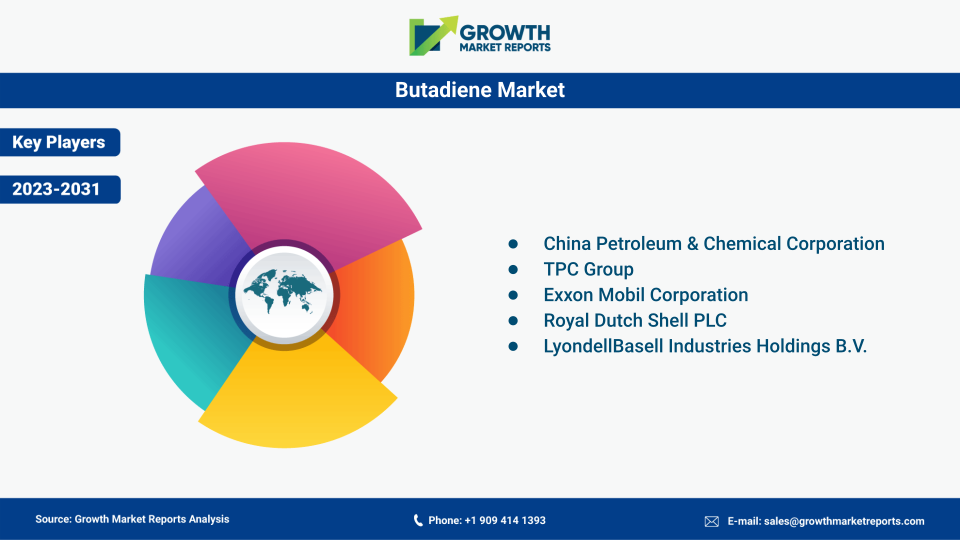

Butadiene Market Key Players

Frequently Asked Questions

The automotive industry is the largest consumer of butadiene, using it primarily in tire manufacturing and vehicle components. The rise of electric vehicles and demand for fuel-efficient, durable tires are further boosting butadiene consumption.

Opportunities include the growth of bio-based butadiene, expansion in emerging markets, adoption of digital technologies for process optimization, and development of advanced elastomers and specialty polymers.

Major challenges include crude oil price volatility, feedstock availability, stringent environmental regulations, and competition from alternative materials like thermoplastic elastomers and bio-based polymers.

Key players include BASF SE, LyondellBasell Industries, Sinopec, TPC Group, Evonik Industries AG, Shell Chemicals, INEOS Group, LG Chem, and SABIC.

Sustainability is driving innovation in bio-based butadiene production, adoption of green chemistry, and the integration of circular economy principles, as companies respond to regulatory pressures and consumer demand for eco-friendly products.

Asia Pacific leads the global butadiene market, accounting for over 45% of demand in 2024, driven by strong automotive, chemical, and construction sectors.

Synthetic butadiene is produced from petrochemical feedstocks like naphtha and gas oil and dominates the market, while bio-based butadiene is derived from renewable resources such as bioethanol and is gaining traction due to sustainability concerns.

Butadiene is mainly used in the production of styrene-butadiene rubber (SBR), polybutadiene rubber (PBR), acrylonitrile butadiene styrene (ABS), nitrile butadiene rubber (NBR), and adiponitrile for nylon production.

The primary industries driving butadiene demand are automotive (especially tire manufacturing), construction, chemicals, and consumer goods.

The global butadiene market was valued at USD 15.2 billion in 2024 and is projected to reach USD 23.7 billion by 2033, growing at a CAGR of 5.1% from 2025 to 2033.

Table Of Content

Chapter 1 Executive Summary
Chapter 2 Assumptions and Acronyms Used
Chapter 3 Research Methodology
Chapter 4 Butadiene Market Overview
   4.1 Introduction
      4.1.1 Market Taxonomy
      4.1.2 Market Definition
      4.1.3 Macro-Economic Factors Impacting the Market Growth
   4.2 Butadiene Market Dynamics
      4.2.1 Market Drivers
      4.2.2 Market Restraints
      4.2.3 Market Opportunity
   4.3 Butadiene Market - Supply Chain Analysis
      4.3.1 List of Key Suppliers
      4.3.2 List of Key Distributors
      4.3.3 List of Key Consumers
   4.4 Key Forces Shaping the Butadiene Market
      4.4.1 Bargaining Power of Suppliers
      4.4.2 Bargaining Power of Buyers
      4.4.3 Threat of Substitution
      4.4.4 Threat of New Entrants
      4.4.5 Competitive Rivalry
   4.5 Global Butadiene Market Size & Forecast, 2023-2032
      4.5.1 Butadiene Market Size and Y-o-Y Growth
      4.5.2 Butadiene Market Absolute $ Opportunity

Chapter 5 Global Butadiene Market Analysis and Forecast By Product Type
   5.1 Introduction
      5.1.1 Key Market Trends & Growth Opportunities By Product Type
      5.1.2 Basis Point Share (BPS) Analysis By Product Type
      5.1.3 Absolute $ Opportunity Assessment By Product Type
   5.2 Butadiene Market Size Forecast By Product Type
      5.2.1 Synthetic Butadiene
      5.2.2 Bio-based Butadiene
   5.3 Market Attractiveness Analysis By Product Type

Chapter 6 Global Butadiene Market Analysis and Forecast By Application
   6.1 Introduction
      6.1.1 Key Market Trends & Growth Opportunities By Application
      6.1.2 Basis Point Share (BPS) Analysis By Application
      6.1.3 Absolute $ Opportunity Assessment By Application
   6.2 Butadiene Market Size Forecast By Application
      6.2.1 Styrene-Butadiene Rubber
      6.2.2 Polybutadiene Rubber
      6.2.3 Acrylonitrile Butadiene Styrene
      6.2.4 Nitrile Butadiene Rubber
      6.2.5 Adiponitrile
      6.2.6 Others
   6.3 Market Attractiveness Analysis By Application

Chapter 7 Global Butadiene Market Analysis and Forecast By End-Use Industry
   7.1 Introduction
      7.1.1 Key Market Trends & Growth Opportunities By End-Use Industry
      7.1.2 Basis Point Share (BPS) Analysis By End-Use Industry
      7.1.3 Absolute $ Opportunity Assessment By End-Use Industry
   7.2 Butadiene Market Size Forecast By End-Use Industry
      7.2.1 Automotive
      7.2.2 Construction
      7.2.3 Chemical
      7.2.4 Consumer Goods
      7.2.5 Others
   7.3 Market Attractiveness Analysis By End-Use Industry

Chapter 8 Global Butadiene Market Analysis and Forecast by Region
   8.1 Introduction
      8.1.1 Key Market Trends & Growth Opportunities By Region
      8.1.2 Basis Point Share (BPS) Analysis By Region
      8.1.3 Absolute $ Opportunity Assessment By Region
   8.2 Butadiene Market Size Forecast By Region
      8.2.1 North America
      8.2.2 Europe
      8.2.3 Asia Pacific
      8.2.4 Latin America
      8.2.5 Middle East & Africa (MEA)
   8.3 Market Attractiveness Analysis By Region

Chapter 9 Coronavirus Disease (COVID-19) Impact 
   9.1 Introduction 
   9.2 Current & Future Impact Analysis 
   9.3 Economic Impact Analysis 
   9.4 Government Policies 
   9.5 Investment Scenario

Chapter 10 North America Butadiene Analysis and Forecast
   10.1 Introduction
   10.2 North America Butadiene Market Size Forecast by Country
      10.2.1 U.S.
      10.2.2 Canada
   10.3 Basis Point Share (BPS) Analysis by Country
   10.4 Absolute $ Opportunity Assessment by Country
   10.5 Market Attractiveness Analysis by Country
   10.6 North America Butadiene Market Size Forecast By Product Type
      10.6.1 Synthetic Butadiene
      10.6.2 Bio-based Butadiene
   10.7 Basis Point Share (BPS) Analysis By Product Type 
   10.8 Absolute $ Opportunity Assessment By Product Type 
   10.9 Market Attractiveness Analysis By Product Type
   10.10 North America Butadiene Market Size Forecast By Application
      10.10.1 Styrene-Butadiene Rubber
      10.10.2 Polybutadiene Rubber
      10.10.3 Acrylonitrile Butadiene Styrene
      10.10.4 Nitrile Butadiene Rubber
      10.10.5 Adiponitrile
      10.10.6 Others
   10.11 Basis Point Share (BPS) Analysis By Application 
   10.12 Absolute $ Opportunity Assessment By Application 
   10.13 Market Attractiveness Analysis By Application
   10.14 North America Butadiene Market Size Forecast By End-Use Industry
      10.14.1 Automotive
      10.14.2 Construction
      10.14.3 Chemical
      10.14.4 Consumer Goods
      10.14.5 Others
   10.15 Basis Point Share (BPS) Analysis By End-Use Industry 
   10.16 Absolute $ Opportunity Assessment By End-Use Industry 
   10.17 Market Attractiveness Analysis By End-Use Industry

Chapter 11 Europe Butadiene Analysis and Forecast
   11.1 Introduction
   11.2 Europe Butadiene Market Size Forecast by Country
      11.2.1 Germany
      11.2.2 France
      11.2.3 Italy
      11.2.4 U.K.
      11.2.5 Spain
      11.2.6 Russia
      11.2.7 Rest of Europe
   11.3 Basis Point Share (BPS) Analysis by Country
   11.4 Absolute $ Opportunity Assessment by Country
   11.5 Market Attractiveness Analysis by Country
   11.6 Europe Butadiene Market Size Forecast By Product Type
      11.6.1 Synthetic Butadiene
      11.6.2 Bio-based Butadiene
   11.7 Basis Point Share (BPS) Analysis By Product Type 
   11.8 Absolute $ Opportunity Assessment By Product Type 
   11.9 Market Attractiveness Analysis By Product Type
   11.10 Europe Butadiene Market Size Forecast By Application
      11.10.1 Styrene-Butadiene Rubber
      11.10.2 Polybutadiene Rubber
      11.10.3 Acrylonitrile Butadiene Styrene
      11.10.4 Nitrile Butadiene Rubber
      11.10.5 Adiponitrile
      11.10.6 Others
   11.11 Basis Point Share (BPS) Analysis By Application 
   11.12 Absolute $ Opportunity Assessment By Application 
   11.13 Market Attractiveness Analysis By Application
   11.14 Europe Butadiene Market Size Forecast By End-Use Industry
      11.14.1 Automotive
      11.14.2 Construction
      11.14.3 Chemical
      11.14.4 Consumer Goods
      11.14.5 Others
   11.15 Basis Point Share (BPS) Analysis By End-Use Industry 
   11.16 Absolute $ Opportunity Assessment By End-Use Industry 
   11.17 Market Attractiveness Analysis By End-Use Industry

Chapter 12 Asia Pacific Butadiene Analysis and Forecast
   12.1 Introduction
   12.2 Asia Pacific Butadiene Market Size Forecast by Country
      12.2.1 China
      12.2.2 Japan
      12.2.3 South Korea
      12.2.4 India
      12.2.5 Australia
      12.2.6 South East Asia (SEA)
      12.2.7 Rest of Asia Pacific (APAC)
   12.3 Basis Point Share (BPS) Analysis by Country
   12.4 Absolute $ Opportunity Assessment by Country
   12.5 Market Attractiveness Analysis by Country
   12.6 Asia Pacific Butadiene Market Size Forecast By Product Type
      12.6.1 Synthetic Butadiene
      12.6.2 Bio-based Butadiene
   12.7 Basis Point Share (BPS) Analysis By Product Type 
   12.8 Absolute $ Opportunity Assessment By Product Type 
   12.9 Market Attractiveness Analysis By Product Type
   12.10 Asia Pacific Butadiene Market Size Forecast By Application
      12.10.1 Styrene-Butadiene Rubber
      12.10.2 Polybutadiene Rubber
      12.10.3 Acrylonitrile Butadiene Styrene
      12.10.4 Nitrile Butadiene Rubber
      12.10.5 Adiponitrile
      12.10.6 Others
   12.11 Basis Point Share (BPS) Analysis By Application 
   12.12 Absolute $ Opportunity Assessment By Application 
   12.13 Market Attractiveness Analysis By Application
   12.14 Asia Pacific Butadiene Market Size Forecast By End-Use Industry
      12.14.1 Automotive
      12.14.2 Construction
      12.14.3 Chemical
      12.14.4 Consumer Goods
      12.14.5 Others
   12.15 Basis Point Share (BPS) Analysis By End-Use Industry 
   12.16 Absolute $ Opportunity Assessment By End-Use Industry 
   12.17 Market Attractiveness Analysis By End-Use Industry

Chapter 13 Latin America Butadiene Analysis and Forecast
   13.1 Introduction
   13.2 Latin America Butadiene Market Size Forecast by Country
      13.2.1 Brazil
      13.2.2 Mexico
      13.2.3 Rest of Latin America (LATAM)
   13.3 Basis Point Share (BPS) Analysis by Country
   13.4 Absolute $ Opportunity Assessment by Country
   13.5 Market Attractiveness Analysis by Country
   13.6 Latin America Butadiene Market Size Forecast By Product Type
      13.6.1 Synthetic Butadiene
      13.6.2 Bio-based Butadiene
   13.7 Basis Point Share (BPS) Analysis By Product Type 
   13.8 Absolute $ Opportunity Assessment By Product Type 
   13.9 Market Attractiveness Analysis By Product Type
   13.10 Latin America Butadiene Market Size Forecast By Application
      13.10.1 Styrene-Butadiene Rubber
      13.10.2 Polybutadiene Rubber
      13.10.3 Acrylonitrile Butadiene Styrene
      13.10.4 Nitrile Butadiene Rubber
      13.10.5 Adiponitrile
      13.10.6 Others
   13.11 Basis Point Share (BPS) Analysis By Application 
   13.12 Absolute $ Opportunity Assessment By Application 
   13.13 Market Attractiveness Analysis By Application
   13.14 Latin America Butadiene Market Size Forecast By End-Use Industry
      13.14.1 Automotive
      13.14.2 Construction
      13.14.3 Chemical
      13.14.4 Consumer Goods
      13.14.5 Others
   13.15 Basis Point Share (BPS) Analysis By End-Use Industry 
   13.16 Absolute $ Opportunity Assessment By End-Use Industry 
   13.17 Market Attractiveness Analysis By End-Use Industry

Chapter 14 Middle East & Africa (MEA) Butadiene Analysis and Forecast
   14.1 Introduction
   14.2 Middle East & Africa (MEA) Butadiene Market Size Forecast by Country
      14.2.1 Saudi Arabia
      14.2.2 South Africa
      14.2.3 UAE
      14.2.4 Rest of Middle East & Africa (MEA)
   14.3 Basis Point Share (BPS) Analysis by Country
   14.4 Absolute $ Opportunity Assessment by Country
   14.5 Market Attractiveness Analysis by Country
   14.6 Middle East & Africa (MEA) Butadiene Market Size Forecast By Product Type
      14.6.1 Synthetic Butadiene
      14.6.2 Bio-based Butadiene
   14.7 Basis Point Share (BPS) Analysis By Product Type 
   14.8 Absolute $ Opportunity Assessment By Product Type 
   14.9 Market Attractiveness Analysis By Product Type
   14.10 Middle East & Africa (MEA) Butadiene Market Size Forecast By Application
      14.10.1 Styrene-Butadiene Rubber
      14.10.2 Polybutadiene Rubber
      14.10.3 Acrylonitrile Butadiene Styrene
      14.10.4 Nitrile Butadiene Rubber
      14.10.5 Adiponitrile
      14.10.6 Others
   14.11 Basis Point Share (BPS) Analysis By Application 
   14.12 Absolute $ Opportunity Assessment By Application 
   14.13 Market Attractiveness Analysis By Application
   14.14 Middle East & Africa (MEA) Butadiene Market Size Forecast By End-Use Industry
      14.14.1 Automotive
      14.14.2 Construction
      14.14.3 Chemical
      14.14.4 Consumer Goods
      14.14.5 Others
   14.15 Basis Point Share (BPS) Analysis By End-Use Industry 
   14.16 Absolute $ Opportunity Assessment By End-Use Industry 
   14.17 Market Attractiveness Analysis By End-Use Industry

Chapter 15 Competition Landscape 
   15.1 Butadiene Market: Competitive Dashboard
   15.2 Global Butadiene Market: Market Share Analysis, 2023
   15.3 Company Profiles (Details – Overview, Financials, Developments, Strategy) 
      15.3.1 Sinopec
LyondellBasell Industries
Shell Chemicals
ExxonMobil Chemical Company
TPC Group
BASF SE
SABIC
ENI S.p.A.
Evonik Industries AG
INEOS Group
LG Chem
Formosa Plastics Corporation
Reliance Industries Limited
Repsol S.A.
Braskem S.A.
Dow Inc.
Mitsubishi Chemical Corporation
Sumitomo Chemical Co., Ltd.
Jiangsu Sailboat Petrochemical Co., Ltd.
China National Petroleum Corporation (CNPC)

Methodology

Our Clients

Honda Motor Co. Ltd.
Siemens Healthcare
The John Holland Group
sinopec
Deloitte
Microsoft
Dassault Aviation
FedEx Logistics