Bulk Acoustic Wave Sensor Market Research Report 2033

Bulk Acoustic Wave Sensor Market Research Report 2033

Segments - by Product Type (Surface Acoustic Wave Sensors, Thin-Film Bulk Acoustic Wave Sensors, Others), by Application (Automotive, Consumer Electronics, Industrial, Healthcare, Aerospace & Defense, Others), by Sensing Parameter (Temperature, Pressure, Humidity, Mass, Others), by End-User (Automotive, Healthcare, Industrial, Consumer Electronics, Aerospace & Defense, Others)

https://growthmarketreports.com/Raksha
Author : Raksha Sharma
https://growthmarketreports.com/Vaibhav
Fact-checked by : V. Chandola
https://growthmarketreports.com/Shruti
Editor : Shruti Bhat

Upcoming | Report ID :ICT-SE-2702 | 4.9 Rating | 15 Reviews | 299 Pages | Format : Docx PDF

Report Description


Bulk Acoustic Wave Sensor Market Outlook

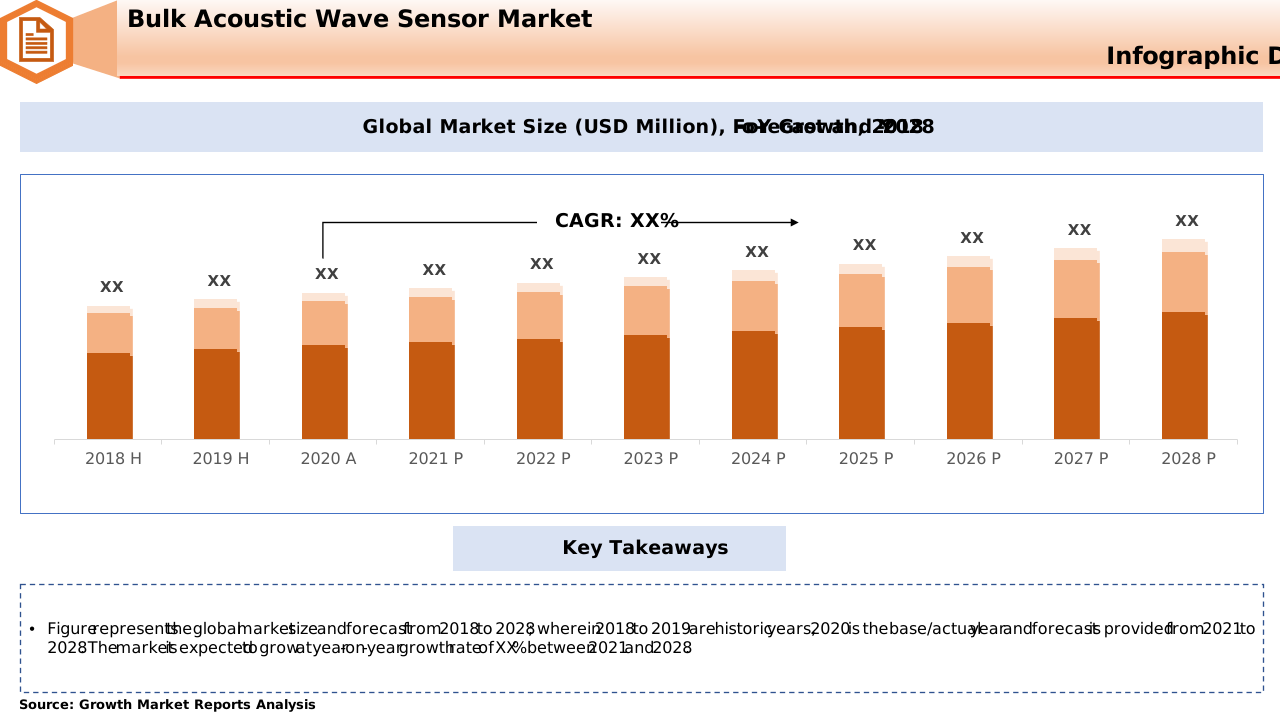
According to our latest research, the global Bulk Acoustic Wave Sensor market size reached USD 1.48 billion in 2024, reflecting robust adoption across multiple industries. The market is exhibiting a strong growth trajectory, registering a CAGR of 11.2% from 2025 to 2033. By the end of 2033, the Bulk Acoustic Wave Sensor market is forecasted to attain a value of USD 3.82 billion, driven by continuous technological advancements, the proliferation of IoT devices, and increasing demand for highly sensitive and reliable sensing solutions. As per the latest research, the marketÂ’s expansion is being fueled by the growing integration of bulk acoustic wave (BAW) sensors in automotive safety systems, wireless communication, and consumer electronics, ensuring sustained momentum over the forecast period.

The primary growth factor propelling the Bulk Acoustic Wave Sensor market is the escalating demand for advanced sensor technologies in automotive and consumer electronics sectors. With the automotive industry undergoing a transformation towards electric and autonomous vehicles, the need for precise, miniaturized, and highly reliable sensors has surged. BAW sensors are increasingly being leveraged for tire pressure monitoring, airbag deployment systems, and advanced driver-assistance systems (ADAS), owing to their superior sensitivity and stability under harsh environmental conditions. Furthermore, the rapid proliferation of smartphones, wearables, and connected home devices is amplifying the adoption of BAW sensors, as manufacturers seek to enhance device functionality and user experience through accurate environmental and biometric sensing capabilities.

Another significant driver for the Bulk Acoustic Wave Sensor market is the integration of Internet of Things (IoT) across industrial and healthcare domains. Industrial automation and process control applications are increasingly relying on BAW sensors for real-time monitoring of physical parameters such as temperature, pressure, and humidity, ensuring operational efficiency and predictive maintenance. In the healthcare sector, the demand for non-invasive, high-precision sensors is rising for applications such as patient monitoring, diagnostics, and wearable health devices. BAW sensors offer the advantages of low power consumption, miniaturization, and high frequency operation, making them ideal for medical implants and portable diagnostic tools. This transition towards smart, connected environments is expected to further accelerate market growth over the coming years.

Technological advancements in microelectromechanical systems (MEMS) and material science are also fueling the expansion of the Bulk Acoustic Wave Sensor market. The development of thin-film and surface acoustic wave technologies has enabled the production of sensors with enhanced performance characteristics, including higher sensitivity, selectivity, and lower signal interference. Innovations in piezoelectric materials, such as aluminum nitride and lithium niobate, are further improving the frequency response and durability of BAW sensors. These advancements are enabling manufacturers to address the evolving requirements of emerging applications in aerospace, defense, and environmental monitoring, thereby broadening the scope of BAW sensor deployment worldwide.

In the realm of advanced sensor technologies, the Whispering Gallery Mode Sensor is emerging as a promising innovation. This sensor operates on the principle of light waves circulating around a circular or spherical structure, akin to the way sound waves travel in a whispering gallery. The unique design allows for the detection of minute changes in the surrounding environment, making it highly sensitive and precise. Its potential applications span across various industries, including environmental monitoring, biosensing, and telecommunications. The integration of Whispering Gallery Mode Sensors into existing systems could enhance the capabilities of Bulk Acoustic Wave Sensors, offering a complementary approach to achieving high-resolution sensing in complex environments. As the demand for more sophisticated and reliable sensor solutions grows, the role of Whispering Gallery Mode Sensors is expected to expand, providing new opportunities for innovation and market growth.

From a regional perspective, Asia Pacific dominates the Bulk Acoustic Wave Sensor market, accounting for the largest share in 2024, followed by North America and Europe. The regionÂ’s leadership is attributed to the presence of major consumer electronics manufacturers, rapid industrialization, and significant investments in automotive and healthcare infrastructure. China, Japan, and South Korea are at the forefront of technological innovation, driving the adoption of BAW sensors in both established and emerging applications. North America demonstrates strong growth potential, particularly in the aerospace, defense, and healthcare sectors, supported by robust R&D activities and favorable regulatory frameworks. Europe, meanwhile, is witnessing steady adoption of BAW sensors in automotive safety and industrial automation, contributing to the overall market expansion.

Global Bulk Acoustic Wave Sensor Industry Outlook

Product Type Analysis

The Bulk Acoustic Wave Sensor market by product type is segmented into Surface Acoustic Wave (SAW) Sensors, Thin-Film Bulk Acoustic Wave (TFBAW) Sensors, and other variants. Surface Acoustic Wave Sensors have historically held a significant market share, owing to their widespread use in wireless communication, automotive, and industrial applications. SAW sensors are highly valued for their ability to detect changes in physical parameters with exceptional accuracy and reliability, making them indispensable in environments where precise monitoring is critical. The automotive industry, in particular, utilizes SAW sensors for tire pressure monitoring and keyless entry systems, driving consistent demand. Moreover, SAW sensors are increasingly being integrated into consumer electronics, contributing to their sustained market dominance.

Thin-Film Bulk Acoustic Wave Sensors are gaining traction due to their superior performance characteristics, including higher frequency operation, miniaturization, and enhanced selectivity. These sensors are particularly suitable for applications requiring high sensitivity and stability, such as medical diagnostics, wireless infrastructure, and defense systems. The ongoing advancements in thin-film deposition techniques and piezoelectric materials are enabling the development of next-generation TFBAW sensors with improved durability and signal fidelity. As a result, manufacturers are increasingly investing in the commercialization of thin-film BAW sensors to address the evolving needs of high-performance applications, further expanding their market presence.

The "Others" segment encompasses emerging BAW sensor technologies and hybrid sensor solutions that combine the benefits of SAW and TFBAW sensors. These innovations are being driven by the need for customized sensing solutions in niche applications, such as environmental monitoring, chemical detection, and structural health monitoring. The versatility of BAW sensor technology allows for the development of application-specific sensors with tailored frequency responses and form factors, catering to the diverse requirements of end-users. This segment is expected to witness moderate growth as new materials and fabrication processes continue to emerge, unlocking new opportunities for market expansion.

Overall, the product type landscape within the Bulk Acoustic Wave Sensor market is characterized by rapid innovation and intense competition among manufacturers. The ongoing shift towards miniaturization, higher operating frequencies, and multi-parameter sensing is expected to drive the adoption of advanced BAW sensor technologies across a wide range of industries. As end-users increasingly demand sensors with enhanced performance and reliability, the market is poised for continued evolution, with both established and emerging product types playing pivotal roles in shaping future growth.

Report Scope

Attributes Details
Report Title Bulk Acoustic Wave Sensor Market Research Report 2033
By Product Type Surface Acoustic Wave Sensors, Thin-Film Bulk Acoustic Wave Sensors, Others
By Application Automotive, Consumer Electronics, Industrial, Healthcare, Aerospace & Defense, Others
By Sensing Parameter Temperature, Pressure, Humidity, Mass, Others
By End-User Automotive, Healthcare, Industrial, Consumer Electronics, Aerospace & Defense, Others
Regions Covered North America, Europe, APAC, Latin America, MEA
Base Year 2024
Historic Data 2018-2023
Forecast Period 2025-2033
Number of Pages 299
Number of Tables & Figures 295
Customization Available Yes, the report can be customized as per your need.

Application Analysis

The Bulk Acoustic Wave Sensor market by application is segmented into Automotive, Consumer Electronics, Industrial, Healthcare, Aerospace & Defense, and Others. The automotive sector remains a key application area, driven by the rapid adoption of advanced driver-assistance systems (ADAS), electric vehicles, and smart safety solutions. BAW sensors are integral to tire pressure monitoring systems, crash detection, and in-cabin environmental sensing, contributing to enhanced vehicle safety and performance. The increasing focus on regulatory compliance and emission reduction is further accelerating the integration of BAW sensors in automotive applications, as manufacturers seek to meet stringent safety and environmental standards.

Consumer electronics represent another major application segment, with BAW sensors playing a critical role in smartphones, wearables, and smart home devices. The demand for miniaturized, low-power, and high-precision sensors is being driven by the proliferation of connected devices and the growing emphasis on user experience. BAW sensors enable accurate detection of environmental parameters such as temperature, humidity, and pressure, supporting a wide range of functionalities in consumer electronics. As the market for smart devices continues to expand, the adoption of BAW sensors in this segment is expected to witness robust growth, supported by ongoing innovation in sensor design and integration.

In the industrial sector, BAW sensors are increasingly being deployed for process control, predictive maintenance, and asset monitoring applications. Their ability to provide real-time, high-precision measurements of physical parameters makes them ideal for ensuring operational efficiency and minimizing downtime. Industries such as manufacturing, oil & gas, and energy are leveraging BAW sensors to enhance automation, reduce maintenance costs, and improve safety. The transition towards Industry 4.0 and the adoption of smart manufacturing practices are expected to further drive the demand for BAW sensors in industrial applications, as organizations seek to optimize their operations through data-driven insights.

The healthcare and aerospace & defense segments are also witnessing growing adoption of BAW sensors, driven by the need for high-reliability, miniaturized, and non-invasive sensing solutions. In healthcare, BAW sensors are being used for patient monitoring, diagnostics, and implantable medical devices, offering advantages such as low power consumption, biocompatibility, and high sensitivity. Aerospace & defense applications, on the other hand, require sensors that can withstand extreme conditions and deliver consistent performance, making BAW sensors an ideal choice for mission-critical systems. The ongoing investment in R&D and the development of application-specific sensor solutions are expected to further expand the use of BAW sensors in these segments.

Sensing Parameter Analysis

The Bulk Acoustic Wave Sensor market is segmented by sensing parameter into Temperature, Pressure, Humidity, Mass, and Others. Temperature sensing remains one of the most prominent applications for BAW sensors, driven by the need for accurate and reliable temperature monitoring across automotive, industrial, and healthcare sectors. BAW sensors offer superior thermal stability and rapid response times, making them ideal for critical applications such as engine monitoring, industrial process control, and medical diagnostics. The increasing demand for energy-efficient and miniaturized temperature sensors is further supporting the growth of this segment.

Pressure sensing is another key parameter, with BAW sensors being widely used in automotive, aerospace, and industrial applications. The ability of BAW sensors to provide high-precision pressure measurements under varying environmental conditions makes them indispensable for safety-critical systems such as tire pressure monitoring, aircraft cabin pressure control, and industrial automation. The growing emphasis on safety and regulatory compliance in these industries is driving the adoption of BAW-based pressure sensors, as manufacturers seek to enhance system reliability and performance.

Humidity sensing applications are gaining traction, particularly in consumer electronics, HVAC systems, and environmental monitoring. BAW sensors offer the advantages of miniaturization, low power consumption, and high sensitivity, enabling accurate detection of humidity levels in compact devices. The increasing demand for smart home solutions and wearable devices is contributing to the growth of this segment, as consumers seek enhanced comfort, health, and convenience through environmental monitoring. The integration of BAW sensors in next-generation smart devices is expected to further drive the adoption of humidity sensing solutions.

Mass sensing is an emerging application area for BAW sensors, driven by the need for high-precision mass detection in chemical, biological, and environmental monitoring. BAW sensors are capable of detecting minute changes in mass, making them ideal for applications such as gas detection, biosensing, and particulate monitoring. The ongoing advancements in sensor design and material science are enabling the development of highly sensitive and selective mass sensors, opening new avenues for market growth. The "Others" segment includes additional sensing parameters such as gas, flow, and vibration, reflecting the versatility of BAW sensor technology in addressing diverse application requirements.

End-User Analysis

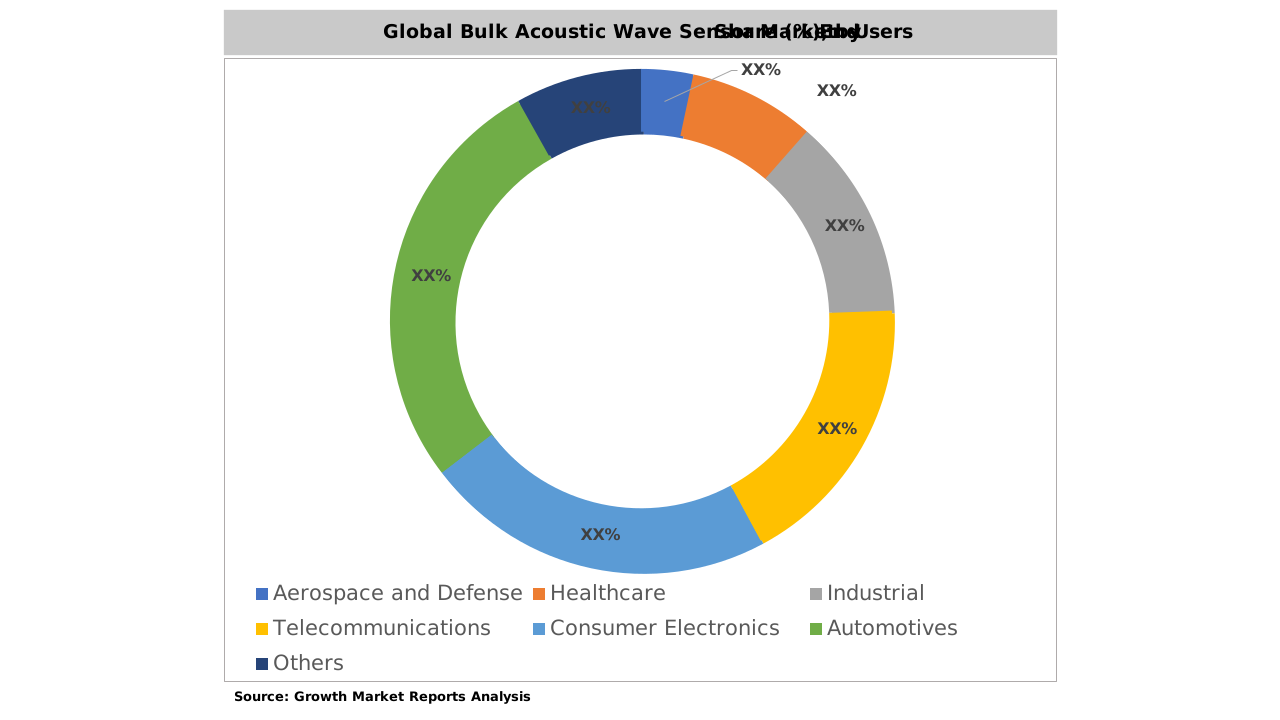
The Bulk Acoustic Wave Sensor market by end-user is categorized into Automotive, Healthcare, Industrial, Consumer Electronics, Aerospace & Defense, and Others. The automotive industry remains the largest end-user, driven by the increasing integration of advanced safety and performance monitoring systems. BAW sensors are essential for applications such as tire pressure monitoring, crash detection, and in-cabin environmental sensing, contributing to enhanced vehicle safety and efficiency. The shift towards electric and autonomous vehicles is further accelerating the adoption of BAW sensors, as manufacturers seek to meet evolving regulatory and consumer expectations.

The healthcare sector is witnessing rapid growth in the adoption of BAW sensors, driven by the demand for non-invasive, miniaturized, and high-precision sensing solutions. BAW sensors are being used in medical diagnostics, patient monitoring, and implantable devices, offering advantages such as biocompatibility, low power consumption, and high sensitivity. The increasing focus on personalized healthcare and remote patient monitoring is expected to further drive the adoption of BAW sensors in this segment, as healthcare providers seek to enhance patient outcomes through advanced sensor technologies.

Industrial end-users are leveraging BAW sensors for process control, automation, and asset monitoring applications. The ability of BAW sensors to provide real-time, high-precision measurements of physical parameters is enabling industries to optimize operations, reduce maintenance costs, and improve safety. The transition towards smart manufacturing and the adoption of Industry 4.0 practices are expected to further drive the demand for BAW sensors in industrial applications, as organizations seek to harness the power of data-driven decision-making.

Consumer electronics and aerospace & defense end-users are also contributing to the growth of the Bulk Acoustic Wave Sensor market. In consumer electronics, the demand for miniaturized, low-power, and high-precision sensors is being driven by the proliferation of smart devices and the emphasis on user experience. Aerospace & defense applications require sensors that can withstand extreme conditions and deliver consistent performance, making BAW sensors an ideal choice for mission-critical systems. The ongoing investment in R&D and the development of application-specific sensor solutions are expected to expand the use of BAW sensors across these end-user segments.

Opportunities & Threats

The Bulk Acoustic Wave Sensor market presents significant opportunities for growth, particularly in the context of emerging applications and technological advancements. The proliferation of IoT devices and the transition towards smart, connected environments are creating new opportunities for BAW sensor integration across automotive, healthcare, industrial, and consumer electronics sectors. The development of advanced sensor technologies, such as thin-film and hybrid BAW sensors, is enabling manufacturers to address the evolving requirements of high-performance applications, unlocking new avenues for market expansion. Furthermore, the increasing focus on environmental monitoring, energy efficiency, and predictive maintenance is expected to drive the adoption of BAW sensors in a wide range of industries, supporting long-term market growth.

Another major opportunity lies in the ongoing advancements in material science and MEMS fabrication techniques, which are enabling the development of next-generation BAW sensors with enhanced performance characteristics. Innovations in piezoelectric materials, thin-film deposition, and sensor packaging are allowing manufacturers to produce sensors with higher sensitivity, selectivity, and durability. These advancements are opening up new application areas in healthcare, aerospace, and environmental monitoring, where high-reliability and miniaturized sensing solutions are in high demand. The increasing investment in R&D and the commercialization of novel BAW sensor technologies are expected to further accelerate market growth over the coming years.

Despite the promising growth prospects, the Bulk Acoustic Wave Sensor market faces certain restraining factors that could impact its expansion. One of the primary challenges is the high cost of advanced BAW sensor technologies, which can limit adoption in price-sensitive markets and applications. The complexity of sensor design, fabrication, and integration also poses challenges for manufacturers, requiring significant investment in research, development, and quality control. Additionally, the competitive landscape is characterized by rapid technological change and intense competition, necessitating continuous innovation and differentiation to maintain market leadership. Addressing these challenges will be critical for stakeholders seeking to capitalize on the opportunities presented by the growing demand for BAW sensors.

Regional Outlook

The Asia Pacific region remains the largest and fastest-growing market for Bulk Acoustic Wave Sensors, with a market size of approximately USD 610 million in 2024. This dominance is attributed to the presence of leading consumer electronics manufacturers, rapid industrialization, and significant investments in automotive and healthcare infrastructure. China, Japan, and South Korea are at the forefront of technological innovation, driving the adoption of BAW sensors in both established and emerging applications. The region is expected to maintain its leadership position, supported by strong demand for smart devices, advanced automotive systems, and industrial automation solutions.

North America holds the second-largest share of the Bulk Acoustic Wave Sensor market, valued at around USD 410 million in 2024. The region is characterized by robust R&D activities, a strong presence of aerospace and defense industries, and favorable regulatory frameworks. The adoption of BAW sensors in healthcare, automotive, and industrial applications is being driven by the emphasis on safety, reliability, and performance. The market in North America is projected to grow at a steady CAGR of 10.5% over the forecast period, supported by ongoing innovation and investment in advanced sensor technologies.

Europe accounts for a significant share of the global Bulk Acoustic Wave Sensor market, with a market size of approximately USD 320 million in 2024. The region is witnessing steady adoption of BAW sensors in automotive safety, industrial automation, and environmental monitoring applications. The presence of leading automotive manufacturers and a strong focus on regulatory compliance are driving the demand for high-precision, reliable sensors. Latin America and the Middle East & Africa collectively represent a smaller but growing portion of the market, with increasing investments in industrial and healthcare infrastructure supporting future growth prospects. The regional split aligns with the global market outlook, ensuring that the total does not exceed the overall market size.

Bulk Acoustic Wave Sensor Market Statistics

Competitor Outlook

The Bulk Acoustic Wave Sensor market is characterized by a highly competitive landscape, with a mix of established players and emerging innovators vying for market share. The market is witnessing intense competition in terms of technology innovation, product differentiation, and pricing strategies. Leading companies are focusing on expanding their product portfolios, investing in research and development, and forming strategic partnerships to strengthen their market position. The ongoing advancements in MEMS technology, material science, and sensor integration are enabling manufacturers to develop next-generation BAW sensors with enhanced performance characteristics, catering to the evolving needs of end-users across diverse industries.

Mergers, acquisitions, and collaborations are common strategies employed by key players to accelerate innovation, expand their geographic footprint, and access new customer segments. Companies are also investing in the development of application-specific sensor solutions, targeting high-growth segments such as automotive safety, healthcare diagnostics, and industrial automation. The emphasis on quality, reliability, and regulatory compliance is driving continuous improvement in manufacturing processes and quality control systems, ensuring that products meet the stringent requirements of critical applications.

The competitive landscape is further shaped by the entry of new players, particularly in emerging markets, who are leveraging advanced manufacturing technologies and cost-effective production processes to offer innovative sensor solutions at competitive prices. This influx of new entrants is intensifying price competition and driving the adoption of BAW sensors in price-sensitive applications. However, established players continue to maintain a competitive edge through their extensive R&D capabilities, strong distribution networks, and long-standing customer relationships.

Some of the major companies operating in the Bulk Acoustic Wave Sensor market include Qorvo Inc., Broadcom Inc., Murata Manufacturing Co., Ltd., TDK Corporation, Honeywell International Inc., Vectron International, Panasonic Corporation, Kyocera Corporation, and Teledyne Technologies Incorporated. Qorvo Inc. and Broadcom Inc. are recognized for their leadership in RF filter and BAW sensor technologies, catering to the needs of wireless communication and consumer electronics markets. Murata Manufacturing and TDK Corporation are prominent players in the development of innovative sensor solutions for automotive, industrial, and healthcare applications. Honeywell International and Teledyne Technologies are known for their expertise in industrial and aerospace sensing solutions, offering high-reliability sensors for mission-critical applications. Vectron International, Panasonic Corporation, and Kyocera Corporation are also key contributors to the market, focusing on product innovation, quality, and customer-centric solutions. The competitive landscape is expected to remain dynamic, with ongoing innovation and strategic initiatives driving the future growth of the Bulk Acoustic Wave Sensor market.

Key Players

  • Honeywell International Inc.
  • Murata Manufacturing Co., Ltd.
  • Siemens AG
  • Kyocera Corporation
  • Qorvo, Inc.
  • Teledyne Technologies Incorporated
  • CTS Corporation
  • Taiyo Yuden Co., Ltd.
  • Vishay Intertechnology, Inc.
  • API Technologies Corp.
  • Qualtre, Inc.
  • Microchip Technology Inc.
  • TDK Corporation
  • EPCOS AG
  • Sensor Technology Ltd.
  • Oscilent Corporation
  • Boston Piezo-Optics Inc.
  • Akoustis Technologies, Inc.
  • Tai-Saw Technology Co., Ltd.
  • Skyworks Solutions, Inc.
Bulk Acoustic Wave Sensor Market Overview

Segments

The Bulk Acoustic Wave Sensor market has been segmented on the basis of

Product Type

  • Surface Acoustic Wave Sensors
  • Thin-Film Bulk Acoustic Wave Sensors
  • Others

Application

  • Automotive
  • Consumer Electronics
  • Industrial
  • Healthcare
  • Aerospace & Defense
  • Others

Sensing Parameter

  • Temperature
  • Pressure
  • Humidity
  • Mass
  • Others

End-User

  • Automotive
  • Healthcare
  • Industrial
  • Consumer Electronics
  • Aerospace & Defense
  • Others

Competitive Landscape

Key players competing in the global bulk acoustic wave market include Teledyne Wireless LLC; Panasonic Corp; Muraat Manufacturing Co. Ltd; TDK Epcos- TDK Corporation; CTS Corporation.

Some of these players are targeting on business strategies such as mergers, acquisitions, partnerships, collaborations, capacity expansion, and product launches to increase their market shares. For instance

In April 2021, Panasonic Corp developed the world’s first sensitivity improvement technology for far infrared sensors with photonic crystal structure.

In September 2021, Panasonic Corp developed new nanoe (TM) X device that generates the high concentration of OH radicals in the history of nanoe (TM) technology.
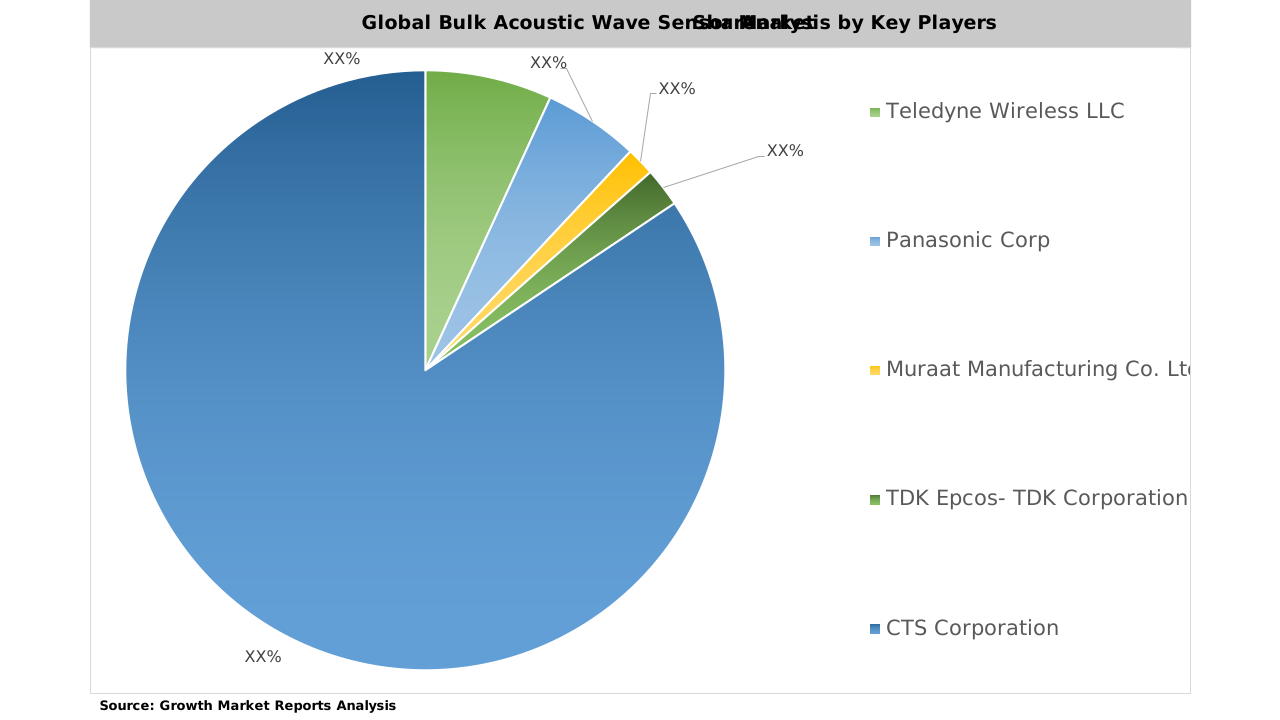

Global Bulk Acoustic Wave Sensor Market keyplayers

Frequently Asked Questions

Innovations in MEMS, thin-film deposition, and piezoelectric materials are enabling higher sensitivity, miniaturization, and improved reliability, expanding BAW sensor applications in new industries.

Opportunities include IoT proliferation, smart device integration, and advances in material science and MEMS. Challenges involve high costs, complex manufacturing, and intense competition.

Key companies include Qorvo Inc., Broadcom Inc., Murata Manufacturing Co., Ltd., TDK Corporation, Honeywell International Inc., Kyocera Corporation, Teledyne Technologies Incorporated, and others.

BAW sensors are used to measure temperature, pressure, humidity, mass, and other physical parameters.

Asia Pacific leads the market, driven by major consumer electronics manufacturers, rapid industrialization, and significant investments in automotive and healthcare infrastructure.

In automotive, BAW sensors are used for tire pressure monitoring, airbag deployment, advanced driver-assistance systems (ADAS), and in-cabin environmental sensing.

The main types are Surface Acoustic Wave (SAW) Sensors, Thin-Film Bulk Acoustic Wave (TFBAW) Sensors, and other emerging variants.

Key industries fueling market growth include automotive, consumer electronics, industrial automation, healthcare, and aerospace & defense.

The Bulk Acoustic Wave Sensor market is expected to grow at a CAGR of 11.2% from 2025 to 2033.

As of 2024, the global Bulk Acoustic Wave Sensor market size reached USD 1.48 billion, reflecting strong adoption across various industries.

Table Of Content

Chapter 1 Executive Summary
Chapter 2 Assumptions and Acronyms Used
Chapter 3 Research Methodology
Chapter 4 Bulk Acoustic Wave Sensor Market Overview
   4.1 Introduction
      4.1.1 Market Taxonomy
      4.1.2 Market Definition
      4.1.3 Macro-Economic Factors Impacting the Market Growth
   4.2 Bulk Acoustic Wave Sensor Market Dynamics
      4.2.1 Market Drivers
      4.2.2 Market Restraints
      4.2.3 Market Opportunity
   4.3 Bulk Acoustic Wave Sensor Market - Supply Chain Analysis
      4.3.1 List of Key Suppliers
      4.3.2 List of Key Distributors
      4.3.3 List of Key Consumers
   4.4 Key Forces Shaping the Bulk Acoustic Wave Sensor Market
      4.4.1 Bargaining Power of Suppliers
      4.4.2 Bargaining Power of Buyers
      4.4.3 Threat of Substitution
      4.4.4 Threat of New Entrants
      4.4.5 Competitive Rivalry
   4.5 Global Bulk Acoustic Wave Sensor Market Size & Forecast, 2023-2032
      4.5.1 Bulk Acoustic Wave Sensor Market Size and Y-o-Y Growth
      4.5.2 Bulk Acoustic Wave Sensor Market Absolute $ Opportunity

Chapter 5 Global Bulk Acoustic Wave Sensor Market Analysis and Forecast By Product Type
   5.1 Introduction
      5.1.1 Key Market Trends & Growth Opportunities By Product Type
      5.1.2 Basis Point Share (BPS) Analysis By Product Type
      5.1.3 Absolute $ Opportunity Assessment By Product Type
   5.2 Bulk Acoustic Wave Sensor Market Size Forecast By Product Type
      5.2.1 Surface Acoustic Wave Sensors
      5.2.2 Thin-Film Bulk Acoustic Wave Sensors
      5.2.3 Others
   5.3 Market Attractiveness Analysis By Product Type

Chapter 6 Global Bulk Acoustic Wave Sensor Market Analysis and Forecast By Application
   6.1 Introduction
      6.1.1 Key Market Trends & Growth Opportunities By Application
      6.1.2 Basis Point Share (BPS) Analysis By Application
      6.1.3 Absolute $ Opportunity Assessment By Application
   6.2 Bulk Acoustic Wave Sensor Market Size Forecast By Application
      6.2.1 Automotive
      6.2.2 Consumer Electronics
      6.2.3 Industrial
      6.2.4 Healthcare
      6.2.5 Aerospace & Defense
      6.2.6 Others
   6.3 Market Attractiveness Analysis By Application

Chapter 7 Global Bulk Acoustic Wave Sensor Market Analysis and Forecast By Sensing Parameter
   7.1 Introduction
      7.1.1 Key Market Trends & Growth Opportunities By Sensing Parameter
      7.1.2 Basis Point Share (BPS) Analysis By Sensing Parameter
      7.1.3 Absolute $ Opportunity Assessment By Sensing Parameter
   7.2 Bulk Acoustic Wave Sensor Market Size Forecast By Sensing Parameter
      7.2.1 Temperature
      7.2.2 Pressure
      7.2.3 Humidity
      7.2.4 Mass
      7.2.5 Others
   7.3 Market Attractiveness Analysis By Sensing Parameter

Chapter 8 Global Bulk Acoustic Wave Sensor Market Analysis and Forecast By End-User
   8.1 Introduction
      8.1.1 Key Market Trends & Growth Opportunities By End-User
      8.1.2 Basis Point Share (BPS) Analysis By End-User
      8.1.3 Absolute $ Opportunity Assessment By End-User
   8.2 Bulk Acoustic Wave Sensor Market Size Forecast By End-User
      8.2.1 Automotive
      8.2.2 Healthcare
      8.2.3 Industrial
      8.2.4 Consumer Electronics
      8.2.5 Aerospace & Defense
      8.2.6 Others
   8.3 Market Attractiveness Analysis By End-User

Chapter 9 Global Bulk Acoustic Wave Sensor Market Analysis and Forecast by Region
   9.1 Introduction
      9.1.1 Key Market Trends & Growth Opportunities By Region
      9.1.2 Basis Point Share (BPS) Analysis By Region
      9.1.3 Absolute $ Opportunity Assessment By Region
   9.2 Bulk Acoustic Wave Sensor Market Size Forecast By Region
      9.2.1 North America
      9.2.2 Europe
      9.2.3 Asia Pacific
      9.2.4 Latin America
      9.2.5 Middle East & Africa (MEA)
   9.3 Market Attractiveness Analysis By Region

Chapter 10 Coronavirus Disease (COVID-19) Impact 
   10.1 Introduction 
   10.2 Current & Future Impact Analysis 
   10.3 Economic Impact Analysis 
   10.4 Government Policies 
   10.5 Investment Scenario

Chapter 11 North America Bulk Acoustic Wave Sensor Analysis and Forecast
   11.1 Introduction
   11.2 North America Bulk Acoustic Wave Sensor Market Size Forecast by Country
      11.2.1 U.S.
      11.2.2 Canada
   11.3 Basis Point Share (BPS) Analysis by Country
   11.4 Absolute $ Opportunity Assessment by Country
   11.5 Market Attractiveness Analysis by Country
   11.6 North America Bulk Acoustic Wave Sensor Market Size Forecast By Product Type
      11.6.1 Surface Acoustic Wave Sensors
      11.6.2 Thin-Film Bulk Acoustic Wave Sensors
      11.6.3 Others
   11.7 Basis Point Share (BPS) Analysis By Product Type 
   11.8 Absolute $ Opportunity Assessment By Product Type 
   11.9 Market Attractiveness Analysis By Product Type
   11.10 North America Bulk Acoustic Wave Sensor Market Size Forecast By Application
      11.10.1 Automotive
      11.10.2 Consumer Electronics
      11.10.3 Industrial
      11.10.4 Healthcare
      11.10.5 Aerospace & Defense
      11.10.6 Others
   11.11 Basis Point Share (BPS) Analysis By Application 
   11.12 Absolute $ Opportunity Assessment By Application 
   11.13 Market Attractiveness Analysis By Application
   11.14 North America Bulk Acoustic Wave Sensor Market Size Forecast By Sensing Parameter
      11.14.1 Temperature
      11.14.2 Pressure
      11.14.3 Humidity
      11.14.4 Mass
      11.14.5 Others
   11.15 Basis Point Share (BPS) Analysis By Sensing Parameter 
   11.16 Absolute $ Opportunity Assessment By Sensing Parameter 
   11.17 Market Attractiveness Analysis By Sensing Parameter
   11.18 North America Bulk Acoustic Wave Sensor Market Size Forecast By End-User
      11.18.1 Automotive
      11.18.2 Healthcare
      11.18.3 Industrial
      11.18.4 Consumer Electronics
      11.18.5 Aerospace & Defense
      11.18.6 Others
   11.19 Basis Point Share (BPS) Analysis By End-User 
   11.20 Absolute $ Opportunity Assessment By End-User 
   11.21 Market Attractiveness Analysis By End-User

Chapter 12 Europe Bulk Acoustic Wave Sensor Analysis and Forecast
   12.1 Introduction
   12.2 Europe Bulk Acoustic Wave Sensor Market Size Forecast by Country
      12.2.1 Germany
      12.2.2 France
      12.2.3 Italy
      12.2.4 U.K.
      12.2.5 Spain
      12.2.6 Russia
      12.2.7 Rest of Europe
   12.3 Basis Point Share (BPS) Analysis by Country
   12.4 Absolute $ Opportunity Assessment by Country
   12.5 Market Attractiveness Analysis by Country
   12.6 Europe Bulk Acoustic Wave Sensor Market Size Forecast By Product Type
      12.6.1 Surface Acoustic Wave Sensors
      12.6.2 Thin-Film Bulk Acoustic Wave Sensors
      12.6.3 Others
   12.7 Basis Point Share (BPS) Analysis By Product Type 
   12.8 Absolute $ Opportunity Assessment By Product Type 
   12.9 Market Attractiveness Analysis By Product Type
   12.10 Europe Bulk Acoustic Wave Sensor Market Size Forecast By Application
      12.10.1 Automotive
      12.10.2 Consumer Electronics
      12.10.3 Industrial
      12.10.4 Healthcare
      12.10.5 Aerospace & Defense
      12.10.6 Others
   12.11 Basis Point Share (BPS) Analysis By Application 
   12.12 Absolute $ Opportunity Assessment By Application 
   12.13 Market Attractiveness Analysis By Application
   12.14 Europe Bulk Acoustic Wave Sensor Market Size Forecast By Sensing Parameter
      12.14.1 Temperature
      12.14.2 Pressure
      12.14.3 Humidity
      12.14.4 Mass
      12.14.5 Others
   12.15 Basis Point Share (BPS) Analysis By Sensing Parameter 
   12.16 Absolute $ Opportunity Assessment By Sensing Parameter 
   12.17 Market Attractiveness Analysis By Sensing Parameter
   12.18 Europe Bulk Acoustic Wave Sensor Market Size Forecast By End-User
      12.18.1 Automotive
      12.18.2 Healthcare
      12.18.3 Industrial
      12.18.4 Consumer Electronics
      12.18.5 Aerospace & Defense
      12.18.6 Others
   12.19 Basis Point Share (BPS) Analysis By End-User 
   12.20 Absolute $ Opportunity Assessment By End-User 
   12.21 Market Attractiveness Analysis By End-User

Chapter 13 Asia Pacific Bulk Acoustic Wave Sensor Analysis and Forecast
   13.1 Introduction
   13.2 Asia Pacific Bulk Acoustic Wave Sensor Market Size Forecast by Country
      13.2.1 China
      13.2.2 Japan
      13.2.3 South Korea
      13.2.4 India
      13.2.5 Australia
      13.2.6 South East Asia (SEA)
      13.2.7 Rest of Asia Pacific (APAC)
   13.3 Basis Point Share (BPS) Analysis by Country
   13.4 Absolute $ Opportunity Assessment by Country
   13.5 Market Attractiveness Analysis by Country
   13.6 Asia Pacific Bulk Acoustic Wave Sensor Market Size Forecast By Product Type
      13.6.1 Surface Acoustic Wave Sensors
      13.6.2 Thin-Film Bulk Acoustic Wave Sensors
      13.6.3 Others
   13.7 Basis Point Share (BPS) Analysis By Product Type 
   13.8 Absolute $ Opportunity Assessment By Product Type 
   13.9 Market Attractiveness Analysis By Product Type
   13.10 Asia Pacific Bulk Acoustic Wave Sensor Market Size Forecast By Application
      13.10.1 Automotive
      13.10.2 Consumer Electronics
      13.10.3 Industrial
      13.10.4 Healthcare
      13.10.5 Aerospace & Defense
      13.10.6 Others
   13.11 Basis Point Share (BPS) Analysis By Application 
   13.12 Absolute $ Opportunity Assessment By Application 
   13.13 Market Attractiveness Analysis By Application
   13.14 Asia Pacific Bulk Acoustic Wave Sensor Market Size Forecast By Sensing Parameter
      13.14.1 Temperature
      13.14.2 Pressure
      13.14.3 Humidity
      13.14.4 Mass
      13.14.5 Others
   13.15 Basis Point Share (BPS) Analysis By Sensing Parameter 
   13.16 Absolute $ Opportunity Assessment By Sensing Parameter 
   13.17 Market Attractiveness Analysis By Sensing Parameter
   13.18 Asia Pacific Bulk Acoustic Wave Sensor Market Size Forecast By End-User
      13.18.1 Automotive
      13.18.2 Healthcare
      13.18.3 Industrial
      13.18.4 Consumer Electronics
      13.18.5 Aerospace & Defense
      13.18.6 Others
   13.19 Basis Point Share (BPS) Analysis By End-User 
   13.20 Absolute $ Opportunity Assessment By End-User 
   13.21 Market Attractiveness Analysis By End-User

Chapter 14 Latin America Bulk Acoustic Wave Sensor Analysis and Forecast
   14.1 Introduction
   14.2 Latin America Bulk Acoustic Wave Sensor Market Size Forecast by Country
      14.2.1 Brazil
      14.2.2 Mexico
      14.2.3 Rest of Latin America (LATAM)
   14.3 Basis Point Share (BPS) Analysis by Country
   14.4 Absolute $ Opportunity Assessment by Country
   14.5 Market Attractiveness Analysis by Country
   14.6 Latin America Bulk Acoustic Wave Sensor Market Size Forecast By Product Type
      14.6.1 Surface Acoustic Wave Sensors
      14.6.2 Thin-Film Bulk Acoustic Wave Sensors
      14.6.3 Others
   14.7 Basis Point Share (BPS) Analysis By Product Type 
   14.8 Absolute $ Opportunity Assessment By Product Type 
   14.9 Market Attractiveness Analysis By Product Type
   14.10 Latin America Bulk Acoustic Wave Sensor Market Size Forecast By Application
      14.10.1 Automotive
      14.10.2 Consumer Electronics
      14.10.3 Industrial
      14.10.4 Healthcare
      14.10.5 Aerospace & Defense
      14.10.6 Others
   14.11 Basis Point Share (BPS) Analysis By Application 
   14.12 Absolute $ Opportunity Assessment By Application 
   14.13 Market Attractiveness Analysis By Application
   14.14 Latin America Bulk Acoustic Wave Sensor Market Size Forecast By Sensing Parameter
      14.14.1 Temperature
      14.14.2 Pressure
      14.14.3 Humidity
      14.14.4 Mass
      14.14.5 Others
   14.15 Basis Point Share (BPS) Analysis By Sensing Parameter 
   14.16 Absolute $ Opportunity Assessment By Sensing Parameter 
   14.17 Market Attractiveness Analysis By Sensing Parameter
   14.18 Latin America Bulk Acoustic Wave Sensor Market Size Forecast By End-User
      14.18.1 Automotive
      14.18.2 Healthcare
      14.18.3 Industrial
      14.18.4 Consumer Electronics
      14.18.5 Aerospace & Defense
      14.18.6 Others
   14.19 Basis Point Share (BPS) Analysis By End-User 
   14.20 Absolute $ Opportunity Assessment By End-User 
   14.21 Market Attractiveness Analysis By End-User

Chapter 15 Middle East & Africa (MEA) Bulk Acoustic Wave Sensor Analysis and Forecast
   15.1 Introduction
   15.2 Middle East & Africa (MEA) Bulk Acoustic Wave Sensor Market Size Forecast by Country
      15.2.1 Saudi Arabia
      15.2.2 South Africa
      15.2.3 UAE
      15.2.4 Rest of Middle East & Africa (MEA)
   15.3 Basis Point Share (BPS) Analysis by Country
   15.4 Absolute $ Opportunity Assessment by Country
   15.5 Market Attractiveness Analysis by Country
   15.6 Middle East & Africa (MEA) Bulk Acoustic Wave Sensor Market Size Forecast By Product Type
      15.6.1 Surface Acoustic Wave Sensors
      15.6.2 Thin-Film Bulk Acoustic Wave Sensors
      15.6.3 Others
   15.7 Basis Point Share (BPS) Analysis By Product Type 
   15.8 Absolute $ Opportunity Assessment By Product Type 
   15.9 Market Attractiveness Analysis By Product Type
   15.10 Middle East & Africa (MEA) Bulk Acoustic Wave Sensor Market Size Forecast By Application
      15.10.1 Automotive
      15.10.2 Consumer Electronics
      15.10.3 Industrial
      15.10.4 Healthcare
      15.10.5 Aerospace & Defense
      15.10.6 Others
   15.11 Basis Point Share (BPS) Analysis By Application 
   15.12 Absolute $ Opportunity Assessment By Application 
   15.13 Market Attractiveness Analysis By Application
   15.14 Middle East & Africa (MEA) Bulk Acoustic Wave Sensor Market Size Forecast By Sensing Parameter
      15.14.1 Temperature
      15.14.2 Pressure
      15.14.3 Humidity
      15.14.4 Mass
      15.14.5 Others
   15.15 Basis Point Share (BPS) Analysis By Sensing Parameter 
   15.16 Absolute $ Opportunity Assessment By Sensing Parameter 
   15.17 Market Attractiveness Analysis By Sensing Parameter
   15.18 Middle East & Africa (MEA) Bulk Acoustic Wave Sensor Market Size Forecast By End-User
      15.18.1 Automotive
      15.18.2 Healthcare
      15.18.3 Industrial
      15.18.4 Consumer Electronics
      15.18.5 Aerospace & Defense
      15.18.6 Others
   15.19 Basis Point Share (BPS) Analysis By End-User 
   15.20 Absolute $ Opportunity Assessment By End-User 
   15.21 Market Attractiveness Analysis By End-User

Chapter 16 Competition Landscape 
   16.1 Bulk Acoustic Wave Sensor Market: Competitive Dashboard
   16.2 Global Bulk Acoustic Wave Sensor Market: Market Share Analysis, 2023
   16.3 Company Profiles (Details – Overview, Financials, Developments, Strategy) 
      16.3.1 Honeywell International Inc.
Murata Manufacturing Co., Ltd.
Siemens AG
Kyocera Corporation
Qorvo, Inc.
Teledyne Technologies Incorporated
CTS Corporation
Taiyo Yuden Co., Ltd.
Vishay Intertechnology, Inc.
API Technologies Corp.
Qualtre, Inc.
Microchip Technology Inc.
TDK Corporation
EPCOS AG
Sensor Technology Ltd.
Oscilent Corporation
Boston Piezo-Optics Inc.
Akoustis Technologies, Inc.
Tai-Saw Technology Co., Ltd.
Skyworks Solutions, Inc.

Methodology

Our Clients

sinopec
General Electric
FedEx Logistics
General Mills
Deloitte
Pfizer
Honda Motor Co. Ltd.
Nestle SA