Brain Health Supplements Market Research Report 2033

Brain Health Supplements Market Research Report 2033

Segments - by Product Type (Natural Molecules, Herbal Extracts, Vitamins & Minerals, Others), by Application (Memory Enhancement, Attention & Focus, Mood & Depression, Sleep & Recovery, Anti-aging, Others), by Form (Tablets, Capsules, Powders, Gummies, Others), by Distribution Channel (Online Stores, Supermarkets/Hypermarkets, Specialty Stores, Pharmacies, Others), by End-User (Adults, Children, Elderly, Others)

https://growthmarketreports.com/Anuradha
Author : Anuradha B. More
https://growthmarketreports.com/Vaibhav
Fact-checked by : Vaibhav Chandola
https://growthmarketreports.com/Shruti
Editor : Shruti Bhat

Upcoming | Report ID :FB-4175 | 4.1 Rating | 80 Reviews | 281 Pages | Format : Docx PDF

Report Description


Brain Health Supplements Market Outlook

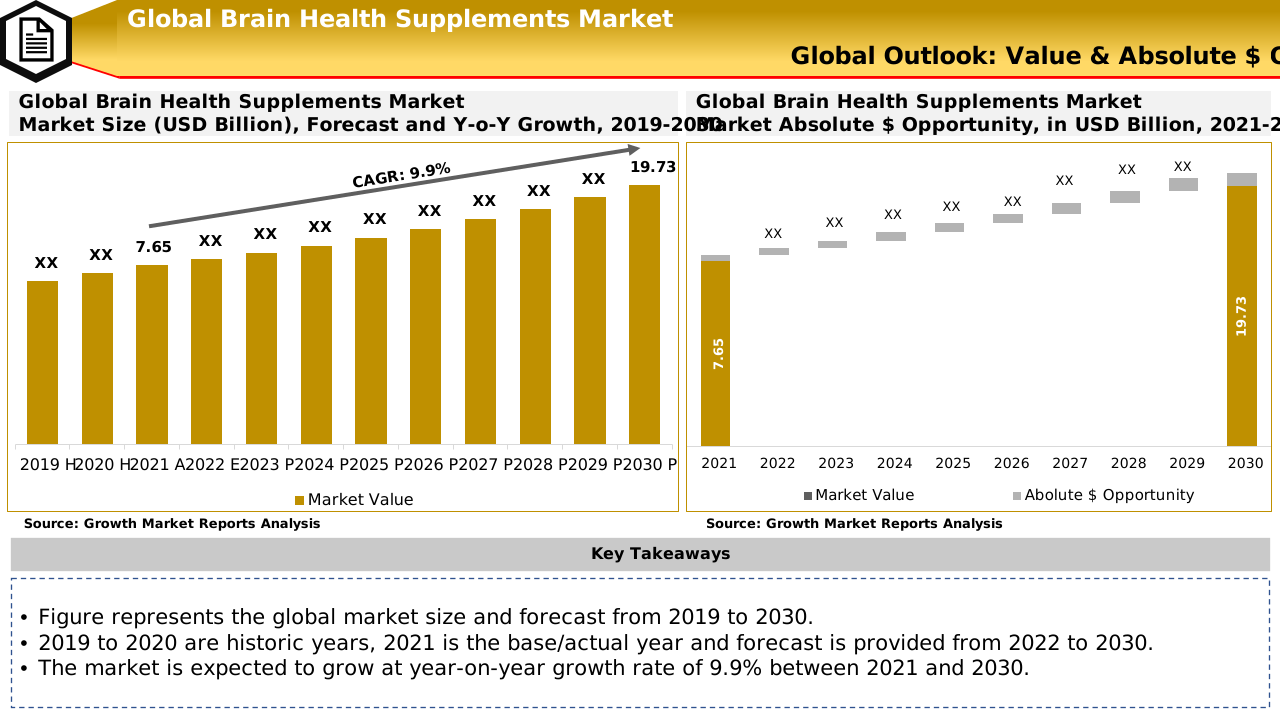
According to our latest research, the global brain health supplements market size reached USD 9.2 billion in 2024. The market is projected to expand at a CAGR of 8.4% from 2025 to 2033, reaching an estimated USD 18.7 billion by 2033. This robust growth is primarily driven by the increasing prevalence of cognitive disorders, rising consumer awareness regarding mental wellness, and the growing trend of preventive healthcare. As per our analysis, the market is witnessing substantial momentum due to the synergistic effect of demographic shifts, technological advancements in supplement formulation, and changing lifestyle patterns globally.

One of the most significant growth factors for the brain health supplements market is the escalating global burden of neurological disorders such as Alzheimer's disease, dementia, and age-related cognitive decline. The World Health Organization reports a steady rise in the aging population, particularly in developed regions like North America and Europe, which directly correlates with increasing demand for brain health supplements. Additionally, the growing body of scientific evidence supporting the efficacy of certain natural molecules, herbal extracts, and vitamins in enhancing cognitive function has fostered greater consumer trust in these products. This trend is further amplified by the increasing focus on mental health and wellness in mainstream media and healthcare discussions, encouraging both young and elderly populations to proactively invest in brain health.

Another critical driver is the surge in consumer inclination towards preventive healthcare and self-care practices. Modern lifestyles, characterized by high levels of stress, inadequate sleep, and unhealthy dietary habits, have heightened awareness about the importance of cognitive well-being. As a result, consumers are increasingly seeking solutions that can enhance memory, attention, mood, and overall mental performance. The proliferation of e-commerce platforms and digital health channels has also made brain health supplements more accessible, enabling consumers to research, compare, and purchase products conveniently. Furthermore, the introduction of innovative supplement forms such as gummies and powders, which cater to different consumer preferences, is expanding the market’s reach across diverse age groups.

The brain health supplements market is also benefiting from substantial investments in research and development by key industry players. Companies are focusing on the development of scientifically validated, high-quality formulations that deliver targeted benefits, thus addressing specific cognitive concerns such as memory enhancement, focus, and mood regulation. Strategic collaborations between supplement manufacturers, academic institutions, and healthcare organizations are fostering product innovation and facilitating the commercialization of novel ingredients. Additionally, regulatory bodies in several countries are streamlining guidelines for dietary supplements, which is expected to enhance product quality and consumer confidence, further propelling market growth.

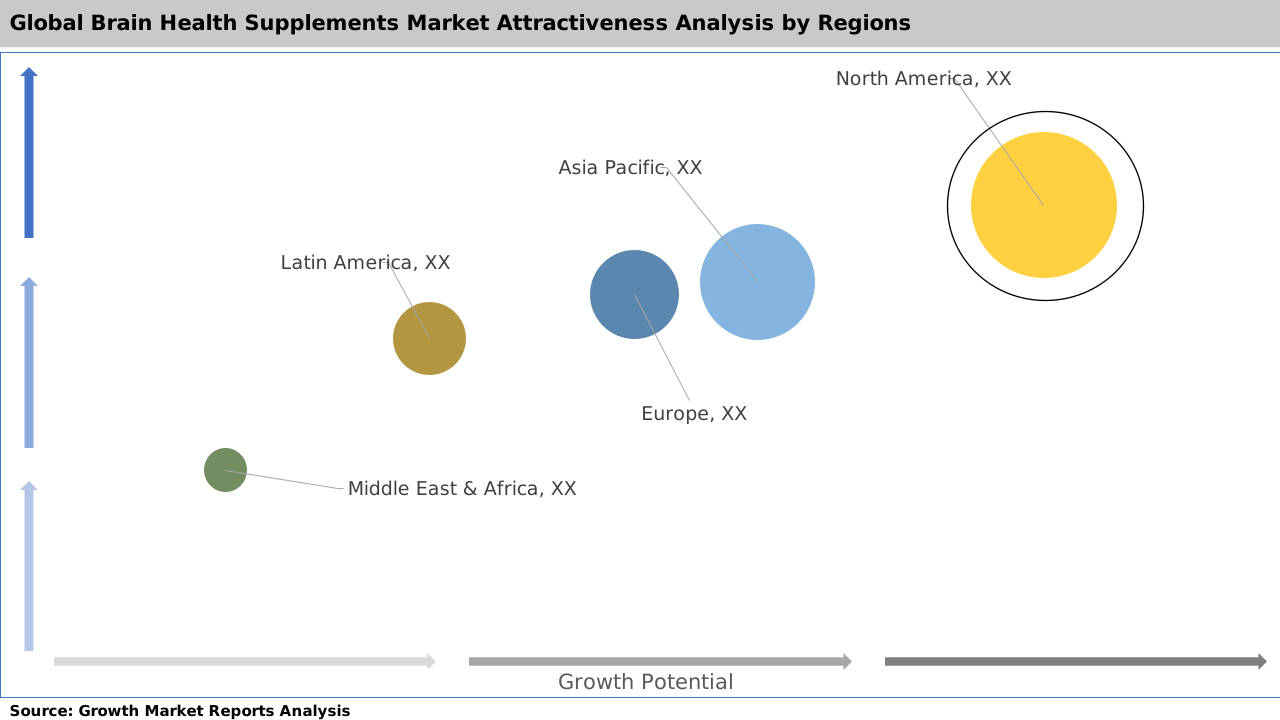
From a regional perspective, North America continues to dominate the brain health supplements market, accounting for the largest revenue share in 2024, followed by Europe and Asia Pacific. The United States, in particular, is witnessing a surge in product launches and consumer adoption, driven by high healthcare expenditure and a well-established nutraceuticals industry. Meanwhile, Asia Pacific is emerging as the fastest-growing market, fueled by rising disposable incomes, increasing health awareness, and a burgeoning aging population in countries such as Japan, China, and India. The regional outlook remains highly positive, with market players increasingly targeting emerging economies to tap into new growth opportunities.

Global Brain Health Supplements Industry Outlook

Product Type Analysis

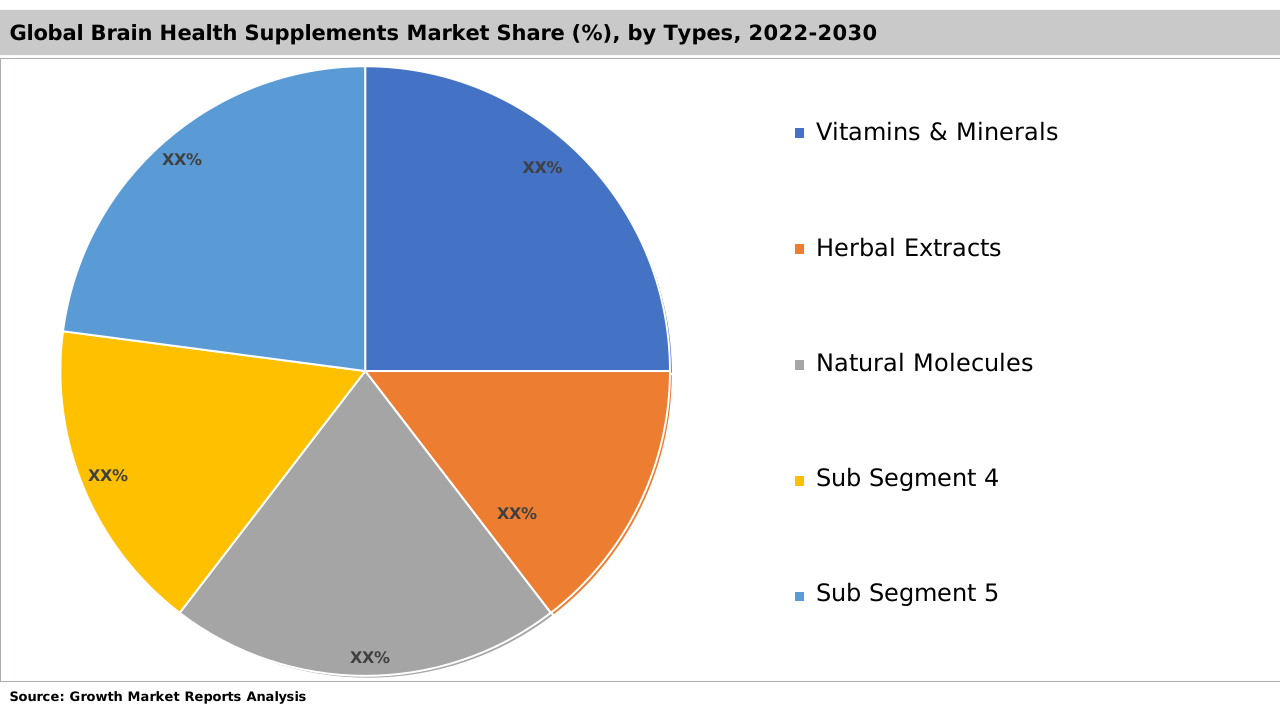
The brain health supplements market is segmented by product type into natural molecules, herbal extracts, vitamins & minerals, and others. Natural molecules, including omega-3 fatty acids, phosphatidylserine, and acetyl-L-carnitine, have gained significant traction due to their well-documented roles in supporting cognitive function and neural health. The demand for these molecules is driven by a growing preference for evidence-based products, as consumers seek supplements backed by clinical research. Additionally, the increasing incidence of age-related memory loss and cognitive impairment has led to a surge in the use of natural molecules, particularly among the elderly population. Manufacturers are responding by investing in advanced extraction and formulation technologies to enhance bioavailability and efficacy, further boosting the segment’s growth.

Herbal extracts represent another rapidly expanding segment within the brain health supplements market. Ingredients such as Ginkgo biloba, Bacopa monnieri, and Panax ginseng are widely recognized for their neuroprotective and cognitive-enhancing properties. These extracts appeal to consumers seeking natural and holistic approaches to brain health, aligning with the broader trend towards plant-based and organic products. The popularity of herbal supplements is particularly pronounced in Asia Pacific, where traditional medicine systems have long emphasized the use of botanicals for mental wellness. Market players are increasingly focusing on sourcing high-quality, standardized herbal extracts and conducting clinical trials to validate their benefits, thereby strengthening consumer confidence and driving segment growth.

Vitamins and minerals form a foundational component of brain health supplements, with B vitamins, vitamin D, magnesium, and zinc among the most commonly used ingredients. These micronutrients play a crucial role in neurotransmitter synthesis, energy metabolism, and neuroprotection. The segment’s growth is supported by rising awareness of the link between nutritional deficiencies and cognitive decline, as well as the increasing prevalence of lifestyle-related disorders such as stress, anxiety, and depression. Manufacturers are innovating by offering multivitamin formulations that address multiple aspects of brain health, catering to consumers seeking comprehensive solutions. Additionally, regulatory support for fortification initiatives in several countries is expected to further stimulate demand for vitamins and minerals in brain health supplements.

The “others” category includes emerging ingredients such as amino acids, peptides, and nootropics, which are gaining attention for their potential to enhance cognitive performance and mental clarity. While these products currently represent a smaller share of the market, ongoing research and growing consumer interest in biohacking and cognitive optimization are expected to drive future growth. Companies are actively exploring novel compounds and delivery mechanisms to differentiate their offerings and capture niche segments within the broader brain health supplements market. The dynamic nature of this segment underscores the importance of continuous innovation and scientific validation to meet evolving consumer needs and regulatory requirements.

Report Scope

Attributes Details
Report Title Brain Health Supplements Market Research Report 2033
By Product Type Natural Molecules, Herbal Extracts, Vitamins & Minerals, Others
By Application Memory Enhancement, Attention & Focus, Mood & Depression, Sleep & Recovery, Anti-aging, Others
By Form Tablets, Capsules, Powders, Gummies, Others
By Distribution Channel Online Stores, Supermarkets/Hypermarkets, Specialty Stores, Pharmacies, Others
By End-User Adults, Children, Elderly, Others
Regions Covered North America, Europe, APAC, Latin America, MEA
Base Year 2024
Historic Data 2018-2023
Forecast Period 2025-2033
Number of Pages 281
Number of Tables & Figures 338
Customization Available Yes, the report can be customized as per your need.

Application Analysis

The application landscape of the brain health supplements market is diverse, encompassing memory enhancement, attention & focus, mood & depression, sleep & recovery, anti-aging, and other specialized uses. Memory enhancement remains the most prominent application, driven by the rising prevalence of age-related cognitive decline and neurodegenerative disorders. Consumers across all age groups are increasingly prioritizing memory support, not only to address existing cognitive challenges but also as a preventive measure against future decline. Supplement manufacturers are leveraging advanced formulations that combine multiple active ingredients to deliver synergistic benefits, thereby enhancing product efficacy and consumer satisfaction.

Attention and focus represent another high-growth application segment, particularly among students, working professionals, and individuals with demanding cognitive workloads. The increasing prevalence of attention-deficit disorders, coupled with growing societal emphasis on productivity and performance, has fueled demand for supplements that support mental clarity, concentration, and sustained attention. Companies are responding by developing targeted formulations that incorporate natural stimulants, adaptogens, and nootropic compounds, catering to the specific needs of this consumer segment. The rise of remote work and digital learning environments has further accentuated the importance of cognitive support, driving sustained growth in this application area.

Mood and depression management is an emerging application within the brain health supplements market, reflecting the growing recognition of the interconnectedness between mental health and cognitive function. Rising rates of stress, anxiety, and depression, exacerbated by modern lifestyles and global events, have prompted consumers to seek natural alternatives to pharmaceutical interventions. Supplements containing adaptogens, herbal extracts, and mood-regulating nutrients are gaining popularity as adjuncts to conventional therapies, offering holistic support for emotional well-being. Manufacturers are increasingly collaborating with mental health professionals and researchers to develop evidence-based products that address both cognitive and emotional aspects of brain health.

Sleep and recovery is another vital application, as inadequate sleep and poor recovery are closely linked to impaired cognitive function and overall brain health. The growing awareness of the importance of restorative sleep has led to increased demand for supplements that promote relaxation, reduce sleep latency, and enhance sleep quality. Ingredients such as melatonin, magnesium, and valerian root are commonly used in sleep-support formulations, appealing to consumers seeking non-habit-forming solutions. The segment’s growth is further supported by the proliferation of wearable sleep trackers and digital health platforms, which enable consumers to monitor and optimize their sleep patterns in conjunction with supplement use.

The anti-aging application is gaining momentum as consumers increasingly associate cognitive vitality with overall longevity and quality of life. Supplements targeting neuroprotection, oxidative stress reduction, and cellular regeneration are being marketed to middle-aged and older adults seeking to preserve mental acuity and delay the onset of age-related cognitive decline. The convergence of brain health and anti-aging trends is driving innovation in product development, with companies exploring novel ingredients and delivery systems to address the unique needs of this demographic. The “others” category encompasses specialized applications such as stress management, neurodevelopmental support for children, and cognitive enhancement for athletes, reflecting the broadening scope of the brain health supplements market.

Form Analysis

The brain health supplements market is segmented by form into tablets, capsules, powders, gummies, and others. Tablets and capsules continue to dominate the market, owing to their convenience, precise dosing, and widespread consumer familiarity. These forms are particularly popular among adults and elderly consumers, who value the ease of incorporation into daily routines. Manufacturers are focusing on improving the bioavailability and absorption of active ingredients in tablet and capsule formulations, utilizing advanced technologies such as sustained-release coatings and microencapsulation. The segment’s growth is further supported by the increasing availability of combination products that deliver multiple cognitive benefits in a single dose.

Powders represent a rapidly growing segment, driven by their versatility and appeal to health-conscious consumers seeking customizable supplementation options. Powders can be easily mixed into beverages, smoothies, or foods, allowing users to tailor their intake to individual preferences and dietary needs. This form is particularly popular among younger consumers, athletes, and individuals with active lifestyles, who value the flexibility and convenience offered by powdered supplements. Manufacturers are innovating with flavored and functional blends that combine brain-boosting ingredients with other health-promoting compounds, expanding the segment’s appeal across diverse consumer groups.

Gummies have emerged as a highly popular form in recent years, especially among children, young adults, and those who experience difficulty swallowing traditional pills. The palatable taste, attractive appearance, and fun consumption experience associated with gummies have made them a preferred choice for individuals seeking a more enjoyable approach to supplementation. The segment’s growth is being driven by advancements in formulation technology, which enable the incorporation of a wide range of active ingredients without compromising taste or stability. Companies are increasingly offering sugar-free and vegan gummy options to cater to health-conscious and ethically-minded consumers.

The “others” category includes innovative forms such as liquid shots, effervescent tablets, and chewables, which are gaining traction among consumers seeking rapid absorption and on-the-go convenience. These novel delivery systems are particularly appealing to busy professionals, travelers, and individuals with specific dietary restrictions. Manufacturers are leveraging advances in formulation science to enhance the stability, shelf-life, and efficacy of these alternative forms, thereby expanding their market presence. The growing trend towards personalized nutrition is also driving the development of bespoke supplement formats that cater to individual preferences and health goals.

Distribution Channel Analysis

The distribution channel landscape for brain health supplements is highly diversified, encompassing online stores, supermarkets/hypermarkets, specialty stores, pharmacies, and others. Online stores have emerged as the fastest-growing channel, driven by the increasing penetration of e-commerce platforms, digital health marketplaces, and direct-to-consumer brand strategies. Consumers benefit from the convenience of shopping from home, access to a wide range of products, and the ability to compare prices and read reviews before making purchasing decisions. The COVID-19 pandemic has further accelerated the shift towards online shopping, with many consumers opting for contactless delivery and subscription-based models for their supplement needs.

Supermarkets and hypermarkets continue to play a significant role in the distribution of brain health supplements, particularly in developed markets where organized retail infrastructure is well-established. These outlets offer consumers the advantage of one-stop shopping, enabling them to purchase supplements alongside other health and wellness products. Manufacturers are increasingly partnering with major retail chains to enhance product visibility, offer promotional discounts, and conduct in-store educational campaigns. The segment’s growth is supported by the rising trend of health and wellness aisles in supermarkets, which cater to the growing demand for functional foods and dietary supplements.

Specialty stores, including health food stores, vitamin shops, and nutraceutical boutiques, cater to a niche segment of consumers seeking expert guidance and personalized recommendations. These outlets are particularly popular among health enthusiasts, athletes, and individuals with specific dietary requirements, who value the knowledge and expertise of store staff. Manufacturers are leveraging partnerships with specialty retailers to launch premium and exclusive product lines, conduct in-store demonstrations, and offer loyalty programs. The segment’s growth is driven by the increasing emphasis on holistic health and wellness, as well as the rising popularity of natural and organic supplements.

Pharmacies remain a trusted distribution channel for brain health supplements, particularly among elderly consumers and individuals with chronic health conditions. The presence of licensed pharmacists and healthcare professionals provides an added layer of credibility and assurance, making pharmacies a preferred choice for those seeking scientifically validated products. Manufacturers are increasingly collaborating with pharmacy chains to offer educational materials, conduct health screenings, and provide personalized supplement recommendations. The “others” category includes direct sales, wellness clinics, and institutional channels, reflecting the expanding reach of brain health supplements across diverse consumer touchpoints.

End-User Analysis

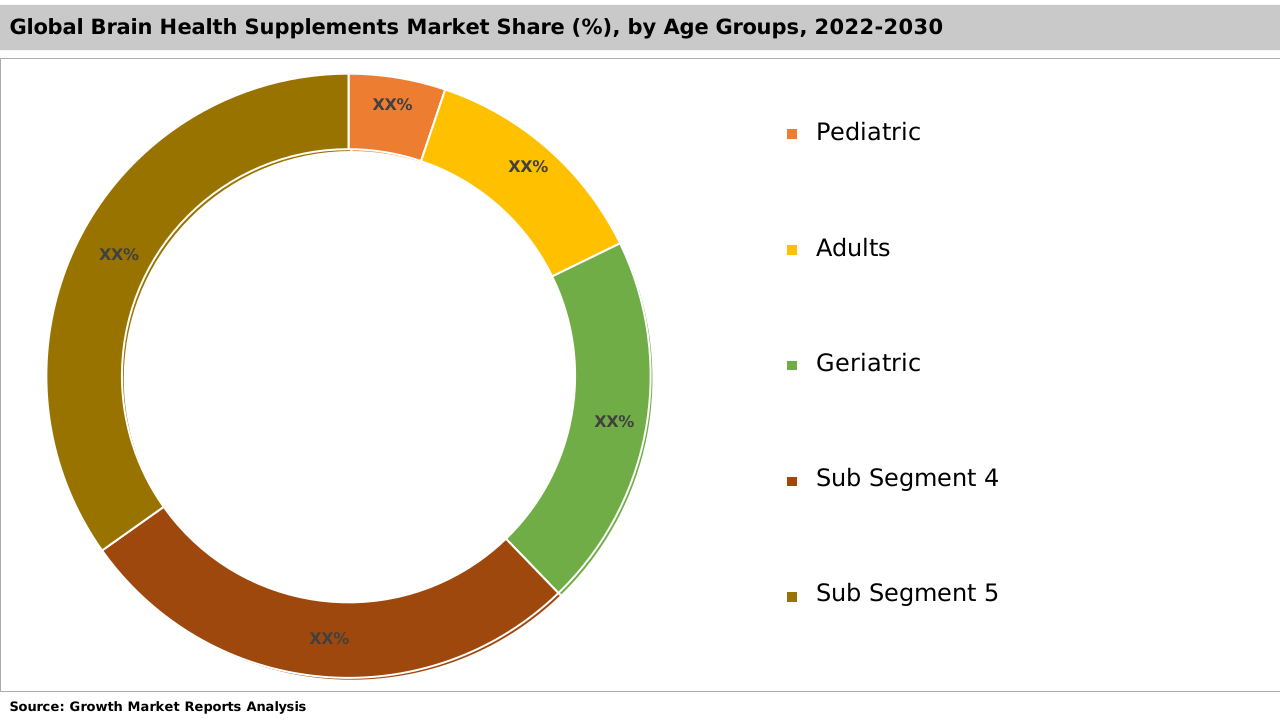
The end-user segmentation of the brain health supplements market includes adults, children, elderly, and others. Adults constitute the largest consumer group, driven by the increasing prevalence of work-related stress, demanding lifestyles, and the desire to maintain optimal cognitive performance. This segment is characterized by a high degree of product awareness, willingness to invest in preventive health measures, and openness to trying innovative supplement formats. Manufacturers are targeting adults with products that address specific cognitive concerns such as focus, memory, and mood, leveraging digital marketing and influencer partnerships to drive engagement and brand loyalty.

Children represent a growing segment, as parents become increasingly aware of the importance of early cognitive development and academic performance. Supplements formulated for children typically focus on supporting neurodevelopment, attention, and learning abilities, using safe and age-appropriate ingredients. The popularity of gummies and chewable tablets in this segment reflects the importance of palatability and ease of administration. Manufacturers are investing in pediatric research, collaborating with pediatricians and educational institutions to develop products that align with the unique needs of children at different developmental stages.

The elderly population is a key driver of growth in the brain health supplements market, given the rising incidence of age-related cognitive decline, dementia, and neurodegenerative diseases. Supplements targeting this demographic focus on memory enhancement, neuroprotection, and the prevention of cognitive impairment. The segment’s growth is supported by increasing healthcare expenditure, government initiatives to promote healthy aging, and the proliferation of senior wellness programs. Manufacturers are developing specialized formulations that address the unique physiological and metabolic needs of older adults, including products with enhanced bioavailability and safety profiles.

The “others” category encompasses niche consumer groups such as athletes, students, and individuals with specific cognitive or neurological conditions. Athletes, for example, are increasingly turning to brain health supplements to enhance mental clarity, focus, and reaction time, which are critical for peak performance. Similarly, students are seeking cognitive enhancers to support academic achievement and exam preparation. Manufacturers are responding by developing targeted products that cater to the unique needs and preferences of these specialized end-users, further expanding the market’s reach and diversity.

Opportunities & Threats

The brain health supplements market presents significant opportunities for growth and innovation, driven by increasing consumer awareness, advances in scientific research, and the convergence of health and technology. The rising popularity of personalized nutrition and digital health platforms is enabling companies to offer tailored supplement solutions that address individual cognitive needs and preferences. The integration of wearable devices, mobile apps, and AI-powered health assessments is transforming the way consumers monitor and manage their brain health, creating new avenues for product development and consumer engagement. Additionally, the growing demand for natural, organic, and clean-label supplements is encouraging manufacturers to invest in sustainable sourcing, transparent labeling, and third-party certifications, further enhancing brand credibility and consumer trust.

Another major opportunity lies in the expansion into emerging markets, where rising disposable incomes, urbanization, and increasing health literacy are driving demand for brain health supplements. Countries in Asia Pacific, Latin America, and the Middle East & Africa offer untapped growth potential, particularly as governments and healthcare organizations invest in preventive health initiatives and public awareness campaigns. Strategic partnerships with local distributors, healthcare providers, and regulatory agencies can help companies navigate complex market dynamics and tailor their offerings to meet regional preferences and regulatory requirements. The ongoing development of novel ingredients, advanced delivery systems, and multi-functional formulations is expected to further differentiate products and capture new consumer segments.

Despite the positive outlook, the brain health supplements market faces several restraining factors, including regulatory challenges, product safety concerns, and the prevalence of counterfeit or substandard products. The lack of harmonized global regulations for dietary supplements can create barriers to market entry and increase compliance costs for manufacturers. Additionally, the proliferation of unsubstantiated health claims and misleading marketing practices can undermine consumer confidence and hinder market growth. Ensuring product quality, safety, and efficacy through rigorous testing, transparent labeling, and adherence to good manufacturing practices is essential for sustaining long-term growth and protecting brand reputation in this competitive market.

Regional Outlook

North America remains the largest regional market for brain health supplements, accounting for approximately USD 3.8 billion in 2024. The region’s dominance is underpinned by high consumer awareness, robust healthcare infrastructure, and a well-established nutraceuticals industry. The United States leads the market, driven by a rapidly aging population, high prevalence of cognitive disorders, and strong demand for preventive healthcare solutions. The presence of leading supplement manufacturers, coupled with favorable regulatory frameworks and widespread adoption of digital health platforms, further supports market growth in North America. Canada is also witnessing steady growth, supported by rising health consciousness and government initiatives to promote mental wellness.

Europe is the second-largest market, with a value of USD 2.4 billion in 2024, and is expected to grow at a CAGR of 7.9% through 2033. The region’s growth is driven by increasing consumer preference for natural and organic supplements, a strong tradition of herbal medicine, and rising healthcare expenditure. Countries such as Germany, the United Kingdom, and France are leading the adoption of brain health supplements, supported by aging populations and proactive government policies to address cognitive health. The European market is characterized by stringent regulatory standards, which ensure product quality and safety, thereby enhancing consumer confidence and driving sustained demand for high-quality supplements.

Asia Pacific is emerging as the fastest-growing regional market, with a value of USD 2.0 billion in 2024. The region is projected to witness a CAGR of 10.2% from 2025 to 2033, outpacing other regions due to its large and rapidly aging population, rising disposable incomes, and increasing health awareness. Japan, China, and India are key markets, driven by the prevalence of traditional medicine systems, growing urbanization, and government efforts to promote healthy aging. The expanding middle class, coupled with increasing access to healthcare and digital platforms, is creating new opportunities for market players to introduce innovative and affordable brain health supplements tailored to local preferences.

Brain Health Supplements Market Statistics

Competitor Outlook

The competitive landscape of the brain health supplements market is characterized by intense rivalry among global and regional players, driven by the rapid pace of innovation, evolving consumer preferences, and the need for differentiation in a crowded marketplace. Leading companies are investing heavily in research and development to formulate products with enhanced efficacy, safety, and scientific validation. The focus on clinical trials, proprietary blends, and patented delivery systems is enabling market leaders to establish strong brand recognition and command premium pricing. Strategic collaborations with research institutions, healthcare professionals, and digital health platforms are further strengthening the competitive positioning of key players.

Market participants are also leveraging digital marketing, influencer partnerships, and social media campaigns to build brand awareness and engage with target audiences. The rise of direct-to-consumer brands and subscription-based models is transforming the traditional retail landscape, enabling companies to offer personalized supplement solutions and foster long-term customer loyalty. The emphasis on transparency, clean-label ingredients, and third-party certifications is becoming increasingly important, as consumers demand greater accountability and assurance regarding product quality and safety. Companies that can effectively balance innovation, regulatory compliance, and consumer trust are well-positioned to capture market share and drive sustainable growth.

Mergers and acquisitions, strategic partnerships, and product line expansions are common strategies employed by major players to strengthen their market presence and diversify their product portfolios. The entry of new players, particularly in the online and specialty retail segments, is intensifying competition and driving the need for continuous innovation and differentiation. The dynamic nature of the brain health supplements market requires companies to stay abreast of emerging trends, consumer insights, and regulatory developments to maintain a competitive edge.

Some of the major companies operating in the global brain health supplements market include Pfizer Inc., Amway Corporation, NOW Foods, Onnit Labs, Herbalife Nutrition Ltd., GNC Holdings, Nature’s Bounty Co., Pure Encapsulations, and Nootrobox (HVMN). Pfizer Inc. is recognized for its extensive research capabilities and diverse product portfolio, while Amway Corporation leverages its global distribution network and focus on wellness solutions. NOW Foods and Nature’s Bounty Co. are known for their high-quality, affordable supplements, catering to a broad consumer base. Onnit Labs and Nootrobox (HVMN) are at the forefront of innovation in the nootropics segment, offering cutting-edge formulations for cognitive enhancement. Herbalife Nutrition Ltd. and GNC Holdings have established strong retail and distribution channels, enabling widespread access to brain health supplements. Pure Encapsulations specializes in premium, science-based products, targeting healthcare professionals and discerning consumers. Together, these companies are shaping the future of the brain health supplements market through continuous innovation, strategic expansion, and a steadfast commitment to improving cognitive health worldwide.

Key Players

  • Nootrobox (now HVMN)
  • Onnit Labs
  • NOW Foods
  • Pure Encapsulations
  • Nutraceutical International Corporation
  • Natural Factors Nutritional Products Ltd.
  • Quincy Bioscience
  • Cebria
  • AlternaScript LLC
  • Peak Nootropics
  • Nootrico
  • Cognizin (Kyowa Hakko Bio Co., Ltd.)
  • Jarrow Formulas
  • GNC Holdings Inc.
  • Vitabiotics Ltd.
  • Amway
  • Herbalife Nutrition
  • Nature’s Bounty Co.
  • Unilever (Olly)
  • Pfizer Inc.
Brain Health Supplements Market Overview

Segments

The Brain Health Supplements market has been segmented on the basis of

Product Type

  • Natural Molecules
  • Herbal Extracts
  • Vitamins & Minerals
  • Others

Application

  • Memory Enhancement
  • Attention & Focus
  • Mood & Depression
  • Sleep & Recovery
  • Anti-aging
  • Others

Form

  • Tablets
  • Capsules
  • Powders
  • Gummies
  • Others

Distribution Channel

  • Online Stores
  • Supermarkets/Hypermarkets
  • Specialty Stores
  • Pharmacies
  • Others

End-User

  • Adults
  • Children
  • Elderly
  • Others

Competitive Landscape

The global brain health supplements market is highly competitive with the presence of key players such as AlternaScript, LLC; Elysium Health, Inc.; Accelerated Intelligence, LLC; Health Via Modern Nutrition, Inc.; Liquid Health, Inc.; Natural Factors Nutritional Products, Ltd.; Purelife Bioscience Co., Ltd.; Onnit Labs, Inc.; KeyView Labs, Inc.; Quincy Bioscience; Cerebral Success; Natrol, LLC; Amway Corporation; Ocean Health Pte. Ltd.; iHerb, LLC; RB Health (US) LLC; and others, who use strategies such as collaborations, partnerships, mergers, acquisitions, and product launches to strengthen their hold on the market.

For example, in August 2020, Elysium Health, Inc., a US-based dietary supplement firm, launched a brain health supplement, MATTER, which aids in slowing down brain deterioration linked with age-related amnesia.
In January 2022, Health Via Modern Nutrition, Inc. launched a daily ketone supplement, H.V.M.N. Ketone 2.0, which improves metabolic health and performance.
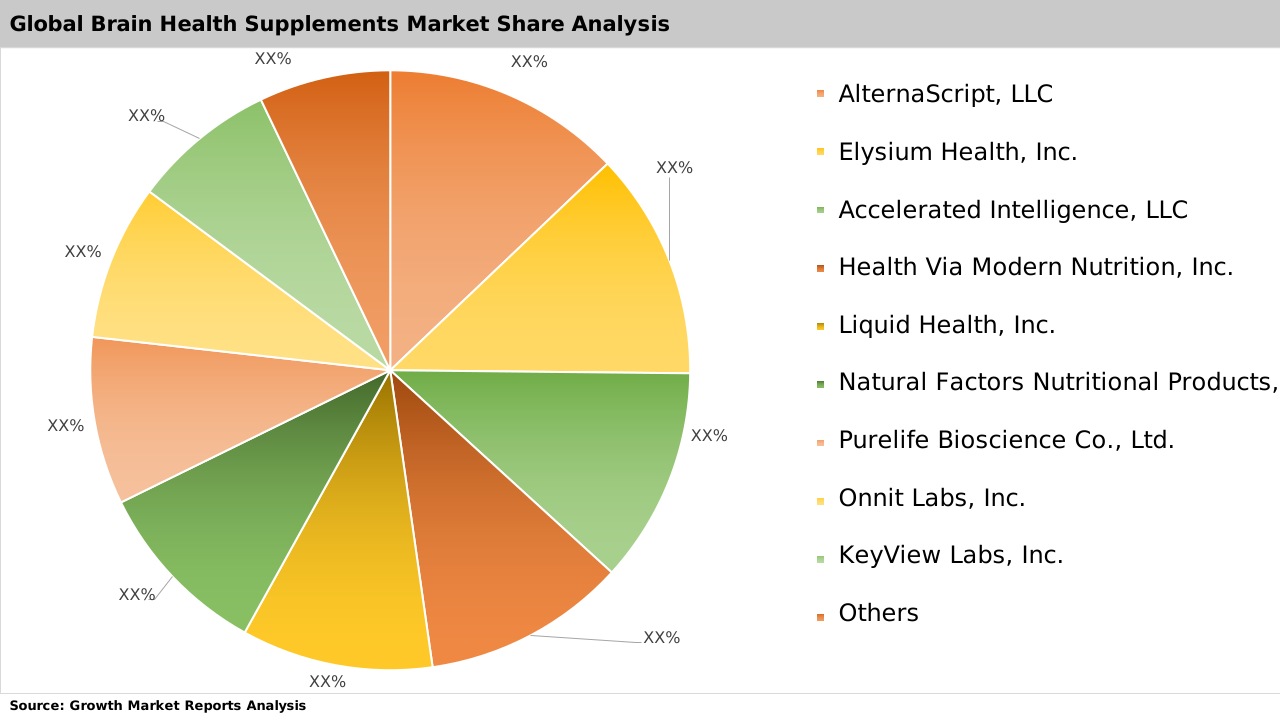

Global Brain Health Supplements Market Key Players

Frequently Asked Questions

The global brain health supplement market is estimated to register CAGR of around 9.9% during the forecast period.

The global brain health supplement market size was valued at around USD 7.65 billion in 2021.

Brain health supplements aid consumers tackling brain disorders and diseases and facilitate functioning of the brain.

Growing prevalence of mental health disorders, increasing geriatric population, and rising awareness of benefits of brain health supplements are the key factors driving the brain health supplement market.

AlternaScript, LLC; Elysium Health, Inc.; Accelerated Intelligence, LLC; Health Via Modern Nutrition, Inc.; Liquid Health, Inc.; Natural Factors Nutritional Products, Ltd.; and Purelife Bioscience Co., Ltd. are some of the key players in the global brain health supplement market.

Table Of Content

Chapter 1 Executive Summary
Chapter 2 Assumptions and Acronyms Used
Chapter 3 Research Methodology
Chapter 4 Brain Health Supplements Market Overview
   4.1 Introduction
      4.1.1 Market Taxonomy
      4.1.2 Market Definition
      4.1.3 Macro-Economic Factors Impacting the Market Growth
   4.2 Brain Health Supplements Market Dynamics
      4.2.1 Market Drivers
      4.2.2 Market Restraints
      4.2.3 Market Opportunity
   4.3 Brain Health Supplements Market - Supply Chain Analysis
      4.3.1 List of Key Suppliers
      4.3.2 List of Key Distributors
      4.3.3 List of Key Consumers
   4.4 Key Forces Shaping the Brain Health Supplements Market
      4.4.1 Bargaining Power of Suppliers
      4.4.2 Bargaining Power of Buyers
      4.4.3 Threat of Substitution
      4.4.4 Threat of New Entrants
      4.4.5 Competitive Rivalry
   4.5 Global Brain Health Supplements Market Size & Forecast, 2023-2032
      4.5.1 Brain Health Supplements Market Size and Y-o-Y Growth
      4.5.2 Brain Health Supplements Market Absolute $ Opportunity

Chapter 5 Global Brain Health Supplements Market Analysis and Forecast By Product Type
   5.1 Introduction
      5.1.1 Key Market Trends & Growth Opportunities By Product Type
      5.1.2 Basis Point Share (BPS) Analysis By Product Type
      5.1.3 Absolute $ Opportunity Assessment By Product Type
   5.2 Brain Health Supplements Market Size Forecast By Product Type
      5.2.1 Natural Molecules
      5.2.2 Herbal Extracts
      5.2.3 Vitamins & Minerals
      5.2.4 Others
   5.3 Market Attractiveness Analysis By Product Type

Chapter 6 Global Brain Health Supplements Market Analysis and Forecast By Application
   6.1 Introduction
      6.1.1 Key Market Trends & Growth Opportunities By Application
      6.1.2 Basis Point Share (BPS) Analysis By Application
      6.1.3 Absolute $ Opportunity Assessment By Application
   6.2 Brain Health Supplements Market Size Forecast By Application
      6.2.1 Memory Enhancement
      6.2.2 Attention & Focus
      6.2.3 Mood & Depression
      6.2.4 Sleep & Recovery
      6.2.5 Anti-aging
      6.2.6 Others
   6.3 Market Attractiveness Analysis By Application

Chapter 7 Global Brain Health Supplements Market Analysis and Forecast By Form
   7.1 Introduction
      7.1.1 Key Market Trends & Growth Opportunities By Form
      7.1.2 Basis Point Share (BPS) Analysis By Form
      7.1.3 Absolute $ Opportunity Assessment By Form
   7.2 Brain Health Supplements Market Size Forecast By Form
      7.2.1 Tablets
      7.2.2 Capsules
      7.2.3 Powders
      7.2.4 Gummies
      7.2.5 Others
   7.3 Market Attractiveness Analysis By Form

Chapter 8 Global Brain Health Supplements Market Analysis and Forecast By Distribution Channel
   8.1 Introduction
      8.1.1 Key Market Trends & Growth Opportunities By Distribution Channel
      8.1.2 Basis Point Share (BPS) Analysis By Distribution Channel
      8.1.3 Absolute $ Opportunity Assessment By Distribution Channel
   8.2 Brain Health Supplements Market Size Forecast By Distribution Channel
      8.2.1 Online Stores
      8.2.2 Supermarkets/Hypermarkets
      8.2.3 Specialty Stores
      8.2.4 Pharmacies
      8.2.5 Others
   8.3 Market Attractiveness Analysis By Distribution Channel

Chapter 9 Global Brain Health Supplements Market Analysis and Forecast By End-User
   9.1 Introduction
      9.1.1 Key Market Trends & Growth Opportunities By End-User
      9.1.2 Basis Point Share (BPS) Analysis By End-User
      9.1.3 Absolute $ Opportunity Assessment By End-User
   9.2 Brain Health Supplements Market Size Forecast By End-User
      9.2.1 Adults
      9.2.2 Children
      9.2.3 Elderly
      9.2.4 Others
   9.3 Market Attractiveness Analysis By End-User

Chapter 10 Global Brain Health Supplements Market Analysis and Forecast by Region
   10.1 Introduction
      10.1.1 Key Market Trends & Growth Opportunities By Region
      10.1.2 Basis Point Share (BPS) Analysis By Region
      10.1.3 Absolute $ Opportunity Assessment By Region
   10.2 Brain Health Supplements Market Size Forecast By Region
      10.2.1 North America
      10.2.2 Europe
      10.2.3 Asia Pacific
      10.2.4 Latin America
      10.2.5 Middle East & Africa (MEA)
   10.3 Market Attractiveness Analysis By Region

Chapter 11 Coronavirus Disease (COVID-19) Impact 
   11.1 Introduction 
   11.2 Current & Future Impact Analysis 
   11.3 Economic Impact Analysis 
   11.4 Government Policies 
   11.5 Investment Scenario

Chapter 12 North America Brain Health Supplements Analysis and Forecast
   12.1 Introduction
   12.2 North America Brain Health Supplements Market Size Forecast by Country
      12.2.1 U.S.
      12.2.2 Canada
   12.3 Basis Point Share (BPS) Analysis by Country
   12.4 Absolute $ Opportunity Assessment by Country
   12.5 Market Attractiveness Analysis by Country
   12.6 North America Brain Health Supplements Market Size Forecast By Product Type
      12.6.1 Natural Molecules
      12.6.2 Herbal Extracts
      12.6.3 Vitamins & Minerals
      12.6.4 Others
   12.7 Basis Point Share (BPS) Analysis By Product Type 
   12.8 Absolute $ Opportunity Assessment By Product Type 
   12.9 Market Attractiveness Analysis By Product Type
   12.10 North America Brain Health Supplements Market Size Forecast By Application
      12.10.1 Memory Enhancement
      12.10.2 Attention & Focus
      12.10.3 Mood & Depression
      12.10.4 Sleep & Recovery
      12.10.5 Anti-aging
      12.10.6 Others
   12.11 Basis Point Share (BPS) Analysis By Application 
   12.12 Absolute $ Opportunity Assessment By Application 
   12.13 Market Attractiveness Analysis By Application
   12.14 North America Brain Health Supplements Market Size Forecast By Form
      12.14.1 Tablets
      12.14.2 Capsules
      12.14.3 Powders
      12.14.4 Gummies
      12.14.5 Others
   12.15 Basis Point Share (BPS) Analysis By Form 
   12.16 Absolute $ Opportunity Assessment By Form 
   12.17 Market Attractiveness Analysis By Form
   12.18 North America Brain Health Supplements Market Size Forecast By Distribution Channel
      12.18.1 Online Stores
      12.18.2 Supermarkets/Hypermarkets
      12.18.3 Specialty Stores
      12.18.4 Pharmacies
      12.18.5 Others
   12.19 Basis Point Share (BPS) Analysis By Distribution Channel 
   12.20 Absolute $ Opportunity Assessment By Distribution Channel 
   12.21 Market Attractiveness Analysis By Distribution Channel
   12.22 North America Brain Health Supplements Market Size Forecast By End-User
      12.22.1 Adults
      12.22.2 Children
      12.22.3 Elderly
      12.22.4 Others
   12.23 Basis Point Share (BPS) Analysis By End-User 
   12.24 Absolute $ Opportunity Assessment By End-User 
   12.25 Market Attractiveness Analysis By End-User

Chapter 13 Europe Brain Health Supplements Analysis and Forecast
   13.1 Introduction
   13.2 Europe Brain Health Supplements Market Size Forecast by Country
      13.2.1 Germany
      13.2.2 France
      13.2.3 Italy
      13.2.4 U.K.
      13.2.5 Spain
      13.2.6 Russia
      13.2.7 Rest of Europe
   13.3 Basis Point Share (BPS) Analysis by Country
   13.4 Absolute $ Opportunity Assessment by Country
   13.5 Market Attractiveness Analysis by Country
   13.6 Europe Brain Health Supplements Market Size Forecast By Product Type
      13.6.1 Natural Molecules
      13.6.2 Herbal Extracts
      13.6.3 Vitamins & Minerals
      13.6.4 Others
   13.7 Basis Point Share (BPS) Analysis By Product Type 
   13.8 Absolute $ Opportunity Assessment By Product Type 
   13.9 Market Attractiveness Analysis By Product Type
   13.10 Europe Brain Health Supplements Market Size Forecast By Application
      13.10.1 Memory Enhancement
      13.10.2 Attention & Focus
      13.10.3 Mood & Depression
      13.10.4 Sleep & Recovery
      13.10.5 Anti-aging
      13.10.6 Others
   13.11 Basis Point Share (BPS) Analysis By Application 
   13.12 Absolute $ Opportunity Assessment By Application 
   13.13 Market Attractiveness Analysis By Application
   13.14 Europe Brain Health Supplements Market Size Forecast By Form
      13.14.1 Tablets
      13.14.2 Capsules
      13.14.3 Powders
      13.14.4 Gummies
      13.14.5 Others
   13.15 Basis Point Share (BPS) Analysis By Form 
   13.16 Absolute $ Opportunity Assessment By Form 
   13.17 Market Attractiveness Analysis By Form
   13.18 Europe Brain Health Supplements Market Size Forecast By Distribution Channel
      13.18.1 Online Stores
      13.18.2 Supermarkets/Hypermarkets
      13.18.3 Specialty Stores
      13.18.4 Pharmacies
      13.18.5 Others
   13.19 Basis Point Share (BPS) Analysis By Distribution Channel 
   13.20 Absolute $ Opportunity Assessment By Distribution Channel 
   13.21 Market Attractiveness Analysis By Distribution Channel
   13.22 Europe Brain Health Supplements Market Size Forecast By End-User
      13.22.1 Adults
      13.22.2 Children
      13.22.3 Elderly
      13.22.4 Others
   13.23 Basis Point Share (BPS) Analysis By End-User 
   13.24 Absolute $ Opportunity Assessment By End-User 
   13.25 Market Attractiveness Analysis By End-User

Chapter 14 Asia Pacific Brain Health Supplements Analysis and Forecast
   14.1 Introduction
   14.2 Asia Pacific Brain Health Supplements Market Size Forecast by Country
      14.2.1 China
      14.2.2 Japan
      14.2.3 South Korea
      14.2.4 India
      14.2.5 Australia
      14.2.6 South East Asia (SEA)
      14.2.7 Rest of Asia Pacific (APAC)
   14.3 Basis Point Share (BPS) Analysis by Country
   14.4 Absolute $ Opportunity Assessment by Country
   14.5 Market Attractiveness Analysis by Country
   14.6 Asia Pacific Brain Health Supplements Market Size Forecast By Product Type
      14.6.1 Natural Molecules
      14.6.2 Herbal Extracts
      14.6.3 Vitamins & Minerals
      14.6.4 Others
   14.7 Basis Point Share (BPS) Analysis By Product Type 
   14.8 Absolute $ Opportunity Assessment By Product Type 
   14.9 Market Attractiveness Analysis By Product Type
   14.10 Asia Pacific Brain Health Supplements Market Size Forecast By Application
      14.10.1 Memory Enhancement
      14.10.2 Attention & Focus
      14.10.3 Mood & Depression
      14.10.4 Sleep & Recovery
      14.10.5 Anti-aging
      14.10.6 Others
   14.11 Basis Point Share (BPS) Analysis By Application 
   14.12 Absolute $ Opportunity Assessment By Application 
   14.13 Market Attractiveness Analysis By Application
   14.14 Asia Pacific Brain Health Supplements Market Size Forecast By Form
      14.14.1 Tablets
      14.14.2 Capsules
      14.14.3 Powders
      14.14.4 Gummies
      14.14.5 Others
   14.15 Basis Point Share (BPS) Analysis By Form 
   14.16 Absolute $ Opportunity Assessment By Form 
   14.17 Market Attractiveness Analysis By Form
   14.18 Asia Pacific Brain Health Supplements Market Size Forecast By Distribution Channel
      14.18.1 Online Stores
      14.18.2 Supermarkets/Hypermarkets
      14.18.3 Specialty Stores
      14.18.4 Pharmacies
      14.18.5 Others
   14.19 Basis Point Share (BPS) Analysis By Distribution Channel 
   14.20 Absolute $ Opportunity Assessment By Distribution Channel 
   14.21 Market Attractiveness Analysis By Distribution Channel
   14.22 Asia Pacific Brain Health Supplements Market Size Forecast By End-User
      14.22.1 Adults
      14.22.2 Children
      14.22.3 Elderly
      14.22.4 Others
   14.23 Basis Point Share (BPS) Analysis By End-User 
   14.24 Absolute $ Opportunity Assessment By End-User 
   14.25 Market Attractiveness Analysis By End-User

Chapter 15 Latin America Brain Health Supplements Analysis and Forecast
   15.1 Introduction
   15.2 Latin America Brain Health Supplements Market Size Forecast by Country
      15.2.1 Brazil
      15.2.2 Mexico
      15.2.3 Rest of Latin America (LATAM)
   15.3 Basis Point Share (BPS) Analysis by Country
   15.4 Absolute $ Opportunity Assessment by Country
   15.5 Market Attractiveness Analysis by Country
   15.6 Latin America Brain Health Supplements Market Size Forecast By Product Type
      15.6.1 Natural Molecules
      15.6.2 Herbal Extracts
      15.6.3 Vitamins & Minerals
      15.6.4 Others
   15.7 Basis Point Share (BPS) Analysis By Product Type 
   15.8 Absolute $ Opportunity Assessment By Product Type 
   15.9 Market Attractiveness Analysis By Product Type
   15.10 Latin America Brain Health Supplements Market Size Forecast By Application
      15.10.1 Memory Enhancement
      15.10.2 Attention & Focus
      15.10.3 Mood & Depression
      15.10.4 Sleep & Recovery
      15.10.5 Anti-aging
      15.10.6 Others
   15.11 Basis Point Share (BPS) Analysis By Application 
   15.12 Absolute $ Opportunity Assessment By Application 
   15.13 Market Attractiveness Analysis By Application
   15.14 Latin America Brain Health Supplements Market Size Forecast By Form
      15.14.1 Tablets
      15.14.2 Capsules
      15.14.3 Powders
      15.14.4 Gummies
      15.14.5 Others
   15.15 Basis Point Share (BPS) Analysis By Form 
   15.16 Absolute $ Opportunity Assessment By Form 
   15.17 Market Attractiveness Analysis By Form
   15.18 Latin America Brain Health Supplements Market Size Forecast By Distribution Channel
      15.18.1 Online Stores
      15.18.2 Supermarkets/Hypermarkets
      15.18.3 Specialty Stores
      15.18.4 Pharmacies
      15.18.5 Others
   15.19 Basis Point Share (BPS) Analysis By Distribution Channel 
   15.20 Absolute $ Opportunity Assessment By Distribution Channel 
   15.21 Market Attractiveness Analysis By Distribution Channel
   15.22 Latin America Brain Health Supplements Market Size Forecast By End-User
      15.22.1 Adults
      15.22.2 Children
      15.22.3 Elderly
      15.22.4 Others
   15.23 Basis Point Share (BPS) Analysis By End-User 
   15.24 Absolute $ Opportunity Assessment By End-User 
   15.25 Market Attractiveness Analysis By End-User

Chapter 16 Middle East & Africa (MEA) Brain Health Supplements Analysis and Forecast
   16.1 Introduction
   16.2 Middle East & Africa (MEA) Brain Health Supplements Market Size Forecast by Country
      16.2.1 Saudi Arabia
      16.2.2 South Africa
      16.2.3 UAE
      16.2.4 Rest of Middle East & Africa (MEA)
   16.3 Basis Point Share (BPS) Analysis by Country
   16.4 Absolute $ Opportunity Assessment by Country
   16.5 Market Attractiveness Analysis by Country
   16.6 Middle East & Africa (MEA) Brain Health Supplements Market Size Forecast By Product Type
      16.6.1 Natural Molecules
      16.6.2 Herbal Extracts
      16.6.3 Vitamins & Minerals
      16.6.4 Others
   16.7 Basis Point Share (BPS) Analysis By Product Type 
   16.8 Absolute $ Opportunity Assessment By Product Type 
   16.9 Market Attractiveness Analysis By Product Type
   16.10 Middle East & Africa (MEA) Brain Health Supplements Market Size Forecast By Application
      16.10.1 Memory Enhancement
      16.10.2 Attention & Focus
      16.10.3 Mood & Depression
      16.10.4 Sleep & Recovery
      16.10.5 Anti-aging
      16.10.6 Others
   16.11 Basis Point Share (BPS) Analysis By Application 
   16.12 Absolute $ Opportunity Assessment By Application 
   16.13 Market Attractiveness Analysis By Application
   16.14 Middle East & Africa (MEA) Brain Health Supplements Market Size Forecast By Form
      16.14.1 Tablets
      16.14.2 Capsules
      16.14.3 Powders
      16.14.4 Gummies
      16.14.5 Others
   16.15 Basis Point Share (BPS) Analysis By Form 
   16.16 Absolute $ Opportunity Assessment By Form 
   16.17 Market Attractiveness Analysis By Form
   16.18 Middle East & Africa (MEA) Brain Health Supplements Market Size Forecast By Distribution Channel
      16.18.1 Online Stores
      16.18.2 Supermarkets/Hypermarkets
      16.18.3 Specialty Stores
      16.18.4 Pharmacies
      16.18.5 Others
   16.19 Basis Point Share (BPS) Analysis By Distribution Channel 
   16.20 Absolute $ Opportunity Assessment By Distribution Channel 
   16.21 Market Attractiveness Analysis By Distribution Channel
   16.22 Middle East & Africa (MEA) Brain Health Supplements Market Size Forecast By End-User
      16.22.1 Adults
      16.22.2 Children
      16.22.3 Elderly
      16.22.4 Others
   16.23 Basis Point Share (BPS) Analysis By End-User 
   16.24 Absolute $ Opportunity Assessment By End-User 
   16.25 Market Attractiveness Analysis By End-User

Chapter 17 Competition Landscape 
   17.1 Brain Health Supplements Market: Competitive Dashboard
   17.2 Global Brain Health Supplements Market: Market Share Analysis, 2023
   17.3 Company Profiles (Details – Overview, Financials, Developments, Strategy) 
      17.3.1 Nootrobox (now HVMN)
Onnit Labs
NOW Foods
Pure Encapsulations
Nutraceutical International Corporation
Natural Factors Nutritional Products Ltd.
Quincy Bioscience
Cebria
AlternaScript LLC
Peak Nootropics
Nootrico
Cognizin (Kyowa Hakko Bio Co., Ltd.)
Jarrow Formulas
GNC Holdings Inc.
Vitabiotics Ltd.
Amway
Herbalife Nutrition
Nature’s Bounty Co.
Unilever (Olly)
Pfizer Inc.

Methodology

Our Clients

Nestle SA
Microsoft
sinopec
Siemens Healthcare
Pfizer
FedEx Logistics
The John Holland Group
Dassault Aviation