Bottled Water Packaging Market Research Report 2033

Bottled Water Packaging Market Research Report 2033

Segments - by Packaging Type (Bottles, Cans, Pouches, Cartons, Others), by Material (Plastic, Glass, Metal, Paperboard, Others), by Capacity (Less than 500ml, 500ml–1L, 1L–5L, Above 5L), by Distribution Channel (Supermarkets/Hypermarkets, Convenience Stores, Online Retail, Others), by End-User (Residential, Commercial, Industrial)

https://growthmarketreports.com/Raksha
Author : Raksha Sharma
https://growthmarketreports.com/Vaibhav
Fact-checked by : V. Chandola
https://growthmarketreports.com/Shruti
Editor : Shruti Bhat

Upcoming | Report ID :MC-2745 | 4.4 Rating | 99 Reviews | 299 Pages | Format : Docx PDF

Report Description


Bottled Water Packaging Market Outlook

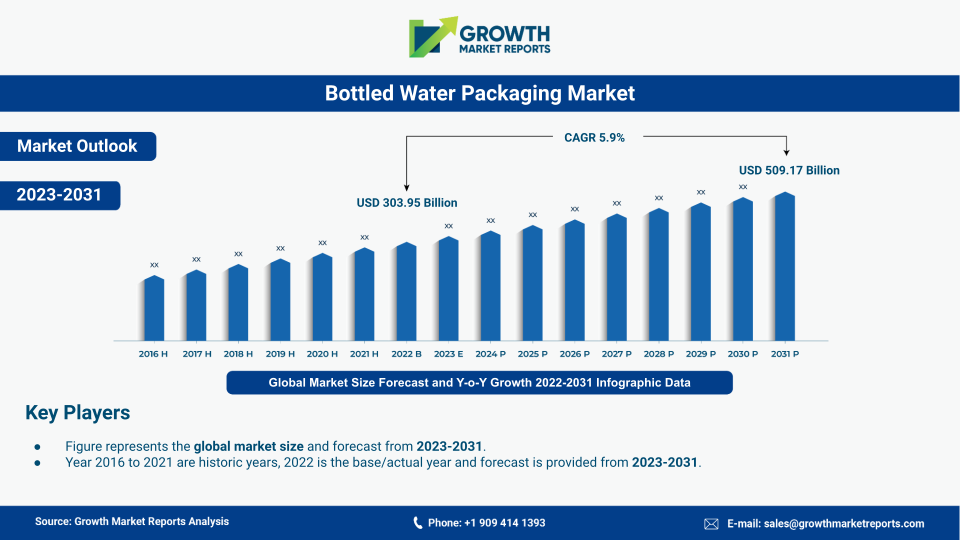
According to our latest research, the global bottled water packaging market size reached USD 69.8 billion in 2024, with a robust year-on-year growth driven by rising consumer demand for convenient and safe hydration solutions. The market is expected to expand at a CAGR of 6.1% from 2025 to 2033, reaching a projected value of USD 118.7 billion by 2033. The surge in health-conscious consumers, urbanization, and the increasing adoption of sustainable packaging alternatives are key growth factors fueling this expansion across all regions.

One significant growth driver for the bottled water packaging market is the increasing global awareness about health and wellness. Consumers are increasingly shifting away from sugary beverages and carbonated soft drinks in favor of bottled water, which is perceived as a healthier and safer alternative. This shift is particularly notable in urban areas, where concerns about tap water quality and lifestyle-related diseases have prompted a surge in bottled water consumption. The growing trend of on-the-go consumption and the proliferation of fitness and wellness activities are further amplifying the demand for portable, convenient, and hygienic bottled water packaging solutions.

Another critical factor propelling the bottled water packaging market is the rapid pace of urbanization and the expansion of retail infrastructure worldwide. As more people migrate to cities, the demand for packaged drinking water soars due to concerns over municipal water quality and the convenience offered by bottled water. The rise of supermarkets, hypermarkets, and convenience stores in both developed and emerging economies has made bottled water more accessible to a broader consumer base. Additionally, the increasing penetration of online retail channels has provided consumers with greater access to a variety of bottled water packaging formats, further boosting market growth.

Sustainability and technological innovation are also shaping the bottled water packaging market landscape. With growing environmental concerns, consumers and regulatory bodies are pushing for eco-friendly packaging solutions, prompting manufacturers to invest in recyclable, biodegradable, and lightweight materials. This shift is driving the adoption of advanced packaging technologies, such as plant-based plastics and reusable containers, which not only reduce environmental impact but also enhance brand image and customer loyalty. The integration of smart packaging features, such as QR codes for traceability and tamper-evident seals, is also gaining traction, offering both safety and convenience to end-users.

In recent years, the introduction of Bio-Plastic-Bottled Water has gained significant attention within the bottled water packaging market. These bottles are made from plant-based materials, which significantly reduce the carbon footprint compared to traditional petroleum-based plastics. As consumers become more environmentally conscious, the demand for bio-plastic alternatives is expected to rise. This shift not only addresses environmental concerns but also aligns with the industry's move towards sustainable practices. Companies are investing in research and development to enhance the durability and cost-effectiveness of bio-plastic bottles, making them a viable option for mass production. The adoption of bio-plastic bottles is anticipated to play a crucial role in the future of eco-friendly packaging solutions.

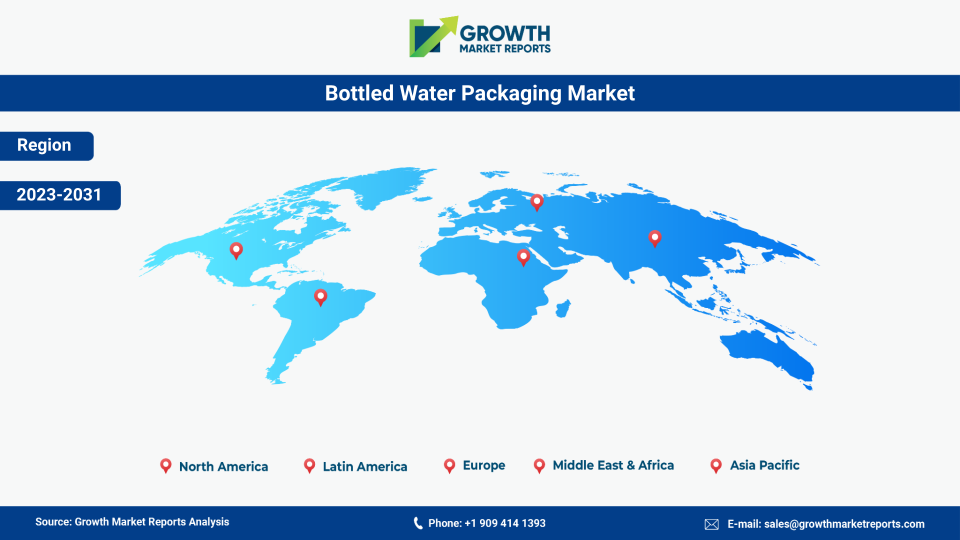
From a regional perspective, Asia Pacific continues to dominate the bottled water packaging market, accounting for the largest share due to its massive population, rapid urbanization, and rising disposable incomes. North America and Europe follow closely, driven by high consumer awareness, stringent quality standards, and a strong presence of leading market players. Meanwhile, Latin America and the Middle East & Africa are witnessing accelerated growth, supported by improving retail infrastructure and increasing health consciousness among consumers. Each region exhibits distinct consumer preferences and regulatory landscapes, shaping the evolution of packaging formats and materials across the global market.

Global Bottled Water Packaging Industry Outlook

Packaging Type Analysis

The bottled water packaging market is segmented by packaging type into bottles, cans, pouches, cartons, and others. Bottles remain the dominant packaging format, accounting for the majority of market share in 2024. This preference is largely attributed to their convenience, durability, and wide availability in various sizes and materials. Bottles, particularly those made from PET plastic, are lightweight, shatter-resistant, and cost-effective, making them the go-to choice for both manufacturers and consumers. The versatility of bottles, from single-serve to bulk sizes, caters to diverse consumption needs, ensuring their continued dominance in the market.

Cans, while traditionally associated with carbonated beverages, are gaining traction in the bottled water segment due to their recyclability and ability to preserve product freshness. Aluminum cans offer superior protection against light and oxygen, which helps maintain water quality over extended periods. The growing emphasis on sustainability and the circular economy has prompted several bottled water brands to introduce canned water options, appealing to environmentally conscious consumers. Although cans currently represent a smaller share compared to bottles, their adoption is expected to rise steadily over the forecast period.

Pouches and cartons are emerging as innovative packaging solutions in the bottled water market, driven by the demand for lightweight, space-efficient, and eco-friendly alternatives. Pouches, often used for single-serve or travel-sized products, offer convenience and reduced material usage, making them attractive for on-the-go consumers. Cartons, typically made from paperboard with a thin plastic or aluminum lining, are increasingly favored for their renewable content and recyclability. These formats are particularly popular in regions with strong environmental regulations and among brands seeking to differentiate themselves through sustainable packaging.

Boxed Water is another innovative solution gaining traction in the bottled water packaging market. This packaging format offers a sustainable alternative to traditional plastic bottles by utilizing paperboard cartons, which are predominantly made from renewable resources. Boxed Water is designed to be recyclable and, in some cases, biodegradable, appealing to environmentally conscious consumers. The rise of Boxed Water reflects a broader trend towards reducing plastic waste and promoting circular economy principles. As brands continue to explore eco-friendly packaging options, Boxed Water is likely to become a staple in the portfolios of companies committed to sustainability. The convenience and environmental benefits of Boxed Water make it an attractive choice for both consumers and retailers.

Other packaging types, including glass bottles and specialty containers, cater to niche segments such as premium bottled water and flavored or mineral-enhanced products. Glass bottles, while heavier and more fragile, are valued for their premium image and inert properties, which preserve the taste and quality of water. Specialty containers, such as reusable bottles and collapsible designs, are gaining popularity among environmentally conscious consumers and those seeking convenience in outdoor or athletic settings. The diversity of packaging types reflects the dynamic and evolving nature of the bottled water packaging market, with innovation and sustainability at the forefront of product development.

Report Scope

Attributes Details
Report Title Bottled Water Packaging Market Research Report 2033
By Packaging Type Bottles, Cans, Pouches, Cartons, Others
By Material Plastic, Glass, Metal, Paperboard, Others
By Capacity Less than 500ml, 500ml–1L, 1L–5L, Above 5L
By Distribution Channel Supermarkets/Hypermarkets, Convenience Stores, Online Retail, Others
By End-User Residential, Commercial, Industrial
Regions Covered North America, Europe, APAC, Latin America, MEA
Base Year 2024
Historic Data 2018-2023
Forecast Period 2025-2033
Number of Pages 299
Number of Tables & Figures 306
Customization Available Yes, the report can be customized as per your need.

Material Analysis

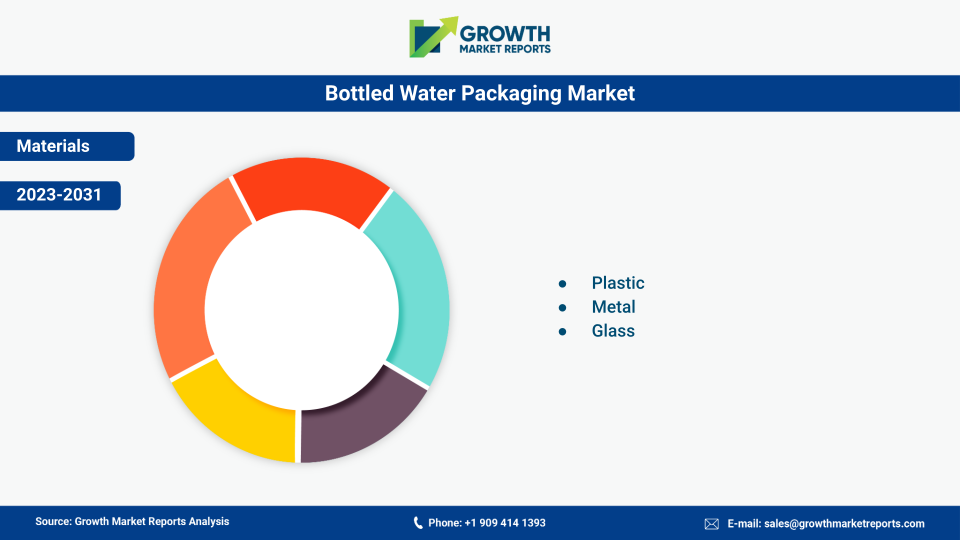
The choice of material is a critical factor in the bottled water packaging market, with plastic remaining the most widely used packaging material in 2024. PET (polyethylene terephthalate) plastic dominates due to its lightweight, cost-effectiveness, and recyclability. PET bottles are favored for their clarity, barrier properties, and ease of molding into various shapes and sizes, making them suitable for both single-serve and bulk packaging. However, growing concerns about plastic waste and environmental pollution are prompting industry stakeholders to explore alternatives and invest in improved recycling infrastructure.

Glass, while accounting for a smaller share of the market, is synonymous with premium bottled water offerings. Its inert nature ensures that water retains its original taste and purity, making it ideal for high-end, mineral, or artisanal water brands. Glass bottles are also fully recyclable and can be reused multiple times, aligning with the principles of a circular economy. The main challenges associated with glass packaging are its higher cost, weight, and fragility, which limit its use to niche segments and specific distribution channels such as hotels, restaurants, and premium retail outlets.

Metal, primarily in the form of aluminum cans and bottles, is gaining momentum as a sustainable alternative to plastic. Aluminum's high recyclability and ability to protect contents from light and oxygen make it increasingly attractive for both manufacturers and consumers. The shift towards metal packaging is supported by the growing popularity of canned water and the emergence of reusable aluminum bottles. While metal packaging currently represents a smaller portion of the market, its growth is expected to accelerate as sustainability becomes a key purchasing criterion.

The demand for Premium Bottled Water is on the rise, driven by consumers' growing preference for high-quality and distinctively packaged water products. This segment caters to a niche market that values the purity, taste, and aesthetic appeal of bottled water. Premium Bottled Water often features unique packaging designs, such as glass bottles or limited-edition labels, which enhance its perceived value. The emphasis on premium offerings aligns with broader consumer trends towards health and wellness, as well as the desire for luxury experiences. As disposable incomes increase, particularly in emerging markets, the premium segment is expected to witness robust growth. Brands are focusing on differentiating their products through innovative packaging and marketing strategies to capture the attention of discerning consumers.

Paperboard and other innovative materials are also making inroads in the bottled water packaging market. Paperboard cartons, often lined with a thin layer of plastic or aluminum, offer a renewable and recyclable option for eco-conscious consumers. These cartons are particularly popular in regions with stringent environmental regulations and among brands positioning themselves as sustainable. Other materials, such as plant-based plastics and biodegradable composites, are being developed to address the environmental impact of traditional packaging. As regulatory pressures and consumer preferences evolve, the material landscape of the bottled water packaging market is expected to become increasingly diverse and sustainable.

Capacity Analysis

The bottled water packaging market is segmented by capacity into less than 500ml, 500ml–1L, 1L–5L, and above 5L. The less than 500ml segment holds a significant share, driven by the demand for single-serve, on-the-go hydration solutions. These compact bottles are popular among urban consumers, commuters, and fitness enthusiasts, offering convenience and portability. The proliferation of vending machines, convenience stores, and retail outlets further supports the growth of this segment, as consumers increasingly seek quick and accessible hydration options.

The 500ml–1L segment is also a major contributor to the bottled water packaging market, catering to both individual and family consumption needs. Bottles in this capacity range strike a balance between portability and volume, making them suitable for a wide range of occasions, from office use to outdoor activities. The versatility of this segment is reflected in the variety of packaging materials and formats available, including PET bottles, glass bottles, and aluminum cans. The growing trend of multipacks and promotional bundles in retail channels further boosts the demand for 500ml–1L bottled water packaging.

The 1L–5L capacity segment is primarily driven by household and commercial consumption, where larger volumes are required for daily use, cooking, and group activities. These bottles offer cost savings and reduce the frequency of repurchase, making them popular among families, offices, and hospitality establishments. The segment is particularly prominent in regions with limited access to safe tap water or where bulk purchasing is a common practice. Manufacturers are focusing on ergonomic designs, sturdy handles, and tamper-evident closures to enhance the convenience and safety of these larger bottles.

Above 5L packaging, including large water jugs and dispensers, caters to industrial, commercial, and institutional end-users. These high-capacity containers are essential for settings such as offices, factories, schools, and public events, where the demand for clean drinking water is substantial. The segment is characterized by durable materials, reusable designs, and compatibility with water dispensing equipment. Innovations in this segment include collapsible jugs, stackable containers, and smart dispensers with filtration or cooling features. As the need for safe and accessible water continues to grow, the above 5L segment is expected to maintain steady demand across various end-user industries.

Distribution Channel Analysis

Distribution channels play a pivotal role in shaping the growth trajectory of the bottled water packaging market. Supermarkets and hypermarkets remain the leading distribution channel, accounting for the largest share of sales in 2024. These retail outlets offer a wide range of bottled water brands, packaging formats, and promotional deals, providing consumers with convenience and variety. The expansion of organized retail in emerging markets and the increasing number of large-format stores in developed regions have further strengthened the dominance of this channel. Supermarkets and hypermarkets are also instrumental in driving brand visibility and facilitating impulse purchases through strategic product placement.

Convenience stores represent another significant distribution channel, catering to the growing demand for on-the-go hydration. Located in high-traffic areas such as transportation hubs, gas stations, and urban centers, convenience stores offer quick access to single-serve bottled water products. The channelÂ’s focus on speed, accessibility, and immediate consumption aligns with the lifestyle of busy urban dwellers and travelers. As urbanization intensifies and consumer preferences shift towards smaller, more frequent purchases, the role of convenience stores in the bottled water packaging market is expected to expand further.

Online retail is rapidly emerging as a transformative force in the bottled water packaging market. The proliferation of e-commerce platforms, coupled with the increasing adoption of digital payment methods and home delivery services, has made it easier for consumers to purchase bottled water in bulk or subscribe to regular deliveries. Online channels offer a broader selection of brands, packaging types, and price points, enabling consumers to compare options and make informed decisions. The COVID-19 pandemic accelerated the shift towards online shopping, and this trend is expected to persist as consumers prioritize convenience and contactless transactions.

Other distribution channels, including direct sales, vending machines, and institutional supply, cater to specific market segments and use cases. Direct sales are common in the bulk water segment, where manufacturers supply large containers directly to offices, factories, and events. Vending machines, strategically placed in public spaces and workplaces, offer immediate access to bottled water and are increasingly equipped with cashless payment options and smart inventory management. Institutional supply channels serve schools, hospitals, and government facilities, ensuring a reliable and safe water supply for large groups. The diversity of distribution channels reflects the adaptability of the bottled water packaging market to evolving consumer behaviors and market dynamics.

End-User Analysis

The bottled water packaging market is segmented by end-user into residential, commercial, and industrial categories. The residential segment accounts for the largest share, driven by the widespread adoption of bottled water for daily hydration, cooking, and household use. Concerns about tap water quality, convenience, and the desire for safe and portable water solutions are key factors influencing residential consumption. The segment is characterized by a preference for single-serve and family-sized bottles, with growing interest in eco-friendly packaging options among environmentally conscious households.

The commercial segment encompasses a wide range of establishments, including offices, hotels, restaurants, gyms, and retail outlets. In these settings, bottled water is valued for its convenience, hygiene, and ability to cater to diverse customer preferences. The demand for premium, flavored, and functional bottled water products is particularly strong in the hospitality and wellness sectors, where differentiation and customer experience are paramount. Commercial end-users often require customized packaging solutions, such as branded bottles and bulk dispensers, to enhance brand image and operational efficiency.

The industrial segment, while representing a smaller share of the bottled water packaging market, plays a crucial role in ensuring the health and safety of workers in manufacturing plants, construction sites, and remote locations. Industrial end-users typically require large-capacity containers and robust packaging materials that can withstand harsh environments and transportation challenges. The segment is also characterized by stringent regulatory requirements related to water quality, packaging safety, and environmental impact. As industrial operations expand and workplace safety standards evolve, the demand for reliable and compliant bottled water packaging solutions is expected to grow.

Across all end-user segments, the emphasis on sustainability, convenience, and product differentiation is driving innovation in bottled water packaging. Manufacturers are investing in research and development to create packaging solutions that address the unique needs of residential, commercial, and industrial customers while minimizing environmental impact. The integration of smart packaging features, such as tamper-evident seals and QR codes for traceability, is enhancing consumer confidence and regulatory compliance. As consumer preferences and regulatory landscapes continue to evolve, the end-user segmentation of the bottled water packaging market is expected to become increasingly nuanced and dynamic.

Opportunities & Threats

The bottled water packaging market is poised for significant opportunities, particularly in the realm of sustainable packaging solutions. With growing environmental awareness and regulatory pressures, manufacturers are investing in biodegradable, recyclable, and plant-based packaging materials to meet the evolving expectations of consumers and stakeholders. The development of innovative packaging formats, such as reusable bottles and smart dispensers, presents new avenues for differentiation and value creation. Additionally, the expansion of e-commerce and direct-to-consumer channels offers brands the opportunity to reach a broader audience, personalize offerings, and build stronger customer relationships. As health and wellness trends continue to shape consumer behavior, the demand for functional and premium bottled water products packaged in convenient and attractive formats is expected to rise, creating new growth prospects for market players.

Another major opportunity lies in the adoption of advanced manufacturing technologies and digitalization across the bottled water packaging value chain. Automation, robotics, and IoT-enabled equipment are enabling manufacturers to enhance production efficiency, reduce costs, and ensure consistent product quality. The integration of smart packaging features, such as QR codes, NFC tags, and tamper-evident seals, offers added value by improving traceability, authenticity, and consumer engagement. Partnerships and collaborations with technology providers, sustainability organizations, and regulatory bodies can further accelerate innovation and market expansion. As consumer preferences shift towards personalized, convenient, and sustainable solutions, companies that embrace digital transformation and agile business models will be well-positioned to capitalize on emerging trends and opportunities in the bottled water packaging market.

Despite these opportunities, the bottled water packaging market faces significant threats and restrainers, particularly related to environmental sustainability and regulatory compliance. The widespread use of single-use plastics has attracted criticism from environmental groups, policymakers, and consumers, leading to stricter regulations and bans in several regions. Compliance with evolving packaging standards, recycling mandates, and extended producer responsibility schemes can increase operational complexity and costs for manufacturers. Additionally, fluctuations in raw material prices, supply chain disruptions, and changing consumer preferences pose ongoing challenges to market stability. Companies must proactively address these threats by investing in sustainable materials, circular economy initiatives, and transparent communication strategies to maintain consumer trust and regulatory compliance.

Regional Outlook

The Asia Pacific region remains the largest and fastest-growing market for bottled water packaging, with a market size of USD 27.6 billion in 2024. The region is projected to maintain a strong CAGR of 7.3% through 2033, driven by rapid urbanization, rising disposable incomes, and increasing health consciousness among consumers. Countries such as China, India, and Indonesia are witnessing a surge in bottled water consumption due to concerns over water quality and the expansion of modern retail infrastructure. The proliferation of local and international brands, coupled with government initiatives to improve water access and safety, further supports the growth of the bottled water packaging market in Asia Pacific.

North America is the second-largest market, with a market size of USD 18.9 billion in 2024. The region is characterized by high consumer awareness, stringent quality standards, and a strong presence of leading market players. The United States and Canada are major contributors, with bottled water being the preferred beverage for health-conscious consumers. The market is also witnessing a shift towards sustainable packaging solutions, with increasing adoption of recycled materials, reusable bottles, and eco-friendly formats. The growth of online retail and direct-to-consumer channels is further reshaping the competitive landscape, offering new opportunities for brands to engage with consumers and differentiate their offerings.

Europe, with a market size of USD 13.2 billion in 2024, is characterized by mature consumption patterns, strict environmental regulations, and a strong focus on sustainability. Countries such as Germany, France, and Italy are leading the transition towards recyclable and biodegradable packaging materials, supported by robust recycling infrastructure and government incentives. The region is also witnessing increased demand for premium and functional bottled water products, particularly in the hospitality and wellness sectors. Latin America and the Middle East & Africa, with market sizes of USD 6.5 billion and USD 3.6 billion respectively, are experiencing accelerated growth due to improving retail infrastructure, rising health awareness, and expanding urban populations. Each region presents unique challenges and opportunities, shaping the evolution of the bottled water packaging market on a global scale.

Bottled Water Packaging Market Statistics

Competitor Outlook

The bottled water packaging market is highly competitive, with a diverse mix of global, regional, and local players vying for market share. The competitive landscape is characterized by intense rivalry, rapid innovation, and a strong emphasis on sustainability and brand differentiation. Leading companies are investing in research and development to create innovative packaging solutions that address consumer preferences for convenience, safety, and environmental responsibility. Strategic partnerships, mergers and acquisitions, and geographic expansion are common strategies employed by market players to strengthen their market position and access new customer segments.

Sustainability has emerged as a key battleground in the bottled water packaging market, with companies racing to develop eco-friendly materials, reduce carbon footprints, and enhance recycling rates. Brands that can effectively communicate their sustainability initiatives and deliver tangible environmental benefits are gaining a competitive edge in the market. The integration of digital technologies, such as smart packaging and e-commerce platforms, is also enabling companies to enhance customer engagement, streamline supply chains, and differentiate their offerings. As regulatory pressures and consumer expectations continue to evolve, the ability to adapt and innovate will be critical to long-term success in the bottled water packaging market.

Major companies operating in the bottled water packaging market include Amcor plc, Ball Corporation, Tetra Pak International S.A., Plastipak Holdings, Inc., and Crown Holdings, Inc. These industry leaders are recognized for their extensive product portfolios, global reach, and commitment to sustainability. Amcor plc, for example, is at the forefront of developing recyclable and lightweight packaging solutions, while Ball Corporation is a pioneer in aluminum can technology and circular economy initiatives. Tetra Pak International S.A. is renowned for its paperboard cartons and focus on renewable materials, while Plastipak Holdings, Inc. specializes in PET packaging and advanced manufacturing technologies. Crown Holdings, Inc. is a leading supplier of metal packaging, offering innovative solutions for both beverage and food applications.

In addition to these global giants, a multitude of regional and local players contribute to the vibrancy and competitiveness of the bottled water packaging market. These companies often focus on specific packaging formats, materials, or geographic markets, leveraging their agility and local knowledge to respond quickly to changing consumer preferences and regulatory requirements. The presence of a diverse and dynamic competitive landscape ensures continuous innovation and a wide range of choices for consumers and end-users. As the market continues to evolve, collaboration and competition among industry players will drive the development of new and sustainable packaging solutions, shaping the future of the bottled water packaging market worldwide.

Key Players

  • Amcor plc
  • Berry Global Inc.
  • Coca-Cola Company
  • Nestlé S.A.
  • PepsiCo, Inc.
  • Danone S.A.
  • Cott Corporation
  • O-I Glass, Inc.
  • Gerolsteiner Brunnen GmbH & Co. KG
  • Bisleri International Pvt. Ltd.
  • FIJI Water Company LLC
  • Primo Water Corporation
  • Niagara Bottling, LLC
  • Crystal Geyser Water Company
  • Suntory Beverage & Food Ltd.
  • CG Roxane LLC
  • VOSS of Norway ASA
  • Mountain Valley Spring Company
  • Ferrarelle S.p.A.
  • Hildon Ltd.
Bottled Water Packaging Market Overview

Segments

The Bottled Water Packaging market has been segmented on the basis of

Packaging Type

  • Bottles
  • Cans
  • Pouches
  • Cartons
  • Others

Material

  • Plastic
  • Glass
  • Metal
  • Paperboard
  • Others

Capacity

  • Less than 500ml
  • 500ml–1L
  • 1L–5L
  • Above 5L

Distribution Channel

  • Supermarkets/Hypermarkets
  • Convenience Stores
  • Online Retail
  • Others

End-User

  • Residential
  • Commercial
  • Industrial

Competitive Landscape

Key players competing in the bottled water packaging market include Ball Corporation; Alpack Plastics; Sidel International; Plastipak Holdings; and Amcor Limited.

Some of these players coming up with several market such as mergers, acquisitions, partnerships, collaborations, capacity expansion, and product launches to increase/enhance their market shares. For instance, 

In April, 2019 Sidel's new EvoDECO Roll-Fed Labeller was chosen by Levissima, an Italian water brand, to ensure line performance and label quality.

In September, 2018 Nestlé Waters (Switzerland), Danone (France), and Origin Materials (US) teamed together with PepsiCo Inc. (US) to produce bottled water and beverage containers with a low carbon impact.

Bottled Water Packaging Market Key Players

Frequently Asked Questions

Emerging trends include the adoption of smart packaging (e.g., QR codes, tamper-evident seals), increased use of sustainable materials, growth of online and direct-to-consumer sales, and the development of innovative packaging formats like reusable bottles and smart dispensers.

Major challenges include environmental concerns over single-use plastics, regulatory compliance, fluctuations in raw material prices, and changing consumer preferences. Companies are responding by investing in sustainable materials and circular economy initiatives.

Key players include Amcor plc, Ball Corporation, Tetra Pak International S.A., Plastipak Holdings, Inc., Crown Holdings, Inc., Berry Global Inc., Coca-Cola Company, Nestlé S.A., PepsiCo, Inc., and Danone S.A., among others.

Supermarkets and hypermarkets are the leading distribution channels, followed by convenience stores and online retail. Other channels include direct sales, vending machines, and institutional supply.

Asia Pacific is the largest and fastest-growing region, followed by North America and Europe. Latin America and the Middle East & Africa are also experiencing significant growth due to urbanization and rising health awareness.

Sustainability is a major trend, with manufacturers investing in recyclable, biodegradable, and plant-based materials. Eco-friendly packaging, reusable bottles, and smart packaging features are increasingly important to both consumers and regulatory bodies.

The main materials used include plastic (primarily PET), glass, metal (aluminum), and paperboard. PET plastic dominates due to its lightweight and recyclable nature, while glass and aluminum are favored for premium and sustainable offerings.

Bottles, especially those made from PET plastic, are the most popular packaging type due to their convenience, durability, and cost-effectiveness. Other formats like cans, pouches, and cartons are also gaining traction, particularly for their sustainability benefits.

The bottled water packaging market is expected to grow at a CAGR of 6.1% from 2025 to 2033, reaching an estimated value of USD 118.7 billion by 2033.

As of 2024, the global bottled water packaging market reached USD 69.8 billion, with strong year-on-year growth driven by rising demand for convenient and safe hydration solutions.

Table Of Content

Chapter 1 Executive Summary
Chapter 2 Assumptions and Acronyms Used
Chapter 3 Research Methodology
Chapter 4 Bottled Water Packaging Market Overview
   4.1 Introduction
      4.1.1 Market Taxonomy
      4.1.2 Market Definition
      4.1.3 Macro-Economic Factors Impacting the Market Growth
   4.2 Bottled Water Packaging Market Dynamics
      4.2.1 Market Drivers
      4.2.2 Market Restraints
      4.2.3 Market Opportunity
   4.3 Bottled Water Packaging Market - Supply Chain Analysis
      4.3.1 List of Key Suppliers
      4.3.2 List of Key Distributors
      4.3.3 List of Key Consumers
   4.4 Key Forces Shaping the Bottled Water Packaging Market
      4.4.1 Bargaining Power of Suppliers
      4.4.2 Bargaining Power of Buyers
      4.4.3 Threat of Substitution
      4.4.4 Threat of New Entrants
      4.4.5 Competitive Rivalry
   4.5 Global Bottled Water Packaging Market Size & Forecast, 2023-2032
      4.5.1 Bottled Water Packaging Market Size and Y-o-Y Growth
      4.5.2 Bottled Water Packaging Market Absolute $ Opportunity

Chapter 5 Global Bottled Water Packaging Market Analysis and Forecast By Packaging Type
   5.1 Introduction
      5.1.1 Key Market Trends & Growth Opportunities By Packaging Type
      5.1.2 Basis Point Share (BPS) Analysis By Packaging Type
      5.1.3 Absolute $ Opportunity Assessment By Packaging Type
   5.2 Bottled Water Packaging Market Size Forecast By Packaging Type
      5.2.1 Bottles
      5.2.2 Cans
      5.2.3 Pouches
      5.2.4 Cartons
      5.2.5 Others
   5.3 Market Attractiveness Analysis By Packaging Type

Chapter 6 Global Bottled Water Packaging Market Analysis and Forecast By Material
   6.1 Introduction
      6.1.1 Key Market Trends & Growth Opportunities By Material
      6.1.2 Basis Point Share (BPS) Analysis By Material
      6.1.3 Absolute $ Opportunity Assessment By Material
   6.2 Bottled Water Packaging Market Size Forecast By Material
      6.2.1 Plastic
      6.2.2 Glass
      6.2.3 Metal
      6.2.4 Paperboard
      6.2.5 Others
   6.3 Market Attractiveness Analysis By Material

Chapter 7 Global Bottled Water Packaging Market Analysis and Forecast By Capacity
   7.1 Introduction
      7.1.1 Key Market Trends & Growth Opportunities By Capacity
      7.1.2 Basis Point Share (BPS) Analysis By Capacity
      7.1.3 Absolute $ Opportunity Assessment By Capacity
   7.2 Bottled Water Packaging Market Size Forecast By Capacity
      7.2.1 Less than 500ml
      7.2.2 500ml–1L
      7.2.3 1L–5L
      7.2.4 Above 5L
   7.3 Market Attractiveness Analysis By Capacity

Chapter 8 Global Bottled Water Packaging Market Analysis and Forecast By Distribution Channel
   8.1 Introduction
      8.1.1 Key Market Trends & Growth Opportunities By Distribution Channel
      8.1.2 Basis Point Share (BPS) Analysis By Distribution Channel
      8.1.3 Absolute $ Opportunity Assessment By Distribution Channel
   8.2 Bottled Water Packaging Market Size Forecast By Distribution Channel
      8.2.1 Supermarkets/Hypermarkets
      8.2.2 Convenience Stores
      8.2.3 Online Retail
      8.2.4 Others
   8.3 Market Attractiveness Analysis By Distribution Channel

Chapter 9 Global Bottled Water Packaging Market Analysis and Forecast By End-User
   9.1 Introduction
      9.1.1 Key Market Trends & Growth Opportunities By End-User
      9.1.2 Basis Point Share (BPS) Analysis By End-User
      9.1.3 Absolute $ Opportunity Assessment By End-User
   9.2 Bottled Water Packaging Market Size Forecast By End-User
      9.2.1 Residential
      9.2.2 Commercial
      9.2.3 Industrial
   9.3 Market Attractiveness Analysis By End-User

Chapter 10 Global Bottled Water Packaging Market Analysis and Forecast by Region
   10.1 Introduction
      10.1.1 Key Market Trends & Growth Opportunities By Region
      10.1.2 Basis Point Share (BPS) Analysis By Region
      10.1.3 Absolute $ Opportunity Assessment By Region
   10.2 Bottled Water Packaging Market Size Forecast By Region
      10.2.1 North America
      10.2.2 Europe
      10.2.3 Asia Pacific
      10.2.4 Latin America
      10.2.5 Middle East & Africa (MEA)
   10.3 Market Attractiveness Analysis By Region

Chapter 11 Coronavirus Disease (COVID-19) Impact 
   11.1 Introduction 
   11.2 Current & Future Impact Analysis 
   11.3 Economic Impact Analysis 
   11.4 Government Policies 
   11.5 Investment Scenario

Chapter 12 North America Bottled Water Packaging Analysis and Forecast
   12.1 Introduction
   12.2 North America Bottled Water Packaging Market Size Forecast by Country
      12.2.1 U.S.
      12.2.2 Canada
   12.3 Basis Point Share (BPS) Analysis by Country
   12.4 Absolute $ Opportunity Assessment by Country
   12.5 Market Attractiveness Analysis by Country
   12.6 North America Bottled Water Packaging Market Size Forecast By Packaging Type
      12.6.1 Bottles
      12.6.2 Cans
      12.6.3 Pouches
      12.6.4 Cartons
      12.6.5 Others
   12.7 Basis Point Share (BPS) Analysis By Packaging Type 
   12.8 Absolute $ Opportunity Assessment By Packaging Type 
   12.9 Market Attractiveness Analysis By Packaging Type
   12.10 North America Bottled Water Packaging Market Size Forecast By Material
      12.10.1 Plastic
      12.10.2 Glass
      12.10.3 Metal
      12.10.4 Paperboard
      12.10.5 Others
   12.11 Basis Point Share (BPS) Analysis By Material 
   12.12 Absolute $ Opportunity Assessment By Material 
   12.13 Market Attractiveness Analysis By Material
   12.14 North America Bottled Water Packaging Market Size Forecast By Capacity
      12.14.1 Less than 500ml
      12.14.2 500ml–1L
      12.14.3 1L–5L
      12.14.4 Above 5L
   12.15 Basis Point Share (BPS) Analysis By Capacity 
   12.16 Absolute $ Opportunity Assessment By Capacity 
   12.17 Market Attractiveness Analysis By Capacity
   12.18 North America Bottled Water Packaging Market Size Forecast By Distribution Channel
      12.18.1 Supermarkets/Hypermarkets
      12.18.2 Convenience Stores
      12.18.3 Online Retail
      12.18.4 Others
   12.19 Basis Point Share (BPS) Analysis By Distribution Channel 
   12.20 Absolute $ Opportunity Assessment By Distribution Channel 
   12.21 Market Attractiveness Analysis By Distribution Channel
   12.22 North America Bottled Water Packaging Market Size Forecast By End-User
      12.22.1 Residential
      12.22.2 Commercial
      12.22.3 Industrial
   12.23 Basis Point Share (BPS) Analysis By End-User 
   12.24 Absolute $ Opportunity Assessment By End-User 
   12.25 Market Attractiveness Analysis By End-User

Chapter 13 Europe Bottled Water Packaging Analysis and Forecast
   13.1 Introduction
   13.2 Europe Bottled Water Packaging Market Size Forecast by Country
      13.2.1 Germany
      13.2.2 France
      13.2.3 Italy
      13.2.4 U.K.
      13.2.5 Spain
      13.2.6 Russia
      13.2.7 Rest of Europe
   13.3 Basis Point Share (BPS) Analysis by Country
   13.4 Absolute $ Opportunity Assessment by Country
   13.5 Market Attractiveness Analysis by Country
   13.6 Europe Bottled Water Packaging Market Size Forecast By Packaging Type
      13.6.1 Bottles
      13.6.2 Cans
      13.6.3 Pouches
      13.6.4 Cartons
      13.6.5 Others
   13.7 Basis Point Share (BPS) Analysis By Packaging Type 
   13.8 Absolute $ Opportunity Assessment By Packaging Type 
   13.9 Market Attractiveness Analysis By Packaging Type
   13.10 Europe Bottled Water Packaging Market Size Forecast By Material
      13.10.1 Plastic
      13.10.2 Glass
      13.10.3 Metal
      13.10.4 Paperboard
      13.10.5 Others
   13.11 Basis Point Share (BPS) Analysis By Material 
   13.12 Absolute $ Opportunity Assessment By Material 
   13.13 Market Attractiveness Analysis By Material
   13.14 Europe Bottled Water Packaging Market Size Forecast By Capacity
      13.14.1 Less than 500ml
      13.14.2 500ml–1L
      13.14.3 1L–5L
      13.14.4 Above 5L
   13.15 Basis Point Share (BPS) Analysis By Capacity 
   13.16 Absolute $ Opportunity Assessment By Capacity 
   13.17 Market Attractiveness Analysis By Capacity
   13.18 Europe Bottled Water Packaging Market Size Forecast By Distribution Channel
      13.18.1 Supermarkets/Hypermarkets
      13.18.2 Convenience Stores
      13.18.3 Online Retail
      13.18.4 Others
   13.19 Basis Point Share (BPS) Analysis By Distribution Channel 
   13.20 Absolute $ Opportunity Assessment By Distribution Channel 
   13.21 Market Attractiveness Analysis By Distribution Channel
   13.22 Europe Bottled Water Packaging Market Size Forecast By End-User
      13.22.1 Residential
      13.22.2 Commercial
      13.22.3 Industrial
   13.23 Basis Point Share (BPS) Analysis By End-User 
   13.24 Absolute $ Opportunity Assessment By End-User 
   13.25 Market Attractiveness Analysis By End-User

Chapter 14 Asia Pacific Bottled Water Packaging Analysis and Forecast
   14.1 Introduction
   14.2 Asia Pacific Bottled Water Packaging Market Size Forecast by Country
      14.2.1 China
      14.2.2 Japan
      14.2.3 South Korea
      14.2.4 India
      14.2.5 Australia
      14.2.6 South East Asia (SEA)
      14.2.7 Rest of Asia Pacific (APAC)
   14.3 Basis Point Share (BPS) Analysis by Country
   14.4 Absolute $ Opportunity Assessment by Country
   14.5 Market Attractiveness Analysis by Country
   14.6 Asia Pacific Bottled Water Packaging Market Size Forecast By Packaging Type
      14.6.1 Bottles
      14.6.2 Cans
      14.6.3 Pouches
      14.6.4 Cartons
      14.6.5 Others
   14.7 Basis Point Share (BPS) Analysis By Packaging Type 
   14.8 Absolute $ Opportunity Assessment By Packaging Type 
   14.9 Market Attractiveness Analysis By Packaging Type
   14.10 Asia Pacific Bottled Water Packaging Market Size Forecast By Material
      14.10.1 Plastic
      14.10.2 Glass
      14.10.3 Metal
      14.10.4 Paperboard
      14.10.5 Others
   14.11 Basis Point Share (BPS) Analysis By Material 
   14.12 Absolute $ Opportunity Assessment By Material 
   14.13 Market Attractiveness Analysis By Material
   14.14 Asia Pacific Bottled Water Packaging Market Size Forecast By Capacity
      14.14.1 Less than 500ml
      14.14.2 500ml–1L
      14.14.3 1L–5L
      14.14.4 Above 5L
   14.15 Basis Point Share (BPS) Analysis By Capacity 
   14.16 Absolute $ Opportunity Assessment By Capacity 
   14.17 Market Attractiveness Analysis By Capacity
   14.18 Asia Pacific Bottled Water Packaging Market Size Forecast By Distribution Channel
      14.18.1 Supermarkets/Hypermarkets
      14.18.2 Convenience Stores
      14.18.3 Online Retail
      14.18.4 Others
   14.19 Basis Point Share (BPS) Analysis By Distribution Channel 
   14.20 Absolute $ Opportunity Assessment By Distribution Channel 
   14.21 Market Attractiveness Analysis By Distribution Channel
   14.22 Asia Pacific Bottled Water Packaging Market Size Forecast By End-User
      14.22.1 Residential
      14.22.2 Commercial
      14.22.3 Industrial
   14.23 Basis Point Share (BPS) Analysis By End-User 
   14.24 Absolute $ Opportunity Assessment By End-User 
   14.25 Market Attractiveness Analysis By End-User

Chapter 15 Latin America Bottled Water Packaging Analysis and Forecast
   15.1 Introduction
   15.2 Latin America Bottled Water Packaging Market Size Forecast by Country
      15.2.1 Brazil
      15.2.2 Mexico
      15.2.3 Rest of Latin America (LATAM)
   15.3 Basis Point Share (BPS) Analysis by Country
   15.4 Absolute $ Opportunity Assessment by Country
   15.5 Market Attractiveness Analysis by Country
   15.6 Latin America Bottled Water Packaging Market Size Forecast By Packaging Type
      15.6.1 Bottles
      15.6.2 Cans
      15.6.3 Pouches
      15.6.4 Cartons
      15.6.5 Others
   15.7 Basis Point Share (BPS) Analysis By Packaging Type 
   15.8 Absolute $ Opportunity Assessment By Packaging Type 
   15.9 Market Attractiveness Analysis By Packaging Type
   15.10 Latin America Bottled Water Packaging Market Size Forecast By Material
      15.10.1 Plastic
      15.10.2 Glass
      15.10.3 Metal
      15.10.4 Paperboard
      15.10.5 Others
   15.11 Basis Point Share (BPS) Analysis By Material 
   15.12 Absolute $ Opportunity Assessment By Material 
   15.13 Market Attractiveness Analysis By Material
   15.14 Latin America Bottled Water Packaging Market Size Forecast By Capacity
      15.14.1 Less than 500ml
      15.14.2 500ml–1L
      15.14.3 1L–5L
      15.14.4 Above 5L
   15.15 Basis Point Share (BPS) Analysis By Capacity 
   15.16 Absolute $ Opportunity Assessment By Capacity 
   15.17 Market Attractiveness Analysis By Capacity
   15.18 Latin America Bottled Water Packaging Market Size Forecast By Distribution Channel
      15.18.1 Supermarkets/Hypermarkets
      15.18.2 Convenience Stores
      15.18.3 Online Retail
      15.18.4 Others
   15.19 Basis Point Share (BPS) Analysis By Distribution Channel 
   15.20 Absolute $ Opportunity Assessment By Distribution Channel 
   15.21 Market Attractiveness Analysis By Distribution Channel
   15.22 Latin America Bottled Water Packaging Market Size Forecast By End-User
      15.22.1 Residential
      15.22.2 Commercial
      15.22.3 Industrial
   15.23 Basis Point Share (BPS) Analysis By End-User 
   15.24 Absolute $ Opportunity Assessment By End-User 
   15.25 Market Attractiveness Analysis By End-User

Chapter 16 Middle East & Africa (MEA) Bottled Water Packaging Analysis and Forecast
   16.1 Introduction
   16.2 Middle East & Africa (MEA) Bottled Water Packaging Market Size Forecast by Country
      16.2.1 Saudi Arabia
      16.2.2 South Africa
      16.2.3 UAE
      16.2.4 Rest of Middle East & Africa (MEA)
   16.3 Basis Point Share (BPS) Analysis by Country
   16.4 Absolute $ Opportunity Assessment by Country
   16.5 Market Attractiveness Analysis by Country
   16.6 Middle East & Africa (MEA) Bottled Water Packaging Market Size Forecast By Packaging Type
      16.6.1 Bottles
      16.6.2 Cans
      16.6.3 Pouches
      16.6.4 Cartons
      16.6.5 Others
   16.7 Basis Point Share (BPS) Analysis By Packaging Type 
   16.8 Absolute $ Opportunity Assessment By Packaging Type 
   16.9 Market Attractiveness Analysis By Packaging Type
   16.10 Middle East & Africa (MEA) Bottled Water Packaging Market Size Forecast By Material
      16.10.1 Plastic
      16.10.2 Glass
      16.10.3 Metal
      16.10.4 Paperboard
      16.10.5 Others
   16.11 Basis Point Share (BPS) Analysis By Material 
   16.12 Absolute $ Opportunity Assessment By Material 
   16.13 Market Attractiveness Analysis By Material
   16.14 Middle East & Africa (MEA) Bottled Water Packaging Market Size Forecast By Capacity
      16.14.1 Less than 500ml
      16.14.2 500ml–1L
      16.14.3 1L–5L
      16.14.4 Above 5L
   16.15 Basis Point Share (BPS) Analysis By Capacity 
   16.16 Absolute $ Opportunity Assessment By Capacity 
   16.17 Market Attractiveness Analysis By Capacity
   16.18 Middle East & Africa (MEA) Bottled Water Packaging Market Size Forecast By Distribution Channel
      16.18.1 Supermarkets/Hypermarkets
      16.18.2 Convenience Stores
      16.18.3 Online Retail
      16.18.4 Others
   16.19 Basis Point Share (BPS) Analysis By Distribution Channel 
   16.20 Absolute $ Opportunity Assessment By Distribution Channel 
   16.21 Market Attractiveness Analysis By Distribution Channel
   16.22 Middle East & Africa (MEA) Bottled Water Packaging Market Size Forecast By End-User
      16.22.1 Residential
      16.22.2 Commercial
      16.22.3 Industrial
   16.23 Basis Point Share (BPS) Analysis By End-User 
   16.24 Absolute $ Opportunity Assessment By End-User 
   16.25 Market Attractiveness Analysis By End-User

Chapter 17 Competition Landscape 
   17.1 Bottled Water Packaging Market: Competitive Dashboard
   17.2 Global Bottled Water Packaging Market: Market Share Analysis, 2023
   17.3 Company Profiles (Details – Overview, Financials, Developments, Strategy) 
      17.3.1 Amcor plc
Berry Global Inc.
Coca-Cola Company
Nestlé S.A.
PepsiCo, Inc.
Danone S.A.
Cott Corporation
O-I Glass, Inc.
Gerolsteiner Brunnen GmbH & Co. KG
Bisleri International Pvt. Ltd.
FIJI Water Company LLC
Primo Water Corporation
Niagara Bottling, LLC
Crystal Geyser Water Company
Suntory Beverage & Food Ltd.
CG Roxane LLC
VOSS of Norway ASA
Mountain Valley Spring Company
Ferrarelle S.p.A.
Hildon Ltd.

Methodology

Our Clients

General Mills
Microsoft
Dassault Aviation
The John Holland Group
Pfizer
Nestle SA
Deloitte
sinopec