Segments - by Material Type (Polyimide, Polyester, Polyethylene Terephthalate, Polycarbonate, Others), by Application (Electronics, Automotive, Aerospace, Medical Devices, Others), by Adhesive Type (Thermosetting, Pressure Sensitive, Others), by End-User (Consumer Electronics, Industrial, Automotive, Aerospace & Defense, Healthcare, Others)
According to our latest research, the global bonding sheet market size in 2024 stands at USD 1.56 billion, with a robust growth trajectory projected at a CAGR of 6.4% from 2025 to 2033. By the end of 2033, the market is expected to reach approximately USD 2.71 billion. This growth is primarily driven by the escalating demand for advanced adhesive solutions in electronics manufacturing, automotive assembly, and aerospace applications, as industries worldwide prioritize lightweight, durable, and high-performance materials for next-generation products.
One of the most significant growth factors for the bonding sheet market is the rapid evolution of the electronics sector, particularly in Asia Pacific. The proliferation of smartphones, tablets, wearables, and other electronic devices has led manufacturers to seek bonding sheets that offer superior insulation, flexibility, and thermal management. These sheets are crucial in multilayer printed circuit boards (PCBs), flexible circuits, and display modules, where reliability and miniaturization are paramount. The shift toward 5G and IoT-enabled devices further amplifies the need for high-quality bonding materials, as performance standards continue to rise and device architectures become increasingly complex.
Another major driver is the automotive industryÂ’s transition toward electric and hybrid vehicles, which require innovative bonding materials for battery packs, sensors, and lightweight body components. As automakers intensify efforts to reduce vehicle weight and improve energy efficiency, bonding sheets are replacing traditional mechanical fasteners and liquid adhesives, offering advantages in process automation, design flexibility, and overall performance. The stringent regulatory landscape concerning emissions and safety standards is also compelling manufacturers to adopt advanced bonding solutions that enhance durability, crashworthiness, and thermal stability in automotive assemblies.
The aerospace and medical device sectors are also contributing significantly to market expansion. In aerospace, bonding sheets are employed in composite structures, insulation panels, and electronic systems, where reliability under extreme conditions is non-negotiable. The medical device industry, on the other hand, leverages bonding sheets for applications such as diagnostic equipment, wearable medical devices, and implantable electronics, where biocompatibility and precision are critical. The convergence of miniaturization trends, regulatory compliance, and the demand for rapid prototyping is accelerating the adoption of bonding sheets across these highly regulated sectors.
Regionally, Asia Pacific dominates the global bonding sheet market, accounting for more than 45% of total revenues in 2024, driven by its robust manufacturing base and expanding electronics and automotive industries. North America and Europe follow, with steady demand fueled by advancements in aerospace, healthcare, and industrial automation. Latin America and the Middle East & Africa regions are witnessing gradual growth, supported by infrastructure development and increasing investments in local manufacturing capabilities. The competitive landscape remains dynamic, with regional players vying for market share alongside global giants, as innovation and sustainability become key differentiators.
In the realm of electronics manufacturing, the role of Semiconductor Polymer Bonding Adhesive is becoming increasingly vital. These adhesives are specifically designed to meet the rigorous demands of semiconductor applications, offering exceptional thermal conductivity and electrical insulation. As devices become more compact and powerful, the need for adhesives that can efficiently dissipate heat while maintaining electrical isolation is paramount. This is particularly crucial in high-performance computing and advanced semiconductor packaging, where reliability and efficiency are critical. The development of these specialized adhesives is a testament to the industry's commitment to innovation and performance enhancement, ensuring that next-generation devices can operate at peak efficiency without compromising on safety or durability.
The material composition of bonding sheets is a critical determinant of their performance, cost, and suitability for various applications. Among the leading materials, polyimide bonding sheets are renowned for their exceptional thermal stability, chemical resistance, and electrical insulation properties. These characteristics make polyimide sheets the preferred choice in high-reliability sectors such as aerospace, defense, and advanced electronics, where exposure to extreme temperatures and harsh environments is routine. The ongoing development of flexible electronics and wearable devices is further boosting the demand for polyimide-based bonding solutions, as manufacturers seek materials that can withstand repeated bending and flexing without compromising performance.
Polyester bonding sheets, on the other hand, offer a cost-effective alternative for applications where moderate heat resistance and mechanical strength are sufficient. Widely used in consumer electronics, automotive interiors, and industrial laminates, polyester sheets provide excellent dimensional stability and processability. Their versatility and affordability have made them a staple in large-volume manufacturing, especially in emerging markets where cost pressures are significant. Technological advancements in polyester formulations are enhancing their adhesion properties and environmental durability, opening up new opportunities in sectors such as renewable energy and smart packaging.
Polyethylene terephthalate (PET) bonding sheets occupy a unique position due to their outstanding clarity, chemical resistance, and ease of processing. PET sheets are extensively utilized in display technologies, label laminates, and medical devices, where optical transparency and biocompatibility are essential. The rising adoption of PET in flexible displays and touch panels is a testament to its growing relevance in next-generation electronics. Additionally, PETÂ’s recyclability aligns with the industryÂ’s sustainability goals, prompting manufacturers to invest in eco-friendly bonding solutions that minimize environmental impact.
Polycarbonate bonding sheets are favored for their high impact resistance, optical clarity, and flame retardancy, making them suitable for demanding applications in automotive glazing, aerospace interiors, and electronic enclosures. The ability to withstand mechanical stress and maintain transparency under harsh conditions positions polycarbonate as a material of choice for safety-critical and aesthetically driven products. Ongoing research into polycarbonate composites and hybrid structures is expected to further expand the market potential of these bonding sheets, particularly in sectors where lightweighting and safety are top priorities.
The automotive sector is witnessing a transformative shift with the advent of Cellular Bonding for Vehicles. This innovative approach to bonding leverages cellular structures to enhance the strength and durability of vehicle components. As the industry moves towards electric and autonomous vehicles, the demand for materials that can withstand dynamic stresses while reducing overall vehicle weight is increasing. Cellular bonding offers a solution by providing lightweight yet robust connections that improve crashworthiness and energy efficiency. This technology is particularly beneficial in the assembly of battery packs and sensor modules, where precision and reliability are non-negotiable. As automakers continue to push the boundaries of design and performance, cellular bonding is set to play a pivotal role in the future of vehicle manufacturing.
Other specialty materials, including fluoropolymers, polyolefins, and advanced engineered resins, are also gaining traction in niche applications that require tailored performance attributes. These materials are often selected for their unique combinations of thermal conductivity, dielectric strength, and resistance to aggressive chemicals. As end-user industries continue to diversify and demand more customized bonding solutions, the market for specialty bonding sheet materials is poised for steady growth, supported by continuous innovation and material science breakthroughs.
| Attributes | Details |
| Report Title | Bonding Sheet Market Research Report 2033 |
| By Material Type | Polyimide, Polyester, Polyethylene Terephthalate, Polycarbonate, Others |
| By Application | Electronics, Automotive, Aerospace, Medical Devices, Others |
| By Adhesive Type | Thermosetting, Pressure Sensitive, Others |
| By End-User | Consumer Electronics, Industrial, Automotive, Aerospace & Defense, Healthcare, Others |
| Regions Covered | North America, Europe, APAC, Latin America, MEA |
| Base Year | 2024 |
| Historic Data | 2018-2023 |
| Forecast Period | 2025-2033 |
| Number of Pages | 283 |
| Number of Tables & Figures | 383 |
| Customization Available | Yes, the report can be customized as per your need. |
The electronics segment represents the largest application area for bonding sheets, accounting for a substantial share of the global market in 2024. Bonding sheets are indispensable in the fabrication of multilayer PCBs, flexible circuits, and semiconductor packaging, where they provide electrical insulation, mechanical reinforcement, and thermal management. The relentless pace of innovation in consumer electronics, coupled with the emergence of 5G, IoT, and AI-driven devices, is driving manufacturers to adopt bonding solutions that enable miniaturization, reliability, and high-speed performance. The integration of bonding sheets in advanced display modules, sensors, and wearable devices underscores their pivotal role in the evolution of modern electronics.
In the automotive sector, bonding sheets are increasingly used in the assembly of lightweight body panels, battery modules, and electronic control units (ECUs). The transition toward electric vehicles (EVs) and autonomous driving technologies is creating new opportunities for bonding sheet manufacturers, as automakers seek materials that can enhance energy efficiency, crashworthiness, and thermal management. Bonding sheets offer significant advantages over traditional joining methods, including reduced weight, improved process automation, and enhanced design flexibility. The adoption of bonding sheets in automotive interiors, displays, and sensor modules is expected to accelerate as the industry embraces smart mobility and connected vehicle platforms.
The aerospace industry relies on bonding sheets for critical applications such as composite structures, insulation panels, and avionics systems. The stringent requirements for weight reduction, flame retardancy, and long-term durability make bonding sheets an ideal choice for aerospace engineers. The growth of commercial aviation, coupled with the increasing use of composite materials in aircraft manufacturing, is fueling demand for high-performance bonding solutions that can withstand extreme temperatures, vibration, and chemical exposure. As aerospace manufacturers pursue lighter, safer, and more fuel-efficient aircraft, the role of bonding sheets in enabling advanced material integration will continue to expand.
The construction and manufacturing industries are increasingly turning to Panel Bonding Adhesives to enhance the structural integrity and aesthetic appeal of their projects. These adhesives offer a seamless and durable bonding solution for a variety of panel materials, including metals, composites, and plastics. By eliminating the need for mechanical fasteners, panel bonding adhesives provide a clean and smooth finish, which is particularly desirable in applications such as automotive body panels and architectural facades. The ability to distribute stress evenly across bonded surfaces also enhances the overall strength and longevity of the assembly. As industries continue to prioritize efficiency and sustainability, the adoption of panel bonding adhesives is expected to rise, driven by their ability to improve both performance and aesthetics.
In the medical devices segment, bonding sheets are utilized in diagnostic equipment, wearable medical devices, and implantable electronics, where biocompatibility, precision, and reliability are paramount. The miniaturization of medical devices and the growing emphasis on patient safety are driving the adoption of bonding sheets that offer superior adhesion, flexibility, and sterilization resistance. The increasing prevalence of home healthcare, telemedicine, and remote monitoring solutions is further boosting the demand for bonding sheets in medical applications, as manufacturers develop innovative devices that improve patient outcomes and streamline healthcare delivery.
Other applications, including industrial automation, renewable energy, and smart packaging, are also witnessing increased adoption of bonding sheets. In industrial settings, bonding sheets are used to assemble sensors, actuators, and control panels, where robust adhesion and environmental resistance are essential. The renewable energy sector leverages bonding sheets in solar panels, wind turbine components, and battery systems, as the need for durable and efficient materials grows. As industries continue to innovate and adopt advanced manufacturing processes, the application landscape for bonding sheets is set to diversify, creating new growth avenues for market participants.
The thermosetting adhesive segment dominates the bonding sheet market, owing to its superior mechanical strength, heat resistance, and chemical stability. Thermosetting adhesives, such as epoxy and phenolic resins, form irreversible bonds upon curing, making them ideal for applications that demand long-term durability and high performance. These adhesives are widely used in electronics, automotive, and aerospace industries, where reliability under thermal and mechanical stress is critical. The ongoing development of low-temperature curing and fast-setting thermosetting adhesives is enhancing process efficiency and expanding the range of applications for bonding sheets in high-volume manufacturing environments.
Pressure-sensitive adhesives (PSAs) are gaining traction in applications that require ease of use, reworkability, and rapid assembly. PSAs offer instant bonding without the need for heat or solvents, making them suitable for consumer electronics, medical devices, and automotive interiors. The growing trend toward flexible and wearable electronics is driving demand for PSAs that provide strong adhesion, flexibility, and resistance to environmental factors. Advances in PSA formulations, including the development of UV-curable and solvent-free systems, are addressing concerns related to environmental impact and user safety, positioning pressure-sensitive adhesives as a key growth area in the bonding sheet market.
Other adhesive types, such as hot-melt, acrylic, and silicone-based systems, cater to specialized requirements in niche applications. Hot-melt adhesives offer rapid processing and strong initial tack, making them suitable for high-speed assembly lines in packaging and industrial sectors. Acrylic adhesives provide excellent UV resistance and weatherability, making them ideal for outdoor and automotive applications. Silicone adhesives, known for their flexibility and high-temperature stability, are used in electronics and aerospace applications where thermal cycling and vibration are concerns. The continuous innovation in adhesive chemistries is enabling bonding sheet manufacturers to offer customized solutions that address the evolving needs of end-user industries.
The choice of adhesive type is often dictated by the specific performance requirements of the application, including temperature resistance, mechanical strength, chemical compatibility, and processing conditions. Manufacturers are increasingly investing in research and development to formulate adhesives that deliver optimal performance while meeting regulatory and environmental standards. The trend toward hybrid adhesives, which combine the advantages of multiple chemistries, is gaining momentum as industries seek versatile solutions that can address a broad spectrum of bonding challenges.
The competitive landscape in the adhesive segment is characterized by intense innovation and collaboration between bonding sheet manufacturers and adhesive suppliers. Strategic partnerships, joint ventures, and technology licensing agreements are common as companies strive to develop next-generation bonding solutions that offer enhanced performance, sustainability, and cost-effectiveness. As the demand for high-performance bonding sheets continues to rise across diverse applications, the adhesive segment will remain a focal point for innovation and differentiation in the market.
The consumer electronics segment is the largest end-user of bonding sheets, accounting for a significant share of global demand in 2024. The relentless pursuit of thinner, lighter, and more powerful devices is driving manufacturers to adopt bonding sheets that offer superior insulation, flexibility, and thermal management. From smartphones and tablets to wearables and smart home devices, bonding sheets play a crucial role in enabling the miniaturization and integration of complex electronic components. The proliferation of 5G, IoT, and AI-enabled devices is further accelerating the adoption of advanced bonding solutions, as performance requirements become more stringent and device architectures more sophisticated.
The industrial segment encompasses a wide range of applications, including automation equipment, sensors, control panels, and power electronics. In these settings, bonding sheets are valued for their ability to provide robust adhesion, electrical insulation, and resistance to harsh operating environments. The increasing adoption of Industry 4.0 technologies, robotics, and smart manufacturing systems is fueling demand for bonding sheets that can withstand high temperatures, vibration, and chemical exposure. The trend toward energy efficiency and sustainability in industrial operations is also prompting manufacturers to seek bonding solutions that are durable, recyclable, and compliant with environmental regulations.
In the automotive end-user segment, bonding sheets are used in a variety of applications, including battery modules, sensor assemblies, interior panels, and electronic control units. The shift toward electric and hybrid vehicles is creating new opportunities for bonding sheet manufacturers, as automakers seek materials that can enhance safety, performance, and energy efficiency. The integration of advanced driver-assistance systems (ADAS), infotainment platforms, and connected vehicle technologies is further driving demand for high-performance bonding solutions that offer reliability, flexibility, and ease of integration.
The aerospace & defense sector represents a high-value end-user segment for bonding sheets, given the stringent performance requirements and regulatory standards in this industry. Bonding sheets are used in composite structures, avionics systems, insulation panels, and electronic enclosures, where weight reduction, flame retardancy, and long-term durability are critical. The growth of commercial aviation, space exploration, and defense modernization programs is fueling demand for bonding sheets that can withstand extreme temperatures, mechanical stress, and chemical exposure.
The healthcare end-user segment is witnessing rapid growth, driven by the increasing adoption of bonding sheets in diagnostic equipment, wearable medical devices, and implantable electronics. The emphasis on patient safety, device miniaturization, and regulatory compliance is prompting medical device manufacturers to seek bonding solutions that offer biocompatibility, precision, and sterilization resistance. The expansion of telemedicine, home healthcare, and remote monitoring solutions is further boosting demand for bonding sheets in the healthcare sector, as manufacturers develop innovative devices that improve patient outcomes and streamline healthcare delivery.
The bonding sheet market is poised for substantial growth, with numerous opportunities emerging from advancements in material science and manufacturing technologies. The ongoing miniaturization of electronic devices, coupled with the proliferation of smart technologies such as IoT, 5G, and AI, is creating a fertile ground for innovative bonding solutions. Manufacturers that invest in research and development to create bonding sheets with enhanced thermal management, flexibility, and environmental sustainability stand to gain significant market share. Additionally, the growing emphasis on sustainability and recyclability in material selection is prompting companies to develop eco-friendly bonding sheets that align with global environmental regulations and consumer preferences.
The rise of electric vehicles and renewable energy systems presents another major opportunity for bonding sheet manufacturers. As automakers and energy companies seek lightweight, durable, and high-performance materials for battery modules, power electronics, and structural components, bonding sheets are increasingly being specified for critical applications. The integration of advanced adhesives and specialty materials in these sectors is expected to drive market growth, as companies strive to meet stringent safety, performance, and regulatory requirements. Furthermore, the expansion of healthcare, aerospace, and industrial automation sectors in emerging markets offers new avenues for growth, as manufacturers tap into rising demand for high-quality, reliable bonding solutions.
Despite these opportunities, the bonding sheet market faces several restraining factors that could impede growth. One of the primary challenges is the volatility in raw material prices, particularly for specialty polymers and advanced adhesives. Fluctuations in the cost and availability of key inputs can impact profit margins and disrupt supply chains, making it difficult for manufacturers to maintain competitive pricing. Additionally, the stringent regulatory landscape governing material safety, environmental impact, and product performance imposes significant compliance costs and development timelines. Companies that fail to adapt to evolving standards or invest in sustainable manufacturing practices may face barriers to market entry and growth.
Asia Pacific is the clear leader in the global bonding sheet market, accounting for over USD 702 million in revenues in 2024, or approximately 45% of the global market. The regionÂ’s dominance is underpinned by its expansive electronics manufacturing ecosystem, burgeoning automotive industry, and robust investments in infrastructure development. Countries such as China, Japan, South Korea, and Taiwan are at the forefront of technological innovation, driving demand for advanced bonding solutions in consumer electronics, electric vehicles, and renewable energy systems. The presence of major OEMs, a skilled workforce, and favorable government policies further reinforce Asia PacificÂ’s position as the epicenter of bonding sheet production and consumption.
North America follows as the second-largest regional market, with revenues reaching USD 390 million in 2024. The regionÂ’s growth is fueled by advancements in aerospace, healthcare, and industrial automation, as well as a strong focus on research and development. The United States, in particular, is a key market for high-performance bonding sheets, given its leadership in aerospace engineering, medical device innovation, and electric vehicle adoption. The North American market is projected to grow at a CAGR of 5.8% through 2033, supported by ongoing investments in advanced manufacturing technologies and the increasing emphasis on sustainability and regulatory compliance.
Europe rounds out the top three regions, with a market size of USD 312 million in 2024. The regionÂ’s demand for bonding sheets is driven by its well-established automotive, aerospace, and industrial sectors, as well as its commitment to environmental sustainability and innovation. Germany, France, and the United Kingdom are leading adopters of advanced bonding solutions, particularly in electric vehicle production, renewable energy, and high-value manufacturing. The European market is characterized by a strong focus on quality, safety, and regulatory compliance, with manufacturers investing in eco-friendly materials and processes to meet stringent standards. Latin America and the Middle East & Africa, while smaller in terms of market size, are experiencing steady growth as local manufacturing capabilities expand and investments in infrastructure and industrialization increase.
The global bonding sheet market is highly competitive, with a diverse mix of multinational corporations, regional players, and niche specialists vying for market share. The competitive landscape is shaped by rapid technological innovation, evolving customer requirements, and the relentless pursuit of cost efficiency and performance differentiation. Leading companies are investing heavily in research and development to create next-generation bonding sheets that offer enhanced thermal management, flexibility, and sustainability. Strategic partnerships, mergers and acquisitions, and technology licensing agreements are common as companies seek to expand their product portfolios, access new markets, and strengthen their competitive positions.
Innovation is a key differentiator in the bonding sheet market, with companies focusing on the development of advanced materials, adhesive technologies, and manufacturing processes. The integration of nanotechnology, smart materials, and eco-friendly formulations is enabling manufacturers to offer bonding sheets that deliver superior performance while minimizing environmental impact. The trend toward customization and application-specific solutions is also driving competition, as end-users demand bonding sheets that are tailored to their unique requirements. Companies that can deliver high-quality, reliable, and sustainable bonding solutions are well-positioned to capture a larger share of the market.
Supply chain management and customer support are critical factors in maintaining a competitive edge in the bonding sheet market. Leading players are investing in digitalization, automation, and supply chain optimization to ensure timely delivery, consistent quality, and responsive service. The ability to provide technical support, application engineering, and value-added services is increasingly important, as customers seek partners who can help them optimize their manufacturing processes and achieve their performance goals. The shift toward digital platforms and e-commerce is also reshaping the competitive landscape, enabling companies to reach a broader customer base and streamline their sales and distribution operations.
Some of the major companies operating in the global bonding sheet market include DuPont de Nemours, Inc., 3M Company, Toray Industries, Inc., Mitsubishi Chemical Corporation, Henkel AG & Co. KGaA, Nitto Denko Corporation, Rogers Corporation, Saint-Gobain S.A., Avery Dennison Corporation, and Sumitomo Bakelite Co., Ltd. These companies are recognized for their extensive product portfolios, strong R&D capabilities, and global distribution networks. DuPont and 3M, for example, are leaders in the development of high-performance bonding sheets for electronics and automotive applications, leveraging their expertise in advanced materials and adhesive technologies. Toray Industries and Mitsubishi Chemical are prominent players in the Asia Pacific region, known for their innovative polyimide and polyester bonding sheets used in flexible electronics and industrial applications.
Nitto Denko Corporation and Henkel AG & Co. KGaA are also key players, with a strong presence in pressure-sensitive adhesives and specialty bonding solutions for medical devices, automotive interiors, and industrial automation. Rogers Corporation and Saint-Gobain focus on high-performance bonding sheets for aerospace, defense, and renewable energy applications, emphasizing durability, thermal management, and environmental sustainability. Avery Dennison Corporation and Sumitomo Bakelite Co., Ltd. are recognized for their expertise in specialty adhesives and customized bonding solutions, catering to a wide range of end-user industries. These companies are continuously expanding their product offerings, investing in sustainable manufacturing practices, and pursuing strategic collaborations to maintain their competitive positions in the dynamic bonding sheet market.
The Bonding Sheet market has been segmented on the basis of
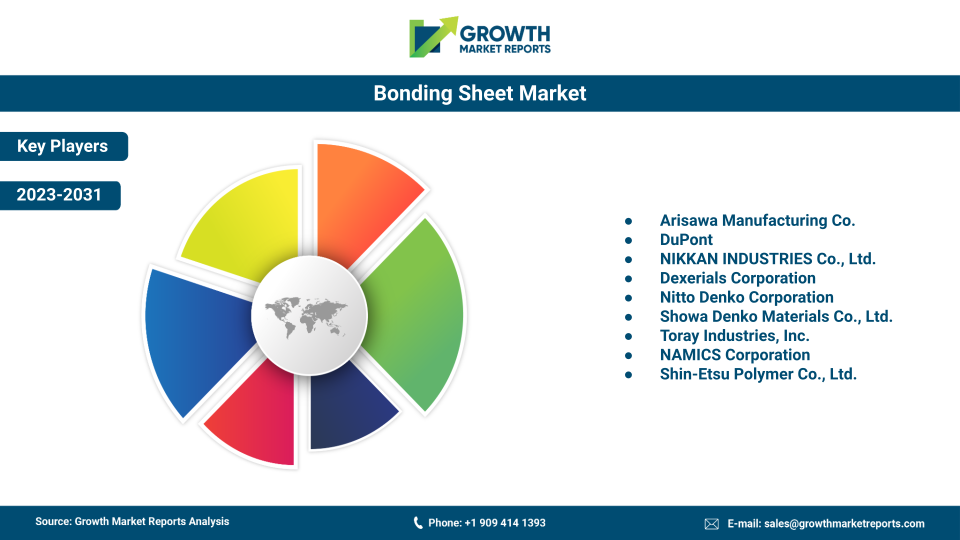
Key players competing in the global bonding sheet market are Arisawa Manufacturing Co.; DuPont; NIKKAN INDUSTRIES Co., Ltd.; Dexerials Corporation; Nitto Denko Corporation; Showa Denko Materials Co., Ltd.; Toray Industries, Inc.; NAMICS Corporation; and Shin-Etsu Polymer Co., Ltd.
Nitto Denko Corporation makes bonding sheets, insulating materials, automotive electronics, and other electronics goods and develops core technologies for adhesive-based products. The Industrial Tape business area sells bonding sheet under the FB-ML4 trademark.
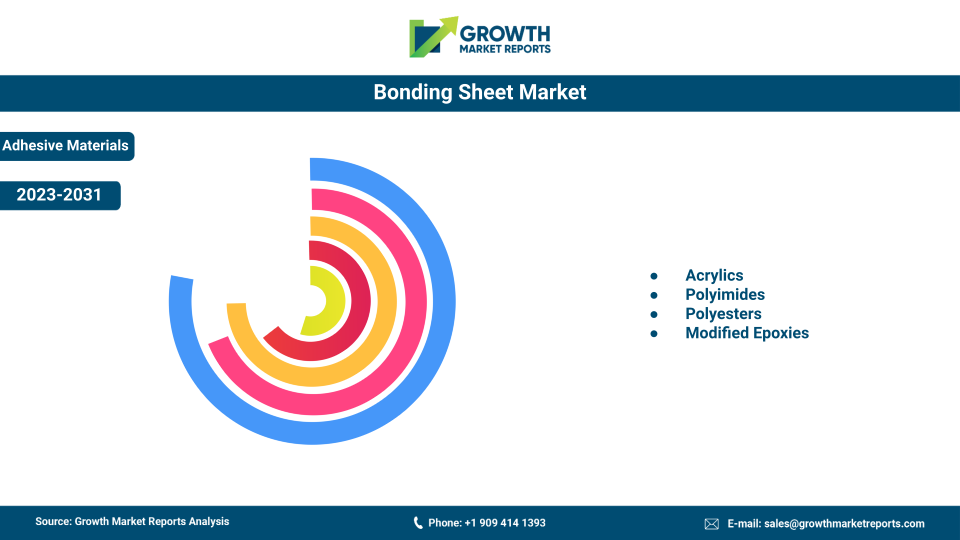
Acrylic and polyester bonding sheets are manufactured by Nitto Denko Corporation and are used for electronics/optoelectronics, LED substrate, home appliances, and other applications. Manufacturing facilities are located in Japan as well as other Asia Pacific nations such as China, Thailand, and Korea.
DuPont (US), a renowned bonding sheet manufacturing business engaged in R&D, producing, processing, marketing, and providing bonding sheet, is another significant participant in the market. Pyralux brand bonding sheets in various grades and adhesive thicknesses for electronics, communications, automotive, and other applications are part of the company's product line.
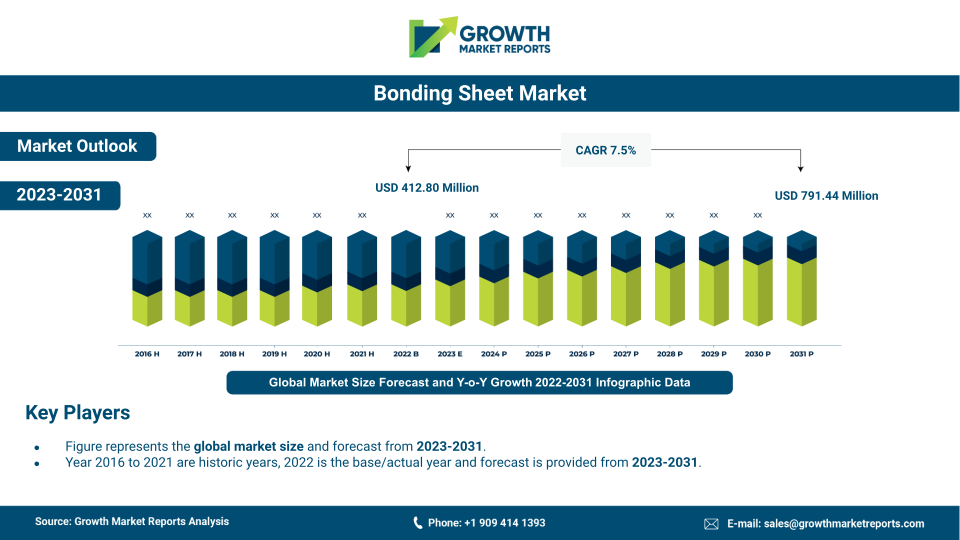
The global bonding sheet market size was valued at around USD 412.80 million in 2022.
Government incentive and schemes is expected to drive the market.
The global bonding sheet market is anticipated to expand at a CAGR of 7.5% during the forecast period, 2023–2031.
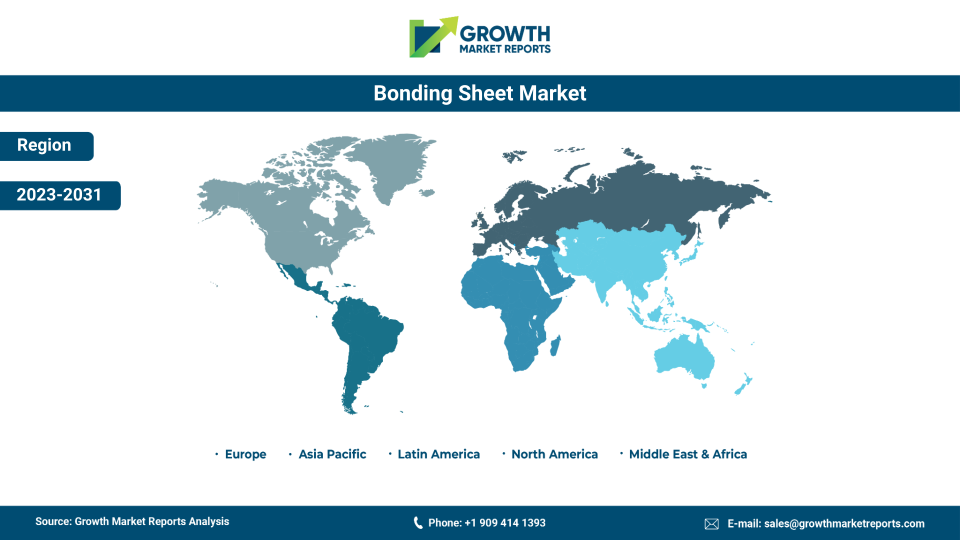
Asia Pacific is expected to constitute a key share of the market during the forecast period.
Key players competing in the global bonding sheet market are Arisawa Manufacturing Co.; DuPont; NIKKAN INDUSTRIES Co., Ltd.; Dexerials Corporation; Nitto Denko Corporation; Showa Denko Materials Co., Ltd.; Toray Industries, Inc.; NAMICS Corporation; and Shin-Etsu Polymer Co., Ltd.