Blood Testing Market Research Report 2033

Blood Testing Market Research Report 2033

Segments - by Product Type (Instruments, Consumables, Services), by Test Type (Complete Blood Count, Blood Chemistry Tests, Blood Clotting Tests, Others), by Application (Disease Screening, Anemia, Infection, Cardiovascular Diseases, Others), by End-User (Hospitals, Diagnostic Laboratories, Blood Banks, Others)

https://growthmarketreports.com/raksha
Author : Raksha Sharma
https://growthmarketreports.com/Vaibhav
Fact-checked by : V. Chandola
https://growthmarketreports.com/Shruti
Editor : Shruti Bhat

Upcoming | Report ID :HC-869 | 4.2 Rating | 95 Reviews | 259 Pages | Format : Docx PDF

Report Description


Blood Testing Market Outlook

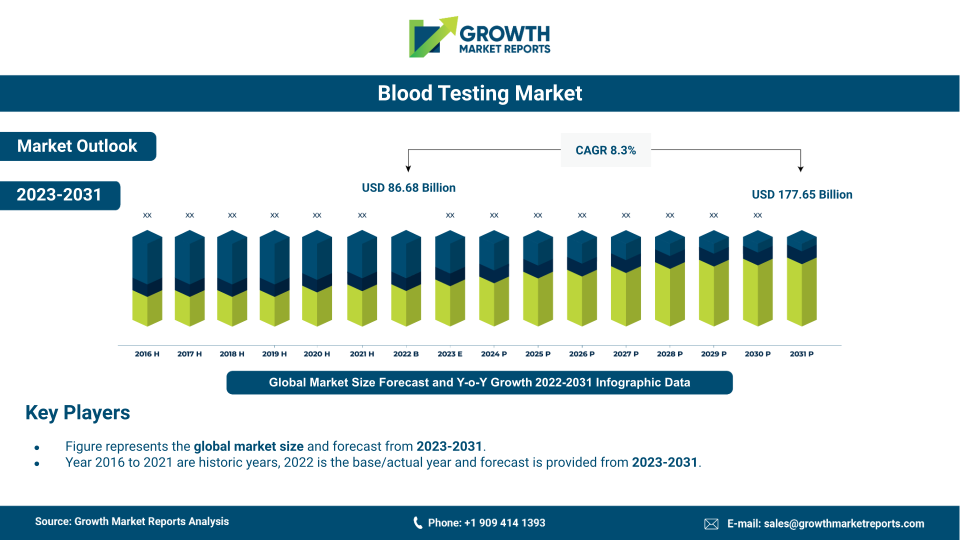
According to our latest research, the global blood testing market size reached USD 98.2 billion in 2024, driven by increasing demand for early disease detection and the rising prevalence of chronic conditions worldwide. The market is expanding at a robust CAGR of 7.1% and is forecasted to attain a value of USD 182.7 billion by 2033. Key growth factors include technological advancements in diagnostic techniques, a surge in point-of-care testing, and heightened awareness regarding preventive healthcare. The marketÂ’s trajectory is further supported by strategic investments in healthcare infrastructure and the growing adoption of automated blood testing systems, as per our latest research findings.

The blood testing market is experiencing substantial growth, primarily due to the escalating incidence of chronic diseases such as diabetes, cardiovascular disorders, and cancer. These conditions necessitate regular blood examinations for diagnosis, monitoring, and management, thereby increasing the demand for comprehensive blood testing solutions. Additionally, the aging global population is more susceptible to such diseases, further fueling the need for frequent diagnostic testing. The integration of advanced diagnostic technologies, including next-generation sequencing and high-throughput screening, has enhanced the accuracy and efficiency of blood tests, making them indispensable tools in modern healthcare. Moreover, the increasing focus on personalized medicine and early disease detection is prompting healthcare providers and patients to opt for routine blood testing, which is expected to propel market growth throughout the forecast period.

Another significant growth driver is the rapid adoption of point-of-care (POC) blood testing devices. These portable and user-friendly instruments enable healthcare professionals to obtain immediate results, facilitating timely clinical decision-making, especially in emergency settings. The COVID-19 pandemic underscored the importance of rapid diagnostics, leading to accelerated development and deployment of POC blood testing solutions. This trend is likely to persist, with ongoing innovations aimed at improving test sensitivity, specificity, and ease of use. Furthermore, the expansion of telemedicine and remote patient monitoring is driving demand for blood testing kits that can be used outside traditional healthcare settings, broadening the marketÂ’s reach to underserved and rural populations.

The marketÂ’s upward trajectory is also supported by favorable government initiatives and investments in healthcare infrastructure, particularly in emerging economies. Many governments are prioritizing preventive healthcare and early diagnosis, leading to increased funding for diagnostic services and the establishment of new laboratories. The proliferation of health insurance schemes and reimbursement policies is making blood testing services more accessible and affordable, especially in developing regions. Additionally, the ongoing digital transformation in healthcare is streamlining laboratory operations, enhancing data management, and improving patient outcomes. Collectively, these factors are creating a conducive environment for sustained growth in the global blood testing market over the next decade.

Blood Screening plays a pivotal role in the early detection and prevention of diseases, serving as a cornerstone of public health initiatives worldwide. The process involves testing donated blood for various infectious agents and conditions to ensure safety and compatibility before transfusions. This critical step not only safeguards recipients but also enhances the overall quality of healthcare services. With the increasing prevalence of blood-borne diseases, the demand for comprehensive blood screening protocols has surged, prompting advancements in testing technologies. These innovations are enabling more accurate and rapid detection of pathogens, thus improving the safety and efficacy of blood transfusions globally. As healthcare systems continue to prioritize preventive measures, blood screening remains an essential component in maintaining public health security.

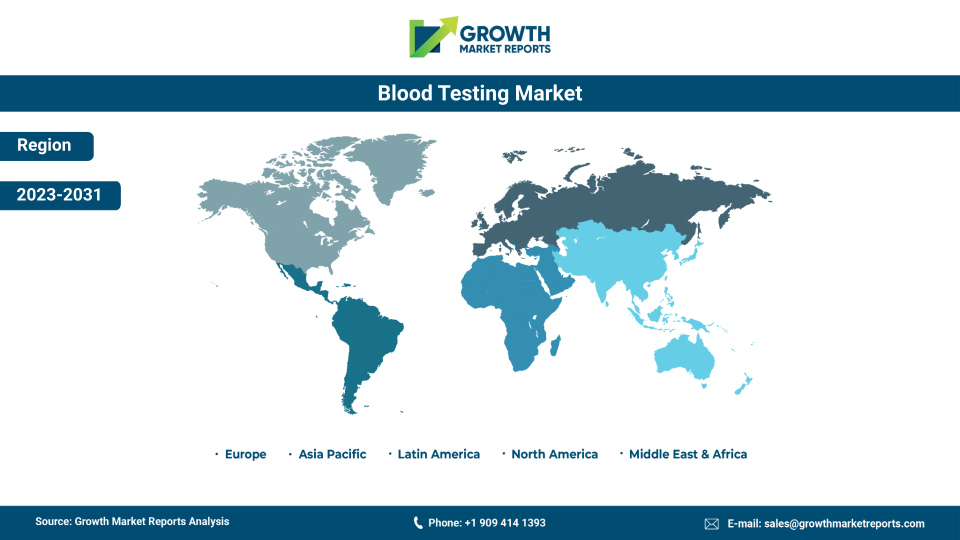
Regionally, North America dominates the blood testing market, accounting for the largest revenue share in 2024, thanks to its well-established healthcare infrastructure, high adoption rate of advanced diagnostic technologies, and robust presence of leading market players. Europe follows closely, supported by extensive government healthcare programs and rising awareness regarding preventive diagnostics. The Asia Pacific region is poised for the fastest growth, driven by increasing healthcare expenditure, expanding middle-class population, and ongoing improvements in healthcare accessibility. Latin America and the Middle East & Africa are also witnessing steady growth, attributed to government-led healthcare reforms and rising investments from both public and private sectors. This diverse regional landscape highlights the global nature of the blood testing market and underscores the importance of tailored strategies for each geography.

Global Blood Testing Industry Outlook

Product Type Analysis

The blood testing market by product type encompasses instruments, consumables, and services, each playing a critical role in the diagnostic ecosystem. Instruments include analyzers, hematology systems, and other laboratory equipment essential for conducting various blood tests. The demand for sophisticated instruments is rising, driven by the need for high-throughput and automated systems that can deliver rapid and accurate results. Leading manufacturers are focusing on integrating advanced technologies such as artificial intelligence, robotics, and cloud-based data management to enhance instrument performance and workflow efficiency. These innovations are significantly reducing turnaround times and operational costs, thereby boosting adoption among hospitals, diagnostic centers, and research laboratories.

Consumables, which include reagents, test kits, vials, and other disposable items, represent a substantial share of the blood testing market. The recurring nature of consumable purchases makes this segment particularly lucrative, as ongoing testing requires continuous replenishment of these products. The expansion of screening programs for infectious diseases, chronic conditions, and routine health check-ups is driving the consumption of reagents and test kits. Moreover, the shift towards multiplex assays and combination test kits is enhancing the efficiency and cost-effectiveness of blood testing procedures. Manufacturers are increasingly investing in the development of high-sensitivity and specific consumables to cater to evolving diagnostic requirements, further propelling segment growth.

The services segment comprises laboratory testing, sample collection, and diagnostic interpretation, which are integral to the blood testing value chain. The growth of this segment is fueled by the rising trend of outsourcing laboratory services to specialized diagnostic providers, enabling healthcare facilities to focus on core patient care activities. The proliferation of standalone diagnostic laboratories and the expansion of home-based sample collection services are broadening the reach of blood testing services, making them more accessible to diverse patient populations. Additionally, advances in digital health and telemedicine are facilitating remote consultations and electronic delivery of test results, enhancing patient convenience and engagement.

The interplay between instruments, consumables, and services is fostering a dynamic and competitive market landscape. Instrument manufacturers are increasingly collaborating with consumable suppliers and service providers to offer integrated diagnostic solutions that streamline laboratory workflows and improve patient outcomes. This holistic approach is enabling healthcare systems to achieve greater operational efficiency, cost savings, and diagnostic accuracy. As the demand for comprehensive blood testing solutions continues to grow, the synergy among product types will remain a key driver of market expansion, prompting further innovation and investment across the value chain.

Report Scope

Attributes Details
Report Title Blood Testing Market Research Report 2033
By Product Type Instruments, Consumables, Services
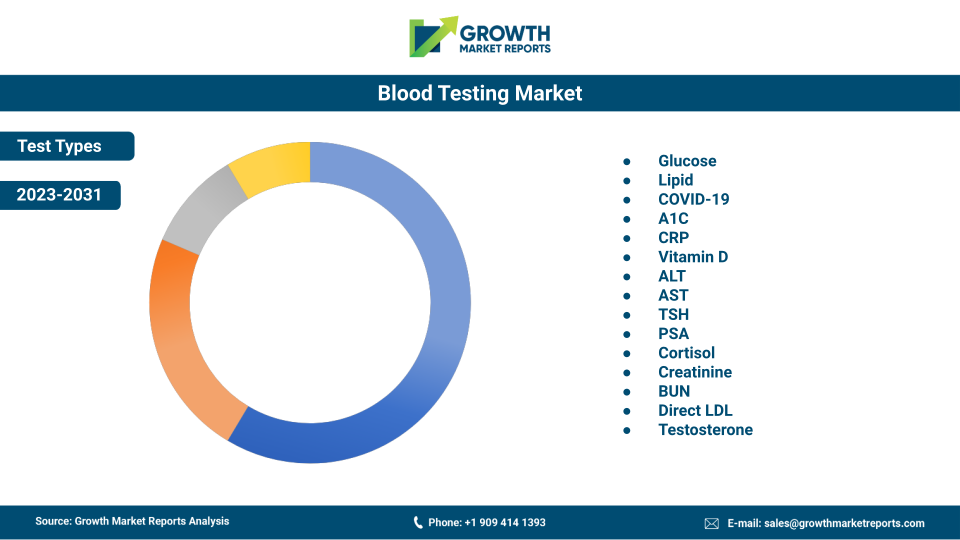
By Test Type Complete Blood Count, Blood Chemistry Tests, Blood Clotting Tests, Others
By Application Disease Screening, Anemia, Infection, Cardiovascular Diseases, Others
By End-User Hospitals, Diagnostic Laboratories, Blood Banks, Others
Regions Covered North America, Europe, APAC, Latin America, MEA
Base Year 2024
Historic Data 2018-2023
Forecast Period 2025-2033
Number of Pages 259
Number of Tables & Figures 361
Customization Available Yes, the report can be customized as per your need.

Test Type Analysis

Blood testing encompasses a broad range of test types, each serving distinct clinical purposes. The complete blood count (CBC) test remains one of the most commonly performed diagnostics, providing valuable information about the overall health of patients by measuring various blood components such as red and white blood cells, hemoglobin, and platelets. The widespread prevalence of conditions like anemia, infections, and hematological disorders is driving consistent demand for CBC tests. Technological advancements have enabled the development of automated CBC analyzers capable of delivering rapid and accurate results, further enhancing the utility and adoption of this test type in both hospital and outpatient settings.

Blood chemistry tests, which assess the levels of various substances such as glucose, electrolytes, enzymes, and lipids in the blood, are essential for diagnosing and monitoring metabolic and organ-related disorders. The rising incidence of diabetes, cardiovascular diseases, and liver and kidney dysfunctions is fueling the demand for blood chemistry testing. Innovations in assay development and the integration of multiplex testing platforms are enabling simultaneous analysis of multiple biomarkers, thereby improving diagnostic efficiency and patient management. Additionally, the growing trend of preventive health check-ups is contributing to the increased utilization of blood chemistry tests for early detection and risk assessment.

Blood clotting tests, including prothrombin time (PT), activated partial thromboplastin time (aPTT), and D-dimer assays, are vital for evaluating the bloodÂ’s ability to clot and for monitoring patients on anticoagulant therapy. The rising prevalence of cardiovascular diseases, stroke, and thromboembolic disorders is driving the demand for coagulation testing. Furthermore, the increasing adoption of point-of-care coagulation analyzers is facilitating rapid assessment in emergency and critical care settings. Ongoing research and development efforts are focused on enhancing the sensitivity and specificity of clotting assays, enabling earlier detection and more precise management of coagulopathies.

The “others” category includes specialized tests such as blood typing, infectious disease screening, genetic testing, and tumor marker analysis. The growing emphasis on personalized medicine and targeted therapies is spurring demand for advanced molecular and genetic blood tests. Additionally, the need for comprehensive infectious disease screening, particularly in the context of pandemics and emerging pathogens, is driving the expansion of this segment. The continuous evolution of blood testing methodologies, coupled with increasing awareness and adoption of preventive healthcare practices, is expected to sustain robust growth across all test types in the coming years.

Application Analysis

The blood testing market serves a diverse array of clinical applications, with disease screening being a primary focus. Routine blood tests are fundamental for the early detection of a wide range of diseases, enabling timely intervention and improved patient outcomes. The increasing prevalence of communicable and non-communicable diseases worldwide is driving the demand for comprehensive screening programs, both at the population and individual levels. Governments and healthcare organizations are investing in large-scale screening initiatives, particularly for high-burden diseases such as HIV, hepatitis, tuberculosis, and cancer. The integration of advanced diagnostics and data analytics is enhancing the effectiveness and reach of these programs, further propelling market growth.

Anemia diagnosis and management represent another significant application area for blood testing. Anemia affects millions of individuals globally, particularly women and children in low- and middle-income countries. Blood tests such as hemoglobin estimation, iron studies, and red cell indices are essential for identifying the underlying causes of anemia and guiding appropriate treatment. The rising awareness of maternal and child health, coupled with government-led nutrition programs, is contributing to increased demand for anemia testing. Technological advancements in point-of-care hemoglobin analyzers are improving access to diagnostic services in remote and resource-limited settings, addressing a critical public health need.

Infection detection is a vital application of blood testing, encompassing both acute and chronic infectious diseases. Blood-based diagnostics offer rapid and accurate identification of pathogens, enabling prompt initiation of appropriate therapy and containment of disease outbreaks. The ongoing threat of emerging infectious diseases, such as COVID-19 and other viral or bacterial epidemics, has underscored the importance of robust blood testing capabilities. Innovations in molecular diagnostics, including polymerase chain reaction (PCR) and next-generation sequencing (NGS), are enhancing the sensitivity and specificity of infection detection, supporting effective public health responses.

Blood testing is also extensively utilized in the diagnosis and management of cardiovascular diseases, including coronary artery disease, heart failure, and stroke. Biomarkers such as troponins, BNP, and lipid profiles are integral to risk assessment, early diagnosis, and monitoring of therapeutic efficacy. The global burden of cardiovascular diseases continues to rise, particularly in aging populations and regions with high prevalence of risk factors such as hypertension, obesity, and diabetes. The development of high-sensitivity assays and multiplex panels is improving the accuracy and speed of cardiovascular diagnostics, supporting better clinical decision-making and patient outcomes.

The “others” application segment includes areas such as cancer detection, autoimmune disease monitoring, and organ function assessment. The growing adoption of precision medicine and targeted therapies is driving demand for advanced blood-based biomarkers and companion diagnostics. Additionally, the increasing focus on preventive healthcare and wellness is encouraging individuals to undergo routine blood tests for early risk identification and health optimization. As the spectrum of clinical applications for blood testing continues to expand, the market is poised for sustained growth and innovation.

End-User Analysis

Hospitals

Hospitals represent the largest end-user segment in the blood testing market, owing to their comprehensive diagnostic capabilities and high patient throughput. Hospitals are equipped with advanced laboratory infrastructure and skilled personnel, enabling them to perform a wide range of blood tests for both inpatients and outpatients. The increasing incidence of acute and chronic diseases, coupled with the need for preoperative and postoperative monitoring, is driving demand for blood testing services in hospital settings. Additionally, the integration of electronic health records and laboratory information systems is streamlining test ordering, result reporting, and clinical decision-making, enhancing the overall efficiency and quality of care.

Diagnostic Laboratories

Diagnostic laboratories, including both standalone and chain laboratories, constitute a significant end-user group for blood testing services. These facilities specialize in high-volume testing and offer a broad spectrum of diagnostic assays, catering to hospitals, clinics, and individual patients. The trend towards laboratory consolidation and automation is enabling diagnostic laboratories to achieve economies of scale, reduce operational costs, and improve test accuracy and turnaround times. Furthermore, the growing prevalence of direct-to-consumer testing and home sample collection services is expanding the reach of diagnostic laboratories, making blood testing more accessible and convenient for patients.

Blood Banks

Blood banks are critical end-users of blood testing, as they are responsible for ensuring the safety and compatibility of donated blood and blood products. Rigorous screening for infectious diseases, blood typing, and cross-matching are essential components of blood bank operations. The rising demand for safe blood transfusions, particularly in surgical, trauma, and oncology settings, is driving the adoption of advanced blood testing technologies in blood banks. Regulatory requirements and quality assurance standards are further emphasizing the importance of robust testing protocols to minimize the risk of transfusion-transmitted infections and adverse reactions.

Others

The “others” end-user segment includes clinics, research institutes, and home healthcare providers. The expansion of outpatient care and the increasing adoption of point-of-care testing devices are enabling clinics to offer rapid and convenient blood testing services. Research institutes are leveraging blood tests for clinical trials, biomarker discovery, and translational research, contributing to the advancement of diagnostic science. Additionally, the growing trend of home-based healthcare and remote patient monitoring is creating new opportunities for decentralized blood testing solutions, empowering patients to manage their health proactively.

Opportunities & Threats

The blood testing market is rife with opportunities, particularly in the realm of technological innovation. The ongoing development of next-generation diagnostic platforms, including high-throughput analyzers, miniaturized point-of-care devices, and digital health integration, is transforming the landscape of blood testing. These advancements are enabling faster, more accurate, and cost-effective diagnostics, expanding the scope of testing to a broader range of clinical settings and patient populations. Furthermore, the increasing adoption of artificial intelligence and machine learning in data analysis is enhancing the interpretation of complex test results, supporting personalized medicine and improved patient outcomes. The expansion of telemedicine and remote healthcare services is also opening new avenues for blood testing, as patients seek convenient and accessible diagnostic options outside traditional healthcare facilities.

Emerging markets present significant growth opportunities for the blood testing industry. Rapid urbanization, rising healthcare expenditure, and expanding insurance coverage are driving demand for diagnostic services in regions such as Asia Pacific, Latin America, and the Middle East & Africa. Governments and private sector stakeholders are investing in healthcare infrastructure, laboratory capacity, and workforce development to meet the growing needs of their populations. The increasing focus on preventive healthcare and early disease detection is encouraging the adoption of routine blood testing, particularly in underserved and rural areas. Strategic collaborations, public-private partnerships, and technology transfer initiatives are facilitating the introduction of advanced blood testing solutions in these markets, unlocking new growth potential for industry players.

Despite the favorable outlook, the blood testing market faces several restraining factors. Stringent regulatory requirements and quality assurance standards pose challenges for manufacturers and service providers, particularly in the development and commercialization of new diagnostic tests. Compliance with international standards, such as ISO and FDA regulations, necessitates significant investment in research, validation, and documentation, potentially delaying product launches and market entry. Additionally, cost constraints and reimbursement challenges may limit the adoption of advanced blood testing technologies, particularly in resource-limited settings. Addressing these barriers will require ongoing collaboration among stakeholders, including regulatory authorities, industry players, and healthcare providers, to ensure the safe, effective, and accessible delivery of blood testing services worldwide.

Regional Outlook

North America remains the largest regional market for blood testing, accounting for approximately USD 37.4 billion in revenue in 2024. The regionÂ’s dominance is attributed to its advanced healthcare infrastructure, high adoption rate of cutting-edge diagnostic technologies, and strong presence of leading market players. The United States, in particular, is a major contributor, driven by robust investments in healthcare research, widespread health insurance coverage, and a proactive approach to preventive healthcare. Canada is also witnessing steady growth, supported by government initiatives to enhance diagnostic capacity and improve healthcare access. The North American market is expected to maintain a steady growth trajectory, with a projected CAGR of 6.8% through 2033.

Europe represents the second-largest regional market, with a value of approximately USD 27.3 billion in 2024. The region benefits from comprehensive public healthcare systems, extensive screening programs, and a strong emphasis on early disease detection. Countries such as Germany, the United Kingdom, and France are at the forefront of diagnostic innovation, supported by favorable reimbursement policies and ongoing investments in laboratory modernization. The European market is characterized by a high degree of regulatory oversight and quality assurance, ensuring the safety and reliability of blood testing services. The region is expected to witness moderate growth over the forecast period, driven by technological advancements and an aging population.

The Asia Pacific region is poised for the fastest growth, with a market size of USD 21.6 billion in 2024 and a projected CAGR of 8.6% through 2033. Rapid economic development, rising healthcare expenditure, and expanding access to diagnostic services are key drivers of market expansion in this region. China, India, and Japan are leading the way, supported by large and growing populations, increasing prevalence of chronic diseases, and government-led healthcare reforms. The adoption of point-of-care testing devices and digital health solutions is accelerating the penetration of blood testing services in rural and underserved areas. Latin America and the Middle East & Africa are also witnessing steady growth, with market sizes of USD 6.1 billion and USD 5.8 billion respectively in 2024, driven by healthcare infrastructure development and rising awareness of preventive diagnostics.

Blood Testing Market Statistics

Competitor Outlook

The global blood testing market is characterized by intense competition, with a diverse array of players ranging from multinational corporations to regional and local companies. The competitive landscape is shaped by ongoing innovation, strategic partnerships, and a relentless focus on quality and regulatory compliance. Leading companies are investing heavily in research and development to introduce next-generation diagnostic platforms, enhance test sensitivity and specificity, and expand their product portfolios. The integration of digital health solutions, automation, and artificial intelligence is enabling market leaders to differentiate their offerings and capture a larger share of the market.

Strategic mergers and acquisitions are a common feature of the blood testing industry, as companies seek to strengthen their market positions, access new technologies, and expand their geographic reach. Collaborations with academic institutions, research organizations, and healthcare providers are facilitating the development of novel diagnostic assays and the commercialization of innovative blood testing solutions. Additionally, companies are focusing on expanding their presence in emerging markets, leveraging local partnerships and distribution networks to tap into new growth opportunities. The competitive environment is further intensified by the entry of new players and startups, particularly in the area of point-of-care testing and digital diagnostics, driving continuous innovation and market dynamism.

Major companies operating in the blood testing market include Abbott Laboratories, Roche Diagnostics, Siemens Healthineers, Becton, Dickinson and Company (BD), Thermo Fisher Scientific, Bio-Rad Laboratories, Danaher Corporation, and Quest Diagnostics. These industry leaders are renowned for their comprehensive product portfolios, global distribution networks, and strong brand recognition. Abbott Laboratories, for example, is a pioneer in point-of-care blood testing devices and has a robust presence in both developed and emerging markets. Roche Diagnostics is known for its advanced laboratory analyzers and molecular diagnostic solutions, while Siemens Healthineers excels in automation and digital integration.

Becton, Dickinson and Company (BD) is a key player in blood collection and sample management solutions, while Thermo Fisher Scientific and Bio-Rad Laboratories are at the forefront of assay development and laboratory instrumentation. Danaher Corporation, through its subsidiaries such as Beckman Coulter, offers a wide range of hematology and chemistry analyzers, supporting high-volume testing in clinical laboratories. Quest Diagnostics, a leading provider of diagnostic services, operates an extensive network of laboratories and offers a broad spectrum of blood testing assays. These companies are continually expanding their capabilities through strategic investments, product launches, and collaborations, ensuring their leadership in the rapidly evolving blood testing market.

In summary, the blood testing market is marked by robust competition, rapid technological advancement, and a relentless focus on quality and innovation. Major players are leveraging their expertise, resources, and global reach to drive growth, improve patient outcomes, and shape the future of diagnostic medicine. As the market continues to evolve, ongoing investment in research, digital transformation, and strategic partnerships will be critical for sustaining competitive advantage and capturing new opportunities in this dynamic industry.

Key Players

  • Abbott Laboratories
  • Roche Diagnostics
  • Siemens Healthineers
  • Thermo Fisher Scientific
  • Becton, Dickinson and Company (BD)
  • Bio-Rad Laboratories
  • Danaher Corporation
  • Quest Diagnostics
  • BioMérieux
  • Sysmex Corporation
  • Ortho Clinical Diagnostics
  • Beckman Coulter
  • PerkinElmer
  • F. Hoffmann-La Roche Ltd
  • Grifols S.A.
  • QuidelOrtho Corporation
  • Laboratory Corporation of America Holdings (LabCorp)
  • Hologic, Inc.
  • Randox Laboratories
  • Cepheid (a Danaher company)
Blood Testing Market Overview

Segments

The Blood Testing market has been segmented on the basis of

Product Type

  • Instruments
  • Consumables
  • Services

Test Type

  • Complete Blood Count
  • Blood Chemistry Tests
  • Blood Clotting Tests
  • Others

Application

  • Disease Screening
  • Anemia
  • Infection
  • Cardiovascular Diseases
  • Others

End-User

  • Hospitals
  • Diagnostic Laboratories
  • Blood Banks
  • Others

Competitive Landscape

Some of the major players competing in the market are Abbott; F. Hoffmann-La Roche AG; Bio-Rad Laboratories, Inc.; bioMerieux SA; Quest Diagnostics; Biomerica, Inc.; Becton, Dickinson and Company; Siemens Healthineers; Danaher Corporation; and Trinity Biotech Plc.

To expand their market reach, market players are involved in the production and introduction of new products. In May 2020, DarioHealth Corp. announced that its self-test blood glucose meters had been approved by the US Food and Drug Administration for the use in hospitalized diabetic patients.

Meanwhile, Siemens Healthineers announced in October 2020 that it had plan to extend its COVID-19 and molecular assays manufacturing capability in India. In India, this new facility in Vadodara, Gujarat, aimed to produce COVID-19 antigen, conduct antibody testing (serology testing), and RT PCR tests.
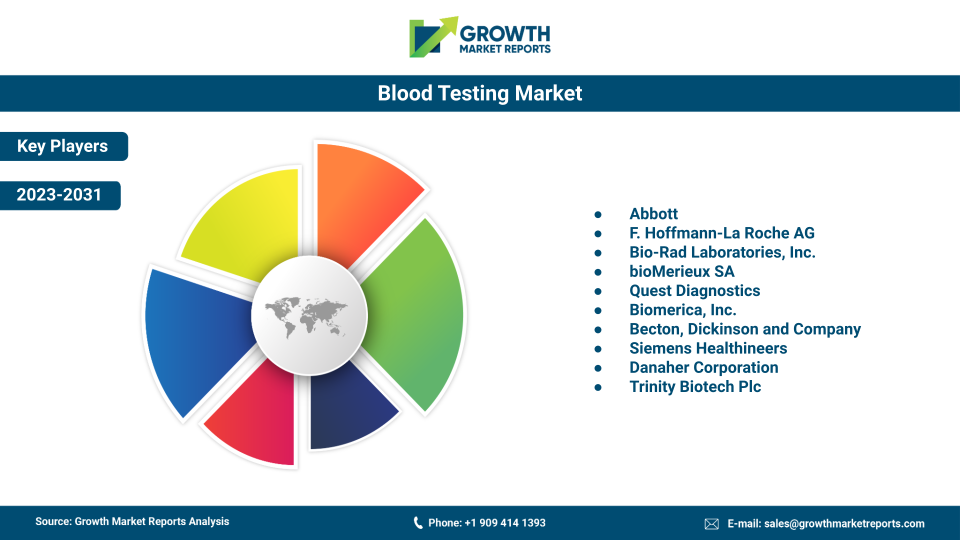

 Blood Testing Market Key Players

Frequently Asked Questions

The rapid adoption of point-of-care blood testing devices is enabling immediate results, improving clinical decision-making, and expanding access to diagnostics, especially in emergency and remote settings.

Major players include Abbott Laboratories, Roche Diagnostics, Siemens Healthineers, Thermo Fisher Scientific, Becton, Dickinson and Company (BD), Bio-Rad Laboratories, Danaher Corporation, and Quest Diagnostics.

Opportunities include technological innovation, expansion in emerging markets, and the rise of telemedicine. Challenges involve stringent regulatory requirements, cost constraints, and reimbursement issues.

Primary end-users include hospitals, diagnostic laboratories, blood banks, clinics, research institutes, and home healthcare providers.

Common blood tests include complete blood count (CBC), blood chemistry tests, blood clotting tests, and specialized tests like blood typing, infectious disease screening, genetic testing, and tumor marker analysis.

The market is segmented into instruments (such as analyzers and hematology systems), consumables (reagents, test kits, vials), and services (laboratory testing, sample collection, diagnostic interpretation).

North America dominates the market, followed by Europe. The Asia Pacific region is expected to experience the fastest growth, while Latin America and the Middle East & Africa are also seeing steady expansion.

Key growth drivers include technological advancements in diagnostic techniques, increased adoption of point-of-care testing, heightened awareness of preventive healthcare, and strategic investments in healthcare infrastructure.

The blood testing market is expanding at a CAGR of 7.1% and is forecasted to reach USD 182.7 billion by 2033.

As of 2024, the global blood testing market size reached USD 98.2 billion, driven by increasing demand for early disease detection and the rising prevalence of chronic conditions.

Table Of Content

Chapter 1 Executive Summary
Chapter 2 Assumptions and Acronyms Used
Chapter 3 Research Methodology
Chapter 4 Blood Testing Market Overview
   4.1 Introduction
      4.1.1 Market Taxonomy
      4.1.2 Market Definition
      4.1.3 Macro-Economic Factors Impacting the Market Growth
   4.2 Blood Testing Market Dynamics
      4.2.1 Market Drivers
      4.2.2 Market Restraints
      4.2.3 Market Opportunity
   4.3 Blood Testing Market - Supply Chain Analysis
      4.3.1 List of Key Suppliers
      4.3.2 List of Key Distributors
      4.3.3 List of Key Consumers
   4.4 Key Forces Shaping the Blood Testing Market
      4.4.1 Bargaining Power of Suppliers
      4.4.2 Bargaining Power of Buyers
      4.4.3 Threat of Substitution
      4.4.4 Threat of New Entrants
      4.4.5 Competitive Rivalry
   4.5 Global Blood Testing Market Size & Forecast, 2023-2032
      4.5.1 Blood Testing Market Size and Y-o-Y Growth
      4.5.2 Blood Testing Market Absolute $ Opportunity

Chapter 5 Global Blood Testing Market Analysis and Forecast By Product Type
   5.1 Introduction
      5.1.1 Key Market Trends & Growth Opportunities By Product Type
      5.1.2 Basis Point Share (BPS) Analysis By Product Type
      5.1.3 Absolute $ Opportunity Assessment By Product Type
   5.2 Blood Testing Market Size Forecast By Product Type
      5.2.1 Instruments
      5.2.2 Consumables
      5.2.3 Services
   5.3 Market Attractiveness Analysis By Product Type

Chapter 6 Global Blood Testing Market Analysis and Forecast By Test Type
   6.1 Introduction
      6.1.1 Key Market Trends & Growth Opportunities By Test Type
      6.1.2 Basis Point Share (BPS) Analysis By Test Type
      6.1.3 Absolute $ Opportunity Assessment By Test Type
   6.2 Blood Testing Market Size Forecast By Test Type
      6.2.1 Complete Blood Count
      6.2.2 Blood Chemistry Tests
      6.2.3 Blood Clotting Tests
      6.2.4 Others
   6.3 Market Attractiveness Analysis By Test Type

Chapter 7 Global Blood Testing Market Analysis and Forecast By Application
   7.1 Introduction
      7.1.1 Key Market Trends & Growth Opportunities By Application
      7.1.2 Basis Point Share (BPS) Analysis By Application
      7.1.3 Absolute $ Opportunity Assessment By Application
   7.2 Blood Testing Market Size Forecast By Application
      7.2.1 Disease Screening
      7.2.2 Anemia
      7.2.3 Infection
      7.2.4 Cardiovascular Diseases
      7.2.5 Others
   7.3 Market Attractiveness Analysis By Application

Chapter 8 Global Blood Testing Market Analysis and Forecast By End-User
   8.1 Introduction
      8.1.1 Key Market Trends & Growth Opportunities By End-User
      8.1.2 Basis Point Share (BPS) Analysis By End-User
      8.1.3 Absolute $ Opportunity Assessment By End-User
   8.2 Blood Testing Market Size Forecast By End-User
      8.2.1 Hospitals
      8.2.2 Diagnostic Laboratories
      8.2.3 Blood Banks
      8.2.4 Others
   8.3 Market Attractiveness Analysis By End-User

Chapter 9 Global Blood Testing Market Analysis and Forecast by Region
   9.1 Introduction
      9.1.1 Key Market Trends & Growth Opportunities By Region
      9.1.2 Basis Point Share (BPS) Analysis By Region
      9.1.3 Absolute $ Opportunity Assessment By Region
   9.2 Blood Testing Market Size Forecast By Region
      9.2.1 North America
      9.2.2 Europe
      9.2.3 Asia Pacific
      9.2.4 Latin America
      9.2.5 Middle East & Africa (MEA)
   9.3 Market Attractiveness Analysis By Region

Chapter 10 Coronavirus Disease (COVID-19) Impact 
   10.1 Introduction 
   10.2 Current & Future Impact Analysis 
   10.3 Economic Impact Analysis 
   10.4 Government Policies 
   10.5 Investment Scenario

Chapter 11 North America Blood Testing Analysis and Forecast
   11.1 Introduction
   11.2 North America Blood Testing Market Size Forecast by Country
      11.2.1 U.S.
      11.2.2 Canada
   11.3 Basis Point Share (BPS) Analysis by Country
   11.4 Absolute $ Opportunity Assessment by Country
   11.5 Market Attractiveness Analysis by Country
   11.6 North America Blood Testing Market Size Forecast By Product Type
      11.6.1 Instruments
      11.6.2 Consumables
      11.6.3 Services
   11.7 Basis Point Share (BPS) Analysis By Product Type 
   11.8 Absolute $ Opportunity Assessment By Product Type 
   11.9 Market Attractiveness Analysis By Product Type
   11.10 North America Blood Testing Market Size Forecast By Test Type
      11.10.1 Complete Blood Count
      11.10.2 Blood Chemistry Tests
      11.10.3 Blood Clotting Tests
      11.10.4 Others
   11.11 Basis Point Share (BPS) Analysis By Test Type 
   11.12 Absolute $ Opportunity Assessment By Test Type 
   11.13 Market Attractiveness Analysis By Test Type
   11.14 North America Blood Testing Market Size Forecast By Application
      11.14.1 Disease Screening
      11.14.2 Anemia
      11.14.3 Infection
      11.14.4 Cardiovascular Diseases
      11.14.5 Others
   11.15 Basis Point Share (BPS) Analysis By Application 
   11.16 Absolute $ Opportunity Assessment By Application 
   11.17 Market Attractiveness Analysis By Application
   11.18 North America Blood Testing Market Size Forecast By End-User
      11.18.1 Hospitals
      11.18.2 Diagnostic Laboratories
      11.18.3 Blood Banks
      11.18.4 Others
   11.19 Basis Point Share (BPS) Analysis By End-User 
   11.20 Absolute $ Opportunity Assessment By End-User 
   11.21 Market Attractiveness Analysis By End-User

Chapter 12 Europe Blood Testing Analysis and Forecast
   12.1 Introduction
   12.2 Europe Blood Testing Market Size Forecast by Country
      12.2.1 Germany
      12.2.2 France
      12.2.3 Italy
      12.2.4 U.K.
      12.2.5 Spain
      12.2.6 Russia
      12.2.7 Rest of Europe
   12.3 Basis Point Share (BPS) Analysis by Country
   12.4 Absolute $ Opportunity Assessment by Country
   12.5 Market Attractiveness Analysis by Country
   12.6 Europe Blood Testing Market Size Forecast By Product Type
      12.6.1 Instruments
      12.6.2 Consumables
      12.6.3 Services
   12.7 Basis Point Share (BPS) Analysis By Product Type 
   12.8 Absolute $ Opportunity Assessment By Product Type 
   12.9 Market Attractiveness Analysis By Product Type
   12.10 Europe Blood Testing Market Size Forecast By Test Type
      12.10.1 Complete Blood Count
      12.10.2 Blood Chemistry Tests
      12.10.3 Blood Clotting Tests
      12.10.4 Others
   12.11 Basis Point Share (BPS) Analysis By Test Type 
   12.12 Absolute $ Opportunity Assessment By Test Type 
   12.13 Market Attractiveness Analysis By Test Type
   12.14 Europe Blood Testing Market Size Forecast By Application
      12.14.1 Disease Screening
      12.14.2 Anemia
      12.14.3 Infection
      12.14.4 Cardiovascular Diseases
      12.14.5 Others
   12.15 Basis Point Share (BPS) Analysis By Application 
   12.16 Absolute $ Opportunity Assessment By Application 
   12.17 Market Attractiveness Analysis By Application
   12.18 Europe Blood Testing Market Size Forecast By End-User
      12.18.1 Hospitals
      12.18.2 Diagnostic Laboratories
      12.18.3 Blood Banks
      12.18.4 Others
   12.19 Basis Point Share (BPS) Analysis By End-User 
   12.20 Absolute $ Opportunity Assessment By End-User 
   12.21 Market Attractiveness Analysis By End-User

Chapter 13 Asia Pacific Blood Testing Analysis and Forecast
   13.1 Introduction
   13.2 Asia Pacific Blood Testing Market Size Forecast by Country
      13.2.1 China
      13.2.2 Japan
      13.2.3 South Korea
      13.2.4 India
      13.2.5 Australia
      13.2.6 South East Asia (SEA)
      13.2.7 Rest of Asia Pacific (APAC)
   13.3 Basis Point Share (BPS) Analysis by Country
   13.4 Absolute $ Opportunity Assessment by Country
   13.5 Market Attractiveness Analysis by Country
   13.6 Asia Pacific Blood Testing Market Size Forecast By Product Type
      13.6.1 Instruments
      13.6.2 Consumables
      13.6.3 Services
   13.7 Basis Point Share (BPS) Analysis By Product Type 
   13.8 Absolute $ Opportunity Assessment By Product Type 
   13.9 Market Attractiveness Analysis By Product Type
   13.10 Asia Pacific Blood Testing Market Size Forecast By Test Type
      13.10.1 Complete Blood Count
      13.10.2 Blood Chemistry Tests
      13.10.3 Blood Clotting Tests
      13.10.4 Others
   13.11 Basis Point Share (BPS) Analysis By Test Type 
   13.12 Absolute $ Opportunity Assessment By Test Type 
   13.13 Market Attractiveness Analysis By Test Type
   13.14 Asia Pacific Blood Testing Market Size Forecast By Application
      13.14.1 Disease Screening
      13.14.2 Anemia
      13.14.3 Infection
      13.14.4 Cardiovascular Diseases
      13.14.5 Others
   13.15 Basis Point Share (BPS) Analysis By Application 
   13.16 Absolute $ Opportunity Assessment By Application 
   13.17 Market Attractiveness Analysis By Application
   13.18 Asia Pacific Blood Testing Market Size Forecast By End-User
      13.18.1 Hospitals
      13.18.2 Diagnostic Laboratories
      13.18.3 Blood Banks
      13.18.4 Others
   13.19 Basis Point Share (BPS) Analysis By End-User 
   13.20 Absolute $ Opportunity Assessment By End-User 
   13.21 Market Attractiveness Analysis By End-User

Chapter 14 Latin America Blood Testing Analysis and Forecast
   14.1 Introduction
   14.2 Latin America Blood Testing Market Size Forecast by Country
      14.2.1 Brazil
      14.2.2 Mexico
      14.2.3 Rest of Latin America (LATAM)
   14.3 Basis Point Share (BPS) Analysis by Country
   14.4 Absolute $ Opportunity Assessment by Country
   14.5 Market Attractiveness Analysis by Country
   14.6 Latin America Blood Testing Market Size Forecast By Product Type
      14.6.1 Instruments
      14.6.2 Consumables
      14.6.3 Services
   14.7 Basis Point Share (BPS) Analysis By Product Type 
   14.8 Absolute $ Opportunity Assessment By Product Type 
   14.9 Market Attractiveness Analysis By Product Type
   14.10 Latin America Blood Testing Market Size Forecast By Test Type
      14.10.1 Complete Blood Count
      14.10.2 Blood Chemistry Tests
      14.10.3 Blood Clotting Tests
      14.10.4 Others
   14.11 Basis Point Share (BPS) Analysis By Test Type 
   14.12 Absolute $ Opportunity Assessment By Test Type 
   14.13 Market Attractiveness Analysis By Test Type
   14.14 Latin America Blood Testing Market Size Forecast By Application
      14.14.1 Disease Screening
      14.14.2 Anemia
      14.14.3 Infection
      14.14.4 Cardiovascular Diseases
      14.14.5 Others
   14.15 Basis Point Share (BPS) Analysis By Application 
   14.16 Absolute $ Opportunity Assessment By Application 
   14.17 Market Attractiveness Analysis By Application
   14.18 Latin America Blood Testing Market Size Forecast By End-User
      14.18.1 Hospitals
      14.18.2 Diagnostic Laboratories
      14.18.3 Blood Banks
      14.18.4 Others
   14.19 Basis Point Share (BPS) Analysis By End-User 
   14.20 Absolute $ Opportunity Assessment By End-User 
   14.21 Market Attractiveness Analysis By End-User

Chapter 15 Middle East & Africa (MEA) Blood Testing Analysis and Forecast
   15.1 Introduction
   15.2 Middle East & Africa (MEA) Blood Testing Market Size Forecast by Country
      15.2.1 Saudi Arabia
      15.2.2 South Africa
      15.2.3 UAE
      15.2.4 Rest of Middle East & Africa (MEA)
   15.3 Basis Point Share (BPS) Analysis by Country
   15.4 Absolute $ Opportunity Assessment by Country
   15.5 Market Attractiveness Analysis by Country
   15.6 Middle East & Africa (MEA) Blood Testing Market Size Forecast By Product Type
      15.6.1 Instruments
      15.6.2 Consumables
      15.6.3 Services
   15.7 Basis Point Share (BPS) Analysis By Product Type 
   15.8 Absolute $ Opportunity Assessment By Product Type 
   15.9 Market Attractiveness Analysis By Product Type
   15.10 Middle East & Africa (MEA) Blood Testing Market Size Forecast By Test Type
      15.10.1 Complete Blood Count
      15.10.2 Blood Chemistry Tests
      15.10.3 Blood Clotting Tests
      15.10.4 Others
   15.11 Basis Point Share (BPS) Analysis By Test Type 
   15.12 Absolute $ Opportunity Assessment By Test Type 
   15.13 Market Attractiveness Analysis By Test Type
   15.14 Middle East & Africa (MEA) Blood Testing Market Size Forecast By Application
      15.14.1 Disease Screening
      15.14.2 Anemia
      15.14.3 Infection
      15.14.4 Cardiovascular Diseases
      15.14.5 Others
   15.15 Basis Point Share (BPS) Analysis By Application 
   15.16 Absolute $ Opportunity Assessment By Application 
   15.17 Market Attractiveness Analysis By Application
   15.18 Middle East & Africa (MEA) Blood Testing Market Size Forecast By End-User
      15.18.1 Hospitals
      15.18.2 Diagnostic Laboratories
      15.18.3 Blood Banks
      15.18.4 Others
   15.19 Basis Point Share (BPS) Analysis By End-User 
   15.20 Absolute $ Opportunity Assessment By End-User 
   15.21 Market Attractiveness Analysis By End-User

Chapter 16 Competition Landscape 
   16.1 Blood Testing Market: Competitive Dashboard
   16.2 Global Blood Testing Market: Market Share Analysis, 2023
   16.3 Company Profiles (Details – Overview, Financials, Developments, Strategy) 
      16.3.1 Abbott Laboratories
Roche Diagnostics
Siemens Healthineers
Thermo Fisher Scientific
Becton, Dickinson and Company (BD)
Bio-Rad Laboratories
Danaher Corporation
Quest Diagnostics
BioMérieux
Sysmex Corporation
Ortho Clinical Diagnostics
Beckman Coulter
PerkinElmer
F. Hoffmann-La Roche Ltd
Grifols S.A.
QuidelOrtho Corporation
Laboratory Corporation of America Holdings (LabCorp)
Hologic, Inc.
Randox Laboratories
Cepheid (a Danaher company)

Methodology

Our Clients

Pfizer
FedEx Logistics
Siemens Healthcare
Dassault Aviation
General Electric
Honda Motor Co. Ltd.
Microsoft
General Mills