Blood Collection Market Report 2025-2034

Blood Collection Market Report 2025-2034

Segments - by Product Type (Needles and Syringes, Blood Collection Tubes, Blood Bags, Lancets, Others), by Method (Manual Blood Collection, Automated Blood Collection), by Application (Diagnostics, Therapeutics, Research), by End-User (Hospitals and Clinics, Diagnostic Centers, Blood Banks, Research Laboratories, Others)

https://growthmarketreports.com/raksha
Author : Raksha Sharma
https://growthmarketreports.com/Vaibhav
Fact-checked by : V. Chandola
https://growthmarketreports.com/Shruti
Editor : Shruti Bhat

Last Updated : Jun, 2026 | Report ID :HC-796 | 4.0 Rating | 18 Reviews | 271 Pages | Format : Docx PDF

Report Description

This report is updated with the latest market data and insights as of June 2026. Base year: 2025  |  Forecast period: 2026-2034


Blood Collection Market Outlook

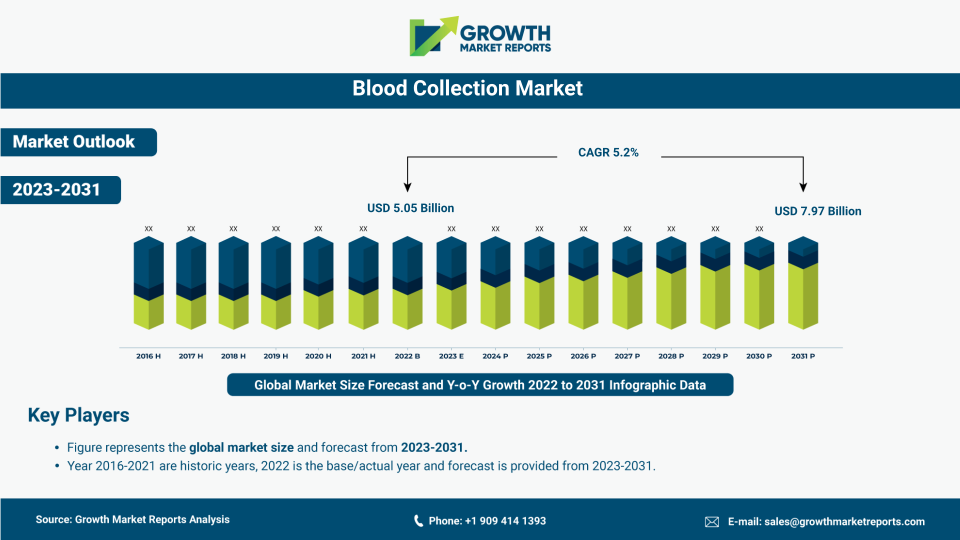
According to our latest research, the global blood collection market size reached USD 11.9 billion in 2025, registering a robust and sustained growth trajectory. The market is anticipated to expand at a CAGR of 6.3% during the forecast period, with the total market value expected to reach USD 20.5 billion by 2034. This growth is primarily driven by the increasing prevalence of chronic diseases, rising demand for diagnostic testing, and significant technological advancements in blood collection devices. The expanding geriatric population and rising emphasis on preventive healthcare are also contributing to the market's steady upward momentum.

Global Blood Collection Market Size Forecast 2025-2034, USD Billion

One of the primary growth factors propelling the blood collection market is the rising incidence of chronic and infectious diseases globally. Conditions such as diabetes, cardiovascular diseases, and various cancers require regular blood testing for effective diagnosis, monitoring, and management. The ongoing threat of emerging infectious diseases and outbreaks has further underscored the importance of efficient blood collection systems for mass testing and epidemiological surveillance. Additionally, the increasing adoption of routine health check-ups and preventive screenings in both developed and developing economies is fueling the demand for advanced blood collection products and services.

Technological advancements represent another significant driver for the blood collection market. Innovations such as automated blood collection systems, safety-engineered devices, and vacuum-assisted blood collection tubes have revolutionized the industry by enhancing safety, accuracy, and patient comfort. These advancements have led to reduced risks of needlestick injuries and contamination, thereby improving compliance with stringent regulatory standards. Furthermore, the integration of digital health technologies and data management solutions is streamlining the blood collection process, enabling efficient sample tracking and data analysis, which is particularly beneficial in large-scale diagnostic and research settings. Interest in connected capillary blood collection platforms is accelerating as providers seek end-to-end traceability from sample draw to laboratory result.

The growing emphasis on research and development activities in the healthcare sector is also bolstering the blood collection market. Pharmaceutical and biotechnology companies, along with academic and research institutions, are increasingly investing in clinical trials and biomedical research, necessitating reliable and high-quality blood collection products. The surge in personalized medicine and genomics research further amplifies the need for precise and minimally invasive blood sampling techniques. As governments and private organizations continue to invest in healthcare infrastructure and research capabilities, the demand for advanced blood collection solutions is expected to witness sustained growth through 2034.

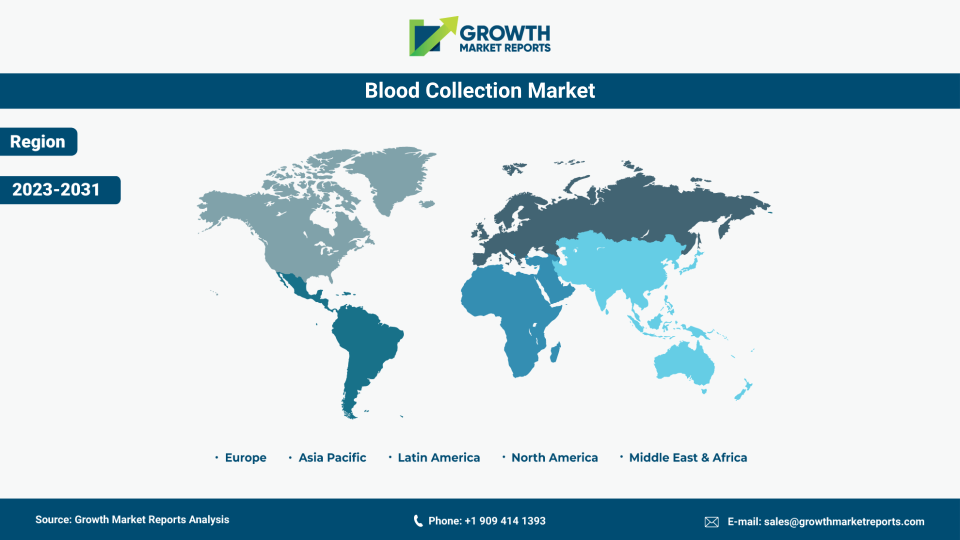
Regionally, North America continues to dominate the blood collection market, driven by a well-established healthcare infrastructure, high prevalence of chronic diseases, and strong presence of leading market players. Europe follows closely, benefiting from favorable government initiatives and increasing healthcare expenditure. The Asia Pacific region is emerging as a high-growth market, attributed to rising healthcare awareness, an expanding patient pool, and rapid adoption of advanced medical technologies. Latin America and the Middle East and Africa are experiencing steady growth, supported by improving healthcare systems and increasing investments in diagnostic services. These regional dynamics collectively shape the global outlook for the blood collection market through the forecast horizon.

Product Type Analysis

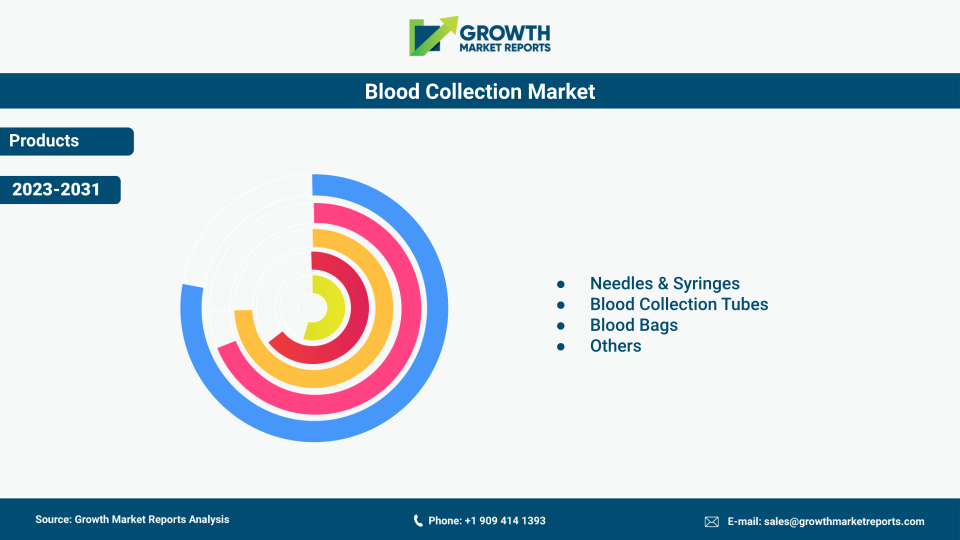
The blood collection market is segmented by product type into needles and syringes, blood collection tubes, blood bags, lancets, and others. Among these, needles and syringes represent the largest share at approximately 34.2% in 2025, primarily due to their widespread use in both manual and automated blood collection procedures. The demand for safety-engineered needles and syringes continues to rise as healthcare facilities strive to minimize needlestick injuries and cross-contamination risks. Technological advancements have led to the development of retractable needles and single-use syringes that further enhance safety and compliance with regulatory guidelines. The integration of ergonomic designs and user-friendly features is also driving adoption in both hospital and outpatient settings.

Blood Collection Market Share by Product Type 2025

Blood collection tubes are another critical product segment, accounting for around 28.6% of the 2025 market and witnessing substantial growth owing to their indispensable role in diagnostic and research applications. The shift toward vacuum-assisted and color-coded tubes has improved the accuracy and efficiency of sample collection, transportation, and storage. These advancements not only reduce the likelihood of sample contamination but also streamline laboratory workflows. Innovations in blood collection tube assembly automation are helping manufacturers scale production capacity while maintaining quality. The increasing demand for specialized tubes used in molecular diagnostics and plasma separation is further expanding this segment.

Blood bags constitute a significant segment at roughly 18.4% of the 2025 market, particularly in blood banks and transfusion centers. The rising number of voluntary blood donations and the growing need for blood components in therapeutic procedures are driving demand for high-quality blood bags. Innovations in blood bag materials and design, such as the use of DEHP-free plastics and integrated sampling ports, are enhancing safety and convenience for both donors and healthcare professionals. The implementation of stringent quality standards and regulatory requirements is prompting manufacturers to invest in advanced production technologies, ensuring the reliability and sterility of blood bags. The broader landscape of blood preparation processes is also influencing product design requirements.

Lancets hold an 11.3% share in 2025 and play a vital role in capillary blood collection for point-of-care testing and glucose monitoring. The increasing prevalence of diabetes and the expanding use of home-based diagnostic devices are boosting demand for minimally invasive and pain-free lancets. Manufacturers are focusing on developing single-use, auto-disabling lancets with ultra-fine needles to enhance patient comfort and safety. The rise of capillary microcollection devices is creating adjacent opportunities within this space. The others segment, which includes microtainers and blood collection accessories, holds the remaining 7.5% share and is witnessing steady growth driven by the need for efficient sample handling and processing solutions across diverse healthcare settings.

Report Scope

Attributes Details
Report Title Blood Collection Market Research Report 2025-2034
By Product Type Needles and Syringes, Blood Collection Tubes, Blood Bags, Lancets, Others
By Method Manual Blood Collection, Automated Blood Collection
By Application Diagnostics, Therapeutics, Research
By End-User Hospitals and Clinics, Diagnostic Centers, Blood Banks, Research Laboratories, Others
Regions Covered North America, Europe, APAC, Latin America, MEA
Base Year 2025
Historic Data 2019-2024
Forecast Period 2026-2034
Number of Pages 271
Number of Tables & Figures 322
Customization Available Yes, the report can be customized as per your need.

Method Analysis

The blood collection market is divided by method into manual blood collection and automated blood collection. Manual blood collection remains the most widely adopted method, especially in primary care settings, rural healthcare facilities, and developing regions. The simplicity, cost-effectiveness, and minimal training requirements of manual methods make them highly accessible. However, manual blood collection is associated with certain limitations, including increased risk of human error, variability in sample quality, and higher susceptibility to needlestick injuries. Despite these challenges, manual methods continue to be the preferred choice for routine diagnostic and therapeutic procedures, particularly in regions with limited access to advanced technologies.

Automated blood collection is gaining significant traction, driven by the need for improved safety, efficiency, and standardization in blood sampling processes. Automated systems are equipped with advanced features such as vacuum-assisted collection, integrated sample identification, and real-time monitoring, which minimize human intervention and enhance sample integrity. These systems are particularly valuable in high-volume settings such as hospitals, diagnostic laboratories, and blood banks, where large numbers of samples need to be processed quickly and accurately. The adoption of automated blood collection is further supported by the growing emphasis on infection control and compliance with stringent regulatory standards in 2025 and beyond.

The integration of digital technologies and data management solutions is transforming both manual and automated blood collection methods. Electronic health records (EHRs), barcode scanning, and sample tracking systems are streamlining workflow, reducing administrative errors, and improving traceability. These advancements are not only enhancing operational efficiency but also supporting personalized medicine initiatives by enabling precise and timely sample analysis. The increasing focus on patient-centric care and the need for rapid turnaround times in diagnostic testing are driving adoption of hybrid models that combine manual and automated techniques in a single workflow.

While automated blood collection offers numerous benefits, adoption is often limited by high initial costs, complex installation requirements, and the need for specialized training. Smaller healthcare facilities and those in resource-constrained settings may face challenges in implementing automated systems. However, ongoing technological advancements and the development of cost-effective solutions are gradually bridging this gap. As awareness about the advantages of automation continues to grow, demand for automated blood collection methods is expected to rise notably through 2034, particularly in developed markets and large healthcare institutions investing in laboratory modernization.

Application Analysis

The blood collection market is segmented by application into diagnostics, therapeutics, and research. Diagnostics is the largest application segment, accounting for a significant share of the 2025 market. The increasing incidence of infectious and non-communicable diseases, coupled with growing demand for routine health screenings, is driving the need for efficient blood collection solutions in diagnostic laboratories and healthcare facilities. Blood samples are essential for a wide range of diagnostic tests, including hematology, biochemistry, serology, and molecular diagnostics. The integration of advanced diagnostic technologies and the rise of point-of-care testing are further boosting demand for high-quality blood collection products.

Therapeutics represents another important application segment, encompassing blood transfusions, apheresis procedures, and stem cell therapies. The rising number of surgical procedures, trauma cases, and chronic disease treatments is increasing demand for blood and blood components. Blood collection plays a critical role in ensuring the availability of safe and compatible blood products for therapeutic use. The development of novel therapies, such as immunotherapies and regenerative medicine approaches, is also driving the need for specialized blood collection techniques and products. The emphasis on patient safety and the implementation of stringent quality control measures are prompting healthcare providers to invest in advanced blood collection systems throughout the forecast period.

Research applications are witnessing rapid growth, driven by the expanding scope of biomedical research, clinical trials, and genomics studies. Blood samples are invaluable for investigating disease mechanisms, developing new diagnostic tools, and evaluating the efficacy of therapeutic interventions. The increasing focus on personalized medicine and precision healthcare is amplifying demand for accurate and minimally invasive blood collection methods. Research laboratories and academic institutions are seeking innovative solutions that enable efficient sample handling, storage, and analysis. The expansion of at-home blood collection programs supporting decentralized clinical trials is one of the most notable trends reshaping the research application landscape in 2025.

The growing adoption of home-based and self-collection blood sampling devices is also influencing the application landscape more broadly. These devices are enabling patients to collect blood samples conveniently and safely at home, reducing the need for frequent hospital visits. The integration of telemedicine and remote monitoring solutions is further supporting this trend, particularly in the context of chronic disease management. As demand for accessible and patient-friendly blood collection solutions continues to rise, manufacturers are focusing on developing user-centric products that cater to diverse application needs across diagnostics, therapeutics, and research.

End-User Analysis

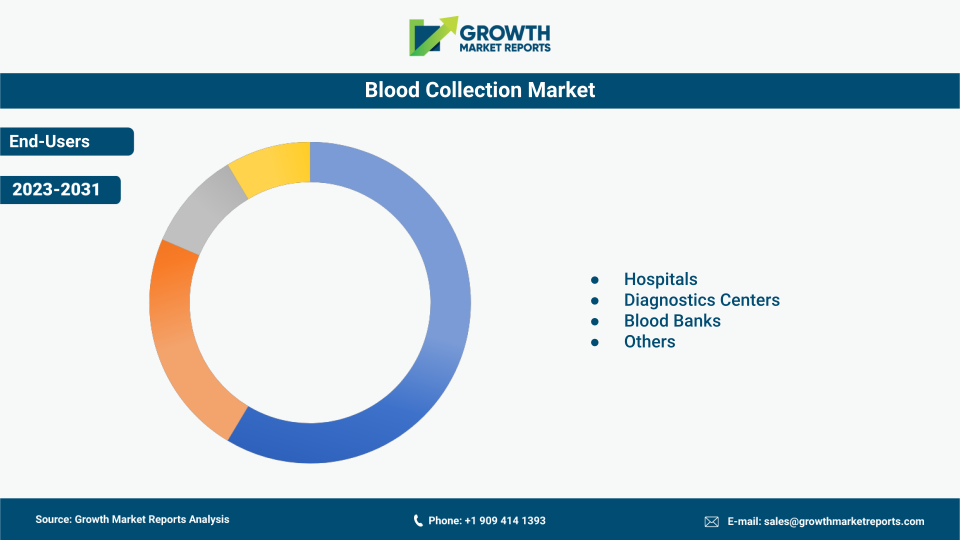
The blood collection market is segmented by end-user into hospitals and clinics, diagnostic centers, blood banks, research laboratories, and others. Hospitals and clinics constitute the largest end-user segment, owing to the high volume of blood collection procedures performed for diagnostic, therapeutic, and surgical purposes. The increasing prevalence of chronic diseases, rising number of hospital admissions, and growing emphasis on preventive healthcare are driving demand for efficient blood collection systems in these settings. Hospitals are also at the forefront of adopting advanced blood collection technologies, such as automated systems and safety-engineered devices, to enhance patient safety and operational efficiency.

Diagnostic centers represent a significant end-user segment, driven by the growing demand for laboratory testing and health screenings. The proliferation of standalone diagnostic laboratories and chain networks is expanding access to high-quality diagnostic services, particularly in urban and semi-urban areas. Diagnostic centers are increasingly investing in automated blood collection solutions and digital workflow management systems to improve sample processing speed, accuracy, and traceability. The rising adoption of point-of-care testing and home-based diagnostics is also influencing the operational dynamics of diagnostic centers, prompting them to offer more flexible and patient-centric blood collection services.

Blood banks play a crucial role in the blood collection market, ensuring the availability of safe and sufficient blood supplies for transfusion and therapeutic applications. The rising number of blood donation drives, coupled with increasing awareness about the importance of voluntary blood donation, is driving demand for high-quality blood bags and collection accessories. Blood banks are adopting advanced screening and storage technologies to maintain the safety and integrity of collected blood. The broader evolution of the blood banking sector, including digital inventory management and component fractionation innovations, is reshaping how blood banks procure and deploy collection consumables worldwide.

Research laboratories and academic institutions are emerging as key end-users, driven by the expanding scope of biomedical and clinical research. The increasing number of clinical trials, genomics studies, and translational research initiatives is necessitating the use of specialized blood collection products and techniques. Research laboratories require precise, reproducible, and minimally invasive blood sampling solutions to support a wide range of applications. The collaboration between industry players and research organizations is fostering the development of customized blood collection devices tailored to the unique needs of the scientific community, a trend that is expected to intensify through 2034.

Opportunities & Threats

The blood collection market presents numerous opportunities for growth and innovation. One of the most promising opportunities lies in the development and commercialization of minimally invasive and patient-friendly blood collection devices. The increasing demand for home-based diagnostics, remote patient monitoring, and decentralized clinical trials is creating a significant market for self-collection and micro-sampling devices. Manufacturers that can develop reliable, easy-to-use, and cost-effective solutions stand to gain a competitive edge in this rapidly evolving landscape. Additionally, the integration of digital health technologies, such as mobile apps and cloud-based data management systems, is opening new avenues for enhancing patient engagement, sample tracking, and data analysis through the forecast period.

Emerging markets, particularly in the Asia Pacific and Latin America regions, offer substantial growth opportunities. The rising healthcare expenditure, improving healthcare infrastructure, and increasing awareness about preventive health measures are driving demand for advanced blood collection products in these regions. Governments and private organizations are investing in expanding diagnostic and research capabilities, creating a favorable environment for market expansion. The growing interest in capillary blood collection microsampling solutions is adding another dimension to the opportunity landscape, particularly for pediatric testing and remote monitoring applications. Strategic collaborations, partnerships, and capacity-building initiatives can help industry players tap into these high-growth markets and establish a strong regional presence.

Despite the numerous opportunities, the blood collection market faces certain restraining factors. Stringent regulatory requirements and compliance standards pose significant challenges for manufacturers, particularly in terms of product development, approval, and commercialization. The high cost of advanced blood collection devices and automated systems may limit their adoption in resource-constrained settings. Additionally, concerns related to needlestick injuries, sample contamination, and infection risks continue to be major challenges, necessitating ongoing investments in safety and quality assurance. Addressing these restraining factors through sustained innovation, healthcare provider education, and cross-sector collaboration will be essential for sustaining long-term market growth through 2034.

Regional Outlook

North America remains the largest regional market for blood collection, accounting for approximately 37.8% of the global market value, equivalent to around USD 4.5 billion in 2025. The region's dominance is attributed to its advanced healthcare infrastructure, high prevalence of chronic and infectious diseases, and strong presence of leading market players. The United States is a major contributor, driven by robust investments in healthcare technology, widespread adoption of advanced diagnostic solutions, and a well-established regulatory framework. Canada is also witnessing steady growth, supported by increasing healthcare expenditure and expanding diagnostic services. North America is expected to maintain its leading position throughout the 2026-2034 forecast period.

Blood Collection Market Regional Share 2025

Europe holds the second-largest share of the blood collection market, with a market size of approximately USD 3.1 billion in 2025. The region benefits from favorable government initiatives, increasing healthcare awareness, and a growing emphasis on preventive health measures. Countries such as Germany, France, and the United Kingdom are leading contributors, driven by strong research and development activities and the presence of renowned healthcare institutions. The European market is expected to grow at a CAGR of approximately 5.8% during the forecast period, supported by ongoing investments in healthcare infrastructure and rising adoption of innovative blood collection technologies across the region.

The Asia Pacific region is emerging as the fastest-growing market, with a current market size of approximately USD 2.4 billion in 2025 and anticipated to expand at a CAGR of around 8.2% through 2034. The rapid growth is fueled by increasing healthcare expenditure, an expanding patient pool, and rising awareness about the importance of early disease detection and preventive care. China, India, and Japan are key growth drivers, supported by government initiatives to improve healthcare access and infrastructure. Latin America and the Middle East and Africa collectively account for the remaining share of the global market at approximately 15.7% combined in 2025, with steady growth driven by improving healthcare systems, increasing investments in diagnostic services, and rising demand for advanced blood collection products in both regions.

Competitor Outlook

The blood collection market is characterized by intense competition, with a diverse mix of global and regional players vying for market share. Leading companies are focusing on product innovation, strategic partnerships, and mergers and acquisitions to strengthen their market position and expand their product portfolios. The competitive landscape is shaped by the continuous introduction of advanced blood collection devices, safety-engineered products, and digital health solutions. Companies are also investing in research and development to address emerging needs, such as minimally invasive sampling, home-based diagnostics, and personalized medicine applications that are gaining prominence as of 2025.

Market leaders are leveraging their extensive distribution networks and strong brand reputation to penetrate new markets and reach a broader customer base. Strategic collaborations with healthcare providers, research institutions, and government agencies are enabling companies to enhance their market presence and drive adoption of advanced blood collection solutions. The focus on sustainability and environmental responsibility is also influencing product development strategies, with companies increasingly adopting eco-friendly materials and manufacturing processes to meet the evolving expectations of healthcare procurement decision-makers.

The competitive dynamics are further shaped by the regulatory landscape, with companies striving to achieve and maintain compliance with stringent quality and safety standards across multiple jurisdictions. The ability to navigate complex regulatory environments and obtain timely product approvals is a key differentiator in the market. Companies are also investing in training and education programs to support healthcare professionals in the safe and effective use of blood collection devices. The emphasis on customer support and after-sales service is enhancing customer loyalty and driving repeat business, particularly among large hospital and laboratory networks.

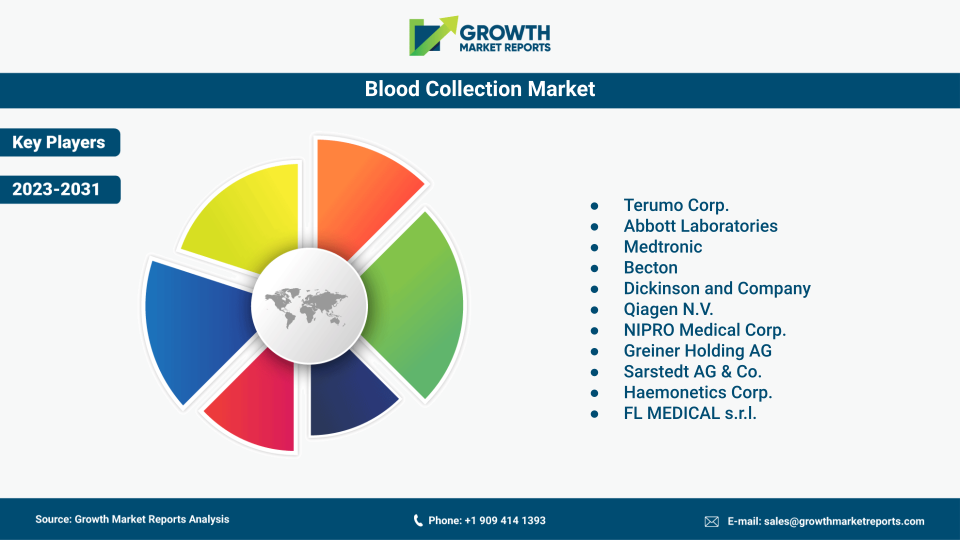
Some of the major companies operating in the blood collection market include Becton, Dickinson and Company (BD), Terumo Corporation, Greiner Bio-One International GmbH, Haemonetics Corporation, Sarstedt AG & Co. KG, Fresenius Kabi AG, and Nipro Medical Corporation. BD is a global leader known for its comprehensive portfolio of needles, syringes, and blood collection tubes, with a strong focus on safety and innovation. Terumo Corporation is recognized for its advanced blood collection systems and commitment to quality and patient safety. Greiner Bio-One and Sarstedt are prominent players in the European market, offering a wide range of blood collection products tailored to diagnostic and research applications.

Haemonetics Corporation specializes in blood management solutions, including automated blood collection systems and software for blood banks and transfusion centers. Fresenius Kabi is a key player in the blood bag segment, with a strong presence in both developed and emerging markets. ICU Medical (which integrated Smiths Medical) has a growing footprint in infusion and blood collection accessories. Grifols S.A. plays an important role in the therapeutic blood collection space, particularly in plasma collection and fractionation. These companies, along with several regional and niche players, are driving innovation and shaping the future of the blood collection market through continuous investment in technology, quality, and customer-centric solutions through 2034.

Key Players

  • Becton, Dickinson and Company (BD)
  • Terumo Corporation
  • Greiner Bio-One International GmbH
  • Haemonetics Corporation
  • Fresenius Kabi AG
  • Nipro Medical Corporation
  • Sarstedt AG & Co. KG
  • Macopharma SA
  • Grifols, S.A.
  • ICU Medical, Inc.
  • Abbott Laboratories
  • Retractable Technologies, Inc.
  • Cardinal Health, Inc.
  • FL Medical S.r.l.
  • Sekisui Medical Co., Ltd.
  • Beckman Coulter, Inc. (Danaher Corporation)
  • Biosigma S.p.A.
  • JMS Co., Ltd.
  • Medline Industries, LP
  • Improve Medical Technology Co., Ltd.

Segments

The Blood Collection market has been segmented on the basis of

Product Type

  • Needles and Syringes
  • Blood Collection Tubes
  • Blood Bags
  • Lancets
  • Others

Method

  • Manual Blood Collection
  • Automated Blood Collection

Application

  • Diagnostics
  • Therapeutics
  • Research

End-User

  • Hospitals and Clinics
  • Diagnostic Centers
  • Blood Banks
  • Research Laboratories
  • Others

Frequently Asked Questions

Emerging opportunities include the commercialization of micro-sampling and at-home blood collection devices, expansion into high-growth Asia Pacific and Latin American markets, integration of AI-driven sample management platforms, development of DEHP-free and eco-friendly blood bag materials, and partnerships supporting decentralized clinical trials and remote patient monitoring programs.

Key players include Becton, Dickinson and Company (BD), Terumo Corporation, Greiner Bio-One International GmbH, Haemonetics Corporation, Sarstedt AG & Co. KG, Fresenius Kabi AG, Nipro Medical Corporation, Grifols S.A., Cardinal Health, ICU Medical, Abbott Laboratories, and Beckman Coulter (Danaher Corporation), among others.

Major challenges include stringent regulatory requirements for device approval and commercialization, the high cost of automated systems limiting adoption in resource-constrained settings, persistent concerns around needlestick injuries and infection control, supply chain disruptions affecting consumable availability, and the need for ongoing staff training as technologies evolve.

Hospitals and clinics represent the largest end-user group due to high procedure volumes. Diagnostic centers are a rapidly growing segment driven by laboratory testing demand. Blood banks rely on collection consumables for donation programs, while research laboratories and academic institutions use specialized collection tools for biomedical and translational research.

Blood collection serves three principal applications: diagnostics, which is the largest segment covering hematology, biochemistry, serology, and molecular testing; therapeutics, encompassing transfusions, apheresis, and stem cell therapies; and research, which supports clinical trials, genomics studies, and personalized medicine initiatives.

Technology is reshaping the industry through automated blood collection systems, vacuum-assisted tube platforms, safety-retractable needles, and digital integration via barcode scanning and electronic health records. Micro-sampling and capillary collection innovations are enabling minimally invasive, home-based, and decentralized testing approaches that expand market reach.

The primary product types are needles and syringes, which lead the market with a 34.2% share, followed by blood collection tubes at 28.6%, blood bags at 18.4%, lancets at 11.3%, and other accessories and consumables at 7.5%. Each segment is experiencing innovation in safety, material science, and compatibility with automated laboratory systems.

North America holds the largest share at approximately 37.8% of the global market in 2025, followed by Europe at 26.1%. The Asia Pacific region is the fastest-growing market, projected to expand at a CAGR of around 8.2% through 2034, driven by rising healthcare expenditure and improving infrastructure in China, India, and Southeast Asia.

Key growth drivers include the rising global burden of chronic and infectious diseases requiring regular blood testing, increasing adoption of preventive health screenings, technological advances such as safety-engineered and vacuum-assisted devices, growing investments in biomedical research, and the expanding geriatric population worldwide.

The global blood collection market reached USD 11.9 billion in 2025, reflecting steady momentum driven by rising chronic disease prevalence, expanding diagnostic testing volumes, and ongoing technological innovation across blood collection devices and systems.

Table Of Content

Chapter 1 Executive Summary
Chapter 2 Assumptions and Acronyms Used
Chapter 3 Research Methodology
Chapter 4 Blood Collection Market Overview
   4.1 Introduction
      4.1.1 Market Taxonomy
      4.1.2 Market Definition
      4.1.3 Macro-Economic Factors Impacting the Market Growth
   4.2 Blood Collection Market Dynamics
      4.2.1 Market Drivers
      4.2.2 Market Restraints
      4.2.3 Market Opportunity
   4.3 Blood Collection Market - Supply Chain Analysis
      4.3.1 List of Key Suppliers
      4.3.2 List of Key Distributors
      4.3.3 List of Key Consumers
   4.4 Key Forces Shaping the Blood Collection Market
      4.4.1 Bargaining Power of Suppliers
      4.4.2 Bargaining Power of Buyers
      4.4.3 Threat of Substitution
      4.4.4 Threat of New Entrants
      4.4.5 Competitive Rivalry
   4.5 Global Blood Collection Market Size & Forecast, 2023-2032
      4.5.1 Blood Collection Market Size and Y-o-Y Growth
      4.5.2 Blood Collection Market Absolute $ Opportunity

Chapter 5 Global Blood Collection Market Analysis and Forecast By Product Type
   5.1 Introduction
      5.1.1 Key Market Trends & Growth Opportunities By Product Type
      5.1.2 Basis Point Share (BPS) Analysis By Product Type
      5.1.3 Absolute $ Opportunity Assessment By Product Type
   5.2 Blood Collection Market Size Forecast By Product Type
      5.2.1 Needles and Syringes
      5.2.2 Blood Collection Tubes
      5.2.3 Blood Bags
      5.2.4 Lancets
      5.2.5 Others
   5.3 Market Attractiveness Analysis By Product Type

Chapter 6 Global Blood Collection Market Analysis and Forecast By Method
   6.1 Introduction
      6.1.1 Key Market Trends & Growth Opportunities By Method
      6.1.2 Basis Point Share (BPS) Analysis By Method
      6.1.3 Absolute $ Opportunity Assessment By Method
   6.2 Blood Collection Market Size Forecast By Method
      6.2.1 Manual Blood Collection
      6.2.2 Automated Blood Collection
   6.3 Market Attractiveness Analysis By Method

Chapter 7 Global Blood Collection Market Analysis and Forecast By Application
   7.1 Introduction
      7.1.1 Key Market Trends & Growth Opportunities By Application
      7.1.2 Basis Point Share (BPS) Analysis By Application
      7.1.3 Absolute $ Opportunity Assessment By Application
   7.2 Blood Collection Market Size Forecast By Application
      7.2.1 Diagnostics
      7.2.2 Therapeutics
      7.2.3 Research
   7.3 Market Attractiveness Analysis By Application

Chapter 8 Global Blood Collection Market Analysis and Forecast By End-User
   8.1 Introduction
      8.1.1 Key Market Trends & Growth Opportunities By End-User
      8.1.2 Basis Point Share (BPS) Analysis By End-User
      8.1.3 Absolute $ Opportunity Assessment By End-User
   8.2 Blood Collection Market Size Forecast By End-User
      8.2.1 Hospitals and Clinics
      8.2.2 Diagnostic Centers
      8.2.3 Blood Banks
      8.2.4 Research Laboratories
      8.2.5 Others
   8.3 Market Attractiveness Analysis By End-User

Chapter 9 Global Blood Collection Market Analysis and Forecast by Region
   9.1 Introduction
      9.1.1 Key Market Trends & Growth Opportunities By Region
      9.1.2 Basis Point Share (BPS) Analysis By Region
      9.1.3 Absolute $ Opportunity Assessment By Region
   9.2 Blood Collection Market Size Forecast By Region
      9.2.1 North America
      9.2.2 Europe
      9.2.3 Asia Pacific
      9.2.4 Latin America
      9.2.5 Middle East & Africa (MEA)
   9.3 Market Attractiveness Analysis By Region

Chapter 10 Coronavirus Disease (COVID-19) Impact 
   10.1 Introduction 
   10.2 Current & Future Impact Analysis 
   10.3 Economic Impact Analysis 
   10.4 Government Policies 
   10.5 Investment Scenario

Chapter 11 North America Blood Collection Analysis and Forecast
   11.1 Introduction
   11.2 North America Blood Collection Market Size Forecast by Country
      11.2.1 U.S.
      11.2.2 Canada
   11.3 Basis Point Share (BPS) Analysis by Country
   11.4 Absolute $ Opportunity Assessment by Country
   11.5 Market Attractiveness Analysis by Country
   11.6 North America Blood Collection Market Size Forecast By Product Type
      11.6.1 Needles and Syringes
      11.6.2 Blood Collection Tubes
      11.6.3 Blood Bags
      11.6.4 Lancets
      11.6.5 Others
   11.7 Basis Point Share (BPS) Analysis By Product Type 
   11.8 Absolute $ Opportunity Assessment By Product Type 
   11.9 Market Attractiveness Analysis By Product Type
   11.10 North America Blood Collection Market Size Forecast By Method
      11.10.1 Manual Blood Collection
      11.10.2 Automated Blood Collection
   11.11 Basis Point Share (BPS) Analysis By Method 
   11.12 Absolute $ Opportunity Assessment By Method 
   11.13 Market Attractiveness Analysis By Method
   11.14 North America Blood Collection Market Size Forecast By Application
      11.14.1 Diagnostics
      11.14.2 Therapeutics
      11.14.3 Research
   11.15 Basis Point Share (BPS) Analysis By Application 
   11.16 Absolute $ Opportunity Assessment By Application 
   11.17 Market Attractiveness Analysis By Application
   11.18 North America Blood Collection Market Size Forecast By End-User
      11.18.1 Hospitals and Clinics
      11.18.2 Diagnostic Centers
      11.18.3 Blood Banks
      11.18.4 Research Laboratories
      11.18.5 Others
   11.19 Basis Point Share (BPS) Analysis By End-User 
   11.20 Absolute $ Opportunity Assessment By End-User 
   11.21 Market Attractiveness Analysis By End-User

Chapter 12 Europe Blood Collection Analysis and Forecast
   12.1 Introduction
   12.2 Europe Blood Collection Market Size Forecast by Country
      12.2.1 Germany
      12.2.2 France
      12.2.3 Italy
      12.2.4 U.K.
      12.2.5 Spain
      12.2.6 Russia
      12.2.7 Rest of Europe
   12.3 Basis Point Share (BPS) Analysis by Country
   12.4 Absolute $ Opportunity Assessment by Country
   12.5 Market Attractiveness Analysis by Country
   12.6 Europe Blood Collection Market Size Forecast By Product Type
      12.6.1 Needles and Syringes
      12.6.2 Blood Collection Tubes
      12.6.3 Blood Bags
      12.6.4 Lancets
      12.6.5 Others
   12.7 Basis Point Share (BPS) Analysis By Product Type 
   12.8 Absolute $ Opportunity Assessment By Product Type 
   12.9 Market Attractiveness Analysis By Product Type
   12.10 Europe Blood Collection Market Size Forecast By Method
      12.10.1 Manual Blood Collection
      12.10.2 Automated Blood Collection
   12.11 Basis Point Share (BPS) Analysis By Method 
   12.12 Absolute $ Opportunity Assessment By Method 
   12.13 Market Attractiveness Analysis By Method
   12.14 Europe Blood Collection Market Size Forecast By Application
      12.14.1 Diagnostics
      12.14.2 Therapeutics
      12.14.3 Research
   12.15 Basis Point Share (BPS) Analysis By Application 
   12.16 Absolute $ Opportunity Assessment By Application 
   12.17 Market Attractiveness Analysis By Application
   12.18 Europe Blood Collection Market Size Forecast By End-User
      12.18.1 Hospitals and Clinics
      12.18.2 Diagnostic Centers
      12.18.3 Blood Banks
      12.18.4 Research Laboratories
      12.18.5 Others
   12.19 Basis Point Share (BPS) Analysis By End-User 
   12.20 Absolute $ Opportunity Assessment By End-User 
   12.21 Market Attractiveness Analysis By End-User

Chapter 13 Asia Pacific Blood Collection Analysis and Forecast
   13.1 Introduction
   13.2 Asia Pacific Blood Collection Market Size Forecast by Country
      13.2.1 China
      13.2.2 Japan
      13.2.3 South Korea
      13.2.4 India
      13.2.5 Australia
      13.2.6 South East Asia (SEA)
      13.2.7 Rest of Asia Pacific (APAC)
   13.3 Basis Point Share (BPS) Analysis by Country
   13.4 Absolute $ Opportunity Assessment by Country
   13.5 Market Attractiveness Analysis by Country
   13.6 Asia Pacific Blood Collection Market Size Forecast By Product Type
      13.6.1 Needles and Syringes
      13.6.2 Blood Collection Tubes
      13.6.3 Blood Bags
      13.6.4 Lancets
      13.6.5 Others
   13.7 Basis Point Share (BPS) Analysis By Product Type 
   13.8 Absolute $ Opportunity Assessment By Product Type 
   13.9 Market Attractiveness Analysis By Product Type
   13.10 Asia Pacific Blood Collection Market Size Forecast By Method
      13.10.1 Manual Blood Collection
      13.10.2 Automated Blood Collection
   13.11 Basis Point Share (BPS) Analysis By Method 
   13.12 Absolute $ Opportunity Assessment By Method 
   13.13 Market Attractiveness Analysis By Method
   13.14 Asia Pacific Blood Collection Market Size Forecast By Application
      13.14.1 Diagnostics
      13.14.2 Therapeutics
      13.14.3 Research
   13.15 Basis Point Share (BPS) Analysis By Application 
   13.16 Absolute $ Opportunity Assessment By Application 
   13.17 Market Attractiveness Analysis By Application
   13.18 Asia Pacific Blood Collection Market Size Forecast By End-User
      13.18.1 Hospitals and Clinics
      13.18.2 Diagnostic Centers
      13.18.3 Blood Banks
      13.18.4 Research Laboratories
      13.18.5 Others
   13.19 Basis Point Share (BPS) Analysis By End-User 
   13.20 Absolute $ Opportunity Assessment By End-User 
   13.21 Market Attractiveness Analysis By End-User

Chapter 14 Latin America Blood Collection Analysis and Forecast
   14.1 Introduction
   14.2 Latin America Blood Collection Market Size Forecast by Country
      14.2.1 Brazil
      14.2.2 Mexico
      14.2.3 Rest of Latin America (LATAM)
   14.3 Basis Point Share (BPS) Analysis by Country
   14.4 Absolute $ Opportunity Assessment by Country
   14.5 Market Attractiveness Analysis by Country
   14.6 Latin America Blood Collection Market Size Forecast By Product Type
      14.6.1 Needles and Syringes
      14.6.2 Blood Collection Tubes
      14.6.3 Blood Bags
      14.6.4 Lancets
      14.6.5 Others
   14.7 Basis Point Share (BPS) Analysis By Product Type 
   14.8 Absolute $ Opportunity Assessment By Product Type 
   14.9 Market Attractiveness Analysis By Product Type
   14.10 Latin America Blood Collection Market Size Forecast By Method
      14.10.1 Manual Blood Collection
      14.10.2 Automated Blood Collection
   14.11 Basis Point Share (BPS) Analysis By Method 
   14.12 Absolute $ Opportunity Assessment By Method 
   14.13 Market Attractiveness Analysis By Method
   14.14 Latin America Blood Collection Market Size Forecast By Application
      14.14.1 Diagnostics
      14.14.2 Therapeutics
      14.14.3 Research
   14.15 Basis Point Share (BPS) Analysis By Application 
   14.16 Absolute $ Opportunity Assessment By Application 
   14.17 Market Attractiveness Analysis By Application
   14.18 Latin America Blood Collection Market Size Forecast By End-User
      14.18.1 Hospitals and Clinics
      14.18.2 Diagnostic Centers
      14.18.3 Blood Banks
      14.18.4 Research Laboratories
      14.18.5 Others
   14.19 Basis Point Share (BPS) Analysis By End-User 
   14.20 Absolute $ Opportunity Assessment By End-User 
   14.21 Market Attractiveness Analysis By End-User

Chapter 15 Middle East & Africa (MEA) Blood Collection Analysis and Forecast
   15.1 Introduction
   15.2 Middle East & Africa (MEA) Blood Collection Market Size Forecast by Country
      15.2.1 Saudi Arabia
      15.2.2 South Africa
      15.2.3 UAE
      15.2.4 Rest of Middle East & Africa (MEA)
   15.3 Basis Point Share (BPS) Analysis by Country
   15.4 Absolute $ Opportunity Assessment by Country
   15.5 Market Attractiveness Analysis by Country
   15.6 Middle East & Africa (MEA) Blood Collection Market Size Forecast By Product Type
      15.6.1 Needles and Syringes
      15.6.2 Blood Collection Tubes
      15.6.3 Blood Bags
      15.6.4 Lancets
      15.6.5 Others
   15.7 Basis Point Share (BPS) Analysis By Product Type 
   15.8 Absolute $ Opportunity Assessment By Product Type 
   15.9 Market Attractiveness Analysis By Product Type
   15.10 Middle East & Africa (MEA) Blood Collection Market Size Forecast By Method
      15.10.1 Manual Blood Collection
      15.10.2 Automated Blood Collection
   15.11 Basis Point Share (BPS) Analysis By Method 
   15.12 Absolute $ Opportunity Assessment By Method 
   15.13 Market Attractiveness Analysis By Method
   15.14 Middle East & Africa (MEA) Blood Collection Market Size Forecast By Application
      15.14.1 Diagnostics
      15.14.2 Therapeutics
      15.14.3 Research
   15.15 Basis Point Share (BPS) Analysis By Application 
   15.16 Absolute $ Opportunity Assessment By Application 
   15.17 Market Attractiveness Analysis By Application
   15.18 Middle East & Africa (MEA) Blood Collection Market Size Forecast By End-User
      15.18.1 Hospitals and Clinics
      15.18.2 Diagnostic Centers
      15.18.3 Blood Banks
      15.18.4 Research Laboratories
      15.18.5 Others
   15.19 Basis Point Share (BPS) Analysis By End-User 
   15.20 Absolute $ Opportunity Assessment By End-User 
   15.21 Market Attractiveness Analysis By End-User

Chapter 16 Competition Landscape 
   16.1 Blood Collection Market: Competitive Dashboard
   16.2 Global Blood Collection Market: Market Share Analysis, 2023
   16.3 Company Profiles (Details – Overview, Financials, Developments, Strategy) 
      16.3.1 Becton, Dickinson and Company (BD)
      16.3.2 Terumo Corporation
      16.3.3 Greiner Bio-One International GmbH
      16.3.4 Haemonetics Corporation
      16.3.5 Fresenius Kabi AG
      16.3.6 Nipro Medical Corporation
      16.3.7 Sarstedt AG & Co. KG
      16.3.8 Macopharma SA
      16.3.9 Grifols, S.A.
      16.3.10 ICU Medical, Inc.
      16.3.11 Abbott Laboratories
      16.3.12 Retractable Technologies, Inc.
      16.3.13 Cardinal Health, Inc.
      16.3.14 FL Medical S.r.l.
      16.3.15 Sekisui Medical Co., Ltd.
      16.3.16 Beckman Coulter, Inc. (Danaher Corporation)
      16.3.17 Biosigma S.p.A.
      16.3.18 JMS Co., Ltd.
      16.3.19 Medline Industries, LP
      16.3.20 Improve Medical Technology Co., Ltd.

Methodology

Our Clients

General Electric
Honda Motor Co. Ltd.
Siemens Healthcare
The John Holland Group
Dassault Aviation
Microsoft
Nestle SA
FedEx Logistics