Bisphenol A Market Research Report 2033

Bisphenol A Market Research Report 2033

Segments - by Application (Polycarbonate Resins, Epoxy Resins, Unsaturated Polyester Resins, Flame Retardants, Others), by End-Use Industry (Automotive, Electronics, Construction, Packaging, Consumer Goods, Others)

https://growthmarketreports.com/Raksha
Author : Raksha Sharma
https://growthmarketreports.com/Vaibhav
Fact-checked by : V. Chandola
https://growthmarketreports.com/Shruti
Editor : Shruti Bhat

Upcoming | Report ID :MC-2109 | 4.8 Rating | 78 Reviews | 250 Pages | Format : Docx PDF

Report Description


Bisphenol A Market Outlook

According to our latest research, the global Bisphenol A (BPA) market size reached USD 19.2 billion in 2024, reflecting robust demand across several industrial sectors. The market is set to grow at a Compound Annual Growth Rate (CAGR) of 5.1% from 2025 to 2033, with the overall market value forecasted to reach USD 30.1 billion by 2033. This strong performance is primarily driven by the rising consumption of BPA-based polycarbonate and epoxy resins in the automotive, electronics, and construction industries, coupled with expanding infrastructure and consumer goods manufacturing worldwide.

One of the principal growth factors for the Bisphenol A market is the surging demand for polycarbonate resins, which are extensively used in the automotive and electronics sectors. The superior physical properties of polycarbonate, such as high impact resistance, optical clarity, and thermal stability, have made it an indispensable material for manufacturing automotive components, electronic housings, and optical disks. With the global automotive industry focusing on lightweighting and enhanced safety features, the use of BPA-derived polycarbonate resins has witnessed a significant uptick. Additionally, the proliferation of consumer electronics, driven by technological advancements and higher consumer spending, continues to bolster the demand for BPA, further cementing its position as a vital industrial chemical.

Another critical driver is the increasing adoption of epoxy resins, particularly in the construction and packaging industries. Epoxy resins, synthesized using Bisphenol A, are valued for their excellent adhesion, chemical resistance, and mechanical strength, making them ideal for coatings, adhesives, and composite materials. The global construction boom, particularly in emerging economies such as China, India, and Southeast Asia, has led to a surge in demand for high-performance construction materials. Moreover, the packaging industry’s shift towards more durable and protective materials for food and beverage containers has further propelled the consumption of BPA-based epoxy resins. This trend is expected to persist, driven by urbanization, infrastructure modernization, and evolving consumer preferences for high-quality packaging solutions.

Environmental regulations and rising awareness about BPA’s health effects have prompted manufacturers to innovate and develop safer, more sustainable alternatives. However, despite regulatory scrutiny, the market continues to thrive due to the lack of viable substitutes that can match the performance and cost-effectiveness of BPA-based products. The ongoing research and development initiatives aimed at enhancing BPA production efficiency and reducing its environmental footprint are expected to support market growth. Additionally, the integration of advanced manufacturing technologies and recycling practices is likely to create new opportunities for BPA producers, ensuring the market’s resilience in the face of evolving regulatory landscapes.

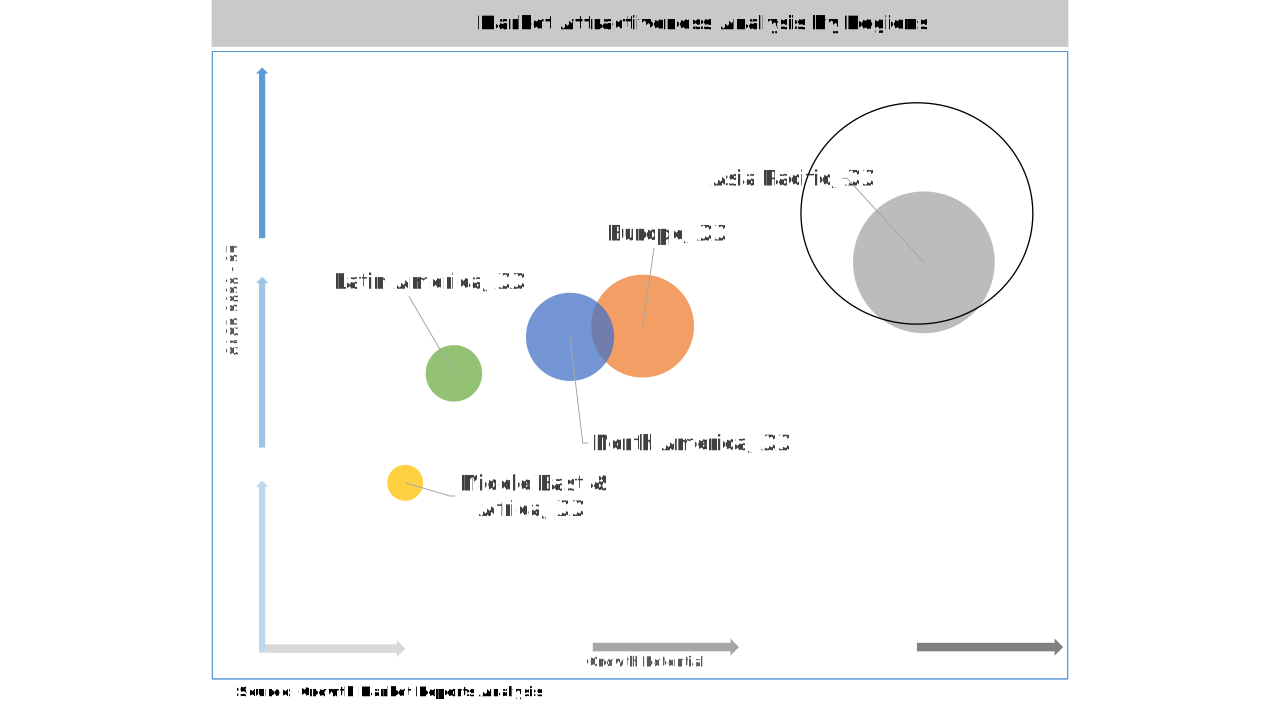
Regionally, Asia Pacific dominates the Bisphenol A market, accounting for the largest share of both production and consumption in 2024. This is attributed to the rapid industrialization, expanding automotive and electronics manufacturing base, and significant investments in infrastructure development across China, India, Japan, and South Korea. North America and Europe also represent substantial markets, driven by established automotive, electronics, and packaging industries, although these regions are increasingly influenced by stringent environmental regulations. Latin America and the Middle East & Africa are emerging as promising markets, supported by growing industrial activities and rising demand for consumer goods. The regional dynamics are expected to evolve further over the forecast period, with Asia Pacific retaining its leadership position due to its robust industrial ecosystem and favorable economic outlook.

Global Bisphenol A Industry Outlook

Application Analysis

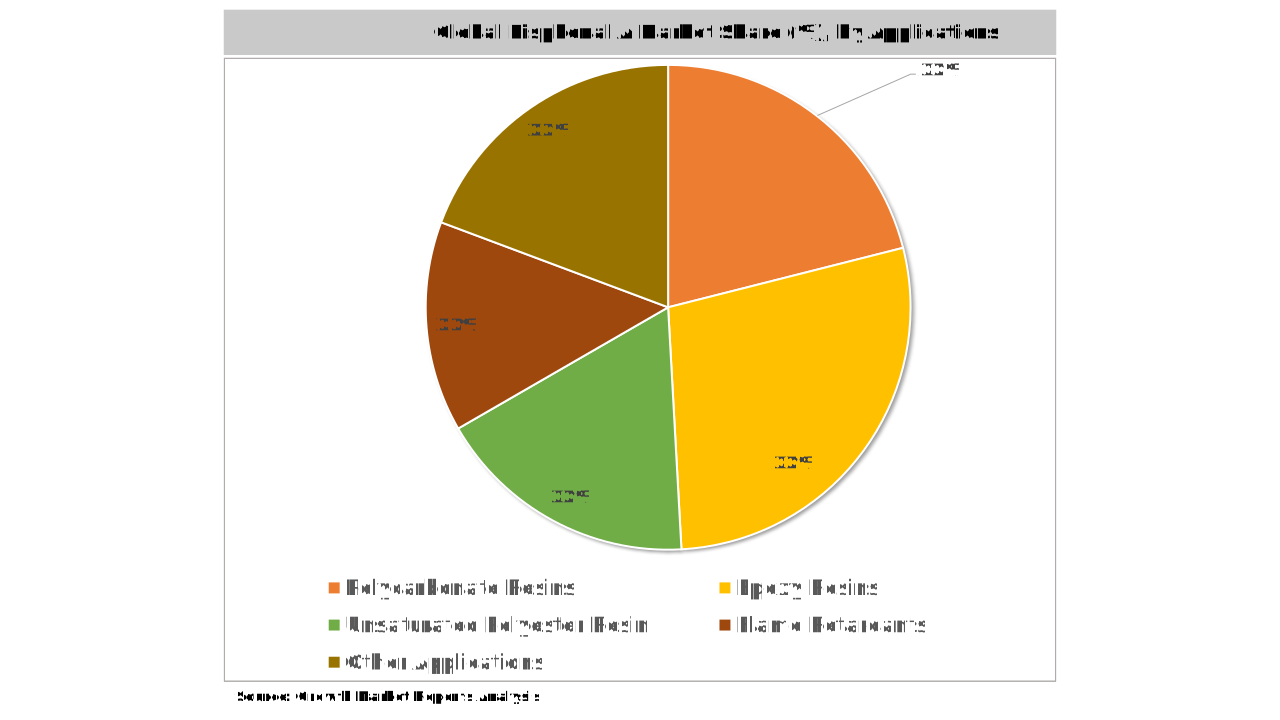
The application segment of the Bisphenol A market is primarily dominated by polycarbonate resins, which accounted for the largest share in 2024. Polycarbonate resins, synthesized using BPA, are widely used in the production of automotive parts, electrical and electronic components, optical disks, and construction materials. The surge in demand for lightweight, durable, and impact-resistant materials in automotive manufacturing has significantly boosted the consumption of polycarbonate resins. Additionally, the electronics industry’s rapid growth, fueled by the proliferation of smartphones, laptops, and other consumer devices, has further elevated the demand for BPA-based polycarbonates. The unique combination of transparency, toughness, and heat resistance offered by polycarbonate resins ensures their continued dominance in the application segment.

Epoxy resins represent another crucial application of Bisphenol A, particularly in the construction, adhesives, coatings, and packaging industries. Epoxy resins derived from BPA are renowned for their superior chemical resistance, mechanical strength, and adhesion properties, making them indispensable in protective coatings for pipelines, flooring, and structural adhesives. The construction industry’s expansion, especially in emerging markets, has led to increased utilization of epoxy resins in infrastructure projects, including bridges, commercial buildings, and industrial facilities. In the packaging sector, BPA-based epoxy resins are extensively used as protective linings in metal cans and containers, ensuring product safety and extending shelf life. The versatility and performance characteristics of epoxy resins continue to drive their widespread adoption across various industrial sectors.

Unsaturated polyester resins, although representing a smaller share of the BPA market, have witnessed steady growth due to their application in reinforced plastics, composites, and coatings. These resins are commonly used in the automotive, marine, and construction industries for manufacturing lightweight and corrosion-resistant components. The growing demand for advanced composite materials in transportation and infrastructure projects has positively influenced the consumption of BPA-based unsaturated polyester resins. Furthermore, the ongoing research and development activities aimed at improving the performance and sustainability of these resins are expected to create new growth opportunities in the coming years.

Flame retardants constitute another significant application segment for Bisphenol A. BPA-based flame retardants are essential additives in the production of plastics, textiles, and electronic devices, providing enhanced fire resistance and safety. The increasing focus on fire safety regulations and standards across various industries has driven the demand for effective flame retardant solutions. In particular, the electronics and construction sectors have emerged as key consumers of BPA-based flame retardants, given the stringent safety requirements for electrical equipment and building materials. The continuous development of innovative flame retardant formulations is anticipated to support the growth of this application segment throughout the forecast period.

Other applications of Bisphenol A include its use in the production of specialty chemicals, thermal paper, and water treatment chemicals. Although these applications account for a relatively smaller share of the overall market, they contribute to the diversification and stability of BPA demand. The ongoing innovation and expansion of niche applications, coupled with the adaptability of BPA in various chemical processes, ensure its relevance across a broad spectrum of industries. As manufacturers continue to explore new uses for BPA and its derivatives, the application segment is expected to witness sustained growth and diversification.

Report Scope

Attributes Details
Report Title Bisphenol A Market Research Report 2033
By Application Polycarbonate Resins, Epoxy Resins, Unsaturated Polyester Resins, Flame Retardants, Others
By End-Use Industry Automotive, Electronics, Construction, Packaging, Consumer Goods, Others
Regions Covered North America, Europe, APAC, Latin America, MEA
Base Year 2024
Historic Data 2018-2023
Forecast Period 2025-2033
Number of Pages 250
Number of Tables & Figures 395
Customization Available Yes, the report can be customized as per your need.

End-Use Industry Analysis

The automotive industry stands out as one of the largest end-use sectors for Bisphenol A, driven by the increasing adoption of lightweight and high-performance materials in vehicle manufacturing. BPA-derived polycarbonate and epoxy resins are extensively used in the production of automotive components such as headlamp lenses, interior panels, and structural parts. The trend towards vehicle lightweighting, aimed at improving fuel efficiency and reducing emissions, has accelerated the use of polycarbonates in place of traditional metals and glass. Additionally, the growing demand for electric vehicles and advanced safety features has further stimulated the consumption of BPA-based materials in the automotive sector. As automakers continue to innovate and enhance vehicle design, the automotive industry is expected to remain a key driver of BPA demand.

The electronics industry represents another major end-use segment for Bisphenol A, owing to the widespread use of polycarbonate resins and flame retardants in electronic devices and components. BPA-based materials are integral to the manufacture of smartphones, computers, televisions, and other consumer electronics, providing essential properties such as electrical insulation, heat resistance, and durability. The rapid technological advancements and increasing penetration of smart devices have fueled the growth of the electronics industry, thereby boosting the demand for BPA. Furthermore, the ongoing miniaturization and integration of electronic components require high-performance materials that can withstand rigorous operating conditions, further reinforcing the importance of BPA in this sector.

The construction industry has witnessed significant growth in the consumption of Bisphenol A, primarily through the use of epoxy resins in coatings, adhesives, and composite materials. BPA-based epoxy resins are widely employed in protective coatings for concrete, steel structures, and pipelines, offering superior corrosion resistance and durability. The global construction boom, particularly in developing regions, has led to increased investments in infrastructure projects, driving the demand for high-performance construction materials. Additionally, the shift towards sustainable and energy-efficient building practices has prompted the adoption of advanced materials, including BPA-based resins, to enhance building performance and longevity. The construction industry’s robust expansion is expected to sustain the growth of BPA consumption over the forecast period.

Packaging is another significant end-use industry for Bisphenol A, with BPA-based epoxy resins being extensively used as protective linings in metal cans and containers for food and beverages. The packaging industry’s focus on product safety, shelf life extension, and regulatory compliance has driven the adoption of BPA-based materials. Despite the ongoing debate and regulatory scrutiny regarding BPA’s safety in food contact applications, the demand for BPA in packaging remains strong due to its proven performance and cost-effectiveness. The emergence of innovative packaging solutions and the increasing consumption of packaged foods and beverages, particularly in emerging markets, are expected to support the continued growth of BPA in the packaging industry.

Consumer goods, including household appliances, sports equipment, and personal care products, also represent a significant end-use segment for Bisphenol A. The versatility and performance attributes of BPA-based polycarbonate and epoxy resins make them ideal for a wide range of consumer applications. The rising consumer preference for durable, lightweight, and aesthetically appealing products has driven the demand for BPA-derived materials in this segment. Additionally, the ongoing trend towards product customization and innovation in consumer goods is expected to create new opportunities for BPA manufacturers. As the global consumer goods market continues to expand, the demand for high-quality materials such as BPA is anticipated to remain robust.

Opportunities & Threats

The Bisphenol A market presents several lucrative opportunities for growth, particularly in the development of advanced materials and sustainable production processes. The increasing focus on research and development has paved the way for the creation of high-performance BPA derivatives and composites that offer enhanced mechanical, thermal, and chemical properties. These innovations are finding applications in emerging fields such as electric mobility, renewable energy, and smart infrastructure, thereby expanding the market’s potential. Additionally, the growing emphasis on circular economy principles and resource efficiency has encouraged the adoption of recycling and upcycling technologies for BPA-based products, opening new avenues for sustainable growth. Manufacturers that invest in innovation and sustainability are well-positioned to capitalize on these opportunities and strengthen their market presence.

Another significant opportunity lies in the expansion of BPA applications in high-growth regions such as Asia Pacific, Latin America, and the Middle East & Africa. Rapid urbanization, industrialization, and infrastructure development in these regions have led to increased demand for BPA-based materials in construction, automotive, electronics, and packaging industries. The rising middle-class population and changing consumer lifestyles have further fueled the consumption of consumer goods and packaged products, driving the need for high-quality materials. Strategic investments in capacity expansion, localization of production, and collaboration with regional stakeholders can enable BPA manufacturers to tap into these emerging markets and achieve sustainable growth.

Despite the promising growth prospects, the Bisphenol A market faces several restraining factors, primarily related to health and environmental concerns. Regulatory agencies in North America, Europe, and other regions have imposed stringent restrictions on the use of BPA in food contact materials and consumer products, citing potential health risks associated with BPA exposure. The increasing consumer awareness and demand for BPA-free alternatives have prompted manufacturers to explore substitute materials, posing a threat to BPA demand. Additionally, the volatility in raw material prices and supply chain disruptions can impact production costs and profitability. Addressing these challenges requires proactive regulatory compliance, investment in alternative material research, and the adoption of sustainable manufacturing practices to ensure long-term market viability.

Regional Outlook

Asia Pacific remains the largest and most dynamic market for Bisphenol A, accounting for approximately 52% of the global market share in 2024, with a market value of USD 10 billion. The region’s dominance is attributed to its robust manufacturing base, rapid industrialization, and significant investments in automotive, electronics, and construction sectors. China, in particular, stands out as the leading producer and consumer of BPA, supported by favorable government policies, abundant raw material availability, and strong domestic demand. India, Japan, and South Korea also contribute significantly to regional growth, driven by expanding industrial activities and rising consumption of BPA-based products. The Asia Pacific BPA market is expected to maintain a healthy CAGR of 5.8% during the forecast period, outpacing other regions and reinforcing its position as the global growth engine.

North America represents the second-largest market for Bisphenol A, with a market size of USD 4.1 billion in 2024. The region’s mature automotive, electronics, and packaging industries continue to drive steady demand for BPA-based materials. However, the market is increasingly influenced by stringent environmental regulations and growing consumer preference for BPA-free products, particularly in food packaging and consumer goods. The United States remains the dominant player in the North American market, supported by advanced manufacturing capabilities and ongoing investments in research and development. Canada and Mexico also contribute to regional demand, albeit to a lesser extent. The North American BPA market is expected to witness moderate growth over the forecast period, with manufacturers focusing on innovation and compliance to address evolving regulatory requirements.

Europe holds a significant share of the global Bisphenol A market, valued at USD 3.6 billion in 2024. The region is characterized by a well-established industrial base, high standards for product quality and safety, and a strong emphasis on sustainability. Germany, France, and the United Kingdom are the leading markets within Europe, driven by robust automotive, electronics, and construction sectors. However, the European BPA market faces challenges from stringent regulatory frameworks, particularly regarding BPA usage in food contact materials and environmental protection. The increasing adoption of BPA alternatives and the shift towards green chemistry are expected to shape the future trajectory of the European market. Despite these challenges, Europe is projected to maintain a steady growth rate, supported by ongoing innovation and the development of sustainable BPA-based solutions.

Bisphenol A Market Statistics

Competitor Outlook

The competitive landscape of the Bisphenol A market is characterized by the presence of several large multinational corporations, as well as regional and niche players. The market is moderately consolidated, with the top players accounting for a significant share of global production and supply. Leading companies are focused on expanding their production capacities, investing in research and development, and enhancing their product portfolios to cater to the diverse needs of end-use industries. Strategic collaborations, mergers, and acquisitions are common strategies employed by major players to strengthen their market position and gain access to new technologies and markets. The competition is further intensified by the ongoing innovation in BPA derivatives and the development of sustainable production processes.

In recent years, the market has witnessed increased investments in capacity expansion and technological advancements, particularly in Asia Pacific, to meet the growing demand for BPA-based materials. Leading manufacturers are also focusing on sustainability initiatives, such as the adoption of green chemistry principles, energy-efficient production processes, and the development of BPA recycling technologies. These efforts are aimed at reducing the environmental footprint of BPA production and addressing regulatory and consumer concerns regarding BPA safety. The ability to innovate and adapt to changing market dynamics is expected to be a key differentiator for companies operating in the BPA market.

The competitive landscape is also shaped by the emergence of BPA-free alternatives and the increasing regulatory scrutiny on BPA usage in certain applications. Companies are investing in the development of substitute materials, such as bisphenol S (BPS) and bisphenol F (BPF), to cater to the growing demand for safer and more sustainable solutions. However, the performance and cost advantages of BPA-based materials continue to drive their widespread adoption, particularly in applications where substitutes are not yet viable. The ongoing balance between regulatory compliance, product performance, and cost-effectiveness will continue to influence the competitive dynamics of the BPA market.

Some of the major companies operating in the global Bisphenol A market include Covestro AG, SABIC, Dow Inc., LG Chem, Mitsubishi Chemical Corporation, Kumho P&B Chemicals, Inc., Hexion Inc., and Samyang Innochem. Covestro AG is recognized for its extensive portfolio of polycarbonate resins and commitment to sustainability through innovation in recycling and green chemistry. SABIC, a leading player in the chemicals industry, has a strong presence in the Asia Pacific region and focuses on capacity expansion and technological advancements. Dow Inc. is known for its integrated production capabilities and emphasis on research and development to enhance product performance and sustainability. LG Chem and Mitsubishi Chemical Corporation are prominent players in the Asia Pacific market, leveraging their advanced manufacturing technologies and regional expertise to cater to the growing demand for BPA-based materials.

Kumho P&B Chemicals, Inc. and Samyang Innochem are notable for their focus on high-purity BPA production and strong presence in the Asian market. Hexion Inc. is recognized for its expertise in epoxy resins and commitment to developing sustainable solutions for the construction and coatings industries. These companies are actively engaged in strategic partnerships, capacity expansions, and sustainability initiatives to strengthen their market position and address evolving industry requirements. The competitive outlook for the Bisphenol A market remains dynamic, with ongoing innovation, regulatory compliance, and sustainability expected to be the key drivers of success for market participants.

Key Players

  • Covestro AG
  • SABIC
  • Mitsubishi Chemical Corporation
  • LG Chem
  • Kumho P&B Chemicals Inc.
  • Hexion Inc.
  • Samyang Innochem
  • Teijin Limited
  • Mitsui Chemicals Inc.
  • Formosa Chemicals & Fibre Corporation
  • Chang Chun Group
  • Bayer MaterialScience
  • Olin Corporation
  • Nan Ya Plastics Corporation
  • Idemitsu Kosan Co., Ltd.
  • Vinmar International
  • PTT Global Chemical Public Company Limited
  • Shell Chemicals
  • China National Chemical Corporation (ChemChina)
  • Lotte Chemical Corporation
Bisphenol A Market Overview

Segments

The Bisphenol A market has been segmented on the basis of

Application

  • Polycarbonate Resins
  • Epoxy Resins
  • Unsaturated Polyester Resins
  • Flame Retardants
  • Others

End-Use Industry

  • Automotive
  • Electronics
  • Construction
  • Packaging
  • Consumer Goods
  • Others

Competitive Landscape

Key players competing in the bisphenol A market are Covestro AG; Mitsubishi Chemical Corporation; Mitsui Chemical Inc.; SABIC; and LG Chem.

In August 2021, Mitsubishi Chemical Corporation announced the investment of USD 915 Million to construct a resins plant to ramp up the production process.

In July 2021, Saudi Basic Industries Corporation (SABIC) launched sustainable polycarbonate film and sheet products. The new bio-based LEXAN film is manufactured from polycarbonate resins, which helps in lessening the carbon footprint.
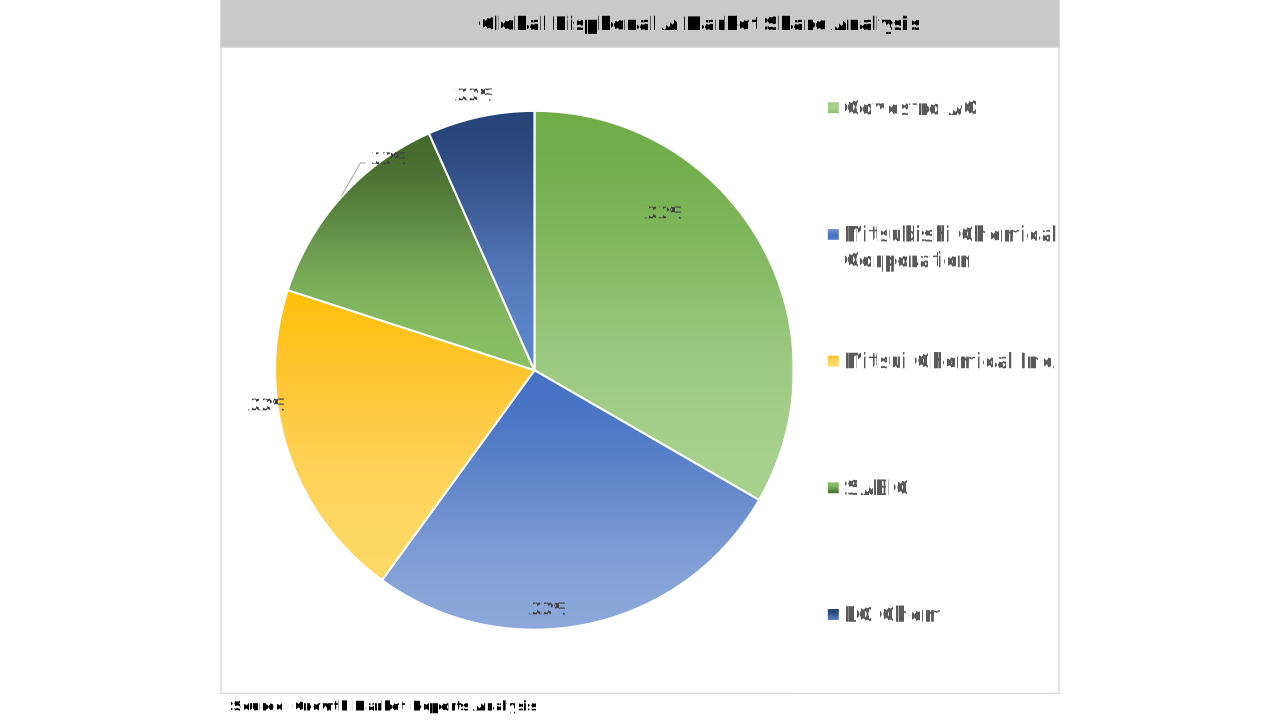

Bisphonal A Market By Key Players

Frequently Asked Questions

Opportunities include the development of advanced BPA derivatives and composites, expansion in high-growth regions like Asia Pacific and Latin America, and adoption of recycling and sustainable manufacturing practices.

Environmental regulations are prompting manufacturers to innovate and develop safer, more sustainable alternatives to BPA, while ongoing research aims to improve production efficiency and reduce environmental impact.

The Bisphenol A market is expected to grow at a CAGR of 5.1% from 2025 to 2033, reaching a market value of USD 30.1 billion by 2033.

Key players include Covestro AG, SABIC, Dow Inc., LG Chem, Mitsubishi Chemical Corporation, Kumho P&B Chemicals, Hexion Inc., and Samyang Innochem.

Major challenges include stringent environmental regulations, health concerns over BPA exposure, rising demand for BPA-free alternatives, and volatility in raw material prices.

In the automotive industry, BPA-derived polycarbonate and epoxy resins are used to manufacture lightweight, impact-resistant components such as headlamp lenses, interior panels, and structural parts.

Bisphenol A is primarily used in polycarbonate resins, epoxy resins, unsaturated polyester resins, flame retardants, and specialty chemicals for various industries.

Asia Pacific dominates the Bisphenol A market, accounting for the largest share of production and consumption, followed by North America and Europe.

Key growth drivers include rising demand for BPA-based polycarbonate and epoxy resins in automotive, electronics, and construction industries, as well as expanding infrastructure and consumer goods manufacturing worldwide.

As of 2024, the global Bisphenol A (BPA) market size reached USD 19.2 billion, with strong demand across various industrial sectors.

Table Of Content

Chapter 1 Executive Summary
Chapter 2 Assumptions and Acronyms Used
Chapter 3 Research Methodology
Chapter 4 Bisphenol A Market Overview
   4.1 Introduction
      4.1.1 Market Taxonomy
      4.1.2 Market Definition
      4.1.3 Macro-Economic Factors Impacting the Market Growth
   4.2 Bisphenol A Market Dynamics
      4.2.1 Market Drivers
      4.2.2 Market Restraints
      4.2.3 Market Opportunity
   4.3 Bisphenol A Market - Supply Chain Analysis
      4.3.1 List of Key Suppliers
      4.3.2 List of Key Distributors
      4.3.3 List of Key Consumers
   4.4 Key Forces Shaping the Bisphenol A Market
      4.4.1 Bargaining Power of Suppliers
      4.4.2 Bargaining Power of Buyers
      4.4.3 Threat of Substitution
      4.4.4 Threat of New Entrants
      4.4.5 Competitive Rivalry
   4.5 Global Bisphenol A Market Size & Forecast, 2023-2032
      4.5.1 Bisphenol A Market Size and Y-o-Y Growth
      4.5.2 Bisphenol A Market Absolute $ Opportunity

Chapter 5 Global Bisphenol A Market Analysis and Forecast By Application
   5.1 Introduction
      5.1.1 Key Market Trends & Growth Opportunities By Application
      5.1.2 Basis Point Share (BPS) Analysis By Application
      5.1.3 Absolute $ Opportunity Assessment By Application
   5.2 Bisphenol A Market Size Forecast By Application
      5.2.1 Polycarbonate Resins
      5.2.2 Epoxy Resins
      5.2.3 Unsaturated Polyester Resins
      5.2.4 Flame Retardants
      5.2.5 Others
   5.3 Market Attractiveness Analysis By Application

Chapter 6 Global Bisphenol A Market Analysis and Forecast By End-Use Industry
   6.1 Introduction
      6.1.1 Key Market Trends & Growth Opportunities By End-Use Industry
      6.1.2 Basis Point Share (BPS) Analysis By End-Use Industry
      6.1.3 Absolute $ Opportunity Assessment By End-Use Industry
   6.2 Bisphenol A Market Size Forecast By End-Use Industry
      6.2.1 Automotive
      6.2.2 Electronics
      6.2.3 Construction
      6.2.4 Packaging
      6.2.5 Consumer Goods
      6.2.6 Others
   6.3 Market Attractiveness Analysis By End-Use Industry

Chapter 7 Global Bisphenol A Market Analysis and Forecast by Region
   7.1 Introduction
      7.1.1 Key Market Trends & Growth Opportunities By Region
      7.1.2 Basis Point Share (BPS) Analysis By Region
      7.1.3 Absolute $ Opportunity Assessment By Region
   7.2 Bisphenol A Market Size Forecast By Region
      7.2.1 North America
      7.2.2 Europe
      7.2.3 Asia Pacific
      7.2.4 Latin America
      7.2.5 Middle East & Africa (MEA)
   7.3 Market Attractiveness Analysis By Region

Chapter 8 Coronavirus Disease (COVID-19) Impact 
   8.1 Introduction 
   8.2 Current & Future Impact Analysis 
   8.3 Economic Impact Analysis 
   8.4 Government Policies 
   8.5 Investment Scenario

Chapter 9 North America Bisphenol A Analysis and Forecast
   9.1 Introduction
   9.2 North America Bisphenol A Market Size Forecast by Country
      9.2.1 U.S.
      9.2.2 Canada
   9.3 Basis Point Share (BPS) Analysis by Country
   9.4 Absolute $ Opportunity Assessment by Country
   9.5 Market Attractiveness Analysis by Country
   9.6 North America Bisphenol A Market Size Forecast By Application
      9.6.1 Polycarbonate Resins
      9.6.2 Epoxy Resins
      9.6.3 Unsaturated Polyester Resins
      9.6.4 Flame Retardants
      9.6.5 Others
   9.7 Basis Point Share (BPS) Analysis By Application 
   9.8 Absolute $ Opportunity Assessment By Application 
   9.9 Market Attractiveness Analysis By Application
   9.10 North America Bisphenol A Market Size Forecast By End-Use Industry
      9.10.1 Automotive
      9.10.2 Electronics
      9.10.3 Construction
      9.10.4 Packaging
      9.10.5 Consumer Goods
      9.10.6 Others
   9.11 Basis Point Share (BPS) Analysis By End-Use Industry 
   9.12 Absolute $ Opportunity Assessment By End-Use Industry 
   9.13 Market Attractiveness Analysis By End-Use Industry

Chapter 10 Europe Bisphenol A Analysis and Forecast
   10.1 Introduction
   10.2 Europe Bisphenol A Market Size Forecast by Country
      10.2.1 Germany
      10.2.2 France
      10.2.3 Italy
      10.2.4 U.K.
      10.2.5 Spain
      10.2.6 Russia
      10.2.7 Rest of Europe
   10.3 Basis Point Share (BPS) Analysis by Country
   10.4 Absolute $ Opportunity Assessment by Country
   10.5 Market Attractiveness Analysis by Country
   10.6 Europe Bisphenol A Market Size Forecast By Application
      10.6.1 Polycarbonate Resins
      10.6.2 Epoxy Resins
      10.6.3 Unsaturated Polyester Resins
      10.6.4 Flame Retardants
      10.6.5 Others
   10.7 Basis Point Share (BPS) Analysis By Application 
   10.8 Absolute $ Opportunity Assessment By Application 
   10.9 Market Attractiveness Analysis By Application
   10.10 Europe Bisphenol A Market Size Forecast By End-Use Industry
      10.10.1 Automotive
      10.10.2 Electronics
      10.10.3 Construction
      10.10.4 Packaging
      10.10.5 Consumer Goods
      10.10.6 Others
   10.11 Basis Point Share (BPS) Analysis By End-Use Industry 
   10.12 Absolute $ Opportunity Assessment By End-Use Industry 
   10.13 Market Attractiveness Analysis By End-Use Industry

Chapter 11 Asia Pacific Bisphenol A Analysis and Forecast
   11.1 Introduction
   11.2 Asia Pacific Bisphenol A Market Size Forecast by Country
      11.2.1 China
      11.2.2 Japan
      11.2.3 South Korea
      11.2.4 India
      11.2.5 Australia
      11.2.6 South East Asia (SEA)
      11.2.7 Rest of Asia Pacific (APAC)
   11.3 Basis Point Share (BPS) Analysis by Country
   11.4 Absolute $ Opportunity Assessment by Country
   11.5 Market Attractiveness Analysis by Country
   11.6 Asia Pacific Bisphenol A Market Size Forecast By Application
      11.6.1 Polycarbonate Resins
      11.6.2 Epoxy Resins
      11.6.3 Unsaturated Polyester Resins
      11.6.4 Flame Retardants
      11.6.5 Others
   11.7 Basis Point Share (BPS) Analysis By Application 
   11.8 Absolute $ Opportunity Assessment By Application 
   11.9 Market Attractiveness Analysis By Application
   11.10 Asia Pacific Bisphenol A Market Size Forecast By End-Use Industry
      11.10.1 Automotive
      11.10.2 Electronics
      11.10.3 Construction
      11.10.4 Packaging
      11.10.5 Consumer Goods
      11.10.6 Others
   11.11 Basis Point Share (BPS) Analysis By End-Use Industry 
   11.12 Absolute $ Opportunity Assessment By End-Use Industry 
   11.13 Market Attractiveness Analysis By End-Use Industry

Chapter 12 Latin America Bisphenol A Analysis and Forecast
   12.1 Introduction
   12.2 Latin America Bisphenol A Market Size Forecast by Country
      12.2.1 Brazil
      12.2.2 Mexico
      12.2.3 Rest of Latin America (LATAM)
   12.3 Basis Point Share (BPS) Analysis by Country
   12.4 Absolute $ Opportunity Assessment by Country
   12.5 Market Attractiveness Analysis by Country
   12.6 Latin America Bisphenol A Market Size Forecast By Application
      12.6.1 Polycarbonate Resins
      12.6.2 Epoxy Resins
      12.6.3 Unsaturated Polyester Resins
      12.6.4 Flame Retardants
      12.6.5 Others
   12.7 Basis Point Share (BPS) Analysis By Application 
   12.8 Absolute $ Opportunity Assessment By Application 
   12.9 Market Attractiveness Analysis By Application
   12.10 Latin America Bisphenol A Market Size Forecast By End-Use Industry
      12.10.1 Automotive
      12.10.2 Electronics
      12.10.3 Construction
      12.10.4 Packaging
      12.10.5 Consumer Goods
      12.10.6 Others
   12.11 Basis Point Share (BPS) Analysis By End-Use Industry 
   12.12 Absolute $ Opportunity Assessment By End-Use Industry 
   12.13 Market Attractiveness Analysis By End-Use Industry

Chapter 13 Middle East & Africa (MEA) Bisphenol A Analysis and Forecast
   13.1 Introduction
   13.2 Middle East & Africa (MEA) Bisphenol A Market Size Forecast by Country
      13.2.1 Saudi Arabia
      13.2.2 South Africa
      13.2.3 UAE
      13.2.4 Rest of Middle East & Africa (MEA)
   13.3 Basis Point Share (BPS) Analysis by Country
   13.4 Absolute $ Opportunity Assessment by Country
   13.5 Market Attractiveness Analysis by Country
   13.6 Middle East & Africa (MEA) Bisphenol A Market Size Forecast By Application
      13.6.1 Polycarbonate Resins
      13.6.2 Epoxy Resins
      13.6.3 Unsaturated Polyester Resins
      13.6.4 Flame Retardants
      13.6.5 Others
   13.7 Basis Point Share (BPS) Analysis By Application 
   13.8 Absolute $ Opportunity Assessment By Application 
   13.9 Market Attractiveness Analysis By Application
   13.10 Middle East & Africa (MEA) Bisphenol A Market Size Forecast By End-Use Industry
      13.10.1 Automotive
      13.10.2 Electronics
      13.10.3 Construction
      13.10.4 Packaging
      13.10.5 Consumer Goods
      13.10.6 Others
   13.11 Basis Point Share (BPS) Analysis By End-Use Industry 
   13.12 Absolute $ Opportunity Assessment By End-Use Industry 
   13.13 Market Attractiveness Analysis By End-Use Industry

Chapter 14 Competition Landscape 
   14.1 Bisphenol A Market: Competitive Dashboard
   14.2 Global Bisphenol A Market: Market Share Analysis, 2023
   14.3 Company Profiles (Details – Overview, Financials, Developments, Strategy) 
      14.3.1 Covestro AG
SABIC
Mitsubishi Chemical Corporation
LG Chem
Kumho P&B Chemicals Inc.
Hexion Inc.
Samyang Innochem
Teijin Limited
Mitsui Chemicals Inc.
Formosa Chemicals & Fibre Corporation
Chang Chun Group
Bayer MaterialScience
Olin Corporation
Nan Ya Plastics Corporation
Idemitsu Kosan Co., Ltd.
Vinmar International
PTT Global Chemical Public Company Limited
Shell Chemicals
China National Chemical Corporation (ChemChina)
Lotte Chemical Corporation

Methodology

Our Clients

Nestle SA
FedEx Logistics
Honda Motor Co. Ltd.
General Electric
Dassault Aviation
Microsoft
Deloitte
The John Holland Group