Biotechnology Reagents & Kits Market Research Report 2033

Biotechnology Reagents & Kits Market Research Report 2033

Segments - by Product Type (Reagents, Kits, Buffers, Enzymes, Others), by Application (Drug Discovery, Diagnostics, Research & Development, Therapeutics, Others), by Technology (PCR, Cell Culture, Flow Cytometry, Chromatography, Electrophoresis, Others), by End-User (Pharmaceutical & Biotechnology Companies, Academic & Research Institutes, Hospitals & Diagnostic Laboratories, Others)

https://growthmarketreports.com/raksha
Author : Raksha Sharma
https://growthmarketreports.com/Vaibhav
Fact-checked by : V. Chandola
https://growthmarketreports.com/Shruti
Editor : Shruti Bhat

Upcoming | Report ID :HC-2520 | 4.8 Rating | 19 Reviews | 269 Pages | Format : Docx PDF

Report Description


Biotechnology Reagents & Kits Market Outlook

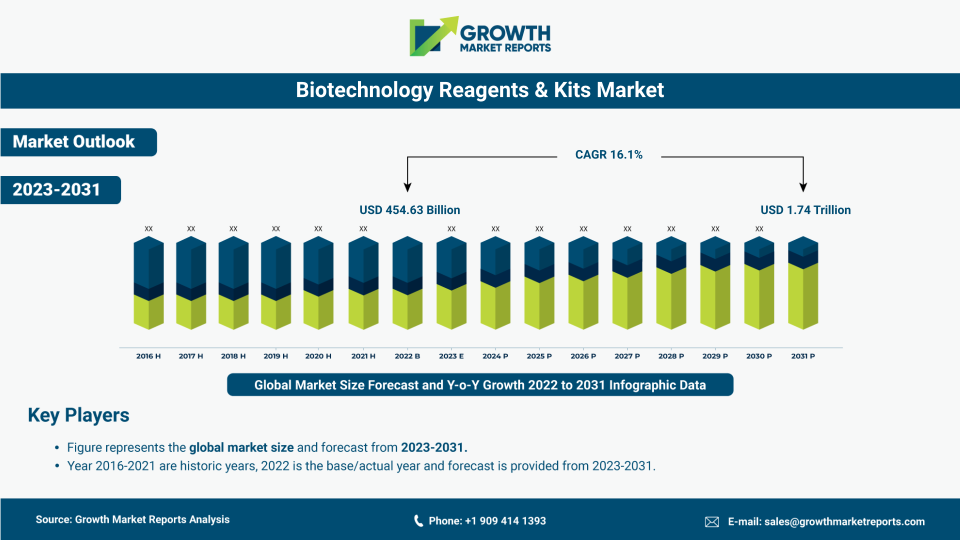
According to our latest research, the global biotechnology reagents & kits market size reached USD 97.5 billion in 2024, reflecting robust growth across multiple end-use sectors. The market is projected to expand at a CAGR of 7.2% during the forecast period, reaching approximately USD 182.3 billion by 2033. This dynamic growth is driven by a surge in biotechnological research, increasing investments in drug discovery, and the growing prevalence of chronic diseases necessitating advanced diagnostic and therapeutic solutions. As per our latest market intelligence, the biotechnology reagents & kits market is poised for sustained expansion, underpinned by technological advancements and the rising adoption of precision medicine.

The biotechnology reagents & kits market is experiencing significant growth, primarily fueled by the escalating demand for advanced diagnostic tools and personalized medicine. The ongoing evolution of genomics, proteomics, and metabolomics has intensified the need for high-quality reagents and kits to enable accurate and reproducible results. The integration of next-generation sequencing (NGS) and high-throughput screening technologies in research and clinical diagnostics has further accelerated market adoption. Moreover, the COVID-19 pandemic highlighted the critical role of biotechnology reagents and kits in rapid diagnostics and vaccine development, reinforcing the importance of robust supply chains and innovation in this sector. The increasing prevalence of infectious and chronic diseases, coupled with government initiatives supporting life sciences research, is anticipated to continue propelling market growth in the coming years.

Another pivotal growth factor in the biotechnology reagents & kits market is the surge in pharmaceutical and biopharmaceutical research activities globally. Pharmaceutical companies are heavily investing in research and development to accelerate drug discovery and development processes, necessitating a consistent supply of specialized reagents and kits. The advent of biologics and biosimilars has further elevated the demand for sophisticated analytical and preparative tools. Additionally, the expansion of academic and government-funded research initiatives, especially in emerging economies, has contributed to the widespread adoption of biotechnology reagents and kits. Collaborations between academia, industry, and government agencies are fostering innovation and facilitating the translation of research findings into clinical applications, thereby driving market expansion.

Technological advancements are playing a transformative role in shaping the biotechnology reagents & kits market landscape. The development of novel reagents and kits tailored for specific applications, such as CRISPR gene editing, single-cell analysis, and digital PCR, is enabling researchers to achieve unprecedented levels of precision and efficiency. Automation and miniaturization of laboratory workflows are further enhancing throughput and reproducibility, making advanced biotechnology tools accessible to a broader range of end users. The increasing adoption of artificial intelligence (AI) and machine learning (ML) in data analysis is also streamlining experimental workflows and accelerating the pace of discovery. These technological innovations, coupled with the growing trend of outsourcing research and diagnostic services, are expected to fuel market growth over the forecast period.

From a regional perspective, North America continues to dominate the biotechnology reagents & kits market, accounting for the largest revenue share in 2024. The region’s leadership is attributed to a well-established biotechnology sector, substantial investments in research and development, and the presence of leading market players. However, the Asia Pacific region is emerging as a high-growth market, driven by expanding healthcare infrastructure, increasing government support for life sciences research, and a growing pool of skilled professionals. Europe remains a significant contributor, benefiting from robust academic research and a strong pharmaceutical industry. Latin America and the Middle East & Africa are witnessing steady growth, supported by rising healthcare expenditure and increasing awareness of advanced diagnostic technologies.

Global Biotechnology Reagents & Kits Industry Outlook

Product Type Analysis

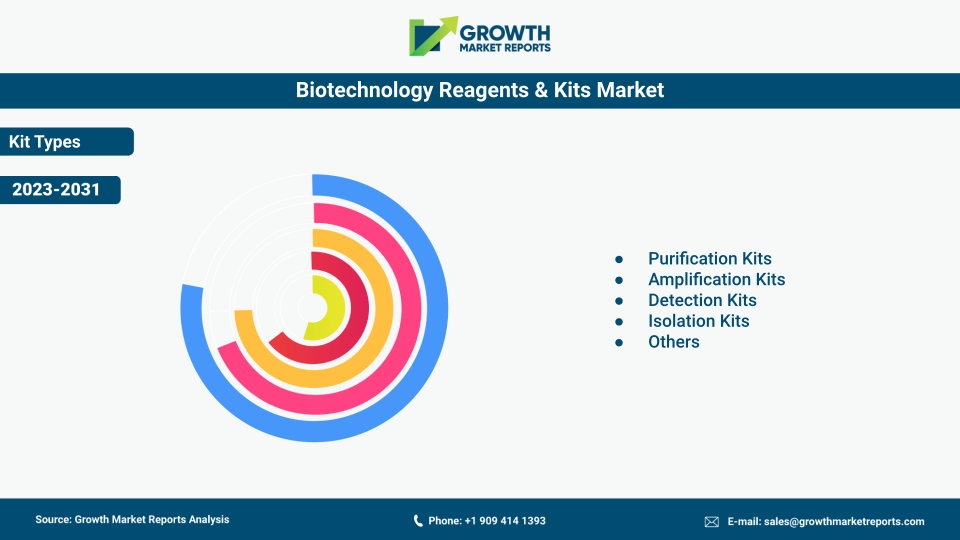
The product type segment of the biotechnology reagents & kits market is highly diversified, encompassing reagents, kits, buffers, enzymes, and other specialized products. Reagents form the backbone of most biotechnological applications, ranging from sample preparation to detection and analysis. These include chemicals, antibodies, dyes, and substrates, each designed for specific experimental protocols. The demand for reagents is being driven by advancements in molecular biology techniques and the increasing complexity of life sciences research. Researchers require highly pure and consistent reagents to ensure reproducibility and accuracy, prompting manufacturers to invest in quality control and product innovation. As new research areas emerge, such as synthetic biology and gene editing, the need for specialized reagents continues to grow, supporting the overall expansion of this product category.

Kits represent another critical product category, offering convenience and standardization for a wide range of applications, including PCR, ELISA, and immunoassays. Kits are particularly favored in clinical diagnostics and research laboratories due to their ease of use, comprehensive components, and validated protocols. The growing trend towards automation and high-throughput screening has further boosted the demand for ready-to-use kits, reducing hands-on time and minimizing the risk of human error. Manufacturers are increasingly developing custom and multiplexed kits tailored to specific research needs, enhancing the versatility and utility of these products. The rising adoption of kits in point-of-care testing and decentralized diagnostic settings is expected to drive continued growth in this segment.

Buffers and enzymes are indispensable components in molecular biology, cell culture, and protein analysis workflows. Buffers maintain optimal pH and ionic strength, ensuring the stability and activity of biological molecules during experiments. The demand for high-quality, pre-formulated buffers is rising as researchers seek to streamline workflows and reduce variability. Enzymes, such as polymerases, ligases, and proteases, are essential for DNA amplification, cloning, and protein digestion. The development of engineered enzymes with enhanced specificity and performance has opened new avenues for research and diagnostics. The increasing use of enzymes in next-generation sequencing, gene editing, and synthetic biology is anticipated to drive robust growth in this sub-segment.

The "others" category includes a wide array of specialized products, such as stains, indicators, and molecular probes, which play crucial roles in advanced research applications. These products are often used in niche areas, such as live-cell imaging, single-cell analysis, and high-content screening. The demand for innovative and application-specific reagents and kits in these areas is growing, fueled by the need for more sensitive and precise analytical tools. Manufacturers are focusing on developing multifunctional and customizable products to cater to the evolving needs of researchers and clinicians. Overall, the product type segment is characterized by continuous innovation, with companies striving to differentiate their offerings through quality, performance, and application-specific features.

Report Scope

Attributes Details
Report Title Biotechnology Reagents & Kits Market Research Report 2033
By Product Type Reagents, Kits, Buffers, Enzymes, Others
By Application Drug Discovery, Diagnostics, Research & Development, Therapeutics, Others
By Technology PCR, Cell Culture, Flow Cytometry, Chromatography, Electrophoresis, Others
By End-User Pharmaceutical & Biotechnology Companies, Academic & Research Institutes, Hospitals & Diagnostic Laboratories, Others
Regions Covered North America, Europe, APAC, Latin America, MEA
Base Year 2024
Historic Data 2018-2023
Forecast Period 2025-2033
Number of Pages 269
Number of Tables & Figures 277
Customization Available Yes, the report can be customized as per your need.

Application Analysis

The application segment of the biotechnology reagents & kits market is broad, encompassing drug discovery, diagnostics, research & development, therapeutics, and other specialized uses. Drug discovery remains a dominant application area, driven by the pharmaceutical industry's relentless pursuit of novel therapeutics and the increasing complexity of disease targets. Biotechnology reagents and kits are integral to high-throughput screening, target validation, lead optimization, and biomarker discovery. The adoption of advanced technologies, such as CRISPR gene editing and high-content screening, is further elevating the demand for specialized reagents and kits. Pharmaceutical companies are increasingly collaborating with academic and contract research organizations to accelerate drug discovery, creating new opportunities for market growth in this segment.

Diagnostics is another key application area, witnessing rapid growth due to the rising prevalence of infectious and chronic diseases, coupled with the global emphasis on early and accurate disease detection. Biotechnology reagents and kits are essential for molecular diagnostics, immunoassays, and point-of-care testing. The COVID-19 pandemic underscored the critical importance of rapid and reliable diagnostic tools, leading to a surge in demand for PCR kits, antigen tests, and serological assays. The ongoing shift towards personalized medicine and companion diagnostics is further driving innovation in this segment, with manufacturers developing multiplexed and quantitative assays to support precision healthcare. The increasing adoption of molecular diagnostics in oncology, infectious diseases, and genetic testing is anticipated to sustain strong growth in this application area.

Research & development constitutes a significant share of the biotechnology reagents & kits market, encompassing basic, translational, and applied research across academic institutions, government agencies, and private organizations. The continuous quest for scientific discovery and innovation necessitates a steady supply of high-quality reagents and kits for a wide range of experimental protocols. Funding from government and private sources, along with collaborations between academia and industry, is fueling research activities in genomics, proteomics, cell biology, and systems biology. The emergence of cutting-edge research areas, such as single-cell analysis, synthetic biology, and regenerative medicine, is driving demand for novel and customized reagents and kits, further expanding the market's scope.

Therapeutics is an emerging application segment, reflecting the growing use of biotechnology reagents and kits in the development and production of biologics, gene therapies, and cell-based therapies. The increasing approval and commercialization of advanced therapeutics are creating new opportunities for reagent and kit manufacturers, particularly in the areas of quality control, process optimization, and regulatory compliance. The integration of advanced analytical techniques, such as next-generation sequencing and flow cytometry, in therapeutic development is further boosting demand for specialized reagents and kits. The "others" category includes applications in agriculture, environmental monitoring, and forensics, each contributing to the overall market growth through niche but essential uses of biotechnology products.

Technology Analysis

The technology segment of the biotechnology reagents & kits market is characterized by rapid innovation and diversification, encompassing PCR, cell culture, flow cytometry, chromatography, electrophoresis, and other advanced platforms. PCR (Polymerase Chain Reaction) remains one of the most widely used technologies, essential for nucleic acid amplification, detection, and quantification. The advent of real-time PCR, digital PCR, and isothermal amplification techniques has expanded the range of applications, from clinical diagnostics to environmental monitoring. The demand for high-performance PCR reagents and kits is being driven by the need for rapid, sensitive, and quantitative analysis in research, diagnostics, and therapeutic development. Continuous improvements in enzyme formulations, buffer systems, and detection chemistries are further enhancing the utility and reliability of PCR-based technologies.

Cell culture technology is fundamental to a wide array of biotechnological applications, including drug discovery, vaccine production, and regenerative medicine. The growing adoption of 3D cell culture, organoids, and stem cell technologies is driving demand for specialized reagents, media, and supplements. Researchers require high-quality, consistent cell culture products to ensure reproducibility and scalability of experiments. The increasing focus on cell-based assays and high-throughput screening in pharmaceutical and academic research is further boosting the market for cell culture reagents and kits. Manufacturers are responding by developing serum-free, chemically defined, and application-specific products to meet the evolving needs of the life sciences community.

Flow cytometry is a powerful technology for single-cell analysis, enabling the simultaneous measurement of multiple parameters in heterogeneous cell populations. The growing use of flow cytometry in immunology, oncology, and stem cell research is fueling demand for high-quality antibodies, fluorochromes, and calibration beads. Advances in instrument sensitivity, data analysis software, and multiplexing capabilities are expanding the applications of flow cytometry in both research and clinical settings. The need for standardized and validated reagents is becoming increasingly important as flow cytometry moves towards more complex and high-dimensional analyses. The integration of flow cytometry with other omics technologies is expected to drive further innovation and market growth.

Chromatography and electrophoresis technologies are essential for the separation, purification, and analysis of biomolecules, including proteins, nucleic acids, and metabolites. Chromatography reagents and kits are widely used in pharmaceutical, biotechnology, and food industries for quality control, process monitoring, and research applications. The development of advanced chromatographic techniques, such as UHPLC and HILIC, is enhancing resolution, sensitivity, and throughput. Electrophoresis remains a staple technique for DNA, RNA, and protein analysis, with innovations in gel formulations, staining methods, and imaging technologies driving market growth. The "others" category includes emerging technologies, such as mass spectrometry, microarray, and next-generation sequencing, each contributing to the expanding landscape of biotechnology reagents and kits.

End-User Analysis

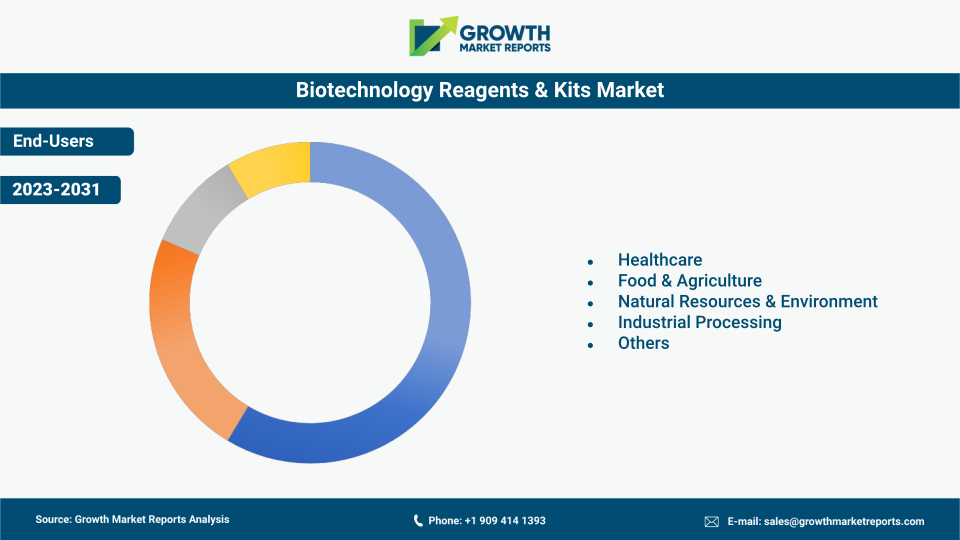
The end-user segment of the biotechnology reagents & kits market is diverse, encompassing pharmaceutical & biotechnology companies, academic & research institutes, hospitals & diagnostic laboratories, and other specialized users. Pharmaceutical and biotechnology companies represent the largest end-user group, driven by their extensive research and development activities in drug discovery, biologics production, and therapeutic innovation. These organizations require a wide range of high-quality reagents and kits to support their experimental workflows, quality control processes, and regulatory compliance efforts. The increasing focus on biologics, biosimilars, and precision medicine is further elevating the demand for specialized and custom reagents and kits in this sector.

Academic and research institutes form a significant end-user segment, contributing to the advancement of fundamental and applied life sciences research. These institutions rely on biotechnology reagents and kits for a wide range of applications, including genomics, proteomics, cell biology, and systems biology. Government funding, collaborative research initiatives, and partnerships with industry are fueling research activities and driving demand for innovative reagents and kits. The emergence of interdisciplinary research areas, such as synthetic biology and bioinformatics, is creating new opportunities for reagent and kit manufacturers to develop products tailored to the evolving needs of the academic community.

Hospitals and diagnostic laboratories are increasingly adopting biotechnology reagents and kits for clinical diagnostics, disease monitoring, and personalized medicine. The rising prevalence of infectious and chronic diseases, coupled with the global emphasis on early and accurate diagnosis, is driving the adoption of advanced molecular and immunoassay technologies. Hospitals and diagnostic labs require reliable, validated, and easy-to-use reagents and kits to ensure accurate and timely results. The growing trend towards decentralized and point-of-care testing is further boosting demand for ready-to-use kits and automated platforms in clinical settings. Regulatory compliance, quality assurance, and cost-effectiveness are key considerations for end users in this segment.

The "others" category includes contract research organizations (CROs), contract manufacturing organizations (CMOs), and government agencies, each playing a vital role in the biotechnology ecosystem. CROs and CMOs are increasingly outsourcing research, development, and manufacturing activities, creating new opportunities for reagent and kit suppliers. Government agencies are involved in public health surveillance, environmental monitoring, and forensic investigations, all of which require specialized biotechnology reagents and kits. The expanding scope of applications and end users is contributing to the overall growth and diversification of the biotechnology reagents & kits market.

Opportunities & Threats

The biotechnology reagents & kits market presents numerous opportunities for growth and innovation, driven by the ongoing evolution of life sciences research and the increasing complexity of healthcare needs. The rapid adoption of precision medicine, genomics, and proteomics is creating a strong demand for advanced reagents and kits that enable high-throughput, sensitive, and multiplexed analyses. Emerging markets, particularly in Asia Pacific and Latin America, offer significant growth potential due to expanding healthcare infrastructure, rising research investments, and increasing awareness of advanced diagnostic and therapeutic solutions. The integration of artificial intelligence, automation, and digital technologies in laboratory workflows is further enhancing efficiency, reproducibility, and data quality, opening new avenues for product development and market expansion.

Another major opportunity lies in the development of novel reagents and kits tailored for emerging research areas, such as gene editing, single-cell analysis, and regenerative medicine. The growing focus on personalized healthcare and companion diagnostics is driving demand for products that enable precise and individualized analysis of biological samples. Collaborations between academia, industry, and government agencies are fostering innovation and accelerating the translation of research findings into clinical and commercial applications. The increasing trend towards outsourcing research and diagnostic services to contract organizations is also creating new opportunities for reagent and kit suppliers to expand their customer base and diversify their product offerings.

Despite the numerous growth opportunities, the biotechnology reagents & kits market faces certain restraining factors, including stringent regulatory requirements, high development costs, and the need for continuous innovation. Regulatory agencies impose rigorous quality standards and validation protocols for reagents and kits, particularly those intended for clinical and diagnostic use. Compliance with these requirements can be resource-intensive and time-consuming, potentially delaying product launches and increasing costs. Additionally, the rapid pace of technological change necessitates ongoing investment in research and development to stay competitive. Market players must also navigate challenges related to intellectual property, supply chain management, and pricing pressures, particularly in cost-sensitive markets.

Regional Outlook

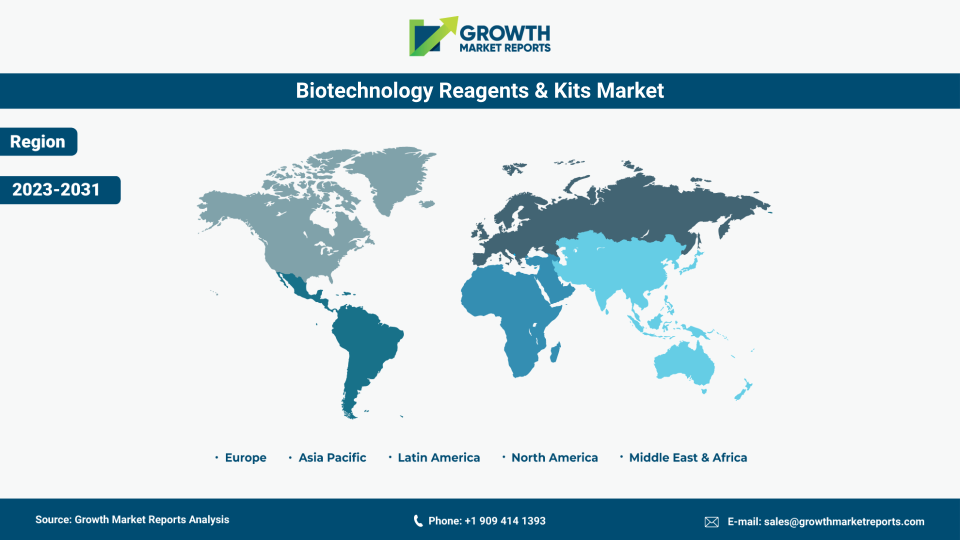
Regionally, North America continues to lead the biotechnology reagents & kits market, accounting for the largest revenue share of USD 39.2 billion in 2024. The region’s dominance is attributed to its well-established biotechnology and pharmaceutical sectors, substantial investments in research and development, and the presence of major market players. The United States, in particular, is a global hub for life sciences innovation, supported by robust academic research, government funding, and a favorable regulatory environment. Canada also contributes significantly, with a growing focus on biotechnology research and an expanding healthcare sector. The North American market is expected to maintain steady growth, driven by ongoing advancements in genomics, personalized medicine, and digital health technologies.

Europe remains a significant market for biotechnology reagents & kits, with a market size of USD 27.8 billion in 2024. The region benefits from a strong pharmaceutical industry, world-class academic institutions, and active government support for life sciences research. Countries such as Germany, the United Kingdom, and France are at the forefront of biotechnological innovation, driving demand for advanced reagents and kits. The European market is characterized by a high level of regulatory oversight and a strong emphasis on quality and safety. The increasing adoption of precision medicine, molecular diagnostics, and advanced research technologies is expected to support continued growth in this region, with a projected CAGR of 6.5% through 2033.

The Asia Pacific region is emerging as a high-growth market, with a market size of USD 18.7 billion in 2024 and a projected CAGR of 9.1% over the forecast period. Rapidly expanding healthcare infrastructure, increasing government investments in research and development, and a growing pool of skilled professionals are driving market growth in countries such as China, India, Japan, and South Korea. The region is witnessing a surge in pharmaceutical and biotechnology research activities, as well as rising demand for advanced diagnostic and therapeutic solutions. Latin America and the Middle East & Africa, with market sizes of USD 6.1 billion and USD 5.7 billion respectively in 2024, are also experiencing steady growth, supported by increasing healthcare expenditure, improving research capabilities, and rising awareness of biotechnological advancements.

Biotechnology Reagents & Kits Market Statistics

Competitor Outlook

The biotechnology reagents & kits market is characterized by intense competition and a dynamic landscape, with numerous global and regional players vying for market share. The competitive environment is shaped by continuous innovation, product differentiation, and strategic partnerships aimed at expanding product portfolios and geographical reach. Major companies are investing heavily in research and development to launch new and improved reagents and kits tailored to emerging applications and technologies. Mergers and acquisitions, collaborations with academic and research institutions, and alliances with contract research organizations are common strategies employed by leading players to strengthen their market position and drive growth. The focus on quality, performance, and regulatory compliance remains paramount, as end users demand reliable and validated products for critical research and diagnostic applications.

The market is also witnessing the entry of new players, particularly in niche and emerging segments, further intensifying competition. Start-ups and smaller companies are leveraging technological innovation and agility to develop specialized reagents and kits that address unmet needs in areas such as gene editing, single-cell analysis, and personalized medicine. These companies often collaborate with larger players or academic institutions to access resources, expertise, and distribution networks. The growing trend towards outsourcing research and diagnostic services is creating new opportunities for contract organizations to enter the market and offer customized solutions to a diverse range of end users.

Key players in the biotechnology reagents & kits market are focusing on expanding their global footprint through strategic investments in manufacturing, distribution, and customer support infrastructure. The increasing demand for high-quality, application-specific reagents and kits is driving companies to enhance their production capabilities and streamline supply chains. Digital transformation, including the adoption of e-commerce platforms and data-driven marketing strategies, is enabling companies to reach a broader customer base and provide personalized support and services. Sustainability and environmental responsibility are also emerging as important considerations, with companies investing in green chemistry, recyclable packaging, and energy-efficient manufacturing processes.

Some of the major companies operating in the biotechnology reagents & kits market include Thermo Fisher Scientific, Merck KGaA, Bio-Rad Laboratories, Agilent Technologies, Danaher Corporation, PerkinElmer, QIAGEN, Promega Corporation, Takara Bio, and F. Hoffmann-La Roche Ltd. Thermo Fisher Scientific is renowned for its comprehensive portfolio of reagents, kits, and laboratory instruments, serving a wide range of research and clinical applications. Merck KGaA offers innovative solutions in life science research, diagnostics, and therapeutics, with a strong focus on quality and regulatory compliance. Bio-Rad Laboratories is a leader in molecular biology, cell biology, and clinical diagnostics, known for its high-performance reagents and kits. Agilent Technologies specializes in analytical instrumentation and reagents for genomics, proteomics, and chemical analysis, while Danaher Corporation, through its subsidiaries, provides a broad array of products for life sciences and diagnostics.

PerkinElmer, QIAGEN, Promega Corporation, Takara Bio, and F. Hoffmann-La Roche Ltd are also prominent players, each contributing to market growth through innovation, strategic partnerships, and global expansion. QIAGEN is recognized for its expertise in sample preparation, molecular diagnostics, and bioinformatics, while Promega Corporation is known for its advanced solutions in genomics, proteomics, and cell biology. Takara Bio specializes in gene editing, PCR, and cell engineering technologies, catering to both research and clinical markets. F. Hoffmann-La Roche Ltd is a global leader in diagnostics and pharmaceuticals, with a strong emphasis on personalized healthcare and companion diagnostics. Collectively, these companies are shaping the future of the biotechnology reagents & kits market through continuous innovation, customer-centric strategies, and a commitment to advancing life sciences research and healthcare.

Key Players

  • Thermo Fisher Scientific Inc.
  • Merck KGaA (MilliporeSigma)
  • Bio-Rad Laboratories, Inc.
  • QIAGEN N.V.
  • Agilent Technologies, Inc.
  • F. Hoffmann-La Roche Ltd.
  • PerkinElmer, Inc.
  • Takara Bio Inc.
  • Promega Corporation
  • Becton, Dickinson and Company (BD)
  • Illumina, Inc.
  • GE Healthcare Life Sciences (Cytiva)
  • Lonza Group AG
  • New England Biolabs, Inc.
  • Abcam plc
  • Sigma-Aldrich Corporation
  • Enzo Life Sciences, Inc.
  • GenScript Biotech Corporation
  • Bio-Techne Corporation
  • Canvax Biotech S.L.
Biotechnology Reagents & Kits Market Overview

Segments

The Biotechnology Reagents & Kits market has been segmented on the basis of

Product Type

  • Reagents
  • Kits
  • Buffers
  • Enzymes
  • Others

Application

  • Drug Discovery
  • Diagnostics
  • Research & Development
  • Therapeutics
  • Others

Technology

  • PCR
  • Cell Culture
  • Flow Cytometry
  • Chromatography
  • Electrophoresis
  • Others

End-User

  • Pharmaceutical & Biotechnology Companies
  • Academic & Research Institutes
  • Hospitals & Diagnostic Laboratories
  • Others

Competitive Landscape

The key market players in the global biotechnology reagents & kits market are Illumina, Inc.; Thermo Fisher Scientific; QIAGEN; New England Biolabs; Takara Bio, Inc.; Bio-Rad Laboratories; F. Hoffmann-La Roche Ltd.; Agilent Technologies, Inc.; Merck KGaA; Promega Corp.; LGC Ltd.; and Toyobo Co. Ltd.

In March 2021, GenMark diagnostics and Roche made a merger agreement to launch a technology which aimed to detect various pathogen in a one sample of patient blood. New England BioLab, Inc. introduced the Luna SARS-CoV-2 RT-qPCR Assay Kit in January 2021, for the identification of SARS-CoV-2 nucleic acid.
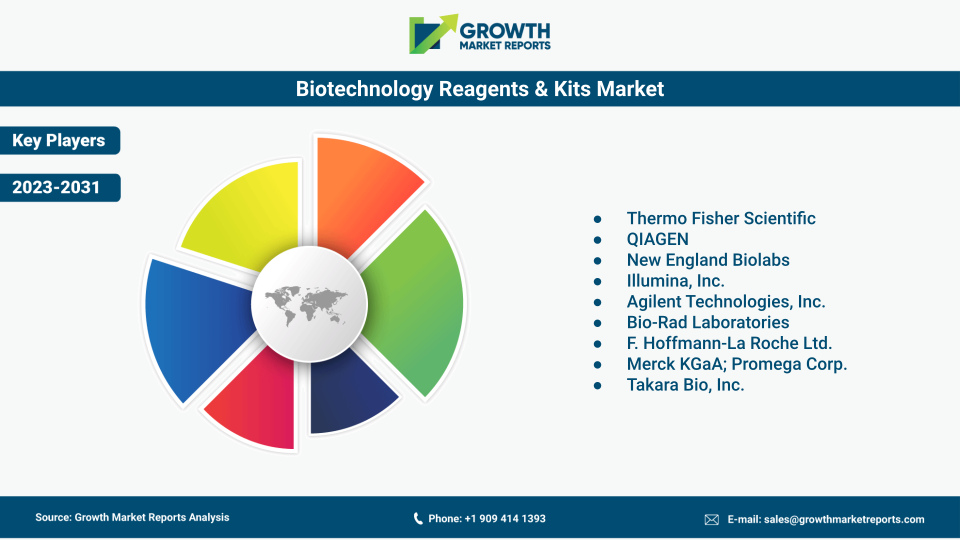

Biotechnology Reagents & Kits Market Key Players

Frequently Asked Questions

Challenges include stringent regulatory requirements, high development costs, the need for continuous innovation, supply chain management, and pricing pressures.

Key players include Thermo Fisher Scientific, Merck KGaA, Bio-Rad Laboratories, QIAGEN, Agilent Technologies, F. Hoffmann-La Roche Ltd, PerkinElmer, Takara Bio, Promega Corporation, and others.

Major end-users are pharmaceutical & biotechnology companies, academic & research institutes, hospitals & diagnostic laboratories, and contract research/manufacturing organizations.

Common technologies include PCR, cell culture, flow cytometry, chromatography, electrophoresis, and emerging platforms like next-generation sequencing.

Key applications include drug discovery, diagnostics, research & development, therapeutics, and other uses such as agriculture and environmental monitoring.

The main product types include reagents, kits, buffers, enzymes, and other specialized products such as stains and molecular probes.

North America leads the market, followed by Europe and the Asia Pacific region, with APAC showing the highest growth rate.

Key growth drivers include increased biotechnological research, rising investments in drug discovery, the prevalence of chronic and infectious diseases, technological advancements, and the adoption of precision medicine.

The biotechnology reagents & kits market is expected to grow at a CAGR of 7.2% from 2025 to 2033.

As of 2024, the global biotechnology reagents & kits market size reached USD 97.5 billion.

Table Of Content

Chapter 1 Executive Summary
Chapter 2 Assumptions and Acronyms Used
Chapter 3 Research Methodology
Chapter 4 Biotechnology Reagents & Kits Market Overview
   4.1 Introduction
      4.1.1 Market Taxonomy
      4.1.2 Market Definition
      4.1.3 Macro-Economic Factors Impacting the Market Growth
   4.2 Biotechnology Reagents & Kits Market Dynamics
      4.2.1 Market Drivers
      4.2.2 Market Restraints
      4.2.3 Market Opportunity
   4.3 Biotechnology Reagents & Kits Market - Supply Chain Analysis
      4.3.1 List of Key Suppliers
      4.3.2 List of Key Distributors
      4.3.3 List of Key Consumers
   4.4 Key Forces Shaping the Biotechnology Reagents & Kits Market
      4.4.1 Bargaining Power of Suppliers
      4.4.2 Bargaining Power of Buyers
      4.4.3 Threat of Substitution
      4.4.4 Threat of New Entrants
      4.4.5 Competitive Rivalry
   4.5 Global Biotechnology Reagents & Kits Market Size & Forecast, 2023-2032
      4.5.1 Biotechnology Reagents & Kits Market Size and Y-o-Y Growth
      4.5.2 Biotechnology Reagents & Kits Market Absolute $ Opportunity

Chapter 5 Global Biotechnology Reagents & Kits Market Analysis and Forecast By Product Type
   5.1 Introduction
      5.1.1 Key Market Trends & Growth Opportunities By Product Type
      5.1.2 Basis Point Share (BPS) Analysis By Product Type
      5.1.3 Absolute $ Opportunity Assessment By Product Type
   5.2 Biotechnology Reagents & Kits Market Size Forecast By Product Type
      5.2.1 Reagents
      5.2.2 Kits
      5.2.3 Buffers
      5.2.4 Enzymes
      5.2.5 Others
   5.3 Market Attractiveness Analysis By Product Type

Chapter 6 Global Biotechnology Reagents & Kits Market Analysis and Forecast By Application
   6.1 Introduction
      6.1.1 Key Market Trends & Growth Opportunities By Application
      6.1.2 Basis Point Share (BPS) Analysis By Application
      6.1.3 Absolute $ Opportunity Assessment By Application
   6.2 Biotechnology Reagents & Kits Market Size Forecast By Application
      6.2.1 Drug Discovery
      6.2.2 Diagnostics
      6.2.3 Research & Development
      6.2.4 Therapeutics
      6.2.5 Others
   6.3 Market Attractiveness Analysis By Application

Chapter 7 Global Biotechnology Reagents & Kits Market Analysis and Forecast By Technology
   7.1 Introduction
      7.1.1 Key Market Trends & Growth Opportunities By Technology
      7.1.2 Basis Point Share (BPS) Analysis By Technology
      7.1.3 Absolute $ Opportunity Assessment By Technology
   7.2 Biotechnology Reagents & Kits Market Size Forecast By Technology
      7.2.1 PCR
      7.2.2 Cell Culture
      7.2.3 Flow Cytometry
      7.2.4 Chromatography
      7.2.5 Electrophoresis
      7.2.6 Others
   7.3 Market Attractiveness Analysis By Technology

Chapter 8 Global Biotechnology Reagents & Kits Market Analysis and Forecast By End-User
   8.1 Introduction
      8.1.1 Key Market Trends & Growth Opportunities By End-User
      8.1.2 Basis Point Share (BPS) Analysis By End-User
      8.1.3 Absolute $ Opportunity Assessment By End-User
   8.2 Biotechnology Reagents & Kits Market Size Forecast By End-User
      8.2.1 Pharmaceutical & Biotechnology Companies
      8.2.2 Academic & Research Institutes
      8.2.3 Hospitals & Diagnostic Laboratories
      8.2.4 Others
   8.3 Market Attractiveness Analysis By End-User

Chapter 9 Global Biotechnology Reagents & Kits Market Analysis and Forecast by Region
   9.1 Introduction
      9.1.1 Key Market Trends & Growth Opportunities By Region
      9.1.2 Basis Point Share (BPS) Analysis By Region
      9.1.3 Absolute $ Opportunity Assessment By Region
   9.2 Biotechnology Reagents & Kits Market Size Forecast By Region
      9.2.1 North America
      9.2.2 Europe
      9.2.3 Asia Pacific
      9.2.4 Latin America
      9.2.5 Middle East & Africa (MEA)
   9.3 Market Attractiveness Analysis By Region

Chapter 10 Coronavirus Disease (COVID-19) Impact 
   10.1 Introduction 
   10.2 Current & Future Impact Analysis 
   10.3 Economic Impact Analysis 
   10.4 Government Policies 
   10.5 Investment Scenario

Chapter 11 North America Biotechnology Reagents & Kits Analysis and Forecast
   11.1 Introduction
   11.2 North America Biotechnology Reagents & Kits Market Size Forecast by Country
      11.2.1 U.S.
      11.2.2 Canada
   11.3 Basis Point Share (BPS) Analysis by Country
   11.4 Absolute $ Opportunity Assessment by Country
   11.5 Market Attractiveness Analysis by Country
   11.6 North America Biotechnology Reagents & Kits Market Size Forecast By Product Type
      11.6.1 Reagents
      11.6.2 Kits
      11.6.3 Buffers
      11.6.4 Enzymes
      11.6.5 Others
   11.7 Basis Point Share (BPS) Analysis By Product Type 
   11.8 Absolute $ Opportunity Assessment By Product Type 
   11.9 Market Attractiveness Analysis By Product Type
   11.10 North America Biotechnology Reagents & Kits Market Size Forecast By Application
      11.10.1 Drug Discovery
      11.10.2 Diagnostics
      11.10.3 Research & Development
      11.10.4 Therapeutics
      11.10.5 Others
   11.11 Basis Point Share (BPS) Analysis By Application 
   11.12 Absolute $ Opportunity Assessment By Application 
   11.13 Market Attractiveness Analysis By Application
   11.14 North America Biotechnology Reagents & Kits Market Size Forecast By Technology
      11.14.1 PCR
      11.14.2 Cell Culture
      11.14.3 Flow Cytometry
      11.14.4 Chromatography
      11.14.5 Electrophoresis
      11.14.6 Others
   11.15 Basis Point Share (BPS) Analysis By Technology 
   11.16 Absolute $ Opportunity Assessment By Technology 
   11.17 Market Attractiveness Analysis By Technology
   11.18 North America Biotechnology Reagents & Kits Market Size Forecast By End-User
      11.18.1 Pharmaceutical & Biotechnology Companies
      11.18.2 Academic & Research Institutes
      11.18.3 Hospitals & Diagnostic Laboratories
      11.18.4 Others
   11.19 Basis Point Share (BPS) Analysis By End-User 
   11.20 Absolute $ Opportunity Assessment By End-User 
   11.21 Market Attractiveness Analysis By End-User

Chapter 12 Europe Biotechnology Reagents & Kits Analysis and Forecast
   12.1 Introduction
   12.2 Europe Biotechnology Reagents & Kits Market Size Forecast by Country
      12.2.1 Germany
      12.2.2 France
      12.2.3 Italy
      12.2.4 U.K.
      12.2.5 Spain
      12.2.6 Russia
      12.2.7 Rest of Europe
   12.3 Basis Point Share (BPS) Analysis by Country
   12.4 Absolute $ Opportunity Assessment by Country
   12.5 Market Attractiveness Analysis by Country
   12.6 Europe Biotechnology Reagents & Kits Market Size Forecast By Product Type
      12.6.1 Reagents
      12.6.2 Kits
      12.6.3 Buffers
      12.6.4 Enzymes
      12.6.5 Others
   12.7 Basis Point Share (BPS) Analysis By Product Type 
   12.8 Absolute $ Opportunity Assessment By Product Type 
   12.9 Market Attractiveness Analysis By Product Type
   12.10 Europe Biotechnology Reagents & Kits Market Size Forecast By Application
      12.10.1 Drug Discovery
      12.10.2 Diagnostics
      12.10.3 Research & Development
      12.10.4 Therapeutics
      12.10.5 Others
   12.11 Basis Point Share (BPS) Analysis By Application 
   12.12 Absolute $ Opportunity Assessment By Application 
   12.13 Market Attractiveness Analysis By Application
   12.14 Europe Biotechnology Reagents & Kits Market Size Forecast By Technology
      12.14.1 PCR
      12.14.2 Cell Culture
      12.14.3 Flow Cytometry
      12.14.4 Chromatography
      12.14.5 Electrophoresis
      12.14.6 Others
   12.15 Basis Point Share (BPS) Analysis By Technology 
   12.16 Absolute $ Opportunity Assessment By Technology 
   12.17 Market Attractiveness Analysis By Technology
   12.18 Europe Biotechnology Reagents & Kits Market Size Forecast By End-User
      12.18.1 Pharmaceutical & Biotechnology Companies
      12.18.2 Academic & Research Institutes
      12.18.3 Hospitals & Diagnostic Laboratories
      12.18.4 Others
   12.19 Basis Point Share (BPS) Analysis By End-User 
   12.20 Absolute $ Opportunity Assessment By End-User 
   12.21 Market Attractiveness Analysis By End-User

Chapter 13 Asia Pacific Biotechnology Reagents & Kits Analysis and Forecast
   13.1 Introduction
   13.2 Asia Pacific Biotechnology Reagents & Kits Market Size Forecast by Country
      13.2.1 China
      13.2.2 Japan
      13.2.3 South Korea
      13.2.4 India
      13.2.5 Australia
      13.2.6 South East Asia (SEA)
      13.2.7 Rest of Asia Pacific (APAC)
   13.3 Basis Point Share (BPS) Analysis by Country
   13.4 Absolute $ Opportunity Assessment by Country
   13.5 Market Attractiveness Analysis by Country
   13.6 Asia Pacific Biotechnology Reagents & Kits Market Size Forecast By Product Type
      13.6.1 Reagents
      13.6.2 Kits
      13.6.3 Buffers
      13.6.4 Enzymes
      13.6.5 Others
   13.7 Basis Point Share (BPS) Analysis By Product Type 
   13.8 Absolute $ Opportunity Assessment By Product Type 
   13.9 Market Attractiveness Analysis By Product Type
   13.10 Asia Pacific Biotechnology Reagents & Kits Market Size Forecast By Application
      13.10.1 Drug Discovery
      13.10.2 Diagnostics
      13.10.3 Research & Development
      13.10.4 Therapeutics
      13.10.5 Others
   13.11 Basis Point Share (BPS) Analysis By Application 
   13.12 Absolute $ Opportunity Assessment By Application 
   13.13 Market Attractiveness Analysis By Application
   13.14 Asia Pacific Biotechnology Reagents & Kits Market Size Forecast By Technology
      13.14.1 PCR
      13.14.2 Cell Culture
      13.14.3 Flow Cytometry
      13.14.4 Chromatography
      13.14.5 Electrophoresis
      13.14.6 Others
   13.15 Basis Point Share (BPS) Analysis By Technology 
   13.16 Absolute $ Opportunity Assessment By Technology 
   13.17 Market Attractiveness Analysis By Technology
   13.18 Asia Pacific Biotechnology Reagents & Kits Market Size Forecast By End-User
      13.18.1 Pharmaceutical & Biotechnology Companies
      13.18.2 Academic & Research Institutes
      13.18.3 Hospitals & Diagnostic Laboratories
      13.18.4 Others
   13.19 Basis Point Share (BPS) Analysis By End-User 
   13.20 Absolute $ Opportunity Assessment By End-User 
   13.21 Market Attractiveness Analysis By End-User

Chapter 14 Latin America Biotechnology Reagents & Kits Analysis and Forecast
   14.1 Introduction
   14.2 Latin America Biotechnology Reagents & Kits Market Size Forecast by Country
      14.2.1 Brazil
      14.2.2 Mexico
      14.2.3 Rest of Latin America (LATAM)
   14.3 Basis Point Share (BPS) Analysis by Country
   14.4 Absolute $ Opportunity Assessment by Country
   14.5 Market Attractiveness Analysis by Country
   14.6 Latin America Biotechnology Reagents & Kits Market Size Forecast By Product Type
      14.6.1 Reagents
      14.6.2 Kits
      14.6.3 Buffers
      14.6.4 Enzymes
      14.6.5 Others
   14.7 Basis Point Share (BPS) Analysis By Product Type 
   14.8 Absolute $ Opportunity Assessment By Product Type 
   14.9 Market Attractiveness Analysis By Product Type
   14.10 Latin America Biotechnology Reagents & Kits Market Size Forecast By Application
      14.10.1 Drug Discovery
      14.10.2 Diagnostics
      14.10.3 Research & Development
      14.10.4 Therapeutics
      14.10.5 Others
   14.11 Basis Point Share (BPS) Analysis By Application 
   14.12 Absolute $ Opportunity Assessment By Application 
   14.13 Market Attractiveness Analysis By Application
   14.14 Latin America Biotechnology Reagents & Kits Market Size Forecast By Technology
      14.14.1 PCR
      14.14.2 Cell Culture
      14.14.3 Flow Cytometry
      14.14.4 Chromatography
      14.14.5 Electrophoresis
      14.14.6 Others
   14.15 Basis Point Share (BPS) Analysis By Technology 
   14.16 Absolute $ Opportunity Assessment By Technology 
   14.17 Market Attractiveness Analysis By Technology
   14.18 Latin America Biotechnology Reagents & Kits Market Size Forecast By End-User
      14.18.1 Pharmaceutical & Biotechnology Companies
      14.18.2 Academic & Research Institutes
      14.18.3 Hospitals & Diagnostic Laboratories
      14.18.4 Others
   14.19 Basis Point Share (BPS) Analysis By End-User 
   14.20 Absolute $ Opportunity Assessment By End-User 
   14.21 Market Attractiveness Analysis By End-User

Chapter 15 Middle East & Africa (MEA) Biotechnology Reagents & Kits Analysis and Forecast
   15.1 Introduction
   15.2 Middle East & Africa (MEA) Biotechnology Reagents & Kits Market Size Forecast by Country
      15.2.1 Saudi Arabia
      15.2.2 South Africa
      15.2.3 UAE
      15.2.4 Rest of Middle East & Africa (MEA)
   15.3 Basis Point Share (BPS) Analysis by Country
   15.4 Absolute $ Opportunity Assessment by Country
   15.5 Market Attractiveness Analysis by Country
   15.6 Middle East & Africa (MEA) Biotechnology Reagents & Kits Market Size Forecast By Product Type
      15.6.1 Reagents
      15.6.2 Kits
      15.6.3 Buffers
      15.6.4 Enzymes
      15.6.5 Others
   15.7 Basis Point Share (BPS) Analysis By Product Type 
   15.8 Absolute $ Opportunity Assessment By Product Type 
   15.9 Market Attractiveness Analysis By Product Type
   15.10 Middle East & Africa (MEA) Biotechnology Reagents & Kits Market Size Forecast By Application
      15.10.1 Drug Discovery
      15.10.2 Diagnostics
      15.10.3 Research & Development
      15.10.4 Therapeutics
      15.10.5 Others
   15.11 Basis Point Share (BPS) Analysis By Application 
   15.12 Absolute $ Opportunity Assessment By Application 
   15.13 Market Attractiveness Analysis By Application
   15.14 Middle East & Africa (MEA) Biotechnology Reagents & Kits Market Size Forecast By Technology
      15.14.1 PCR
      15.14.2 Cell Culture
      15.14.3 Flow Cytometry
      15.14.4 Chromatography
      15.14.5 Electrophoresis
      15.14.6 Others
   15.15 Basis Point Share (BPS) Analysis By Technology 
   15.16 Absolute $ Opportunity Assessment By Technology 
   15.17 Market Attractiveness Analysis By Technology
   15.18 Middle East & Africa (MEA) Biotechnology Reagents & Kits Market Size Forecast By End-User
      15.18.1 Pharmaceutical & Biotechnology Companies
      15.18.2 Academic & Research Institutes
      15.18.3 Hospitals & Diagnostic Laboratories
      15.18.4 Others
   15.19 Basis Point Share (BPS) Analysis By End-User 
   15.20 Absolute $ Opportunity Assessment By End-User 
   15.21 Market Attractiveness Analysis By End-User

Chapter 16 Competition Landscape 
   16.1 Biotechnology Reagents & Kits Market: Competitive Dashboard
   16.2 Global Biotechnology Reagents & Kits Market: Market Share Analysis, 2023
   16.3 Company Profiles (Details – Overview, Financials, Developments, Strategy) 
      16.3.1 Thermo Fisher Scientific Inc.
Merck KGaA (MilliporeSigma)
Bio-Rad Laboratories, Inc.
QIAGEN N.V.
Agilent Technologies, Inc.
F. Hoffmann-La Roche Ltd.
PerkinElmer, Inc.
Takara Bio Inc.
Promega Corporation
Becton, Dickinson and Company (BD)
Illumina, Inc.
GE Healthcare Life Sciences (Cytiva)
Lonza Group AG
New England Biolabs, Inc.
Abcam plc
Sigma-Aldrich Corporation
Enzo Life Sciences, Inc.
GenScript Biotech Corporation
Bio-Techne Corporation
Canvax Biotech S.L.

Methodology

Our Clients

Honda Motor Co. Ltd.
Deloitte
FedEx Logistics
Nestle SA
Pfizer
Dassault Aviation
The John Holland Group
Microsoft