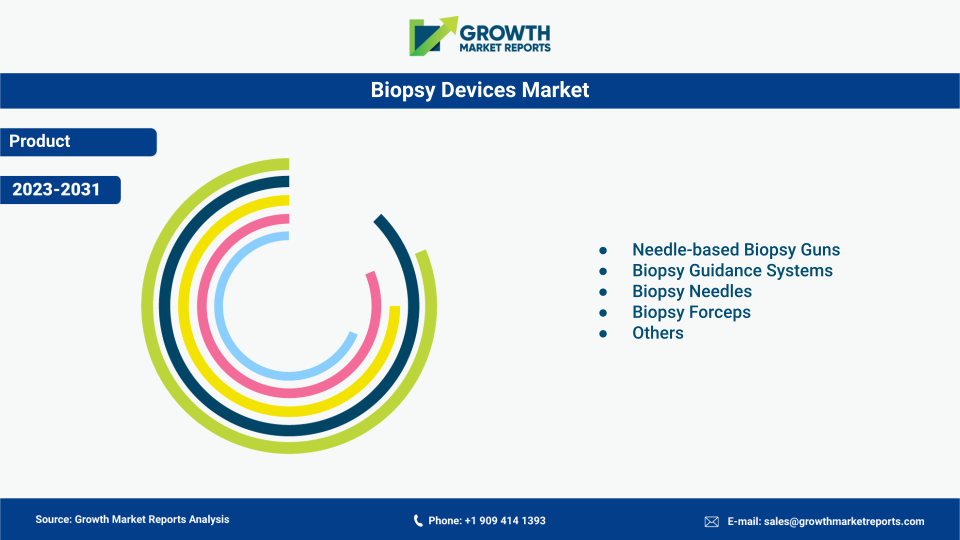
Segments - by Product Type (Needle-Based Biopsy Instruments, Core Biopsy Devices, Vacuum-Assisted Biopsy Devices, Fine Needle Aspiration Biopsy Devices, Others), by Application (Breast Biopsy, Lung Biopsy, Colorectal Biopsy, Prostate Biopsy, Others), by End User (Hospitals, Diagnostic Centers, Ambulatory Surgical Centers, Others), by Guidance Technique (Ultrasound-Guided, Stereotactic-Guided, MRI-Guided, CT-Guided, Others)
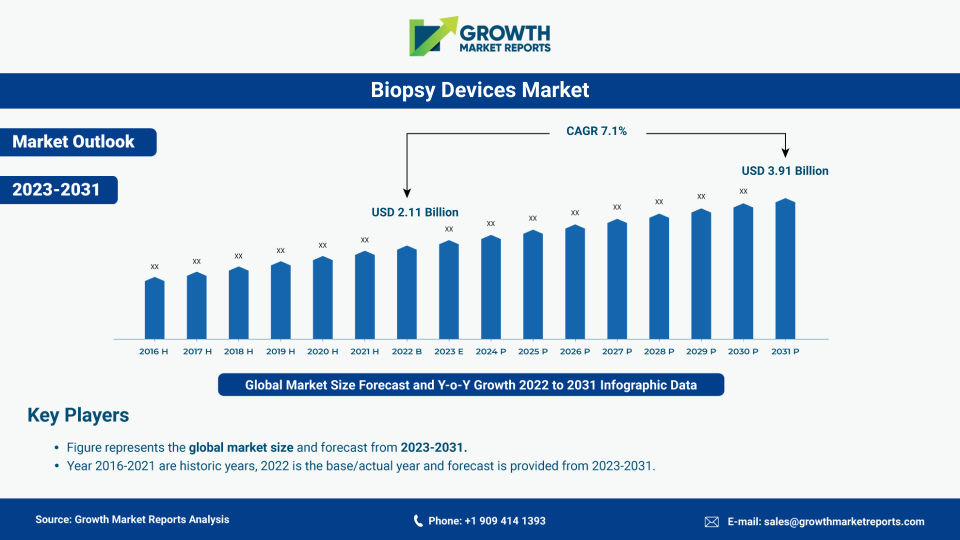
According to our latest research, the global biopsy devices market size stood at USD 2.6 billion in 2024, demonstrating robust growth driven by rising cancer incidence and advancements in minimally invasive diagnostic technologies. The market is projected to expand at a CAGR of 6.2% from 2025 to 2033, reaching an estimated USD 4.5 billion by 2033. This upward trajectory is primarily fueled by increasing demand for early and precise cancer diagnosis, as well as the integration of image-guided and robotic biopsy systems. The surge in awareness programs and government initiatives supporting cancer screening has further accelerated the adoption of advanced biopsy devices worldwide.
One of the key growth factors propelling the biopsy devices market is the escalating global cancer burden. According to the World Health Organization, cancer remains a leading cause of death, with millions of new cases diagnosed annually. Early detection is critical for improving survival rates, and biopsy procedures are the gold standard for confirming malignancies. The proliferation of screening campaigns and improved healthcare infrastructure, particularly in emerging economies, has resulted in a higher volume of biopsy procedures. In addition, the increasing prevalence of lifestyle-related diseases and an aging population have contributed to the rising incidence of cancers, further boosting demand for biopsy devices.
Technological advancements represent another significant growth driver in the biopsy devices market. Innovations such as vacuum-assisted and image-guided biopsy systems have revolutionized the accuracy and safety of tissue sampling, minimizing patient discomfort and reducing complication rates. The integration of artificial intelligence and robotics in biopsy procedures has enabled real-time visualization and precise targeting of suspicious lesions, which is particularly valuable for hard-to-reach anatomical locations. These advancements have not only improved diagnostic yield but have also shortened procedure times, making biopsies more accessible in both urban and rural healthcare settings. As a result, hospitals and diagnostic centers are increasingly investing in next-generation biopsy platforms to enhance their diagnostic capabilities.
The growing focus on personalized medicine and targeted therapies has further amplified the need for high-quality biopsy samples. Pharmaceutical and biotechnology companies are relying on biopsy-derived tissue for biomarker analysis and companion diagnostics, which are essential for selecting appropriate treatment regimens. This trend has spurred collaboration between device manufacturers and research institutions to develop biopsy instruments capable of preserving tissue integrity for advanced molecular testing. Moreover, regulatory approvals for novel biopsy devices and favorable reimbursement policies in developed markets have accelerated product adoption. Collectively, these factors are expected to sustain the momentum of the biopsy devices market over the forecast period.
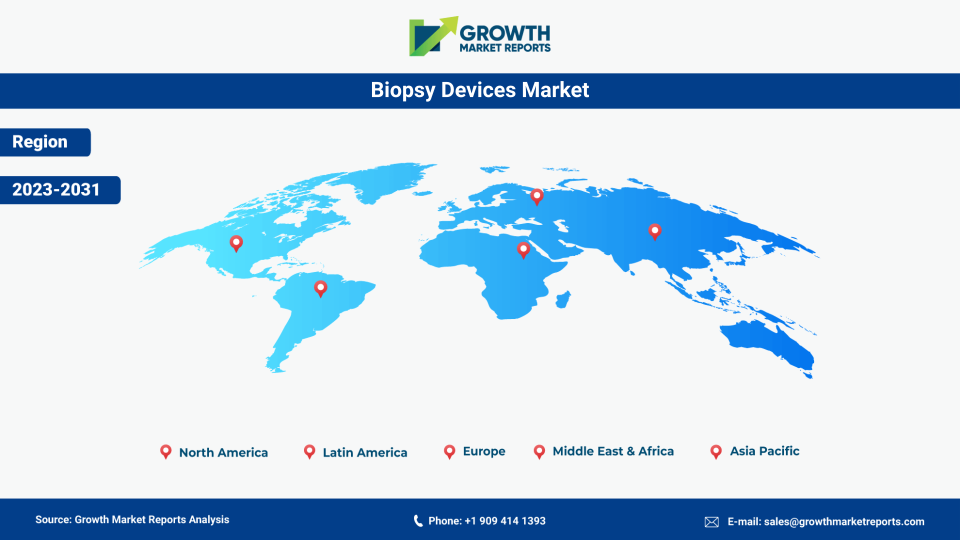
Regionally, North America continues to dominate the global biopsy devices market, accounting for the largest share in 2024, followed by Europe and Asia Pacific. The region’s leadership can be attributed to its well-established healthcare infrastructure, high awareness levels, and early adoption of advanced diagnostic technologies. However, Asia Pacific is anticipated to witness the fastest growth during the forecast period, supported by rising healthcare expenditure, expanding medical tourism, and increasing cancer screening initiatives. Latin America and the Middle East & Africa are also poised for steady growth, driven by improving access to healthcare services and growing investments in medical device sectors.
The biopsy devices market by product type is segmented into needle-based biopsy instruments, core biopsy devices, vacuum-assisted biopsy devices, fine needle aspiration biopsy devices, and others. Among these, needle-based biopsy instruments held the largest market share in 2024 due to their widespread use in various diagnostic procedures, including breast, lung, and prostate biopsies. These instruments are favored for their precision, minimally invasive nature, and ability to obtain adequate tissue samples for histopathological examination. The continuous refinement of needle gauge sizes and ergonomic designs has enhanced user comfort and procedural efficiency, further driving their adoption in both hospital and outpatient settings.
Core biopsy devices are also witnessing significant demand, particularly in the diagnosis of solid tumors where larger tissue samples are required for accurate histological analysis. These devices offer superior diagnostic yield compared to fine needle aspiration, making them indispensable in breast, liver, and kidney biopsies. The integration of core biopsy systems with advanced imaging modalities, such as ultrasound and MRI, has improved sampling accuracy and reduced the risk of complications. Manufacturers are focusing on developing disposable and reusable variants to cater to diverse clinical needs while addressing concerns related to cross-contamination and cost-effectiveness.
Vacuum-assisted biopsy devices represent a rapidly growing segment within the biopsy devices market. These devices employ a vacuum mechanism to extract larger and more contiguous tissue samples, which is particularly beneficial for breast and soft tissue biopsies. The ability to perform multiple sample collections through a single insertion reduces patient discomfort and procedure time. Technological advancements in vacuum-assisted systems, including enhanced needle design and real-time imaging compatibility, have expanded their application scope. Rising adoption in ambulatory surgical centers and diagnostic clinics is expected to propel segment growth in the coming years.
Fine needle aspiration biopsy devices are commonly used for sampling superficial masses, such as lymph nodes and thyroid nodules. Their minimally invasive nature, cost-effectiveness, and rapid turnaround time make them a preferred choice for initial diagnostic evaluation. However, limitations in sample volume and diagnostic accuracy for certain malignancies have led to the development of hybrid devices and improved aspiration techniques. The “others” category includes specialized biopsy tools designed for specific anatomical sites or novel sampling methods, reflecting ongoing innovation and product diversification within the biopsy devices market.
| Attributes | Details |
| Report Title | Biopsy Devices Market Research Report 2033 |
| By Product Type | Needle-Based Biopsy Instruments, Core Biopsy Devices, Vacuum-Assisted Biopsy Devices, Fine Needle Aspiration Biopsy Devices, Others |
| By Application | Breast Biopsy, Lung Biopsy, Colorectal Biopsy, Prostate Biopsy, Others |
| By End User | Hospitals, Diagnostic Centers, Ambulatory Surgical Centers, Others |
| By Guidance Technique | Ultrasound-Guided, Stereotactic-Guided, MRI-Guided, CT-Guided, Others |
| Regions Covered | North America, Europe, APAC, Latin America, MEA |
| Base Year | 2024 |
| Historic Data | 2018-2023 |
| Forecast Period | 2025-2033 |
| Number of Pages | 253 |
| Number of Tables & Figures | 329 |
| Customization Available | Yes, the report can be customized as per your need. |
The application segment of the biopsy devices market encompasses breast biopsy, lung biopsy, colorectal biopsy, prostate biopsy, and others. Breast biopsy remains the dominant application, accounting for the largest share in 2024. The high prevalence of breast cancer, coupled with widespread screening programs and increased awareness, has driven the demand for advanced biopsy devices. Image-guided and vacuum-assisted techniques are increasingly utilized in breast biopsies to ensure accurate localization of lesions and minimize tissue trauma. Regulatory agencies and advocacy groups continue to emphasize early detection, further supporting the growth of this segment.
Lung biopsy is another critical application area, especially given the rising incidence of lung cancer worldwide. Technological advancements in imaging guidance, such as CT and endobronchial ultrasound, have improved the safety and diagnostic yield of lung biopsies. The growing adoption of minimally invasive approaches, including transbronchial and percutaneous techniques, has expanded the pool of eligible patients. In addition, the development of flexible and steerable biopsy instruments has facilitated access to peripheral lung lesions, enhancing diagnostic accuracy and patient outcomes.
Colorectal biopsy devices are gaining traction due to the increasing burden of colorectal cancer and the expansion of screening initiatives. Endoscopic and image-guided biopsy tools are widely used to obtain tissue samples from the colon and rectum, aiding in the early diagnosis and staging of malignancies. The integration of biopsy devices with advanced visualization technologies, such as narrow-band imaging and confocal laser endomicroscopy, has further improved the detection of precancerous lesions. Hospitals and diagnostic centers are investing in high-performance biopsy platforms to meet the growing demand for colorectal cancer diagnosis.
Prostate biopsy remains a cornerstone in the diagnosis of prostate cancer, one of the most common cancers among men globally. Traditional transrectal ultrasound-guided biopsy is being increasingly complemented by MRI-guided and fusion biopsy techniques, which offer superior lesion targeting and reduced sampling errors. The introduction of disposable biopsy needles and automated systems has minimized infection risks and procedural variability. The “others” application segment includes biopsies of organs such as the liver, kidney, and thyroid, reflecting the broad utility of biopsy devices across multiple clinical disciplines.
The biopsy devices market by end user is segmented into hospitals, diagnostic centers, ambulatory surgical centers, and others. Hospitals continue to dominate the market, accounting for the largest share in 2024. This dominance is attributed to the availability of advanced imaging infrastructure, skilled healthcare professionals, and comprehensive diagnostic services. Hospitals serve as primary referral centers for complex cases requiring image-guided and minimally invasive biopsy procedures. In addition, government and private investments in hospital infrastructure, particularly in emerging economies, have enhanced the accessibility and quality of biopsy services.
Diagnostic centers represent a rapidly growing end user segment, driven by the increasing trend towards outpatient diagnostics and early cancer detection. These centers offer specialized biopsy services with quick turnaround times, making them attractive to both patients and referring physicians. The adoption of automated and portable biopsy devices has enabled diagnostic centers to expand their service offerings and improve operational efficiency. Partnerships with insurance providers and healthcare networks have further facilitated patient access to biopsy procedures in these settings.
Ambulatory surgical centers (ASCs) are gaining prominence in the biopsy devices market due to their cost-effectiveness, convenience, and shorter waiting times compared to traditional hospital settings. ASCs are particularly well-suited for minimally invasive procedures, including vacuum-assisted and core needle biopsies. The growing shift towards outpatient care, supported by favorable reimbursement policies and advancements in anesthesia and pain management, has fueled the expansion of ASCs. Device manufacturers are responding by developing compact and user-friendly biopsy systems tailored for use in ambulatory environments.
The “others” end user category includes research institutions, academic medical centers, and specialty clinics that utilize biopsy devices for clinical trials, teaching, and niche diagnostic applications. These institutions play a vital role in driving innovation and validating new biopsy technologies before widespread commercial adoption. Collaborative efforts between device manufacturers and research organizations have accelerated the development of next-generation biopsy platforms, further enriching the product landscape in the biopsy devices market.
The guidance technique segment of the biopsy devices market includes ultrasound-guided, stereotactic-guided, MRI-guided, CT-guided, and other methods. Ultrasound-guided biopsy remains the most widely used technique, accounting for the largest share in 2024. Its popularity stems from real-time visualization, lack of ionizing radiation, and cost-effectiveness. Ultrasound guidance is particularly advantageous for superficial and soft tissue biopsies, such as breast, thyroid, and lymph node sampling. Continuous improvements in ultrasound imaging resolution and needle tracking technologies have enhanced the accuracy and safety of these procedures.
Stereotactic-guided biopsy is primarily employed in breast and brain biopsies, where precise three-dimensional localization of lesions is required. This technique utilizes computer-assisted imaging to guide needle placement, reducing sampling errors and improving diagnostic confidence. The integration of digital mammography and tomosynthesis has further refined stereotactic biopsy capabilities, enabling the detection of microcalcifications and subtle abnormalities. Device manufacturers are focusing on developing compact and automated stereotactic systems to facilitate widespread adoption in both hospital and outpatient settings.
MRI-guided biopsy has emerged as a valuable tool for targeting lesions that are not visible on conventional imaging modalities. Its superior soft tissue contrast and multiplanar capabilities make it ideal for prostate, breast, and liver biopsies. Recent advancements in MRI-compatible biopsy instruments and real-time imaging software have streamlined workflow and reduced procedure times. However, the high cost and limited availability of MRI facilities remain challenges to broader adoption. Ongoing research and development efforts are aimed at making MRI-guided biopsy more accessible and cost-effective.
CT-guided biopsy is widely used for sampling deep-seated lesions in the lungs, liver, and abdomen. The technique offers precise localization and real-time monitoring of needle trajectory, minimizing the risk of complications. The introduction of low-dose CT protocols and advanced needle guidance systems has improved the safety profile of CT-guided biopsies. Despite concerns over radiation exposure, the diagnostic benefits and expanding indications continue to drive demand for CT-guided biopsy devices. The “others” category encompasses emerging guidance techniques, such as PET-guided and endoscopic ultrasound-guided biopsies, reflecting the ongoing evolution of imaging-guided interventions in the biopsy devices market.
The biopsy devices market presents numerous opportunities for growth, particularly in the realm of technological innovation. The integration of artificial intelligence and machine learning in biopsy procedures holds the potential to enhance lesion detection, automate workflow, and improve diagnostic accuracy. Companies investing in the development of smart biopsy systems capable of real-time tissue characterization and molecular profiling are well-positioned to capture emerging market opportunities. Additionally, the expansion of telemedicine and remote diagnostics is expected to drive demand for portable and user-friendly biopsy devices, enabling broader access to high-quality diagnostic services in underserved regions.
Another significant opportunity lies in the increasing focus on personalized medicine and precision oncology. The demand for high-quality tissue samples for genomic and proteomic analysis is rising, creating a need for biopsy devices that preserve tissue integrity for advanced molecular testing. Collaborations between device manufacturers, pharmaceutical companies, and research institutions are fostering the development of next-generation biopsy platforms tailored for biomarker discovery and companion diagnostics. Furthermore, the growing emphasis on minimally invasive procedures and patient-centric care is driving innovation in device design, safety features, and procedural efficiency, opening new avenues for market expansion.
Despite these opportunities, the biopsy devices market faces certain restraints that could hinder growth. One of the primary challenges is the high cost associated with advanced biopsy systems and imaging technologies, which may limit adoption in resource-constrained settings. Additionally, concerns related to procedural complications, such as bleeding, infection, and sampling errors, continue to pose barriers to widespread acceptance. Regulatory hurdles and lengthy approval processes for novel devices also present challenges for market entry and commercialization. Addressing these restrainers will require ongoing investment in research and development, targeted training programs, and collaborative efforts to streamline regulatory pathways.
Regionally, North America maintained its lead in the global biopsy devices market in 2024, accounting for approximately USD 1.1 billion of the total market size. The region’s dominance is driven by a high prevalence of cancer, advanced healthcare infrastructure, and early adoption of innovative diagnostic technologies. The United States, in particular, benefits from well-established reimbursement systems, strong investment in research and development, and a robust network of hospitals and diagnostic centers. Ongoing public health initiatives and awareness campaigns continue to drive biopsy procedure volumes, supporting sustained market growth.
Europe represents the second-largest regional market, with a market size of USD 750 million in 2024. The region’s growth is supported by comprehensive cancer screening programs, favorable regulatory frameworks, and increasing healthcare expenditure. Countries such as Germany, France, and the United Kingdom are at the forefront of adopting advanced biopsy devices and guidance techniques. The European market is expected to grow at a steady pace, with a projected CAGR of 5.8% from 2025 to 2033, driven by ongoing investments in medical technology and the expansion of outpatient diagnostic services.
The Asia Pacific region is poised for the fastest growth in the biopsy devices market, with a market size of USD 500 million in 2024 and a projected CAGR of 7.9% through 2033. Rapid urbanization, rising healthcare awareness, and increasing government initiatives for cancer screening are key factors driving market expansion in countries such as China, India, and Japan. The region’s large and aging population, coupled with improving access to healthcare services, is anticipated to fuel demand for advanced biopsy devices. Latin America and the Middle East & Africa collectively accounted for less than USD 250 million in 2024 but are expected to witness steady growth as healthcare infrastructure continues to develop and awareness of early cancer detection rises.
The biopsy devices market is highly competitive, characterized by the presence of established multinational corporations and a growing number of innovative startups. Companies are actively engaging in research and development to introduce cutting-edge products that address the evolving needs of clinicians and patients. The competitive landscape is marked by frequent product launches, strategic partnerships, and mergers and acquisitions aimed at expanding product portfolios and geographic reach. Market leaders are leveraging their extensive distribution networks and strong brand recognition to maintain a competitive edge, while new entrants are focusing on niche applications and emerging markets to gain traction.
Innovation remains a key differentiator in the biopsy devices market, with companies investing in the development of minimally invasive, image-guided, and robotic-assisted biopsy systems. The integration of artificial intelligence, real-time imaging, and automated sample handling has set new benchmarks for procedural accuracy and efficiency. Leading players are also prioritizing the development of disposable and single-use biopsy devices to address concerns related to cross-contamination and infection control. In addition, collaborations with academic institutions and research organizations are driving the validation and adoption of next-generation biopsy technologies.
The market is also witnessing increased focus on regulatory compliance, quality assurance, and post-market surveillance to ensure patient safety and device reliability. Companies are working closely with regulatory agencies to streamline approval processes and facilitate timely market entry for innovative products. The emphasis on evidence-based clinical outcomes and cost-effectiveness is influencing purchasing decisions among healthcare providers, prompting manufacturers to demonstrate the value proposition of their offerings through robust clinical data and economic analyses.
Major players in the biopsy devices market include BD (Becton, Dickinson and Company), Hologic, Inc., Argon Medical Devices, Cook Medical, Devicor Medical Products, Inc. (a Leica Biosystems company), Cardinal Health, Boston Scientific Corporation, and Medtronic plc. BD is renowned for its comprehensive portfolio of needle-based and core biopsy instruments, leveraging its global reach to serve diverse healthcare markets. Hologic, Inc. is a leader in breast biopsy solutions, offering advanced vacuum-assisted and stereotactic-guided systems. Argon Medical Devices and Cook Medical are recognized for their innovative biopsy tools and commitment to product quality and reliability.
Devicor Medical Products, a subsidiary of Leica Biosystems, specializes in minimally invasive breast biopsy devices and has established a strong presence in both hospital and outpatient settings. Cardinal Health and Boston Scientific Corporation have expanded their biopsy product lines through strategic acquisitions and partnerships, enhancing their capabilities in image-guided and minimally invasive procedures. Medtronic plc, a global leader in medical technology, continues to invest in research and development to advance biopsy device innovation and address unmet clinical needs. Collectively, these companies are shaping the future of the biopsy devices market through ongoing innovation, strategic collaborations, and a relentless focus on improving patient outcomes.
The Biopsy Devices market has been segmented on the basis of
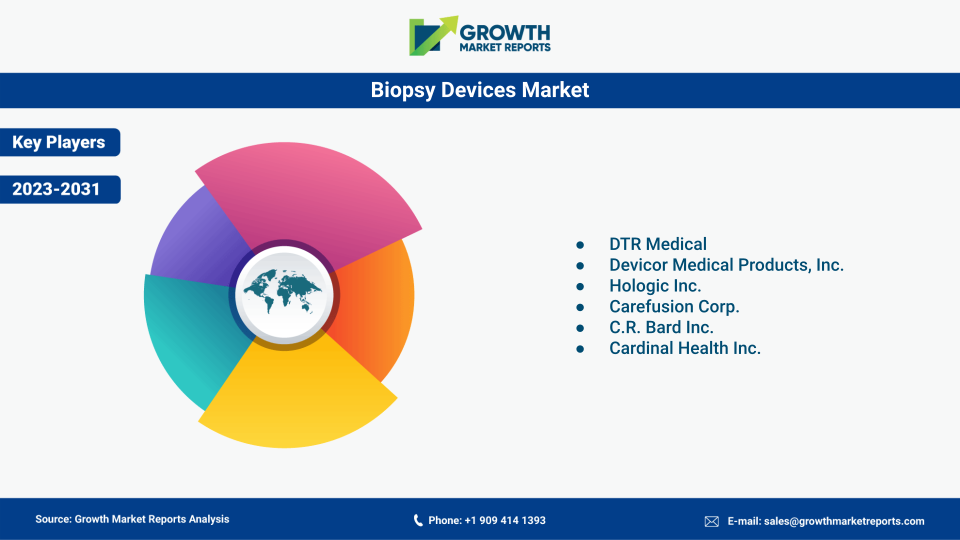
Key players competing in the global biopsy devices market are DTR Medical; Devicor Medical Products, Inc.; Hologic Inc.; Carefusion Corporation; C.R. Bard Inc.; and Cardinal Health Inc.
Some of these major players have adopted several business strategies including product launches, entering into partnership and collaboration, mergers, acquisitions, and expansion of production capacity to solidify their market position.
Hospitals are the largest end users, followed by diagnostic centers and ambulatory surgical centers. Research institutions and specialty clinics also contribute to market demand, especially for clinical trials and advanced diagnostics.
Opportunities include technological innovation, integration of AI, expansion of telemedicine, and focus on personalized medicine. Challenges include high costs of advanced systems, procedural complications, and regulatory hurdles.
The primary guidance techniques are ultrasound-guided, stereotactic-guided, MRI-guided, CT-guided, and emerging methods such as PET-guided and endoscopic ultrasound-guided biopsies.
Key players include BD (Becton, Dickinson and Company), Hologic, Inc., Argon Medical Devices, Cook Medical, Devicor Medical Products (Leica Biosystems), Cardinal Health, Boston Scientific Corporation, and Medtronic plc.
Recent advancements include vacuum-assisted and image-guided biopsy systems, integration of artificial intelligence and robotics, real-time visualization, improved needle designs, and development of disposable and reusable devices.
Biopsy devices are most commonly used for breast biopsy, lung biopsy, colorectal biopsy, and prostate biopsy. Breast biopsy remains the dominant application due to the high prevalence of breast cancer and widespread screening programs.
The main product types include needle-based biopsy instruments, core biopsy devices, vacuum-assisted biopsy devices, fine needle aspiration biopsy devices, and specialized devices for specific anatomical sites.
North America currently dominates the biopsy devices market, followed by Europe and Asia Pacific. However, Asia Pacific is expected to witness the fastest growth due to rising healthcare expenditure, expanding medical tourism, and increasing cancer screening initiatives.
Major growth drivers include the rising incidence of cancer, advancements in minimally invasive diagnostic technologies, increasing demand for early and precise cancer diagnosis, and the integration of image-guided and robotic biopsy systems.
The global biopsy devices market was valued at USD 2.6 billion in 2024 and is projected to reach USD 4.5 billion by 2033, growing at a CAGR of 6.2% from 2025 to 2033.