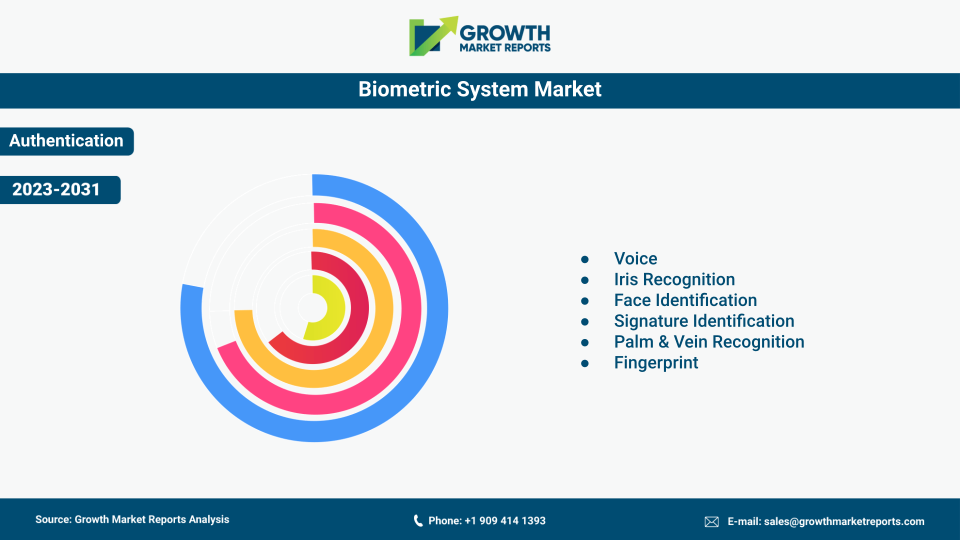
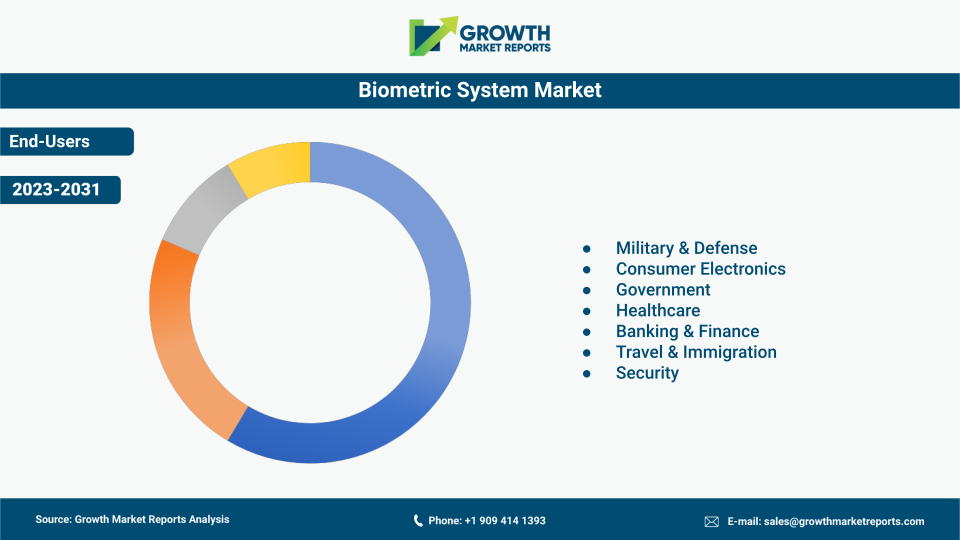
Segments - by Component (Hardware, Software, Services), by Authentication Type (Single-Factor Authentication, Multi-Factor Authentication), by Technology (Fingerprint Recognition, Face Recognition, Iris Recognition, Voice Recognition, Palm Vein Recognition, Others), by Application (Access Control, Time & Attendance, Identity Management, Surveillance, Others), by End-User (BFSI, Healthcare, Government, Retail, IT & Telecom, Transportation, Defense & Security, Others)
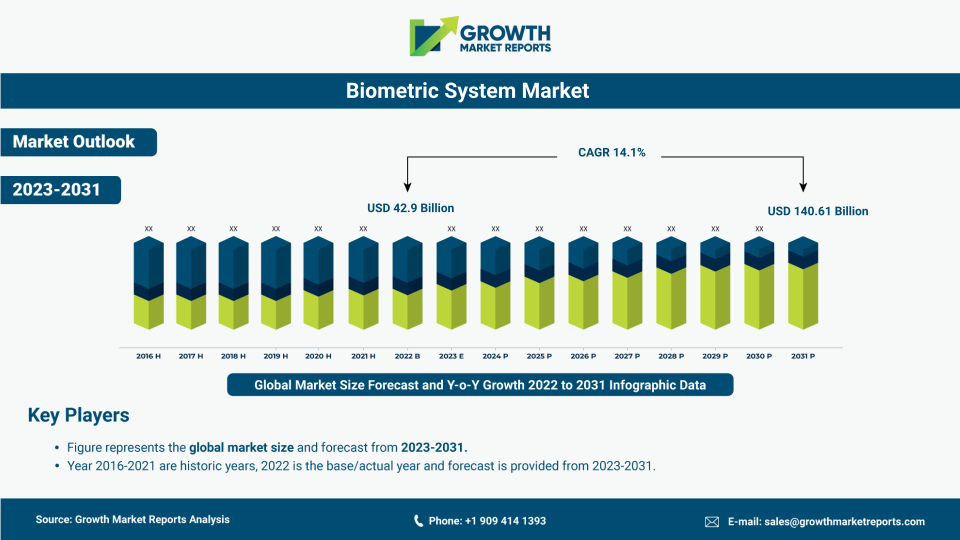
According to our latest research, the biometric system market size reached USD 45.2 billion globally in 2024, demonstrating robust expansion driven by technological advancements and increasing security concerns across industries. The market is expected to grow at a CAGR of 13.1% from 2025 to 2033, with the forecasted market size projected to reach USD 135.7 billion by 2033. This remarkable growth trajectory is propelled by the rising adoption of biometric authentication solutions in sectors such as BFSI, government, and healthcare, as well as the ongoing digital transformation initiatives worldwide.
One of the primary growth factors influencing the biometric system market is the escalating demand for enhanced security and identity management solutions. With the proliferation of digital services and the exponential rise in cyber threats, organizations are increasingly prioritizing robust authentication mechanisms to safeguard sensitive data and prevent unauthorized access. Biometric systems, leveraging unique physiological and behavioral characteristics such as fingerprints, facial features, and iris patterns, offer a high level of accuracy and reliability, making them indispensable for critical applications in access control, identity verification, and surveillance. The integration of artificial intelligence and machine learning algorithms further enhances the performance and adaptability of biometric systems, enabling real-time identification and reducing the risk of spoofing or fraudulent activities.
Another significant driver for the biometric system market is the rapid adoption of mobile devices and contactless technologies, particularly in the wake of the COVID-19 pandemic. The growing preference for touchless authentication methods, such as facial recognition and voice recognition, has accelerated the deployment of biometric solutions across various sectors, including retail, transportation, and healthcare. Governments worldwide are also investing heavily in national identification programs and border security initiatives, fueling the demand for advanced biometric systems. Moreover, the increasing penetration of smartphones equipped with biometric sensors is democratizing access to secure authentication, fostering greater consumer acceptance and trust in these technologies.
The expansion of digital infrastructure in emerging economies, coupled with favorable regulatory frameworks, is further catalyzing the growth of the biometric system market. Countries in Asia Pacific and the Middle East are witnessing substantial investments in smart city projects and e-governance initiatives, which require reliable and scalable biometric solutions for citizen identification and service delivery. Additionally, the rising awareness about data privacy and compliance with stringent regulations such as GDPR and CCPA are compelling organizations to adopt biometric systems that ensure secure and auditable access to sensitive information. As a result, the market is poised for sustained growth, with continuous innovation and strategic collaborations among key stakeholders shaping the competitive landscape.
Biometrics have become a cornerstone in the realm of security and identity management, offering unparalleled accuracy and convenience. As the demand for secure and efficient authentication methods grows, biometrics are increasingly being integrated into everyday applications. From unlocking smartphones to authorizing financial transactions, the use of biometrics is transforming how individuals interact with technology. This shift is not only enhancing user experience but also significantly reducing the risk of unauthorized access and identity theft. The versatility of biometric solutions, ranging from fingerprint and facial recognition to more advanced modalities like iris and voice recognition, is driving their adoption across diverse sectors.
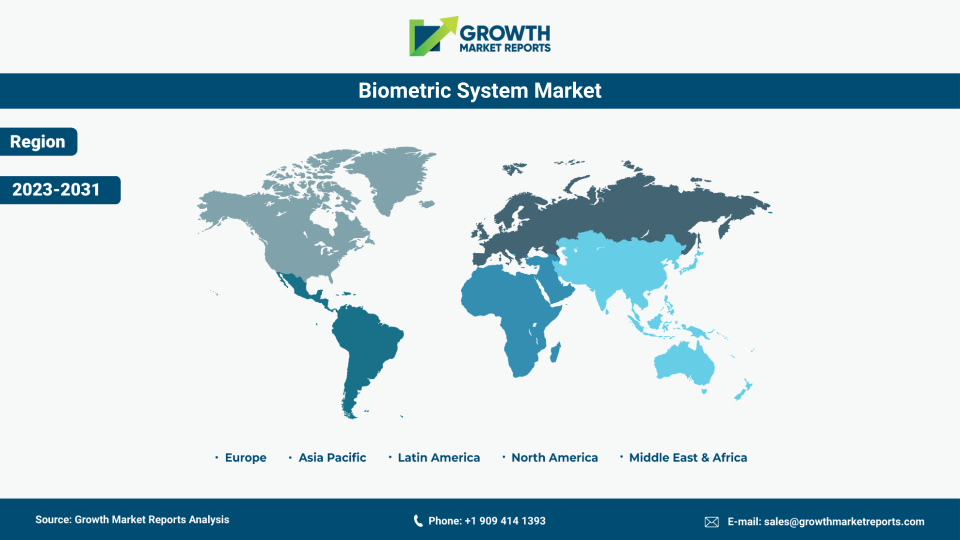
From a regional perspective, Asia Pacific remains at the forefront of biometric system adoption, driven by large-scale government projects, rapid urbanization, and a burgeoning tech-savvy population. North America and Europe are also significant contributors, with strong demand from the BFSI, healthcare, and defense sectors. Latin America and the Middle East & Africa are emerging as promising markets, supported by increasing investments in security infrastructure and digital transformation initiatives. The global biometric system market is characterized by intense competition, with leading players focusing on product innovation, strategic partnerships, and mergers & acquisitions to strengthen their market presence and address evolving customer needs.
The biometric system market is segmented by component into hardware, software, and services, each playing a crucial role in the overall ecosystem. The hardware segment encompasses devices such as fingerprint scanners, facial recognition cameras, iris scanners, and other biometric sensors. This segment commands a significant share of the market, driven by continuous advancements in sensor technologies and the integration of biometrics into a wide range of consumer electronics and enterprise security systems. The increasing adoption of multimodal biometric devices, which combine multiple authentication methods for enhanced accuracy, is further boosting the demand for sophisticated hardware solutions.
The software segment is witnessing rapid growth, fueled by the development of advanced algorithms for biometric data processing, matching, and analytics. Software platforms enable seamless integration of biometric authentication with existing IT infrastructure, supporting a wide array of applications from access control to identity management. The shift towards cloud-based biometric solutions is a notable trend, offering scalability, flexibility, and reduced operational costs for organizations. Vendors are also focusing on enhancing the interoperability of biometric software with various hardware devices and third-party applications, ensuring seamless user experiences and robust security.
Services constitute another vital component of the biometric system market, encompassing consulting, integration, maintenance, and support services. As organizations increasingly deploy biometric solutions across multiple locations and use cases, the demand for specialized services to ensure smooth implementation and ongoing optimization is on the rise. Service providers play a key role in customizing biometric systems to meet specific industry requirements, conducting risk assessments, and providing training to end-users. The growing complexity of biometric deployments, particularly in large-scale government and enterprise projects, underscores the importance of comprehensive service offerings.
The interplay between hardware, software, and services is critical to the successful deployment and operation of biometric systems. Vendors are increasingly adopting a holistic approach, offering end-to-end solutions that encompass all three components. This integrated strategy enables organizations to leverage the full potential of biometric technologies, from initial deployment to ongoing management and support. As the market continues to evolve, the convergence of hardware, software, and services will remain a key differentiator for leading players, driving innovation and delivering enhanced value to customers.
| Attributes | Details |
| Report Title | Biometric System Market Research Report 2033 |
| By Component | Hardware, Software, Services |
| By Authentication Type | Single-Factor Authentication, Multi-Factor Authentication |
| By Technology | Fingerprint Recognition, Face Recognition, Iris Recognition, Voice Recognition, Palm Vein Recognition, Others |
| By Application | Access Control, Time & Attendance, Identity Management, Surveillance, Others |
| By End-User | BFSI, Healthcare, Government, Retail, IT & Telecom, Transportation, Defense & Security, Others |
| Regions Covered | North America, Europe, APAC, Latin America, MEA |
| Base Year | 2024 |
| Historic Data | 2018-2023 |
| Forecast Period | 2025-2033 |
| Number of Pages | 292 |
| Number of Tables & Figures | 392 |
| Customization Available | Yes, the report can be customized as per your need. |
The biometric system market is segmented by authentication type into single-factor authentication (SFA) and multi-factor authentication (MFA). Single-factor authentication, which relies on a single biometric trait such as fingerprint or facial recognition, remains widely adopted due to its simplicity and ease of use. SFA solutions are prevalent in consumer electronics, mobile devices, and access control systems, where convenience and speed are paramount. However, concerns regarding spoofing and the potential for false positives have prompted organizations to seek more robust authentication methods, particularly for high-security applications.
Multi-factor authentication, which combines two or more biometric traits or integrates biometrics with other authentication factors such as passwords or smart cards, is gaining significant traction in the market. MFA solutions offer enhanced security by requiring multiple forms of verification, making it considerably more difficult for unauthorized users to gain access. This approach is increasingly being adopted in sectors such as BFSI, healthcare, and government, where the protection of sensitive data and critical infrastructure is of utmost importance. The integration of MFA with advanced technologies such as artificial intelligence and machine learning further strengthens the security posture of organizations, enabling real-time threat detection and adaptive authentication.
The growing regulatory emphasis on data privacy and security is also driving the adoption of multi-factor authentication in the biometric system market. Compliance with standards such as GDPR and PSD2 mandates the implementation of strong customer authentication measures, compelling organizations to invest in MFA solutions. Additionally, the rising incidence of cyberattacks and identity theft is prompting businesses to reevaluate their authentication strategies, with a clear shift towards multi-layered security frameworks that incorporate biometric verification.
Despite the increasing popularity of multi-factor authentication, single-factor solutions continue to dominate certain market segments, particularly in consumer applications where ease of use and user experience are critical. The ongoing evolution of biometric technologies, coupled with advancements in sensor accuracy and liveness detection, is expected to bridge the gap between security and convenience, enabling broader adoption of both SFA and MFA solutions across diverse use cases. As organizations strive to balance security requirements with user experience, the choice between single-factor and multi-factor authentication will remain a key consideration in the deployment of biometric systems.
The biometric system market is characterized by a diverse range of technologies, each offering unique advantages and use cases. Fingerprint recognition remains the most widely adopted technology, owing to its proven reliability, cost-effectiveness, and ease of integration. Fingerprint scanners are ubiquitous in smartphones, laptops, access control systems, and time & attendance solutions, making them a staple in both consumer and enterprise environments. Continuous improvements in sensor technology and algorithm accuracy have further solidified the position of fingerprint recognition as a cornerstone of the biometric system market.
Facial recognition technology is experiencing rapid growth, driven by advancements in computer vision, deep learning, and image processing. The widespread adoption of facial recognition in smartphones, surveillance systems, and public safety applications is fueling market expansion. Governments and law enforcement agencies are leveraging facial recognition for border control, criminal identification, and crowd management, while retailers are using it to enhance customer experiences and personalize services. The COVID-19 pandemic has also accelerated the adoption of contactless facial recognition solutions, addressing hygiene concerns associated with touch-based systems.
Iris recognition and palm vein recognition are gaining traction in high-security environments, such as government facilities, financial institutions, and healthcare organizations. These technologies offer superior accuracy and resistance to spoofing, making them ideal for applications where security is paramount. Iris recognition, in particular, is being deployed in national identification programs, border security, and access control systems, while palm vein recognition is favored for its non-intrusive nature and high user acceptance. Voice recognition is also emerging as a viable biometric modality, especially in call centers, banking, and smart home applications, where hands-free authentication is desirable.
The market is witnessing a growing trend towards multimodal biometric systems, which combine two or more technologies to enhance accuracy, reliability, and user convenience. Multimodal solutions address the limitations of individual modalities, such as environmental sensitivity or user variability, by leveraging complementary strengths. For example, combining facial and voice recognition can improve authentication accuracy in noisy or low-light environments. As organizations seek to future-proof their security infrastructure, the adoption of multimodal biometric systems is expected to accelerate, driving innovation and expanding the range of applications for biometric technologies.
Biometric systems are deployed across a wide array of applications, with access control emerging as a dominant use case. Organizations across industries rely on biometric authentication to secure physical and logical access to facilities, networks, and sensitive data. Access control systems leveraging fingerprint, facial, or iris recognition ensure that only authorized personnel can enter restricted areas or access confidential information, reducing the risk of insider threats and unauthorized breaches. The integration of biometrics with smart cards and mobile devices further enhances the flexibility and scalability of access control solutions.
Time and attendance management is another key application driving the adoption of biometric systems, particularly in sectors such as manufacturing, healthcare, and retail. Biometric time clocks eliminate the possibility of buddy punching and time fraud, ensuring accurate and reliable tracking of employee attendance. The automation of attendance management processes not only improves operational efficiency but also reduces administrative overhead, enabling organizations to optimize workforce productivity and compliance with labor regulations.
Identity management is a critical application area for biometric systems, encompassing a range of use cases from national ID programs and voter registration to customer onboarding and employee verification. Governments worldwide are implementing biometric-based identity management solutions to enhance the accuracy and integrity of citizen records, streamline service delivery, and combat identity fraud. In the private sector, financial institutions, telecom operators, and healthcare providers are leveraging biometrics to simplify customer onboarding, prevent identity theft, and ensure regulatory compliance.
Surveillance and monitoring represent another significant application segment, with biometric systems playing a pivotal role in enhancing public safety and security. Law enforcement agencies and security organizations are deploying facial recognition, fingerprint matching, and other biometric technologies for criminal identification, suspect tracking, and crowd management. The integration of biometrics with video surveillance systems enables real-time monitoring and rapid response to potential threats, contributing to safer and more secure environments. Emerging applications such as biometric payments, remote authentication, and personalized customer experiences are also gaining momentum, expanding the scope and impact of biometric systems across industries.
The biometric system market caters to a diverse range of end-users, each with unique requirements and challenges. The BFSI sector is a major adopter of biometric solutions, leveraging them for secure customer authentication, fraud prevention, and regulatory compliance. Banks and financial institutions are integrating biometrics into mobile banking apps, ATMs, and branch operations to enhance security and streamline customer experiences. The growing prevalence of digital banking and remote transactions is further driving the demand for reliable and user-friendly biometric authentication methods in the BFSI sector.
Healthcare organizations are increasingly deploying biometric systems to improve patient identification, secure access to medical records, and comply with data privacy regulations. Accurate patient identification is critical for preventing medical errors, ensuring the right care is delivered to the right patient, and safeguarding sensitive health information. Biometric authentication solutions, such as fingerprint and iris recognition, are being integrated into electronic health record (EHR) systems, pharmacy dispensing, and access control for restricted areas within healthcare facilities.
Government agencies are at the forefront of biometric system adoption, implementing large-scale projects for national identification, border control, and law enforcement. Biometric-based national ID programs, e-passports, and voter registration initiatives are transforming the way governments manage citizen identities and deliver public services. The use of biometrics in border security and immigration control enhances the efficiency and accuracy of identity verification, facilitating secure and seamless cross-border movement.
Other key end-user segments include retail, IT & telecom, transportation, and defense & security. Retailers are leveraging biometric systems for customer authentication, personalized marketing, and loss prevention, while IT & telecom companies are integrating biometrics into device security and customer onboarding processes. The transportation sector is adopting biometric solutions for passenger identification, access control, and ticketing, enhancing security and operational efficiency. Defense and security organizations rely on advanced biometric technologies for personnel identification, surveillance, and threat detection, underscoring the critical role of biometrics in safeguarding national security interests.
The biometric system market presents significant opportunities for innovation and growth, particularly in the areas of artificial intelligence, machine learning, and cloud computing. The integration of AI-powered algorithms with biometric systems enables real-time identification, adaptive authentication, and enhanced threat detection, opening up new possibilities for advanced security solutions. The proliferation of IoT devices and smart infrastructure is also creating opportunities for the deployment of biometric authentication in connected environments, such as smart homes, vehicles, and industrial facilities. As organizations embrace digital transformation, the demand for scalable, interoperable, and user-friendly biometric solutions is expected to surge, driving market expansion and fostering technological advancements.
Emerging markets in Asia Pacific, Latin America, and the Middle East & Africa offer untapped potential for biometric system vendors, fueled by rapid urbanization, digitalization, and government-led initiatives. The implementation of biometric-based national ID programs, e-governance platforms, and smart city projects is generating substantial demand for advanced biometric solutions. Strategic partnerships and collaborations with local stakeholders can help vendors navigate regulatory complexities, customize solutions to local needs, and accelerate market penetration. Additionally, the growing emphasis on data privacy and security is creating opportunities for the development of privacy-enhancing technologies and compliance-driven biometric solutions, catering to the evolving needs of organizations and consumers alike.
Despite the promising outlook, the biometric system market faces several challenges and restrainers that could impede growth. Concerns regarding data privacy, potential misuse of biometric data, and the risk of identity theft are significant barriers to widespread adoption. Regulatory uncertainties and varying standards across regions can complicate deployment and hinder interoperability. Technical challenges, such as sensor accuracy, environmental sensitivity, and the risk of false positives or negatives, also pose risks to the reliability and effectiveness of biometric systems. Addressing these concerns through robust data protection measures, transparent governance frameworks, and continuous technological innovation will be essential to unlocking the full potential of the biometric system market.
The Asia Pacific region dominates the global biometric system market, accounting for the largest share with a market size of approximately USD 16.8 billion in 2024. This leadership is attributed to large-scale government initiatives, rapid urbanization, and significant investments in digital infrastructure and smart city projects. Countries such as China, India, and Japan are at the forefront of biometric adoption, implementing national identification programs, e-passports, and border control systems. The presence of a large and tech-savvy population, coupled with increasing awareness of data security, is driving the widespread deployment of biometric solutions across sectors such as BFSI, healthcare, and transportation.
North America represents a mature and highly competitive market for biometric systems, with a market size of USD 12.4 billion in 2024. The region is characterized by strong demand from the BFSI, healthcare, and defense sectors, as well as a robust ecosystem of technology vendors and service providers. The United States is a key driver of market growth, fueled by stringent regulatory requirements, high levels of digital adoption, and ongoing investments in public safety and homeland security. The adoption of advanced biometric technologies, such as facial recognition and multimodal authentication, is accelerating, supported by continuous innovation and strategic partnerships among industry leaders.
Europe holds a significant share of the global biometric system market, with a market size of USD 9.1 billion in 2024. The region is witnessing steady growth, driven by the implementation of GDPR and other data privacy regulations, as well as increasing investments in surveillance, border security, and e-government initiatives. Countries such as the United Kingdom, Germany, and France are leading the adoption of biometric solutions in sectors such as BFSI, healthcare, and transportation. The market is expected to grow at a CAGR of 12.5% from 2025 to 2033, supported by ongoing digital transformation efforts and the rising demand for secure and user-friendly authentication methods.
The biometric system market is highly competitive, characterized by the presence of global technology giants, specialized biometric solution providers, and emerging startups. The competitive landscape is shaped by continuous innovation, strategic partnerships, and mergers & acquisitions, as companies strive to expand their product portfolios, enhance technological capabilities, and strengthen market presence. Leading players are investing heavily in research and development to develop next-generation biometric technologies, improve sensor accuracy, and integrate artificial intelligence and machine learning into their solutions. The focus on interoperability, scalability, and user experience is driving the development of holistic biometric platforms that cater to diverse industry needs and use cases.
Product differentiation is a key strategy employed by market leaders, with companies offering a wide range of biometric modalities, including fingerprint, facial, iris, and voice recognition, as well as multimodal solutions that combine multiple authentication methods. The ability to deliver end-to-end solutions encompassing hardware, software, and services is a critical success factor, enabling vendors to address the unique requirements of different industries and customer segments. Strategic collaborations with system integrators, technology partners, and government agencies are facilitating the deployment of large-scale biometric projects and accelerating market adoption.
The emergence of cloud-based biometric solutions and the integration of biometrics with mobile devices and IoT platforms are creating new avenues for growth and differentiation. Vendors are focusing on enhancing the security, scalability, and flexibility of their offerings to meet the evolving needs of organizations and consumers. The adoption of privacy-enhancing technologies, such as encryption and liveness detection, is gaining prominence, as companies seek to address concerns related to data privacy and regulatory compliance. The ability to provide robust technical support, training, and maintenance services is also a key differentiator, particularly in complex and mission-critical deployments.
Some of the major companies operating in the biometric system market include NEC Corporation, Thales Group, IDEMIA, Assa Abloy AB, Fujitsu Limited, HID Global Corporation, Precise Biometrics AB, Crossmatch Technologies, Suprema Inc., and Bio-Key International. NEC Corporation is renowned for its advanced facial recognition and multimodal biometric solutions, catering to government, law enforcement, and commercial clients worldwide. Thales Group and IDEMIA are global leaders in biometric identification and authentication, offering comprehensive solutions for national ID programs, border security, and financial services. Assa Abloy AB and HID Global are prominent players in access control and identity management, delivering innovative hardware and software solutions for enterprise and public sector customers.
Fujitsu Limited and Precise Biometrics AB are recognized for their expertise in fingerprint and palm vein recognition technologies, providing high-accuracy solutions for healthcare, banking, and government applications. Crossmatch Technologies and Suprema Inc. specialize in biometric hardware and software platforms, supporting a wide range of authentication and identification use cases. Bio-Key International is known for its cloud-based biometric solutions, enabling secure authentication across mobile, web, and enterprise environments. These companies are continuously expanding their product portfolios, investing in R&D, and forging strategic partnerships to maintain their competitive edge and capitalize on emerging market opportunities.
The Biometric System market has been segmented on the basis of
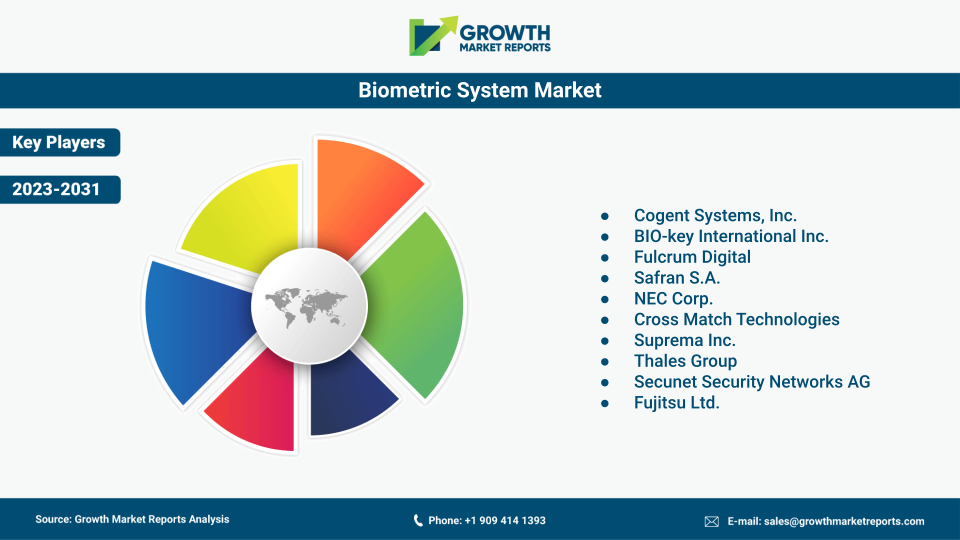
Key players competing in the global biometric system market are Cogent Systems, Inc.; BIO-key International Inc.; Fulcrum Digital; Safran S.A.; NEC Corp.; Cross Match Technologies; Suprema Inc.; Thales Group; Secunet Security Networks AG; and Fujitsu Ltd. As part of their efforts to expand their client base and acquire a competitive advantage over competitors, manufacturers operating in the market have adopted various strategic initiatives, such as partnerships, collaborations, and mergers & acquisitions. Moreover, companies are focusing on investment in R&D for development and launching of new products to maintain their competitive positions in the market.
Key challenges include data privacy concerns, potential misuse of biometric data, regulatory uncertainties, technical issues like sensor accuracy, and the risk of false positives or negatives.
The biometric system market is segmented into hardware (e.g., fingerprint scanners, facial recognition cameras), software (biometric data processing, matching, analytics), and services (consulting, integration, maintenance, and support).
Major companies in the biometric system market include NEC Corporation, Thales Group, IDEMIA, Fujitsu Limited, ASSA ABLOY AB, HID Global, Suprema Inc., BIO-key International, Precise Biometrics AB, and others.
Asia Pacific leads the biometric system market, followed by North America and Europe. Latin America and the Middle East & Africa are emerging as promising markets due to increased investments in security infrastructure.
Biometric systems are used for access control, time & attendance management, identity management, surveillance, and emerging applications such as biometric payments and remote authentication.
The most widely used biometric technologies are fingerprint recognition, facial recognition, iris recognition, voice recognition, and palm vein recognition. Multimodal systems that combine two or more technologies are also gaining popularity.
Biometric authentication methods include single-factor authentication (SFA), which uses one biometric trait like fingerprint or face, and multi-factor authentication (MFA), which combines multiple biometric or non-biometric factors for enhanced security.
Key industries adopting biometric systems include BFSI (banking, financial services, and insurance), government, healthcare, retail, IT & telecom, transportation, and defense & security.
The biometric system market is expected to grow at a CAGR of 13.1% from 2025 to 2033, reaching an estimated USD 135.7 billion by 2033.
As of 2024, the global biometric system market size reached USD 45.2 billion, with strong growth driven by technological advancements and rising security concerns.