Bioanalytical Testing Services Market Research Report 2033

Bioanalytical Testing Services Market Research Report 2033

Segments - by Service Type (Pharmacokinetics, Pharmacodynamics, Bioavailability, Bioequivalence, ADME, Others), by Molecule Type (Small Molecules, Large Molecules), by Application (Clinical Trials, Preclinical Studies, Others), by End-User (Pharmaceutical & Biotechnology Companies, Contract Research Organizations, Academic & Research Institutes, Others)

https://growthmarketreports.com/raksha
Author : Raksha Sharma
https://growthmarketreports.com/Vaibhav
Fact-checked by : V. Chandola
https://growthmarketreports.com/Shruti
Editor : Shruti Bhat

Upcoming | Report ID :HC-601 | 5.0 Rating | 37 Reviews | 251 Pages | Format : Docx PDF

Report Description


Bioanalytical Testing Services Market Outlook

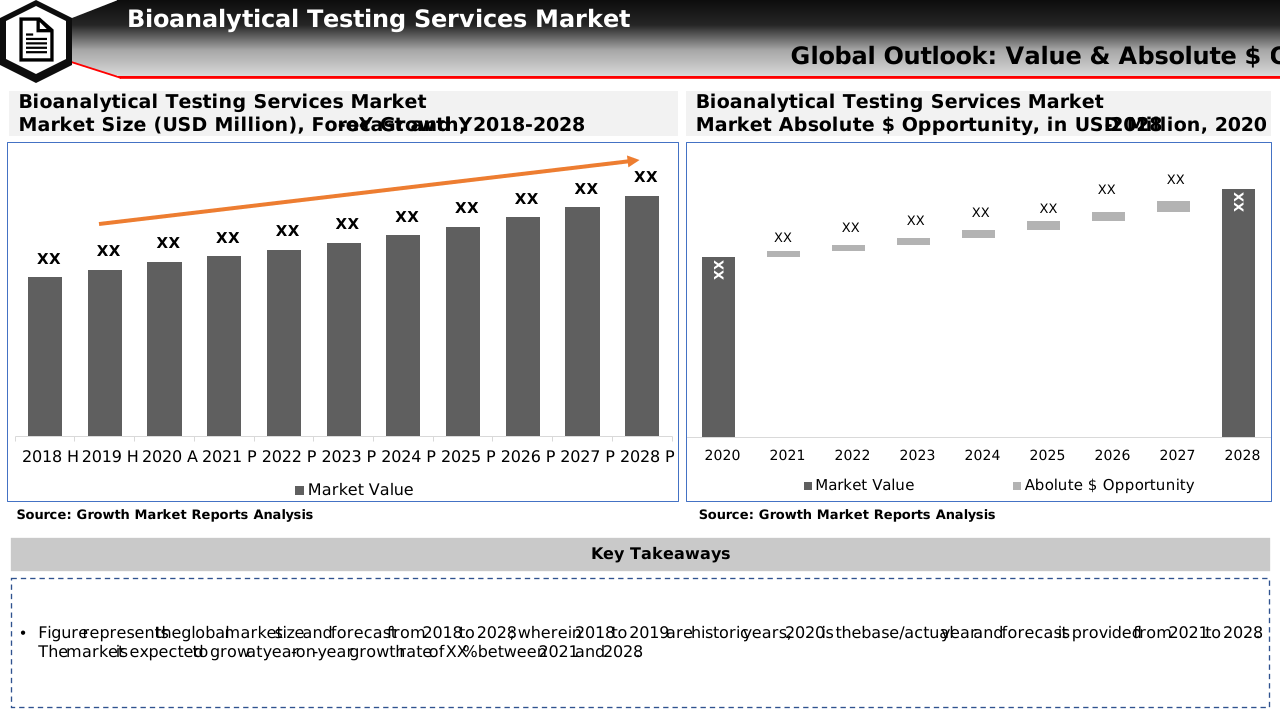
As per our latest research, the global Bioanalytical Testing Services market size reached USD 4.7 billion in 2024, reflecting robust growth driven by the increasing complexity of drug development and stringent regulatory requirements. The market is anticipated to expand at a CAGR of 8.6% from 2025 to 2033, reaching a projected value of USD 9.8 billion by 2033. This growth is underpinned by the rising demand for high-quality analytical data in support of clinical trials and regulatory submissions, as well as the growing trend of outsourcing bioanalytical testing to specialized service providers.

The primary growth factor for the Bioanalytical Testing Services market is the surging pipeline of biopharmaceuticals and complex molecules, which require advanced analytical methods for pharmacokinetic (PK), pharmacodynamic (PD), and ADME (absorption, distribution, metabolism, and excretion) studies. Pharmaceutical and biotechnology companies are increasingly relying on external bioanalytical testing services to manage the escalating workload and adhere to tight development timelines. The complexity of biologics and biosimilars, in particular, demands specialized expertise and sophisticated technologies, which many in-house laboratories lack. This trend is further amplified by the growing number of clinical trials, especially Phase I and II studies, where precise and reliable bioanalytical data is critical for regulatory approval.

Another significant driver of growth in the Bioanalytical Testing Services market is the evolving regulatory landscape. Stringent guidelines from agencies such as the US FDA, EMA, and other global authorities are compelling drug developers to adopt more rigorous and standardized testing protocols. These regulatory requirements have incentivized pharmaceutical companies to seek out bioanalytical service providers with proven track records in compliance and data integrity. The increasing scrutiny on data quality and reproducibility, particularly in the wake of high-profile drug recalls and safety concerns, has made the selection of experienced bioanalytical partners a strategic imperative for sponsors aiming to minimize risk and accelerate time-to-market.

Technological advancements are also playing a pivotal role in the expansion of the Bioanalytical Testing Services market. Innovations such as high-throughput screening, liquid chromatography-mass spectrometry (LC-MS/MS), and automation are enabling more sensitive, accurate, and rapid analysis of both small and large molecules. These capabilities are essential for supporting the development of next-generation therapeutics, including gene therapies, monoclonal antibodies, and personalized medicines. The adoption of digital platforms and data analytics is further enhancing the efficiency and reliability of bioanalytical workflows, making outsourcing an even more attractive option for pharmaceutical and biotechnology companies striving for operational excellence.

Bioassay Services are becoming increasingly pivotal in the context of bioanalytical testing, especially as the industry shifts towards more complex biologics and personalized medicine. These services involve the use of biological methods to measure the concentration or potency of a substance, often a pharmaceutical compound, by its effect on living cells or tissues. As drug development processes become more intricate, the demand for precise and reliable bioassay services is growing. This is particularly true for biologics, where understanding the biological activity is crucial for efficacy and safety assessments. The integration of bioassay services into bioanalytical testing workflows is enhancing the ability of service providers to deliver comprehensive data packages that meet stringent regulatory requirements, thereby supporting faster and more efficient drug development.

Regionally, North America continues to dominate the Bioanalytical Testing Services market, supported by a mature pharmaceutical industry, well-established regulatory frameworks, and a concentration of leading contract research organizations (CROs). However, Asia Pacific is emerging as a key growth engine, driven by the rapid expansion of pharmaceutical manufacturing, increasing investments in R&D, and the rising prevalence of clinical trials in countries such as China and India. Europe also remains a significant market, benefiting from strong government support for life sciences research and a robust network of academic and research institutions. The interplay of these regional dynamics is shaping the global landscape of bioanalytical testing, with service providers increasingly adopting a global footprint to cater to the diverse needs of clients across multiple geographies.

Global Bioanalytical Testing Services Industry Outlook

Service Type Analysis

The Service Type segment of the Bioanalytical Testing Services market encompasses a wide array of offerings, including pharmacokinetics (PK), pharmacodynamics (PD), bioavailability, bioequivalence, ADME, and other specialized services. Pharmacokinetics and pharmacodynamics services account for a substantial share of the market, as these analyses are foundational to understanding the absorption, distribution, metabolism, and excretion of new drug candidates. The demand for PK and PD testing is being propelled by the need for comprehensive data to support regulatory submissions and optimize dosage regimens, particularly in the context of personalized medicine and targeted therapies. Bioavailability and bioequivalence studies are also critical, especially for generic drug manufacturers seeking to demonstrate therapeutic equivalence and gain market approval.

ADME services are gaining traction as the complexity of drug molecules increases, necessitating a deeper understanding of how compounds behave within the body. These studies are essential for identifying potential drug-drug interactions, optimizing pharmacological profiles, and minimizing adverse effects. The integration of advanced analytical technologies, such as LC-MS/MS and high-resolution mass spectrometry, is enabling more precise and comprehensive ADME profiling, thereby enhancing the value proposition of bioanalytical service providers. Other specialized services, including immunogenicity testing, biomarker analysis, and molecular characterization, are also witnessing growing demand as the industry shifts toward biologics and precision therapeutics.

The competitive landscape within the Service Type segment is characterized by a mix of large, full-service CROs and niche providers specializing in specific analytical techniques or therapeutic areas. Companies are increasingly investing in expanding their service portfolios and technological capabilities to differentiate themselves in a crowded market. Strategic partnerships and acquisitions are common, as service providers seek to broaden their expertise and geographic reach. The ability to offer end-to-end bioanalytical solutions, from preclinical studies to late-phase clinical trials, is emerging as a key differentiator, enabling providers to build long-term relationships with clients and capture a larger share of the market.

Regulatory compliance and data integrity are paramount in the Service Type segment, with clients placing a premium on providers with robust quality management systems and a track record of successful regulatory inspections. The adoption of standardized protocols and best practices, such as Good Laboratory Practice (GLP) and Good Clinical Practice (GCP), is essential for ensuring the reliability and reproducibility of bioanalytical data. Providers that can demonstrate expertise in navigating complex regulatory environments and delivering high-quality, audit-ready data are well-positioned to capture market share and drive growth in this segment.

Report Scope

Attributes Details
Report Title Bioanalytical Testing Services Market Research Report 2033
By Service Type Pharmacokinetics, Pharmacodynamics, Bioavailability, Bioequivalence, ADME, Others
By Molecule Type Small Molecules, Large Molecules
By Application Clinical Trials, Preclinical Studies, Others
By End-User Pharmaceutical & Biotechnology Companies, Contract Research Organizations, Academic & Research Institutes, Others
Regions Covered North America, Europe, APAC, Latin America, MEA
Base Year 2024
Historic Data 2018-2023
Forecast Period 2025-2033
Number of Pages 251
Number of Tables & Figures 399
Customization Available Yes, the report can be customized as per your need.

Molecule Type Analysis

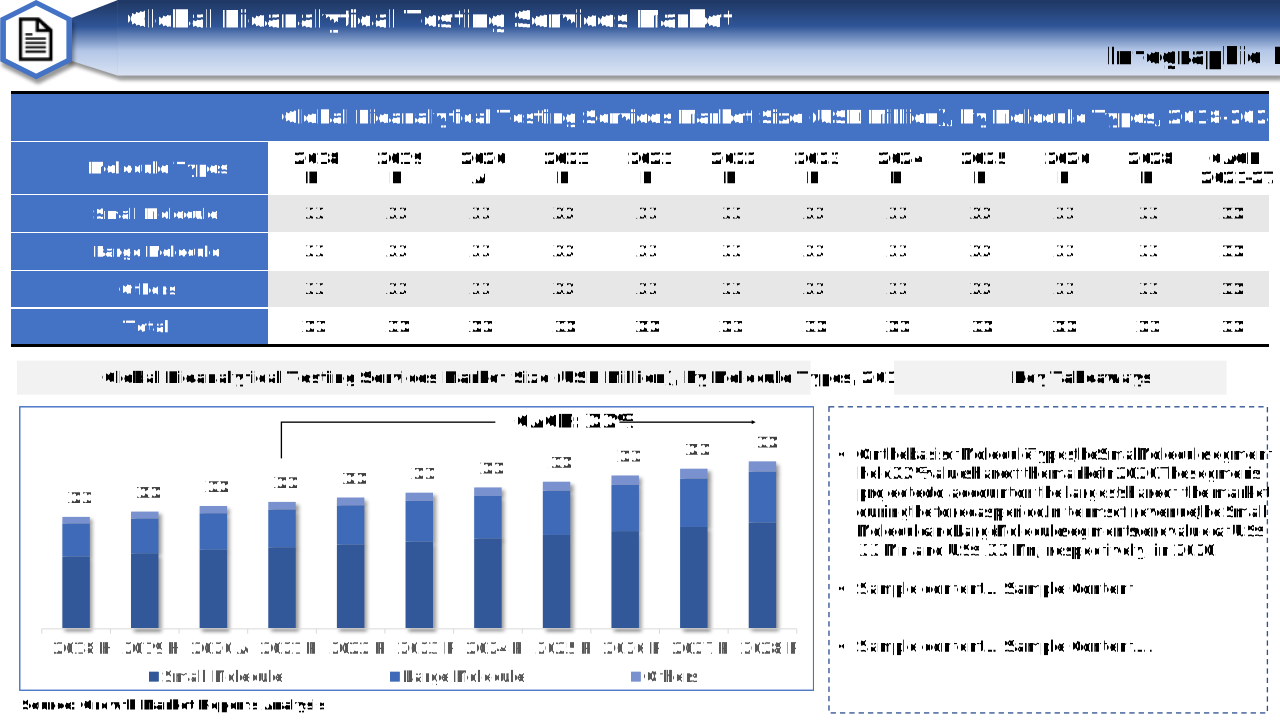
The Molecule Type segment of the Bioanalytical Testing Services market is broadly categorized into small molecules and large molecules, each presenting unique analytical challenges and opportunities. Small molecules have traditionally dominated the market, reflecting their prevalence in pharmaceutical pipelines and the relative simplicity of their analytical requirements. However, the rapid growth of biologics, including monoclonal antibodies, recombinant proteins, and cell and gene therapies, is reshaping the landscape and driving increased demand for large molecule bioanalytical testing services. The analytical methods required for large molecules are inherently more complex, often necessitating the use of immunoassays, ligand binding assays, and advanced mass spectrometry techniques.

The shift toward large molecules is being fueled by the growing incidence of chronic diseases, advances in biotechnology, and the increasing focus on personalized medicine. These trends are driving pharmaceutical and biotechnology companies to invest in the development of innovative biologics, which require specialized bioanalytical expertise for characterization, stability testing, and immunogenicity assessment. Service providers that can offer a comprehensive suite of large molecule testing capabilities are in high demand, particularly those with experience in supporting regulatory submissions for complex biologics and biosimilars.

Despite the rising prominence of large molecules, small molecule bioanalytical testing remains a vital component of the market, particularly in the context of generic drug development and the ongoing need for small molecule therapeutics in areas such as oncology, infectious diseases, and cardiovascular disorders. The continued evolution of analytical technologies, including ultra-high-performance liquid chromatography (UHPLC) and tandem mass spectrometry, is enabling more sensitive and specific detection of small molecule drugs and their metabolites. This is enhancing the ability of service providers to support a broad range of client needs, from early-stage discovery to late-phase clinical trials.

The competitive dynamics within the Molecule Type segment are influenced by the ability of service providers to stay at the forefront of technological innovation and regulatory compliance. Providers that can seamlessly integrate small and large molecule testing capabilities, supported by state-of-the-art instrumentation and highly skilled scientific teams, are well-positioned to capture a larger share of the market. The trend toward integrated service offerings, including both bioanalytical and bioinformatics solutions, is also gaining momentum, as clients seek to streamline their drug development workflows and accelerate time-to-market.

Application Analysis

The Application segment of the Bioanalytical Testing Services market is primarily divided into clinical trials, preclinical studies, and other applications. Clinical trials represent the largest and fastest-growing segment, driven by the escalating number of new drug candidates entering the clinical development pipeline. The demand for bioanalytical testing services in clinical trials is being fueled by the need for high-quality data to support regulatory submissions, ensure patient safety, and demonstrate therapeutic efficacy. Service providers are increasingly being called upon to deliver rapid, reliable, and scalable bioanalytical solutions that can accommodate the complex requirements of multi-center, global clinical studies.

Preclinical studies also constitute a significant portion of the Bioanalytical Testing Services market, as they are essential for evaluating the pharmacokinetic and toxicological profiles of new compounds prior to human testing. The ability to generate robust preclinical data is critical for securing regulatory approval to initiate clinical trials, making bioanalytical testing a key enabler of early-stage drug development. The integration of advanced analytical techniques, such as high-throughput screening and multiplexed assays, is enhancing the efficiency and accuracy of preclinical bioanalytical workflows, enabling faster decision-making and reducing the risk of late-stage failures.

Other applications of bioanalytical testing services include biomarker discovery and validation, therapeutic drug monitoring, and support for post-marketing surveillance studies. The growing emphasis on personalized medicine and the need for companion diagnostics are driving increased demand for biomarker analysis, as pharmaceutical companies seek to identify patient populations most likely to benefit from specific therapies. Service providers that can offer expertise in biomarker assay development, validation, and clinical implementation are well-positioned to capture emerging opportunities in this space.

The Application segment is characterized by a high degree of specialization and customization, with service providers tailoring their offerings to meet the unique needs of each client and study. The ability to provide flexible, scalable, and integrated bioanalytical solutions is a key differentiator in a competitive market, enabling providers to build long-term partnerships with pharmaceutical and biotechnology companies. The trend toward outsourcing bioanalytical testing for both clinical and preclinical applications is expected to continue, as sponsors seek to optimize resource allocation and focus on their core competencies.

End-User Analysis

The End-User segment of the Bioanalytical Testing Services market includes pharmaceutical and biotechnology companies, contract research organizations (CROs), academic and research institutes, and other stakeholders. Pharmaceutical and biotechnology companies represent the largest end-user group, accounting for the majority of market demand. These organizations are increasingly outsourcing bioanalytical testing to specialized service providers to access advanced technologies, scientific expertise, and scalable capacity. The growing complexity of drug development, coupled with the need to accelerate timelines and reduce costs, is driving the shift toward external bioanalytical partnerships.

Contract research organizations (CROs) also constitute a significant share of the Bioanalytical Testing Services market, as they often act as intermediaries between sponsors and bioanalytical service providers. CROs are expanding their service portfolios to include a broader range of bioanalytical capabilities, either through internal investment or strategic partnerships with specialized laboratories. This trend is enabling CROs to offer end-to-end drug development solutions, from preclinical studies to late-phase clinical trials, thereby enhancing their value proposition to clients.

Academic and research institutes play a vital role in the Bioanalytical Testing Services market, particularly in the context of early-stage discovery and translational research. These institutions often collaborate with pharmaceutical companies and service providers to develop and validate novel analytical methods, biomarkers, and therapeutic targets. The growing emphasis on academia-industry partnerships is fostering innovation and driving the development of new bioanalytical technologies and methodologies.

Other end-users, including government agencies, regulatory bodies, and non-profit organizations, also contribute to market demand, particularly in the areas of public health, epidemiology, and disease surveillance. The ability to serve a diverse range of end-users, each with unique requirements and expectations, is a key success factor for bioanalytical service providers. Providers that can demonstrate flexibility, scientific rigor, and a commitment to quality are well-positioned to capture opportunities across multiple end-user segments.

Opportunities & Threats

The Bioanalytical Testing Services market presents substantial opportunities for growth, particularly in light of the expanding pipeline of complex biologics and personalized medicines. The increasing adoption of advanced analytical technologies, such as next-generation sequencing, digital PCR, and high-resolution mass spectrometry, is enabling service providers to offer more comprehensive and sensitive testing solutions. This is opening up new avenues for supporting the development of innovative therapies, including cell and gene therapies, RNA-based drugs, and immuno-oncology agents. The growing emphasis on data integrity, regulatory compliance, and quality assurance is also creating opportunities for providers with robust quality management systems and a proven track record of successful regulatory inspections.

Another major opportunity lies in the globalization of clinical trials and drug development activities. As pharmaceutical companies increasingly conduct studies across multiple regions, there is a growing need for bioanalytical service providers with a global footprint and the ability to deliver consistent, high-quality data across diverse geographies. The expansion of clinical research in emerging markets, particularly in Asia Pacific and Latin America, is driving demand for local bioanalytical testing capabilities and creating opportunities for providers to establish strategic partnerships and expand their service offerings. The adoption of digital platforms and data analytics is further enhancing the efficiency and scalability of bioanalytical workflows, enabling providers to better meet the evolving needs of clients.

Despite these opportunities, the Bioanalytical Testing Services market faces several restraining factors, chief among them being the high cost and complexity of advanced analytical technologies. The need to invest in state-of-the-art instrumentation, highly skilled personnel, and robust quality management systems can be a significant barrier to entry for new providers and a challenge for existing players seeking to expand their capabilities. Additionally, the evolving regulatory landscape and increasing scrutiny on data integrity and reproducibility are raising the stakes for compliance, making it essential for providers to stay abreast of changing requirements and continuously invest in quality assurance and training. These challenges underscore the importance of strategic planning, operational excellence, and a commitment to innovation for providers seeking to succeed in this dynamic market.

Regional Outlook

North America remains the largest regional market for Bioanalytical Testing Services, accounting for approximately 42% of global revenue in 2024, or about USD 1.97 billion. The region's dominance is underpinned by a mature pharmaceutical industry, a high concentration of leading CROs and bioanalytical service providers, and a strong regulatory framework that emphasizes data quality and compliance. The United States, in particular, is a major hub for drug development and clinical research, attracting significant investments from both domestic and international sponsors. The presence of world-class academic and research institutions, coupled with a robust ecosystem of innovation and entrepreneurship, further reinforces North America's leadership in the global market.

Europe represents the second-largest market, with a market size of approximately USD 1.32 billion in 2024, driven by strong government support for life sciences research, a well-established network of academic and research institutions, and a growing emphasis on personalized medicine and biologics development. The region is characterized by a diverse regulatory landscape, with the European Medicines Agency (EMA) playing a central role in harmonizing standards and promoting best practices. The United Kingdom, Germany, and France are among the leading contributors to the European market, benefiting from significant investments in R&D and a high level of collaboration between academia, industry, and government.

The Asia Pacific region is emerging as a key growth engine for the Bioanalytical Testing Services market, with a market size of around USD 0.94 billion in 2024 and an anticipated CAGR of 10.2% through 2033. The rapid expansion of pharmaceutical manufacturing, increasing investments in clinical research, and the rising prevalence of chronic diseases are driving demand for bioanalytical testing services in countries such as China, India, Japan, and South Korea. The region's cost advantages, large patient populations, and improving regulatory infrastructure are attracting both domestic and international sponsors, making Asia Pacific a strategic priority for global service providers. Latin America and the Middle East & Africa, while smaller in absolute terms, are also experiencing steady growth, supported by increasing investments in healthcare infrastructure and a growing focus on drug safety and efficacy.

Bioanalytical Testing Services Market Statistics

Competitor Outlook

The Bioanalytical Testing Services market is characterized by intense competition, with a mix of global contract research organizations (CROs), specialized bioanalytical laboratories, and emerging regional players vying for market share. The competitive landscape is shaped by the ability of providers to offer comprehensive, high-quality, and compliant bioanalytical solutions across the full spectrum of drug development activities. Leading players are investing heavily in advanced analytical technologies, automation, and digital platforms to enhance their service offerings and differentiate themselves from competitors. The trend toward consolidation is evident, with a wave of mergers, acquisitions, and strategic partnerships aimed at expanding geographic reach, service portfolios, and scientific expertise.

Innovation and operational excellence are key differentiators in the Bioanalytical Testing Services market. Companies that can demonstrate expertise in both small and large molecule analysis, supported by state-of-the-art instrumentation and highly skilled scientific teams, are well-positioned to capture a larger share of the market. The ability to offer integrated, end-to-end solutions, from early-stage discovery to late-phase clinical trials and post-marketing surveillance, is increasingly valued by clients seeking to streamline their drug development workflows and accelerate time-to-market. Providers that can adapt to the evolving needs of pharmaceutical and biotechnology companies, particularly in the areas of personalized medicine, biologics, and advanced therapeutics, are expected to maintain a competitive edge.

Regulatory compliance and data integrity are paramount in the Bioanalytical Testing Services market, with clients placing a premium on providers with robust quality management systems, a track record of successful regulatory inspections, and a commitment to continuous improvement. The ability to navigate complex and evolving regulatory environments, both domestically and internationally, is essential for winning and retaining business in this highly regulated industry. Providers that can demonstrate a deep understanding of regulatory requirements and deliver audit-ready data are well-positioned to build long-term partnerships with clients and capture repeat business.

Some of the major companies operating in the Bioanalytical Testing Services market include Covance Inc. (LabCorp), Charles River Laboratories, ICON plc, PPD (Thermo Fisher Scientific), SGS SA, WuXi AppTec, Eurofins Scientific, Syneos Health, PRA Health Sciences, and BioAgilytix Labs. Covance, a subsidiary of LabCorp, is recognized for its comprehensive service offerings and global footprint, enabling it to support clients across all phases of drug development. Charles River Laboratories is renowned for its expertise in preclinical and clinical bioanalytical services, with a strong focus on large molecule analysis and immunogenicity testing. ICON plc and PPD, now part of Thermo Fisher Scientific, are leading CROs with extensive bioanalytical capabilities and a strong track record of supporting global clinical trials. SGS SA and Eurofins Scientific are prominent players in the analytical testing space, offering a broad range of bioanalytical services to pharmaceutical, biotechnology, and medical device companies worldwide.

WuXi AppTec is a leading provider of integrated R&D services, with a strong presence in Asia Pacific and a growing global footprint. The company is known for its investment in advanced analytical technologies and its ability to support both small and large molecule drug development. Syneos Health and PRA Health Sciences are also key players, offering a comprehensive suite of bioanalytical and clinical research services to clients across the globe. BioAgilytix Labs specializes in large molecule bioanalysis, with a focus on supporting the development of biologics, biosimilars, and advanced therapeutics. These companies, along with a host of emerging regional players, are driving innovation and shaping the future of the Bioanalytical Testing Services market through their commitment to quality, scientific excellence, and client-centric service delivery.

Key Players

  • Charles River Laboratories International, Inc.
  • SGS SA
  • Eurofins Scientific SE
  • LabCorp (Laboratory Corporation of America Holdings)
  • Syneos Health
  • ICON plc
  • Pace Analytical Services, LLC
  • Intertek Group plc
  • WuXi AppTec
  • Covance Inc.
  • PPD, Inc. (Thermo Fisher Scientific)
  • Medpace Holdings, Inc.
  • Frontage Laboratories, Inc.
  • BioAgilytix Labs
  • Pharmaron Beijing Co., Ltd.
  • QPS Holdings, LLC
  • Altasciences
  • Celerion, Inc.
  • MicroConstants, Inc.
  • SGS Life Sciences
Bioanalytical Testing Services Market Overview

Segments

The Bioanalytical Testing Services market has been segmented on the basis of

Service Type

  • Pharmacokinetics
  • Pharmacodynamics
  • Bioavailability
  • Bioequivalence
  • ADME
  • Others

Molecule Type

  • Small Molecules
  • Large Molecules

Application

  • Clinical Trials
  • Preclinical Studies
  • Others

End-User

  • Pharmaceutical & Biotechnology Companies
  • Contract Research Organizations
  • Academic & Research Institutes
  • Others

Competitive Landscape

Major players competing in the global bioanalytical testing services market are PPD; ICON plc; Covance Inc; LabCorp; Charles River Laboratories International Inc; inVentiv Health; SGS SA; Toxikon Inc; Intertek group; and Pace Analytical Services LLC. These market players are involved in several business strategies such as mergers, acquisitions partnerships, collaborations, capacity expansion, and product launches to enhance their market shares. They are simultaneously looking to innovate the current product they have in order to get a competitive edge in the market. For instance, SGS SA declared the GMP vaccine solutions with various testing and experimenting for the coronavirus. This was held in February 2020, where the bio-safety laboratory of SGS SA were able to produce latest testing services treating new viral threats such as the new variants of the coronavirus.
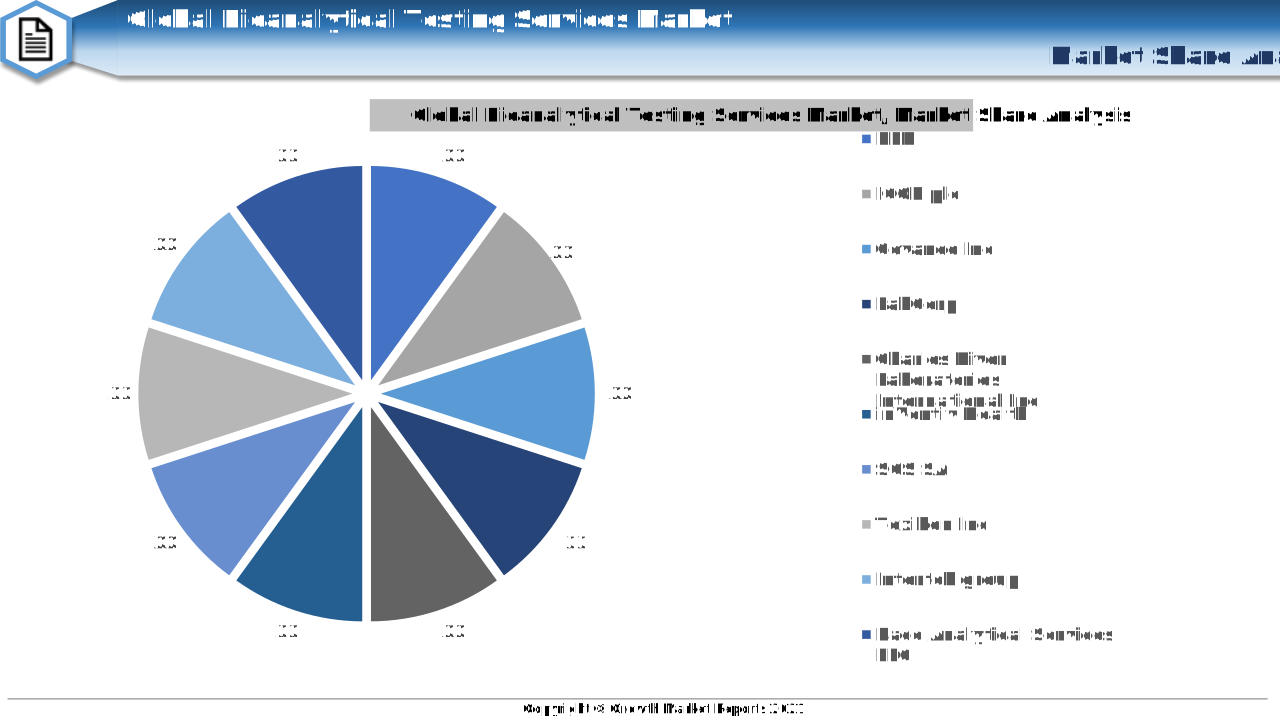
 

Bioanalytical Testing Services Market By key Players

Frequently Asked Questions

Innovations such as high-throughput screening, liquid chromatography-mass spectrometry (LC-MS/MS), automation, digital platforms, and advanced data analytics are enhancing the sensitivity, accuracy, and efficiency of bioanalytical testing.

Major players include Covance Inc. (LabCorp), Charles River Laboratories, ICON plc, PPD (Thermo Fisher Scientific), SGS SA, WuXi AppTec, Eurofins Scientific, Syneos Health, PRA Health Sciences, and BioAgilytix Labs.

Challenges include the high cost and complexity of advanced analytical technologies, evolving regulatory requirements, and the need for continuous investment in quality management and skilled personnel.

Key applications include clinical trials, preclinical studies, biomarker discovery and validation, therapeutic drug monitoring, and post-marketing surveillance.

Primary end-users include pharmaceutical and biotechnology companies, contract research organizations (CROs), academic and research institutes, government agencies, and regulatory bodies.

The market is segmented into small molecules and large molecules. While small molecules have traditionally dominated, demand for large molecule testing (such as for biologics and biosimilars) is rapidly increasing due to advances in biotechnology and personalized medicine.

Service types include pharmacokinetics (PK), pharmacodynamics (PD), bioavailability, bioequivalence, ADME (absorption, distribution, metabolism, excretion), immunogenicity testing, biomarker analysis, and molecular characterization.

North America is the largest regional market, accounting for about 42% of global revenue in 2024, followed by Europe and the rapidly growing Asia Pacific region.

Key growth drivers include the increasing complexity of drug development, a rising pipeline of biopharmaceuticals and complex molecules, stringent regulatory requirements, and the growing trend of outsourcing bioanalytical testing to specialized service providers.

The global Bioanalytical Testing Services market reached USD 4.7 billion in 2024 and is expected to grow at a CAGR of 8.6% from 2025 to 2033, reaching approximately USD 9.8 billion by 2033.

Table Of Content

Chapter 1 Executive Summary
Chapter 2 Assumptions and Acronyms Used
Chapter 3 Research Methodology
Chapter 4 Bioanalytical Testing Services Market Overview
   4.1 Introduction
      4.1.1 Market Taxonomy
      4.1.2 Market Definition
      4.1.3 Macro-Economic Factors Impacting the Market Growth
   4.2 Bioanalytical Testing Services Market Dynamics
      4.2.1 Market Drivers
      4.2.2 Market Restraints
      4.2.3 Market Opportunity
   4.3 Bioanalytical Testing Services Market - Supply Chain Analysis
      4.3.1 List of Key Suppliers
      4.3.2 List of Key Distributors
      4.3.3 List of Key Consumers
   4.4 Key Forces Shaping the Bioanalytical Testing Services Market
      4.4.1 Bargaining Power of Suppliers
      4.4.2 Bargaining Power of Buyers
      4.4.3 Threat of Substitution
      4.4.4 Threat of New Entrants
      4.4.5 Competitive Rivalry
   4.5 Global Bioanalytical Testing Services Market Size & Forecast, 2023-2032
      4.5.1 Bioanalytical Testing Services Market Size and Y-o-Y Growth
      4.5.2 Bioanalytical Testing Services Market Absolute $ Opportunity

Chapter 5 Global Bioanalytical Testing Services Market Analysis and Forecast By Service Type
   5.1 Introduction
      5.1.1 Key Market Trends & Growth Opportunities By Service Type
      5.1.2 Basis Point Share (BPS) Analysis By Service Type
      5.1.3 Absolute $ Opportunity Assessment By Service Type
   5.2 Bioanalytical Testing Services Market Size Forecast By Service Type
      5.2.1 Pharmacokinetics
      5.2.2 Pharmacodynamics
      5.2.3 Bioavailability
      5.2.4 Bioequivalence
      5.2.5 ADME
      5.2.6 Others
   5.3 Market Attractiveness Analysis By Service Type

Chapter 6 Global Bioanalytical Testing Services Market Analysis and Forecast By Molecule Type
   6.1 Introduction
      6.1.1 Key Market Trends & Growth Opportunities By Molecule Type
      6.1.2 Basis Point Share (BPS) Analysis By Molecule Type
      6.1.3 Absolute $ Opportunity Assessment By Molecule Type
   6.2 Bioanalytical Testing Services Market Size Forecast By Molecule Type
      6.2.1 Small Molecules
      6.2.2 Large Molecules
   6.3 Market Attractiveness Analysis By Molecule Type

Chapter 7 Global Bioanalytical Testing Services Market Analysis and Forecast By Application
   7.1 Introduction
      7.1.1 Key Market Trends & Growth Opportunities By Application
      7.1.2 Basis Point Share (BPS) Analysis By Application
      7.1.3 Absolute $ Opportunity Assessment By Application
   7.2 Bioanalytical Testing Services Market Size Forecast By Application
      7.2.1 Clinical Trials
      7.2.2 Preclinical Studies
      7.2.3 Others
   7.3 Market Attractiveness Analysis By Application

Chapter 8 Global Bioanalytical Testing Services Market Analysis and Forecast By End-User
   8.1 Introduction
      8.1.1 Key Market Trends & Growth Opportunities By End-User
      8.1.2 Basis Point Share (BPS) Analysis By End-User
      8.1.3 Absolute $ Opportunity Assessment By End-User
   8.2 Bioanalytical Testing Services Market Size Forecast By End-User
      8.2.1 Pharmaceutical & Biotechnology Companies
      8.2.2 Contract Research Organizations
      8.2.3 Academic & Research Institutes
      8.2.4 Others
   8.3 Market Attractiveness Analysis By End-User

Chapter 9 Global Bioanalytical Testing Services Market Analysis and Forecast by Region
   9.1 Introduction
      9.1.1 Key Market Trends & Growth Opportunities By Region
      9.1.2 Basis Point Share (BPS) Analysis By Region
      9.1.3 Absolute $ Opportunity Assessment By Region
   9.2 Bioanalytical Testing Services Market Size Forecast By Region
      9.2.1 North America
      9.2.2 Europe
      9.2.3 Asia Pacific
      9.2.4 Latin America
      9.2.5 Middle East & Africa (MEA)
   9.3 Market Attractiveness Analysis By Region

Chapter 10 Coronavirus Disease (COVID-19) Impact 
   10.1 Introduction 
   10.2 Current & Future Impact Analysis 
   10.3 Economic Impact Analysis 
   10.4 Government Policies 
   10.5 Investment Scenario

Chapter 11 North America Bioanalytical Testing Services Analysis and Forecast
   11.1 Introduction
   11.2 North America Bioanalytical Testing Services Market Size Forecast by Country
      11.2.1 U.S.
      11.2.2 Canada
   11.3 Basis Point Share (BPS) Analysis by Country
   11.4 Absolute $ Opportunity Assessment by Country
   11.5 Market Attractiveness Analysis by Country
   11.6 North America Bioanalytical Testing Services Market Size Forecast By Service Type
      11.6.1 Pharmacokinetics
      11.6.2 Pharmacodynamics
      11.6.3 Bioavailability
      11.6.4 Bioequivalence
      11.6.5 ADME
      11.6.6 Others
   11.7 Basis Point Share (BPS) Analysis By Service Type 
   11.8 Absolute $ Opportunity Assessment By Service Type 
   11.9 Market Attractiveness Analysis By Service Type
   11.10 North America Bioanalytical Testing Services Market Size Forecast By Molecule Type
      11.10.1 Small Molecules
      11.10.2 Large Molecules
   11.11 Basis Point Share (BPS) Analysis By Molecule Type 
   11.12 Absolute $ Opportunity Assessment By Molecule Type 
   11.13 Market Attractiveness Analysis By Molecule Type
   11.14 North America Bioanalytical Testing Services Market Size Forecast By Application
      11.14.1 Clinical Trials
      11.14.2 Preclinical Studies
      11.14.3 Others
   11.15 Basis Point Share (BPS) Analysis By Application 
   11.16 Absolute $ Opportunity Assessment By Application 
   11.17 Market Attractiveness Analysis By Application
   11.18 North America Bioanalytical Testing Services Market Size Forecast By End-User
      11.18.1 Pharmaceutical & Biotechnology Companies
      11.18.2 Contract Research Organizations
      11.18.3 Academic & Research Institutes
      11.18.4 Others
   11.19 Basis Point Share (BPS) Analysis By End-User 
   11.20 Absolute $ Opportunity Assessment By End-User 
   11.21 Market Attractiveness Analysis By End-User

Chapter 12 Europe Bioanalytical Testing Services Analysis and Forecast
   12.1 Introduction
   12.2 Europe Bioanalytical Testing Services Market Size Forecast by Country
      12.2.1 Germany
      12.2.2 France
      12.2.3 Italy
      12.2.4 U.K.
      12.2.5 Spain
      12.2.6 Russia
      12.2.7 Rest of Europe
   12.3 Basis Point Share (BPS) Analysis by Country
   12.4 Absolute $ Opportunity Assessment by Country
   12.5 Market Attractiveness Analysis by Country
   12.6 Europe Bioanalytical Testing Services Market Size Forecast By Service Type
      12.6.1 Pharmacokinetics
      12.6.2 Pharmacodynamics
      12.6.3 Bioavailability
      12.6.4 Bioequivalence
      12.6.5 ADME
      12.6.6 Others
   12.7 Basis Point Share (BPS) Analysis By Service Type 
   12.8 Absolute $ Opportunity Assessment By Service Type 
   12.9 Market Attractiveness Analysis By Service Type
   12.10 Europe Bioanalytical Testing Services Market Size Forecast By Molecule Type
      12.10.1 Small Molecules
      12.10.2 Large Molecules
   12.11 Basis Point Share (BPS) Analysis By Molecule Type 
   12.12 Absolute $ Opportunity Assessment By Molecule Type 
   12.13 Market Attractiveness Analysis By Molecule Type
   12.14 Europe Bioanalytical Testing Services Market Size Forecast By Application
      12.14.1 Clinical Trials
      12.14.2 Preclinical Studies
      12.14.3 Others
   12.15 Basis Point Share (BPS) Analysis By Application 
   12.16 Absolute $ Opportunity Assessment By Application 
   12.17 Market Attractiveness Analysis By Application
   12.18 Europe Bioanalytical Testing Services Market Size Forecast By End-User
      12.18.1 Pharmaceutical & Biotechnology Companies
      12.18.2 Contract Research Organizations
      12.18.3 Academic & Research Institutes
      12.18.4 Others
   12.19 Basis Point Share (BPS) Analysis By End-User 
   12.20 Absolute $ Opportunity Assessment By End-User 
   12.21 Market Attractiveness Analysis By End-User

Chapter 13 Asia Pacific Bioanalytical Testing Services Analysis and Forecast
   13.1 Introduction
   13.2 Asia Pacific Bioanalytical Testing Services Market Size Forecast by Country
      13.2.1 China
      13.2.2 Japan
      13.2.3 South Korea
      13.2.4 India
      13.2.5 Australia
      13.2.6 South East Asia (SEA)
      13.2.7 Rest of Asia Pacific (APAC)
   13.3 Basis Point Share (BPS) Analysis by Country
   13.4 Absolute $ Opportunity Assessment by Country
   13.5 Market Attractiveness Analysis by Country
   13.6 Asia Pacific Bioanalytical Testing Services Market Size Forecast By Service Type
      13.6.1 Pharmacokinetics
      13.6.2 Pharmacodynamics
      13.6.3 Bioavailability
      13.6.4 Bioequivalence
      13.6.5 ADME
      13.6.6 Others
   13.7 Basis Point Share (BPS) Analysis By Service Type 
   13.8 Absolute $ Opportunity Assessment By Service Type 
   13.9 Market Attractiveness Analysis By Service Type
   13.10 Asia Pacific Bioanalytical Testing Services Market Size Forecast By Molecule Type
      13.10.1 Small Molecules
      13.10.2 Large Molecules
   13.11 Basis Point Share (BPS) Analysis By Molecule Type 
   13.12 Absolute $ Opportunity Assessment By Molecule Type 
   13.13 Market Attractiveness Analysis By Molecule Type
   13.14 Asia Pacific Bioanalytical Testing Services Market Size Forecast By Application
      13.14.1 Clinical Trials
      13.14.2 Preclinical Studies
      13.14.3 Others
   13.15 Basis Point Share (BPS) Analysis By Application 
   13.16 Absolute $ Opportunity Assessment By Application 
   13.17 Market Attractiveness Analysis By Application
   13.18 Asia Pacific Bioanalytical Testing Services Market Size Forecast By End-User
      13.18.1 Pharmaceutical & Biotechnology Companies
      13.18.2 Contract Research Organizations
      13.18.3 Academic & Research Institutes
      13.18.4 Others
   13.19 Basis Point Share (BPS) Analysis By End-User 
   13.20 Absolute $ Opportunity Assessment By End-User 
   13.21 Market Attractiveness Analysis By End-User

Chapter 14 Latin America Bioanalytical Testing Services Analysis and Forecast
   14.1 Introduction
   14.2 Latin America Bioanalytical Testing Services Market Size Forecast by Country
      14.2.1 Brazil
      14.2.2 Mexico
      14.2.3 Rest of Latin America (LATAM)
   14.3 Basis Point Share (BPS) Analysis by Country
   14.4 Absolute $ Opportunity Assessment by Country
   14.5 Market Attractiveness Analysis by Country
   14.6 Latin America Bioanalytical Testing Services Market Size Forecast By Service Type
      14.6.1 Pharmacokinetics
      14.6.2 Pharmacodynamics
      14.6.3 Bioavailability
      14.6.4 Bioequivalence
      14.6.5 ADME
      14.6.6 Others
   14.7 Basis Point Share (BPS) Analysis By Service Type 
   14.8 Absolute $ Opportunity Assessment By Service Type 
   14.9 Market Attractiveness Analysis By Service Type
   14.10 Latin America Bioanalytical Testing Services Market Size Forecast By Molecule Type
      14.10.1 Small Molecules
      14.10.2 Large Molecules
   14.11 Basis Point Share (BPS) Analysis By Molecule Type 
   14.12 Absolute $ Opportunity Assessment By Molecule Type 
   14.13 Market Attractiveness Analysis By Molecule Type
   14.14 Latin America Bioanalytical Testing Services Market Size Forecast By Application
      14.14.1 Clinical Trials
      14.14.2 Preclinical Studies
      14.14.3 Others
   14.15 Basis Point Share (BPS) Analysis By Application 
   14.16 Absolute $ Opportunity Assessment By Application 
   14.17 Market Attractiveness Analysis By Application
   14.18 Latin America Bioanalytical Testing Services Market Size Forecast By End-User
      14.18.1 Pharmaceutical & Biotechnology Companies
      14.18.2 Contract Research Organizations
      14.18.3 Academic & Research Institutes
      14.18.4 Others
   14.19 Basis Point Share (BPS) Analysis By End-User 
   14.20 Absolute $ Opportunity Assessment By End-User 
   14.21 Market Attractiveness Analysis By End-User

Chapter 15 Middle East & Africa (MEA) Bioanalytical Testing Services Analysis and Forecast
   15.1 Introduction
   15.2 Middle East & Africa (MEA) Bioanalytical Testing Services Market Size Forecast by Country
      15.2.1 Saudi Arabia
      15.2.2 South Africa
      15.2.3 UAE
      15.2.4 Rest of Middle East & Africa (MEA)
   15.3 Basis Point Share (BPS) Analysis by Country
   15.4 Absolute $ Opportunity Assessment by Country
   15.5 Market Attractiveness Analysis by Country
   15.6 Middle East & Africa (MEA) Bioanalytical Testing Services Market Size Forecast By Service Type
      15.6.1 Pharmacokinetics
      15.6.2 Pharmacodynamics
      15.6.3 Bioavailability
      15.6.4 Bioequivalence
      15.6.5 ADME
      15.6.6 Others
   15.7 Basis Point Share (BPS) Analysis By Service Type 
   15.8 Absolute $ Opportunity Assessment By Service Type 
   15.9 Market Attractiveness Analysis By Service Type
   15.10 Middle East & Africa (MEA) Bioanalytical Testing Services Market Size Forecast By Molecule Type
      15.10.1 Small Molecules
      15.10.2 Large Molecules
   15.11 Basis Point Share (BPS) Analysis By Molecule Type 
   15.12 Absolute $ Opportunity Assessment By Molecule Type 
   15.13 Market Attractiveness Analysis By Molecule Type
   15.14 Middle East & Africa (MEA) Bioanalytical Testing Services Market Size Forecast By Application
      15.14.1 Clinical Trials
      15.14.2 Preclinical Studies
      15.14.3 Others
   15.15 Basis Point Share (BPS) Analysis By Application 
   15.16 Absolute $ Opportunity Assessment By Application 
   15.17 Market Attractiveness Analysis By Application
   15.18 Middle East & Africa (MEA) Bioanalytical Testing Services Market Size Forecast By End-User
      15.18.1 Pharmaceutical & Biotechnology Companies
      15.18.2 Contract Research Organizations
      15.18.3 Academic & Research Institutes
      15.18.4 Others
   15.19 Basis Point Share (BPS) Analysis By End-User 
   15.20 Absolute $ Opportunity Assessment By End-User 
   15.21 Market Attractiveness Analysis By End-User

Chapter 16 Competition Landscape 
   16.1 Bioanalytical Testing Services Market: Competitive Dashboard
   16.2 Global Bioanalytical Testing Services Market: Market Share Analysis, 2023
   16.3 Company Profiles (Details – Overview, Financials, Developments, Strategy) 
      16.3.1 Charles River Laboratories International, Inc.
SGS SA
Eurofins Scientific SE
LabCorp (Laboratory Corporation of America Holdings)
Syneos Health
ICON plc
Pace Analytical Services, LLC
Intertek Group plc
WuXi AppTec
Covance Inc.
PPD, Inc. (Thermo Fisher Scientific)
Medpace Holdings, Inc.
Frontage Laboratories, Inc.
BioAgilytix Labs
Pharmaron Beijing Co., Ltd.
QPS Holdings, LLC
Altasciences
Celerion, Inc.
MicroConstants, Inc.
SGS Life Sciences

Methodology

Our Clients

Microsoft
Siemens Healthcare
The John Holland Group
General Mills
Deloitte
FedEx Logistics
General Electric
Pfizer