Bio-fungicide Market Research Report 2033

Bio-fungicide Market Research Report 2033

Segments - by Product Type (Microbial Bio-fungicides, Botanical Bio-fungicides, Others), by Formulation (Wettable Powder, Aqueous Solution, Granules, Others), by Crop Type (Cereals & Grains, Fruits & Vegetables, Oilseeds & Pulses, Others), by Mode Of Application (Foliar Spray, Soil Treatment, Seed Treatment, Others), by End-User (Agriculture, Horticulture, Turf & Ornamentals, Others)

https://growthmarketreports.com/Raksha
Author : Raksha Sharma
https://growthmarketreports.com/Vaibhav
Fact-checked by : V. Chandola
https://growthmarketreports.com/Shruti
Editor : Shruti Bhat

Upcoming | Report ID :MC-1920 | 4.3 Rating | 10 Reviews | 298 Pages | Format : Docx PDF

Report Description


Bio-fungicide Market Outlook

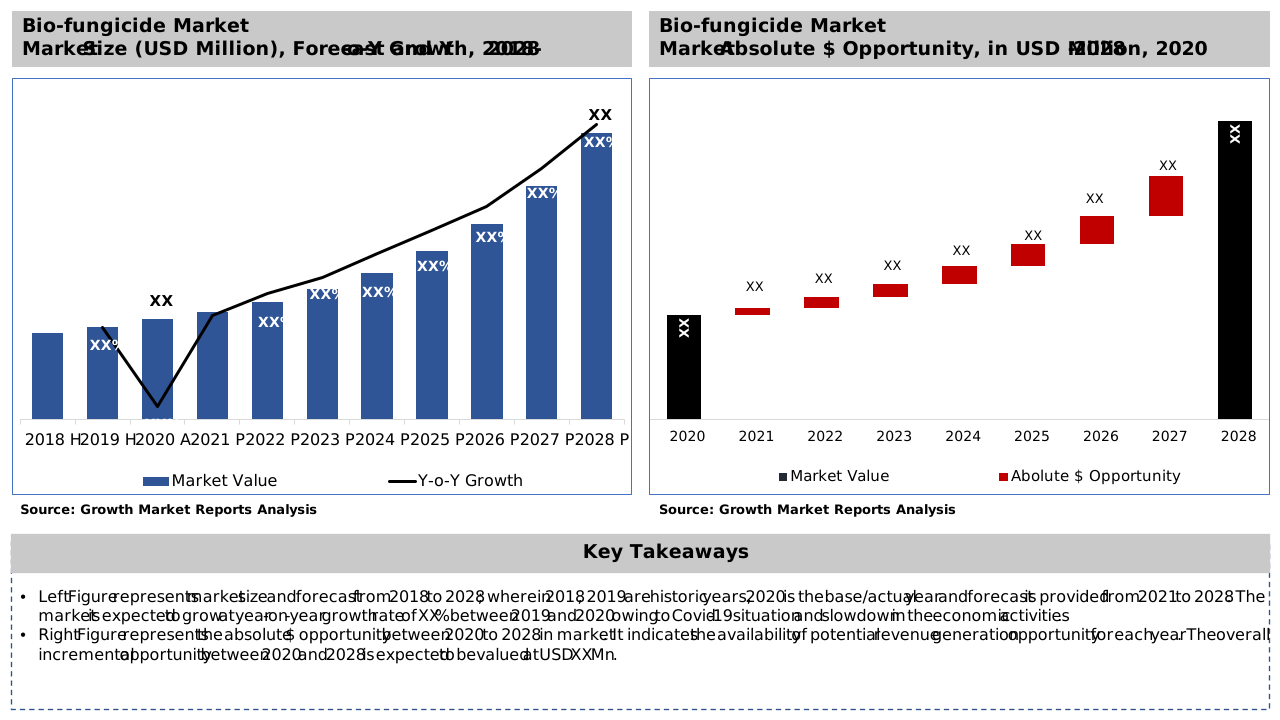
According to our latest research, the bio-fungicide market size reached USD 2.13 billion in 2024 on a global scale. The market is exhibiting robust momentum with a CAGR of 14.2% during the forecast period from 2025 to 2033. By 2033, the global bio-fungicide market is expected to attain a value of USD 6.08 billion. This growth trajectory is primarily fueled by increasing consumer demand for organic food, stringent regulations against synthetic agrochemicals, and the mounting awareness about sustainable agricultural practices. As per our latest research, the bio-fungicide market is poised for significant expansion, driven by its critical role in supporting environmentally friendly crop protection solutions.

A major growth factor for the bio-fungicide market is the escalating demand for organic and residue-free food products. Consumers worldwide are becoming increasingly health-conscious and are seeking food that is produced without the use of synthetic chemicals. This has compelled farmers and food producers to adopt bio-fungicides, which offer effective disease management while maintaining the organic integrity of crops. Additionally, the rise in organic farming acreage, especially in developed regions such as North America and Europe, is contributing significantly to market growth. The trend is further supported by government initiatives and subsidies that encourage the use of biological crop protection products over conventional fungicides.

Another key driver is the tightening of regulations on chemical fungicide usage. Regulatory bodies such as the EPA in the United States and the European Food Safety Authority (EFSA) have imposed strict limits on the use of chemical pesticides and fungicides due to their adverse effects on the environment and human health. This regulatory pressure has catalyzed the shift toward bio-fungicides, which are considered safer and more sustainable. Furthermore, bio-fungicides are gaining traction as they effectively manage resistance issues associated with chemical fungicides, offering a sustainable solution to fungal disease management in agriculture.

Technological advancements and increased research and development activities are also propelling the bio-fungicide market forward. Innovations in microbial and botanical formulations have improved the efficacy, stability, and shelf-life of bio-fungicides, making them more appealing to commercial farmers. The integration of biotechnology and precision agriculture has further enhanced the adoption rate of bio-fungicides, as these products can be tailored to target specific pathogens without affecting beneficial organisms. Moreover, the expansion of distribution networks and the entry of new players in emerging markets are amplifying the reach and accessibility of bio-fungicides, thereby supporting market growth.

From a regional perspective, Asia Pacific is emerging as a dynamic growth engine for the bio-fungicide market. The region's large agricultural base, coupled with increasing investments in sustainable farming practices, is driving demand for bio-fungicides. Countries such as India and China are witnessing rapid adoption, supported by government policies promoting organic farming. North America and Europe remain significant markets, with high consumer awareness and advanced regulatory frameworks encouraging the use of bio-fungicides. Meanwhile, Latin America and the Middle East & Africa are gradually embracing these products, spurred by growing export-oriented organic agriculture and rising environmental concerns.

Global Bio-fungicide Industry Outlook

Product Type Analysis

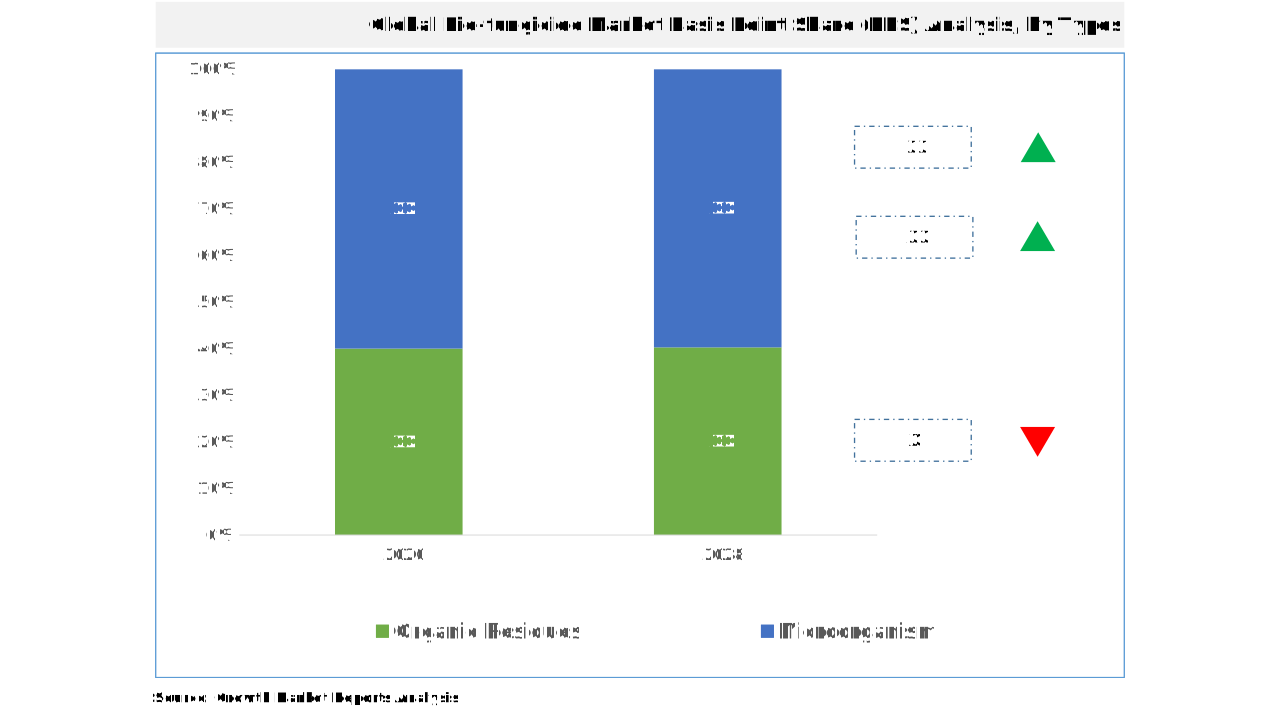
The bio-fungicide market is segmented by product type into microbial bio-fungicides, botanical bio-fungicides, and others. Among these, microbial bio-fungicides dominate the market, accounting for the largest share in 2024. These products are primarily based on beneficial microorganisms such as Bacillus, Trichoderma, and Pseudomonas species, which are highly effective in controlling a broad spectrum of fungal pathogens. The efficacy, specificity, and environmental safety of microbial bio-fungicides have positioned them as the preferred choice among farmers and agricultural professionals. Additionally, ongoing research and development in microbial fermentation and formulation technologies have further enhanced their adoption and effectiveness in various cropping systems.

Botanical bio-fungicides, which are derived from plant extracts and essential oils, represent the second-largest segment in the bio-fungicide market. These products have gained popularity due to their natural origin, low toxicity, and compatibility with organic certification standards. Botanical bio-fungicides are particularly favored in organic and specialty crop production, where chemical residues are strictly regulated. Innovation in extraction methods and the identification of novel bioactive compounds from plants are expanding the product portfolio within this segment. However, challenges related to standardization, consistency, and scalability continue to limit their widespread adoption compared to microbial alternatives.

The "Others" category includes a range of bio-fungicide products based on minerals, algae, and other naturally occurring substances. While these products occupy a smaller share of the market, they are gaining attention for their unique modes of action and potential for integrated pest management programs. The development of multi-component bio-fungicide formulations, which combine different active ingredients for enhanced efficacy, is an emerging trend in this segment. Such innovations enable broader spectrum disease control and help address resistance management challenges, making them attractive to both conventional and organic growers.

The competitive landscape within the product type segment is characterized by continuous innovation and strategic partnerships. Leading companies are investing heavily in research to develop next-generation bio-fungicides with improved stability, shelf-life, and field performance. Collaborations between academic institutions, research organizations, and commercial entities are accelerating the discovery and commercialization of novel microbial strains and plant-derived compounds. This dynamic environment is fostering the introduction of differentiated products that cater to the evolving needs of diverse agricultural systems worldwide.

Report Scope

Attributes Details
Report Title Bio-fungicide Market Research Report 2033
By Product Type Microbial Bio-fungicides, Botanical Bio-fungicides, Others
By Formulation Wettable Powder, Aqueous Solution, Granules, Others
By Crop Type Cereals & Grains, Fruits & Vegetables, Oilseeds & Pulses, Others
By Mode Of Application Foliar Spray, Soil Treatment, Seed Treatment, Others
By End-User Agriculture, Horticulture, Turf & Ornamentals, Others
Regions Covered North America, Europe, APAC, Latin America, MEA
Base Year 2024
Historic Data 2018-2023
Forecast Period 2025-2033
Number of Pages 298
Number of Tables & Figures 276
Customization Available Yes, the report can be customized as per your need.

Formulation Analysis

The formulation segment of the bio-fungicide market includes wettable powder, aqueous solution, granules, and others. Wettable powder formulations are widely used due to their ease of handling, long shelf-life, and compatibility with conventional application equipment. These formulations are particularly popular in large-scale farming operations, where uniform coverage and storage stability are critical requirements. Wettable powders are often preferred for seed treatment and soil application, as they can be easily mixed with other inputs and provide consistent disease control across a range of crops.

Aqueous solution formulations are gaining traction, especially in regions with advanced irrigation and spraying infrastructure. These liquid formulations offer the advantage of easy mixing and application, making them suitable for foliar sprays and drip irrigation systems. The increasing adoption of precision agriculture technologies is further driving the demand for aqueous solutions, as they enable targeted delivery of bio-fungicides with minimal wastage. Additionally, advancements in formulation science have led to the development of stable and concentrated liquid products that maintain the viability of microbial and botanical active ingredients.

Granular bio-fungicide formulations are primarily used for soil treatment and seed coating applications. These products are designed to provide prolonged protection against soil-borne pathogens and promote healthy root development. Granules are favored in horticulture and specialty crop production, where targeted delivery and sustained release of active ingredients are essential for effective disease management. The convenience of application and reduced risk of drift or off-target effects make granular formulations an attractive option for both smallholder and commercial farmers.

Other formulation types, including emulsifiable concentrates, dusts, and gels, cater to specific application needs and crop types. The choice of formulation is influenced by factors such as crop species, disease pressure, environmental conditions, and user preferences. Manufacturers are increasingly focusing on developing user-friendly and versatile formulations that enhance product efficacy and adoption. The formulation segment is witnessing continuous innovation, with a growing emphasis on compatibility with integrated pest management programs and sustainability goals.

Crop Type Analysis

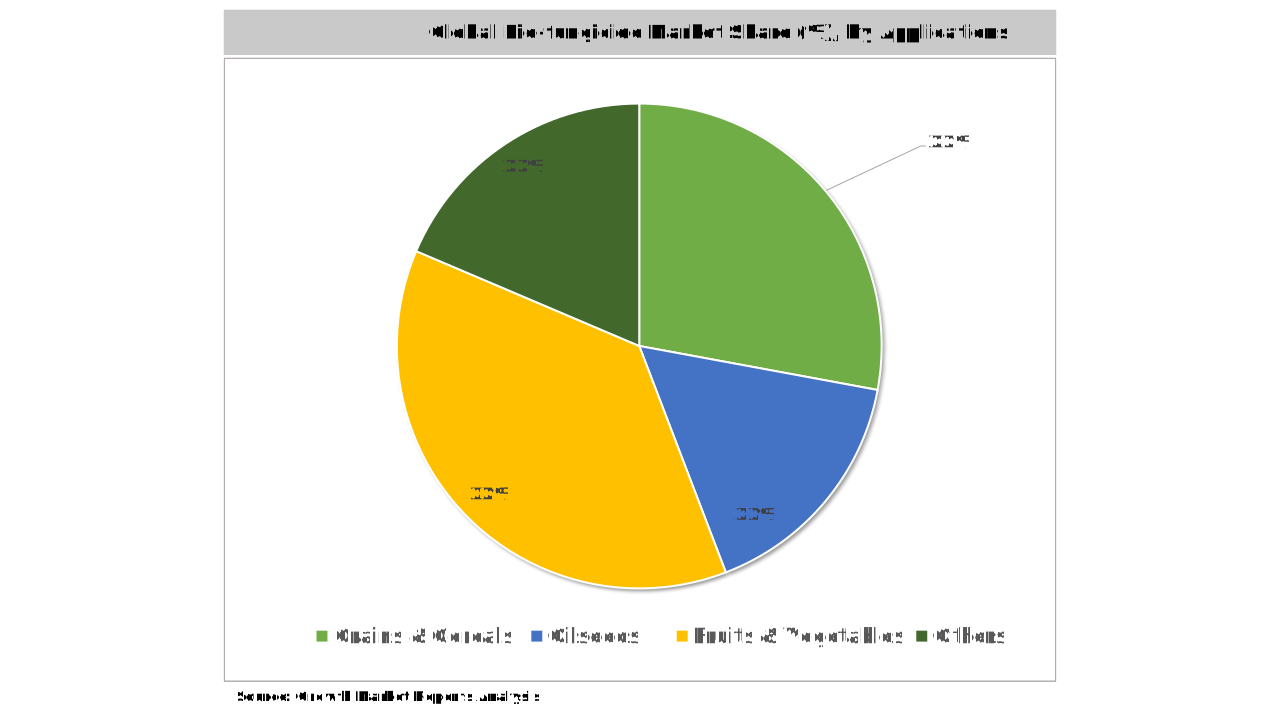
The crop type segment of the bio-fungicide market encompasses cereals and grains, fruits and vegetables, oilseeds and pulses, and others. Fruits and vegetables represent the largest application area for bio-fungicides, driven by the high value of these crops and their susceptibility to fungal diseases. The demand for residue-free and organically grown produce is particularly strong in this segment, prompting growers to adopt bio-fungicides as a key component of their disease management strategies. The perishable nature of fruits and vegetables further necessitates the use of safe and effective fungicides that do not leave harmful residues or affect post-harvest quality.

Cereals and grains are another significant segment, benefiting from the increasing adoption of sustainable agricultural practices in large-scale farming. Although traditionally reliant on chemical fungicides, the cereals and grains segment is witnessing a gradual shift toward biological solutions due to rising concerns about resistance, environmental impact, and regulatory compliance. Bio-fungicides are being integrated into crop protection programs for crops such as wheat, rice, and maize, offering an effective alternative for managing soil-borne and foliar diseases.

Oilseeds and pulses, including crops such as soybean, sunflower, and lentils, are also gaining importance as target crops for bio-fungicide applications. These crops are often grown in rotation with cereals and vegetables, creating opportunities for integrated disease management approaches that incorporate bio-fungicides. The ability of bio-fungicides to improve soil health and enhance crop resilience is particularly valued in this segment, where sustainable production practices are increasingly prioritized.

The "Others" category includes specialty crops, ornamentals, and turf, which present unique challenges and opportunities for bio-fungicide adoption. These crops often require tailored disease management solutions due to their diverse growth environments and pathogen profiles. The development of crop-specific bio-fungicide formulations and application protocols is a key focus area for manufacturers seeking to expand their market reach and address the needs of niche crop segments.

Mode of Application Analysis

Bio-fungicides can be applied using various methods, including foliar spray, soil treatment, seed treatment, and others. Foliar spray is the most common mode of application, accounting for the largest share in the market. This method involves applying bio-fungicides directly to the leaves and stems of plants, where they can effectively target airborne and surface pathogens. Foliar sprays are widely used in fruit and vegetable production, where rapid disease suppression and minimal residue are critical requirements. The ease of application and compatibility with existing spraying equipment further contribute to the popularity of this mode.

Soil treatment is another important application method, particularly for managing soil-borne fungal pathogens that affect root systems and early plant development. Bio-fungicides applied to the soil can establish beneficial microbial populations that suppress disease-causing organisms and promote plant health. This approach is especially valuable in horticulture, greenhouse production, and high-value crop systems, where soil health and disease management are closely linked.

Seed treatment involves coating seeds with bio-fungicide formulations before planting, providing early protection against seed-borne and soil-borne diseases. This method is gaining traction in large-scale row crop production, as it offers a cost-effective and targeted approach to disease management. Seed treatments can enhance germination, seedling vigor, and overall crop establishment, making them an attractive option for both conventional and organic growers.

Other application methods, such as drip irrigation, root dipping, and trunk injection, cater to specific crop and disease scenarios. The choice of application method depends on factors such as crop type, disease pressure, environmental conditions, and farm infrastructure. Manufacturers are investing in the development of versatile and user-friendly application technologies that maximize the efficacy of bio-fungicides and support their integration into diverse farming systems.

End-User Analysis

The end-user segment of the bio-fungicide market includes agriculture, horticulture, turf and ornamentals, and others. Agriculture is the largest end-user segment, accounting for the majority of bio-fungicide consumption globally. Large-scale commercial farming operations are increasingly adopting bio-fungicides to meet regulatory requirements, manage resistance, and address consumer demand for sustainable produce. The integration of bio-fungicides into integrated pest management (IPM) programs is a key trend in this segment, enabling growers to reduce reliance on chemical inputs and enhance overall farm sustainability.

Horticulture, which encompasses fruit, vegetable, and flower production, represents a significant and growing end-user segment for bio-fungicides. Horticultural crops are highly susceptible to fungal diseases, and the demand for residue-free and high-quality produce is driving the adoption of biological solutions. The use of bio-fungicides in greenhouse and protected cultivation systems is particularly notable, as these environments require precise and sustainable disease management strategies.

Turf and ornamentals, including golf courses, sports fields, and landscaping, are emerging as important end-users of bio-fungicides. The need for environmentally friendly and non-toxic disease management solutions in these settings is fueling demand for bio-fungicides. These products offer effective control of turf diseases without posing risks to human health, pets, or the surrounding ecosystem. The growing emphasis on sustainable landscaping and green urban spaces is further supporting the adoption of bio-fungicides in this segment.

Other end-users include nurseries, forestry, and specialty crop producers, who are seeking tailored disease management solutions that align with their unique production systems. The expansion of bio-fungicide use across diverse end-user segments reflects the versatility and broad applicability of these products in modern agriculture and allied industries.

Opportunities & Threats

The bio-fungicide market presents substantial opportunities for growth, particularly in emerging economies where sustainable agriculture is gaining traction. The increasing adoption of organic farming practices and the expansion of certified organic acreage are creating new markets for bio-fungicide products. Governments and international organizations are providing financial incentives, technical support, and capacity-building programs to promote the use of biological crop protection solutions. Additionally, the rising incidence of fungicide resistance in key crop pathogens is driving demand for alternative disease management strategies, positioning bio-fungicides as a critical component of integrated pest management programs. The development of novel bio-fungicide formulations, improved delivery systems, and crop-specific solutions is expected to unlock further market potential in the coming years.

Technological advancements in biotechnology, microbiology, and formulation science are opening new avenues for innovation in the bio-fungicide market. The discovery and commercialization of new microbial strains, plant-derived compounds, and synergistic formulations are enhancing the efficacy and reliability of bio-fungicides. Strategic collaborations between research institutions, universities, and industry players are accelerating the development and adoption of next-generation products. The integration of digital agriculture tools, such as precision application technologies and data-driven decision support systems, is further optimizing the use of bio-fungicides and maximizing their impact on crop health and productivity.

Despite these opportunities, the bio-fungicide market faces several restraining factors that could impede its growth. The relatively high cost of bio-fungicide products compared to conventional chemical fungicides remains a significant barrier, particularly for smallholder farmers in developing regions. Limited awareness, lack of technical knowledge, and inadequate extension services can hinder the adoption of bio-fungicides among end-users. Additionally, challenges related to product stability, shelf-life, and field performance under diverse environmental conditions must be addressed to ensure consistent and reliable disease control. Regulatory hurdles, including lengthy registration processes and varying standards across countries, can also slow down market expansion and limit the availability of innovative products.

Regional Outlook

North America is a dominant region in the global bio-fungicide market, accounting for approximately USD 730 million of the global market in 2024. The region's leadership is attributed to advanced agricultural practices, high consumer awareness, and a well-established regulatory framework that supports the use of biological crop protection products. The United States is the largest market within the region, driven by the rapid adoption of organic farming and integrated pest management strategies. Canada and Mexico are also witnessing steady growth, supported by government initiatives and increasing investments in sustainable agriculture.

Europe holds a significant share of the bio-fungicide market, with a market size of USD 620 million in 2024. The region is characterized by stringent regulations on chemical pesticide use, strong consumer demand for organic and residue-free food, and a robust research and development ecosystem. Countries such as Germany, France, Italy, and Spain are leading adopters of bio-fungicides, particularly in the fruits and vegetables segment. The European Union's Green Deal and Farm to Fork Strategy are expected to further boost the adoption of biological crop protection products, driving market growth at a CAGR of 13.8% through 2033.

Asia Pacific is emerging as the fastest-growing region in the bio-fungicide market, with a market value of USD 470 million in 2024. The region's large agricultural base, rising population, and increasing demand for safe and sustainable food are key drivers of market expansion. China and India are at the forefront of bio-fungicide adoption, supported by government policies promoting organic farming and sustainable crop protection. Southeast Asian countries are also witnessing growing interest in bio-fungicides, driven by export-oriented agriculture and rising environmental awareness. Latin America and the Middle East & Africa, with market sizes of USD 180 million and USD 130 million respectively, are gradually embracing bio-fungicides as part of their efforts to enhance agricultural productivity and sustainability.

Bio-fungicide Market Statistics

Competitor Outlook

The competitive landscape of the bio-fungicide market is characterized by intense rivalry among global and regional players, continuous innovation, and strategic collaborations. Leading companies are investing heavily in research and development to enhance product efficacy, stability, and field performance. The market is witnessing the entry of new players, particularly in emerging economies, who are leveraging local expertise and distribution networks to gain market share. Mergers, acquisitions, and partnerships are common strategies employed by key players to expand their product portfolios, access new markets, and strengthen their competitive position. The focus on sustainable agriculture and the growing demand for biological crop protection solutions are driving companies to differentiate themselves through innovation and customer-centric approaches.

Major players in the bio-fungicide market are also prioritizing regulatory compliance and product registration to ensure market access and build trust among end-users. Companies are collaborating with research institutions, universities, and government agencies to develop and commercialize novel bio-fungicide products. The emphasis on sustainable sourcing, traceability, and environmental stewardship is becoming increasingly important in shaping the competitive dynamics of the market. Furthermore, the adoption of digital tools and precision agriculture technologies is enabling companies to offer integrated solutions that enhance the value proposition of their bio-fungicide products.

Among the prominent companies operating in the bio-fungicide market are BASF SE, Bayer AG, Syngenta AG, UPL Limited, Marrone Bio Innovations, Certis USA, and Koppert Biological Systems. These companies have established strong research and development capabilities, extensive distribution networks, and a broad portfolio of bio-fungicide products catering to diverse crop and application needs. BASF SE and Bayer AG are leveraging their global presence and expertise in crop protection to drive innovation and market expansion. Syngenta AG and UPL Limited are focusing on developing integrated pest management solutions that combine chemical and biological products for enhanced efficacy and sustainability.

Marrone Bio Innovations and Certis USA are recognized for their specialization in biological crop protection solutions, with a strong emphasis on product innovation and customer support. Koppert Biological Systems is a leader in the development and commercialization of microbial bio-fungicides, with a focus on sustainable agriculture and environmental stewardship. Other notable players include BioWorks Inc., Agri Life, Biotech International, and Som Phytopharma, among others. These companies are actively engaged in expanding their product offerings, entering new markets, and forming strategic alliances to capitalize on the growing demand for bio-fungicides worldwide.

Key Players

  • Bayer AG
  • BASF SE
  • Syngenta AG
  • Marrone Bio Innovations
  • Certis USA LLC
  • Novozymes A/S
  • Nufarm Limited
  • UPL Limited
  • Koppert Biological Systems
  • Isagro S.p.A.
  • Valent BioSciences LLC
  • Seipasa S.A.
  • Bioworks Inc.
  • Andermatt Biocontrol AG
  • T. Stanes & Company Limited
  • Som Phytopharma (India) Limited
  • Vestaron Corporation
  • Agrauxine by Lesaffre
  • Futureco Bioscience S.A.
  • BioSafe Systems LLC
Bio-fungicide Market Overview

Segments

The Bio-fungicide market has been segmented on the basis of

Product Type

  • Microbial Bio-fungicides
  • Botanical Bio-fungicides
  • Others

Formulation

  • Wettable Powder
  • Aqueous Solution
  • Granules
  • Others

Crop Type

  • Cereals & Grains
  • Fruits & Vegetables
  • Oilseeds & Pulses
  • Others

Mode Of Application

  • Foliar Spray
  • Soil Treatment
  • Seed Treatment
  • Others

End-User

  • Agriculture
  • Horticulture
  • Turf & Ornamentals
  • Others

Competitive Landscape

Key players competing in the bio-fungicide market include IsAgro USA; Syngenta AG; Lallemand; Koppert Biological Systems; Certis USA LLC; Bioworks Inc.; The Stockton Group; Marrone Bioinnovations; International Pannacea Ltd; Seipasa; De Dargosse Ltd.; Biotech International Ltd.; FMC Corp.; Casmson Bio Technologies Ltd.; Monsanto Company; Bayer Cropscience AG; DOW Chemical Company; and BASF SE

Some of these players are using several market strategies such as acquisitions, merger, collaborations, partnerships, capacity expansion, and product launches to enhance their market shares and to generate revenue and rise their production line of the business in the coming years.
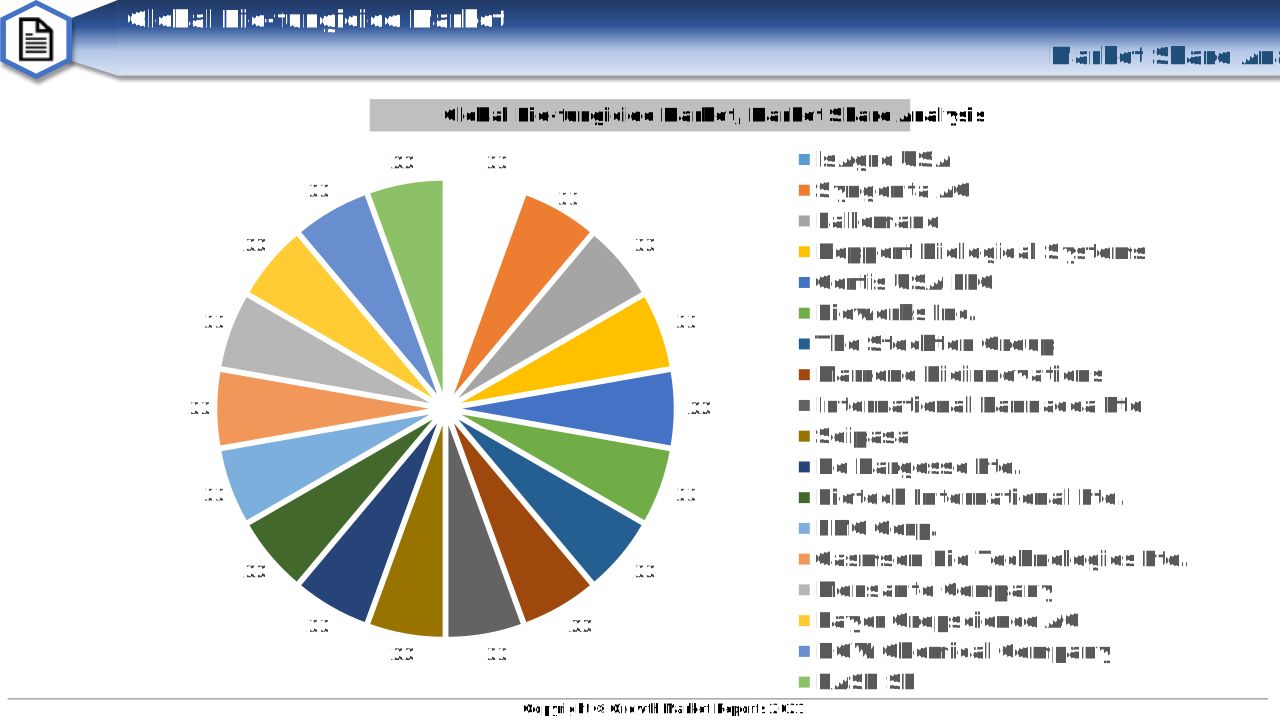

Global Bio Fungicide Market Key Players

Frequently Asked Questions

Key players include BASF SE, Bayer AG, Syngenta AG, UPL Limited, Marrone Bio Innovations, Certis USA, Koppert Biological Systems, Novozymes A/S, Nufarm Limited, and others.

Challenges include higher costs compared to chemical fungicides, limited awareness and technical knowledge among farmers, product stability and shelf-life issues, and regulatory hurdles.

Major end-users include the agriculture sector, horticulture, turf & ornamentals, nurseries, and specialty crop producers.

Bio-fungicides can be applied via foliar spray, soil treatment, seed treatment, and other methods such as drip irrigation and trunk injection.

Fruits and vegetables are the largest application segment, followed by cereals & grains, oilseeds & pulses, and specialty crops.

The main types are microbial bio-fungicides (e.g., Bacillus, Trichoderma, Pseudomonas), botanical bio-fungicides (plant extracts and essential oils), and others such as mineral- and algae-based products.

North America and Europe are significant markets due to advanced agricultural practices and strict regulations, while Asia Pacific is the fastest-growing region driven by large-scale agriculture and supportive government policies.

Key growth drivers include increasing demand for organic food, strict regulations against synthetic agrochemicals, rising awareness of sustainable agriculture, and technological advancements in bio-fungicide formulations.

The bio-fungicide market is expected to grow at a CAGR of 14.2% from 2025 to 2033.

As of 2024, the global bio-fungicide market size reached USD 2.13 billion.

Table Of Content

Chapter 1 Executive Summary
Chapter 2 Assumptions and Acronyms Used
Chapter 3 Research Methodology
Chapter 4 Bio-fungicide Market Overview
   4.1 Introduction
      4.1.1 Market Taxonomy
      4.1.2 Market Definition
      4.1.3 Macro-Economic Factors Impacting the Market Growth
   4.2 Bio-fungicide Market Dynamics
      4.2.1 Market Drivers
      4.2.2 Market Restraints
      4.2.3 Market Opportunity
   4.3 Bio-fungicide Market - Supply Chain Analysis
      4.3.1 List of Key Suppliers
      4.3.2 List of Key Distributors
      4.3.3 List of Key Consumers
   4.4 Key Forces Shaping the Bio-fungicide Market
      4.4.1 Bargaining Power of Suppliers
      4.4.2 Bargaining Power of Buyers
      4.4.3 Threat of Substitution
      4.4.4 Threat of New Entrants
      4.4.5 Competitive Rivalry
   4.5 Global Bio-fungicide Market Size & Forecast, 2023-2032
      4.5.1 Bio-fungicide Market Size and Y-o-Y Growth
      4.5.2 Bio-fungicide Market Absolute $ Opportunity

Chapter 5 Global Bio-fungicide Market Analysis and Forecast By Product Type
   5.1 Introduction
      5.1.1 Key Market Trends & Growth Opportunities By Product Type
      5.1.2 Basis Point Share (BPS) Analysis By Product Type
      5.1.3 Absolute $ Opportunity Assessment By Product Type
   5.2 Bio-fungicide Market Size Forecast By Product Type
      5.2.1 Microbial Bio-fungicides
      5.2.2 Botanical Bio-fungicides
      5.2.3 Others
   5.3 Market Attractiveness Analysis By Product Type

Chapter 6 Global Bio-fungicide Market Analysis and Forecast By Formulation
   6.1 Introduction
      6.1.1 Key Market Trends & Growth Opportunities By Formulation
      6.1.2 Basis Point Share (BPS) Analysis By Formulation
      6.1.3 Absolute $ Opportunity Assessment By Formulation
   6.2 Bio-fungicide Market Size Forecast By Formulation
      6.2.1 Wettable Powder
      6.2.2 Aqueous Solution
      6.2.3 Granules
      6.2.4 Others
   6.3 Market Attractiveness Analysis By Formulation

Chapter 7 Global Bio-fungicide Market Analysis and Forecast By Crop Type
   7.1 Introduction
      7.1.1 Key Market Trends & Growth Opportunities By Crop Type
      7.1.2 Basis Point Share (BPS) Analysis By Crop Type
      7.1.3 Absolute $ Opportunity Assessment By Crop Type
   7.2 Bio-fungicide Market Size Forecast By Crop Type
      7.2.1 Cereals & Grains
      7.2.2 Fruits & Vegetables
      7.2.3 Oilseeds & Pulses
      7.2.4 Others
   7.3 Market Attractiveness Analysis By Crop Type

Chapter 8 Global Bio-fungicide Market Analysis and Forecast By Mode Of Application
   8.1 Introduction
      8.1.1 Key Market Trends & Growth Opportunities By Mode Of Application
      8.1.2 Basis Point Share (BPS) Analysis By Mode Of Application
      8.1.3 Absolute $ Opportunity Assessment By Mode Of Application
   8.2 Bio-fungicide Market Size Forecast By Mode Of Application
      8.2.1 Foliar Spray
      8.2.2 Soil Treatment
      8.2.3 Seed Treatment
      8.2.4 Others
   8.3 Market Attractiveness Analysis By Mode Of Application

Chapter 9 Global Bio-fungicide Market Analysis and Forecast By End-User
   9.1 Introduction
      9.1.1 Key Market Trends & Growth Opportunities By End-User
      9.1.2 Basis Point Share (BPS) Analysis By End-User
      9.1.3 Absolute $ Opportunity Assessment By End-User
   9.2 Bio-fungicide Market Size Forecast By End-User
      9.2.1 Agriculture
      9.2.2 Horticulture
      9.2.3 Turf & Ornamentals
      9.2.4 Others
   9.3 Market Attractiveness Analysis By End-User

Chapter 10 Global Bio-fungicide Market Analysis and Forecast by Region
   10.1 Introduction
      10.1.1 Key Market Trends & Growth Opportunities By Region
      10.1.2 Basis Point Share (BPS) Analysis By Region
      10.1.3 Absolute $ Opportunity Assessment By Region
   10.2 Bio-fungicide Market Size Forecast By Region
      10.2.1 North America
      10.2.2 Europe
      10.2.3 Asia Pacific
      10.2.4 Latin America
      10.2.5 Middle East & Africa (MEA)
   10.3 Market Attractiveness Analysis By Region

Chapter 11 Coronavirus Disease (COVID-19) Impact 
   11.1 Introduction 
   11.2 Current & Future Impact Analysis 
   11.3 Economic Impact Analysis 
   11.4 Government Policies 
   11.5 Investment Scenario

Chapter 12 North America Bio-fungicide Analysis and Forecast
   12.1 Introduction
   12.2 North America Bio-fungicide Market Size Forecast by Country
      12.2.1 U.S.
      12.2.2 Canada
   12.3 Basis Point Share (BPS) Analysis by Country
   12.4 Absolute $ Opportunity Assessment by Country
   12.5 Market Attractiveness Analysis by Country
   12.6 North America Bio-fungicide Market Size Forecast By Product Type
      12.6.1 Microbial Bio-fungicides
      12.6.2 Botanical Bio-fungicides
      12.6.3 Others
   12.7 Basis Point Share (BPS) Analysis By Product Type 
   12.8 Absolute $ Opportunity Assessment By Product Type 
   12.9 Market Attractiveness Analysis By Product Type
   12.10 North America Bio-fungicide Market Size Forecast By Formulation
      12.10.1 Wettable Powder
      12.10.2 Aqueous Solution
      12.10.3 Granules
      12.10.4 Others
   12.11 Basis Point Share (BPS) Analysis By Formulation 
   12.12 Absolute $ Opportunity Assessment By Formulation 
   12.13 Market Attractiveness Analysis By Formulation
   12.14 North America Bio-fungicide Market Size Forecast By Crop Type
      12.14.1 Cereals & Grains
      12.14.2 Fruits & Vegetables
      12.14.3 Oilseeds & Pulses
      12.14.4 Others
   12.15 Basis Point Share (BPS) Analysis By Crop Type 
   12.16 Absolute $ Opportunity Assessment By Crop Type 
   12.17 Market Attractiveness Analysis By Crop Type
   12.18 North America Bio-fungicide Market Size Forecast By Mode Of Application
      12.18.1 Foliar Spray
      12.18.2 Soil Treatment
      12.18.3 Seed Treatment
      12.18.4 Others
   12.19 Basis Point Share (BPS) Analysis By Mode Of Application 
   12.20 Absolute $ Opportunity Assessment By Mode Of Application 
   12.21 Market Attractiveness Analysis By Mode Of Application
   12.22 North America Bio-fungicide Market Size Forecast By End-User
      12.22.1 Agriculture
      12.22.2 Horticulture
      12.22.3 Turf & Ornamentals
      12.22.4 Others
   12.23 Basis Point Share (BPS) Analysis By End-User 
   12.24 Absolute $ Opportunity Assessment By End-User 
   12.25 Market Attractiveness Analysis By End-User

Chapter 13 Europe Bio-fungicide Analysis and Forecast
   13.1 Introduction
   13.2 Europe Bio-fungicide Market Size Forecast by Country
      13.2.1 Germany
      13.2.2 France
      13.2.3 Italy
      13.2.4 U.K.
      13.2.5 Spain
      13.2.6 Russia
      13.2.7 Rest of Europe
   13.3 Basis Point Share (BPS) Analysis by Country
   13.4 Absolute $ Opportunity Assessment by Country
   13.5 Market Attractiveness Analysis by Country
   13.6 Europe Bio-fungicide Market Size Forecast By Product Type
      13.6.1 Microbial Bio-fungicides
      13.6.2 Botanical Bio-fungicides
      13.6.3 Others
   13.7 Basis Point Share (BPS) Analysis By Product Type 
   13.8 Absolute $ Opportunity Assessment By Product Type 
   13.9 Market Attractiveness Analysis By Product Type
   13.10 Europe Bio-fungicide Market Size Forecast By Formulation
      13.10.1 Wettable Powder
      13.10.2 Aqueous Solution
      13.10.3 Granules
      13.10.4 Others
   13.11 Basis Point Share (BPS) Analysis By Formulation 
   13.12 Absolute $ Opportunity Assessment By Formulation 
   13.13 Market Attractiveness Analysis By Formulation
   13.14 Europe Bio-fungicide Market Size Forecast By Crop Type
      13.14.1 Cereals & Grains
      13.14.2 Fruits & Vegetables
      13.14.3 Oilseeds & Pulses
      13.14.4 Others
   13.15 Basis Point Share (BPS) Analysis By Crop Type 
   13.16 Absolute $ Opportunity Assessment By Crop Type 
   13.17 Market Attractiveness Analysis By Crop Type
   13.18 Europe Bio-fungicide Market Size Forecast By Mode Of Application
      13.18.1 Foliar Spray
      13.18.2 Soil Treatment
      13.18.3 Seed Treatment
      13.18.4 Others
   13.19 Basis Point Share (BPS) Analysis By Mode Of Application 
   13.20 Absolute $ Opportunity Assessment By Mode Of Application 
   13.21 Market Attractiveness Analysis By Mode Of Application
   13.22 Europe Bio-fungicide Market Size Forecast By End-User
      13.22.1 Agriculture
      13.22.2 Horticulture
      13.22.3 Turf & Ornamentals
      13.22.4 Others
   13.23 Basis Point Share (BPS) Analysis By End-User 
   13.24 Absolute $ Opportunity Assessment By End-User 
   13.25 Market Attractiveness Analysis By End-User

Chapter 14 Asia Pacific Bio-fungicide Analysis and Forecast
   14.1 Introduction
   14.2 Asia Pacific Bio-fungicide Market Size Forecast by Country
      14.2.1 China
      14.2.2 Japan
      14.2.3 South Korea
      14.2.4 India
      14.2.5 Australia
      14.2.6 South East Asia (SEA)
      14.2.7 Rest of Asia Pacific (APAC)
   14.3 Basis Point Share (BPS) Analysis by Country
   14.4 Absolute $ Opportunity Assessment by Country
   14.5 Market Attractiveness Analysis by Country
   14.6 Asia Pacific Bio-fungicide Market Size Forecast By Product Type
      14.6.1 Microbial Bio-fungicides
      14.6.2 Botanical Bio-fungicides
      14.6.3 Others
   14.7 Basis Point Share (BPS) Analysis By Product Type 
   14.8 Absolute $ Opportunity Assessment By Product Type 
   14.9 Market Attractiveness Analysis By Product Type
   14.10 Asia Pacific Bio-fungicide Market Size Forecast By Formulation
      14.10.1 Wettable Powder
      14.10.2 Aqueous Solution
      14.10.3 Granules
      14.10.4 Others
   14.11 Basis Point Share (BPS) Analysis By Formulation 
   14.12 Absolute $ Opportunity Assessment By Formulation 
   14.13 Market Attractiveness Analysis By Formulation
   14.14 Asia Pacific Bio-fungicide Market Size Forecast By Crop Type
      14.14.1 Cereals & Grains
      14.14.2 Fruits & Vegetables
      14.14.3 Oilseeds & Pulses
      14.14.4 Others
   14.15 Basis Point Share (BPS) Analysis By Crop Type 
   14.16 Absolute $ Opportunity Assessment By Crop Type 
   14.17 Market Attractiveness Analysis By Crop Type
   14.18 Asia Pacific Bio-fungicide Market Size Forecast By Mode Of Application
      14.18.1 Foliar Spray
      14.18.2 Soil Treatment
      14.18.3 Seed Treatment
      14.18.4 Others
   14.19 Basis Point Share (BPS) Analysis By Mode Of Application 
   14.20 Absolute $ Opportunity Assessment By Mode Of Application 
   14.21 Market Attractiveness Analysis By Mode Of Application
   14.22 Asia Pacific Bio-fungicide Market Size Forecast By End-User
      14.22.1 Agriculture
      14.22.2 Horticulture
      14.22.3 Turf & Ornamentals
      14.22.4 Others
   14.23 Basis Point Share (BPS) Analysis By End-User 
   14.24 Absolute $ Opportunity Assessment By End-User 
   14.25 Market Attractiveness Analysis By End-User

Chapter 15 Latin America Bio-fungicide Analysis and Forecast
   15.1 Introduction
   15.2 Latin America Bio-fungicide Market Size Forecast by Country
      15.2.1 Brazil
      15.2.2 Mexico
      15.2.3 Rest of Latin America (LATAM)
   15.3 Basis Point Share (BPS) Analysis by Country
   15.4 Absolute $ Opportunity Assessment by Country
   15.5 Market Attractiveness Analysis by Country
   15.6 Latin America Bio-fungicide Market Size Forecast By Product Type
      15.6.1 Microbial Bio-fungicides
      15.6.2 Botanical Bio-fungicides
      15.6.3 Others
   15.7 Basis Point Share (BPS) Analysis By Product Type 
   15.8 Absolute $ Opportunity Assessment By Product Type 
   15.9 Market Attractiveness Analysis By Product Type
   15.10 Latin America Bio-fungicide Market Size Forecast By Formulation
      15.10.1 Wettable Powder
      15.10.2 Aqueous Solution
      15.10.3 Granules
      15.10.4 Others
   15.11 Basis Point Share (BPS) Analysis By Formulation 
   15.12 Absolute $ Opportunity Assessment By Formulation 
   15.13 Market Attractiveness Analysis By Formulation
   15.14 Latin America Bio-fungicide Market Size Forecast By Crop Type
      15.14.1 Cereals & Grains
      15.14.2 Fruits & Vegetables
      15.14.3 Oilseeds & Pulses
      15.14.4 Others
   15.15 Basis Point Share (BPS) Analysis By Crop Type 
   15.16 Absolute $ Opportunity Assessment By Crop Type 
   15.17 Market Attractiveness Analysis By Crop Type
   15.18 Latin America Bio-fungicide Market Size Forecast By Mode Of Application
      15.18.1 Foliar Spray
      15.18.2 Soil Treatment
      15.18.3 Seed Treatment
      15.18.4 Others
   15.19 Basis Point Share (BPS) Analysis By Mode Of Application 
   15.20 Absolute $ Opportunity Assessment By Mode Of Application 
   15.21 Market Attractiveness Analysis By Mode Of Application
   15.22 Latin America Bio-fungicide Market Size Forecast By End-User
      15.22.1 Agriculture
      15.22.2 Horticulture
      15.22.3 Turf & Ornamentals
      15.22.4 Others
   15.23 Basis Point Share (BPS) Analysis By End-User 
   15.24 Absolute $ Opportunity Assessment By End-User 
   15.25 Market Attractiveness Analysis By End-User

Chapter 16 Middle East & Africa (MEA) Bio-fungicide Analysis and Forecast
   16.1 Introduction
   16.2 Middle East & Africa (MEA) Bio-fungicide Market Size Forecast by Country
      16.2.1 Saudi Arabia
      16.2.2 South Africa
      16.2.3 UAE
      16.2.4 Rest of Middle East & Africa (MEA)
   16.3 Basis Point Share (BPS) Analysis by Country
   16.4 Absolute $ Opportunity Assessment by Country
   16.5 Market Attractiveness Analysis by Country
   16.6 Middle East & Africa (MEA) Bio-fungicide Market Size Forecast By Product Type
      16.6.1 Microbial Bio-fungicides
      16.6.2 Botanical Bio-fungicides
      16.6.3 Others
   16.7 Basis Point Share (BPS) Analysis By Product Type 
   16.8 Absolute $ Opportunity Assessment By Product Type 
   16.9 Market Attractiveness Analysis By Product Type
   16.10 Middle East & Africa (MEA) Bio-fungicide Market Size Forecast By Formulation
      16.10.1 Wettable Powder
      16.10.2 Aqueous Solution
      16.10.3 Granules
      16.10.4 Others
   16.11 Basis Point Share (BPS) Analysis By Formulation 
   16.12 Absolute $ Opportunity Assessment By Formulation 
   16.13 Market Attractiveness Analysis By Formulation
   16.14 Middle East & Africa (MEA) Bio-fungicide Market Size Forecast By Crop Type
      16.14.1 Cereals & Grains
      16.14.2 Fruits & Vegetables
      16.14.3 Oilseeds & Pulses
      16.14.4 Others
   16.15 Basis Point Share (BPS) Analysis By Crop Type 
   16.16 Absolute $ Opportunity Assessment By Crop Type 
   16.17 Market Attractiveness Analysis By Crop Type
   16.18 Middle East & Africa (MEA) Bio-fungicide Market Size Forecast By Mode Of Application
      16.18.1 Foliar Spray
      16.18.2 Soil Treatment
      16.18.3 Seed Treatment
      16.18.4 Others
   16.19 Basis Point Share (BPS) Analysis By Mode Of Application 
   16.20 Absolute $ Opportunity Assessment By Mode Of Application 
   16.21 Market Attractiveness Analysis By Mode Of Application
   16.22 Middle East & Africa (MEA) Bio-fungicide Market Size Forecast By End-User
      16.22.1 Agriculture
      16.22.2 Horticulture
      16.22.3 Turf & Ornamentals
      16.22.4 Others
   16.23 Basis Point Share (BPS) Analysis By End-User 
   16.24 Absolute $ Opportunity Assessment By End-User 
   16.25 Market Attractiveness Analysis By End-User

Chapter 17 Competition Landscape 
   17.1 Bio-fungicide Market: Competitive Dashboard
   17.2 Global Bio-fungicide Market: Market Share Analysis, 2023
   17.3 Company Profiles (Details – Overview, Financials, Developments, Strategy) 
      17.3.1 Bayer AG
BASF SE
Syngenta AG
Marrone Bio Innovations
Certis USA LLC
Novozymes A/S
Nufarm Limited
UPL Limited
Koppert Biological Systems
Isagro S.p.A.
Valent BioSciences LLC
Seipasa S.A.
Bioworks Inc.
Andermatt Biocontrol AG
T. Stanes & Company Limited
Som Phytopharma (India) Limited
Vestaron Corporation
Agrauxine by Lesaffre
Futureco Bioscience S.A.
BioSafe Systems LLC

Methodology

Our Clients

Nestle SA
Deloitte
General Mills
Dassault Aviation
sinopec
Siemens Healthcare
Honda Motor Co. Ltd.
FedEx Logistics