Beta-glucan Market Report 2025-2034

Beta-glucan Market Report 2025-2034

Segments - by Source (Cereal, Mushroom, Yeast, Seaweed, Others), by Form (Soluble, Insoluble), by Application (Food & Beverages, Pharmaceuticals, Dietary Supplements, Personal Care, Animal Feed, Others), by Function (Immune Health, Heart Health, Digestive Health, Others)

https://growthmarketreports.com/Anuradha
Author : Anuradha B. More
https://growthmarketreports.com/Vaibhav
Fact-checked by : Vaibhav Chandola
https://growthmarketreports.com/Shruti
Editor : Shruti Bhat

Last Updated : Jun, 2026 | Report ID :FB-2094 | 4.5 Rating | 24 Reviews | 300 Pages | Format : Docx PDF

Report Description

This report is updated with the latest market data and insights as of June 2026. Base year: 2025  |  Forecast period: 2026-2034


Beta-glucan Market Outlook

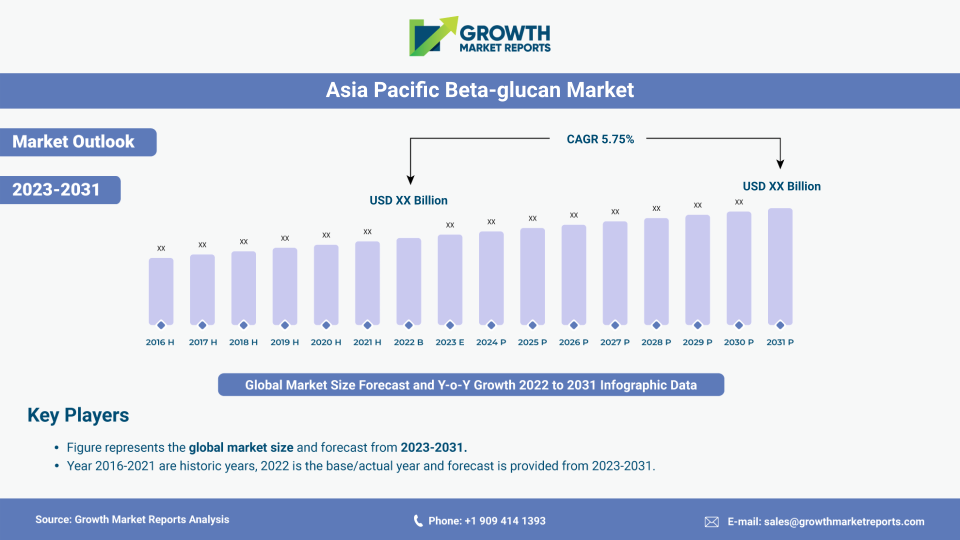
According to our latest research, the global beta-glucan market size reached USD 579 million in 2025, and is expected to grow at a robust CAGR of 7.2% from 2026 to 2034. By the end of 2034, the market is forecasted to attain a value of USD 1,083 million. This significant growth is primarily driven by increasing consumer awareness of health and wellness, the rising prevalence of lifestyle-related diseases, and the expanding application of beta-glucan across food and beverages, pharmaceuticals, dietary supplements, and personal care industries.

Global Beta-glucan Market Size Forecast 2025-2034, USD Million

One of the central growth factors propelling the beta-glucan market is the heightened demand for functional foods and nutraceuticals. As consumers become more health-conscious and seek foods that deliver benefits beyond basic nutrition, beta-glucan, with its proven immune-boosting and cholesterol-lowering properties, has seen a surge in popularity. The global rise in chronic diseases such as cardiovascular ailments and type 2 diabetes has accentuated the need for dietary interventions that can meaningfully mitigate these risks. Beta-glucan derived from oats and barley is increasingly being incorporated into cereals, baked goods, and functional beverages, making it a staple ingredient in the health and wellness segment. The trend toward preventive healthcare and self-care is expected to sustain momentum for beta-glucan adoption, particularly in developed markets where consumers willingly pay a premium for functional ingredients.

Another significant driver is the growing body of scientific evidence supporting beta-glucan's efficacy across various health applications. Clinical studies have demonstrated that beta-glucan can enhance immune response, lower LDL cholesterol, and improve digestive health. This has led to a surge in product launches by food and pharmaceutical companies seeking to capitalize on these benefits. Regulatory approvals and positive health claims from authorities such as the US Food and Drug Administration (FDA) and the European Food Safety Authority (EFSA) have bolstered consumer confidence and encouraged manufacturers to integrate beta-glucan into their product lines. Innovation in extraction and processing technologies has also made it possible to produce high-purity beta-glucan at scale, reducing costs and improving accessibility for both manufacturers and consumers.

Sustainability and clean label trends are playing a pivotal role in shaping the beta-glucan market in 2025. Consumers are increasingly scrutinizing ingredient lists and favoring products that are natural, minimally processed, and environmentally responsible. Beta-glucan, being a natural polysaccharide sourced from cereals, mushrooms, yeast, and seaweed, fits well within this paradigm. The rising popularity of plant-based diets and the shift away from synthetic additives further enhance the appeal of beta-glucan as a clean label ingredient. Companies are investing in sustainable sourcing and production practices, which not only aligns with consumer values but also supports long-term market growth by ensuring a reliable supply of high-quality raw materials.

Beta-Glucan Oat Concentrates have emerged as a significant innovation within the beta-glucan market, particularly in the context of functional foods and nutraceuticals. These concentrates are derived from oats and offer a concentrated form of beta-glucan that enhances the nutritional profile of a wide variety of products. The use of oat-derived beta-glucan concentrates allows manufacturers to incorporate higher levels of the active compound into their formulations, thereby amplifying cholesterol-lowering and immune-boosting properties that consumers seek. This innovation aligns with growing demand for health-enhancing ingredients and supports the broader trend toward preventive healthcare. As the functional foods market continues to expand through the forecast period, oat concentrate formats are likely to play a pivotal role in product development and brand differentiation.

From a regional perspective, North America and Europe currently dominate the beta-glucan market, accounting for a combined share of approximately 68% of global revenue in 2025. These regions benefit from high consumer awareness, advanced healthcare infrastructure, and a strong presence of key market players. However, the Asia Pacific region is expected to exhibit the fastest growth over the forecast period, with a projected CAGR exceeding 8.5% from 2026 to 2034. This rapid expansion is attributed to rising disposable incomes, increasing urbanization, and a growing focus on preventive healthcare in emerging economies such as China, India, and South Korea. The diverse dietary habits and the growing adoption of health-focused food trends in Asia Pacific further create lucrative opportunities for beta-glucan manufacturers and suppliers.

Source Analysis

The source segment of the beta-glucan market is broadly categorized into cereal, mushroom, yeast, seaweed, and others. Cereal-derived beta-glucan, particularly from oats and barley, holds the largest share within this segment at approximately 42% in 2025, due to its well-documented health benefits and widespread use in functional foods. Oat beta-glucan is especially valued for its cholesterol-lowering properties and is commonly incorporated into breakfast cereals, granola bars, and beverages. The ease of extraction and the established supply chain for cereal-based beta-glucan have cemented its leading position. Ongoing research continues to highlight the efficacy of barley-sourced beta-glucan, driving its growing adoption in both food and pharmaceutical applications alongside oat-derived varieties.

Beta-glucan Market Share by Source 2025

Mushroom-derived beta-glucan is gaining significant traction, particularly in the nutraceutical and pharmaceutical sectors. Mushrooms such as shiitake, maitake, and reishi are renowned for their immune-modulating properties, making their beta-glucan extracts highly sought after for dietary supplements and therapeutic applications. The rising popularity of traditional medicine and growing consumer preference for natural remedies have fueled demand for mushroom-based beta-glucan products. Companies are investing in innovative extraction techniques to maximize yield and purity, thereby enhancing the commercial viability of mushroom beta-glucan. As consumer awareness of the unique health benefits associated with medicinal mushrooms increases, this segment is expected to witness substantial growth through 2034.

Yeast-derived beta-glucan is another significant contributor to the market, particularly in the context of immune health and animal feed applications. Beta-glucan extracted from baker's yeast (Saccharomyces cerevisiae) is widely recognized for its ability to stimulate the immune system and improve gut health. It is commonly used in dietary supplements, functional foods, and animal nutrition products. Robust scientific backing and regulatory approvals for yeast beta-glucan have facilitated its integration into a wide range of formulations. Moreover, yeast is a readily available and cost-effective source, supporting large-scale production and consistent supply to meet growing market demand in 2025 and beyond.

Algae-Derived Beta-Glucans for Aquaculture represent a novel and promising application of beta-glucan technology. As the aquaculture industry seeks sustainable and effective solutions to enhance fish health and productivity, algae-derived beta-glucans offer a natural alternative to synthetic additives. These beta-glucans, extracted from marine algae, have been shown to improve immune function in aquatic species, leading to better disease resistance and overall health. The use of algae-sourced beta-glucans in aquaculture not only supports the industry's shift toward more sustainable practices but also aligns with consumer preferences for naturally derived ingredients. As research continues to validate their benefits, algae-derived beta-glucans are poised to become a key component in aquaculture nutrition, driving innovation and growth in this sector through the forecast period.

Seaweed-derived beta-glucan, while representing a smaller share of approximately 7% in 2025, is emerging as a promising source due to its unique structural properties and potential health benefits. Seaweed beta-glucan is being explored for its antioxidant, anti-inflammatory, and prebiotic effects, making it a valuable ingredient for specialized health products. The sustainability of seaweed harvesting and the increasing interest in marine-based functional ingredients are likely to drive future growth in this segment. Other sources, including bacteria and certain plants, are also being researched for their potential to yield high-quality beta-glucan, reflecting the market's ongoing innovation and diversification efforts heading into 2026 and beyond.

Report Scope

Attributes Details
Report Title Beta-glucan Market Research Report 2034
By Source Cereal, Mushroom, Yeast, Seaweed, Others
By Form Soluble, Insoluble
By Application Food & Beverages, Pharmaceuticals, Dietary Supplements, Personal Care, Animal Feed, Others
By Function Immune Health, Heart Health, Digestive Health, Others
Regions Covered North America, Europe, APAC, Latin America, MEA
Base Year 2025
Historic Data 2019-2024
Forecast Period 2026-2034
Number of Pages 300
Number of Tables & Figures 327
Customization Available Yes, the report can be customized as per your need.

Form Analysis

The beta-glucan market is segmented by form into soluble and insoluble variants, each offering distinct functional and health benefits. Soluble beta-glucan dominates the market, primarily due to its superior bioavailability and versatility in food and beverage applications. Soluble beta-glucan dissolves easily in water and forms a viscous solution, which is instrumental in lowering blood cholesterol and regulating blood sugar levels. This form is extensively used in functional foods, beverages, and dietary supplements, where ease of incorporation and consumer acceptability are critical factors. The growing awareness of health benefits associated with soluble beta-glucan, particularly in relation to cardiovascular and metabolic health, continues to drive its dominant market share as of 2025.

Insoluble beta-glucan, while less prevalent than its soluble counterpart, plays a vital role in digestive health. This form does not dissolve in water but adds bulk to the stool, promoting regular bowel movements and supporting overall gut health. Insoluble beta-glucan is commonly found in whole grains and certain mushroom species, making it a natural component of high-fiber food formulations. The increasing emphasis on digestive wellness and the rising incidence of gastrointestinal disorders have spurred interest in insoluble beta-glucan as a functional ingredient. Food manufacturers are exploring innovative ways to incorporate insoluble beta-glucan into bakery products, cereals, and snacks to enhance their fiber content and health positioning throughout the 2026-2034 forecast period.

Advancements in extraction and processing technologies have enabled the production of high-purity beta-glucan in both soluble and insoluble forms, expanding the scope of applications and allowing manufacturers to tailor formulations to specific functional and health needs. Encapsulation technologies are being used to improve the stability and delivery of beta-glucan in dietary supplements, while microencapsulation techniques are enhancing its functionality in beverages and dairy products. These technological innovations are expected to further drive the adoption of both soluble and insoluble beta-glucan across various industries throughout the forecast period.

Consumer preferences are also influencing the demand for different forms of beta-glucan. While soluble beta-glucan is favored for its immediate health benefits and ease of use, there is a growing segment of consumers seeking whole-food sources of insoluble beta-glucan for holistic wellness. This trend is particularly evident in the organic and natural food markets, where minimally processed ingredients are highly valued. As the market continues to evolve through 2034, manufacturers are likely to offer a wider range of beta-glucan products in both forms to cater to diverse consumer needs and preferences.

Application Analysis

The application landscape for beta-glucan is broad and dynamic, encompassing food and beverages, pharmaceuticals, dietary supplements, personal care, animal feed, and others. Food and beverages represent the largest application segment in 2025, driven by growing demand for functional foods that offer health benefits beyond basic nutrition. Beta-glucan is widely used in cereals, bakery products, dairy alternatives, and ready-to-drink health shots for its cholesterol-lowering, immune-boosting, and prebiotic properties. The trend toward clean label and plant-based products has further accelerated the incorporation of beta-glucan into mainstream food and beverage offerings. Manufacturers are leveraging beta-glucan's natural origin and scientifically validated health claims to differentiate their products in an increasingly competitive market.

In the pharmaceutical sector, beta-glucan is gaining prominence as an active ingredient in formulations aimed at supporting immune function, managing cholesterol levels, and enhancing wound healing. The robust scientific evidence supporting beta-glucan's immunomodulatory and anti-inflammatory effects has led to its inclusion in a variety of pharmaceutical products, ranging from oral supplements to topical creams. Regulatory approvals and ongoing clinical trials continue to expand the therapeutic potential of beta-glucan, making it a valuable asset for pharmaceutical companies addressing growing demand for natural and effective health solutions.

Dietary supplements constitute a rapidly growing application segment for beta-glucan in 2025, fueled by increasing consumer interest in preventive healthcare and wellness. Beta-glucan supplements are available in various forms including capsules, tablets, and powders, catering to a wide range of health needs such as immune support, heart health, and digestive wellness. The convenience and efficacy of beta-glucan supplements have made them popular among health-conscious consumers, particularly in North America and Europe. Expanding distribution channels including e-commerce and specialty health stores are further facilitating the growth of this segment through the forecast period.

The personal care industry is also recognizing the potential of beta-glucan as a multifunctional ingredient in skincare and cosmetic products. Beta-glucan's moisturizing, soothing, and anti-aging properties make it a valuable addition to creams, lotions, serums, and masks. Its ability to enhance skin barrier function and promote wound healing has driven its adoption in products targeting sensitive and damaged skin. The growing trend toward natural and sustainable personal care ingredients is expected to further boost demand for beta-glucan in this segment through 2034. The animal feed industry is another emerging application area, with beta-glucan being used to improve animal health, immunity, and growth performance across poultry, aquaculture, and livestock sectors.

Function Analysis

The functional segmentation of the beta-glucan market highlights its diverse health benefits, with key functions including immune health, heart health, digestive health, and others. Immune health is the leading functional segment in 2025, reflecting beta-glucan's well-established role as an immunomodulator. Beta-glucan enhances the body's natural defense mechanisms by activating macrophages and other immune cells, making it a popular ingredient in supplements and functional foods designed to boost immunity. The rising incidence of infectious diseases and the growing focus on preventive healthcare have further increased demand for immune-supporting products containing beta-glucan. Manufacturers are leveraging these benefits in their marketing strategies, positioning beta-glucan as a cornerstone ingredient for immune health formulations.

Heart health represents another significant functional segment, driven by beta-glucan's ability to lower LDL cholesterol and support cardiovascular wellness. Clinical studies have consistently demonstrated that regular consumption of beta-glucan, particularly from oats and barley, can help reduce cholesterol levels and improve heart health outcomes. This has led to widespread adoption of beta-glucan in heart-healthy foods, beverages, and supplements. Regulatory endorsements, such as the FDA's qualified health claim for oat beta-glucan and EFSA's authorized health claim, have further validated its efficacy and encouraged its integration into a variety of products targeting cardiovascular health across global markets.

Digestive health is an emerging functional segment, with beta-glucan being recognized for its prebiotic effects and ability to support gut health. Beta-glucan promotes the growth of beneficial gut bacteria, enhances bowel regularity, and supports overall digestive function. These benefits are driving its inclusion in high-fiber foods, probiotic formulations, and digestive health supplements. The increasing consumer focus on gut health and the rising prevalence of digestive disorders are expected to fuel further growth in this segment from 2026 to 2034. Manufacturers are innovating with new product formats and delivery systems to maximize the digestive health benefits of beta-glucan for increasingly discerning consumers.

Other functional benefits of beta-glucan, such as its antioxidant, anti-inflammatory, blood sugar management, and wound healing properties, are also gaining significant attention in the market. These multifunctional attributes are expanding the scope of beta-glucan applications beyond traditional segments, creating new opportunities for product development and market expansion. As scientific research continues to uncover additional health benefits, beta-glucan's functional portfolio is expected to broaden considerably through 2034, further enhancing its value proposition for manufacturers and consumers worldwide.

Opportunities & Threats

The beta-glucan market presents a wealth of opportunities for growth and innovation as of 2025, particularly as consumer demand for natural and functional ingredients continues to accelerate. One of the most promising opportunities lies in the development of novel beta-glucan formulations and delivery systems that enhance bioavailability and efficacy. Advances in encapsulation, microencapsulation, and nanotechnology are enabling the creation of next-generation beta-glucan products with improved stability, targeted delivery, and enhanced functional properties. These innovations are expected to open new application areas in pharmaceuticals, nutraceuticals, and personal care, driving market expansion and competitive differentiation through the forecast period.

Another significant opportunity is the growing interest in sustainable and clean label ingredients. As consumers become more environmentally conscious and seek products with transparent sourcing and minimal processing, beta-glucan's natural origin and sustainable production methods position it as a highly attractive ingredient. Companies that invest in sustainable sourcing, eco-friendly extraction processes, and transparent supply chains are likely to gain a competitive edge in the market. Additionally, the untapped potential of emerging markets, particularly in Asia Pacific and Latin America, offers substantial growth prospects. Rising incomes, evolving dietary habits, and increasing health awareness in these regions are expected to drive demand for beta-glucan-enriched products across multiple industries from 2026 onward.

Despite these opportunities, the beta-glucan market faces certain restraining factors that could impede growth through the forecast period. One of the primary challenges is the high cost of production and limited availability of high-purity beta-glucan, particularly from specialty sources such as mushrooms and seaweed. The extraction and purification processes can be complex and resource-intensive, leading to elevated product costs and limited scalability for smaller market participants. Additionally, regulatory hurdles and varying standards across regions can pose challenges for market entry and product approvals. Companies must navigate these complexities by investing in research and development, optimizing production processes, and ensuring compliance with evolving regulatory requirements to sustain long-term growth in this competitive market.

Regional Outlook

North America remains the largest regional market for beta-glucan, accounting for approximately 37% of global market share in 2025, with a market size of around USD 214 million. The region's dominance is attributed to high consumer awareness, a well-established functional food industry, and strong demand for dietary supplements and pharmaceutical products containing beta-glucan. The presence of leading market players and ongoing investments in research and development further strengthen North America's position in the global market. The United States is a key contributor, driven by robust regulatory support from the FDA and a proactive consumer approach to preventive healthcare and wellness.

Beta-glucan Market Regional Share 2025

Europe is another significant market, holding about 31% of the global share, with a market value of approximately USD 179 million in 2025. The region's growth is fueled by increasing consumer preference for natural and organic ingredients, stringent food safety regulations, and a strong focus on heart and digestive health across its major economies. Countries such as Germany, the United Kingdom, and France are at the forefront of beta-glucan innovation, with high penetration of functional foods and dietary supplements. The European Food Safety Authority's endorsement of beta-glucan health claims has further accelerated market adoption, making Europe a key hub for product development and commercialization heading into the 2026-2034 forecast period.

The Asia Pacific region is poised for the fastest growth, with a projected CAGR of 8.5% from 2026 to 2034, and is expected to reach a market size of approximately USD 300 million by 2034. Rapid urbanization, rising disposable incomes, and increasing health awareness are driving demand for beta-glucan-enriched products in emerging economies such as China, India, Japan, and South Korea. The region's diverse dietary habits and growing adoption of health-focused food trends create significant opportunities for market expansion. Local manufacturers are investing in capacity expansion and product innovation to cater to the evolving needs of health-conscious consumers. As Asia Pacific continues to modernize its food and healthcare sectors, the demand for beta-glucan is expected to surge, making it a key growth engine for the global market through 2034. Latin America and the Middle East and Africa collectively account for the remaining 10% of the global market, with both regions showing gradual but steady growth driven by increasing urbanization, rising middle-class populations, and expanding retail channels for health and wellness products.

Competitor Outlook

The beta-glucan market is characterized by intense competition, with a diverse array of global and regional players vying for market share as of 2025. The competitive landscape is shaped by ongoing innovation, strategic partnerships, and a strong focus on quality and sustainability. Leading companies are investing heavily in research and development to enhance their product portfolios, improve extraction and purification techniques, and develop novel applications for beta-glucan. Mergers, acquisitions, and collaborations are common strategies employed to strengthen market presence and expand geographical reach. The emphasis on clean label, natural, and sustainable ingredients is also driving companies to adopt eco-friendly production practices and transparent supply chains.

Product differentiation and branding play a crucial role in the competitive dynamics of the beta-glucan market. Companies are leveraging scientifically validated health claims and certifications from regulatory authorities to build consumer trust and differentiate their offerings. The ability to provide customized solutions tailored to specific applications, such as heart health, immune support, or digestive wellness, is a key competitive advantage. Additionally, companies are exploring new sources of beta-glucan, such as seaweed and specialty mushrooms, to diversify their product portfolios and capture emerging market opportunities. The integration of advanced technologies, such as microencapsulation and nanotechnology, is further enhancing product performance and consumer appeal.

The market also features a strong presence of regional players, particularly in Asia Pacific and Europe, who are leveraging local resources and expertise to cater to domestic demand. These companies often focus on niche applications and specialty products, offering unique value propositions to their customers. The growing emphasis on sustainability and traceability is prompting both global and regional players to invest in responsible sourcing and production practices. As the market continues to evolve through 2034, collaboration between industry stakeholders, research institutions, and regulatory bodies will be critical to driving innovation and ensuring long-term growth.

Some of the major companies operating in the beta-glucan market include Cargill, Tate & Lyle, Kerry Group, dsm-firmenich, Lesaffre, Biothera Pharmaceuticals, Super Beta Glucan Inc., and Ceapro Inc. Cargill is a leading player with a strong focus on cereal-derived beta-glucan and a robust portfolio of functional food ingredients. Tate & Lyle and Kerry Group are renowned for their innovation in food and beverage applications, offering high-purity beta-glucan solutions for heart health and digestive wellness. dsm-firmenich and Lesaffre are key players in the yeast-derived beta-glucan segment, with a strong emphasis on immune health and animal nutrition. Biothera Pharmaceuticals specializes in mushroom and yeast beta-glucan for pharmaceutical and nutraceutical applications, leveraging cutting-edge research to develop novel products. Super Beta Glucan Inc. and Ceapro Inc. are known for their expertise in specialty beta-glucan products, catering to niche markets such as personal care and animal feed.

These companies are continuously expanding their product offerings, investing in capacity expansion, and forging strategic partnerships to strengthen their market position through the 2026-2034 forecast period. They are also actively engaged in consumer education and awareness campaigns to promote the health benefits of beta-glucan and drive broader market adoption. As competition intensifies and new players enter the market, the focus on innovation, quality, and sustainability will remain paramount. The ability to anticipate and respond to evolving consumer preferences, regulatory requirements, and technological advancements will be key to sustaining long-term success in the dynamic global beta-glucan market.

Key Players

  • Tate & Lyle PLC
  • Cargill, Incorporated
  • Kerry Group plc
  • dsm-firmenich AG
  • Lesaffre Group
  • Ohly GmbH
  • Garuda International, Inc.
  • Super Beta Glucan, Inc.
  • A&B Ingredients
  • Associated British Foods plc
  • Biothera Pharmaceuticals, Inc.
  • Ceapro Inc.
  • Givaudan SA
  • MilliporeSigma (Merck KGaA)
  • Lantmannen Oats AB
  • NutraQ AS
  • Angel Yeast Co., Ltd.
  • Kemin Industries, Inc.
  • Blue California

Segments

The Beta-glucan market has been segmented on the basis of

Source

  • Cereal
  • Mushroom
  • Yeast
  • Seaweed
  • Others

Form

  • Soluble
  • Insoluble

Application

  • Food & Beverages
  • Pharmaceuticals
  • Dietary Supplements
  • Personal Care
  • Animal Feed
  • Others

Function

  • Immune Health
  • Heart Health
  • Digestive Health
  • Others

Frequently Asked Questions

Despite strong growth prospects, the beta-glucan market faces several notable challenges as of 2025. High production and purification costs, particularly for specialty sources such as medicinal mushrooms and seaweed, can limit scalability and accessibility for smaller manufacturers. Regulatory complexity across different regions creates barriers to market entry and requires significant investment in compliance and product documentation. Consumer education remains an ongoing challenge, as a significant portion of the global population is not yet familiar with beta-glucan or its specific health benefits. Supply chain variability for agricultural and fungal raw materials can also create pricing and availability fluctuations. Addressing these challenges requires coordinated investment in R&D, process optimization, and consumer outreach strategies.

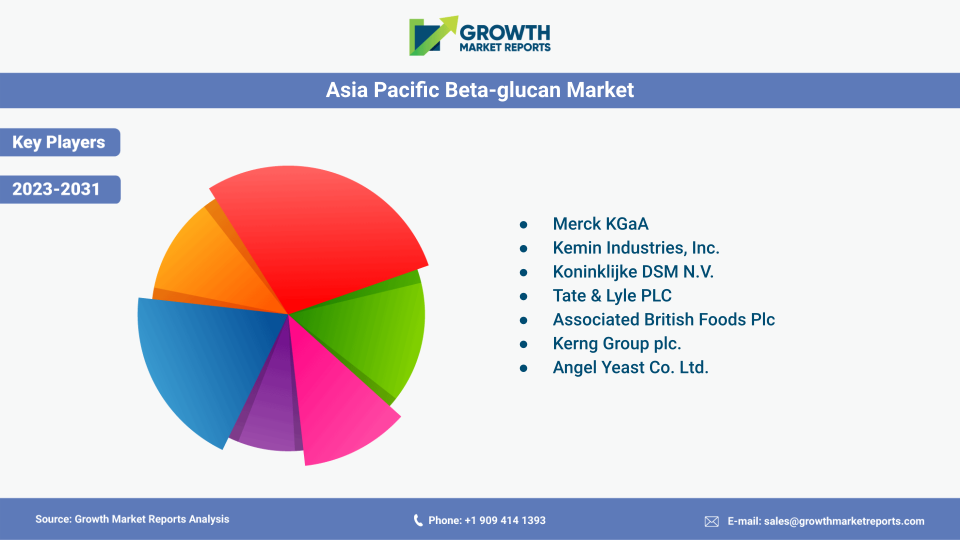
The global beta-glucan market features a mix of large multinational ingredient companies and specialized producers. Key players include Tate & Lyle PLC, Cargill Incorporated, Kerry Group plc, dsm-firmenich AG, Lesaffre Group, Ohly GmbH, Garuda International, Super Beta Glucan Inc., Associated British Foods plc, Biothera Pharmaceuticals, Ceapro Inc., Givaudan SA, MilliporeSigma (Merck KGaA), Lantmannen Oats AB, Angel Yeast Co. Ltd., Kemin Industries, Blue California, NutraQ AS, and A&B Ingredients. These companies compete through continuous R&D investment, product portfolio expansion, strategic partnerships, and geographic expansion, particularly into high-growth Asia Pacific and Latin American markets.

Several interconnected trends are shaping the beta-glucan market in 2025. The clean label and natural ingredients movement continues to drive demand, as consumers scrutinize product formulations and favor minimally processed, plant-based components. The explosive growth of the functional food and nutraceutical sector is creating strong demand for scientifically validated ingredients like beta-glucan. Sustainability is a growing priority, with manufacturers investing in eco-friendly extraction methods and responsibly sourced raw materials. Personalized nutrition is emerging as a key trend, encouraging customized beta-glucan formulations targeting specific health conditions. Technological innovations in encapsulation and delivery systems are improving product efficacy and expanding application possibilities across industries including personal care and aquaculture.

North America holds the largest regional market share at approximately 37% in 2025, driven by high consumer awareness, a mature functional food industry, and strong demand for dietary supplements and pharmaceutical-grade beta-glucan. Europe follows with approximately 31% of global revenue, supported by EFSA-endorsed health claims, stringent clean label preferences, and active innovation in countries such as Germany, the United Kingdom, and France. Asia Pacific, representing around 22% of the 2025 market, is the fastest-growing region with a projected CAGR exceeding 8.5% through 2034, propelled by rising disposable incomes, urbanization, and expanding health awareness in China, India, Japan, and South Korea. Latin America and the Middle East and Africa are smaller but gradually expanding markets with increasing health product adoption.

Beta-glucan offers a broad and scientifically substantiated range of health benefits. Its most recognized benefit is immune modulation, achieved by activating macrophages, natural killer cells, and other components of the innate immune system. In cardiovascular health, regular consumption of oat and barley beta-glucan has been shown to reduce LDL cholesterol and support heart function, a benefit recognized by regulatory health claims in the United States and European Union. Beta-glucan also demonstrates prebiotic effects, promoting the growth of beneficial gut bacteria and supporting digestive health. Additional benefits include antioxidant activity, anti-inflammatory effects, blood sugar stabilization, and wound healing support, making it a genuinely multifunctional ingredient.

Soluble beta-glucan dissolves in water to form a viscous gel-like solution, which is central to its cholesterol-lowering and blood glucose-regulating effects. This form has the highest bioavailability and is most commonly used in functional foods, beverages, and dietary supplements. Insoluble beta-glucan does not dissolve in water but adds bulk to the digestive system, supporting regular bowel movements and overall gut health. It is commonly found in whole grains and certain mushrooms. While soluble beta-glucan dominates the market due to its broader functional applications, insoluble beta-glucan is gaining attention as consumer interest in digestive wellness and high-fiber diets continues to grow in 2025 and beyond.

Beta-glucan is derived from several primary sources. Cereal sources, mainly oats and barley, hold the largest market share due to their well-documented cholesterol-lowering properties and established supply chains. Yeast, particularly Saccharomyces cerevisiae, is the second-largest source and is especially valued for immune health and animal nutrition applications. Mushroom-derived beta-glucan, sourced from shiitake, maitake, and reishi varieties, is gaining strong traction in nutraceuticals and traditional medicine markets. Seaweed and algae represent emerging sources with unique structural properties and growing interest in sustainable ingredient sourcing. Each source delivers distinct molecular structures that confer specific health benefits, allowing manufacturers to tailor products to target applications.

The food and beverages industry is currently the largest consumer of beta-glucan, accounting for the biggest share of global demand in 2025. Beta-glucan is widely incorporated into breakfast cereals, baked goods, dairy alternatives, and functional beverages for its cholesterol-lowering and immune-boosting properties. The dietary supplements segment is the fastest-growing application, fueled by rising interest in preventive healthcare and self-care among consumers worldwide. Pharmaceuticals represent a third major application, where beta-glucan is used in formulations targeting immune function, wound healing, and cholesterol management. Personal care and animal feed are smaller but rapidly expanding application areas.

The global beta-glucan market reached USD 579 million in 2025, the base year for this report. The market is forecast to expand at a compound annual growth rate (CAGR) of 7.2% from 2026 to 2034, reaching approximately USD 1,083 million by the end of 2034. This robust growth reflects rising consumer health awareness, expanding functional food and nutraceutical industries, and increasing adoption of beta-glucan in pharmaceuticals, animal feed, and personal care across both developed and emerging economies.

Beta-glucan is a naturally occurring polysaccharide found in the cell walls of cereals such as oats and barley, fungi, yeast, and certain algae. It is important because of its wide-ranging and clinically validated health benefits, including immune modulation, cholesterol reduction, blood sugar regulation, and gut health support. As consumers and healthcare professionals increasingly prioritize preventive nutrition and functional ingredients, beta-glucan has become a cornerstone ingredient across food, pharmaceutical, dietary supplement, and personal care industries. Its natural origin and strong regulatory endorsements from bodies such as the FDA and EFSA make it one of the most credible functional ingredients available today.

Table Of Content

Chapter 1 Executive Summary
Chapter 2 Assumptions and Acronyms Used
Chapter 3 Research Methodology
Chapter 4 Beta-glucan Market Overview
   4.1 Introduction
      4.1.1 Market Taxonomy
      4.1.2 Market Definition
      4.1.3 Macro-Economic Factors Impacting the Market Growth
   4.2 Beta-glucan Market Dynamics
      4.2.1 Market Drivers
      4.2.2 Market Restraints
      4.2.3 Market Opportunity
   4.3 Beta-glucan Market - Supply Chain Analysis
      4.3.1 List of Key Suppliers
      4.3.2 List of Key Distributors
      4.3.3 List of Key Consumers
   4.4 Key Forces Shaping the Beta-glucan Market
      4.4.1 Bargaining Power of Suppliers
      4.4.2 Bargaining Power of Buyers
      4.4.3 Threat of Substitution
      4.4.4 Threat of New Entrants
      4.4.5 Competitive Rivalry
   4.5 Global Beta-glucan Market Size & Forecast, 2023-2032
      4.5.1 Beta-glucan Market Size and Y-o-Y Growth
      4.5.2 Beta-glucan Market Absolute $ Opportunity

Chapter 5 Global Beta-glucan Market Analysis and Forecast By Source
   5.1 Introduction
      5.1.1 Key Market Trends & Growth Opportunities By Source
      5.1.2 Basis Point Share (BPS) Analysis By Source
      5.1.3 Absolute $ Opportunity Assessment By Source
   5.2 Beta-glucan Market Size Forecast By Source
      5.2.1 Cereal
      5.2.2 Mushroom
      5.2.3 Yeast
      5.2.4 Seaweed
      5.2.5 Others
   5.3 Market Attractiveness Analysis By Source

Chapter 6 Global Beta-glucan Market Analysis and Forecast By Form
   6.1 Introduction
      6.1.1 Key Market Trends & Growth Opportunities By Form
      6.1.2 Basis Point Share (BPS) Analysis By Form
      6.1.3 Absolute $ Opportunity Assessment By Form
   6.2 Beta-glucan Market Size Forecast By Form
      6.2.1 Soluble
      6.2.2 Insoluble
   6.3 Market Attractiveness Analysis By Form

Chapter 7 Global Beta-glucan Market Analysis and Forecast By Application
   7.1 Introduction
      7.1.1 Key Market Trends & Growth Opportunities By Application
      7.1.2 Basis Point Share (BPS) Analysis By Application
      7.1.3 Absolute $ Opportunity Assessment By Application
   7.2 Beta-glucan Market Size Forecast By Application
      7.2.1 Food & Beverages
      7.2.2 Pharmaceuticals
      7.2.3 Dietary Supplements
      7.2.4 Personal Care
      7.2.5 Animal Feed
      7.2.6 Others
   7.3 Market Attractiveness Analysis By Application

Chapter 8 Global Beta-glucan Market Analysis and Forecast By Function
   8.1 Introduction
      8.1.1 Key Market Trends & Growth Opportunities By Function
      8.1.2 Basis Point Share (BPS) Analysis By Function
      8.1.3 Absolute $ Opportunity Assessment By Function
   8.2 Beta-glucan Market Size Forecast By Function
      8.2.1 Immune Health
      8.2.2 Heart Health
      8.2.3 Digestive Health
      8.2.4 Others
   8.3 Market Attractiveness Analysis By Function

Chapter 9 Global Beta-glucan Market Analysis and Forecast by Region
   9.1 Introduction
      9.1.1 Key Market Trends & Growth Opportunities By Region
      9.1.2 Basis Point Share (BPS) Analysis By Region
      9.1.3 Absolute $ Opportunity Assessment By Region
   9.2 Beta-glucan Market Size Forecast By Region
      9.2.1 North America
      9.2.2 Europe
      9.2.3 Asia Pacific
      9.2.4 Latin America
      9.2.5 Middle East & Africa (MEA)
   9.3 Market Attractiveness Analysis By Region

Chapter 10 Coronavirus Disease (COVID-19) Impact 
   10.1 Introduction 
   10.2 Current & Future Impact Analysis 
   10.3 Economic Impact Analysis 
   10.4 Government Policies 
   10.5 Investment Scenario

Chapter 11 North America Beta-glucan Analysis and Forecast
   11.1 Introduction
   11.2 North America Beta-glucan Market Size Forecast by Country
      11.2.1 U.S.
      11.2.2 Canada
   11.3 Basis Point Share (BPS) Analysis by Country
   11.4 Absolute $ Opportunity Assessment by Country
   11.5 Market Attractiveness Analysis by Country
   11.6 North America Beta-glucan Market Size Forecast By Source
      11.6.1 Cereal
      11.6.2 Mushroom
      11.6.3 Yeast
      11.6.4 Seaweed
      11.6.5 Others
   11.7 Basis Point Share (BPS) Analysis By Source 
   11.8 Absolute $ Opportunity Assessment By Source 
   11.9 Market Attractiveness Analysis By Source
   11.10 North America Beta-glucan Market Size Forecast By Form
      11.10.1 Soluble
      11.10.2 Insoluble
   11.11 Basis Point Share (BPS) Analysis By Form 
   11.12 Absolute $ Opportunity Assessment By Form 
   11.13 Market Attractiveness Analysis By Form
   11.14 North America Beta-glucan Market Size Forecast By Application
      11.14.1 Food & Beverages
      11.14.2 Pharmaceuticals
      11.14.3 Dietary Supplements
      11.14.4 Personal Care
      11.14.5 Animal Feed
      11.14.6 Others
   11.15 Basis Point Share (BPS) Analysis By Application 
   11.16 Absolute $ Opportunity Assessment By Application 
   11.17 Market Attractiveness Analysis By Application
   11.18 North America Beta-glucan Market Size Forecast By Function
      11.18.1 Immune Health
      11.18.2 Heart Health
      11.18.3 Digestive Health
      11.18.4 Others
   11.19 Basis Point Share (BPS) Analysis By Function 
   11.20 Absolute $ Opportunity Assessment By Function 
   11.21 Market Attractiveness Analysis By Function

Chapter 12 Europe Beta-glucan Analysis and Forecast
   12.1 Introduction
   12.2 Europe Beta-glucan Market Size Forecast by Country
      12.2.1 Germany
      12.2.2 France
      12.2.3 Italy
      12.2.4 U.K.
      12.2.5 Spain
      12.2.6 Russia
      12.2.7 Rest of Europe
   12.3 Basis Point Share (BPS) Analysis by Country
   12.4 Absolute $ Opportunity Assessment by Country
   12.5 Market Attractiveness Analysis by Country
   12.6 Europe Beta-glucan Market Size Forecast By Source
      12.6.1 Cereal
      12.6.2 Mushroom
      12.6.3 Yeast
      12.6.4 Seaweed
      12.6.5 Others
   12.7 Basis Point Share (BPS) Analysis By Source 
   12.8 Absolute $ Opportunity Assessment By Source 
   12.9 Market Attractiveness Analysis By Source
   12.10 Europe Beta-glucan Market Size Forecast By Form
      12.10.1 Soluble
      12.10.2 Insoluble
   12.11 Basis Point Share (BPS) Analysis By Form 
   12.12 Absolute $ Opportunity Assessment By Form 
   12.13 Market Attractiveness Analysis By Form
   12.14 Europe Beta-glucan Market Size Forecast By Application
      12.14.1 Food & Beverages
      12.14.2 Pharmaceuticals
      12.14.3 Dietary Supplements
      12.14.4 Personal Care
      12.14.5 Animal Feed
      12.14.6 Others
   12.15 Basis Point Share (BPS) Analysis By Application 
   12.16 Absolute $ Opportunity Assessment By Application 
   12.17 Market Attractiveness Analysis By Application
   12.18 Europe Beta-glucan Market Size Forecast By Function
      12.18.1 Immune Health
      12.18.2 Heart Health
      12.18.3 Digestive Health
      12.18.4 Others
   12.19 Basis Point Share (BPS) Analysis By Function 
   12.20 Absolute $ Opportunity Assessment By Function 
   12.21 Market Attractiveness Analysis By Function

Chapter 13 Asia Pacific Beta-glucan Analysis and Forecast
   13.1 Introduction
   13.2 Asia Pacific Beta-glucan Market Size Forecast by Country
      13.2.1 China
      13.2.2 Japan
      13.2.3 South Korea
      13.2.4 India
      13.2.5 Australia
      13.2.6 South East Asia (SEA)
      13.2.7 Rest of Asia Pacific (APAC)
   13.3 Basis Point Share (BPS) Analysis by Country
   13.4 Absolute $ Opportunity Assessment by Country
   13.5 Market Attractiveness Analysis by Country
   13.6 Asia Pacific Beta-glucan Market Size Forecast By Source
      13.6.1 Cereal
      13.6.2 Mushroom
      13.6.3 Yeast
      13.6.4 Seaweed
      13.6.5 Others
   13.7 Basis Point Share (BPS) Analysis By Source 
   13.8 Absolute $ Opportunity Assessment By Source 
   13.9 Market Attractiveness Analysis By Source
   13.10 Asia Pacific Beta-glucan Market Size Forecast By Form
      13.10.1 Soluble
      13.10.2 Insoluble
   13.11 Basis Point Share (BPS) Analysis By Form 
   13.12 Absolute $ Opportunity Assessment By Form 
   13.13 Market Attractiveness Analysis By Form
   13.14 Asia Pacific Beta-glucan Market Size Forecast By Application
      13.14.1 Food & Beverages
      13.14.2 Pharmaceuticals
      13.14.3 Dietary Supplements
      13.14.4 Personal Care
      13.14.5 Animal Feed
      13.14.6 Others
   13.15 Basis Point Share (BPS) Analysis By Application 
   13.16 Absolute $ Opportunity Assessment By Application 
   13.17 Market Attractiveness Analysis By Application
   13.18 Asia Pacific Beta-glucan Market Size Forecast By Function
      13.18.1 Immune Health
      13.18.2 Heart Health
      13.18.3 Digestive Health
      13.18.4 Others
   13.19 Basis Point Share (BPS) Analysis By Function 
   13.20 Absolute $ Opportunity Assessment By Function 
   13.21 Market Attractiveness Analysis By Function

Chapter 14 Latin America Beta-glucan Analysis and Forecast
   14.1 Introduction
   14.2 Latin America Beta-glucan Market Size Forecast by Country
      14.2.1 Brazil
      14.2.2 Mexico
      14.2.3 Rest of Latin America (LATAM)
   14.3 Basis Point Share (BPS) Analysis by Country
   14.4 Absolute $ Opportunity Assessment by Country
   14.5 Market Attractiveness Analysis by Country
   14.6 Latin America Beta-glucan Market Size Forecast By Source
      14.6.1 Cereal
      14.6.2 Mushroom
      14.6.3 Yeast
      14.6.4 Seaweed
      14.6.5 Others
   14.7 Basis Point Share (BPS) Analysis By Source 
   14.8 Absolute $ Opportunity Assessment By Source 
   14.9 Market Attractiveness Analysis By Source
   14.10 Latin America Beta-glucan Market Size Forecast By Form
      14.10.1 Soluble
      14.10.2 Insoluble
   14.11 Basis Point Share (BPS) Analysis By Form 
   14.12 Absolute $ Opportunity Assessment By Form 
   14.13 Market Attractiveness Analysis By Form
   14.14 Latin America Beta-glucan Market Size Forecast By Application
      14.14.1 Food & Beverages
      14.14.2 Pharmaceuticals
      14.14.3 Dietary Supplements
      14.14.4 Personal Care
      14.14.5 Animal Feed
      14.14.6 Others
   14.15 Basis Point Share (BPS) Analysis By Application 
   14.16 Absolute $ Opportunity Assessment By Application 
   14.17 Market Attractiveness Analysis By Application
   14.18 Latin America Beta-glucan Market Size Forecast By Function
      14.18.1 Immune Health
      14.18.2 Heart Health
      14.18.3 Digestive Health
      14.18.4 Others
   14.19 Basis Point Share (BPS) Analysis By Function 
   14.20 Absolute $ Opportunity Assessment By Function 
   14.21 Market Attractiveness Analysis By Function

Chapter 15 Middle East & Africa (MEA) Beta-glucan Analysis and Forecast
   15.1 Introduction
   15.2 Middle East & Africa (MEA) Beta-glucan Market Size Forecast by Country
      15.2.1 Saudi Arabia
      15.2.2 South Africa
      15.2.3 UAE
      15.2.4 Rest of Middle East & Africa (MEA)
   15.3 Basis Point Share (BPS) Analysis by Country
   15.4 Absolute $ Opportunity Assessment by Country
   15.5 Market Attractiveness Analysis by Country
   15.6 Middle East & Africa (MEA) Beta-glucan Market Size Forecast By Source
      15.6.1 Cereal
      15.6.2 Mushroom
      15.6.3 Yeast
      15.6.4 Seaweed
      15.6.5 Others
   15.7 Basis Point Share (BPS) Analysis By Source 
   15.8 Absolute $ Opportunity Assessment By Source 
   15.9 Market Attractiveness Analysis By Source
   15.10 Middle East & Africa (MEA) Beta-glucan Market Size Forecast By Form
      15.10.1 Soluble
      15.10.2 Insoluble
   15.11 Basis Point Share (BPS) Analysis By Form 
   15.12 Absolute $ Opportunity Assessment By Form 
   15.13 Market Attractiveness Analysis By Form
   15.14 Middle East & Africa (MEA) Beta-glucan Market Size Forecast By Application
      15.14.1 Food & Beverages
      15.14.2 Pharmaceuticals
      15.14.3 Dietary Supplements
      15.14.4 Personal Care
      15.14.5 Animal Feed
      15.14.6 Others
   15.15 Basis Point Share (BPS) Analysis By Application 
   15.16 Absolute $ Opportunity Assessment By Application 
   15.17 Market Attractiveness Analysis By Application
   15.18 Middle East & Africa (MEA) Beta-glucan Market Size Forecast By Function
      15.18.1 Immune Health
      15.18.2 Heart Health
      15.18.3 Digestive Health
      15.18.4 Others
   15.19 Basis Point Share (BPS) Analysis By Function 
   15.20 Absolute $ Opportunity Assessment By Function 
   15.21 Market Attractiveness Analysis By Function

Chapter 16 Competition Landscape 
   16.1 Beta-glucan Market: Competitive Dashboard
   16.2 Global Beta-glucan Market: Market Share Analysis, 2023
   16.3 Company Profiles (Details – Overview, Financials, Developments, Strategy) 
      16.3.1 Tate & Lyle PLC
      16.3.2 Cargill, Incorporated
      16.3.3 Kerry Group plc
      16.3.4 dsm-firmenich AG
      16.3.5 Lesaffre Group
      16.3.6 Ohly GmbH
      16.3.7 Garuda International, Inc.
      16.3.8 Super Beta Glucan, Inc.
      16.3.9 A&B Ingredients
      16.3.10 Associated British Foods plc
      16.3.11 Biothera Pharmaceuticals, Inc.
      16.3.12 Ceapro Inc.
      16.3.13 Givaudan SA
      16.3.14 MilliporeSigma (Merck KGaA)
      16.3.15 Lantmannen Oats AB
      16.3.16 Angel Yeast Co., Ltd.
      16.3.17 Kemin Industries, Inc.
      16.3.18 Blue California
      16.3.19 NutraQ AS

Methodology

Our Clients

FedEx Logistics
Deloitte
Dassault Aviation
sinopec
The John Holland Group
Siemens Healthcare
General Mills
Pfizer