Segments - by Product Type (Sodium Bentonite, Calcium Bentonite, Sulphur Bentonite, Others), by Application (Foundry Sands, Cat Litter, Iron Ore Pelletizing, Drilling Fluids, Construction, Agriculture, Pharmaceuticals, Cosmetics, Food, Others), by End-User (Oil & Gas, Construction, Agriculture, Food & Beverages, Pharmaceuticals, Personal Care, Others)
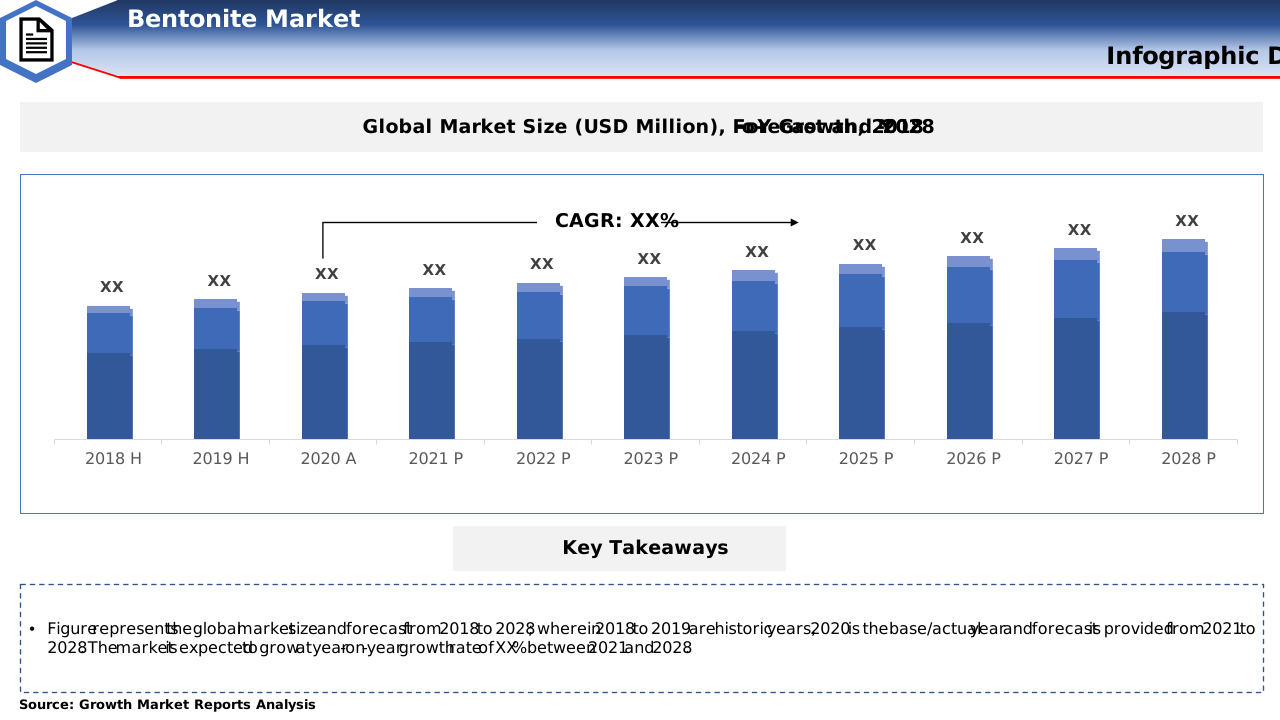
According to our latest research, the global bentonite market size reached USD 2.11 billion in 2024, fueled by robust demand across diverse industrial applications and a growing emphasis on efficient resource utilization. The market demonstrated a healthy expansion, registering a CAGR of 6.3% from the previous year, and is forecasted to achieve a value of USD 3.66 billion by 2033 if current growth trajectories persist. This growth is primarily attributed to increasing utilization in foundry sands, drilling fluids, and iron ore pelletizing, alongside rising adoption in environmental and agricultural applications. As per latest research, the bentonite market is poised for consistent expansion, supported by technological advancements and evolving end-user requirements.
The growth of the bentonite market is significantly influenced by the rising demand for high-performance drilling fluids in the oil & gas sector. As global energy consumption continues to escalate, exploration and production activities are intensifying, especially in unconventional reserves. Bentonite’s unique rheological and filtration properties make it an indispensable component in drilling muds, facilitating efficient borehole stabilization and cuttings removal. Moreover, the increasing complexity of drilling operations, including deeper and more geologically challenging wells, is further propelling the adoption of bentonite-based solutions. The market is also benefiting from ongoing investments in oilfield technologies and the expansion of drilling activities in untapped regions, which collectively drive robust consumption of sodium and calcium bentonite grades.
Another pivotal growth driver is the expanding application of bentonite in iron ore pelletizing and foundry sands. The steel industry’s consistent growth, especially in emerging economies, has led to a surge in iron ore production, where bentonite acts as a crucial binder in pelletizing processes. Its superior binding and plasticizing properties enhance pellet strength and quality, directly impacting blast furnace efficiency and steel output. Simultaneously, foundry sands utilizing bentonite as a bonding agent are witnessing increased demand from the automotive, machinery, and construction sectors, which require precision casting for complex metal parts. The trend towards lightweight vehicles and advanced manufacturing further amplifies the need for high-quality foundry sands, cementing bentonite’s role in these critical industrial processes.
Environmental and agricultural applications are also contributing to the bentonite market’s upward trajectory. Growing awareness regarding soil health and sustainable agriculture has driven the use of bentonite as a soil conditioner and carrier for fertilizers and pesticides. Its capacity to enhance soil moisture retention, improve nutrient availability, and remediate contaminated soils is increasingly recognized by farmers and agronomists. In addition, bentonite’s role in environmental protection, such as landfill liners, wastewater treatment, and hazardous waste containment, is expanding in response to stringent regulatory frameworks and global sustainability goals. These factors are collectively augmenting market growth, while ongoing research into new uses for bentonite in pharmaceuticals, cosmetics, and food industries continues to unlock additional opportunities.
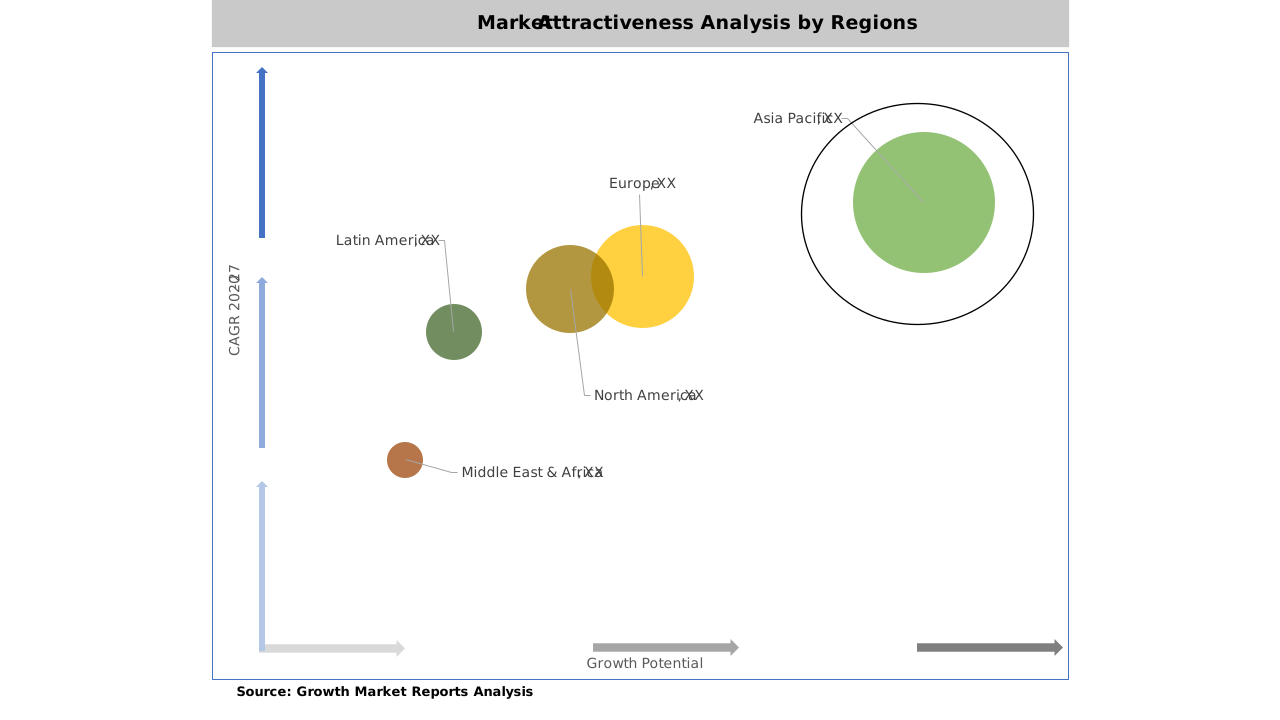
Regionally, Asia Pacific stands out as the dominant market for bentonite, accounting for the largest share in 2024 due to rapid industrialization, infrastructural development, and a burgeoning manufacturing sector. China, India, and Southeast Asian countries are leading consumers, driven by their expansive foundry, construction, and agriculture industries. North America and Europe also represent significant markets, characterized by advanced oil & gas exploration, stringent environmental regulations, and robust demand for high-quality bentonite in pharmaceuticals and personal care products. Meanwhile, Latin America and the Middle East & Africa are emerging as high-potential regions, benefiting from resource-rich landscapes and increasing investments in mining and construction. This diverse regional landscape underpins the global bentonite market’s resilience and long-term growth prospects.
The bentonite market is segmented by product type into sodium bentonite, calcium bentonite, sulphur bentonite, and others, each offering distinct physicochemical properties and catering to specific industrial requirements. Sodium bentonite, renowned for its superior swelling capacity and high viscosity, dominates the market and finds extensive use in drilling fluids, foundry sands, and environmental sealing applications. Its ability to absorb several times its weight in water and form stable gels makes it the preferred choice in oil & gas exploration and civil engineering projects. Sodium bentonite’s versatility extends to cat litter and iron ore pelletizing, where its binding and absorbent characteristics are highly valued. The consistent demand for sodium bentonite is further propelled by technological advancements in mining and processing, ensuring high purity and performance standards.
Calcium bentonite, while less expansive than its sodium counterpart, is prized for its adsorptive and purifying properties, making it a staple in pharmaceuticals, cosmetics, and personal care formulations. The growing consumer preference for natural and mineral-based products has driven significant interest in calcium bentonite for detoxification, skincare, and oral health applications. Additionally, calcium bentonite’s role as a clarifying agent in the food and beverage industry, particularly in wine and juice production, has gained traction. Its use in agriculture as a soil amendment and carrier for agrochemicals further broadens its market reach. The segment’s growth is supported by increasing research into novel health and wellness applications, as well as rising demand for organic and eco-friendly products.
Sulphur bentonite represents a specialized segment, primarily utilized as a slow-release fertilizer in agriculture. Its unique formulation combines bentonite clay with elemental sulphur, enabling gradual nutrient release and improved crop uptake. The global push for enhanced agricultural productivity and sustainable farming practices has intensified the adoption of sulphur bentonite, particularly in regions with sulphur-deficient soils. Farmers are increasingly recognizing its benefits in boosting crop yields, enhancing soil fertility, and mitigating environmental impacts associated with conventional fertilizers. The segment is witnessing innovation in granulation technologies and product formulations, aiming to maximize efficacy and minimize application costs. As the demand for high-quality agricultural inputs rises, sulphur bentonite is poised for steady expansion.
The “others” category encompasses a range of bentonite variants, including magnesium bentonite and mixed-clay products, which cater to niche applications across construction, environmental remediation, and specialty chemicals. These products are often tailored to meet specific performance criteria, such as enhanced thermal stability, chemical resistance, or adsorption capacity. The segment’s growth is driven by the need for customized solutions in complex industrial processes, as well as increasing regulatory scrutiny on environmental protection and waste management. Ongoing research and development efforts are focused on unlocking new functionalities and improving the cost-effectiveness of these specialty bentonite products, ensuring their relevance in a rapidly evolving industrial landscape.
| Attributes | Details |
| Report Title | Bentonite Market Research Report 2033 |
| By Product Type | Sodium Bentonite, Calcium Bentonite, Sulphur Bentonite, Others |
| By Application | Foundry Sands, Cat Litter, Iron Ore Pelletizing, Drilling Fluids, Construction, Agriculture, Pharmaceuticals, Cosmetics, Food, Others |
| By End-User | Oil & Gas, Construction, Agriculture, Food & Beverages, Pharmaceuticals, Personal Care, Others |
| Regions Covered | North America, Europe, APAC, Latin America, MEA |
| Base Year | 2024 |
| Historic Data | 2018-2023 |
| Forecast Period | 2025-2033 |
| Number of Pages | 291 |
| Number of Tables & Figures | 383 |
| Customization Available | Yes, the report can be customized as per your need. |
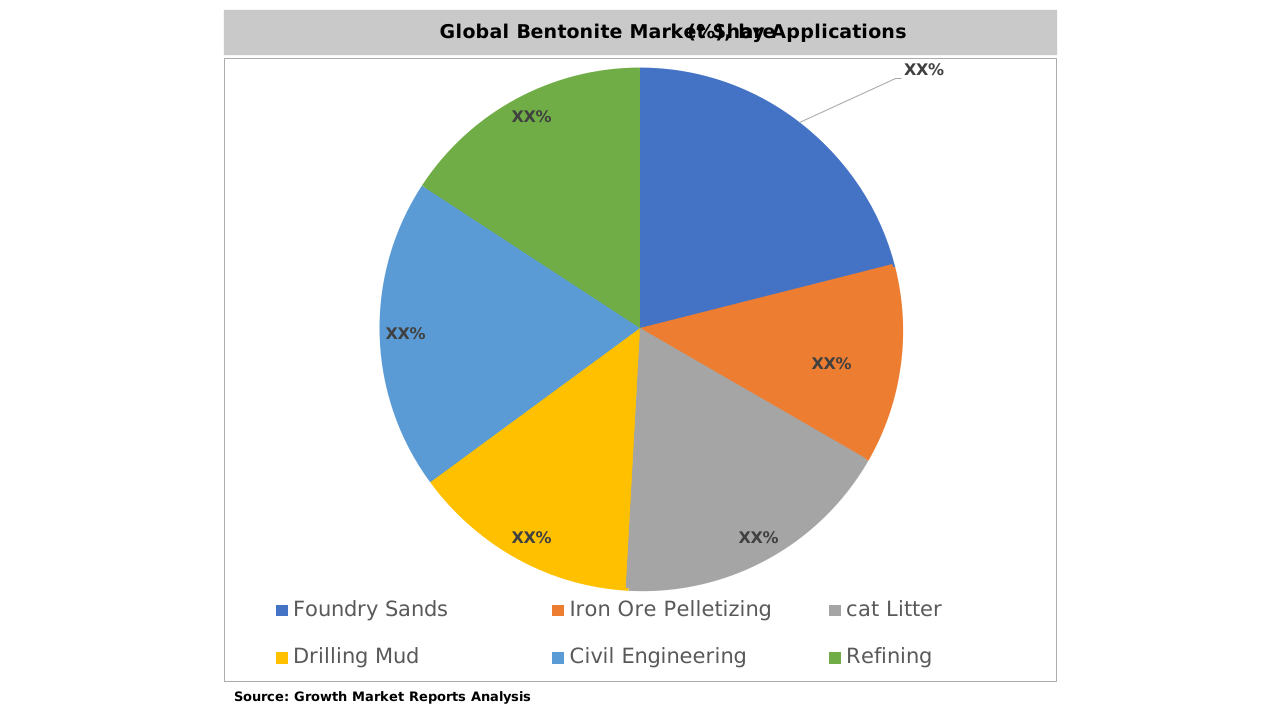
Bentonite’s wide-ranging applications form the backbone of its market expansion, with key segments including foundry sands, cat litter, iron ore pelletizing, drilling fluids, construction, agriculture, pharmaceuticals, cosmetics, food, and others. Foundry sands remain a major application area, leveraging bentonite’s binding power to produce high-quality metal castings for the automotive, machinery, and aerospace industries. The shift towards precision engineering and lightweight materials has intensified the demand for premium foundry sands, where bentonite ensures dimensional accuracy and surface finish. The proliferation of advanced manufacturing technologies and the resurgence of the global automotive sector are further reinforcing this application segment’s growth trajectory.
Cat litter constitutes another significant application, capitalizing on bentonite’s exceptional absorbency and clumping properties. The global rise in pet ownership, coupled with increasing consumer awareness regarding hygiene and convenience, has fueled the demand for bentonite-based cat litter products. Manufacturers are innovating with dust-free, odor-control, and biodegradable formulations to cater to evolving consumer preferences. The trend towards premium and eco-friendly pet care products is expected to sustain robust growth in this segment, with sodium bentonite remaining the material of choice due to its superior performance characteristics. Additionally, the expansion of distribution channels and rising disposable incomes in emerging markets are contributing to increased adoption of bentonite cat litter.
Iron ore pelletizing is a critical application, particularly in the steel manufacturing value chain. Bentonite acts as a binding agent, imparting strength and durability to iron ore pellets used in blast furnaces. The segment’s growth is closely linked to the expansion of the steel industry, infrastructure development, and urbanization trends in Asia Pacific and other emerging regions. Technological advancements in pelletizing processes and the increasing adoption of high-grade iron ore have heightened the need for consistent and high-performance bentonite products. The segment also benefits from sustainability initiatives aimed at reducing energy consumption and emissions in steel production, where efficient pelletizing plays a pivotal role.
Drilling fluids, construction, agriculture, pharmaceuticals, cosmetics, and food represent diverse application areas, each contributing to the bentonite market’s resilience. In drilling fluids, bentonite’s rheological properties enhance borehole stability and filtration control, making it indispensable in oil & gas and geothermal drilling. The construction sector relies on bentonite for waterproofing, soil stabilization, and slurry walls in tunneling and foundation projects. Agricultural applications leverage bentonite’s soil conditioning, moisture retention, and nutrient delivery capabilities to support sustainable farming. Meanwhile, the pharmaceuticals, cosmetics, and food industries utilize bentonite for its adsorptive, clarifying, and detoxifying properties, driven by stringent quality standards and consumer demand for natural ingredients. These multifaceted applications collectively underpin the bentonite market’s robust and diversified growth outlook.
The bentonite market’s end-user landscape is segmented into oil & gas, construction, agriculture, food & beverages, pharmaceuticals, personal care, and others, reflecting its broad industrial relevance. The oil & gas sector remains the largest end-user, driven by the critical role of bentonite in drilling fluids and wellbore stabilization. The resurgence of exploration activities, particularly in North America, the Middle East, and Asia Pacific, has sustained strong demand for high-quality sodium bentonite. The sector’s focus on operational efficiency, safety, and environmental compliance further amplifies the need for advanced bentonite formulations capable of meeting stringent performance criteria. As global energy markets evolve, the oil & gas end-user segment is expected to maintain its dominance, supported by ongoing investments in upstream activities.
Construction is another major end-user, leveraging bentonite’s unique properties in a variety of civil engineering applications. The material is widely used in slurry walls, grouting, waterproofing, and soil stabilization, where its ability to form impermeable barriers and enhance soil structure is invaluable. Rapid urbanization, infrastructure modernization, and mega-projects in emerging economies are key growth drivers for this segment. The adoption of advanced construction techniques and growing emphasis on sustainable building practices are also fostering demand for bentonite-based solutions. Regulatory standards pertaining to environmental protection and groundwater safety are further reinforcing the importance of bentonite in the construction industry.
Agriculture represents a high-growth end-user segment, as farmers and agribusinesses seek innovative solutions to improve crop yields and soil health. Bentonite’s application as a soil conditioner, carrier for agrochemicals, and component in slow-release fertilizers such as sulphur bentonite is gaining traction worldwide. The segment’s expansion is underpinned by the global push for sustainable agriculture, climate resilience, and food security. Technological advancements in precision farming and the integration of bentonite-based products into modern agricultural practices are expected to drive sustained growth. The segment also benefits from increasing awareness of the benefits of natural soil amendments and the need to address soil degradation and nutrient deficiencies.
Food & beverages, pharmaceuticals, personal care, and other niche end-user segments are contributing to the bentonite market’s diversification. In food & beverages, bentonite is utilized as a clarifying and stabilizing agent, particularly in winemaking and juice production. The pharmaceuticals industry employs bentonite for its adsorptive and detoxifying properties, supporting the formulation of antacids, detox products, and topical applications. Personal care products, including skincare and oral hygiene formulations, are increasingly incorporating bentonite due to its natural and gentle characteristics. These segments are benefiting from shifting consumer preferences towards clean-label, mineral-based, and sustainable products, driving innovation and market penetration for bentonite-based solutions.
The bentonite market presents a plethora of opportunities for growth and diversification, particularly in emerging application areas and untapped regional markets. The increasing adoption of bentonite in environmental protection, such as landfill liners, wastewater treatment, and hazardous waste containment, offers significant potential for expansion. Stricter environmental regulations and the global emphasis on sustainability are driving demand for effective and eco-friendly sealing and remediation solutions. Additionally, the rise of organic and sustainable agriculture is creating new avenues for bentonite-based soil conditioners and fertilizers, as farmers seek to improve productivity while minimizing environmental impact. Technological advancements in mining, processing, and product formulation are enabling manufacturers to develop high-purity, customized bentonite products tailored to specific end-user requirements, further enhancing market opportunities.
Innovation in pharmaceuticals, cosmetics, and food industries is another key opportunity, as bentonite’s natural, non-toxic, and adsorptive properties align with consumer demand for safe and effective ingredients. The growing popularity of detox and wellness products, along with the trend towards clean-label formulations, is driving the incorporation of bentonite into a wide range of health and personal care products. The market also stands to benefit from increased research and development aimed at discovering new functionalities and expanding the scope of bentonite applications. Strategic partnerships, mergers, and acquisitions among key players are facilitating access to new markets and technologies, fostering competitive advantage and long-term growth.
However, the bentonite market faces several restraining factors that could impede its growth trajectory. Fluctuations in raw material availability and prices, driven by mining regulations, environmental concerns, and geopolitical factors, pose significant challenges for manufacturers. The environmental impact of bentonite mining and processing, including land degradation, water consumption, and waste generation, has led to increased scrutiny and regulatory oversight. Compliance with stringent environmental standards can result in higher operational costs and potential delays in project execution. Additionally, the presence of substitutes in certain applications, such as synthetic binders and absorbents, may limit market penetration and intensify competition. Addressing these challenges requires sustained investment in sustainable mining practices, technological innovation, and proactive stakeholder engagement.
Asia Pacific emerged as the leading regional market for bentonite in 2024, accounting for approximately 42% of the global market share, or USD 0.89 billion. The region’s dominance is attributed to rapid industrialization, robust construction activity, and a thriving manufacturing sector in China, India, and Southeast Asia. Foundry sands, drilling fluids, and agricultural applications represent the primary demand drivers, supported by government initiatives aimed at infrastructure development and food security. The region’s bentonite market is projected to grow at a CAGR of 7.1% through 2033, outpacing global averages due to expanding end-user industries and increasing investments in mining and processing facilities.
North America stands as the second-largest market, with a 2024 value of USD 0.54 billion, driven by advanced oil & gas exploration, stringent environmental regulations, and a mature pharmaceuticals and personal care industry. The United States remains the primary contributor, leveraging its abundant bentonite reserves and technological leadership in mining and processing. The region benefits from a well-established supply chain, high product quality standards, and strong demand from the construction, agriculture, and pet care sectors. North America’s market growth is expected to remain steady, supported by ongoing investments in infrastructure modernization and environmental protection initiatives.
Europe accounted for USD 0.42 billion of the global bentonite market in 2024, characterized by sophisticated manufacturing, strict regulatory frameworks, and a strong focus on sustainability. The region’s demand is concentrated in foundry sands, construction, and environmental applications, with Germany, France, and the United Kingdom leading consumption. The European market is witnessing a shift towards high-purity and specialty bentonite products, driven by the pharmaceuticals, cosmetics, and food industries. Meanwhile, Latin America and the Middle East & Africa collectively contributed USD 0.26 billion, with growth prospects underpinned by resource-rich landscapes, expanding mining activities, and rising demand for agricultural inputs. These regions are expected to witness accelerated growth as local industries modernize and global players increase their footprint through strategic investments and partnerships.
The global bentonite market is characterized by a competitive landscape with a mix of multinational corporations, regional players, and specialized producers. Market leaders are distinguished by their extensive mining capabilities, advanced processing technologies, and broad product portfolios catering to diverse end-user requirements. The competitive dynamics are shaped by factors such as product quality, supply chain efficiency, pricing strategies, and responsiveness to regulatory changes. Companies are increasingly focusing on sustainable mining practices, technological innovation, and customer-centric product development to strengthen their market position and address evolving industry demands. Strategic collaborations, mergers, and acquisitions are prevalent, enabling players to expand their geographic reach, access new technologies, and enhance their value proposition.
Innovation remains a key differentiator in the bentonite market, with leading companies investing in research and development to create high-performance, customized products for emerging applications. The trend towards specialty and value-added bentonite products, such as sulphur bentonite fertilizers, pharmaceutical-grade clays, and eco-friendly cat litter, is driving competition and fostering market growth. Companies are also leveraging digital technologies and data analytics to optimize mining operations, improve product consistency, and enhance customer engagement. Sustainability initiatives, including water recycling, energy efficiency, and land reclamation, are increasingly integral to corporate strategies, reflecting growing stakeholder expectations and regulatory requirements.
The market is also witnessing the entry of new players, particularly in emerging regions, attracted by the growing demand for bentonite in construction, agriculture, and environmental protection. These entrants are leveraging local resource availability and cost advantages to compete with established players, intensifying competition in price-sensitive segments. However, barriers to entry remain significant in high-purity and specialty product segments, where stringent quality standards and advanced processing capabilities are required. Overall, the competitive landscape is dynamic and evolving, with companies striving to balance operational efficiency, product innovation, and sustainability to secure long-term growth.
Major companies operating in the global bentonite market include Minerals Technologies Inc., Clariant AG, Ashapura Group, Imerys S.A., Bentonite Performance Minerals LLC, Wyo-Ben Inc., Kutch Minerals, and AMCOL International Corporation. Minerals Technologies Inc. is recognized for its comprehensive product portfolio and global distribution network, supplying high-quality bentonite for foundry, drilling, and environmental applications. Clariant AG is a leader in specialty bentonite products, focusing on innovation and sustainability to address the needs of the pharmaceuticals, cosmetics, and food industries. Ashapura Group and Imerys S.A. are prominent players in the Asia Pacific and European markets, respectively, leveraging extensive mining operations and advanced processing technologies to serve a wide range of end-users.
Bentonite Performance Minerals LLC and Wyo-Ben Inc. are key players in North America, renowned for their high-purity sodium bentonite products and strong presence in the oil & gas, construction, and pet care sectors. Kutch Minerals and AMCOL International Corporation have established themselves as reliable suppliers in both domestic and international markets, with a focus on quality assurance and customer service. These companies are actively investing in capacity expansion, product development, and sustainability initiatives to maintain their competitive edge and capitalize on emerging market opportunities. The collective efforts of these industry leaders are instrumental in shaping the future trajectory of the global bentonite market, ensuring its continued growth and resilience in a rapidly changing industrial landscape.
The Bentonite market has been segmented on the basis of
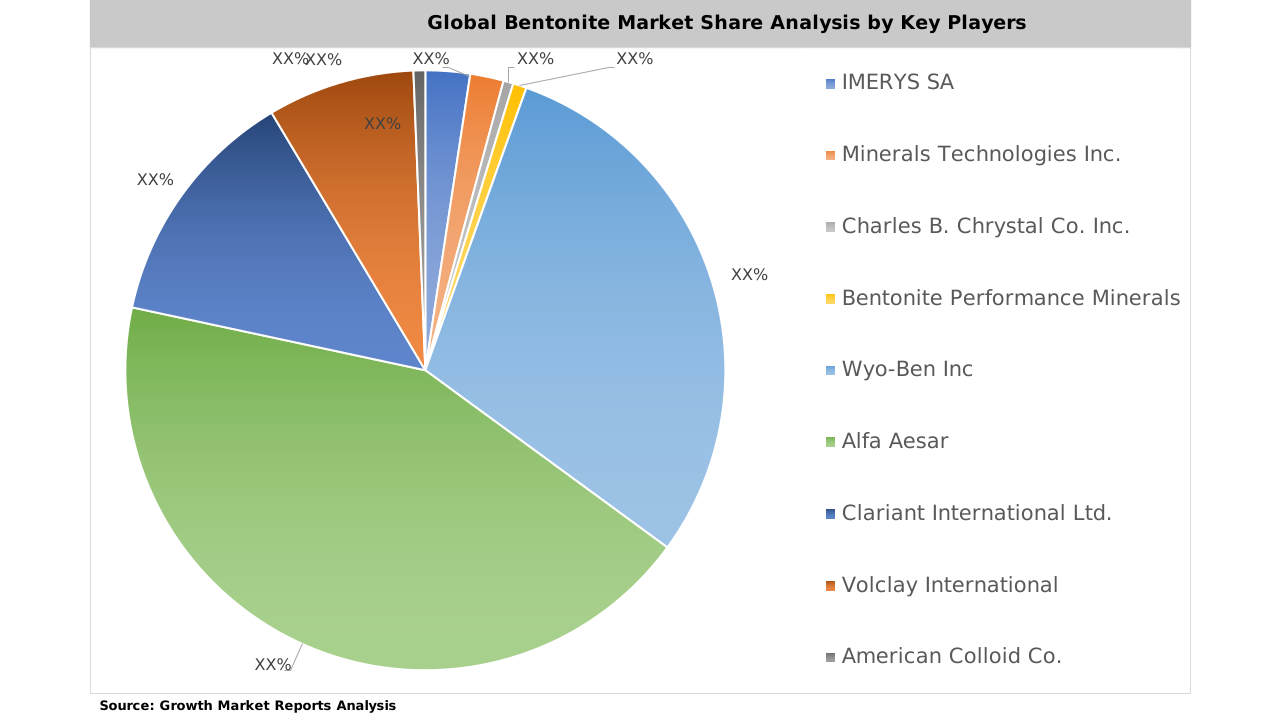
Key players in the Bentonite market are IMERYS SA, Minerals Technologies Inc., Charles B. Chrystal Co. Inc., Bentonite Performance Minerals LLC, Wyo-Ben Inc, Alfa Aesar, Clariant International Ltd., Volclay International and American Colloid Co.
These players engage in mergers & acquisitions, collaborations, agreements, and partnerships to strengthen their geographical presence.
Bentonite is used as a soil conditioner and carrier for fertilizers and pesticides, improving soil moisture retention, nutrient availability, and supporting sustainable farming practices.
Opportunities include increased use in environmental protection (landfill liners, wastewater treatment), sustainable agriculture, pharmaceuticals, cosmetics, and food industries, as well as innovation in product formulations.
Leading companies include Minerals Technologies Inc., Clariant AG, Ashapura Group, Imerys S.A., Bentonite Performance Minerals LLC, Wyo-Ben Inc., Kutch Minerals, and AMCOL International Corporation.
Key challenges include fluctuations in raw material prices, environmental concerns related to mining, regulatory compliance, and competition from substitute products.
Bentonite is a critical component in drilling fluids due to its rheological and filtration properties, aiding in borehole stabilization and cuttings removal during oil & gas exploration.
The market is segmented into sodium bentonite, calcium bentonite, sulphur bentonite, and other variants such as magnesium bentonite and mixed-clay products.
Growth is primarily driven by increasing demand in oil & gas drilling, steel production, foundry applications, environmental protection, and sustainable agriculture.
Asia Pacific is the leading regional market for bentonite, accounting for approximately 42% of the global market share in 2024, driven by industrialization and strong demand in China, India, and Southeast Asia.
Bentonite is widely used in foundry sands, drilling fluids, iron ore pelletizing, cat litter, construction, agriculture, pharmaceuticals, cosmetics, and food industries.
As of 2024, the global bentonite market size reached USD 2.11 billion, with projections to grow to USD 3.66 billion by 2033.