Metal Fabrication Equipment Market Research Report 2033

Metal Fabrication Equipment Market Research Report 2033

Segments - by Equipment Type (Cutting, Machining, Welding, Bending, Shearing, Others), by Application (Automotive, Aerospace & Defense, Construction, Manufacturing, Energy & Power, Others), by End-User (OEMs, Aftermarket), by Automation Level (Manual, Semi-Automatic, Automatic)

https://growthmarketreports.com/Raksha
Author : Raksha Sharma
https://growthmarketreports.com/Vaibhav
Fact-checked by : V. Chandola
https://growthmarketreports.com/Rucha
Editor : Rucha Phatak

Upcoming | Report ID :CM-1784 | 4.5 Rating | 99 Reviews | 274 Pages | Format : Docx PDF

Report Description


Metal Fabrication Equipment Market Outlook

According to our latest research, the global metal fabrication equipment market size reached USD 78.5 billion in 2024, driven by robust industrialization and technological advancements across major economies. The market is exhibiting a steady expansion, registering a CAGR of 4.8% over the forecast period. By 2033, the market is projected to reach USD 118.2 billion, propelled by rising demand in key sectors such as automotive, aerospace, construction, and energy. This growth is underpinned by the increasing adoption of automation, the integration of advanced manufacturing technologies, and the escalating need for high-precision metal components worldwide.

One of the primary growth factors for the metal fabrication equipment market is the continuous evolution of manufacturing processes, which necessitate the deployment of more sophisticated and efficient equipment. As industries strive for higher productivity and quality, there is a significant shift from traditional manual operations to automated and semi-automated machinery. The integration of Industry 4.0 principles, including IoT-enabled machines, predictive maintenance, and real-time monitoring, is revolutionizing the fabrication landscape. These advancements not only enhance operational efficiency but also reduce downtime and maintenance costs, making metal fabrication processes more cost-effective and scalable for large-scale production.

Another key driver is the burgeoning demand from end-use industries such as automotive, aerospace, and construction. The automotive sector, in particular, relies heavily on precision metal fabrication for manufacturing structural components, chassis, and body parts. Similarly, the aerospace and defense sector requires high-strength, lightweight metal parts fabricated to strict tolerances. The construction industry continues to demand robust metal frameworks and infrastructure components, further fueling market growth. Additionally, the global shift towards renewable energy and the expansion of power generation infrastructure are contributing to increased investments in metal fabrication equipment, as these sectors require specialized machinery for the production of turbines, pipelines, and support structures.

Sustainability and the need for energy-efficient solutions are also catalyzing market growth. Manufacturers are increasingly prioritizing eco-friendly fabrication processes and equipment that minimize material waste, reduce energy consumption, and comply with stringent environmental regulations. The adoption of advanced materials such as high-strength alloys, composites, and stainless steel is prompting equipment manufacturers to develop machines capable of handling new fabrication challenges. This trend is expected to further accelerate as industries across the globe commit to reducing their carbon footprint and achieving sustainability targets.

Regionally, Asia Pacific leads the global metal fabrication equipment market, accounting for the largest share in 2024. This dominance is attributed to rapid industrialization, expanding manufacturing bases, and significant investments in infrastructure development across China, India, and Southeast Asian countries. North America and Europe also hold substantial market shares, driven by technological innovation, a strong presence of leading OEMs, and robust demand from the automotive and aerospace sectors. Meanwhile, Latin America and the Middle East & Africa are witnessing steady growth, supported by rising investments in energy, construction, and industrial projects. This diverse regional landscape underscores the global nature of the metal fabrication equipment market and highlights the importance of localized strategies for market participants.

The advent of Metal Fabrication Robots is revolutionizing the industry by enhancing precision, efficiency, and safety in manufacturing processes. These robots are equipped with advanced sensors and AI-driven algorithms, enabling them to perform complex tasks with minimal human intervention. As industries increasingly adopt automation to meet the demands of high-volume production and stringent quality standards, Metal Fabrication Robots are becoming indispensable. They not only reduce labor costs but also minimize the risk of human error, ensuring consistent product quality. This technological shift is particularly beneficial in sectors such as automotive and aerospace, where precision and reliability are paramount. The integration of these robots into existing production lines is facilitating the transition towards smart manufacturing, paving the way for a more agile and responsive industry landscape.

Global Metal Fabrication Equipment Industry Outlook

Equipment Type Analysis

The metal fabrication equipment market is segmented by equipment type into cutting, machining, welding, bending, shearing, and others. Cutting equipment remains a cornerstone of the industry, as precise and efficient cutting is essential for downstream fabrication processes. Recent advancements in laser, plasma, and waterjet cutting technologies have significantly improved speed, accuracy, and versatility, allowing manufacturers to process a wide range of materials with minimal waste. The proliferation of CNC-controlled cutting machines has further enhanced productivity, enabling complex designs and mass customization. As a result, the cutting equipment segment continues to witness robust demand, particularly in industries requiring high-precision components such as automotive, aerospace, and electronics.

Machining equipment encompasses a variety of tools such as lathes, milling machines, and drilling machines, all of which are integral to shaping and finishing metal components. The ongoing shift towards digital manufacturing and the adoption of smart machining centers are transforming this segment. Modern machining equipment is increasingly equipped with sensors, AI-driven controls, and automated tool changers, which streamline operations and ensure consistent product quality. The demand for multi-functional machines capable of handling multiple processes in a single setup is rising, as manufacturers seek to optimize floor space and reduce setup times. This trend is particularly pronounced in high-mix, low-volume production environments.

Welding equipment represents another critical segment, given the importance of joining processes in metal fabrication. The market for welding equipment is being shaped by the adoption of advanced welding techniques such as robotic welding, friction stir welding, and laser welding. These methods offer superior strength, speed, and repeatability compared to traditional manual welding. The increased use of automation in welding processes is especially prevalent in the automotive and heavy machinery industries, where consistent weld quality and high throughput are paramount. Furthermore, the development of lightweight alloys and composites is driving demand for specialized welding equipment capable of handling challenging materials.

Bending and shearing equipment are essential for forming and cutting metal sheets and plates to desired shapes and sizes. The rise of automated press brakes, CNC bending machines, and high-speed shearing systems has enabled manufacturers to achieve greater accuracy and efficiency in forming operations. These machines are increasingly integrated with digital controls and real-time feedback systems, allowing for rapid adjustments and reduced setup times. The construction and infrastructure sectors, in particular, are major consumers of bending and shearing equipment, as they require customized metal components for structural frameworks, bridges, and pipelines. The ongoing modernization of construction practices and the adoption of prefabricated building components are expected to drive further growth in this segment.

The "others" category includes specialized equipment such as punching machines, rolling mills, and finishing machines. These tools play a vital role in niche applications where standard equipment may not suffice. The demand for customized and application-specific machinery is rising, particularly in sectors such as shipbuilding, energy, and defense, where unique fabrication requirements are common. Equipment manufacturers are responding by offering modular and configurable solutions that can be tailored to specific production needs. This approach not only enhances operational flexibility but also enables manufacturers to quickly adapt to changing market demands and technological advancements.

Report Scope

Attributes Details
Report Title Metal Fabrication Equipment Market Research Report 2033
By Equipment Type Cutting, Machining, Welding, Bending, Shearing, Others
By Application Automotive, Aerospace & Defense, Construction, Manufacturing, Energy & Power, Others
By End-User OEMs, Aftermarket
By Automation Level Manual, Semi-Automatic, Automatic
Regions Covered North America, Europe, APAC, Latin America, MEA
Base Year 2024
Historic Data 2018-2023
Forecast Period 2025-2033
Number of Pages 274
Number of Tables & Figures 274
Customization Available Yes, the report can be customized as per your need.

Application Analysis

The application landscape of the metal fabrication equipment market is diverse, with the automotive sector representing one of the largest and most dynamic segments. Metal fabrication is fundamental to automotive manufacturing, encompassing the production of chassis, body panels, engine components, and exhaust systems. The push towards electric vehicles (EVs) and lightweighting strategies is driving demand for advanced fabrication equipment capable of handling new materials such as aluminum alloys and high-strength steels. Automation and robotics are increasingly being deployed to enhance efficiency, precision, and safety in automotive fabrication plants. As global automotive production continues to recover and evolve, the demand for state-of-the-art fabrication equipment is expected to remain strong.

The aerospace and defense sector is another key application area, characterized by stringent quality standards and the need for high-performance materials. Metal fabrication equipment used in this sector must deliver exceptional accuracy and repeatability to produce components such as airframes, engine parts, and landing gear. The adoption of advanced manufacturing technologies, including additive manufacturing and hybrid machining, is transforming aerospace fabrication processes. These innovations enable the production of complex geometries and lightweight structures, which are critical for fuel efficiency and performance. The ongoing modernization of defense fleets and the expansion of commercial aviation are anticipated to sustain demand for high-end fabrication equipment in this segment.

The construction industry relies heavily on metal fabrication for structural frameworks, bridges, roofing, and infrastructure components. The trend towards prefabrication and modular construction is driving the need for equipment that can deliver consistent quality and rapid turnaround times. Automated cutting, bending, and welding machines are increasingly being adopted to meet the high-volume and customization requirements of modern construction projects. Additionally, the growing emphasis on green building practices is encouraging the use of energy-efficient and environmentally friendly fabrication equipment. As urbanization and infrastructure development continue across emerging markets, the construction segment is poised for sustained growth.

In the energy and power sector, metal fabrication equipment plays a crucial role in the production of turbines, pipelines, transmission towers, and renewable energy infrastructure. The shift towards renewable energy sources such as wind and solar is driving demand for specialized fabrication equipment capable of handling large-scale and complex components. The oil and gas industry also remains a significant consumer, particularly for the fabrication of drilling rigs, storage tanks, and offshore platforms. The increasing focus on energy efficiency, reliability, and safety is prompting investments in advanced fabrication technologies, including automated welding and precision machining.

Other applications, including shipbuilding, electronics, and heavy machinery, contribute to the overall demand for metal fabrication equipment. These sectors often require customized solutions tailored to specific production requirements. The ability to offer flexible, modular, and high-performance equipment is becoming a key differentiator for manufacturers targeting these niche markets. As global supply chains become more interconnected and demand for specialized products rises, the application landscape for metal fabrication equipment is expected to diversify further.

End-User Analysis

The end-user landscape of the metal fabrication equipment market is primarily segmented into OEMs (Original Equipment Manufacturers) and the aftermarket. OEMs represent the dominant end-user category, as they are responsible for the initial integration of fabrication equipment into production lines. These manufacturers prioritize equipment that offers high reliability, scalability, and compatibility with existing processes. The trend towards smart manufacturing and digitalization is prompting OEMs to invest in machines equipped with advanced sensors, connectivity features, and predictive maintenance capabilities. This not only enhances operational efficiency but also supports the seamless integration of new equipment into automated production environments.

The aftermarket segment encompasses the sale of replacement parts, upgrades, retrofits, and maintenance services for existing fabrication equipment. As the installed base of metal fabrication machinery continues to grow, the demand for aftermarket services is rising correspondingly. Manufacturers and service providers are focusing on offering comprehensive maintenance contracts, remote diagnostics, and on-site support to maximize equipment uptime and extend the lifecycle of machinery. The trend towards equipment refurbishment and modernization is also gaining traction, as end-users seek to enhance the performance of legacy machines without incurring the costs of full replacement. This is particularly relevant in regions where capital expenditure budgets are constrained.

OEMs are increasingly collaborating with equipment suppliers to co-develop customized solutions tailored to specific production needs. This approach enables manufacturers to address unique challenges related to material handling, process integration, and quality control. The ability to offer turnkey solutions that encompass equipment, software, and support services is becoming a key competitive advantage in the OEM segment. As manufacturing processes become more complex and product lifecycles shorten, the demand for flexible and adaptable fabrication equipment is expected to rise.

The aftermarket segment is also being transformed by digital technologies, with the proliferation of IoT-enabled machines and predictive analytics driving the adoption of proactive maintenance strategies. Service providers are leveraging data collected from connected equipment to offer real-time performance monitoring, failure prediction, and remote troubleshooting. This not only reduces unplanned downtime but also optimizes maintenance schedules and lowers total cost of ownership for end-users. The growing emphasis on sustainability and resource efficiency is further encouraging the adoption of aftermarket solutions that extend the useful life of fabrication equipment.

Both OEM and aftermarket segments are expected to benefit from the ongoing shift towards servitization, where equipment manufacturers offer value-added services alongside traditional product sales. This includes training, technical support, process optimization, and software upgrades. By adopting a holistic approach to customer engagement, market participants can build long-term relationships and secure recurring revenue streams. As competition intensifies and customer expectations evolve, the ability to deliver comprehensive, end-to-end solutions will be critical for success in the metal fabrication equipment market.

Automation Level Analysis

The metal fabrication equipment market is segmented by automation level into manual, semi-automatic, and automatic equipment. Manual equipment continues to play a role in small-scale operations, custom fabrication, and repair work where flexibility and operator expertise are paramount. However, the limitations of manual processes, including lower productivity, higher labor costs, and variability in output quality, are prompting many manufacturers to transition towards more automated solutions. The ongoing labor shortage in skilled trades is further accelerating this shift, as companies seek to maintain production capacity while minimizing dependence on manual labor.

Semi-automatic equipment represents a middle ground, offering a balance between operator control and mechanized assistance. These machines are widely used in applications where some degree of customization or manual intervention is required, but where automation can enhance speed and consistency. Semi-automatic systems often feature programmable controls, automated feeding mechanisms, and safety enhancements that reduce operator fatigue and improve throughput. The adoption of semi-automatic equipment is particularly prevalent in small and medium-sized enterprises (SMEs) that may lack the resources to invest in fully automated production lines but still require productivity gains.

Automatic equipment is experiencing the fastest growth, driven by the need for high-volume, high-precision, and cost-effective production. Fully automated systems are increasingly equipped with advanced features such as robotic arms, CNC controls, real-time monitoring, and integrated quality inspection. These capabilities enable manufacturers to achieve consistent output, minimize material waste, and rapidly adapt to changing production requirements. The integration of automation and digitalization is a key enabler of smart factories and Industry 4.0 initiatives, allowing for seamless data exchange, predictive maintenance, and optimized resource allocation.

The transition towards higher levels of automation is being facilitated by declining costs of robotics, sensors, and control systems, as well as the growing availability of skilled operators and technicians trained in digital manufacturing technologies. Government incentives and industry partnerships are also supporting the adoption of automation in metal fabrication, particularly in regions seeking to enhance their manufacturing competitiveness. However, the successful implementation of automated systems requires careful planning, investment in workforce training, and ongoing support to ensure optimal performance and return on investment.

Despite the clear benefits of automation, some challenges persist, including the need for significant upfront capital investment, integration with legacy systems, and potential resistance to change among the workforce. Manufacturers must carefully evaluate their production needs, cost structures, and long-term goals when selecting the appropriate level of automation. As the technology landscape continues to evolve, the ability to flexibly scale automation solutions and integrate them with broader digital manufacturing ecosystems will be a key determinant of success in the metal fabrication equipment market.

Opportunities & Threats

The metal fabrication equipment market is poised for significant opportunities as industries worldwide embrace digital transformation and advanced manufacturing technologies. The proliferation of smart factories, driven by Industry 4.0 initiatives, is creating demand for interconnected, data-driven fabrication equipment capable of real-time monitoring and predictive analytics. This not only enhances operational efficiency but also enables manufacturers to optimize production processes, reduce downtime, and improve product quality. The growing adoption of additive manufacturing and hybrid fabrication techniques presents new avenues for innovation, allowing for the production of complex geometries and lightweight structures that were previously unattainable with traditional methods. Equipment manufacturers that can offer integrated, modular, and scalable solutions will be well-positioned to capitalize on these emerging trends.

Another major opportunity lies in the increasing focus on sustainability and environmental stewardship. As regulatory pressure mounts and consumer preferences shift towards eco-friendly products, manufacturers are seeking fabrication equipment that minimizes energy consumption, reduces material waste, and supports the use of recycled and advanced materials. The development of green manufacturing technologies, such as energy-efficient lasers, low-emission welding systems, and closed-loop material handling, is opening up new growth prospects for market participants. Additionally, the expansion of renewable energy infrastructure and the transition to electric mobility are generating demand for specialized equipment tailored to the unique requirements of these sectors. By aligning product development with sustainability goals, companies can differentiate themselves and capture a larger share of the market.

Despite these opportunities, the metal fabrication equipment market faces several restraining factors. One of the primary challenges is the high initial capital investment required for advanced and automated equipment, which can be prohibitive for small and medium-sized enterprises. The complexity of integrating new machines with existing production lines and legacy systems can also pose technical and operational hurdles. Additionally, the shortage of skilled labor and the need for ongoing workforce training remain significant concerns, particularly as the adoption of digital technologies accelerates. Economic uncertainties, fluctuating raw material prices, and supply chain disruptions can further impact market growth and profitability. Addressing these challenges will require a concerted effort from industry stakeholders, including investment in R&D, collaboration with educational institutions, and the development of flexible financing and support models.

Regional Outlook

The Asia Pacific region continues to dominate the global metal fabrication equipment market, accounting for the largest share with a market value of USD 34.2 billion in 2024. The region’s leadership is underpinned by rapid industrialization, a robust manufacturing sector, and significant investments in infrastructure development across China, India, Japan, and Southeast Asian countries. China, in particular, remains the world’s manufacturing powerhouse, driving demand for advanced fabrication equipment in automotive, construction, and electronics industries. India’s ongoing infrastructure modernization and the government’s focus on “Make in India” initiatives are further boosting market growth. The Asia Pacific market is expected to maintain a healthy CAGR of 5.6% through 2033, outpacing other regions due to its expanding industrial base and favorable regulatory environment.

North America holds the second-largest share of the metal fabrication equipment market, valued at USD 21.7 billion in 2024. The regionÂ’s growth is driven by technological innovation, a strong presence of leading OEMs, and robust demand from the aerospace, automotive, and energy sectors. The United States remains a key market, characterized by early adoption of automation, digital manufacturing, and advanced materials. The ongoing reshoring of manufacturing activities and investments in renewable energy infrastructure are further stimulating demand for state-of-the-art fabrication equipment. Canada and Mexico also contribute to regional growth, supported by cross-border supply chains and the presence of major industrial clusters. North AmericaÂ’s market is projected to reach USD 30.8 billion by 2033, reflecting steady demand for high-performance equipment and ongoing modernization efforts.

Europe is another significant market, with a value of USD 14.6 billion in 2024. The region benefits from a strong engineering tradition, a well-established automotive and aerospace sector, and a focus on sustainability and energy efficiency. Germany, Italy, and France are leading contributors, known for their advanced manufacturing capabilities and high adoption rates of automation and digitalization. The European market is characterized by stringent regulatory standards, which drive demand for environmentally friendly and energy-efficient fabrication equipment. The ongoing transition to green technologies and the expansion of renewable energy projects are expected to support market growth, with Europe projected to achieve a CAGR of 4.2% through 2033. Meanwhile, Latin America and the Middle East & Africa are emerging as growth markets, with combined market values of USD 8.0 billion in 2024, driven by infrastructure development, energy projects, and industrial expansion.

Metal Fabrication Equipment Market Statistics

Competitor Outlook

The competitive landscape of the metal fabrication equipment market is characterized by the presence of both global industry leaders and numerous regional players. The market is highly fragmented, with companies competing based on technology innovation, product quality, price, and after-sales support. Leading manufacturers are increasingly focusing on R&D to develop advanced, automated, and energy-efficient equipment that meets the evolving needs of end-users. Strategic partnerships, mergers and acquisitions, and collaborations with technology providers are common strategies aimed at expanding product portfolios, enhancing technological capabilities, and strengthening market presence. Companies are also investing in digital platforms and customer-centric solutions to differentiate themselves in an increasingly competitive environment.

Innovation remains a key driver of competitive advantage, with market leaders leveraging emerging technologies such as IoT, AI, robotics, and additive manufacturing to offer integrated and intelligent fabrication solutions. The ability to provide modular, scalable, and customizable equipment is becoming increasingly important as manufacturers seek to address diverse production requirements and rapidly changing market conditions. Aftermarket services, including maintenance, remote diagnostics, and equipment upgrades, are also a critical component of competitive strategy, as they enable companies to build long-term relationships with customers and secure recurring revenue streams. As customer expectations continue to rise, the ability to deliver end-to-end solutions that encompass equipment, software, and support services will be a key differentiator.

The market is witnessing the entry of new players, particularly in emerging economies, who are leveraging cost advantages and local market knowledge to compete with established brands. These companies often focus on offering affordable and reliable equipment tailored to the needs of small and medium-sized enterprises. However, global leaders maintain their edge through continuous innovation, extensive distribution networks, and comprehensive service offerings. The ongoing consolidation in the industry is expected to intensify competition, as larger players seek to expand their market share and capitalize on growth opportunities in high-potential regions.

Major companies operating in the metal fabrication equipment market include TRUMPF Group, Amada Holdings Co., Ltd., Bystronic AG, Mitsubishi Electric Corporation, Mazak Corporation, Lincoln Electric Holdings, Inc., DMG MORI Co., Ltd., Colfax Corporation, and BLM Group. TRUMPF Group is renowned for its advanced laser cutting and automation solutions, serving a wide range of industries globally. Amada Holdings specializes in sheet metal processing equipment and has a strong presence in both developed and emerging markets. Bystronic AG is a leader in high-performance laser cutting, bending, and automation systems, while Mitsubishi Electric Corporation offers a comprehensive portfolio of CNC and fabrication machinery. Mazak Corporation is known for its innovative machining centers and multi-tasking equipment, catering to diverse industrial applications.

Lincoln Electric Holdings, Inc. is a global leader in welding solutions, offering a wide range of equipment, automation systems, and consumables. DMG MORI Co., Ltd. excels in advanced machining and digital manufacturing technologies, with a focus on smart factory solutions. Colfax Corporation, through its ESAB brand, is a prominent player in welding and cutting equipment, serving industries such as shipbuilding, energy, and construction. BLM Group specializes in tube processing and laser cutting systems, providing customized solutions for automotive, aerospace, and furniture manufacturing. These companies are continuously investing in R&D, expanding their global footprint, and enhancing their service offerings to maintain their leadership positions in the highly competitive metal fabrication equipment market.

Key Players

  • Amada Co., Ltd.
  • TRUMPF Group
  • Bystronic AG
  • Mitsubishi Electric Corporation
  • Mazak Corporation
  • Salvagnini S.p.A.
  • Colfax Corporation
  • DMG Mori Co., Ltd.
  • Dalian Machine Tool Group Corporation
  • Baileigh Industrial Holdings LLC
  • BLM GROUP
  • Prima Industrie S.p.A.
  • Haco Group
  • LVD Company NV
  • Murata Machinery, Ltd.
  • JIER Machine-Tool Group Co., Ltd.
  • Schuler AG
  • Koike Aronson, Inc.
  • Lincoln Electric Holdings, Inc.
  • Hindustan Machine Tools Limited (HMT Limited)
Metal Fabrication Equipment Market Overview

Segments

The Metal Fabrication Equipment market has been segmented on the basis of

Equipment Type

  • Cutting
  • Machining
  • Welding
  • Bending
  • Shearing
  • Others

Application

  • Automotive
  • Aerospace & Defense
  • Construction
  • Manufacturing
  • Energy & Power
  • Others

End-User

  • OEMs
  • Aftermarket

Automation Level

  • Manual
  • Semi-Automatic
  • Automatic

Competitive Landscape

Key players competing in the Benelux metal fabrication equipment market include TRUMPF, Dalian Machine, Tool Group Corporation, DMG Mori Aktiengesellschaft, and Amada. Some of these players are engaged in several business strategies such as mergers, acquisitions, partnerships, collaborations, capacity expansion, and product launches to enhance their market shares.
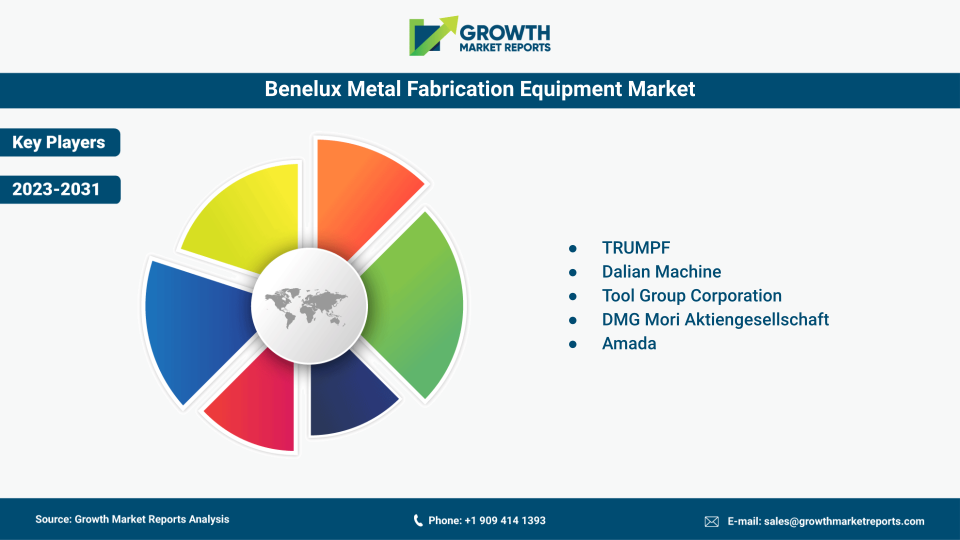

Benelux Metal Fabrication Equipment Keyplayers

Frequently Asked Questions

Manufacturers are prioritizing energy-efficient, low-waste, and environmentally friendly equipment to comply with regulations and meet sustainability goals.

Challenges include high initial capital investment, integration with legacy systems, skilled labor shortages, and economic uncertainties such as fluctuating raw material prices.

Leading companies include TRUMPF Group, Amada Holdings, Bystronic AG, Mitsubishi Electric, Mazak Corporation, Lincoln Electric, DMG MORI, Colfax Corporation, and BLM Group.

Key trends include the integration of IoT, AI, robotics, CNC controls, and the development of energy-efficient and eco-friendly machines.

Automation, including the adoption of Industry 4.0 technologies, is increasing productivity, reducing downtime, and enabling real-time monitoring and predictive maintenance.

Major end-use industries include automotive, aerospace & defense, construction, manufacturing, and energy & power.

Key equipment types include cutting, machining, welding, bending, shearing, and specialized machines such as punching and rolling mills.

Asia Pacific leads the market, followed by North America and Europe. Rapid industrialization in China, India, and Southeast Asia is a key growth driver in APAC.

The market is expected to grow at a CAGR of 4.8% from 2025 to 2033, reaching USD 118.2 billion by 2033.

As of 2024, the global metal fabrication equipment market size reached USD 78.5 billion, driven by industrialization and technological advancements.

Table Of Content

Chapter 1 Executive Summary
Chapter 2 Assumptions and Acronyms Used
Chapter 3 Research Methodology
Chapter 4 Metal Fabrication Equipment Market Overview
   4.1 Introduction
      4.1.1 Market Taxonomy
      4.1.2 Market Definition
      4.1.3 Macro-Economic Factors Impacting the Market Growth
   4.2 Metal Fabrication Equipment Market Dynamics
      4.2.1 Market Drivers
      4.2.2 Market Restraints
      4.2.3 Market Opportunity
   4.3 Metal Fabrication Equipment Market - Supply Chain Analysis
      4.3.1 List of Key Suppliers
      4.3.2 List of Key Distributors
      4.3.3 List of Key Consumers
   4.4 Key Forces Shaping the Metal Fabrication Equipment Market
      4.4.1 Bargaining Power of Suppliers
      4.4.2 Bargaining Power of Buyers
      4.4.3 Threat of Substitution
      4.4.4 Threat of New Entrants
      4.4.5 Competitive Rivalry
   4.5 Global Metal Fabrication Equipment Market Size & Forecast, 2023-2032
      4.5.1 Metal Fabrication Equipment Market Size and Y-o-Y Growth
      4.5.2 Metal Fabrication Equipment Market Absolute $ Opportunity

Chapter 5 Global Metal Fabrication Equipment Market Analysis and Forecast By Equipment Type
   5.1 Introduction
      5.1.1 Key Market Trends & Growth Opportunities By Equipment Type
      5.1.2 Basis Point Share (BPS) Analysis By Equipment Type
      5.1.3 Absolute $ Opportunity Assessment By Equipment Type
   5.2 Metal Fabrication Equipment Market Size Forecast By Equipment Type
      5.2.1 Cutting
      5.2.2 Machining
      5.2.3 Welding
      5.2.4 Bending
      5.2.5 Shearing
      5.2.6 Others
   5.3 Market Attractiveness Analysis By Equipment Type

Chapter 6 Global Metal Fabrication Equipment Market Analysis and Forecast By Application
   6.1 Introduction
      6.1.1 Key Market Trends & Growth Opportunities By Application
      6.1.2 Basis Point Share (BPS) Analysis By Application
      6.1.3 Absolute $ Opportunity Assessment By Application
   6.2 Metal Fabrication Equipment Market Size Forecast By Application
      6.2.1 Automotive
      6.2.2 Aerospace & Defense
      6.2.3 Construction
      6.2.4 Manufacturing
      6.2.5 Energy & Power
      6.2.6 Others
   6.3 Market Attractiveness Analysis By Application

Chapter 7 Global Metal Fabrication Equipment Market Analysis and Forecast By End-User
   7.1 Introduction
      7.1.1 Key Market Trends & Growth Opportunities By End-User
      7.1.2 Basis Point Share (BPS) Analysis By End-User
      7.1.3 Absolute $ Opportunity Assessment By End-User
   7.2 Metal Fabrication Equipment Market Size Forecast By End-User
      7.2.1 OEMs
      7.2.2 Aftermarket
   7.3 Market Attractiveness Analysis By End-User

Chapter 8 Global Metal Fabrication Equipment Market Analysis and Forecast By Automation Level
   8.1 Introduction
      8.1.1 Key Market Trends & Growth Opportunities By Automation Level
      8.1.2 Basis Point Share (BPS) Analysis By Automation Level
      8.1.3 Absolute $ Opportunity Assessment By Automation Level
   8.2 Metal Fabrication Equipment Market Size Forecast By Automation Level
      8.2.1 Manual
      8.2.2 Semi-Automatic
      8.2.3 Automatic
   8.3 Market Attractiveness Analysis By Automation Level

Chapter 9 Global Metal Fabrication Equipment Market Analysis and Forecast by Region
   9.1 Introduction
      9.1.1 Key Market Trends & Growth Opportunities By Region
      9.1.2 Basis Point Share (BPS) Analysis By Region
      9.1.3 Absolute $ Opportunity Assessment By Region
   9.2 Metal Fabrication Equipment Market Size Forecast By Region
      9.2.1 North America
      9.2.2 Europe
      9.2.3 Asia Pacific
      9.2.4 Latin America
      9.2.5 Middle East & Africa (MEA)
   9.3 Market Attractiveness Analysis By Region

Chapter 10 Coronavirus Disease (COVID-19) Impact 
   10.1 Introduction 
   10.2 Current & Future Impact Analysis 
   10.3 Economic Impact Analysis 
   10.4 Government Policies 
   10.5 Investment Scenario

Chapter 11 North America Metal Fabrication Equipment Analysis and Forecast
   11.1 Introduction
   11.2 North America Metal Fabrication Equipment Market Size Forecast by Country
      11.2.1 U.S.
      11.2.2 Canada
   11.3 Basis Point Share (BPS) Analysis by Country
   11.4 Absolute $ Opportunity Assessment by Country
   11.5 Market Attractiveness Analysis by Country
   11.6 North America Metal Fabrication Equipment Market Size Forecast By Equipment Type
      11.6.1 Cutting
      11.6.2 Machining
      11.6.3 Welding
      11.6.4 Bending
      11.6.5 Shearing
      11.6.6 Others
   11.7 Basis Point Share (BPS) Analysis By Equipment Type 
   11.8 Absolute $ Opportunity Assessment By Equipment Type 
   11.9 Market Attractiveness Analysis By Equipment Type
   11.10 North America Metal Fabrication Equipment Market Size Forecast By Application
      11.10.1 Automotive
      11.10.2 Aerospace & Defense
      11.10.3 Construction
      11.10.4 Manufacturing
      11.10.5 Energy & Power
      11.10.6 Others
   11.11 Basis Point Share (BPS) Analysis By Application 
   11.12 Absolute $ Opportunity Assessment By Application 
   11.13 Market Attractiveness Analysis By Application
   11.14 North America Metal Fabrication Equipment Market Size Forecast By End-User
      11.14.1 OEMs
      11.14.2 Aftermarket
   11.15 Basis Point Share (BPS) Analysis By End-User 
   11.16 Absolute $ Opportunity Assessment By End-User 
   11.17 Market Attractiveness Analysis By End-User
   11.18 North America Metal Fabrication Equipment Market Size Forecast By Automation Level
      11.18.1 Manual
      11.18.2 Semi-Automatic
      11.18.3 Automatic
   11.19 Basis Point Share (BPS) Analysis By Automation Level 
   11.20 Absolute $ Opportunity Assessment By Automation Level 
   11.21 Market Attractiveness Analysis By Automation Level

Chapter 12 Europe Metal Fabrication Equipment Analysis and Forecast
   12.1 Introduction
   12.2 Europe Metal Fabrication Equipment Market Size Forecast by Country
      12.2.1 Germany
      12.2.2 France
      12.2.3 Italy
      12.2.4 U.K.
      12.2.5 Spain
      12.2.6 Russia
      12.2.7 Rest of Europe
   12.3 Basis Point Share (BPS) Analysis by Country
   12.4 Absolute $ Opportunity Assessment by Country
   12.5 Market Attractiveness Analysis by Country
   12.6 Europe Metal Fabrication Equipment Market Size Forecast By Equipment Type
      12.6.1 Cutting
      12.6.2 Machining
      12.6.3 Welding
      12.6.4 Bending
      12.6.5 Shearing
      12.6.6 Others
   12.7 Basis Point Share (BPS) Analysis By Equipment Type 
   12.8 Absolute $ Opportunity Assessment By Equipment Type 
   12.9 Market Attractiveness Analysis By Equipment Type
   12.10 Europe Metal Fabrication Equipment Market Size Forecast By Application
      12.10.1 Automotive
      12.10.2 Aerospace & Defense
      12.10.3 Construction
      12.10.4 Manufacturing
      12.10.5 Energy & Power
      12.10.6 Others
   12.11 Basis Point Share (BPS) Analysis By Application 
   12.12 Absolute $ Opportunity Assessment By Application 
   12.13 Market Attractiveness Analysis By Application
   12.14 Europe Metal Fabrication Equipment Market Size Forecast By End-User
      12.14.1 OEMs
      12.14.2 Aftermarket
   12.15 Basis Point Share (BPS) Analysis By End-User 
   12.16 Absolute $ Opportunity Assessment By End-User 
   12.17 Market Attractiveness Analysis By End-User
   12.18 Europe Metal Fabrication Equipment Market Size Forecast By Automation Level
      12.18.1 Manual
      12.18.2 Semi-Automatic
      12.18.3 Automatic
   12.19 Basis Point Share (BPS) Analysis By Automation Level 
   12.20 Absolute $ Opportunity Assessment By Automation Level 
   12.21 Market Attractiveness Analysis By Automation Level

Chapter 13 Asia Pacific Metal Fabrication Equipment Analysis and Forecast
   13.1 Introduction
   13.2 Asia Pacific Metal Fabrication Equipment Market Size Forecast by Country
      13.2.1 China
      13.2.2 Japan
      13.2.3 South Korea
      13.2.4 India
      13.2.5 Australia
      13.2.6 South East Asia (SEA)
      13.2.7 Rest of Asia Pacific (APAC)
   13.3 Basis Point Share (BPS) Analysis by Country
   13.4 Absolute $ Opportunity Assessment by Country
   13.5 Market Attractiveness Analysis by Country
   13.6 Asia Pacific Metal Fabrication Equipment Market Size Forecast By Equipment Type
      13.6.1 Cutting
      13.6.2 Machining
      13.6.3 Welding
      13.6.4 Bending
      13.6.5 Shearing
      13.6.6 Others
   13.7 Basis Point Share (BPS) Analysis By Equipment Type 
   13.8 Absolute $ Opportunity Assessment By Equipment Type 
   13.9 Market Attractiveness Analysis By Equipment Type
   13.10 Asia Pacific Metal Fabrication Equipment Market Size Forecast By Application
      13.10.1 Automotive
      13.10.2 Aerospace & Defense
      13.10.3 Construction
      13.10.4 Manufacturing
      13.10.5 Energy & Power
      13.10.6 Others
   13.11 Basis Point Share (BPS) Analysis By Application 
   13.12 Absolute $ Opportunity Assessment By Application 
   13.13 Market Attractiveness Analysis By Application
   13.14 Asia Pacific Metal Fabrication Equipment Market Size Forecast By End-User
      13.14.1 OEMs
      13.14.2 Aftermarket
   13.15 Basis Point Share (BPS) Analysis By End-User 
   13.16 Absolute $ Opportunity Assessment By End-User 
   13.17 Market Attractiveness Analysis By End-User
   13.18 Asia Pacific Metal Fabrication Equipment Market Size Forecast By Automation Level
      13.18.1 Manual
      13.18.2 Semi-Automatic
      13.18.3 Automatic
   13.19 Basis Point Share (BPS) Analysis By Automation Level 
   13.20 Absolute $ Opportunity Assessment By Automation Level 
   13.21 Market Attractiveness Analysis By Automation Level

Chapter 14 Latin America Metal Fabrication Equipment Analysis and Forecast
   14.1 Introduction
   14.2 Latin America Metal Fabrication Equipment Market Size Forecast by Country
      14.2.1 Brazil
      14.2.2 Mexico
      14.2.3 Rest of Latin America (LATAM)
   14.3 Basis Point Share (BPS) Analysis by Country
   14.4 Absolute $ Opportunity Assessment by Country
   14.5 Market Attractiveness Analysis by Country
   14.6 Latin America Metal Fabrication Equipment Market Size Forecast By Equipment Type
      14.6.1 Cutting
      14.6.2 Machining
      14.6.3 Welding
      14.6.4 Bending
      14.6.5 Shearing
      14.6.6 Others
   14.7 Basis Point Share (BPS) Analysis By Equipment Type 
   14.8 Absolute $ Opportunity Assessment By Equipment Type 
   14.9 Market Attractiveness Analysis By Equipment Type
   14.10 Latin America Metal Fabrication Equipment Market Size Forecast By Application
      14.10.1 Automotive
      14.10.2 Aerospace & Defense
      14.10.3 Construction
      14.10.4 Manufacturing
      14.10.5 Energy & Power
      14.10.6 Others
   14.11 Basis Point Share (BPS) Analysis By Application 
   14.12 Absolute $ Opportunity Assessment By Application 
   14.13 Market Attractiveness Analysis By Application
   14.14 Latin America Metal Fabrication Equipment Market Size Forecast By End-User
      14.14.1 OEMs
      14.14.2 Aftermarket
   14.15 Basis Point Share (BPS) Analysis By End-User 
   14.16 Absolute $ Opportunity Assessment By End-User 
   14.17 Market Attractiveness Analysis By End-User
   14.18 Latin America Metal Fabrication Equipment Market Size Forecast By Automation Level
      14.18.1 Manual
      14.18.2 Semi-Automatic
      14.18.3 Automatic
   14.19 Basis Point Share (BPS) Analysis By Automation Level 
   14.20 Absolute $ Opportunity Assessment By Automation Level 
   14.21 Market Attractiveness Analysis By Automation Level

Chapter 15 Middle East & Africa (MEA) Metal Fabrication Equipment Analysis and Forecast
   15.1 Introduction
   15.2 Middle East & Africa (MEA) Metal Fabrication Equipment Market Size Forecast by Country
      15.2.1 Saudi Arabia
      15.2.2 South Africa
      15.2.3 UAE
      15.2.4 Rest of Middle East & Africa (MEA)
   15.3 Basis Point Share (BPS) Analysis by Country
   15.4 Absolute $ Opportunity Assessment by Country
   15.5 Market Attractiveness Analysis by Country
   15.6 Middle East & Africa (MEA) Metal Fabrication Equipment Market Size Forecast By Equipment Type
      15.6.1 Cutting
      15.6.2 Machining
      15.6.3 Welding
      15.6.4 Bending
      15.6.5 Shearing
      15.6.6 Others
   15.7 Basis Point Share (BPS) Analysis By Equipment Type 
   15.8 Absolute $ Opportunity Assessment By Equipment Type 
   15.9 Market Attractiveness Analysis By Equipment Type
   15.10 Middle East & Africa (MEA) Metal Fabrication Equipment Market Size Forecast By Application
      15.10.1 Automotive
      15.10.2 Aerospace & Defense
      15.10.3 Construction
      15.10.4 Manufacturing
      15.10.5 Energy & Power
      15.10.6 Others
   15.11 Basis Point Share (BPS) Analysis By Application 
   15.12 Absolute $ Opportunity Assessment By Application 
   15.13 Market Attractiveness Analysis By Application
   15.14 Middle East & Africa (MEA) Metal Fabrication Equipment Market Size Forecast By End-User
      15.14.1 OEMs
      15.14.2 Aftermarket
   15.15 Basis Point Share (BPS) Analysis By End-User 
   15.16 Absolute $ Opportunity Assessment By End-User 
   15.17 Market Attractiveness Analysis By End-User
   15.18 Middle East & Africa (MEA) Metal Fabrication Equipment Market Size Forecast By Automation Level
      15.18.1 Manual
      15.18.2 Semi-Automatic
      15.18.3 Automatic
   15.19 Basis Point Share (BPS) Analysis By Automation Level 
   15.20 Absolute $ Opportunity Assessment By Automation Level 
   15.21 Market Attractiveness Analysis By Automation Level

Chapter 16 Competition Landscape 
   16.1 Metal Fabrication Equipment Market: Competitive Dashboard
   16.2 Global Metal Fabrication Equipment Market: Market Share Analysis, 2023
   16.3 Company Profiles (Details – Overview, Financials, Developments, Strategy) 
      16.3.1 Amada Co., Ltd.
TRUMPF Group
Bystronic AG
Mitsubishi Electric Corporation
Mazak Corporation
Salvagnini S.p.A.
Colfax Corporation
DMG Mori Co., Ltd.
Dalian Machine Tool Group Corporation
Baileigh Industrial Holdings LLC
BLM GROUP
Prima Industrie S.p.A.
Haco Group
LVD Company NV
Murata Machinery, Ltd.
JIER Machine-Tool Group Co., Ltd.
Schuler AG
Koike Aronson, Inc.
Lincoln Electric Holdings, Inc.
Hindustan Machine Tools Limited (HMT Limited)

Methodology

Our Clients

Microsoft
General Electric
Nestle SA
The John Holland Group
Honda Motor Co. Ltd.
Siemens Healthcare
Pfizer
FedEx Logistics