Behenamidopropyl Dimethylamine (BAPDMA) Market Research Report 2033

Behenamidopropyl Dimethylamine (BAPDMA) Market Research Report 2033

Segments - by Product Type (Liquid BAPDMA, Solid BAPDMA), by Application (Hair Care, Skin Care, Personal Care, Industrial Applications, Others), by End-Use Industry (Cosmetics & Personal Care, Pharmaceuticals, Industrial, Others), by Distribution Channel (Direct Sales, Distributors/Wholesalers, Online Retail, Others)

https://growthmarketreports.com/Raksha
Author : Raksha Sharma
https://growthmarketreports.com/Vaibhav
Fact-checked by : V. Chandola
https://growthmarketreports.com/Shruti
Editor : Shruti Bhat

Upcoming | Report ID :MC-4937 | 4.0 Rating | 40 Reviews | 271 Pages | Format : Docx PDF

Report Description


Behenamidopropyl Dimethylamine (BAPDMA) Market Outlook

According to our latest research, the global Behenamidopropyl Dimethylamine (BAPDMA) market size reached USD 328.5 million in 2024, reflecting robust demand across personal care and industrial sectors. The market is expected to grow at a CAGR of 6.8% from 2025 to 2033, with the forecasted market size projected to reach USD 633.7 million by 2033. This growth is primarily driven by the increasing utilization of BAPDMA in hair care and skin care formulations, owing to its superior conditioning and emulsifying properties. The evolving landscape of cosmetic and personal care product manufacturing, coupled with rising consumer awareness regarding product efficacy and ingredient safety, continues to propel the BAPDMA market forward.

One of the primary growth factors for the Behenamidopropyl Dimethylamine (BAPDMA) market is the surging demand for high-performance hair care products globally. BAPDMA, known for its exceptional antistatic and conditioning attributes, has become a preferred ingredient in shampoos, conditioners, and hair masks. The cosmetic industry’s ongoing innovation, particularly in advanced formulations targeting specific hair concerns such as frizz control, moisture retention, and manageability, has led to increased adoption of BAPDMA. Furthermore, the shift toward sulfate-free and paraben-free formulations, where BAPDMA serves as a gentle yet effective conditioning agent, is amplifying its consumption. This trend is especially pronounced in developed markets, where consumers are increasingly seeking clean-label and multifunctional hair care products.

Another significant driver is the expanding application of BAPDMA in skin care and broader personal care segments. The ingredient’s mildness and compatibility with sensitive skin make it suitable for lotions, creams, and body washes, where it imparts a silky texture and enhances product spreadability. The rising demand for premium personal care products, especially those catering to sensitive or allergy-prone skin, has prompted manufacturers to incorporate BAPDMA due to its low irritation profile. Additionally, the ingredient’s utility in stabilizing emulsions and improving product aesthetics has found favor among formulators aiming for high-performance, consumer-appealing products. The growth of e-commerce and direct-to-consumer brands has further facilitated the penetration of BAPDMA-based formulations, particularly in emerging markets.

The industrial application of BAPDMA is also contributing to market expansion. BAPDMA is used in various industrial processes, including textile softening agents, lubricants, and antistatic agents for plastics. The growing demand for advanced materials with enhanced surface properties in sectors such as automotive, electronics, and textiles is supporting the uptake of BAPDMA. Additionally, the pharmaceutical industry is exploring BAPDMA’s potential in topical formulations and as a stabilizer in certain drug delivery systems. As regulatory frameworks around ingredient safety and environmental impact become more stringent, BAPDMA’s favorable toxicological profile is likely to further cement its position in industrial and pharmaceutical applications.

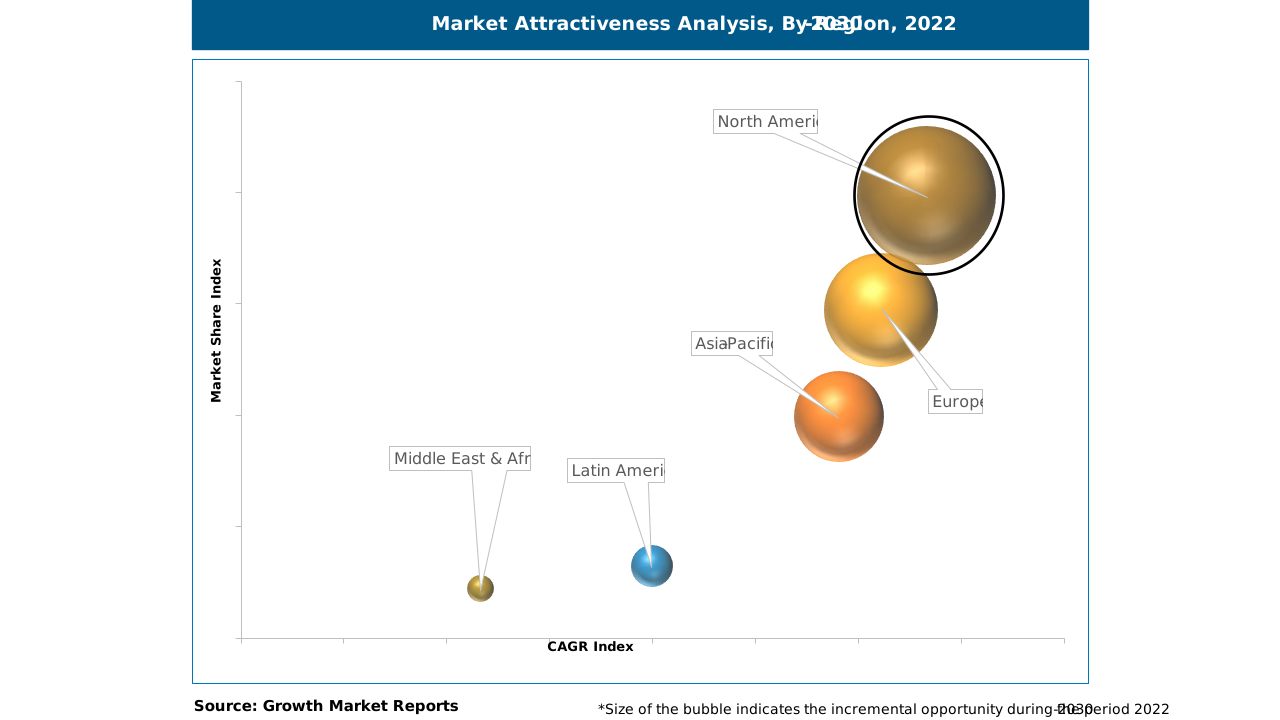
From a regional perspective, Asia Pacific dominates the BAPDMA market with the largest share in 2024, driven by booming personal care manufacturing hubs in China, India, and Southeast Asia. The region’s expanding middle class, increasing disposable incomes, and growing urbanization are fueling the demand for premium personal care and cosmetic products, thereby boosting BAPDMA consumption. North America and Europe follow closely, with significant demand attributed to well-established cosmetics industries and a strong focus on product innovation and safety. Meanwhile, Latin America and the Middle East & Africa are emerging as high-potential markets, supported by rising awareness of personal grooming and improving retail infrastructure. The global market’s growth trajectory is further reinforced by the increasing adoption of online retail channels and the proliferation of direct-to-consumer brands leveraging BAPDMA in their product portfolios.

Global Behenamidopropyl Dimethylamine (BAPDMA) Industry Outlook

Product Type Analysis

The Behenamidopropyl Dimethylamine (BAPDMA) market is segmented by product type into Liquid BAPDMA and Solid BAPDMA. Liquid BAPDMA holds a dominant share in the market, largely due to its ease of incorporation into a wide range of formulations, particularly in the cosmetics and personal care industries. Liquid BAPDMA is favored for its superior solubility and efficient blending with other ingredients, making it ideal for high-throughput manufacturing environments. Its liquid form ensures uniform distribution in emulsions, leading to consistent product quality and performance. As manufacturers increasingly seek to optimize production processes and reduce formulation complexities, the demand for liquid BAPDMA continues to rise.

Solid BAPDMA, on the other hand, is gaining traction in applications where stability and long shelf life are critical. Solid forms are preferred in certain industrial and pharmaceutical formulations, where precise dosing and minimal contamination risks are paramount. The solid variant is also advantageous for markets with logistical challenges, as it offers improved handling and storage benefits. Although the adoption rate of solid BAPDMA is currently lower compared to its liquid counterpart, ongoing technological advancements in formulation science are expected to boost its market share over the forecast period. Manufacturers are investing in research to develop innovative solid BAPDMA derivatives with enhanced dispersibility and functional attributes.

The choice between liquid and solid BAPDMA is often dictated by end-use requirements and regulatory considerations. For instance, in hair care applications, liquid BAPDMA is preferred for its rapid solubilization and compatibility with aqueous systems, while solid BAPDMA is utilized in products requiring slow release or sustained conditioning effects. Regulatory compliance, particularly concerning purity levels and residual solvent content, also influences the selection of product type. As consumer preferences evolve and regulatory standards tighten, manufacturers are increasingly focused on sourcing high-purity BAPDMA in both liquid and solid forms to meet diverse market needs.

Market players are strategically expanding their product portfolios to include both liquid and solid BAPDMA, catering to the customized requirements of their clients. This diversification is further supported by advancements in production technologies, enabling the scalable and cost-effective manufacture of both forms. The ongoing trend of clean-label and eco-friendly products is prompting suppliers to develop BAPDMA variants with minimal environmental impact, including biodegradable and sustainably sourced options in both liquid and solid formats. As a result, the product type segment is expected to witness dynamic growth and innovation throughout the forecast period.

Report Scope

Attributes Details
Report Title Behenamidopropyl Dimethylamine (BAPDMA) Market Research Report 2033
By Product Type Liquid BAPDMA, Solid BAPDMA
By Application Hair Care, Skin Care, Personal Care, Industrial Applications, Others
By End-Use Industry Cosmetics & Personal Care, Pharmaceuticals, Industrial, Others
By Distribution Channel Direct Sales, Distributors/Wholesalers, Online Retail, Others
Regions Covered North America, Europe, APAC, Latin America, MEA
Base Year 2024
Historic Data 2018-2023
Forecast Period 2025-2033
Number of Pages 271
Number of Tables & Figures 396
Customization Available Yes, the report can be customized as per your need.

Application Analysis

The application segment of the Behenamidopropyl Dimethylamine (BAPDMA) market is highly diversified, with Hair Care standing out as the largest and most lucrative application area. BAPDMA’s unique conditioning, detangling, and antistatic properties make it an indispensable ingredient in shampoos, conditioners, and hair masks. The global surge in demand for premium and specialized hair care products, including those targeting specific hair types and concerns, has significantly amplified the consumption of BAPDMA. Brands are increasingly formulating products that promise smoother, shinier, and more manageable hair, leveraging BAPDMA’s ability to impart a luxurious feel and long-lasting conditioning benefits.

In Skin Care, BAPDMA is valued for its mildness and ability to enhance the sensory attributes of creams, lotions, and body washes. Its compatibility with sensitive skin and low irritation potential make it suitable for products aimed at consumers with delicate or allergy-prone skin. The rising trend of multifunctional skin care products, which offer hydration, barrier protection, and soothing effects, is driving the adoption of BAPDMA in this segment. The ingredient’s emulsifying properties also support the development of stable and aesthetically pleasing formulations, further boosting its popularity among skin care brands.

Beyond personal care, BAPDMA finds application in a range of industrial applications such as textile softeners, lubricants, and antistatic agents for plastics and coatings. The growing focus on advanced material properties in sectors like automotive, electronics, and textiles is supporting the demand for BAPDMA-based solutions. Additionally, the pharmaceutical industry is exploring BAPDMA’s potential as a stabilizer and emulsifier in topical drug formulations, driven by its favorable safety and efficacy profile. The versatility of BAPDMA across these diverse applications underscores its importance as a multifunctional ingredient in modern product development.

Other applications of BAPDMA include its use in cleaning agents, fabric conditioners, and specialty chemical formulations. As sustainability becomes a key consideration in product development, BAPDMA’s biodegradable nature and low environmental impact are making it an attractive choice for eco-conscious brands. The ongoing expansion of the application landscape, coupled with continuous innovation in formulation science, is expected to drive sustained growth in the BAPDMA market over the coming years.

End-Use Industry Analysis

The end-use industry segment of the Behenamidopropyl Dimethylamine (BAPDMA) market is dominated by the Cosmetics & Personal Care sector, which accounts for the largest share of global consumption. This dominance is attributed to the widespread use of BAPDMA in hair care, skin care, and personal care products, where it delivers superior conditioning, emulsifying, and sensory benefits. The continuous innovation and premiumization trends in the cosmetics industry, along with increasing consumer demand for high-performance and safe ingredients, are fueling the adoption of BAPDMA. Leading cosmetic brands are leveraging BAPDMA to differentiate their product offerings and enhance consumer satisfaction.

The pharmaceutical industry represents a growing end-use segment for BAPDMA, particularly in topical formulations and drug delivery systems. BAPDMA’s mildness, compatibility with active pharmaceutical ingredients, and ability to stabilize emulsions make it suitable for use in creams, ointments, and lotions. The increasing focus on patient-centric formulations and the rising prevalence of skin disorders are driving pharmaceutical manufacturers to incorporate BAPDMA in their product pipelines. Regulatory approval for the use of BAPDMA in pharmaceutical applications is further supporting market growth in this segment.

The industrial sector is another key end-use industry for BAPDMA, encompassing applications in textiles, plastics, and specialty chemicals. In textiles, BAPDMA is used as a softening agent to impart a smooth and luxurious feel to fabrics. In plastics and coatings, it serves as an antistatic agent, improving the performance and safety of finished products. The growing demand for advanced materials with enhanced functional properties is driving the adoption of BAPDMA in various industrial processes. Additionally, the trend toward sustainable and environmentally friendly manufacturing practices is prompting industries to adopt BAPDMA as a safer and more sustainable alternative to traditional additives.

Other end-use industries for BAPDMA include household cleaning products, automotive care, and specialty formulations in niche markets. The ingredient’s versatility and favorable safety profile make it suitable for a wide range of applications beyond traditional personal care and industrial uses. As manufacturers continue to explore new applications and invest in research and development, the end-use industry segment of the BAPDMA market is expected to witness robust growth and diversification in the years ahead.

Distribution Channel Analysis

The distribution channel segment of the Behenamidopropyl Dimethylamine (BAPDMA) market is characterized by a mix of Direct Sales, Distributors/Wholesalers, Online Retail, and other channels. Direct sales account for a significant share of the market, particularly among large manufacturers and industrial clients who require bulk quantities and customized solutions. Direct engagement with suppliers enables these clients to negotiate favorable terms, ensure consistent quality, and receive technical support for product integration and formulation development. This channel is especially prominent in regions with well-established industrial and cosmetic manufacturing bases.

Distributors and wholesalers play a crucial role in extending the reach of BAPDMA to smaller manufacturers and emerging brands, particularly in regions with fragmented supply chains or limited direct access to major suppliers. These intermediaries offer value-added services such as inventory management, logistics support, and after-sales service, making them indispensable to the efficient functioning of the market. The increasing complexity of global supply chains and the need for reliable distribution networks are driving the growth of this channel, especially in emerging markets.

Online retail has emerged as a fast-growing distribution channel for BAPDMA, driven by the digital transformation of the chemical and personal care industries. E-commerce platforms enable manufacturers and formulators to source BAPDMA quickly and efficiently, often with access to a wider range of product variants and suppliers. The rise of direct-to-consumer brands and the increasing use of digital procurement platforms in the B2B sector are further fueling the adoption of online retail channels. This trend is particularly pronounced in developed markets, where digital literacy and internet penetration are high.

Other distribution channels, including specialty chemical stores and third-party logistics providers, contribute to the overall accessibility and availability of BAPDMA in the market. As the competitive landscape intensifies and customer expectations evolve, suppliers are increasingly investing in omnichannel strategies to enhance customer experience and capture a larger share of the market. The ongoing integration of digital technologies and supply chain innovations is expected to further transform the distribution landscape for BAPDMA in the coming years.

Opportunities & Threats

The Behenamidopropyl Dimethylamine (BAPDMA) market presents significant opportunities for growth, particularly in the context of rising consumer demand for high-performance and sustainable personal care products. The ongoing shift toward clean-label and eco-friendly formulations is prompting manufacturers to seek alternatives to traditional conditioning and emulsifying agents, positioning BAPDMA as an attractive option. Advancements in formulation science, coupled with increasing investments in research and development, are enabling the creation of innovative BAPDMA-based products with enhanced efficacy and safety profiles. Emerging markets, characterized by a growing middle class and increasing disposable incomes, offer substantial untapped potential for market expansion. The proliferation of online retail channels and the rise of direct-to-consumer brands are further democratizing access to BAPDMA, enabling smaller players to compete effectively and drive innovation in the market.

Another major opportunity lies in the diversification of BAPDMA applications beyond traditional personal care and cosmetics. The ingredient’s versatility and favorable safety profile make it suitable for use in pharmaceuticals, industrial applications, and specialty chemicals. As regulatory frameworks evolve and the demand for safer, more sustainable ingredients increases, BAPDMA is well-positioned to capture a larger share of these emerging markets. Strategic collaborations between manufacturers, research institutions, and regulatory bodies are expected to accelerate the development of new applications and facilitate market entry. Additionally, the integration of digital technologies and supply chain innovations is creating new avenues for market growth, enabling suppliers to reach a broader customer base and enhance operational efficiency.

Despite these opportunities, the BAPDMA market faces certain restraints that could hinder its growth trajectory. One of the primary challenges is the volatility in raw material prices, particularly for behenic acid and other key feedstocks. Fluctuations in supply and pricing can impact production costs and profit margins, making it difficult for manufacturers to maintain competitive pricing. Regulatory compliance and safety concerns, especially in the context of cosmetic and pharmaceutical applications, also pose challenges for market participants. Stringent quality standards and the need for extensive safety testing can increase time-to-market and operational costs. Additionally, the presence of alternative conditioning and emulsifying agents, some of which offer similar or superior performance at lower costs, could limit the adoption of BAPDMA in certain applications.

Regional Outlook

The Asia Pacific region leads the Behenamidopropyl Dimethylamine (BAPDMA) market, accounting for approximately 38% of the global market share in 2024, with a market size of USD 124.8 million. The region’s dominance is underpinned by the rapid expansion of the cosmetics and personal care industries in countries such as China, India, South Korea, and Japan. The increasing urbanization, rising disposable incomes, and growing awareness of personal grooming are driving demand for premium hair care and skin care products, which in turn is boosting BAPDMA consumption. The proliferation of local and international cosmetic brands, coupled with strong manufacturing capabilities and a robust supply chain infrastructure, further supports the region’s leading position. Asia Pacific is also expected to record the highest CAGR of 7.4% during the forecast period, reflecting its status as a key growth engine for the global market.

In North America, the BAPDMA market is valued at USD 91.1 million in 2024, driven by a mature cosmetics industry, high consumer awareness, and a strong focus on product innovation. The region is characterized by the presence of leading personal care brands and a well-established regulatory framework that emphasizes product safety and efficacy. The trend toward clean-label and sustainable beauty products is particularly pronounced in North America, prompting manufacturers to incorporate BAPDMA as a preferred conditioning and emulsifying agent. The region also benefits from a high level of digital adoption, with online retail channels playing an increasingly important role in product distribution and consumer engagement.

Europe holds a significant share of the global BAPDMA market, with a market size of USD 73.8 million in 2024. The region’s strong tradition of cosmetic innovation, coupled with stringent regulatory standards and a growing emphasis on ingredient transparency, is driving demand for high-quality BAPDMA. Key markets such as Germany, France, and the United Kingdom are at the forefront of this trend, supported by a well-developed retail infrastructure and a sophisticated consumer base. Meanwhile, Latin America and the Middle East & Africa are emerging as high-potential markets, with respective market sizes of USD 23.0 million and USD 15.8 million in 2024. These regions are witnessing increasing investments in personal care manufacturing and retail expansion, supported by rising consumer awareness and improving economic conditions. As the global market continues to evolve, regional dynamics will play a critical role in shaping the future growth trajectory of the BAPDMA market.

Behenamidopropyl Dimethylamine (BAPDMA) Market Statistics

Competitor Outlook

The Behenamidopropyl Dimethylamine (BAPDMA) market is characterized by a competitive landscape featuring a mix of multinational chemical companies, specialized ingredient manufacturers, and emerging regional players. Leading companies are focusing on product innovation, capacity expansion, and strategic collaborations to strengthen their market positions and cater to the evolving needs of customers. The competitive environment is further intensified by the increasing demand for high-purity, sustainable, and multifunctional BAPDMA variants, prompting market participants to invest in research and development and adopt advanced manufacturing technologies. Quality assurance, regulatory compliance, and supply chain reliability are key differentiators for companies seeking to capture a larger share of the market.

Strategic partnerships and mergers and acquisitions are common strategies employed by major players to expand their product portfolios, enhance technological capabilities, and access new markets. Companies are also leveraging digital technologies and data analytics to optimize production processes, improve customer engagement, and gain insights into emerging trends and consumer preferences. The growing importance of sustainability and corporate social responsibility is prompting market leaders to invest in green chemistry initiatives, develop biodegradable BAPDMA variants, and adopt environmentally friendly manufacturing practices. These efforts are aimed at meeting the rising expectations of consumers, regulators, and stakeholders, while also maintaining a competitive edge in the market.

The market is witnessing the entry of new players, particularly in emerging regions, who are leveraging local manufacturing capabilities and cost advantages to capture market share. These companies are often focused on serving niche segments or offering customized solutions tailored to the specific needs of regional customers. The presence of a diverse and dynamic competitive landscape is fostering innovation and driving continuous improvement in product quality, performance, and sustainability. As competition intensifies, companies are increasingly prioritizing customer-centric strategies, such as personalized technical support, flexible supply arrangements, and value-added services, to build long-term relationships and enhance brand loyalty.

Some of the major companies operating in the global BAPDMA market include Evonik Industries AG, Solvay S.A., Clariant AG, Stepan Company, and Lubrizol Corporation. These industry leaders are known for their extensive product portfolios, strong research and development capabilities, and global distribution networks. For instance, Evonik Industries AG is a pioneer in specialty chemicals, offering high-quality BAPDMA for various personal care and industrial applications. Solvay S.A. and Clariant AG are recognized for their commitment to sustainable innovation and their ability to deliver customized ingredient solutions to meet the unique requirements of their clients. Stepan Company and Lubrizol Corporation are also prominent players, known for their focus on quality, regulatory compliance, and customer support.

In addition to these global players, several regional and niche manufacturers are making significant contributions to the BAPDMA market, particularly in Asia Pacific and Latin America. These companies are leveraging their local expertise, cost efficiencies, and agile supply chains to address the specific needs of regional customers. The increasing presence of such players is fostering healthy competition and driving the overall growth and development of the BAPDMA market. As the market continues to evolve, collaboration, innovation, and sustainability will remain key themes shaping the competitive landscape and determining the long-term success of market participants.

Key Players

  • Solvay S.A.
  • Clariant AG
  • Evonik Industries AG
  • Croda International Plc
  • BASF SE
  • Stepan Company
  • Lubrizol Corporation
  • Kao Corporation
  • Innospec Inc.
  • Galaxy Surfactants Ltd.
  • Colonial Chemical, Inc.
  • Pilot Chemical Company
  • Oxiteno S.A.
  • Jeen International Corporation
  • Hangzhou FandaChem Co., Ltd.
  • Zschimmer & Schwarz GmbH & Co KG
  • Venus Ethoxyethers Pvt. Ltd.
  • Nease Co. LLC
  • Henan Surface Chemical Industry Co., Ltd.
  • Rimpro India Pvt. Ltd.
Behenamidopropyl Dimethylamine (BAPDMA) Market Overview

Segments

The Behenamidopropyl Dimethylamine (BAPDMA) market has been segmented on the basis of

Product Type

  • Liquid BAPDMA
  • Solid BAPDMA

Application

  • Hair Care
  • Skin Care
  • Personal Care
  • Industrial Applications
  • Others

End-Use Industry

  • Cosmetics & Personal Care
  • Pharmaceuticals
  • Industrial
  • Others

Distribution Channel

  • Direct Sales
  • Distributors/Wholesalers
  • Online Retail
  • Others

Competitive Landscape

Manufacturers operating in the global Behenamidopropyl Dimethylamine (BAPDMA) market include Kao Corporation, Croda International Plc, Pilot Chemical Corp., Sino Lion USA, Shanghai Sunwise Chemical Co., Ltd., PHOENIX CHEMICAL, INC., Citróleo., and Alzo International Inc. Market players are pursuing key strategies such as acquisitions, collaborations, and geographic expansion where a potential opportunity arises for the Behenamidopropyl Dimethylamine (BAPDMA) market.
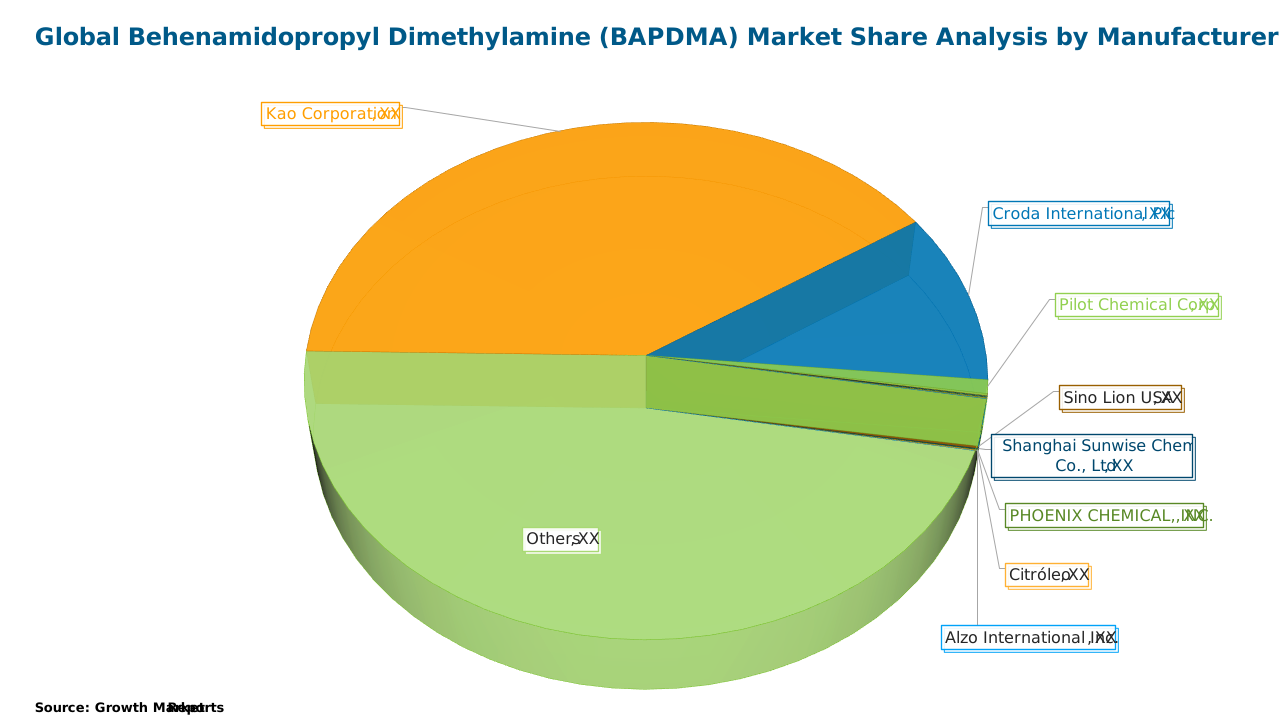

Global Behenamidopropyl Dimethylamine Market Key Players

Frequently Asked Questions

Major manufacturers include Kao Corporation, Croda International Plc, Pilot Chemical Corp., Sino Lion USA, Shanghai Sunwise Chemical Co., Ltd., and PHOENIX CHEMICAL, INC., among others.

Environment Assessment, E-commerce retail sales, and government regulations affect the market.

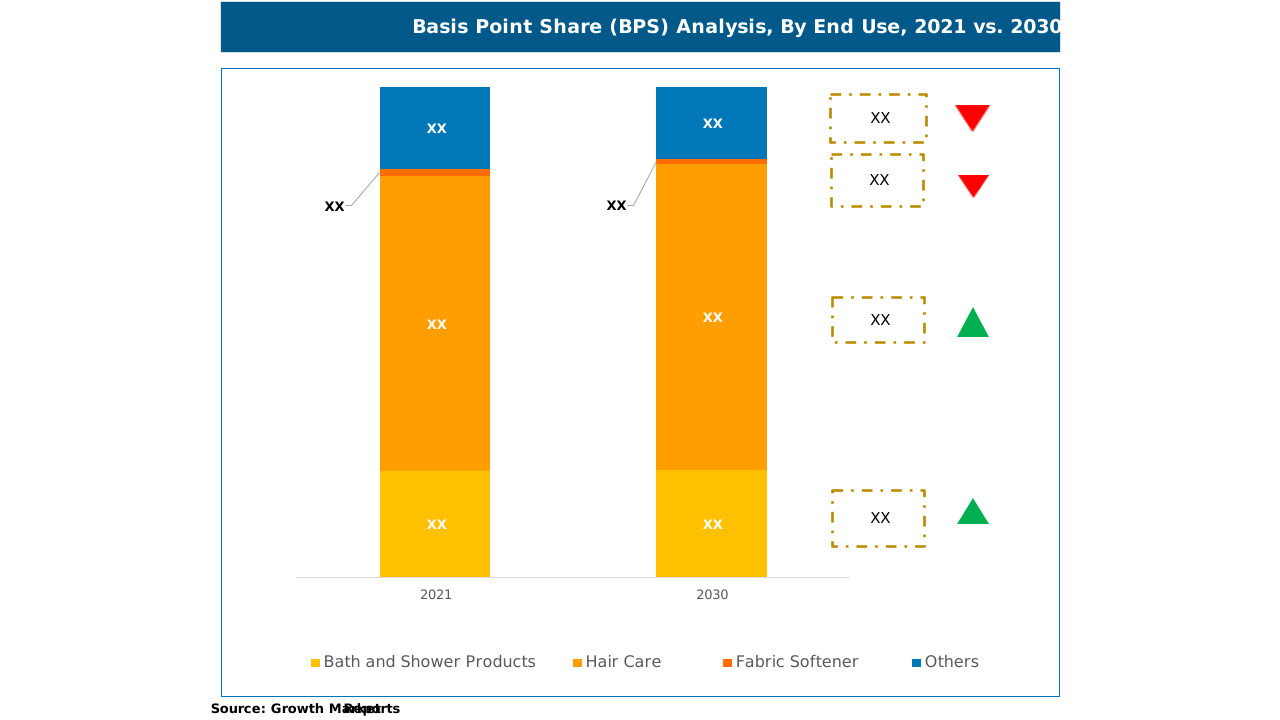
Hair care products, bath & shower products, and fabric softeners are major end-users of Behenamidopropyl Dimethylamine (BAPDMA).

COVID-19 hampered the Behenamidopropyl Dimethylamine (BAPDMA) market moderately, as it is used in hair care products, bath & shower products, and fabric softeners, among others. Manufacturers in the market are focused on investing in R&D activities, which boosted the market during the pandemic.

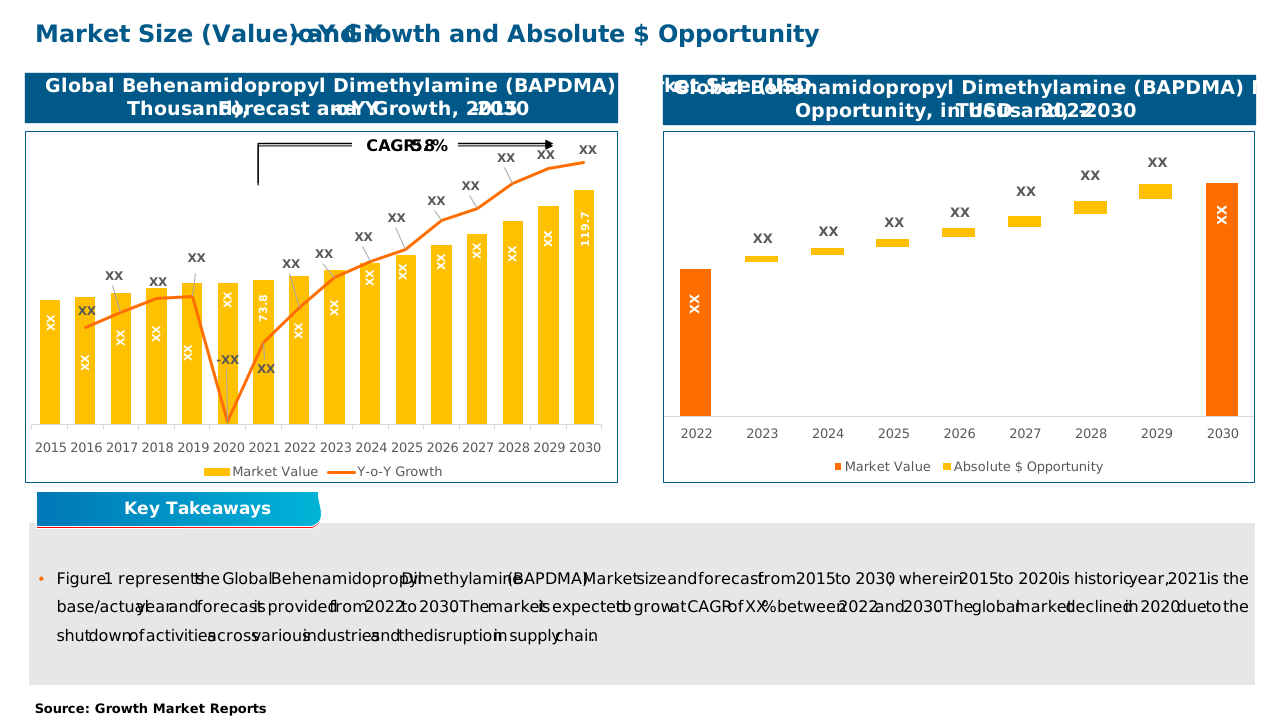
The base year considered for the global Behenamidopropyl Dimethylamine (BAPDMA) market report is 2021. The complete analysis period is 2015 to 2030, wherein, 2015 to 2020 are the historic years, and the forecast is provided from 2022 to 2030.

Factors such as shifting consumer preference towards organic products, increasing demand for sustainability and biodegradability in hair care products, growing investment in product promotion, and increasing focus on hair smoothening products for men are driving the BAPDMA market.

Factors such as competitive strength and market positioning are key areas considered while selecting top companies to be profiled.

In addition to market size (in US$ Thousand), the company market share (in % for the base year 2021, impact of key regulations, current and future market trends, patent analysis, penetration & growth prospect mapping, and market entry strategies are included in the report.

According to this Growth Market Reports report, the Behenamidopropyl Dimethylamine (BAPDMA) market is likely to register a CAGR of 5.8 % during the forecast period 2020-2028, with an anticipated valuation of USD 1,19,742.4 Thousand by the end of 2030.

Additional company profiles can be provided on request. For a discussion related to the above findings, click Speak to Analyst

Table Of Content

Chapter 1 Executive Summary
Chapter 2 Assumptions and Acronyms Used
Chapter 3 Research Methodology
Chapter 4 Behenamidopropyl Dimethylamine (BAPDMA) Market Overview
   4.1 Introduction
      4.1.1 Market Taxonomy
      4.1.2 Market Definition
      4.1.3 Macro-Economic Factors Impacting the Market Growth
   4.2 Behenamidopropyl Dimethylamine (BAPDMA) Market Dynamics
      4.2.1 Market Drivers
      4.2.2 Market Restraints
      4.2.3 Market Opportunity
   4.3 Behenamidopropyl Dimethylamine (BAPDMA) Market - Supply Chain Analysis
      4.3.1 List of Key Suppliers
      4.3.2 List of Key Distributors
      4.3.3 List of Key Consumers
   4.4 Key Forces Shaping the Behenamidopropyl Dimethylamine (BAPDMA) Market
      4.4.1 Bargaining Power of Suppliers
      4.4.2 Bargaining Power of Buyers
      4.4.3 Threat of Substitution
      4.4.4 Threat of New Entrants
      4.4.5 Competitive Rivalry
   4.5 Global Behenamidopropyl Dimethylamine (BAPDMA) Market Size & Forecast, 2023-2032
      4.5.1 Behenamidopropyl Dimethylamine (BAPDMA) Market Size and Y-o-Y Growth
      4.5.2 Behenamidopropyl Dimethylamine (BAPDMA) Market Absolute $ Opportunity

Chapter 5 Global Behenamidopropyl Dimethylamine (BAPDMA) Market Analysis and Forecast By Product Type
   5.1 Introduction
      5.1.1 Key Market Trends & Growth Opportunities By Product Type
      5.1.2 Basis Point Share (BPS) Analysis By Product Type
      5.1.3 Absolute $ Opportunity Assessment By Product Type
   5.2 Behenamidopropyl Dimethylamine (BAPDMA) Market Size Forecast By Product Type
      5.2.1 Liquid BAPDMA
      5.2.2 Solid BAPDMA
   5.3 Market Attractiveness Analysis By Product Type

Chapter 6 Global Behenamidopropyl Dimethylamine (BAPDMA) Market Analysis and Forecast By Application
   6.1 Introduction
      6.1.1 Key Market Trends & Growth Opportunities By Application
      6.1.2 Basis Point Share (BPS) Analysis By Application
      6.1.3 Absolute $ Opportunity Assessment By Application
   6.2 Behenamidopropyl Dimethylamine (BAPDMA) Market Size Forecast By Application
      6.2.1 Hair Care
      6.2.2 Skin Care
      6.2.3 Personal Care
      6.2.4 Industrial Applications
      6.2.5 Others
   6.3 Market Attractiveness Analysis By Application

Chapter 7 Global Behenamidopropyl Dimethylamine (BAPDMA) Market Analysis and Forecast By End-Use Industry
   7.1 Introduction
      7.1.1 Key Market Trends & Growth Opportunities By End-Use Industry
      7.1.2 Basis Point Share (BPS) Analysis By End-Use Industry
      7.1.3 Absolute $ Opportunity Assessment By End-Use Industry
   7.2 Behenamidopropyl Dimethylamine (BAPDMA) Market Size Forecast By End-Use Industry
      7.2.1 Cosmetics & Personal Care
      7.2.2 Pharmaceuticals
      7.2.3 Industrial
      7.2.4 Others
   7.3 Market Attractiveness Analysis By End-Use Industry

Chapter 8 Global Behenamidopropyl Dimethylamine (BAPDMA) Market Analysis and Forecast By Distribution Channel
   8.1 Introduction
      8.1.1 Key Market Trends & Growth Opportunities By Distribution Channel
      8.1.2 Basis Point Share (BPS) Analysis By Distribution Channel
      8.1.3 Absolute $ Opportunity Assessment By Distribution Channel
   8.2 Behenamidopropyl Dimethylamine (BAPDMA) Market Size Forecast By Distribution Channel
      8.2.1 Direct Sales
      8.2.2 Distributors/Wholesalers
      8.2.3 Online Retail
      8.2.4 Others
   8.3 Market Attractiveness Analysis By Distribution Channel

Chapter 9 Global Behenamidopropyl Dimethylamine (BAPDMA) Market Analysis and Forecast by Region
   9.1 Introduction
      9.1.1 Key Market Trends & Growth Opportunities By Region
      9.1.2 Basis Point Share (BPS) Analysis By Region
      9.1.3 Absolute $ Opportunity Assessment By Region
   9.2 Behenamidopropyl Dimethylamine (BAPDMA) Market Size Forecast By Region
      9.2.1 North America
      9.2.2 Europe
      9.2.3 Asia Pacific
      9.2.4 Latin America
      9.2.5 Middle East & Africa (MEA)
   9.3 Market Attractiveness Analysis By Region

Chapter 10 Coronavirus Disease (COVID-19) Impact 
   10.1 Introduction 
   10.2 Current & Future Impact Analysis 
   10.3 Economic Impact Analysis 
   10.4 Government Policies 
   10.5 Investment Scenario

Chapter 11 North America Behenamidopropyl Dimethylamine (BAPDMA) Analysis and Forecast
   11.1 Introduction
   11.2 North America Behenamidopropyl Dimethylamine (BAPDMA) Market Size Forecast by Country
      11.2.1 U.S.
      11.2.2 Canada
   11.3 Basis Point Share (BPS) Analysis by Country
   11.4 Absolute $ Opportunity Assessment by Country
   11.5 Market Attractiveness Analysis by Country
   11.6 North America Behenamidopropyl Dimethylamine (BAPDMA) Market Size Forecast By Product Type
      11.6.1 Liquid BAPDMA
      11.6.2 Solid BAPDMA
   11.7 Basis Point Share (BPS) Analysis By Product Type 
   11.8 Absolute $ Opportunity Assessment By Product Type 
   11.9 Market Attractiveness Analysis By Product Type
   11.10 North America Behenamidopropyl Dimethylamine (BAPDMA) Market Size Forecast By Application
      11.10.1 Hair Care
      11.10.2 Skin Care
      11.10.3 Personal Care
      11.10.4 Industrial Applications
      11.10.5 Others
   11.11 Basis Point Share (BPS) Analysis By Application 
   11.12 Absolute $ Opportunity Assessment By Application 
   11.13 Market Attractiveness Analysis By Application
   11.14 North America Behenamidopropyl Dimethylamine (BAPDMA) Market Size Forecast By End-Use Industry
      11.14.1 Cosmetics & Personal Care
      11.14.2 Pharmaceuticals
      11.14.3 Industrial
      11.14.4 Others
   11.15 Basis Point Share (BPS) Analysis By End-Use Industry 
   11.16 Absolute $ Opportunity Assessment By End-Use Industry 
   11.17 Market Attractiveness Analysis By End-Use Industry
   11.18 North America Behenamidopropyl Dimethylamine (BAPDMA) Market Size Forecast By Distribution Channel
      11.18.1 Direct Sales
      11.18.2 Distributors/Wholesalers
      11.18.3 Online Retail
      11.18.4 Others
   11.19 Basis Point Share (BPS) Analysis By Distribution Channel 
   11.20 Absolute $ Opportunity Assessment By Distribution Channel 
   11.21 Market Attractiveness Analysis By Distribution Channel

Chapter 12 Europe Behenamidopropyl Dimethylamine (BAPDMA) Analysis and Forecast
   12.1 Introduction
   12.2 Europe Behenamidopropyl Dimethylamine (BAPDMA) Market Size Forecast by Country
      12.2.1 Germany
      12.2.2 France
      12.2.3 Italy
      12.2.4 U.K.
      12.2.5 Spain
      12.2.6 Russia
      12.2.7 Rest of Europe
   12.3 Basis Point Share (BPS) Analysis by Country
   12.4 Absolute $ Opportunity Assessment by Country
   12.5 Market Attractiveness Analysis by Country
   12.6 Europe Behenamidopropyl Dimethylamine (BAPDMA) Market Size Forecast By Product Type
      12.6.1 Liquid BAPDMA
      12.6.2 Solid BAPDMA
   12.7 Basis Point Share (BPS) Analysis By Product Type 
   12.8 Absolute $ Opportunity Assessment By Product Type 
   12.9 Market Attractiveness Analysis By Product Type
   12.10 Europe Behenamidopropyl Dimethylamine (BAPDMA) Market Size Forecast By Application
      12.10.1 Hair Care
      12.10.2 Skin Care
      12.10.3 Personal Care
      12.10.4 Industrial Applications
      12.10.5 Others
   12.11 Basis Point Share (BPS) Analysis By Application 
   12.12 Absolute $ Opportunity Assessment By Application 
   12.13 Market Attractiveness Analysis By Application
   12.14 Europe Behenamidopropyl Dimethylamine (BAPDMA) Market Size Forecast By End-Use Industry
      12.14.1 Cosmetics & Personal Care
      12.14.2 Pharmaceuticals
      12.14.3 Industrial
      12.14.4 Others
   12.15 Basis Point Share (BPS) Analysis By End-Use Industry 
   12.16 Absolute $ Opportunity Assessment By End-Use Industry 
   12.17 Market Attractiveness Analysis By End-Use Industry
   12.18 Europe Behenamidopropyl Dimethylamine (BAPDMA) Market Size Forecast By Distribution Channel
      12.18.1 Direct Sales
      12.18.2 Distributors/Wholesalers
      12.18.3 Online Retail
      12.18.4 Others
   12.19 Basis Point Share (BPS) Analysis By Distribution Channel 
   12.20 Absolute $ Opportunity Assessment By Distribution Channel 
   12.21 Market Attractiveness Analysis By Distribution Channel

Chapter 13 Asia Pacific Behenamidopropyl Dimethylamine (BAPDMA) Analysis and Forecast
   13.1 Introduction
   13.2 Asia Pacific Behenamidopropyl Dimethylamine (BAPDMA) Market Size Forecast by Country
      13.2.1 China
      13.2.2 Japan
      13.2.3 South Korea
      13.2.4 India
      13.2.5 Australia
      13.2.6 South East Asia (SEA)
      13.2.7 Rest of Asia Pacific (APAC)
   13.3 Basis Point Share (BPS) Analysis by Country
   13.4 Absolute $ Opportunity Assessment by Country
   13.5 Market Attractiveness Analysis by Country
   13.6 Asia Pacific Behenamidopropyl Dimethylamine (BAPDMA) Market Size Forecast By Product Type
      13.6.1 Liquid BAPDMA
      13.6.2 Solid BAPDMA
   13.7 Basis Point Share (BPS) Analysis By Product Type 
   13.8 Absolute $ Opportunity Assessment By Product Type 
   13.9 Market Attractiveness Analysis By Product Type
   13.10 Asia Pacific Behenamidopropyl Dimethylamine (BAPDMA) Market Size Forecast By Application
      13.10.1 Hair Care
      13.10.2 Skin Care
      13.10.3 Personal Care
      13.10.4 Industrial Applications
      13.10.5 Others
   13.11 Basis Point Share (BPS) Analysis By Application 
   13.12 Absolute $ Opportunity Assessment By Application 
   13.13 Market Attractiveness Analysis By Application
   13.14 Asia Pacific Behenamidopropyl Dimethylamine (BAPDMA) Market Size Forecast By End-Use Industry
      13.14.1 Cosmetics & Personal Care
      13.14.2 Pharmaceuticals
      13.14.3 Industrial
      13.14.4 Others
   13.15 Basis Point Share (BPS) Analysis By End-Use Industry 
   13.16 Absolute $ Opportunity Assessment By End-Use Industry 
   13.17 Market Attractiveness Analysis By End-Use Industry
   13.18 Asia Pacific Behenamidopropyl Dimethylamine (BAPDMA) Market Size Forecast By Distribution Channel
      13.18.1 Direct Sales
      13.18.2 Distributors/Wholesalers
      13.18.3 Online Retail
      13.18.4 Others
   13.19 Basis Point Share (BPS) Analysis By Distribution Channel 
   13.20 Absolute $ Opportunity Assessment By Distribution Channel 
   13.21 Market Attractiveness Analysis By Distribution Channel

Chapter 14 Latin America Behenamidopropyl Dimethylamine (BAPDMA) Analysis and Forecast
   14.1 Introduction
   14.2 Latin America Behenamidopropyl Dimethylamine (BAPDMA) Market Size Forecast by Country
      14.2.1 Brazil
      14.2.2 Mexico
      14.2.3 Rest of Latin America (LATAM)
   14.3 Basis Point Share (BPS) Analysis by Country
   14.4 Absolute $ Opportunity Assessment by Country
   14.5 Market Attractiveness Analysis by Country
   14.6 Latin America Behenamidopropyl Dimethylamine (BAPDMA) Market Size Forecast By Product Type
      14.6.1 Liquid BAPDMA
      14.6.2 Solid BAPDMA
   14.7 Basis Point Share (BPS) Analysis By Product Type 
   14.8 Absolute $ Opportunity Assessment By Product Type 
   14.9 Market Attractiveness Analysis By Product Type
   14.10 Latin America Behenamidopropyl Dimethylamine (BAPDMA) Market Size Forecast By Application
      14.10.1 Hair Care
      14.10.2 Skin Care
      14.10.3 Personal Care
      14.10.4 Industrial Applications
      14.10.5 Others
   14.11 Basis Point Share (BPS) Analysis By Application 
   14.12 Absolute $ Opportunity Assessment By Application 
   14.13 Market Attractiveness Analysis By Application
   14.14 Latin America Behenamidopropyl Dimethylamine (BAPDMA) Market Size Forecast By End-Use Industry
      14.14.1 Cosmetics & Personal Care
      14.14.2 Pharmaceuticals
      14.14.3 Industrial
      14.14.4 Others
   14.15 Basis Point Share (BPS) Analysis By End-Use Industry 
   14.16 Absolute $ Opportunity Assessment By End-Use Industry 
   14.17 Market Attractiveness Analysis By End-Use Industry
   14.18 Latin America Behenamidopropyl Dimethylamine (BAPDMA) Market Size Forecast By Distribution Channel
      14.18.1 Direct Sales
      14.18.2 Distributors/Wholesalers
      14.18.3 Online Retail
      14.18.4 Others
   14.19 Basis Point Share (BPS) Analysis By Distribution Channel 
   14.20 Absolute $ Opportunity Assessment By Distribution Channel 
   14.21 Market Attractiveness Analysis By Distribution Channel

Chapter 15 Middle East & Africa (MEA) Behenamidopropyl Dimethylamine (BAPDMA) Analysis and Forecast
   15.1 Introduction
   15.2 Middle East & Africa (MEA) Behenamidopropyl Dimethylamine (BAPDMA) Market Size Forecast by Country
      15.2.1 Saudi Arabia
      15.2.2 South Africa
      15.2.3 UAE
      15.2.4 Rest of Middle East & Africa (MEA)
   15.3 Basis Point Share (BPS) Analysis by Country
   15.4 Absolute $ Opportunity Assessment by Country
   15.5 Market Attractiveness Analysis by Country
   15.6 Middle East & Africa (MEA) Behenamidopropyl Dimethylamine (BAPDMA) Market Size Forecast By Product Type
      15.6.1 Liquid BAPDMA
      15.6.2 Solid BAPDMA
   15.7 Basis Point Share (BPS) Analysis By Product Type 
   15.8 Absolute $ Opportunity Assessment By Product Type 
   15.9 Market Attractiveness Analysis By Product Type
   15.10 Middle East & Africa (MEA) Behenamidopropyl Dimethylamine (BAPDMA) Market Size Forecast By Application
      15.10.1 Hair Care
      15.10.2 Skin Care
      15.10.3 Personal Care
      15.10.4 Industrial Applications
      15.10.5 Others
   15.11 Basis Point Share (BPS) Analysis By Application 
   15.12 Absolute $ Opportunity Assessment By Application 
   15.13 Market Attractiveness Analysis By Application
   15.14 Middle East & Africa (MEA) Behenamidopropyl Dimethylamine (BAPDMA) Market Size Forecast By End-Use Industry
      15.14.1 Cosmetics & Personal Care
      15.14.2 Pharmaceuticals
      15.14.3 Industrial
      15.14.4 Others
   15.15 Basis Point Share (BPS) Analysis By End-Use Industry 
   15.16 Absolute $ Opportunity Assessment By End-Use Industry 
   15.17 Market Attractiveness Analysis By End-Use Industry
   15.18 Middle East & Africa (MEA) Behenamidopropyl Dimethylamine (BAPDMA) Market Size Forecast By Distribution Channel
      15.18.1 Direct Sales
      15.18.2 Distributors/Wholesalers
      15.18.3 Online Retail
      15.18.4 Others
   15.19 Basis Point Share (BPS) Analysis By Distribution Channel 
   15.20 Absolute $ Opportunity Assessment By Distribution Channel 
   15.21 Market Attractiveness Analysis By Distribution Channel

Chapter 16 Competition Landscape 
   16.1 Behenamidopropyl Dimethylamine (BAPDMA) Market: Competitive Dashboard
   16.2 Global Behenamidopropyl Dimethylamine (BAPDMA) Market: Market Share Analysis, 2023
   16.3 Company Profiles (Details – Overview, Financials, Developments, Strategy) 
      16.3.1 Solvay S.A.
Clariant AG
Evonik Industries AG
Croda International Plc
BASF SE
Stepan Company
Lubrizol Corporation
Kao Corporation
Innospec Inc.
Galaxy Surfactants Ltd.
Colonial Chemical, Inc.
Pilot Chemical Company
Oxiteno S.A.
Jeen International Corporation
Hangzhou FandaChem Co., Ltd.
Zschimmer & Schwarz GmbH & Co KG
Venus Ethoxyethers Pvt. Ltd.
Nease Co. LLC
Henan Surface Chemical Industry Co., Ltd.
Rimpro India Pvt. Ltd.

Methodology

Our Clients

Microsoft
Dassault Aviation
Deloitte
Pfizer
FedEx Logistics
General Electric
The John Holland Group
Nestle SA