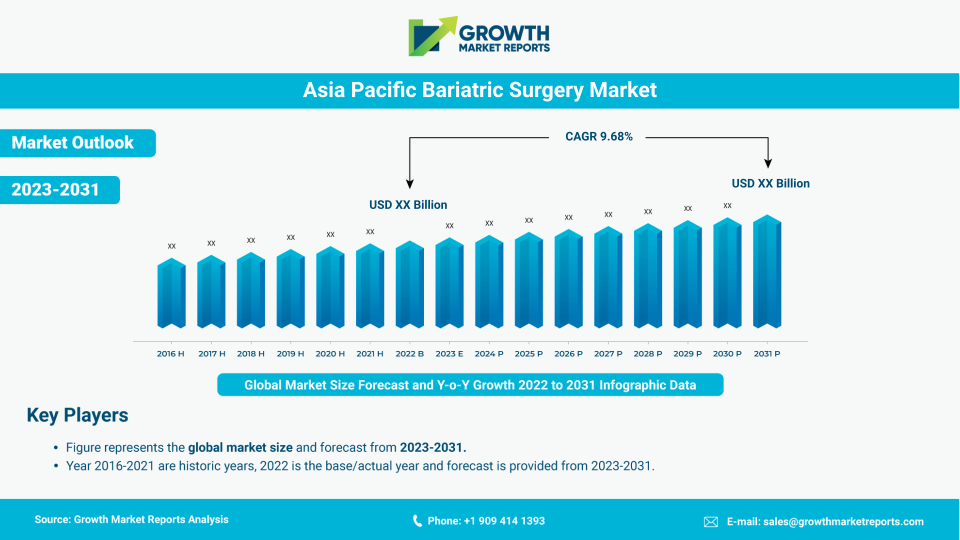
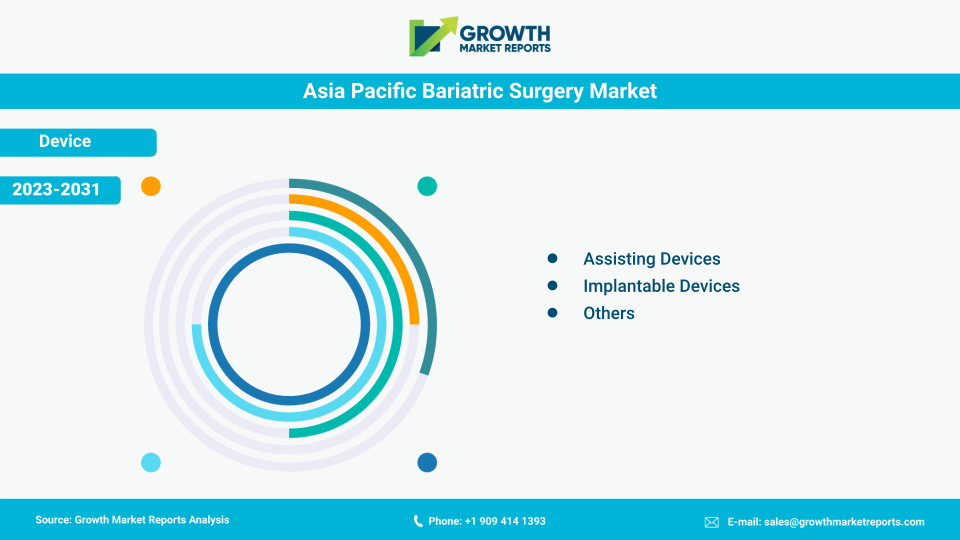
Segments - by Procedure Type (Gastric Bypass, Sleeve Gastrectomy, Adjustable Gastric Banding, Biliopancreatic Diversion with Duodenal Switch, Others), by Device Type (Assisting Devices, Implantable Devices, Suturing Devices, Stapling Devices, Others), by End-User (Hospitals, Bariatric Surgery Clinics, Ambulatory Surgical Centers, Others)
According to our latest research, the global bariatric surgery market size in 2024 is valued at USD 2.54 billion, with a robust compound annual growth rate (CAGR) of 8.7% projected from 2025 to 2033. This growth trajectory is expected to elevate the market to a substantial USD 5.38 billion by 2033. The expansion of this market is primarily fueled by the rising global prevalence of obesity, increasing awareness regarding the health risks associated with excessive weight, and the growing acceptance of bariatric surgery as an effective, long-term weight management solution.
One of the most significant growth factors for the bariatric surgery market is the escalating global incidence of obesity and related comorbidities such as type 2 diabetes, hypertension, and cardiovascular diseases. According to the World Health Organization, the worldwide obesity rate has nearly tripled since 1975, and in 2024, more than 650 million adults are classified as obese. This alarming trend has prompted healthcare providers and policymakers to prioritize obesity management, leading to increased demand for effective surgical interventions. Bariatric surgery, recognized for its efficacy in achieving sustainable weight loss and improving metabolic health, has thus become a preferred option for patients who have not succeeded with lifestyle modifications or pharmaceutical treatments. The growing body of clinical evidence supporting the long-term benefits of bariatric procedures further propels market adoption, making it a cornerstone in the fight against obesity.
Technological advancements in surgical techniques and devices have also played a pivotal role in shaping the bariatric surgery market. Minimally invasive procedures, such as laparoscopic and robotic-assisted surgeries, have gained considerable traction due to their reduced complication rates, shorter hospital stays, and faster recovery times compared to traditional open surgeries. Innovations in surgical instruments, including advanced stapling and suturing devices, have enhanced procedural safety and outcomes, thereby boosting patient and surgeon confidence. Additionally, the introduction of novel implantable devices and assisting tools has expanded the range of available treatment options, catering to varying patient needs and clinical indications. These technological developments not only improve surgical efficacy but also contribute to the market’s overall growth by facilitating broader adoption across diverse healthcare settings.
Another key driver for the bariatric surgery market is the increasing awareness and acceptance of bariatric procedures among patients and healthcare providers. Public health campaigns, educational initiatives, and endorsements by leading medical associations have significantly reduced the stigma associated with surgical weight loss interventions. Insurance coverage for bariatric procedures has also improved in several regions, making these surgeries more accessible to a broader segment of the population. Furthermore, the psychological and quality-of-life benefits reported by post-surgery patients have encouraged more individuals to consider bariatric surgery as a viable solution for obesity management. As a result, the market is witnessing a steady influx of patients seeking surgical intervention, reinforcing the upward growth trend.
From a regional perspective, North America continues to dominate the bariatric surgery market, driven by high obesity rates, well-established healthcare infrastructure, and favorable reimbursement policies. Europe follows closely, with increasing procedure volumes and growing awareness about the health risks of obesity. The Asia Pacific region, while currently representing a smaller market share, is anticipated to exhibit the highest CAGR over the forecast period, propelled by rising obesity prevalence, expanding medical tourism, and improving access to advanced surgical care. Latin America and the Middle East & Africa are also emerging as promising markets, supported by evolving healthcare systems and increasing investments in obesity management programs. Overall, the global bariatric surgery market is poised for significant expansion, with regional dynamics playing a crucial role in shaping its future landscape.
The procedure type segment of the bariatric surgery market encompasses a variety of surgical interventions, each with distinct mechanisms and clinical outcomes. Among these, gastric bypass remains one of the most widely performed procedures globally, accounting for a significant share of the market. Gastric bypass involves creating a small stomach pouch and rerouting a portion of the small intestine, thereby restricting food intake and reducing calorie absorption. This procedure is particularly favored for its proven efficacy in achieving substantial and sustained weight loss, as well as its positive impact on obesity-related comorbidities such as diabetes and hypertension. The growing body of evidence supporting the metabolic benefits of gastric bypass has led to its widespread adoption, especially in regions with high obesity prevalence and advanced healthcare infrastructure.
Another prominent procedure within this segment is sleeve gastrectomy, which has gained immense popularity over the past decade. Sleeve gastrectomy involves the surgical removal of a large portion of the stomach, resulting in a sleeve-shaped gastric pouch. This technique is less complex than gastric bypass and is associated with lower complication rates, making it an attractive option for both patients and surgeons. The simplicity of the procedure, combined with its effectiveness in promoting weight loss and improving metabolic parameters, has driven a significant increase in sleeve gastrectomy volumes worldwide. Moreover, the procedure’s adaptability to minimally invasive techniques further enhances its appeal, contributing to its growing market share.
Adjustable gastric banding represents another important procedure type within the bariatric surgery market. This technique involves placing an inflatable band around the upper part of the stomach to create a small pouch, thereby limiting food intake. While adjustable gastric banding was once highly popular due to its reversibility and adjustability, its market share has declined in recent years. This shift is attributed to the emergence of more effective procedures, such as sleeve gastrectomy and gastric bypass, which offer superior weight loss outcomes and lower long-term complication rates. Nonetheless, adjustable gastric banding remains a viable option for select patient populations, particularly those seeking less invasive and reversible interventions.
The biliopancreatic diversion with duodenal switch (BPD/DS) is a complex bariatric procedure that combines restrictive and malabsorptive elements. Although less commonly performed due to its technical complexity and higher risk profile, BPD/DS is highly effective in achieving dramatic weight loss and resolving severe metabolic disorders. This procedure is typically reserved for patients with extreme obesity or those who have failed other surgical interventions. The demand for BPD/DS is expected to grow modestly, driven by increasing clinical expertise and advancements in perioperative care. Additionally, ongoing research into the long-term outcomes of BPD/DS may further refine patient selection criteria, enhancing its role within the bariatric surgery landscape.
Other bariatric procedures, including intragastric balloons and revision surgeries, also contribute to the diversity of the procedure type segment. Intragastric balloons offer a non-surgical alternative for patients seeking temporary weight loss solutions, while revision surgeries address complications or inadequate outcomes from previous procedures. The availability of multiple procedural options allows healthcare providers to tailor interventions to individual patient needs, thereby optimizing clinical outcomes and expanding the overall market for bariatric surgery.
| Attributes | Details |
| Report Title | Bariatric Surgery Market Research Report 2033 |
| By Procedure Type | Gastric Bypass, Sleeve Gastrectomy, Adjustable Gastric Banding, Biliopancreatic Diversion with Duodenal Switch, Others |
| By Device Type | Assisting Devices, Implantable Devices, Suturing Devices, Stapling Devices, Others |
| By End-User | Hospitals, Bariatric Surgery Clinics, Ambulatory Surgical Centers, Others |
| Regions Covered | North America, Europe, APAC, Latin America, MEA |
| Base Year | 2024 |
| Historic Data | 2018-2023 |
| Forecast Period | 2025-2033 |
| Number of Pages | 284 |
| Number of Tables & Figures | 351 |
| Customization Available | Yes, the report can be customized as per your need. |
The device type segment of the bariatric surgery market is integral to the successful execution and safety of surgical procedures. Assisting devices, such as trocars, insufflators, and energy-based instruments, play a critical role in facilitating minimally invasive surgeries. These devices enable surgeons to perform complex bariatric procedures with enhanced precision, reduced tissue trauma, and improved visualization. The adoption of advanced assisting devices has contributed to the widespread shift towards laparoscopic and robotic-assisted techniques, which are associated with better patient outcomes and shorter recovery times. As the demand for minimally invasive bariatric surgery continues to rise, the market for assisting devices is expected to experience sustained growth.
Implantable devices form another key category within the device type segment. These include gastric bands, intragastric balloons, and electrical stimulation systems designed to modulate appetite and food intake. Implantable devices offer unique advantages, such as reversibility and adjustability, making them suitable for patients seeking less permanent solutions. However, the market for traditional gastric bands has witnessed a decline due to the superior efficacy of newer surgical techniques. In contrast, innovative implantable devices, such as endoscopic sleeves and neurostimulation implants, are gaining traction as research continues to validate their safety and effectiveness. The evolving landscape of implantable devices underscores the ongoing innovation within the bariatric surgery market.
Suturing devices are indispensable in bariatric surgery, ensuring secure tissue approximation and minimizing the risk of postoperative complications such as leaks and bleeding. The development of advanced suturing technologies, including automated and robotic-assisted systems, has significantly improved the efficiency and reliability of bariatric procedures. These devices enable precise closure of incisions and anastomoses, thereby enhancing patient safety and surgical outcomes. The growing emphasis on minimally invasive techniques and the need for robust wound closure solutions are driving the demand for state-of-the-art suturing devices in the bariatric surgery market.
Stapling devices are widely used in bariatric procedures to divide and seal tissues efficiently. The introduction of powered staplers and reloadable cartridges has revolutionized surgical workflows, reducing operative time and improving consistency. Stapling devices are particularly critical in procedures such as sleeve gastrectomy and gastric bypass, where reliable tissue division is paramount. Manufacturers are continually investing in the development of next-generation stapling technologies with enhanced safety features and ergonomic designs. This ongoing innovation is expected to bolster the adoption of stapling devices, further driving the growth of the bariatric surgery device market.
Other devices, such as energy-based instruments and hemostatic agents, also play vital roles in bariatric surgery. These devices contribute to intraoperative hemostasis, tissue dissection, and postoperative wound management. The integration of multifunctional devices and the trend towards single-use instruments are shaping the future of bariatric surgery, offering improved efficiency and reduced risk of cross-contamination. As the market continues to evolve, the device type segment will remain a focal point for technological advancements and product differentiation.
The end-user segment of the bariatric surgery market is characterized by a diverse array of healthcare facilities, each playing a distinct role in the delivery of surgical weight loss interventions. Hospitals represent the largest end-user category, accounting for a substantial share of bariatric procedures performed worldwide. Hospitals are equipped with comprehensive surgical infrastructure, multidisciplinary care teams, and advanced postoperative support services, making them the preferred setting for complex bariatric surgeries. The presence of experienced bariatric surgeons, intensive care units, and integrated follow-up programs further enhances patient outcomes and safety. As the prevalence of obesity continues to rise, hospitals are expected to maintain their dominant position within the bariatric surgery market.
Bariatric surgery clinics have emerged as specialized centers dedicated exclusively to the management of obesity and metabolic disorders. These clinics offer a patient-centric approach, focusing on personalized care, preoperative assessment, and long-term follow-up. The streamlined workflows and dedicated resources available in bariatric surgery clinics contribute to higher patient satisfaction and improved surgical outcomes. Clinics often collaborate with hospitals for complex cases, but their growing expertise and reputation have enabled them to capture a significant share of the market. The increasing demand for specialized obesity management services is likely to drive the expansion of bariatric surgery clinics in the coming years.
Ambulatory surgical centers (ASCs) are gaining prominence as alternative settings for bariatric procedures, particularly for less complex surgeries and patients with lower risk profiles. ASCs offer several advantages, including reduced costs, shorter wait times, and a more convenient patient experience. The adoption of minimally invasive techniques has facilitated the safe and efficient performance of bariatric surgeries in outpatient settings, further supporting the growth of ASCs. As healthcare systems strive to optimize resource utilization and enhance patient access, the role of ambulatory surgical centers in the bariatric surgery market is expected to expand.
Other end-users, such as academic medical centers and research institutions, contribute to the advancement of bariatric surgery through clinical trials, training programs, and the development of innovative surgical techniques. These organizations play a pivotal role in disseminating best practices, conducting outcome studies, and fostering collaboration among stakeholders. The presence of academic and research-driven end-users enriches the bariatric surgery ecosystem, ensuring continuous improvement and evidence-based care delivery. Collectively, the diverse array of end-users within the bariatric surgery market underscores the importance of a multidisciplinary approach to obesity management.
The bariatric surgery market presents numerous opportunities for growth and innovation, driven by the ongoing global obesity epidemic and increasing demand for effective weight management solutions. One of the most promising opportunities lies in the expansion of minimally invasive and non-surgical bariatric procedures. Advances in endoscopic technologies, such as intragastric balloons and endoluminal sleeves, offer less invasive alternatives with reduced recovery times and lower risk profiles. These innovations have the potential to attract a broader patient population, including individuals who are hesitant to undergo traditional surgery. Additionally, the integration of digital health solutions, such as remote monitoring and telemedicine, can enhance postoperative care and long-term patient engagement, further improving outcomes and expanding market reach.
Another significant opportunity in the bariatric surgery market is the growing focus on personalized and precision medicine. By leveraging genetic, metabolic, and behavioral data, healthcare providers can tailor surgical interventions to individual patient profiles, optimizing efficacy and minimizing complications. The development of predictive analytics and artificial intelligence tools holds immense potential for improving patient selection, risk stratification, and postoperative management. Furthermore, the increasing emphasis on multidisciplinary care teams, including nutritionists, psychologists, and exercise specialists, can enhance the overall success of bariatric interventions. As healthcare systems continue to prioritize value-based care, the adoption of comprehensive, patient-centered approaches will create new avenues for market expansion and differentiation.
Despite these opportunities, the bariatric surgery market faces several restraining factors that could hinder its growth. One of the primary challenges is the high cost of surgical procedures and associated devices, which can limit access for patients in low- and middle-income countries. Reimbursement policies also vary significantly across regions, with limited coverage in some markets posing a barrier to widespread adoption. Additionally, concerns regarding surgical complications, long-term follow-up, and patient compliance remain prevalent. Addressing these challenges will require ongoing collaboration among stakeholders, investments in healthcare infrastructure, and the development of cost-effective solutions to ensure equitable access to bariatric surgery worldwide.
The North American region continues to lead the global bariatric surgery market, accounting for an estimated USD 1.15 billion in 2024. The United States, in particular, dominates the regional landscape due to its high obesity prevalence, advanced healthcare infrastructure, and favorable reimbursement environment. The presence of leading bariatric surgeons, specialized centers, and ongoing research initiatives further bolster the region’s market position. Canada also contributes significantly, with increasing procedure volumes and government initiatives aimed at tackling obesity. The North American market is projected to maintain steady growth, supported by continuous innovation and expanding patient awareness.
Europe represents the second-largest regional market, with a value of approximately USD 0.72 billion in 2024. Countries such as Germany, France, and the United Kingdom are at the forefront of bariatric surgery adoption, driven by rising obesity rates and supportive healthcare policies. The European market benefits from a strong network of specialized bariatric centers, robust clinical research, and increasing insurance coverage for surgical interventions. The region is expected to witness moderate growth over the forecast period, with a CAGR of around 7.9%, as governments intensify efforts to address the obesity crisis and improve public health outcomes.
The Asia Pacific region is emerging as the fastest-growing market for bariatric surgery, valued at USD 0.42 billion in 2024. Rapid urbanization, changing dietary patterns, and increasing sedentary lifestyles have contributed to a surge in obesity rates across countries such as China, India, and Australia. The region’s expanding middle class, growing medical tourism industry, and improving access to advanced surgical care are key drivers of market growth. Asia Pacific is anticipated to record the highest CAGR of 10.3% from 2025 to 2033, reflecting the region’s significant untapped potential and ongoing investments in healthcare infrastructure. Latin America and the Middle East & Africa, with market values of USD 0.15 billion and USD 0.10 billion respectively in 2024, are also witnessing increased adoption of bariatric surgery, supported by rising awareness and government-led obesity control programs.
The bariatric surgery market is characterized by intense competition and a dynamic landscape, with numerous global and regional players vying for market share. The competitive environment is shaped by continuous innovation in surgical techniques, device development, and patient care models. Leading companies are focused on expanding their product portfolios, investing in research and development, and forging strategic partnerships to enhance their market presence. The emphasis on minimally invasive and robotic-assisted procedures has spurred significant investments in advanced surgical platforms and supporting devices, driving differentiation and competitive advantage.
In addition to product innovation, market players are increasingly prioritizing clinical education, surgeon training, and patient support programs to foster adoption and ensure optimal outcomes. Collaborations with healthcare providers, academic institutions, and professional societies are common strategies employed to disseminate best practices and drive procedural standardization. The competitive landscape is further influenced by regulatory approvals, reimbursement dynamics, and the ability to demonstrate superior clinical efficacy and safety. Companies that can effectively navigate these complexities while maintaining a focus on patient-centric care are well-positioned to succeed in the evolving bariatric surgery market.
The market is also witnessing the entry of new players, particularly in the field of endoscopic and non-surgical bariatric interventions. These entrants are leveraging innovative technologies and novel business models to disrupt traditional surgical paradigms and capture niche segments. As the market continues to evolve, consolidation through mergers and acquisitions is expected, enabling companies to expand their geographic reach, diversify their offerings, and achieve economies of scale. The ability to adapt to changing market dynamics, regulatory requirements, and patient preferences will be critical for sustained competitive advantage.
Some of the major companies operating in the bariatric surgery market include Medtronic plc, Johnson & Johnson (Ethicon), Intuitive Surgical Inc., Olympus Corporation, CONMED Corporation, Allergan Inc., ReShape Lifesciences Inc., and Apollo Endosurgery Inc.. Medtronic is renowned for its comprehensive portfolio of surgical stapling and energy devices, while Johnson & Johnson’s Ethicon division is a leader in suturing and minimally invasive surgical solutions. Intuitive Surgical has revolutionized bariatric surgery with its da Vinci robotic platform, enabling greater precision and control. Olympus and CONMED are key players in the field of endoscopic devices and visualization systems, supporting the growing trend towards less invasive procedures.
Allergan and ReShape Lifesciences have pioneered the development of intragastric balloons and other implantable devices, offering alternatives to traditional surgical interventions. Apollo Endosurgery is recognized for its innovative endoluminal therapies and advanced suturing technologies. These companies are actively engaged in clinical research, product development, and market expansion initiatives to maintain their competitive edge. The ongoing commitment to innovation, quality, and patient outcomes will continue to drive the success of leading players in the bariatric surgery market, shaping the future of obesity management worldwide.
The Bariatric Surgery market has been segmented on the basis of
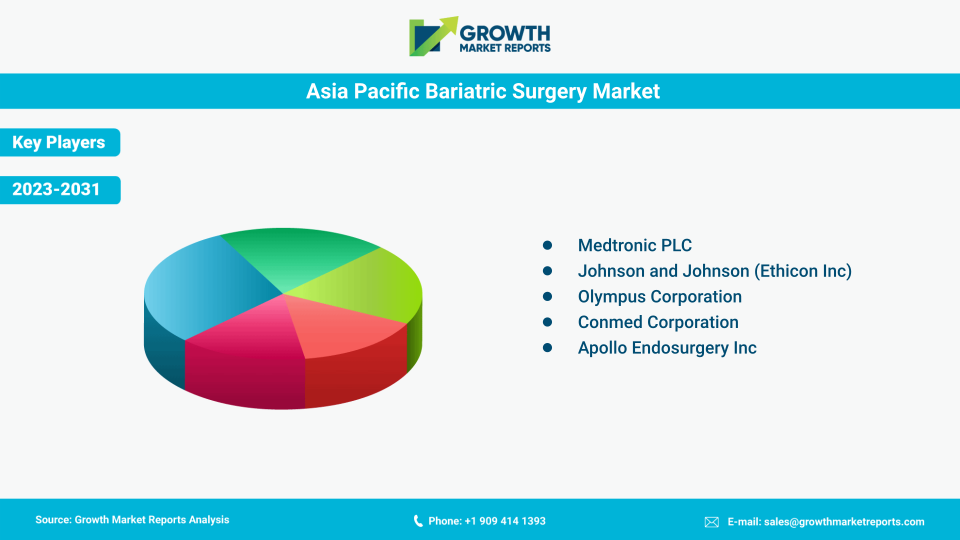
Key players competing in the Asia-Pacific bariatric surgery market include Medtronic PLC; Johnson and Johnson (Ethicon Inc); Olympus Corporation; Conmed Corporation; and Apollo Endosurgery Inc.
Some of these players are using several market strategies such as mergers, acquisitions, partnerships, collaborations, capacity expansion, and product launches to enhance their market shares.
Emerging trends include the rise of minimally invasive and non-surgical procedures, integration of digital health and telemedicine, personalized medicine approaches, and increased focus on multidisciplinary care teams.
Major players include Medtronic, Johnson & Johnson (Ethicon), Intuitive Surgical, Olympus Corporation, CONMED Corporation, Allergan, ReShape Lifesciences, and Apollo Endosurgery.
Challenges include high procedure and device costs, variable insurance reimbursement, concerns about surgical complications, and limited access in low- and middle-income countries.
Major end-users include hospitals, bariatric surgery clinics, ambulatory surgical centers (ASCs), and academic medical centers.
Key device types include assisting devices (trocars, insufflators), implantable devices (gastric bands, intragastric balloons), suturing devices, stapling devices, and energy-based instruments.
North America dominates the market due to high obesity rates and advanced healthcare infrastructure, followed by Europe. The Asia Pacific region is expected to see the fastest growth, driven by rising obesity rates and expanding medical tourism.
Advancements include minimally invasive laparoscopic and robotic-assisted surgeries, improved stapling and suturing devices, novel implantable devices, and enhanced visualization systems, all contributing to better patient outcomes and faster recovery times.
The most commonly performed procedures are gastric bypass, sleeve gastrectomy, adjustable gastric banding, and biliopancreatic diversion with duodenal switch (BPD/DS). Sleeve gastrectomy and gastric bypass are particularly popular due to their effectiveness and safety profiles.
Key growth drivers include the rising global prevalence of obesity, increasing awareness of obesity-related health risks, technological advancements in surgical techniques, and greater acceptance of bariatric surgery as a long-term weight management solution.
As of 2024, the global bariatric surgery market is valued at USD 2.54 billion and is projected to reach USD 5.38 billion by 2033.