Segments - by Component (Hardware, Software, Services), by Type (Single-Function Kiosks, Multi-Function Kiosks, Virtual/Video Teller Machines), by Deployment (Onsite, Offsite, Worksite), by Application (Banking & Financial Services, Credit Unions, Others)
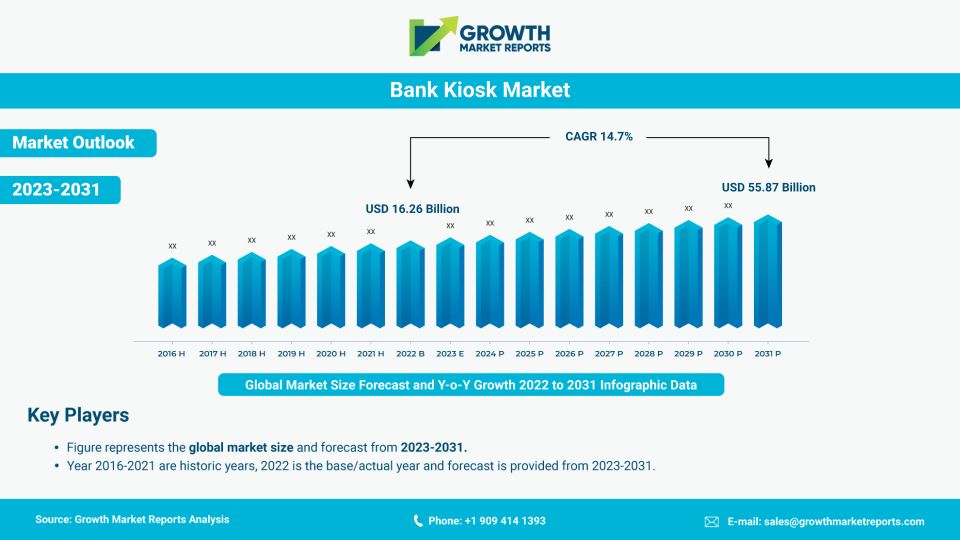
According to our latest research, the global bank kiosk market size reached USD 1.42 billion in 2024, driven by increasing digital transformation in the banking sector and rising demand for self-service solutions. The market is expanding at a robust CAGR of 13.8% and is forecasted to attain a value of USD 4.09 billion by 2033. The growth is primarily attributed to the proliferation of multi-functional kiosks, advancements in secure transaction technologies, and a growing emphasis on enhancing customer experience while reducing operational costs.
One of the primary growth factors propelling the bank kiosk market is the global shift towards digital banking and automation. Financial institutions are under increasing pressure to deliver seamless, 24/7 services to their customers while maintaining stringent security standards. Bank kiosks have emerged as an effective solution, enabling banks to extend their service reach, reduce wait times, and offer a range of functionalities such as cash deposits, withdrawals, account inquiries, and even video conferencing with bank representatives. The integration of advanced technologies such as biometric authentication, AI-driven customer support, and multi-language interfaces further enhances the value proposition of these kiosks, making them indispensable in both urban and rural banking environments. As banks continue to prioritize digital transformation initiatives, the deployment of sophisticated kiosks is set to accelerate, fueling market expansion.
Another significant growth driver is the rising need for cost optimization in the banking sector. Traditional bank branches are expensive to operate, with high overhead costs related to staffing, infrastructure, and security. Bank kiosks, on the other hand, offer a cost-efficient alternative by automating routine transactions and reducing the dependency on human tellers. This not only leads to substantial savings for banks but also allows them to reallocate resources towards more value-added services. The scalability and flexibility of kiosk solutions make them particularly attractive for banks looking to expand their footprint in underserved or remote regions, where setting up full-fledged branches may not be viable. Consequently, the demand for both single-function and multi-function kiosks is witnessing a steady uptick, further bolstered by favorable regulatory frameworks that encourage financial inclusion.
The evolution of customer expectations is also playing a pivotal role in shaping the bank kiosk market. TodayÂ’s banking customers demand convenience, speed, and personalization in their interactions with financial institutions. Bank kiosks are uniquely positioned to address these expectations by offering intuitive interfaces, personalized recommendations, and a wide array of self-service options. The introduction of virtual and video teller machines has further elevated the customer experience, enabling real-time assistance and complex transaction processing without the need for physical branch visits. As banks strive to differentiate themselves in an increasingly competitive landscape, the adoption of advanced kiosk solutions is expected to become a key strategic priority, driving sustained market growth.
The introduction of Check Cashing Kiosk solutions is further revolutionizing the banking landscape by providing a convenient and efficient way for customers to access cash without the need for a traditional bank account. These kiosks are designed to cater to individuals who may not have access to conventional banking services, offering a vital lifeline for financial transactions. By integrating advanced security measures and user-friendly interfaces, check cashing kiosks ensure that users can safely and easily convert checks into cash, enhancing financial accessibility. As the demand for such services grows, banks and financial institutions are increasingly incorporating check cashing kiosks into their service offerings, thereby expanding their reach and improving customer satisfaction. This trend is particularly evident in regions with high numbers of unbanked or underbanked individuals, where the need for alternative financial solutions is most acute.
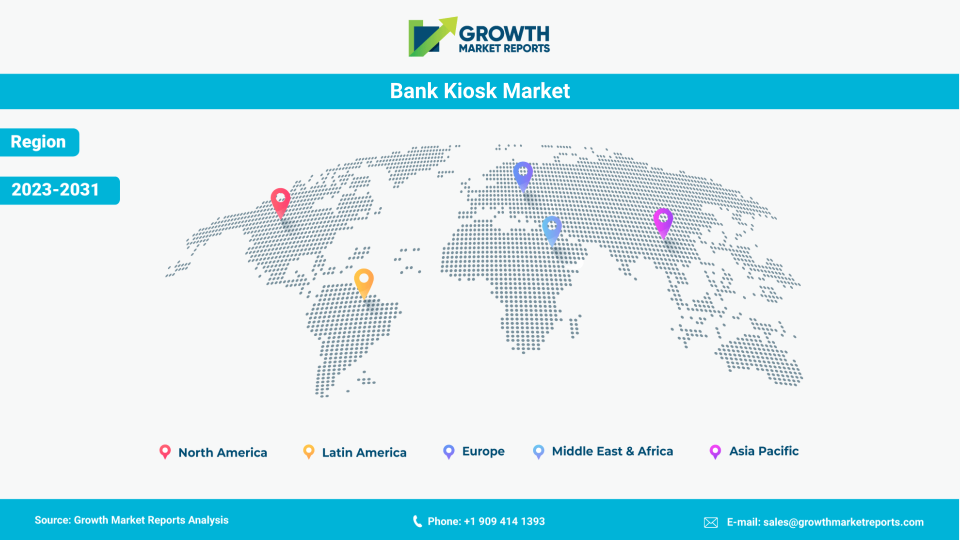
Regionally, the Asia Pacific market stands out as a major contributor to global growth, fueled by rapid urbanization, a burgeoning middle class, and widespread adoption of digital banking technologies. North America and Europe are also significant markets, characterized by high penetration of self-service solutions and strong regulatory support for digital innovation. The Middle East & Africa and Latin America are emerging as lucrative markets, driven by increasing investments in banking infrastructure and efforts to promote financial inclusion. Each region presents unique opportunities and challenges, shaping the overall trajectory of the bank kiosk market in the coming years.
The bank kiosk market by component is segmented into hardware, software, and services, each playing a critical role in the deployment and operation of self-service banking solutions. Hardware forms the physical backbone of kiosks, encompassing touchscreens, card readers, cash dispensers, biometric sensors, printers, and other peripheral devices. The demand for robust and tamper-proof hardware is rising as banks prioritize security and durability, especially for outdoor and offsite deployments. Leading manufacturers are focusing on integrating advanced features such as anti-skimming technology, weather resistance, and energy efficiency to enhance the reliability and lifespan of kiosk hardware. The hardware segment is expected to maintain a substantial share of the market, driven by ongoing upgrades and replacement cycles.
Software is another crucial component, enabling the seamless functioning and integration of bank kiosks within the broader banking IT ecosystem. Modern kiosk software solutions are designed to support a wide range of functionalities, from basic transaction processing to advanced services such as account opening, loan applications, and customer onboarding. The growing adoption of cloud-based kiosk management platforms allows banks to remotely monitor, update, and troubleshoot kiosks, ensuring optimal performance and security. Artificial intelligence and machine learning are increasingly being leveraged to deliver personalized customer experiences, predictive maintenance, and real-time fraud detection. As banks continue to invest in digital transformation, the software segment is poised for rapid growth, driven by the need for agile, scalable, and secure solutions.
The services segment encompasses a range of offerings, including installation, maintenance, technical support, and managed services. As the complexity of kiosk deployments increases, banks are increasingly relying on specialized service providers to ensure smooth implementation and ongoing operation. Preventive maintenance and remote diagnostics are becoming standard practices, minimizing downtime and enhancing customer satisfaction. Additionally, the rise of managed services models allows banks to outsource the entire lifecycle management of kiosks, reducing internal IT burden and enabling focus on core business activities. The services segment is expected to witness steady growth, underpinned by the increasing installed base of kiosks and the need for continuous support and optimization.
An important trend across all components is the emphasis on interoperability and integration. Banks are seeking modular solutions that can be easily integrated with existing core banking systems, CRM platforms, and third-party applications. Open APIs, standardized protocols, and robust cybersecurity frameworks are becoming essential requirements, enabling banks to future-proof their investments and adapt to evolving customer needs. As the market matures, the competitive landscape is likely to be shaped by vendors that offer comprehensive, end-to-end solutions encompassing hardware, software, and services, tailored to the unique requirements of different banking environments.
| Attributes | Details |
| Report Title | Bank Kiosk Market Research Report 2033 |
| By Component | Hardware, Software, Services |
| By Type | Single-Function Kiosks, Multi-Function Kiosks, Virtual/Video Teller Machines |
| By Deployment | Onsite, Offsite, Worksite |
| By Application | Banking & Financial Services, Credit Unions, Others |
| Regions Covered | North America, Europe, APAC, Latin America, MEA |
| Base Year | 2024 |
| Historic Data | 2018-2023 |
| Forecast Period | 2025-2033 |
| Number of Pages | 277 |
| Number of Tables & Figures | 332 |
| Customization Available | Yes, the report can be customized as per your need. |
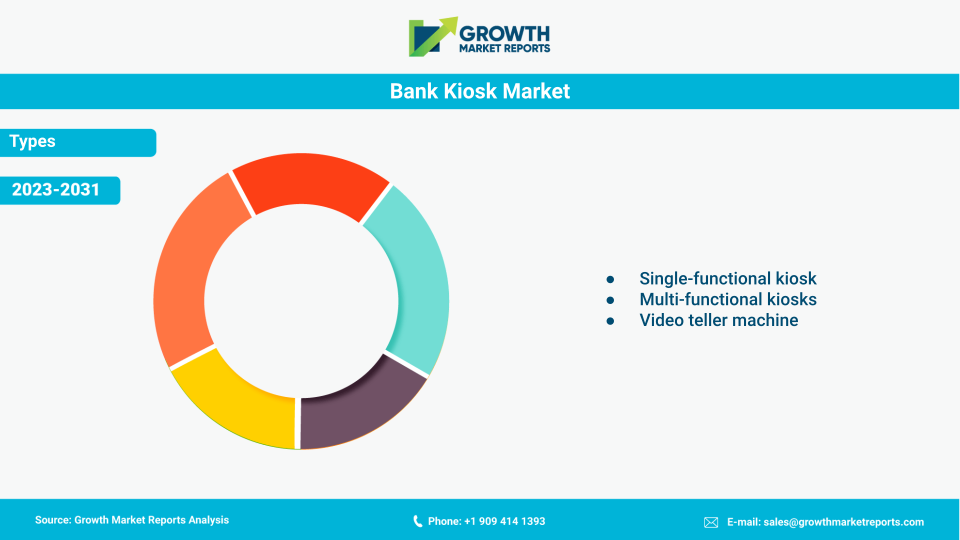
The bank kiosk market by type is categorized into single-function kiosks, multi-function kiosks, and virtual/video teller machines, each catering to distinct operational needs and customer preferences. Single-function kiosks are primarily designed to perform specific tasks such as cash withdrawal, cheque deposit, or passbook printing. These kiosks are widely deployed in high-traffic locations, offering quick and convenient access to essential banking services. The simplicity and cost-effectiveness of single-function kiosks make them an attractive option for banks seeking to enhance service availability without significant capital investment. However, their limited functionality may restrict their long-term appeal as customer expectations evolve.
Multi-function kiosks represent the fastest-growing segment, driven by the increasing demand for comprehensive self-service solutions. These kiosks are equipped to handle a wide range of transactions, including cash and cheque deposits, funds transfers, bill payments, account inquiries, and even loan applications. The integration of biometric authentication, NFC payments, and multi-language support further enhances the versatility and accessibility of multi-function kiosks. Banks are increasingly adopting these solutions to streamline branch operations, reduce queue times, and deliver a superior customer experience. The ability to customize functionalities based on specific branch requirements adds to the appeal of multi-function kiosks, positioning them as a key growth driver in the market.
Virtual and video teller machines are transforming the landscape of customer engagement by enabling real-time, face-to-face interactions with bank representatives via video conferencing. These kiosks bridge the gap between self-service and personalized banking, allowing customers to perform complex transactions, seek financial advice, and resolve queries without visiting a physical branch. The adoption of virtual teller machines is gaining momentum, particularly in regions with limited branch networks or high demand for remote banking services. Advanced features such as document scanning, electronic signature capture, and secure video authentication are further expanding the scope of these kiosks, making them an integral part of omnichannel banking strategies.
A key trend across all kiosk types is the focus on user experience and accessibility. Banks are investing in intuitive interfaces, enhanced security features, and inclusive design principles to ensure that kiosks cater to a diverse customer base, including the elderly and differently-abled individuals. The ongoing evolution of kiosk technologies is expected to blur the lines between different types, with hybrid models offering a mix of functionalities to address changing market needs. As banks continue to innovate and experiment with new service delivery models, the type segment will remain a dynamic and competitive arena, shaping the future trajectory of the bank kiosk market.
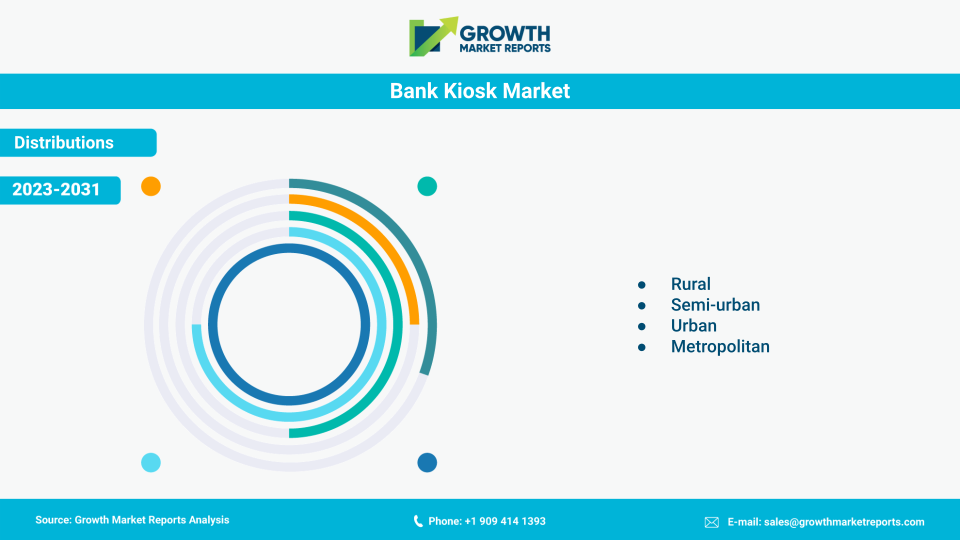
The bank kiosk market by deployment is segmented into onsite, offsite, and worksite installations, each offering unique advantages and challenges. Onsite kiosks are typically located within bank branches, serving as an extension of traditional teller services. These kiosks enable banks to manage high transaction volumes, reduce customer wait times, and optimize branch operations. The close proximity to branch staff allows for quick assistance in case of technical issues or customer queries, ensuring a seamless banking experience. Onsite kiosks are particularly popular in urban centers and high-traffic locations, where convenience and efficiency are paramount.
Offsite kiosks are deployed in locations outside of traditional bank branches, such as shopping malls, transportation hubs, educational institutions, and government offices. These kiosks play a crucial role in extending banking services to underserved and remote areas, promoting financial inclusion and convenience. The ability to offer 24/7 access to essential banking services makes offsite kiosks an attractive proposition for both banks and customers. However, challenges such as security, connectivity, and maintenance need to be carefully managed to ensure reliable operation. Banks are increasingly leveraging data analytics and remote monitoring tools to optimize the performance and utilization of offsite kiosks, maximizing their return on investment.
Worksite kiosks are installed within corporate offices, factories, and other workplace environments, catering to the banking needs of employees. These kiosks offer a convenient and time-saving alternative to traditional branch visits, enabling employees to perform transactions during work hours. Worksite deployments are gaining traction among large enterprises and industrial clusters, where employee convenience and productivity are key priorities. The customization of kiosk functionalities to align with specific organizational requirements adds to the appeal of worksite solutions, fostering stronger partnerships between banks and corporate clients.
Across all deployment models, the emphasis is on scalability, security, and seamless integration with core banking systems. Banks are adopting a strategic mix of onsite, offsite, and worksite deployments to optimize service coverage, enhance customer engagement, and achieve operational efficiencies. The growing adoption of IoT and cloud-based management platforms is enabling banks to remotely monitor, update, and troubleshoot kiosks, ensuring high availability and performance across diverse deployment environments. As the market evolves, deployment strategies will continue to adapt to changing customer preferences, regulatory requirements, and technological advancements, shaping the overall growth trajectory of the bank kiosk market.
The bank kiosk market by application is segmented into banking and financial services, credit unions, and others, reflecting the diverse adoption landscape across the financial sector. Banking and financial services represent the largest application segment, driven by the widespread adoption of kiosks by commercial banks, retail banks, and other financial institutions. These organizations leverage kiosks to automate routine transactions, enhance customer service, and reduce operational costs. The integration of advanced features such as biometric authentication, AI-driven recommendations, and multi-channel connectivity is further expanding the scope of kiosk applications in this segment. As banks continue to prioritize digital transformation, the demand for innovative kiosk solutions is expected to remain robust.
Credit unions are increasingly embracing bank kiosk solutions to enhance member engagement and streamline service delivery. The unique cooperative structure of credit unions, coupled with their focus on personalized service, makes kiosks an ideal tool for extending reach and improving efficiency. Credit unions are leveraging kiosks to offer a range of services, including account opening, loan applications, and financial education, catering to the evolving needs of their members. The ability to customize kiosk functionalities and branding further enhances the value proposition for credit unions, enabling them to differentiate themselves in a competitive market.
The others segment encompasses a variety of financial institutions and service providers, including microfinance institutions, payment service providers, and fintech companies. These organizations are leveraging bank kiosks to expand their service offerings, reach new customer segments, and drive financial inclusion. The flexibility and scalability of kiosk solutions make them well-suited for deployment in diverse environments, from urban centers to rural communities. As the financial services landscape continues to evolve, the application segment is expected to witness the emergence of new use cases and business models, further fueling market growth.
A key trend across all application segments is the convergence of physical and digital banking channels. Banks and financial institutions are increasingly adopting omnichannel strategies, integrating kiosks with mobile apps, online platforms, and contact centers to deliver a seamless and consistent customer experience. The ability to capture and analyze customer data from kiosk interactions is enabling banks to gain valuable insights, personalize offerings, and optimize service delivery. As the market matures, the application segment will continue to be shaped by innovation, collaboration, and the evolving needs of customers and financial institutions.
The bank kiosk market presents significant opportunities for growth and innovation, driven by the ongoing digital transformation of the financial sector. One of the most promising opportunities lies in the expansion of financial inclusion initiatives, particularly in emerging markets where access to traditional banking services remains limited. Bank kiosks offer a cost-effective and scalable solution for reaching unbanked and underbanked populations, enabling them to access essential financial services such as account opening, cash deposits, and bill payments. Governments and regulatory bodies are increasingly supporting the deployment of kiosks as part of broader financial inclusion strategies, creating a favorable environment for market expansion. Additionally, the integration of advanced technologies such as artificial intelligence, biometrics, and blockchain is opening up new possibilities for enhancing security, personalization, and efficiency in kiosk-based banking.
Another major opportunity lies in the convergence of banking and non-banking services through multi-functional kiosks. Banks are exploring partnerships with retailers, utility providers, and government agencies to offer a wide range of services through a single kiosk interface. This not only enhances customer convenience but also creates new revenue streams and strengthens customer loyalty. The rise of virtual and video teller machines is further expanding the scope of kiosk applications, enabling banks to deliver personalized advisory services and complex transactions without the need for physical branches. As customer expectations continue to evolve, banks that embrace innovation and invest in next-generation kiosk solutions are well-positioned to capture a larger share of the growing market.
Despite the numerous opportunities, the bank kiosk market faces several restraining factors that could impact its growth trajectory. One of the primary challenges is the high initial investment required for kiosk deployment, particularly for advanced multi-function and virtual teller machines. Banks must also address concerns related to security, privacy, and regulatory compliance, especially in regions with stringent data protection laws. Technical issues such as connectivity, maintenance, and system integration can pose operational challenges, potentially affecting customer satisfaction and return on investment. Additionally, the rapid pace of technological change requires banks to continuously upgrade and adapt their kiosk solutions, adding to the complexity and cost of deployment. Addressing these challenges will be critical for sustaining long-term growth and maximizing the potential of the bank kiosk market.
The Asia Pacific region leads the bank kiosk market, accounting for approximately USD 570 million in 2024. The regionÂ’s dominance is fueled by rapid urbanization, a growing middle class, and widespread adoption of digital banking technologies in countries such as China, India, and Japan. Governments across the region are actively promoting financial inclusion and digital literacy, creating a conducive environment for the deployment of bank kiosks. The market in Asia Pacific is expected to grow at a CAGR of 15.2% over the forecast period, outpacing other regions and contributing significantly to global market expansion.
North America is another major market, with a value of around USD 410 million in 2024. The region is characterized by high penetration of self-service solutions, strong regulatory support for digital innovation, and a mature banking infrastructure. Banks in the United States and Canada are early adopters of advanced kiosk technologies, leveraging them to enhance customer experience and optimize branch operations. The presence of leading technology providers and a robust innovation ecosystem further supports market growth in North America. Europe follows closely, with a market size of USD 310 million, driven by increasing investments in digital transformation and a growing focus on customer-centric banking.
The Middle East & Africa and Latin America are emerging as promising markets, with a combined value of approximately USD 130 million in 2024. These regions are witnessing increased investments in banking infrastructure, supported by government initiatives to promote financial inclusion and digitalization. Banks in these regions are leveraging kiosks to extend their reach, particularly in rural and underserved areas where traditional branch networks are limited. The adoption of mobile and cloud-based kiosk management platforms is enabling banks to overcome connectivity and maintenance challenges, ensuring reliable and efficient service delivery. As these regions continue to invest in digital transformation, the bank kiosk market is expected to witness robust growth, creating new opportunities for vendors and service providers.
The bank kiosk market is characterized by intense competition, with a diverse mix of global technology giants, specialized kiosk manufacturers, and emerging fintech players vying for market share. The competitive landscape is shaped by rapid technological advancements, evolving customer expectations, and the need for seamless integration with core banking systems. Leading vendors are focusing on innovation, product differentiation, and strategic partnerships to strengthen their market position and capture new growth opportunities. The ability to offer end-to-end solutions encompassing hardware, software, and services is emerging as a key differentiator, enabling vendors to address the unique requirements of different banking environments.
Mergers, acquisitions, and strategic collaborations are becoming increasingly common as companies seek to expand their product portfolios, enhance technological capabilities, and enter new markets. The rise of open banking and API-driven architectures is fostering greater collaboration between banks, fintech firms, and technology providers, leading to the development of more flexible and interoperable kiosk solutions. Vendors are also investing in research and development to incorporate advanced features such as artificial intelligence, biometrics, and blockchain, enhancing the security, efficiency, and personalization of kiosk-based banking services.
Customer-centricity is at the core of competitive strategies, with vendors focusing on delivering intuitive interfaces, robust security features, and seamless omnichannel integration. The ability to offer customized solutions tailored to the specific needs of banks and financial institutions is a critical success factor, enabling vendors to build long-term relationships and drive customer loyalty. As the market matures, the competitive landscape is expected to be shaped by ongoing innovation, regulatory compliance, and the ability to adapt to changing customer preferences and technological trends.
Some of the major companies operating in the bank kiosk market include NCR Corporation, Diebold Nixdorf, GRG Banking, Glory Global Solutions, and Wincor Nixdorf. NCR Corporation is a global leader in self-service banking solutions, offering a comprehensive portfolio of hardware, software, and services. Diebold Nixdorf is known for its innovative kiosk solutions and strong focus on security and customer experience. GRG Banking is a leading provider of ATM and kiosk solutions in Asia, with a strong presence in emerging markets. Glory Global Solutions specializes in cash management and automation technologies, catering to the needs of banks and financial institutions worldwide. Wincor Nixdorf, now part of Diebold Nixdorf, offers a wide range of banking automation solutions, including advanced kiosk systems.
These companies are continuously investing in research and development to stay ahead of the competition, introducing new features and functionalities to meet the evolving needs of banks and customers. Strategic partnerships with banks, fintech firms, and technology providers are enabling them to expand their market reach and enhance their value proposition. The ability to deliver reliable, secure, and user-friendly kiosk solutions will be critical for sustaining long-term growth and maintaining a competitive edge in the dynamic and rapidly evolving bank kiosk market.
The Bank Kiosk market has been segmented on the basis of
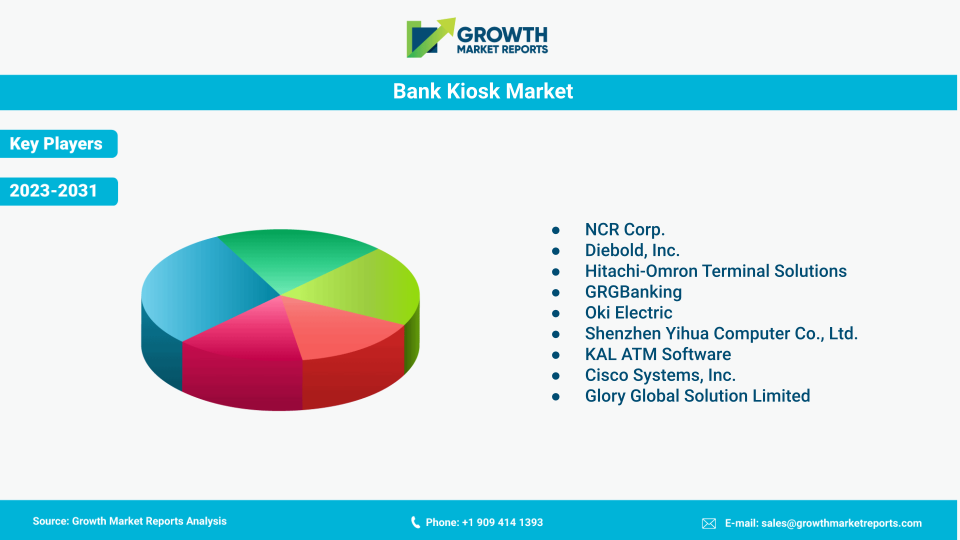
Key players competing in the global bank kiosk market are NCR Corp.; Diebold, Inc.; Hitachi-Omron Terminal Solutions; GRGBanking; Oki Electric; Shenzhen Yihua Computer Co., Ltd.; KAL ATM Software; Cisco Systems, Inc.; Glory Global Solution Limited; Inspur Technologies Co., Ltd.; and Nautilus Hyosung, among others.
These players are adopting various strategies including product launches, mergers & acquisitions, partnerships, and collaborations to increase their market share.
Yes, the Bank Kiosk Market Research Report 2033 can be customized according to specific business needs and requirements.
Key players include NCR Corporation, Diebold Nixdorf, GRG Banking, Glory Global Solutions, Wincor Nixdorf, Hitachi-Omron Terminal Solutions, Fujitsu Limited, Hyosung TNS, Olea Kiosks, KIOSK Information Systems, and others.
Opportunities include expanding financial inclusion, integrating banking and non-banking services, and leveraging AI and biometrics for enhanced security. Challenges involve high initial investment, security and privacy concerns, technical maintenance, and the need for continuous technological upgrades.
Advanced technologies such as biometric authentication, artificial intelligence, machine learning, cloud-based management, and multi-language interfaces are making bank kiosks more secure, personalized, efficient, and accessible.
Bank kiosks can be deployed onsite (within bank branches), offsite (in locations like malls or transport hubs), and at worksites (corporate offices or factories), each offering unique advantages for customer convenience and service coverage.
A bank kiosk solution typically consists of hardware (touchscreens, card readers, biometric sensors, etc.), software (for transaction processing, integration, and security), and services (installation, maintenance, technical support, and managed services).
Asia Pacific leads the bank kiosk market, followed by North America and Europe. The Middle East & Africa and Latin America are emerging as promising markets due to increasing investments in digital banking infrastructure and financial inclusion initiatives.
Bank kiosks help financial institutions reduce operational costs, automate routine transactions, extend service reach, and enhance customer experience by offering 24/7 access, shorter wait times, and personalized self-service options.
The main types of bank kiosks are single-function kiosks (for tasks like cash withdrawal or passbook printing), multi-function kiosks (handling a wide range of transactions), and virtual/video teller machines (enabling real-time video interactions with bank representatives).
The global bank kiosk market reached USD 1.42 billion in 2024 and is expected to grow at a CAGR of 13.8%, reaching USD 4.09 billion by 2033, driven by digital transformation and rising demand for self-service banking solutions.