Segments - by Product Type (Swabs, Transport Media, Collection Kits, Others), by Application (Diagnostics, Research, Others), by End User (Hospitals & Clinics, Diagnostic Laboratories, Research Institutes, Others), by Sample Type (Blood, Nasal, Throat, Urine, Others)
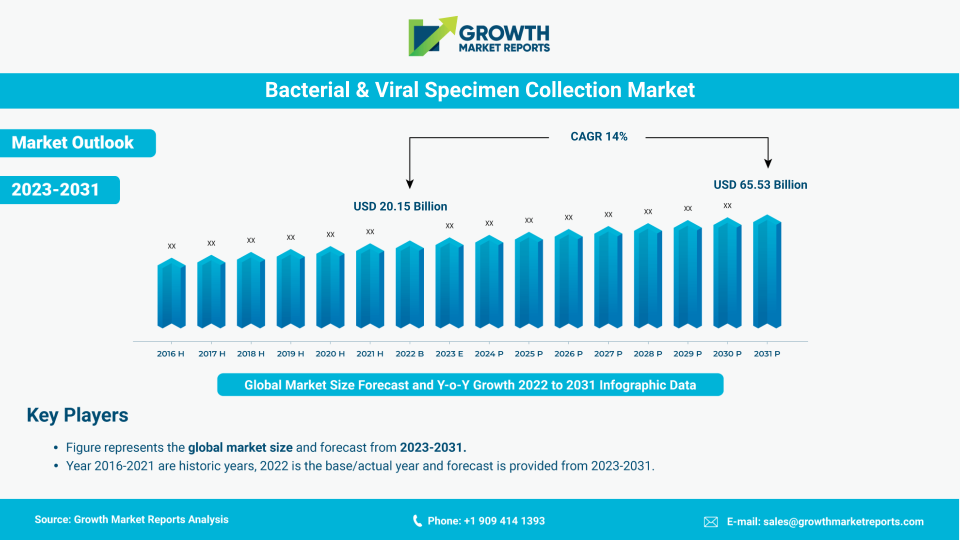
According to our latest research, the global bacterial & viral specimen collection market size stood at USD 10.8 billion in 2024, with a robust compound annual growth rate (CAGR) of 6.7% expected from 2025 to 2033. By the end of the forecast period, the market is projected to reach USD 19.7 billion, reflecting a significant expansion driven by rising demand for accurate diagnostic solutions, increasing prevalence of infectious diseases, and technological advancements in specimen collection systems. The ongoing focus on early disease detection and the integration of automated specimen collection processes are acting as key growth catalysts for this market, as per our comprehensive analysis.
One of the primary growth factors for the bacterial & viral specimen collection market is the escalating incidence of infectious diseases worldwide. The global healthcare landscape has witnessed an upsurge in bacterial and viral outbreaks, including seasonal influenza, respiratory syncytial virus, and emerging pathogens. This trend has placed immense pressure on healthcare systems to implement efficient and reliable specimen collection protocols. Furthermore, the COVID-19 pandemic has heightened awareness regarding the importance of timely and accurate specimen collection, leading to increased investments in advanced collection kits and transport media. The demand for rapid diagnostics and point-of-care testing has further boosted the adoption of innovative specimen collection products, reinforcing the marketÂ’s upward trajectory.
Advancements in specimen collection technologies have played a pivotal role in shaping the marketÂ’s growth dynamics. The introduction of user-friendly and minimally invasive collection devices, such as flocked swabs, self-collection kits, and improved transport media, has enhanced patient compliance and sample integrity. Automation and digitization are also transforming laboratory workflows, reducing the risk of contamination and human error. The integration of these technologies in both clinical and research settings is streamlining the specimen collection process, ensuring higher accuracy and faster turnaround times. This technological evolution is particularly significant in high-burden regions where timely diagnosis is critical for effective disease management and outbreak control.
Another significant factor fueling the growth of the bacterial & viral specimen collection market is the increasing focus on public health initiatives and government investments in healthcare infrastructure. Governments and international organizations are actively promoting surveillance programs and screening campaigns to mitigate the spread of infectious diseases. These initiatives are supported by funding for modernizing diagnostic laboratories and expanding access to quality healthcare services. Additionally, the growing trend of personalized medicine and the rising number of research activities in the field of microbiology and virology are contributing to the sustained demand for advanced specimen collection solutions. The synergy between public health policies and technological innovation continues to drive market expansion.
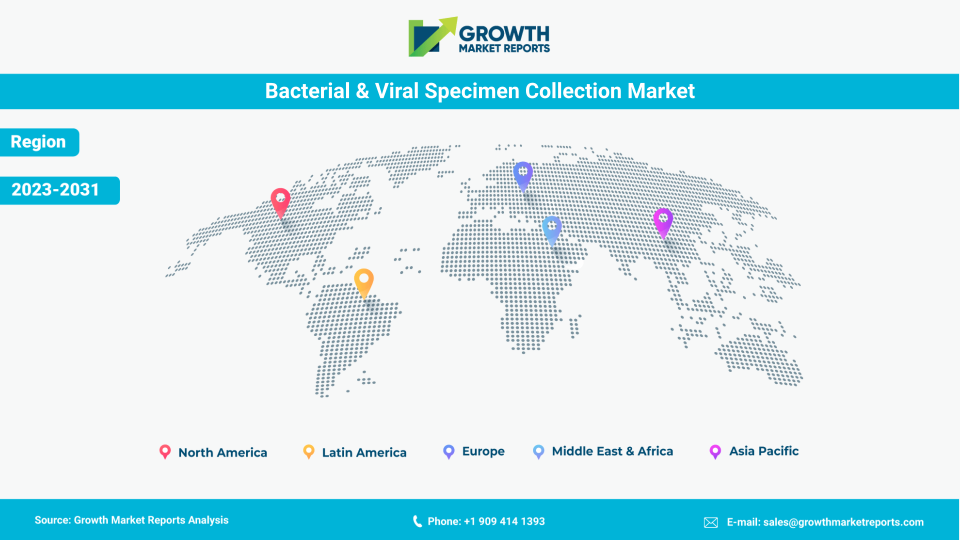
From a regional perspective, North America continues to dominate the bacterial & viral specimen collection market, driven by a well-established healthcare infrastructure, high adoption of advanced diagnostic technologies, and strong presence of leading market players. Europe follows closely, benefiting from increased government funding for infectious disease control and a growing emphasis on laboratory automation. The Asia Pacific region is emerging as a high-growth market, propelled by rising healthcare expenditure, expanding diagnostic capabilities, and a large patient population. Meanwhile, Latin America and the Middle East & Africa are witnessing gradual improvements in healthcare access and laboratory capacity, contributing to the overall global market growth.
In recent years, the advent of Home Specimen Collection Kits has revolutionized the way individuals approach diagnostic testing. These kits offer a convenient and private method for collecting samples at home, which are then sent to laboratories for analysis. This innovation is particularly beneficial for individuals who may have mobility issues or for those living in remote areas with limited access to healthcare facilities. The rise of telemedicine and the increasing demand for decentralized healthcare solutions have further propelled the adoption of home collection kits. By empowering patients to take control of their health monitoring, these kits are playing a crucial role in expanding access to timely and accurate diagnostic services, thereby enhancing patient outcomes and satisfaction.
The product type segment in the bacterial & viral specimen collection market encompasses swabs, transport media, collection kits, and other related products. Swabs represent one of the most widely used specimen collection products due to their versatility and ease of use in collecting samples from various anatomical sites, including nasal, throat, and wound areas. The demand for advanced swab designs, such as flocked and foam swabs, has surged in recent years owing to their superior sample absorption and release characteristics. These innovations significantly improve the accuracy of downstream diagnostic tests, making them indispensable in both clinical and research settings. Alongside swabs, transport media play a crucial role in maintaining the viability of collected specimens during transit, ensuring reliable results and minimizing false negatives.
Transport media have witnessed considerable advancements, with manufacturers focusing on developing formulations that can preserve bacterial and viral pathogens for extended periods without compromising sample integrity. The emergence of viral transport media (VTM) during the COVID-19 pandemic exemplified the critical importance of robust transport solutions. VTMs are specifically designed to stabilize viral RNA and DNA, facilitating accurate molecular testing. Additionally, bacterial transport media are essential for culturing and identifying bacterial pathogens in clinical microbiology laboratories. The increasing prevalence of infectious diseases and the need for efficient sample transportation across remote and centralized laboratories have driven the growth of this sub-segment within the market.
Collection kits, which typically bundle swabs, transport media, and other accessories, have gained substantial traction due to their convenience, standardization, and reduced risk of sample contamination. These kits are tailored to specific diagnostic applications, such as respiratory, urinary, or blood specimen collection, and are widely adopted by hospitals, clinics, and diagnostic laboratories. The adoption of self-collection kits, particularly for home-based testing, has accelerated in response to the COVID-19 pandemic and the broader shift toward decentralized healthcare. This trend is expected to persist, supported by ongoing innovations in kit design, packaging, and user instructions, which collectively enhance patient compliance and test accuracy.
Other products in this segment include specimen collection containers, needles, and accessories that support the safe and efficient collection, storage, and transport of a wide range of biological samples. These products are essential components of the specimen collection ecosystem, ensuring biosafety and regulatory compliance across different healthcare and research environments. As the demand for comprehensive and integrated specimen collection solutions grows, manufacturers are increasingly focusing on product diversification and customization to address the unique needs of various end users. Overall, the product type segment is characterized by continuous innovation, quality enhancements, and a strong emphasis on user safety and sample integrity.
| Attributes | Details |
| Report Title | Bacterial & Viral Specimen Collection Market Research Report 2033 |
| By Product Type | Swabs, Transport Media, Collection Kits, Others |
| By Application | Diagnostics, Research, Others |
| By End User | Hospitals & Clinics, Diagnostic Laboratories, Research Institutes, Others |
| By Sample Type | Blood, Nasal, Throat, Urine, Others |
| Regions Covered | North America, Europe, APAC, Latin America, MEA |
| Base Year | 2024 |
| Historic Data | 2018-2023 |
| Forecast Period | 2025-2033 |
| Number of Pages | 291 |
| Number of Tables & Figures | 389 |
| Customization Available | Yes, the report can be customized as per your need. |
The application segment of the bacterial & viral specimen collection market is broadly categorized into diagnostics, research, and other uses. Diagnostics remains the largest application area, accounting for a significant share of the market due to the critical role of specimen collection in disease detection and patient management. Accurate and timely collection of bacterial and viral specimens is foundational to the diagnostic process, enabling clinicians to identify causative pathogens and tailor treatment strategies accordingly. The proliferation of molecular diagnostic techniques, such as PCR and next-generation sequencing, has further heightened the importance of high-quality specimen collection products that can preserve nucleic acids and proteins for downstream analysis.
The role of Viral Transport Media (VTM) has become increasingly pivotal in the specimen collection landscape, especially in the wake of global health challenges such as the COVID-19 pandemic. VTMs are specifically formulated to preserve viral specimens during transport, ensuring the stability of viral RNA and DNA for accurate molecular testing. This capability is essential for laboratories conducting PCR and other nucleic acid-based assays, where sample integrity directly impacts diagnostic accuracy. The development of VTMs has been marked by innovations that enhance their effectiveness, such as the inclusion of antimicrobials to prevent bacterial overgrowth and the use of formulations that maintain viral viability under various environmental conditions. As the demand for reliable transport solutions continues to grow, VTMs are set to remain a cornerstone of effective specimen collection and diagnostic workflows.
Within diagnostics, the demand for rapid and point-of-care testing has led to the development of specialized collection devices that support immediate sample processing. These innovations are particularly valuable in emergency settings, outpatient clinics, and resource-limited environments where laboratory infrastructure may be limited. The integration of specimen collection with automated diagnostic platforms is streamlining workflows and reducing turnaround times, ultimately improving patient outcomes. Additionally, the rising incidence of healthcare-associated infections and antimicrobial resistance has prompted healthcare providers to adopt more rigorous specimen collection protocols, further driving market growth in the diagnostics segment.
Research applications constitute another vital segment, fueled by the expanding scope of microbiological and virological studies. Specimen collection products are indispensable in academic and industrial research settings, where they support a wide range of activities, including pathogen surveillance, vaccine development, and epidemiological investigations. The increasing prevalence of emerging and re-emerging infectious diseases has intensified research efforts, necessitating the use of standardized and reliable specimen collection tools. Collaboration between research institutes, public health agencies, and industry stakeholders is fostering innovation in specimen collection methodologies, facilitating the discovery of novel diagnostic markers and therapeutic targets.
Other applications of specimen collection products include their use in forensic investigations, environmental monitoring, and quality assurance testing in pharmaceutical and biotechnology industries. These niche applications require specialized collection devices and protocols to ensure the integrity and traceability of collected samples. As the importance of biosafety and regulatory compliance continues to grow, the demand for certified and validated specimen collection products across diverse application areas is expected to rise. Overall, the application segment is characterized by a strong focus on quality, reliability, and adaptability to evolving healthcare and research needs.
The end user segment in the bacterial & viral specimen collection market is comprised of hospitals & clinics, diagnostic laboratories, research institutes, and other entities. Hospitals and clinics represent the largest end-user group, owing to their central role in patient care, disease diagnosis, and treatment. These healthcare facilities rely heavily on efficient specimen collection systems to support a wide range of diagnostic tests, from routine screenings to complex infectious disease investigations. The integration of automated specimen collection and tracking technologies in hospital laboratories is enhancing workflow efficiency, reducing turnaround times, and minimizing the risk of sample misidentification or contamination.
Diagnostic laboratories, both independent and hospital-affiliated, are key stakeholders in the specimen collection market. These laboratories process large volumes of samples daily, necessitating the use of standardized and high-throughput collection products. The increasing adoption of molecular diagnostics and high-sensitivity assays has heightened the demand for specimen collection devices that can preserve sample integrity and support downstream testing. Diagnostic laboratories are also at the forefront of implementing quality assurance and accreditation standards, driving the adoption of validated and regulatory-compliant collection solutions. The trend toward laboratory consolidation and the emergence of centralized testing facilities are further shaping the procurement and utilization patterns of specimen collection products in this segment.
Research institutes constitute another important end-user segment, particularly in the context of infectious disease surveillance, vaccine development, and epidemiological studies. These institutions require specialized specimen collection tools to support diverse research protocols and ensure the reproducibility of experimental results. The collaboration between research institutes and healthcare providers is fostering the development of innovative collection devices tailored to specific research applications. Additionally, the increasing focus on translational research and the integration of biobanking initiatives are driving the demand for high-quality specimen collection and storage solutions in the research sector.
Other end users, including public health agencies, pharmaceutical companies, and forensic laboratories, also contribute to the demand for bacterial & viral specimen collection products. These organizations require robust and customizable collection systems to support their unique operational and regulatory requirements. As the scope of infectious disease surveillance and outbreak response expands, the need for scalable and interoperable specimen collection solutions is becoming increasingly apparent. Overall, the end-user segment is characterized by diverse needs, stringent quality standards, and a growing emphasis on efficiency, safety, and regulatory compliance.
The sample type segment in the bacterial & viral specimen collection market includes blood, nasal, throat, urine, and other specimen types. Blood samples are among the most commonly collected specimens due to their diagnostic value in detecting a wide range of bacterial and viral infections. The collection of blood specimens requires specialized devices, such as vacutainers, needles, and anticoagulant tubes, to ensure sample stability and prevent hemolysis. Advances in blood collection technology, including the development of minimally invasive and self-collection devices, are improving patient comfort and expanding access to diagnostic testing, particularly in remote and underserved regions.
Nasal and throat swabs are critical for the diagnosis of respiratory infections, including influenza, COVID-19, and other viral pathogens. The demand for high-performance swabs and transport media has surged in response to the increased incidence of respiratory diseases and the need for rapid, accurate testing. Innovations in swab design, such as flocked and foam swabs, have enhanced sample collection efficiency and improved diagnostic sensitivity. The widespread adoption of nasal and throat swabs in both clinical and home-testing settings underscores their importance in the specimen collection ecosystem.
Urine samples are commonly collected for the diagnosis of urinary tract infections, sexually transmitted infections, and other bacterial and viral diseases. The collection of urine specimens is non-invasive and well-tolerated by patients, making it suitable for a broad range of diagnostic applications. Advances in urine collection devices, including sterile containers and preservative solutions, are ensuring sample integrity and facilitating accurate laboratory analysis. The integration of urine specimen collection with point-of-care testing platforms is further enhancing the accessibility and convenience of diagnostic services.
Other specimen types, such as saliva, sputum, stool, and wound exudates, are also important in the diagnosis and monitoring of infectious diseases. The development of specialized collection devices for these sample types is addressing the unique challenges associated with sample stability, contamination prevention, and biosafety. As the spectrum of diagnostic tests continues to expand, the demand for versatile and reliable specimen collection products across various sample types is expected to grow. The sample type segment is characterized by a strong focus on innovation, patient-centric design, and adaptability to emerging diagnostic needs.
The bacterial & viral specimen collection market presents a multitude of opportunities for stakeholders across the healthcare and life sciences sectors. The growing emphasis on early disease detection and personalized medicine is driving the demand for advanced specimen collection technologies that support high-sensitivity diagnostic assays. The expansion of telemedicine and home-based healthcare services is creating new avenues for self-collection kits and remote sample submission, enabling broader access to diagnostic testing. Furthermore, the increasing investment in healthcare infrastructure and laboratory automation in emerging markets is opening up significant growth prospects for manufacturers of specimen collection products. Strategic collaborations between industry players, research institutions, and public health agencies are fostering innovation and accelerating the development of next-generation collection solutions.
Another major opportunity lies in the integration of digital health technologies with specimen collection systems. The use of barcoding, RFID tagging, and digital tracking platforms is enhancing sample traceability, reducing errors, and improving data management across the diagnostic workflow. The adoption of cloud-based laboratory information management systems (LIMS) is enabling real-time monitoring of specimen collection, transport, and processing, thereby optimizing laboratory operations and supporting large-scale epidemiological studies. Additionally, the growing focus on sustainability and environmental responsibility is prompting manufacturers to develop eco-friendly and biodegradable specimen collection products, aligning with global efforts to reduce healthcare waste and minimize environmental impact.
Despite the numerous opportunities, the market faces several restraining factors that could impede its growth trajectory. One of the primary challenges is the stringent regulatory landscape governing the approval and commercialization of specimen collection products. Manufacturers must navigate complex and evolving regulatory requirements to ensure product safety, efficacy, and compliance with international standards. The high cost of advanced specimen collection devices and the limited availability of skilled personnel in resource-constrained settings may also hinder market adoption. Moreover, concerns related to sample contamination, improper handling, and inadequate storage conditions can compromise diagnostic accuracy and patient outcomes. Addressing these challenges will require ongoing investment in quality assurance, training, and regulatory harmonization across the global healthcare ecosystem.
North America remains the leading regional market for bacterial & viral specimen collection, accounting for approximately 38% of the global market share in 2024, with a market size of around USD 4.1 billion. The regionÂ’s dominance is attributed to its advanced healthcare infrastructure, high adoption of innovative diagnostic technologies, and a strong presence of major market players. The United States, in particular, has been at the forefront of implementing large-scale infectious disease surveillance programs and investing in laboratory automation. The regionÂ’s focus on early disease detection, coupled with robust government support for public health initiatives, is expected to sustain market growth at a CAGR of 6.2% through 2033.
Europe holds the second-largest share in the bacterial & viral specimen collection market, with a market size of approximately USD 2.9 billion in 2024. The region benefits from well-established laboratory networks, increasing government funding for infectious disease control, and a growing emphasis on research and development. Countries such as Germany, the United Kingdom, and France are leading contributors to market growth, driven by their proactive approach to healthcare innovation and regulatory compliance. The adoption of automated specimen collection and processing systems is further enhancing the efficiency and accuracy of diagnostic workflows across European healthcare facilities.
The Asia Pacific region is emerging as the fastest-growing market, projected to achieve a CAGR of 8.1% during the forecast period. With a market size of USD 2.3 billion in 2024, the region is witnessing rapid expansion due to rising healthcare expenditure, increasing prevalence of infectious diseases, and expanding diagnostic infrastructure. Countries such as China, India, and Japan are investing heavily in modernizing their healthcare systems and improving access to quality diagnostic services. The growing adoption of point-of-care testing and home-based specimen collection solutions is further driving market growth in the region. Latin America and the Middle East & Africa, with market sizes of USD 0.8 billion and USD 0.7 billion respectively, are experiencing steady improvements in healthcare access and laboratory capacity, contributing to the overall global market expansion.
The bacterial & viral specimen collection market is characterized by intense competition, with a mix of established global players and emerging regional manufacturers vying for market share. The competitive landscape is shaped by continuous innovation, product differentiation, and strategic partnerships aimed at expanding product portfolios and geographic reach. Leading companies are investing heavily in research and development to introduce advanced specimen collection devices that offer improved sample integrity, user safety, and compatibility with automated laboratory systems. The market is also witnessing a trend toward mergers and acquisitions, as companies seek to consolidate their positions and leverage synergies across complementary product lines.
Key players in the market are focusing on enhancing their manufacturing capabilities and supply chain resilience to meet the growing demand for specimen collection products, particularly in the wake of global health emergencies such as the COVID-19 pandemic. The ability to rapidly scale up production and ensure timely delivery of high-quality products has become a critical differentiator in the competitive landscape. Companies are also prioritizing regulatory compliance and quality assurance to maintain their reputations and meet the stringent requirements of healthcare providers and regulatory authorities worldwide. The adoption of digital health technologies and data-driven decision-making is further enabling market leaders to optimize their operations and respond proactively to evolving customer needs.
In addition to product innovation and operational excellence, leading market players are actively engaging in strategic collaborations with healthcare institutions, research organizations, and government agencies. These partnerships are facilitating the development and deployment of next-generation specimen collection solutions tailored to specific clinical and research applications. Collaborative efforts are also accelerating the translation of research findings into commercial products, thereby enhancing the overall value proposition for end users. The focus on customer-centric solutions and comprehensive service offerings is enabling companies to build long-term relationships and strengthen their market positions.
Some of the major companies operating in the bacterial & viral specimen collection market include Becton, Dickinson and Company (BD), Thermo Fisher Scientific Inc., QIAGEN N.V., COPAN Diagnostics Inc., Puritan Medical Products, Hardy Diagnostics, and HiMedia Laboratories. BD is renowned for its extensive portfolio of specimen collection devices and its commitment to innovation and quality. Thermo Fisher Scientific offers a comprehensive range of transport media and collection kits, supported by a global distribution network. QIAGEN is a leader in molecular diagnostics and sample preparation technologies, while COPAN Diagnostics is recognized for its pioneering swab and transport systems. Puritan Medical Products specializes in high-quality swabs and collection devices, serving both clinical and research markets. Hardy Diagnostics and HiMedia Laboratories are prominent suppliers of culture media and laboratory consumables, catering to diverse customer needs worldwide.
These companies are continuously expanding their product offerings through investments in R&D, strategic acquisitions, and collaborations with industry stakeholders. Their focus on delivering reliable, safe, and user-friendly specimen collection solutions is driving the overall growth and competitiveness of the market. As the demand for high-quality diagnostic and research tools continues to rise, these industry leaders are well-positioned to capitalize on emerging opportunities and address the evolving challenges of the global healthcare landscape.
The Bacterial & Viral Specimen Collection market has been segmented on the basis of
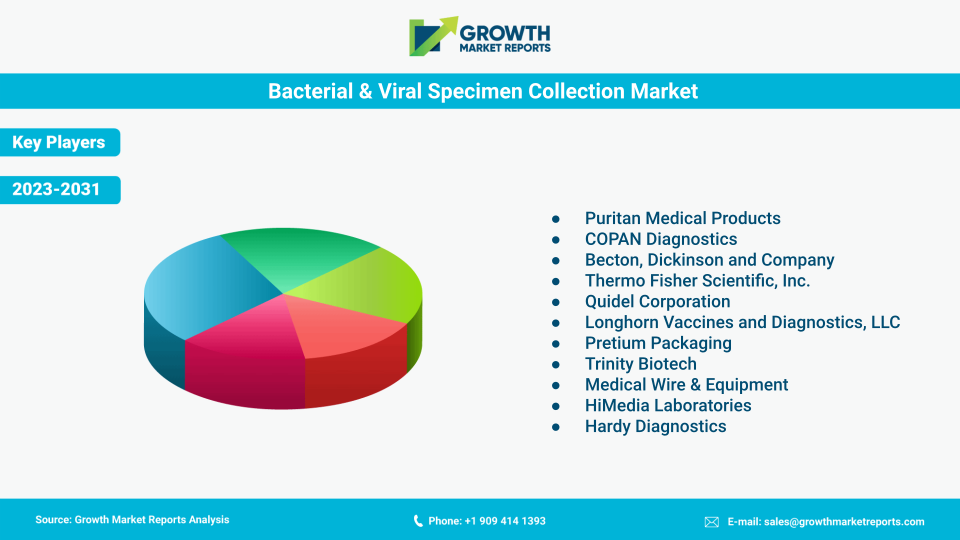
Some of the major players competing in the market are Puritan Medical Products; COPAN Diagnostics; Becton, Dickinson and Company; Thermo Fisher Scientific, Inc.; Quidel Corporation; Longhorn Vaccines and Diagnostics, LLC; Pretium Packaging; Trinity Biotech; Medical Wire & Equipment; HiMedia Laboratories; Hardy Diagnostics; Nest Scientific; VIRCELL S.L.; DiaSorin; and Titan Biotech.
These companies are collaborating and partnering with a number of domestic and foreign firms to develop bacterial and viral specimen collection products. For instance, in June 2020, Henkel AG & Co. KGaA collaborated with Origin, to take advantage of the latter's expertise in performing rigorous mechanical testing at its California plant. Henkel has contributed several expertise and technologies related to the creation of 3D-printed nasopharyngeal swabs for COVID-19 research.
Furthermore, diagnostic firms are pursuing lucrative business strategies to gain a competitive advantage in the area of infectious disease research, resulting in increased demand for specimen collection solutions. For instance, Thermo Fisher partnered with NanoPin Technologies, Inc. in February 2020 to create highly sensitive liquid chromatography-mass spectrometry workflows to advance blood-based infectious disease diagnosis.
Trends include the rise of home-based and self-collection kits, integration of digital health technologies (like barcoding and RFID), sustainability initiatives, and increased investment in healthcare infrastructure and laboratory automation.
Major players include Becton, Dickinson and Company (BD), Thermo Fisher Scientific Inc., Copan Diagnostics Inc., Puritan Medical Products, Hardy Diagnostics, HiMedia Laboratories, and others.
Major challenges include stringent regulatory requirements, high costs of advanced collection devices, limited skilled personnel in some regions, and risks of sample contamination or improper handling.
Common sample types include blood, nasal swabs, throat swabs, urine, and other specimens such as saliva, sputum, stool, and wound exudates.
Key end users include hospitals & clinics, diagnostic laboratories, research institutes, public health agencies, pharmaceutical companies, and forensic laboratories.
Technological advancements such as minimally invasive and user-friendly devices, automation, digitization, and integration with laboratory information systems are improving sample integrity, reducing errors, and speeding up diagnostic workflows.
The main product types include swabs (such as flocked and foam swabs), transport media (including viral and bacterial transport media), collection kits, and other accessories like specimen containers and needles.
North America dominates the market, followed by Europe and the Asia Pacific region. North America accounted for about 38% of the global market share in 2024, with the Asia Pacific region emerging as the fastest-growing market.
Key growth drivers include the rising prevalence of infectious diseases, increased demand for accurate diagnostics, technological advancements in specimen collection, and greater focus on early disease detection and public health initiatives.
The global bacterial & viral specimen collection market was valued at USD 10.8 billion in 2024 and is projected to reach USD 19.7 billion by 2033, growing at a CAGR of 6.7% during the forecast period.