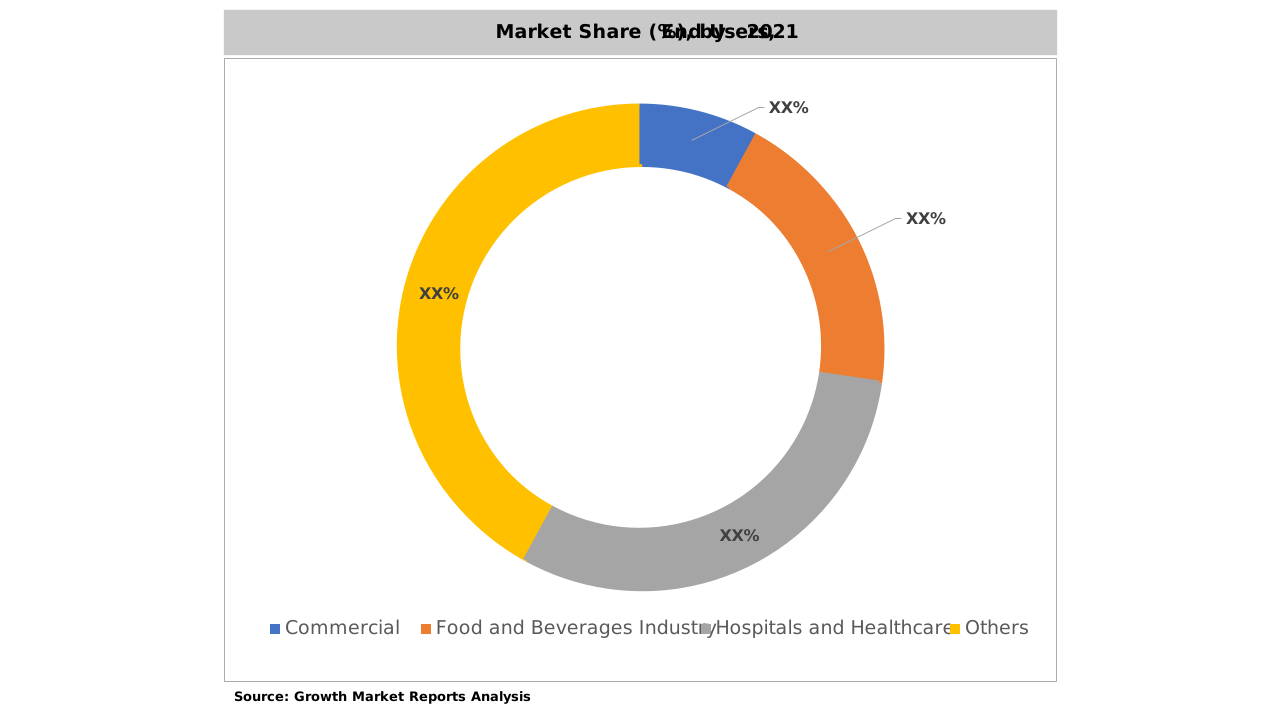
Segments - by Product Type (Paper Towels, Toilet Paper, Napkins, Facial Tissues, Handkerchiefs, Others), by Application (Commercial, Healthcare, Hospitality, Education, Industrial, Others), by Distribution Channel (Direct Sales, Distributors/Wholesalers, Online Retail, Others), by End-User (Hotels & Restaurants, Offices, Hospitals & Healthcare Facilities, Educational Institutions, Industrial & Manufacturing, Others)
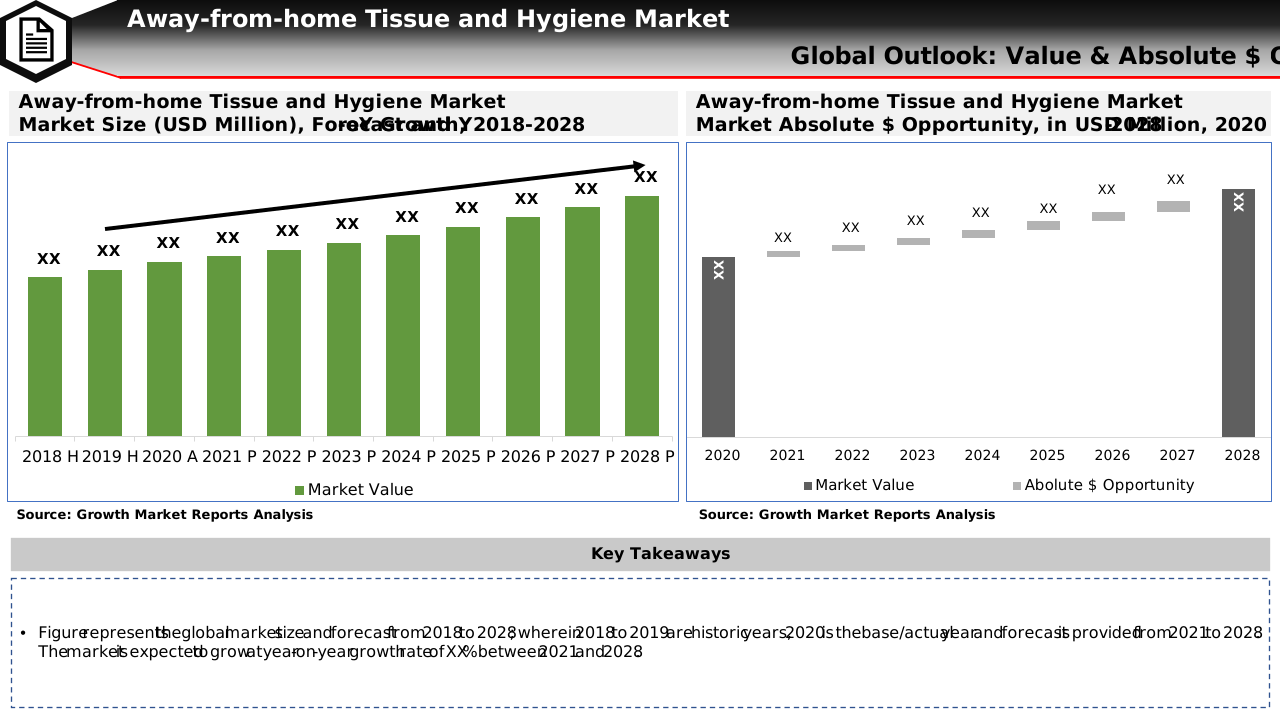
According to our latest research, the global away-from-home tissue and hygiene market size reached USD 38.7 billion in 2024, with a robust year-on-year growth driven by post-pandemic recovery in the hospitality and healthcare sectors. The market is expected to expand at a CAGR of 6.1% between 2025 and 2033, leading to a forecasted market size of USD 65.8 billion by 2033. This growth trajectory is underpinned by rising hygiene awareness, increased commercial activities, and stringent public health regulations globally. As per our latest research, the away-from-home tissue and hygiene market is witnessing significant transformation, with evolving consumer preferences and technological advancements shaping the competitive landscape.
A key growth factor for the away-from-home tissue and hygiene market is the heightened emphasis on sanitation and cleanliness across public and commercial spaces. The COVID-19 pandemic has led to a paradigm shift in hygiene standards, with institutions, businesses, and governments prioritizing the provision of high-quality tissue and hygiene products. This has resulted in increased demand across segments such as paper towels, toilet paper, and napkins, especially in high-traffic environments like airports, hospitals, and educational institutions. Moreover, the adoption of automated dispensing systems and touchless solutions in restrooms and public facilities is further driving product innovation and consumption, as organizations strive to minimize cross-contamination and enhance user experience.
Another significant driver is the expansion of the hospitality and healthcare sectors, particularly in emerging economies. Rapid urbanization, rising disposable incomes, and the proliferation of hotels, restaurants, and healthcare facilities are fueling the need for reliable away-from-home tissue and hygiene solutions. The market is also benefitting from the trend toward sustainable and eco-friendly products, with manufacturers increasingly focusing on recyclable, biodegradable, and FSC-certified materials. This shift is not only meeting regulatory requirements but also catering to the growing consumer demand for environmentally responsible options, thereby broadening the market’s appeal and opening new avenues for growth.
Technological advancements and digitalization are also playing a pivotal role in shaping the away-from-home tissue and hygiene market. The integration of IoT-enabled dispensers, smart inventory management systems, and data-driven supply chain solutions is enhancing operational efficiency and reducing wastage. These innovations allow facility managers to monitor usage patterns, optimize replenishment cycles, and ensure uninterrupted supply, especially in high-volume environments. Additionally, the proliferation of e-commerce and online retail platforms is making it easier for businesses to source and replenish hygiene products, accelerating market penetration and fostering greater competition among distributors and manufacturers.
From a regional perspective, Asia Pacific stands out as the fastest-growing market, driven by rapid infrastructure development, urbanization, and increasing awareness of public health standards. North America and Europe, while mature markets, continue to exhibit steady growth due to stringent hygiene regulations and a strong institutional presence. Latin America and the Middle East & Africa are also witnessing rising demand, supported by government initiatives to improve sanitation in public facilities and growing investments in commercial infrastructure. Overall, the global away-from-home tissue and hygiene market is poised for sustained expansion, with regional dynamics and evolving consumer expectations shaping future opportunities.
The product type segment of the away-from-home tissue and hygiene market encompasses a diverse array of offerings, including paper towels, toilet paper, napkins, facial tissues, handkerchiefs, and other specialty products. Among these, paper towels and toilet paper constitute the largest revenue share, driven by their indispensable role in maintaining hygiene in restrooms, kitchens, and communal areas. The widespread adoption of paper towels in commercial kitchens, healthcare settings, and public restrooms is attributed to their superior absorbency, convenience, and ability to reduce the spread of germs compared to traditional cloth towels. As hygiene awareness continues to rise, demand for high-quality, multi-ply, and eco-friendly paper towel variants is expected to surge, further bolstering segment growth.
Toilet paper remains a staple in both developed and emerging markets, with significant consumption occurring in hotels, offices, and public facilities. The trend toward premiumization, characterized by the introduction of softer, thicker, and scented toilet papers, is gaining traction, particularly in regions with higher disposable incomes. Manufacturers are also investing in sustainable production processes, utilizing recycled fibers and chlorine-free bleaching techniques to address environmental concerns. This dual focus on comfort and sustainability is creating a differentiated value proposition, attracting environmentally conscious end-users and reinforcing brand loyalty.
Napkins and facial tissues are witnessing robust demand in the hospitality and foodservice industries, where hygiene and customer experience are paramount. Restaurants, cafes, and catering services are increasingly opting for disposable napkins to ensure cleanliness and convenience for patrons. Similarly, facial tissues are gaining popularity in office spaces, healthcare facilities, and educational institutions, where they serve as essential hygiene products for personal care and infection control. The growing trend of on-the-go consumption and the proliferation of vending machines and convenience stores are further expanding the reach of these products.
Handkerchiefs and specialty tissue products, while representing a smaller share of the market, are experiencing renewed interest due to their portability and versatility. Innovations such as antibacterial coatings, hypoallergenic formulations, and compact packaging are enhancing product appeal, particularly among health-conscious consumers and travelers. Additionally, the integration of value-added features, such as fragrance infusion and lotion additives, is driving premiumization and enabling manufacturers to command higher price points. The product type segment is expected to remain highly dynamic, with continuous innovation and evolving consumer preferences shaping future trends.
| Attributes | Details |
| Report Title | Away-from-home Tissue and Hygiene Market Research Report 2033 |
| By Product Type | Paper Towels, Toilet Paper, Napkins, Facial Tissues, Handkerchiefs, Others |
| By Application | Commercial, Healthcare, Hospitality, Education, Industrial, Others |
| By Distribution Channel | Direct Sales, Distributors/Wholesalers, Online Retail, Others |
| By End-User | Hotels & Restaurants, Offices, Hospitals & Healthcare Facilities, Educational Institutions, Industrial & Manufacturing, Others |
| Regions Covered | North America, Europe, APAC, Latin America, MEA |
| Base Year | 2024 |
| Historic Data | 2018-2023 |
| Forecast Period | 2025-2033 |
| Number of Pages | 275 |
| Number of Tables & Figures | 252 |
| Customization Available | Yes, the report can be customized as per your need. |
The application segment of the away-from-home tissue and hygiene market is broad, encompassing commercial, healthcare, hospitality, education, industrial, and other specialized environments. The commercial segment, which includes offices, shopping malls, airports, and entertainment venues, accounts for a significant portion of market demand. Here, the focus is on providing reliable, cost-effective, and easy-to-maintain hygiene solutions that can handle high foot traffic and diverse user needs. Facility managers are increasingly adopting automated dispensers, jumbo rolls, and bulk packaging to optimize operational efficiency and minimize maintenance costs, thereby driving continuous product innovation within this segment.
Healthcare facilities represent another critical application area, with stringent hygiene protocols necessitating the use of high-quality tissue and hygiene products. Hospitals, clinics, and long-term care centers rely heavily on disposable towels, toilet paper, and facial tissues to prevent cross-contamination and ensure patient safety. The demand for antibacterial and hypoallergenic products is particularly pronounced in this segment, as healthcare providers seek to minimize infection risks and comply with regulatory standards. The ongoing expansion of healthcare infrastructure, particularly in emerging markets, is expected to fuel sustained growth in this application area.
The hospitality sector, encompassing hotels, resorts, restaurants, and catering services, is a major driver of demand for premium tissue and hygiene products. Customer expectations for cleanliness, comfort, and convenience are prompting hospitality operators to invest in high-quality, aesthetically pleasing, and eco-friendly offerings. The trend toward personalized guest experiences is also influencing product selection, with luxury hotels and boutique establishments opting for branded, scented, or customized tissue products to enhance their value proposition. As international tourism rebounds and new hospitality projects come online, this segment is poised for steady expansion.
Educational institutions and industrial settings are also significant contributors to overall market demand. Schools, colleges, and universities are prioritizing student and staff safety by ensuring the availability of hand towels, toilet paper, and facial tissues in restrooms and common areas. In the industrial sector, hygiene products are essential for maintaining workplace safety, particularly in manufacturing plants, warehouses, and processing facilities. The adoption of industrial-grade, high-capacity dispensers and durable tissue products is helping companies comply with occupational health regulations and reduce downtime associated with hygiene-related issues. Collectively, the application segment underscores the market’s versatility and its critical role in supporting public health across diverse environments.
The distribution channel segment of the away-from-home tissue and hygiene market is characterized by a dynamic interplay between traditional and modern retail networks. Direct sales, which involve manufacturers supplying products directly to end-users such as large corporations, hospitals, and hospitality chains, account for a substantial share of the market. This channel offers advantages such as customized solutions, bulk pricing, and streamlined logistics, making it particularly attractive for organizations with large-scale and recurring hygiene needs. Direct sales are often supported by dedicated account managers and technical support teams, ensuring timely delivery and after-sales service.
Distributors and wholesalers play a pivotal role in bridging the gap between manufacturers and a diverse array of end-users. By leveraging their extensive networks, these intermediaries facilitate the efficient distribution of tissue and hygiene products to small and medium-sized businesses, educational institutions, and regional healthcare facilities. Distributors often offer value-added services such as inventory management, product training, and flexible payment terms, enhancing their appeal to cost-conscious buyers. The presence of established distributor networks is particularly pronounced in mature markets such as North America and Europe, where brand loyalty and long-term supplier relationships drive repeat business.
The online retail channel is experiencing rapid growth, fueled by digital transformation and changing purchasing behaviors among institutional buyers. E-commerce platforms and specialized B2B marketplaces provide a convenient and transparent procurement process, allowing organizations to compare products, access detailed specifications, and place bulk orders with ease. The COVID-19 pandemic has accelerated the adoption of online channels, as businesses seek contactless purchasing options and faster delivery times. Online retail is also enabling smaller manufacturers to reach a broader customer base, intensifying competition and driving product innovation.
Other distribution channels, including cash-and-carry outlets, specialty stores, and catalog sales, continue to play a role in meeting the needs of niche markets and remote locations. These channels are particularly relevant in regions with limited digital infrastructure or where buyers prefer in-person transactions. The overall distribution landscape is evolving rapidly, with an increasing emphasis on omnichannel strategies that integrate direct sales, distributor partnerships, and online platforms. This approach enables manufacturers to maximize reach, enhance customer engagement, and respond swiftly to changing market dynamics.
The end-user segment of the away-from-home tissue and hygiene market is highly diverse, reflecting the wide-ranging applications of these products across different industries. Hotels and restaurants represent a prominent end-user group, accounting for a significant share of market demand. In this sector, the focus is on delivering superior guest experiences through the provision of high-quality, aesthetically pleasing, and hygienic tissue products. Operators are increasingly opting for branded and customized solutions, such as embossed napkins and scented toilet paper, to reinforce their brand image and differentiate their offerings in a competitive marketplace.
Offices and corporate facilities are another major end-user segment, with organizations prioritizing employee health, productivity, and well-being. The provision of adequate hygiene products in restrooms, break rooms, and communal areas is viewed as a critical component of workplace safety and employee satisfaction. Companies are investing in automated dispensers, touchless solutions, and eco-friendly products to minimize environmental impact and align with corporate sustainability goals. The trend toward hybrid work models and flexible office spaces is also influencing procurement strategies, with facility managers seeking versatile and cost-effective hygiene solutions.
Hospitals and healthcare facilities constitute a high-priority end-user group, given the stringent hygiene requirements and the need to prevent healthcare-associated infections. The demand for medical-grade tissue products, such as antibacterial hand towels, hypoallergenic facial tissues, and high-absorbency wipes, is particularly strong in this segment. Healthcare providers are also seeking products that comply with regulatory standards and support infection control protocols, driving innovation in packaging, dispensing, and material composition. The ongoing expansion of healthcare infrastructure, especially in emerging markets, is expected to sustain robust demand from this end-user group.
Educational institutions and industrial and manufacturing facilities round out the end-user landscape, each with unique requirements and usage patterns. Schools, colleges, and universities are focused on providing a safe and hygienic environment for students and staff, leading to increased consumption of tissue and hygiene products in restrooms, cafeterias, and classrooms. In industrial settings, hygiene is critical for maintaining worker safety, complying with occupational health regulations, and minimizing downtime due to illness or contamination. The adoption of durable, high-capacity dispensers and industrial-grade tissue products is helping companies meet these challenges while optimizing operational efficiency.
The away-from-home tissue and hygiene market presents a wealth of opportunities for manufacturers, distributors, and service providers. One of the most significant opportunities lies in the development and commercialization of sustainable and eco-friendly products. As environmental awareness grows and regulatory pressures mount, organizations are increasingly seeking tissue and hygiene solutions that minimize environmental impact. This has led to a surge in demand for products made from recycled fibers, bamboo, and other renewable resources, as well as innovations in biodegradable packaging and water-saving production processes. Companies that can offer certified, high-performance, and environmentally responsible products are well-positioned to capture market share and build long-term customer loyalty.
Another key opportunity is the integration of digital technologies and smart solutions into tissue and hygiene product offerings. The adoption of IoT-enabled dispensers, real-time usage monitoring, and automated inventory management systems is transforming facility maintenance and enhancing user experience. These innovations allow organizations to optimize resource allocation, reduce wastage, and ensure uninterrupted supply, particularly in high-traffic environments. The proliferation of e-commerce and online procurement platforms also presents new avenues for growth, enabling manufacturers to reach a broader customer base and offer tailored solutions to diverse end-user segments. Strategic partnerships, mergers and acquisitions, and investments in research and development are expected to drive further innovation and market expansion.
Despite these opportunities, the market faces several restraining factors, chief among them being the volatility of raw material prices and supply chain disruptions. The production of tissue and hygiene products relies heavily on wood pulp, recycled fibers, and other raw materials, the prices of which are subject to fluctuations due to environmental regulations, trade restrictions, and geopolitical tensions. Supply chain disruptions, such as those experienced during the COVID-19 pandemic, can lead to shortages, delayed deliveries, and increased costs, impacting both manufacturers and end-users. Additionally, intense competition and price sensitivity, particularly in mature markets, can exert downward pressure on margins, necessitating continuous innovation and operational efficiency to maintain profitability.
The Asia Pacific region is emerging as the fastest-growing market for away-from-home tissue and hygiene products, with a market size of USD 13.2 billion in 2024 and an impressive CAGR of 8.2% projected through 2033. This growth is fueled by rapid urbanization, expanding commercial and healthcare infrastructure, and rising awareness of hygiene and sanitation standards. Countries such as China, India, and Southeast Asian nations are witnessing significant investments in hospitality, healthcare, and education, driving robust demand for tissue and hygiene solutions. The increasing adoption of smart dispensers, touchless technologies, and eco-friendly products is also contributing to market expansion in this region.
North America remains a mature but steadily growing market, with a market size of USD 10.5 billion in 2024. The region benefits from stringent hygiene regulations, a strong institutional presence, and high consumer expectations for quality and sustainability. The commercial and healthcare sectors are the primary drivers of demand, with organizations investing in premium, sustainable, and technologically advanced tissue and hygiene products. The presence of leading manufacturers, well-established distribution networks, and a strong culture of innovation further reinforce North America’s position as a key market for away-from-home tissue and hygiene products.
Europe, with a market size of USD 9.8 billion in 2024, is characterized by a strong emphasis on sustainability, regulatory compliance, and product innovation. The region is witnessing increasing adoption of recycled and biodegradable tissue products, driven by both consumer demand and government initiatives to reduce environmental impact. The hospitality and healthcare sectors are major contributors to market growth, supported by ongoing investments in infrastructure and public health. Latin America and the Middle East & Africa, while smaller in terms of market size, are experiencing rising demand due to improving sanitation standards, growing investments in commercial facilities, and supportive government policies. Collectively, these regions accounted for approximately USD 5.2 billion in 2024, with strong potential for future growth as economies develop and hygiene awareness increases.
The competitive landscape of the away-from-home tissue and hygiene market is characterized by the presence of several global and regional players, each vying for market share through product innovation, strategic partnerships, and geographical expansion. Leading companies are investing heavily in research and development to introduce sustainable, high-performance, and value-added products that meet the evolving needs of diverse end-user segments. The focus on eco-friendly materials, advanced dispensing technologies, and digital solutions is enabling market leaders to differentiate themselves and capture premium segments of the market. Intense competition and price sensitivity, particularly in mature regions, are driving continuous innovation and operational efficiency across the industry.
Major players in the market are also pursuing strategic mergers, acquisitions, and joint ventures to expand their product portfolios, strengthen distribution networks, and access new customer segments. These initiatives are enabling companies to achieve economies of scale, enhance supply chain resilience, and respond more effectively to changing market dynamics. The rise of private label brands and the entry of new players, particularly in emerging markets, are intensifying competition and fostering greater product diversity. Companies are also leveraging digital marketing, e-commerce platforms, and direct-to-customer sales channels to enhance brand visibility and engage with a broader audience.
Sustainability and corporate social responsibility are increasingly becoming key differentiators in the market, with leading companies setting ambitious targets for reducing carbon emissions, minimizing waste, and promoting responsible sourcing. Transparency in supply chains, third-party certifications, and eco-labeling are gaining prominence as organizations seek to build trust with environmentally conscious customers. The integration of smart technologies, such as IoT-enabled dispensers and real-time monitoring systems, is further enhancing product value and operational efficiency, providing a competitive edge to early adopters.
Some of the major companies operating in the away-from-home tissue and hygiene market include Kimberly-Clark Corporation, Procter & Gamble, Essity AB, Georgia-Pacific LLC, Sofidel Group, Kruger Products, Cascades Inc., and Asia Pulp & Paper. Kimberly-Clark is renowned for its strong portfolio of commercial tissue products and innovative dispensing solutions, while Procter & Gamble leverages its global reach and research capabilities to drive product development and market expansion. Essity AB, a leader in sustainable tissue solutions, is known for its commitment to environmental stewardship and advanced manufacturing processes. Georgia-Pacific and Sofidel Group are recognized for their extensive distribution networks and focus on quality and customer service. Kruger Products and Cascades Inc. have established themselves as key players in North America, with a strong emphasis on sustainability and product innovation. Asia Pulp & Paper, with its significant presence in the Asia Pacific region, is driving growth through capacity expansion and investment in eco-friendly technologies.
These companies are continuously enhancing their product offerings, investing in sustainable practices, and expanding their global footprints to maintain a competitive edge. Collaborations with distributors, facility management companies, and technology providers are enabling them to deliver integrated hygiene solutions that address the unique needs of various end-user segments. As the market continues to evolve, the ability to anticipate and respond to emerging trends, such as digitalization, sustainability, and customization, will be critical for sustained success in the away-from-home tissue and hygiene market.
The Away-from-home Tissue and Hygiene market has been segmented on the basis of
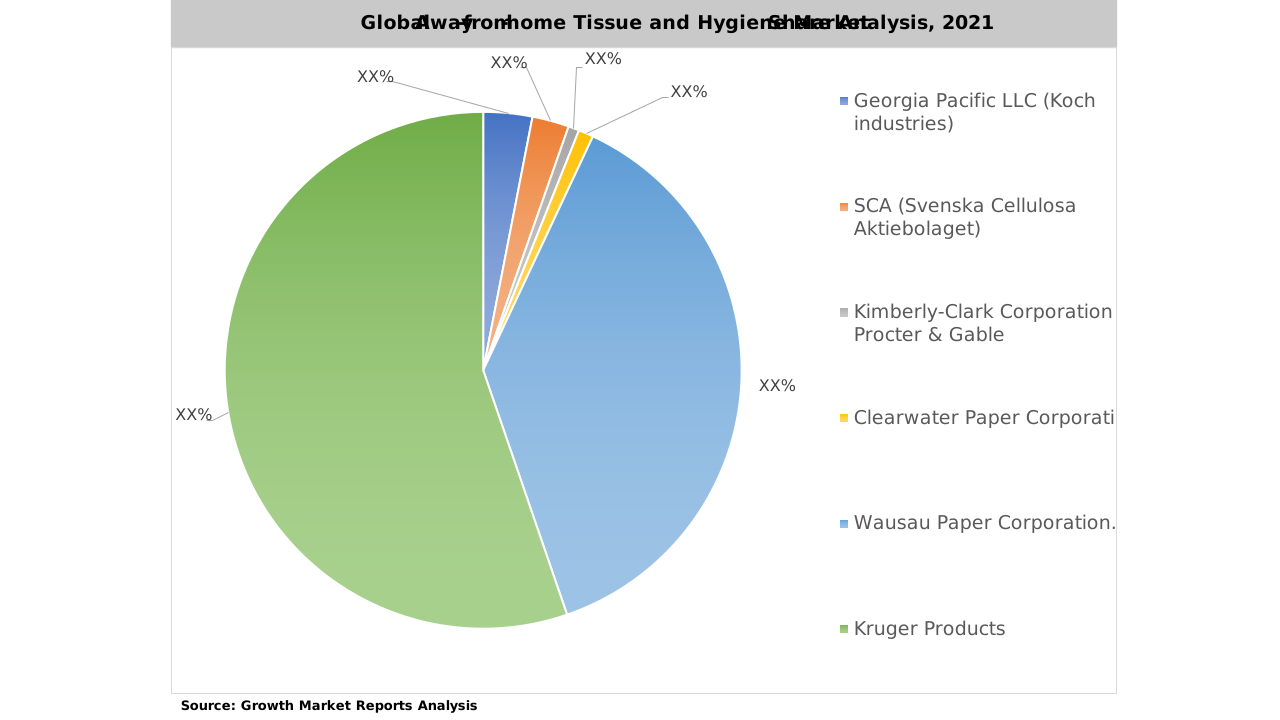
Key players competing in the global away-from-home tissue and hygiene market are Georgia Pacific LLC (Koch industries); SCA (Svenska Cellulosa Aktiebolaget); Kimberly-Clark Corporation Procter & Gamble; Clearwater Paper Corporation;Wausau Paper Corp., and Kruger Products.
Challenges include raw material price volatility, supply chain disruptions, intense competition, price sensitivity in mature markets, and the need for continuous innovation to maintain profitability.
Major players include Kimberly-Clark Corporation, Procter & Gamble, Essity AB, Georgia-Pacific LLC, Sofidel Group, Cascades Inc., Asia Pulp & Paper, Kruger Inc., WEPA Hygieneprodukte GmbH, and Metsa Group, among others.
Major trends include the shift towards sustainable and eco-friendly products, adoption of IoT-enabled dispensers and smart inventory systems, premiumization of products, and increased focus on digitalization and automation.
Distribution channels include direct sales, distributors/wholesalers, online retail, and other channels like cash-and-carry outlets. Online retail and e-commerce are growing rapidly, while omnichannel strategies are becoming more common.
Key applications include commercial facilities (offices, malls, airports), healthcare (hospitals, clinics), hospitality (hotels, restaurants), education (schools, universities), and industrial settings (manufacturing plants, warehouses).
Asia Pacific is the fastest-growing region, driven by urbanization and infrastructure development. North America and Europe are mature markets with steady growth, while Latin America and the Middle East & Africa are experiencing rising demand due to improving sanitation standards.
The main product types include paper towels, toilet paper, napkins, facial tissues, handkerchiefs, and specialty tissue products. Paper towels and toilet paper account for the largest revenue share.
Key growth drivers include increased hygiene awareness post-pandemic, expansion of the hospitality and healthcare sectors, rising commercial activity, stricter public health regulations, and the adoption of sustainable and technologically advanced products.
The global away-from-home tissue and hygiene market reached USD 38.7 billion in 2024 and is projected to grow at a CAGR of 6.1% from 2025 to 2033, reaching an estimated USD 65.8 billion by 2033.
The away-from-home tissue and hygiene market refers to the production and distribution of tissue and hygiene products such as paper towels, toilet paper, napkins, and facial tissues that are used in public, commercial, and institutional settings like offices, hospitals, hotels, and schools, rather than in private homes.