Segments - by Product Type (Glass Fiber Reinforced, Carbon Fiber Reinforced, Natural Fiber Reinforced, Others), by Resin Type (Polypropylene, Polyamide, Polycarbonate, Polyphenylene Sulfide, Others), by Application (Interior, Exterior, Under the Hood, Structural Components, Others), by Vehicle Type (Passenger Cars, Light Commercial Vehicles, Heavy Commercial Vehicles, Others), by Manufacturing Process (Injection Molding, Compression Molding, Resin Transfer Molding, Others)
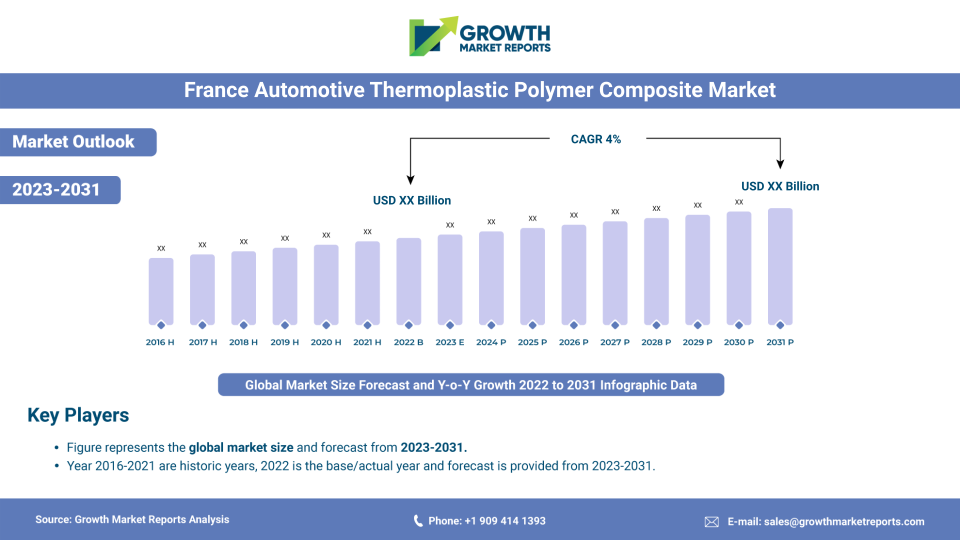
As per our latest research, the global automotive thermoplastic polymer composite market size reached USD 12.8 billion in 2024, driven by the escalating demand for lightweight, durable, and sustainable materials within the automotive sector. The market is exhibiting robust momentum with a CAGR of 7.3% from 2025 to 2033. By the end of the forecast period in 2033, the market is projected to attain a value of USD 24.1 billion. The primary growth factor fueling this expansion is the automotive industry's relentless pursuit of fuel efficiency and emission reduction, which has accelerated the adoption of advanced thermoplastic polymer composites in vehicle manufacturing.
The growth trajectory of the automotive thermoplastic polymer composite market is underpinned by several critical factors. One of the most influential is the increasing stringency of global environmental regulations aimed at reducing vehicle emissions. Automakers are compelled to innovate with lighter materials that not only meet safety and performance standards but also contribute to lower fuel consumption. Thermoplastic polymer composites, with their excellent strength-to-weight ratios and recyclability, have emerged as the material of choice for manufacturers seeking to balance performance, safety, and sustainability. Additionally, the rise in electric vehicle (EV) production has further spurred demand for these composites, as EV manufacturers prioritize lightweighting to enhance battery efficiency and overall vehicle range.
Another significant growth driver is the advancement in composite manufacturing technologies. The evolution of processes such as injection molding, compression molding, and resin transfer molding has enabled mass production of complex automotive components with improved precision and cost-effectiveness. These innovations have expanded the application scope of thermoplastic polymer composites beyond traditional uses, allowing their integration into structural, under-the-hood, and exterior components. The automotive industryÂ’s increasing investment in research and development, coupled with partnerships between automakers and material suppliers, is fostering an environment ripe for continued innovation and market expansion in the coming years.
Furthermore, consumer preferences are shifting toward vehicles that offer superior performance, safety, and aesthetics. Thermoplastic polymer composites provide automakers with the flexibility to design components that are not only lightweight and strong but also visually appealing and customizable. This trend is particularly pronounced in the premium and luxury vehicle segments, where differentiation through advanced materials is a key competitive strategy. Moreover, the growing emphasis on circular economy principles and the recyclability of thermoplastic composites are making them increasingly attractive to manufacturers striving to meet both regulatory and consumer expectations for sustainability.
In the aerospace industry, the application of thermoplastic composites is gaining significant traction due to their lightweight and high-performance characteristics. Thermoplastic Composites in Aerospace are being increasingly utilized for structural components, interior fittings, and even exterior panels. These materials offer excellent resistance to impact and fatigue, which are critical in aerospace applications where safety and durability are paramount. The ability to produce complex shapes with reduced assembly times and costs further enhances their appeal. As the aerospace sector continues to prioritize fuel efficiency and sustainability, thermoplastic composites are expected to play a pivotal role in the development of next-generation aircraft designs.
Regionally, the Asia Pacific market is poised to dominate the global landscape, fueled by the rapid expansion of automotive manufacturing hubs in China, India, Japan, and South Korea. North America and Europe are also significant contributors, leveraging their advanced technological capabilities and strong regulatory frameworks. Latin America and the Middle East & Africa, while smaller in market share, are expected to witness accelerated growth due to rising automotive production and increasing investments in lightweight material technologies. Each region presents unique opportunities and challenges, but the overarching trend is a global shift toward the integration of thermoplastic polymer composites in automotive applications.
The product type segment of the automotive thermoplastic polymer composite market is categorized into glass fiber reinforced, carbon fiber reinforced, natural fiber reinforced, and others. Glass fiber reinforced composites currently command the largest share, owing to their superior mechanical properties, cost-effectiveness, and widespread applicability in both structural and non-structural automotive components. Glass fiber composites are extensively used in the manufacture of interior panels, bumpers, and engine covers, offering an optimal balance between strength, weight, and affordability. The automotive industryÂ’s ongoing efforts to reduce vehicle weight without compromising safety have solidified glass fiberÂ’s position as a staple material in composite manufacturing.
Carbon fiber reinforced composites are rapidly gaining traction, particularly in high-performance and luxury vehicle segments. Renowned for their exceptional strength-to-weight ratio and rigidity, carbon fiber composites are increasingly being adopted in the production of structural components, body panels, and chassis parts. Although the high cost of carbon fiber presents a challenge for mass-market adoption, technological advancements and economies of scale are gradually making these materials more accessible. As automakers continue to push the boundaries of vehicle lightweighting and performance optimization, the demand for carbon fiber composites is expected to witness significant growth throughout the forecast period.
The electric vehicle (EV) market is witnessing a transformative shift with the integration of Thermoplastic Composites for EV. These materials are essential in addressing the unique challenges faced by EV manufacturers, such as optimizing battery efficiency and extending vehicle range. Thermoplastic composites offer a superior strength-to-weight ratio, which is crucial for enhancing the performance of electric vehicles. They are being used in battery enclosures, structural components, and even in the design of lightweight body panels. As the demand for sustainable and efficient transportation solutions grows, thermoplastic composites are set to become a cornerstone in the evolution of electric mobility.
Natural fiber reinforced composites, derived from renewable sources such as hemp, flax, and jute, are emerging as sustainable alternatives to synthetic fibers. These composites offer unique advantages, including biodegradability, low density, and reduced environmental footprint. Automotive manufacturers are increasingly exploring natural fiber composites for applications in interior trims, door panels, and seat backs. The growing emphasis on green manufacturing practices and the circular economy is expected to propel the adoption of natural fiber reinforced composites, particularly in regions with stringent environmental regulations and strong consumer demand for eco-friendly vehicles.
The others category encompasses hybrid composites and advanced materials that combine multiple fiber types to achieve tailored performance characteristics. These innovative materials are being developed to address specific application requirements, such as improved impact resistance, thermal stability, and acoustic properties. As research and development efforts intensify, the market is witnessing the introduction of next-generation composites that offer enhanced performance at competitive costs. The diversification of product offerings within the thermoplastic polymer composite segment is a testament to the industryÂ’s commitment to innovation and continuous improvement.
| Attributes | Details |
| Report Title | Automotive Thermoplastic Polymer Composite Market Research Report 2033 |
| By Product Type | Glass Fiber Reinforced, Carbon Fiber Reinforced, Natural Fiber Reinforced, Others |
| By Resin Type | Polypropylene, Polyamide, Polycarbonate, Polyphenylene Sulfide, Others |
| By Application | Interior, Exterior, Under the Hood, Structural Components, Others |
| By Vehicle Type | Passenger Cars, Light Commercial Vehicles, Heavy Commercial Vehicles, Others |
| By Manufacturing Process | Injection Molding, Compression Molding, Resin Transfer Molding, Others |
| Regions Covered | North America, Europe, APAC, Latin America, MEA |
| Base Year | 2024 |
| Historic Data | 2018-2023 |
| Forecast Period | 2025-2033 |
| Number of Pages | 292 |
| Number of Tables & Figures | 303 |
| Customization Available | Yes, the report can be customized as per your need. |
The resin type segment in the automotive thermoplastic polymer composite market includes polypropylene, polyamide, polycarbonate, polyphenylene sulfide, and others. Polypropylene (PP) leads the segment, favored for its excellent chemical resistance, low density, and cost-effectiveness. PP-based composites are widely utilized in automotive interiors, exterior trims, and under-the-hood applications due to their balanced mechanical properties and ease of processing. The materialÂ’s recyclability and compatibility with various reinforcement fibers further enhance its appeal, making it a preferred choice for automakers focused on sustainability and cost control.
Thermoset Composites continue to hold a significant position in the composite materials market due to their exceptional thermal stability and mechanical properties. Unlike thermoplastics, thermoset composites do not melt, making them ideal for high-temperature applications such as engine components and aerospace structures. These materials are known for their durability and resistance to environmental factors, contributing to their widespread use in demanding applications. The ongoing advancements in resin chemistry and processing technologies are expanding the capabilities of thermoset composites, allowing for more complex and robust designs in various industries. As innovation progresses, thermoset composites will remain a critical component in the pursuit of advanced material solutions.
Polyamide (PA) composites are renowned for their superior strength, thermal stability, and resistance to abrasion. These characteristics make polyamide-based composites ideal for demanding automotive applications such as engine covers, air intake manifolds, and structural brackets. The growing trend toward engine downsizing and the integration of advanced propulsion systems in vehicles has increased the demand for high-performance materials like polyamide composites. Additionally, ongoing research aimed at improving the flame retardancy and moisture resistance of polyamide composites is expected to broaden their application scope in the coming years.
Polycarbonate (PC) composites are gaining prominence, particularly in automotive lighting, glazing, and interior components. The materialÂ’s outstanding impact resistance, transparency, and dimensional stability make it suitable for a wide range of applications where aesthetics and safety are paramount. Polycarbonate composites are increasingly being adopted in the production of headlamp lenses, sunroofs, and instrument panels. As automakers strive to enhance vehicle design and passenger comfort, the demand for polycarbonate-based composites is set to rise steadily.
Polyphenylene sulfide (PPS) composites are valued for their exceptional chemical resistance, high-temperature stability, and electrical insulating properties. These attributes make PPS composites ideal for under-the-hood and electrical applications, including connectors, sensors, and fuel system components. The increasing electrification of vehicles and the proliferation of advanced driver-assistance systems (ADAS) are driving the adoption of PPS composites in automotive manufacturing. The others category includes specialty resins and hybrid formulations designed to meet specific performance criteria, reflecting the industryÂ’s ongoing pursuit of material innovation and application diversification.
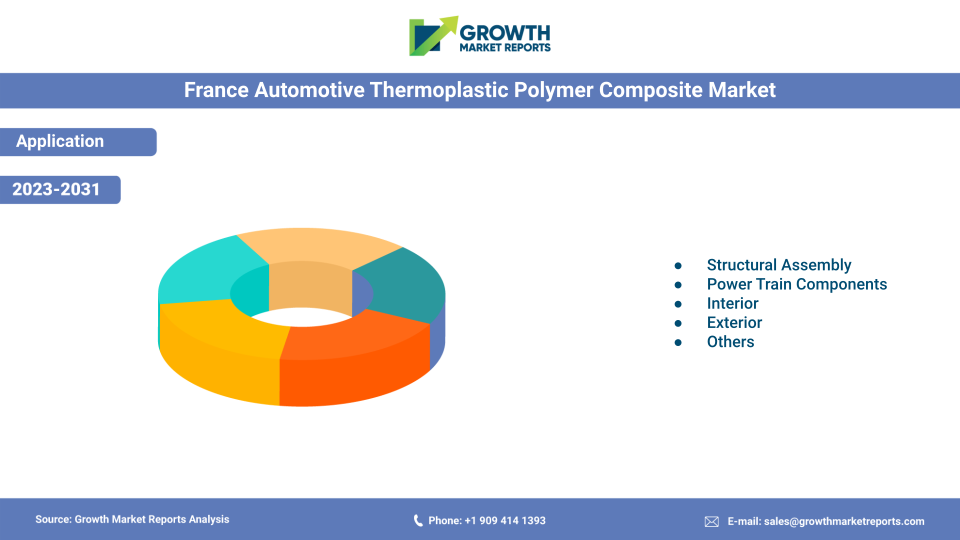
The application segment of the automotive thermoplastic polymer composite market encompasses interior, exterior, under the hood, structural components, and others. Interior applications represent a significant share, with composites being utilized in dashboards, door panels, seat structures, and trim components. The ability of thermoplastic composites to be molded into complex shapes, combined with their lightweight and aesthetic versatility, makes them ideal for interior applications. Automakers are increasingly leveraging these materials to enhance passenger comfort, safety, and vehicle customization, while simultaneously reducing overall vehicle weight.
Exterior applications include body panels, bumpers, spoilers, and mirror housings, where durability, impact resistance, and weatherability are critical. Thermoplastic polymer composites offer superior resistance to corrosion, UV radiation, and harsh environmental conditions, making them well-suited for exterior components. The growing adoption of these materials in exterior applications is driven by the need to improve vehicle aerodynamics, safety, and fuel efficiency, as well as the desire to achieve distinctive styling and design flexibility.
Under the hood applications demand materials that can withstand high temperatures, mechanical stress, and chemical exposure. Thermoplastic polymer composites are increasingly being used in engine covers, air intake manifolds, and battery housings due to their excellent thermal stability, chemical resistance, and lightweight properties. As automotive engines become more compact and efficient, the need for advanced materials capable of performing in challenging environments is becoming more pronounced, further driving the adoption of thermoplastic composites in this segment.
Structural components such as cross members, chassis parts, and reinforcement brackets are critical to vehicle safety and performance. The use of thermoplastic polymer composites in structural applications is gaining momentum, particularly in electric and hybrid vehicles, where weight reduction is paramount. These materials offer a compelling combination of strength, stiffness, and impact resistance, enabling automakers to meet stringent safety standards while optimizing vehicle weight and performance. The others category includes specialized applications such as acoustic panels, insulation, and electronic housings, reflecting the expanding role of thermoplastic composites in modern automotive design.
The vehicle type segment includes passenger cars, light commercial vehicles, heavy commercial vehicles, and others. Passenger cars constitute the largest market share, driven by the high volume of production and the widespread adoption of thermoplastic polymer composites in both mass-market and premium segments. The demand for lightweight, fuel-efficient, and aesthetically appealing vehicles is propelling the integration of these materials in passenger car manufacturing. Automakers are leveraging thermoplastic composites to enhance vehicle performance, safety, and design flexibility, catering to evolving consumer preferences and regulatory requirements.
Light commercial vehicles (LCVs) are also significant contributors to market growth, particularly in regions with expanding logistics, e-commerce, and urban transportation sectors. The use of thermoplastic polymer composites in LCVs offers benefits such as increased payload capacity, improved fuel efficiency, and reduced maintenance costs. As businesses seek to optimize fleet performance and minimize operational expenses, the adoption of lightweight composite materials in light commercial vehicles is expected to rise steadily.
Heavy commercial vehicles (HCVs), including trucks and buses, are increasingly incorporating thermoplastic polymer composites to address the challenges of weight reduction, durability, and regulatory compliance. The need to improve fuel economy, reduce emissions, and enhance vehicle longevity is driving the use of advanced composites in chassis, body panels, and interior components. The electrification of heavy commercial vehicles is further amplifying the demand for lightweight materials, as manufacturers strive to extend battery range and payload capacity.
The others category encompasses specialty vehicles such as off-road, agricultural, and recreational vehicles. These segments are exploring the use of thermoplastic polymer composites to enhance performance, durability, and customization options. As the automotive industry continues to diversify and address the unique needs of various vehicle types, the role of thermoplastic composites is expected to expand, supporting innovation and growth across multiple market segments.
The manufacturing process segment includes injection molding, compression molding, resin transfer molding, and others. Injection molding is the most widely used process, favored for its ability to produce high volumes of complex components with precision and consistency. The processÂ’s scalability, cost efficiency, and compatibility with a wide range of thermoplastic resins make it the go-to choice for automotive manufacturers. Injection molding is extensively employed in the production of interior trims, exterior panels, and under-the-hood components, supporting mass customization and rapid prototyping.
Compression molding is another prominent process, particularly suited for manufacturing large, flat, or moderately contoured components such as hoods, roofs, and door panels. The process offers advantages in terms of material utilization, cycle time, and the ability to mold high-strength composites. Compression molding is increasingly being adopted for structural applications, where the need for lightweight yet robust components is paramount. Technological advancements in compression molding equipment and materials are further enhancing process efficiency and product quality.
Resin transfer molding (RTM) is gaining traction for its ability to produce high-strength, lightweight components with excellent surface finish and dimensional accuracy. RTM is particularly suitable for low to medium volume production of complex parts, such as chassis components and body panels. The processÂ’s flexibility in accommodating various fiber architectures and resin systems allows manufacturers to tailor composite properties to specific application requirements. As the demand for customized, high-performance automotive components grows, RTM is expected to play an increasingly important role in composite manufacturing.
The others category includes advanced manufacturing processes such as pultrusion, filament winding, and additive manufacturing. These techniques are being explored for niche applications and next-generation vehicle designs, offering unique advantages in terms of design freedom, material optimization, and performance enhancement. As the automotive industry continues to evolve, the adoption of innovative manufacturing processes is expected to accelerate, driving further growth and diversification in the thermoplastic polymer composite market.
The automotive thermoplastic polymer composite market presents substantial opportunities for growth and innovation. One of the most promising opportunities lies in the integration of these composites into electric and autonomous vehicles. As the automotive industry transitions toward electrification and advanced mobility solutions, the demand for lightweight, high-performance materials is expected to surge. Thermoplastic composites offer the ideal combination of strength, weight reduction, and design flexibility required to support the development of next-generation vehicles. Additionally, the ongoing shift toward sustainable manufacturing practices and the circular economy is creating new avenues for the adoption of recyclable and bio-based composites, further enhancing market potential.
Another significant opportunity is the expansion of composite applications beyond traditional automotive components. The development of multifunctional composites with enhanced thermal, acoustic, and electromagnetic properties is opening up new possibilities for integration in battery housings, electronic enclosures, and advanced safety systems. Collaborative research and development initiatives between automakers, material suppliers, and research institutions are accelerating the pace of innovation, leading to the introduction of cutting-edge materials and manufacturing processes. The increasing use of digital technologies and simulation tools is also streamlining product development and optimization, enabling manufacturers to bring new composite solutions to market more rapidly and cost-effectively.
Despite the numerous opportunities, the market faces certain restraining factors. One of the primary challenges is the relatively high cost of advanced composite materials, particularly carbon fiber reinforced polymers. The cost barrier limits widespread adoption in mass-market vehicles, where cost sensitivity is a critical consideration. Additionally, the lack of standardized testing methods and performance benchmarks for thermoplastic composites can hinder their acceptance and integration into safety-critical automotive applications. Addressing these challenges will require continued investment in material research, process optimization, and the development of industry-wide standards to ensure the reliability and cost-effectiveness of composite solutions.
The Asia Pacific region dominates the global automotive thermoplastic polymer composite market, accounting for approximately 42% of the total market share in 2024, which translates to a market value of around USD 5.4 billion. The regionÂ’s leadership is attributed to the presence of major automotive manufacturing hubs in China, India, Japan, and South Korea, coupled with robust investments in lightweight material technologies. The rapid growth of the electric vehicle market and increasing regulatory emphasis on vehicle emissions are further driving the adoption of thermoplastic composites across the region. With a projected CAGR of 8.1% from 2025 to 2033, Asia Pacific is expected to maintain its dominance throughout the forecast period.
North America holds the second-largest market share, with a value of USD 3.7 billion in 2024, representing approximately 29% of the global market. The regionÂ’s growth is fueled by strong technological capabilities, a well-established automotive industry, and stringent regulatory frameworks promoting fuel efficiency and emission reduction. The United States, in particular, is at the forefront of composite material innovation, supported by significant investments in research and development. The increasing adoption of electric and autonomous vehicles is expected to further accelerate market growth in North America, with a steady CAGR projected over the forecast period.
Europe accounts for about 21% of the global market, equivalent to USD 2.7 billion in 2024. The region is characterized by a strong focus on sustainability, advanced manufacturing technologies, and a high concentration of premium and luxury vehicle manufacturers. Stringent environmental regulations and the push for vehicle lightweighting are driving the adoption of thermoplastic polymer composites in Europe. Latin America and the Middle East & Africa, while collectively accounting for the remaining 8% of the market, are witnessing increased investments in automotive production and lightweight material technologies. These regions are expected to exhibit higher growth rates as local automotive industries modernize and global automakers expand their presence.
The competitive landscape of the automotive thermoplastic polymer composite market is characterized by intense rivalry among global and regional players, each striving to enhance their market position through product innovation, strategic partnerships, and capacity expansions. Leading companies are heavily investing in research and development to introduce advanced composite materials with improved mechanical properties, recyclability, and cost efficiency. The market is also witnessing a trend toward vertical integration, with major players expanding their capabilities across the value chain to ensure quality control, supply chain resilience, and competitive pricing.
Strategic collaborations between automakers and material suppliers are becoming increasingly prevalent, as manufacturers seek to leverage technical expertise and accelerate the commercialization of new composite solutions. These partnerships are facilitating the development of customized materials tailored to specific automotive applications, enabling automakers to achieve their lightweighting, performance, and sustainability goals. Additionally, the entry of new players and startups specializing in bio-based and recycled composites is intensifying competition and driving innovation within the market.
The market is also characterized by a strong focus on sustainability, with leading companies committing to the development of recyclable and environmentally friendly composite materials. This shift is being driven by both regulatory requirements and growing consumer demand for green vehicles. Companies are increasingly adopting circular economy principles, investing in recycling technologies, and exploring the use of renewable raw materials to differentiate themselves in the marketplace. The emphasis on sustainability is expected to reshape the competitive dynamics of the industry, with a premium placed on innovation and environmental stewardship.
Major players in the automotive thermoplastic polymer composite market include DSM, BASF SE, SABIC, Lanxess AG, Celanese Corporation, Solvay S.A., Dow Inc., SGL Group, Teijin Limited, and Toray Industries. DSM is renowned for its high-performance engineering plastics and composite solutions tailored to automotive applications. BASF SE and SABIC are global leaders in chemical and material innovation, offering a wide range of thermoplastic resins and composite materials. Lanxess AG and Celanese Corporation are recognized for their expertise in specialty polymers and advanced composite technologies. Solvay S.A. and Dow Inc. are at the forefront of composite material development, focusing on lightweighting and sustainability.
SGL Group, Teijin Limited, and Toray Industries are prominent players in the carbon fiber composite segment, supplying high-strength materials to leading automakers worldwide. These companies are continuously expanding their product portfolios, investing in capacity expansions, and forging strategic alliances to strengthen their market presence. The competitive landscape is further enriched by the presence of regional players and emerging startups, each contributing to the dynamic and rapidly evolving nature of the automotive thermoplastic polymer composite market.
The Automotive Thermoplastic Polymer Composite market has been segmented on the basis of
Some of the major players in the market are 3B-Fiberglass, Base Group, BASF, BMW, and Cytec Industries, Inc.
Companies are focusing on engaging in partnerships, acquisitions, and mergers to expand their market share. Moreover, key players are heavily investment in the manufacturing technology to reduce the operational costs and provide high-quality composites to leverage their market position.
In October 2019, SABIC introduced a cutting-edge technology for the development of car panels by utilizing its UDMAX tape, a unidirectional fiber-reinforced composite.
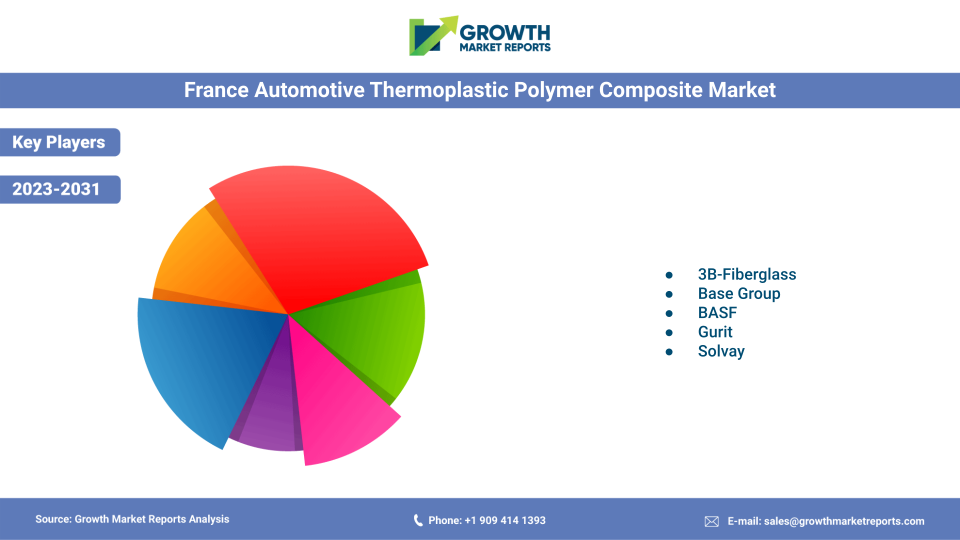
Key players include BASF SE, SABIC, Celanese Corporation, Covestro AG, Lanxess AG, DSM Engineering Plastics, DuPont de Nemours, Inc., LyondellBasell, Solvay S.A., Toray Industries, Teijin Limited, SGL Carbon SE, and others.
Challenges include the high cost of advanced composites (especially carbon fiber), lack of standardized testing, and the need for further material and process innovation.
Major processes include injection molding, compression molding, resin transfer molding (RTM), and advanced methods like pultrusion and additive manufacturing.
Key applications include interior components (dashboards, door panels), exterior parts (body panels, bumpers), under-the-hood components (engine covers, battery housings), structural components (chassis parts), and specialized uses like acoustic panels.
The most common resin types include polypropylene (PP), polyamide (PA), polycarbonate (PC), polyphenylene sulfide (PPS), and other specialty resins.
The main product types are glass fiber reinforced, carbon fiber reinforced, natural fiber reinforced, and hybrid/advanced composites.
Asia Pacific leads the market with about 42% share, followed by North America (29%) and Europe (21%). Latin America and the Middle East & Africa are smaller but growing rapidly.
Key growth drivers include the automotive industry's focus on lightweighting for fuel efficiency, stricter global emission regulations, increased electric vehicle production, and advancements in composite manufacturing technologies.
The market is expected to grow at a CAGR of 7.3% from 2025 to 2033, reaching USD 24.1 billion by 2033.
As of 2024, the global automotive thermoplastic polymer composite market size reached USD 12.8 billion.