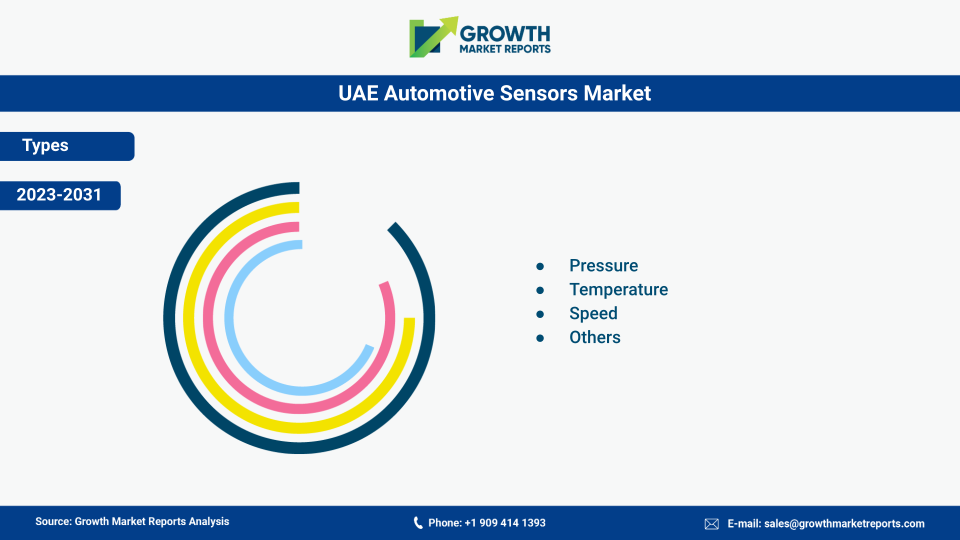
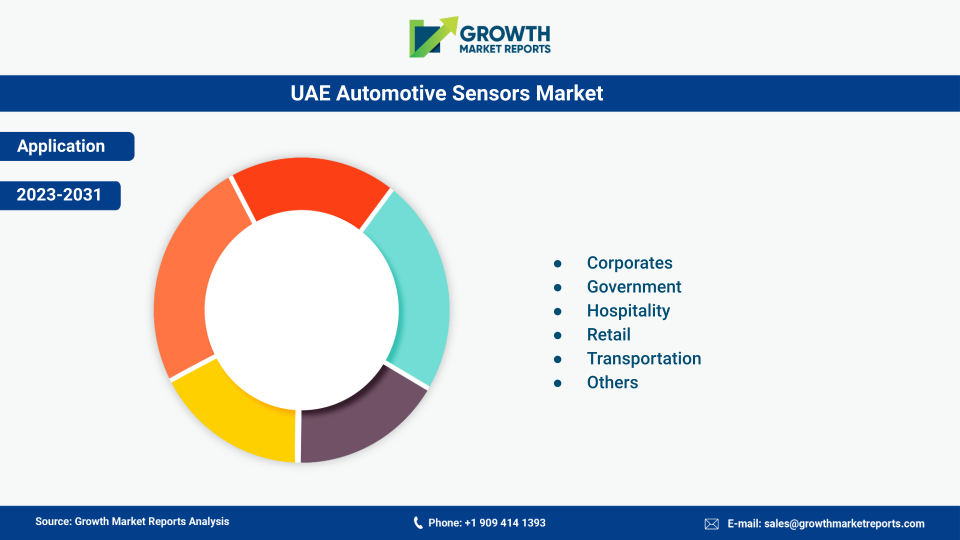
Segments - by Sensor Type (Temperature Sensors, Pressure Sensors, Position Sensors, Speed Sensors, Level Sensors, Oxygen Sensors, Others), by Application (Powertrain, Chassis, Exhaust, Safety & Control, Telematics, Others), by Vehicle Type (Passenger Cars, Light Commercial Vehicles, Heavy Commercial Vehicles, Electric Vehicles), by Sales Channel (OEM, Aftermarket)
According to our latest research, the global automotive sensors market size reached USD 32.7 billion in 2024, reflecting robust growth driven by technological advancements and increasing vehicle electrification. The market is expected to grow at a CAGR of 8.1% from 2025 to 2033, reaching a forecasted value of USD 65.2 billion by 2033. This impressive expansion is primarily attributed to the rising demand for advanced driver-assistance systems (ADAS), stringent safety regulations, and the proliferation of connected and electric vehicles across the globe.
One of the primary growth factors fueling the automotive sensors market is the growing emphasis on vehicle safety and regulatory compliance. Governments worldwide have been implementing stringent safety standards, mandating the integration of advanced safety features such as electronic stability control, automatic emergency braking, and lane-keeping assist. These features rely heavily on a wide array of sensors, including speed, position, and pressure sensors, to function accurately and efficiently. As automakers strive to comply with these regulations and differentiate their offerings, the adoption of sophisticated sensor technologies has surged, directly contributing to the market's expansion.
Another significant driver is the rapid electrification of vehicles and the evolution of electric and hybrid powertrains. Electric vehicles (EVs) and hybrid vehicles require a higher number of sensors compared to traditional internal combustion engine vehicles. Sensors are essential for monitoring battery health, managing thermal conditions, and optimizing energy efficiency. The growing consumer preference for EVs, supported by government incentives and a global push towards reducing carbon emissions, has accelerated the deployment of advanced sensors in new vehicle models. This trend is expected to further intensify as automotive manufacturers continue to innovate and expand their electric vehicle portfolios.
Technological advancements and the integration of telematics and connected car solutions also play a pivotal role in propelling the automotive sensors market. The rise of the Internet of Things (IoT) in the automotive sector has led to a surge in demand for sensors capable of enabling real-time data collection and communication between vehicles and external infrastructure. These sensor-driven systems enhance vehicle performance, enable predictive maintenance, and support the development of autonomous driving technologies. With consumer expectations for smarter and more connected vehicles on the rise, automakers are increasingly investing in sensor-rich architectures, further boosting market growth.
From a regional perspective, Asia Pacific remains the dominant market for automotive sensors, owing to its large automotive manufacturing base, rapid urbanization, and supportive government policies. North America and Europe also contribute significantly, driven by early adoption of advanced technologies and a strong focus on vehicle safety. Meanwhile, emerging markets in Latin America and the Middle East & Africa are witnessing gradual growth as automotive production and sales pick up pace. The interplay of these regional dynamics ensures that the global automotive sensors market continues its upward trajectory, with ample opportunities for stakeholders across the value chain.
The automotive sensors market is segmented by sensor type, encompassing temperature sensors, pressure sensors, position sensors, speed sensors, level sensors, oxygen sensors, and others. Temperature sensors hold a critical position in modern vehicles as they are essential for monitoring engine, battery, and cabin temperatures, ensuring optimal performance and safety. The increasing adoption of electric vehicles has amplified the demand for highly accurate temperature sensors to manage battery thermal conditions and prevent overheating. Similarly, advancements in engine management systems require precise temperature monitoring, further driving the proliferation of these sensors across all vehicle categories.
Pressure sensors represent another significant segment, finding extensive application in tire pressure monitoring systems (TPMS), fuel systems, and brake systems. The mandatory implementation of TPMS in several regions has been a major catalyst for the growth of pressure sensors in the automotive sector. These sensors not only enhance vehicle safety by alerting drivers to under-inflated tires but also contribute to improved fuel efficiency and reduced emissions. Innovations in microelectromechanical systems (MEMS) technology have enabled the development of compact, reliable, and cost-effective pressure sensors, making them indispensable in modern automotive architectures.
Position sensors are integral to the functioning of various vehicle subsystems, including throttle position, camshaft position, and steering angle detection. With the advent of advanced driver-assistance systems and the transition towards autonomous vehicles, the need for highly accurate and responsive position sensors has grown exponentially. These sensors enable precise control over vehicle dynamics, enhance safety, and support the implementation of features such as adaptive cruise control and automated parking. The ongoing shift towards electrification and smart mobility solutions is expected to further expand the application scope of position sensors in the coming years.
Speed sensors and oxygen sensors also play vital roles in the automotive ecosystem. Speed sensors are crucial for anti-lock braking systems (ABS), electronic stability control, and transmission control, ensuring smooth and safe vehicle operation. Oxygen sensors, on the other hand, are essential for monitoring and optimizing the air-fuel mixture in internal combustion engines, thereby reducing emissions and improving fuel economy. As emission regulations become more stringent and the focus on fuel efficiency intensifies, the demand for high-performance oxygen sensors is projected to rise steadily. Collectively, these sensor types form the backbone of automotive innovation, enabling safer, cleaner, and more efficient vehicles.
| Attributes | Details |
| Report Title | Automotive Sensors Market Research Report 2033 |
| By Sensor Type | Temperature Sensors, Pressure Sensors, Position Sensors, Speed Sensors, Level Sensors, Oxygen Sensors, Others |
| By Application | Powertrain, Chassis, Exhaust, Safety & Control, Telematics, Others |
| By Vehicle Type | Passenger Cars, Light Commercial Vehicles, Heavy Commercial Vehicles, Electric Vehicles |
| By Sales Channel | OEM, Aftermarket |
| Regions Covered | North America, Europe, APAC, Latin America, MEA |
| Countries Covered | North America (United States, Canada), Europe (Germany, France, Italy, United Kingdom, Spain, Russia, Rest of Europe), Asia Pacific (China, Japan, South Korea, India, Australia, South East Asia (SEA), Rest of Asia Pacific), Latin America (Mexico, Brazil, Rest of Latin America), Middle East & Africa (Saudi Arabia, South Africa, United Arab Emirates, Rest of Middle East & Africa) |
| Base Year | 2024 |
| Historic Data | 2018-2023 |
| Forecast Period | 2025-2033 |
| Number of Pages | 262 |
| Number of Tables & Figures | 299 |
| Customization Available | Yes, the report can be customized as per your need. |
The application landscape of the automotive sensors market is broad, encompassing powertrain, chassis, exhaust, safety & control, telematics, and other segments. The powertrain segment remains the largest application area, primarily due to the increasing complexity of modern engines and the transition towards hybrid and electric powertrains. Sensors in this segment are responsible for monitoring parameters such as temperature, pressure, and position, enabling precise control of fuel injection, ignition timing, and emission management. The integration of advanced powertrain sensors is critical for meeting regulatory requirements and achieving higher levels of performance and efficiency.
Chassis applications represent another key segment, with sensors playing a pivotal role in enhancing vehicle stability, handling, and ride comfort. Chassis sensors are deployed in suspension systems, steering mechanisms, and braking systems, providing real-time data to electronic control units (ECUs) for optimal vehicle dynamics. The growing adoption of electronic stability control, adaptive suspension, and active steering systems has driven the demand for sophisticated chassis sensors. These technologies are particularly prevalent in premium vehicles but are increasingly being integrated into mass-market models as well.
The exhaust application segment is primarily driven by the need to comply with stringent emission standards. Sensors in this category, such as oxygen sensors and NOx sensors, are essential for monitoring exhaust gases and ensuring that vehicles operate within permissible emission limits. The proliferation of emission control technologies, including selective catalytic reduction and particulate filters, has further increased the demand for exhaust sensors. As environmental regulations continue to tighten, automakers are investing in advanced sensor solutions to achieve compliance and maintain market competitiveness.
Safety & control and telematics applications have witnessed significant growth, fueled by the rising implementation of ADAS and connected car technologies. Safety & control sensors are integral to systems such as airbags, seatbelt pretensioners, and collision avoidance, directly contributing to occupant protection and accident prevention. Telematics sensors, on the other hand, enable real-time vehicle tracking, remote diagnostics, and fleet management, supporting the evolution of smart mobility solutions. The convergence of safety, connectivity, and automation is expected to drive sustained growth across these application segments, positioning sensors as indispensable components in the future of mobility.
The automotive sensors market is further segmented by vehicle type, including passenger cars, light commercial vehicles (LCVs), heavy commercial vehicles (HCVs), and electric vehicles (EVs). Passenger cars constitute the largest share of the market, driven by high production volumes, rapid technological adoption, and increasing consumer demand for advanced safety and comfort features. The integration of sensors in passenger cars spans across powertrain, chassis, safety, and infotainment systems, reflecting the growing sophistication of modern vehicles. As automakers compete to offer differentiated and feature-rich models, the penetration of sensors in this segment is expected to remain robust.
Light commercial vehicles also represent a significant market segment, particularly in regions with thriving logistics and transportation industries. The adoption of sensors in LCVs is primarily driven by the need for enhanced safety, improved fuel efficiency, and regulatory compliance. Fleet operators are increasingly leveraging telematics and sensor-based solutions to optimize vehicle utilization, monitor driver behavior, and reduce operational costs. The proliferation of e-commerce and last-mile delivery services has further accelerated the demand for sensor-equipped LCVs, supporting sustained market growth in this segment.
Heavy commercial vehicles, including trucks and buses, are witnessing a gradual but steady increase in sensor adoption. The focus in this segment is on improving vehicle safety, reducing emissions, and enhancing operational efficiency. Advanced sensors are deployed in braking systems, engine management, and telematics applications, enabling real-time monitoring and predictive maintenance. As regulatory pressures mount and fleet operators seek to minimize downtime and total cost of ownership, the demand for high-performance sensors in HCVs is expected to rise significantly over the forecast period.
Electric vehicles represent the fastest-growing vehicle type segment in the automotive sensors market. The transition towards electrification has created a unique set of requirements for sensors, particularly in areas such as battery management, thermal control, and energy optimization. EVs typically incorporate a higher number of sensors compared to traditional vehicles, reflecting the complexity of their powertrains and the need for precise monitoring and control. The rapid expansion of the EV market, supported by government incentives and growing consumer awareness, is expected to drive exponential growth in sensor adoption within this segment, making it a key focus area for automotive sensor manufacturers.
The automotive sensors market is distributed through two primary sales channels: original equipment manufacturers (OEMs) and the aftermarket. OEMs account for the majority of sensor sales, as automakers increasingly integrate advanced sensors during vehicle assembly to meet regulatory requirements and consumer expectations for safety, performance, and connectivity. The trend towards factory-fitted ADAS, telematics, and emission control systems has significantly boosted OEM demand for high-quality, reliable sensors. Automotive sensor suppliers are collaborating closely with OEMs to develop customized solutions that align with evolving vehicle architectures and technology roadmaps.
The aftermarket segment, while smaller in comparison to OEMs, plays a vital role in the overall market ecosystem. Aftermarket demand for automotive sensors is driven by the need for replacement parts, upgrades, and retrofitting of older vehicles with modern safety and telematics features. As vehicles age and sensor components experience wear and tear, the replacement market becomes increasingly important for both consumers and service providers. The growing popularity of do-it-yourself (DIY) repairs and the expansion of e-commerce platforms have further facilitated access to aftermarket sensor products, supporting steady growth in this channel.
The dynamics of the sales channel landscape are influenced by factors such as vehicle parc size, average vehicle age, and regional regulatory frameworks. In mature automotive markets with a large installed base of vehicles, the aftermarket segment tends to be more prominent, offering significant opportunities for sensor suppliers and distributors. Conversely, in regions with high new vehicle sales and rapid technology adoption, OEM demand dominates, reflecting the shift towards factory-installed sensor solutions. The interplay between these channels ensures a balanced and resilient market structure, capable of adapting to changing industry trends and consumer preferences.
Looking ahead, the integration of digital technologies and data-driven business models is expected to reshape the automotive sensor sales landscape. OEMs are increasingly leveraging data analytics and predictive maintenance solutions to enhance vehicle performance and customer experience, creating new opportunities for sensor-based services and subscription models. The aftermarket is also evolving, with a growing focus on smart diagnostics, remote monitoring, and connected repair solutions. These developments underscore the critical role of sensors in enabling the next generation of automotive services and value propositions.
The automotive sensors market presents a multitude of opportunities for innovation and growth, particularly in the context of autonomous driving and smart mobility. As the industry moves towards higher levels of vehicle automation, the demand for advanced sensor technologies such as LiDAR, radar, and camera-based systems is set to soar. These sensors are essential for enabling real-time perception, object detection, and decision-making in autonomous vehicles. The convergence of artificial intelligence (AI), machine learning, and sensor fusion is expected to unlock new possibilities for safety, efficiency, and user experience, creating significant value for stakeholders across the automotive ecosystem.
Another promising opportunity lies in the integration of automotive sensors with connected car and telematics platforms. The proliferation of IoT-enabled vehicles is driving demand for sensors capable of supporting real-time data collection, remote diagnostics, and predictive maintenance. These capabilities not only enhance vehicle performance and reliability but also open up new revenue streams through data-driven services and mobility-as-a-service (MaaS) offerings. Sensor manufacturers that can deliver high-performance, cost-effective, and scalable solutions for connected vehicles are well-positioned to capitalize on this rapidly evolving market landscape.
Despite the strong growth prospects, the automotive sensors market faces several restraining factors that could temper its expansion. One of the primary challenges is the high cost associated with advanced sensor technologies, particularly in the context of autonomous driving and electrification. The integration of multiple sensors, along with the need for robust data processing and cybersecurity measures, can significantly increase vehicle costs, potentially limiting adoption in price-sensitive market segments. Additionally, supply chain disruptions, component shortages, and regulatory uncertainties pose ongoing risks to market stability. Addressing these challenges will require concerted efforts from industry stakeholders to optimize manufacturing processes, enhance supply chain resilience, and develop cost-effective sensor solutions.
The Asia Pacific region continues to dominate the global automotive sensors market, accounting for approximately 43% of the total market value in 2024, or about USD 14.1 billion. This leadership is underpinned by the presence of major automotive manufacturing hubs in countries such as China, Japan, South Korea, and India. Rapid urbanization, rising disposable incomes, and government initiatives to promote electric mobility have further accelerated sensor adoption in the region. The Asia Pacific market is projected to grow at a CAGR of 8.5% over the forecast period, outpacing other regions and reinforcing its position as the epicenter of automotive innovation and production.
North America represents the second-largest regional market, with a market size of approximately USD 8.7 billion in 2024. The region benefits from early adoption of advanced driver-assistance systems, strong regulatory frameworks, and a robust ecosystem of automotive technology providers. The United States, in particular, is a key driver of sensor innovation, supported by ongoing investments in autonomous driving research and connected vehicle infrastructure. While growth in North America is expected to be steady, the market is characterized by intense competition, rapid technology cycles, and a high degree of consumer awareness regarding vehicle safety and performance.
Europe holds a significant share of the global automotive sensors market, valued at around USD 7.3 billion in 2024. The region's focus on sustainability, emission reduction, and vehicle electrification has fueled demand for advanced sensor solutions. Stringent regulatory standards, such as the European Union's General Safety Regulation, continue to drive sensor integration across new vehicle models. Meanwhile, Latin America and the Middle East & Africa collectively account for the remaining market share, with gradual growth supported by increasing automotive production and rising awareness of vehicle safety. While these regions are still emerging in terms of sensor adoption, ongoing investments in infrastructure and technology are expected to unlock new growth opportunities over the coming years.
The competitive landscape of the automotive sensors market is characterized by intense rivalry among established global players and a growing number of innovative startups. Market leaders are continuously investing in research and development to enhance sensor performance, reliability, and integration capabilities. Strategic collaborations, mergers and acquisitions, and partnerships with automotive OEMs are common strategies employed to strengthen market positions and expand product portfolios. The rapid pace of technological change, coupled with evolving customer requirements, has spurred a wave of innovation, with companies vying to deliver next-generation sensor solutions for connected, electric, and autonomous vehicles.
One of the defining trends in the competitive landscape is the increasing focus on sensor fusion and multi-modal sensing technologies. Leading companies are developing integrated sensor platforms that combine data from multiple sensor types, such as radar, LiDAR, and cameras, to enable advanced perception and decision-making capabilities. This approach not only enhances the accuracy and reliability of automotive systems but also supports the transition towards higher levels of vehicle automation. The ability to deliver scalable, cost-effective, and cyber-secure sensor solutions is emerging as a key differentiator in the market.
The market is also witnessing a shift towards modular and customizable sensor solutions, as automakers seek to tailor sensor configurations to specific vehicle models and applications. Sensor manufacturers are responding by offering a wide range of products with varying performance specifications, form factors, and connectivity options. The integration of digital technologies, such as edge computing and AI-based analytics, is further enhancing the value proposition of automotive sensors, enabling real-time data processing and actionable insights for vehicle operators and fleet managers.
Major companies operating in the automotive sensors market include Robert Bosch GmbH, Continental AG, Denso Corporation, Sensata Technologies, Infineon Technologies AG, NXP Semiconductors, Texas Instruments Incorporated, Analog Devices, Inc., and TE Connectivity. Bosch and Continental are recognized for their extensive sensor portfolios and strong relationships with leading automotive OEMs. Denso and Sensata Technologies are known for their focus on innovation and high-performance sensor solutions, particularly in the areas of safety and powertrain management. Infineon and NXP Semiconductors are at the forefront of semiconductor-based sensor technologies, leveraging their expertise in microelectronics to deliver advanced sensing capabilities.
Texas Instruments and Analog Devices are prominent players in the development of analog and digital sensor interfaces, supporting the seamless integration of sensors into vehicle networks. TE Connectivity specializes in sensor connectivity and ruggedized solutions for harsh automotive environments. These companies, along with a host of emerging players, are shaping the future of the automotive sensors market through continuous innovation, strategic partnerships, and a relentless focus on quality and performance. As the market evolves, the ability to anticipate and respond to changing industry trends will be critical for sustained success and leadership in this dynamic sector.
The Automotive Sensors market has been segmented on the basis of
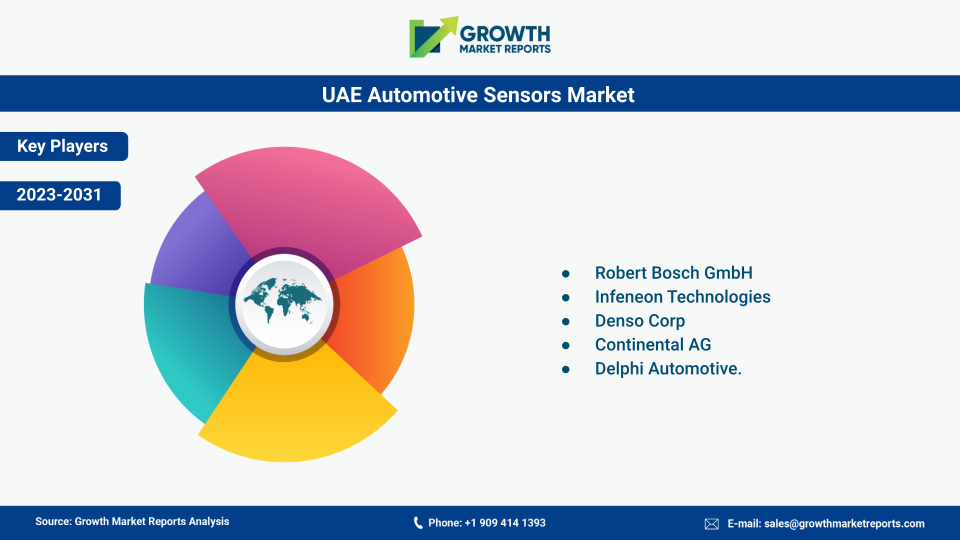
Key players competing in the UAE automotive sensors market include Robert Bosch GmbH; Infeneon Technologies; Denso Corp; Continental AG; Delphi Automotive.
Some of these players are targeting on business strategies such as mergers, acquisitions, partnerships, collaborations, capacity expansion, and product launches to increase their market shares.
Major challenges include the high cost of advanced sensor technologies, supply chain disruptions, component shortages, and regulatory uncertainties, which can impact market stability and adoption rates.
Automotive sensors are primarily sold through original equipment manufacturers (OEMs) for new vehicles and the aftermarket for replacement and upgrades.
Leading companies include Robert Bosch GmbH, Continental AG, Denso Corporation, Sensata Technologies, Infineon Technologies AG, NXP Semiconductors, Texas Instruments, Analog Devices, and TE Connectivity.
Automotive sensors are used in powertrain, chassis, exhaust, safety & control, and telematics applications, supporting functions like engine management, emission control, vehicle stability, and connected car features.
Electric vehicles require more sensors for battery management, thermal control, and energy optimization, significantly increasing sensor demand as EV adoption accelerates globally.
The main types include temperature sensors, pressure sensors, position sensors, speed sensors, level sensors, and oxygen sensors. Each plays a critical role in vehicle safety, performance, and emissions control.
Asia Pacific is the leading region, accounting for about 43% of the market in 2024, followed by North America and Europe. Asia Pacific's dominance is due to its large automotive manufacturing base and supportive government policies.
Key growth drivers include rising demand for advanced driver-assistance systems (ADAS), stringent safety regulations, vehicle electrification, and the proliferation of connected and electric vehicles.
The automotive sensors market is expected to grow at a CAGR of 8.1% from 2025 to 2033, reaching USD 65.2 billion by 2033.
As of 2024, the global automotive sensors market size reached USD 32.7 billion, driven by technological advancements and increasing vehicle electrification.