Europe Automotive Parts Die Casting Market Outlook 2031:
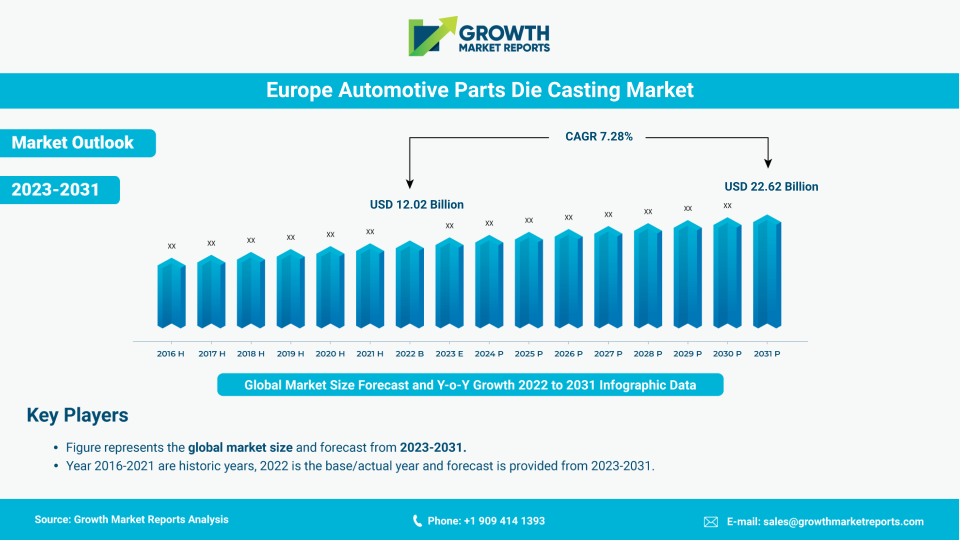
The Europe automotive parts die casting market size was valued at USD 12.02 Billion in 2022 and is projected to reach USD 22.62 Billion by 2031, expanding at a CAGR of 7.28% during the forecast period 2023 - 2031. The growth of the market is attributed to the increased demand for lightweight vehicles.
Die casting is a computerized projecting process, where the fluid dissolved is squeezed into a shape under high tension force and at a high filling speed. Normally alloys with a low liquefying point are utilized in the process.
This casting process is especially appropriate for series and large scale manufacturing of parts. Unlike sand projecting it has extremely durable metal molds, which doesn't need to be destroyed after casting. It is feasible to deliver enormous and complex parts with low divider thicknesses.
Automotive Parts Die casting is one of the most practical and rapid forming process. The advantages of this production process is that countless castings can be delivered rapidly by utilizing only one mold. All parts delivered have a uniform quality and include somewhat low unit costs.
The die casting molds are made of top caliber, heat-safe steel grades. It comprises of two parts that forms a cavity into which the fluid liquefy and is squeezed during the casting process. The parts are situated on a fixed and a movable machine plate.
Automotive Parts Die Casting Market Trends, Drivers, Restraints, and Opportunities
- Rapid demand for non-ferrous castings is anticipated to spur the market growth in the projected timeline.
- Technological advancements in the automotive industry is estimated to drive the market growth.
- Government policies and regulations to decrease automobile emissions is expected to drive the market growth.
- Uncertain raw material prices and changing environmental conditions can hamper the market development.
- Rising demand for short cycle time castings can create lucrative opportunities for market players during the forecast period.
Scope of the Automotive Parts Die Casting Market Report
The report on the Europe automotive parts die casting market includes an assessment of the market, trends, segments, and regional markets. Overview and dynamics have also been included in the report.
|
Attributes
|
Details
|
|
Report Title
|
Europe Automotive Parts Die Casting Market - Industry Analysis, Growth, Share, Size, Trends, and Forecast
|
|
Base Year
|
2022
|
|
Historic Data
|
2016–2021
|
|
Forecast Period
|
2023–2031
|
|
Segmentation
|
Production Process (Vacuum Die Casting, Pressure Die Casting, and Other Production Process Types), Application Types (Engine Parts, Transmission Components, Structural Parts, and Other Application Types), Metal Types (Aluminum, Zinc, and Other Metal Types)
|
|
Geographical Scope
|
Germany, Italy, France, Russia, The UK, Spain and Rest of Europe
|
|
Report Coverage
|
Company Share, Market Analysis and Size, Competitive Landscape, Growth Factors, and Trends, and Revenue Forecast
|
|
Key Players Covered in the Report
|
Martinrea Honsel; Ryobi Die Casting; Georg Fischer; Rheinmetall Automotive; and Buhler Group
|
Europe Automotive Parts Die Casting Market Segment Insights
Pressure die casting segment is expected to grow at a robust pace
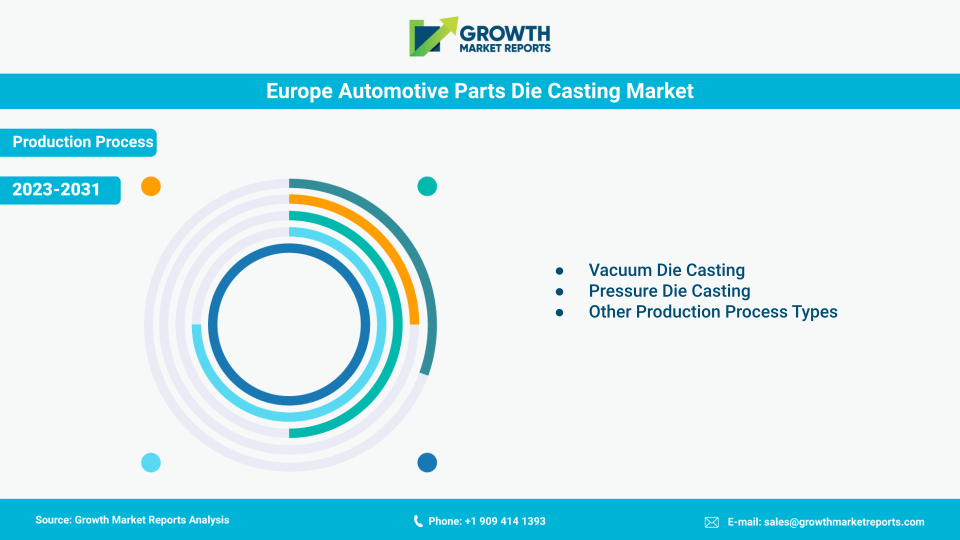
Based on production process, the market is divided into vacuum die casting, pressure die casting, and other production process types. The pressure die casting segment is expected to grow at a rapid pace during the forecast period. Pressure die casting process offers better lightweight products as compared to other processes.
Engine parts segment is projected to expand at a considerable CAGR
On the basis of application types, the market is segregated into engine parts, transmission components, structural parts, and other application types. The engine parts segment is projected to expand at a considerable CAGR during the forecast period due to aggressively growing e-commerce market which is estimated to create huge demand for commercial vehicles.
Aluminium segment is anticipated to grow at healthy rate
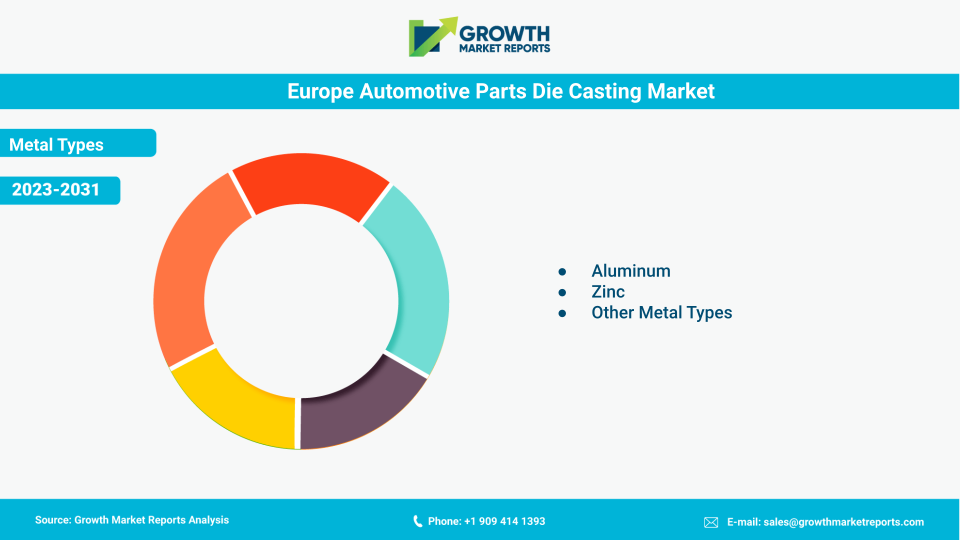
Based on metal types, the market is dived into aluminum, zinc, and other metal types. The aluminium segment is estimated to grow at a healthy rate owing to its lightweight. On the other hand, the zinc segment is anticipated to hold a key market share in the projected timeline.
Germany is anticipated to constitute a key market share
In terms of regions, the Europe automotive parts die casting market is classified as Germany, Italy, France, Russia, The UK, Spain and Rest of Europe. Germany is expected to constitute a key share of the market during the projected period due to presence of highly advanced industries and major auto manufacturers. Automobile manufacturers are encouraged to design better aerodynamic vehicles that consume less fuel in the country.
Segments
The Europe automotive parts die casting market has been segmented on the basis of
Production Process
- Vacuum Die Casting
- Pressure Die Casting
- Other Production Process Types
Application Types
- Engine Parts
- Transmission Components
- Structural Parts
- Other Application Types
Metal Types
- Aluminum
- Zinc
- Other Metal Types
Geography
- Germany
- Italy
- France
- Russia
- The UK
- Spain
- Rest of Europe
Key Players
Competitive Landscape
Key players competing in the Europe automotive parts die casting market are Martinrea Honsel; Ryobi Die Casting; Georg Fischer; Rheinmetall Automotive; and Buhler Group.
Some of the players are focusing on research and development while others are adppting strategies such as mergers and acquisitions.











 Request For Customization
 Enquiry Before Buying
 Speak With Analyst