Segments - by Product Type (Closed Die Forging, Open Die Forging, Rolled Rings), by Material (Steel, Aluminum, Magnesium, Others), by Application (Engine Components, Transmission Parts, Chassis Components, Others), by Vehicle Type (Passenger Cars, Light Commercial Vehicles, Heavy Commercial Vehicles)
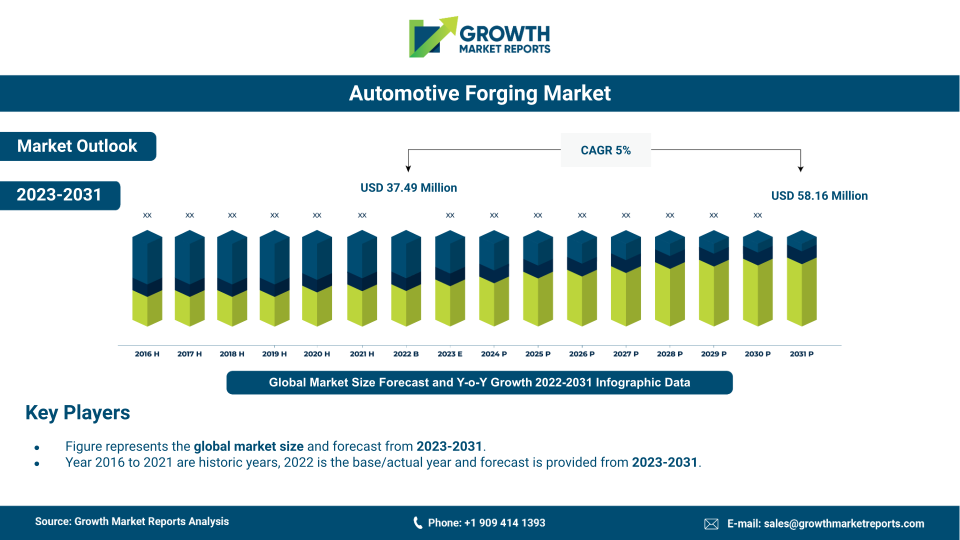
According to our latest research, the global automotive forging market size reached USD 42.8 billion in 2024, reflecting sustained demand across multiple automotive segments. The market is projected to grow at a CAGR of 5.1% during the forecast period, with the market size expected to reach approximately USD 66.8 billion by 2033. This robust growth is driven by increasing vehicle production, stringent safety and emission regulations, and the ongoing shift towards lightweight and high-strength forged components. The marketÂ’s expansion is further supported by technological advancements in forging processes, which enhance product performance and reduce manufacturing costs, as per our latest analysis.
A significant growth factor for the automotive forging market is the rising demand for high-performance, lightweight vehicles that comply with increasingly strict emission standards worldwide. Automotive manufacturers are under constant pressure to reduce vehicle weight to improve fuel efficiency and lower emissions. Forged components, known for their superior strength-to-weight ratio, are essential in achieving these objectives. The adoption of advanced materials such as forged aluminum and magnesium alloys is gaining traction, especially in the production of engine and chassis components. These materials not only offer reduced weight but also maintain the structural integrity required for safety and durability, making them a preferred choice across the industry.
Another key driver is the rapid growth in vehicle production, particularly in emerging economies. Countries such as China, India, and Brazil are witnessing a surge in both passenger and commercial vehicle manufacturing, fueled by rising incomes, urbanization, and infrastructure development. This upsurge directly translates into increased demand for forged automotive parts, including engine components, transmission parts, and chassis systems. Additionally, the expansion of automotive aftermarket services and the growing need for replacement parts further bolster the market. The ability of forging processes to deliver high-volume, cost-effective, and reliable components positions the industry for steady expansion in the coming years.
Technological innovations are also playing a crucial role in shaping the automotive forging market. The integration of automation, computer-aided design (CAD), and computer-aided manufacturing (CAM) in forging operations has significantly improved production efficiency and product quality. These advancements have enabled manufacturers to produce complex geometries and customized solutions for various vehicle types, from passenger cars to heavy commercial vehicles. Furthermore, the adoption of closed die and precision forging techniques has minimized material wastage and reduced lead times, making the process more sustainable and economically viable. As the industry continues to invest in research and development, the scope for further innovations remains promising.
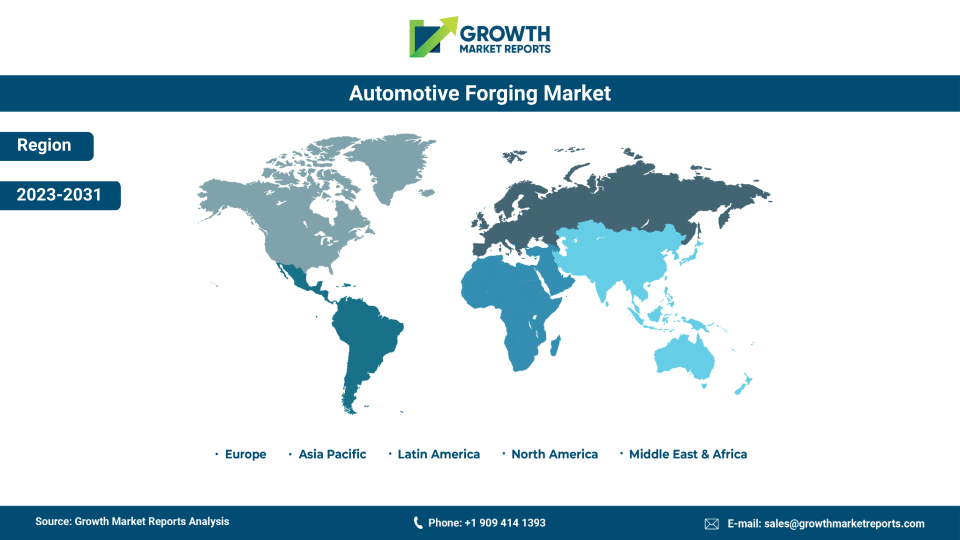
Regionally, the Asia Pacific dominates the automotive forging market, accounting for the largest share due to its massive automotive manufacturing base and favorable government policies. North America and Europe follow, driven by technological advancements and the presence of major automotive OEMs. Latin America and the Middle East & Africa are emerging markets, showing potential for growth due to increasing vehicle demand and infrastructure investments. Each region presents unique opportunities and challenges, shaping the competitive landscape and influencing strategic decisions among key market players.
The product type segment of the automotive forging market is categorized into closed die forging, open die forging, and rolled rings. Closed die forging, also known as impression die forging, holds the largest market share due to its ability to produce high-strength, precision components required for critical automotive applications. This process involves shaping metal within the confines of two dies, allowing for the production of intricate parts with tight tolerances. The automotive industry favors closed die forging for manufacturing engine components, transmission gears, and axle parts, as it ensures consistency and reliability in high-volume production environments.
Open die forging, while less prevalent than closed die forging, plays a vital role in the production of larger, less complex components. This process involves deforming metal between multiple dies that do not enclose the material entirely, making it ideal for manufacturing parts such as crankshafts, shafts, and large rings. Open die forging offers superior mechanical properties due to the refined grain structure achieved during the process. Its flexibility and ability to handle a wide range of sizes make it suitable for heavy commercial vehicles and specialty automotive applications, where customized solutions are often required.
Rolled rings forging is another significant segment, primarily used in the production of seamless, high-strength rings for automotive bearings, gear blanks, and wheel hubs. The process involves piercing a metal billet to form a ring, which is then expanded and shaped using rollers. Rolled rings are valued for their uniformity, strength, and resistance to fatigue, making them indispensable in high-stress automotive environments. The increasing demand for durable and reliable wheel and transmission components is driving the adoption of rolled ring forging across the global automotive sector.
Technological advancements in forging equipment and process automation have further enhanced the capabilities of all three forging types. Modern forging presses, coupled with sophisticated control systems, allow for precise temperature and pressure management, resulting in improved product quality and reduced material wastage. The integration of simulation software and real-time monitoring has also facilitated process optimization, enabling manufacturers to meet the evolving needs of the automotive industry efficiently. As the market continues to evolve, the demand for innovative forging solutions across all product types is expected to rise, supporting the overall growth of the automotive forging market.
| Attributes | Details |
| Report Title | Automotive Forging Market Research Report 2033 |
| By Product Type | Closed Die Forging, Open Die Forging, Rolled Rings |
| By Material | Steel, Aluminum, Magnesium, Others |
| By Application | Engine Components, Transmission Parts, Chassis Components, Others |
| By Vehicle Type | Passenger Cars, Light Commercial Vehicles, Heavy Commercial Vehicles |
| Regions Covered | North America, Europe, APAC, Latin America, MEA |
| Base Year | 2024 |
| Historic Data | 2018-2023 |
| Forecast Period | 2025-2033 |
| Number of Pages | 260 |
| Number of Tables & Figures | 351 |
| Customization Available | Yes, the report can be customized as per your need. |
The material segment in the automotive forging market is dominated by steel, owing to its exceptional mechanical properties, cost-effectiveness, and widespread availability. Steel forging remains the backbone of the industry, particularly for components requiring high strength, durability, and resistance to wear and fatigue. Automotive manufacturers rely heavily on forged steel parts for critical applications such as engine blocks, crankshafts, connecting rods, and suspension systems. The versatility of steel allows for the production of both standard and customized components, catering to a diverse range of vehicle types and performance requirements.
Forging Automation is revolutionizing the automotive forging industry by significantly enhancing production efficiency and consistency. The integration of automated systems in forging operations allows for precise control over the manufacturing process, reducing the likelihood of human error and ensuring uniformity in the final products. Automation also facilitates the handling of complex geometries and high-volume production runs, which are increasingly demanded by the automotive sector. By streamlining operations, forging automation not only cuts down on production time but also minimizes material waste, contributing to more sustainable manufacturing practices. As the industry continues to evolve, the adoption of advanced automation technologies is expected to grow, enabling manufacturers to meet the rising demand for high-quality forged components while maintaining competitive pricing. This shift towards automation is also driving innovation, as companies invest in developing new technologies to further enhance the capabilities of automated forging systems.
Aluminum is rapidly gaining traction as a preferred material in the automotive forging market, driven by the industryÂ’s focus on lightweighting and fuel efficiency. Forged aluminum components offer a significant reduction in weight compared to their steel counterparts, without compromising on strength or structural integrity. This makes aluminum an ideal choice for applications such as wheels, suspension arms, and transmission parts, where weight savings directly contribute to improved vehicle performance and lower emissions. The increasing adoption of electric and hybrid vehicles, which require lighter components to maximize battery efficiency, is further fueling the demand for forged aluminum parts.
Magnesium, although less commonly used than steel and aluminum, is emerging as a promising material in the automotive forging market. Magnesium alloys are the lightest structural metals available, offering unparalleled weight reduction potential. Automotive engineers are exploring the use of forged magnesium parts in areas such as steering wheels, seat frames, and gearbox housings to achieve even greater efficiency gains. However, the relatively higher cost and technical challenges associated with magnesium forging have limited its widespread adoption. Ongoing research and development efforts aimed at improving processability and cost-effectiveness are expected to unlock new opportunities for magnesium in the future.
Other materials, including titanium and specialized alloys, are also being utilized in niche automotive applications where specific performance characteristics are required. These materials are typically reserved for high-performance or luxury vehicles, where the benefits of enhanced strength, corrosion resistance, and reduced weight justify the higher costs. The continuous evolution of material science, coupled with advancements in forging technology, is expanding the range of materials available to automotive manufacturers. As the industry moves towards more sustainable and efficient mobility solutions, the demand for innovative forged materials is set to grow, driving further diversification within the automotive forging market.
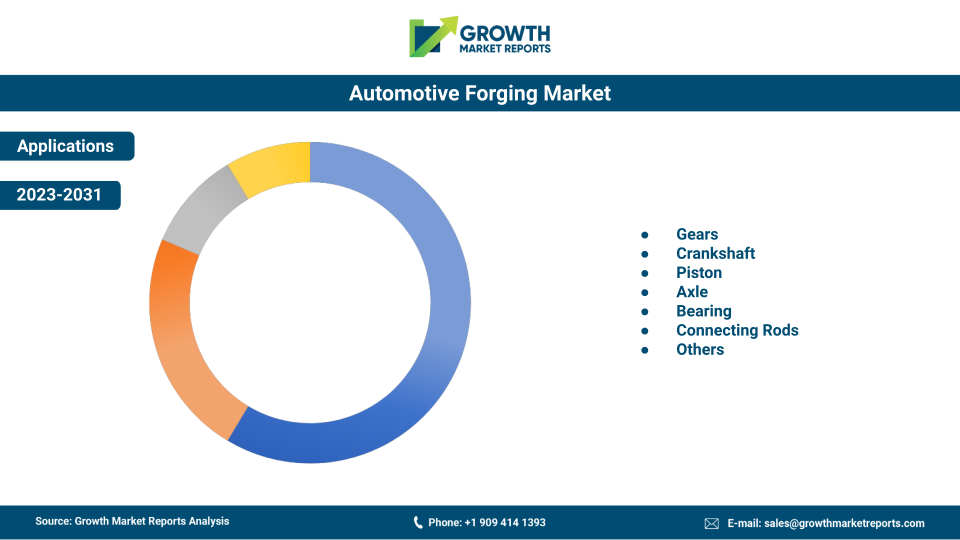
The application segment of the automotive forging market encompasses engine components, transmission parts, chassis components, and other specialized uses. Engine components represent a substantial portion of the market, as these parts must withstand extreme temperatures, pressures, and mechanical stresses. Forged engine components, such as crankshafts, connecting rods, and pistons, are favored for their superior fatigue strength and reliability. The trend towards downsized, turbocharged engines with higher power outputs has further increased the demand for high-performance forged parts that can endure greater loads without failure.
Transmission parts form another critical application area, as modern vehicles increasingly rely on complex, multi-speed transmissions to optimize fuel efficiency and performance. Forged gears, shafts, and synchronizer rings are essential for ensuring smooth power delivery and long-term durability. The shift towards automatic and dual-clutch transmissions, particularly in passenger cars and light commercial vehicles, is driving the need for precision-forged components that offer consistent performance and minimal wear over extended periods.
Chassis components, including control arms, steering knuckles, and suspension parts, are integral to vehicle safety and handling. Forged chassis parts are prized for their ability to absorb impacts and maintain structural integrity under dynamic loading conditions. As automotive manufacturers strive to enhance vehicle safety and ride comfort, the demand for robust, lightweight forged chassis components continues to rise. The adoption of advanced materials and forging techniques has enabled the production of complex, weight-optimized designs that meet stringent regulatory requirements without compromising on performance.
Other applications in the automotive forging market include specialized parts such as wheel hubs, brake components, and differential housings. These components often require a combination of high strength, precise dimensional tolerances, and resistance to wear and corrosion. The growing popularity of electric vehicles (EVs) and hybrid vehicles is also creating new opportunities for forged parts in battery housings, electric motor components, and thermal management systems. As the automotive landscape evolves, the ability of forging processes to deliver customized, high-performance solutions across a wide range of applications will remain a key driver of market growth.
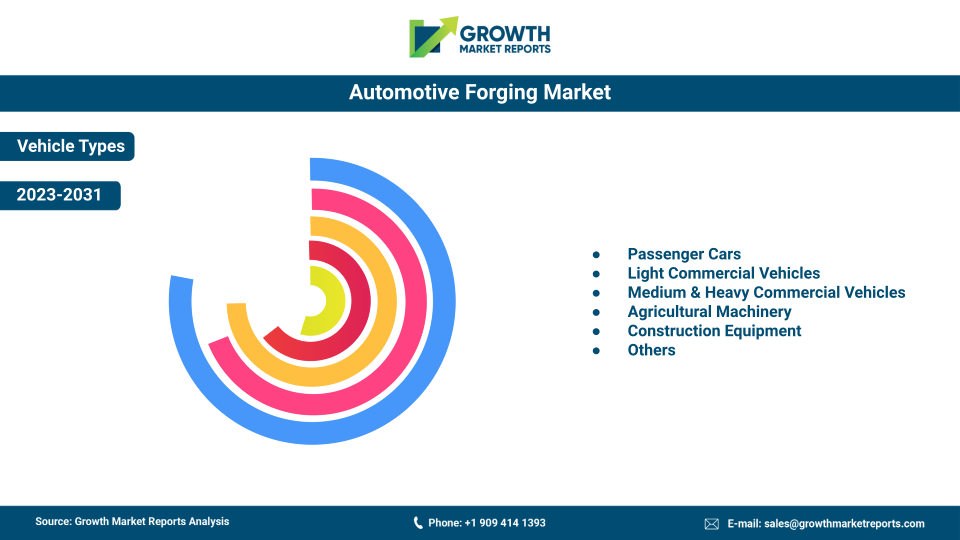
The vehicle type segment in the automotive forging market is categorized into passenger cars, light commercial vehicles (LCVs), and heavy commercial vehicles (HCVs). Passenger cars represent the largest market share, driven by high production volumes and the increasing adoption of advanced safety and performance features. The demand for forged components in passenger cars is primarily fueled by the need for lightweight, durable parts that enhance fuel efficiency and meet stringent emission standards. Automakers are increasingly incorporating forged aluminum and magnesium components to achieve these objectives, particularly in premium and electric vehicle segments.
Light commercial vehicles (LCVs), including vans, pickups, and small trucks, constitute a significant portion of the automotive forging market. LCVs are widely used for urban logistics, last-mile delivery, and small business operations, necessitating robust and reliable components that can withstand frequent usage and varying load conditions. Forged parts such as axles, suspension arms, and transmission gears are essential for ensuring the longevity and performance of LCVs. The ongoing growth of e-commerce and the expansion of urban transportation networks are expected to drive further demand for forged components in this segment.
Heavy commercial vehicles (HCVs), which include large trucks, buses, and construction vehicles, require the most robust and durable forged components due to their demanding operating environments. These vehicles are subject to high loads, continuous operation, and challenging road conditions, making the use of high-strength forged parts essential for safety and reliability. Forged steel is the material of choice for most HCV applications, given its superior mechanical properties and cost-effectiveness. The increasing focus on infrastructure development and the expansion of logistics and transportation sectors, particularly in emerging economies, are contributing to the steady growth of the HCV segment within the automotive forging market.
The diversification of vehicle types and the emergence of new mobility solutions, such as electric and autonomous vehicles, are reshaping the demand landscape for forged automotive components. Manufacturers are adapting their product offerings to cater to the unique requirements of these vehicles, including lightweighting, enhanced safety, and integration of advanced technologies. As the automotive industry continues to evolve, the ability to deliver high-quality forged components across a broad spectrum of vehicle types will remain a critical success factor for market participants.
The automotive forging market presents numerous opportunities for growth and innovation, particularly in the realm of lightweight materials and advanced manufacturing technologies. The ongoing shift towards electric vehicles (EVs) and hybrid vehicles is creating new demand for forged components that offer weight savings, improved energy efficiency, and compatibility with advanced powertrains. Companies investing in research and development to enhance the formability and performance of aluminum, magnesium, and other lightweight alloys stand to gain a competitive edge. Additionally, the integration of digital technologies such as Industry 4.0, the Internet of Things (IoT), and artificial intelligence (AI) in forging operations is enabling real-time process optimization, predictive maintenance, and quality control, further enhancing productivity and profitability.
Another significant opportunity lies in the expansion of the automotive aftermarket and the increasing demand for replacement parts. As the global vehicle fleet continues to age, the need for high-quality, durable forged components for maintenance and repair is on the rise. This trend is particularly pronounced in emerging markets, where vehicle ownership is growing rapidly, and consumers seek cost-effective solutions to extend the lifespan of their vehicles. The ability to offer a diverse range of aftermarket products, coupled with efficient distribution networks, can help manufacturers tap into this lucrative segment and drive long-term growth.
However, the automotive forging market also faces several restraining factors that could impede growth. One of the primary challenges is the volatility in raw material prices, particularly for steel, aluminum, and magnesium. Fluctuations in commodity prices can significantly impact production costs and profit margins, making it difficult for manufacturers to maintain pricing stability. Additionally, the capital-intensive nature of forging operations and the need for continuous investment in technology and equipment upgrades pose barriers to entry for new players. Environmental concerns related to energy consumption and emissions from forging processes also necessitate the adoption of cleaner, more sustainable manufacturing practices, adding to operational complexities and costs.
The Asia Pacific region dominates the global automotive forging market, accounting for approximately 47% of the total market share in 2024, equivalent to USD 20.1 billion. This dominance is attributed to the regionÂ’s robust automotive manufacturing base, particularly in countries such as China, India, Japan, and South Korea. Favorable government policies, rising disposable incomes, and rapid urbanization have fueled vehicle production and sales, driving demand for high-quality forged components. The region is also witnessing significant investments in research and development, aimed at enhancing manufacturing capabilities and product innovation. With a projected CAGR of 5.7% during the forecast period, Asia Pacific is expected to maintain its leadership position in the global market.
North America holds the second-largest share of the automotive forging market, valued at USD 10.7 billion in 2024. The regionÂ’s growth is driven by the presence of major automotive OEMs, advanced manufacturing infrastructure, and a strong focus on technological innovation. North American manufacturers are at the forefront of adopting lightweight materials and precision forging techniques to meet stringent regulatory requirements for fuel efficiency and emissions. The region also benefits from a mature automotive aftermarket, which further boosts demand for forged components. Despite facing challenges such as labor shortages and fluctuating raw material prices, North America is expected to witness steady growth over the forecast period.
Europe represents a mature market for automotive forging, with a market size of USD 8.9 billion in 2024. The region is characterized by a strong emphasis on quality, safety, and sustainability, driving the adoption of advanced forging processes and environmentally friendly materials. European automotive manufacturers are leading the way in integrating digital technologies and automation into forging operations, resulting in improved efficiency and reduced environmental impact. The regionÂ’s focus on electric mobility and the transition towards zero-emission vehicles is also creating new opportunities for forged components tailored to the unique requirements of EVs and hybrids. While growth in Europe is expected to be moderate compared to Asia Pacific, the region remains a key hub for innovation and high-value automotive forging solutions.
The automotive forging market is highly competitive, with a diverse mix of global and regional players striving to capture market share through innovation, quality, and cost efficiency. The landscape is characterized by the presence of well-established forging companies, vertically integrated automotive suppliers, and specialized manufacturers catering to niche segments. Companies are increasingly focusing on expanding their product portfolios, investing in advanced manufacturing technologies, and forging strategic partnerships to enhance their market presence. The ability to deliver customized solutions, maintain stringent quality standards, and respond swiftly to changing customer requirements is critical for success in this dynamic market.
Mergers, acquisitions, and collaborations are common strategies employed by leading players to strengthen their market position and access new growth opportunities. For instance, major forging companies are investing in capacity expansion, both organically and through acquisitions, to meet rising demand from the automotive sector. The integration of digital technologies, such as real-time process monitoring, predictive analytics, and automation, is enabling manufacturers to improve operational efficiency, reduce costs, and enhance product quality. Sustainability initiatives, including the adoption of energy-efficient processes and the use of recycled materials, are also gaining prominence as companies seek to align with evolving regulatory and consumer expectations.
The competitive landscape is further shaped by the entry of new players, particularly in emerging markets, who leverage cost advantages and proximity to key automotive hubs. However, the capital-intensive nature of forging operations, coupled with the need for continuous investment in technology and quality assurance, presents significant barriers to entry. Established players with strong financial resources, technical expertise, and global supply chains are better positioned to withstand market fluctuations and capitalize on emerging trends. The ongoing shift towards electric and autonomous vehicles is also prompting companies to diversify their product offerings and invest in research and development to address evolving industry needs.
Some of the major companies operating in the automotive forging market include Thyssenkrupp AG, Bharat Forge Limited, American Axle & Manufacturing Holdings Inc., NTN Corporation, and Sumitomo Metal Industries. Thyssenkrupp AG is renowned for its comprehensive portfolio of forged components and its focus on sustainability and innovation. Bharat Forge Limited, a global leader in metal forming, is recognized for its advanced manufacturing capabilities and extensive presence in both domestic and international markets. American Axle & Manufacturing Holdings Inc. specializes in driveline and drivetrain components, leveraging its expertise in precision forging to serve a diverse customer base.
NTN Corporation is a key player in the production of forged bearings and related components, with a strong emphasis on quality and technological advancement. Sumitomo Metal Industries is known for its high-performance forged products and commitment to continuous improvement. These companies, along with several others, are actively investing in research and development, capacity expansion, and digital transformation to maintain their competitive edge. The ability to innovate, adapt to changing market dynamics, and deliver value-added solutions will be crucial for sustained success in the evolving automotive forging market.
The Automotive Forging market has been segmented on the basis of
In the competitive environment, companies are adopting different strategies to capture the market and offer tough competition to the competitors. Companies are focusing on product development, research and development (R&D) activities, mergers and acquisitions, technological advancement, partnerships, and collaborations.
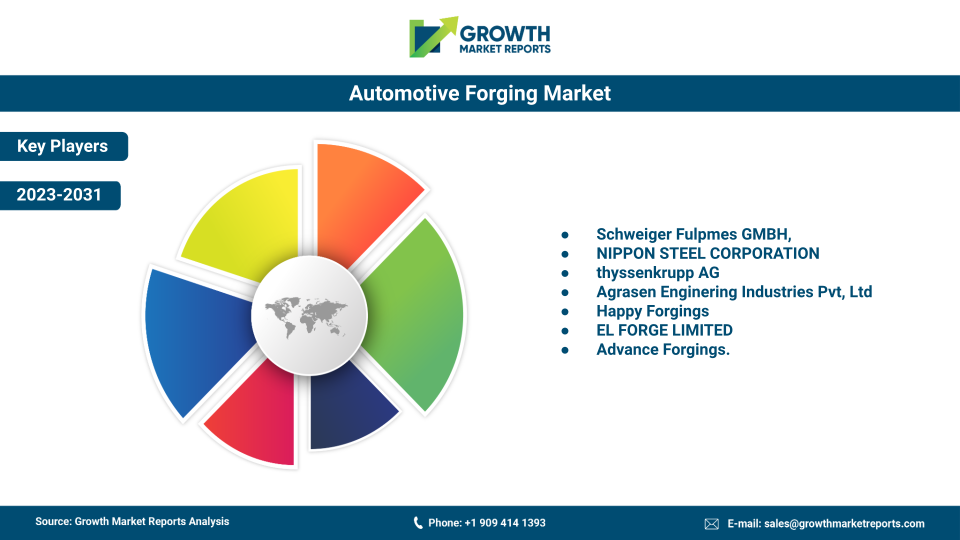
Some key players in the market are Schweiger Fulpmes GMBH, NIPPON STEEL CORPORATION, thyssenkrupp AG, Agrasen Enginering Industries Pvt, Ltd., Happy Forgings, EL FORGE LIMITED, and Advance Forgings.
Yes, the Automotive Forging Market Research Report 2033 offers customization options to meet specific business requirements.
Key challenges include raw material price volatility, high capital investment requirements, environmental concerns, and the need for continuous technological upgrades.
Major companies include Bharat Forge Limited, Thyssenkrupp AG, American Axle & Manufacturing Holdings, NTN Corporation, Sumitomo Metal Industries, and others.
The shift towards EVs and hybrid vehicles is increasing demand for lightweight, high-strength forged components that improve energy efficiency and are compatible with advanced powertrains.
Forged components are used in engine parts (crankshafts, pistons), transmission parts (gears, shafts), chassis components (control arms, suspension), and specialized parts like wheel hubs and brake components.
Steel is the most commonly used material due to its strength and cost-effectiveness. Aluminum and magnesium are gaining popularity for lightweight applications, while titanium and specialized alloys are used in niche, high-performance segments.
The main forging processes are closed die forging (impression die forging), open die forging, and rolled rings forging. Closed die forging holds the largest market share due to its precision and strength.
Asia Pacific dominates the automotive forging market, accounting for about 47% of the market share in 2024, followed by North America and Europe.
Key growth drivers include increasing vehicle production, stringent safety and emission regulations, demand for lightweight and high-strength forged components, and technological advancements in forging processes.
The global automotive forging market reached USD 42.8 billion in 2024 and is projected to grow at a CAGR of 5.1%, reaching approximately USD 66.8 billion by 2033.