Automotive Electric Actuators Market Research Report 2033

Automotive Electric Actuators Market Research Report 2033

Segments - by Product Type (Linear Actuators, Rotary Actuators, Others), by Vehicle Type (Passenger Cars, Light Commercial Vehicles, Heavy Commercial Vehicles), by Application (Throttle Actuators, Seat Adjustment, Brake Actuators, HVAC, Headlamp Actuators, Others), by Sales Channel (OEM, Aftermarket)

https://growthmarketreports.com/Raksha
Author : Raksha Sharma
https://growthmarketreports.com/Vaibhav
Fact-checked by : V. Chandola
https://growthmarketreports.com/Shruti
Editor : Shruti Bhat

Upcoming | Report ID :AL-1196 | 4.2 Rating | 16 Reviews | 298 Pages | Format : Docx PDF

Report Description


Automotive Electric Actuators Market Outlook

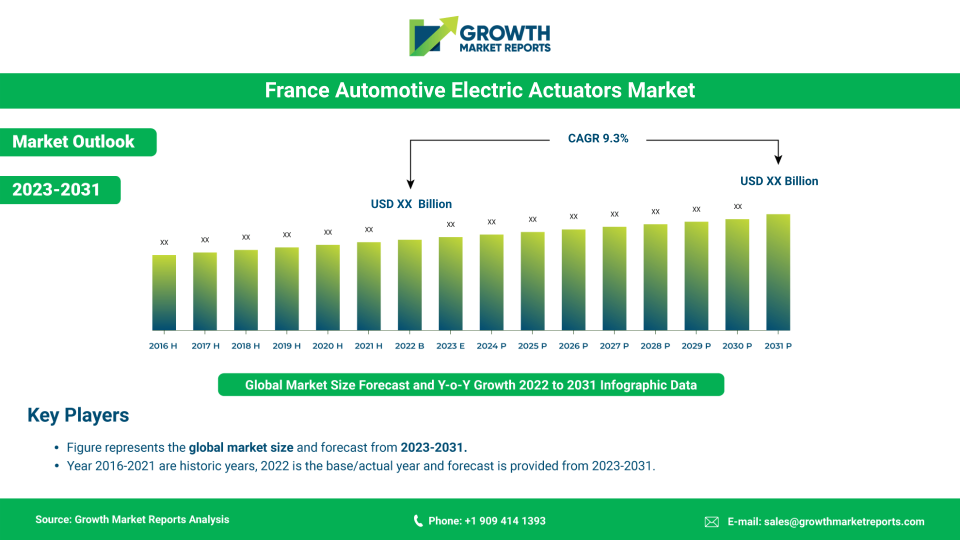
According to our latest research, the global automotive electric actuators market size reached USD 25.3 billion in 2024, reflecting the robust integration of advanced automation technologies across the automotive sector. The market is poised to expand at a healthy CAGR of 7.1% from 2025 to 2033, with projections indicating the market will attain a value of USD 47.3 billion by 2033. This growth is primarily fueled by the increasing adoption of electric vehicles, the rising demand for enhanced vehicle safety and comfort features, and the automotive industry’s ongoing shift toward electrification and intelligent systems.

One of the key growth drivers for the automotive electric actuators market is the rapid evolution of vehicle automation and electrification. As automotive manufacturers strive to enhance vehicle performance, safety, and user experience, electric actuators have become essential components for enabling precise control of various vehicle functions. The proliferation of advanced driver-assistance systems (ADAS), autonomous driving technologies, and stringent emission regulations have further accelerated the adoption of electric actuators over traditional hydraulic and pneumatic alternatives. These actuators offer superior energy efficiency, reduced weight, and improved reliability, making them indispensable in modern vehicle architectures.

Another significant factor contributing to market growth is the increasing consumer demand for comfort and convenience features in vehicles. Modern consumers expect vehicles to offer seamless seat adjustments, automated climate control, adaptive lighting, and other personalized functionalities, all of which rely heavily on electric actuators. The surge in luxury vehicle sales and the trickle-down of premium features into mass-market models have expanded the addressable market for automotive electric actuators. Additionally, the growing awareness of vehicle safety and the integration of smart braking and throttle systems are propelling the demand for advanced actuator solutions.

Technological advancements in actuator design and materials are also playing a pivotal role in market expansion. Innovations such as compact and lightweight actuators, integration with electronic control units (ECUs), and the development of actuators capable of operating under extreme conditions are enabling broader application across diverse vehicle segments. The ongoing research and development efforts by key market players to enhance actuator efficiency, durability, and cost-effectiveness are expected to further stimulate market growth over the forecast period. Moreover, the emergence of electric and hybrid vehicles is creating new opportunities for actuator manufacturers to develop specialized solutions tailored to the unique requirements of these vehicles.

From a regional perspective, Asia Pacific continues to dominate the automotive electric actuators market, driven by the presence of major automotive manufacturing hubs, increasing vehicle production, and the rapid adoption of electric mobility solutions. North America and Europe are also significant contributors, owing to their advanced automotive industries, high consumer purchasing power, and strong regulatory frameworks promoting vehicle safety and emission reduction. The Middle East & Africa and Latin America, while currently representing smaller market shares, are expected to witness steady growth as automotive infrastructure and consumer awareness improve in these regions.

Global Automotive Electric Actuators Industry Outlook

Product Type Analysis

The automotive electric actuators market is broadly segmented by product type into linear actuators, rotary actuators, and others. Linear actuators are among the most widely used, as they provide precise linear motion control essential for applications such as seat adjustment, window lifts, and throttle control. These actuators are highly valued for their reliability, efficiency, and ability to deliver smooth, controlled movement, which is critical in ensuring passenger comfort and safety. The continuous advancements in linear actuator technology, including the integration of smart sensors and compact designs, have enabled their deployment in increasingly complex automotive systems, further driving their demand.

Rotary actuators, on the other hand, are primarily utilized in applications requiring rotational movement, such as HVAC systems, headlamp positioning, and mirror adjustments. These actuators are designed to provide precise angular motion, which is essential for optimizing the performance of various automotive subsystems. The growing adoption of advanced lighting systems, adaptive headlamps, and electronically controlled HVAC systems in modern vehicles has significantly boosted the demand for rotary actuators. Manufacturers are focusing on developing rotary actuators with enhanced torque, faster response times, and improved durability to meet the evolving requirements of the automotive industry.

The “others” category includes specialized and emerging actuator types designed for niche applications or next-generation vehicle architectures. These may encompass smart actuators with integrated electronics, miniaturized actuators for compact vehicle interiors, and actuators designed for electric and hybrid vehicle powertrains. As automotive design trends shift towards modular and scalable vehicle platforms, the demand for versatile and adaptable actuator solutions is expected to rise. This segment is likely to witness increased innovation as OEMs and suppliers collaborate to develop actuators capable of meeting the unique challenges posed by future mobility solutions.

Across all product types, the emphasis on energy efficiency, compactness, and integration with vehicle electronics is shaping the competitive landscape. Actuator manufacturers are investing in research and development to create products that deliver higher performance while occupying minimal space and consuming less power. The trend towards electrification and the integration of smart technologies is expected to drive further diversification and specialization within the product type segment, enabling automotive manufacturers to offer differentiated and value-added features to consumers.

Report Scope

Attributes Details
Report Title Automotive Electric Actuators Market Research Report 2033
By Product Type Linear Actuators, Rotary Actuators, Others
By Vehicle Type Passenger Cars, Light Commercial Vehicles, Heavy Commercial Vehicles
By Application Throttle Actuators, Seat Adjustment, Brake Actuators, HVAC, Headlamp Actuators, Others
By Sales Channel OEM, Aftermarket
Regions Covered North America, Europe, APAC, Latin America, MEA
Base Year 2024
Historic Data 2018-2023
Forecast Period 2025-2033
Number of Pages 298
Number of Tables & Figures 270
Customization Available Yes, the report can be customized as per your need.

Vehicle Type Analysis

By vehicle type, the automotive electric actuators market is segmented into passenger cars, light commercial vehicles (LCVs), and heavy commercial vehicles (HCVs). Passenger cars constitute the largest segment, accounting for a substantial share of the global market. The increasing demand for comfort, safety, and convenience features among passenger car buyers has led to the widespread adoption of electric actuators in functions such as seat adjustment, power windows, sunroofs, and climate control. The proliferation of electric and hybrid passenger vehicles, coupled with the integration of advanced driver-assistance systems, is further augmenting the demand for high-performance actuators in this segment.

Light commercial vehicles are also witnessing a steady rise in the adoption of electric actuators, driven by the need for enhanced operational efficiency, safety, and driver comfort. Fleet operators and commercial vehicle manufacturers are increasingly incorporating electric actuators into vehicle systems such as automated doors, HVAC, and advanced braking systems to improve vehicle uptime and reduce maintenance costs. The growth of the e-commerce and logistics sectors, particularly in emerging markets, is expected to drive further demand for electric actuators in LCVs as companies seek to optimize fleet performance and reliability.

Heavy commercial vehicles, including trucks and buses, represent a significant growth opportunity for the automotive electric actuators market. While the adoption rate in this segment has traditionally lagged behind passenger cars due to cost considerations and operational complexities, the increasing focus on vehicle safety, emission reduction, and driver assistance technologies is changing the landscape. Electric actuators are being increasingly deployed in applications such as automated braking, throttle control, and cabin comfort systems, enabling HCV manufacturers to meet stringent regulatory requirements and enhance vehicle competitiveness.

The vehicle type segmentation highlights the diverse application landscape for automotive electric actuators and underscores the importance of tailored solutions for different vehicle categories. As automotive OEMs continue to expand their product portfolios to include electric and hybrid variants across all vehicle types, the demand for specialized actuators capable of meeting the unique requirements of each segment is expected to grow. This trend is likely to drive innovation and collaboration among actuator manufacturers, automotive suppliers, and OEMs, resulting in the development of next-generation actuator solutions optimized for various vehicle platforms.

Application Analysis

The application segment of the automotive electric actuators market encompasses a wide range of vehicle functions, including throttle actuators, seat adjustment, brake actuators, HVAC, headlamp actuators, and others. Throttle actuators play a critical role in modern engine management systems, enabling precise control of engine power and responsiveness. The shift towards electronic throttle control systems, driven by the need for improved fuel efficiency and reduced emissions, has significantly increased the demand for high-performance throttle actuators. These actuators are essential for enabling advanced features such as adaptive cruise control and automated driving, further reinforcing their importance in the evolving automotive landscape.

Seat adjustment actuators are another key application area, particularly in luxury and premium vehicles where personalized comfort and convenience features are highly valued. Electric actuators enable smooth and precise seat positioning, lumbar support adjustment, and memory functions, enhancing the overall driving experience. The growing consumer preference for ergonomic and customizable seating solutions, coupled with the integration of smart sensors and connectivity features, is driving innovation in seat adjustment actuator technology. Manufacturers are focusing on developing compact, lightweight, and energy-efficient actuators to meet the evolving needs of automotive interiors.

Brake actuators are integral to the safety and performance of modern vehicles, especially as the industry moves towards advanced braking systems such as electronic stability control (ESC), anti-lock braking systems (ABS), and automated emergency braking (AEB). Electric brake actuators offer faster response times, improved precision, and enhanced reliability compared to traditional hydraulic systems. The increasing adoption of these advanced safety features in both passenger and commercial vehicles is expected to drive sustained demand for electric brake actuators over the forecast period.

The HVAC and headlamp actuator segments are also experiencing significant growth, driven by the increasing integration of automated climate control and adaptive lighting systems in vehicles. Electric actuators enable precise control of airflow, temperature, and lighting direction, contributing to improved passenger comfort and safety. The trend towards intelligent and connected vehicle systems is expected to further expand the application scope for electric actuators, as OEMs seek to differentiate their offerings through advanced features and functionalities.

Sales Channel Analysis

The sales channel segment of the automotive electric actuators market is divided into OEM (Original Equipment Manufacturer) and aftermarket. OEMs represent the dominant channel, accounting for the majority of electric actuator sales globally. The close collaboration between actuator manufacturers and automotive OEMs enables the integration of actuators into vehicle systems during the design and production phases, ensuring optimal performance, reliability, and compatibility. The increasing adoption of electric actuators in new vehicle models, driven by regulatory requirements and consumer demand for advanced features, is expected to sustain the growth of the OEM segment.

The aftermarket segment, while smaller in comparison, plays a crucial role in the replacement and upgrade of electric actuators in existing vehicles. As vehicles age and components wear out, the demand for high-quality replacement actuators increases, providing a steady revenue stream for aftermarket suppliers. The growing popularity of vehicle customization and the rising awareness of the benefits of advanced actuator technologies are also driving demand in the aftermarket segment. Suppliers are focusing on expanding their product portfolios and distribution networks to capture a larger share of this growing market.

The dynamics of the sales channel segment are influenced by factors such as vehicle ownership patterns, maintenance practices, and the availability of skilled technicians. In mature automotive markets, the OEM segment is expected to maintain its dominance due to the high rate of new vehicle production and the widespread adoption of advanced actuator technologies. In contrast, the aftermarket segment is expected to witness higher growth rates in emerging markets, where the vehicle parc is expanding rapidly and consumers are increasingly seeking affordable and reliable replacement parts.

The interplay between OEM and aftermarket channels is expected to shape the competitive landscape of the automotive electric actuators market over the forecast period. Manufacturers are investing in brand building, customer support, and product innovation to strengthen their positions in both segments. The increasing digitization of automotive retail and the emergence of e-commerce platforms are also expected to transform the sales channel landscape, providing new opportunities for market players to reach a broader customer base.

Opportunities & Threats

The automotive electric actuators market presents significant opportunities for growth and innovation, particularly in the context of the global shift towards electric and autonomous vehicles. The increasing adoption of electric vehicles (EVs) and hybrid electric vehicles (HEVs) is creating new demand for specialized actuators capable of operating in high-voltage environments and supporting advanced vehicle functionalities. The integration of smart sensors, connectivity features, and artificial intelligence into actuator systems is enabling the development of intelligent actuators that can adapt to changing vehicle conditions and user preferences. These advancements are expected to drive the next wave of innovation in the market, providing opportunities for manufacturers to differentiate their offerings and capture new revenue streams.

Another major opportunity lies in the growing emphasis on vehicle safety and regulatory compliance. The implementation of stringent safety and emission standards by governments and regulatory bodies worldwide is driving the adoption of advanced actuator technologies that enable precise control of critical vehicle functions. The development of next-generation ADAS and autonomous driving systems is expected to further increase the demand for high-performance actuators capable of supporting complex decision-making and control processes. Market players that can develop actuators with enhanced reliability, durability, and integration capabilities are well-positioned to capitalize on these emerging opportunities.

Despite the positive outlook, the automotive electric actuators market faces several challenges and restraining factors. One of the primary threats is the high cost associated with the development and deployment of advanced actuator technologies, particularly in price-sensitive markets. The complexity of integrating electric actuators into existing vehicle architectures can also present technical and logistical challenges for OEMs and suppliers. Additionally, the market is subject to fluctuations in raw material prices, supply chain disruptions, and evolving regulatory requirements, all of which can impact profitability and growth prospects. Market players must navigate these challenges through strategic investments, innovation, and collaboration to sustain long-term success.

Regional Outlook

Asia Pacific remains the largest and fastest-growing region in the automotive electric actuators market, with a market size of USD 10.5 billion in 2024. The region’s dominance is underpinned by the presence of major automotive manufacturing hubs in China, Japan, South Korea, and India, coupled with the rapid adoption of electric and hybrid vehicles. The increasing focus on vehicle safety, comfort, and emission reduction is driving the adoption of advanced actuator technologies across both passenger and commercial vehicle segments. With a projected CAGR of 8.3% from 2025 to 2033, Asia Pacific is expected to maintain its leading position, reaching a market value of USD 21.1 billion by 2033.

North America is another key market for automotive electric actuators, with a market size of USD 6.2 billion in 2024. The region’s advanced automotive industry, high consumer purchasing power, and strong regulatory frameworks promoting vehicle safety and emission reduction are driving the adoption of electric actuators. The increasing penetration of electric and autonomous vehicles, coupled with the growing demand for premium and luxury vehicles, is expected to sustain market growth in North America. By 2033, the market is projected to reach USD 10.8 billion, reflecting a steady CAGR of 6.2% over the forecast period.

Europe, with a market size of USD 5.8 billion in 2024, is characterized by a strong focus on vehicle innovation, sustainability, and regulatory compliance. The region’s leadership in automotive technology development, particularly in areas such as ADAS, electric mobility, and lightweight materials, is driving the adoption of advanced actuator solutions. The European market is expected to grow at a CAGR of 6.5%, reaching USD 10.2 billion by 2033. The Middle East & Africa and Latin America, while representing smaller shares of the global market, are expected to witness gradual growth as automotive infrastructure and consumer awareness improve, with combined market sizes reaching USD 5.2 billion by 2033.

Automotive Electric Actuators Market Statistics

Competitor Outlook

The automotive electric actuators market is highly competitive, characterized by the presence of established global players and a growing number of regional and niche manufacturers. The competitive landscape is shaped by factors such as product innovation, technological advancement, strategic partnerships, and mergers and acquisitions. Major players are investing heavily in research and development to enhance actuator performance, durability, and cost-effectiveness, while also expanding their product portfolios to address the diverse needs of automotive OEMs and aftermarket customers. The emphasis on energy efficiency, miniaturization, and integration with electronic control systems is driving continuous innovation and differentiation in the market.

Strategic collaborations and partnerships between actuator manufacturers, automotive OEMs, and technology providers are becoming increasingly common, as companies seek to leverage complementary strengths and accelerate the development of next-generation actuator solutions. These partnerships are enabling the integration of advanced features such as smart sensors, connectivity, and artificial intelligence into actuator systems, positioning market players to capitalize on emerging opportunities in electric and autonomous vehicles. Companies are also focusing on expanding their global footprint through investments in manufacturing facilities, distribution networks, and aftersales support services to better serve customers across different regions.

The competitive dynamics of the market are further influenced by the entry of new players, particularly from Asia Pacific, who are leveraging cost advantages and local market knowledge to capture market share. Established players are responding by enhancing their value propositions through product customization, superior quality, and comprehensive customer support. The increasing complexity of vehicle architectures and the growing demand for specialized actuator solutions are expected to drive further consolidation and collaboration in the industry, as companies seek to strengthen their positions and achieve sustainable growth.

Some of the major companies operating in the automotive electric actuators market include Robert Bosch GmbH, Continental AG, Denso Corporation, HELLA GmbH & Co. KGaA, Johnson Electric Holdings Limited, Mitsubishi Electric Corporation, Valeo SA, Hitachi Automotive Systems, and BorgWarner Inc. These companies are at the forefront of innovation, leveraging their technical expertise, global reach, and strategic partnerships to develop cutting-edge actuator solutions for the automotive industry. Bosch, for example, is renowned for its extensive portfolio of electric actuators and its focus on sustainability and energy efficiency. Continental AG and Denso Corporation are leaders in the integration of smart technologies and connectivity features into actuator systems, while HELLA and Valeo are known for their expertise in lighting and climate control applications.

Johnson Electric and Mitsubishi Electric are recognized for their strong presence in the Asian market and their focus on product customization and customer-centric solutions. Hitachi Automotive Systems and BorgWarner Inc. are driving innovation in powertrain and advanced safety applications, leveraging their deep industry knowledge and technological capabilities. These companies, along with several regional and niche players, are expected to play a pivotal role in shaping the future of the automotive electric actuators market, driving innovation, competition, and growth across the global automotive industry.

Key Players

  • Robert Bosch GmbH
  • Denso Corporation
  • Continental AG
  • Mitsuba Corporation
  • Johnson Electric Holdings Limited
  • Mitsubishi Electric Corporation
  • Valeo SA
  • BorgWarner Inc.
  • Mahle GmbH
  • Hitachi Astemo, Ltd.
  • Hella GmbH & Co. KGaA
  • Nidec Corporation
  • ZF Friedrichshafen AG
  • Magna International Inc.
  • Aisin Seiki Co., Ltd.
  • Stoneridge, Inc.
  • Sonceboz SA
  • Inteva Products, LLC
  • Wabco Holdings Inc.
  • Schaeffler AG
Automotive Electric Actuators Market Overview

Segments

The Automotive Electric Actuators market has been segmented on the basis of

Product Type

  • Linear Actuators
  • Rotary Actuators
  • Others

Vehicle Type

  • Passenger Cars
  • Light Commercial Vehicles
  • Heavy Commercial Vehicles

Application

  • Throttle Actuators
  • Seat Adjustment
  • Brake Actuators
  • HVAC
  • Headlamp Actuators
  • Others

Sales Channel

  • OEM
  • Aftermarket

Competitive Landscape

Key players competing in the France Automotive Electric Actuators market include Sonceboz SA, Continental AG, Robert Bosch GmbH, Hella KGaA Hueck & Co., and Wabco Holdings Inc.

Companies are forming joint ventures and partnerships to launch newer products in order to get an advantage over their competition. For instance, progressive automations launched a variety of electric linear actuator devices in 2019.

Electric linear actuators offer unique features that make them suitable for a wide range of applications. The producer of linear actuators provides 12V units with an 18-month guarantee. Furthermore, customers may modify their selected model to meet their individual needs, such as voltage, force, stroke length, size, and feedback control.


France Automotive Electric Actuators Market Key Players

Frequently Asked Questions

Opportunities include the rise of electric and autonomous vehicles, integration of smart sensors, and regulatory focus on safety. Challenges involve high development costs, integration complexity, and supply chain disruptions.

Sales channels are divided into OEM (Original Equipment Manufacturer) and aftermarket. OEMs dominate due to integration during vehicle production, while the aftermarket segment is growing for replacement and upgrades.

Major companies include Robert Bosch GmbH, Denso Corporation, Continental AG, HELLA GmbH & Co. KGaA, Johnson Electric Holdings Limited, Mitsubishi Electric Corporation, Valeo SA, Hitachi Automotive Systems, and BorgWarner Inc.

Key applications include throttle actuators, seat adjustment, brake actuators, HVAC systems, and headlamp actuators, all of which contribute to improved vehicle performance, safety, and comfort.

The market is segmented into passenger cars, light commercial vehicles (LCVs), and heavy commercial vehicles (HCVs), with passenger cars constituting the largest share due to high demand for comfort and safety features.

The market is segmented into linear actuators, rotary actuators, and others. Linear actuators are widely used for applications like seat adjustment and window lifts, while rotary actuators are essential for HVAC systems and headlamp positioning.

Asia Pacific dominates the market due to its major automotive manufacturing hubs and rapid adoption of electric vehicles. North America and Europe are also significant contributors, driven by advanced automotive industries and strong regulatory frameworks.

Key growth drivers include the rising adoption of electric vehicles, increased demand for vehicle safety and comfort features, advancements in automation technologies, and regulatory pressures for emission reduction.

The automotive electric actuators market is expected to grow at a CAGR of 7.1% from 2025 to 2033, reaching an estimated value of USD 47.3 billion by 2033.

As of 2024, the global automotive electric actuators market size reached USD 25.3 billion, reflecting strong growth driven by automation and electrification trends in the automotive sector.

Table Of Content

Chapter 1 Executive Summary
Chapter 2 Assumptions and Acronyms Used
Chapter 3 Research Methodology
Chapter 4 Automotive Electric Actuators Market Overview
   4.1 Introduction
      4.1.1 Market Taxonomy
      4.1.2 Market Definition
      4.1.3 Macro-Economic Factors Impacting the Market Growth
   4.2 Automotive Electric Actuators Market Dynamics
      4.2.1 Market Drivers
      4.2.2 Market Restraints
      4.2.3 Market Opportunity
   4.3 Automotive Electric Actuators Market - Supply Chain Analysis
      4.3.1 List of Key Suppliers
      4.3.2 List of Key Distributors
      4.3.3 List of Key Consumers
   4.4 Key Forces Shaping the Automotive Electric Actuators Market
      4.4.1 Bargaining Power of Suppliers
      4.4.2 Bargaining Power of Buyers
      4.4.3 Threat of Substitution
      4.4.4 Threat of New Entrants
      4.4.5 Competitive Rivalry
   4.5 Global Automotive Electric Actuators Market Size & Forecast, 2023-2032
      4.5.1 Automotive Electric Actuators Market Size and Y-o-Y Growth
      4.5.2 Automotive Electric Actuators Market Absolute $ Opportunity

Chapter 5 Global Automotive Electric Actuators Market Analysis and Forecast By Product Type
   5.1 Introduction
      5.1.1 Key Market Trends & Growth Opportunities By Product Type
      5.1.2 Basis Point Share (BPS) Analysis By Product Type
      5.1.3 Absolute $ Opportunity Assessment By Product Type
   5.2 Automotive Electric Actuators Market Size Forecast By Product Type
      5.2.1 Linear Actuators
      5.2.2 Rotary Actuators
      5.2.3 Others
   5.3 Market Attractiveness Analysis By Product Type

Chapter 6 Global Automotive Electric Actuators Market Analysis and Forecast By Vehicle Type
   6.1 Introduction
      6.1.1 Key Market Trends & Growth Opportunities By Vehicle Type
      6.1.2 Basis Point Share (BPS) Analysis By Vehicle Type
      6.1.3 Absolute $ Opportunity Assessment By Vehicle Type
   6.2 Automotive Electric Actuators Market Size Forecast By Vehicle Type
      6.2.1 Passenger Cars
      6.2.2 Light Commercial Vehicles
      6.2.3 Heavy Commercial Vehicles
   6.3 Market Attractiveness Analysis By Vehicle Type

Chapter 7 Global Automotive Electric Actuators Market Analysis and Forecast By Application
   7.1 Introduction
      7.1.1 Key Market Trends & Growth Opportunities By Application
      7.1.2 Basis Point Share (BPS) Analysis By Application
      7.1.3 Absolute $ Opportunity Assessment By Application
   7.2 Automotive Electric Actuators Market Size Forecast By Application
      7.2.1 Throttle Actuators
      7.2.2 Seat Adjustment
      7.2.3 Brake Actuators
      7.2.4 HVAC
      7.2.5 Headlamp Actuators
      7.2.6 Others
   7.3 Market Attractiveness Analysis By Application

Chapter 8 Global Automotive Electric Actuators Market Analysis and Forecast By Sales Channel
   8.1 Introduction
      8.1.1 Key Market Trends & Growth Opportunities By Sales Channel
      8.1.2 Basis Point Share (BPS) Analysis By Sales Channel
      8.1.3 Absolute $ Opportunity Assessment By Sales Channel
   8.2 Automotive Electric Actuators Market Size Forecast By Sales Channel
      8.2.1 OEM
      8.2.2 Aftermarket
   8.3 Market Attractiveness Analysis By Sales Channel

Chapter 9 Global Automotive Electric Actuators Market Analysis and Forecast by Region
   9.1 Introduction
      9.1.1 Key Market Trends & Growth Opportunities By Region
      9.1.2 Basis Point Share (BPS) Analysis By Region
      9.1.3 Absolute $ Opportunity Assessment By Region
   9.2 Automotive Electric Actuators Market Size Forecast By Region
      9.2.1 North America
      9.2.2 Europe
      9.2.3 Asia Pacific
      9.2.4 Latin America
      9.2.5 Middle East & Africa (MEA)
   9.3 Market Attractiveness Analysis By Region

Chapter 10 Coronavirus Disease (COVID-19) Impact 
   10.1 Introduction 
   10.2 Current & Future Impact Analysis 
   10.3 Economic Impact Analysis 
   10.4 Government Policies 
   10.5 Investment Scenario

Chapter 11 North America Automotive Electric Actuators Analysis and Forecast
   11.1 Introduction
   11.2 North America Automotive Electric Actuators Market Size Forecast by Country
      11.2.1 U.S.
      11.2.2 Canada
   11.3 Basis Point Share (BPS) Analysis by Country
   11.4 Absolute $ Opportunity Assessment by Country
   11.5 Market Attractiveness Analysis by Country
   11.6 North America Automotive Electric Actuators Market Size Forecast By Product Type
      11.6.1 Linear Actuators
      11.6.2 Rotary Actuators
      11.6.3 Others
   11.7 Basis Point Share (BPS) Analysis By Product Type 
   11.8 Absolute $ Opportunity Assessment By Product Type 
   11.9 Market Attractiveness Analysis By Product Type
   11.10 North America Automotive Electric Actuators Market Size Forecast By Vehicle Type
      11.10.1 Passenger Cars
      11.10.2 Light Commercial Vehicles
      11.10.3 Heavy Commercial Vehicles
   11.11 Basis Point Share (BPS) Analysis By Vehicle Type 
   11.12 Absolute $ Opportunity Assessment By Vehicle Type 
   11.13 Market Attractiveness Analysis By Vehicle Type
   11.14 North America Automotive Electric Actuators Market Size Forecast By Application
      11.14.1 Throttle Actuators
      11.14.2 Seat Adjustment
      11.14.3 Brake Actuators
      11.14.4 HVAC
      11.14.5 Headlamp Actuators
      11.14.6 Others
   11.15 Basis Point Share (BPS) Analysis By Application 
   11.16 Absolute $ Opportunity Assessment By Application 
   11.17 Market Attractiveness Analysis By Application
   11.18 North America Automotive Electric Actuators Market Size Forecast By Sales Channel
      11.18.1 OEM
      11.18.2 Aftermarket
   11.19 Basis Point Share (BPS) Analysis By Sales Channel 
   11.20 Absolute $ Opportunity Assessment By Sales Channel 
   11.21 Market Attractiveness Analysis By Sales Channel

Chapter 12 Europe Automotive Electric Actuators Analysis and Forecast
   12.1 Introduction
   12.2 Europe Automotive Electric Actuators Market Size Forecast by Country
      12.2.1 Germany
      12.2.2 France
      12.2.3 Italy
      12.2.4 U.K.
      12.2.5 Spain
      12.2.6 Russia
      12.2.7 Rest of Europe
   12.3 Basis Point Share (BPS) Analysis by Country
   12.4 Absolute $ Opportunity Assessment by Country
   12.5 Market Attractiveness Analysis by Country
   12.6 Europe Automotive Electric Actuators Market Size Forecast By Product Type
      12.6.1 Linear Actuators
      12.6.2 Rotary Actuators
      12.6.3 Others
   12.7 Basis Point Share (BPS) Analysis By Product Type 
   12.8 Absolute $ Opportunity Assessment By Product Type 
   12.9 Market Attractiveness Analysis By Product Type
   12.10 Europe Automotive Electric Actuators Market Size Forecast By Vehicle Type
      12.10.1 Passenger Cars
      12.10.2 Light Commercial Vehicles
      12.10.3 Heavy Commercial Vehicles
   12.11 Basis Point Share (BPS) Analysis By Vehicle Type 
   12.12 Absolute $ Opportunity Assessment By Vehicle Type 
   12.13 Market Attractiveness Analysis By Vehicle Type
   12.14 Europe Automotive Electric Actuators Market Size Forecast By Application
      12.14.1 Throttle Actuators
      12.14.2 Seat Adjustment
      12.14.3 Brake Actuators
      12.14.4 HVAC
      12.14.5 Headlamp Actuators
      12.14.6 Others
   12.15 Basis Point Share (BPS) Analysis By Application 
   12.16 Absolute $ Opportunity Assessment By Application 
   12.17 Market Attractiveness Analysis By Application
   12.18 Europe Automotive Electric Actuators Market Size Forecast By Sales Channel
      12.18.1 OEM
      12.18.2 Aftermarket
   12.19 Basis Point Share (BPS) Analysis By Sales Channel 
   12.20 Absolute $ Opportunity Assessment By Sales Channel 
   12.21 Market Attractiveness Analysis By Sales Channel

Chapter 13 Asia Pacific Automotive Electric Actuators Analysis and Forecast
   13.1 Introduction
   13.2 Asia Pacific Automotive Electric Actuators Market Size Forecast by Country
      13.2.1 China
      13.2.2 Japan
      13.2.3 South Korea
      13.2.4 India
      13.2.5 Australia
      13.2.6 South East Asia (SEA)
      13.2.7 Rest of Asia Pacific (APAC)
   13.3 Basis Point Share (BPS) Analysis by Country
   13.4 Absolute $ Opportunity Assessment by Country
   13.5 Market Attractiveness Analysis by Country
   13.6 Asia Pacific Automotive Electric Actuators Market Size Forecast By Product Type
      13.6.1 Linear Actuators
      13.6.2 Rotary Actuators
      13.6.3 Others
   13.7 Basis Point Share (BPS) Analysis By Product Type 
   13.8 Absolute $ Opportunity Assessment By Product Type 
   13.9 Market Attractiveness Analysis By Product Type
   13.10 Asia Pacific Automotive Electric Actuators Market Size Forecast By Vehicle Type
      13.10.1 Passenger Cars
      13.10.2 Light Commercial Vehicles
      13.10.3 Heavy Commercial Vehicles
   13.11 Basis Point Share (BPS) Analysis By Vehicle Type 
   13.12 Absolute $ Opportunity Assessment By Vehicle Type 
   13.13 Market Attractiveness Analysis By Vehicle Type
   13.14 Asia Pacific Automotive Electric Actuators Market Size Forecast By Application
      13.14.1 Throttle Actuators
      13.14.2 Seat Adjustment
      13.14.3 Brake Actuators
      13.14.4 HVAC
      13.14.5 Headlamp Actuators
      13.14.6 Others
   13.15 Basis Point Share (BPS) Analysis By Application 
   13.16 Absolute $ Opportunity Assessment By Application 
   13.17 Market Attractiveness Analysis By Application
   13.18 Asia Pacific Automotive Electric Actuators Market Size Forecast By Sales Channel
      13.18.1 OEM
      13.18.2 Aftermarket
   13.19 Basis Point Share (BPS) Analysis By Sales Channel 
   13.20 Absolute $ Opportunity Assessment By Sales Channel 
   13.21 Market Attractiveness Analysis By Sales Channel

Chapter 14 Latin America Automotive Electric Actuators Analysis and Forecast
   14.1 Introduction
   14.2 Latin America Automotive Electric Actuators Market Size Forecast by Country
      14.2.1 Brazil
      14.2.2 Mexico
      14.2.3 Rest of Latin America (LATAM)
   14.3 Basis Point Share (BPS) Analysis by Country
   14.4 Absolute $ Opportunity Assessment by Country
   14.5 Market Attractiveness Analysis by Country
   14.6 Latin America Automotive Electric Actuators Market Size Forecast By Product Type
      14.6.1 Linear Actuators
      14.6.2 Rotary Actuators
      14.6.3 Others
   14.7 Basis Point Share (BPS) Analysis By Product Type 
   14.8 Absolute $ Opportunity Assessment By Product Type 
   14.9 Market Attractiveness Analysis By Product Type
   14.10 Latin America Automotive Electric Actuators Market Size Forecast By Vehicle Type
      14.10.1 Passenger Cars
      14.10.2 Light Commercial Vehicles
      14.10.3 Heavy Commercial Vehicles
   14.11 Basis Point Share (BPS) Analysis By Vehicle Type 
   14.12 Absolute $ Opportunity Assessment By Vehicle Type 
   14.13 Market Attractiveness Analysis By Vehicle Type
   14.14 Latin America Automotive Electric Actuators Market Size Forecast By Application
      14.14.1 Throttle Actuators
      14.14.2 Seat Adjustment
      14.14.3 Brake Actuators
      14.14.4 HVAC
      14.14.5 Headlamp Actuators
      14.14.6 Others
   14.15 Basis Point Share (BPS) Analysis By Application 
   14.16 Absolute $ Opportunity Assessment By Application 
   14.17 Market Attractiveness Analysis By Application
   14.18 Latin America Automotive Electric Actuators Market Size Forecast By Sales Channel
      14.18.1 OEM
      14.18.2 Aftermarket
   14.19 Basis Point Share (BPS) Analysis By Sales Channel 
   14.20 Absolute $ Opportunity Assessment By Sales Channel 
   14.21 Market Attractiveness Analysis By Sales Channel

Chapter 15 Middle East & Africa (MEA) Automotive Electric Actuators Analysis and Forecast
   15.1 Introduction
   15.2 Middle East & Africa (MEA) Automotive Electric Actuators Market Size Forecast by Country
      15.2.1 Saudi Arabia
      15.2.2 South Africa
      15.2.3 UAE
      15.2.4 Rest of Middle East & Africa (MEA)
   15.3 Basis Point Share (BPS) Analysis by Country
   15.4 Absolute $ Opportunity Assessment by Country
   15.5 Market Attractiveness Analysis by Country
   15.6 Middle East & Africa (MEA) Automotive Electric Actuators Market Size Forecast By Product Type
      15.6.1 Linear Actuators
      15.6.2 Rotary Actuators
      15.6.3 Others
   15.7 Basis Point Share (BPS) Analysis By Product Type 
   15.8 Absolute $ Opportunity Assessment By Product Type 
   15.9 Market Attractiveness Analysis By Product Type
   15.10 Middle East & Africa (MEA) Automotive Electric Actuators Market Size Forecast By Vehicle Type
      15.10.1 Passenger Cars
      15.10.2 Light Commercial Vehicles
      15.10.3 Heavy Commercial Vehicles
   15.11 Basis Point Share (BPS) Analysis By Vehicle Type 
   15.12 Absolute $ Opportunity Assessment By Vehicle Type 
   15.13 Market Attractiveness Analysis By Vehicle Type
   15.14 Middle East & Africa (MEA) Automotive Electric Actuators Market Size Forecast By Application
      15.14.1 Throttle Actuators
      15.14.2 Seat Adjustment
      15.14.3 Brake Actuators
      15.14.4 HVAC
      15.14.5 Headlamp Actuators
      15.14.6 Others
   15.15 Basis Point Share (BPS) Analysis By Application 
   15.16 Absolute $ Opportunity Assessment By Application 
   15.17 Market Attractiveness Analysis By Application
   15.18 Middle East & Africa (MEA) Automotive Electric Actuators Market Size Forecast By Sales Channel
      15.18.1 OEM
      15.18.2 Aftermarket
   15.19 Basis Point Share (BPS) Analysis By Sales Channel 
   15.20 Absolute $ Opportunity Assessment By Sales Channel 
   15.21 Market Attractiveness Analysis By Sales Channel

Chapter 16 Competition Landscape 
   16.1 Automotive Electric Actuators Market: Competitive Dashboard
   16.2 Global Automotive Electric Actuators Market: Market Share Analysis, 2023
   16.3 Company Profiles (Details – Overview, Financials, Developments, Strategy) 
      16.3.1 Robert Bosch GmbH
Denso Corporation
Continental AG
Mitsuba Corporation
Johnson Electric Holdings Limited
Mitsubishi Electric Corporation
Valeo SA
BorgWarner Inc.
Mahle GmbH
Hitachi Astemo, Ltd.
Hella GmbH & Co. KGaA
Nidec Corporation
ZF Friedrichshafen AG
Magna International Inc.
Aisin Seiki Co., Ltd.
Stoneridge, Inc.
Sonceboz SA
Inteva Products, LLC
Wabco Holdings Inc.
Schaeffler AG

Methodology

Our Clients

Siemens Healthcare
Pfizer
Honda Motor Co. Ltd.
Nestle SA
General Mills
General Electric
FedEx Logistics
Deloitte