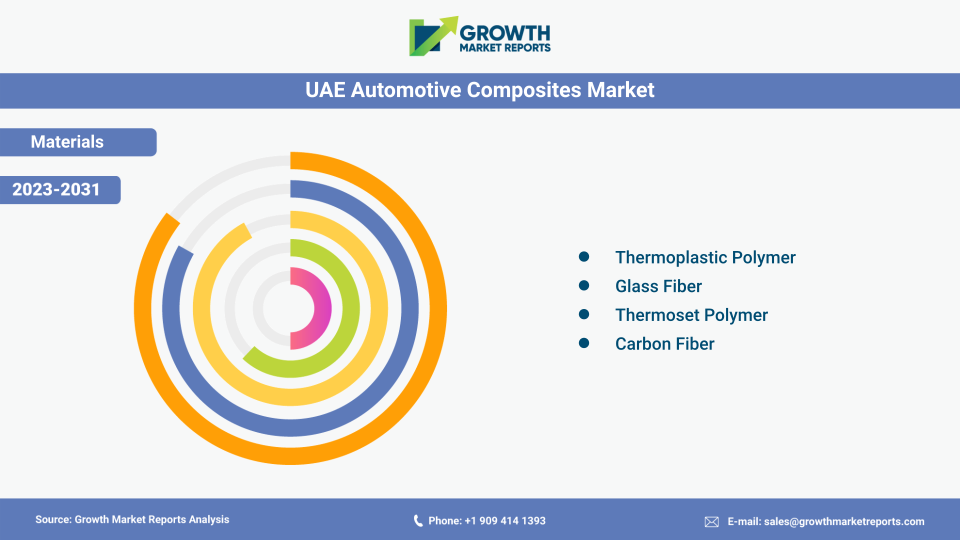
Segments - by Product Type (Glass Fiber Composites, Carbon Fiber Composites, Natural Fiber Composites, Others), by Resin Type (Thermoset Composites, Thermoplastic Composites), by Application (Exterior, Interior, Powertrain, Structural Assembly, Others), by Vehicle Type (Passenger Cars, Commercial Vehicles, Others), by Manufacturing Process (Compression Molding, Injection Molding, Resin Transfer Molding, Others)
According to our latest research, the global automotive composites market size reached a value of USD 10.8 billion in 2024. The market is experiencing robust growth, driven by increasing demand for lightweight materials in vehicle manufacturing, with a projected CAGR of 11.2% from 2025 to 2033. By the end of 2033, the automotive composites market is forecasted to reach approximately USD 27.7 billion. This remarkable expansion is primarily attributed to stringent emission regulations, advancements in composite technologies, and the automotive industry’s ongoing focus on fuel efficiency and sustainability.
One of the primary growth factors for the automotive composites market is the increasing pressure on automakers to reduce vehicle weight and improve fuel efficiency. Stringent government regulations worldwide, particularly in Europe and North America, mandate lower CO2 emissions and higher fuel economy standards. As a result, automotive manufacturers are turning to composites such as carbon fiber and glass fiber reinforced plastics to replace traditional steel and aluminum components. These materials offer high strength-to-weight ratios, enhancing vehicle performance while reducing overall weight. Additionally, the shift toward electric vehicles (EVs) further amplifies the need for lightweight materials, as reducing the weight of EVs directly impacts their range and battery efficiency.
Another significant driver is the rapid technological advancements in composite manufacturing processes. Innovations such as automated fiber placement, advanced resin systems, and rapid curing technologies have significantly reduced production costs and cycle times. This has made the use of composites more economically viable for mass-market vehicles, not just high-end sports cars or luxury vehicles. Furthermore, the automotive industry’s increasing investment in R&D to develop new composite materials with enhanced durability, recyclability, and cost-effectiveness is expected to propel market growth over the coming years. Collaborative efforts between automakers, material suppliers, and research institutions are fostering the development of next-generation automotive composites.
The growing awareness and adoption of sustainable manufacturing practices are also influencing the automotive composites market. Automakers are increasingly incorporating natural fiber composites, such as flax, hemp, and kenaf, to meet consumer and regulatory demands for eco-friendly vehicles. These bio-based materials offer comparable mechanical properties to synthetic fibers while reducing the environmental footprint of automotive production. Moreover, the recyclability and reusability of certain composite materials align with the circular economy principles gaining traction in the automotive sector. As sustainability becomes a critical differentiator, the use of green composites is expected to witness significant growth, especially in regions with stringent environmental regulations.
From a regional perspective, Asia Pacific continues to dominate the automotive composites market, supported by the presence of major automotive manufacturing hubs in China, Japan, South Korea, and India. The region’s rapid urbanization, rising disposable incomes, and increasing vehicle production rates are fueling demand for advanced materials. North America and Europe are also significant contributors, driven by technological innovation, regulatory mandates, and the presence of leading automotive OEMs. Meanwhile, emerging markets in Latin America and the Middle East & Africa are gradually adopting composite technologies, presenting new growth opportunities for market players. Overall, the global landscape for automotive composites is characterized by dynamic growth, technological evolution, and a strong focus on sustainability.
The automotive composites market is segmented by product type into Glass Fiber Composites, Carbon Fiber Composites, Natural Fiber Composites, and Others. Among these, glass fiber composites hold the largest market share, accounting for more than 55% of the global market in 2024. Glass fiber composites are favored for their excellent mechanical properties, cost-effectiveness, and versatility. They are widely used in automotive applications such as body panels, bumpers, and underbody shields. The relatively lower cost of glass fiber composites compared to carbon fiber makes them an attractive choice for high-volume production vehicles, particularly in the passenger car segment.
Carbon fiber composites, while more expensive, are gaining traction due to their superior strength-to-weight ratio, corrosion resistance, and aesthetic appeal. These materials are extensively used in high-performance vehicles, luxury cars, and increasingly in electric vehicles where weight reduction is critical for extending battery life. The adoption of carbon fiber composites is expected to grow at a CAGR of over 13% through 2033, driven by advancements in manufacturing processes that are gradually reducing costs and improving scalability. Automakers are also exploring hybrid composites that combine carbon and glass fibers to balance performance and cost.
Natural fiber composites are emerging as a sustainable alternative, particularly in interior applications. Materials such as flax, hemp, and kenaf are being utilized for door panels, dashboards, and seat backs. These bio-based composites offer comparable performance to synthetic fibers while significantly reducing the carbon footprint of automotive components. The demand for natural fiber composites is expected to rise, especially in regions with strong environmental regulations and consumer preference for eco-friendly cars. Leading automotive OEMs are collaborating with suppliers to develop innovative natural fiber solutions that meet stringent safety and performance standards.
Other composite types, including aramid fibers and hybrid composites, are finding niche applications in the automotive sector. These materials offer unique properties such as high impact resistance, thermal stability, and fire retardancy, making them suitable for specialized components in commercial vehicles and performance cars. The ongoing research and development in advanced composite materials are likely to expand the application scope of these lesser-known composites, contributing to the overall growth of the automotive composites market.
| Attributes | Details |
| Report Title | Automotive Composites Market Research Report 2033 |
| By Product Type | Glass Fiber Composites, Carbon Fiber Composites, Natural Fiber Composites, Others |
| By Resin Type | Thermoset Composites, Thermoplastic Composites |
| By Application | Exterior, Interior, Powertrain, Structural Assembly, Others |
| By Vehicle Type | Passenger Cars, Commercial Vehicles, Others |
| By Manufacturing Process | Compression Molding, Injection Molding, Resin Transfer Molding, Others |
| Regions Covered | North America, Europe, APAC, Latin America, MEA |
| Countries Covered | North America (United States, Canada), Europe (Germany, France, Italy, United Kingdom, Spain, Russia, Rest of Europe), Asia Pacific (China, Japan, South Korea, India, Australia, South East Asia (SEA), Rest of Asia Pacific), Latin America (Mexico, Brazil, Rest of Latin America), Middle East & Africa (Saudi Arabia, South Africa, United Arab Emirates, Rest of Middle East & Africa) |
| Base Year | 2024 |
| Historic Data | 2018-2023 |
| Forecast Period | 2025-2033 |
| Number of Pages | 275 |
| Number of Tables & Figures | 346 |
| Customization Available | Yes, the report can be customized as per your need. |
The automotive composites market by resin type is categorized into Thermoset Composites and Thermoplastic Composites. Thermoset composites, particularly those based on epoxy, polyester, and vinyl ester resins, dominate the market due to their superior mechanical properties, excellent heat resistance, and durability. These resins are widely used in structural and exterior automotive components, where high strength and rigidity are required. The curing process for thermoset composites provides a robust matrix that enhances the performance and longevity of automotive parts, making them ideal for high-stress applications.
Thermoplastic composites are gaining popularity in the automotive industry due to their recyclability, shorter processing times, and ease of molding into complex shapes. Polypropylene, polyamide, and polycarbonate are some of the commonly used thermoplastic resins in automotive applications. The ability to remold and recycle thermoplastic composites aligns with the automotive industry’s sustainability goals and circular economy initiatives. Additionally, thermoplastic composites offer improved impact resistance and toughness, making them suitable for interior and under-the-hood components. The market share of thermoplastic composites is expected to grow at a faster pace, with a CAGR exceeding 12% through 2033.
The choice between thermoset and thermoplastic composites often depends on the specific application requirements and production volumes. While thermosets are preferred for high-performance and structural parts, thermoplastics are increasingly being adopted for components that require high-volume, rapid manufacturing. The ongoing advancements in resin chemistry, such as the development of high-performance thermoplastic resins, are bridging the gap between the two, providing automakers with more options to optimize performance, cost, and sustainability.
Hybrid resin systems, which combine the benefits of both thermoset and thermoplastic matrices, are also being explored to achieve a balance between performance and processability. These innovative resin solutions are expected to open new avenues for the application of composites in the automotive sector. The collaboration between resin manufacturers and automotive OEMs is fostering the development of customized resin formulations that meet the evolving needs of the industry.
Automotive composites find application across various vehicle components, including Exterior, Interior, Powertrain, Structural Assembly, and Others. The exterior segment holds the largest share, accounting for over 40% of the total market in 2024. Composites are extensively used in body panels, bumpers, fenders, hoods, and spoilers due to their lightweight, corrosion resistance, and design flexibility. The use of composites in exterior applications not only reduces vehicle weight but also enhances aesthetics and aerodynamic performance, contributing to improved fuel efficiency and reduced emissions.
Interior applications of automotive composites are witnessing significant growth, driven by the demand for innovative, lightweight, and sustainable materials. Composites are used in dashboards, door panels, seat structures, and trim components, offering improved comfort, safety, and design versatility. The incorporation of natural fiber composites in interiors is gaining traction, as automakers strive to enhance the sustainability profile of their vehicles. Additionally, the use of composites in interior applications helps in noise, vibration, and harshness (NVH) reduction, further improving the overall driving experience.
The powertrain segment represents a growing application area for automotive composites. Components such as engine covers, oil pans, and transmission housings are increasingly being manufactured using advanced composites to achieve weight reduction and enhance thermal and mechanical performance. The shift toward electric and hybrid vehicles is further boosting the adoption of composites in powertrain applications, as these materials help improve battery efficiency and vehicle range by minimizing weight.
Structural assembly is another critical application area, where composites are used in chassis, cross members, and underbody structures. The high strength-to-weight ratio of composites allows for the design of lightweight yet robust structural components that meet stringent safety and crashworthiness standards. The ongoing development of high-performance composite materials and advanced manufacturing techniques is expanding the use of composites in structural assemblies, particularly in next-generation vehicles.
Other applications of automotive composites include under-the-hood components, fuel systems, and electrical enclosures. The versatility of composites in meeting diverse performance requirements is driving their adoption across a wide range of automotive applications. The continuous innovation in material science and manufacturing processes is expected to further broaden the application spectrum of automotive composites in the coming years.
The automotive composites market is segmented by vehicle type into Passenger Cars, Commercial Vehicles, and Others. Passenger cars constitute the largest segment, accounting for more than 65% of the market in 2024. The high production volumes, increasing consumer demand for fuel-efficient and lightweight vehicles, and the adoption of advanced materials by leading OEMs are driving the use of composites in passenger cars. Composites are extensively used in both exterior and interior components, as well as in structural and powertrain applications, to enhance vehicle performance and aesthetics.
Commercial vehicles, including light commercial vehicles (LCVs) and heavy-duty trucks, represent a significant and growing segment for automotive composites. The need to improve payload capacity, reduce fuel consumption, and comply with stringent emission regulations is encouraging commercial vehicle manufacturers to adopt lightweight composite materials. The use of composites in commercial vehicles is particularly prominent in body panels, chassis, and cargo enclosures, where weight reduction translates directly into operational efficiency and cost savings.
The “Others” segment includes specialty vehicles such as sports cars, electric vehicles, and off-road vehicles. These vehicles often require high-performance materials to meet specific performance, safety, and design requirements. Carbon fiber composites, in particular, are extensively used in sports and luxury vehicles to achieve exceptional strength, stiffness, and weight reduction. The rapid growth of the electric vehicle market is also driving the adoption of composites, as automakers seek to maximize battery range and overall vehicle efficiency through lightweight construction.
The adoption of composites across different vehicle types is influenced by factors such as cost, performance requirements, and regulatory standards. While passenger cars and commercial vehicles dominate the market, the increasing penetration of electric and hybrid vehicles is expected to create new opportunities for composite materials in the automotive sector. The continuous evolution of vehicle design and the integration of advanced materials are expected to drive the growth of the automotive composites market across all vehicle types.
The manufacturing process segment of the automotive composites market includes Compression Molding, Injection Molding, Resin Transfer Molding (RTM), and Others. Compression molding is the most widely used process, accounting for over 35% of the market share in 2024. This process is favored for its ability to produce high-strength, lightweight components with excellent surface finish and dimensional accuracy. Compression molding is commonly used for manufacturing large, flat, or moderately contoured parts such as hoods, deck lids, and body panels. The process is well-suited for high-volume production, making it ideal for the automotive industry.
Injection molding is another popular process, particularly for producing complex, lightweight components in large volumes. This process offers high repeatability, short cycle times, and excellent design flexibility, making it suitable for interior and under-the-hood components. The use of thermoplastic composites in injection molding is gaining traction, as it allows for the production of recyclable and cost-effective parts. The ongoing advancements in injection molding technology, such as the development of long-fiber reinforced thermoplastics, are further expanding the application scope of this process in the automotive sector.
Resin Transfer Molding (RTM) is increasingly being adopted for manufacturing high-performance composite components with intricate geometries and tight tolerances. RTM offers superior control over fiber orientation and resin distribution, resulting in parts with excellent mechanical properties and surface finish. This process is particularly suitable for producing structural and exterior components in electric and luxury vehicles, where high strength-to-weight ratios are critical. The adoption of RTM is expected to grow at a CAGR of over 12% through 2033, driven by the demand for advanced composite materials in next-generation vehicles.
Other manufacturing processes, such as filament winding, pultrusion, and autoclave molding, are used for specialized applications in the automotive industry. These processes offer unique advantages in terms of part performance, design flexibility, and production efficiency. The continuous innovation in composite manufacturing technologies is enabling automakers to produce complex, lightweight, and high-performance components at competitive costs. The integration of automation, robotics, and digital manufacturing solutions is further enhancing the efficiency and scalability of composite manufacturing processes.
The automotive composites market presents significant opportunities for growth and innovation. One of the key opportunities lies in the increasing adoption of electric and hybrid vehicles, which require lightweight materials to maximize battery efficiency and vehicle range. As automakers accelerate the transition to electrification, the demand for advanced composite materials is expected to surge. Additionally, the development of new composite materials with enhanced performance, durability, and recyclability is opening up new application areas in both conventional and electric vehicles. The growing emphasis on sustainability and the circular economy is also driving the adoption of bio-based and recyclable composites, creating new opportunities for material suppliers and manufacturers.
Another major opportunity is the expansion of composite applications in commercial vehicles and emerging markets. As regulatory standards for fuel efficiency and emissions become more stringent worldwide, commercial vehicle manufacturers are increasingly turning to composites to achieve compliance and improve operational efficiency. The rising demand for lightweight, high-performance vehicles in emerging economies such as China, India, and Brazil is expected to drive the adoption of composites in these regions. Furthermore, advancements in manufacturing technologies, such as automation and digitalization, are enabling cost-effective mass production of composite components, making them more accessible to a broader range of automotive applications.
Despite the promising growth prospects, the automotive composites market faces certain restraining factors. One of the primary challenges is the high cost of advanced composite materials, particularly carbon fiber composites, which limits their adoption in mass-market vehicles. The complexity of composite manufacturing processes and the need for specialized equipment and skilled labor also pose barriers to widespread adoption. Additionally, issues related to the recyclability and end-of-life management of certain composite materials remain a concern, particularly in regions with stringent environmental regulations. Addressing these challenges through technological innovation, cost reduction strategies, and the development of sustainable composite solutions will be critical for unlocking the full potential of the automotive composites market.
Asia Pacific leads the global automotive composites market, with a market size of USD 4.3 billion in 2024, accounting for approximately 40% of the total market. The region’s dominance is driven by the presence of major automotive manufacturing hubs in China, Japan, South Korea, and India, as well as the rapid expansion of the electric vehicle market. The increasing demand for lightweight, fuel-efficient vehicles and the adoption of advanced manufacturing technologies are fueling the growth of the automotive composites market in Asia Pacific. The region is expected to maintain its leadership position, with a projected CAGR of 12.1% through 2033.
North America is the second-largest market, with a value of USD 2.7 billion in 2024. The region’s growth is supported by stringent emission regulations, strong demand for high-performance vehicles, and the presence of leading automotive OEMs and composite material suppliers. The United States, in particular, is a key market for automotive composites, with significant investments in R&D and the adoption of advanced manufacturing processes. The increasing penetration of electric and hybrid vehicles is further boosting the demand for lightweight composite materials in North America.
Europe holds a significant share of the global automotive composites market, valued at USD 2.2 billion in 2024. The region’s growth is driven by the strong focus on sustainability, regulatory mandates for emission reduction, and the presence of leading automotive manufacturers in Germany, France, Italy, and the United Kingdom. The European automotive industry is at the forefront of adopting advanced composite materials and manufacturing technologies, particularly in electric and luxury vehicles. Latin America and the Middle East & Africa are emerging markets for automotive composites, with growing investments in automotive manufacturing and increasing awareness of the benefits of lightweight materials. These regions collectively account for the remaining USD 1.6 billion of the global market in 2024, with significant growth potential in the coming years.
The global automotive composites market is highly competitive, characterized by the presence of numerous multinational corporations, regional players, and specialized material suppliers. The competitive landscape is shaped by factors such as technological innovation, product differentiation, strategic partnerships, and mergers and acquisitions. Leading companies are investing heavily in research and development to introduce new composite materials with enhanced performance, cost-effectiveness, and sustainability. The development of proprietary manufacturing processes and the integration of digital technologies are enabling market leaders to gain a competitive edge by offering customized solutions to automotive OEMs.
Strategic collaborations between automotive manufacturers and composite material suppliers are becoming increasingly common, as both parties seek to accelerate the adoption of advanced materials in vehicle production. These partnerships facilitate the development of innovative composite solutions tailored to specific automotive applications, such as lightweight body panels, structural components, and powertrain systems. Additionally, companies are expanding their global footprint through acquisitions and the establishment of new manufacturing facilities in key automotive markets, particularly in Asia Pacific and North America.
The market is also witnessing the entry of new players, particularly startups and technology-driven companies, focused on developing next-generation composite materials and manufacturing technologies. These entrants are challenging established players by offering disruptive solutions that address the evolving needs of the automotive industry, such as improved recyclability, reduced production costs, and enhanced material properties. The increasing emphasis on sustainability and the circular economy is driving innovation in bio-based and recyclable composites, further intensifying competition in the market.
Some of the major companies operating in the automotive composites market include Toray Industries, SGL Carbon, Teijin Limited, Hexcel Corporation, Owens Corning, Mitsubishi Chemical Holdings Corporation, BASF SE, Solvay S.A., Huntsman Corporation, and Gurit Holding AG. Toray Industries is a global leader in carbon fiber composites, supplying advanced materials to leading automotive OEMs worldwide. SGL Carbon and Teijin Limited are known for their expertise in high-performance composites and their strong focus on innovation and sustainability. Hexcel Corporation and Owens Corning are prominent suppliers of glass fiber composites, with a broad portfolio of products for automotive applications. Mitsubishi Chemical Holdings, BASF SE, and Solvay S.A. are leading resin and chemical suppliers, driving advancements in composite material science. Huntsman Corporation and Gurit Holding AG are recognized for their innovative composite solutions and strong presence in key automotive markets. These companies are continuously expanding their product offerings, investing in R&D, and forming strategic alliances to strengthen their market position and capitalize on emerging growth opportunities in the global automotive composites market.
The Automotive Composites market has been segmented on the basis of
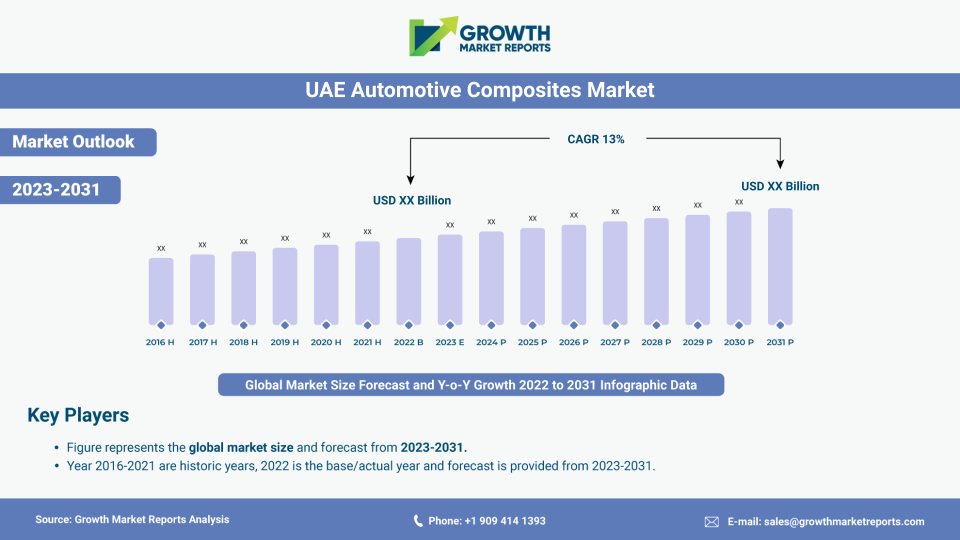
Key players competing in the UAE automotive composites market include Mitsubishi Chemical Carbon Fiber and Composites Inc.; Toho Tenex; Hexcel Corp.; Toray Industries Inc.; and SGL Carbon. Some of these players are engaged in several market strategies such as mergers, acquisitions, partnerships, collaborations, capacity expansion, and product launches to enhance their market shares.

Leading companies include Toray Industries, SGL Carbon, Teijin Limited, Hexcel Corporation, Owens Corning, Mitsubishi Chemical Holdings Corporation, BASF SE, Solvay S.A., Huntsman Corporation, and Gurit Holding AG.
Sustainability is a major focus, with increasing use of bio-based and recyclable composites such as natural fiber composites (flax, hemp, kenaf). These materials help automakers meet regulatory requirements and consumer demand for eco-friendly vehicles.
Major challenges include the high cost of advanced composites (especially carbon fiber), complexity of manufacturing processes, need for specialized equipment and labor, and concerns about recyclability and end-of-life management.
Key manufacturing processes include compression molding, injection molding, and resin transfer molding (RTM). Compression molding is the most widely used, especially for high-volume production of large components.
Asia Pacific is the largest regional market, followed by North America and Europe. Asia Pacific's dominance is driven by major automotive manufacturing hubs in China, Japan, South Korea, and India.
Composites are used in exterior components (body panels, bumpers, hoods), interior parts (dashboards, door panels, seats), powertrain components (engine covers, oil pans), structural assemblies (chassis, cross members), and other specialized parts.
Automotive composites are increasingly used in EVs to reduce vehicle weight, which directly improves battery efficiency and driving range. Carbon fiber and glass fiber composites are particularly favored for their high strength-to-weight ratios.
The most commonly used automotive composites are glass fiber composites, carbon fiber composites, and natural fiber composites. Glass fiber composites hold the largest market share due to their cost-effectiveness and versatility.
Key growth drivers include increasing demand for lightweight materials to improve fuel efficiency, stringent emission regulations, advancements in composite manufacturing technologies, and the automotive industry's focus on sustainability.
The global automotive composites market reached a value of USD 10.8 billion in 2024 and is projected to grow at a CAGR of 11.2% from 2025 to 2033, reaching approximately USD 27.7 billion by 2033.