Segments - by Product Type (Pyrotechnic Inflators, Hybrid Inflators, Stored Gas Inflators), by Airbag Type (Frontal Airbags, Side Airbags, Curtain Airbags, Knee Airbags, Others), by Vehicle Type (Passenger Cars, Light Commercial Vehicles, Heavy Commercial Vehicles), by Sales Channel (OEM, Aftermarket)
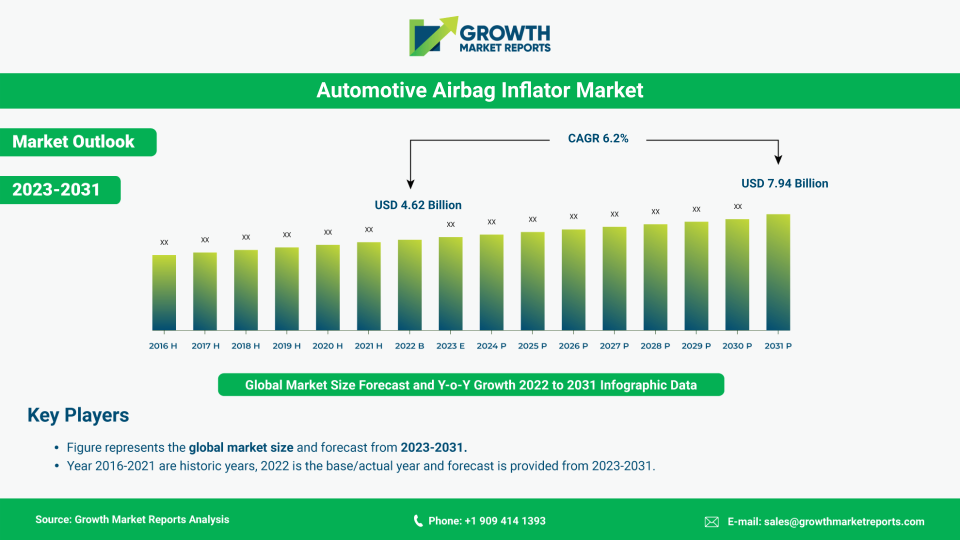
According to our latest research, the global automotive airbag inflator market size reached USD 6.2 billion in 2024, driven by stringent safety regulations and rising consumer awareness about vehicle safety. The market is expected to expand at a CAGR of 5.1% during the forecast period, with projections indicating it will achieve a value of USD 9.5 billion by 2033. This robust growth is primarily attributed to technological advancements in airbag systems, the increasing adoption of advanced safety features in vehicles, and the steady rise in global vehicle production.
A major growth factor propelling the automotive airbag inflator market is the intensification of regulatory frameworks mandating the installation of airbags and related safety components across all vehicle categories. Governments in major automotive markets, such as the United States, Europe, China, and India, have implemented stringent safety norms that require the use of multiple airbags in vehicles, including frontal, side, and curtain airbags. This regulatory landscape has compelled original equipment manufacturers (OEMs) to integrate advanced airbag inflators, thus boosting market demand. Furthermore, the growing emphasis on occupant safety and the increasing frequency of road accidents have heightened consumer awareness, making airbags an essential feature in both passenger and commercial vehicles.
Technological innovation is another critical driver shaping the automotive airbag inflator market. The evolution of inflator technologies, such as the development of hybrid and stored gas inflators, has enhanced the efficiency, reliability, and deployment speed of airbag systems. These advanced inflators offer improved performance, reduced weight, and greater compatibility with modern vehicle architectures, which often require compact and lightweight safety solutions. Additionally, the integration of electronics and sensors for smart airbag deployment has further fueled the adoption of sophisticated inflator systems. As automotive manufacturers continue to invest in research and development to enhance vehicle safety, the demand for innovative airbag inflators is expected to remain robust.
Another significant factor contributing to market growth is the increasing penetration of airbags in emerging markets, particularly in Asia Pacific and Latin America. As disposable incomes rise and consumers in these regions become more safety-conscious, there is a growing demand for vehicles equipped with advanced safety features. Moreover, the expansion of global automotive OEMs into these regions and the localization of manufacturing operations have made airbag-equipped vehicles more accessible and affordable. This trend, combined with supportive government policies and incentives for safer vehicles, is expected to further accelerate the adoption of airbag inflators in developing economies, thereby driving overall market growth.
The Airbag System has evolved significantly over the years, becoming a cornerstone of automotive safety technology. Initially designed to provide basic protection during frontal collisions, modern airbag systems now incorporate a variety of sensors and deployment mechanisms to enhance occupant safety in diverse crash scenarios. These systems are engineered to work in tandem with seat belts and other safety features, ensuring comprehensive protection for all vehicle occupants. The integration of advanced technologies, such as electronic control units and crash sensors, has enabled airbag systems to deploy with precision, minimizing the risk of injury. As automotive safety standards continue to advance, the role of airbag systems in safeguarding passengers is more critical than ever.
From a regional perspective, Asia Pacific dominates the automotive airbag inflator market, accounting for the largest share in 2024. This dominance is attributed to the regionÂ’s high vehicle production volumes, rapid urbanization, and the increasing implementation of safety regulations in countries such as China, Japan, and India. North America and Europe follow closely, supported by mature automotive industries and strong regulatory frameworks. Meanwhile, Latin America and the Middle East & Africa are witnessing steady growth, driven by rising vehicle demand and gradual improvements in road safety standards. The regional outlook remains positive, with Asia Pacific expected to maintain its leadership position throughout the forecast period.
The product type segment of the automotive airbag inflator market is primarily categorized into pyrotechnic inflators, hybrid inflators, and stored gas inflators. Pyrotechnic inflators have historically dominated the market due to their cost-effectiveness, reliability, and widespread adoption in frontal and side airbags. These inflators utilize a chemical propellant that rapidly generates gas to inflate the airbag during a collision. The simplicity of their design and their proven track record in providing effective occupant protection have made them a preferred choice for many OEMs, particularly in mass-market vehicles. However, as safety standards evolve and vehicle designs become more complex, the limitations of pyrotechnic inflators, such as their relatively slower deployment speed and higher risk of generating particulates, are becoming more apparent.
Hybrid inflators represent a significant technological advancement in the market, combining the benefits of both pyrotechnic and stored gas technologies. These inflators use a combination of pressurized gas and a small amount of propellant to achieve faster and more controlled airbag deployment. Hybrid inflators are increasingly being adopted in premium and high-performance vehicles, where rapid and precise airbag inflation is critical for occupant safety. The growing preference for hybrid inflators is also driven by their ability to reduce the overall weight of the airbag system and minimize the risk of chemical residue, which can be a concern in traditional pyrotechnic designs. As OEMs continue to prioritize advanced safety systems, the market share of hybrid inflators is expected to rise steadily during the forecast period.
Stored gas inflators, while currently occupying a smaller share of the market, are gaining traction due to their clean operation and consistent performance across a wide range of temperatures. These inflators rely solely on compressed gas to inflate the airbag, eliminating the need for chemical propellants. This makes them particularly attractive for applications where environmental concerns and reliability are paramount, such as in electric and hybrid vehicles. The adoption of stored gas inflators is further supported by regulatory pressures to reduce emissions and enhance vehicle sustainability. Although their higher cost has limited widespread adoption, ongoing advancements in manufacturing processes and economies of scale are expected to make stored gas inflators more competitive in the coming years.
The competitive dynamics within the product type segment are influenced by continuous research and development efforts aimed at improving inflator performance, safety, and cost efficiency. Leading manufacturers are investing in the development of next-generation inflators that offer enhanced deployment characteristics, reduced weight, and greater compatibility with advanced airbag systems. The integration of smart sensors and electronic controls is also enabling more precise and adaptive airbag deployment, further driving innovation in this segment. As the automotive industry transitions towards electric and autonomous vehicles, the demand for versatile and high-performance inflator technologies is expected to grow, creating new opportunities for market participants.
| Attributes | Details |
| Report Title | Automotive Airbag Inflator Market Research Report 2033 |
| By Product Type | Pyrotechnic Inflators, Hybrid Inflators, Stored Gas Inflators |
| By Airbag Type | Frontal Airbags, Side Airbags, Curtain Airbags, Knee Airbags, Others |
| By Vehicle Type | Passenger Cars, Light Commercial Vehicles, Heavy Commercial Vehicles |
| By Sales Channel | OEM, Aftermarket |
| Regions Covered | North America, Europe, APAC, Latin America, MEA |
| Base Year | 2024 |
| Historic Data | 2018-2023 |
| Forecast Period | 2025-2033 |
| Number of Pages | 255 |
| Number of Tables & Figures | 371 |
| Customization Available | Yes, the report can be customized as per your need. |
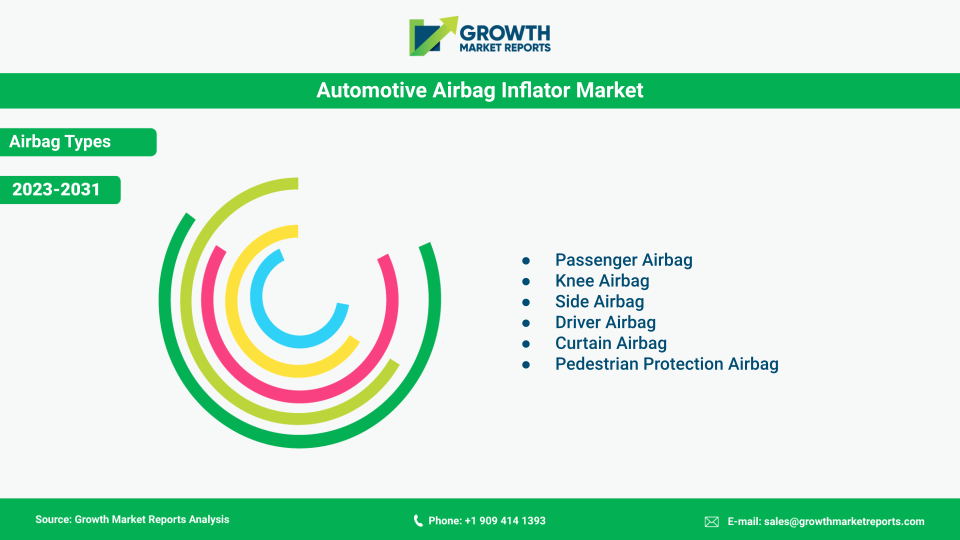
The airbag type segment encompasses frontal airbags, side airbags, curtain airbags, knee airbags, and others, each serving a distinct safety function within the vehicle. Frontal airbags have been a standard safety feature in most vehicles for decades, primarily designed to protect the driver and front passenger during head-on collisions. The widespread adoption of frontal airbags is driven by regulatory mandates in major automotive markets, as well as their proven effectiveness in reducing fatalities and serious injuries. As a result, frontal airbags continue to account for the largest share of the airbag inflator market, with OEMs focusing on enhancing their deployment speed and reliability through advanced inflator technologies.
Side airbags have gained significant traction in recent years, as vehicle manufacturers strive to provide comprehensive occupant protection in the event of side-impact collisions. These airbags are typically installed in the doors or seats and are designed to protect the torso and pelvis of occupants. The increasing prevalence of side airbags is a response to the rising incidence of side-impact accidents and the growing emphasis on achieving higher safety ratings from organizations such as the National Highway Traffic Safety Administration (NHTSA) and Euro NCAP. As automakers integrate more side airbags into their vehicle models, the demand for specialized inflators capable of rapid and controlled deployment has surged.
Curtain airbags represent another critical segment, offering head protection for occupants in both front and rear seats during side-impact or rollover accidents. These airbags deploy from the roof lining and cover the windows, providing a protective barrier that reduces the risk of head injuries. The adoption of curtain airbags has been driven by advancements in vehicle crashworthiness standards and the increasing focus on preventing ejection during rollovers. As consumers become more aware of the benefits of comprehensive side protection, the market for curtain airbag inflators is expected to experience robust growth, particularly in SUVs and larger vehicles where rollover risks are higher.
Smart Airbag Systems represent the next frontier in automotive safety, offering enhanced protection through the use of intelligent technology. These systems are equipped with advanced sensors and algorithms that can detect the severity of a collision and adjust the airbag deployment accordingly. By tailoring the response to the specific circumstances of an accident, smart airbags provide optimal protection for occupants of different sizes and positions. Additionally, these systems can communicate with other vehicle safety features, such as seatbelt pretensioners and electronic stability control, to create a cohesive safety network. As consumer demand for intelligent safety solutions grows, smart airbag systems are poised to become a standard feature in modern vehicles, further elevating the level of passenger safety.
Knee airbags and other specialized airbags, such as pedestrian airbags and rear-seat airbags, are emerging as important safety features in modern vehicles. Knee airbags are designed to reduce lower limb injuries by cushioning the impact between the occupant's knees and the dashboard. The adoption of these airbags is being fueled by the pursuit of higher safety ratings and the desire to offer enhanced occupant protection in premium and luxury vehicles. Meanwhile, the development of pedestrian airbags and rear-seat airbags reflects the automotive industryÂ’s commitment to expanding safety coverage to all vehicle occupants and vulnerable road users. As these technologies mature and become more cost-effective, their integration into mainstream vehicles is expected to drive additional demand for advanced airbag inflators.
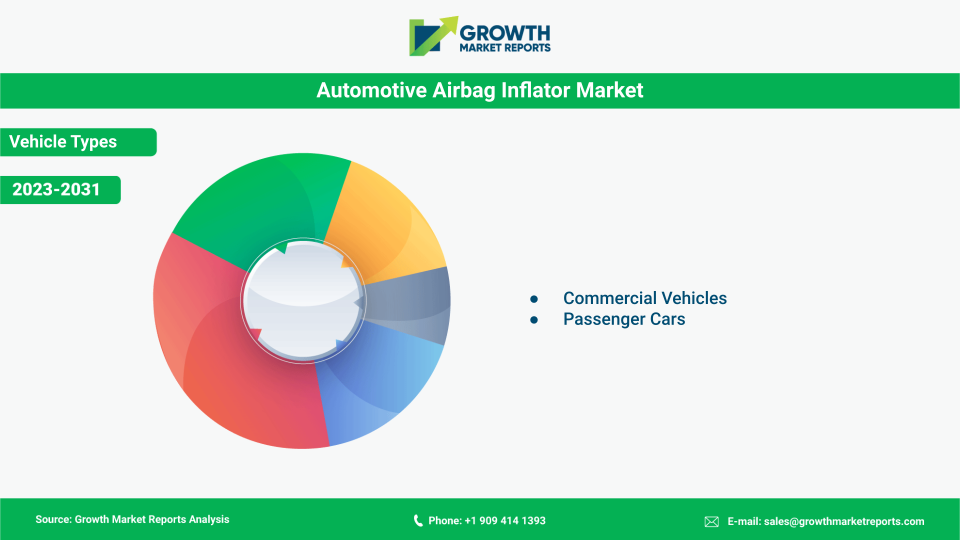
The vehicle type segment of the automotive airbag inflator market is divided into passenger cars, light commercial vehicles (LCVs), and heavy commercial vehicles (HCVs). Passenger cars represent the largest segment, accounting for the majority of airbag inflator installations globally. This dominance is attributed to the high production volumes of passenger cars, coupled with stringent safety regulations that mandate the inclusion of multiple airbags in new vehicles. The growing consumer preference for enhanced safety features, even in entry-level and mid-range models, has further accelerated the adoption of advanced airbag inflators in the passenger car segment. Additionally, the trend towards electrification and the integration of autonomous driving technologies are prompting OEMs to invest in next-generation airbag systems, creating new opportunities for inflator manufacturers.
Light commercial vehicles, including vans and pickup trucks, constitute a significant share of the airbag inflator market, particularly in regions with high demand for utility and fleet vehicles. The increasing use of LCVs for urban logistics, e-commerce, and last-mile delivery services has heightened the need for occupant safety, driving the adoption of advanced airbag systems in this segment. Regulatory agencies are also extending safety mandates to commercial vehicles, requiring the installation of frontal and side airbags to protect drivers and passengers. As fleet operators prioritize vehicle safety to minimize liability and enhance driver retention, the demand for reliable and cost-effective airbag inflators in the LCV segment is expected to grow steadily.
Heavy commercial vehicles, such as trucks and buses, represent a smaller but rapidly growing segment of the automotive airbag inflator market. Historically, the adoption of airbags in HCVs has lagged behind that of passenger cars and LCVs, primarily due to cost considerations and the unique design challenges associated with larger vehicles. However, rising concerns about road safety, particularly in developing regions, and the increasing frequency of high-impact collisions involving commercial vehicles are prompting regulatory bodies to introduce stricter safety requirements. As a result, OEMs are beginning to integrate advanced airbag systems, including side and curtain airbags, into their HCV offerings, driving incremental demand for specialized inflators.
The vehicle type segment is also influenced by broader industry trends, such as the shift towards shared mobility, the rise of connected and autonomous vehicles, and the growing emphasis on sustainability. As ride-hailing and car-sharing services gain popularity, there is a heightened focus on ensuring the safety of diverse occupant profiles, including children and elderly passengers. This is leading to the development of adaptive airbag systems that can adjust deployment parameters based on occupant characteristics. Moreover, the transition to electric and hybrid vehicles is creating new requirements for lightweight and energy-efficient inflator technologies. Manufacturers that can address these evolving needs are well-positioned to capture market share across all vehicle segments.
The sales channel segment of the automotive airbag inflator market is bifurcated into OEM (original equipment manufacturer) and aftermarket. The OEM segment commands the largest share of the market, driven by the direct integration of airbag inflators into new vehicles during the manufacturing process. OEMs work closely with inflator suppliers to ensure that airbag systems meet stringent safety standards and regulatory requirements. The increasing complexity of airbag systems and the need for precise integration with vehicle electronics have reinforced the dominance of the OEM channel. Furthermore, the trend towards platform modularization and the use of standardized components across vehicle models have enabled OEMs to achieve economies of scale, further boosting demand for airbag inflators through this channel.
The aftermarket segment, while smaller in comparison, plays a vital role in the replacement and maintenance of airbag inflators, particularly in regions with a large vehicle parc and a high incidence of road accidents. Aftermarket demand is primarily driven by the need to replace deployed or defective airbags, as well as by regulatory recalls and safety campaigns initiated by automotive manufacturers. The growing awareness of the importance of maintaining functional airbag systems has led to increased consumer willingness to invest in high-quality replacement inflators. Additionally, the proliferation of online sales channels and the expansion of independent repair shops have made it easier for consumers to access aftermarket airbag inflators.
The dynamics of the sales channel segment are shaped by several factors, including regulatory oversight, product certification requirements, and the complexity of airbag system installation. OEMs typically have more stringent quality control processes and work closely with inflator suppliers to ensure product reliability and compliance with safety standards. In contrast, the aftermarket segment faces challenges related to product authenticity, compatibility, and installation expertise. To address these concerns, leading inflator manufacturers are investing in brand protection initiatives, such as unique product identifiers and tamper-evident packaging, to enhance consumer confidence in aftermarket products.
Looking ahead, the aftermarket segment is expected to witness moderate growth, supported by the increasing average age of vehicles on the road and the rising frequency of airbag recalls. As vehicles become more technologically advanced, the complexity of airbag systems is likely to increase, making it more challenging for independent repair shops to perform replacements. This may lead to greater consolidation in the aftermarket segment, with specialized service providers and authorized dealers playing a more prominent role. Overall, the OEM channel will continue to dominate the market, but the aftermarket will remain an important avenue for inflator manufacturers seeking to capture replacement demand.
The automotive airbag inflator market is poised for significant opportunities over the coming years, driven by the increasing adoption of advanced airbag systems and the expansion of safety regulations in emerging economies. As governments worldwide continue to prioritize road safety, there is a growing trend towards mandating the inclusion of multiple airbags in all new vehicles, including side, curtain, and knee airbags. This regulatory push is creating substantial opportunities for inflator manufacturers to expand their product portfolios and cater to the evolving needs of OEMs. Additionally, the rise of electric and autonomous vehicles is generating demand for lightweight, energy-efficient, and smart inflator technologies that can seamlessly integrate with advanced vehicle architectures. Manufacturers that can innovate and adapt to these emerging trends are well-positioned to capture a larger share of the market.
Another key opportunity lies in the growing focus on occupant protection and the development of adaptive airbag systems capable of tailoring deployment parameters based on occupant size, position, and crash severity. The integration of advanced sensors and artificial intelligence into airbag systems is enabling more precise and effective protection, particularly for vulnerable occupants such as children and the elderly. This trend is expected to drive demand for next-generation inflators that offer greater flexibility and compatibility with smart safety systems. Furthermore, the increasing emphasis on vehicle sustainability and the reduction of hazardous materials is prompting manufacturers to develop environmentally friendly inflator technologies, such as those based on compressed air or non-toxic propellants. These innovations not only enhance product safety but also align with the broader industry shift towards green mobility.
Despite these opportunities, the automotive airbag inflator market faces several threats and challenges that could restrain growth. One of the primary restrainers is the high cost associated with the development and integration of advanced inflator technologies, particularly for OEMs operating in price-sensitive markets. The need to balance safety, performance, and affordability can create significant pressure on profit margins, especially as regulatory requirements continue to evolve. Additionally, the market is susceptible to supply chain disruptions, as seen during the COVID-19 pandemic, which can impact the availability of critical components and delay vehicle production. Quality control issues and product recalls, such as those related to defective inflators, can also damage brand reputation and result in substantial financial liabilities for manufacturers. Addressing these challenges will require sustained investment in research and development, robust supply chain management, and a proactive approach to quality assurance.
The Asia Pacific region is the largest and fastest-growing market for automotive airbag inflators, accounting for approximately 42% of the global market share in 2024. This dominance is underpinned by the regionÂ’s high vehicle production volumes, particularly in countries such as China, Japan, South Korea, and India. The rapid urbanization, rising disposable incomes, and increasing consumer awareness of vehicle safety have contributed to the widespread adoption of advanced airbag systems in both passenger and commercial vehicles. Furthermore, the implementation of stringent safety regulations and the expansion of global OEM manufacturing operations in the region are expected to sustain strong growth, with Asia Pacific projected to achieve a CAGR of 6.2% through 2033.
North America remains a mature and highly regulated market for automotive airbag inflators, holding a market share of around 27% in 2024. The regionÂ’s robust automotive industry, coupled with a strong emphasis on occupant safety and compliance with federal safety standards, has driven the widespread adoption of advanced airbag technologies. The presence of leading airbag inflator manufacturers and a well-established supply chain ecosystem further support market growth in North America. While vehicle production growth is relatively stable, the increasing integration of additional airbags and the shift towards electric and autonomous vehicles are expected to create incremental demand for high-performance inflators in the coming years.
Europe accounts for approximately 22% of the global market, characterized by a strong focus on vehicle safety, sustainability, and innovation. The regionÂ’s stringent safety regulations and high consumer expectations have led to the widespread adoption of multi-airbag systems, including side, curtain, and knee airbags. European OEMs are at the forefront of developing advanced airbag technologies, often collaborating with inflator suppliers to create integrated safety solutions. The growing popularity of electric vehicles and the increasing emphasis on green mobility are also influencing the development of environmentally friendly inflator technologies in the region. Meanwhile, Latin America and the Middle East & Africa collectively represent around 9% of the global market, with growth driven by rising vehicle demand, gradual improvements in safety standards, and the localization of manufacturing operations. While these regions are still in the early stages of adopting advanced airbag systems, they offer significant long-term growth potential as regulatory frameworks and consumer awareness continue to evolve.
The competitive landscape of the automotive airbag inflator market is characterized by the presence of several global and regional players, each striving to enhance their market position through product innovation, strategic partnerships, and expansion into emerging markets. Leading manufacturers are heavily investing in research and development to develop next-generation inflator technologies that offer improved performance, reliability, and compatibility with advanced airbag systems. The focus on lightweight materials, reduced chemical usage, and smart deployment mechanisms is driving innovation across the industry. Additionally, companies are leveraging digitalization and advanced manufacturing techniques to enhance production efficiency, reduce costs, and improve product quality.
Strategic collaborations and joint ventures between OEMs and inflator suppliers are increasingly common, as automotive manufacturers seek to integrate cutting-edge safety technologies into their vehicles. These partnerships enable the sharing of technical expertise, the co-development of customized solutions, and the acceleration of time-to-market for new products. Furthermore, mergers and acquisitions are being pursued as a means to expand product portfolios, gain access to new markets, and strengthen supply chain capabilities. The competitive dynamics are also influenced by the entry of new players, particularly from Asia, who are leveraging cost advantages and local market knowledge to capture share in price-sensitive regions.
The market is highly sensitive to quality and reliability, as defective inflators can lead to costly recalls, legal liabilities, and reputational damage. As a result, leading manufacturers prioritize stringent quality control processes, robust testing protocols, and compliance with international safety standards. Companies are also investing in advanced data analytics and artificial intelligence to monitor product performance in real time and proactively address potential issues. The increasing complexity of airbag systems and the integration of electronic components are creating new challenges related to system compatibility, cybersecurity, and regulatory compliance, further raising the bar for market participants.
Major companies operating in the global automotive airbag inflator market include Autoliv Inc., ZF Friedrichshafen AG, Joyson Safety Systems, Daicel Corporation, TRW Automotive Holdings Corp. (now part of ZF), and Key Safety Systems (now Joyson Safety Systems). Autoliv Inc. is a global leader in automotive safety systems, offering a comprehensive range of airbag inflators and related components. The company is known for its focus on innovation, quality, and global reach, serving major OEMs worldwide. ZF Friedrichshafen AG, through its acquisition of TRW Automotive, has established itself as a key player in the airbag inflator market, leveraging advanced engineering capabilities and a strong presence in Europe and North America. Joyson Safety Systems, formed through the merger of Key Safety Systems and Takata Corporation, is another major player, with a broad product portfolio and a focus on expanding its footprint in Asia and emerging markets.
Daicel Corporation is recognized for its expertise in chemical engineering and the development of high-performance inflator technologies, particularly hybrid and stored gas inflators. The companyÂ’s commitment to sustainability and environmental responsibility is reflected in its efforts to develop eco-friendly inflator solutions. Other notable players include Toyoda Gosei Co., Ltd., ARC Automotive, Inc., and Nippon Kayaku Co., Ltd., each of which brings unique strengths in product innovation, regional market knowledge, and customer relationships. These companies are actively pursuing growth opportunities through the development of next-generation inflator technologies, strategic partnerships with automotive OEMs, and the expansion of manufacturing capabilities in key markets.
Overall, the automotive airbag inflator market is expected to remain highly competitive, with success determined by the ability to innovate, maintain high quality standards, and adapt to evolving regulatory and technological requirements. As the industry continues to evolve, companies that can offer differentiated products, leverage advanced manufacturing technologies, and build strong partnerships with OEMs will be best positioned to capture growth opportunities and sustain long-term success in this dynamic market.
The Automotive Airbag Inflator market has been segmented on the basis of
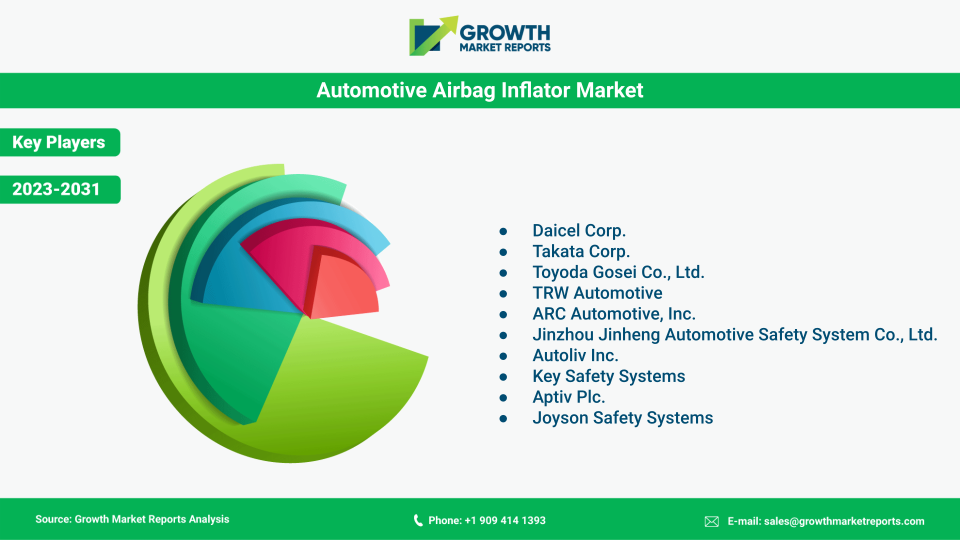
Key players competing in the global automotive airbag inflator market include Daicel Corp.; Takata Corp.; Toyoda Gosei Co., Ltd.; TRW Automotive; ARC Automotive, Inc.; Jinzhou Jinheng Automotive Safety System Co., Ltd.; Autoliv Inc.; Key Safety Systems; Aptiv Plc.; Joyson Safety Systems; Ashimori Industry Co., Ltd.; and ZF Friedrichshafen AG.
Some of these players are engaged in several market strategies such as mergers, acquisitions, partnerships, collaborations, capacity expansion, and product launches to enhance their market shares
Technological advancements such as hybrid and stored gas inflators, integration of smart sensors, and development of lightweight, eco-friendly solutions are driving innovation and shaping the future of the market.
Major companies include Autoliv Inc., ZF Friedrichshafen AG, Joyson Safety Systems, Daicel Corporation, Toyoda Gosei Co., Ltd., ARC Automotive, Inc., and others.
Opportunities include expanding safety regulations, demand for advanced and adaptive airbag systems, and growth in emerging markets. Challenges include high development costs, supply chain disruptions, and risks of product recalls.
OEMs integrate airbag inflators directly into new vehicles, dominating the market. The aftermarket segment focuses on replacement and maintenance, driven by recalls and the need to replace deployed or defective inflators.
The market is segmented into passenger cars, light commercial vehicles (LCVs), and heavy commercial vehicles (HCVs), with passenger cars accounting for the largest share.
The report covers frontal airbags, side airbags, curtain airbags, knee airbags, and other specialized airbags such as pedestrian and rear-seat airbags.
The main types are pyrotechnic inflators, hybrid inflators, and stored gas inflators. Pyrotechnic inflators are widely used, while hybrid and stored gas inflators are gaining popularity due to their advanced features and environmental benefits.
Asia Pacific leads the market due to high vehicle production, rapid urbanization, and stringent safety regulations. North America and Europe also hold significant shares, while Latin America and the Middle East & Africa are experiencing steady growth.
Key growth drivers include stringent safety regulations, rising consumer awareness about vehicle safety, technological advancements in airbag systems, and increasing global vehicle production.
The global automotive airbag inflator market reached USD 6.2 billion in 2024 and is expected to grow at a CAGR of 5.1%, reaching USD 9.5 billion by 2033.