Segments - by Service Type (Repair & Maintenance, Body Repair, Parts Replacement, Diagnostic Services, Others), by Vehicle Type (Passenger Cars, Commercial Vehicles, Electric Vehicles, Others), by Service Provider (OEM Authorized, Multi-brand Authorized), by End User (Individual, Fleet Operators, Corporate), by Distribution Channel (Online Booking, Offline Booking)
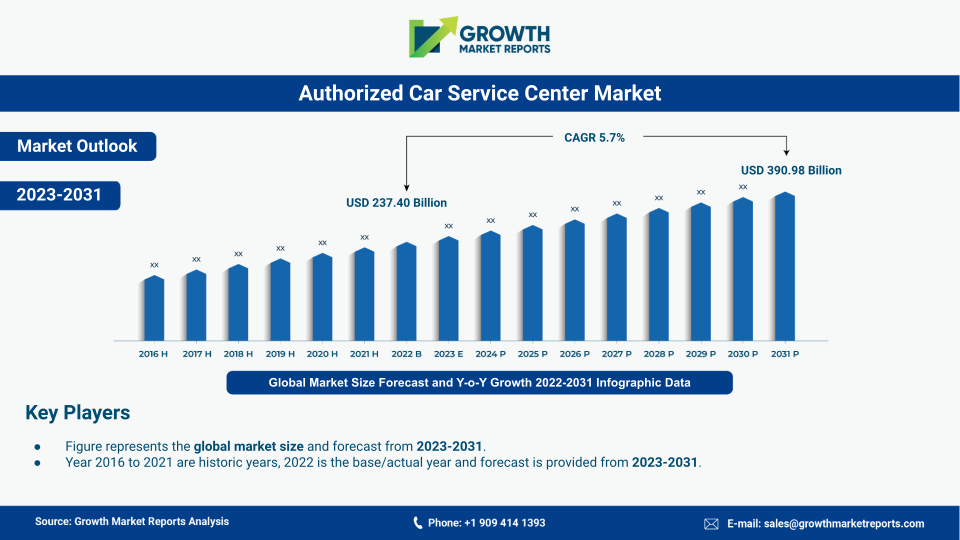
According to our latest research, the global authorized car service center market size reached USD 246.5 billion in 2024, demonstrating a robust momentum driven by the rising demand for quality automotive maintenance and repair. The market is currently expanding at a CAGR of 6.2% and is projected to attain a value of USD 421.8 billion by 2033. This impressive growth trajectory is being fueled by the increasing complexity of modern vehicles, stringent regulatory standards, and a rising consumer preference for reliable, warranty-backed services offered by authorized providers. As per our comprehensive analysis, the sector is witnessing sustained advancements in service technology, digital integration, and customer engagement strategies, collectively propelling the global authorized car service center market forward.
One of the primary growth factors underpinning the expansion of the authorized car service center market is the rapid technological evolution within the automotive sector. Modern vehicles are increasingly equipped with advanced electronics, sophisticated safety features, and complex powertrains, especially in electric and hybrid models. This technological complexity necessitates specialized diagnostic equipment and highly trained technicians, both of which are more readily available at authorized service centers. As automakers continue to roll out vehicles with cutting-edge features, consumers are becoming more reliant on authorized centers for maintenance and repairs to ensure compliance with warranty requirements and manufacturer specifications. Additionally, the integration of telematics and connected car technologies allows authorized centers to offer predictive maintenance and real-time diagnostics, further enhancing their value proposition and driving market growth.
Another significant growth driver for the authorized car service center market is the increasing emphasis on vehicle safety and regulatory compliance. Governments across major automotive markets such as North America, Europe, and Asia Pacific are implementing stricter emission norms, safety standards, and periodic inspection mandates. Authorized service centers are typically better equipped to comply with these regulations, providing consumers with peace of mind regarding the legality and safety of their vehicles. Moreover, automakers are increasingly tying warranty coverage and recall services to authorized centers, incentivizing customers to opt for these facilities over independent garages. The growing prevalence of extended warranties, service contracts, and value-added services is further bolstering customer loyalty and retention within authorized networks.
The evolving consumer landscape is also playing a pivotal role in shaping the authorized car service center market. Urbanization, rising disposable incomes, and changing mobility preferences are leading to an expansion in both individual car ownership and fleet operations. As consumers become more discerning and digitally savvy, they are prioritizing convenience, transparency, and personalized service experiences. Authorized service centers are responding by investing in digital platforms for online booking, real-time service updates, and seamless payment options. The rise of electric vehicles (EVs) is also opening new avenues for growth, as specialized maintenance and battery management services become increasingly important. Collectively, these factors are fostering a competitive, innovation-driven market environment.
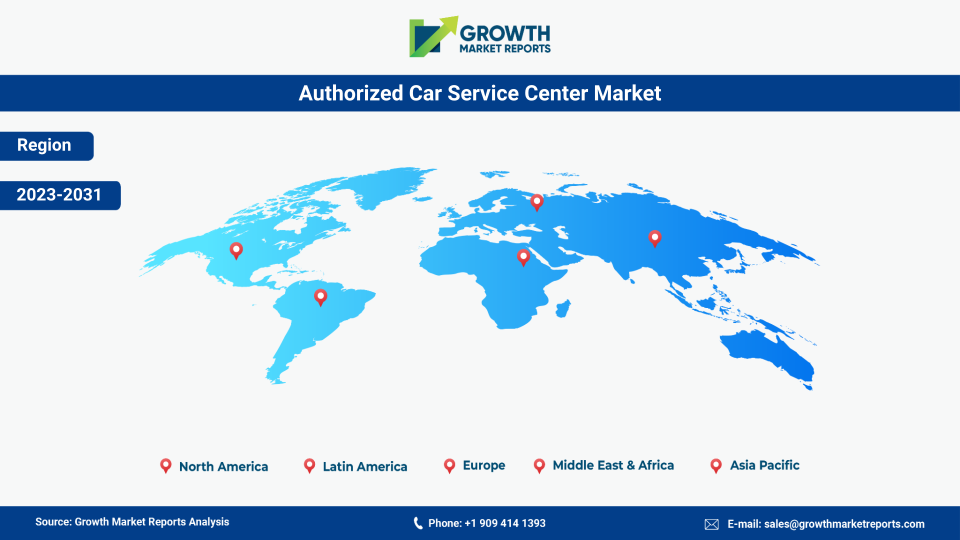
From a regional perspective, Asia Pacific continues to dominate the global authorized car service center market, accounting for the largest share in 2024, followed by North America and Europe. The region's growth is underpinned by a rapidly expanding automotive fleet, increasing urbanization, and rising consumer expectations for quality service. North America and Europe are characterized by mature automotive markets, high vehicle penetration, and a strong focus on technological innovation and regulatory compliance. Meanwhile, emerging markets in Latin America and the Middle East & Africa are witnessing steady growth, supported by infrastructure development and growing investments in automotive aftersales services. This diverse regional landscape underscores the global nature of the authorized car service center market and its resilience across economic cycles.
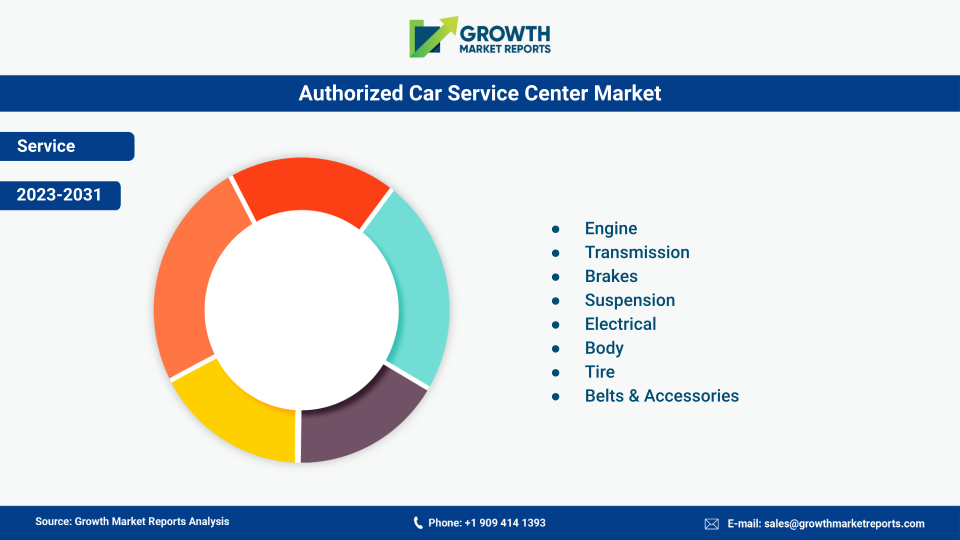
The service type segment of the authorized car service center market is multifaceted, encompassing repair & maintenance, body repair, parts replacement, diagnostic services, and other specialized offerings. Repair & maintenance services constitute the backbone of the market, as regular upkeep is essential for vehicle longevity and optimal performance. These services include oil changes, brake inspections, tire rotations, and engine tune-ups, which are typically mandated by automakers to maintain warranty validity. The growing adoption of preventive maintenance programs and the increasing complexity of vehicle components are driving demand for professional repair and maintenance services at authorized centers. Furthermore, advancements in service technology, such as computerized maintenance management systems, are enabling centers to deliver faster, more accurate, and customer-centric solutions.
Body repair services represent another crucial segment, driven by rising incidences of road accidents, minor collisions, and cosmetic damages. Authorized service centers are preferred for body repairs due to their access to genuine parts, manufacturer-approved repair techniques, and skilled technicians capable of restoring vehicles to factory standards. The proliferation of advanced driver-assistance systems (ADAS) and lightweight materials in modern vehicles has further elevated the importance of specialized body repair services. These centers are increasingly investing in state-of-the-art equipment, such as laser measuring systems and paint booths, to cater to evolving customer needs and regulatory requirements. The emphasis on quality assurance and insurance partnerships is also bolstering the growth of the body repair segment within the authorized car service center market.
Parts replacement services are gaining traction as vehicles age and require periodic replacement of critical components such as batteries, filters, belts, and brake pads. Authorized centers have a distinct advantage in this segment, as they offer OEM-approved parts that ensure compatibility, safety, and performance. This is particularly important for electric and hybrid vehicles, where battery replacement and management require specialized expertise. The increasing prevalence of counterfeit and substandard parts in the aftermarket is prompting consumers to opt for authorized centers, where authenticity and reliability are guaranteed. Additionally, automakers are launching loyalty programs and bundled service packages to incentivize customers to choose authorized parts replacement services, thereby driving segment growth.
Diagnostic services are becoming increasingly vital in the context of modern, digitally connected vehicles. Authorized service centers leverage advanced diagnostic tools and software to identify and resolve complex issues related to engine performance, emissions, electronics, and safety systems. These capabilities are critical for ensuring compliance with stringent emission norms and safety standards, particularly in regions with rigorous regulatory frameworks. The integration of telematics and remote diagnostics is enabling proactive identification of potential issues, reducing downtime and enhancing customer satisfaction. As vehicles become more reliant on software and electronic systems, the demand for specialized diagnostic services at authorized centers is expected to surge, further contributing to the overall growth of the market.
The "others" category within the service type segment includes value-added offerings such as detailing, customization, and accessory installation. These services cater to the growing demand for personalized vehicle experiences and aesthetic enhancements. Authorized centers are increasingly expanding their service portfolios to include eco-friendly detailing, ceramic coating, and advanced infotainment system installations. By diversifying their offerings, authorized service centers are not only attracting a broader customer base but also enhancing revenue streams and customer loyalty. The focus on holistic, end-to-end automotive care is positioning authorized centers as comprehensive mobility solutions providers in a competitive market landscape.
| Attributes | Details |
| Report Title | Authorized Car Service Center Market Research Report 2033 |
| By Service Type | Repair & Maintenance, Body Repair, Parts Replacement, Diagnostic Services, Others |
| By Vehicle Type | Passenger Cars, Commercial Vehicles, Electric Vehicles, Others |
| By Service Provider | OEM Authorized, Multi-brand Authorized |
| By End User | Individual, Fleet Operators, Corporate |
| By Distribution Channel | Online Booking, Offline Booking |
| Regions Covered | North America, Europe, APAC, Latin America, MEA |
| Base Year | 2024 |
| Historic Data | 2018-2023 |
| Forecast Period | 2025-2033 |
| Number of Pages | 273 |
| Number of Tables & Figures | 346 |
| Customization Available | Yes, the report can be customized as per your need. |
The vehicle type segment within the authorized car service center market is broadly categorized into passenger cars, commercial vehicles, electric vehicles, and others. Passenger cars remain the dominant segment, accounting for the largest share of service center visits globally. The proliferation of compact cars, sedans, and SUVs, coupled with rising consumer expectations for convenience and reliability, is driving sustained demand for authorized maintenance and repair services. Automakers are increasingly offering extended warranty packages and free service intervals to attract and retain customers, further reinforcing the importance of authorized centers in the passenger car segment. Additionally, the growing trend of personal vehicle ownership in emerging economies is expected to bolster segment growth in the coming years.
Commercial vehicles, including trucks, vans, and buses, represent a significant and rapidly expanding segment within the authorized car service center market. Fleet operators and logistics companies prioritize authorized service centers for their ability to deliver consistent, high-quality maintenance and minimize vehicle downtime. The increasing adoption of telematics and fleet management solutions is enabling proactive maintenance scheduling, reducing the risk of breakdowns and enhancing operational efficiency. Regulatory mandates for periodic inspections and emissions compliance are also driving demand for authorized services in the commercial vehicle segment. As e-commerce and last-mile delivery services continue to grow, the need for reliable, warranty-backed maintenance solutions for commercial fleets is expected to rise substantially.
Electric vehicles (EVs) are emerging as a key growth driver for the authorized car service center market, reflecting the global shift towards sustainable mobility. EVs require specialized maintenance, including battery diagnostics, thermal management, and software updates, which are best handled by manufacturer-authorized centers. The increasing penetration of EVs in major markets such as China, Europe, and North America is prompting automakers to expand their authorized service networks and invest in technician training and infrastructure upgrades. Additionally, government incentives and regulatory support for EV adoption are accelerating the need for dedicated service solutions. As the EV market matures, authorized centers are expected to play a pivotal role in ensuring the safety, reliability, and longevity of electric vehicles.
The "others" category within the vehicle type segment encompasses specialty vehicles, luxury cars, and alternative fuel vehicles such as hybrids and hydrogen-powered models. These vehicles often require unique maintenance protocols, advanced diagnostics, and access to proprietary parts, making authorized service centers the preferred choice for owners. Luxury car manufacturers, in particular, emphasize the importance of brand-certified service experiences, offering personalized maintenance programs and concierge services. The growing popularity of alternative fuel vehicles and niche mobility solutions is expected to create new opportunities for authorized centers, as consumers seek assurance of quality and expertise in servicing these advanced vehicles.
Overall, the vehicle type segment analysis highlights the diverse and evolving landscape of the authorized car service center market. The rising complexity of vehicle technologies, coupled with shifting consumer preferences and regulatory requirements, is driving demand for specialized, high-quality maintenance solutions across all vehicle categories. Authorized centers are well-positioned to capitalize on these trends by leveraging their expertise, infrastructure, and brand reputation to deliver superior service experiences.
The service provider segment of the authorized car service center market is primarily divided into OEM authorized centers and multi-brand authorized centers. OEM authorized service centers, operated directly or in partnership with vehicle manufacturers, are widely recognized for their adherence to stringent quality standards, use of genuine parts, and access to proprietary diagnostic tools. These centers are integral to automakers' aftersales strategies, ensuring that vehicles are maintained in accordance with manufacturer guidelines and warranty requirements. The growing complexity of automotive technologies and the increasing importance of software updates and recalls are reinforcing the value of OEM authorized centers. Automakers are also leveraging these centers to deliver brand-specific service experiences, loyalty programs, and customer engagement initiatives, further strengthening their market position.
Multi-brand authorized service centers, on the other hand, cater to a diverse range of vehicle makes and models, offering consumers greater convenience and flexibility. These centers are typically operated by large automotive service chains or third-party providers, often under franchise agreements with multiple OEMs. The multi-brand model is gaining traction in urban areas and emerging markets, where consumers seek one-stop solutions for mixed vehicle fleets. These centers invest heavily in technician training, diagnostic equipment, and inventory management systems to ensure compatibility with various brands. The ability to offer competitive pricing, faster turnaround times, and a wide range of services is positioning multi-brand authorized centers as formidable competitors in the market.
The competitive dynamics between OEM authorized and multi-brand authorized service providers are shaping the evolution of the authorized car service center market. While OEM centers benefit from strong brand associations and exclusive access to technical information, multi-brand centers excel in operational efficiency and customer convenience. Both segments are increasingly adopting digital platforms for appointment scheduling, service tracking, and customer feedback, enhancing transparency and engagement. The growing trend of strategic partnerships between automakers and independent service providers is further blurring the lines between the two models, enabling broader service coverage and improved customer access.
The rise of electric and connected vehicles is creating new challenges and opportunities for both OEM and multi-brand authorized service providers. Specialized training, investment in advanced diagnostic tools, and compliance with evolving regulatory standards are becoming critical success factors. OEM centers are leveraging their technical expertise to offer value-added services such as over-the-air software updates and remote diagnostics, while multi-brand centers are expanding their capabilities to include EV maintenance and battery management. The ability to adapt to changing market dynamics and customer expectations will be key to sustaining growth and competitiveness in the service provider segment.
In summary, the service provider segment analysis underscores the importance of quality, innovation, and customer-centricity in the authorized car service center market. Whether OEM or multi-brand, authorized centers are continuously evolving to meet the demands of a rapidly changing automotive landscape, leveraging technology, partnerships, and service excellence to drive long-term growth.
The end user segment of the authorized car service center market encompasses individuals, fleet operators, and corporate clients, each with distinct service requirements and preferences. Individual car owners constitute the largest end user group, seeking reliable, convenient, and cost-effective maintenance solutions to ensure vehicle safety and longevity. Authorized service centers are particularly attractive to individual customers due to their adherence to manufacturer guidelines, use of genuine parts, and ability to preserve warranty coverage. The increasing complexity of modern vehicles, coupled with growing consumer awareness of the risks associated with unauthorized repairs, is driving a steady shift towards authorized centers for routine maintenance, repairs, and parts replacement.
Fleet operators represent a rapidly growing end user segment, driven by the expansion of commercial transportation, logistics, and mobility services. Fleet managers prioritize authorized service centers for their ability to deliver consistent, high-quality maintenance across large vehicle portfolios, minimizing downtime and maximizing operational efficiency. The integration of telematics and fleet management solutions is enabling predictive maintenance scheduling, real-time monitoring, and data-driven decision-making, further enhancing the value proposition of authorized centers for fleet operators. Additionally, regulatory mandates for safety inspections and emissions compliance are driving demand for authorized services in the fleet segment, particularly in regions with stringent automotive regulations.
Corporate clients, including car rental companies, ride-hailing platforms, and corporate mobility providers, are increasingly leveraging authorized car service centers to ensure the safety, reliability, and brand integrity of their vehicle fleets. These clients often enter into long-term service agreements with authorized centers, benefiting from priority scheduling, volume discounts, and customized maintenance programs. The growing trend of corporate mobility solutions, such as car sharing and subscription services, is creating new opportunities for authorized centers to offer tailored service packages and value-added offerings. The emphasis on quality assurance, regulatory compliance, and customer satisfaction is positioning authorized centers as preferred partners for corporate clients in the evolving mobility landscape.
The end user segment analysis highlights the diverse and evolving needs of the authorized car service center market. As individual, fleet, and corporate customers become more discerning and digitally connected, authorized centers are investing in technology, infrastructure, and service innovation to deliver superior experiences. The ability to tailor service offerings, leverage data analytics, and build long-term customer relationships will be critical to sustaining growth and competitiveness in this dynamic market segment.
The distribution channel segment of the authorized car service center market is characterized by the growing convergence of online and offline booking platforms. Offline booking remains the traditional and most widely used channel, with customers visiting service centers directly or scheduling appointments via phone. This channel is particularly prevalent among older demographics and in regions with limited digital infrastructure. Authorized centers rely on well-established physical networks, customer service representatives, and brand reputation to attract and retain customers through offline channels. The emphasis on personalized service, face-to-face interactions, and immediate service delivery continues to drive the relevance of offline booking in the market.
Online booking platforms are rapidly gaining traction, driven by the proliferation of smartphones, internet connectivity, and digital literacy. These platforms offer customers the convenience of scheduling appointments, tracking service progress, and making payments from the comfort of their homes. Authorized service centers are increasingly investing in user-friendly websites, mobile apps, and integrated CRM systems to enhance the online booking experience. The ability to offer real-time availability, transparent pricing, and personalized service recommendations is positioning online booking as a key growth driver in the market. Additionally, the COVID-19 pandemic accelerated the adoption of contactless service and digital engagement, further boosting the online booking segment.
The integration of online and offline channels is creating a seamless, omnichannel customer experience, enabling authorized centers to cater to diverse customer preferences. Hybrid models, such as online booking with offline service delivery, are becoming increasingly popular, offering the best of both worlds. Authorized centers are leveraging data analytics and customer feedback to optimize service offerings, enhance operational efficiency, and drive customer loyalty across channels. The emphasis on digital transformation, customer engagement, and service personalization is expected to shape the future of distribution channels in the authorized car service center market.
In summary, the distribution channel segment analysis underscores the importance of flexibility, convenience, and technological innovation in meeting the evolving needs of modern consumers. The ability to seamlessly integrate online and offline channels, deliver personalized service experiences, and leverage digital tools for customer engagement will be critical to sustaining growth and competitiveness in the authorized car service center market.
The authorized car service center market is brimming with opportunities, particularly in the realms of digital transformation, electric vehicle servicing, and value-added offerings. The rapid adoption of digital platforms for appointment scheduling, service tracking, and customer engagement is enabling authorized centers to enhance transparency, convenience, and customer satisfaction. The rise of electric and connected vehicles is creating new avenues for growth, as specialized maintenance, battery management, and software updates become increasingly important. Additionally, the growing demand for personalized service experiences, loyalty programs, and bundled maintenance packages is opening up new revenue streams and fostering customer loyalty. Authorized centers that invest in technology, technician training, and service innovation are well-positioned to capitalize on these emerging opportunities and drive long-term growth.
Another significant opportunity lies in the expansion of service networks and strategic partnerships. Automakers are increasingly collaborating with independent service providers, insurance companies, and fleet operators to broaden their service coverage and enhance customer access. The development of franchise models, multi-brand authorized centers, and mobile service solutions is enabling authorized centers to reach new customer segments and geographic markets. The emphasis on sustainability, eco-friendly practices, and regulatory compliance is also creating opportunities for authorized centers to differentiate themselves and build brand reputation. By embracing innovation, collaboration, and customer-centricity, authorized car service centers can unlock new growth potential and strengthen their competitive position in the market.
Despite the numerous opportunities, the authorized car service center market faces several restraining factors, including the high cost of infrastructure, intense competition from independent garages, and the challenge of keeping pace with rapidly evolving automotive technologies. The significant investment required for technician training, advanced diagnostic equipment, and digital platforms can be a barrier to entry, particularly for smaller centers and emerging market players. Additionally, the proliferation of independent garages offering lower prices and flexible service options poses a threat to authorized centers, especially in price-sensitive markets. The need to continuously update technical knowledge and comply with evolving regulatory standards adds to the operational complexity and cost pressures faced by authorized centers. Addressing these challenges will require a strategic focus on innovation, efficiency, and value creation.
The regional landscape of the authorized car service center market is characterized by significant diversity in market size, growth rates, and service preferences. Asia Pacific emerged as the largest regional market in 2024, accounting for USD 92.3 billion of the global market size. The region's dominance is driven by rapid urbanization, a burgeoning middle class, and the exponential growth of the automotive fleet in countries such as China, India, and Southeast Asia. The increasing adoption of digital platforms, rising consumer expectations for quality service, and government initiatives to promote vehicle safety and emissions compliance are further fueling market growth. Asia Pacific is projected to maintain a high CAGR of 7.4% through 2033, outpacing other regions and solidifying its position as a key growth engine for the global market.
North America represents the second-largest regional market, with a market size of USD 61.7 billion in 2024. The region is characterized by a mature automotive market, high vehicle penetration, and a strong emphasis on technological innovation and regulatory compliance. The proliferation of electric vehicles, connected car technologies, and advanced safety features is driving demand for specialized maintenance and repair services at authorized centers. The increasing prevalence of extended warranties, service contracts, and digital engagement platforms is enhancing customer loyalty and retention in the region. The United States and Canada are leading the regional market, supported by robust infrastructure, skilled labor, and a culture of preventive maintenance.
Europe accounted for USD 54.8 billion of the global authorized car service center market size in 2024, driven by stringent emission norms, high vehicle safety standards, and a strong automotive manufacturing base. The region is witnessing steady growth in the adoption of electric and hybrid vehicles, prompting automakers and service centers to invest in specialized training and infrastructure. The emphasis on sustainability, eco-friendly practices, and digitalization is shaping the evolution of the market in Europe. Meanwhile, Latin America and the Middle East & Africa collectively contributed USD 37.7 billion to the global market, with growth supported by infrastructure development, urbanization, and increasing investments in automotive aftersales services. These regions are expected to witness steady growth as market players expand their service networks and adapt to evolving customer needs.
The competitive landscape of the authorized car service center market is characterized by intense rivalry among global automakers, independent service chains, and multi-brand franchise operators. Market leaders are leveraging their brand reputation, technical expertise, and extensive service networks to capture a larger share of the growing aftersales market. The focus on quality assurance, customer satisfaction, and regulatory compliance is driving continuous investment in technician training, advanced diagnostic tools, and digital engagement platforms. Strategic partnerships, mergers and acquisitions, and franchise expansions are becoming increasingly common as players seek to broaden their geographic reach and service portfolios. The ability to innovate, adapt to changing market dynamics, and deliver superior customer experiences is emerging as a critical differentiator in the competitive landscape.
Digital transformation is reshaping the competitive dynamics of the market, with leading players investing in online booking platforms, mobile apps, and integrated CRM systems to enhance customer engagement and operational efficiency. The adoption of telematics, predictive maintenance, and remote diagnostics is enabling authorized centers to offer value-added services and build long-term customer relationships. The rise of electric and connected vehicles is prompting market leaders to invest in specialized training, infrastructure upgrades, and partnerships with technology providers. The emphasis on sustainability, eco-friendly practices, and regulatory compliance is also driving innovation and differentiation in the market.
The competitive landscape is further characterized by the emergence of new entrants, particularly in the multi-brand authorized service center segment. These players are leveraging operational efficiency, competitive pricing, and customer-centric service models to challenge established OEM centers. The ability to offer one-stop solutions for mixed vehicle fleets, faster turnaround times, and personalized service experiences is positioning multi-brand centers as formidable competitors in the market. Strategic collaborations between automakers, independent service providers, and technology companies are enabling broader service coverage and improved customer access.
Major companies operating in the global authorized car service center market include Bosch Car Service, Authorized Service Centers of Toyota, Volkswagen, BMW, and Ford, Mahindra First Choice Services, GoMechanic, Jiffy Lube, Firestone Complete Auto Care, Carz, and MyTVS. Bosch Car Service is renowned for its extensive global network, technical excellence, and commitment to quality assurance. Toyota, Volkswagen, BMW, and Ford operate comprehensive authorized service networks, offering brand-certified maintenance, genuine parts, and warranty-backed services. Mahindra First Choice Services and GoMechanic are leading multi-brand service providers in India, known for their wide service coverage, digital platforms, and customer-centric approach. Jiffy Lube and Firestone Complete Auto Care are prominent players in North America, offering a wide range of maintenance and repair services with a focus on convenience and reliability. Carz and MyTVS are expanding their presence in emerging markets, leveraging franchise models and strategic partnerships to drive growth.
These major companies are continuously investing in technology, infrastructure, and service innovation to maintain their competitive edge and capitalize on emerging market opportunities. The ability to adapt to changing customer needs, leverage digital tools, and build strong brand loyalty will be critical to sustaining growth and leadership in the dynamic authorized car service center market.
The Authorized Car Service Center market has been segmented on the basis of
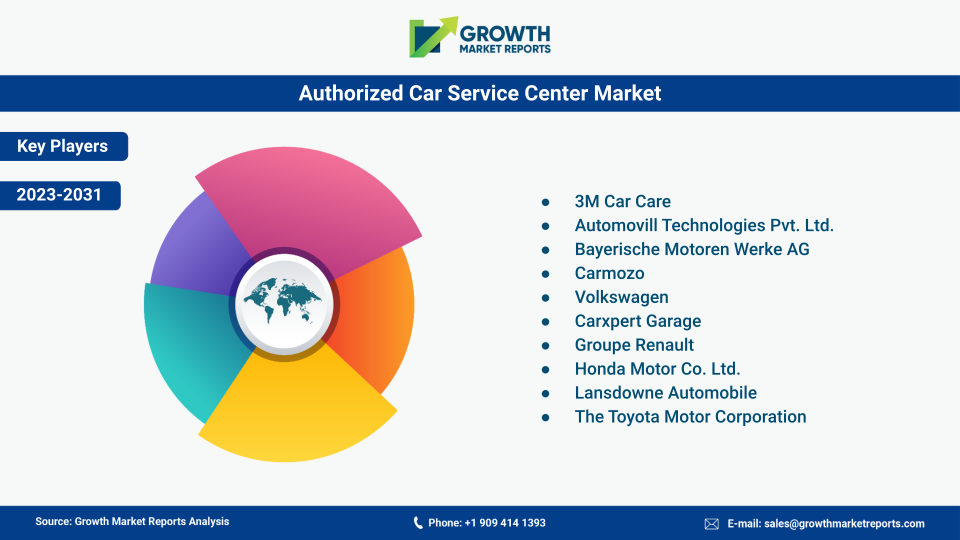
Key players in the authorized car service center market include 3M Car Care, Automovill Technologies Pvt. Ltd., Bayerische Motoren Werke AG, Carmozo, Volkswagen, Carxpert Garage, Groupe Renault, Honda Motor Co. Ltd., Lansdowne Automobile, and The Toyota Motor Corporation. These players engage in mergers & acquisitions, collaborations, agreements, and partnerships to strengthen their geographical presence.
Major companies include Bosch Car Service, Goodyear Tire & Rubber Company, Jiffy Lube International, Firestone Complete Auto Care, Midas International, Monro Muffler Brake, Meineke Car Care Centers, AAMCO, Pep Boys, AAA Approved Auto Repair, and several large automotive groups.
Opportunities include digital transformation, EV servicing, and value-added offerings. Challenges involve high infrastructure costs, competition from independent garages, and the need to keep up with evolving automotive technologies.
Customers can book services through offline channels (in-person or phone) or online platforms (websites and mobile apps), with online booking rapidly gaining popularity due to its convenience.
End users include individual car owners, fleet operators, and corporate clients such as car rental companies and ride-hailing platforms, each with unique service needs.
OEM authorized centers are linked directly to vehicle manufacturers, using genuine parts and proprietary tools, while multi-brand authorized centers service multiple vehicle brands, offering greater convenience and flexibility.
The rise of EVs is creating new demand for specialized maintenance, battery diagnostics, and software updates, prompting authorized centers to invest in technician training and infrastructure upgrades.
Authorized car service centers provide repair & maintenance, body repair, parts replacement, diagnostic services, and value-added offerings such as detailing, customization, and accessory installation.
Asia Pacific leads the market, followed by North America and Europe. Asia Pacific's growth is driven by rapid urbanization, a growing automotive fleet, and rising consumer expectations for quality service.
Key growth drivers include the increasing complexity of modern vehicles, stricter regulatory standards, rising consumer preference for warranty-backed services, and advancements in service technology and digital integration.
The global authorized car service center market reached USD 246.5 billion in 2024 and is expected to grow at a CAGR of 6.2%, reaching USD 421.8 billion by 2033.