Asthma & COPD Market Research Report 2033

Asthma & COPD Market Research Report 2033

Segments - by Product Type (Inhalers, Nebulizers, Drugs, Oxygen Therapy, Others), by Disease Indication (Asthma, Chronic Obstructive Pulmonary Disease), by Age Group (Pediatric, Adult, Geriatric), by Distribution Channel (Hospital Pharmacies, Retail Pharmacies, Online Pharmacies, Others)

https://growthmarketreports.com/raksha
Author : Raksha Sharma
https://growthmarketreports.com/Vaibhav
Fact-checked by : V. Chandola
https://growthmarketreports.com/Shruti
Editor : Shruti Bhat

Upcoming | Report ID :HC-1952 | 4.2 Rating | 63 Reviews | 285 Pages | Format : Docx PDF

Report Description


Asthma & COPD Market Outlook

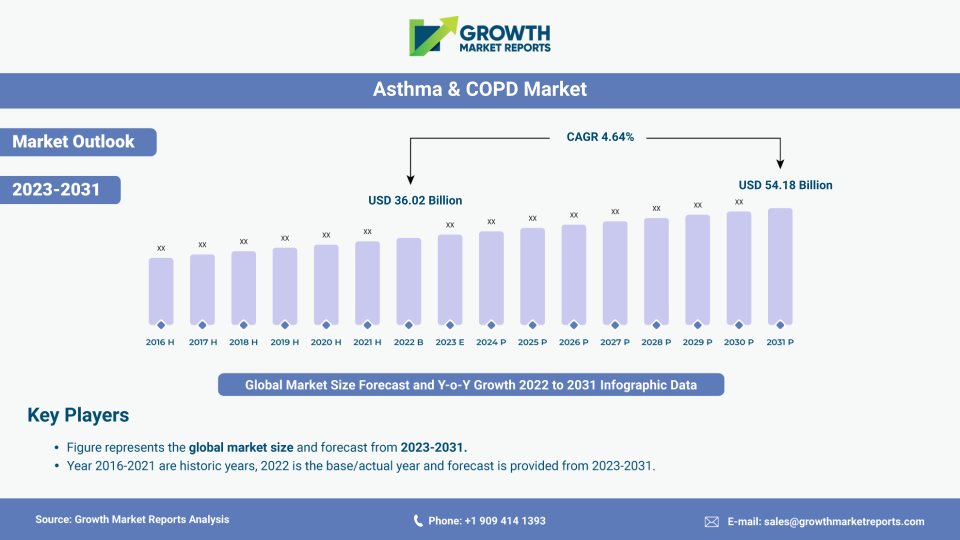
According to our latest research, the global Asthma & COPD market size reached USD 40.8 billion in 2024, with a robust growth trajectory supported by a compound annual growth rate (CAGR) of 5.7% from 2025 to 2033. The market is projected to expand to USD 67.6 billion by 2033, driven by factors such as the rising prevalence of respiratory diseases, advancements in drug delivery technologies, and increasing awareness about early diagnosis and management of asthma and chronic obstructive pulmonary disease (COPD). As per our latest research, the marketÂ’s expansion is also attributed to the growing geriatric population and escalating environmental pollution levels worldwide, which are recognized as significant contributors to respiratory disorders.

One of the primary growth factors for the Asthma & COPD market is the increasing global burden of respiratory diseases. The prevalence of asthma and COPD is surging due to various factors such as urbanization, exposure to air pollutants, tobacco smoke, and occupational hazards. The World Health Organization (WHO) estimates that over 262 million people suffer from asthma, while COPD remains the third leading cause of death globally. This escalating patient pool necessitates effective management strategies, thereby propelling demand for inhalers, nebulizers, drugs, and oxygen therapy devices. Moreover, the adoption of combination therapies and the introduction of novel biologics have significantly improved patient outcomes, further supporting market growth. Healthcare systems across developed and emerging economies are increasingly prioritizing respiratory health, leading to greater investments in research, diagnosis, and treatment infrastructure.

Technological advancements in drug delivery systems and therapeutic devices have revolutionized the Asthma & COPD market. The development of smart inhalers, portable nebulizers, and digital health solutions has enhanced the efficiency and convenience of disease management. These innovations enable real-time monitoring of patient adherence and symptom control, which is crucial for chronic disease management. Pharmaceutical companies are focusing on the formulation of long-acting bronchodilators, corticosteroids, and targeted biologics, offering better efficacy and reduced side effects. Additionally, the integration of artificial intelligence and telemedicine in respiratory care is transforming patient engagement, enabling remote consultations and personalized treatment plans. Such technological progress not only improves patient quality of life but also reduces healthcare costs associated with hospitalizations and exacerbations.

Another significant growth driver is the increasing awareness and proactive screening initiatives for asthma and COPD. Governments, non-profit organizations, and healthcare providers are conducting large-scale awareness campaigns to educate the public about the early signs and risk factors of respiratory diseases. Early diagnosis is crucial for effective disease management and can substantially reduce the risk of severe complications. The expansion of healthcare access, especially in emerging markets, has facilitated timely diagnosis and intervention. Furthermore, reimbursement policies for respiratory therapies and drugs are becoming more favorable, encouraging patients to seek medical care and adhere to prescribed treatments. These collective efforts are fostering a supportive environment for the sustained growth of the Asthma & COPD market.

COPD Drugs are playing an increasingly pivotal role in the management of chronic obstructive pulmonary disease, especially as the global burden of this respiratory disorder continues to rise. The development of new pharmacological treatments, including long-acting bronchodilators and combination therapies, is enhancing the ability of healthcare providers to manage symptoms and improve the quality of life for patients. Pharmaceutical companies are investing in research to discover novel compounds that can offer better efficacy and fewer side effects. This focus on innovation is crucial as it addresses the unmet needs of patients who suffer from severe forms of COPD, providing them with more effective and personalized treatment options.

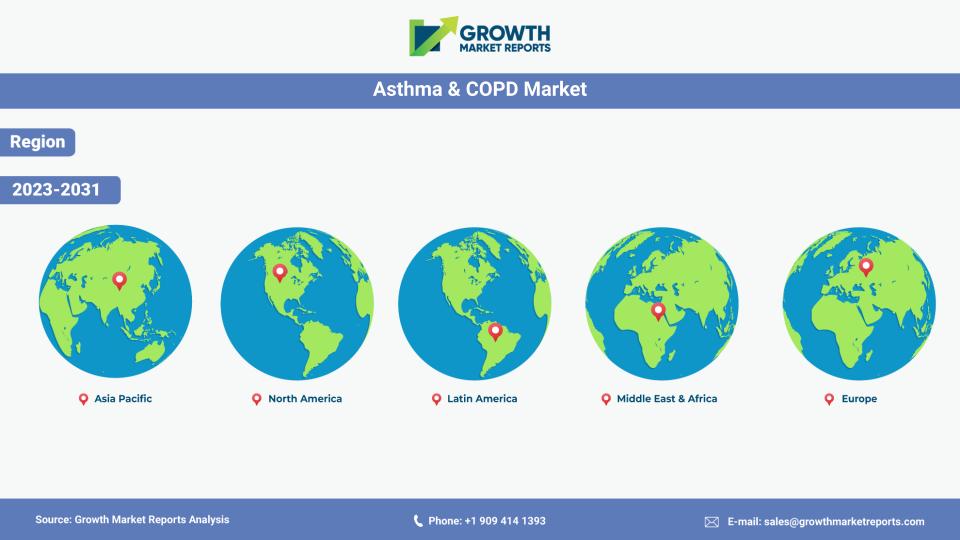
From a regional perspective, North America and Europe continue to dominate the Asthma & COPD market due to their advanced healthcare infrastructure, high disease awareness, and strong presence of leading pharmaceutical companies. The Asia Pacific region, however, is witnessing the fastest growth, driven by increasing urbanization, rising air pollution levels, and a large, underserved patient population. Countries like China and India are experiencing a surge in respiratory disease cases, prompting significant investments in healthcare infrastructure and respiratory care solutions. Latin America and the Middle East & Africa are also showing promising growth potential, supported by improving healthcare access and rising government initiatives aimed at combating respiratory diseases. The global landscape is thus characterized by both established markets with high adoption rates and emerging regions with substantial untapped opportunities.

Global Asthma & COPD Industry Outlook

Product Type Analysis

The Product Type segment of the Asthma & COPD market encompasses inhalers, nebulizers, drugs, oxygen therapy, and other related products. Inhalers remain the most widely used device for the administration of medications, favored for their portability, ease of use, and rapid onset of action. Technological advancements have led to the development of smart inhalers equipped with sensors and connectivity features, enabling real-time monitoring and improved medication adherence. These smart devices are gaining traction among both patients and healthcare providers due to their ability to provide personalized treatment insights and reduce hospital admissions. The growing focus on patient-centric care and self-management is expected to further drive the demand for advanced inhalers in the coming years.

Asthma Drugs have evolved significantly over the years, with advancements in both the types of medications available and the delivery methods used. The introduction of biologics and targeted therapies has revolutionized asthma management, offering new hope to patients with severe asthma who do not respond well to traditional treatments. These drugs work by targeting specific pathways involved in the inflammatory process, thereby reducing the frequency and severity of asthma attacks. As the prevalence of asthma continues to rise, particularly in urban areas with high levels of pollution, the demand for effective asthma drugs is expected to grow. This trend underscores the importance of ongoing research and development in this field to ensure that patients have access to the most effective treatments.

Nebulizers are another key product in the Asthma & COPD market, particularly beneficial for pediatric, geriatric, and severely ill patients who may have difficulty using inhalers. The market for nebulizers is expanding with the introduction of portable and battery-operated devices, making respiratory therapy more accessible and convenient. Innovations such as mesh nebulizers and ultrasonic nebulizers are improving drug delivery efficiency and reducing treatment times. Hospitals and home care settings are increasingly adopting these advanced nebulizers to enhance patient outcomes and streamline therapy administration. The rising prevalence of chronic respiratory diseases and the growing preference for home-based care are significant factors fueling the demand for nebulizers globally.

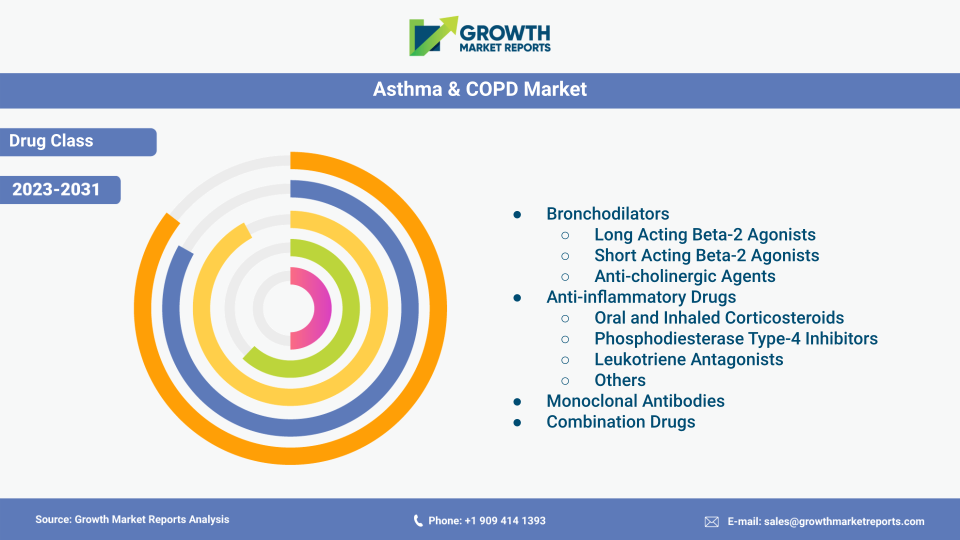
The drug segment in the Asthma & COPD market is characterized by a diverse range of therapeutic options, including bronchodilators, corticosteroids, leukotriene modifiers, and biologics. The introduction of combination therapies and targeted biologic agents has transformed the treatment landscape, offering improved efficacy and reduced side effects. Pharmaceutical companies are investing heavily in research and development to introduce novel molecules and formulations that address unmet clinical needs. The increasing adoption of maintenance therapies and the rising demand for quick-relief medications are driving the growth of the drug segment. Furthermore, favorable reimbursement policies and the availability of generic drugs are making therapies more accessible to a broader patient population.

Oxygen therapy plays a crucial role in the management of severe asthma and COPD, particularly in patients with advanced disease stages and frequent exacerbations. The market for oxygen therapy devices is witnessing steady growth, driven by the rising incidence of respiratory failure and the increasing adoption of portable oxygen concentrators. Technological advancements in device miniaturization and battery life have made oxygen therapy more feasible for home and ambulatory use. The growing emphasis on improving patient quality of life and reducing hospital readmissions is propelling the demand for oxygen therapy solutions. Additionally, the COVID-19 pandemic has heightened awareness about the importance of respiratory support, further boosting market growth in this segment.

Other products in the Asthma & COPD market include spacers, peak flow meters, and respiratory monitoring devices. These products play a supportive role in disease management, aiding in medication delivery, symptom monitoring, and early detection of exacerbations. The integration of digital health technologies and mobile applications with these devices is enhancing patient engagement and facilitating data-driven clinical decisions. The growing focus on preventive care and the increasing adoption of remote patient monitoring are expected to drive the demand for these auxiliary products. Overall, the product type segment is poised for significant growth, supported by ongoing innovation and the expanding scope of respiratory care solutions.

Report Scope

Attributes Details
Report Title Asthma & COPD Market Research Report 2033
By Product Type Inhalers, Nebulizers, Drugs, Oxygen Therapy, Others
By Disease Indication Asthma, Chronic Obstructive Pulmonary Disease
By Age Group Pediatric, Adult, Geriatric
By Distribution Channel Hospital Pharmacies, Retail Pharmacies, Online Pharmacies, Others
Regions Covered North America, Europe, APAC, Latin America, MEA
Base Year 2024
Historic Data 2018-2023
Forecast Period 2025-2033
Number of Pages 285
Number of Tables & Figures 394
Customization Available Yes, the report can be customized as per your need.

Disease Indication Analysis

The Disease Indication segment of the Asthma & COPD market is bifurcated into asthma and chronic obstructive pulmonary disease (COPD). Asthma, a chronic inflammatory disease of the airways, affects individuals of all ages and is characterized by recurrent episodes of wheezing, breathlessness, and coughing. The market for asthma therapies is driven by the increasing prevalence of the disease, particularly among children and young adults. Advances in inhaler technology, the introduction of biologics targeting specific inflammatory pathways, and the growing emphasis on personalized medicine are shaping the future of asthma management. Early diagnosis and proactive disease management strategies are critical for reducing the burden of asthma and improving patient outcomes.

COPD, on the other hand, is a progressive and debilitating respiratory disorder primarily caused by long-term exposure to tobacco smoke, air pollutants, and occupational hazards. The disease is more prevalent among older adults and is associated with significant morbidity and mortality. The Asthma & COPD market for COPD therapies is expanding rapidly, fueled by the rising geriatric population and the increasing incidence of risk factors such as smoking and environmental pollution. The development of long-acting bronchodilators, combination therapies, and non-invasive ventilation devices has revolutionized COPD management, enabling better symptom control and reducing the frequency of exacerbations.

The distinction between asthma and COPD is crucial, as the pathophysiology, clinical presentation, and treatment approaches differ significantly. Asthma is often characterized by reversible airway obstruction and is commonly associated with allergies, while COPD involves irreversible airflow limitation and is linked to chronic bronchitis and emphysema. The availability of targeted therapies and the implementation of guideline-based management protocols have improved the prognosis for both conditions. However, challenges such as underdiagnosis, misclassification, and poor treatment adherence persist, underscoring the need for continued education and awareness initiatives.

The growing focus on comorbidities and the overlap between asthma and COPD, often referred to as asthma-COPD overlap syndrome (ACOS), is prompting further research and innovation in the market. Patients with ACOS tend to have more severe symptoms, frequent exacerbations, and a higher risk of hospitalization. The development of tailored treatment regimens and the use of biomarkers for precise diagnosis are emerging trends in the management of ACOS. Pharmaceutical companies are exploring novel therapeutic targets and combination therapies to address the unique needs of this patient population.

Overall, the disease indication segment of the Asthma & COPD market is characterized by a dynamic and evolving landscape. The increasing prevalence of both asthma and COPD, coupled with ongoing advancements in diagnostics and therapeutics, is expected to drive sustained growth in this segment. Collaborative efforts among healthcare providers, policymakers, and industry stakeholders are essential for addressing the complex challenges associated with respiratory diseases and improving patient outcomes on a global scale.

Age Group Analysis

The Age Group segment of the Asthma & COPD market is categorized into pediatric, adult, and geriatric populations. Each age group presents unique challenges and opportunities in terms of disease prevalence, management strategies, and treatment outcomes. Pediatric patients, particularly young children, are more susceptible to asthma due to genetic predisposition, environmental exposures, and immature immune systems. The management of asthma in children requires age-appropriate inhaler devices, tailored dosing regimens, and comprehensive education for caregivers. The increasing incidence of pediatric asthma is driving demand for child-friendly inhalers, nebulizers, and monitoring devices, as well as the development of preventive interventions aimed at reducing disease onset.

The adult population represents a significant share of the Asthma & COPD market, with both asthma and COPD affecting individuals in their prime working years. Occupational exposures, lifestyle factors, and comorbidities such as obesity and cardiovascular disease contribute to the rising burden of respiratory diseases among adults. The management of asthma and COPD in this age group requires a holistic approach, encompassing pharmacological therapies, lifestyle modifications, and regular monitoring. The availability of combination inhalers, long-acting bronchodilators, and digital health solutions is enhancing disease control and improving quality of life for adult patients. Employers and healthcare providers are increasingly recognizing the impact of respiratory diseases on workforce productivity, prompting workplace wellness programs and targeted screening initiatives.

The geriatric population is particularly vulnerable to COPD, with prevalence rates increasing significantly with age. Age-related physiological changes, cumulative exposure to risk factors, and the presence of multiple comorbidities complicate the management of respiratory diseases in older adults. The demand for portable oxygen therapy devices, home-based care solutions, and comprehensive disease management programs is rising among geriatric patients. The integration of telemedicine, remote monitoring, and caregiver support services is improving access to care and reducing hospitalizations in this age group. Pharmaceutical companies are focusing on developing therapies with improved safety profiles and simplified dosing regimens to address the unique needs of elderly patients.

The intersection of age with other demographic and clinical factors is influencing market dynamics and shaping the development of targeted interventions. For example, the rising prevalence of childhood obesity is contributing to an increase in pediatric asthma cases, while the aging global population is driving demand for COPD therapies and supportive care solutions. Addressing the specific needs of each age group requires a multidisciplinary approach, involving collaboration among pediatricians, pulmonologists, geriatricians, and allied healthcare professionals.

In summary, the age group segment of the Asthma & COPD market reflects the diverse and evolving needs of patients across the lifespan. The development of age-appropriate therapies, devices, and educational resources is essential for optimizing disease management and improving health outcomes. Ongoing research, innovation, and policy initiatives are expected to further enhance the quality of care for patients with asthma and COPD, irrespective of age.

Distribution Channel Analysis

The Distribution Channel segment of the Asthma & COPD market includes hospital pharmacies, retail pharmacies, online pharmacies, and other distribution outlets. Hospital pharmacies account for a significant share of the market, particularly for acute care medications, biologics, and advanced respiratory devices. The presence of trained healthcare professionals, robust supply chain systems, and access to a wide range of therapies make hospital pharmacies a preferred choice for patients with severe or complex respiratory conditions. The integration of electronic prescription systems and inventory management solutions is enhancing the efficiency and reliability of hospital pharmacy operations.

Retail pharmacies play a crucial role in the distribution of maintenance therapies, inhalers, and over-the-counter respiratory products. The widespread presence of retail pharmacy chains, coupled with extended operating hours and convenient locations, makes them accessible to a broad patient population. Retail pharmacies are increasingly adopting digital platforms, loyalty programs, and patient education initiatives to improve medication adherence and foster long-term relationships with customers. The growing trend of pharmacy-based clinics and vaccination services is expanding the scope of retail pharmacies in respiratory care, providing patients with comprehensive and accessible healthcare solutions.

Online pharmacies are emerging as a fast-growing distribution channel in the Asthma & COPD market, driven by the increasing adoption of e-commerce, digital health platforms, and telemedicine services. The convenience of home delivery, competitive pricing, and access to a wide range of products are key factors attracting patients to online pharmacies. The COVID-19 pandemic has accelerated the shift towards digital healthcare, with patients increasingly seeking remote consultations and online prescription fulfillment. Regulatory frameworks and quality assurance measures are evolving to ensure the safety and reliability of online pharmacy services, further supporting market growth in this segment.

Other distribution channels, such as specialty pharmacies, mail-order pharmacies, and direct-to-consumer models, are also contributing to the expansion of the Asthma & COPD market. Specialty pharmacies cater to patients with complex or rare respiratory conditions, offering personalized support, medication management, and insurance assistance. Mail-order pharmacies provide cost-effective and convenient options for patients requiring long-term or chronic therapies. The direct-to-consumer model, facilitated by digital health startups and telehealth platforms, is enabling patients to access respiratory care products and services without the need for traditional intermediaries.

The distribution channel landscape is evolving rapidly, with technological advancements, changing consumer preferences, and regulatory reforms shaping market dynamics. The integration of digital health solutions, data analytics, and patient engagement tools is enhancing the efficiency, transparency, and accessibility of respiratory care products. Market players are increasingly investing in omnichannel strategies, partnerships, and logistics infrastructure to meet the diverse needs of patients and healthcare providers. The distribution channel segment is expected to witness sustained growth, supported by ongoing innovation and the expanding adoption of digital health technologies.

Opportunities & Threats

The Asthma & COPD market presents numerous opportunities for growth and innovation, particularly in the areas of digital health, personalized medicine, and preventive care. The increasing adoption of smart inhalers, wearable devices, and remote monitoring solutions is enabling real-time data collection, patient engagement, and proactive disease management. Pharmaceutical companies and medical device manufacturers are exploring partnerships with technology firms, healthcare providers, and insurers to develop integrated care models and digital therapeutics. The expansion of telemedicine services and online pharmacies is improving access to respiratory care, particularly in underserved and remote regions. These trends are expected to drive market expansion, enhance patient outcomes, and reduce healthcare costs associated with asthma and COPD.

Another significant opportunity lies in the development of novel biologics, targeted therapies, and combination regimens for asthma and COPD. Advances in genomics, biomarker discovery, and drug delivery technologies are enabling the identification of patient subgroups and the customization of treatment plans. The growing focus on early diagnosis, risk stratification, and preventive interventions is creating new avenues for market growth. Governments, non-profit organizations, and industry stakeholders are investing in research, public health campaigns, and capacity building to address the rising burden of respiratory diseases. The emergence of value-based care models and outcome-based reimbursement frameworks is incentivizing innovation and improving the efficiency of healthcare delivery.

Despite these opportunities, the Asthma & COPD market faces several restraining factors, including high treatment costs, limited access to advanced therapies in low- and middle-income countries, and challenges related to patient adherence and disease awareness. The complexity of respiratory diseases, coupled with the presence of comorbidities and the risk of adverse events, complicates disease management and increases the burden on healthcare systems. Regulatory hurdles, pricing pressures, and intellectual property challenges may also impact market growth and innovation. Addressing these barriers requires coordinated efforts among policymakers, healthcare providers, industry players, and patient advocacy groups to ensure equitable access to high-quality respiratory care.

Regional Outlook

North America leads the Asthma & COPD market, accounting for approximately USD 15.2 billion in 2024, representing the largest regional share. The regionÂ’s dominance is attributed to its advanced healthcare infrastructure, high disease awareness, and strong presence of leading pharmaceutical and medical device companies. The United States, in particular, has a well-established reimbursement system, extensive research and development activities, and widespread adoption of innovative therapies and devices. The prevalence of asthma and COPD remains high due to environmental factors, lifestyle choices, and an aging population. Ongoing government initiatives and public health campaigns are further supporting market growth by promoting early diagnosis, preventive care, and patient education.

Europe holds the second-largest share in the Asthma & COPD market, with a market size of around USD 12.4 billion in 2024. The region benefits from a robust regulatory framework, comprehensive healthcare coverage, and strong collaboration between public and private sector stakeholders. Countries such as Germany, the United Kingdom, and France are at the forefront of respiratory disease management, with extensive investments in research, clinical trials, and healthcare infrastructure. The increasing prevalence of respiratory diseases, coupled with rising environmental pollution and tobacco use, is driving demand for advanced therapies and devices. The European market is expected to grow at a steady CAGR of 5.2% during the forecast period, supported by ongoing innovation and favorable reimbursement policies.

The Asia Pacific region is emerging as the fastest-growing market for asthma and COPD, with a market size of USD 8.6 billion in 2024. Rapid urbanization, increasing air pollution, and a large, underserved patient population are key factors fueling market growth in countries such as China, India, and Japan. Governments and healthcare providers are making significant investments in respiratory care infrastructure, public health campaigns, and capacity building. The adoption of digital health solutions, telemedicine, and portable respiratory devices is improving access to care and enabling early diagnosis and intervention. The Asia Pacific market is projected to witness a CAGR of 7.1% from 2025 to 2033, making it a key focus area for market players seeking to expand their global footprint.

Asthma & COPD Market Statistics

Competitor Outlook

The Asthma & COPD market is characterized by intense competition, with numerous global and regional players vying for market share through product innovation, strategic partnerships, and geographic expansion. The competitive landscape is shaped by the presence of leading pharmaceutical companies, medical device manufacturers, and technology firms, all of which are investing heavily in research and development to introduce novel therapies and advanced respiratory devices. The market is also witnessing a surge in mergers and acquisitions, collaborations, and licensing agreements, as companies seek to expand their product portfolios, enhance their technological capabilities, and strengthen their market positions.

Innovation remains a key differentiator in the Asthma & COPD market, with companies focusing on the development of smart inhalers, portable nebulizers, biologics, and digital health solutions. The integration of artificial intelligence, data analytics, and remote monitoring technologies is enabling personalized and proactive disease management, improving patient adherence, and reducing healthcare costs. Market players are also exploring new therapeutic targets, drug delivery mechanisms, and combination regimens to address unmet clinical needs and improve patient outcomes. The growing emphasis on value-based care and outcome-based reimbursement is incentivizing companies to demonstrate the clinical and economic benefits of their products.

The competitive landscape is further influenced by regulatory developments, pricing pressures, and intellectual property challenges. Companies are navigating complex regulatory pathways to secure approvals for new therapies and devices, while also addressing the need for affordability and accessibility in both developed and emerging markets. The rise of generic drugs and biosimilars is intensifying price competition, particularly in markets with high penetration of off-patent products. To maintain their competitive edge, leading players are investing in brand building, patient support programs, and market access strategies.

Major companies operating in the Asthma & COPD market include GlaxoSmithKline plc, AstraZeneca plc, Boehringer Ingelheim International GmbH, Novartis AG, Teva Pharmaceutical Industries Ltd., Merck & Co., Inc., and Philips Healthcare. GlaxoSmithKline is renowned for its extensive portfolio of respiratory therapies, including inhalers and biologics, and is at the forefront of innovation in asthma and COPD management. AstraZeneca has a strong presence in the biologics segment, with a focus on targeted therapies and personalized medicine. Boehringer Ingelheim is a leader in the development of long-acting bronchodilators and combination inhalers, while Novartis and Teva are recognized for their contributions to both branded and generic respiratory drugs.

Philips Healthcare is a major player in the medical device segment, offering a wide range of respiratory care solutions, including nebulizers, oxygen concentrators, and monitoring devices. The company is leveraging its expertise in digital health and remote monitoring to enhance patient engagement and improve disease management. Other notable players include ResMed Inc., Cipla Ltd., and Sunovion Pharmaceuticals Inc., each of which is contributing to the advancement of respiratory care through product innovation, strategic partnerships, and market expansion. The competitive outlook for the Asthma & COPD market is expected to remain dynamic, with ongoing innovation, collaboration, and investment driving sustained growth and improved patient outcomes.

Key Players

  • GlaxoSmithKline plc
  • AstraZeneca plc
  • Boehringer Ingelheim GmbH
  • Novartis AG
  • Teva Pharmaceutical Industries Ltd.
  • Merck & Co., Inc.
  • Sanofi S.A.
  • Pfizer Inc.
  • Cipla Ltd.
  • Mylan N.V.
  • Sun Pharmaceutical Industries Ltd.
  • Chiesi Farmaceutici S.p.A.
  • Glenmark Pharmaceuticals Ltd.
  • Mundipharma International Limited
  • Vectura Group plc
  • AbbVie Inc.
  • Sumitomo Pharma Co., Ltd.
  • Regeneron Pharmaceuticals, Inc.
  • Amgen Inc.
  • Takeda Pharmaceutical Company Limited
Asthma & COPD Market Overview

Segments

The Asthma & COPD market has been segmented on the basis of

Product Type

  • Inhalers
  • Nebulizers
  • Drugs
  • Oxygen Therapy
  • Others

Disease Indication

  • Asthma
  • Chronic Obstructive Pulmonary Disease

Age Group

  • Pediatric
  • Adult
  • Geriatric

Distribution Channel

  • Hospital Pharmacies
  • Retail Pharmacies
  • Online Pharmacies
  • Others

Competitive Landscape

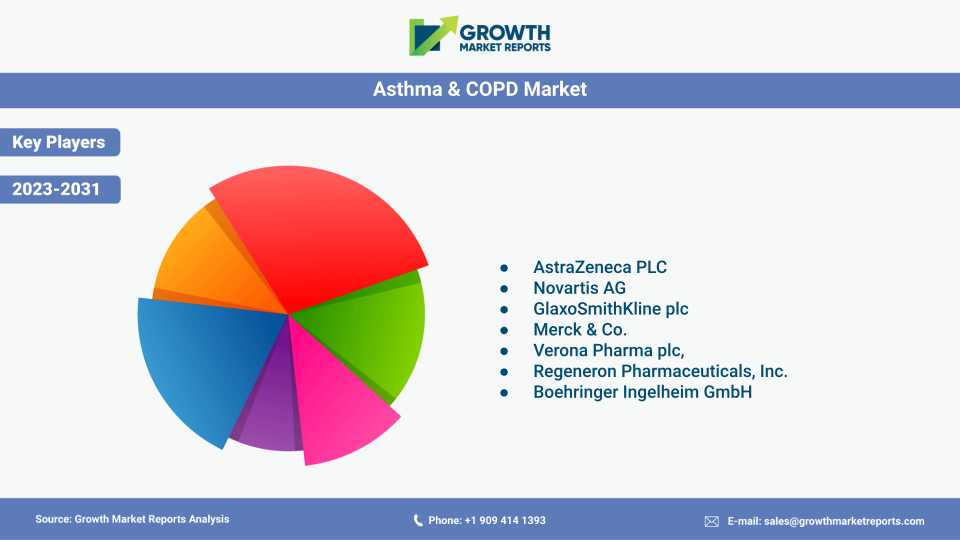
Key players competing in the global asthma & COPD market are AstraZeneca PLC; Novartis AG; GlaxoSmithKline plc; Merck & Co.; Verona Pharma plc; Regeneron Pharmaceuticals, Inc.; and Boehringer Ingelheim GmbH.

Asthma & COPD Market Key Players


Frequently Asked Questions

Opportunities include the adoption of digital health, personalized medicine, and preventive care, while challenges involve high treatment costs, limited access in low-income regions, patient adherence issues, and regulatory hurdles.

Major players include GlaxoSmithKline plc, AstraZeneca plc, Boehringer Ingelheim GmbH, Novartis AG, Teva Pharmaceutical Industries Ltd., Merck & Co., Inc., Philips Healthcare, Cipla Ltd., and Sunovion Pharmaceuticals Inc.

Asthma & COPD products are distributed through hospital pharmacies, retail pharmacies, online pharmacies, specialty pharmacies, and mail-order pharmacies, with a growing trend towards digital and omnichannel strategies.

Pediatric patients are more susceptible to asthma, adults are affected by both asthma and COPD, and the geriatric population is particularly vulnerable to COPD. Management strategies and device preferences vary by age group, with a focus on age-appropriate therapies and devices.

Asthma is characterized by reversible airway obstruction and often linked to allergies, while COPD involves irreversible airflow limitation due to chronic bronchitis or emphysema. Treatment approaches, clinical presentation, and patient management differ significantly between the two.

Technological advancements such as smart inhalers, portable nebulizers, digital health solutions, and the integration of AI and telemedicine are improving disease management, patient adherence, and reducing healthcare costs.

The main product types include inhalers, nebulizers, drugs (such as bronchodilators, corticosteroids, leukotriene modifiers, and biologics), oxygen therapy devices, and other supportive products like spacers and monitoring devices.

North America and Europe currently dominate the market due to advanced healthcare infrastructure and high disease awareness, while Asia Pacific is the fastest-growing region driven by urbanization and rising air pollution.

Key growth drivers include the rising prevalence of respiratory diseases, advancements in drug delivery technologies, increasing awareness about early diagnosis, growing geriatric population, and escalating environmental pollution.

The global Asthma & COPD market reached USD 40.8 billion in 2024 and is projected to grow at a CAGR of 5.7% from 2025 to 2033, reaching USD 67.6 billion by 2033.

Table Of Content

Chapter 1 Executive Summary
Chapter 2 Assumptions and Acronyms Used
Chapter 3 Research Methodology
Chapter 4 Asthma & COPD Market Overview
   4.1 Introduction
      4.1.1 Market Taxonomy
      4.1.2 Market Definition
      4.1.3 Macro-Economic Factors Impacting the Market Growth
   4.2 Asthma & COPD Market Dynamics
      4.2.1 Market Drivers
      4.2.2 Market Restraints
      4.2.3 Market Opportunity
   4.3 Asthma & COPD Market - Supply Chain Analysis
      4.3.1 List of Key Suppliers
      4.3.2 List of Key Distributors
      4.3.3 List of Key Consumers
   4.4 Key Forces Shaping the Asthma & COPD Market
      4.4.1 Bargaining Power of Suppliers
      4.4.2 Bargaining Power of Buyers
      4.4.3 Threat of Substitution
      4.4.4 Threat of New Entrants
      4.4.5 Competitive Rivalry
   4.5 Global Asthma & COPD Market Size & Forecast, 2023-2032
      4.5.1 Asthma & COPD Market Size and Y-o-Y Growth
      4.5.2 Asthma & COPD Market Absolute $ Opportunity

Chapter 5 Global Asthma & COPD Market Analysis and Forecast By Product Type
   5.1 Introduction
      5.1.1 Key Market Trends & Growth Opportunities By Product Type
      5.1.2 Basis Point Share (BPS) Analysis By Product Type
      5.1.3 Absolute $ Opportunity Assessment By Product Type
   5.2 Asthma & COPD Market Size Forecast By Product Type
      5.2.1 Inhalers
      5.2.2 Nebulizers
      5.2.3 Drugs
      5.2.4 Oxygen Therapy
      5.2.5 Others
   5.3 Market Attractiveness Analysis By Product Type

Chapter 6 Global Asthma & COPD Market Analysis and Forecast By Disease Indication
   6.1 Introduction
      6.1.1 Key Market Trends & Growth Opportunities By Disease Indication
      6.1.2 Basis Point Share (BPS) Analysis By Disease Indication
      6.1.3 Absolute $ Opportunity Assessment By Disease Indication
   6.2 Asthma & COPD Market Size Forecast By Disease Indication
      6.2.1 Asthma
      6.2.2 Chronic Obstructive Pulmonary Disease
   6.3 Market Attractiveness Analysis By Disease Indication

Chapter 7 Global Asthma & COPD Market Analysis and Forecast By Age Group
   7.1 Introduction
      7.1.1 Key Market Trends & Growth Opportunities By Age Group
      7.1.2 Basis Point Share (BPS) Analysis By Age Group
      7.1.3 Absolute $ Opportunity Assessment By Age Group
   7.2 Asthma & COPD Market Size Forecast By Age Group
      7.2.1 Pediatric
      7.2.2 Adult
      7.2.3 Geriatric
   7.3 Market Attractiveness Analysis By Age Group

Chapter 8 Global Asthma & COPD Market Analysis and Forecast By Distribution Channel
   8.1 Introduction
      8.1.1 Key Market Trends & Growth Opportunities By Distribution Channel
      8.1.2 Basis Point Share (BPS) Analysis By Distribution Channel
      8.1.3 Absolute $ Opportunity Assessment By Distribution Channel
   8.2 Asthma & COPD Market Size Forecast By Distribution Channel
      8.2.1 Hospital Pharmacies
      8.2.2 Retail Pharmacies
      8.2.3 Online Pharmacies
      8.2.4 Others
   8.3 Market Attractiveness Analysis By Distribution Channel

Chapter 9 Global Asthma & COPD Market Analysis and Forecast by Region
   9.1 Introduction
      9.1.1 Key Market Trends & Growth Opportunities By Region
      9.1.2 Basis Point Share (BPS) Analysis By Region
      9.1.3 Absolute $ Opportunity Assessment By Region
   9.2 Asthma & COPD Market Size Forecast By Region
      9.2.1 North America
      9.2.2 Europe
      9.2.3 Asia Pacific
      9.2.4 Latin America
      9.2.5 Middle East & Africa (MEA)
   9.3 Market Attractiveness Analysis By Region

Chapter 10 Coronavirus Disease (COVID-19) Impact 
   10.1 Introduction 
   10.2 Current & Future Impact Analysis 
   10.3 Economic Impact Analysis 
   10.4 Government Policies 
   10.5 Investment Scenario

Chapter 11 North America Asthma & COPD Analysis and Forecast
   11.1 Introduction
   11.2 North America Asthma & COPD Market Size Forecast by Country
      11.2.1 U.S.
      11.2.2 Canada
   11.3 Basis Point Share (BPS) Analysis by Country
   11.4 Absolute $ Opportunity Assessment by Country
   11.5 Market Attractiveness Analysis by Country
   11.6 North America Asthma & COPD Market Size Forecast By Product Type
      11.6.1 Inhalers
      11.6.2 Nebulizers
      11.6.3 Drugs
      11.6.4 Oxygen Therapy
      11.6.5 Others
   11.7 Basis Point Share (BPS) Analysis By Product Type 
   11.8 Absolute $ Opportunity Assessment By Product Type 
   11.9 Market Attractiveness Analysis By Product Type
   11.10 North America Asthma & COPD Market Size Forecast By Disease Indication
      11.10.1 Asthma
      11.10.2 Chronic Obstructive Pulmonary Disease
   11.11 Basis Point Share (BPS) Analysis By Disease Indication 
   11.12 Absolute $ Opportunity Assessment By Disease Indication 
   11.13 Market Attractiveness Analysis By Disease Indication
   11.14 North America Asthma & COPD Market Size Forecast By Age Group
      11.14.1 Pediatric
      11.14.2 Adult
      11.14.3 Geriatric
   11.15 Basis Point Share (BPS) Analysis By Age Group 
   11.16 Absolute $ Opportunity Assessment By Age Group 
   11.17 Market Attractiveness Analysis By Age Group
   11.18 North America Asthma & COPD Market Size Forecast By Distribution Channel
      11.18.1 Hospital Pharmacies
      11.18.2 Retail Pharmacies
      11.18.3 Online Pharmacies
      11.18.4 Others
   11.19 Basis Point Share (BPS) Analysis By Distribution Channel 
   11.20 Absolute $ Opportunity Assessment By Distribution Channel 
   11.21 Market Attractiveness Analysis By Distribution Channel

Chapter 12 Europe Asthma & COPD Analysis and Forecast
   12.1 Introduction
   12.2 Europe Asthma & COPD Market Size Forecast by Country
      12.2.1 Germany
      12.2.2 France
      12.2.3 Italy
      12.2.4 U.K.
      12.2.5 Spain
      12.2.6 Russia
      12.2.7 Rest of Europe
   12.3 Basis Point Share (BPS) Analysis by Country
   12.4 Absolute $ Opportunity Assessment by Country
   12.5 Market Attractiveness Analysis by Country
   12.6 Europe Asthma & COPD Market Size Forecast By Product Type
      12.6.1 Inhalers
      12.6.2 Nebulizers
      12.6.3 Drugs
      12.6.4 Oxygen Therapy
      12.6.5 Others
   12.7 Basis Point Share (BPS) Analysis By Product Type 
   12.8 Absolute $ Opportunity Assessment By Product Type 
   12.9 Market Attractiveness Analysis By Product Type
   12.10 Europe Asthma & COPD Market Size Forecast By Disease Indication
      12.10.1 Asthma
      12.10.2 Chronic Obstructive Pulmonary Disease
   12.11 Basis Point Share (BPS) Analysis By Disease Indication 
   12.12 Absolute $ Opportunity Assessment By Disease Indication 
   12.13 Market Attractiveness Analysis By Disease Indication
   12.14 Europe Asthma & COPD Market Size Forecast By Age Group
      12.14.1 Pediatric
      12.14.2 Adult
      12.14.3 Geriatric
   12.15 Basis Point Share (BPS) Analysis By Age Group 
   12.16 Absolute $ Opportunity Assessment By Age Group 
   12.17 Market Attractiveness Analysis By Age Group
   12.18 Europe Asthma & COPD Market Size Forecast By Distribution Channel
      12.18.1 Hospital Pharmacies
      12.18.2 Retail Pharmacies
      12.18.3 Online Pharmacies
      12.18.4 Others
   12.19 Basis Point Share (BPS) Analysis By Distribution Channel 
   12.20 Absolute $ Opportunity Assessment By Distribution Channel 
   12.21 Market Attractiveness Analysis By Distribution Channel

Chapter 13 Asia Pacific Asthma & COPD Analysis and Forecast
   13.1 Introduction
   13.2 Asia Pacific Asthma & COPD Market Size Forecast by Country
      13.2.1 China
      13.2.2 Japan
      13.2.3 South Korea
      13.2.4 India
      13.2.5 Australia
      13.2.6 South East Asia (SEA)
      13.2.7 Rest of Asia Pacific (APAC)
   13.3 Basis Point Share (BPS) Analysis by Country
   13.4 Absolute $ Opportunity Assessment by Country
   13.5 Market Attractiveness Analysis by Country
   13.6 Asia Pacific Asthma & COPD Market Size Forecast By Product Type
      13.6.1 Inhalers
      13.6.2 Nebulizers
      13.6.3 Drugs
      13.6.4 Oxygen Therapy
      13.6.5 Others
   13.7 Basis Point Share (BPS) Analysis By Product Type 
   13.8 Absolute $ Opportunity Assessment By Product Type 
   13.9 Market Attractiveness Analysis By Product Type
   13.10 Asia Pacific Asthma & COPD Market Size Forecast By Disease Indication
      13.10.1 Asthma
      13.10.2 Chronic Obstructive Pulmonary Disease
   13.11 Basis Point Share (BPS) Analysis By Disease Indication 
   13.12 Absolute $ Opportunity Assessment By Disease Indication 
   13.13 Market Attractiveness Analysis By Disease Indication
   13.14 Asia Pacific Asthma & COPD Market Size Forecast By Age Group
      13.14.1 Pediatric
      13.14.2 Adult
      13.14.3 Geriatric
   13.15 Basis Point Share (BPS) Analysis By Age Group 
   13.16 Absolute $ Opportunity Assessment By Age Group 
   13.17 Market Attractiveness Analysis By Age Group
   13.18 Asia Pacific Asthma & COPD Market Size Forecast By Distribution Channel
      13.18.1 Hospital Pharmacies
      13.18.2 Retail Pharmacies
      13.18.3 Online Pharmacies
      13.18.4 Others
   13.19 Basis Point Share (BPS) Analysis By Distribution Channel 
   13.20 Absolute $ Opportunity Assessment By Distribution Channel 
   13.21 Market Attractiveness Analysis By Distribution Channel

Chapter 14 Latin America Asthma & COPD Analysis and Forecast
   14.1 Introduction
   14.2 Latin America Asthma & COPD Market Size Forecast by Country
      14.2.1 Brazil
      14.2.2 Mexico
      14.2.3 Rest of Latin America (LATAM)
   14.3 Basis Point Share (BPS) Analysis by Country
   14.4 Absolute $ Opportunity Assessment by Country
   14.5 Market Attractiveness Analysis by Country
   14.6 Latin America Asthma & COPD Market Size Forecast By Product Type
      14.6.1 Inhalers
      14.6.2 Nebulizers
      14.6.3 Drugs
      14.6.4 Oxygen Therapy
      14.6.5 Others
   14.7 Basis Point Share (BPS) Analysis By Product Type 
   14.8 Absolute $ Opportunity Assessment By Product Type 
   14.9 Market Attractiveness Analysis By Product Type
   14.10 Latin America Asthma & COPD Market Size Forecast By Disease Indication
      14.10.1 Asthma
      14.10.2 Chronic Obstructive Pulmonary Disease
   14.11 Basis Point Share (BPS) Analysis By Disease Indication 
   14.12 Absolute $ Opportunity Assessment By Disease Indication 
   14.13 Market Attractiveness Analysis By Disease Indication
   14.14 Latin America Asthma & COPD Market Size Forecast By Age Group
      14.14.1 Pediatric
      14.14.2 Adult
      14.14.3 Geriatric
   14.15 Basis Point Share (BPS) Analysis By Age Group 
   14.16 Absolute $ Opportunity Assessment By Age Group 
   14.17 Market Attractiveness Analysis By Age Group
   14.18 Latin America Asthma & COPD Market Size Forecast By Distribution Channel
      14.18.1 Hospital Pharmacies
      14.18.2 Retail Pharmacies
      14.18.3 Online Pharmacies
      14.18.4 Others
   14.19 Basis Point Share (BPS) Analysis By Distribution Channel 
   14.20 Absolute $ Opportunity Assessment By Distribution Channel 
   14.21 Market Attractiveness Analysis By Distribution Channel

Chapter 15 Middle East & Africa (MEA) Asthma & COPD Analysis and Forecast
   15.1 Introduction
   15.2 Middle East & Africa (MEA) Asthma & COPD Market Size Forecast by Country
      15.2.1 Saudi Arabia
      15.2.2 South Africa
      15.2.3 UAE
      15.2.4 Rest of Middle East & Africa (MEA)
   15.3 Basis Point Share (BPS) Analysis by Country
   15.4 Absolute $ Opportunity Assessment by Country
   15.5 Market Attractiveness Analysis by Country
   15.6 Middle East & Africa (MEA) Asthma & COPD Market Size Forecast By Product Type
      15.6.1 Inhalers
      15.6.2 Nebulizers
      15.6.3 Drugs
      15.6.4 Oxygen Therapy
      15.6.5 Others
   15.7 Basis Point Share (BPS) Analysis By Product Type 
   15.8 Absolute $ Opportunity Assessment By Product Type 
   15.9 Market Attractiveness Analysis By Product Type
   15.10 Middle East & Africa (MEA) Asthma & COPD Market Size Forecast By Disease Indication
      15.10.1 Asthma
      15.10.2 Chronic Obstructive Pulmonary Disease
   15.11 Basis Point Share (BPS) Analysis By Disease Indication 
   15.12 Absolute $ Opportunity Assessment By Disease Indication 
   15.13 Market Attractiveness Analysis By Disease Indication
   15.14 Middle East & Africa (MEA) Asthma & COPD Market Size Forecast By Age Group
      15.14.1 Pediatric
      15.14.2 Adult
      15.14.3 Geriatric
   15.15 Basis Point Share (BPS) Analysis By Age Group 
   15.16 Absolute $ Opportunity Assessment By Age Group 
   15.17 Market Attractiveness Analysis By Age Group
   15.18 Middle East & Africa (MEA) Asthma & COPD Market Size Forecast By Distribution Channel
      15.18.1 Hospital Pharmacies
      15.18.2 Retail Pharmacies
      15.18.3 Online Pharmacies
      15.18.4 Others
   15.19 Basis Point Share (BPS) Analysis By Distribution Channel 
   15.20 Absolute $ Opportunity Assessment By Distribution Channel 
   15.21 Market Attractiveness Analysis By Distribution Channel

Chapter 16 Competition Landscape 
   16.1 Asthma & COPD Market: Competitive Dashboard
   16.2 Global Asthma & COPD Market: Market Share Analysis, 2023
   16.3 Company Profiles (Details – Overview, Financials, Developments, Strategy) 
      16.3.1 GlaxoSmithKline plc
AstraZeneca plc
Boehringer Ingelheim GmbH
Novartis AG
Teva Pharmaceutical Industries Ltd.
Merck & Co., Inc.
Sanofi S.A.
Pfizer Inc.
Cipla Ltd.
Mylan N.V.
Sun Pharmaceutical Industries Ltd.
Chiesi Farmaceutici S.p.A.
Glenmark Pharmaceuticals Ltd.
Mundipharma International Limited
Vectura Group plc
AbbVie Inc.
Sumitomo Pharma Co., Ltd.
Regeneron Pharmaceuticals, Inc.
Amgen Inc.
Takeda Pharmaceutical Company Limited

Methodology

Our Clients

The John Holland Group
General Electric
Deloitte
General Mills
Nestle SA
FedEx Logistics
Siemens Healthcare
sinopec