Ascorbic Acid Market Research Report 2033

Ascorbic Acid Market Research Report 2033

Segments - by Product Type (Powder, Granules, Liquid), by Application (Food & Beverages, Pharmaceuticals, Cosmetics & Personal Care, Animal Feed, Others), by Distribution Channel (Direct Sales, Distributors/Wholesalers, Online Retail), by End-User (Food Industry, Pharmaceutical Industry, Cosmetics Industry, Animal Nutrition, Others)

https://growthmarketreports.com/Anuradha
Author : Anuradha B. More
https://growthmarketreports.com/Vaibhav
Fact-checked by : Vaibhav Chandola
https://growthmarketreports.com/Shruti
Editor : Shruti Bhat

Upcoming | Report ID :FB-921 | 4.3 Rating | 10 Reviews | 275 Pages | Format : Docx PDF

Report Description


Ascorbic Acid Market Outlook

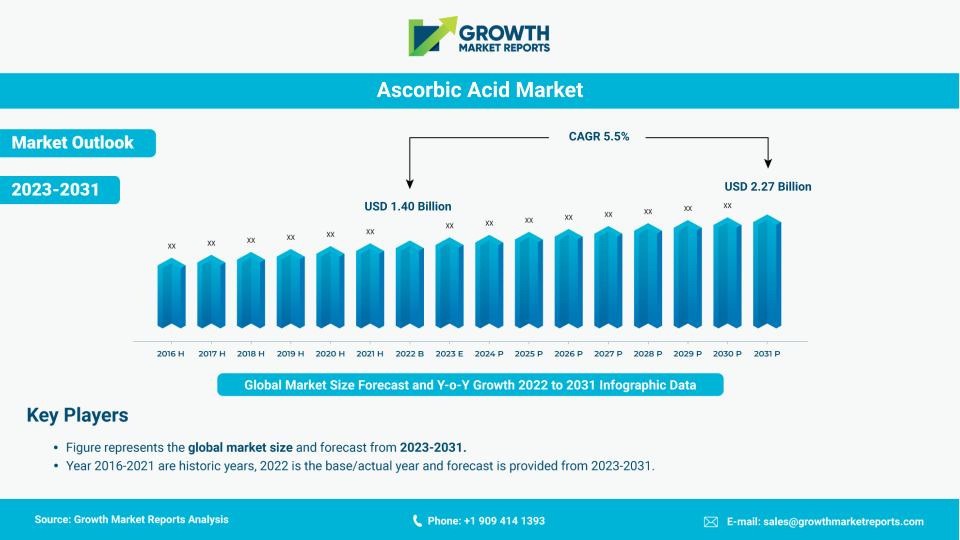
According to our latest research, the ascorbic acid market size reached USD 1.32 billion in 2024, demonstrating a robust expansion driven by diverse end-user demand and increasing application scope. The market is expected to grow at a CAGR of 5.8% from 2025 to 2033, with the forecasted market size projected to reach USD 2.19 billion by 2033. This growth is underpinned by rising health consciousness, burgeoning demand from the food and pharmaceutical sectors, and advancements in production technologies, positioning ascorbic acid as a key ingredient across multiple industries worldwide.

One of the principal growth factors fueling the global ascorbic acid market is the surging awareness regarding the health benefits of vitamin C, especially in the context of immune system support and antioxidant properties. Increasing consumer focus on preventive healthcare, coupled with the rising prevalence of lifestyle-related diseases, has significantly bolstered the incorporation of ascorbic acid in dietary supplements and fortified foods. The COVID-19 pandemic further accelerated this trend, with consumers seeking products that enhance immunity and overall well-being. Additionally, the food and beverage industry is increasingly utilizing ascorbic acid as a preservative and nutritional enhancer, thus expanding its application base and driving market growth.

Another critical driver is the expanding application of ascorbic acid in the pharmaceutical and cosmetics industries. In pharmaceuticals, ascorbic acid is widely used in the formulation of multivitamin supplements, injectables, and topical preparations for wound healing and skin health. Its antioxidant properties make it a favored ingredient in anti-aging and skin-brightening products within the cosmetics and personal care sector. The growing demand for clean-label and natural ingredients in these industries has further augmented the use of ascorbic acid, as manufacturers respond to consumer preferences for safer and more effective products. This trend is particularly pronounced in emerging markets, where rising disposable incomes and urbanization are fueling demand for health and beauty products.

Technological advancements in production processes have also played a pivotal role in the growth of the ascorbic acid market. Innovations in fermentation and extraction techniques have improved yield, purity, and cost-efficiency, enabling manufacturers to meet the rising demand while maintaining competitive pricing. The shift towards sustainable and bio-based production methods is gaining traction, driven by environmental concerns and regulatory pressures. These advancements have not only enhanced the scalability of ascorbic acid production but also opened new avenues for its application in functional foods, nutraceuticals, and animal nutrition. As a result, the market is witnessing increased investments in research and development, further propelling its growth trajectory.

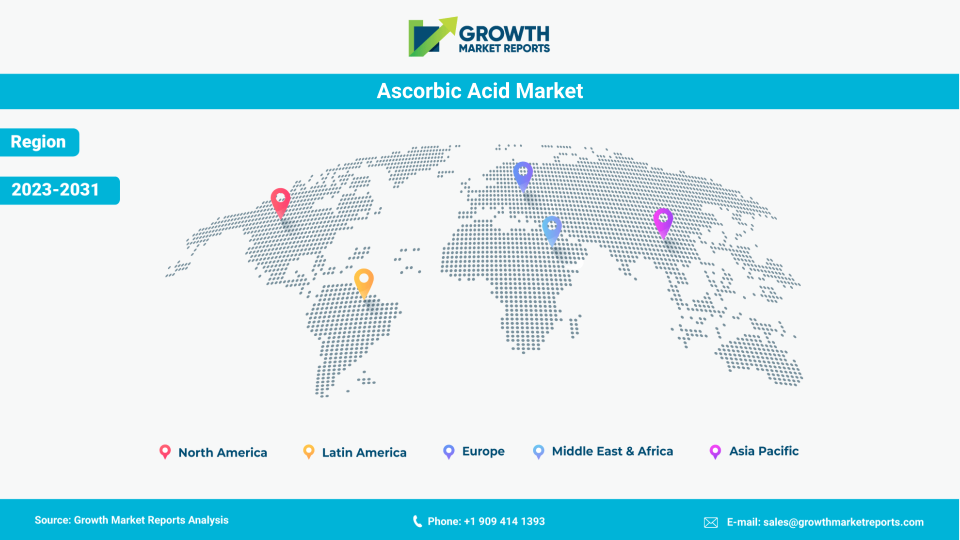
Regionally, Asia Pacific dominates the ascorbic acid market, accounting for the largest share owing to its strong manufacturing base, particularly in China, which is the leading producer and exporter of ascorbic acid globally. The region benefits from abundant raw material availability, cost-effective production, and a rapidly growing consumer base. North America and Europe follow, driven by high health awareness, stringent regulatory standards, and robust demand from the food, pharmaceutical, and cosmetics industries. While Latin America and the Middle East & Africa currently hold smaller shares, these regions are poised for significant growth due to rising urbanization, expanding middle-class populations, and increasing investments in healthcare and nutrition.

Global Ascorbic Acid Industry Outlook

Product Type Analysis

The ascorbic acid market by product type is segmented into powder, granules, and liquid forms, each catering to specific application requirements and user preferences. Powdered ascorbic acid remains the most widely used form, attributed to its superior stability, ease of handling, and versatility across various industries. The powder form is particularly favored in food and beverage applications, where it serves as both a preservative and a nutritional supplement. Its fine consistency allows for easy blending into formulations, ensuring uniform distribution and efficacy. Additionally, powdered ascorbic acid boasts a longer shelf life compared to its liquid counterpart, making it a preferred choice for manufacturers seeking cost-effective and reliable solutions.

Granular ascorbic acid, while less prevalent than the powdered form, has gained traction in recent years due to its improved flow properties and reduced dust generation. This form is especially suitable for applications requiring precise dosing and minimal wastage, such as in pharmaceutical tablet manufacturing and animal feed premixes. The granules' uniform particle size facilitates consistent mixing and enhances the efficiency of automated production processes. As the demand for convenience and efficiency in manufacturing grows, the adoption of granular ascorbic acid is expected to witness steady growth, particularly in regions with advanced pharmaceutical and animal nutrition industries.

The liquid form of ascorbic acid is primarily utilized in applications where rapid solubility and immediate bioavailability are essential. This includes injectable pharmaceutical formulations, cosmetic serums, and certain beverage products. Liquid ascorbic acid offers the advantage of faster absorption and ease of incorporation into liquid-based formulations. However, its susceptibility to oxidation and shorter shelf life compared to solid forms pose challenges in storage and transportation. Manufacturers are increasingly investing in innovative packaging solutions and stabilizing agents to overcome these limitations and extend the usability of liquid ascorbic acid in high-value applications.

Each product type segment is characterized by unique advantages and challenges, influencing their adoption across different end-user industries. The choice between powder, granules, and liquid forms is often dictated by the specific requirements of the application, cost considerations, and regulatory compliance standards. As the market continues to evolve, ongoing research and development efforts are expected to yield new product variants with enhanced performance attributes, further diversifying the product type landscape and catering to the evolving needs of manufacturers and consumers alike.

Report Scope

Attributes Details
Report Title Ascorbic Acid Market Research Report 2033
By Product Type Powder, Granules, Liquid
By Application Food & Beverages, Pharmaceuticals, Cosmetics & Personal Care, Animal Feed, Others
By Distribution Channel Direct Sales, Distributors/Wholesalers, Online Retail
By End-User Food Industry, Pharmaceutical Industry, Cosmetics Industry, Animal Nutrition, Others
Regions Covered North America, Europe, APAC, Latin America, MEA
Base Year 2024
Historic Data 2018-2023
Forecast Period 2025-2033
Number of Pages 275
Number of Tables & Figures 256
Customization Available Yes, the report can be customized as per your need.

Application Analysis

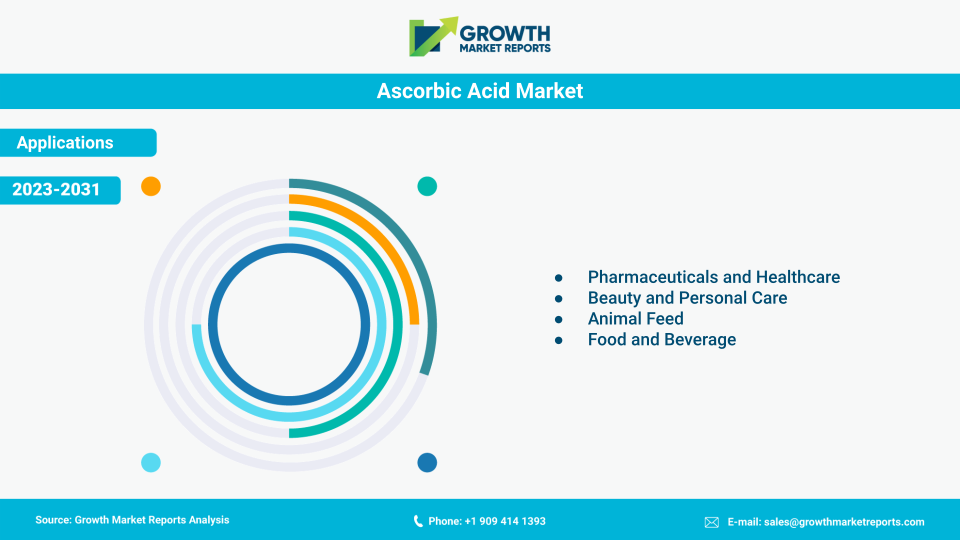
Within the ascorbic acid market, application segmentation encompasses food & beverages, pharmaceuticals, cosmetics & personal care, animal feed, and other emerging uses. The food & beverages sector represents the largest application segment, driven by the widespread use of ascorbic acid as a preservative, antioxidant, and nutritional fortifier. It is extensively added to fruit juices, processed foods, and beverages to prevent oxidation, extend shelf life, and enhance vitamin C content. The growing consumer preference for fortified and functional foods, coupled with regulatory mandates for food safety and nutrition labeling, has significantly boosted the demand for ascorbic acid in this segment.

The pharmaceutical industry is another major consumer of ascorbic acid, utilizing it in the formulation of dietary supplements, multivitamin tablets, injectables, and topical preparations. Its role in immune support, collagen synthesis, and wound healing makes it an indispensable ingredient in both over-the-counter and prescription medications. The rising incidence of vitamin C deficiency, increased focus on preventive healthcare, and expanding geriatric population have all contributed to the growing demand for ascorbic acid in pharmaceuticals. Furthermore, ongoing research into the therapeutic benefits of vitamin C in disease management is expected to create new growth opportunities in this segment.

Cosmetics & personal care is an emerging and rapidly growing application segment for ascorbic acid, driven by its potent antioxidant and skin-brightening properties. It is a key ingredient in anti-aging creams, serums, and lotions, where it helps to neutralize free radicals, stimulate collagen production, and improve skin texture. The increasing consumer demand for natural and effective skincare solutions has prompted manufacturers to incorporate ascorbic acid into a wide range of personal care products. This trend is particularly pronounced in developed markets, where consumers are willing to pay a premium for products that deliver visible results.

The animal feed segment, while smaller in comparison, is witnessing steady growth as ascorbic acid is increasingly recognized for its role in enhancing animal health, immunity, and productivity. It is commonly added to feed formulations for poultry, swine, and aquaculture to improve growth rates, reduce stress, and prevent deficiencies. The rising demand for high-quality animal protein and the adoption of advanced livestock management practices are expected to drive further growth in this segment. Other applications, such as in agriculture and industrial processes, are also emerging as areas of interest, reflecting the versatility and expanding utility of ascorbic acid across diverse sectors.

Distribution Channel Analysis

The distribution channel landscape for ascorbic acid comprises direct sales, distributors/wholesalers, and online retail platforms, each playing a pivotal role in ensuring product availability and accessibility. Direct sales channels are predominantly utilized by large-scale manufacturers and industrial buyers who require bulk quantities and customized specifications. This channel offers the advantage of personalized service, better pricing negotiations, and direct communication with suppliers, which is crucial for maintaining quality standards and ensuring timely deliveries. Direct sales are particularly prevalent in the pharmaceutical and food processing industries, where consistent supply and stringent quality control are paramount.

Distributors and wholesalers constitute a critical link in the ascorbic acid supply chain, bridging the gap between manufacturers and end-users across various industries. These intermediaries facilitate bulk procurement, inventory management, and distribution logistics, enabling manufacturers to reach a broader customer base. Distributors often provide value-added services such as technical support, product customization, and regulatory compliance assistance, making them indispensable partners for both suppliers and buyers. The presence of established distribution networks is especially important in emerging markets, where access to direct sales channels may be limited.

Online retail has emerged as a dynamic and rapidly growing distribution channel for ascorbic acid, driven by the proliferation of e-commerce platforms and changing purchasing behaviors. Online channels offer unparalleled convenience, a wide selection of product options, and competitive pricing, attracting both individual consumers and small-scale businesses. The COVID-19 pandemic accelerated the shift towards online purchasing, with many buyers opting for digital platforms to source raw materials and finished products. As e-commerce continues to gain traction, manufacturers and distributors are increasingly leveraging online channels to expand their reach and enhance customer engagement.

Each distribution channel presents unique advantages and challenges, influencing the choice of procurement strategy for different end-users. While direct sales and distributor networks remain dominant in large-scale industrial applications, online retail is gaining momentum in the consumer and small business segments. The integration of digital technologies, real-time tracking, and data analytics is expected to further streamline distribution processes, improve supply chain efficiency, and enhance the overall customer experience in the ascorbic acid market.

End-User Analysis

The end-user segmentation of the ascorbic acid market encompasses the food industry, pharmaceutical industry, cosmetics industry, animal nutrition, and other specialized sectors. The food industry stands as the largest end-user, leveraging ascorbic acid for its preservative, antioxidant, and fortification properties. Food manufacturers incorporate ascorbic acid into a wide array of products, including beverages, baked goods, confectionery, and processed foods, to enhance nutritional value, improve shelf life, and maintain product quality. The growing trend towards health and wellness, coupled with increasing regulatory emphasis on food safety and nutrition, has reinforced the importance of ascorbic acid in this sector.

The pharmaceutical industry represents a significant and rapidly expanding end-user segment, driven by the widespread use of ascorbic acid in the formulation of dietary supplements, therapeutic agents, and injectables. Its role in immune support, collagen synthesis, and disease prevention has made it a staple ingredient in both prescription and over-the-counter medications. The rising prevalence of vitamin C deficiency, aging populations, and growing consumer awareness of preventive healthcare are key factors driving demand in this segment. Pharmaceutical companies are also exploring innovative delivery formats, such as gummies, effervescent tablets, and liposomal formulations, to enhance bioavailability and consumer appeal.

In the cosmetics industry, ascorbic acid is highly valued for its skin-brightening, anti-aging, and antioxidant properties. It is a key ingredient in a variety of skincare products, including serums, creams, and masks, where it helps to reduce hyperpigmentation, promote collagen synthesis, and protect against environmental damage. The shift towards natural and clean-label beauty products has further propelled the adoption of ascorbic acid, as consumers seek effective and safe solutions for their skincare needs. Cosmetic manufacturers are investing in advanced formulations and delivery systems to maximize the efficacy and stability of ascorbic acid in their products.

Animal nutrition is an emerging end-user segment, with ascorbic acid being increasingly incorporated into feed formulations to enhance animal health, immunity, and productivity. It is particularly beneficial for poultry, swine, and aquaculture, where it helps to mitigate stress, improve growth rates, and prevent deficiencies. The rising demand for high-quality animal protein, coupled with the adoption of modern livestock management practices, is expected to drive further growth in this segment. Other end-users, such as agriculture and industrial sectors, are also exploring the potential of ascorbic acid for specialized applications, reflecting its versatility and broad utility.

Opportunities & Threats

The ascorbic acid market presents significant opportunities for growth and innovation, driven by evolving consumer preferences, technological advancements, and expanding application areas. One of the most promising opportunities lies in the development of new product formulations and delivery systems that enhance the stability, bioavailability, and efficacy of ascorbic acid. Manufacturers are investing in research and development to create advanced formulations, such as encapsulated and liposomal vitamin C, which offer improved absorption and prolonged shelf life. These innovations are expected to unlock new growth avenues in the pharmaceutical, nutraceutical, and cosmetics industries, catering to the evolving needs of health-conscious consumers.

Another key opportunity is the increasing demand for natural and clean-label ingredients across the food, beverage, and personal care sectors. As consumers become more discerning about product ingredients and safety, there is a growing preference for naturally derived ascorbic acid and bio-based production methods. Manufacturers that can offer certified organic, non-GMO, and sustainably sourced ascorbic acid are well-positioned to capture a larger share of the market. Additionally, the rising adoption of ascorbic acid in emerging markets, driven by urbanization, rising incomes, and expanding healthcare infrastructure, presents lucrative opportunities for market expansion and diversification.

Despite the positive outlook, the ascorbic acid market faces certain restraining factors that could impede its growth. One of the primary challenges is the volatility in raw material prices, particularly for glucose and corn, which are key feedstocks in ascorbic acid production. Fluctuations in supply and pricing can impact production costs and profit margins, especially for manufacturers operating on thin margins. Additionally, the market is subject to stringent regulatory requirements and quality standards, particularly in the food and pharmaceutical sectors. Compliance with these regulations necessitates significant investments in quality control, testing, and certification, which can pose barriers to entry for small and medium-sized enterprises. Furthermore, the increasing competition from synthetic alternatives and substitute ingredients could also limit market growth in certain applications.

Regional Outlook

The Asia Pacific region dominates the global ascorbic acid market, accounting for the largest share with a market value of USD 610 million in 2024. This dominance is primarily attributed to the strong manufacturing base in China, which is the world’s leading producer and exporter of ascorbic acid. The region benefits from abundant raw material availability, cost-effective production processes, and a rapidly growing consumer base. The rising demand for fortified foods, dietary supplements, and pharmaceuticals, coupled with increasing health awareness and urbanization, has further boosted market growth in Asia Pacific. The region is expected to maintain its leadership position, with a projected CAGR of 6.2% through 2033.

North America is the second-largest market for ascorbic acid, valued at USD 310 million in 2024. The region’s growth is driven by high health consciousness, robust demand from the food, pharmaceutical, and cosmetics industries, and stringent regulatory standards for product quality and safety. The United States is the primary contributor to regional market growth, with a well-established supply chain, advanced manufacturing capabilities, and a strong focus on innovation. The increasing adoption of ascorbic acid in functional foods, dietary supplements, and personal care products is expected to sustain market growth in North America over the forecast period.

Europe follows closely, with a market size of USD 255 million in 2024, supported by a mature food and beverage industry, high consumer awareness, and strict regulatory frameworks. Countries such as Germany, France, and the United Kingdom are key markets within the region, characterized by strong demand for natural and clean-label ingredients. The cosmetics and personal care sector is also a significant driver of ascorbic acid consumption in Europe, reflecting the region’s focus on premium skincare products. Latin America and the Middle East & Africa, while currently holding smaller market shares, are poised for steady growth due to rising urbanization, expanding middle-class populations, and increasing investments in healthcare and nutrition.

Ascorbic Acid Market Statistics

Competitor Outlook

The global ascorbic acid market is characterized by intense competition, with a mix of multinational corporations, regional players, and specialized manufacturers vying for market share. The competitive landscape is shaped by factors such as product quality, pricing strategies, innovation, distribution networks, and regulatory compliance. Leading companies are increasingly focusing on research and development to introduce advanced formulations, improve production efficiency, and enhance product purity. Strategic collaborations, mergers and acquisitions, and capacity expansions are common strategies adopted by key players to strengthen their market position and expand their global footprint.

Innovation remains a key differentiator in the ascorbic acid market, with companies investing in the development of novel delivery systems, such as encapsulated and liposomal vitamin C, to enhance bioavailability and stability. Sustainability is also emerging as a critical focus area, with manufacturers exploring bio-based production methods, renewable raw materials, and eco-friendly packaging solutions to meet the evolving preferences of consumers and regulatory requirements. The integration of digital technologies, such as real-time monitoring and data analytics, is further enhancing operational efficiency and supply chain management, enabling companies to respond swiftly to changing market dynamics.

The market is also witnessing increased competition from low-cost producers, particularly in Asia Pacific, where favorable production economics and abundant raw material availability provide a competitive edge. However, leading players in North America and Europe are leveraging their technological expertise, strong brand equity, and established customer relationships to maintain their leadership positions. The ability to offer high-quality, certified, and compliant products is a key success factor, especially in regulated markets such as food, pharmaceuticals, and cosmetics.

Major companies operating in the ascorbic acid market include DSM Nutritional Products, BASF SE, Shandong Luwei Pharmaceutical, North China Pharmaceutical Group, Jiangsu Jiangshan Pharmaceutical, China Pharmaceutical Group, and Foodchem International Corporation. DSM Nutritional Products is renowned for its extensive portfolio of nutritional ingredients and commitment to sustainability, while BASF SE is a global leader in chemical innovation and specialty ingredients. Shandong Luwei Pharmaceutical and North China Pharmaceutical Group are prominent Chinese manufacturers with strong export capabilities and a focus on quality and compliance. Jiangsu Jiangshan Pharmaceutical and China Pharmaceutical Group are key players in the Asia Pacific region, leveraging their production scale and technological expertise to cater to global demand. Foodchem International Corporation specializes in the supply of food additives and ingredients, serving a diverse customer base across multiple industries. These companies are continually investing in capacity expansion, product innovation, and strategic partnerships to capitalize on emerging opportunities and maintain their competitive edge in the dynamic ascorbic acid market.

Key Players

  • DSM Nutritional Products
  • BASF SE
  • CSPC Pharmaceutical Group Limited
  • Shandong Luwei Pharmaceutical Co., Ltd.
  • Northeast Pharmaceutical Group Co., Ltd.
  • Zhejiang NHU Co., Ltd.
  • Shandong Tianli Pharmaceutical Co., Ltd.
  • Anhui Tiger Biotech Co., Ltd.
  • Shandong Xingfa Pharmaceutical Co., Ltd.
  • North China Pharmaceutical Co., Ltd.
  • Jiangsu Jiangshan Pharmaceutical Co., Ltd.
  • Qingdao Kangyuan Pharmaceutical Co., Ltd.
  • Hebei Welcome Pharmaceutical Co., Ltd.
  • Merck KGaA
  • Pfizer Inc.
  • GlaxoSmithKline plc
  • Sanofi S.A.
  • Amway Corporation
  • NOW Foods
  • Pharmavite LLC
Ascorbic Acid Market Overview

Segments

The Ascorbic Acid market has been segmented on the basis of

Product Type

  • Powder
  • Granules
  • Liquid

Application

  • Food & Beverages
  • Pharmaceuticals
  • Cosmetics & Personal Care
  • Animal Feed
  • Others

Distribution Channel

  • Direct Sales
  • Distributors/Wholesalers
  • Online Retail

End-User

  • Food Industry
  • Pharmaceutical Industry
  • Cosmetics Industry
  • Animal Nutrition
  • Others

Competitive Landscape

Key players competing in the global ascorbic acid market includes Foodchem International Corporation, Northeast Phamaceutical Group, Merck KGaA, Shandong Luwei Pharmaceutical, BASF, DSM, Spec-chem, Topscience, Luckerkong Biotech, Bactolac Pharmaceutical Inc., Aland Nutraceuticals Group, Chengxin Pharma, King-pharm, FreShine, CSPC Pharmaceutical Group Ltd., GFS Chemicals Inc., Spectrum Chemical Mfg. Corp., and Haviland Enterprises Inc.

Some of these players are using several market strategies such as acquisitions, merger, collaborations, partnerships, capacity expansion, and product launches to enhance their market shares and raise their production line of the business in the coming year.
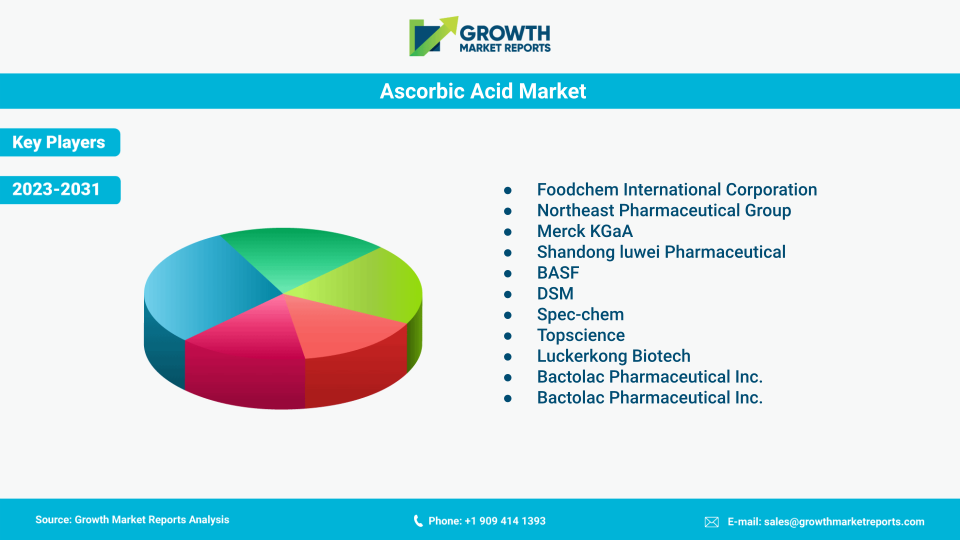

Ascorbic Acid Market Key Players

Frequently Asked Questions

Opportunities include the development of advanced formulations and the growing demand for natural, clean-label ingredients. Challenges involve raw material price volatility, regulatory compliance, and competition from synthetic alternatives.

Major companies include DSM Nutritional Products, BASF SE, CSPC Pharmaceutical Group, Shandong Luwei Pharmaceutical, North China Pharmaceutical Group, Jiangsu Jiangshan Pharmaceutical, and Foodchem International Corporation.

Ascorbic acid is distributed through direct sales, distributors/wholesalers, and online retail platforms. Direct sales are common for bulk buyers, while online retail is growing rapidly for small-scale and consumer purchases.

In pharmaceuticals, ascorbic acid is used in dietary supplements, multivitamin tablets, injectables, and topical preparations. In cosmetics, it is valued for its antioxidant and skin-brightening properties, featured in anti-aging creams and serums.

In food and beverages, ascorbic acid is used as a preservative, antioxidant, and nutritional fortifier, commonly added to juices, processed foods, and beverages to prevent oxidation and enhance vitamin C content.

Asia Pacific dominates the market, led by China as the world’s largest producer and exporter. North America and Europe follow, driven by high health awareness and strong demand from various industries.

Ascorbic acid is available in powder, granules, and liquid forms. Powdered ascorbic acid is the most widely used due to its stability and versatility, while granules and liquid forms cater to specific application needs.

The largest consumers are the food & beverage, pharmaceutical, and cosmetics & personal care industries, with growing usage in animal feed and emerging applications in agriculture and industrial processes.

Key growth drivers include increasing health consciousness, rising demand from the food and pharmaceutical sectors, advancements in production technologies, and the expanding use of ascorbic acid in cosmetics and animal nutrition.

The ascorbic acid market reached USD 1.32 billion in 2024 and is projected to grow at a CAGR of 5.8% from 2025 to 2033, reaching an estimated USD 2.19 billion by 2033.

Table Of Content

Chapter 1 Executive Summary
Chapter 2 Assumptions and Acronyms Used
Chapter 3 Research Methodology
Chapter 4 Ascorbic Acid Market Overview
   4.1 Introduction
      4.1.1 Market Taxonomy
      4.1.2 Market Definition
      4.1.3 Macro-Economic Factors Impacting the Market Growth
   4.2 Ascorbic Acid Market Dynamics
      4.2.1 Market Drivers
      4.2.2 Market Restraints
      4.2.3 Market Opportunity
   4.3 Ascorbic Acid Market - Supply Chain Analysis
      4.3.1 List of Key Suppliers
      4.3.2 List of Key Distributors
      4.3.3 List of Key Consumers
   4.4 Key Forces Shaping the Ascorbic Acid Market
      4.4.1 Bargaining Power of Suppliers
      4.4.2 Bargaining Power of Buyers
      4.4.3 Threat of Substitution
      4.4.4 Threat of New Entrants
      4.4.5 Competitive Rivalry
   4.5 Global Ascorbic Acid Market Size & Forecast, 2023-2032
      4.5.1 Ascorbic Acid Market Size and Y-o-Y Growth
      4.5.2 Ascorbic Acid Market Absolute $ Opportunity

Chapter 5 Global Ascorbic Acid Market Analysis and Forecast By Product Type
   5.1 Introduction
      5.1.1 Key Market Trends & Growth Opportunities By Product Type
      5.1.2 Basis Point Share (BPS) Analysis By Product Type
      5.1.3 Absolute $ Opportunity Assessment By Product Type
   5.2 Ascorbic Acid Market Size Forecast By Product Type
      5.2.1 Powder
      5.2.2 Granules
      5.2.3 Liquid
   5.3 Market Attractiveness Analysis By Product Type

Chapter 6 Global Ascorbic Acid Market Analysis and Forecast By Application
   6.1 Introduction
      6.1.1 Key Market Trends & Growth Opportunities By Application
      6.1.2 Basis Point Share (BPS) Analysis By Application
      6.1.3 Absolute $ Opportunity Assessment By Application
   6.2 Ascorbic Acid Market Size Forecast By Application
      6.2.1 Food & Beverages
      6.2.2 Pharmaceuticals
      6.2.3 Cosmetics & Personal Care
      6.2.4 Animal Feed
      6.2.5 Others
   6.3 Market Attractiveness Analysis By Application

Chapter 7 Global Ascorbic Acid Market Analysis and Forecast By Distribution Channel
   7.1 Introduction
      7.1.1 Key Market Trends & Growth Opportunities By Distribution Channel
      7.1.2 Basis Point Share (BPS) Analysis By Distribution Channel
      7.1.3 Absolute $ Opportunity Assessment By Distribution Channel
   7.2 Ascorbic Acid Market Size Forecast By Distribution Channel
      7.2.1 Direct Sales
      7.2.2 Distributors/Wholesalers
      7.2.3 Online Retail
   7.3 Market Attractiveness Analysis By Distribution Channel

Chapter 8 Global Ascorbic Acid Market Analysis and Forecast By End-User
   8.1 Introduction
      8.1.1 Key Market Trends & Growth Opportunities By End-User
      8.1.2 Basis Point Share (BPS) Analysis By End-User
      8.1.3 Absolute $ Opportunity Assessment By End-User
   8.2 Ascorbic Acid Market Size Forecast By End-User
      8.2.1 Food Industry
      8.2.2 Pharmaceutical Industry
      8.2.3 Cosmetics Industry
      8.2.4 Animal Nutrition
      8.2.5 Others
   8.3 Market Attractiveness Analysis By End-User

Chapter 9 Global Ascorbic Acid Market Analysis and Forecast by Region
   9.1 Introduction
      9.1.1 Key Market Trends & Growth Opportunities By Region
      9.1.2 Basis Point Share (BPS) Analysis By Region
      9.1.3 Absolute $ Opportunity Assessment By Region
   9.2 Ascorbic Acid Market Size Forecast By Region
      9.2.1 North America
      9.2.2 Europe
      9.2.3 Asia Pacific
      9.2.4 Latin America
      9.2.5 Middle East & Africa (MEA)
   9.3 Market Attractiveness Analysis By Region

Chapter 10 Coronavirus Disease (COVID-19) Impact 
   10.1 Introduction 
   10.2 Current & Future Impact Analysis 
   10.3 Economic Impact Analysis 
   10.4 Government Policies 
   10.5 Investment Scenario

Chapter 11 North America Ascorbic Acid Analysis and Forecast
   11.1 Introduction
   11.2 North America Ascorbic Acid Market Size Forecast by Country
      11.2.1 U.S.
      11.2.2 Canada
   11.3 Basis Point Share (BPS) Analysis by Country
   11.4 Absolute $ Opportunity Assessment by Country
   11.5 Market Attractiveness Analysis by Country
   11.6 North America Ascorbic Acid Market Size Forecast By Product Type
      11.6.1 Powder
      11.6.2 Granules
      11.6.3 Liquid
   11.7 Basis Point Share (BPS) Analysis By Product Type 
   11.8 Absolute $ Opportunity Assessment By Product Type 
   11.9 Market Attractiveness Analysis By Product Type
   11.10 North America Ascorbic Acid Market Size Forecast By Application
      11.10.1 Food & Beverages
      11.10.2 Pharmaceuticals
      11.10.3 Cosmetics & Personal Care
      11.10.4 Animal Feed
      11.10.5 Others
   11.11 Basis Point Share (BPS) Analysis By Application 
   11.12 Absolute $ Opportunity Assessment By Application 
   11.13 Market Attractiveness Analysis By Application
   11.14 North America Ascorbic Acid Market Size Forecast By Distribution Channel
      11.14.1 Direct Sales
      11.14.2 Distributors/Wholesalers
      11.14.3 Online Retail
   11.15 Basis Point Share (BPS) Analysis By Distribution Channel 
   11.16 Absolute $ Opportunity Assessment By Distribution Channel 
   11.17 Market Attractiveness Analysis By Distribution Channel
   11.18 North America Ascorbic Acid Market Size Forecast By End-User
      11.18.1 Food Industry
      11.18.2 Pharmaceutical Industry
      11.18.3 Cosmetics Industry
      11.18.4 Animal Nutrition
      11.18.5 Others
   11.19 Basis Point Share (BPS) Analysis By End-User 
   11.20 Absolute $ Opportunity Assessment By End-User 
   11.21 Market Attractiveness Analysis By End-User

Chapter 12 Europe Ascorbic Acid Analysis and Forecast
   12.1 Introduction
   12.2 Europe Ascorbic Acid Market Size Forecast by Country
      12.2.1 Germany
      12.2.2 France
      12.2.3 Italy
      12.2.4 U.K.
      12.2.5 Spain
      12.2.6 Russia
      12.2.7 Rest of Europe
   12.3 Basis Point Share (BPS) Analysis by Country
   12.4 Absolute $ Opportunity Assessment by Country
   12.5 Market Attractiveness Analysis by Country
   12.6 Europe Ascorbic Acid Market Size Forecast By Product Type
      12.6.1 Powder
      12.6.2 Granules
      12.6.3 Liquid
   12.7 Basis Point Share (BPS) Analysis By Product Type 
   12.8 Absolute $ Opportunity Assessment By Product Type 
   12.9 Market Attractiveness Analysis By Product Type
   12.10 Europe Ascorbic Acid Market Size Forecast By Application
      12.10.1 Food & Beverages
      12.10.2 Pharmaceuticals
      12.10.3 Cosmetics & Personal Care
      12.10.4 Animal Feed
      12.10.5 Others
   12.11 Basis Point Share (BPS) Analysis By Application 
   12.12 Absolute $ Opportunity Assessment By Application 
   12.13 Market Attractiveness Analysis By Application
   12.14 Europe Ascorbic Acid Market Size Forecast By Distribution Channel
      12.14.1 Direct Sales
      12.14.2 Distributors/Wholesalers
      12.14.3 Online Retail
   12.15 Basis Point Share (BPS) Analysis By Distribution Channel 
   12.16 Absolute $ Opportunity Assessment By Distribution Channel 
   12.17 Market Attractiveness Analysis By Distribution Channel
   12.18 Europe Ascorbic Acid Market Size Forecast By End-User
      12.18.1 Food Industry
      12.18.2 Pharmaceutical Industry
      12.18.3 Cosmetics Industry
      12.18.4 Animal Nutrition
      12.18.5 Others
   12.19 Basis Point Share (BPS) Analysis By End-User 
   12.20 Absolute $ Opportunity Assessment By End-User 
   12.21 Market Attractiveness Analysis By End-User

Chapter 13 Asia Pacific Ascorbic Acid Analysis and Forecast
   13.1 Introduction
   13.2 Asia Pacific Ascorbic Acid Market Size Forecast by Country
      13.2.1 China
      13.2.2 Japan
      13.2.3 South Korea
      13.2.4 India
      13.2.5 Australia
      13.2.6 South East Asia (SEA)
      13.2.7 Rest of Asia Pacific (APAC)
   13.3 Basis Point Share (BPS) Analysis by Country
   13.4 Absolute $ Opportunity Assessment by Country
   13.5 Market Attractiveness Analysis by Country
   13.6 Asia Pacific Ascorbic Acid Market Size Forecast By Product Type
      13.6.1 Powder
      13.6.2 Granules
      13.6.3 Liquid
   13.7 Basis Point Share (BPS) Analysis By Product Type 
   13.8 Absolute $ Opportunity Assessment By Product Type 
   13.9 Market Attractiveness Analysis By Product Type
   13.10 Asia Pacific Ascorbic Acid Market Size Forecast By Application
      13.10.1 Food & Beverages
      13.10.2 Pharmaceuticals
      13.10.3 Cosmetics & Personal Care
      13.10.4 Animal Feed
      13.10.5 Others
   13.11 Basis Point Share (BPS) Analysis By Application 
   13.12 Absolute $ Opportunity Assessment By Application 
   13.13 Market Attractiveness Analysis By Application
   13.14 Asia Pacific Ascorbic Acid Market Size Forecast By Distribution Channel
      13.14.1 Direct Sales
      13.14.2 Distributors/Wholesalers
      13.14.3 Online Retail
   13.15 Basis Point Share (BPS) Analysis By Distribution Channel 
   13.16 Absolute $ Opportunity Assessment By Distribution Channel 
   13.17 Market Attractiveness Analysis By Distribution Channel
   13.18 Asia Pacific Ascorbic Acid Market Size Forecast By End-User
      13.18.1 Food Industry
      13.18.2 Pharmaceutical Industry
      13.18.3 Cosmetics Industry
      13.18.4 Animal Nutrition
      13.18.5 Others
   13.19 Basis Point Share (BPS) Analysis By End-User 
   13.20 Absolute $ Opportunity Assessment By End-User 
   13.21 Market Attractiveness Analysis By End-User

Chapter 14 Latin America Ascorbic Acid Analysis and Forecast
   14.1 Introduction
   14.2 Latin America Ascorbic Acid Market Size Forecast by Country
      14.2.1 Brazil
      14.2.2 Mexico
      14.2.3 Rest of Latin America (LATAM)
   14.3 Basis Point Share (BPS) Analysis by Country
   14.4 Absolute $ Opportunity Assessment by Country
   14.5 Market Attractiveness Analysis by Country
   14.6 Latin America Ascorbic Acid Market Size Forecast By Product Type
      14.6.1 Powder
      14.6.2 Granules
      14.6.3 Liquid
   14.7 Basis Point Share (BPS) Analysis By Product Type 
   14.8 Absolute $ Opportunity Assessment By Product Type 
   14.9 Market Attractiveness Analysis By Product Type
   14.10 Latin America Ascorbic Acid Market Size Forecast By Application
      14.10.1 Food & Beverages
      14.10.2 Pharmaceuticals
      14.10.3 Cosmetics & Personal Care
      14.10.4 Animal Feed
      14.10.5 Others
   14.11 Basis Point Share (BPS) Analysis By Application 
   14.12 Absolute $ Opportunity Assessment By Application 
   14.13 Market Attractiveness Analysis By Application
   14.14 Latin America Ascorbic Acid Market Size Forecast By Distribution Channel
      14.14.1 Direct Sales
      14.14.2 Distributors/Wholesalers
      14.14.3 Online Retail
   14.15 Basis Point Share (BPS) Analysis By Distribution Channel 
   14.16 Absolute $ Opportunity Assessment By Distribution Channel 
   14.17 Market Attractiveness Analysis By Distribution Channel
   14.18 Latin America Ascorbic Acid Market Size Forecast By End-User
      14.18.1 Food Industry
      14.18.2 Pharmaceutical Industry
      14.18.3 Cosmetics Industry
      14.18.4 Animal Nutrition
      14.18.5 Others
   14.19 Basis Point Share (BPS) Analysis By End-User 
   14.20 Absolute $ Opportunity Assessment By End-User 
   14.21 Market Attractiveness Analysis By End-User

Chapter 15 Middle East & Africa (MEA) Ascorbic Acid Analysis and Forecast
   15.1 Introduction
   15.2 Middle East & Africa (MEA) Ascorbic Acid Market Size Forecast by Country
      15.2.1 Saudi Arabia
      15.2.2 South Africa
      15.2.3 UAE
      15.2.4 Rest of Middle East & Africa (MEA)
   15.3 Basis Point Share (BPS) Analysis by Country
   15.4 Absolute $ Opportunity Assessment by Country
   15.5 Market Attractiveness Analysis by Country
   15.6 Middle East & Africa (MEA) Ascorbic Acid Market Size Forecast By Product Type
      15.6.1 Powder
      15.6.2 Granules
      15.6.3 Liquid
   15.7 Basis Point Share (BPS) Analysis By Product Type 
   15.8 Absolute $ Opportunity Assessment By Product Type 
   15.9 Market Attractiveness Analysis By Product Type
   15.10 Middle East & Africa (MEA) Ascorbic Acid Market Size Forecast By Application
      15.10.1 Food & Beverages
      15.10.2 Pharmaceuticals
      15.10.3 Cosmetics & Personal Care
      15.10.4 Animal Feed
      15.10.5 Others
   15.11 Basis Point Share (BPS) Analysis By Application 
   15.12 Absolute $ Opportunity Assessment By Application 
   15.13 Market Attractiveness Analysis By Application
   15.14 Middle East & Africa (MEA) Ascorbic Acid Market Size Forecast By Distribution Channel
      15.14.1 Direct Sales
      15.14.2 Distributors/Wholesalers
      15.14.3 Online Retail
   15.15 Basis Point Share (BPS) Analysis By Distribution Channel 
   15.16 Absolute $ Opportunity Assessment By Distribution Channel 
   15.17 Market Attractiveness Analysis By Distribution Channel
   15.18 Middle East & Africa (MEA) Ascorbic Acid Market Size Forecast By End-User
      15.18.1 Food Industry
      15.18.2 Pharmaceutical Industry
      15.18.3 Cosmetics Industry
      15.18.4 Animal Nutrition
      15.18.5 Others
   15.19 Basis Point Share (BPS) Analysis By End-User 
   15.20 Absolute $ Opportunity Assessment By End-User 
   15.21 Market Attractiveness Analysis By End-User

Chapter 16 Competition Landscape 
   16.1 Ascorbic Acid Market: Competitive Dashboard
   16.2 Global Ascorbic Acid Market: Market Share Analysis, 2023
   16.3 Company Profiles (Details – Overview, Financials, Developments, Strategy) 
      16.3.1 DSM Nutritional Products
BASF SE
CSPC Pharmaceutical Group Limited
Shandong Luwei Pharmaceutical Co., Ltd.
Northeast Pharmaceutical Group Co., Ltd.
Zhejiang NHU Co., Ltd.
Shandong Tianli Pharmaceutical Co., Ltd.
Anhui Tiger Biotech Co., Ltd.
Shandong Xingfa Pharmaceutical Co., Ltd.
North China Pharmaceutical Co., Ltd.
Jiangsu Jiangshan Pharmaceutical Co., Ltd.
Qingdao Kangyuan Pharmaceutical Co., Ltd.
Hebei Welcome Pharmaceutical Co., Ltd.
Merck KGaA
Pfizer Inc.
GlaxoSmithKline plc
Sanofi S.A.
Amway Corporation
NOW Foods
Pharmavite LLC

Methodology

Our Clients

Honda Motor Co. Ltd.
The John Holland Group
Microsoft
Siemens Healthcare
Dassault Aviation
General Mills
General Electric
Nestle SA