Segments - by Material Type (Polyethylene, Polypropylene, Nylon, Others), by Application (Sports, Residential, Commercial, Others), by Installation Type (Flooring, Wall Cladding, Others), by Infill Material (Rubber, Sand, Plant-Based, Others), by Distribution Channel (Direct Sales, Online Retail, Specialty Stores, Others)
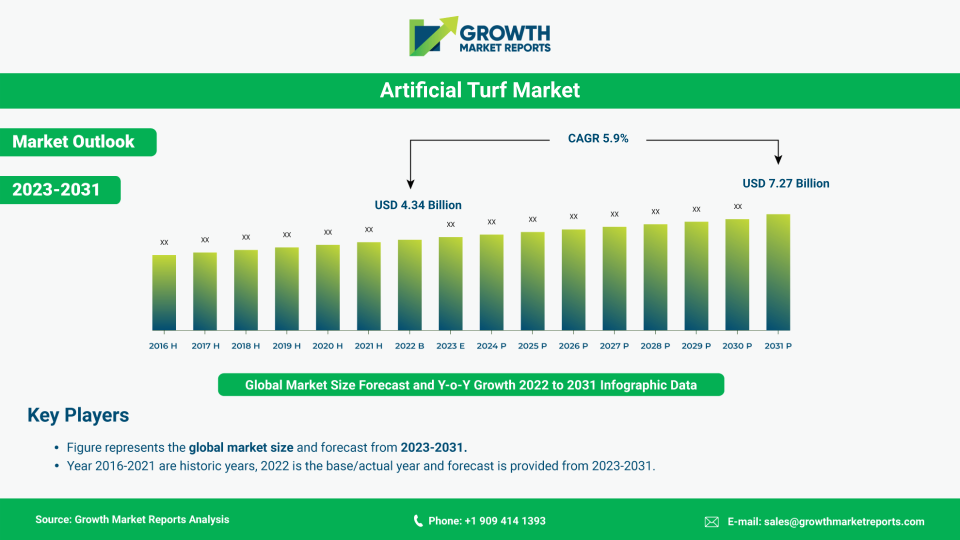
According to our latest research, the global artificial turf market size reached USD 4.7 billion in 2024, driven by surging demand across sports, residential, and commercial segments. The market is witnessing robust expansion with a CAGR of 6.8% from 2025 to 2033, projecting the market value to attain approximately USD 8.8 billion by 2033. This growth is primarily fueled by the increasing adoption of artificial turf due to its low maintenance requirements, environmental benefits, and rising investments in sports infrastructure worldwide.
One of the primary growth factors for the artificial turf market is the significant shift in consumer preference toward sustainable landscaping solutions. With growing concerns over water scarcity and environmental conservation, artificial turf offers a compelling alternative to natural grass by drastically reducing water consumption, fertilizer usage, and maintenance costs. Municipalities, schools, and commercial property owners are increasingly opting for artificial turf to create lush green spaces that remain vibrant throughout the year, regardless of weather conditions. This trend is further amplified by government initiatives and regulatory support for water conservation, especially in regions prone to drought, thus propelling the market’s expansion.
Another key driver is the rapid proliferation of sports infrastructure projects across the globe. The demand for artificial turf in stadiums, training grounds, and multi-purpose sports arenas has soared owing to its superior durability, safety features, and ability to withstand heavy usage. Sports organizations and facility managers are increasingly investing in high-quality synthetic turf to ensure consistent playing conditions, reduce downtime for maintenance, and extend the usability of fields. Furthermore, the evolution of advanced turf materials such as polyethylene and nylon has enhanced playing performance and athlete safety, further encouraging adoption in both professional and community sports settings.
Technological advancements in artificial turf manufacturing have also played a pivotal role in market growth. Innovations in fiber technology, infill materials, and installation techniques have resulted in products that closely mimic the look and feel of natural grass while offering enhanced resilience and longevity. Manufacturers are now able to customize turf solutions based on specific application requirements, such as anti-microbial properties for playgrounds or UV-resistant fibers for outdoor installations. These advancements not only improve user experience but also expand the addressable market across diverse end-use segments, including residential landscaping and commercial real estate developments.
From a regional perspective, the artificial turf market exhibits a dynamic and diverse growth trajectory. North America continues to dominate the market, underpinned by robust investments in sports infrastructure and widespread adoption in landscaping applications. Meanwhile, Europe is witnessing accelerated growth due to stringent environmental regulations and a strong focus on sustainability. The Asia Pacific region is emerging as a lucrative market, driven by rapid urbanization, rising disposable incomes, and increasing awareness of water conservation practices. Latin America and the Middle East & Africa are also experiencing steady growth, supported by government-led infrastructure projects and growing demand for cost-effective landscaping solutions.
The artificial turf market is segmented by material type into polyethylene, polypropylene, nylon, and others, each offering unique performance characteristics and application advantages. Polyethylene is the most widely used material, prized for its soft texture, vibrant color, and high durability, making it ideal for sports fields and residential lawns. Its resilience to UV radiation and ability to maintain an attractive appearance over time have made polyethylene the preferred choice among end-users seeking a natural look and feel. Manufacturers are continually innovating polyethylene-based turf to enhance its performance attributes, such as improved drainage and resistance to matting, ensuring long-term satisfaction and minimal maintenance for users.
Polypropylene, on the other hand, is favored in applications where cost-effectiveness and versatility are paramount. While it may not match the softness of polyethylene, polypropylene offers excellent resistance to abrasion and moisture, making it suitable for indoor sports facilities, playgrounds, and decorative landscaping. Its lower price point and ease of installation have contributed to its popularity in budget-sensitive projects, particularly in emerging markets. However, advancements in manufacturing processes are enabling polypropylene turf to achieve better aesthetics and performance, narrowing the gap with premium materials and broadening its adoption across various sectors.
Nylon represents the premium segment within the artificial turf material landscape, renowned for its exceptional strength, resilience, and longevity. It is particularly valued in high-traffic areas and sports applications that demand superior performance under intense use. Nylon fibers can withstand heavy footfall, resist crushing, and maintain their upright position, ensuring a consistently attractive and functional surface. Despite its higher cost compared to other materials, nylon’s long-term value proposition, especially in commercial and institutional settings, continues to drive demand. Recent innovations in nylon turf have focused on enhancing its environmental profile and reducing production costs, making it more accessible to a broader range of customers.
The “others” category includes emerging materials and hybrid solutions designed to address specific application needs. These may incorporate recycled plastics, bio-based polymers, or composite fibers that offer unique combinations of sustainability, performance, and cost efficiency. As environmental concerns gain traction, manufacturers are exploring these alternative materials to reduce the carbon footprint of artificial turf products and cater to eco-conscious consumers. The ongoing research and development in this segment are expected to yield innovative solutions that will further diversify the material landscape and support the market’s long-term growth trajectory.
| Attributes | Details |
| Report Title | Artificial Turf Market Research Report 2033 |
| By Material Type | Polyethylene, Polypropylene, Nylon, Others |
| By Application | Sports, Residential, Commercial, Others |
| By Installation Type | Flooring, Wall Cladding, Others |
| By Infill Material | Rubber, Sand, Plant-Based, Others |
| By Distribution Channel | Direct Sales, Online Retail, Specialty Stores, Others |
| Regions Covered | North America, Europe, APAC, Latin America, MEA |
| Base Year | 2024 |
| Historic Data | 2018-2023 |
| Forecast Period | 2025-2033 |
| Number of Pages | 268 |
| Number of Tables & Figures | 339 |
| Customization Available | Yes, the report can be customized as per your need. |
The application segment of the artificial turf market encompasses sports, residential, commercial, and others, each representing distinct demand drivers and growth opportunities. The sports segment remains the largest and most influential, accounting for a significant share of the market. The adoption of artificial turf in football, soccer, hockey, and multi-purpose stadiums has surged in recent years due to its ability to provide consistent playing conditions, reduce maintenance downtime, and ensure athlete safety. The growing popularity of community sports programs, school athletics, and recreational facilities is also fueling demand for synthetic turf, as organizations seek cost-effective solutions that deliver long-term value and performance.
In the residential segment, artificial turf is increasingly being embraced by homeowners seeking attractive, low-maintenance landscaping options. Urbanization, shrinking yard sizes, and water restrictions have driven the shift away from natural grass lawns to synthetic alternatives that require minimal upkeep and remain green year-round. Homeowners are drawn to the aesthetic appeal, durability, and environmental benefits of artificial turf, including reduced water usage and elimination of harmful pesticides and fertilizers. The availability of a wide range of turf styles, textures, and colors allows for customization to suit individual preferences, further boosting adoption in the residential sector.
Commercial applications of artificial turf span a broad spectrum, including office complexes, retail centers, hotels, and public spaces. Businesses are leveraging synthetic turf to create visually appealing outdoor areas, rooftop gardens, and recreational zones that enhance customer experience and employee well-being. The ability to withstand heavy foot traffic, resist fading, and maintain a pristine appearance with minimal maintenance makes artificial turf an attractive investment for commercial property owners. Additionally, the growing trend of green building certifications and sustainable construction practices is prompting developers to incorporate artificial turf into their landscape designs, driving further market growth.
The “others” category in application analysis includes specialized uses such as pet areas, playgrounds, and event venues. Artificial turf is gaining traction in these niche segments due to its safety features, ease of cleaning, and adaptability to various environments. For instance, pet-friendly turf solutions are designed with enhanced drainage and antimicrobial properties to ensure hygiene and comfort for animals, while playground turf is engineered for shock absorption and injury prevention. The versatility and performance benefits of artificial turf are opening new avenues for market expansion across diverse end-use scenarios.
Installation type is a critical consideration in the artificial turf market, with flooring, wall cladding, and others representing the primary segments. Flooring remains the dominant installation type, accounting for the majority of artificial turf applications in sports fields, residential lawns, commercial landscapes, and playgrounds. The ease of installation, adaptability to various surfaces, and ability to create seamless, durable green spaces have made flooring the go-to choice for most projects. Advances in sub-base preparation, drainage systems, and adhesive technologies have further improved the performance and longevity of artificial turf flooring, ensuring optimal results for end-users.
Wall cladding is an emerging trend in the artificial turf market, driven by the growing demand for innovative interior and exterior design solutions. Artificial turf wall installations are increasingly being used to create green feature walls, vertical gardens, and decorative accents in commercial, hospitality, and residential settings. The unique aesthetic appeal, sound-absorbing properties, and low maintenance requirements of turf wall cladding make it an attractive option for architects and designers seeking to bring nature-inspired elements into built environments. As urban spaces become more compact and the biophilic design movement gains momentum, the adoption of artificial turf for wall applications is expected to rise significantly in the coming years.
The “others” installation type encompasses a variety of specialized applications, such as portable mats, event flooring, and temporary installations for exhibitions or trade shows. These solutions offer flexibility and convenience for users who require short-term or mobile green spaces without the commitment of permanent installation. The development of lightweight, modular turf systems has expanded the possibilities for creative and functional uses of artificial turf in diverse settings, from pop-up retail stores to outdoor festivals. As the market continues to evolve, manufacturers are introducing new installation methods and accessories to meet the growing demand for versatile and customizable turf solutions.
The choice of installation type is often influenced by factors such as budget, project scope, intended use, and aesthetic preferences. Flooring installations typically require more extensive site preparation and professional expertise, while wall cladding and temporary solutions may be installed with minimal disruption and lower costs. End-users are increasingly seeking guidance from industry experts and certified installers to ensure optimal results and maximize the lifespan of their artificial turf investments. The ongoing innovation in installation techniques and materials is expected to drive further market growth and enhance user satisfaction across all segments.
Infill material plays a crucial role in the performance, safety, and environmental impact of artificial turf systems. The primary infill materials include rubber, sand, plant-based, and others, each offering distinct advantages and considerations. Rubber infill, derived from recycled tires, is widely used in sports turf applications for its shock-absorbing properties, durability, and ability to provide a stable playing surface. It helps to cushion falls, reduce the risk of injuries, and maintain consistent ball bounce and traction. However, concerns over the potential health and environmental risks associated with rubber infill have prompted ongoing research and the development of alternative materials.
Sand infill is another popular choice, particularly in landscaping and residential applications. It offers excellent stability, drainage, and support for turf fibers, helping to maintain an upright and natural appearance. Sand infill is non-toxic, readily available, and cost-effective, making it an attractive option for a wide range of projects. However, it may not provide the same level of shock absorption as rubber, which can be a consideration in high-impact sports environments. Manufacturers are continually refining sand infill formulations to enhance performance characteristics and address specific application needs.
Plant-based infill materials are gaining traction as environmentally friendly alternatives to traditional options. Made from natural substances such as cork, coconut fibers, or walnut shells, plant-based infills offer comparable performance in terms of shock absorption and stability while minimizing environmental impact. These infills are biodegradable, non-toxic, and renewable, aligning with the growing demand for sustainable landscaping and sports solutions. As regulatory scrutiny on synthetic materials intensifies and consumer awareness of eco-friendly products increases, plant-based infill is expected to capture a larger share of the artificial turf market in the coming years.
The “others” category includes a variety of innovative and specialty infill materials designed to address specific challenges, such as antimicrobial infills for playgrounds, cooling infills for hot climates, and hybrid solutions that combine multiple materials for enhanced performance. The choice of infill is often dictated by factors such as intended use, safety requirements, environmental considerations, and budget constraints. As the market continues to evolve, manufacturers are investing in research and development to create new infill solutions that deliver superior performance, safety, and sustainability, further driving the adoption of artificial turf across diverse applications.
Distribution channels play a pivotal role in the accessibility and adoption of artificial turf products, with direct sales, online retail, specialty stores, and others constituting the main segments. Direct sales remain the dominant channel, particularly for large-scale projects and institutional buyers such as sports facilities, schools, and commercial developers. Direct engagement with manufacturers or authorized distributors allows for customized solutions, technical support, and competitive pricing, making it the preferred choice for complex or high-value installations. The direct sales model also facilitates long-term relationships and after-sales services, ensuring customer satisfaction and repeat business.
Online retail is rapidly emerging as a significant distribution channel, driven by the growing trend of digitalization and e-commerce adoption. Homeowners, small businesses, and DIY enthusiasts are increasingly turning to online platforms to research, compare, and purchase artificial turf products. The convenience, wide product selection, and competitive pricing offered by online retailers have democratized access to artificial turf, enabling a broader range of customers to participate in the market. Leading manufacturers and distributors are investing in user-friendly websites, virtual design tools, and online support services to enhance the online buying experience and capture a larger share of this growing segment.
Specialty stores, including home improvement centers, garden supply outlets, and sports equipment retailers, play a crucial role in reaching local customers and providing hands-on product demonstrations. These stores offer expert advice, installation services, and the opportunity for customers to physically inspect and compare different turf options before making a purchase. The personalized service and community presence of specialty stores make them a trusted source for residential and small commercial projects, particularly in regions with established landscaping and gardening cultures. Manufacturers often collaborate with specialty retailers to offer exclusive products and promotions, further driving sales through this channel.
The “others” distribution channel encompasses a variety of indirect and emerging sales avenues, such as wholesalers, contractors, and trade shows. These channels cater to niche markets, bulk buyers, and industry professionals seeking specialized products or large quantities. The choice of distribution channel is influenced by factors such as project size, customer preferences, geographic location, and product complexity. As the artificial turf market continues to expand, manufacturers are adopting multi-channel distribution strategies to maximize reach, enhance customer engagement, and respond to evolving market dynamics.
The artificial turf market is poised for significant opportunities as urbanization and the global focus on sustainability continue to intensify. Urban planners and policymakers are increasingly recognizing the value of artificial turf in creating green spaces that require minimal water, reduce urban heat islands, and provide recreational areas for growing populations. The integration of smart technologies, such as sensors for monitoring turf health and usage, presents new avenues for innovation and value-added services. Additionally, the expanding use of artificial turf in non-traditional applications, such as rooftop gardens, vertical landscaping, and pet-friendly environments, is opening up new market segments and revenue streams for manufacturers and service providers.
Another major opportunity lies in the ongoing advancements in material science and manufacturing processes. The development of eco-friendly, recyclable, and biodegradable turf products is addressing consumer and regulatory concerns over environmental impact, positioning artificial turf as a sustainable alternative to natural grass. Partnerships between manufacturers, research institutions, and government agencies are accelerating the adoption of green technologies and best practices across the industry. Furthermore, the increasing popularity of sports and recreational activities, particularly in emerging economies, is driving investments in sports infrastructure and community facilities, further boosting demand for high-performance artificial turf solutions.
Despite these opportunities, the artificial turf market faces several restraining factors that could hinder its growth trajectory. Concerns over the potential health risks associated with certain infill materials, such as crumb rubber, have prompted regulatory scrutiny and public debate in various regions. Environmental activists and community groups are advocating for stricter regulations and greater transparency regarding the safety and sustainability of artificial turf products. Additionally, the initial installation costs of high-quality synthetic turf can be a barrier for budget-constrained customers, particularly in developing markets. Manufacturers must continue to invest in research, education, and stakeholder engagement to address these challenges and ensure the long-term viability of the artificial turf market.
North America remains the largest regional market for artificial turf, accounting for approximately USD 1.7 billion in 2024. The region’s dominance is underpinned by significant investments in sports infrastructure, widespread adoption in residential and commercial landscaping, and a strong focus on water conservation. The United States, in particular, has witnessed a surge in artificial turf installations across schools, universities, and public parks, driven by the need for durable, low-maintenance green spaces. The presence of leading manufacturers and a mature distribution network further contribute to the region’s market leadership. North America is expected to maintain a steady growth trajectory, supported by ongoing infrastructure development and technological innovation.
Europe is the second-largest market, with a value of USD 1.2 billion in 2024, and is projected to grow at a robust CAGR of 7.1% through 2033. The region’s growth is fueled by stringent environmental regulations, a strong emphasis on sustainability, and the widespread adoption of artificial turf in sports and recreational facilities. Countries such as Germany, the United Kingdom, and the Netherlands are leading the charge, with government incentives and public awareness campaigns promoting the use of synthetic turf for water conservation and urban greening. The increasing popularity of soccer and other sports, coupled with the trend toward eco-friendly landscaping, is expected to drive continued market expansion in Europe.
The Asia Pacific region is emerging as a key growth engine for the artificial turf market, with a market size of USD 0.9 billion in 2024. Rapid urbanization, rising disposable incomes, and growing awareness of environmental issues are driving demand for artificial turf in both residential and commercial applications. China, Japan, and Australia are at the forefront of this growth, supported by government-led initiatives to promote sustainable urban development and expand sports infrastructure. The region’s large population base and increasing participation in sports and recreational activities present significant opportunities for market players. Latin America and the Middle East & Africa, with market sizes of USD 0.5 billion and USD 0.4 billion respectively, are also experiencing steady growth, driven by infrastructure investments and the adoption of cost-effective landscaping solutions.
The artificial turf market is characterized by intense competition, with a mix of global giants and regional players vying for market share through product innovation, strategic partnerships, and geographic expansion. Leading manufacturers are focused on developing high-performance, environmentally friendly turf solutions that cater to the evolving needs of customers across sports, residential, and commercial segments. The competitive landscape is further shaped by ongoing investments in research and development, aimed at enhancing product durability, safety, and sustainability. Companies are also leveraging digital technologies and data analytics to offer value-added services such as remote monitoring, predictive maintenance, and customized design solutions.
Mergers and acquisitions are a common strategy among market leaders seeking to expand their product portfolios, enter new markets, and strengthen their competitive position. Strategic collaborations with sports organizations, government agencies, and research institutions are enabling companies to stay ahead of regulatory changes and capitalize on emerging trends. The growing emphasis on sustainability and circular economy principles is prompting manufacturers to invest in recycling initiatives, green manufacturing processes, and the development of biodegradable turf products. These efforts are not only enhancing brand reputation but also aligning with the preferences of environmentally conscious customers.
The market is witnessing increasing competition from new entrants and niche players offering specialized products and services. These companies are targeting underserved segments, such as pet-friendly turf, playground solutions, and vertical landscaping, with innovative designs and value propositions. The rise of online retail and digital marketing is enabling smaller players to reach a wider audience and compete effectively with established brands. However, the need for significant investments in production capacity, quality assurance, and regulatory compliance remains a barrier to entry for many aspiring competitors.
Some of the major companies operating in the artificial turf market include Tarkett Group, Shaw Sports Turf, FieldTurf (a Tarkett Company), TenCate Grass, SIS Pitches, SportGroup, ACT Global, and CCGrass. Tarkett Group and its subsidiary FieldTurf are renowned for their extensive product range and global presence, catering to elite sports facilities, schools, and commercial clients. Shaw Sports Turf is recognized for its innovative fiber technologies and commitment to sustainability, while TenCate Grass is a leader in high-performance turf systems for sports and landscaping. SIS Pitches and SportGroup are prominent players in the European market, known for their turnkey solutions and expertise in sports infrastructure projects. ACT Global and CCGrass are expanding their footprint in emerging markets, leveraging advanced manufacturing capabilities and a diverse product portfolio to capture new growth opportunities.
These companies are continuously investing in research and development to stay at the forefront of technological innovation and meet the evolving demands of customers. Key areas of focus include the development of recyclable and biodegradable turf products, advanced infill materials, and smart turf systems equipped with sensors and data analytics capabilities. Strategic partnerships with sports organizations, government agencies, and industry associations are enabling market leaders to influence industry standards, shape regulatory frameworks, and drive the adoption of best practices across the artificial turf value chain. As the market continues to evolve, the ability to innovate, adapt to changing customer preferences, and deliver superior value will be critical to sustaining competitive advantage and achieving long-term success.
The Artificial Turf market has been segmented on the basis of
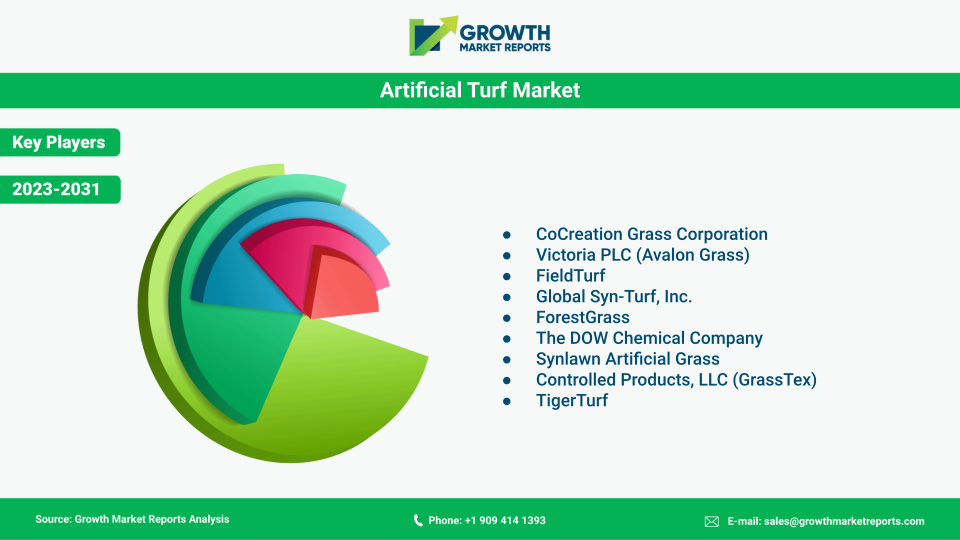
Key players in the global artificial turf market are CoCreation Grass Corporation; Victoria PLC (Avalon Grass); FieldTurf; Global Syn-Turf, Inc.; ForestGrass; The DOW Chemical Company; Synlawn Artificial Grass; Controlled Products, LLC (GrassTex); and TigerTurf.
These players have widely engaged in various business development strategies including mergers & acquisitions, collaborations, agreements, and partnerships to strengthen their geographical presence and expand their consumer base globally.
Challenges include concerns over health and environmental risks of certain infill materials, high initial installation costs, regulatory scrutiny, and the need for ongoing innovation and consumer education.
Key companies include Tarkett Group (FieldTurf), Shaw Sports Turf, TenCate Grass, SIS Pitches, SportGroup, ACT Global, CCGrass, SYNLawn, TigerTurf, and others, all focusing on innovation, sustainability, and global expansion.
Trends include eco-friendly and recyclable turf products, smart turf systems with sensors, biophilic and vertical landscaping, and expanding use in non-traditional applications like rooftops and pet areas.
Artificial turf is distributed through direct sales, online retail, specialty stores, and other channels like wholesalers and contractors. Direct sales dominate large projects, while online and specialty stores cater to homeowners and small businesses.
North America is the largest market, followed by Europe and Asia Pacific. Growth is driven by sports infrastructure investments, environmental regulations, urbanization, and increasing awareness of water conservation.
Infill materials such as rubber, sand, and plant-based options affect shock absorption, stability, drainage, and environmental impact. Rubber is common in sports, sand is popular for landscaping, and plant-based infills are gaining traction for sustainability.
Artificial turf is widely used in sports fields, residential lawns, commercial properties, playgrounds, pet areas, and event venues due to its durability, low maintenance, and consistent appearance.
Common materials include polyethylene (soft, durable, UV-resistant), polypropylene (cost-effective, abrasion-resistant), nylon (high strength, resilience), and emerging eco-friendly or hybrid materials for specialized needs.
Key growth drivers include increasing demand for low-maintenance landscaping, environmental benefits such as water conservation, rising investments in sports infrastructure, and technological advancements in turf materials.
The global artificial turf market reached USD 4.7 billion in 2024 and is expected to grow at a CAGR of 6.8% from 2025 to 2033, reaching approximately USD 8.8 billion by 2033.