USA Artificial Organs and Bionic Implants Market Research Report 2033

USA Artificial Organs and Bionic Implants Market Research Report 2033

Segments - by Product Type (Artificial Heart, Artificial Kidney, Artificial Liver, Artificial Pancreas, Cochlear Implants, Vision Bionics, Orthopedic Bionics, Others), by Technology (Mechanical, Electronic, Hybrid), by Material (Metals, Polymers, Ceramics, Biological Materials), by End-User (Hospitals, Ambulatory Surgical Centers, Others)

https://growthmarketreports.com/raksha
Author : Raksha Sharma
https://growthmarketreports.com/Vaibhav
Fact-checked by : V. Chandola
https://growthmarketreports.com/Shruti
Editor : Shruti Bhat

Upcoming | Report ID :HC-1817 | 4.7 Rating | 68 Reviews | 250 Pages | Format : Docx PDF

Report Description


USA Artificial Organs and Bionic Implants Market Outlook

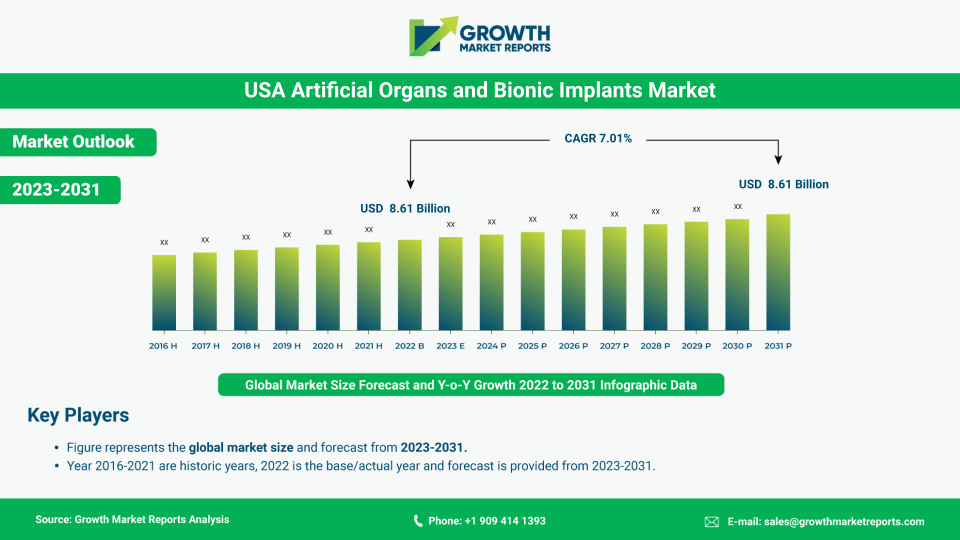
According to our latest research, the global artificial organs and bionic implants market size reached USD 31.2 billion in 2024, with the USA accounting for a significant share as one of the most advanced and fastest-growing regions. The global market is projected to grow at a CAGR of 8.1% from 2025 to 2033, reaching an estimated value of USD 62.3 billion by 2033. The primary growth driver is the increasing prevalence of chronic diseases and organ failure, coupled with rapid advancements in biomaterials and implantable device technology, which are revolutionizing patient care and outcomes.

The USA artificial organs and bionic implants market is experiencing robust growth due to a confluence of demographic, technological, and clinical factors. A significant growth factor is the rising incidence of chronic ailments such as cardiovascular diseases, diabetes, and kidney disorders, which frequently culminate in organ failure. As the aging population in the USA continues to expand, the demand for organ replacement therapies has surged, leading to a greater reliance on artificial organs and bionic implants. Additionally, the persistent gap between organ donors and recipients has intensified the need for alternative solutions, making artificial organs and bionic implants a critical lifeline for many patients. This unmet need is further accentuated by the increasing prevalence of lifestyle diseases, which contribute to the growing patient pool requiring such advanced medical interventions.

Technological innovation stands out as a pivotal growth driver in the USA artificial organs and bionic implants market. The integration of cutting-edge materials such as advanced polymers, ceramics, and biological composites has significantly enhanced the biocompatibility, durability, and functional efficacy of artificial organs. Furthermore, the convergence of electronics and biotechnology has enabled the development of sophisticated bionic implants, such as cochlear and vision bionics, that restore or augment lost sensory and motor functions. The adoption of hybrid technology, which combines mechanical and electronic components, is further pushing the boundaries of what artificial organs and bionic implants can achieve. These technological advancements are not only improving patient outcomes but also reducing the risk of complications and device rejection, thereby fostering greater acceptance among healthcare providers and patients alike.

Another critical growth factor is the increasing investment from both public and private sectors in research and development of artificial organs and bionic implants. Government agencies, academic institutions, and leading medical device companies are channeling substantial resources into the innovation and commercialization of next-generation implantable devices. Favorable regulatory frameworks and expedited approval processes by the US FDA have also played a significant role in accelerating market entry for novel products. Moreover, collaborations between biotechnology firms and healthcare providers are facilitating the translation of laboratory breakthroughs into clinically viable solutions, driving the adoption of artificial organs and bionic implants across the USA.

In recent years, the development of Wearable Artificial Organs has emerged as a significant innovation within the artificial organs and bionic implants market. These devices offer a new level of mobility and convenience for patients who require continuous organ support, such as those with heart or kidney conditions. By integrating advanced sensors and wireless communication technologies, wearable artificial organs can monitor physiological parameters in real-time, providing critical data to healthcare providers and enabling timely interventions. This innovation not only enhances patient quality of life by allowing greater freedom of movement but also reduces the burden on healthcare facilities by facilitating remote monitoring and management. As research in this area progresses, wearable artificial organs are expected to become increasingly sophisticated, offering more personalized and adaptive solutions for patients across various medical conditions.

From a regional perspective, the USA market demonstrates notable heterogeneity in adoption rates and growth trajectories. The Northeast and West regions, home to several leading academic medical centers and biotechnology hubs, are at the forefront of technological adoption and clinical implementation. The Midwest and South are witnessing increasing penetration as healthcare infrastructure improves and awareness of advanced therapies spreads. This regional diversity is further shaped by differences in healthcare expenditure, insurance coverage, and demographic profiles, which collectively influence the pace and scale of market expansion across the country.

Global USA Artificial Organs and Bionic Implants  Industry Outlook

Product Type Analysis

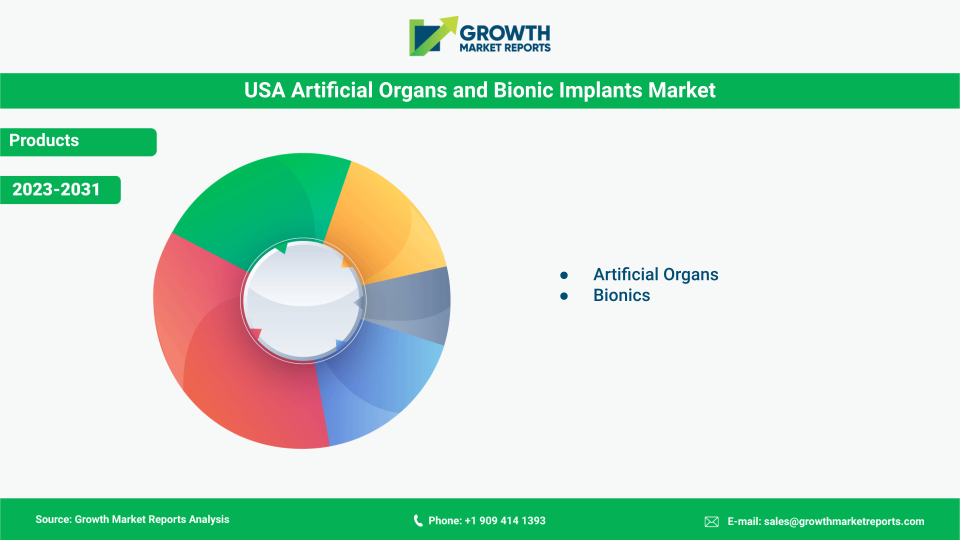
The artificial organs and bionic implants market in the USA is segmented by product type into artificial heart, artificial kidney, artificial liver, artificial pancreas, cochlear implants, vision bionics, orthopedic bionics, and others. Among these, artificial hearts and kidneys represent the largest market share due to the high prevalence of cardiovascular and renal diseases in the country. The demand for artificial kidneys, in particular, is propelled by the rising incidence of end-stage renal disease (ESRD), which affects millions of Americans annually. Artificial hearts are increasingly being used as both bridge-to-transplant and destination therapy options, especially for patients with advanced heart failure who are ineligible for transplantation. Continuous innovation in miniaturization and biocompatibility is enhancing the adoption of these devices, while clinical outcomes continue to improve with each generation of technology.

Cochlear implants and vision bionics are experiencing rapid growth as advancements in neuroprosthetics and microelectronics enable the restoration of sensory functions in patients with severe hearing or vision loss. The USA has seen a substantial increase in the number of cochlear implant procedures, driven by greater awareness, improved reimbursement policies, and the expanding indications for usage in both pediatric and adult populations. Vision bionics, though still an emerging segment, is gaining traction as research into retinal implants and cortical visual prostheses yields promising results. These devices are opening new possibilities for patients with previously untreatable forms of sensory impairment, contributing to the diversification and expansion of the market.

The synergy between Artificial Organs and Bionics is driving transformative changes in the healthcare landscape, particularly in the treatment of chronic diseases and disabilities. By combining the mechanical robustness of artificial organs with the sensory and functional capabilities of bionic technologies, patients can experience a more holistic restoration of lost functions. This integration is particularly evident in the development of hybrid devices that not only replace damaged organs but also enhance the body's natural capabilities. The convergence of these technologies is not only improving clinical outcomes but also paving the way for new therapeutic possibilities, such as the potential for biohybrid systems that incorporate living cells with synthetic components. As the field continues to evolve, the collaboration between artificial organs and bionics is set to redefine patient care and expand the horizons of medical innovation.

Orthopedic bionics, including artificial limbs and joint replacements, constitute another significant product segment, supported by the high incidence of traumatic injuries, osteoarthritis, and age-related degenerative conditions in the USA. The development of myoelectric prostheses and smart implants with integrated sensors is transforming the quality of life for amputees and individuals with severe joint dysfunction. These bionic solutions offer enhanced mobility, dexterity, and comfort, enabling patients to regain independence and participate more fully in daily activities. The orthopedic bionics segment is also benefiting from advancements in 3D printing and personalized medicine, which allow for the customization of implants to match the unique anatomical and functional needs of each patient.

Artificial pancreas and artificial liver devices, while representing smaller market shares compared to other segments, are poised for significant growth in the coming years. The artificial pancreas, which integrates continuous glucose monitoring with automated insulin delivery, is revolutionizing diabetes management and reducing the burden of disease for patients with type 1 diabetes. Similarly, artificial liver support systems are being developed to provide temporary or bridge support for patients with acute liver failure, offering a critical lifeline until transplantation or recovery is possible. The ongoing research and clinical trials in these areas underscore the marketÂ’s commitment to addressing a broad spectrum of organ failure conditions through innovative artificial organ solutions.

Report Scope

Attributes Details
Report Title USA Artificial Organs and Bionic Implants Market Research Report 2033
By Product Type Artificial Heart, Artificial Kidney, Artificial Liver, Artificial Pancreas, Cochlear Implants, Vision Bionics, Orthopedic Bionics, Others
By Technology Mechanical, Electronic, Hybrid
By Material Metals, Polymers, Ceramics, Biological Materials
By End-User Hospitals, Ambulatory Surgical Centers, Others
Regions Covered North America, Europe, APAC, Latin America, MEA
Base Year 2024
Historic Data 2018-2023
Forecast Period 2025-2033
Number of Pages 250
Number of Tables & Figures 318
Customization Available Yes, the report can be customized as per your need.

Technology Analysis

The USA artificial organs and bionic implants market is segmented by technology into mechanical, electronic, and hybrid systems. Mechanical technology forms the foundation of traditional artificial organs, such as heart valves, artificial joints, and dialysis machines. These devices rely on robust engineering principles to replicate the physiological functions of natural organs, providing reliable and long-lasting solutions for a wide range of medical conditions. The mechanical segment continues to grow steadily, driven by ongoing improvements in materials science, device design, and manufacturing processes. Mechanical artificial organs are particularly valued for their durability and ease of integration into existing clinical workflows, making them a staple in both acute and chronic care settings.

Bio Artificial Devices are gaining traction as a promising frontier in the artificial organs and bionic implants market. These devices aim to replicate the complex biological functions of natural organs by integrating living cells with engineered scaffolds. The potential of bio artificial devices lies in their ability to provide more natural and sustainable organ support, reducing the risk of rejection and enhancing long-term patient outcomes. Research in this area is focused on developing bioengineered tissues that can seamlessly integrate with the patient's body, promoting natural healing and regeneration. As advancements in tissue engineering and regenerative medicine continue to unfold, bio artificial devices are poised to offer groundbreaking solutions for patients suffering from organ failure, ultimately transforming the landscape of organ transplantation and replacement therapies.

Electronic technology has emerged as a transformative force in the artificial organs and bionic implants market, enabling the development of highly sophisticated devices that interface directly with the nervous system or other biological tissues. Cochlear implants, vision bionics, and myoelectric prostheses exemplify the potential of electronic technology to restore or augment lost sensory and motor functions. These devices leverage advances in microelectronics, wireless communication, and power management to deliver precise and responsive therapeutic interventions. The integration of artificial intelligence and machine learning algorithms is further enhancing the functionality and adaptability of electronic bionic implants, paving the way for more personalized and effective patient care.

Hybrid technology represents the cutting edge of artificial organ development, combining mechanical and electronic components to achieve superior performance and versatility. Hybrid artificial organs, such as the artificial pancreas and advanced cardiac assist devices, utilize real-time data from sensors and feedback systems to dynamically adjust their operation in response to changing physiological conditions. This synergy of mechanical reliability and electronic intelligence allows hybrid devices to mimic the complexity of natural organ function more closely than ever before. The adoption of hybrid technology is accelerating as clinical evidence demonstrates improved outcomes, reduced complication rates, and enhanced patient satisfaction.

The technological landscape of the USA artificial organs and bionic implants market is characterized by rapid innovation and cross-disciplinary collaboration. Academic research institutions, medical device manufacturers, and technology firms are working together to push the boundaries of what is possible in artificial organ design and functionality. The increasing availability of funding for research and development, coupled with a favorable regulatory environment, is fostering a culture of innovation that is driving the market forward. As new technologies continue to emerge, the USA is well-positioned to remain at the forefront of artificial organ and bionic implant development, setting global benchmarks for quality, safety, and efficacy.

Material Analysis

Materials play a critical role in the design, performance, and longevity of artificial organs and bionic implants. The USA market is segmented by material type into metals, polymers, ceramics, and biological materials, each offering distinct advantages and challenges. Metals, such as titanium and stainless steel, are widely used in orthopedic bionics and artificial heart components due to their exceptional strength, durability, and biocompatibility. These materials provide the structural integrity necessary for load-bearing applications and are resistant to corrosion and wear, making them ideal for long-term implantation. The ongoing development of advanced metal alloys and surface coatings is further enhancing the performance and safety profile of metal-based implants.

Polymers have revolutionized the artificial organs and bionic implants market by offering a high degree of flexibility, processability, and biocompatibility. Polymers such as silicone, polyurethane, and polyethylene are commonly used in artificial heart valves, vascular grafts, and soft tissue implants. Their ability to mimic the mechanical properties of natural tissues makes them particularly valuable in applications requiring dynamic movement and flexibility. Additionally, the advent of bioresorbable and smart polymers has opened new avenues for temporary implants and drug delivery systems, expanding the therapeutic potential of artificial organs and bionic implants in the USA.

Ceramics are gaining prominence in the market for their exceptional wear resistance, low friction, and biocompatibility, particularly in orthopedic and dental implants. Materials such as alumina and zirconia are used to manufacture artificial joints and bone substitutes, offering superior longevity and reduced risk of inflammatory responses. The inert nature of ceramics minimizes the risk of adverse tissue reactions and facilitates long-term integration with the surrounding bone. Advances in ceramic processing and surface modification are enabling the development of next-generation implants with enhanced mechanical properties and biological performance.

Biological materials, including collagen, decellularized tissues, and bioengineered scaffolds, are at the forefront of regenerative medicine and tissue engineering. These materials are designed to promote cellular integration and tissue regeneration, offering the potential for fully functional, living implants. In the USA, the use of biological materials is expanding rapidly as researchers explore new ways to harness the bodyÂ’s natural healing processes for organ repair and replacement. While challenges related to immunogenicity and scalability remain, the promise of biological materials to revolutionize artificial organ development is driving significant investment and innovation in this segment.

End-User Analysis

The end-user landscape of the USA artificial organs and bionic implants market is segmented into hospitals, ambulatory surgical centers (ASCs), and others, which include specialized clinics and rehabilitation centers. Hospitals remain the dominant end-users, accounting for the majority of artificial organ and bionic implant procedures. The comprehensive infrastructure, availability of specialized medical professionals, and access to advanced diagnostic and surgical technologies make hospitals the preferred setting for complex implant surgeries. Moreover, the integration of multidisciplinary care teams and post-operative rehabilitation services in hospitals ensures optimal patient outcomes and long-term device performance.

Ambulatory surgical centers are gaining prominence as end-users due to their ability to provide high-quality, cost-effective care in a convenient outpatient setting. ASCs are increasingly performing less invasive implant procedures, such as cochlear implants and certain orthopedic bionics, leveraging advances in minimally invasive surgical techniques and anesthesia. The growth of ASCs in the USA is driven by patient demand for shorter hospital stays, reduced healthcare costs, and faster recovery times. As reimbursement policies continue to evolve in favor of outpatient care, ASCs are expected to capture a larger share of the artificial organs and bionic implants market.

Specialized clinics and rehabilitation centers represent a growing segment of the end-user landscape, particularly for follow-up care, device maintenance, and patient training. These facilities play a critical role in ensuring the long-term success of artificial organ and bionic implant therapies by providing ongoing support, monitoring, and rehabilitation services. The expansion of telemedicine and remote monitoring technologies is further enhancing the ability of these centers to deliver personalized, continuous care to patients across the USA. As the complexity and sophistication of artificial organs and bionic implants increase, the role of specialized end-users in the care continuum will become even more important.

The end-user segment is also influenced by broader trends in healthcare delivery, including the shift towards value-based care and patient-centered outcomes. Healthcare providers are increasingly focused on optimizing the entire patient journey, from preoperative assessment to postoperative rehabilitation, to maximize the benefits of artificial organ and bionic implant therapies. This holistic approach is driving greater collaboration between hospitals, ASCs, and specialized clinics, fostering a more integrated and efficient care ecosystem for patients in need of advanced implantable devices.

Opportunities & Threats

The USA artificial organs and bionic implants market is ripe with opportunities for growth and innovation. One of the most promising areas is the development of next-generation biohybrid and fully bioengineered organs, which combine living cells with synthetic scaffolds to create implants that more closely mimic natural organ function. Advances in 3D bioprinting, stem cell research, and tissue engineering are accelerating the pace of innovation in this field, opening up new possibilities for personalized and regenerative therapies. Additionally, the integration of artificial intelligence and machine learning into implantable devices is enabling real-time monitoring, predictive analytics, and adaptive therapy, further enhancing patient outcomes and device longevity.

Another significant opportunity lies in expanding access to artificial organs and bionic implants through improved reimbursement policies, patient education, and healthcare infrastructure. As awareness of the benefits of these technologies grows, there is potential to reach underserved populations, including rural and low-income communities, who may currently lack access to advanced medical interventions. Public-private partnerships and government initiatives aimed at reducing healthcare disparities and promoting innovation are expected to play a key role in expanding the market and improving health outcomes for all Americans.

Despite these opportunities, the market faces several restraining factors that could hinder growth. High costs associated with the development, manufacturing, and implantation of artificial organs and bionic devices remain a significant barrier, particularly for uninsured or underinsured patients. Regulatory challenges, including lengthy approval processes and stringent safety requirements, can also delay the introduction of new products to the market. Additionally, concerns related to device reliability, long-term safety, and potential ethical issues surrounding the use of advanced bionic technologies may impact adoption rates and market expansion.

Regional Outlook

Regionally, the USA artificial organs and bionic implants market demonstrates distinct patterns of adoption and growth across the Northeast, Midwest, South, and West. In 2024, the Northeast led the market with a share of approximately 28%, reflecting its concentration of leading academic medical centers, research institutions, and biotechnology firms. The presence of top-tier hospitals and a highly skilled healthcare workforce has enabled the Northeast to serve as a hub for clinical innovation and early adoption of advanced implantable devices. The regionÂ’s robust healthcare infrastructure and favorable reimbursement environment further support the widespread use of artificial organs and bionic implants.

The West region, accounting for nearly 26% of the market in 2024, is characterized by its dynamic biotechnology ecosystem and strong emphasis on technological innovation. States such as California are home to numerous medical device startups and established companies, driving the development and commercialization of next-generation artificial organs and bionic implants. The West also benefits from a large and diverse patient population, which facilitates clinical trials and accelerates the adoption of new therapies. The region is expected to maintain a strong CAGR of 8.4% through 2033, outpacing the national average due to continued investment in research and development.

The Midwest and South regions, together comprising the remaining 46% of the market, are experiencing steady growth as healthcare infrastructure improves and access to advanced medical technologies expands. The Midwest, with its concentration of large healthcare systems and research universities, is emerging as a key market for artificial organs and bionic implants, particularly in orthopedic and cardiovascular applications. The South, while historically lagging in adoption rates, is catching up rapidly thanks to increasing healthcare spending, population growth, and targeted efforts to address chronic disease burdens. These regions are projected to see continued growth as awareness and availability of artificial organs and bionic implants increase.

USA Artificial Organs and Bionic Implants  Market Statistics

Competitor Outlook

The competitive landscape of the USA artificial organs and bionic implants market is characterized by a mix of established medical device giants, innovative startups, and academic research institutions. Leading companies are leveraging their extensive research and development capabilities, robust product portfolios, and wide distribution networks to maintain their market positions and drive growth. Intense competition is fostering a culture of innovation, with companies racing to develop next-generation devices that offer improved performance, safety, and patient outcomes. Strategic collaborations, mergers and acquisitions, and licensing agreements are common as firms seek to expand their technological capabilities and geographic reach.

Intellectual property and regulatory expertise are key differentiators in this market, as companies navigate the complex landscape of FDA approvals and patent protections. Firms with strong regulatory track records and comprehensive clinical data are better positioned to bring new products to market quickly and efficiently. The ability to secure reimbursement from public and private payers is also a critical factor in commercial success, prompting companies to invest heavily in health economics and outcomes research to demonstrate the value of their products.

In addition to established players, a vibrant ecosystem of startups and academic spin-offs is contributing to the dynamism of the USA artificial organs and bionic implants market. These smaller firms are often at the forefront of technological innovation, developing breakthrough solutions in areas such as biohybrid organs, smart implants, and regenerative medicine. Many of these startups collaborate with larger companies or academic institutions to access funding, clinical expertise, and commercialization resources, accelerating the translation of new ideas into market-ready products.

Some of the major companies operating in the USA artificial organs and bionic implants market include Medtronic plc, Abbott Laboratories, Boston Scientific Corporation, Edwards Lifesciences Corporation, Zimmer Biomet Holdings, Inc., Cochlear Limited, Second Sight Medical Products, Inc., SynCardia Systems, LLC, and Biomet, Inc. Medtronic plc is renowned for its leadership in cardiac and neurostimulation devices, while Abbott Laboratories has a strong presence in mechanical circulatory support and diabetes management solutions. Boston Scientific Corporation and Edwards Lifesciences Corporation are leaders in cardiovascular implants, offering a wide range of artificial heart valves and assist devices. Zimmer Biomet Holdings, Inc. specializes in orthopedic bionics, providing advanced joint replacement and limb prosthesis solutions. Cochlear Limited and Second Sight Medical Products, Inc. are pioneers in sensory bionics, with market-leading cochlear and vision implants. SynCardia Systems, LLC is recognized for its total artificial heart technology, while Biomet, Inc. continues to drive innovation in orthopedic and dental implants.

These companies are investing heavily in research and development, clinical trials, and strategic partnerships to maintain their competitive edge and capitalize on emerging opportunities in the USA artificial organs and bionic implants market. Their commitment to innovation, quality, and patient outcomes will continue to shape the future of this dynamic and rapidly evolving industry.

Key Players

  • Abiomed, Inc.
  • Zimmer Biomet Holdings, Inc.
  • Medtronic plc
  • Boston Scientific Corporation
  • SynCardia Systems, LLC
  • Edwards Lifesciences Corporation
  • Cochlear Limited
  • Biomet, Inc.
  • Second Sight Medical Products, Inc.
  • LivaNova PLC
  • Ekso Bionics Holdings, Inc.
  • Ossur hf
  • ReWalk Robotics Ltd.
  • Ottobock SE & Co. KGaA
  • Touch Bionics (Össur)
  • Cyberonics, Inc.
  • HeartWare International, Inc.
  • Retina Implant AG
  • Nano Retina, Inc.
  • Nipro Corporation
USA Artificial Organs and Bionic Implants  Market Overview

Segments

The USA Artificial Organs and Bionic Implants market has been segmented on the basis of

Product Type

  • Artificial Heart
  • Artificial Kidney
  • Artificial Liver
  • Artificial Pancreas
  • Cochlear Implants
  • Vision Bionics
  • Orthopedic Bionics
  • Others

Technology

  • Mechanical
  • Electronic
  • Hybrid

Material

  • Metals
  • Polymers
  • Ceramics
  • Biological Materials

End-User

  • Hospitals
  • Ambulatory Surgical Centers
  • Others

Competitive Landscape

The major players of the USA Artificial Organs and Bionic Implants market are ABIOMED, Boston Scientific Corporation, Berlin Heart GmbH, Edward Lifesciences Corporation, Otto Bock Holding GmbH & Co. KG, LifeNet Health and Medtronic plc. 

Companies are investing in research and development, and focusing on strategies such as agreements, collaborative models, acquisitions, and partnerships to expand their market share.
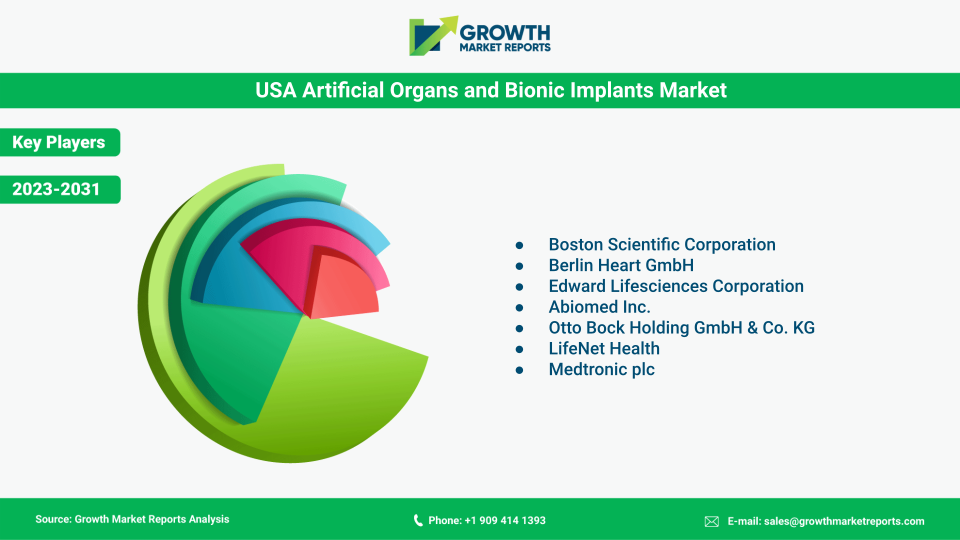

USA Artificial Organs and Bionic Implants Market Key Players

Frequently Asked Questions

The market is projected to grow at a CAGR of 8.1% from 2025 to 2033, reaching an estimated value of USD 62.3 billion by 2033.

Opportunities include the development of biohybrid and fully bioengineered organs, advances in 3D bioprinting and tissue engineering, integration of AI for real-time monitoring, and expanding access through improved reimbursement and healthcare infrastructure.

Key players include Medtronic plc, Abbott Laboratories, Boston Scientific Corporation, Edwards Lifesciences Corporation, Zimmer Biomet Holdings, Inc., Cochlear Limited, Second Sight Medical Products, Inc., SynCardia Systems, LLC, and Biomet, Inc.

Major challenges include high costs of development and implantation, regulatory hurdles, device reliability and long-term safety concerns, and ethical considerations surrounding advanced bionic technologies.

Hospitals are the primary end-users, followed by ambulatory surgical centers (ASCs), specialized clinics, and rehabilitation centers.

The Northeast and West regions are at the forefront due to their concentration of leading academic medical centers, biotechnology hubs, and strong healthcare infrastructure. The Midwest and South are experiencing increasing adoption as healthcare infrastructure improves.

Technological innovation includes the use of advanced polymers, ceramics, biological composites, hybrid devices combining mechanical and electronic components, and the integration of artificial intelligence and machine learning for improved device performance.

Artificial hearts and artificial kidneys hold the largest market share, driven by high rates of cardiovascular and renal diseases. Other notable segments include cochlear implants, vision bionics, orthopedic bionics, artificial pancreas, and artificial liver devices.

Key growth drivers include the rising prevalence of chronic diseases and organ failure, rapid advancements in biomaterials and implantable device technology, an aging population, and a persistent gap between organ donors and recipients.

As of 2024, the global artificial organs and bionic implants market reached USD 31.2 billion, with the USA accounting for a significant share as one of the most advanced and fastest-growing regions.

Table Of Content

Chapter 1 Executive Summary
Chapter 2 Assumptions and Acronyms Used
Chapter 3 Research Methodology
Chapter 4 USA Artificial Organs and Bionic Implants  Market Overview
   4.1 Introduction
      4.1.1 Market Taxonomy
      4.1.2 Market Definition
      4.1.3 Macro-Economic Factors Impacting the Market Growth
   4.2 USA Artificial Organs and Bionic Implants  Market Dynamics
      4.2.1 Market Drivers
      4.2.2 Market Restraints
      4.2.3 Market Opportunity
   4.3 USA Artificial Organs and Bionic Implants  Market - Supply Chain Analysis
      4.3.1 List of Key Suppliers
      4.3.2 List of Key Distributors
      4.3.3 List of Key Consumers
   4.4 Key Forces Shaping the USA Artificial Organs and Bionic Implants  Market
      4.4.1 Bargaining Power of Suppliers
      4.4.2 Bargaining Power of Buyers
      4.4.3 Threat of Substitution
      4.4.4 Threat of New Entrants
      4.4.5 Competitive Rivalry
   4.5 Global USA Artificial Organs and Bionic Implants  Market Size & Forecast, 2023-2032
      4.5.1 USA Artificial Organs and Bionic Implants  Market Size and Y-o-Y Growth
      4.5.2 USA Artificial Organs and Bionic Implants  Market Absolute $ Opportunity

Chapter 5 Global USA Artificial Organs and Bionic Implants  Market Analysis and Forecast By Product Type
   5.1 Introduction
      5.1.1 Key Market Trends & Growth Opportunities By Product Type
      5.1.2 Basis Point Share (BPS) Analysis By Product Type
      5.1.3 Absolute $ Opportunity Assessment By Product Type
   5.2 USA Artificial Organs and Bionic Implants  Market Size Forecast By Product Type
      5.2.1 Artificial Heart
      5.2.2 Artificial Kidney
      5.2.3 Artificial Liver
      5.2.4 Artificial Pancreas
      5.2.5 Cochlear Implants
      5.2.6 Vision Bionics
      5.2.7 Orthopedic Bionics
      5.2.8 Others
   5.3 Market Attractiveness Analysis By Product Type

Chapter 6 Global USA Artificial Organs and Bionic Implants  Market Analysis and Forecast By Technology
   6.1 Introduction
      6.1.1 Key Market Trends & Growth Opportunities By Technology
      6.1.2 Basis Point Share (BPS) Analysis By Technology
      6.1.3 Absolute $ Opportunity Assessment By Technology
   6.2 USA Artificial Organs and Bionic Implants  Market Size Forecast By Technology
      6.2.1 Mechanical
      6.2.2 Electronic
      6.2.3 Hybrid
   6.3 Market Attractiveness Analysis By Technology

Chapter 7 Global USA Artificial Organs and Bionic Implants  Market Analysis and Forecast By Material
   7.1 Introduction
      7.1.1 Key Market Trends & Growth Opportunities By Material
      7.1.2 Basis Point Share (BPS) Analysis By Material
      7.1.3 Absolute $ Opportunity Assessment By Material
   7.2 USA Artificial Organs and Bionic Implants  Market Size Forecast By Material
      7.2.1 Metals
      7.2.2 Polymers
      7.2.3 Ceramics
      7.2.4 Biological Materials
   7.3 Market Attractiveness Analysis By Material

Chapter 8 Global USA Artificial Organs and Bionic Implants  Market Analysis and Forecast By End-User
   8.1 Introduction
      8.1.1 Key Market Trends & Growth Opportunities By End-User
      8.1.2 Basis Point Share (BPS) Analysis By End-User
      8.1.3 Absolute $ Opportunity Assessment By End-User
   8.2 USA Artificial Organs and Bionic Implants  Market Size Forecast By End-User
      8.2.1 Hospitals
      8.2.2 Ambulatory Surgical Centers
      8.2.3 Others
   8.3 Market Attractiveness Analysis By End-User

Chapter 9 Global USA Artificial Organs and Bionic Implants  Market Analysis and Forecast by Region
   9.1 Introduction
      9.1.1 Key Market Trends & Growth Opportunities By Region
      9.1.2 Basis Point Share (BPS) Analysis By Region
      9.1.3 Absolute $ Opportunity Assessment By Region
   9.2 USA Artificial Organs and Bionic Implants  Market Size Forecast By Region
      9.2.1 North America
      9.2.2 Europe
      9.2.3 Asia Pacific
      9.2.4 Latin America
      9.2.5 Middle East & Africa (MEA)
   9.3 Market Attractiveness Analysis By Region

Chapter 10 Coronavirus Disease (COVID-19) Impact 
   10.1 Introduction 
   10.2 Current & Future Impact Analysis 
   10.3 Economic Impact Analysis 
   10.4 Government Policies 
   10.5 Investment Scenario

Chapter 11 North America USA Artificial Organs and Bionic Implants  Analysis and Forecast
   11.1 Introduction
   11.2 North America USA Artificial Organs and Bionic Implants  Market Size Forecast by Country
      11.2.1 U.S.
      11.2.2 Canada
   11.3 Basis Point Share (BPS) Analysis by Country
   11.4 Absolute $ Opportunity Assessment by Country
   11.5 Market Attractiveness Analysis by Country
   11.6 North America USA Artificial Organs and Bionic Implants  Market Size Forecast By Product Type
      11.6.1 Artificial Heart
      11.6.2 Artificial Kidney
      11.6.3 Artificial Liver
      11.6.4 Artificial Pancreas
      11.6.5 Cochlear Implants
      11.6.6 Vision Bionics
      11.6.7 Orthopedic Bionics
      11.6.8 Others
   11.7 Basis Point Share (BPS) Analysis By Product Type 
   11.8 Absolute $ Opportunity Assessment By Product Type 
   11.9 Market Attractiveness Analysis By Product Type
   11.10 North America USA Artificial Organs and Bionic Implants  Market Size Forecast By Technology
      11.10.1 Mechanical
      11.10.2 Electronic
      11.10.3 Hybrid
   11.11 Basis Point Share (BPS) Analysis By Technology 
   11.12 Absolute $ Opportunity Assessment By Technology 
   11.13 Market Attractiveness Analysis By Technology
   11.14 North America USA Artificial Organs and Bionic Implants  Market Size Forecast By Material
      11.14.1 Metals
      11.14.2 Polymers
      11.14.3 Ceramics
      11.14.4 Biological Materials
   11.15 Basis Point Share (BPS) Analysis By Material 
   11.16 Absolute $ Opportunity Assessment By Material 
   11.17 Market Attractiveness Analysis By Material
   11.18 North America USA Artificial Organs and Bionic Implants  Market Size Forecast By End-User
      11.18.1 Hospitals
      11.18.2 Ambulatory Surgical Centers
      11.18.3 Others
   11.19 Basis Point Share (BPS) Analysis By End-User 
   11.20 Absolute $ Opportunity Assessment By End-User 
   11.21 Market Attractiveness Analysis By End-User

Chapter 12 Europe USA Artificial Organs and Bionic Implants  Analysis and Forecast
   12.1 Introduction
   12.2 Europe USA Artificial Organs and Bionic Implants  Market Size Forecast by Country
      12.2.1 Germany
      12.2.2 France
      12.2.3 Italy
      12.2.4 U.K.
      12.2.5 Spain
      12.2.6 Russia
      12.2.7 Rest of Europe
   12.3 Basis Point Share (BPS) Analysis by Country
   12.4 Absolute $ Opportunity Assessment by Country
   12.5 Market Attractiveness Analysis by Country
   12.6 Europe USA Artificial Organs and Bionic Implants  Market Size Forecast By Product Type
      12.6.1 Artificial Heart
      12.6.2 Artificial Kidney
      12.6.3 Artificial Liver
      12.6.4 Artificial Pancreas
      12.6.5 Cochlear Implants
      12.6.6 Vision Bionics
      12.6.7 Orthopedic Bionics
      12.6.8 Others
   12.7 Basis Point Share (BPS) Analysis By Product Type 
   12.8 Absolute $ Opportunity Assessment By Product Type 
   12.9 Market Attractiveness Analysis By Product Type
   12.10 Europe USA Artificial Organs and Bionic Implants  Market Size Forecast By Technology
      12.10.1 Mechanical
      12.10.2 Electronic
      12.10.3 Hybrid
   12.11 Basis Point Share (BPS) Analysis By Technology 
   12.12 Absolute $ Opportunity Assessment By Technology 
   12.13 Market Attractiveness Analysis By Technology
   12.14 Europe USA Artificial Organs and Bionic Implants  Market Size Forecast By Material
      12.14.1 Metals
      12.14.2 Polymers
      12.14.3 Ceramics
      12.14.4 Biological Materials
   12.15 Basis Point Share (BPS) Analysis By Material 
   12.16 Absolute $ Opportunity Assessment By Material 
   12.17 Market Attractiveness Analysis By Material
   12.18 Europe USA Artificial Organs and Bionic Implants  Market Size Forecast By End-User
      12.18.1 Hospitals
      12.18.2 Ambulatory Surgical Centers
      12.18.3 Others
   12.19 Basis Point Share (BPS) Analysis By End-User 
   12.20 Absolute $ Opportunity Assessment By End-User 
   12.21 Market Attractiveness Analysis By End-User

Chapter 13 Asia Pacific USA Artificial Organs and Bionic Implants  Analysis and Forecast
   13.1 Introduction
   13.2 Asia Pacific USA Artificial Organs and Bionic Implants  Market Size Forecast by Country
      13.2.1 China
      13.2.2 Japan
      13.2.3 South Korea
      13.2.4 India
      13.2.5 Australia
      13.2.6 South East Asia (SEA)
      13.2.7 Rest of Asia Pacific (APAC)
   13.3 Basis Point Share (BPS) Analysis by Country
   13.4 Absolute $ Opportunity Assessment by Country
   13.5 Market Attractiveness Analysis by Country
   13.6 Asia Pacific USA Artificial Organs and Bionic Implants  Market Size Forecast By Product Type
      13.6.1 Artificial Heart
      13.6.2 Artificial Kidney
      13.6.3 Artificial Liver
      13.6.4 Artificial Pancreas
      13.6.5 Cochlear Implants
      13.6.6 Vision Bionics
      13.6.7 Orthopedic Bionics
      13.6.8 Others
   13.7 Basis Point Share (BPS) Analysis By Product Type 
   13.8 Absolute $ Opportunity Assessment By Product Type 
   13.9 Market Attractiveness Analysis By Product Type
   13.10 Asia Pacific USA Artificial Organs and Bionic Implants  Market Size Forecast By Technology
      13.10.1 Mechanical
      13.10.2 Electronic
      13.10.3 Hybrid
   13.11 Basis Point Share (BPS) Analysis By Technology 
   13.12 Absolute $ Opportunity Assessment By Technology 
   13.13 Market Attractiveness Analysis By Technology
   13.14 Asia Pacific USA Artificial Organs and Bionic Implants  Market Size Forecast By Material
      13.14.1 Metals
      13.14.2 Polymers
      13.14.3 Ceramics
      13.14.4 Biological Materials
   13.15 Basis Point Share (BPS) Analysis By Material 
   13.16 Absolute $ Opportunity Assessment By Material 
   13.17 Market Attractiveness Analysis By Material
   13.18 Asia Pacific USA Artificial Organs and Bionic Implants  Market Size Forecast By End-User
      13.18.1 Hospitals
      13.18.2 Ambulatory Surgical Centers
      13.18.3 Others
   13.19 Basis Point Share (BPS) Analysis By End-User 
   13.20 Absolute $ Opportunity Assessment By End-User 
   13.21 Market Attractiveness Analysis By End-User

Chapter 14 Latin America USA Artificial Organs and Bionic Implants  Analysis and Forecast
   14.1 Introduction
   14.2 Latin America USA Artificial Organs and Bionic Implants  Market Size Forecast by Country
      14.2.1 Brazil
      14.2.2 Mexico
      14.2.3 Rest of Latin America (LATAM)
   14.3 Basis Point Share (BPS) Analysis by Country
   14.4 Absolute $ Opportunity Assessment by Country
   14.5 Market Attractiveness Analysis by Country
   14.6 Latin America USA Artificial Organs and Bionic Implants  Market Size Forecast By Product Type
      14.6.1 Artificial Heart
      14.6.2 Artificial Kidney
      14.6.3 Artificial Liver
      14.6.4 Artificial Pancreas
      14.6.5 Cochlear Implants
      14.6.6 Vision Bionics
      14.6.7 Orthopedic Bionics
      14.6.8 Others
   14.7 Basis Point Share (BPS) Analysis By Product Type 
   14.8 Absolute $ Opportunity Assessment By Product Type 
   14.9 Market Attractiveness Analysis By Product Type
   14.10 Latin America USA Artificial Organs and Bionic Implants  Market Size Forecast By Technology
      14.10.1 Mechanical
      14.10.2 Electronic
      14.10.3 Hybrid
   14.11 Basis Point Share (BPS) Analysis By Technology 
   14.12 Absolute $ Opportunity Assessment By Technology 
   14.13 Market Attractiveness Analysis By Technology
   14.14 Latin America USA Artificial Organs and Bionic Implants  Market Size Forecast By Material
      14.14.1 Metals
      14.14.2 Polymers
      14.14.3 Ceramics
      14.14.4 Biological Materials
   14.15 Basis Point Share (BPS) Analysis By Material 
   14.16 Absolute $ Opportunity Assessment By Material 
   14.17 Market Attractiveness Analysis By Material
   14.18 Latin America USA Artificial Organs and Bionic Implants  Market Size Forecast By End-User
      14.18.1 Hospitals
      14.18.2 Ambulatory Surgical Centers
      14.18.3 Others
   14.19 Basis Point Share (BPS) Analysis By End-User 
   14.20 Absolute $ Opportunity Assessment By End-User 
   14.21 Market Attractiveness Analysis By End-User

Chapter 15 Middle East & Africa (MEA) USA Artificial Organs and Bionic Implants  Analysis and Forecast
   15.1 Introduction
   15.2 Middle East & Africa (MEA) USA Artificial Organs and Bionic Implants  Market Size Forecast by Country
      15.2.1 Saudi Arabia
      15.2.2 South Africa
      15.2.3 UAE
      15.2.4 Rest of Middle East & Africa (MEA)
   15.3 Basis Point Share (BPS) Analysis by Country
   15.4 Absolute $ Opportunity Assessment by Country
   15.5 Market Attractiveness Analysis by Country
   15.6 Middle East & Africa (MEA) USA Artificial Organs and Bionic Implants  Market Size Forecast By Product Type
      15.6.1 Artificial Heart
      15.6.2 Artificial Kidney
      15.6.3 Artificial Liver
      15.6.4 Artificial Pancreas
      15.6.5 Cochlear Implants
      15.6.6 Vision Bionics
      15.6.7 Orthopedic Bionics
      15.6.8 Others
   15.7 Basis Point Share (BPS) Analysis By Product Type 
   15.8 Absolute $ Opportunity Assessment By Product Type 
   15.9 Market Attractiveness Analysis By Product Type
   15.10 Middle East & Africa (MEA) USA Artificial Organs and Bionic Implants  Market Size Forecast By Technology
      15.10.1 Mechanical
      15.10.2 Electronic
      15.10.3 Hybrid
   15.11 Basis Point Share (BPS) Analysis By Technology 
   15.12 Absolute $ Opportunity Assessment By Technology 
   15.13 Market Attractiveness Analysis By Technology
   15.14 Middle East & Africa (MEA) USA Artificial Organs and Bionic Implants  Market Size Forecast By Material
      15.14.1 Metals
      15.14.2 Polymers
      15.14.3 Ceramics
      15.14.4 Biological Materials
   15.15 Basis Point Share (BPS) Analysis By Material 
   15.16 Absolute $ Opportunity Assessment By Material 
   15.17 Market Attractiveness Analysis By Material
   15.18 Middle East & Africa (MEA) USA Artificial Organs and Bionic Implants  Market Size Forecast By End-User
      15.18.1 Hospitals
      15.18.2 Ambulatory Surgical Centers
      15.18.3 Others
   15.19 Basis Point Share (BPS) Analysis By End-User 
   15.20 Absolute $ Opportunity Assessment By End-User 
   15.21 Market Attractiveness Analysis By End-User

Chapter 16 Competition Landscape 
   16.1 USA Artificial Organs and Bionic Implants  Market: Competitive Dashboard
   16.2 Global USA Artificial Organs and Bionic Implants  Market: Market Share Analysis, 2023
   16.3 Company Profiles (Details – Overview, Financials, Developments, Strategy) 
      16.3.1 Abiomed, Inc.
Zimmer Biomet Holdings, Inc.
Medtronic plc
Boston Scientific Corporation
SynCardia Systems, LLC
Edwards Lifesciences Corporation
Cochlear Limited
Biomet, Inc.
Second Sight Medical Products, Inc.
LivaNova PLC
Ekso Bionics Holdings, Inc.
Ossur hf
ReWalk Robotics Ltd.
Ottobock SE & Co. KGaA
Touch Bionics (Össur)
Cyberonics, Inc.
HeartWare International, Inc.
Retina Implant AG
Nano Retina, Inc.
Nipro Corporation

Methodology

Our Clients

Honda Motor Co. Ltd.
General Electric
sinopec
FedEx Logistics
The John Holland Group
Siemens Healthcare
Microsoft
General Mills