Application Performance Management Software Market Research Report 2033

Application Performance Management Software Market Research Report 2033

Segments - by Component (Software, Services), by Deployment Mode (On-Premises, Cloud), by Organization Size (Small and Medium Enterprises, Large Enterprises), by End-User (BFSI, Healthcare, IT and Telecommunications, Retail, Manufacturing, Government, Others)

https://growthmarketreports.com/Raksha
Author : Raksha Sharma
https://growthmarketreports.com/Vaibhav
Fact-checked by : V. Chandola
https://growthmarketreports.com/Shruti
Editor : Shruti Bhat

Upcoming | Report ID :ICT-SE-550 | 4.3 Rating | 63 Reviews | 284 Pages | Format : Docx PDF

Report Description


Application Performance Management Software Market Outlook

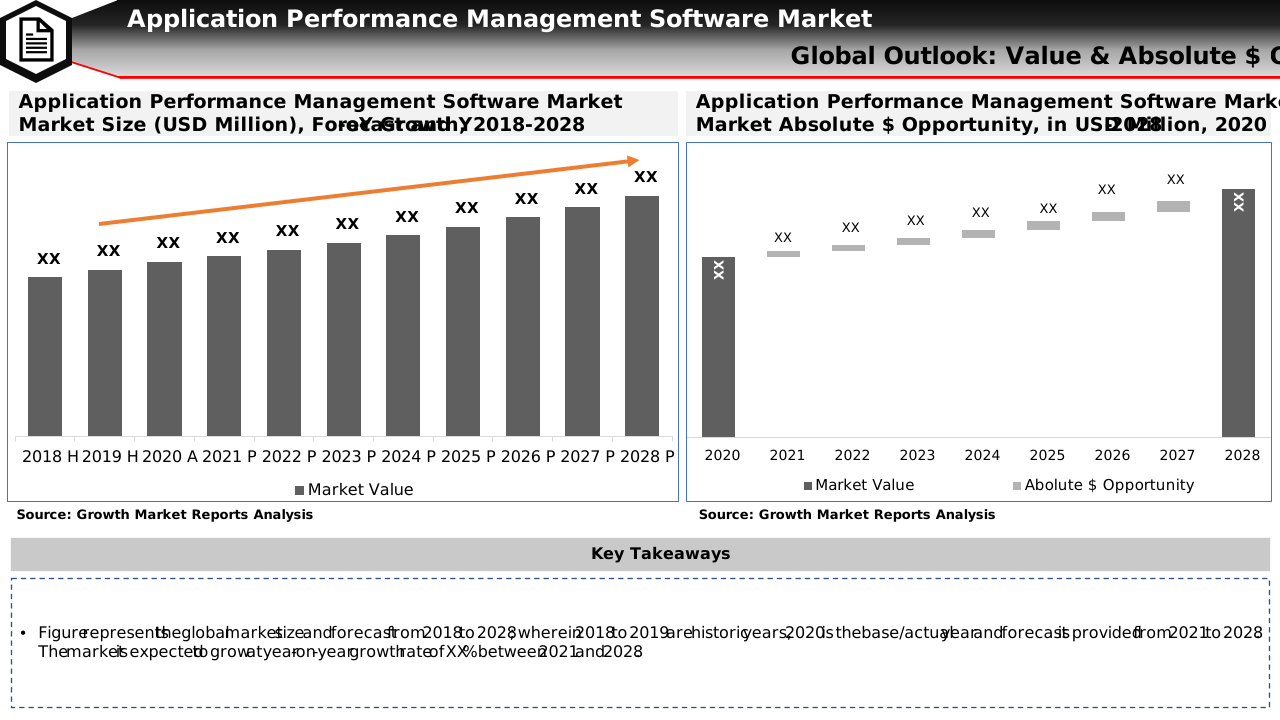
According to our latest research, the global Application Performance Management (APM) Software market size was valued at USD 8.4 billion in 2024, with a robust compound annual growth rate (CAGR) of 11.2% expected from 2025 to 2033. This trajectory will propel the market to an estimated USD 24.4 billion by 2033. The market's rapid expansion is driven by the increasing complexity of applications in cloud and hybrid environments, the proliferation of digital transformation initiatives, and the critical need for real-time monitoring and optimization of application performance. As per our comprehensive analysis, the demand for APM software is poised to surge as enterprises prioritize seamless user experience and operational efficiency in an increasingly digital-first landscape.

One of the primary growth factors fueling the Application Performance Management Software market is the accelerated pace of digital transformation across industries. Organizations are rapidly adopting cloud-based solutions, microservices architectures, and containerized applications to enhance their agility and scalability. This shift has introduced new layers of complexity in managing application performance, making robust APM solutions indispensable. Enterprises are increasingly seeking advanced APM tools that offer end-to-end visibility, proactive anomaly detection, and automated remediation capabilities to ensure optimal application uptime and performance. As a result, vendors are innovating with AI-driven analytics and machine learning algorithms, enabling predictive insights and faster root cause analysis. The imperative to deliver uninterrupted digital experiences to customers and employees alike is further compelling organizations to invest in sophisticated APM platforms.

Another significant driver is the rising adoption of cloud-native technologies and the migration of mission-critical workloads to public, private, and hybrid cloud environments. With the growing reliance on distributed architectures, organizations face challenges in monitoring application performance across diverse infrastructures and geographies. APM software has evolved to address these challenges by offering unified monitoring, real-time diagnostics, and seamless integration with DevOps toolchains. The need to minimize downtime, optimize resource utilization, and maintain stringent SLAs is pushing enterprises to deploy comprehensive APM solutions that can adapt to dynamic cloud environments. Additionally, the surge in remote work and digital services has increased the volume and complexity of application traffic, necessitating more granular and scalable APM tools to maintain business continuity and competitive advantage.

Furthermore, the increasing focus on customer experience and the growing importance of business-critical applications are catalyzing the adoption of Application Performance Management Software. In sectors such as banking, healthcare, and retail, application downtime or performance degradation can result in significant financial losses and reputational damage. APM solutions empower organizations to monitor user journeys, detect performance bottlenecks, and proactively resolve issues before they impact end-users. The integration of APM with business analytics is enabling enterprises to correlate application performance with business outcomes, driving data-driven decision-making. As regulatory requirements and compliance standards become more stringent, especially in sectors handling sensitive data, the role of APM in ensuring secure, compliant, and high-performing applications is becoming increasingly vital.

Application Performance Monitoring is an essential component of modern IT strategies, providing organizations with the tools needed to ensure that their applications run smoothly and efficiently. By leveraging APM, businesses can gain real-time insights into application performance, identify bottlenecks, and resolve issues before they impact end-users. This proactive approach not only enhances user satisfaction but also supports business continuity by minimizing downtime and optimizing resource utilization. As the digital landscape becomes increasingly complex, the role of Application Performance Monitoring in maintaining high standards of service delivery and operational excellence cannot be overstated.

Regionally, North America maintains its dominance in the Application Performance Management Software market, driven by the presence of leading technology vendors, early adoption of advanced IT solutions, and a mature digital ecosystem. However, Asia Pacific is emerging as the fastest-growing region, fueled by rapid digitalization, expanding cloud infrastructure, and increasing investments in IT modernization across emerging economies such as China, India, and Southeast Asia. Europe continues to witness steady growth, supported by stringent data privacy regulations and the rising demand for reliable digital services. The Middle East & Africa and Latin America are also experiencing a gradual uptick in APM adoption, as organizations in these regions accelerate their digital transformation journeys to remain competitive in the global market.

Global Application Performance Management Software Industry Outlook

Component Analysis

The Application Performance Management Software market is segmented by component into Software and Services, each playing a pivotal role in driving the overall market growth. The software segment comprises the core APM platforms that provide functionalities such as application monitoring, real-user monitoring, infrastructure monitoring, and advanced analytics. These solutions are increasingly leveraging artificial intelligence and machine learning to offer predictive insights, automate anomaly detection, and facilitate faster incident resolution. The software segment continues to command the largest market share, owing to the growing need for scalable, flexible, and feature-rich APM solutions that can cater to diverse application environments and support rapid digital innovation. As organizations modernize their IT landscapes, the demand for integrated, cloud-native, and open-source APM software is on the rise, further fueling segment growth.

On the other hand, the services segment encompasses consulting, implementation, training, support, and managed services that are essential for the successful deployment and ongoing optimization of APM solutions. As the complexity of IT environments increases, organizations are leaning heavily on specialized service providers to ensure seamless integration, customization, and continuous improvement of their APM strategies. Services such as performance assessment, capacity planning, and incident management are becoming increasingly critical as businesses seek to maximize the value of their APM investments. The growing trend of outsourcing IT management functions, coupled with the rising demand for 24/7 support and proactive monitoring, is driving robust growth in the services segment.

The interplay between software and services is becoming more pronounced as vendors adopt a holistic approach to address evolving customer needs. Many leading APM providers are offering bundled solutions that combine advanced software capabilities with comprehensive professional services, enabling organizations to achieve faster time-to-value and sustained performance improvements. This integrated approach is particularly appealing to enterprises undergoing large-scale digital transformation, as it minimizes deployment risks and ensures alignment with business objectives. The emergence of managed APM services is further enhancing the value proposition, allowing organizations to offload the complexities of application monitoring and focus on strategic initiatives.

Moreover, the evolution of APM software towards cloud-native and SaaS-based models is reshaping the services landscape. Organizations are increasingly seeking expert guidance on cloud migration, application modernization, and DevOps adoption, driving demand for specialized consulting and training services. The need for continuous optimization and proactive performance management is also fueling the growth of managed APM services, as businesses strive to maintain high application availability and user satisfaction in dynamic IT environments. As the market matures, the synergy between software and services will continue to be a key differentiator for vendors seeking to capture a larger share of the Application Performance Management Software market.

Report Scope

Attributes Details
Report Title Application Performance Management Software Market Research Report 2033
By Component Software, Services
By Deployment Mode On-Premises, Cloud
By Organization Size Small and Medium Enterprises, Large Enterprises
By End-User BFSI, Healthcare, IT and Telecommunications, Retail, Manufacturing, Government, Others
Regions Covered North America, Europe, APAC, Latin America, MEA
Base Year 2024
Historic Data 2018-2023
Forecast Period 2025-2033
Number of Pages 284
Number of Tables & Figures 300
Customization Available Yes, the report can be customized as per your need.

Deployment Mode Analysis

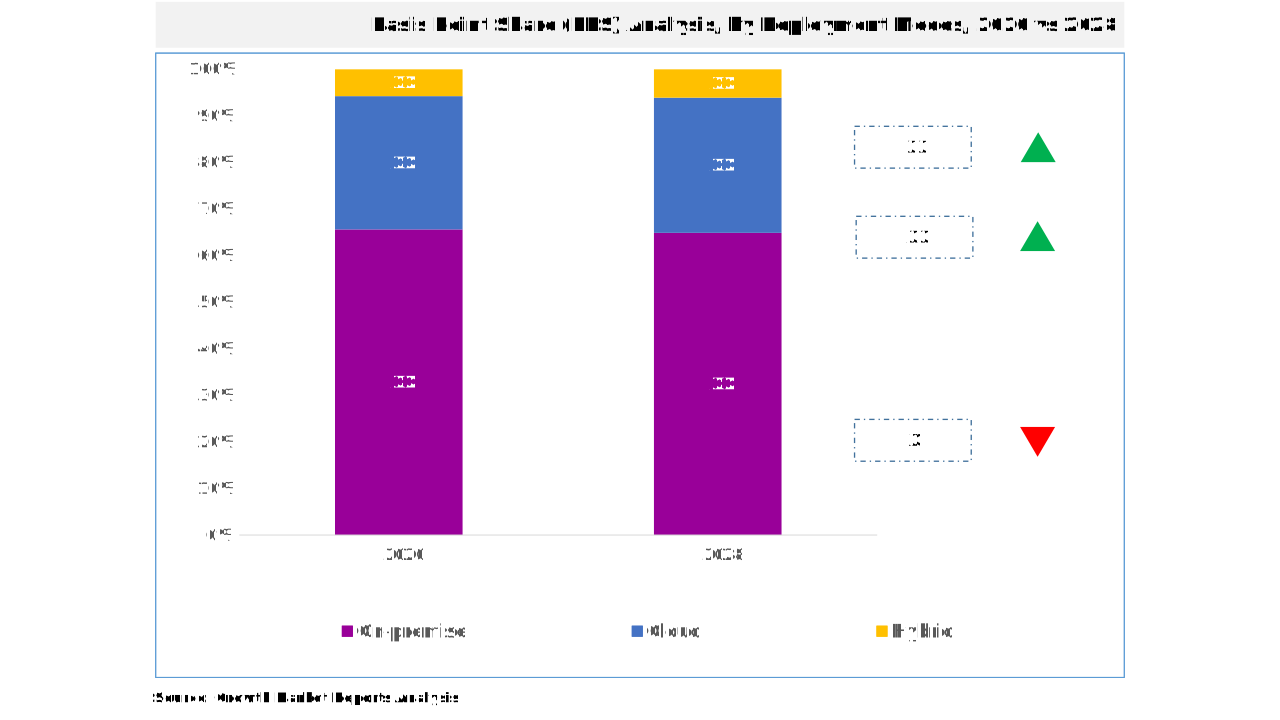
Deployment mode is a critical segment in the Application Performance Management Software market, with On-Premises and Cloud being the two primary categories. The on-premises deployment model has traditionally been favored by organizations with stringent security, compliance, and data sovereignty requirements. This model offers greater control over data and infrastructure, making it ideal for sectors such as banking, government, and healthcare where sensitive information must be tightly safeguarded. However, the on-premises segment is witnessing a gradual decline in market share as enterprises increasingly prioritize flexibility, scalability, and cost-efficiency offered by cloud-based solutions.

The cloud deployment mode has emerged as the dominant growth engine for the APM market, driven by the widespread adoption of SaaS, PaaS, and IaaS models. Cloud-based APM solutions offer unparalleled scalability, real-time analytics, and rapid deployment capabilities, enabling organizations to monitor applications across distributed, hybrid, and multi-cloud environments. The pay-as-you-go pricing model, reduced infrastructure overhead, and seamless integration with cloud-native tools make cloud APM highly attractive to businesses of all sizes. As digital transformation accelerates, the demand for cloud-based APM is expected to outpace on-premises deployments, with many enterprises opting for hybrid approaches to balance security and agility.

Hybrid deployment models are gaining traction as organizations seek to leverage the benefits of both on-premises and cloud environments. This approach allows businesses to maintain critical workloads on-premises while utilizing cloud-based APM for less sensitive applications or for burst capacity during peak demand. The flexibility to monitor applications across diverse infrastructures is becoming increasingly important as enterprises expand their digital footprints and embrace multi-cloud strategies. Vendors are responding by offering hybrid APM solutions that provide unified visibility, centralized management, and seamless integration across all deployment modes.

The shift towards cloud-native architectures and DevOps practices is further accelerating the adoption of cloud-based APM solutions. As organizations adopt microservices, containers, and serverless computing, the need for dynamic, scalable, and automated performance monitoring becomes paramount. Cloud APM platforms are evolving to support these modern paradigms, offering deep observability, AI-driven analytics, and real-time alerting to ensure optimal application performance. The growing ecosystem of cloud service providers and the proliferation of APIs and integrations are making it easier for organizations to deploy and manage APM solutions in the cloud, driving sustained market growth.

Organization Size Analysis

The Application Performance Management Software market is segmented by organization size into Small and Medium Enterprises (SMEs) and Large Enterprises. Large enterprises have historically been the primary adopters of APM solutions, driven by their complex IT infrastructures, large-scale application deployments, and stringent performance requirements. These organizations require advanced APM capabilities to monitor mission-critical applications, ensure regulatory compliance, and deliver seamless digital experiences to a global user base. Large enterprises often invest in comprehensive, customizable APM platforms that offer deep analytics, AI-driven automation, and integration with enterprise IT management tools.

Small and medium enterprises are increasingly recognizing the value of APM software as they embark on digital transformation journeys and expand their online presence. The availability of cost-effective, cloud-based APM solutions has lowered the barriers to entry for SMEs, enabling them to access enterprise-grade performance monitoring and optimization tools without significant upfront investments. SMEs are leveraging APM to improve application reliability, enhance customer satisfaction, and gain competitive advantage in rapidly evolving markets. The growing emphasis on agility, scalability, and operational efficiency is driving robust adoption of APM solutions among SMEs across various industries.

The unique needs of SMEs and large enterprises are shaping the development and delivery of APM solutions. Vendors are increasingly offering tiered pricing models, modular feature sets, and flexible deployment options to cater to organizations of different sizes and maturity levels. For large enterprises, the focus is on scalability, customization, and integration with existing IT ecosystems, while SMEs prioritize ease of use, affordability, and rapid deployment. The rise of managed APM services and SaaS-based offerings is further democratizing access to advanced performance management capabilities, enabling organizations of all sizes to optimize their application environments.

The convergence of digital transformation, cloud adoption, and customer-centric business models is blurring the lines between SMEs and large enterprises in terms of APM requirements. Both segments are increasingly demanding real-time visibility, proactive anomaly detection, and automated remediation to ensure high application availability and user satisfaction. As the market continues to evolve, vendors that can deliver scalable, flexible, and cost-effective APM solutions tailored to the unique needs of different organization sizes will be well-positioned to capture a larger share of the Application Performance Management Software market.

End-User Analysis

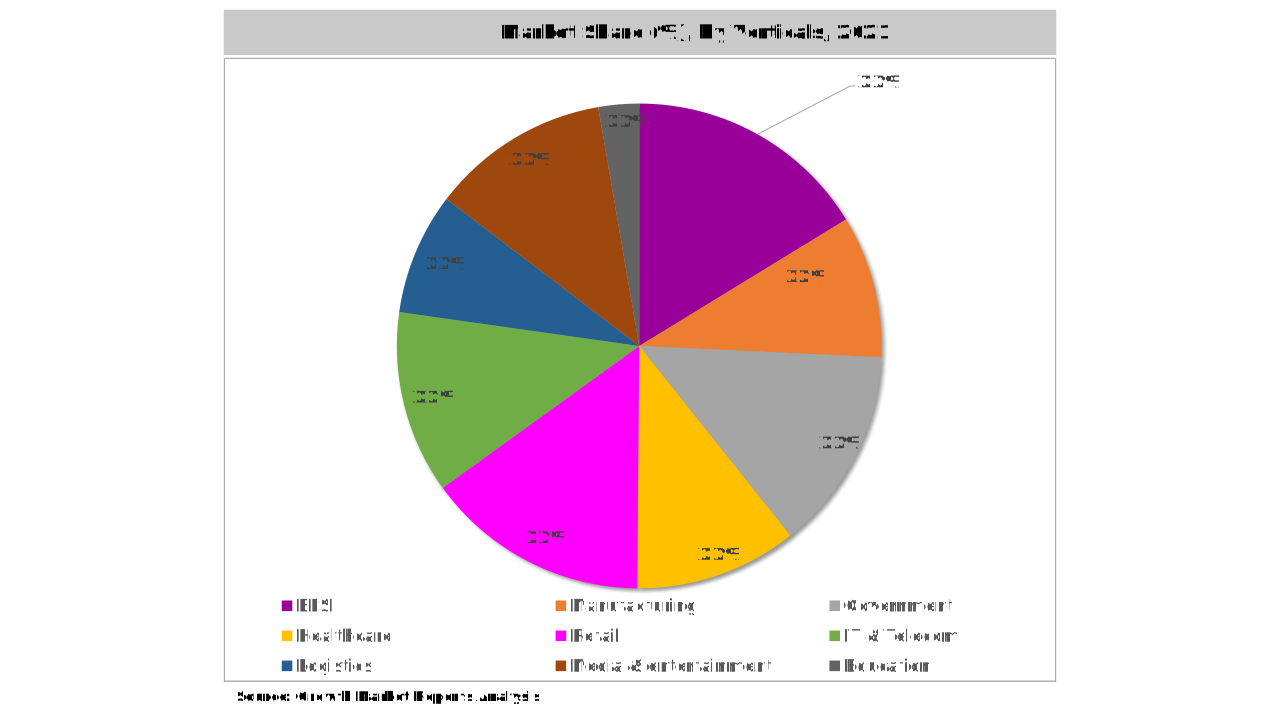
The Application Performance Management Software market serves a diverse array of end-users, including BFSI, Healthcare, IT and Telecommunications, Retail, Manufacturing, Government, and Others. The BFSI sector is a major contributor to market growth, driven by the critical need to ensure the reliability, security, and performance of financial applications. Banks, insurance companies, and financial service providers rely on APM solutions to monitor transaction processing, detect anomalies, and maintain compliance with regulatory standards. The increasing adoption of digital banking, mobile payments, and fintech solutions is further accelerating the demand for advanced APM capabilities in the BFSI sector.

The healthcare industry is another significant end-user, as hospitals, clinics, and healthcare providers increasingly depend on digital applications for patient care, diagnostics, and administrative functions. APM software plays a vital role in ensuring the availability and performance of electronic health records (EHR), telemedicine platforms, and other mission-critical applications. The need to maintain patient data security, comply with healthcare regulations, and deliver seamless digital experiences is driving robust adoption of APM solutions in the healthcare sector. Vendors are responding by offering specialized APM tools designed to address the unique challenges of healthcare IT environments.

IT and telecommunications companies are at the forefront of APM adoption, given their reliance on complex, high-availability application environments. These organizations require sophisticated APM solutions to monitor network performance, optimize service delivery, and support large-scale digital transformation initiatives. The proliferation of 5G networks, IoT devices, and edge computing is increasing the complexity of IT and telecom infrastructures, making advanced APM capabilities essential for maintaining service quality and customer satisfaction. The retail and manufacturing sectors are also significant adopters of APM software, leveraging it to optimize e-commerce platforms, supply chain management systems, and customer engagement applications.

Government agencies and public sector organizations are increasingly investing in APM solutions to enhance the performance, security, and reliability of digital services. The growing emphasis on e-governance, citizen engagement, and digital infrastructure modernization is driving demand for robust APM platforms that can support large-scale, mission-critical applications. Other end-users, including education, transportation, and energy sectors, are also recognizing the value of APM software in ensuring operational efficiency and delivering high-quality digital experiences. As the digital landscape continues to evolve, the scope and diversity of APM end-users will expand, creating new opportunities for vendors to innovate and differentiate their offerings.

Opportunities & Threats

The Application Performance Management Software market is brimming with opportunities as organizations across industries accelerate their digital transformation initiatives. One of the most promising opportunities lies in the integration of APM with artificial intelligence and machine learning technologies. AI-driven APM solutions can analyze vast volumes of performance data in real time, identify patterns, and predict potential issues before they impact end-users. This proactive approach to performance management is gaining traction among enterprises seeking to minimize downtime, optimize resource utilization, and deliver superior digital experiences. The rise of cloud-native applications, microservices, and DevOps practices is also creating new avenues for APM innovation, as organizations demand more agile, scalable, and automated performance monitoring solutions.

Another significant opportunity is the growing adoption of APM in emerging markets, particularly in Asia Pacific, Latin America, and the Middle East & Africa. As businesses in these regions embark on digital transformation journeys, the demand for reliable, scalable, and cost-effective APM solutions is expected to surge. The proliferation of mobile applications, e-commerce platforms, and digital services is driving the need for advanced performance monitoring and optimization tools. Vendors that can offer localized, cloud-based, and affordable APM solutions tailored to the unique needs of emerging markets will be well-positioned to capture new growth opportunities. Additionally, the increasing focus on customer experience, regulatory compliance, and cybersecurity is driving demand for integrated APM platforms that can deliver end-to-end visibility and actionable insights.

Despite the promising growth prospects, the Application Performance Management Software market faces several restraining factors. One of the primary challenges is the complexity and fragmentation of modern IT environments, which can make it difficult to achieve unified visibility and control across diverse applications, infrastructures, and deployment models. Integrating APM solutions with legacy systems, third-party tools, and cloud platforms can be a complex and resource-intensive process, particularly for organizations with limited IT expertise. Additionally, concerns around data privacy, security, and compliance can hinder the adoption of cloud-based APM solutions, especially in highly regulated industries. Vendors must address these challenges by offering flexible, interoperable, and secure APM platforms that can seamlessly integrate with existing IT ecosystems and support evolving business requirements.

Regional Outlook

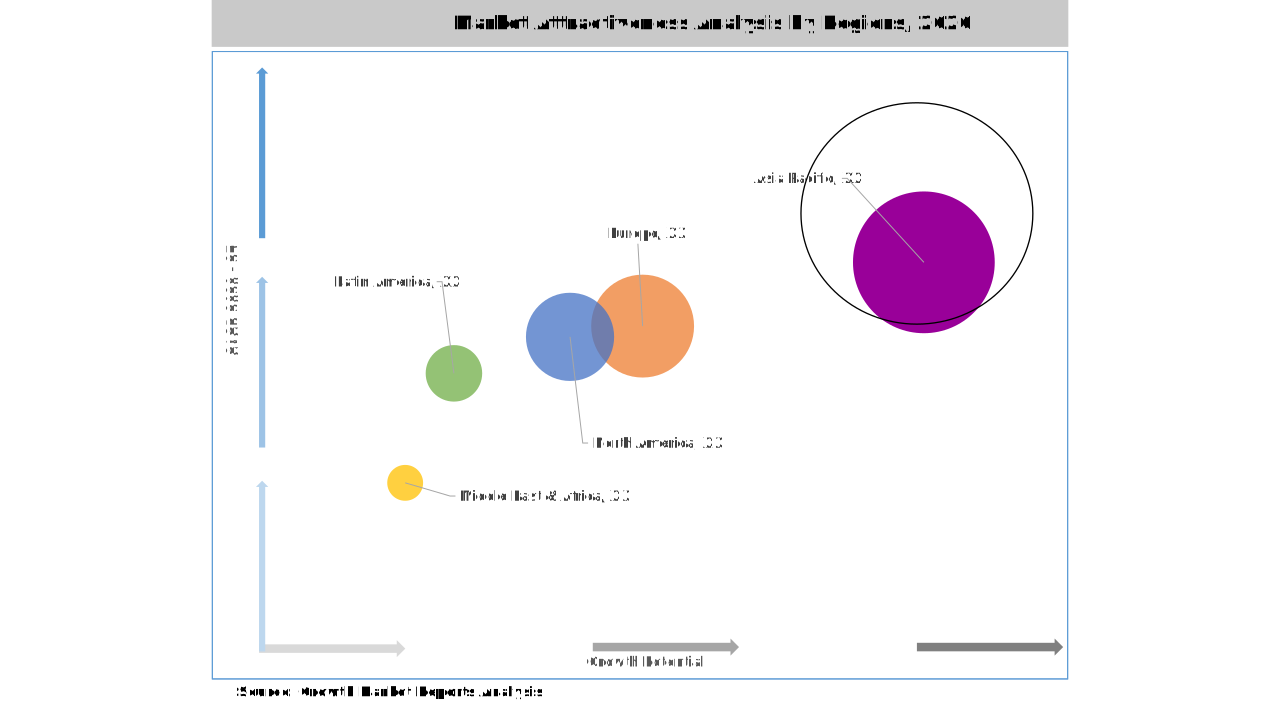
North America remains the largest and most mature market for Application Performance Management Software, accounting for approximately 38% of the global market share in 2024, or about USD 3.2 billion. The region's dominance is underpinned by the presence of leading technology vendors, early adoption of advanced IT solutions, and a highly developed digital infrastructure. The United States, in particular, is a major contributor to market growth, driven by the rapid digitalization of enterprises, the proliferation of cloud services, and the growing emphasis on customer experience. Canada is also witnessing steady growth, supported by increasing investments in digital transformation and IT modernization across various sectors. The strong focus on innovation, cybersecurity, and regulatory compliance is further fueling demand for advanced APM solutions in North America.

Europe holds a significant share of the global Application Performance Management Software market, with a market size of approximately USD 2.1 billion in 2024. The region is characterized by a mature digital ecosystem, stringent data privacy regulations, and a growing demand for reliable digital services. Key markets such as the United Kingdom, Germany, and France are leading the adoption of APM solutions, driven by the need to ensure application performance, security, and compliance in highly regulated industries. The increasing adoption of cloud computing, the rise of e-commerce, and the growing emphasis on customer-centric business models are further accelerating market growth in Europe. The region is expected to witness a steady CAGR of 9.8% from 2025 to 2033, as organizations continue to invest in digital transformation and IT modernization initiatives.

Asia Pacific is emerging as the fastest-growing region in the Application Performance Management Software market, with a market size of USD 1.7 billion in 2024 and a projected CAGR of 14.3% through 2033. Rapid digitalization, expanding cloud infrastructure, and increasing investments in IT modernization are driving robust demand for APM solutions across key markets such as China, India, Japan, and Southeast Asia. The proliferation of mobile applications, e-commerce platforms, and digital services is creating new opportunities for APM vendors to capture market share in the region. Latin America and the Middle East & Africa are also witnessing gradual growth, with market sizes of USD 0.8 billion and USD 0.6 billion respectively in 2024, as organizations in these regions accelerate their digital transformation journeys and invest in modern IT infrastructure. The regional landscape is expected to evolve rapidly, with Asia Pacific leading the charge in terms of innovation, adoption, and market expansion.

Application Performance Management Software Market Statistics

Competitor Outlook

The Application Performance Management Software market is characterized by intense competition, rapid innovation, and a dynamic vendor landscape. Leading players are continuously investing in research and development to enhance their product portfolios, integrate advanced analytics, and offer differentiated value propositions to customers. The market is witnessing a wave of consolidation, as established vendors acquire niche players and startups to expand their capabilities, enter new markets, and strengthen their competitive positions. The emergence of cloud-native, AI-driven, and open-source APM solutions is reshaping the competitive landscape, creating new opportunities and challenges for both incumbents and new entrants.

Major vendors are focusing on delivering end-to-end visibility, real-time analytics, and seamless integration with DevOps and IT operations toolchains. The ability to provide unified monitoring across hybrid, multi-cloud, and on-premises environments is becoming a key differentiator, as organizations seek to simplify performance management and accelerate digital transformation. Vendors are also investing in AI and machine learning to automate anomaly detection, root cause analysis, and incident remediation, enabling enterprises to proactively address performance issues and optimize application uptime. The rise of managed APM services and SaaS-based offerings is further intensifying competition, as vendors vie to capture a larger share of the growing market for outsourced IT management solutions.

Customer-centricity is at the heart of the competitive strategy for leading APM vendors. Companies are increasingly offering flexible pricing models, modular feature sets, and tailored solutions to meet the unique needs of different industries, organization sizes, and deployment models. Strategic partnerships, alliances, and ecosystem integrations are also playing a critical role in expanding market reach and delivering comprehensive performance management solutions. As the market matures, the ability to deliver value-added services, continuous innovation, and exceptional customer support will be essential for vendors seeking to maintain and grow their market share.

Some of the major players in the Application Performance Management Software market include Dynatrace, AppDynamics (Cisco), New Relic, IBM, Broadcom (CA Technologies), Microsoft, Splunk, SolarWinds, Micro Focus, and Datadog. Dynatrace is renowned for its AI-powered APM platform that offers deep observability and automated insights across hybrid and multi-cloud environments. AppDynamics, a subsidiary of Cisco, is a leader in application intelligence, providing real-time monitoring and advanced analytics to optimize business performance. New Relic offers a cloud-native observability platform that enables organizations to monitor applications, infrastructure, and user experiences in real time. IBM and Broadcom are established players with comprehensive APM portfolios that cater to large enterprises and highly regulated industries.

Microsoft has strengthened its position in the APM market through its Azure Monitor platform, which provides integrated monitoring, analytics, and automation capabilities for cloud-native applications. Splunk and SolarWinds are well-known for their robust monitoring and analytics solutions, serving a wide range of industries and use cases. Micro Focus offers enterprise-grade APM solutions with a focus on scalability, security, and integration with IT operations management tools. Datadog is a rapidly growing player, recognized for its cloud-based APM platform that delivers unified monitoring, analytics, and automation across modern application environments. These companies are continuously innovating to address evolving customer needs, expand their market presence, and drive the next wave of growth in the Application Performance Management Software market.

Key Players

  • Dynatrace
  • New Relic
  • AppDynamics (Cisco)
  • Broadcom (CA Technologies)
  • Splunk
  • IBM
  • Microsoft
  • Oracle
  • Riverbed Technology
  • BMC Software
  • Micro Focus
  • SolarWinds
  • ManageEngine (Zoho Corporation)
  • Datadog
  • Instana (IBM)
  • LogicMonitor
  • Stackify
  • ScienceLogic
  • Correlsense
  • AppNeta
Application Performance Management Software Market Overview

Segments

The Application Performance Management Software market has been segmented on the basis of

Component

  • Software
  • Services

Deployment Mode

  • On-Premises
  • Cloud

Organization Size

  • Small and Medium Enterprises
  • Large Enterprises

End-User

  • BFSI
  • Healthcare
  • IT and Telecommunications
  • Retail
  • Manufacturing
  • Government
  • Others

Competitive Landscape

Major players of the market are SAS Institute Inc., SAP SE, Webtrends, Oracle Corporation, International Business Machines Corporation, Adobe Systems Incorporated, Salesforce.com, Microsoft Corporation, JDA Software Group, Inc., ManageEngine, Fair Isaac Corporation, CA Technologies, IBM, HP, AppDynamics, Compuware, and Microsoft.

Some of these key players are actively investing in R&D activities to develop advanced APM solutions. They are also focusing on several market strategies such as the introducing of SaaS model in management system to enhance their market value and expand their consumer base. For instance,

In July 2020, New Relic, Inc., launched New Relic One, which was an update of its APM solution. The updated APM solution provided full-stack visibility and telemetry data platform. In April 2020, a US-based IT solution provider, Ensono introduced APM solution to increase the application stability and downtime.
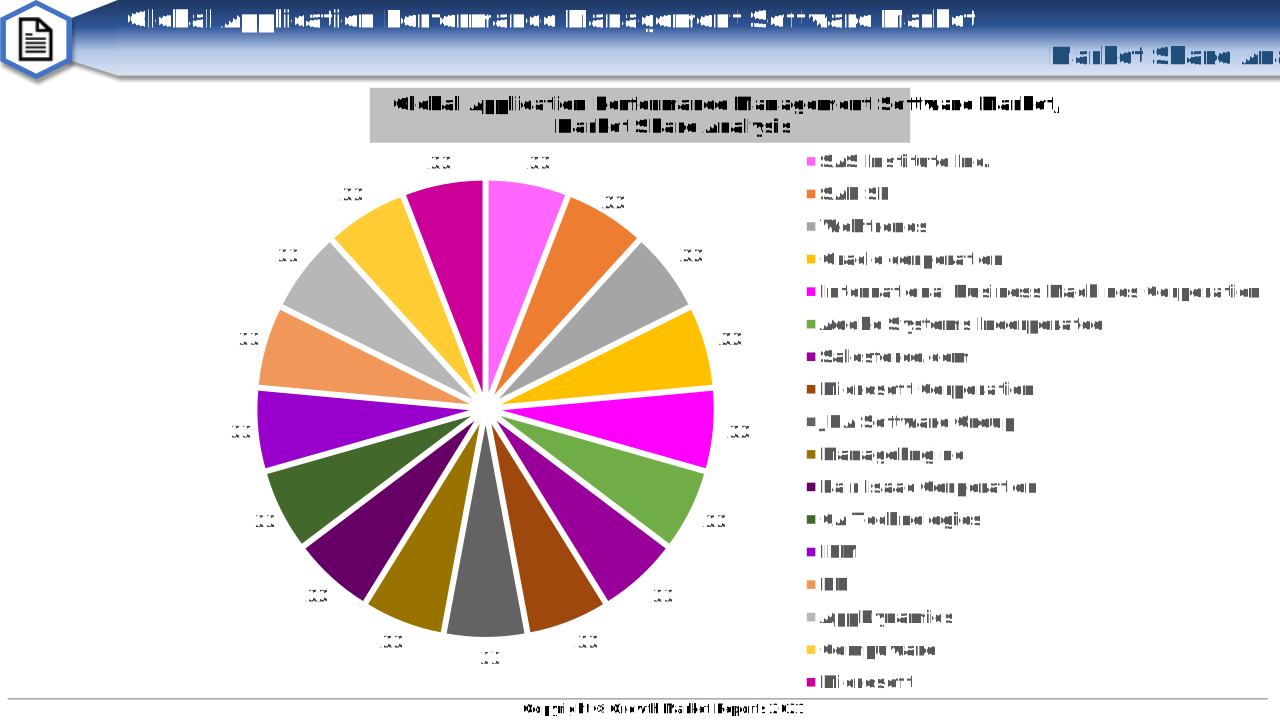

 Application Performance Management Software Market By Key Players

Frequently Asked Questions

AI and machine learning are enabling APM solutions to provide predictive insights, automate anomaly detection, and facilitate faster root cause analysis, helping organizations proactively manage application performance and minimize downtime.

Leading vendors include Dynatrace, AppDynamics (Cisco), New Relic, IBM, Broadcom (CA Technologies), Microsoft, Splunk, SolarWinds, Micro Focus, Datadog, and others.

Challenges include the complexity of modern IT environments, integration with legacy systems, data privacy and compliance concerns, and the need for unified visibility across diverse infrastructures.

The market is segmented into software and services. The software segment includes core APM platforms, while the services segment covers consulting, implementation, training, support, and managed services.

North America leads the market, followed by Europe and Asia Pacific. Asia Pacific is the fastest-growing region due to rapid digitalization, expanding cloud infrastructure, and increasing IT investments.

Major end-users include BFSI (Banking, Financial Services, and Insurance), healthcare, IT and telecommunications, retail, manufacturing, government, and other sectors that rely on business-critical applications.

APM Software can be deployed via on-premises, cloud, or hybrid models. Cloud-based deployment is gaining dominance due to its scalability, flexibility, and cost-effectiveness, while hybrid models offer a balance between security and agility.

Key growth drivers include the accelerated pace of digital transformation, increased adoption of cloud-native technologies, the need for real-time monitoring and optimization, and the critical importance of delivering seamless digital experiences to customers and employees.

The global Application Performance Management Software market is expected to reach USD 24.4 billion by 2033, growing at a compound annual growth rate (CAGR) of 11.2% from 2025 to 2033.

Application Performance Management (APM) Software is a set of tools and solutions designed to monitor, manage, and optimize the performance and availability of software applications. It helps organizations detect and resolve performance issues, ensure seamless user experiences, and maintain operational efficiency across cloud, hybrid, and on-premises environments.

Table Of Content

Chapter 1 Executive Summary
Chapter 2 Assumptions and Acronyms Used
Chapter 3 Research Methodology
Chapter 4 Application Performance Management Software Market Overview
   4.1 Introduction
      4.1.1 Market Taxonomy
      4.1.2 Market Definition
      4.1.3 Macro-Economic Factors Impacting the Market Growth
   4.2 Application Performance Management Software Market Dynamics
      4.2.1 Market Drivers
      4.2.2 Market Restraints
      4.2.3 Market Opportunity
   4.3 Application Performance Management Software Market - Supply Chain Analysis
      4.3.1 List of Key Suppliers
      4.3.2 List of Key Distributors
      4.3.3 List of Key Consumers
   4.4 Key Forces Shaping the Application Performance Management Software Market
      4.4.1 Bargaining Power of Suppliers
      4.4.2 Bargaining Power of Buyers
      4.4.3 Threat of Substitution
      4.4.4 Threat of New Entrants
      4.4.5 Competitive Rivalry
   4.5 Global Application Performance Management Software Market Size & Forecast, 2023-2032
      4.5.1 Application Performance Management Software Market Size and Y-o-Y Growth
      4.5.2 Application Performance Management Software Market Absolute $ Opportunity

Chapter 5 Global Application Performance Management Software Market Analysis and Forecast By Component
   5.1 Introduction
      5.1.1 Key Market Trends & Growth Opportunities By Component
      5.1.2 Basis Point Share (BPS) Analysis By Component
      5.1.3 Absolute $ Opportunity Assessment By Component
   5.2 Application Performance Management Software Market Size Forecast By Component
      5.2.1 Software
      5.2.2 Services
   5.3 Market Attractiveness Analysis By Component

Chapter 6 Global Application Performance Management Software Market Analysis and Forecast By Deployment Mode
   6.1 Introduction
      6.1.1 Key Market Trends & Growth Opportunities By Deployment Mode
      6.1.2 Basis Point Share (BPS) Analysis By Deployment Mode
      6.1.3 Absolute $ Opportunity Assessment By Deployment Mode
   6.2 Application Performance Management Software Market Size Forecast By Deployment Mode
      6.2.1 On-Premises
      6.2.2 Cloud
   6.3 Market Attractiveness Analysis By Deployment Mode

Chapter 7 Global Application Performance Management Software Market Analysis and Forecast By Organization Size
   7.1 Introduction
      7.1.1 Key Market Trends & Growth Opportunities By Organization Size
      7.1.2 Basis Point Share (BPS) Analysis By Organization Size
      7.1.3 Absolute $ Opportunity Assessment By Organization Size
   7.2 Application Performance Management Software Market Size Forecast By Organization Size
      7.2.1 Small and Medium Enterprises
      7.2.2 Large Enterprises
   7.3 Market Attractiveness Analysis By Organization Size

Chapter 8 Global Application Performance Management Software Market Analysis and Forecast By End-User
   8.1 Introduction
      8.1.1 Key Market Trends & Growth Opportunities By End-User
      8.1.2 Basis Point Share (BPS) Analysis By End-User
      8.1.3 Absolute $ Opportunity Assessment By End-User
   8.2 Application Performance Management Software Market Size Forecast By End-User
      8.2.1 BFSI
      8.2.2 Healthcare
      8.2.3 IT and Telecommunications
      8.2.4 Retail
      8.2.5 Manufacturing
      8.2.6 Government
      8.2.7 Others
   8.3 Market Attractiveness Analysis By End-User

Chapter 9 Global Application Performance Management Software Market Analysis and Forecast by Region
   9.1 Introduction
      9.1.1 Key Market Trends & Growth Opportunities By Region
      9.1.2 Basis Point Share (BPS) Analysis By Region
      9.1.3 Absolute $ Opportunity Assessment By Region
   9.2 Application Performance Management Software Market Size Forecast By Region
      9.2.1 North America
      9.2.2 Europe
      9.2.3 Asia Pacific
      9.2.4 Latin America
      9.2.5 Middle East & Africa (MEA)
   9.3 Market Attractiveness Analysis By Region

Chapter 10 Coronavirus Disease (COVID-19) Impact 
   10.1 Introduction 
   10.2 Current & Future Impact Analysis 
   10.3 Economic Impact Analysis 
   10.4 Government Policies 
   10.5 Investment Scenario

Chapter 11 North America Application Performance Management Software Analysis and Forecast
   11.1 Introduction
   11.2 North America Application Performance Management Software Market Size Forecast by Country
      11.2.1 U.S.
      11.2.2 Canada
   11.3 Basis Point Share (BPS) Analysis by Country
   11.4 Absolute $ Opportunity Assessment by Country
   11.5 Market Attractiveness Analysis by Country
   11.6 North America Application Performance Management Software Market Size Forecast By Component
      11.6.1 Software
      11.6.2 Services
   11.7 Basis Point Share (BPS) Analysis By Component 
   11.8 Absolute $ Opportunity Assessment By Component 
   11.9 Market Attractiveness Analysis By Component
   11.10 North America Application Performance Management Software Market Size Forecast By Deployment Mode
      11.10.1 On-Premises
      11.10.2 Cloud
   11.11 Basis Point Share (BPS) Analysis By Deployment Mode 
   11.12 Absolute $ Opportunity Assessment By Deployment Mode 
   11.13 Market Attractiveness Analysis By Deployment Mode
   11.14 North America Application Performance Management Software Market Size Forecast By Organization Size
      11.14.1 Small and Medium Enterprises
      11.14.2 Large Enterprises
   11.15 Basis Point Share (BPS) Analysis By Organization Size 
   11.16 Absolute $ Opportunity Assessment By Organization Size 
   11.17 Market Attractiveness Analysis By Organization Size
   11.18 North America Application Performance Management Software Market Size Forecast By End-User
      11.18.1 BFSI
      11.18.2 Healthcare
      11.18.3 IT and Telecommunications
      11.18.4 Retail
      11.18.5 Manufacturing
      11.18.6 Government
      11.18.7 Others
   11.19 Basis Point Share (BPS) Analysis By End-User 
   11.20 Absolute $ Opportunity Assessment By End-User 
   11.21 Market Attractiveness Analysis By End-User

Chapter 12 Europe Application Performance Management Software Analysis and Forecast
   12.1 Introduction
   12.2 Europe Application Performance Management Software Market Size Forecast by Country
      12.2.1 Germany
      12.2.2 France
      12.2.3 Italy
      12.2.4 U.K.
      12.2.5 Spain
      12.2.6 Russia
      12.2.7 Rest of Europe
   12.3 Basis Point Share (BPS) Analysis by Country
   12.4 Absolute $ Opportunity Assessment by Country
   12.5 Market Attractiveness Analysis by Country
   12.6 Europe Application Performance Management Software Market Size Forecast By Component
      12.6.1 Software
      12.6.2 Services
   12.7 Basis Point Share (BPS) Analysis By Component 
   12.8 Absolute $ Opportunity Assessment By Component 
   12.9 Market Attractiveness Analysis By Component
   12.10 Europe Application Performance Management Software Market Size Forecast By Deployment Mode
      12.10.1 On-Premises
      12.10.2 Cloud
   12.11 Basis Point Share (BPS) Analysis By Deployment Mode 
   12.12 Absolute $ Opportunity Assessment By Deployment Mode 
   12.13 Market Attractiveness Analysis By Deployment Mode
   12.14 Europe Application Performance Management Software Market Size Forecast By Organization Size
      12.14.1 Small and Medium Enterprises
      12.14.2 Large Enterprises
   12.15 Basis Point Share (BPS) Analysis By Organization Size 
   12.16 Absolute $ Opportunity Assessment By Organization Size 
   12.17 Market Attractiveness Analysis By Organization Size
   12.18 Europe Application Performance Management Software Market Size Forecast By End-User
      12.18.1 BFSI
      12.18.2 Healthcare
      12.18.3 IT and Telecommunications
      12.18.4 Retail
      12.18.5 Manufacturing
      12.18.6 Government
      12.18.7 Others
   12.19 Basis Point Share (BPS) Analysis By End-User 
   12.20 Absolute $ Opportunity Assessment By End-User 
   12.21 Market Attractiveness Analysis By End-User

Chapter 13 Asia Pacific Application Performance Management Software Analysis and Forecast
   13.1 Introduction
   13.2 Asia Pacific Application Performance Management Software Market Size Forecast by Country
      13.2.1 China
      13.2.2 Japan
      13.2.3 South Korea
      13.2.4 India
      13.2.5 Australia
      13.2.6 South East Asia (SEA)
      13.2.7 Rest of Asia Pacific (APAC)
   13.3 Basis Point Share (BPS) Analysis by Country
   13.4 Absolute $ Opportunity Assessment by Country
   13.5 Market Attractiveness Analysis by Country
   13.6 Asia Pacific Application Performance Management Software Market Size Forecast By Component
      13.6.1 Software
      13.6.2 Services
   13.7 Basis Point Share (BPS) Analysis By Component 
   13.8 Absolute $ Opportunity Assessment By Component 
   13.9 Market Attractiveness Analysis By Component
   13.10 Asia Pacific Application Performance Management Software Market Size Forecast By Deployment Mode
      13.10.1 On-Premises
      13.10.2 Cloud
   13.11 Basis Point Share (BPS) Analysis By Deployment Mode 
   13.12 Absolute $ Opportunity Assessment By Deployment Mode 
   13.13 Market Attractiveness Analysis By Deployment Mode
   13.14 Asia Pacific Application Performance Management Software Market Size Forecast By Organization Size
      13.14.1 Small and Medium Enterprises
      13.14.2 Large Enterprises
   13.15 Basis Point Share (BPS) Analysis By Organization Size 
   13.16 Absolute $ Opportunity Assessment By Organization Size 
   13.17 Market Attractiveness Analysis By Organization Size
   13.18 Asia Pacific Application Performance Management Software Market Size Forecast By End-User
      13.18.1 BFSI
      13.18.2 Healthcare
      13.18.3 IT and Telecommunications
      13.18.4 Retail
      13.18.5 Manufacturing
      13.18.6 Government
      13.18.7 Others
   13.19 Basis Point Share (BPS) Analysis By End-User 
   13.20 Absolute $ Opportunity Assessment By End-User 
   13.21 Market Attractiveness Analysis By End-User

Chapter 14 Latin America Application Performance Management Software Analysis and Forecast
   14.1 Introduction
   14.2 Latin America Application Performance Management Software Market Size Forecast by Country
      14.2.1 Brazil
      14.2.2 Mexico
      14.2.3 Rest of Latin America (LATAM)
   14.3 Basis Point Share (BPS) Analysis by Country
   14.4 Absolute $ Opportunity Assessment by Country
   14.5 Market Attractiveness Analysis by Country
   14.6 Latin America Application Performance Management Software Market Size Forecast By Component
      14.6.1 Software
      14.6.2 Services
   14.7 Basis Point Share (BPS) Analysis By Component 
   14.8 Absolute $ Opportunity Assessment By Component 
   14.9 Market Attractiveness Analysis By Component
   14.10 Latin America Application Performance Management Software Market Size Forecast By Deployment Mode
      14.10.1 On-Premises
      14.10.2 Cloud
   14.11 Basis Point Share (BPS) Analysis By Deployment Mode 
   14.12 Absolute $ Opportunity Assessment By Deployment Mode 
   14.13 Market Attractiveness Analysis By Deployment Mode
   14.14 Latin America Application Performance Management Software Market Size Forecast By Organization Size
      14.14.1 Small and Medium Enterprises
      14.14.2 Large Enterprises
   14.15 Basis Point Share (BPS) Analysis By Organization Size 
   14.16 Absolute $ Opportunity Assessment By Organization Size 
   14.17 Market Attractiveness Analysis By Organization Size
   14.18 Latin America Application Performance Management Software Market Size Forecast By End-User
      14.18.1 BFSI
      14.18.2 Healthcare
      14.18.3 IT and Telecommunications
      14.18.4 Retail
      14.18.5 Manufacturing
      14.18.6 Government
      14.18.7 Others
   14.19 Basis Point Share (BPS) Analysis By End-User 
   14.20 Absolute $ Opportunity Assessment By End-User 
   14.21 Market Attractiveness Analysis By End-User

Chapter 15 Middle East & Africa (MEA) Application Performance Management Software Analysis and Forecast
   15.1 Introduction
   15.2 Middle East & Africa (MEA) Application Performance Management Software Market Size Forecast by Country
      15.2.1 Saudi Arabia
      15.2.2 South Africa
      15.2.3 UAE
      15.2.4 Rest of Middle East & Africa (MEA)
   15.3 Basis Point Share (BPS) Analysis by Country
   15.4 Absolute $ Opportunity Assessment by Country
   15.5 Market Attractiveness Analysis by Country
   15.6 Middle East & Africa (MEA) Application Performance Management Software Market Size Forecast By Component
      15.6.1 Software
      15.6.2 Services
   15.7 Basis Point Share (BPS) Analysis By Component 
   15.8 Absolute $ Opportunity Assessment By Component 
   15.9 Market Attractiveness Analysis By Component
   15.10 Middle East & Africa (MEA) Application Performance Management Software Market Size Forecast By Deployment Mode
      15.10.1 On-Premises
      15.10.2 Cloud
   15.11 Basis Point Share (BPS) Analysis By Deployment Mode 
   15.12 Absolute $ Opportunity Assessment By Deployment Mode 
   15.13 Market Attractiveness Analysis By Deployment Mode
   15.14 Middle East & Africa (MEA) Application Performance Management Software Market Size Forecast By Organization Size
      15.14.1 Small and Medium Enterprises
      15.14.2 Large Enterprises
   15.15 Basis Point Share (BPS) Analysis By Organization Size 
   15.16 Absolute $ Opportunity Assessment By Organization Size 
   15.17 Market Attractiveness Analysis By Organization Size
   15.18 Middle East & Africa (MEA) Application Performance Management Software Market Size Forecast By End-User
      15.18.1 BFSI
      15.18.2 Healthcare
      15.18.3 IT and Telecommunications
      15.18.4 Retail
      15.18.5 Manufacturing
      15.18.6 Government
      15.18.7 Others
   15.19 Basis Point Share (BPS) Analysis By End-User 
   15.20 Absolute $ Opportunity Assessment By End-User 
   15.21 Market Attractiveness Analysis By End-User

Chapter 16 Competition Landscape 
   16.1 Application Performance Management Software Market: Competitive Dashboard
   16.2 Global Application Performance Management Software Market: Market Share Analysis, 2023
   16.3 Company Profiles (Details – Overview, Financials, Developments, Strategy) 
      16.3.1 Dynatrace
New Relic
AppDynamics (Cisco)
Broadcom (CA Technologies)
Splunk
IBM
Microsoft
Oracle
Riverbed Technology
BMC Software
Micro Focus
SolarWinds
ManageEngine (Zoho Corporation)
Datadog
Instana (IBM)
LogicMonitor
Stackify
ScienceLogic
Correlsense
AppNeta

Methodology

Our Clients

Siemens Healthcare
FedEx Logistics
Microsoft
sinopec
Nestle SA
Deloitte
General Electric
Dassault Aviation