Animal Growth Promoter Market Research Report 2033

Animal Growth Promoter Market Research Report 2033

Segments - by Product Type (Antibiotic Growth Promoters, Non-Antibiotic Growth Promoters, Probiotics, Prebiotics, Phytogenics, Others), by Livestock (Poultry, Swine, Cattle, Aquaculture, Others), by Form (Dry, Liquid), by Mode Of Administration (Oral, Topical, Others), by Distribution Channel (Veterinary Hospitals, Retail Stores, Online Stores, Others)

https://growthmarketreports.com/raksha
Author : Raksha Sharma
https://growthmarketreports.com/Vaibhav
Fact-checked by : V. Chandola
https://growthmarketreports.com/Shruti
Editor : Shruti Bhat

Upcoming | Report ID :HC-1444 | 4.5 Rating | 93 Reviews | 284 Pages | Format : Docx PDF

Report Description


Animal Growth Promoter Market Outlook

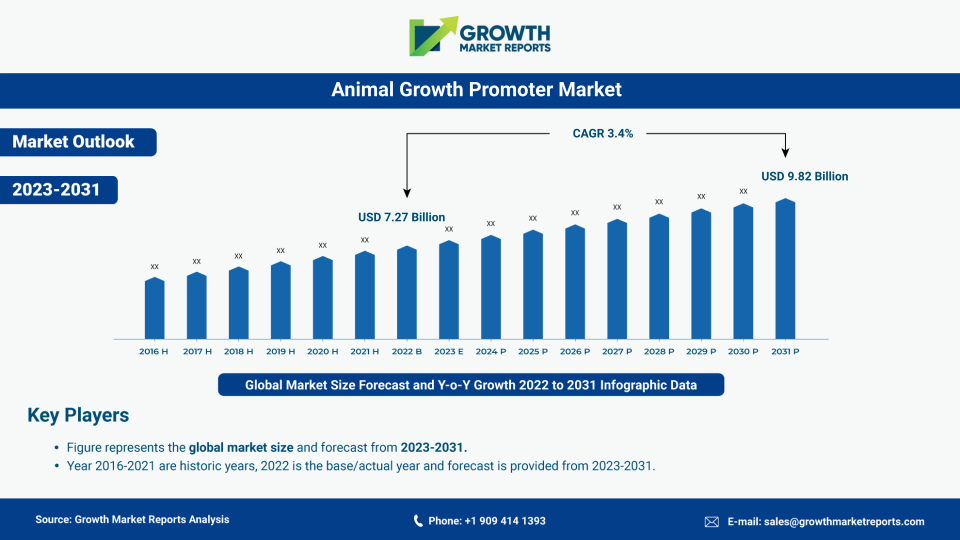
According to our latest research, the global Animal Growth Promoter market size reached USD 13.8 billion in 2024, reflecting robust demand across all major livestock sectors. The market is expected to grow at a CAGR of 5.7% from 2025 to 2033, with the forecasted market size anticipated to reach USD 21.6 billion by 2033. This growth trajectory is primarily driven by rising global meat consumption, increasing focus on animal health and productivity, and ongoing innovations in non-antibiotic growth promoters. As per our latest research, the industry is witnessing a significant shift toward sustainable and safe feed additives, which is fueling the adoption of advanced animal growth promoters globally.

One of the most significant growth factors propelling the Animal Growth Promoter market is the intensification of livestock production to meet the rising demand for animal-derived protein. The expanding middle-class population, especially in emerging economies, is driving up the consumption of meat, dairy, and eggs, necessitating higher efficiency in animal farming. Producers are under constant pressure to optimize feed conversion rates and ensure faster weight gain in animals, which has increased the reliance on growth-promoting additives. Furthermore, the global trend toward urbanization and changing dietary preferences are pushing the industry to adopt innovative solutions that can deliver higher yields while maintaining animal welfare and product quality. This demand for productivity, combined with the need for sustainable farming practices, is fostering a fertile environment for the growth of the animal growth promoter market.

Another crucial factor contributing to market expansion is the growing regulatory scrutiny around the use of antibiotic growth promoters. Stringent regulations in regions such as Europe and North America have led to a gradual phasing out of antibiotics in animal feed, due to concerns about antimicrobial resistance. This regulatory landscape has catalyzed research and development in alternative growth promoters, such as probiotics, prebiotics, phytogenics, and other non-antibiotic solutions. Companies are investing in the development of natural and sustainable additives that can match or exceed the efficacy of conventional antibiotics, thereby opening new avenues for growth. The shift toward natural growth promoters is also aligned with consumer preferences for antibiotic-free animal products, further accelerating market adoption.

Technological advancements and increased investments in animal nutrition are also playing a pivotal role in shaping the Animal Growth Promoter market. Innovations in feed formulation, precision livestock farming, and biotechnology are enabling the development of targeted growth promoter solutions tailored to specific species and production systems. Enhanced delivery mechanisms, such as encapsulation and controlled release, are improving the bioavailability and efficacy of these additives. Moreover, the integration of digital technologies for monitoring animal health and performance is allowing producers to optimize the use of growth promoters and minimize wastage. These technological trends are not only supporting market growth but are also helping to address concerns related to food safety, traceability, and environmental sustainability.

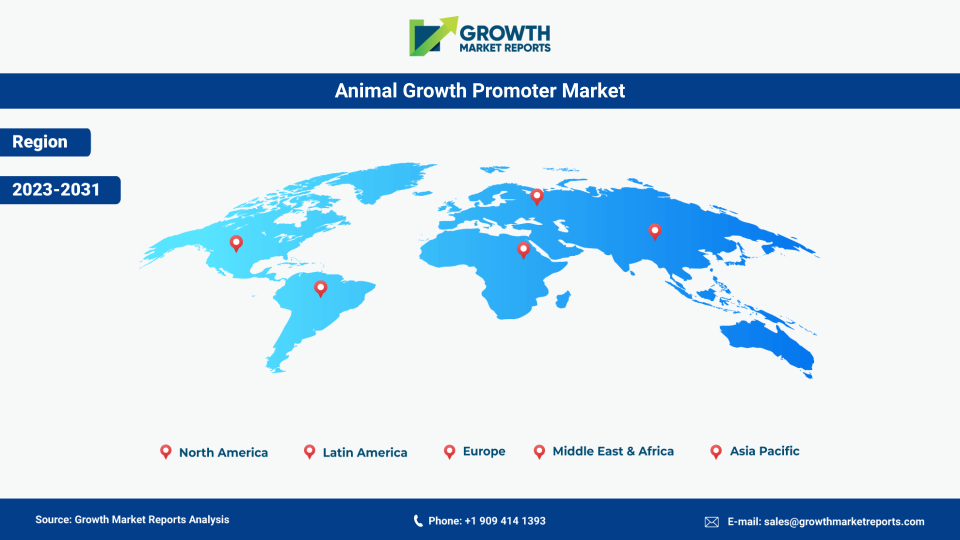
From a regional perspective, Asia Pacific continues to dominate the Animal Growth Promoter market, accounting for the largest share in 2024, followed by North America and Europe. The rapid expansion of the livestock sector in countries such as China, India, and Vietnam, coupled with increasing investments in animal health infrastructure, is driving market growth in the region. North America remains a key market due to its advanced animal husbandry practices and strong regulatory framework, while Europe’s focus on antibiotic alternatives is fostering innovation in non-antibiotic growth promoters. Latin America and the Middle East & Africa are also witnessing steady growth, supported by expanding livestock populations and increasing awareness about animal nutrition. Overall, regional dynamics are shaped by a mix of regulatory trends, consumer preferences, and advancements in animal production systems.

Global Animal Growth Promoter Industry Outlook

Product Type Analysis

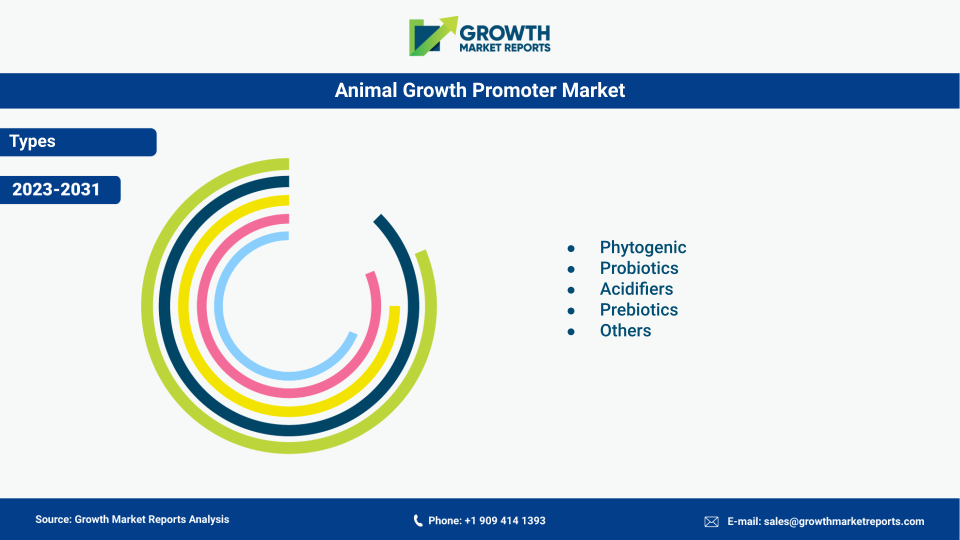
The Animal Growth Promoter market is segmented by product type into antibiotic growth promoters, non-antibiotic growth promoters, probiotics, prebiotics, phytogenics, and others. Antibiotic growth promoters have historically held a significant share due to their proven efficacy in enhancing growth rates and feed efficiency. However, mounting concerns over antimicrobial resistance and regulatory restrictions, particularly in developed markets, have led to a decline in their usage. As a result, the industry has witnessed a pronounced shift toward non-antibiotic alternatives, which are gaining traction due to their safety profile and alignment with global food safety standards. The transition from antibiotics to natural and sustainable growth promoters is a defining trend in the market, shaping the product landscape and influencing R&D investments.

Non-antibiotic growth promoters, encompassing probiotics, prebiotics, and phytogenics, are experiencing robust growth as producers seek to maintain productivity without compromising animal health or food safety. Probiotics, which consist of live beneficial microorganisms, are widely used to enhance gut health, improve nutrient absorption, and bolster the immune system of livestock. Prebiotics, on the other hand, serve as substrates that promote the growth of beneficial gut bacteria, further supporting digestive health and overall animal performance. Phytogenics, derived from plant extracts, are gaining popularity for their antimicrobial, antioxidative, and digestive-stimulant properties. These products are increasingly being incorporated into feed formulations, supported by scientific evidence of their efficacy and safety.

The "others" segment includes a range of novel and emerging growth promoters, such as enzymes, organic acids, and immune modulators. These additives are being developed to address specific challenges in animal production, such as improving nutrient utilization, enhancing disease resistance, and mitigating environmental impacts. The growing body of research supporting the efficacy of these novel solutions is encouraging their adoption, particularly in markets with stringent regulatory environments. The diversification of product offerings is enabling producers to tailor their growth promoter strategies to specific species, production systems, and market requirements.

The competitive landscape in the product type segment is characterized by continuous innovation and product differentiation. Leading companies are investing in R&D to develop next-generation growth promoters that offer superior performance, safety, and sustainability. Strategic collaborations with research institutions and universities are common, aimed at validating the efficacy of new formulations and securing regulatory approvals. The emphasis on natural and functional ingredients is expected to intensify, as producers and consumers alike prioritize food safety and environmental stewardship. Overall, the product type segment is poised for dynamic growth, driven by evolving regulatory frameworks, technological advancements, and shifting consumer preferences.

Report Scope

Attributes Details
Report Title Animal Growth Promoter Market Research Report 2033
By Product Type Antibiotic Growth Promoters, Non-Antibiotic Growth Promoters, Probiotics, Prebiotics, Phytogenics, Others
By Livestock Poultry, Swine, Cattle, Aquaculture, Others
By Form Dry, Liquid
By Mode Of Administration Oral, Topical, Others
By Distribution Channel Veterinary Hospitals, Retail Stores, Online Stores, Others
Regions Covered North America, Europe, APAC, Latin America, MEA
Base Year 2024
Historic Data 2018-2023
Forecast Period 2025-2033
Number of Pages 284
Number of Tables & Figures 285
Customization Available Yes, the report can be customized as per your need.

Livestock Analysis

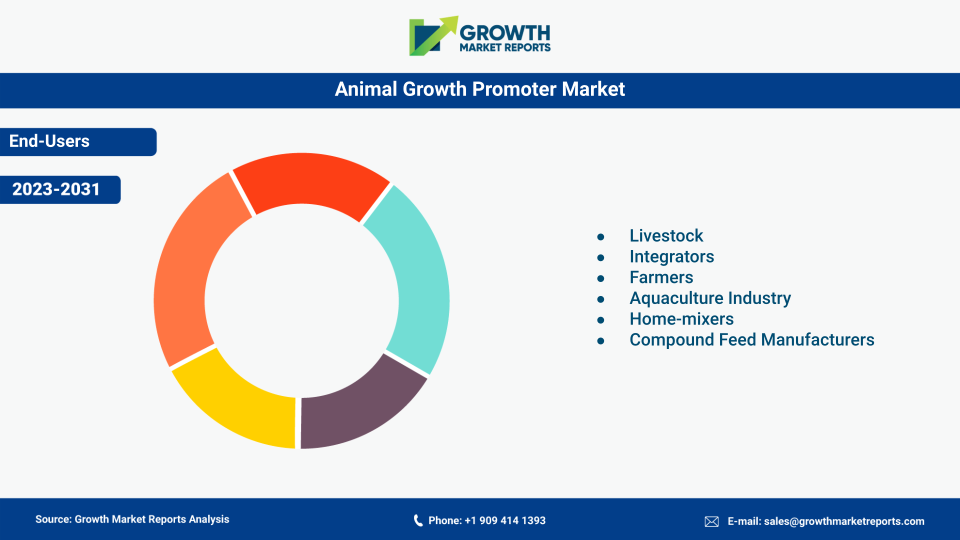
The Animal Growth Promoter market is segmented by livestock into poultry, swine, cattle, aquaculture, and others. Poultry represents the largest segment, accounting for a substantial share of the market in 2024. The rapid growth of the poultry industry, driven by rising demand for chicken meat and eggs, has spurred the widespread adoption of growth promoters to enhance feed efficiency and production yields. Poultry producers are particularly focused on optimizing feed conversion ratios and minimizing production costs, making growth promoters an integral part of their nutritional strategies. The high turnover rate and short production cycles in poultry farming further underscore the importance of effective growth-promoting additives.

Swine is another significant segment, with growth promoters being widely used to support weight gain, improve feed utilization, and reduce the incidence of diseases. The intensification of swine production, especially in Asia Pacific and Latin America, has increased the demand for both antibiotic and non-antibiotic growth promoters. Producers are increasingly adopting integrated health management approaches that combine growth promoters with vaccination and biosecurity measures to ensure optimal animal performance. Regulatory restrictions on antibiotics are also driving the adoption of natural and sustainable alternatives in swine production systems.

The cattle segment, encompassing both beef and dairy cattle, is witnessing steady growth in the adoption of growth promoters. In beef production, these additives are used to accelerate weight gain and improve meat quality, while in dairy cattle, they help enhance milk yield and reproductive performance. The shift toward antibiotic-free production systems is particularly pronounced in premium beef and organic dairy markets, where consumers are willing to pay a premium for products perceived as safe and sustainable. Growth promoters tailored to the specific needs of cattle are gaining traction, supported by advancements in animal nutrition and precision farming technologies.

Aquaculture is emerging as a high-growth segment within the Animal Growth Promoter market, driven by the global expansion of fish and shrimp farming. Growth promoters are used in aquaculture to improve feed conversion, enhance disease resistance, and support overall health and productivity. The increasing adoption of probiotics, prebiotics, and phytogenics in aquafeeds is contributing to the sustainability and profitability of aquaculture operations. The "others" segment includes small ruminants and specialty livestock, where the use of growth promoters is gradually increasing in response to evolving market dynamics and consumer preferences.

Form Analysis

The Animal Growth Promoter market is segmented by form into dry and liquid formulations. Dry form growth promoters dominate the market, accounting for the largest share in 2024, due to their ease of handling, storage stability, and compatibility with conventional feed manufacturing processes. Dry formulations, such as powders, granules, and premixes, are widely used across all livestock sectors and are favored for their long shelf life and minimal risk of contamination. Feed manufacturers and integrators prefer dry additives for bulk blending and automated dosing, making them the standard choice in large-scale animal production systems.

Liquid form growth promoters are gaining popularity, particularly in specialized applications and smaller production systems. Liquid formulations offer advantages such as rapid absorption, uniform distribution in feed or water, and ease of administration. They are commonly used in poultry and swine operations for in-water medication and supplementation during critical growth phases or periods of stress. The flexibility of liquid additives allows producers to tailor dosages to specific needs, enhancing their appeal in precision livestock farming. However, challenges related to storage, stability, and compatibility with feed ingredients remain, necessitating ongoing innovation in formulation science.

The choice between dry and liquid forms is influenced by a range of factors, including livestock species, production scale, and management practices. Large commercial operations typically favor dry formulations for their operational efficiency and cost-effectiveness, while smallholders and specialty producers may opt for liquid additives to address specific nutritional or health challenges. The increasing adoption of automated feeding and dosing systems is also shaping preferences in the form segment, with manufacturers developing products that are compatible with modern production technologies.

Product innovation in the form segment is focused on enhancing the stability, bioavailability, and efficacy of growth promoters. Encapsulation technologies, microencapsulation, and nanoemulsion-based formulations are being explored to improve the delivery and performance of both dry and liquid additives. These advancements are enabling the development of customized solutions that meet the evolving needs of producers and align with regulatory requirements. The form segment is expected to witness continued growth and diversification, driven by technological progress and the demand for tailored nutritional solutions.

Mode of Administration Analysis

The Animal Growth Promoter market is segmented by mode of administration into oral, topical, and others. Oral administration is the predominant mode, accounting for the majority of growth promoter usage in 2024. Oral delivery via feed or water is favored for its simplicity, scalability, and cost-effectiveness, allowing for mass treatment of large animal populations. This mode of administration ensures consistent dosing and minimizes labor requirements, making it the preferred choice in commercial livestock operations. Innovations in oral delivery, such as coated and sustained-release formulations, are further enhancing the efficacy and convenience of growth promoters.

Topical administration is used in specific scenarios, such as the treatment of skin conditions or localized infections. While less common than oral delivery, topical growth promoters are gaining attention for their targeted action and reduced risk of systemic side effects. This mode is particularly relevant in high-value livestock and specialty production systems, where animal welfare and product quality are paramount. Advances in formulation science are enabling the development of effective topical additives that can complement oral administration and support integrated animal health management strategies.

The "others" category includes parenteral and intramuscular administration, which are used in specific cases where rapid or targeted delivery is required. While these modes are less prevalent in routine growth promotion, they play a role in disease management and emergency interventions. The choice of administration mode is influenced by factors such as animal species, production system, health status, and regulatory requirements. Producers are increasingly adopting integrated approaches that combine multiple modes of administration to optimize animal performance and minimize the risk of resistance or adverse effects.

The mode of administration segment is witnessing ongoing innovation, with a focus on improving delivery efficiency, minimizing wastage, and ensuring animal welfare. Advances in precision dosing technologies, such as automated feeders and smart waterers, are enabling producers to tailor growth promoter usage to specific production phases and health challenges. Regulatory scrutiny around administration practices is also influencing product development, with an emphasis on safety, traceability, and compliance. The mode of administration segment is expected to evolve in response to changing market dynamics, technological advancements, and the growing emphasis on sustainable animal production.

Distribution Channel Analysis

The Animal Growth Promoter market is segmented by distribution channel into veterinary hospitals, retail stores, online stores, and others. Veterinary hospitals represent a major distribution channel, particularly for prescription-based and high-value growth promoters. These institutions play a critical role in advising producers on the appropriate use of additives, ensuring compliance with regulatory standards, and monitoring animal health outcomes. Veterinary professionals are increasingly involved in the selection and administration of growth promoters, reflecting the growing emphasis on evidence-based animal nutrition and health management.

Retail stores, including agricultural supply outlets and feed stores, continue to be a key channel for the distribution of over-the-counter growth promoters. These outlets cater to smallholders, hobby farmers, and independent producers who require convenient access to a range of animal health products. Retail stores offer a wide selection of branded and generic additives, supported by in-store expertise and customer service. The retail channel is particularly important in emerging markets, where access to veterinary services may be limited and producers rely on local suppliers for their nutritional and health needs.

Online stores are emerging as a high-growth channel, driven by the increasing digitization of agriculture and the proliferation of e-commerce platforms. Online channels offer convenience, competitive pricing, and access to a broader range of products, making them attractive to both commercial producers and smallholders. The COVID-19 pandemic accelerated the adoption of online purchasing in the animal health sector, with producers seeking contactless and efficient procurement options. Leading manufacturers are investing in digital marketing, direct-to-farmer platforms, and e-commerce partnerships to expand their reach and enhance customer engagement.

The "others" category includes direct sales by manufacturers, cooperatives, and government-supported distribution programs. These channels are particularly relevant in large-scale operations, integrated supply chains, and regions with strong institutional support for animal health and nutrition. The distribution channel segment is characterized by increasing competition, evolving customer preferences, and the growing influence of digital technologies. Manufacturers are adopting omnichannel strategies to reach diverse customer segments, optimize supply chain efficiency, and respond to changing market dynamics. The distribution landscape is expected to continue evolving, with a focus on enhancing accessibility, transparency, and customer service.

Opportunities & Threats

The Animal Growth Promoter market is poised for significant opportunities in the coming years, driven by the expanding global demand for animal protein and the ongoing transition toward sustainable farming practices. The shift away from antibiotic growth promoters, underpinned by stringent regulatory frameworks and rising consumer awareness, is creating a fertile ground for the development and adoption of natural and innovative additives. Companies that can deliver effective, safe, and sustainable solutions stand to gain a competitive advantage in this evolving landscape. The increasing integration of digital technologies, such as precision livestock farming and data-driven nutrition, is enabling producers to optimize the use of growth promoters and achieve higher productivity with minimal environmental impact. Emerging markets, particularly in Asia Pacific and Latin America, offer substantial growth potential, supported by expanding livestock populations, rising incomes, and increasing investments in animal health infrastructure.

Another major opportunity lies in the development of species-specific and customized growth promoter solutions. Advances in biotechnology, genomics, and microbiome research are enabling the creation of targeted additives that address the unique nutritional and health needs of different livestock species and production systems. The growing emphasis on animal welfare, food safety, and traceability is driving demand for transparent and scientifically validated products. Strategic collaborations between industry players, research institutions, and regulatory agencies are fostering innovation and facilitating the introduction of next-generation growth promoters. Companies that can navigate the complex regulatory landscape, demonstrate product efficacy, and build trust with producers and consumers are well-positioned to capitalize on these opportunities and drive long-term market growth.

Despite these opportunities, the Animal Growth Promoter market faces several restraining factors, most notably the increasing regulatory scrutiny and public concern over the use of additives in animal production. The phase-out of antibiotics and the tightening of regulations around feed additives have increased compliance costs and posed challenges for market entry, particularly for small and medium-sized enterprises. The need for extensive research, safety testing, and regulatory approvals can delay product launches and increase development costs. Additionally, the risk of market fragmentation and the proliferation of unregulated or counterfeit products pose threats to industry credibility and consumer trust. Companies must invest in robust quality assurance, traceability, and education initiatives to address these challenges and maintain market integrity.

Regional Outlook

Regionally, the Asia Pacific region leads the Animal Growth Promoter market, accounting for approximately USD 5.8 billion in 2024, driven by the rapid expansion of the livestock and aquaculture sectors in countries such as China, India, and Vietnam. The region is characterized by large and growing animal populations, rising per capita incomes, and increasing investments in animal health and nutrition. Producers in Asia Pacific are adopting advanced growth promoter solutions to meet the rising demand for animal protein and improve production efficiency. The market is expected to grow at a CAGR of 6.4% through 2033, outpacing other regions due to strong demand fundamentals and supportive government policies.

North America is the second-largest regional market, with a market size of USD 3.1 billion in 2024. The region benefits from advanced animal husbandry practices, a strong regulatory framework, and high consumer awareness of food safety and animal welfare. The United States and Canada are key markets, with producers investing in non-antibiotic growth promoters and precision livestock farming technologies. Regulatory restrictions on antibiotics have accelerated the adoption of natural and functional additives, driving innovation and market growth. North America is expected to maintain steady growth, supported by ongoing investments in animal health and nutrition research.

Europe holds a significant share of the Animal Growth Promoter market, with a market size of USD 2.7 billion in 2024. The region is at the forefront of regulatory efforts to phase out antibiotics and promote sustainable animal production practices. European producers are early adopters of probiotics, prebiotics, and phytogenics, supported by a strong scientific and regulatory infrastructure. The focus on animal welfare, traceability, and environmental sustainability is driving demand for innovative growth promoter solutions. Latin America and the Middle East & Africa are emerging markets, with a combined market size of USD 2.2 billion in 2024, supported by expanding livestock populations and increasing awareness of animal nutrition. These regions offer significant growth potential, particularly as producers seek to modernize production systems and improve productivity.

Animal Growth Promoter Market Statistics

Competitor Outlook

The Animal Growth Promoter market is characterized by intense competition, with a diverse mix of global and regional players vying for market share. The competitive landscape is shaped by continuous innovation, strategic partnerships, and a strong emphasis on product differentiation. Leading companies are investing heavily in research and development to create next-generation growth promoters that address evolving regulatory requirements and consumer preferences. The shift toward natural and sustainable additives has intensified competition, with companies racing to develop proprietary formulations and secure intellectual property rights. Mergers and acquisitions are common, as players seek to expand their product portfolios, enter new markets, and achieve economies of scale.

Market leaders are also focusing on building strong relationships with key stakeholders, including producers, veterinarians, and regulatory authorities. Customer education and technical support are critical components of competitive strategy, as producers seek guidance on the selection and use of growth promoters. Companies are investing in digital marketing, e-commerce platforms, and direct-to-farmer initiatives to enhance customer engagement and expand their reach. The ability to provide comprehensive solutions that integrate growth promoters with animal health, nutrition, and management services is increasingly seen as a key differentiator in the market.

The competitive landscape is further shaped by the entry of new players, particularly in the non-antibiotic and specialty additive segments. Start-ups and emerging companies are leveraging advances in biotechnology, microbiome research, and digital agriculture to develop innovative products and disrupt traditional market dynamics. Strategic collaborations with research institutions, universities, and government agencies are facilitating the development and commercialization of novel growth promoter solutions. The market is also witnessing increased investment from private equity and venture capital firms, reflecting the strong growth potential and strategic importance of the sector.

Major companies operating in the Animal Growth Promoter market include Cargill Inc., Elanco Animal Health, Zoetis Inc., DSM Nutritional Products, BASF SE, Alltech Inc., Novus International, Phibro Animal Health Corporation, and ADM Animal Nutrition. Cargill Inc. is a global leader with a comprehensive portfolio of feed additives and growth promoters, supported by extensive R&D capabilities and a global distribution network. Elanco Animal Health and Zoetis Inc. are major players in animal pharmaceuticals and health solutions, with a strong focus on innovation and regulatory compliance. DSM Nutritional Products and BASF SE are at the forefront of developing sustainable and functional feed additives, leveraging their expertise in biotechnology and nutrition science.

Alltech Inc. and Novus International are recognized for their focus on natural and specialty additives, including probiotics, enzymes, and organic minerals. Phibro Animal Health Corporation and ADM Animal Nutrition have a strong presence in both antibiotic and non-antibiotic growth promoters, with a focus on integrated animal health and nutrition solutions. These companies are actively expanding their product portfolios, investing in new technologies, and pursuing strategic partnerships to maintain their competitive edge. The competitive landscape is expected to remain dynamic, with ongoing innovation, regulatory changes, and shifting market dynamics shaping the future of the Animal Growth Promoter market.

Key Players

  • Cargill, Inc.
  • BASF SE
  • Archer Daniels Midland Company (ADM)
  • Evonik Industries AG
  • Chr. Hansen Holding A/S
  • Alltech, Inc.
  • Novus International, Inc.
  • Elanco Animal Health
  • Zoetis Inc.
  • Phibro Animal Health Corporation
  • Kemin Industries, Inc.
  • Nutreco N.V.
  • Adisseo France SAS
  • Bayer Animal Health
  • DuPont de Nemours, Inc.
  • Biomin Holding GmbH
  • Merck Animal Health
  • DSM Nutritional Products
  • Virbac S.A.
  • Land O’Lakes, Inc.
Animal Growth Promoter Market Overview

Segments

The Animal Growth Promoter market has been segmented on the basis of

Product Type

  • Antibiotic Growth Promoters
  • Non-Antibiotic Growth Promoters
  • Probiotics
  • Prebiotics
  • Phytogenics
  • Others

Livestock

  • Poultry
  • Swine
  • Cattle
  • Aquaculture
  • Others

Form

  • Dry
  • Liquid

Mode Of Administration

  • Oral
  • Topical
  • Others

Distribution Channel

  • Veterinary Hospitals
  • Retail Stores
  • Online Stores
  • Others

Competitive Landscape

Key players competing in the animal growth promoter market include Chr. Hansen A/S; Novus International, Inc.; BASF SE; Merck Animal Health; DuPont (Danisco); Kemin Industries; Alltech; Elanco Animal Health Inc.; Zoetis Inc.; Cargill Animal Health; Bayer Animal Health; Yiduoli; Novozymes A/S; Biomin; and Royal DSM N.V.

Some of these players are using several market strategies such as acquisitions, merger, collaborations, partnerships, capacity expansion, and product launches to enhance their market shares and to generate revenue and raise their production line of the business in the coming years.
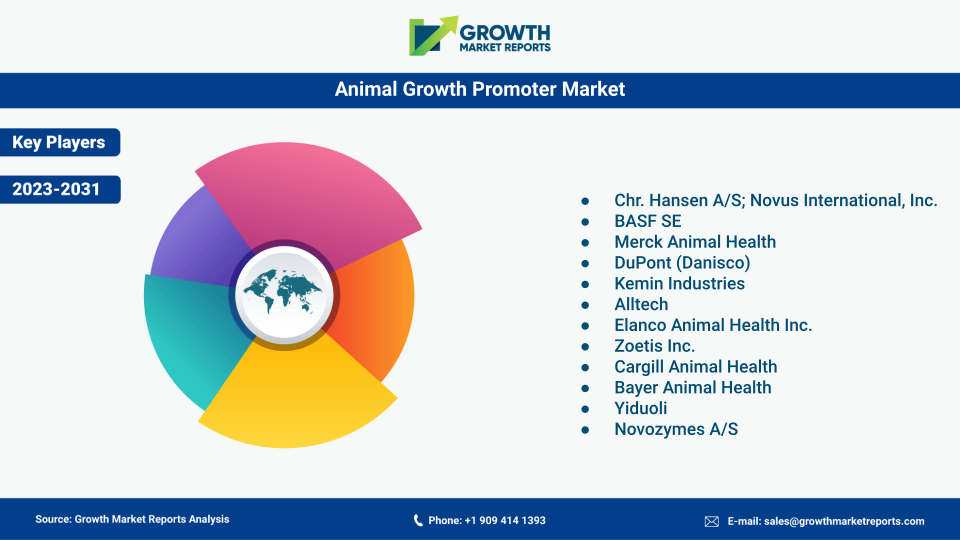

Animal Growth Promoter Market Key Players

Frequently Asked Questions

Major players include Cargill Inc., BASF SE, Archer Daniels Midland Company (ADM), Elanco Animal Health, Zoetis Inc., DSM Nutritional Products, Alltech Inc., Novus International, Phibro Animal Health Corporation, and others.

Key distribution channels include veterinary hospitals, retail stores, online stores, and direct sales by manufacturers or cooperatives.

Animal growth promoters are available in dry and liquid forms. Oral administration via feed or water is the most common, while topical and other methods are used for specific needs.

Poultry is the largest segment, followed by swine, cattle, and aquaculture. The rapid growth of the poultry industry and demand for chicken meat and eggs drive high adoption of growth promoters.

Stringent regulations and concerns about antimicrobial resistance are driving the shift toward non-antibiotic alternatives like probiotics, prebiotics, and phytogenics, which are safer and align with global food safety standards.

The market is segmented into antibiotic growth promoters, non-antibiotic growth promoters, probiotics, prebiotics, phytogenics, and others such as enzymes and organic acids.

Asia Pacific dominates the market, followed by North America and Europe. Rapid livestock sector expansion in countries like China, India, and Vietnam is a major contributor to APAC's leadership.

Key growth drivers include rising global meat consumption, increasing focus on animal health and productivity, innovations in non-antibiotic growth promoters, and the shift toward sustainable and safe feed additives.

The Animal Growth Promoter market is expected to grow at a CAGR of 5.7% from 2025 to 2033, reaching an estimated USD 21.6 billion by 2033.

As of 2024, the global Animal Growth Promoter market size reached USD 13.8 billion, with strong demand across all major livestock sectors.

Table Of Content

Chapter 1 Executive Summary
Chapter 2 Assumptions and Acronyms Used
Chapter 3 Research Methodology
Chapter 4 Animal Growth Promoter Market Overview
   4.1 Introduction
      4.1.1 Market Taxonomy
      4.1.2 Market Definition
      4.1.3 Macro-Economic Factors Impacting the Market Growth
   4.2 Animal Growth Promoter Market Dynamics
      4.2.1 Market Drivers
      4.2.2 Market Restraints
      4.2.3 Market Opportunity
   4.3 Animal Growth Promoter Market - Supply Chain Analysis
      4.3.1 List of Key Suppliers
      4.3.2 List of Key Distributors
      4.3.3 List of Key Consumers
   4.4 Key Forces Shaping the Animal Growth Promoter Market
      4.4.1 Bargaining Power of Suppliers
      4.4.2 Bargaining Power of Buyers
      4.4.3 Threat of Substitution
      4.4.4 Threat of New Entrants
      4.4.5 Competitive Rivalry
   4.5 Global Animal Growth Promoter Market Size & Forecast, 2023-2032
      4.5.1 Animal Growth Promoter Market Size and Y-o-Y Growth
      4.5.2 Animal Growth Promoter Market Absolute $ Opportunity

Chapter 5 Global Animal Growth Promoter Market Analysis and Forecast By Product Type
   5.1 Introduction
      5.1.1 Key Market Trends & Growth Opportunities By Product Type
      5.1.2 Basis Point Share (BPS) Analysis By Product Type
      5.1.3 Absolute $ Opportunity Assessment By Product Type
   5.2 Animal Growth Promoter Market Size Forecast By Product Type
      5.2.1 Antibiotic Growth Promoters
      5.2.2 Non-Antibiotic Growth Promoters
      5.2.3 Probiotics
      5.2.4 Prebiotics
      5.2.5 Phytogenics
      5.2.6 Others
   5.3 Market Attractiveness Analysis By Product Type

Chapter 6 Global Animal Growth Promoter Market Analysis and Forecast By Livestock
   6.1 Introduction
      6.1.1 Key Market Trends & Growth Opportunities By Livestock
      6.1.2 Basis Point Share (BPS) Analysis By Livestock
      6.1.3 Absolute $ Opportunity Assessment By Livestock
   6.2 Animal Growth Promoter Market Size Forecast By Livestock
      6.2.1 Poultry
      6.2.2 Swine
      6.2.3 Cattle
      6.2.4 Aquaculture
      6.2.5 Others
   6.3 Market Attractiveness Analysis By Livestock

Chapter 7 Global Animal Growth Promoter Market Analysis and Forecast By Form
   7.1 Introduction
      7.1.1 Key Market Trends & Growth Opportunities By Form
      7.1.2 Basis Point Share (BPS) Analysis By Form
      7.1.3 Absolute $ Opportunity Assessment By Form
   7.2 Animal Growth Promoter Market Size Forecast By Form
      7.2.1 Dry
      7.2.2 Liquid
   7.3 Market Attractiveness Analysis By Form

Chapter 8 Global Animal Growth Promoter Market Analysis and Forecast By Mode Of Administration
   8.1 Introduction
      8.1.1 Key Market Trends & Growth Opportunities By Mode Of Administration
      8.1.2 Basis Point Share (BPS) Analysis By Mode Of Administration
      8.1.3 Absolute $ Opportunity Assessment By Mode Of Administration
   8.2 Animal Growth Promoter Market Size Forecast By Mode Of Administration
      8.2.1 Oral
      8.2.2 Topical
      8.2.3 Others
   8.3 Market Attractiveness Analysis By Mode Of Administration

Chapter 9 Global Animal Growth Promoter Market Analysis and Forecast By Distribution Channel
   9.1 Introduction
      9.1.1 Key Market Trends & Growth Opportunities By Distribution Channel
      9.1.2 Basis Point Share (BPS) Analysis By Distribution Channel
      9.1.3 Absolute $ Opportunity Assessment By Distribution Channel
   9.2 Animal Growth Promoter Market Size Forecast By Distribution Channel
      9.2.1 Veterinary Hospitals
      9.2.2 Retail Stores
      9.2.3 Online Stores
      9.2.4 Others
   9.3 Market Attractiveness Analysis By Distribution Channel

Chapter 10 Global Animal Growth Promoter Market Analysis and Forecast by Region
   10.1 Introduction
      10.1.1 Key Market Trends & Growth Opportunities By Region
      10.1.2 Basis Point Share (BPS) Analysis By Region
      10.1.3 Absolute $ Opportunity Assessment By Region
   10.2 Animal Growth Promoter Market Size Forecast By Region
      10.2.1 North America
      10.2.2 Europe
      10.2.3 Asia Pacific
      10.2.4 Latin America
      10.2.5 Middle East & Africa (MEA)
   10.3 Market Attractiveness Analysis By Region

Chapter 11 Coronavirus Disease (COVID-19) Impact 
   11.1 Introduction 
   11.2 Current & Future Impact Analysis 
   11.3 Economic Impact Analysis 
   11.4 Government Policies 
   11.5 Investment Scenario

Chapter 12 North America Animal Growth Promoter Analysis and Forecast
   12.1 Introduction
   12.2 North America Animal Growth Promoter Market Size Forecast by Country
      12.2.1 U.S.
      12.2.2 Canada
   12.3 Basis Point Share (BPS) Analysis by Country
   12.4 Absolute $ Opportunity Assessment by Country
   12.5 Market Attractiveness Analysis by Country
   12.6 North America Animal Growth Promoter Market Size Forecast By Product Type
      12.6.1 Antibiotic Growth Promoters
      12.6.2 Non-Antibiotic Growth Promoters
      12.6.3 Probiotics
      12.6.4 Prebiotics
      12.6.5 Phytogenics
      12.6.6 Others
   12.7 Basis Point Share (BPS) Analysis By Product Type 
   12.8 Absolute $ Opportunity Assessment By Product Type 
   12.9 Market Attractiveness Analysis By Product Type
   12.10 North America Animal Growth Promoter Market Size Forecast By Livestock
      12.10.1 Poultry
      12.10.2 Swine
      12.10.3 Cattle
      12.10.4 Aquaculture
      12.10.5 Others
   12.11 Basis Point Share (BPS) Analysis By Livestock 
   12.12 Absolute $ Opportunity Assessment By Livestock 
   12.13 Market Attractiveness Analysis By Livestock
   12.14 North America Animal Growth Promoter Market Size Forecast By Form
      12.14.1 Dry
      12.14.2 Liquid
   12.15 Basis Point Share (BPS) Analysis By Form 
   12.16 Absolute $ Opportunity Assessment By Form 
   12.17 Market Attractiveness Analysis By Form
   12.18 North America Animal Growth Promoter Market Size Forecast By Mode Of Administration
      12.18.1 Oral
      12.18.2 Topical
      12.18.3 Others
   12.19 Basis Point Share (BPS) Analysis By Mode Of Administration 
   12.20 Absolute $ Opportunity Assessment By Mode Of Administration 
   12.21 Market Attractiveness Analysis By Mode Of Administration
   12.22 North America Animal Growth Promoter Market Size Forecast By Distribution Channel
      12.22.1 Veterinary Hospitals
      12.22.2 Retail Stores
      12.22.3 Online Stores
      12.22.4 Others
   12.23 Basis Point Share (BPS) Analysis By Distribution Channel 
   12.24 Absolute $ Opportunity Assessment By Distribution Channel 
   12.25 Market Attractiveness Analysis By Distribution Channel

Chapter 13 Europe Animal Growth Promoter Analysis and Forecast
   13.1 Introduction
   13.2 Europe Animal Growth Promoter Market Size Forecast by Country
      13.2.1 Germany
      13.2.2 France
      13.2.3 Italy
      13.2.4 U.K.
      13.2.5 Spain
      13.2.6 Russia
      13.2.7 Rest of Europe
   13.3 Basis Point Share (BPS) Analysis by Country
   13.4 Absolute $ Opportunity Assessment by Country
   13.5 Market Attractiveness Analysis by Country
   13.6 Europe Animal Growth Promoter Market Size Forecast By Product Type
      13.6.1 Antibiotic Growth Promoters
      13.6.2 Non-Antibiotic Growth Promoters
      13.6.3 Probiotics
      13.6.4 Prebiotics
      13.6.5 Phytogenics
      13.6.6 Others
   13.7 Basis Point Share (BPS) Analysis By Product Type 
   13.8 Absolute $ Opportunity Assessment By Product Type 
   13.9 Market Attractiveness Analysis By Product Type
   13.10 Europe Animal Growth Promoter Market Size Forecast By Livestock
      13.10.1 Poultry
      13.10.2 Swine
      13.10.3 Cattle
      13.10.4 Aquaculture
      13.10.5 Others
   13.11 Basis Point Share (BPS) Analysis By Livestock 
   13.12 Absolute $ Opportunity Assessment By Livestock 
   13.13 Market Attractiveness Analysis By Livestock
   13.14 Europe Animal Growth Promoter Market Size Forecast By Form
      13.14.1 Dry
      13.14.2 Liquid
   13.15 Basis Point Share (BPS) Analysis By Form 
   13.16 Absolute $ Opportunity Assessment By Form 
   13.17 Market Attractiveness Analysis By Form
   13.18 Europe Animal Growth Promoter Market Size Forecast By Mode Of Administration
      13.18.1 Oral
      13.18.2 Topical
      13.18.3 Others
   13.19 Basis Point Share (BPS) Analysis By Mode Of Administration 
   13.20 Absolute $ Opportunity Assessment By Mode Of Administration 
   13.21 Market Attractiveness Analysis By Mode Of Administration
   13.22 Europe Animal Growth Promoter Market Size Forecast By Distribution Channel
      13.22.1 Veterinary Hospitals
      13.22.2 Retail Stores
      13.22.3 Online Stores
      13.22.4 Others
   13.23 Basis Point Share (BPS) Analysis By Distribution Channel 
   13.24 Absolute $ Opportunity Assessment By Distribution Channel 
   13.25 Market Attractiveness Analysis By Distribution Channel

Chapter 14 Asia Pacific Animal Growth Promoter Analysis and Forecast
   14.1 Introduction
   14.2 Asia Pacific Animal Growth Promoter Market Size Forecast by Country
      14.2.1 China
      14.2.2 Japan
      14.2.3 South Korea
      14.2.4 India
      14.2.5 Australia
      14.2.6 South East Asia (SEA)
      14.2.7 Rest of Asia Pacific (APAC)
   14.3 Basis Point Share (BPS) Analysis by Country
   14.4 Absolute $ Opportunity Assessment by Country
   14.5 Market Attractiveness Analysis by Country
   14.6 Asia Pacific Animal Growth Promoter Market Size Forecast By Product Type
      14.6.1 Antibiotic Growth Promoters
      14.6.2 Non-Antibiotic Growth Promoters
      14.6.3 Probiotics
      14.6.4 Prebiotics
      14.6.5 Phytogenics
      14.6.6 Others
   14.7 Basis Point Share (BPS) Analysis By Product Type 
   14.8 Absolute $ Opportunity Assessment By Product Type 
   14.9 Market Attractiveness Analysis By Product Type
   14.10 Asia Pacific Animal Growth Promoter Market Size Forecast By Livestock
      14.10.1 Poultry
      14.10.2 Swine
      14.10.3 Cattle
      14.10.4 Aquaculture
      14.10.5 Others
   14.11 Basis Point Share (BPS) Analysis By Livestock 
   14.12 Absolute $ Opportunity Assessment By Livestock 
   14.13 Market Attractiveness Analysis By Livestock
   14.14 Asia Pacific Animal Growth Promoter Market Size Forecast By Form
      14.14.1 Dry
      14.14.2 Liquid
   14.15 Basis Point Share (BPS) Analysis By Form 
   14.16 Absolute $ Opportunity Assessment By Form 
   14.17 Market Attractiveness Analysis By Form
   14.18 Asia Pacific Animal Growth Promoter Market Size Forecast By Mode Of Administration
      14.18.1 Oral
      14.18.2 Topical
      14.18.3 Others
   14.19 Basis Point Share (BPS) Analysis By Mode Of Administration 
   14.20 Absolute $ Opportunity Assessment By Mode Of Administration 
   14.21 Market Attractiveness Analysis By Mode Of Administration
   14.22 Asia Pacific Animal Growth Promoter Market Size Forecast By Distribution Channel
      14.22.1 Veterinary Hospitals
      14.22.2 Retail Stores
      14.22.3 Online Stores
      14.22.4 Others
   14.23 Basis Point Share (BPS) Analysis By Distribution Channel 
   14.24 Absolute $ Opportunity Assessment By Distribution Channel 
   14.25 Market Attractiveness Analysis By Distribution Channel

Chapter 15 Latin America Animal Growth Promoter Analysis and Forecast
   15.1 Introduction
   15.2 Latin America Animal Growth Promoter Market Size Forecast by Country
      15.2.1 Brazil
      15.2.2 Mexico
      15.2.3 Rest of Latin America (LATAM)
   15.3 Basis Point Share (BPS) Analysis by Country
   15.4 Absolute $ Opportunity Assessment by Country
   15.5 Market Attractiveness Analysis by Country
   15.6 Latin America Animal Growth Promoter Market Size Forecast By Product Type
      15.6.1 Antibiotic Growth Promoters
      15.6.2 Non-Antibiotic Growth Promoters
      15.6.3 Probiotics
      15.6.4 Prebiotics
      15.6.5 Phytogenics
      15.6.6 Others
   15.7 Basis Point Share (BPS) Analysis By Product Type 
   15.8 Absolute $ Opportunity Assessment By Product Type 
   15.9 Market Attractiveness Analysis By Product Type
   15.10 Latin America Animal Growth Promoter Market Size Forecast By Livestock
      15.10.1 Poultry
      15.10.2 Swine
      15.10.3 Cattle
      15.10.4 Aquaculture
      15.10.5 Others
   15.11 Basis Point Share (BPS) Analysis By Livestock 
   15.12 Absolute $ Opportunity Assessment By Livestock 
   15.13 Market Attractiveness Analysis By Livestock
   15.14 Latin America Animal Growth Promoter Market Size Forecast By Form
      15.14.1 Dry
      15.14.2 Liquid
   15.15 Basis Point Share (BPS) Analysis By Form 
   15.16 Absolute $ Opportunity Assessment By Form 
   15.17 Market Attractiveness Analysis By Form
   15.18 Latin America Animal Growth Promoter Market Size Forecast By Mode Of Administration
      15.18.1 Oral
      15.18.2 Topical
      15.18.3 Others
   15.19 Basis Point Share (BPS) Analysis By Mode Of Administration 
   15.20 Absolute $ Opportunity Assessment By Mode Of Administration 
   15.21 Market Attractiveness Analysis By Mode Of Administration
   15.22 Latin America Animal Growth Promoter Market Size Forecast By Distribution Channel
      15.22.1 Veterinary Hospitals
      15.22.2 Retail Stores
      15.22.3 Online Stores
      15.22.4 Others
   15.23 Basis Point Share (BPS) Analysis By Distribution Channel 
   15.24 Absolute $ Opportunity Assessment By Distribution Channel 
   15.25 Market Attractiveness Analysis By Distribution Channel

Chapter 16 Middle East & Africa (MEA) Animal Growth Promoter Analysis and Forecast
   16.1 Introduction
   16.2 Middle East & Africa (MEA) Animal Growth Promoter Market Size Forecast by Country
      16.2.1 Saudi Arabia
      16.2.2 South Africa
      16.2.3 UAE
      16.2.4 Rest of Middle East & Africa (MEA)
   16.3 Basis Point Share (BPS) Analysis by Country
   16.4 Absolute $ Opportunity Assessment by Country
   16.5 Market Attractiveness Analysis by Country
   16.6 Middle East & Africa (MEA) Animal Growth Promoter Market Size Forecast By Product Type
      16.6.1 Antibiotic Growth Promoters
      16.6.2 Non-Antibiotic Growth Promoters
      16.6.3 Probiotics
      16.6.4 Prebiotics
      16.6.5 Phytogenics
      16.6.6 Others
   16.7 Basis Point Share (BPS) Analysis By Product Type 
   16.8 Absolute $ Opportunity Assessment By Product Type 
   16.9 Market Attractiveness Analysis By Product Type
   16.10 Middle East & Africa (MEA) Animal Growth Promoter Market Size Forecast By Livestock
      16.10.1 Poultry
      16.10.2 Swine
      16.10.3 Cattle
      16.10.4 Aquaculture
      16.10.5 Others
   16.11 Basis Point Share (BPS) Analysis By Livestock 
   16.12 Absolute $ Opportunity Assessment By Livestock 
   16.13 Market Attractiveness Analysis By Livestock
   16.14 Middle East & Africa (MEA) Animal Growth Promoter Market Size Forecast By Form
      16.14.1 Dry
      16.14.2 Liquid
   16.15 Basis Point Share (BPS) Analysis By Form 
   16.16 Absolute $ Opportunity Assessment By Form 
   16.17 Market Attractiveness Analysis By Form
   16.18 Middle East & Africa (MEA) Animal Growth Promoter Market Size Forecast By Mode Of Administration
      16.18.1 Oral
      16.18.2 Topical
      16.18.3 Others
   16.19 Basis Point Share (BPS) Analysis By Mode Of Administration 
   16.20 Absolute $ Opportunity Assessment By Mode Of Administration 
   16.21 Market Attractiveness Analysis By Mode Of Administration
   16.22 Middle East & Africa (MEA) Animal Growth Promoter Market Size Forecast By Distribution Channel
      16.22.1 Veterinary Hospitals
      16.22.2 Retail Stores
      16.22.3 Online Stores
      16.22.4 Others
   16.23 Basis Point Share (BPS) Analysis By Distribution Channel 
   16.24 Absolute $ Opportunity Assessment By Distribution Channel 
   16.25 Market Attractiveness Analysis By Distribution Channel

Chapter 17 Competition Landscape 
   17.1 Animal Growth Promoter Market: Competitive Dashboard
   17.2 Global Animal Growth Promoter Market: Market Share Analysis, 2023
   17.3 Company Profiles (Details – Overview, Financials, Developments, Strategy) 
      17.3.1 Cargill, Inc.
BASF SE
Archer Daniels Midland Company (ADM)
Evonik Industries AG
Chr. Hansen Holding A/S
Alltech, Inc.
Novus International, Inc.
Elanco Animal Health
Zoetis Inc.
Phibro Animal Health Corporation
Kemin Industries, Inc.
Nutreco N.V.
Adisseo France SAS
Bayer Animal Health
DuPont de Nemours, Inc.
Biomin Holding GmbH
Merck Animal Health
DSM Nutritional Products
Virbac S.A.
Land O’Lakes, Inc.

Methodology

Our Clients

Pfizer
sinopec
The John Holland Group
Microsoft
Siemens Healthcare
General Electric
Honda Motor Co. Ltd.
FedEx Logistics