Anesthesia Drugs Market Research Report 2033

Anesthesia Drugs Market Research Report 2033

Segments - by Drug Type (General Anesthesia Drugs, Local Anesthesia Drugs, Others), by Route Of Administration (Intravenous, Inhalation, Others), by Application (Surgery, Pain Management, Others), by End-User (Hospitals, Ambulatory Surgical Centers, Clinics, Others)

https://growthmarketreports.com/raksha
Author : Raksha Sharma
https://growthmarketreports.com/Vaibhav
Fact-checked by : V. Chandola
https://growthmarketreports.com/Shruti
Editor : Shruti Bhat

Upcoming | Report ID :HC-3674 | 4.4 Rating | 84 Reviews | 254 Pages | Format : Docx PDF

Report Description


Anesthesia Drugs Market Outlook

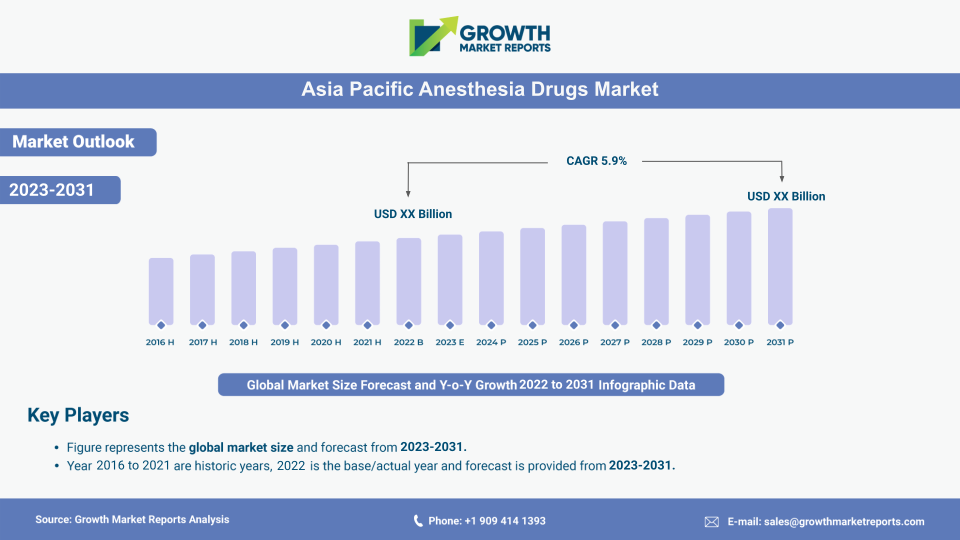
According to our latest research, the global anesthesia drugs market size in 2024 is valued at USD 8.6 billion, with a steady compound annual growth rate (CAGR) of 4.9% projected from 2025 to 2033. By the end of 2033, the market is forecasted to reach approximately USD 13.1 billion, reflecting robust expansion across all major regions. This growth is primarily driven by the increasing prevalence of chronic diseases, a surge in surgical procedures, and significant advancements in anesthesia drug formulations, all of which are enhancing patient safety and outcomes worldwide.

The growth of the anesthesia drugs market is intrinsically linked to the rising global burden of chronic diseases such as cardiovascular disorders, cancer, and respiratory ailments. These conditions often necessitate complex surgical interventions, which in turn fuel the demand for both general and local anesthesia drugs. Additionally, the aging population is contributing significantly to the market’s expansion, as older individuals are more likely to require surgical procedures and pain management therapies. Technological innovations in drug delivery systems, which improve the efficacy and safety profiles of anesthesia drugs, are also playing a pivotal role in driving market growth. The integration of digital health tools and monitoring systems is further optimizing perioperative care, thereby supporting the upward trajectory of the anesthesia drugs market.

Another critical growth factor is the expansion of healthcare infrastructure, particularly in emerging economies. Governments and private entities are investing heavily in the modernization of hospitals, ambulatory surgical centers, and clinics, leading to a higher volume of surgeries and medical procedures. This infrastructure development is complemented by increased healthcare spending and improved access to medical care, enabling a broader segment of the population to benefit from advanced anesthesia drugs. Furthermore, ongoing research and development activities are resulting in the introduction of novel anesthetic agents with reduced side effects, faster onset times, and shorter recovery periods, thus addressing the evolving needs of both patients and healthcare providers.

The anesthesia drugs market is also benefiting from the growing emphasis on minimally invasive and outpatient procedures, which require precise and effective anesthesia management. The shift towards day-care surgeries and the proliferation of ambulatory surgical centers are creating new opportunities for anesthesia drug manufacturers. Additionally, heightened awareness about the importance of pain management in post-operative care is driving the adoption of both local and general anesthetics. Regulatory approvals for new drug formulations and the expansion of indications for existing drugs are further propelling market growth. Collectively, these factors underscore the positive outlook for the anesthesia drugs market over the forecast period.

From a regional perspective, North America continues to dominate the anesthesia drugs market, accounting for the largest share due to its advanced healthcare infrastructure, high surgical volumes, and strong presence of leading pharmaceutical companies. Europe follows closely, driven by similar factors and robust regulatory frameworks that ensure drug safety and efficacy. The Asia Pacific region is emerging as a high-growth market, fueled by increasing healthcare investments, rising disposable incomes, and a growing patient base. Latin America and the Middle East & Africa are also witnessing gradual growth, supported by improving healthcare access and rising awareness about modern anesthesia techniques. The interplay of these regional dynamics is shaping the global landscape of the anesthesia drugs market.

Global Anesthesia Drugs Industry Outlook

Drug Type Analysis

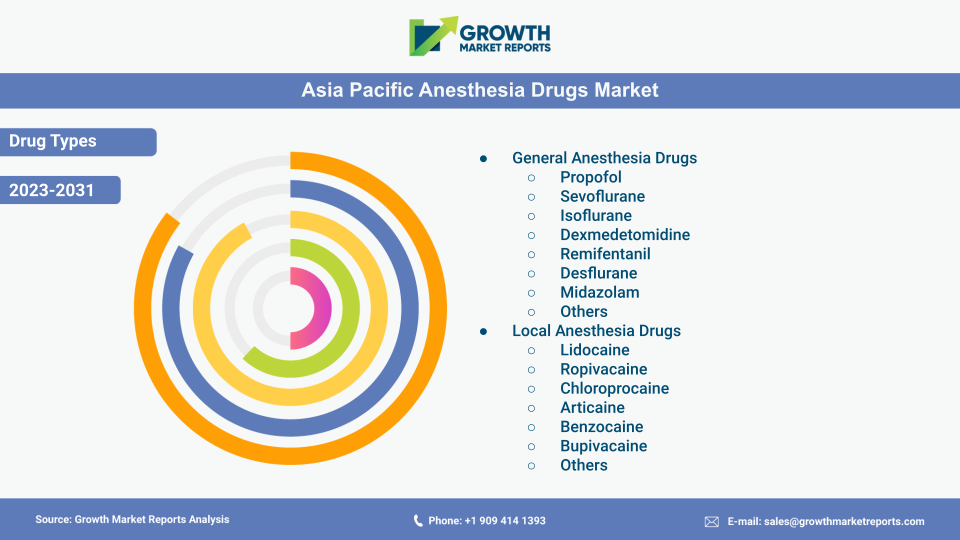
The anesthesia drugs market is segmented by drug type into general anesthesia drugs, local anesthesia drugs, and others. General anesthesia drugs hold the largest market share, primarily due to their extensive use in major surgical procedures across hospitals and ambulatory surgical centers. These drugs are essential for inducing a reversible loss of consciousness and sensation, allowing complex surgeries to be performed safely and effectively. The development of newer, safer general anesthetics with improved pharmacokinetic and pharmacodynamic profiles is further driving their adoption. Key products in this segment include propofol, sevoflurane, desflurane, and isoflurane, which are widely used for their rapid onset and predictable recovery times.

Local anesthesia drugs are experiencing significant growth, particularly in the context of minimally invasive surgeries and pain management applications. These drugs are preferred for procedures that require localized numbness without affecting the patient's consciousness. The increasing prevalence of dental surgeries, cosmetic procedures, and minor outpatient interventions is bolstering the demand for local anesthetics such as lidocaine, bupivacaine, and ropivacaine. Innovations in drug delivery methods, such as extended-release formulations and targeted nerve blocks, are enhancing the efficacy and duration of local anesthesia, making them an attractive option for both patients and clinicians.

The "others" category within the drug type segment encompasses a range of adjunctive agents and specialized anesthetics used in specific clinical scenarios. This includes dissociative anesthetics like ketamine, as well as muscle relaxants and sedative-hypnotics that are often used in combination with primary anesthesia drugs. The growing trend towards multimodal anesthesia, which involves the use of multiple agents to achieve optimal pain control and minimize side effects, is expanding the scope of this segment. Pharmaceutical companies are investing in research to develop combination therapies that enhance patient outcomes while reducing the risk of adverse reactions.

Market dynamics within the drug type segment are influenced by factors such as regulatory approvals, patent expirations, and the introduction of generic alternatives. The availability of cost-effective generics is increasing access to anesthesia drugs in developing regions, while ongoing innovation in branded products is sustaining growth in mature markets. Strategic collaborations between pharmaceutical companies and research institutions are facilitating the development of next-generation anesthetics with improved safety profiles. Overall, the drug type segment is characterized by a high degree of innovation and competition, with a strong focus on meeting the evolving needs of the global healthcare community.

Report Scope

Attributes Details
Report Title Anesthesia Drugs Market Research Report 2033
By Drug Type General Anesthesia Drugs, Local Anesthesia Drugs, Others
By Route Of Administration Intravenous, Inhalation, Others
By Application Surgery, Pain Management, Others
By End-User Hospitals, Ambulatory Surgical Centers, Clinics, Others
Regions Covered North America, Europe, APAC, Latin America, MEA
Base Year 2024
Historic Data 2018-2023
Forecast Period 2025-2033
Number of Pages 254
Number of Tables & Figures 376
Customization Available Yes, the report can be customized as per your need.

Route of Administration Analysis

The anesthesia drugs market is further segmented by route of administration into intravenous, inhalation, and others. Intravenous (IV) anesthesia drugs dominate the market, owing to their rapid onset of action, ease of administration, and precise control over drug dosage. IV anesthetics such as propofol, etomidate, and midazolam are widely used in both inpatient and outpatient settings, particularly for induction and maintenance of anesthesia during surgical procedures. The growing preference for IV anesthesia is also driven by advancements in infusion pump technology and the availability of short-acting agents that facilitate quicker patient recovery.

Inhalation anesthesia drugs represent another significant segment, with agents like sevoflurane, desflurane, and isoflurane being commonly used in operating rooms worldwide. Inhalation anesthetics are favored for their ability to maintain anesthesia over extended periods and their suitability for pediatric and geriatric patients. The development of environmentally friendly inhalation agents with lower greenhouse gas emissions is gaining traction, as healthcare providers and regulatory bodies place greater emphasis on sustainability. Innovations in anesthesia delivery systems, such as closed-circuit anesthesia machines, are further supporting the growth of this segment.

The "others" category in the route of administration segment includes topical, intramuscular, and regional administration methods. These routes are particularly relevant for local anesthesia applications, such as dental procedures, minor dermatological surgeries, and pain management interventions. The increasing adoption of nerve block techniques and epidural anesthesia in obstetrics and orthopedics is expanding the use of alternative administration routes. Pharmaceutical companies are developing novel formulations and delivery devices to enhance the precision and effectiveness of these methods, thereby improving patient comfort and clinical outcomes.

Market trends within the route of administration segment are shaped by factors such as patient demographics, procedural complexity, and healthcare provider preferences. The shift towards outpatient and minimally invasive surgeries is driving demand for anesthesia drugs that offer rapid onset and short duration of action, particularly via the intravenous route. At the same time, the need for prolonged anesthesia in complex surgeries is sustaining the relevance of inhalation agents. Ongoing research into new drug delivery technologies and formulations is expected to further diversify the options available to clinicians, ensuring that the anesthesia drugs market remains dynamic and responsive to changing clinical needs.

Application Analysis

The application segment of the anesthesia drugs market is categorized into surgery, pain management, and others. Surgery remains the primary application, accounting for the largest share of the market due to the high volume of surgical procedures performed globally. The increasing incidence of chronic diseases, trauma cases, and elective surgeries is driving demand for both general and local anesthesia drugs. Hospitals and ambulatory surgical centers are the main end-users, relying on anesthesia drugs to ensure patient safety and comfort during a wide range of surgical interventions. The trend towards minimally invasive and laparoscopic surgeries is further boosting the need for specialized anesthetic agents that enable quick recovery and reduce post-operative complications.

Pain management is an emerging application area within the anesthesia drugs market, reflecting the growing recognition of pain as a critical component of patient care. Anesthesia drugs are increasingly being used for acute and chronic pain management, particularly in oncology, orthopedics, and palliative care settings. The development of long-acting local anesthetics and nerve block techniques is enhancing the effectiveness of pain management strategies, reducing the reliance on opioids and improving patient quality of life. Regulatory support for non-opioid pain management options is also contributing to the expansion of this segment, as healthcare systems seek to address the opioid crisis through safer alternatives.

The "others" application segment encompasses a variety of uses, including diagnostic procedures, sedation for imaging studies, and emergency medicine. The versatility of anesthesia drugs in supporting a wide range of medical interventions is a key factor driving their adoption in these settings. The increasing use of anesthesia in dental procedures, cosmetic surgeries, and minor outpatient interventions is further broadening the scope of this segment. Pharmaceutical companies are responding to these trends by developing tailored formulations and dosing regimens that meet the specific requirements of different applications, thereby enhancing the overall value proposition of anesthesia drugs.

Market dynamics within the application segment are influenced by factors such as procedural complexity, patient demographics, and evolving clinical guidelines. The growing emphasis on enhanced recovery after surgery (ERAS) protocols is driving demand for anesthesia drugs that support rapid patient mobilization and minimize post-operative complications. At the same time, the increasing prevalence of chronic pain conditions is creating new opportunities for anesthesia drug manufacturers to develop innovative pain management solutions. The interplay of these factors is shaping the future trajectory of the anesthesia drugs market, ensuring sustained growth across all major application areas.

End-User Analysis

The anesthesia drugs market is segmented by end-user into hospitals, ambulatory surgical centers, clinics, and others. Hospitals represent the largest end-user segment, accounting for a significant share of the market due to their role as the primary providers of complex and high-risk surgical procedures. Hospitals have the infrastructure, expertise, and resources required to administer a wide range of anesthesia drugs safely and effectively. The increasing number of hospital-based surgeries, coupled with the expansion of operating room capacities, is driving demand for anesthesia drugs in this segment. Hospitals also play a key role in clinical research and the adoption of new anesthetic agents, further supporting market growth.

Ambulatory surgical centers (ASCs) are emerging as a high-growth end-user segment, reflecting the shift towards outpatient and day-care surgeries. ASCs offer a cost-effective and efficient alternative to hospital-based surgeries, with shorter procedure times and faster patient turnover. The rising number of minimally invasive procedures performed in ASCs is boosting demand for anesthesia drugs that offer quick onset and rapid recovery. Pharmaceutical companies are developing tailored anesthetic formulations that meet the unique needs of ASCs, such as short-acting agents and combination therapies that enhance procedural efficiency and patient satisfaction.

Clinics, including specialty clinics and pain management centers, constitute another important end-user segment. These facilities are increasingly adopting anesthesia drugs for a variety of procedures, ranging from minor surgeries to chronic pain interventions. The growing prevalence of chronic pain conditions and the rising demand for cosmetic and dental procedures are driving the adoption of anesthesia drugs in clinics. Innovations in drug delivery methods and the availability of user-friendly formulations are making it easier for clinics to incorporate anesthesia into their service offerings, thereby expanding the reach of anesthesia drugs beyond traditional hospital settings.

The "others" end-user category includes diagnostic centers, emergency care facilities, and home healthcare providers. The versatility of anesthesia drugs in supporting a wide range of medical interventions is enabling their use in diverse healthcare settings. The increasing trend towards home-based care and telemedicine is creating new opportunities for anesthesia drug manufacturers to develop portable and easy-to-administer formulations. Market dynamics within the end-user segment are shaped by factors such as healthcare infrastructure, regulatory requirements, and patient preferences, ensuring that the anesthesia drugs market remains responsive to the evolving needs of healthcare providers and patients alike.

Opportunities & Threats

The anesthesia drugs market presents a wealth of opportunities for growth and innovation, particularly in the context of emerging markets and technological advancements. The rapid expansion of healthcare infrastructure in countries such as China, India, and Brazil is creating new avenues for anesthesia drug manufacturers to expand their footprint and tap into underserved patient populations. The increasing adoption of digital health technologies, such as remote monitoring and tele-anesthesia, is enabling healthcare providers to deliver anesthesia services more efficiently and safely. Pharmaceutical companies that invest in research and development to create novel anesthetic agents with improved safety profiles and reduced side effects are well-positioned to capitalize on these opportunities and gain a competitive edge in the global market.

Another significant opportunity lies in the development of personalized anesthesia solutions that cater to the unique needs of individual patients. Advances in genomics, pharmacogenomics, and data analytics are enabling clinicians to tailor anesthesia regimens based on patient-specific factors such as age, weight, comorbidities, and genetic predispositions. This personalized approach is expected to enhance patient safety, minimize adverse reactions, and improve clinical outcomes. The growing emphasis on value-based healthcare and patient-centered care is driving demand for anesthesia drugs that support enhanced recovery protocols and minimize hospital stays. Companies that can demonstrate the clinical and economic benefits of their products are likely to gain traction among healthcare providers and payers.

Despite these opportunities, the anesthesia drugs market faces several restraining factors that could impact its growth trajectory. Stringent regulatory requirements for drug approval, coupled with the high cost and complexity of clinical trials, pose significant challenges for pharmaceutical companies seeking to bring new anesthetic agents to market. The risk of adverse drug reactions and the potential for drug shortages due to supply chain disruptions are additional concerns that must be addressed. Furthermore, the increasing availability of generic alternatives is exerting downward pressure on pricing and profit margins, particularly in mature markets. Companies must navigate these challenges by investing in robust quality assurance processes, supply chain resilience, and ongoing research to maintain their competitive position in the anesthesia drugs market.

Regional Outlook

North America continues to hold the dominant position in the global anesthesia drugs market, accounting for approximately 38% of the total market value in 2024, which translates to around USD 3.27 billion. The region's leadership is underpinned by its advanced healthcare infrastructure, high surgical volumes, and strong presence of leading pharmaceutical companies. The United States, in particular, is a major contributor to market growth, driven by a high prevalence of chronic diseases, a well-established regulatory framework, and significant investments in research and development. Canada also plays a key role, with its focus on universal healthcare access and the adoption of innovative anesthesia techniques.

Europe is the second-largest market for anesthesia drugs, with a market size of approximately USD 2.45 billion in 2024, representing around 28% of the global market. The region benefits from a robust healthcare system, a strong emphasis on patient safety, and the widespread adoption of minimally invasive surgical procedures. Countries such as Germany, France, and the United Kingdom are leading contributors, supported by favorable reimbursement policies and a growing elderly population. The European market is expected to grow at a CAGR of 4.6% over the forecast period, driven by ongoing investments in healthcare infrastructure and the introduction of new anesthetic agents.

The Asia Pacific region is emerging as the fastest-growing market for anesthesia drugs, with a market size of approximately USD 1.72 billion in 2024, accounting for about 20% of the global market. The region's growth is fueled by rising healthcare expenditures, increasing surgical volumes, and a growing focus on healthcare modernization. China, India, and Japan are the primary drivers of market expansion, supported by large patient populations and government initiatives to improve healthcare access. The Asia Pacific market is projected to grow at a CAGR of 6.2% from 2025 to 2033, outpacing other regions and presenting significant opportunities for anesthesia drug manufacturers. Latin America and the Middle East & Africa collectively account for the remaining 14% of the market, with gradual growth driven by improving healthcare infrastructure and rising awareness about modern anesthesia techniques.

Anesthesia Drugs Market Statistics

Competitor Outlook

The global anesthesia drugs market is characterized by intense competition, with a mix of large multinational pharmaceutical companies and specialized regional players vying for market share. The competitive landscape is shaped by factors such as product innovation, pricing strategies, regulatory compliance, and strategic partnerships. Leading companies are investing heavily in research and development to create next-generation anesthetic agents that offer improved safety, efficacy, and patient outcomes. The introduction of novel drug formulations, such as extended-release and combination therapies, is enabling companies to differentiate their products and address unmet clinical needs. Mergers, acquisitions, and collaborations are common strategies employed by market participants to expand their product portfolios and geographic reach.

Intellectual property protection and regulatory approvals play a crucial role in shaping the competitive dynamics of the anesthesia drugs market. Companies with strong patent portfolios and a track record of successful regulatory submissions are better positioned to maintain their market leadership. The entry of generic manufacturers is intensifying price competition, particularly in mature markets, prompting branded drug manufacturers to focus on value-added services and patient support programs. The ability to demonstrate clinical and economic benefits through real-world evidence and health outcomes data is becoming increasingly important in securing formulary placements and reimbursement approvals.

The competitive landscape is also influenced by the growing emphasis on sustainability and environmental responsibility. Companies are exploring the development of eco-friendly anesthetic agents and delivery systems that minimize environmental impact without compromising clinical efficacy. The adoption of digital health technologies, such as remote monitoring and tele-anesthesia, is creating new opportunities for differentiation and value creation. Companies that can effectively leverage these trends and align their strategies with evolving market demands are likely to succeed in the highly competitive anesthesia drugs market.

Some of the major players in the anesthesia drugs market include Pfizer Inc., Baxter International Inc., AbbVie Inc., Fresenius Kabi AG, Hikma Pharmaceuticals PLC, Aspen Pharmacare Holdings Limited, Piramal Enterprises Limited, B. Braun Melsungen AG, Teva Pharmaceutical Industries Ltd., and Dr. Reddy’s Laboratories Ltd. These companies have a strong global presence and a diverse portfolio of anesthesia drugs catering to various clinical needs. Pfizer and Baxter are recognized for their extensive R&D pipelines and commitment to innovation, while Fresenius Kabi and Hikma have established themselves as leading suppliers of generic anesthetic agents. AbbVie, through its acquisition of Allergan, has expanded its footprint in the anesthesia drugs market, particularly in the area of pain management.

Aspen Pharmacare and Piramal Enterprises are notable for their focus on emerging markets and their ability to deliver cost-effective anesthesia solutions. B. Braun Melsungen and Teva Pharmaceutical Industries are leveraging their expertise in drug delivery systems to enhance the safety and efficacy of anesthesia drugs. Dr. Reddy’s Laboratories is expanding its presence in the global anesthesia drugs market through strategic partnerships and product launches. Collectively, these companies are driving innovation, improving patient outcomes, and shaping the future of the anesthesia drugs market through their commitment to quality, safety, and sustainability.

Key Players

  • Pfizer Inc.
  • Baxter International Inc.
  • F. Hoffmann-La Roche Ltd.
  • AbbVie Inc.
  • B. Braun Melsungen AG
  • Fresenius SE & Co. KGaA
  • Hikma Pharmaceuticals PLC
  • Piramal Enterprises Limited
  • Teva Pharmaceutical Industries Ltd.
  • AstraZeneca PLC
  • Mylan N.V.
  • Eisai Co., Ltd.
  • Hospira (now part of Pfizer)
  • Dr. Reddy’s Laboratories Ltd.
  • Novartis AG
  • Johnson & Johnson (Janssen Pharmaceuticals)
  • GlaxoSmithKline plc
  • Sanofi S.A.
  • Merck & Co., Inc.
  • Sun Pharmaceutical Industries Ltd.
Anesthesia Drugs Market Overview

Segments

The Anesthesia Drugs market has been segmented on the basis of

Drug Type

  • General Anesthesia Drugs
  • Local Anesthesia Drugs
  • Others

Route Of Administration

  • Intravenous
  • Inhalation
  • Others

Application

  • Surgery
  • Pain Management
  • Others

End-User

  • Hospitals
  • Ambulatory Surgical Centers
  • Clinics
  • Others

Competitive Landscape

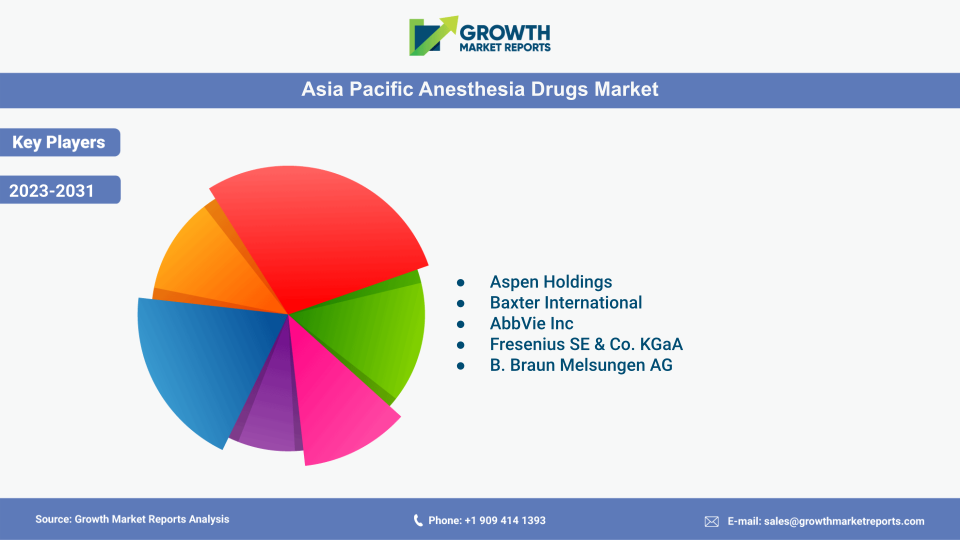
Key players competing in the Asia Pacific anesthesia drugs market are Aspen Holdings; Baxter International; AbbVie Inc; Fresenius SE & Co. KGaA; and B. Braun Melsungen AG.

Asia Pacific Anesthesia Drugs Market Key Players

Frequently Asked Questions

Challenges include stringent regulatory requirements, high costs of clinical trials, risk of adverse drug reactions, supply chain disruptions, and increasing competition from generic alternatives.

Major players include Pfizer Inc., Baxter International Inc., AbbVie Inc., Fresenius Kabi AG, Hikma Pharmaceuticals PLC, Aspen Pharmacare Holdings Limited, Piramal Enterprises Limited, B. Braun Melsungen AG, Teva Pharmaceutical Industries Ltd., and Dr. Reddy’s Laboratories Ltd.

Opportunities include the development of personalized anesthesia solutions, adoption of digital health technologies, and expansion in emerging markets. Trends also include the shift towards minimally invasive and outpatient procedures.

Hospitals are the largest end-users, followed by ambulatory surgical centers, clinics, and other healthcare facilities such as diagnostic centers and emergency care providers.

Anesthesia drugs are mainly used in surgery and pain management, with additional applications in diagnostic procedures, sedation for imaging, and emergency medicine.

Anesthesia drugs are administered via intravenous (IV), inhalation, and other routes such as topical, intramuscular, and regional methods. IV administration is the most common due to its rapid onset and precise dosage control.

The market is segmented into general anesthesia drugs, local anesthesia drugs, and others, with general anesthesia drugs holding the largest share due to their use in major surgeries.

North America holds the largest market share, followed by Europe. The Asia Pacific region is the fastest-growing market due to rising healthcare investments and surgical volumes.

Key growth drivers include the increasing prevalence of chronic diseases, a rise in surgical procedures, advancements in anesthesia drug formulations, and the expansion of healthcare infrastructure, especially in emerging economies.

As of 2024, the global anesthesia drugs market is valued at USD 8.6 billion, with projections to reach approximately USD 13.1 billion by 2033.

Table Of Content

Chapter 1 Executive Summary
Chapter 2 Assumptions and Acronyms Used
Chapter 3 Research Methodology
Chapter 4 Anesthesia Drugs Market Overview
   4.1 Introduction
      4.1.1 Market Taxonomy
      4.1.2 Market Definition
      4.1.3 Macro-Economic Factors Impacting the Market Growth
   4.2 Anesthesia Drugs Market Dynamics
      4.2.1 Market Drivers
      4.2.2 Market Restraints
      4.2.3 Market Opportunity
   4.3 Anesthesia Drugs Market - Supply Chain Analysis
      4.3.1 List of Key Suppliers
      4.3.2 List of Key Distributors
      4.3.3 List of Key Consumers
   4.4 Key Forces Shaping the Anesthesia Drugs Market
      4.4.1 Bargaining Power of Suppliers
      4.4.2 Bargaining Power of Buyers
      4.4.3 Threat of Substitution
      4.4.4 Threat of New Entrants
      4.4.5 Competitive Rivalry
   4.5 Global Anesthesia Drugs Market Size & Forecast, 2023-2032
      4.5.1 Anesthesia Drugs Market Size and Y-o-Y Growth
      4.5.2 Anesthesia Drugs Market Absolute $ Opportunity

Chapter 5 Global Anesthesia Drugs Market Analysis and Forecast By Drug Type
   5.1 Introduction
      5.1.1 Key Market Trends & Growth Opportunities By Drug Type
      5.1.2 Basis Point Share (BPS) Analysis By Drug Type
      5.1.3 Absolute $ Opportunity Assessment By Drug Type
   5.2 Anesthesia Drugs Market Size Forecast By Drug Type
      5.2.1 General Anesthesia Drugs
      5.2.2 Local Anesthesia Drugs
      5.2.3 Others
   5.3 Market Attractiveness Analysis By Drug Type

Chapter 6 Global Anesthesia Drugs Market Analysis and Forecast By Route Of Administration
   6.1 Introduction
      6.1.1 Key Market Trends & Growth Opportunities By Route Of Administration
      6.1.2 Basis Point Share (BPS) Analysis By Route Of Administration
      6.1.3 Absolute $ Opportunity Assessment By Route Of Administration
   6.2 Anesthesia Drugs Market Size Forecast By Route Of Administration
      6.2.1 Intravenous
      6.2.2 Inhalation
      6.2.3 Others
   6.3 Market Attractiveness Analysis By Route Of Administration

Chapter 7 Global Anesthesia Drugs Market Analysis and Forecast By Application
   7.1 Introduction
      7.1.1 Key Market Trends & Growth Opportunities By Application
      7.1.2 Basis Point Share (BPS) Analysis By Application
      7.1.3 Absolute $ Opportunity Assessment By Application
   7.2 Anesthesia Drugs Market Size Forecast By Application
      7.2.1 Surgery
      7.2.2 Pain Management
      7.2.3 Others
   7.3 Market Attractiveness Analysis By Application

Chapter 8 Global Anesthesia Drugs Market Analysis and Forecast By End-User
   8.1 Introduction
      8.1.1 Key Market Trends & Growth Opportunities By End-User
      8.1.2 Basis Point Share (BPS) Analysis By End-User
      8.1.3 Absolute $ Opportunity Assessment By End-User
   8.2 Anesthesia Drugs Market Size Forecast By End-User
      8.2.1 Hospitals
      8.2.2 Ambulatory Surgical Centers
      8.2.3 Clinics
      8.2.4 Others
   8.3 Market Attractiveness Analysis By End-User

Chapter 9 Global Anesthesia Drugs Market Analysis and Forecast by Region
   9.1 Introduction
      9.1.1 Key Market Trends & Growth Opportunities By Region
      9.1.2 Basis Point Share (BPS) Analysis By Region
      9.1.3 Absolute $ Opportunity Assessment By Region
   9.2 Anesthesia Drugs Market Size Forecast By Region
      9.2.1 North America
      9.2.2 Europe
      9.2.3 Asia Pacific
      9.2.4 Latin America
      9.2.5 Middle East & Africa (MEA)
   9.3 Market Attractiveness Analysis By Region

Chapter 10 Coronavirus Disease (COVID-19) Impact 
   10.1 Introduction 
   10.2 Current & Future Impact Analysis 
   10.3 Economic Impact Analysis 
   10.4 Government Policies 
   10.5 Investment Scenario

Chapter 11 North America Anesthesia Drugs Analysis and Forecast
   11.1 Introduction
   11.2 North America Anesthesia Drugs Market Size Forecast by Country
      11.2.1 U.S.
      11.2.2 Canada
   11.3 Basis Point Share (BPS) Analysis by Country
   11.4 Absolute $ Opportunity Assessment by Country
   11.5 Market Attractiveness Analysis by Country
   11.6 North America Anesthesia Drugs Market Size Forecast By Drug Type
      11.6.1 General Anesthesia Drugs
      11.6.2 Local Anesthesia Drugs
      11.6.3 Others
   11.7 Basis Point Share (BPS) Analysis By Drug Type 
   11.8 Absolute $ Opportunity Assessment By Drug Type 
   11.9 Market Attractiveness Analysis By Drug Type
   11.10 North America Anesthesia Drugs Market Size Forecast By Route Of Administration
      11.10.1 Intravenous
      11.10.2 Inhalation
      11.10.3 Others
   11.11 Basis Point Share (BPS) Analysis By Route Of Administration 
   11.12 Absolute $ Opportunity Assessment By Route Of Administration 
   11.13 Market Attractiveness Analysis By Route Of Administration
   11.14 North America Anesthesia Drugs Market Size Forecast By Application
      11.14.1 Surgery
      11.14.2 Pain Management
      11.14.3 Others
   11.15 Basis Point Share (BPS) Analysis By Application 
   11.16 Absolute $ Opportunity Assessment By Application 
   11.17 Market Attractiveness Analysis By Application
   11.18 North America Anesthesia Drugs Market Size Forecast By End-User
      11.18.1 Hospitals
      11.18.2 Ambulatory Surgical Centers
      11.18.3 Clinics
      11.18.4 Others
   11.19 Basis Point Share (BPS) Analysis By End-User 
   11.20 Absolute $ Opportunity Assessment By End-User 
   11.21 Market Attractiveness Analysis By End-User

Chapter 12 Europe Anesthesia Drugs Analysis and Forecast
   12.1 Introduction
   12.2 Europe Anesthesia Drugs Market Size Forecast by Country
      12.2.1 Germany
      12.2.2 France
      12.2.3 Italy
      12.2.4 U.K.
      12.2.5 Spain
      12.2.6 Russia
      12.2.7 Rest of Europe
   12.3 Basis Point Share (BPS) Analysis by Country
   12.4 Absolute $ Opportunity Assessment by Country
   12.5 Market Attractiveness Analysis by Country
   12.6 Europe Anesthesia Drugs Market Size Forecast By Drug Type
      12.6.1 General Anesthesia Drugs
      12.6.2 Local Anesthesia Drugs
      12.6.3 Others
   12.7 Basis Point Share (BPS) Analysis By Drug Type 
   12.8 Absolute $ Opportunity Assessment By Drug Type 
   12.9 Market Attractiveness Analysis By Drug Type
   12.10 Europe Anesthesia Drugs Market Size Forecast By Route Of Administration
      12.10.1 Intravenous
      12.10.2 Inhalation
      12.10.3 Others
   12.11 Basis Point Share (BPS) Analysis By Route Of Administration 
   12.12 Absolute $ Opportunity Assessment By Route Of Administration 
   12.13 Market Attractiveness Analysis By Route Of Administration
   12.14 Europe Anesthesia Drugs Market Size Forecast By Application
      12.14.1 Surgery
      12.14.2 Pain Management
      12.14.3 Others
   12.15 Basis Point Share (BPS) Analysis By Application 
   12.16 Absolute $ Opportunity Assessment By Application 
   12.17 Market Attractiveness Analysis By Application
   12.18 Europe Anesthesia Drugs Market Size Forecast By End-User
      12.18.1 Hospitals
      12.18.2 Ambulatory Surgical Centers
      12.18.3 Clinics
      12.18.4 Others
   12.19 Basis Point Share (BPS) Analysis By End-User 
   12.20 Absolute $ Opportunity Assessment By End-User 
   12.21 Market Attractiveness Analysis By End-User

Chapter 13 Asia Pacific Anesthesia Drugs Analysis and Forecast
   13.1 Introduction
   13.2 Asia Pacific Anesthesia Drugs Market Size Forecast by Country
      13.2.1 China
      13.2.2 Japan
      13.2.3 South Korea
      13.2.4 India
      13.2.5 Australia
      13.2.6 South East Asia (SEA)
      13.2.7 Rest of Asia Pacific (APAC)
   13.3 Basis Point Share (BPS) Analysis by Country
   13.4 Absolute $ Opportunity Assessment by Country
   13.5 Market Attractiveness Analysis by Country
   13.6 Asia Pacific Anesthesia Drugs Market Size Forecast By Drug Type
      13.6.1 General Anesthesia Drugs
      13.6.2 Local Anesthesia Drugs
      13.6.3 Others
   13.7 Basis Point Share (BPS) Analysis By Drug Type 
   13.8 Absolute $ Opportunity Assessment By Drug Type 
   13.9 Market Attractiveness Analysis By Drug Type
   13.10 Asia Pacific Anesthesia Drugs Market Size Forecast By Route Of Administration
      13.10.1 Intravenous
      13.10.2 Inhalation
      13.10.3 Others
   13.11 Basis Point Share (BPS) Analysis By Route Of Administration 
   13.12 Absolute $ Opportunity Assessment By Route Of Administration 
   13.13 Market Attractiveness Analysis By Route Of Administration
   13.14 Asia Pacific Anesthesia Drugs Market Size Forecast By Application
      13.14.1 Surgery
      13.14.2 Pain Management
      13.14.3 Others
   13.15 Basis Point Share (BPS) Analysis By Application 
   13.16 Absolute $ Opportunity Assessment By Application 
   13.17 Market Attractiveness Analysis By Application
   13.18 Asia Pacific Anesthesia Drugs Market Size Forecast By End-User
      13.18.1 Hospitals
      13.18.2 Ambulatory Surgical Centers
      13.18.3 Clinics
      13.18.4 Others
   13.19 Basis Point Share (BPS) Analysis By End-User 
   13.20 Absolute $ Opportunity Assessment By End-User 
   13.21 Market Attractiveness Analysis By End-User

Chapter 14 Latin America Anesthesia Drugs Analysis and Forecast
   14.1 Introduction
   14.2 Latin America Anesthesia Drugs Market Size Forecast by Country
      14.2.1 Brazil
      14.2.2 Mexico
      14.2.3 Rest of Latin America (LATAM)
   14.3 Basis Point Share (BPS) Analysis by Country
   14.4 Absolute $ Opportunity Assessment by Country
   14.5 Market Attractiveness Analysis by Country
   14.6 Latin America Anesthesia Drugs Market Size Forecast By Drug Type
      14.6.1 General Anesthesia Drugs
      14.6.2 Local Anesthesia Drugs
      14.6.3 Others
   14.7 Basis Point Share (BPS) Analysis By Drug Type 
   14.8 Absolute $ Opportunity Assessment By Drug Type 
   14.9 Market Attractiveness Analysis By Drug Type
   14.10 Latin America Anesthesia Drugs Market Size Forecast By Route Of Administration
      14.10.1 Intravenous
      14.10.2 Inhalation
      14.10.3 Others
   14.11 Basis Point Share (BPS) Analysis By Route Of Administration 
   14.12 Absolute $ Opportunity Assessment By Route Of Administration 
   14.13 Market Attractiveness Analysis By Route Of Administration
   14.14 Latin America Anesthesia Drugs Market Size Forecast By Application
      14.14.1 Surgery
      14.14.2 Pain Management
      14.14.3 Others
   14.15 Basis Point Share (BPS) Analysis By Application 
   14.16 Absolute $ Opportunity Assessment By Application 
   14.17 Market Attractiveness Analysis By Application
   14.18 Latin America Anesthesia Drugs Market Size Forecast By End-User
      14.18.1 Hospitals
      14.18.2 Ambulatory Surgical Centers
      14.18.3 Clinics
      14.18.4 Others
   14.19 Basis Point Share (BPS) Analysis By End-User 
   14.20 Absolute $ Opportunity Assessment By End-User 
   14.21 Market Attractiveness Analysis By End-User

Chapter 15 Middle East & Africa (MEA) Anesthesia Drugs Analysis and Forecast
   15.1 Introduction
   15.2 Middle East & Africa (MEA) Anesthesia Drugs Market Size Forecast by Country
      15.2.1 Saudi Arabia
      15.2.2 South Africa
      15.2.3 UAE
      15.2.4 Rest of Middle East & Africa (MEA)
   15.3 Basis Point Share (BPS) Analysis by Country
   15.4 Absolute $ Opportunity Assessment by Country
   15.5 Market Attractiveness Analysis by Country
   15.6 Middle East & Africa (MEA) Anesthesia Drugs Market Size Forecast By Drug Type
      15.6.1 General Anesthesia Drugs
      15.6.2 Local Anesthesia Drugs
      15.6.3 Others
   15.7 Basis Point Share (BPS) Analysis By Drug Type 
   15.8 Absolute $ Opportunity Assessment By Drug Type 
   15.9 Market Attractiveness Analysis By Drug Type
   15.10 Middle East & Africa (MEA) Anesthesia Drugs Market Size Forecast By Route Of Administration
      15.10.1 Intravenous
      15.10.2 Inhalation
      15.10.3 Others
   15.11 Basis Point Share (BPS) Analysis By Route Of Administration 
   15.12 Absolute $ Opportunity Assessment By Route Of Administration 
   15.13 Market Attractiveness Analysis By Route Of Administration
   15.14 Middle East & Africa (MEA) Anesthesia Drugs Market Size Forecast By Application
      15.14.1 Surgery
      15.14.2 Pain Management
      15.14.3 Others
   15.15 Basis Point Share (BPS) Analysis By Application 
   15.16 Absolute $ Opportunity Assessment By Application 
   15.17 Market Attractiveness Analysis By Application
   15.18 Middle East & Africa (MEA) Anesthesia Drugs Market Size Forecast By End-User
      15.18.1 Hospitals
      15.18.2 Ambulatory Surgical Centers
      15.18.3 Clinics
      15.18.4 Others
   15.19 Basis Point Share (BPS) Analysis By End-User 
   15.20 Absolute $ Opportunity Assessment By End-User 
   15.21 Market Attractiveness Analysis By End-User

Chapter 16 Competition Landscape 
   16.1 Anesthesia Drugs Market: Competitive Dashboard
   16.2 Global Anesthesia Drugs Market: Market Share Analysis, 2023
   16.3 Company Profiles (Details – Overview, Financials, Developments, Strategy) 
      16.3.1 Pfizer Inc.
Baxter International Inc.
F. Hoffmann-La Roche Ltd.
AbbVie Inc.
B. Braun Melsungen AG
Fresenius SE & Co. KGaA
Hikma Pharmaceuticals PLC
Piramal Enterprises Limited
Teva Pharmaceutical Industries Ltd.
AstraZeneca PLC
Mylan N.V.
Eisai Co., Ltd.
Hospira (now part of Pfizer)
Dr. Reddy’s Laboratories Ltd.
Novartis AG
Johnson & Johnson (Janssen Pharmaceuticals)
GlaxoSmithKline plc
Sanofi S.A.
Merck & Co., Inc.
Sun Pharmaceutical Industries Ltd.

Methodology

Our Clients

The John Holland Group
Siemens Healthcare
FedEx Logistics
Deloitte
General Electric
Pfizer
General Mills
Honda Motor Co. Ltd.