Ambulance Services Market Research Report 2033

Ambulance Services Market Research Report 2033

Segments - by Transport Vehicle (Ground Ambulance, Air Ambulance, Water Ambulance), by Service Type (Emergency Services, Non-Emergency Services), by Equipment (Basic Life Support (BLS), Advanced Life Support (ALS)), by Payer (Public, Private, Out-of-Pocket), by End-User (Hospitals, Nursing Homes, Home Healthcare, Others)

https://growthmarketreports.com/raksha
Author : Raksha Sharma
https://growthmarketreports.com/Vaibhav
Fact-checked by : V. Chandola
https://growthmarketreports.com/Shruti
Editor : Shruti Bhat

Upcoming | Report ID :HC-4377 | 4.8 Rating | 84 Reviews | 287 Pages | Format : Docx PDF

Report Description


Ambulance Services Market Outlook

According to our latest research, the global ambulance services market size reached USD 45.8 billion in 2024, reflecting the sectorÂ’s robust expansion in response to rising healthcare demands and emergency care requirements worldwide. The market is projected to grow at a CAGR of 8.2% from 2025 to 2033, with the total market value anticipated to reach USD 88.7 billion by 2033. This growth is primarily driven by increasing incidences of chronic diseases, rising road accidents, and the expanding elderly population globally. As per our latest research, the marketÂ’s trajectory is shaped by technological advancements, government initiatives, and the integration of advanced life support systems in ambulances.

One of the principal growth factors for the ambulance services market is the escalating prevalence of chronic diseases such as cardiovascular disorders, diabetes, and respiratory illnesses. These conditions often require immediate medical attention and frequent hospital visits, thereby fueling the demand for both emergency and non-emergency ambulance services. Additionally, the surge in road traffic accidents globally has significantly contributed to the need for rapid and efficient ambulance services. Urbanization, coupled with increased vehicular movement, has made prompt emergency response a critical component of modern healthcare systems. Furthermore, the rising awareness among the general population regarding the importance of timely medical intervention has led to a greater reliance on ambulance services, further propelling market growth.

Technological advancements in ambulance equipment and communication systems are also a major driver for the ambulance services market. Modern ambulances are now equipped with advanced life support (ALS) and basic life support (BLS) systems, enabling paramedics to provide critical care en route to medical facilities. The integration of telemedicine and real-time data transmission has enhanced the efficiency and effectiveness of ambulance services, allowing for better coordination between emergency responders and hospitals. These innovations not only improve patient outcomes but also optimize resource utilization within healthcare systems. Additionally, the adoption of GPS tracking and automated dispatch systems has streamlined ambulance operations, reducing response times and improving service coverage.

Government initiatives and regulatory mandates have played a pivotal role in shaping the ambulance services market. Many countries have implemented stringent regulations regarding ambulance standards, staffing qualifications, and response time benchmarks. Public and private investments in healthcare infrastructure, especially in developing regions, have facilitated the expansion of ambulance fleets and the establishment of integrated emergency response networks. Moreover, collaborations between public health agencies and private ambulance service providers have enhanced service accessibility and quality, particularly in rural and underserved areas. The growing focus on disaster preparedness and mass casualty management has further underscored the importance of a robust ambulance services sector.

Ambulatory Healthcare Service plays a crucial role in enhancing the accessibility and efficiency of healthcare delivery, particularly in emergency situations. By providing immediate medical attention and transport, these services bridge the gap between the patient's location and healthcare facilities, ensuring timely intervention. The integration of ambulatory services with advanced communication systems and real-time data sharing has further improved the coordination between emergency responders and hospitals. This synergy not only enhances patient outcomes but also optimizes the use of healthcare resources, making ambulatory healthcare services an indispensable component of modern healthcare systems.

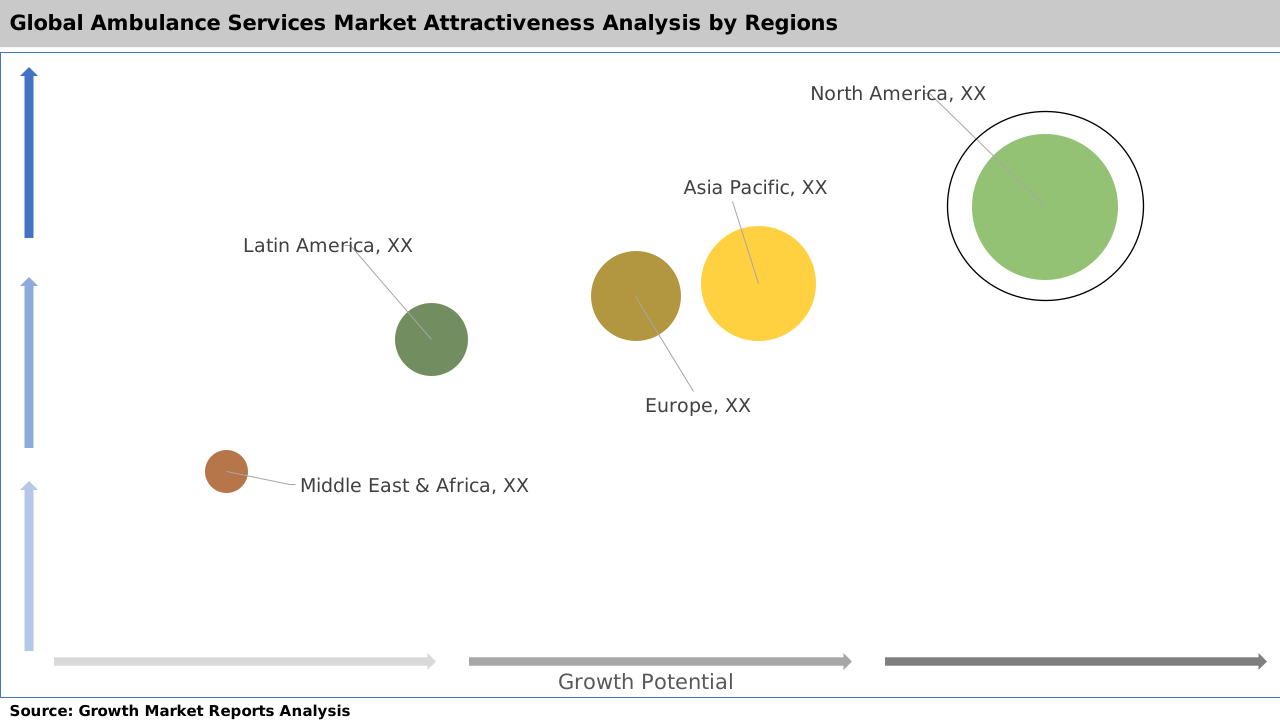
Regionally, North America dominates the ambulance services market, accounting for the highest revenue share in 2024, primarily due to well-established healthcare infrastructure and high public spending on emergency medical services. Europe follows closely, with significant investments in healthcare modernization and emergency preparedness. The Asia Pacific region is witnessing the fastest growth, driven by rapid urbanization, increasing healthcare expenditure, and government efforts to improve emergency medical services. Latin America and the Middle East & Africa are also experiencing steady growth, supported by ongoing healthcare reforms and rising awareness of emergency medical care. Each region presents unique challenges and opportunities, influenced by varying healthcare policies, economic conditions, and population demographics.

Global Ambulance Services  Industry Outlook

Transport Vehicle Analysis

The transport vehicle segment of the ambulance services market is categorized into ground ambulance, air ambulance, and water ambulance. Ground ambulances represent the largest share of the market, owing to their widespread availability, cost-effectiveness, and ability to navigate urban and rural landscapes efficiently. Ground ambulance services are essential for both emergency and non-emergency patient transport, making them a cornerstone of the global ambulance network. The increasing demand for rapid response times and the expansion of road networks in developing regions have further bolstered the growth of this segment. Additionally, advancements in vehicle design and the integration of sophisticated medical equipment have enhanced the capability of ground ambulances to deliver high-quality pre-hospital care.

Air ambulances, while accounting for a smaller share of the market, are experiencing significant growth due to their critical role in providing swift medical assistance in remote and inaccessible areas. The use of helicopters and fixed-wing aircraft enables the rapid transport of patients over long distances, particularly in cases of severe trauma, organ transplants, and natural disasters. The rising number of medical emergencies requiring inter-facility transfers and the increasing prevalence of specialized medical centers have driven the demand for air ambulance services. Moreover, technological advancements in aviation and onboard medical equipment have improved the safety, reliability, and effectiveness of air ambulance operations.

Water ambulances, although representing a niche segment, are vital in regions with extensive waterways, islands, or coastal communities. These services are particularly important in countries with archipelagic geographies or where access to healthcare facilities by road is limited. Water ambulances are equipped with essential medical supplies and staffed by trained professionals capable of providing emergency care during transit. The growth of the water ambulance segment is supported by government initiatives aimed at improving healthcare access in remote and underserved areas. Furthermore, increased investment in maritime infrastructure and the development of specialized watercraft have enhanced the operational capabilities of water ambulance services.

The transport vehicle segment is characterized by ongoing innovation and investment in fleet expansion and modernization. Leading ambulance service providers are increasingly adopting eco-friendly vehicles, such as electric and hybrid ambulances, to reduce carbon emissions and comply with environmental regulations. The integration of telematics and fleet management systems has improved operational efficiency, enabling real-time tracking, route optimization, and maintenance scheduling. These advancements have not only enhanced service quality but also contributed to cost savings and resource optimization. As the demand for ambulance services continues to rise, the transport vehicle segment is expected to remain a key driver of market growth, with significant opportunities for innovation and expansion.

Report Scope

Attributes Details
Report Title Ambulance Services Market Research Report 2033
By Transport Vehicle Ground Ambulance, Air Ambulance, Water Ambulance
By Service Type Emergency Services, Non-Emergency Services
By Equipment Basic Life Support (BLS), Advanced Life Support (ALS)
By Payer Public, Private, Out-of-Pocket
By End-User Hospitals, Nursing Homes, Home Healthcare, Others
Regions Covered North America, Europe, APAC, Latin America, MEA
Base Year 2024
Historic Data 2018-2023
Forecast Period 2025-2033
Number of Pages 287
Number of Tables & Figures 342
Customization Available Yes, the report can be customized as per your need.

Service Type Analysis

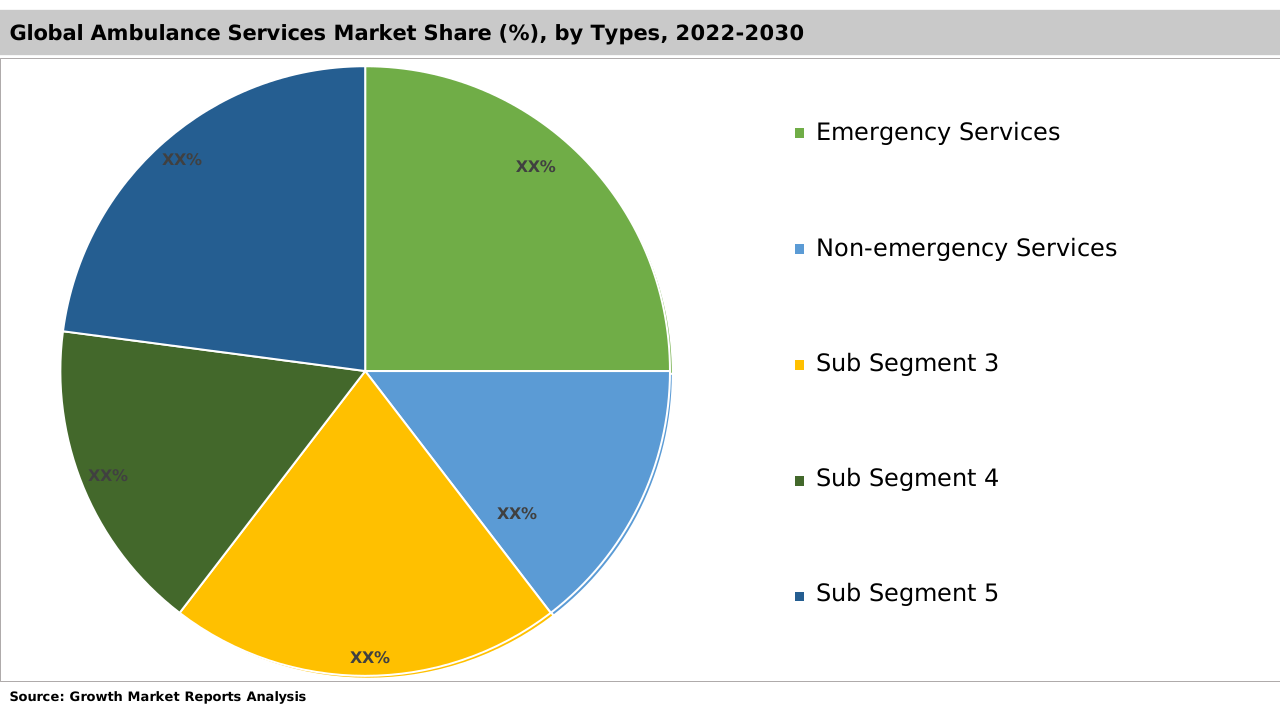
The service type segment of the ambulance services market is classified into emergency services and non-emergency services. Emergency ambulance services form the backbone of the market, catering to critical medical situations that require immediate intervention, such as accidents, cardiac arrests, strokes, and other life-threatening conditions. The increasing incidence of emergencies, coupled with rising public awareness about the importance of timely medical response, has driven the demand for emergency ambulance services. Governments and healthcare organizations are investing heavily in emergency response infrastructure, including the establishment of centralized dispatch centers and the deployment of advanced communication technologies to enhance response times and coordination.

Ambulance Conversion is a critical aspect of the ambulance services market, enabling the transformation of standard vehicles into fully equipped medical transport units. This process involves the integration of advanced medical equipment, communication systems, and safety features, tailored to meet the specific needs of emergency and non-emergency medical transport. The demand for ambulance conversion is driven by the need for cost-effective solutions that can quickly expand ambulance fleets, especially in regions with limited healthcare infrastructure. By converting existing vehicles, healthcare providers can enhance their operational capabilities and ensure that ambulances are equipped to handle a wide range of medical situations, thereby improving service delivery and patient care.

Non-emergency ambulance services, while less urgent, play a crucial role in the healthcare continuum by facilitating the transport of patients who require medical supervision during transit but are not in immediate danger. These services are commonly used for inter-hospital transfers, routine check-ups, dialysis appointments, and the transportation of elderly or disabled individuals. The growing prevalence of chronic diseases and the aging global population have contributed to the increasing demand for non-emergency ambulance services. Healthcare providers are expanding their service offerings to include specialized transport for patients with specific medical needs, such as bariatric or neonatal care, further diversifying the non-emergency segment.

The distinction between emergency and non-emergency services has led to the development of tailored service models, with providers offering customized solutions to meet the unique needs of different patient populations. Emergency services typically require highly skilled personnel, advanced medical equipment, and rapid response capabilities, while non-emergency services focus on comfort, accessibility, and continuity of care. The integration of digital platforms and mobile applications has streamlined the booking and management of ambulance services, improving convenience for patients and caregivers. Additionally, partnerships with healthcare facilities and insurance providers have facilitated the seamless coordination of patient transport, enhancing the overall efficiency of the ambulance services market.

The service type segment is also influenced by regulatory frameworks and reimbursement policies, which vary significantly across regions. In many countries, emergency ambulance services are publicly funded or covered by health insurance, while non-emergency services may require out-of-pocket payments or private insurance coverage. The alignment of service offerings with regulatory requirements and patient preferences is essential for market players to maintain competitiveness and ensure sustainable growth. As the demand for both emergency and non-emergency ambulance services continues to rise, providers are focusing on innovation, quality improvement, and operational excellence to meet evolving market needs.

Equipment Analysis

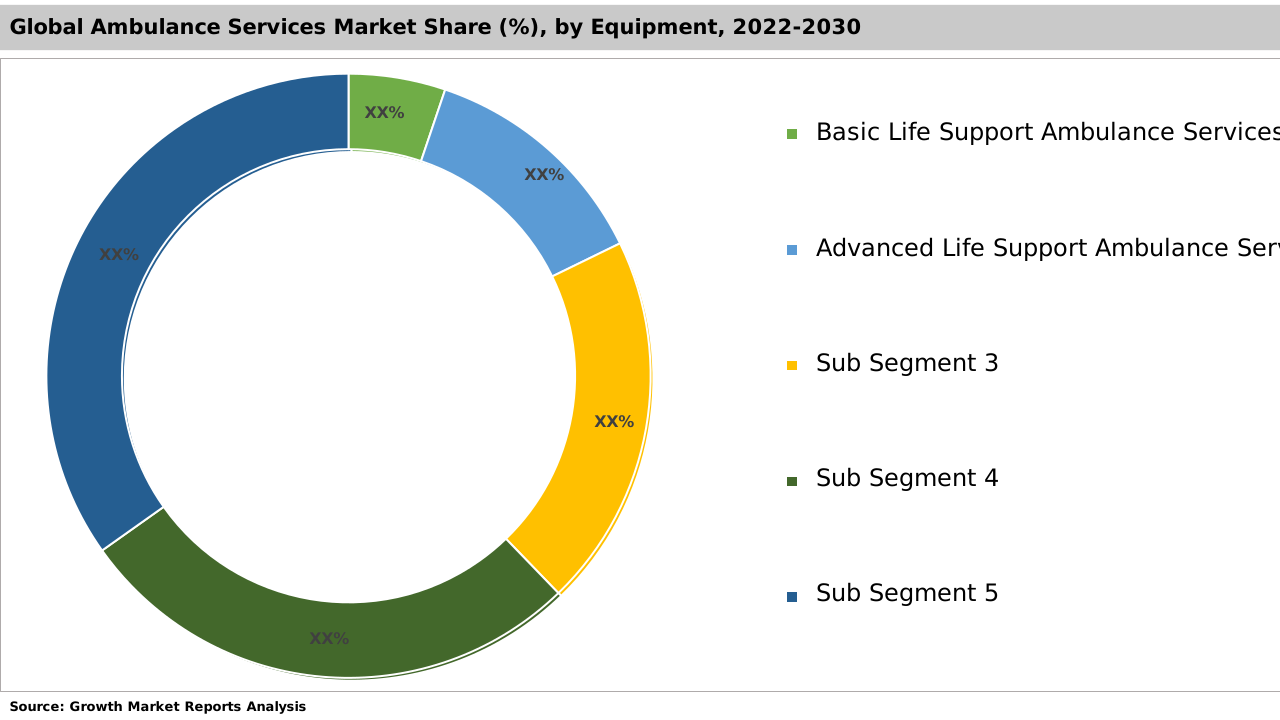
The equipment segment in the ambulance services market is divided into Basic Life Support (BLS) and Advanced Life Support (ALS) systems. Basic Life Support ambulances are equipped with essential medical devices and supplies required to provide fundamental emergency care, such as oxygen, automated external defibrillators (AEDs), and basic monitoring equipment. BLS services are typically staffed by emergency medical technicians (EMTs) trained to handle non-critical emergencies and provide pre-hospital care. The widespread adoption of BLS ambulances is driven by their cost-effectiveness, versatility, and ability to address a broad range of medical situations, making them the preferred choice for many healthcare providers.

Advanced Life Support ambulances, on the other hand, are equipped with more sophisticated medical equipment and staffed by highly trained paramedics or nurses capable of delivering advanced medical interventions. ALS ambulances feature cardiac monitors, intravenous (IV) therapy equipment, ventilators, and advanced airway management tools, enabling the provision of critical care during transit. The growing prevalence of complex and life-threatening medical conditions, such as cardiac events and severe trauma, has fueled the demand for ALS services. Hospitals and emergency response agencies are increasingly investing in ALS ambulances to enhance their capacity to manage high-acuity cases and improve patient outcomes.

The equipment segment is characterized by ongoing technological innovation, with manufacturers continually developing new devices and systems to enhance the capabilities of both BLS and ALS ambulances. The integration of telemedicine, portable diagnostic tools, and real-time data transmission has enabled paramedics to consult with physicians and specialists during transport, facilitating timely decision-making and intervention. Additionally, advancements in medical device miniaturization and battery technology have improved the portability, reliability, and usability of ambulance equipment, contributing to better patient care and operational efficiency.

Regulatory standards and accreditation requirements play a significant role in shaping the equipment segment, with many countries mandating specific equipment and staffing levels for different types of ambulance services. Compliance with these standards is essential for service providers to maintain licensure and ensure patient safety. The ongoing focus on quality improvement and evidence-based practice has led to the adoption of standardized equipment protocols and training programs for ambulance personnel. As the demand for high-quality pre-hospital care continues to grow, the equipment segment is expected to witness sustained innovation and investment, driving the overall growth of the ambulance services market.

Payer Analysis

The payer segment of the ambulance services market is divided into public, private, and out-of-pocket payment models. Public payers, including government-funded healthcare systems and national health insurance programs, account for a significant share of the market, particularly in countries with universal healthcare coverage. These systems typically cover the cost of emergency ambulance services, ensuring broad access to critical care for all citizens. The expansion of public health insurance schemes and increased government spending on emergency medical services have contributed to the growth of the public payer segment, particularly in developed regions such as North America and Europe.

Private payers, including commercial health insurance providers and employer-sponsored plans, play a crucial role in the ambulance services market, especially in countries with mixed or privatized healthcare systems. Private insurance coverage often extends to both emergency and non-emergency ambulance services, providing patients with greater flexibility and choice. The growth of the private payer segment is driven by rising healthcare costs, increased demand for value-added services, and the proliferation of specialized insurance products tailored to specific patient needs. Collaboration between ambulance service providers and private insurers has facilitated the development of innovative reimbursement models and value-based care solutions.

Out-of-pocket payments represent a significant portion of the market in regions where public and private insurance coverage is limited or unavailable. Patients in these areas are often required to pay directly for ambulance services, which can pose financial barriers to access, particularly for low-income populations. The prevalence of out-of-pocket payments is higher in developing countries with underfunded healthcare systems and limited insurance penetration. Efforts to expand insurance coverage and improve the affordability of ambulance services are critical to ensuring equitable access to emergency medical care and reducing disparities in health outcomes.

The payer segment is influenced by evolving healthcare policies, reimbursement frameworks, and patient preferences. The shift towards value-based care and outcome-oriented reimbursement models has incentivized ambulance service providers to focus on quality improvement, efficiency, and patient satisfaction. Additionally, the integration of digital payment platforms and electronic health records has streamlined billing and claims processing, improving transparency and reducing administrative burden. As healthcare systems continue to evolve, the payer segment is expected to play a pivotal role in shaping the future of the ambulance services market, with ongoing efforts to enhance coverage, affordability, and sustainability.

End-User Analysis

The end-user segment of the ambulance services market includes hospitals, nursing homes, home healthcare providers, and others. Hospitals represent the largest end-user segment, accounting for a substantial share of ambulance service utilization. Hospitals rely on ambulance services for both emergency and non-emergency patient transport, including inter-facility transfers, admissions, and discharges. The increasing prevalence of complex medical cases, the need for specialized care, and the expansion of hospital networks have fueled the demand for reliable and efficient ambulance services. Collaboration between hospitals and ambulance service providers is essential for ensuring seamless patient transitions and optimizing resource utilization.

Nursing homes and long-term care facilities are significant users of ambulance services, particularly for the transport of elderly and chronically ill patients who require ongoing medical supervision. The aging global population and the rising incidence of age-related health conditions have contributed to the growth of this segment. Ambulance services play a critical role in facilitating access to specialized care, hospital appointments, and diagnostic services for nursing home residents. The development of tailored transport solutions, such as bariatric and wheelchair-accessible ambulances, has further enhanced service accessibility and quality for this patient population.

Home healthcare providers are increasingly utilizing ambulance services to support the delivery of medical care in community and home settings. The shift towards home-based care, driven by patient preferences and the need to reduce healthcare costs, has expanded the role of ambulance services in facilitating hospital admissions, discharges, and routine medical visits. The integration of remote monitoring, telemedicine, and mobile health technologies has enabled ambulance personnel to provide a broader range of services in home environments, improving patient outcomes and satisfaction. Partnerships between home healthcare providers and ambulance services are essential for ensuring continuity of care and timely medical intervention.

Other end-users, including government agencies, disaster response teams, and private organizations, also contribute to the demand for ambulance services. These entities often require specialized transport solutions for mass casualty incidents, public events, and corporate health programs. The diversification of end-user needs has prompted ambulance service providers to develop customized offerings and expand their service portfolios. As the healthcare landscape continues to evolve, the end-user segment is expected to witness ongoing innovation and collaboration, driving the growth and diversification of the ambulance services market.

Opportunities & Threats

The ambulance services market presents significant opportunities for growth and innovation, driven by technological advancements, demographic trends, and evolving healthcare needs. The integration of telemedicine and digital health solutions in ambulance services has the potential to revolutionize pre-hospital care, enabling real-time consultations, remote diagnostics, and enhanced patient monitoring. The adoption of electric and hybrid ambulances offers opportunities for reducing environmental impact and operational costs, aligning with global sustainability initiatives. Additionally, the expansion of healthcare infrastructure in emerging markets, supported by government investments and public-private partnerships, provides ample opportunities for market entry and expansion. The development of specialized ambulance services, such as pediatric, bariatric, and neonatal transport, further diversifies the market and addresses unmet patient needs.

Another major opportunity lies in the adoption of data analytics and artificial intelligence (AI) to optimize ambulance operations, resource allocation, and patient outcomes. Predictive analytics can enhance emergency response planning, identify high-risk populations, and streamline dispatch processes, improving efficiency and reducing response times. The implementation of electronic health records and integrated care platforms facilitates seamless information exchange between ambulance personnel, hospitals, and other healthcare providers, improving care coordination and patient safety. The increasing focus on value-based care and patient-centered service models creates opportunities for ambulance service providers to differentiate themselves through quality improvement, innovation, and patient engagement.

Despite these opportunities, the ambulance services market faces several restraining factors that may hinder growth. One of the primary challenges is the high cost of ambulance services, particularly in regions with limited public funding or insurance coverage. Out-of-pocket expenses can deter patients from seeking timely medical care, leading to adverse health outcomes and increased healthcare disparities. Additionally, regulatory and reimbursement complexities, workforce shortages, and logistical challenges can impede the efficient delivery of ambulance services. Addressing these barriers requires coordinated efforts from policymakers, healthcare providers, and industry stakeholders to improve affordability, accessibility, and quality of ambulance services worldwide.

Regional Outlook

North America remains the leading region in the global ambulance services market, with a market size of USD 17.3 billion in 2024. The regionÂ’s dominance is attributed to its advanced healthcare infrastructure, high public spending on emergency medical services, and stringent regulatory standards. The United States, in particular, accounts for the majority of the regional market, driven by a well-established network of public and private ambulance service providers. Canada also contributes significantly, with comprehensive healthcare coverage and a strong focus on emergency preparedness. The North American market is expected to maintain steady growth, supported by ongoing investments in technology, workforce development, and service expansion.

Europe holds the second-largest share of the ambulance services market, with a market size of USD 12.1 billion in 2024. The regionÂ’s growth is fueled by significant investment in healthcare modernization, emergency response infrastructure, and cross-border cooperation. Countries such as Germany, the United Kingdom, and France have implemented robust ambulance service frameworks, supported by public funding and integrated care networks. The European market is characterized by a strong emphasis on quality standards, patient safety, and innovation, with a projected CAGR of 7.8% through 2033. Ongoing healthcare reforms and the adoption of digital health technologies are expected to further drive market growth in the region.

The Asia Pacific region is witnessing the fastest growth in the ambulance services market, with a market size of USD 9.6 billion in 2024 and a projected CAGR of 10.3% through 2033. Rapid urbanization, increasing healthcare expenditure, and government initiatives to improve emergency medical services are key drivers of regional growth. Countries such as China, India, and Japan are investing heavily in ambulance fleet expansion, workforce training, and the development of integrated emergency response systems. The Asia Pacific market presents significant opportunities for market entry and expansion, particularly in underserved rural and remote areas. Latin America and the Middle East & Africa are also experiencing steady growth, supported by ongoing healthcare reforms, rising awareness of emergency care, and international collaborations.

Ambulance Services  Market Statistics

Competitor Outlook

The global ambulance services market is characterized by intense competition, with a diverse mix of public and private players operating across different regions and service segments. The competitive landscape is shaped by factors such as service quality, response times, technological innovation, and pricing strategies. Leading companies are focusing on fleet expansion, technological upgrades, and workforce training to maintain a competitive edge and meet the evolving needs of patients and healthcare providers. The market is also witnessing increased consolidation, with mergers, acquisitions, and strategic partnerships enabling companies to expand their geographic presence, diversify service offerings, and achieve operational efficiencies.

Innovation is a key differentiator in the ambulance services market, with companies investing in advanced medical equipment, digital health solutions, and eco-friendly vehicles to enhance service quality and sustainability. The integration of telemedicine, real-time data transmission, and electronic health records has enabled service providers to deliver more efficient and patient-centered care. Additionally, the adoption of predictive analytics, artificial intelligence, and automated dispatch systems has improved operational efficiency, resource allocation, and response times. Companies are also focusing on patient engagement, quality improvement, and value-based care models to differentiate themselves in a competitive market.

Regulatory compliance and accreditation are critical factors influencing the competitive landscape, with companies required to adhere to stringent standards regarding equipment, staffing, and operational protocols. Public sector providers, particularly in countries with universal healthcare coverage, play a significant role in shaping market dynamics, often collaborating with private companies to enhance service accessibility and quality. The entry of new players, particularly in emerging markets, has intensified competition and spurred innovation, driving overall market growth and development.

Major companies operating in the global ambulance services market include Falck A/S, Acadian Ambulance Service, Inc., American Medical Response, Inc. (AMR), BVG India Limited, Ziqitza Health Care Limited, London Ambulance Service NHS Trust, Medivic Aviation, and Dutch Health BV. Falck A/S is a leading provider of emergency medical and healthcare services, with a strong presence in Europe and expanding operations in North America and Asia. Acadian Ambulance Service, Inc. is a prominent player in the United States, known for its extensive fleet, advanced medical equipment, and focus on quality improvement. American Medical Response, Inc. (AMR) is one of the largest private ambulance service providers globally, offering a comprehensive range of emergency and non-emergency transport solutions.

BVG India Limited and Ziqitza Health Care Limited are leading providers in the Asia Pacific region, specializing in both ground and air ambulance services. London Ambulance Service NHS Trust is a major public sector provider in the United Kingdom, renowned for its advanced emergency response capabilities and commitment to patient safety. Medivic Aviation is a key player in the air ambulance segment, offering specialized transport solutions for critical care patients. Dutch Health BV operates across multiple European countries, focusing on innovation, quality improvement, and integrated care delivery. These companies are at the forefront of market development, driving innovation, expanding service portfolios, and setting industry benchmarks for quality and efficiency.

Key Players

  • Acadian Ambulance Service
  • Air Methods Corporation
  • Falck A/S
  • American Medical Response (AMR)
  • London Ambulance Service NHS Trust
  • BVG India Limited
  • Ziqitza Health Care Limited
  • Envision Healthcare
  • Medivic Aviation
  • Dutch Health BV (Ambulancezorg Nederland)
  • Falck USA
  • Air Ambulance Specialists
  • Lifeguard Ambulance Service LLC
  • REVA, Inc.
  • AirMed International
  • GMR (Global Medical Response)
  • Apollo Ambulance Services
  • Empress EMS
  • National Ambulance Company LLC
  • SA Ambulance Service (South Australia Ambulance Service)
Ambulance Services  Market Overview

Segments

The Ambulance Services market has been segmented on the basis of

Transport Vehicle

  • Ground Ambulance
  • Air Ambulance
  • Water Ambulance

Service Type

  • Emergency Services
  • Non-Emergency Services

Equipment

  • Basic Life Support (BLS)
  • Advanced Life Support (ALS)

Payer

  • Public
  • Private
  • Out-of-Pocket

End-User

  • Hospitals
  • Nursing Homes
  • Home Healthcare
  • Others

Competitive Landscape

The global ambulance services market is fragmented with the presence of key players such as BVG India Limited; Envision Healthcare Corporation; Medivic Pharmaceutical Pvt., Ltd.; Ziqitza HealthCare Limited; Falck A/S; Acadian Ambulance Service; Babcock International Group PLC; American Ambulance Service, Inc.; Harmonie Ambulance; Air Methods Corporation; Advatech Healthcare Europe; and others. They use strategies such as mergers, partnerships, acquisitions, collaborations, and product launches to strengthen their hold on the market. For example, in October 2020, Advatech Healthcare Europe, a London-based healthcare facilitator and medical transporter, launched HIPPO Mobility, which is a technology-driven and cost-effective transportation service for elderly, disabled, and non-emergency patients. In April 2021, Babcock International Group PLC was awarded a contract to provide jet air ambulance service to the rescEU scheme, in which the company will provide aircraft maintenance, personnel training, and jet air ambulance services across the European Union.
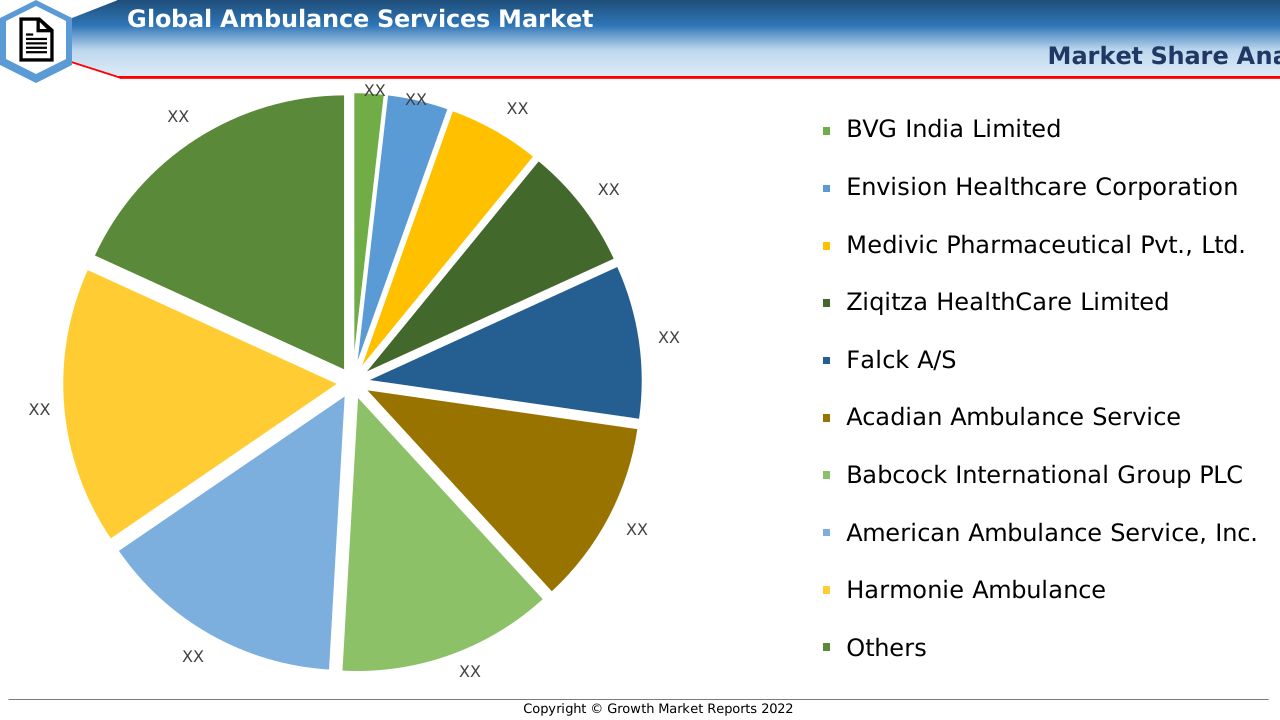

Global Ambulance Services Market by Key Players

Frequently Asked Questions

BVG India Limited; Envision Healthcare Corporation; Medivic Pharmaceutical Pvt., Ltd.; Ziqitza HealthCare Limited; Falck A/S; Acadian Ambulance Service; and Babcock International Group PLC are some of the key players in the global ambulance services market.

North America dominates the global ambulance services market.

An ambulance refers to a vehicle equipped with medical devices, which transports patients from their houses to treatment facilities such as hospitals.

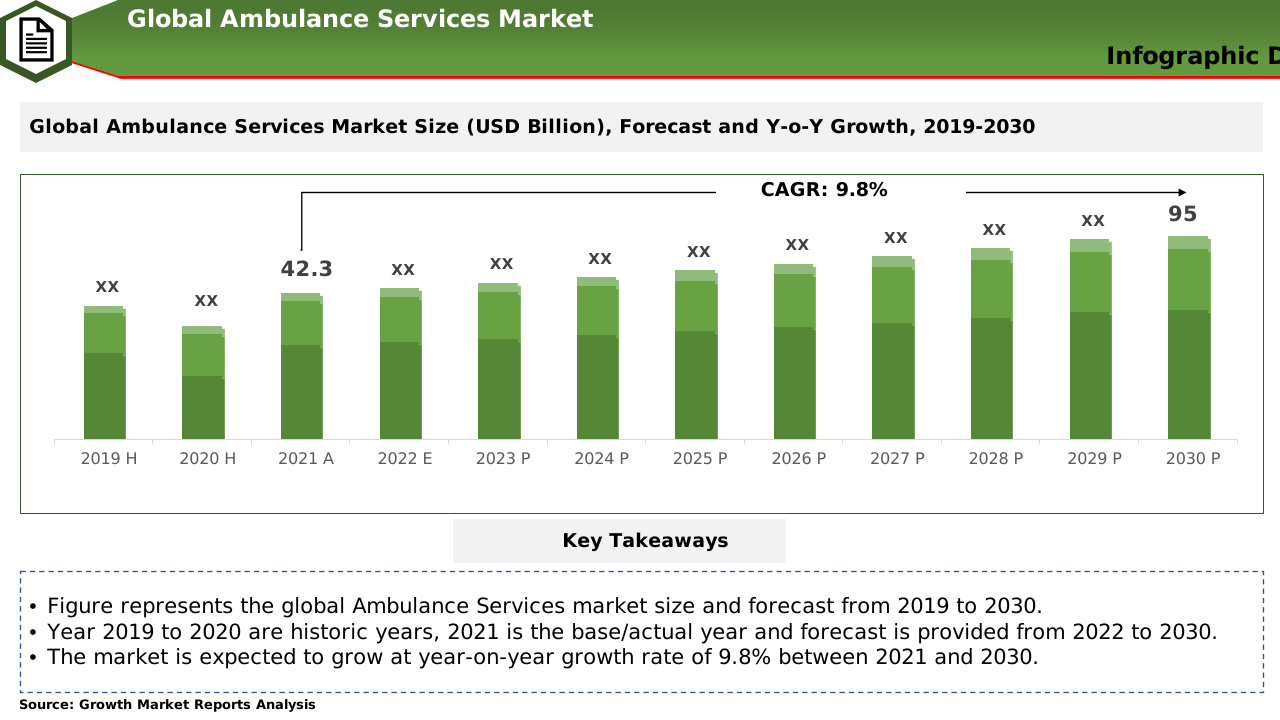
The global ambulance services market size was valued at around USD 42.3 billion in 2021 and is anticipated to reach around USD 95 billion by 2030.

The global ambulance services market is estimated to register a CAGR of around 9.8% during the forecast period.

Table Of Content

Chapter 1 Executive Summary
Chapter 2 Assumptions and Acronyms Used
Chapter 3 Research Methodology
Chapter 4 Ambulance Services  Market Overview
   4.1 Introduction
      4.1.1 Market Taxonomy
      4.1.2 Market Definition
      4.1.3 Macro-Economic Factors Impacting the Market Growth
   4.2 Ambulance Services  Market Dynamics
      4.2.1 Market Drivers
      4.2.2 Market Restraints
      4.2.3 Market Opportunity
   4.3 Ambulance Services  Market - Supply Chain Analysis
      4.3.1 List of Key Suppliers
      4.3.2 List of Key Distributors
      4.3.3 List of Key Consumers
   4.4 Key Forces Shaping the Ambulance Services  Market
      4.4.1 Bargaining Power of Suppliers
      4.4.2 Bargaining Power of Buyers
      4.4.3 Threat of Substitution
      4.4.4 Threat of New Entrants
      4.4.5 Competitive Rivalry
   4.5 Global Ambulance Services  Market Size & Forecast, 2023-2032
      4.5.1 Ambulance Services  Market Size and Y-o-Y Growth
      4.5.2 Ambulance Services  Market Absolute $ Opportunity

Chapter 5 Global Ambulance Services  Market Analysis and Forecast By Transport Vehicle
   5.1 Introduction
      5.1.1 Key Market Trends & Growth Opportunities By Transport Vehicle
      5.1.2 Basis Point Share (BPS) Analysis By Transport Vehicle
      5.1.3 Absolute $ Opportunity Assessment By Transport Vehicle
   5.2 Ambulance Services  Market Size Forecast By Transport Vehicle
      5.2.1 Ground Ambulance
      5.2.2 Air Ambulance
      5.2.3 Water Ambulance
   5.3 Market Attractiveness Analysis By Transport Vehicle

Chapter 6 Global Ambulance Services  Market Analysis and Forecast By Service Type
   6.1 Introduction
      6.1.1 Key Market Trends & Growth Opportunities By Service Type
      6.1.2 Basis Point Share (BPS) Analysis By Service Type
      6.1.3 Absolute $ Opportunity Assessment By Service Type
   6.2 Ambulance Services  Market Size Forecast By Service Type
      6.2.1 Emergency Services
      6.2.2 Non-Emergency Services
   6.3 Market Attractiveness Analysis By Service Type

Chapter 7 Global Ambulance Services  Market Analysis and Forecast By Equipment
   7.1 Introduction
      7.1.1 Key Market Trends & Growth Opportunities By Equipment
      7.1.2 Basis Point Share (BPS) Analysis By Equipment
      7.1.3 Absolute $ Opportunity Assessment By Equipment
   7.2 Ambulance Services  Market Size Forecast By Equipment
      7.2.1 Basic Life Support (BLS)
      7.2.2 Advanced Life Support (ALS)
   7.3 Market Attractiveness Analysis By Equipment

Chapter 8 Global Ambulance Services  Market Analysis and Forecast By Payer
   8.1 Introduction
      8.1.1 Key Market Trends & Growth Opportunities By Payer
      8.1.2 Basis Point Share (BPS) Analysis By Payer
      8.1.3 Absolute $ Opportunity Assessment By Payer
   8.2 Ambulance Services  Market Size Forecast By Payer
      8.2.1 Public
      8.2.2 Private
      8.2.3 Out-of-Pocket
   8.3 Market Attractiveness Analysis By Payer

Chapter 9 Global Ambulance Services  Market Analysis and Forecast By End-User
   9.1 Introduction
      9.1.1 Key Market Trends & Growth Opportunities By End-User
      9.1.2 Basis Point Share (BPS) Analysis By End-User
      9.1.3 Absolute $ Opportunity Assessment By End-User
   9.2 Ambulance Services  Market Size Forecast By End-User
      9.2.1 Hospitals
      9.2.2 Nursing Homes
      9.2.3 Home Healthcare
      9.2.4 Others
   9.3 Market Attractiveness Analysis By End-User

Chapter 10 Global Ambulance Services  Market Analysis and Forecast by Region
   10.1 Introduction
      10.1.1 Key Market Trends & Growth Opportunities By Region
      10.1.2 Basis Point Share (BPS) Analysis By Region
      10.1.3 Absolute $ Opportunity Assessment By Region
   10.2 Ambulance Services  Market Size Forecast By Region
      10.2.1 North America
      10.2.2 Europe
      10.2.3 Asia Pacific
      10.2.4 Latin America
      10.2.5 Middle East & Africa (MEA)
   10.3 Market Attractiveness Analysis By Region

Chapter 11 Coronavirus Disease (COVID-19) Impact 
   11.1 Introduction 
   11.2 Current & Future Impact Analysis 
   11.3 Economic Impact Analysis 
   11.4 Government Policies 
   11.5 Investment Scenario

Chapter 12 North America Ambulance Services  Analysis and Forecast
   12.1 Introduction
   12.2 North America Ambulance Services  Market Size Forecast by Country
      12.2.1 U.S.
      12.2.2 Canada
   12.3 Basis Point Share (BPS) Analysis by Country
   12.4 Absolute $ Opportunity Assessment by Country
   12.5 Market Attractiveness Analysis by Country
   12.6 North America Ambulance Services  Market Size Forecast By Transport Vehicle
      12.6.1 Ground Ambulance
      12.6.2 Air Ambulance
      12.6.3 Water Ambulance
   12.7 Basis Point Share (BPS) Analysis By Transport Vehicle 
   12.8 Absolute $ Opportunity Assessment By Transport Vehicle 
   12.9 Market Attractiveness Analysis By Transport Vehicle
   12.10 North America Ambulance Services  Market Size Forecast By Service Type
      12.10.1 Emergency Services
      12.10.2 Non-Emergency Services
   12.11 Basis Point Share (BPS) Analysis By Service Type 
   12.12 Absolute $ Opportunity Assessment By Service Type 
   12.13 Market Attractiveness Analysis By Service Type
   12.14 North America Ambulance Services  Market Size Forecast By Equipment
      12.14.1 Basic Life Support (BLS)
      12.14.2 Advanced Life Support (ALS)
   12.15 Basis Point Share (BPS) Analysis By Equipment 
   12.16 Absolute $ Opportunity Assessment By Equipment 
   12.17 Market Attractiveness Analysis By Equipment
   12.18 North America Ambulance Services  Market Size Forecast By Payer
      12.18.1 Public
      12.18.2 Private
      12.18.3 Out-of-Pocket
   12.19 Basis Point Share (BPS) Analysis By Payer 
   12.20 Absolute $ Opportunity Assessment By Payer 
   12.21 Market Attractiveness Analysis By Payer
   12.22 North America Ambulance Services  Market Size Forecast By End-User
      12.22.1 Hospitals
      12.22.2 Nursing Homes
      12.22.3 Home Healthcare
      12.22.4 Others
   12.23 Basis Point Share (BPS) Analysis By End-User 
   12.24 Absolute $ Opportunity Assessment By End-User 
   12.25 Market Attractiveness Analysis By End-User

Chapter 13 Europe Ambulance Services  Analysis and Forecast
   13.1 Introduction
   13.2 Europe Ambulance Services  Market Size Forecast by Country
      13.2.1 Germany
      13.2.2 France
      13.2.3 Italy
      13.2.4 U.K.
      13.2.5 Spain
      13.2.6 Russia
      13.2.7 Rest of Europe
   13.3 Basis Point Share (BPS) Analysis by Country
   13.4 Absolute $ Opportunity Assessment by Country
   13.5 Market Attractiveness Analysis by Country
   13.6 Europe Ambulance Services  Market Size Forecast By Transport Vehicle
      13.6.1 Ground Ambulance
      13.6.2 Air Ambulance
      13.6.3 Water Ambulance
   13.7 Basis Point Share (BPS) Analysis By Transport Vehicle 
   13.8 Absolute $ Opportunity Assessment By Transport Vehicle 
   13.9 Market Attractiveness Analysis By Transport Vehicle
   13.10 Europe Ambulance Services  Market Size Forecast By Service Type
      13.10.1 Emergency Services
      13.10.2 Non-Emergency Services
   13.11 Basis Point Share (BPS) Analysis By Service Type 
   13.12 Absolute $ Opportunity Assessment By Service Type 
   13.13 Market Attractiveness Analysis By Service Type
   13.14 Europe Ambulance Services  Market Size Forecast By Equipment
      13.14.1 Basic Life Support (BLS)
      13.14.2 Advanced Life Support (ALS)
   13.15 Basis Point Share (BPS) Analysis By Equipment 
   13.16 Absolute $ Opportunity Assessment By Equipment 
   13.17 Market Attractiveness Analysis By Equipment
   13.18 Europe Ambulance Services  Market Size Forecast By Payer
      13.18.1 Public
      13.18.2 Private
      13.18.3 Out-of-Pocket
   13.19 Basis Point Share (BPS) Analysis By Payer 
   13.20 Absolute $ Opportunity Assessment By Payer 
   13.21 Market Attractiveness Analysis By Payer
   13.22 Europe Ambulance Services  Market Size Forecast By End-User
      13.22.1 Hospitals
      13.22.2 Nursing Homes
      13.22.3 Home Healthcare
      13.22.4 Others
   13.23 Basis Point Share (BPS) Analysis By End-User 
   13.24 Absolute $ Opportunity Assessment By End-User 
   13.25 Market Attractiveness Analysis By End-User

Chapter 14 Asia Pacific Ambulance Services  Analysis and Forecast
   14.1 Introduction
   14.2 Asia Pacific Ambulance Services  Market Size Forecast by Country
      14.2.1 China
      14.2.2 Japan
      14.2.3 South Korea
      14.2.4 India
      14.2.5 Australia
      14.2.6 South East Asia (SEA)
      14.2.7 Rest of Asia Pacific (APAC)
   14.3 Basis Point Share (BPS) Analysis by Country
   14.4 Absolute $ Opportunity Assessment by Country
   14.5 Market Attractiveness Analysis by Country
   14.6 Asia Pacific Ambulance Services  Market Size Forecast By Transport Vehicle
      14.6.1 Ground Ambulance
      14.6.2 Air Ambulance
      14.6.3 Water Ambulance
   14.7 Basis Point Share (BPS) Analysis By Transport Vehicle 
   14.8 Absolute $ Opportunity Assessment By Transport Vehicle 
   14.9 Market Attractiveness Analysis By Transport Vehicle
   14.10 Asia Pacific Ambulance Services  Market Size Forecast By Service Type
      14.10.1 Emergency Services
      14.10.2 Non-Emergency Services
   14.11 Basis Point Share (BPS) Analysis By Service Type 
   14.12 Absolute $ Opportunity Assessment By Service Type 
   14.13 Market Attractiveness Analysis By Service Type
   14.14 Asia Pacific Ambulance Services  Market Size Forecast By Equipment
      14.14.1 Basic Life Support (BLS)
      14.14.2 Advanced Life Support (ALS)
   14.15 Basis Point Share (BPS) Analysis By Equipment 
   14.16 Absolute $ Opportunity Assessment By Equipment 
   14.17 Market Attractiveness Analysis By Equipment
   14.18 Asia Pacific Ambulance Services  Market Size Forecast By Payer
      14.18.1 Public
      14.18.2 Private
      14.18.3 Out-of-Pocket
   14.19 Basis Point Share (BPS) Analysis By Payer 
   14.20 Absolute $ Opportunity Assessment By Payer 
   14.21 Market Attractiveness Analysis By Payer
   14.22 Asia Pacific Ambulance Services  Market Size Forecast By End-User
      14.22.1 Hospitals
      14.22.2 Nursing Homes
      14.22.3 Home Healthcare
      14.22.4 Others
   14.23 Basis Point Share (BPS) Analysis By End-User 
   14.24 Absolute $ Opportunity Assessment By End-User 
   14.25 Market Attractiveness Analysis By End-User

Chapter 15 Latin America Ambulance Services  Analysis and Forecast
   15.1 Introduction
   15.2 Latin America Ambulance Services  Market Size Forecast by Country
      15.2.1 Brazil
      15.2.2 Mexico
      15.2.3 Rest of Latin America (LATAM)
   15.3 Basis Point Share (BPS) Analysis by Country
   15.4 Absolute $ Opportunity Assessment by Country
   15.5 Market Attractiveness Analysis by Country
   15.6 Latin America Ambulance Services  Market Size Forecast By Transport Vehicle
      15.6.1 Ground Ambulance
      15.6.2 Air Ambulance
      15.6.3 Water Ambulance
   15.7 Basis Point Share (BPS) Analysis By Transport Vehicle 
   15.8 Absolute $ Opportunity Assessment By Transport Vehicle 
   15.9 Market Attractiveness Analysis By Transport Vehicle
   15.10 Latin America Ambulance Services  Market Size Forecast By Service Type
      15.10.1 Emergency Services
      15.10.2 Non-Emergency Services
   15.11 Basis Point Share (BPS) Analysis By Service Type 
   15.12 Absolute $ Opportunity Assessment By Service Type 
   15.13 Market Attractiveness Analysis By Service Type
   15.14 Latin America Ambulance Services  Market Size Forecast By Equipment
      15.14.1 Basic Life Support (BLS)
      15.14.2 Advanced Life Support (ALS)
   15.15 Basis Point Share (BPS) Analysis By Equipment 
   15.16 Absolute $ Opportunity Assessment By Equipment 
   15.17 Market Attractiveness Analysis By Equipment
   15.18 Latin America Ambulance Services  Market Size Forecast By Payer
      15.18.1 Public
      15.18.2 Private
      15.18.3 Out-of-Pocket
   15.19 Basis Point Share (BPS) Analysis By Payer 
   15.20 Absolute $ Opportunity Assessment By Payer 
   15.21 Market Attractiveness Analysis By Payer
   15.22 Latin America Ambulance Services  Market Size Forecast By End-User
      15.22.1 Hospitals
      15.22.2 Nursing Homes
      15.22.3 Home Healthcare
      15.22.4 Others
   15.23 Basis Point Share (BPS) Analysis By End-User 
   15.24 Absolute $ Opportunity Assessment By End-User 
   15.25 Market Attractiveness Analysis By End-User

Chapter 16 Middle East & Africa (MEA) Ambulance Services  Analysis and Forecast
   16.1 Introduction
   16.2 Middle East & Africa (MEA) Ambulance Services  Market Size Forecast by Country
      16.2.1 Saudi Arabia
      16.2.2 South Africa
      16.2.3 UAE
      16.2.4 Rest of Middle East & Africa (MEA)
   16.3 Basis Point Share (BPS) Analysis by Country
   16.4 Absolute $ Opportunity Assessment by Country
   16.5 Market Attractiveness Analysis by Country
   16.6 Middle East & Africa (MEA) Ambulance Services  Market Size Forecast By Transport Vehicle
      16.6.1 Ground Ambulance
      16.6.2 Air Ambulance
      16.6.3 Water Ambulance
   16.7 Basis Point Share (BPS) Analysis By Transport Vehicle 
   16.8 Absolute $ Opportunity Assessment By Transport Vehicle 
   16.9 Market Attractiveness Analysis By Transport Vehicle
   16.10 Middle East & Africa (MEA) Ambulance Services  Market Size Forecast By Service Type
      16.10.1 Emergency Services
      16.10.2 Non-Emergency Services
   16.11 Basis Point Share (BPS) Analysis By Service Type 
   16.12 Absolute $ Opportunity Assessment By Service Type 
   16.13 Market Attractiveness Analysis By Service Type
   16.14 Middle East & Africa (MEA) Ambulance Services  Market Size Forecast By Equipment
      16.14.1 Basic Life Support (BLS)
      16.14.2 Advanced Life Support (ALS)
   16.15 Basis Point Share (BPS) Analysis By Equipment 
   16.16 Absolute $ Opportunity Assessment By Equipment 
   16.17 Market Attractiveness Analysis By Equipment
   16.18 Middle East & Africa (MEA) Ambulance Services  Market Size Forecast By Payer
      16.18.1 Public
      16.18.2 Private
      16.18.3 Out-of-Pocket
   16.19 Basis Point Share (BPS) Analysis By Payer 
   16.20 Absolute $ Opportunity Assessment By Payer 
   16.21 Market Attractiveness Analysis By Payer
   16.22 Middle East & Africa (MEA) Ambulance Services  Market Size Forecast By End-User
      16.22.1 Hospitals
      16.22.2 Nursing Homes
      16.22.3 Home Healthcare
      16.22.4 Others
   16.23 Basis Point Share (BPS) Analysis By End-User 
   16.24 Absolute $ Opportunity Assessment By End-User 
   16.25 Market Attractiveness Analysis By End-User

Chapter 17 Competition Landscape 
   17.1 Ambulance Services  Market: Competitive Dashboard
   17.2 Global Ambulance Services  Market: Market Share Analysis, 2023
   17.3 Company Profiles (Details – Overview, Financials, Developments, Strategy) 
      17.3.1 Acadian Ambulance Service
Air Methods Corporation
Falck A/S
American Medical Response (AMR)
London Ambulance Service NHS Trust
BVG India Limited
Ziqitza Health Care Limited
Envision Healthcare
Medivic Aviation
Dutch Health BV (Ambulancezorg Nederland)
Falck USA
Air Ambulance Specialists
Lifeguard Ambulance Service LLC
REVA, Inc.
AirMed International
GMR (Global Medical Response)
Apollo Ambulance Services
Empress EMS
National Ambulance Company LLC
SA Ambulance Service (South Australia Ambulance Service)

Methodology

Our Clients

The John Holland Group
Deloitte
Dassault Aviation
Honda Motor Co. Ltd.
Siemens Healthcare
sinopec
Microsoft
Nestle SA